Skip to content
Custom Ruffle Dress Manufacturer
Custom ruffle dress development and manufacturing for established fashion brands.
Duolan supports fashion brands developing ruffle dresses where ruffle placement, gathering ratio, fabric drape, tier balance, edge finish, sleeve volume, hem movement, photo sample accuracy, PP records and bulk consistency decide final garment value across romantic, resort, occasion, summer and social-first dress programs.
- 1996 fashion dress development background supports detailed silhouette and fabric judgment.
- 5 ruffle-related dress directions cover mini, midi, maxi, tiered and occasion programs.
- 6 ruffle-control zones guide neckline, sleeve, waist, hem, tier and side seam review.
- 3-view sample review checks ruffle balance across front, side and back angles.
- 10–30 styles per cooperating order fit multi-style ruffle dress launch programs.
- 20,000–80,000 pieces per brand order support mature seasonal production and repeat planning.
- South China textile resources support chiffon, organza, mesh, viscose, satin and cotton-blend fabric matching.
- Humen trim resources support lace, binding, zippers, thread, straps and finishing details.
Ruffle Dresses Need Controlled Volume, Not Extra Decoration
Ruffle dresses create value through movement, volume, softness, layered rhythm and feminine proportion. A ruffle can frame the neckline, shape the sleeve, define the waist, lift a hemline or create a cascading focal point, yet every placement changes fabric behavior, garment weight, sewing route, pressing method and packing needs. Weak development often creates collapsed ruffles, bulky edges, uneven tiers, rough hems, poor symmetry, distorted sleeves or flattened volume after shipment.
Duolan develops ruffle dresses through fabric behavior, ruffle geometry and production records. Ruffle width, gathering ratio, layer distance, edge finish, pressing method, PP photos and first-piece comparison are reviewed before bulk execution. The goal is a dress with controlled softness, clean movement and repeatable ruffle balance across all production pieces.
Built for Established Ruffle Dress Programs
Feminine Dress Brands
Resort Dress Brands
Occasionwear Brands
Contemporary Dress Brands
Product Development Teams
Sourcing Offices
Ruffle Dress Types Duolan Can Develop
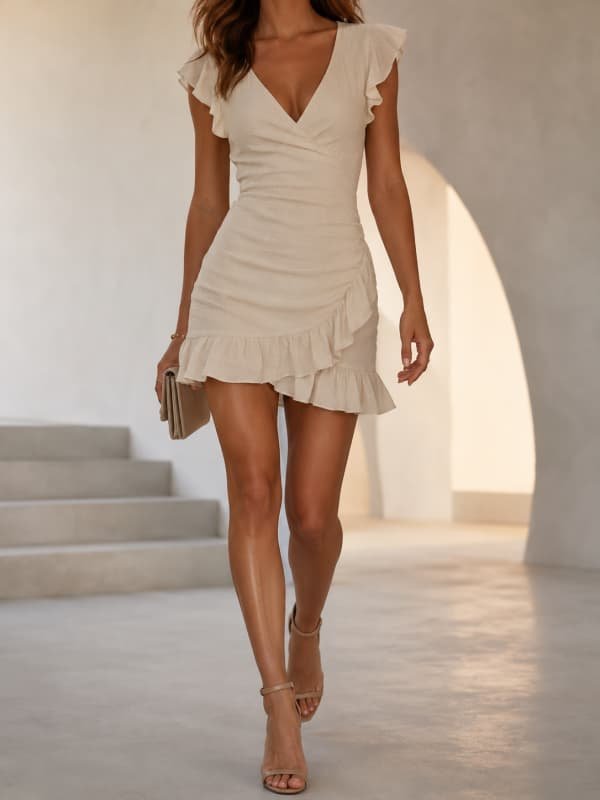
Ruffle Mini Dresses
- Mini length needs movement review before ruffle hem volume is approved.
- Ruffle width should enhance shape without overwhelming short proportions.
- Lining and hem finish should protect coverage during sitting and walking.

Ruffle Midi Dresses
- Midi ruffle placement should support waist and skirt proportion.
- Layer rhythm should feel refined across front, side and back views.
- Fabric weight should preserve movement without adding heavy lower volume.

Ruffle Maxi Dresses
- Long ruffle panels need front, side and back length review.
- Layer weight should not drag down shoulder, waist or hem balance.
- Packing references should protect soft ruffle movement after shipment.

Tiered Ruffle Dresses
- Tier width and distance should be recorded before PP approval.
- Gathering density should remain stable across all skirt panels.
- Side seams should align cleanly across tiered ruffle layers.

Ruffle Sleeve Dresses
- Sleeve ruffles should not restrict lifting, bending or natural arm movement.
- Shoulder volume should stay balanced across left and right sides.
- Edge finish should remain soft around armhole and skin-contact zones.

Ruffle Hem Dresses
- Hem ruffle depth should match dress length and fabric weight.
- Edge finish should prevent fraying, curling or thick lower volume.
- Final hem line should stay even after hanging and packing.

One-shoulder Ruffle Dresses
- One-shoulder ruffles need strong balance across bust and shoulder zones.
- Diagonal placement should not pull neckline or distort bodice shape.
- PP photos should record front, side and back proportions clearly.

Asymmetric Ruffle Dresses
- Asymmetric ruffle placement should follow pattern references, not sewing memory.
- Visual balance should be reviewed across standing and movement positions.
- First-piece comparison should confirm approved angle, width and location.

Cascading Ruffle Dresses
- Cascading ruffles should fall naturally without twisting or collapsing.
- Attachment points should support fabric flow and garment proportion.
- Side-view photos should record depth, fall and movement clearly.

Wrap Ruffle Dresses
- Wrap overlap should remain secure during sitting and walking.
- Ruffle edges should move softly without curling or dragging.
- Tie position should support waist proportion and garment balance.

Resort Ruffle Dresses
- Resort ruffles should stay light, breathable and easy after unpacking.
- Soft fabrics need opacity and edge review before approval.
- Printed ruffles require placement control across cut panels.

Occasion Ruffle Dresses
- Occasion ruffles should feel elevated without creating heavy or rough volume.
- Structured fabrics need pressing control to preserve shape.
- Packing should protect raised ruffle areas and formal presentation.
Ruffle Volume, Gathering Ratio and Layer Balance
Ruffle Width
- Ruffle width should match mini, midi or maxi proportion.
- Wider ruffles need stronger review around weight and packed shape.
- PP records should include approved width and placement references.
Gathering Ratio
- Gathering ratio should be tested with the selected fabric.
- Dense gathers may increase weight, seam bulk and production time.
- Bulk pieces should follow approved sample fullness, not operator judgment.
Layer Distance
- Layer spacing should be recorded before PP sample approval.
- Tier distance should remain consistent across left and right sides.
- Long dresses need extra review for lower-tier balance.
Volume Direction
- Shoulder ruffles should avoid excessive width around upper body.
- Waist ruffles should define proportion without adding unwanted bulk.
- Cascading ruffles need clean fall from chosen attachment points.
Weight Distribution
- Heavy ruffles can pull hems, sleeves or waistlines out of balance.
- Lightweight ruffles may need edge choices preserving movement.
- Weight distribution should be checked during hanger and fit review.
Size Range Balance
- Grading notes should include ruffle width and placement points.
- Larger sizes may need adjusted ruffle distance or support.
- PP references should guide ruffle balance across the size range.
Fabric Choices for Ruffle Dresses

Chiffon Ruffle Dresses
- Chiffon ruffles need opacity and lining review before approval.
- Rolled hems should stay clean without thick or wavy edges.
- Packing should preserve softness without crushing lower layers.

Organza Ruffle Dresses
- Organza ruffles need controlled shape without excessive stiffness.
- Pressing should preserve volume, not flatten the intended structure.
- Raised areas need packing protection during long-distance shipment.

Tulle Ruffle Dresses
- Tulle layers need volume review from front, side and back.
- Delicate edges should avoid snagging or rough skin contact.
- Packing should protect layered shape and airy movement.

Mesh Ruffle Dresses
- Mesh transparency should be reviewed under light and movement.
- Edge finish should remain soft, clean and stable.
- Lining color can change the final ruffle expression.

Viscose and Rayon-feel Ruffle Dresses
- Fluid ruffles need hanging review before hem confirmation.
- Shrinkage and twisting should be evaluated before bulk cutting.
- Layer balance may change when fabric weight settles.

Cotton-blend Ruffle Dresses
- Cotton-blend ruffles should balance structure with soft wearability.
- Wrinkle behavior should be checked before packing decisions.
- Wider ruffles may need careful pressing and edge control.

Satin Ruffle Dresses
- Satin ruffles need clean edges and careful seam control.
- Pressing should protect shine and avoid hard lines.
- Packing should reduce creases across shiny ruffle surfaces.

Lace and Embroidered Ruffle Dresses
- Motif placement should follow neckline, sleeve or hem proportion.
- Lace edges should feel soft around skin-contact zones.
- Lining color should support the intended texture and coverage.
Ruffle Risk Matrix
Ruffle dress development carries risks across fabric, volume, placement, edge finish, symmetry and packing. Duolan reviews major risk points before PP approval so approved ruffle effects can move into controlled production.
| Ruffle Risk | Why It Happens | Duolan Control |
|---|---|---|
| Ruffle collapses | Fabric too soft or gathering ratio too low | Fabric and gathering review |
| Ruffle looks bulky | Width, density or fabric weight is too high | Volume and weight control |
| Uneven tier length | Layer distance lacks production records | Tier measurement and PP photos |
| Asymmetry | Placement is not mapped clearly | Pattern and placement review |
| Rough edge | Hem finish does not match fabric | Edge finish testing |
| Sleeve discomfort | Ruffle affects armhole movement | Fit and movement review |
| Packing deformation | Volume lacks carton protection | Packing route planning |
| Bulk differs from sample | Ruffle details are not documented | PP records and first-piece check |
Ruffle Placement: Neckline, Sleeve, Waist and Hem

Neckline Ruffles
- Neckline ruffles should enhance the face and upper body proportion.
- Edge finish should feel soft around neck and chest areas.
- Front-view sample photos should record approved ruffle height.

Sleeve Ruffles
- Sleeve ruffles should allow natural arm movement and comfort.
- Left and right sleeve volume should remain visually balanced.
- Armhole edges need soft finishing and clean construction.

Waist Ruffles
- Waist ruffles should define shape without adding unwanted bulk.
- Placement should align with waist seam and body proportion.
- Side-view review helps catch excessive volume around the body.

Hem Ruffles
- Hem ruffles should move naturally without dragging or flipping.
- Ruffle depth should match dress length and target scenario.
- Packing references should protect lower-volume areas from crushing.

Side Ruffles
- Side ruffles should support body line, not pull side seams.
- Placement needs clear records along seam or panel positions.
- Side-view photos should confirm approved balance and movement.

Back Ruffles
Back ruffles create visual interest from rear views and can support open-back or occasion styles. They may affect sitting comfort and packing if volume is too heavy. Duolan reviews back placement, edge finish, garment length and carton route before PP sample confirmation.
- Back ruffles should look clean while standing and sitting.
- Volume should not create discomfort across lower-back areas.
- Back-view records should guide first-piece comparison.
Edge Finish, Hemming and Ruffle Cleanliness
Rolled Hem
- Rolled hems should stay narrow, smooth and consistent.
- Curved ruffle edges need careful stitch and tension control.
- Lightweight fabrics should not become stiff from heavy thread.
Baby Hem
- Baby hems should support softness without heavy lower edges.
- Pressing should define the edge without flattening volume.
- Hem width should remain consistent across bulk pieces.
Overlock Edge
- Overlock edges should match fabric weight and design direction.
- Thread color should blend cleanly or support intended contrast.
- Stretch fabrics need recovery review after edge stitching.
Binding Edge
- Binding should protect edges without making ruffles heavy.
- Skin-contact areas need soft binding and clean seam allowance.
- Binding color should match fabric or approved design direction.
Raw-effect Edge
- Raw-effect edges should look intentional, not unfinished.
- Fabric fray behavior should be reviewed before approval.
- QC should check loose threads and edge consistency.
Pressing and Shape
Pressing can improve ruffle presentation or destroy volume. Too much pressure flattens movement, while too little leaves uneven construction. Duolan reviews steam level, pressure, shaping method and packing route so ruffles retain approved form.
- Pressing should preserve volume while cleaning the final shape.
- Structured ruffles need shape protection during finishing.
- Final inspection should review ruffles after packing simulation.
Pattern, Symmetry and Sample Correction
Pattern-based Ruffle Shape
- Pattern shape should match target volume and fabric movement.
- Curved ruffles require careful cutting and edge control.
- Production teams need clear ruffle piece references.
Left-right Symmetry
- Sleeve and shoulder ruffles should remain visually balanced.
- Neckline and hem ruffles need front-view symmetry review.
- PP photos should record approved left-right relationship.
Front, Side and Back View
- Front view records neckline, waist and hem balance.
- Side view checks depth, fall and body proportion.
- Back view confirms tier, sleeve and hem consistency.
Sample Correction
- Comments should define exact ruffle issue and correction route.
- Revised samples should confirm volume, edge and placement improvements.
- Photo records help prevent repeated interpretation errors.
Size Grading
- Ruffle placement should remain balanced across size range.
- Larger sizes may need adjusted layer distance or support.
- Grading notes should include ruffle-critical zones.
PP Record Transfer
- PP records should include ruffle measurements and detail photos.
- Production notes should cover edge finish and pressing route.
- First-piece comparison should verify approved ruffle balance.
Ruffle Dress Scenarios Brands Usually Develop

Romantic Dress Collections
- Romantic collections need soft movement, refined volume and balanced feminine detail.
- Neckline, sleeve and hem ruffles should support gentle visual rhythm.
- Chiffon, viscose and lace routes need drape and edge review.
- PP records should protect sample softness across bulk pieces.

Resort Ruffle Dresses
- Resort ruffle dresses need light drape, breathability and packing recovery.
- Printed maxi, wrap and sundress styles need movement control.
- Transparent fabrics require lining and opacity review before approval.
- Travel packing should protect ruffle shape after long shipment.

Occasion Ruffle Dresses
- Occasion ruffle dresses need formal volume, clean edges and polished shape.
- Organza, satin and crepe routes require pressing and packing control.
- Shoulder, neckline and hem ruffles should feel refined, not heavy.
- First-piece review should confirm volume and symmetry before continuation.

Summer Feminine Dresses
- Summer feminine dresses need breathable fabrics, easy movement and soft details.
- Cotton-blend, voile and viscose ruffles should avoid rough edges.
- Light colors need transparency and lining review before production.
- Wrinkle behavior should guide pressing and packing route.

Boho-inspired Ruffle Styles
- Boho-inspired ruffles often use tiers, florals, maxis and relaxed movement.
- Layer distance should feel easy without looking cheap or uneven.
- Soft fabrics need hem control and side seam alignment.
- Repeat programs benefit from retained pattern and print records.

Social-first Ruffle Drops
- Social-first ruffle drops rely on movement, close-up detail and photo impact.
- Cascading, sleeve and hem ruffles need strong three-view records.
- Video-friendly styles need walking and turning review before approval.
- Detail photos should guide PP handover and first-piece checks.
Ruffle Dress Sample Development Path
Step 1|Ruffle Direction Review
Step 2|Fabric and Volume Feasibility

Step 3|First Sample Development
Step 4|Fit, Movement and Photo Revision
Step 5|PP Sample and Bulk Readiness
Sample Types for Ruffle Dress Decisions
Each ruffle sample should answer a clear development question. Duolan connects sample purpose with drape, volume, placement, edge quality, camera effect and production readiness.
| Sample Type | Purpose | Ruffle Dress Focus |
|---|---|---|
| Fabric Test Sample | Confirms fabric behavior before garment sampling | Drape, opacity, edge, volume |
| First Sample | Checks design direction and proportion | Ruffle width, placement, silhouette |
| Fit Sample | Reviews wearing effect and movement | Neckline, sleeve, waist, hem |
| Photo Sample | Supports campaign or ecommerce review | Volume, layer rhythm, camera effect |
| Revised Sample | Confirms corrections after comments | Edge, symmetry, tier distance |
| PP Sample | Becomes production benchmark | Measurements, workmanship, QC, packing |
Photo Sample to PP Sample Handover
Volume Standard
- Approved ruffle fullness should be recorded from multiple views.
- Fabric and gathering ratio should connect with volume records.
- First-piece review should compare fullness against PP sample photos.
Layer Distance Standard
- Tier width, spacing and length should be measured before production.
- Side seams should align across tiered ruffle sections.
- Bulk inspection should compare layer spacing with approved references.
Placement Standard
- Ruffle start and end points should be recorded clearly.
- Asymmetric placement needs extra photo and pattern references.
- Size grading should protect approved placement balance.
Edge Finish Standard
- Rolled hem, baby hem, overlock, binding or raw-effect routes need approval.
- Edge width and thread color should match approved sample.
- QC should check fraying, curling, bulk and edge consistency.
Movement Record
- Walking and turning review can confirm ruffle flow and hem behavior.
- Sleeve ruffles should be checked during natural arm movement.
- Video or photo references can support production alignment.
First-piece Comparison
First-piece comparison confirms production follows PP approval.
- Production first pieces should match ruffle width, placement and edge finish.
- Ruffle balance should be checked before production volume expands.
- Photo records help correct early production drift quickly.
Production Engineering for Ruffle Dresses

Material Locking
- Approved fabric and lining should connect with PP sample records.
- Thread, binding, lace, zipper and trim references should be retained.
- Substitutions require drape, edge and volume review.
Ruffle Cutting Control
- Ruffle pieces should follow approved pattern shape and measurements.
- Curved or circular ruffles need careful cutting accuracy.
- Cut panels should be bundled and labeled clearly before sewing.
Gathering Route
- Gathering ratio should be recorded for each ruffle section.
- Machine settings and operator notes should support repeat execution.
- First-piece review should confirm approved fullness before continuation.
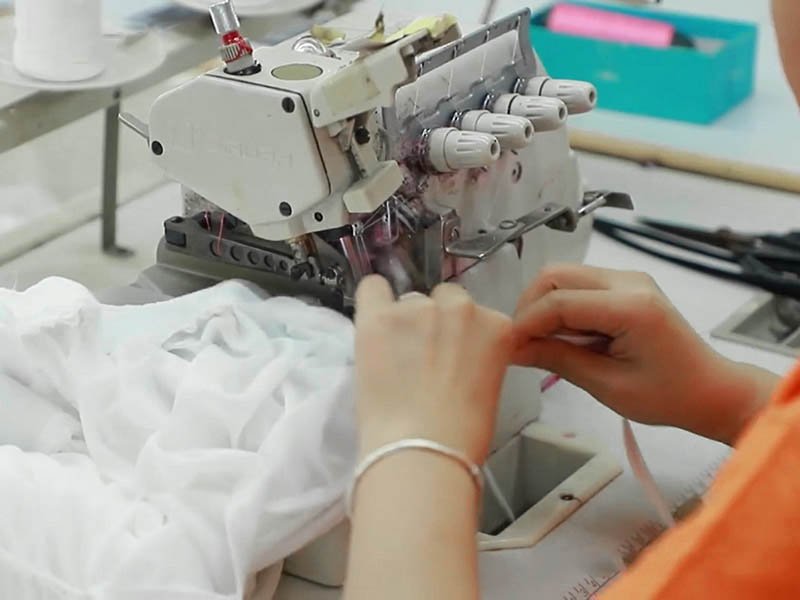
Sewing Sequence
- Tiered ruffles require correct assembly order and seam alignment.
- Sleeve and neckline ruffles need clean joining and soft inside finish.
- Sewing notes should reduce bulk around seams and edges.
Pressing and Shape Control
- Steam, pressure and handling method should match fabric route.
- Organza and satin ruffles need controlled surface protection.
- Final inspection should check volume after pressing and packing.
Multi-style Production Grouping
- Styles should be grouped by fabric, tier complexity and edge method.
- Heavy ruffle and light ruffle styles need different handling routes.
- Grouping supports stable quality across 10–30 style programs.
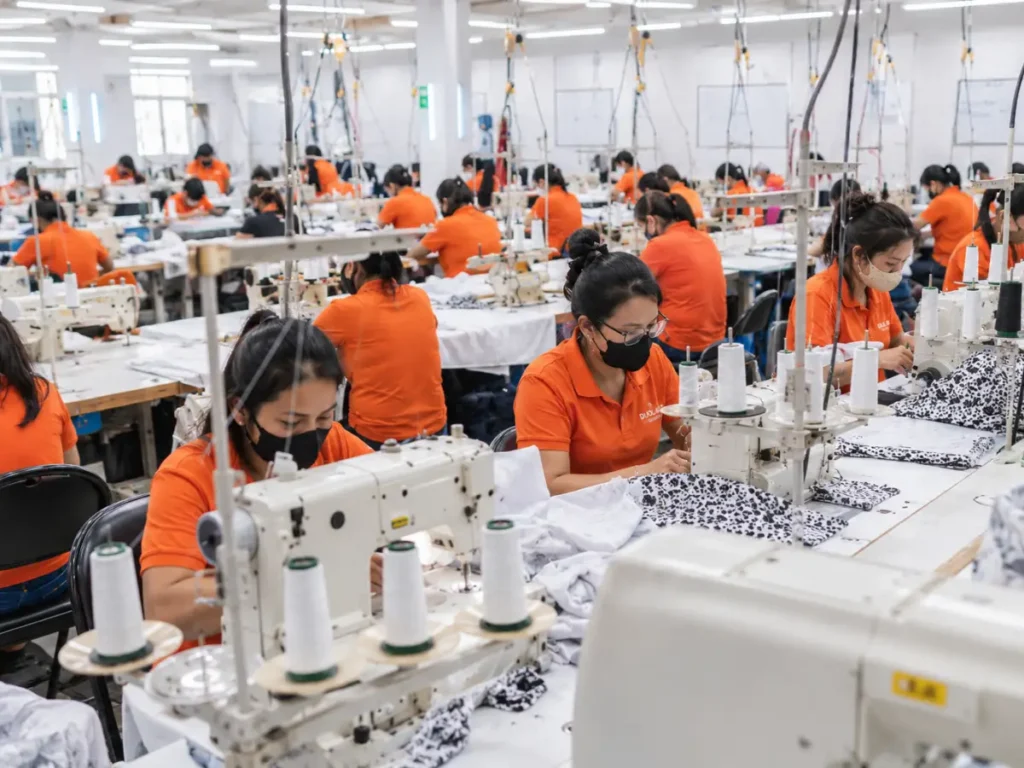
QC and Packing Standards for Ruffle Dresses
Ruffle dress QC must protect fabric behavior, placement, symmetry, edge finish, tier balance, fit and packed presentation. Duolan checks ruffle quality from material approval to packed cartons.
| QC Area | Ruffle Dress Risk | Duolan Control |
|---|---|---|
| Fabric QC | Ruffle falls flat or feels stiff | Drape, weight, handfeel review |
| Placement QC | Ruffle shifts across bulk pieces | Placement map and PP photos |
| Symmetry QC | Left and right sides look uneven | Front, side and back comparison |
| Edge QC | Ruffle edge frays or curls | Hem finish and edge cleanliness |
| Tier QC | Layer distance becomes unstable | Tier width and length review |
| Fit QC | Ruffle affects comfort or movement | Sleeve, neckline, waist and hem review |
| Packing QC | Ruffle volume gets crushed | Fold, hanger, tissue and carton route |
Manufacturing System and Ruffle Project Evidence
Manufacturing capacity connected to ruffle programs
- 1996 fashion dress development background supports detailed silhouette and fabric judgment.
- 5 ruffle-related dress directions cover mini, midi, maxi, tiered and occasion programs.
- 6 ruffle-control zones guide neckline, sleeve, waist, hem, tier and side seam review.
- 3-view sample review supports front, side and back approval for ruffle balance.
- South China textile resources support chiffon, organza, mesh, viscose, satin and cotton-blend fabrics.
- Humen trim resources support lace, binding, zippers, thread, straps and finishing details.
- 2-Pillar SMETA audit record supports structured supplier evaluation.
- Typical cooperating brand orders cover 10–30 styles and 20,000–80,000 pieces per order.
US Romantic Ruffle Dress Program
- Order scope: 18 styles across ruffle minis, ruffle midis and one-shoulder ruffle dresses.
- Total program quantity: about 44,000 pieces.
- Main controls: ruffle volume, sleeve comfort, neckline proportion, symmetry and PP records.
- Duolan actions: fabric review, sample correction, three-view photos and first-piece comparison.
- Program focus: romantic ruffle styles transferred from sample approval into controlled production.

Australian Resort Ruffle Drop
- Order scope: 14 styles across chiffon ruffle maxis and tiered resort ruffle dresses.
- Total program quantity: about 30,000 pieces.
- Main controls: lightweight drape, layer distance, transparency, hem movement and packing recovery.
- Duolan actions: opacity review, tier measurement, edge testing and packing reference setup.
- Program focus: airy ruffle dresses prepared for vacation styling and repeat color updates.

European Occasion Ruffle Line
- Order scope: 24 styles across organza ruffle dresses, satin ruffle styles and asymmetric ruffle midis.
- Total program quantity: about 68,000 pieces.
- Main controls: structured volume, edge finish, left-right balance, pressing and carton protection.
- Duolan actions: material locking, ruffle cutting control, PP photo records and packing route planning.
- Program focus: occasion ruffle dresses developed for formal presentation and stable bulk quality.
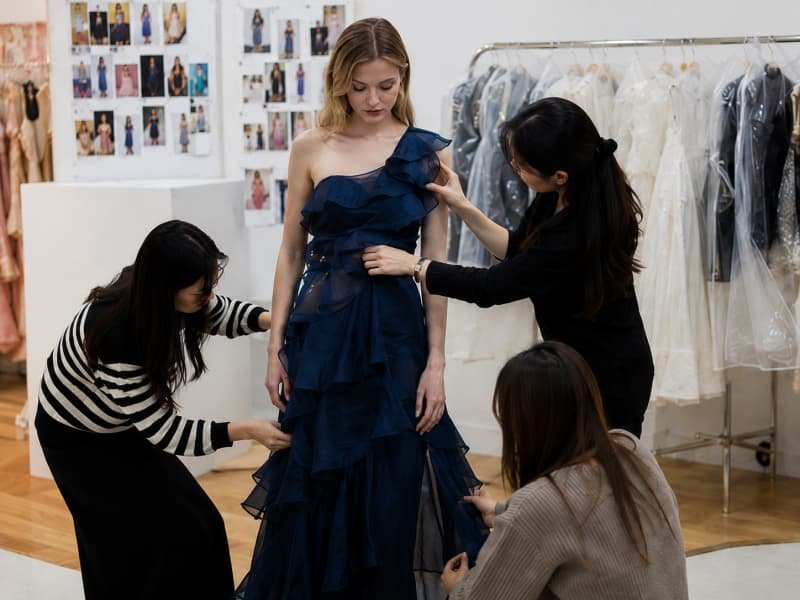
Social-first Ruffle Capsule
- Order scope: 12 styles across cascading ruffle, hem ruffle and sleeve ruffle dresses.
- Total program quantity: about 26,000 pieces.
- Main controls: camera-facing movement, three-view balance, layer effect and first-piece comparison.
- Duolan actions: photo sample review, ruffle placement records, revised sample correction and QC setup.
- Program focus: visual ruffle details prepared for close-up content and production repeatability.

FAQ|Custom Ruffle Dress Manufacturing

Send Your Ruffle Dress Project
Duolan works best with established fashion brands developing ruffle dress programs with clear style direction, fabric expectations and planned bulk production. Share reference images, tech packs, fabric direction, ruffle placement, intended volume or upcoming launch plan, and our team will review ruffle route, sample path, production readiness, QC points and packing needs before development begins.
Share your project details
- Ruffle dress type: mini, midi, maxi, tiered, sleeve ruffle, hem ruffle, one-shoulder, wrap, resort or occasion style.
- Ruffle position: neckline, sleeve, waist, hem, side seam, back opening, front panel or cascading section.
- Fabric direction: chiffon, organza, tulle, mesh, viscose-feel fabric, cotton blend, satin, lace or embroidered fabric.
- Ruffle effect: soft volume, structured volume, cascading ruffle, tiered rhythm, light movement or romantic detail.
- Project stage: first sample, fit sample, photo sample, revised sample, PP approval, bulk production or repeat order.
- Program information: style count, target quantity, colorways, size range, target launch date and delivery window.
- Production needs: fabric sourcing, pattern development, edge finish, QC, packing, labels, barcodes or repeat records.