Skip to content
Dress Product Development Manufacturer
Dress product development, sampling and bulk manufacturing for established fashion brands.
Duolan helps fashion brands turn dress sketches, reference garments, fabric directions, draft tech packs and sample comments into production-ready dress products. Our team reviews fabric behavior, pattern direction, fit risk, sample purpose and PP readiness before moving approved styles into bulk production, QC, packing and repeat programs.
- 16 owned womenswear factories support controlled product development-to-bulk handover.
- 20+ satellite factories support multi-style dress programs and repeat production.
- 300 sewing lines support bulk production across fashion dresses, occasion dresses, party dresses and structured styles.
- 50+ quick-response lines support sampling, test production and launch preparation.
- 15,000–35,000 monthly samples support frequent dress development cycles.
- 3,000–8,000 monthly style development flows support parallel product programs.
- SMETA 2-Pillar audit record supports supplier evaluation for established fashion brands.
Dress Product Development Goes Beyond Sample Making
Dress product development is not only sample making. A sample can show shape, fabric and first construction, but a production-ready dress needs fabric review, pattern correction, fit approval, BOM completion, PP standard, QC focus and bulk feasibility. A strong sample should move a product forward, not remain a one-off prototype.
Duolan treats dress development as a manufacturing preparation process. A sketch needs pattern logic. A reference garment needs measurable standards. A fabric swatch needs bulk sourcing review. A fit comment needs pattern correction. A sample approval needs PP preparation. A finished product needs QC, packing, barcode accuracy and reorder records.
For satin dresses, mesh party styles, bodycon silhouettes, corset structures, sequin minis and printed maxis, product risk often appears before bulk production begins. Duolan helps identify these risks during development, when fabric, pattern, fit and construction can still be corrected with lower cost and stronger control.
Built for Established Dress Brands and Product Teams
Global Fashion Brands
- Need suppliers able to move dress products from design review into sample development, PP approval and repeatable bulk production.
- Require stable standards across multiple styles, colorways, sizes, labels, packing formats and delivery windows.
- Duolan supports product development discipline for dress programs where visual identity and production consistency carry equal weight.
Regional Dress Brands
- Often develop several dress styles per launch and need sharper control over fit comments, fabric timing and production routes.
- Require fast movement without weak sample records, unstable materials or unclear PP standards.
- Duolan supports regional programs through fabric review, sample sequencing, pattern correction, QC planning and delivery preparation.
Occasionwear Brands
- Need polished products for graduation, cocktail, wedding guest, semi-formal and evening occasions.
- Care about drape, lining, support, zipper quality, movement comfort, pressing and final product presentation.
- Duolan helps move occasion dress ideas from reference concept to sample-approved, production-ready standards.
Partywear and Going-out Brands
- Work with fitted silhouettes, mesh, sequins, cut-outs, halter necklines, backless structures and shine fabrics.
- Need early risk review before visual details create bulk instability.
- Duolan checks stretch recovery, opacity, seam strength, inner finishing, edge treatment and packing protection.
Product Development Teams
- Need samples able to answer fit, fabric, construction, cost and production questions.
- Require clear revision records so design changes remain visible from sample room to production line.
- Duolan connects sample comments, pattern correction, material decisions and PP preparation into one controlled path.
Sourcing Offices and Procurement Teams
- Compare suppliers by development accuracy, production reliability, QC discipline, compliance records and delivery control.
- Need clear answers on whether a dress product is ready for sampling, revision, PP approval or bulk.
- Duolan provides project-based evaluation rather than generic factory promises.
Product Development, Sample Making and Production
Dress product development sits between design direction and bulk manufacturing. It creates the technical bridge needed before a dress can become a repeatable production product.
| Service Stage | Starts From | Main Focus | Duolan Role |
|---|---|---|---|
| Dress Product Development | Sketch, reference dress, fabric swatch, sample comments | Fabric, pattern, fit, sample, technical standard | Develop the product into production-ready condition |
| Sample Making | Design file, pattern, selected fabric | Physical prototype | Test look, fit, construction and fabric behavior |
| Design To Production | Design input and production goal | Full path from development to bulk delivery | Connect sample, PP, bulk, QC and packing |
| OEM Dress Production | Tech pack, approved sample, BOM, size spec | Bulk execution | Produce confirmed styles according to brand files |
| Custom RTW Manufacturing | Standard-size sellable garments | Retail-ready production and repeat orders | Support bulk dress programs and channel-ready delivery |
Dress Development Inputs Duolan Can Work From
Sketch or CAD Direction
- Strong sketches help pattern teams understand proportion, seam structure and visible construction details.
- Missing back views, unclear closure positions or vague seam lines may create repeated sample corrections.
- Duolan checks whether the design direction fits the intended fabric, size range and launch timing.
- Development review also identifies which areas need technical clarification before first sample work begins.

Reference Dress or Original Sample
A reference dress gives more than visual direction. It can show handfeel, fit level, lining method, workmanship target, zipper position, seam quality, hem balance and garment weight. Duolan reviews reference garments as measurable development inputs. The goal is to understand which parts should be followed, which parts need improvement and which parts may create risk during bulk production.
- Reference samples clarify fit, proportion, fabric behavior, finishing level and construction expectations.
- Duolan checks whether the reference construction can work under the required fabric, order quantity and size range.
- Improvement requests should be separated from copy-based development to protect brand originality.
- Measurements, BOM notes, fabric comments and sample feedback convert the reference into production language.

Fabric Swatch or Material Direction
- A swatch may look attractive but fail in dress length, body movement, opacity or sewing stability.
- Stretch and recovery affect bodycon dresses, fitted minis, mesh panels and halter styles.
- Opacity and lining need early review for light colors, lace, mesh, chiffon and white dresses.
- Bulk sourcing stability matters because fabric changes after sample approval can affect fit, color and delivery.

Sample Comments or Failed Sample
A failed sample can still create value when comments are converted into development actions. Duolan reviews whether the problem comes from pattern, fabric, construction, fit expectation or finishing. Comments such as “not flattering,” “too tight,” “poor drape” or “not premium enough” need to become specific correction points before the next sample round begins.
- Fit comments are translated into bust, waist, hip, length, neckline, strap, sleeve, back or hem adjustments.
- Fabric issues are reviewed by drape, recovery, opacity, shrinkage, handfeel and bulk feasibility.
- Construction issues may involve zipper, lining, seam type, edge finish, support structure or trim placement.
- A clear correction record reduces repeated sample rounds and protects later PP preparation.
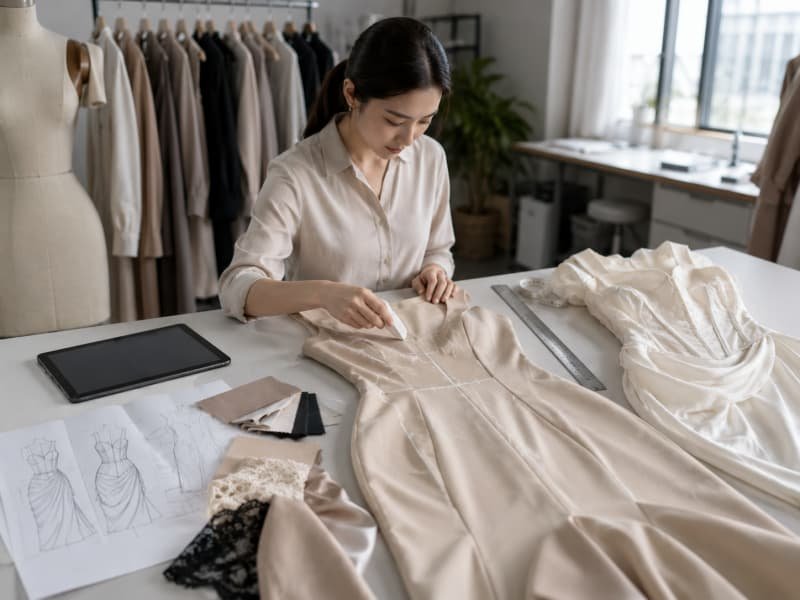
Draft Tech Pack
- Key review areas include measurement tolerance, grading, seam construction, lining, zipper, trim and label placement.
- Incomplete BOM information may affect costing, sourcing lead time and PP sample confirmation.
- Packing and barcode requirements should be added before bulk production planning.
- A draft tech pack becomes stronger after first sample review, fit comments, material approval and PP confirmation.
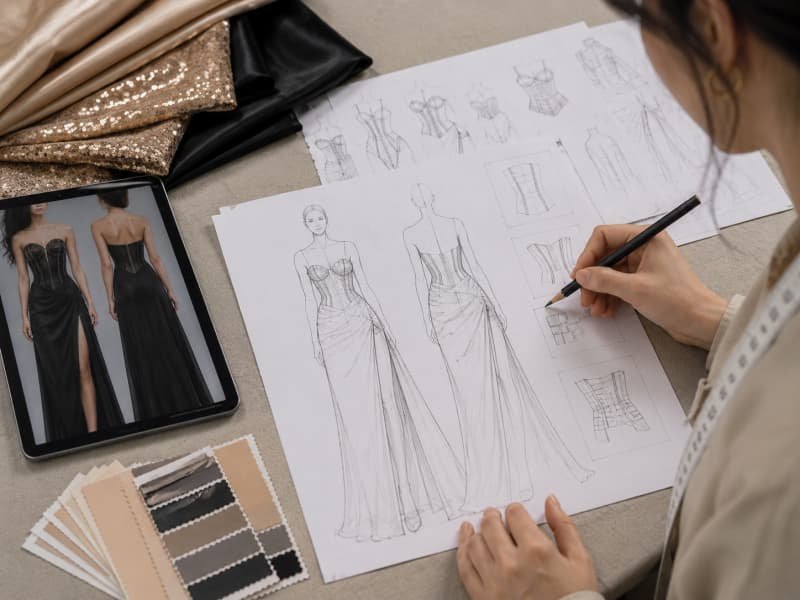
Dress Product Types That Need Development Control

Fashion Dresses
- Development focus includes silhouette, proportion, fabric movement, seam placement and finishing level.
- Sample review connects design comments with pattern correction, fabric adjustment and PP standard preparation.
- Bulk control focuses on measurement tolerance, color consistency, surface finish, label position and packing condition.
- Fashion dress programs suit ecommerce drops, seasonal launches, capsule lines and repeatable commercial styles.

Occasion Dresses
- Suitable categories include cocktail, graduation, wedding guest, semi-formal, formal and evening-inspired dresses.
- Key checks include bust support, lining coverage, drape, zipper strength, hem level and final pressing.
- Satin and chiffon styles need seam, pressing and packing control to protect surface quality.
- Event-season delivery requires clearer sample timing, material approval and shipment preparation.

Party Dresses
- Stretch recovery, opacity, lining placement and edge finishing need early review.
- Sequin and embellished styles require skin-contact protection, seam allowance cleaning and packing care.
- Backless, halter and cut-out dresses need support structure, strap strength and movement testing.
- Bulk QC focuses on seam elasticity, surface damage, loose decoration, measurement drift and final presentation.

Fitted and Bodycon Dresses
- Negative ease, recovery, opacity, side seam balance and waist-hip proportion are key development points.
- Different colors or fabric batches may behave differently, so bulk fabric must be reviewed before cutting.
- Fit sample comments should become measurable pattern and tolerance corrections.
- Production control focuses on seam strength, hem stability, twisting, transparency and size accuracy.

Resort and Vacation Dresses
- Suitable products include printed maxis, vacation minis, lightweight midi dresses and destination styles.
- Fabric checks include opacity, handfeel, shrinkage, color fastness, wrinkle behavior and bulk availability.
- Print and panel placement need early approval before cutting.
- Packing review helps reduce creases, surface pressure and poor arrival condition after shipping.

Structured Dresses
- Key development areas include bust support, cup symmetry, boning position, lining structure and back stability.
- Structured dresses need stronger first-piece confirmation because hidden construction affects final wear.
- Pattern grading must protect support and proportion across sizes.
- Bulk QC focuses on symmetry, support strength, zipper function, inner finish, comfort and final garment shape.
Dress Product Development Risk Map
Product risk should be reviewed before sample investment becomes expensive. Duolan checks fabric, fit, construction and process risks during development, before bulk production pressure begins.
| Dress Product Direction | Development Risk | Duolan Review |
|---|---|---|
| Satin midi dress | Seam puckering, pressing marks, poor drape | Fabric weight, stitch method, lining and pressing trial |
| Mesh party dress | Transparency, edge instability, coverage issue | Opacity map, lining placement, stretch and edge finish |
| Bodycon dress | Poor recovery, twisting, size inconsistency | Stretch test, negative ease, seam elasticity, tolerance |
| Sequin mini dress | Dropped sequins, scratchy seams, packing damage | Sequin direction, lining, seam cleaning, packing protection |
| Corset dress | Weak support, poor cup symmetry, uncomfortable boning | Cup position, boning channel, back structure, grading |
| Halter / backless dress | Neck load, bust instability, strap stretching | Support structure, strap strength, closure and movement |
| Printed maxi dress | Print imbalance, shrinkage, uneven hem | Print placement, shrinkage review, panel balance, cutting direction |
Fabric-to-fit Development Logic
Fabric Supports Silhouette
- Duolan reviews fabric weight, drape, opacity, stretch, recovery and surface effect before sample direction is locked.
- Mini, midi, maxi, fitted and structured dresses need different fabric decisions.
- Poor fabric-to-silhouette matching may cause repeated samples, weak fit and unstable bulk quality.
- A strong fabric decision supports sample accuracy, cost control and future reorder stability.
Stretch Changes Pattern
- Duolan reviews stretch direction, recovery, opacity and measurement tolerance before PP approval.
- Pattern adjustment should match fabric tension rather than copy woven-fit logic.
- Different color batches may change stretch behavior, so bulk fabric review matters.
- Stretch products need extra attention on side seams, hem stability, twisting and transparency.
Opacity Changes Construction
- Duolan checks opacity under movement, stretch and real wearing angles.
- Lining placement affects comfort, coverage, cost and garment appearance.
- Light colors and sheer fabrics require careful label placement and inner finish review.
- Opacity planning reduces return risk and avoids late-stage redesign.
Weight Changes Drape and Hem
- Duolan reviews weight in relation to garment length, seam strength and silhouette.
- Hem balance requires shrinkage, panel cutting and final pressing control.
- Long dresses need stronger planning for packing creases and shipping condition.
- Weight review helps reduce uneven hems, poor movement and distorted garment shape.
Surface Changes QC and Packing
- Duolan reviews surface risk before sample approval and bulk packing.
- QC points may include shine marks, loose threads, surface damage, sequin loss or direction mismatch.
- Packing must protect surface quality, hem condition and garment shape.
- Strong surface control helps maintain ecommerce and retail presentation after shipment.

Pattern and Sample Development Path
Pattern Direction
- Sketches and references are converted into pattern lines, shaping points and construction logic.
- Fabric behavior influences ease, seam placement, support and tolerance.
- Fit-sensitive styles need earlier review of bust, waist, hip, strap and back structure.
- Strong pattern direction reduces repeated sample rounds and improves PP readiness.
First Sample
- A useful first sample shows development problems clearly enough for correction.
- Fabric mismatch, poor balance, weak support or unclear construction should be identified early.
- First sample comments should separate fit issues, fabric issues and workmanship issues.
- Mature first-sample review helps avoid unnecessary remake cycles.
Fit Sample
A fit sample checks body relationship, movement, comfort and coverage. For fitted dresses, bodycon styles, corset dresses, halter structures and backless silhouettes, fit review must include more than static measurements. Duolan reviews how the dress behaves when worn and whether size logic can move toward bulk.
- Bust, waist, hip, neckline, strap, back, length and hem are checked according to style type.
- Movement review helps identify slipping, tightness, twisting, gaping or poor support.
- Fabric recovery and opacity are reviewed together with measurements.
- Fit approval should prepare the style for PP sample, not only visual approval.
Revised Sample
- Each revision should have a clear purpose and measurable correction target.
- Construction updates should move into production notes instead of staying in sample room memory.
- Fabric changes should trigger fit and construction review.
- Strong revision control improves bulk consistency and future reorder preparation.
PP Sample Preparation
- PP sample confirms what the production line must repeat.
- BOM, size spec, process notes and QC points must align with the approved garment.
- Packing and label instructions should be confirmed before production completion.
- A strong PP standard improves bulk control and repeat order stability.

Fit Revision and Product Correction System
Fit Comments
- Bust balance, waist position, hip ease and hem level are reviewed by garment type.
- Neckline, strap and back comments are critical for halter, strapless and backless dresses.
- Bodycon and fitted styles need movement review, not only static measurements.
- Accurate comments reduce repeated revisions and improve sample-to-bulk consistency.
Fabric Change Review
- Drape changes can affect skirt fall, hem balance and body proportion.
- Stretch and recovery changes can affect comfort and measurement tolerance.
- Opacity changes may require lining, coverage or seam placement updates.
- Bulk fabric availability should be reviewed before sample approval.
Construction Correction
- Invisible zippers in fitted dresses require seam balance and strength review.
- Mesh, chiffon and lace edges need clean finishing without bulky seams.
- Corset and structured dresses need inner support sequencing before bulk sewing.
- Approved changes should appear in PP sample, BOM, process notes and QC checkpoints.
Revision Record
Each sample round should leave a clear record. The record should explain what changed, why it changed, which pattern or material was updated, and what the next sample must confirm. Without disciplined records, approved decisions can disappear during later sample rounds or production handover.
- Revision records connect comments to pattern updates, fabric notes, BOM changes and size spec adjustments.
- Multi-style dress programs need records to avoid mixing comments between similar styles.
- PP preparation becomes easier when every approved change has a written reference.
- Strong records support repeat orders, color extensions and faster reorder preparation.
Technical Standard Completion

BOM Completion
- Main fabric, lining, trims, thread, zipper, hardware, labels and packing items should be recorded clearly.
- BOM completion connects sample decisions with purchasing and production.
- Missing BOM details may cause late substitutions, cost changes or quality variation.
- Repeat orders become easier when original BOM records remain usable.

Size Spec and Tolerance
- Measurements should include critical points such as bust, waist, hip, length, neckline, strap, sleeve, hem and slit.
- Tolerance should match garment type and fabric behavior.
- Fitted, structured and stretch dresses need sharper measurement control.
- Strong size specs reduce bulk fit disputes and improve grading stability.

Construction Notes
- Construction notes should record lining method, zipper installation, seam type, edge finish, support structure and special workmanship.
- These notes help production teams repeat approved sample decisions.
- Hidden structures in corset, strapless and structured dresses need extra clarity.
- Construction notes reduce reliance on verbal memory.

Label, QC and Packing Notes
- Label placement, care label position, barcode, folding method, polybag and carton ratio should be defined before bulk completion.
- QC notes should highlight style-specific risks, not generic inspection points.
- Packing notes should protect satin, sequins, hems, pleats and structured shapes.
- Complete notes support channel-ready delivery and repeat production.
Sample Type Decision Matrix
Different samples answer different product questions. Duolan uses sample stages to move a dress product from concept evaluation into production readiness.
| Sample Type | Development Purpose | What It Should Confirm |
|---|---|---|
| Proto / First Sample | Test if design can become a garment | Silhouette, fabric behavior, construction direction |
| Fit Sample | Check standard-size body relationship | Bust, waist, hip, neckline, comfort, movement |
| Revised Sample | Confirm sample comments | Pattern correction, fabric change, construction update |
| Photo Sample | Support visual review | Color, drape, finish, surface presentation |
| Salesman Sample | Support commercial review | Product look, quality feel, fit impression |
| PP Sample | Become production benchmark | Material, measurement, workmanship, label, packing, QC |
Material and Trim Development for Dress Products
Main Fabric
- Fabric usually influences 30–55% of garment cost.
- Fabric behavior affects pattern correction, fit tolerance and sample rounds.
- Bulk fabric stability affects color, handfeel, shrinkage and repeat production.
- Poor fabric choice can increase QC pressure and return risk.
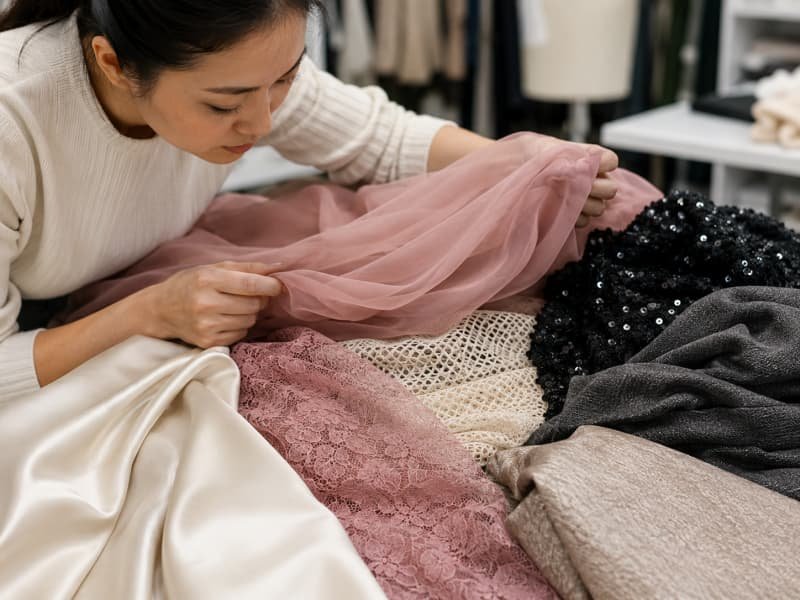
Lining and Support
Lining, cups, boning, elastic and interfacing can determine whether a dress feels wearable. Inner construction matters most in mesh, lace, sequin, corset, strapless, white and fitted styles.
- Lining controls opacity, comfort, inner finish and premium feel.
- Support structures affect bust security, garment shape and movement confidence.
- Removing lining to reduce cost may increase complaints in sheer or fitted styles.
- Inner support must be confirmed before PP sample.

Zipper and Closure
Closure affects wearing function and garment stability. Invisible zippers, hooks, back closures, halter fastenings and corset closures need careful review before bulk.
- Zipper strength matters in fitted and structured dresses.
- Closure placement affects fit, comfort and appearance.
- Hardware edges and hook positions need skin-contact review.
- Poor closure decisions can create production defects and after-sale complaints.

Decorative Elements
Sequins, embroidery, print, beading, pleating, dyeing and washing can increase product value while adding development risk. Duolan reviews decorative work by fabric compatibility, durability, comfort, placement and packing needs.
- Special processes can influence 5–25% of garment cost.
- Strike-offs or sample trials may be needed before approval.
- Decoration may change fabric weight, stretch or seam behavior.
- Packing protection should be planned before bulk completion.

Complex Dress Structure Review

Corset and Bustier Structure
- Cup symmetry, bust support and neckline stability require sample-level review.
- Boning placement affects comfort, shape and grading.
- Back structure must balance support and wearability.
- Bulk production needs first-piece approval for hidden construction.

Halter and Backless Structure
- Strap strength, neckline tension and bust security need early review.
- Movement testing helps prevent slipping, pulling or discomfort.
- Fabric stretch may change strap load and fit over time.
- Closure placement and lining affect both comfort and appearance.
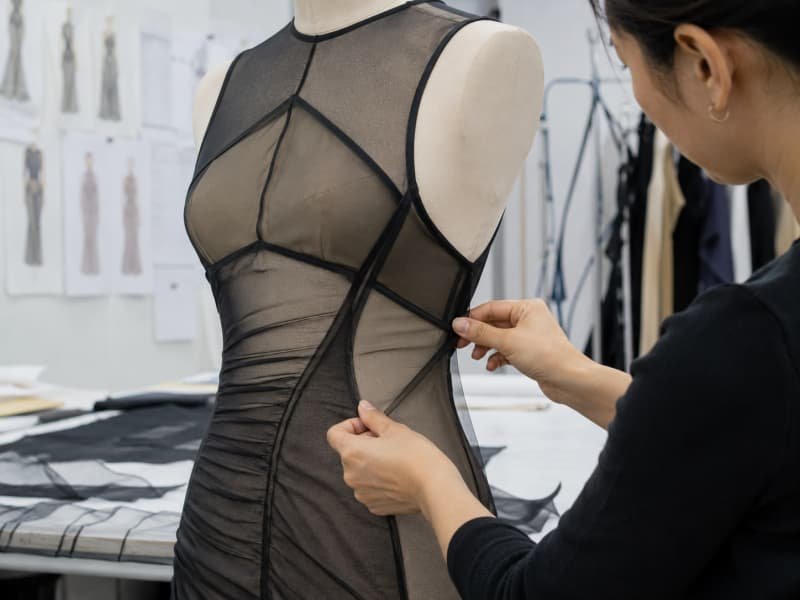
Cut-out and Mesh Structure
- Opacity mapping helps protect wearing confidence.
- Edge finishing should avoid curling, stretching or bulky seams.
- Mesh stretch needs pattern and measurement tolerance review.
- Lining placement should support coverage without weakening visual effect.

Sequin and Embellished Structure
- Heavy surfaces may affect strap load, hem fall and zipper function.
- Seam allowance cleaning helps reduce scratchiness and poor inner finish.
- Loose decoration and surface damage need dedicated QC points.
- Packing should protect shine, shape and surface durability.
Product Development Cost Logic
Dress product development cost depends on material, fit work, sample rounds, construction, special processes and production readiness. The ranges below are planning references for project evaluation.
| Cost Driver | Typical Influence Range | Why It Matters in Dress Product Development |
|---|---|---|
| Main fabric | 30–55% | Fabric type, weight, width, shrinkage, surface and sourcing stability affect product cost and repeatability |
| Pattern and fit work | 5–12% | Complex fit, bodycon tension, corset structure and grading require more development work |
| Sampling and revision | 3–10% | Multiple rounds may be needed for fabric, fit, construction and PP readiness |
| Sewing complexity | 15–30% | Lining, corset work, mesh, sequin, cut-out and delicate fabrics increase labor time |
| Trims and support | 5–15% | Zippers, boning, cups, lining, elastic, hardware and labels affect function and product feel |
| Special process | 5–25% | Print, embroidery, sequin, pleating, dyeing or washing adds trial and QC cost |
| QC and finishing | 3–8% | Delicate dresses require more inspection, pressing, cleaning and packing checks |
| Packaging | 2–8% | Hangtags, barcodes, polybags, carton ratio and surface protection affect delivery readiness |
Product Readiness Before Bulk
Approved Sample Standard
- Final look, fit, fabric, construction and finish should be confirmed before production planning.
- Approved samples should not rely on verbal comments or unclear visual judgment.
- PP sample preparation turns development approval into a line-ready standard.
- Without a confirmed sample standard, bulk production may drift from intended product quality.
Fabric and Trim Confirmation
- Bulk fabric must be checked for color, shrinkage, handfeel, width, defects and batch consistency.
- Zippers, lining, cups, boning, elastic, labels and hardware should be approved before production starts.
- Late trim changes can affect cost, lead time and product function.
- Material confirmation supports bulk consistency and future repeat orders.
Technical File Completion
- BOM, size spec, tolerance, construction notes, QC points and packing requirements should align with approved sample.
- Product files help purchasing, production, QC and packing teams work from the same standard.
- Fit-sensitive garments need sharper tolerance and grading notes.
- Technical file completion reduces confusion during production handover.
PP and Line Handover
- PP sample gives the production line a physical benchmark.
- Process notes explain critical workmanship, hidden construction and high-risk areas.
- First-piece confirmation checks whether production understands PP requirements.
- Strong line handover reduces repeated defects during bulk.
Equipment Support for Product Development and Bulk
Fabric Inspection and Cutting Preparation
- Helps satin, chiffon, mesh, lace, print and directional fabrics enter cutting with fewer avoidable issues.
- Supports panel balance, print placement, fabric direction and size accuracy.
- Reduces risks such as uneven hem, poor drape, shade variation and fabric mismatch.

Pattern, Sample and Development Equipment
- Helps turn sketches, reference garments and draft tech packs into sample-ready pattern directions.
- Supports sample revisions for fitted, structured, satin, mesh and occasion dress projects.
- Useful for brands managing 10–30 dress styles per order.
Core Sewing Equipment
- Supports lined dresses, fitted dresses, halter styles, bodycon silhouettes and structured garments.
- Helps production teams handle seam quality, stitch tension, zipper position, strap reinforcement and support points.
- Supports sample-approved standards across sizes, colors and bulk quantities.
Printing Equipment
- Supports print placement, color direction and surface story development.
- Requires fabric compatibility review before production approval.
- Helps connect visual development with cutting, QC and packing needs.

Embroidery Equipment
- Useful for partywear, occasionwear and fashion dress details.
- Requires placement, thread tension, fabric distortion and skin-contact review.
- Embroidery decisions should connect to cost, lead time, QC and packing.
Pressing, QC and Packing Support
- Pressing and finishing support satin, chiffon, structured and long dresses before packing.
- QC and packing support measurement, needle detection, folding, bagging, barcode printing, carton sealing and shipment preparation.
- These resources protect final presentation, SKU clarity and delivery condition.
Manufacturing System After Product Approval
Owned Factory Control
- 16 owned womenswear factories support key dress products, sensitive styles and PP-controlled production.
- Owned factories are important for structured dresses, fitted silhouettes, high-risk fabrics and brand-critical launch styles.
- Direct control helps protect sample-to-bulk handover and project accountability.
Satellite Factory Coordination
- 20+ long-term satellite factories support repeat orders, volume expansion and multi-style allocation.
- Satellite factories are coordinated through PP samples, BOM, process notes, QC points and delivery requirements.
- Flexible capacity does not mean random outsourcing; project standards remain unified.
Quick-response and Bulk Lines
- 50+ quick-response lines support sampling, test production and launch preparation.
- 300 sewing lines support bulk production after PP standards are locked.
- Quick-response capability and bulk capacity work together when development moves into production.
Process Resource Matching
- Print, dyeing, embroidery and washing resources can be matched to dress product needs.
- Process choices are reviewed by fabric, cost, timeline, QC and wearability.
- Mature process matching reduces risk when decorative details move from sample to bulk.
Project Team Coordination
- Development, pattern, sample, sourcing, production, QC, packing and shipment teams need one product standard.
- Duolan coordinates product records, sample status, fabric approvals and production handover.
- Strong coordination supports multi-style orders and repeat programs.

Multi-style Dress Product Development
Established brands often develop 10–30 styles in one project. Duolan organizes multi-style development by fabric, fit risk, construction difficulty, sample priority and production route.
Style Grouping
- Dress styles are grouped by fabric type, fit sensitivity, construction difficulty and production risk.
- Satin midis, mesh minis, sequin party dresses and corset styles should not follow one development route.
- Style grouping helps sampling, costing, factory routing and QC planning.
Shared Material Review
- Several styles may share one fabric, lining, color or trim family.
- Shared materials should be reviewed early because one fabric decision can affect multiple products.
- Duolan checks drape, shrinkage, shade, stretch, opacity and bulk availability before multiple samples move forward.
Sample Sequence
- High-risk styles, core commercial styles and shared-fabric styles should be prioritized.
- Lower-risk extension styles can follow once pattern and material direction are more stable.
- Strong sample sequence protects development time and reduces repeated changes.
Production Route
- Complex and commercial styles may need different production handling.
- Duolan matches garment risk, quantity, fabric and delivery timing with factory and line routes.
- Product development becomes stronger when production feasibility is considered before PP approval.
Packing and SKU Readiness
- Multi-style projects need accurate labels, barcodes, carton marks and packing ratios.
- SKU separation should be planned before shipment preparation.
- Strong packing records support ecommerce, wholesale and warehouse receiving.
Product Development to Bulk Handover Checklist
Product development creates value only when approved standards transfer into production. Duolan uses handover records to reduce sample-to-bulk drift and protect future repeat orders.
| Handover Item | What Gets Locked | Why It Matters |
|---|---|---|
| Approved Product Sample | Final fit, fabric, construction and finish | Prevents production from relying on vague visual judgment |
| BOM | Fabric, lining, trims, labels, packing items | Connects development decisions to purchasing and production |
| Size Spec | Measurements, tolerance, grading | Controls standard-size consistency |
| Pattern Record | Approved pattern and correction notes | Supports repeat production and style extension |
| PP Sample | Physical production benchmark | Guides line, QC and packing teams |
| QC Points | Style-specific risk checks | Keeps product risk visible before shipment |
| Packing Standard | Folding, barcode, polybag, carton ratio | Supports channel-ready delivery |
| Reorder Record | Fabric, color, PP and QC notes | Supports future repeat orders |
QC Standards for Developed Dress Products
Fabric and Material QC
- Fabric, lining and trims are checked for color, defects, shrinkage, opacity, stretch, handfeel and shade.
- Satin, mesh, lace, sequin, chiffon and printed fabrics need different inspection focus.
- Material QC protects drape, fit, color consistency and repeatability.
- Early material issues should be solved before cutting and sewing spread the risk.
Fit and Measurement QC
- Bust, waist, hip, neckline, strap, length, sleeve, hem and key tolerance points are checked against approved standard.
- Fit-sensitive styles need closer review across sample size, graded sizes and stretch behavior.
- Bodycon, corset and backless dresses need movement and support considerations.
- Measurement QC reduces size complaints and sample-to-bulk variation.
Construction QC
- Seam quality, zipper, lining, support, straps, slit, edge finish, boning and trim placement are reviewed by style.
- Hidden construction in corset, structured and lined dresses requires extra care.
- Inline QC checks whether production remains aligned with PP sample.
- Construction QC protects wearer experience and product durability.
Final and Packing QC
- Final QC reviews appearance, stains, loose threads, pressing, labels, barcode and garment presentation.
- Packing QC checks folding, polybag, hangtag, carton mark and packing ratio.
- Satin, sequin, pleated and structured dresses need packing protection.
- Strong final control supports channel-ready delivery.
Dress Product Development Case Studies
US Occasion Dress Product Development
- Project scope: 18 styles, 42,000 pieces, 2 shipment batches.
- Sample timeline: first sample to PP approval completed in 38 days.
- Bulk window: production and packing completed within 63 days after material approval.
- Quality result: final inspection pass rate reached 98.1%; post-shipment claim rate stayed near 0.8%.
- Control actions: satin drape review, lining adjustment, zipper standard, hem balance and barcode packing.

Australian Party Dress Development
An Australian partywear brand developed a capsule with mesh, cut-out, fitted and sequin-influenced dress styles.
- Project scope: 16 styles, 36,000 pieces, 3 shipment waves.
- Sample timeline: high-risk first samples reviewed within 22 days.
- Bulk window: delivery waves aligned with launch calendar and ecommerce release plan.
- Quality result: inline defect closure reached 95.7%; return-related claim rate stayed near 1.1%.
- Control actions: stretch recovery check, opacity map, edge finishing, lining comfort and sequin packing protection.

European Resort Dress Development
- Project scope: 14 styles, 28,500 pieces, 6 print or color directions.
- Sample timeline: fabric and print approval completed in 16 days.
- Bulk window: production completed in 54 days after PP confirmation.
- Quality result: measurement compliance reached 97.4%; final inspection pass rate reached 98.0%.
- Control actions: print placement review, shrinkage check, drape correction, hem level and wrinkle control.

Repeat Fitted Dress Product
A repeat dress program extended a proven fitted silhouette into new colors and updated details.
- Project scope: 12 styles, 58,000 pieces across 3 repeat rounds.
- Development result: reorder preparation time reduced by 23% after BOM, PP sample and pattern records were reused.
- Bulk result: repeat production stayed within confirmed packing calendar.
- Quality result: repeat defect rate reduced from 1.3% to 0.7%.
- Control actions: shade band, seam elasticity, pattern record, PP reference and packing repeatability.

Dress Product Development FAQ

Send Your Dress Product for Development Review
Duolan works with established fashion brands, product teams, sourcing offices and procurement teams needing dress product development connected to bulk production. Send project information for review across fabric suitability, pattern direction, sample path, fit risk, technical standard completion and production readiness.
Share Product Direction
- Dress product type: fashion dress, occasion dress, party dress, fitted dress, resort dress or structured dress.
- Current development stage: sketch, reference garment, failed sample, first sample, fit revision, PP approval or bulk planning.
- Key files: sketch, CAD, reference dress, draft tech pack, fabric swatch, size chart or sample comments.
Share Production Plan
- Planned style count, target quantity, colorways, size range and launch date.
- Fabric direction, trim details, special process and quality expectations.
- Label, barcode, polybag, carton and channel-ready packing requirements.
Duolan Will Review
- Fabric suitability, fit risk and product development path.
- Pattern direction, sample purpose and revision needs.
- PP readiness, bulk handover, QC focus and repeat production preparation.