Skip to content
Custom PU Leather Dress Manufacturer
Custom PU leather dress development and manufacturing for established fashion brands.
Duolan supports fashion brands developing PU leather dresses where material surface, seam control, edge finish, fit structure, lining comfort, zipper route, photo sample accuracy, PP records, packing protection and bulk consistency decide final garment value across mini, bodycon, corset-inspired, strapless, slit, cut-out, party and contemporary programs.
- 1996 fashion dress development background supports structure-sensitive and surface-material dress judgment.
- 5 PU-leather-related dress directions cover mini, bodycon, corset-inspired, slit and party programs.
- 6 PU control zones guide surface, seams, edges, lining, zipper and packing review.
- 3-view sample review checks PU leather fit across front, side and back angles.
- 10–30 styles per cooperating order fit multi-style PU leather dress launch programs.
- 20,000–80,000 pieces per brand order support mature seasonal production and repeat planning.
- South China textile resources support PU-coated fabric, faux leather, stretch backing, linings and mixed-material routes.
- Humen trim resources support zippers, snaps, hooks, buckles, bindings, labels and packing details.
PU Leather Dresses Need Surface Control, Not Only a Leather-look Effect
PU leather dresses create value through a leather-look surface, structured shape, party impact, city styling and clean body line. A PU material may look strong on a swatch, yet garment quality depends on coating stability, backing fabric, cutting direction, sewing route, lining, edge finish, fit pressure and packing method.
Weak development often creates surface creases, hard fold marks, peeling, seam cracking, visible needle holes, flipped edges, hot inner feel, zipper waves or packed garments arriving with pressure marks. Duolan develops PU leather dresses through material behavior, structure review and production records. Surface finish, backing fabric, seam route, needle-hole risk, lining plan, edge method, packing route, PP photos and first-piece comparison are reviewed before production so approved PU effects can repeat across bulk pieces.
Built for Established PU Leather Dress Programs
Partywear Brands
Clubwear and Night-out Brands
Contemporary Dress Brands
Structured Dress Brands
Product Development Teams
Sourcing Offices
PU Leather Dress Types Duolan Can Develop

PU Leather Mini Dresses
- Mini length needs sitting and walking review before production approval.
- Hem and side edges should stay flat without peeling or flipping.
- Surface folds should be checked before packing standards are confirmed.

PU Leather Bodycon Dresses
- Stretch backing should support close fit without coating damage.
- Side seams and zipper zones need tension review.
- Surface stretch should not create cracking, shine distortion or waves.

PU Leather Midi Dresses
- Midi panels need clean fall without hard fold lines.
- Lining should support comfort during longer wear.
- Packing route should protect surface and hem shape.

PU Leather Corset-inspired Dresses
- Panel seams should shape the body without tearing coating.
- Boning route needs clean inside finish and surface protection.
- Cup and waist positions should be reviewed across size range.

PU Leather Strapless Dresses
- Top edge should stay secure without harsh marks.
- Inner support should remain hidden and comfortable.
- Smooth surface around bust and back needs careful review.

PU Leather Slit Dresses
- Slit endpoints need reinforcement based on PU thickness.
- Edges should stay flat, smooth and comfortable during walking.
- PP records should show approved slit height and edge finish.

PU Leather Cut-out Dresses
- Cut-out edges should avoid peeling, curling and rough contact.
- Openings need coverage review through side and movement angles.
- Size grading should preserve cut-out placement and support.
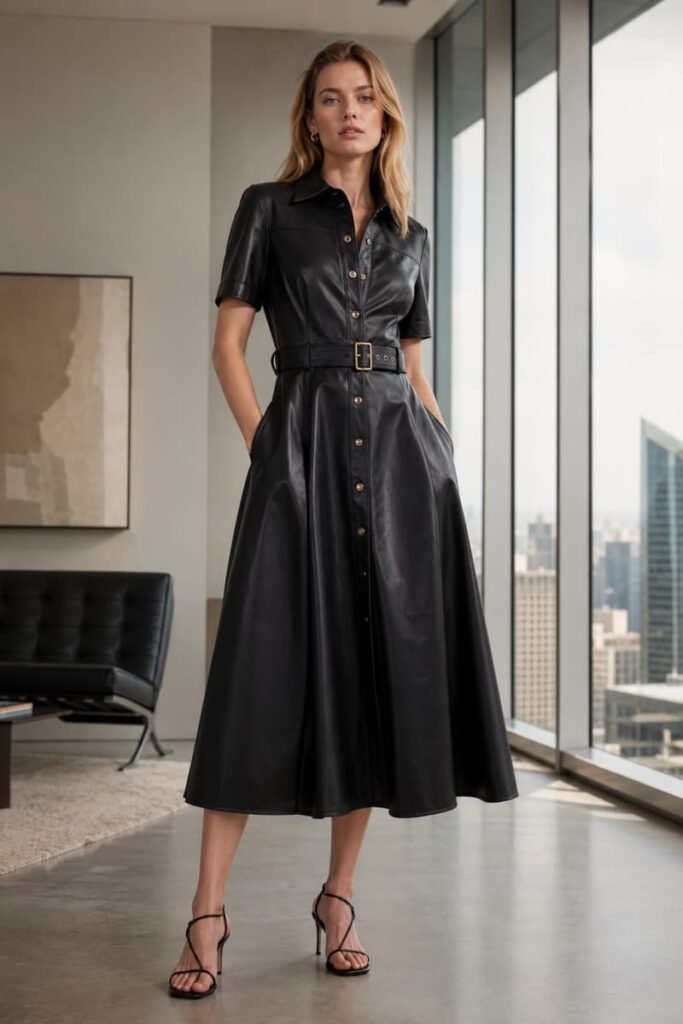
PU Leather Shirt Dresses
- Shirt details need clean construction without bulky edges.
- Placket and collar areas should avoid hard fold marks.
- Belt and buckle contact should not damage PU surface.

PU Leather A-line Dresses
- A-line shape should hold without stiff or uneven hem edges.
- Waist seam needs strength and smooth surface transition.
- Packing should protect flare shape and surface finish.

PU Leather Belted Dresses
- Belt areas need pressure-mark and friction review.
- Buckles and loops should support fit without surface damage.
- Waist structure should remain smooth after packing.

PU Leather Party Dresses
- Glossy PU requires strong surface and packing control.
- Body fit should not pull seams or coating excessively.
- Photo samples should record front, side and back surface effect.

PU Leather Mixed-material Dresses
- Mixed materials need seam and stretch compatibility review.
- PU edges should not damage softer panels.
- Panel records help protect bulk consistency.
PU Material Selection, Surface Finish and Backing Fabric

Matte PU Leather
Matte PU supports contemporary, city and structured dress directions. It can look refined and less reflective, yet still reveals pressure marks, scratches and poor edge finish. Duolan reviews matte surface consistency, panel balance, seam visibility and packing route before bulk preparation.
- Matte surfaces need shade, grain and scratch review.
- Panel lines should stay smooth without surface drag.
- Packing should avoid pressure marks across broad panels.

Glossy PU Leather
- Glossy surfaces require careful handling and packing protection.
- Fold marks appear more clearly under strong light.
- Photo samples should record approved shine and texture.

Grainy PU Leather
Grainy PU gives stronger leather-look texture and can hide some minor surface issues. Grain consistency across color batches still matters. Duolan reviews grain scale, handfeel, thickness, shade, seam route and surface repeatability before production.
- Grain pattern should remain consistent across bulk panels.
- Texture direction should follow approved sample records.
- Color and gloss should remain stable across batches.

Stretch PU Leather
- Stretch PU should recover without coating cracks or surface waves.
- Body pressure needs review around bust, waist and hip.
- Lining should move with outer material where required.

Coated Jersey / Knit Backing
Coated jersey or knit backing improves comfort and stretch for fitted PU dresses. Backing quality affects seam strength, recovery and inner feel. Duolan reviews backing handfeel, thickness, stretch, lamination stability and sewing response before sample production.
- Knit backing supports close fit and movement.
- Backing should not separate or distort under tension.
- Inside feel matters for unlined or partially lined garments.

Material Thickness and Handfeel
- Thicker PU needs stronger seam and edge planning.
- Thin PU may need lining or support in structured zones.
- Handfeel should match garment scenario and wearing comfort.
Needle-hole, Sewing and Seam Control
Needle-hole Sensitivity
- Needle marks should be minimized through planned sewing routes.
- Rework decisions need material risk review before unstitching.
- PP samples should lock seam positions before bulk production.
Stitch Length
- Stitch length should match PU thickness and backing fabric.
- Stress zones may need different stitch handling.
- Visible seams require clean and even stitch appearance.
Seam Strength
- Side seams and zipper zones need stress review.
- Stretch PU requires seam recovery and strength checks.
- Reinforcement should not create bulky visible marks.
Zipper Route
- Zippers should remain smooth under body pressure.
- Back or side zipper choice should match garment fit.
- Zipper top and bottom areas need seam strength review.
Panel Joining
- Panel seams should support structure, not add random risk.
- Corset-inspired panels need precise stitching and reinforcement.
- Surface grain and gloss should align across joined panels.
Rework Risk Control
- Rework should avoid unnecessary stitch removal.
- Pattern corrections should reduce repeated sample damage.
- Major fit changes may require fresh panels or sample remake.
PU Leather Dress Risk Matrix
PU leather dress development carries risks across surface, coating, seams, edges, fit, lining and packing. Duolan reviews major risk points during sampling so approved PU garments can move into stable production.
| PU Leather Dress Risk | Why It Happens | Duolan Control |
|---|---|---|
| Surface creases heavily | PU coating and packing route are not reviewed | Surface and packing test |
| Needle marks remain | Rework happens after stitching | Needle-hole and sample route control |
| Seam cracks under tension | Stitching and fabric backing are weak | Seam strength and fit review |
| Edge flips or peels | Edge finish does not match PU thickness | Edge and finishing control |
| Bodycon fit pulls surface | Stretch recovery or pattern balance is weak | Fit and stretch review |
| Lining feels hot or rough | Inner layer is not planned for PU wear | Lining and comfort review |
| Color or gloss differs in bulk | PU batch is not locked clearly | Surface and batch review |
| Packing leaves pressure marks | Fold and carton pressure are uncontrolled | Hanging, tissue and carton route |
Edge Finish, Hem, Opening and Cut-out Control
Clean-cut Edge
- Clean-cut edges need coating and backing stability review.
- Edges should avoid curling, peeling or rough contact.
- Detail photos should record approved edge appearance.
Folded Edge
- Folded edges should stay flat without thick ridges.
- Pressing should avoid heat damage or permanent marks.
- Thick PU may need alternative edge treatment.
Bound Edge
- Binding should protect edges without bulky appearance.
- Color and texture should match PU design direction.
- Bound openings need careful stitch spacing.
Cut-out Edge
- Cut-out edges should remain stable under movement.
- Openings should not expose backing in unwanted ways.
- Size grading should protect shape and coverage.
Slit Edge
- Slit edges should move smoothly without flipping.
- Endpoint reinforcement should match material thickness.
- Edge comfort matters during walking and sitting.
Hem Finish
- Hem should stay smooth after hanging and packing.
- Stitching should support edge without visible stress.
- Packing should avoid hard fold lines across hem areas.
Fit Structure for PU Bodycon, Corset and Strapless Dresses

Bodycon Fit
- Body pressure should shape without over-stressing surface coating.
- Side seams and zipper zones need tension review.
- Stretch backing should recover after fitting and movement.
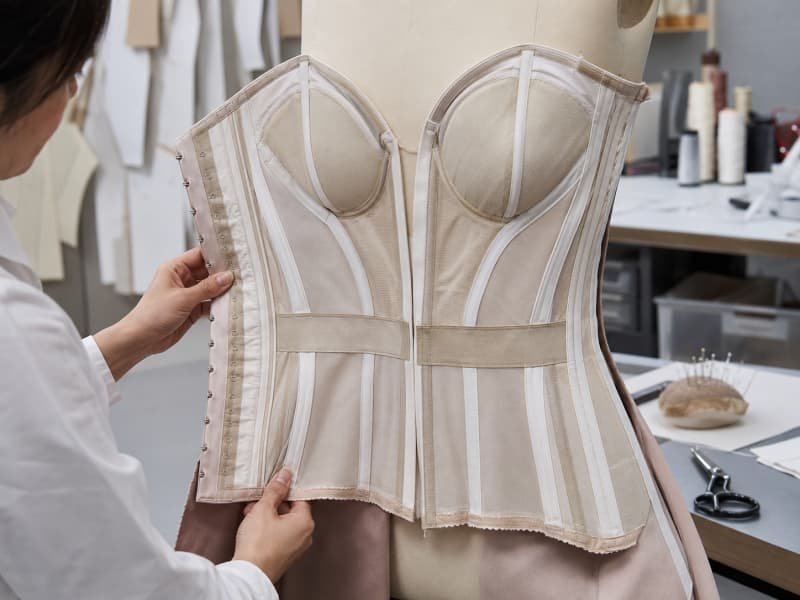
Corset-inspired Structure
- Panel seams should support shaping and surface stability.
- Boning routes need clean finish and comfort review.
- Cups and waist points require size-range checking.

Strapless Support
- Top edge should stay stable without rough compression.
- Inner support should not mark the outer surface.
- Front, side and back views should guide PP records.

Bust and Waist Shaping
- Shaping seams should avoid excessive coating stress.
- Waist pressure needs comfort and strength review.
- Inner lining can improve smoothness and wear feel.

Side Seam Stability
- Side seams should remain smooth under body pressure.
- Stitch and reinforcement route should match PU behavior.
- First-piece review should include side seam comparison.

Size Range Fit
- Larger sizes may need adjusted seam and support placement.
- Size grading should protect comfort and surface stability.
- PP records should guide fit-critical zones.
Lining, Comfort and Skin-contact Planning
Full Lining
- Full lining can improve comfort and garment structure.
- Lining should not add bulky edges or restrict movement.
- Inner finish should remain smooth against skin.
Partial Lining
- Partial lining should protect skin-contact zones.
- Lightweight styles need comfort and transparency review.
- Lining edges should not show or rub.
Stretch Lining
- Stretch lining should recover with outer PU material.
- Attachment points should avoid dragging or twisting.
- Fit samples should confirm comfort during movement.
Skin-contact Zones
- High-contact zones need soft lining and clean seam finish.
- Cut-out and slit edges require comfort review.
- Labels and trims should not irritate fitted styles.
Breathability and Heat Feel
- Fitted PU dresses need wear-time comfort consideration.
- Lining choice can affect heat feel and ease of dressing.
- Style scenario should guide material thickness and lining route.
Inside Seam Comfort
- Inside seams should stay smooth against skin.
- Zipper and boning areas need comfort review.
- QC should check rough points before packing.
PU Leather Dress Scenarios Brands Usually Develop
PU Leather Party Dresses
- Party PU styles need strong surface effect and secure movement.
- Mini, slit and bodycon versions require seam and edge review.
- Glossy materials need surface and packing protection.
- Photo samples should record shine, fit and zipper smoothness.
PU Leather Club Dresses
- Club PU dresses often use stretch, cut-out and strapless shapes.
- Body pressure and side seams need stronger tension review.
- Lining and edge comfort matter during longer wear.
- Close-up surface photos should guide PP approval.
PU Leather Contemporary Dresses
- Contemporary PU dresses need matte surface and clean city styling.
- Shirt, A-line and belted silhouettes require panel balance.
- Collars, plackets, belts and hems need surface protection.
- Packing should preserve smooth panels and refined shape.
PU Leather Structured Dresses
- Structured PU dresses need cups, boning, lining and seam strength.
- Corset-inspired and bustier styles require inner comfort review.
- Panel seams should shape without damaging the PU coating.
- PP records should lock support route and surface standards.
PU Leather Social-first Drops
- Social-first PU drops rely on close-up surface and strong body line.
- Tube, cut-out and mixed-material styles need three-view records.
- Needle-hole and edge details should be controlled early.
- First-piece comparison should follow approved photo sample angles.
PU Leather Transitional Season Dresses
- Transitional PU dresses need thickness, lining and comfort planning.
- Long sleeve, shirt and midi routes require heat-feel review.
- Surface consistency and packing marks influence premium perception.
- Repeat programs need material and shade records.
Sample Development Path for PU Leather Dresses
Step 1|PU Material Direction Review
Step 2|Surface and Construction Feasibility
Step 3|First Sample Development
Step 4|Fit, Surface and Revision
Step 5|PP Sample and Bulk Readiness

Sample Types for PU Leather Dress Decisions
Each PU leather dress sample should answer a clear material or structure question. Duolan connects sample purpose with surface effect, fit, seams, comfort, photo result and production readiness.
| Sample Type | Purpose | PU Leather Dress Focus |
|---|---|---|
| Material Test Sample | Confirms PU surface behavior before garment sampling | Gloss, texture, backing, thickness |
| First Sample | Checks silhouette and construction direction | Fit, seams, edge, surface |
| Fit Sample | Reviews wearing stability and comfort | Body pressure, lining, movement |
| Surface Review Sample | Checks visual and handling risk | Creases, marks, needle holes |
| Photo Sample | Supports campaign or ecommerce review | Shine, body line, surface effect |
| PP Sample | Becomes production benchmark | Measurements, seams, QC, packing |
Photo Sample to PP Sample Handover
Surface Standard
- Matte, glossy or grainy surface should have approved references.
- Color, texture and shine need material and photo records.
- First-piece review should compare surface with PP sample.
Fit Standard
- Front, side and back photos should record fit balance.
- Bodycon and structured styles need pressure-zone notes.
- Fit comments should connect with seam and lining route.
Seam Standard
- Stitch length, seam route, zipper and panel lines need records.
- Stress zones should be documented for QC.
- Needle-hole risk should guide rework control.
Edge Standard
- Hem, slit, cut-out, neckline and armhole edges need references.
- Edge method should match PU thickness and backing fabric.
- QC should review peeling, flipping, rough contact and surface damage.
Packing Standard
- Hanging, folding, tissue and carton route should be defined.
- Pressure marks and sticking risk need packing review.
- Packed sample checks should support bulk shipment planning.
First-piece Comparison
- Production first pieces should match surface, seam and edge standards.
- Critical zones include body seams, zipper, edges, lining and packing.
- Photo records help correct early production drift quickly.
Production Engineering for PU Leather Dresses

Material Locking
- Approved PU material should connect with PP sample records.
- Surface, backing, thickness and shade need confirmation.
- Substitutions require surface, fit and packing review.

Cutting and Panel Control
- Panel direction should follow approved surface reference.
- Left and right panels should be bundled carefully.
- Surface scratches should be avoided during cutting.

Seam and Needle Control
- Sewing route should be planned before stitching.
- Stress seams need strength and surface review.
- Rework should be minimized through clear PP instructions.

Edge Assembly
- Edge route should match material thickness and fit pressure.
- Skin-contact edges need comfort review.
- First-piece review should check edge shape and surface marks.
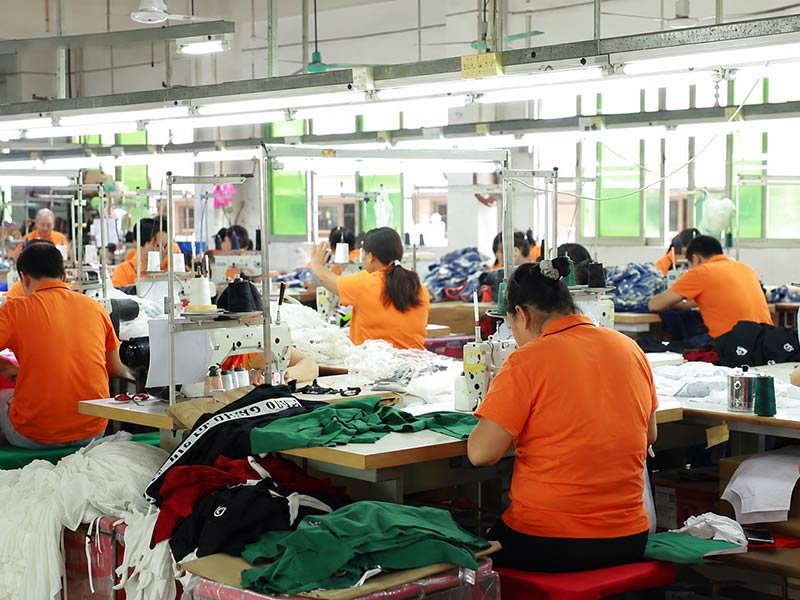
First-piece Review
- Surface, seams, edges, lining and packing should be compared.
- Needle-hole or surface issues should be corrected early.
- Photos help align production, QC and project teams.

Multi-style Production Grouping
- Styles should be grouped by PU surface, thickness, structure and delivery window.
- Bodycon, shirt and corset-inspired styles need different handling.
- Grouping supports stable quality across 10–30 style programs.
QC Standards for PU Leather Dress Programs
PU leather dress QC must protect surface, coating, seams, edges, fit, lining and packed presentation. Duolan checks PU leather quality from material approval to packed cartons.
| QC Area | PU Leather Dress Risk | Duolan Control |
|---|---|---|
| Surface QC | Gloss, texture or shade differs | Surface and batch review |
| Coating QC | Cracking, peeling or sticking appears | Material and handling review |
| Seam QC | Needle holes or weak seams show | Stitch and seam inspection |
| Edge QC | Edges flip, peel or scratch skin | Edge finish and comfort review |
| Fit QC | Body pressure pulls PU surface | Fit and tension review |
| Lining QC | Garment feels hot or rough inside | Lining and inside finish review |
| Packing QC | Creases, pressure marks or sticking appear | Tissue, hanger and carton route |
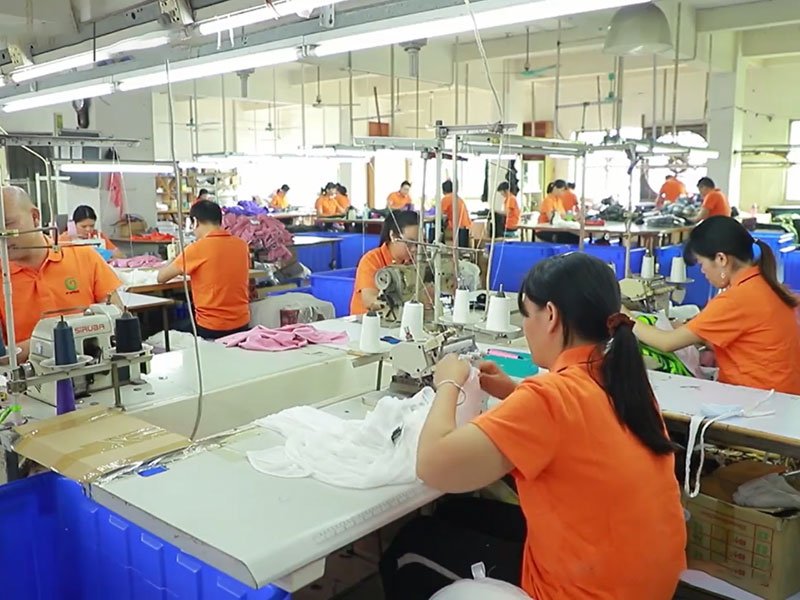
Manufacturing System and PU Leather Project Evidence
Manufacturing capacity connected to PU leather programs
- 1996 fashion dress development background supports structure-sensitive and surface-material dress judgment.
- 5 PU-leather-related dress directions cover mini, bodycon, corset-inspired, slit and party programs.
- 6 PU control zones guide surface, seams, edges, lining, zipper and packing review.
- 3-view sample review supports front, side and back approval for surface-sensitive styles.
- South China textile resources support PU-coated fabric, faux leather, stretch backing, linings and mixed-material routes.
- Humen trim resources support zippers, snaps, hooks, buckles, bindings, labels and packing details.
- 2-Pillar SMETA audit record supports structured supplier evaluation.
- Typical cooperating brand orders cover 10–30 styles and 20,000–80,000 pieces per order.

US PU Leather Party Program
- Order scope: 16 styles across PU minis, PU bodycon dresses and PU cut-out party styles.
- Total program quantity: about 42,000 pieces.
- Main controls: surface gloss, stretch backing, side seam pressure, needle-hole control and packing marks.
- Duolan actions: material review, fit sample correction, seam route records and first-piece comparison.
- Program focus: party-ready PU leather dresses transferred from sample approval into controlled bulk production.

European Contemporary PU Line
- Order scope: 22 styles across matte PU shirt dresses, PU midis and belted PU A-line dresses.
- Total program quantity: about 64,000 pieces.
- Main controls: matte surface, panel balance, edge finish, packing marks and repeat shade.
- Duolan actions: material locking, panel review, edge correction and carton reference setup.
- Program focus: clean PU leather-look dresses prepared for repeat seasonal production.

Australian Night-out PU Capsule
An Australian night-out brand developed glossy PU styles with stronger structure.
- Order scope: 12 styles across glossy PU strapless dresses, PU slit dresses and PU corset-inspired dresses.
- Total program quantity: about 26,000 pieces.
- Main controls: top edge, inner lining, seam strength, surface crease and photo sample transfer.
- Duolan actions: support route review, lining adjustment, seam checking and PP photo records.
- Program focus: night-out PU dresses aligned with fit, surface and comfort requirements.

Social-first PU Leather Drop
A social-first fashion program used PU tube, cut-out and mixed-material directions.
- Order scope: 10 styles across PU tube dresses, PU cut-out minis and PU mixed mesh dresses.
- Total program quantity: about 24,000 pieces.
- Main controls: close-up surface, body line, edge comfort and first-piece comparison.
- Duolan actions: surface review, cut-out edge correction, photo sample references and packed sample check.
- Program focus: camera-facing PU dresses prepared for close-up content and stable production records.

FAQ|Custom PU Leather Dress Manufacturing

Send Your PU Leather Dress Project
Duolan works best with established fashion brands developing PU leather dress programs with clear material direction, fit requirements and planned bulk production. Share reference images, tech packs, PU surface direction, material preference, construction needs or upcoming launch plan, and our team will review material route, sample path, surface risk, production readiness, QC points and packing needs before development begins.
Share your project details
- PU leather dress type: mini, bodycon, midi, corset-inspired, strapless, slit, cut-out, shirt, A-line, belted or party style.
- PU surface direction: matte, glossy, grainy, stretch PU, coated jersey, faux leather or vegan leather-look material.
- Fit concerns: body pressure, side seam, zipper smoothness, top-edge stability, cut-out edge or slit endpoint.
- Construction needs: lining, boning, cups, binding, snaps, buckles, zippers, reinforcement or mixed-material panels.
- Surface concerns: needle holes, creases, peeling, sticking, color transfer, packing marks or gloss consistency.
- Project stage: material test, first sample, fit sample, photo sample, PP approval, bulk production or repeat order.
- Program information: style count, target quantity, colorways, size range, target launch date and delivery window.
- Production needs: material sourcing, pattern development, edge finish, QC, packing, labels, barcodes or repeat records.