Skip to content

A-Line Dress vs Fit-and-Flare Dress: What Is the Difference and Which Silhouette Should You Choose?
Your trusted Women’s Apparel Development & Manufacturing Partner from China
- Jerry
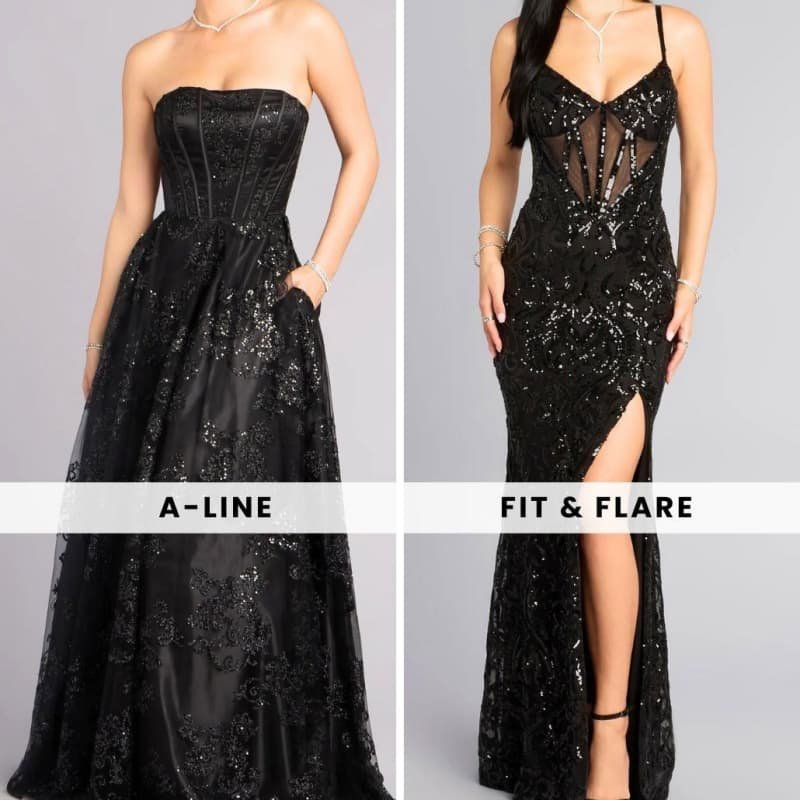
Two dresses can look almost interchangeable on a hanger and behave very differently once someone puts them on. That is the heart of the A-line versus fit-and-flare comparison. Both silhouettes can have a shaped upper body and a wider skirt, yet a small change in waist suppression, hip ease, flare position, skirt sweep, or fabric stiffness can shift the whole impression. One dress may skim the body and feel relaxed; another may create a sharply defined waist and a noticeably fuller lower half, even when their finished lengths are nearly identical.
An A-line dress usually widens gradually from the waist or upper hip toward the hem, creating a smooth triangular outline. A fit-and-flare dress normally emphasizes a more defined fitted section before the skirt opens out. The practical difference is best judged by five things: waist definition, hip contact, flare position, skirt volume, and fabric behavior, rather than by the product name alone.
That distinction matters because fashion terminology is not perfectly standardized. One retailer may call a waist-fitted circle-skirt mini a fit-and-flare, while another may list a very similar shape as an A-line or skater dress. In occasionwear, the term fit-and-flare may describe a style that stays close through the high hip before releasing. Instead of getting trapped by labels, it is more useful to look at what the garment actually does on the body. Once you learn to read the waist, hip, side seam, flare point, and fabric response, the difference becomes much easier to see and far more useful when choosing, designing, or developing a dress.
What Is the Difference Between A-Line and Fit-and-Flare Dresses?
An A-line dress normally creates a gradual outward line from the waist or upper hip, while a fit-and-flare dress creates stronger contrast between a fitted upper section and a fuller skirt. The clearest comparison is not hem width alone. Look at waist definition, hip contact, the vertical point where extra volume begins, and whether the transition into the skirt feels smooth or noticeably pronounced.
Flare Point and Overall Shape
The flare point is one of the fastest ways to read the difference because it tells you when the garment stops following the body and begins creating independent skirt volume. In a classic A-line, the side seam usually starts moving outward around the waist or high hip and continues on a relatively uninterrupted path toward the hem. The eye reads one smooth triangular outline rather than a sharp change between the fitted area and the skirt. A fit-and-flare dress normally makes that transition easier to notice because the waist is more deliberately shaped and the upper skirt may remain controlled for longer before the volume becomes obvious.
It helps to think in four vertical reference zones: natural waist, high hip, full hip, and upper thigh. In womenswear fitting, the high hip is often checked roughly 7.5-10 cm below the natural waist and the full hip around 18-23 cm below it, although brand blocks and body proportions vary. A dress that begins clearing the body around the high hip usually reads more like an A-line. A dress that follows the high hip or full hip before opening appears more body-conscious. If the fitted section continues much farther down the thigh, the silhouette begins moving toward trumpet, mermaid, or bridal interpretations rather than the mainstream fashion version of fit-and-flare.
Comparison Point | Typical A-Line Behavior | Typical Fit-and-Flare Behavior |
Upper body | Fitted to semi-fitted | Usually deliberately fitted |
Waist | Softly or clearly shaped | Usually strongly emphasized |
High hip | Often starts releasing | Often remains more controlled |
Full hip | Usually skims with visible ease | May still follow the body |
Flare transition | Gradual | More noticeable |
Skirt volume | Moderate to full | Moderate to very full |
Visual emphasis | Overall line and proportion | Waist-to-skirt contrast |
Common woven waist ease* | About 2-4 cm total for semi-fitted styles | About 1-3 cm total for close styles |
Common woven hip ease* | About 4-10 cm total before clear release | About 2-6 cm total before flare |
*These ease figures are practical development ranges rather than universal standards. Stretch, lining, garment length, target fit, size range, and brand specifications can change them substantially.
Waist Definition and Hip Contact
Waist definition often tells you more than hem circumference. Two dresses can have almost the same skirt sweep, yet the one with more aggressive torso shaping will usually read as the stronger fit-and-flare. Designers create that definition through darts, princess seams, shaped side seams, waist seams, panel construction, elastic control, stretch recovery, interfacing, or internal support. The goal is not simply to remove centimeters from the waist. Good shaping creates a controlled visual curve without forcing the fabric to strain across the bust, side waist, or upper hip.
Hip contact then determines whether that waist definition continues into a body-following silhouette or releases into a cleaner skirt line. A typical A-line gives the fabric enough room to skim or clear the full hip sooner, which makes the shape comparatively tolerant of small differences between the wearer and the base pattern. A closer fit-and-flare asks more from the high-hip and full-hip shaping. If the distribution is wrong, the problem can show up as diagonal drag lines, a side seam swinging forward, fabric catching across the seat, or the skirt lifting at the back. Smooth satin, dense crepe, and other low-texture fabrics often reveal these issues more quickly than softer or more textured materials.
Labels Are Useful, but Construction Is More Reliable
Retail names are helpful for navigation, but they are not technical specifications. A short dress with a fitted waist and circular skirt may be sold as fit-and-flare, skater, or A-line depending on the brand. Some occasion retailers reserve fit-and-flare for dresses that follow the hip much more closely. That inconsistency is not necessarily a mistake; category names are often shaped by merchandising language, customer expectations, and the visual character of a collection rather than by one global pattern-making definition.
A more reliable way to classify a dress is to ignore the label for a moment and answer five physical questions: Where is the narrowest point? How closely does the garment follow the high hip? Does it touch or clear the full hip? Where does the side seam begin expanding noticeably? Is that expansion gradual or abrupt? Those observations explain what the wearer will actually experience. They also help designers and product teams communicate more clearly with pattern makers and manufacturers, because “flare starts 8 cm below waist” is more actionable than simply saying “make it more fit-and-flare.”
How Do These Silhouettes Fit the Body?
A-line dresses generally release from the lower body earlier, while fit-and-flare dresses depend on a clearer relationship between a fitted bust and waist and a fuller skirt. Good fit should be judged through bust balance, waist position, high-hip and full-hip behavior, side-seam direction, and movement together. A dress can match the measurement chart and still fit poorly if its balance or fabric response is wrong.

Bust and Waist Balance
Both silhouettes can have a close-fitting bodice, so the bust alone rarely tells you which shape you are looking at. The more useful test is how the bodice returns from the bust toward the waist. If there is not enough front volume, the neckline may open, the armhole may pull, or diagonal strain lines may run toward the bust apex. If the pattern gives plenty of bust room but does not control the waist, the garment can look boxier than the design intended. The best result comes from balancing volume and shaping rather than making the torso uniformly tight.
During fitting, experienced teams usually review bust apex position, neckline stability, armhole shape, side-seam direction, front and back waist level, and the location of the narrowest point. A change of only 1-2 cm in the total waist measurement can visibly soften or sharpen a fitted silhouette, especially in non-stretch satin, crepe, or jacquard. That does not mean smaller is always better. If the waist is over-suppressed, the dress may ride upward, create horizontal strain lines, or pull the skirt out of position. Fit-and-flare needs definition, but that definition should come from balanced contouring rather than excessive compression.
Hip Fit and Side-Seam Balance
The hip is where many A-line and fit-and-flare dresses stop behaving alike. In an A-line, the skirt normally has enough release for the fabric to pass over the full hip without catching. If it hangs on the hip before dropping outward, the intended straight-to-flared line can develop an unwanted shelf. In a fit-and-flare dress, some contact may be deliberate, but the pattern still has to distribute the body’s volume correctly between the front, side, and back. Total circumference alone cannot tell you whether that distribution is right.
A useful fit review checks natural waist, high hip, full hip, waist-to-high-hip depth, waist-to-full-hip depth, and side-seam verticality together. If a side seam moves toward the front, the back body may need more width or length even when the total hip measurement matches the specification. If the center back hem rises, the garment may need extra seat length rather than simply more circumference. These distinctions matter because adding width to the wrong place can make the skirt bigger without solving the real balance problem. A good pattern should hang cleanly in front, side, and back views before the wearer even begins walking.
Movement, Sitting, and Real Wear
A standing fitting tells only part of the story. Dresses are worn while walking, sitting, climbing steps, turning, eating, and sometimes dancing, and these actions expose problems that are easy to miss in a static front photograph. An A-line generally gives the legs more freedom because the skirt begins releasing earlier. A fit-and-flare can be equally comfortable when the fitted section ends in the right place, but a lower flare point makes comfort more dependent on fabric stretch, slit placement, panel shape, or added functional ease.
Four simple movement tests are particularly useful: walk at a natural stride, sit fully into a chair, step onto a low platform, and rotate the upper body while standing. Watch whether the skirt pulls upward, whether the side seams twist, and whether the waist shifts from its intended level. Construction changes movement too. A circle skirt swings differently from a six-panel skirt; gathers add fullness at the waist, while godets add movement lower down without the same upper-skirt bulk. The silhouette name gives a broad expectation, but the actual wearing experience is controlled by pattern geometry, fabric, and where the volume is placed.
Which Silhouette Suits Different Body Shapes?
Neither silhouette belongs to only one body shape. A-line generally offers more freedom through the lower body, while fit-and-flare makes the waist-to-skirt contrast more visible. The better choice depends on what the wearer wants to emphasize, where the garment should skim or follow the body, and how torso length, bust volume, hip distribution, fabric, and hem length work together in the finished dress.

Hourglass and Pear Proportions
Hourglass proportions naturally create a visible relationship between bust, waist, and hip, so both silhouettes can work well. An A-line can preserve the waist while letting the skirt clear the hip earlier, producing a smoother and often more restrained outline. A fit-and-flare can deliberately repeat the natural curves for longer before adding volume, creating a stronger hourglass effect. Neither approach is inherently more flattering; they simply place the visual emphasis in different areas and create different amounts of contact around the lower body.
Pear proportions illustrate why waist-to-hip difference matters more than a simple body-shape label. A person may fit the waist measurement of a base size while needing noticeably more room through the high or full hip. If the pattern is not developed for that relationship, a fit-and-flare can catch across the hip and pull upward even when the waist looks perfect. An A-line usually provides more tolerance because it releases sooner, but it can still fail if the upper skirt is too narrow or the front-to-back distribution is wrong. The useful design question is not “Which shape hides the hips?” but “Where should the garment define the body, and where should it begin to float away?”
Apple, Rectangle, Petite, and Tall Frames
Rectangle proportions often respond strongly to construction because the garment itself can create visual shape. A fit-and-flare can use a waist seam, princess panels, belt detail, or controlled skirt volume to build contrast without relying on tightness. An A-line offers a cleaner alternative when the goal is a longer uninterrupted line rather than a strongly emphasized waist. For apple proportions, the position of the narrowest point becomes especially important. A waist seam that sits a few centimeters too low can feel restrictive and visually heavy, while a slightly raised position or smoother A-line transition may create a more balanced result.
Height changes how quickly the eye reads flare. On a petite frame, a large amount of skirt volume introduced over a short waist-to-hem distance can dominate the body, especially in mini and midi lengths. A flare point that sits too low may visually shorten the legs. Tall frames provide more vertical space, but they still need proportional adjustment; simply adding length can distribute the flare too thinly and make the skirt look narrower than intended. When adapting a style for different heights, review bodice length, waist position, waist-to-hip depth, flare position, finished length, and hem sweep together rather than treating length as the only variable.
Extended-Size Development
Extended sizing is where simplistic silhouette rules break down most quickly. The goal is not to enlarge a base pattern uniformly but to preserve the visual logic of the garment as body dimensions change. Bust, waist, high hip, and full hip do not necessarily increase at the same rate, and vertical distances can also shift. An A-line can become excessively full if too much width is added through the skirt, while a fit-and-flare can become unintentionally restrictive if the high hip is graded too conservatively compared with the waist and full hip.
A strong size-range review checks at least six relationships: bust-to-waist balance, waist position, high-hip contour, full-hip contour, flare transition, and hem proportion. It is also useful to fit more than the base size before approving a full grade. Many brands review a base size plus at least one smaller or larger checkpoint, and extended ranges often benefit from additional fit verification. The objective is not to make every size geometrically identical on paper. The objective is for each size to communicate the same design idea when it is actually worn.
Which Fabrics Work Best for Each Dress?
Both silhouettes can be made in fluid or structured fabrics, but material behavior changes the result dramatically. Structure makes flare more visible, while drape allows the skirt to fall closer to the body. Stretch and recovery influence how closely the upper section can fit. Fabric should therefore be chosen by weight, drape, stretch, recovery, opacity, surface finish, lining, and intended movement rather than by fiber name alone.

Structure, Drape, and Weight
A pattern does not determine the finished silhouette by itself. A crisp poplin, taffeta, or jacquard can hold the skirt away from the body, making moderate flare appear visually generous. A lightweight satin or soft crepe may collapse closer to the legs, so even a wider pattern can look relatively narrow while the wearer is standing still. This is one reason reference-image development can be deceptive. Teams sometimes try to recreate the width visible in a photograph by adding more pattern volume when the real difference is fabric body or understructure.
GSM is a useful starting point, but it should never be treated as a complete predictor. A 180 GSM stretch crepe can behave very differently from a 180 GSM jacquard because yarn, weave, elastane content, finishing, and surface texture change how the fabric falls. Lining can shift the result again by adding opacity, reducing cling, or increasing structure. A practical evaluation should therefore consider whether the material stands away from the hip, collapses into vertical folds, retains a clean hem line, reveals tension easily, changes after pressing, and behaves consistently when paired with the intended lining.
Fabric Type | Common Approx. GSM | Typical Silhouette Effect | Often Useful For |
Chiffon | 60-100 GSM | Very fluid, little self-support | Layered A-line, soft flare |
Lightweight satin | 90-150 GSM | Fluid with visible surface reflection | Occasion A-line, soft fit-and-flare |
Poplin | 100-160 GSM | Crisp, holds outward shape | Day A-line, structured mini |
Crepe | 120-220 GSM | Moderate drape and body | Both silhouettes |
Jacquard | 150-300 GSM | Structured and dimensional | Defined A-line, occasion flare |
Stretch woven | 160-260 GSM | Controlled shape with flexibility | Closer fit-and-flare |
Scuba | 220-320 GSM | Strong body and spring | Sculpted fit-and-flare |
Ponte | 250-350 GSM | Stable stretch and recovery | Fitted bodice, controlled flare |
These GSM ranges are common commercial references rather than fixed specifications. Fabrics outside them can perform perfectly well, and two materials at the same nominal weight may behave very differently because of fiber content, yarn, weave or knit structure, finishing, and elastane. For a production decision, the fabric should be assessed with the intended lining, seams, and skirt geometry rather than approved from GSM or a small swatch alone.
Fabrics for A-Line Dresses
A-line dresses are highly adaptable because their shape does not always depend on close hip contouring. For crisp daytime styles, poplin, twill, compact cotton blends, lightweight denim, and some jacquards can create a readable triangular line without excessive skirt width. For occasionwear, satin, crepe, taffeta, jacquard, and layered mesh can push the same basic shape in very different directions. Taffeta and firmer jacquards give more visible body, while satin and crepe tend to create a smoother and more fluid fall.
Lining choice can change the result enough to deserve development attention of its own. A woven lining that is too narrow may restrict the shell and stop the skirt from opening naturally. A lightweight knit lining can give more movement but may not support the outer fabric in the same way. For sheer A-line styles, the relationship between overlay and lining circumference also affects whether the outer layer hangs cleanly or forms irregular folds. Approving shell fabric and lining separately is therefore risky. They should be tested together, because the customer experiences one garment, not two independent materials.
Fabrics for Fit-and-Flare Dresses
Fit-and-flare asks the material to perform two jobs that can pull in opposite directions: remain controlled through the fitted section and release attractively into the skirt. Stretch crepe, stretch satin, ponte, scuba, stable jersey, and stretch wovens can work well when the upper section follows the body. Non-stretch fabrics can also produce excellent results when contour comes from darts, princess seams, panel shaping, waist seams, or internal support. The key is to decide whether the fit depends on material elasticity or pattern construction before the sample is made.
High stretch is not automatically an advantage. A fabric may stretch 20% or 30% across the width but recover poorly after several minutes of wear, allowing the waist or seat to bag. Lengthwise stretch deserves attention too, especially in midi and maxi styles where skirt weight can pull the bodice downward. Smooth satin creates another challenge because its reflective surface makes seam puckering, hip tension, and pressing differences easier to see. Mesh overlays can misbehave when their recovery rate differs from the lining underneath. A good sample therefore tests stretch, recovery, seam stability, drape, and layer compatibility together rather than treating fabric choice as a purely visual decision.
How Do Length and Occasion Change the Choice?
Length changes how quickly flare becomes visible, while occasion changes how much structure, movement, polish, and body definition are useful. Mini fit-and-flare dresses often feel more energetic because volume is concentrated over a shorter distance. Midi and maxi A-lines can appear more elongated and refined. Fabric, neckline, surface detail, footwear, and styling ultimately determine whether either silhouette reads as casual, party, social, or formal.

Mini, Midi, and Maxi Proportion
A mini dress has relatively little vertical distance between waist and hem, so every centimeter of added skirt width has a strong visual effect. A short full-circle construction can quickly read as a skater-style fit-and-flare because the fullness is concentrated below a clearly defined waist. If the goal is a cleaner A-line mini, the pattern often benefits from more controlled side-seam expansion and less fullness concentrated at the waist seam. Hem behavior matters too, because a very wide mini can lift noticeably during walking or sitting even when the standing length seems appropriate.
Midi length gives the silhouette more space to develop, which is why both A-line and fit-and-flare shapes can look particularly balanced in this range. A gradual A-line can create an elongated outline, while a fit-and-flare midi can combine waist definition with visible movement. Maxi styles introduce extra fabric weight. On soft materials, that weight can pull the skirt closer to the legs and visually reduce flare; on stretchy constructions, it can also pull the waist downward. When changing length, review three ratios together: bodice length to total garment length, flare-point-to-hem distance, and hem sweep relative to fabric weight. Simply extending a mini pattern rarely produces the best maxi.
Party and Occasion Dresses
Party and occasion collections rely heavily on silhouette because the garment has to work in photographs, social settings, and real movement at the same time. A fit-and-flare mini can feel energetic for birthday, homecoming, dance, or going-out categories because the defined waist reads clearly and the skirt moves as the wearer turns. An A-line occasion dress can create a more polished or architectural effect, especially in satin, jacquard, structured crepe, or layered mesh. The shape gives visual presence without requiring close contact through the hip.
For a commercial collection, it is often useful to offer more than one level of body definition. A range dominated by bodycon styles can feel more wearable when it includes A-line options, while a collection made mostly of straight or relaxed silhouettes may benefit from fit-and-flare pieces that create stronger waist emphasis. Occasion suitability should also consider how long the customer is likely to wear the dress. A style intended for several hours of sitting, dining, and dancing needs different movement tolerance from a short statement dress designed mainly for a brief evening event or campaign image.
Wedding Guest, Day, and Work Dressing
Wedding guest dresses sit between fashion impact and practical wear. They need enough polish for photographs and social settings, but they may also be worn through a ceremony, meal, standing reception, and dancing. A-line shapes can work particularly well when freedom through the lower body is important, while fit-and-flare can provide stronger visual definition from a distance. Satin, crepe, jacquard, floral woven fabrics, and layered mesh can support either direction, provided the fabric weight and lining are compatible with the intended movement.
Day and work dresses usually reward a slightly different balance. Sitting comfort, bra compatibility, layering, easy care, and repeat wear can matter more than dramatic skirt movement. Poplin, jersey, denim, washable crepe, and stable woven fabrics often suit these needs. A clean A-line can move easily between office, brunch, and travel. A restrained fit-and-flare can offer waist definition without feeling like formal occasionwear when the fabric and neckline stay simple. Instead of assigning one silhouette to one occasion, it is more accurate to evaluate formality, mobility, waist emphasis, fabric drama, and care requirements together.
How Do Brands Develop These Silhouettes for Production?
Reliable A-line and fit-and-flare dresses are developed by translating a visual idea into measurable checkpoints. Waist position, hip ease, flare point, hem sweep, fabric behavior, and size progression should be confirmed during sampling. The approved sample then needs to become a controlled production standard through accurate patterns, specifications, workmanship details, material approvals, and quality checkpoints so the silhouette remains consistent across sizes, colors, and repeat orders.

Pattern and Silhouette Control
The first useful question is not “Is this A-line or fit-and-flare?” but “What should this garment actually do on the body?” A development brief should state the intended waist position, degree of waist definition, high-hip and full-hip contact, flare starting point, finished length, desired movement, and fabric behavior. That creates a shared target for design, pattern, sampling, and production teams. It also reduces the risk of vague comments such as “make it more flared,” which can lead to extra hem width without fixing the real proportion problem.
Pattern geometry then turns that intent into a reproducible shape. A-line dresses may use side-seam flare, princess panels, multiple gores, or combinations of these methods. Fit-and-flare styles usually need stronger control through bust, waist, and upper skirt before volume is added. Grain direction matters in both silhouettes. Circular and bias-influenced panels can relax after cutting or hanging, which can create an uneven hem even when the paper pattern is perfectly symmetrical. For soft fabrics, allowing a sample or production piece to relax before final hemming may be necessary. The exact process depends on fabric stability, construction, and garment length rather than on the silhouette name alone.
Sampling, Grading, and Fit Approval
A useful sample should answer specific questions rather than simply prove that the garment can be sewn. A fit review can track neckline stability, bust balance, waist level, high-hip fit, full-hip fit, side-seam position, flare transition, and hem balance. The dress should then be assessed while walking, sitting, turning, and stepping. Front photographs are not enough for a shape-sensitive garment; side and three-quarter views reveal hip catching, seat tension, forward-moving side seams, and back-hem lift that may be almost invisible from straight ahead.
Grading deserves its own verification because a well-fitted base size does not guarantee a stable size range. An A-line can become progressively fuller if the skirt is graded too aggressively, while a fit-and-flare can become too restrictive through the high hip if the grade focuses only on waist and full-hip circumference. Many brands review the base size plus at least one smaller or larger checkpoint before releasing the full range, and extended sizes often benefit from additional fitting. The goal is to preserve silhouette relationships, not just numerical grade increments, so each size looks like the same product when worn.
Development Stage | Typical Physical Basis | Main Approval Question |
First prototype | Usually 1 sample | Is the silhouette and construction direction workable? |
Fit sample | Usually 1 sample per revision round | Are bust, waist, hip, length, and balance correct? |
Size-set review | Selected checkpoint sizes | Does the silhouette remain consistent across grading? |
Pre-production sample | Usually 1 production-standard sample | Are fabric, trims, workmanship, and measurements ready for bulk? |
First-piece or pilot check | Small controlled production output | Is the approved standard being reproduced correctly on the line? |
Exact sample counts and review stages depend on the brand procedure, size range, product complexity, compliance requirements, fabric risk, and construction difficulty. A simple woven A-line may move through fewer physical review rounds than a close fit-and-flare made in reflective satin or mixed-stretch materials. The practical objective is not to create extra samples for their own sake, but to use enough checkpoints to confirm the silhouette before mistakes become expensive in bulk production.
Bulk Consistency and Repeatability
Bulk production introduces variables that may not appear in the sample room. Fabric lots can vary slightly in width, shrinkage, stretch, recovery, weight, or handfeel. Cutting can introduce grain deviation, multiple sewing operators can shape curved seams differently, and pressing can change the way a waist seam or skirt panel falls. These differences are especially visible on smooth satin, close fit-and-flare styles, panelled A-lines, bias-influenced skirts, and garments that combine materials with different stretch behavior.
Before full production, the critical standard should be locked around the approved pattern version, fabric lot and shrinkage result, stretch and recovery where relevant, waist and hip measurements, flare position, side-seam or panel alignment, hem balance, and pressing method. Fit-sensitive styles often benefit from first-piece or pilot verification before a full run is released. The central idea is simple: the approved sample should become a measurable standard, not just a visual reference hanging beside the sewing line. When measurements, construction, material behavior, and finishing are documented together, the silhouette becomes much easier to reproduce across larger quantities and repeat orders.
In the end, A-line and fit-and-flare are less about choosing a “better” silhouette than understanding what each shape is designed to do. A-line generally offers an earlier, smoother release from the body, while fit-and-flare uses stronger contrast between a shaped upper section and a fuller skirt. The best choice comes from combining body proportions, comfort, fabric behavior, length, occasion, and the visual role of the garment rather than relying on a category label. For brands, the same logic continues into development: a clear silhouette brief, an accurate pattern, realistic movement testing, and controlled grading are what turn an attractive sketch into a product that works across samples and production.
For fashion teams developing party, occasion, social-event, or commercial dress collections, the most useful manufacturing conversations begin with the intended fit rather than with a generic request for a style name. A development partner that can discuss waist balance, hip release, fabric behavior, grading, and bulk consistency at the same time is more likely to preserve the original design intent as the garment moves from reference image or tech pack to sample and production. Duolan can support this type of dress development when a project requires both visual interpretation and production-ready execution, while the final specifications should always be agreed around the individual brand, fabric, size range, and target market.
Frequently Asked Questions
Is a fit-and-flare dress the same as an A-line dress?
Not exactly, although retailers sometimes use the terms loosely. A-line describes a garment that widens progressively toward the hem, usually creating a smooth triangular outline. Fit-and-flare places more emphasis on a fitted upper section and a clearer transition into skirt volume. Some fit-and-flare dresses release immediately below the waist, while others follow the high hip before opening. Looking at waist definition, hip contact, and flare position is more reliable than relying on the product label alone.
Which is more flattering, A-line or fit-and-flare?
Neither is universally more flattering because the result depends on body proportions and the effect the wearer wants. A-line generally skims or clears the hips earlier, which can create a smoother and less body-conscious line. Fit-and-flare usually makes the waist more prominent and can emphasize an hourglass relationship between bust, waist, and skirt. Length, fabric stiffness, neckline, torso length, and hip distribution can change the visual result as much as the silhouette name itself.
What body type looks best in an A-line dress?
A-line dresses can work across many body types because the lower body is not usually required to fit closely. They are often useful when a wearer wants clear waist definition with more freedom through the hips and thighs, but that does not make A-line a single-body-type solution. A well-balanced A-line still needs the right bust shape, waist position, hip clearance, and length. Petite, tall, curvier, and straighter figures may all need different proportional adjustments to achieve the same intended outline.
What body type suits a fit-and-flare dress?
Fit-and-flare can suit many proportions when the fitted section is balanced correctly. It is often chosen to highlight the waist and create stronger visual contrast between the upper body and skirt, which can complement hourglass proportions or create more shape on straighter figures. Pear and fuller-hip proportions can also wear it successfully when the high hip, full hip, and flare point are developed with enough room. The critical issue is accurate fit, not whether the wearer belongs to one named body-shape category.
What fabric is best for an A-line dress?
The best fabric depends on how structured or fluid the A-line should look. Poplin, twill, taffeta, and jacquard can hold a more defined outward shape, while crepe, satin, viscose blends, chiffon, and softer woven fabrics create a gentler fall. Fabric weight alone is not enough to predict the result, so drape, surface finish, lining, opacity, and pressing behavior should be considered together. For development, testing the fabric in the intended skirt construction is more useful than judging only from a small swatch.
Can fit-and-flare dresses be comfortable for all-day wear?
Yes, provided the fitted area is balanced rather than simply tight. Comfort depends on where the flare begins, how much functional ease is available at the waist and hips, whether the fabric stretches and recovers well, and how the dress behaves while sitting and walking. A fit-and-flare that ends its close fit around the waist or high hip can be very easy to wear, while a lower flare point may need stretch, a slit, or additional pattern ease to preserve movement throughout the day.
How should a brand choose between A-line and fit-and-flare for a collection?
The choice should start with the role of the style in the assortment. If the collection needs an easier, less body-conscious silhouette with clean movement, an A-line may provide the right balance. If the goal is stronger waist definition, more visible skirt movement, or a more sculpted campaign silhouette, fit-and-flare may be more suitable. Brands should also consider fabric, price point, target size range, occasion, photography needs, and how the style complements the other shapes already present in the collection.
Share:
Our Services
Categories
Table of Contents
Here, developing fashion collections is more than manufacturing garments — it’s a collaborative process focused on transforming ideas into well-executed, market-ready products. From fabric sourcing and sample development to scalable production and delivery coordination, every stage is built to support quality, consistency, and efficient collection launches across global markets.