Skip to content
AQL Garment Inspection Solutions
Client-defined garment inspection standards integrated into dress development, bulk production, corrective action, packing control, and shipment release.
Duolan connects AQL sampling with manufacturing controls that begin before cutting and continue through final packing. Quality teams receive clear inspection references, measurable defect rules, traceable corrective actions, and full cooperation with appointed third-party inspectors. The system is designed for multi-style fashion programs where fit, fabric behavior, complex workmanship, labeling, and shipment timing must remain controlled across production.
- 8 control gates: development review, material release, PP sample lock, pre-production alignment, first-piece approval, inline control, final inspection, and packing release.
- 3 defect classes: critical, major, and minor defects are evaluated against the brand quality manual and approved inspection criteria.
- 10-30 styles per program: a common Duolan order structure supports coordinated inspection across collections rather than isolated single-style checks.
- 20,000-80,000 pieces: typical brand programs require lot planning, style-color-size coverage, and disciplined record control.
- 16 owned factories and 300 sewing lines: quality requirements can be translated into controlled execution across substantial production capacity.
- Third-party ready: inspection documents, samples, cartons, measurements, and reinspection actions are prepared for client-appointed agencies.
Built for Brand-Level Garment Quality Requirements
Global Fashion Brands
QA and QC Teams
Merchandising Teams
Product Development Teams
Sourcing Offices
Regional sourcing offices coordinate multiple factories and require evidence that approved standards are understood locally. Duolan prepares style files, production references, inspection checkpoints, defect records, carton access, and corrective-action status so remote review remains structured across different order phases.
Multi-Channel Retailers
Retail and ecommerce programs combine appearance standards with barcode accuracy, labeling, packaging, carton assortment, and delivery discipline. Duolan connects garment inspection with SKU identity and packing control, reducing the risk of commercially acceptable garments being delayed by preventable labeling or shipment-preparation errors.
What AQL Garment Inspection Actually Controls
A Statistical Lot Decision
Lot size and inspection level lead to a code letter and sample size. The agreed AQL then provides acceptance and rejection numbers for each defect class. Inspectors examine randomly selected garments, record defects, compare totals with the approved limits, and issue a result such as pass, hold, rework, or reinspection. Sampling must represent the production lot. Cartons should be selected across accessible areas, and the sample should cover relevant styles, colors, sizes, and production batches. A result becomes less meaningful when samples are taken from only one convenient carton group or one size. Duolan prepares production and packing information so the agreed sampling plan can be executed without disrupting the independence of the inspector.
What AQL Does Not Replace
A systemic defect may appear repeatedly even when the inspected quantity is limited, while a concealed issue may not appear in a random sample. Brands therefore need defined zero-tolerance points, mandatory functional checks, and 100% verification for selected risks when product safety, labeling, barcode identity, or construction demands greater control. Duolan positions final sampling as one layer within a broader manufacturing quality plan. Material batches are reviewed before release, key construction points are checked during sewing, early pieces are measured, and visible issues are isolated before they spread. Final AQL inspection then evaluates the completed lot against an already established reference system rather than becoming the first serious quality review.
AQL Inside a Manufacturing System
A mature inspection plan links three elements: the standard, the production process, and the release decision. The standard defines what is acceptable. The process controls how garments are built. The release decision determines whether goods can move forward, require correction, or need independent reinspection.
Duolan coordinates all three elements through client files, production checkpoints, documented findings, corrective actions, and final packing status. Quality teams retain authority over the agreed acceptance rules, while factory teams remain responsible for executing and closing the manufacturing actions behind the result.
Quality Control Starts Before Final Inspection

Development Risk Review
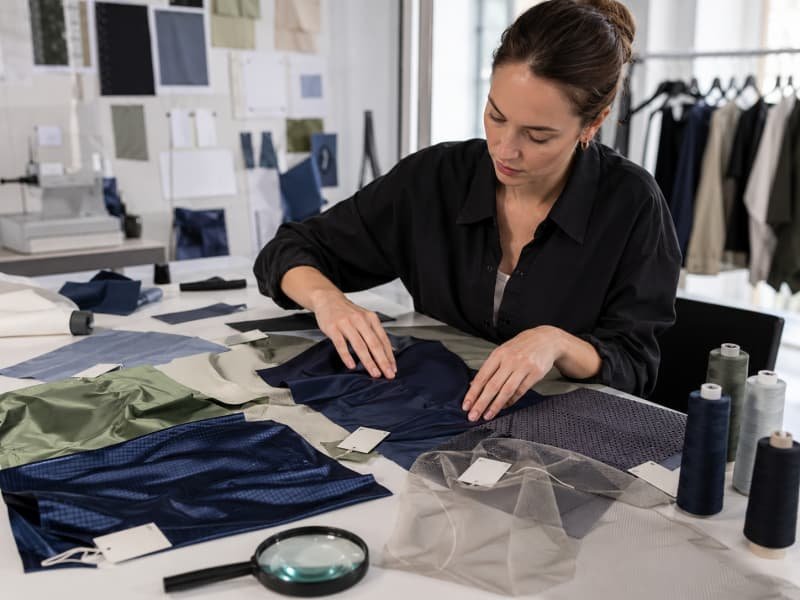
Fabric Release

Trim Verification
Zippers, hooks, elastic, boning, cups, lining, labels, hangtags, barcodes, and packaging materials are matched to the approved bill of materials.
Function, appearance, color, placement, and order identity are checked so incorrect components do not move into sewing or packing.

PP Sample Lock

Pre-Production Alignment

First-Piece Approval
Inline Control

Final Release
We Start with Your Inspection Standard
Quality Manual
- Control focus: apply the brand standard instead of substituting a generic factory rule.
- Output: a style-specific quality reference for production and inspection teams.
Tech Pack and Specs
- Control focus: identify missing, contradictory, or high-risk instructions.
- Output: a clarified specification set linked to the approved sample.
Approved Sample
The approved sample provides visual and structural evidence that written documents cannot fully express. Proportion, drape, support, opacity, trim position, gathering, pressing, and overall finish are compared against bulk pieces.
- Control focus: protect sample-to-bulk consistency.
- Output: a protected reference with revision status and approval date.
Defect Classification
Critical, major, and minor defects must be defined in relation to garment use, brand positioning, compliance, and commercial impact. A loose thread and a failed zipper cannot carry equal weight.
- Control focus: create consistent decisions across internal and independent inspectors.
- Output: a style-relevant defect list with examples and action rules.
AQL and Level
Inspection level, AQL values, sample size, and acceptance numbers are confirmed from the client-approved method. A stricter level may be required for riskier styles, new suppliers, urgent programs, or previous quality concerns.
- Control focus: avoid assuming one AQL fits every order.
- Output: a documented lot and sampling plan before final inspection.
Packing and Labels
- Control focus: prevent correct garments from becoming incorrect shipments.
- Output: a verified packing reference and carton checklist.
Turning the PP Sample into an Inspection Standard
Lock the Physical Reference
A PP sample must represent the intended bulk garment, not an attractive prototype built with temporary materials or unrepeatable methods. Duolan confirms the final shell fabric, lining, interlining, elastic, zipper, cups, boning, labels, trims, embellishments, stitch construction, pressing method, and finish direction before the sample is treated as a production reference. Any approved substitution is recorded so factory teams and inspectors do not compare bulk pieces with an outdated version. Initial development samples are normally planned over approximately 10-15 days depending on fabric availability, fit complexity, special workmanship, and revision scope. PP timing begins only after major fit and construction comments are closed.
Convert Approval into Measurable Checkpoints
Visual approval needs measurable support. The PP reference is connected to the measurement specification, grading rules, allowed tolerances, seam and hem requirements, trim placement, artwork position, lining coverage, opacity expectations, stretch direction, support structure, and finishing standard.
Critical points are highlighted for early measurement and inline inspection. For a corset dress, cup position, waist balance, boning length, zipper strain, and lining coverage may carry greater importance than a non-critical decorative measurement. For a satin slip dress, grain direction, seam smoothness, hem fall, and surface marking require dedicated attention.
Close Comments and Preserve Version Control
Every development comment should end in one of four states: approved, revised, rejected, or pending with a named owner and deadline. Duolan records the final decision and prevents older files from circulating as active instructions.
The approved sample, specification, bill of materials, workmanship notes, color references, and packing guide are archived under the same style identity. Repeat orders begin with the stored standard, followed by a review of material batches, requested changes, test requirements, and current production conditions. Version control protects consistency without assuming that a repeat order can proceed without fresh verification.
Fabric and Trim Inspection Before Production

Shade and Batch
- Inspect: shade continuity, side-to-side variation, end-to-end variation, and lot identity.
- Action: group, segregate, replace, or obtain written approval.

Weight and Width
Fabric weight, usable width, handfeel, and dimensional behavior influence consumption, fit, opacity, and cost. Values are compared with the approved material direction and order requirements. Significant deviation may require marker adjustment, fit review, or a new material decision before cutting.
- Inspect: GSM or weight method, usable width, handfeel, shrinkage direction.
- Action: release only after effect on garment performance is understood.

Stretch and Recovery
Bodycon, bandage, mesh, jersey, and fitted dresses depend on controlled stretch and recovery. Directional stretch, rebound, growth, and transparency under tension are reviewed. Material with weak recovery can distort fit, stress seams, and create size inconsistency even when static measurements appear acceptable.
- Inspect: warp and weft stretch, recovery, opacity, edge curl.
- Action: adjust pattern, construction, lining, or material choice before bulk.

Surface Condition
Satin, chiffon, lace, mesh, and embellished fabrics require close surface inspection. Snags, pulls, holes, oil marks, slubs, crease damage, coating faults, embroidery gaps, sequin loss, and print defects are mapped by roll so damaged areas are not treated as normal usable fabric.
- Inspect: defect type, frequency, location, and usable yield.
- Action: mark, cut around, replace, or agree a controlled tolerance.

Functional Trims
- Inspect: function, pull, attachment, finish, corrosion risk, and color.
- Action: approve the actual production lot, not only a development sample.

Labels and Packing
- Inspect: artwork version, data accuracy, placement, scan result, carton identity.
- Action: quarantine obsolete or mismatched materials before use.
First-Piece and Inline Garment Inspection
Approve the First Production Pieces
The first completed garments are reviewed against the PP sample and active technical file before line output accelerates. Inspectors check key measurements, garment balance, seam position, hem level, drape, closure function, lining coverage, stitch appearance, pressing, trim placement, and overall presentation. High-risk construction receives added attention. A halter dress may require neckline stability and strap security checks. A corset dress needs cup symmetry, boning position, zipper alignment, and waist balance. A sequin style needs edge comfort, attachment security, and seam bulk control. Approval is not limited to a single visually strong garment. Several early pieces should confirm repeatability across operators and relevant sizes. Production continues at normal volume only after any deviation is corrected and follow-up pieces demonstrate the expected standard.
Control Critical Operations During Sewing
Contain, Correct, and Verify
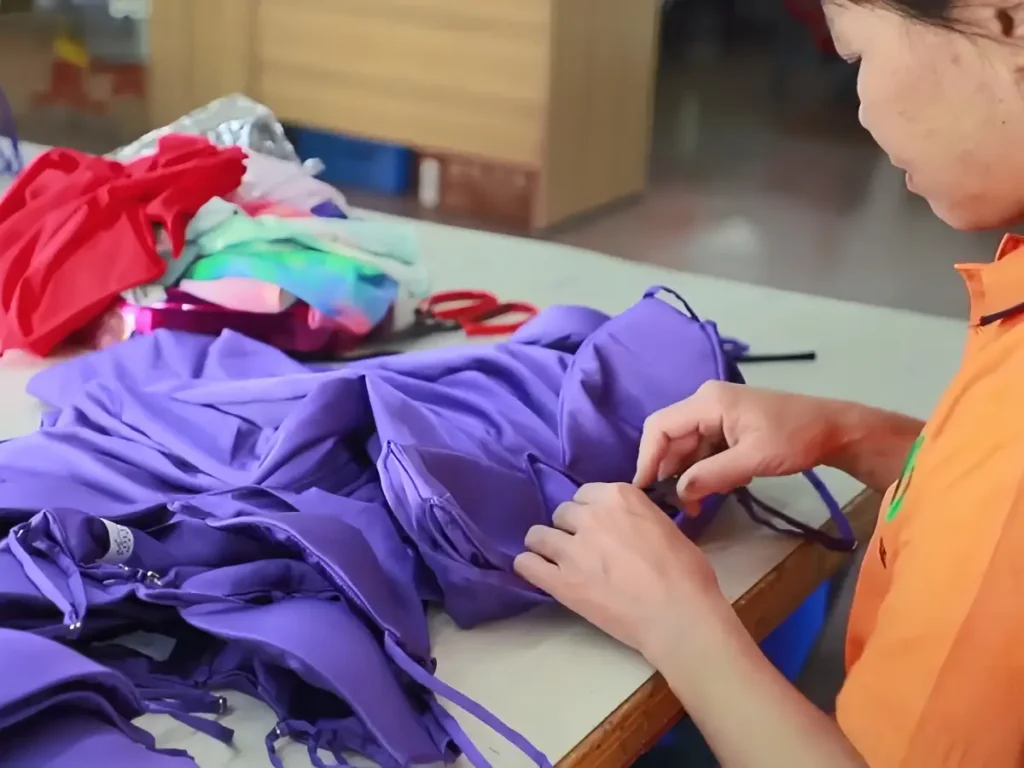
Repeated or serious findings trigger a controlled response. Affected bundles are placed on hold and separated from acceptable output. The team identifies the defect pattern, checks earlier production, adjusts the method or setting, and verifies corrected pieces.
Rework instructions define the affected quantity, responsible operation, completion status, and recheck result. Production does not return to normal status only because an adjustment was made; follow-up evidence must confirm that the defect is no longer repeating.
Maintain Control Across Multiple Styles
Programs containing 10-30 styles require disciplined identification. Each style has its own approved sample, measurement points, color and size breakdown, construction risks, and packing data. Duolan organizes inspection records by style and production stage so findings from a satin halter dress do not become mixed with a mesh corset or jersey bodycon style. Shared quality principles remain consistent, while checkpoints change according to material and construction. This balance allows a collection to move through several production lines without reducing every garment to one generic checklist.
How an AQL Sampling Plan Is Determined
Sampling values come from the approved standard, lot size, inspection level, and defect limits. The example below shows the planning sequence without replacing the official client-approved table.
| Planning Step | Illustrative Value | Meaning for Inspection |
|---|---|---|
| Production lot | 20,000 garments | The defined lot presented for one inspection decision. Lot structure must be agreed before sampling. |
| Inspection level | General Level II | A commonly selected general level; the brand or appointed agency confirms the required level. |
| Code letter | M | Derived from lot size and inspection level under the approved sampling standard. |
| Sample size | 315 garments | Random units selected across accessible cartons, styles, colors, sizes, and production batches as applicable. |
| Critical defects | Zero acceptance unless specified otherwise | Safety, compliance, or severe identity failures normally trigger immediate hold and escalation. |
| Major defects | AQL 2.5: Ac 14 / Re 15 | Fourteen or fewer major defects meet the illustrative limit; fifteen reaches rejection. |
| Minor defects | AQL 4.0: Ac 21 / Re 22 | Twenty-one or fewer minor defects meet the illustrative limit; twenty-two reaches rejection. |
| Lot decision | Pass, hold, rework, or reinspection | The result follows the approved rules, defect evidence, and any additional mandatory checks. |
Critical, Major and Minor Garment Defects
Defect classification should reflect safety, function, appearance, compliance, brand positioning, and commercial impact rather than relying on a generic list alone.
| Defect Class | Decision Logic | Fashion Dress Examples | Typical Action |
|---|---|---|---|
| Critical | Creates a safety, legal, compliance, or severe identity risk. Zero acceptance is commonly required unless the approved manual states otherwise. | Broken needle or sharp metal; unsafe eyelet or trim; severe label or fiber-content error; wrong product identity; hazardous closure failure. | Immediate hold, escalation, containment, expanded check, root-cause action, and written release authority. |
| Major | Makes the garment unfit for normal sale or use, materially changes appearance or fit, or is likely to cause return or complaint. | Key measurement outside tolerance; open seam; failed zipper; exposed lining; severe shade difference; obvious asymmetry; cup or boning misplacement; missing embellishment. | Lot hold or rejection according to Ac/Re result, rework plan, recheck, and possible independent reinspection. |
| Minor | Creates a limited appearance issue without materially affecting normal use, safety, core fit, or saleability under the agreed standard. | Small non-critical loose thread; light pressing mark; minor stitch irregularity; limited packaging crease; slight hidden finishing issue. | Record against the minor limit, correct where feasible, monitor recurrence, and review if repeated frequency indicates a process problem. |
Classification examples must be adapted to the active style. A slight stitch deviation on an internal seam may be minor, while the same issue at a stressed corset seam may become major. Repeated minor defects can also reveal a process failure that requires corrective action even when the numerical minor limit has not been exceeded.
Inspection Risks Across Complex Dress Categories

Satin Dresses
- Control points: clean handling, suitable needle and thread, tension balance, pressing protection, grain control.
- Release risk: surface damage and seam distortion often become more visible under retail lighting.

Mesh and Lace
- Control points: layer alignment, stretch direction, motif matching, clean seam finish, lining edge position.
- Release risk: unexpected transparency or exposed seam allowances can make an otherwise wearable garment unsaleable.

Bodycon Dresses
- Control points: material direction, recovery, stitch elasticity, lining behavior, key circumference tolerances.
- Release risk: weak recovery and seam strain often appear only during movement or wear simulation.

Corset and Bustier
- Control points: support map, cup position, boning length, seam symmetry, closure strain, lining coverage.
- Release risk: structural imbalance may affect fit across an entire size range rather than a single unit.

Sequin and Beaded
- Control points: approved layout, secure attachment, seam preparation, edge binding, repair method, spare trim control.
- Release risk: visible gaps, rough edges, or concentrated weight can cause returns even when the base garment fits.

Halter and Backless
Halter and backless styles rely on neckline stability, strap length, attachment strength, back balance, closure position, modesty coverage, and support engineering. Inspection checks whether the garment remains secure during movement, whether straps twist or stretch, and whether the back opening stays aligned across sizes.
- Control points: strap reinforcement, neckline tension, back balance, closure security, support compatibility.
- Release risk: small errors can create exposure, discomfort, or unstable fit that is not visible on a hanger.
Measurements, Fit and Functional Checks
Critical Measurements
Points of measure are prioritized according to silhouette and construction. Bust, waist, hip, body length, strap length, neckline drop, armhole, slit height, cup position, and back opening may carry different importance by style. Inspectors follow the approved measuring method, garment state, and tolerance rather than choosing convenient points.
Tolerance Control
Balance and Symmetry
Movement Check
Support Structures
Closures and Trims
Zippers, hooks, snaps, buttons, sliders, ties, eyelets, and decorative hardware are opened, closed, pulled, and visually checked according to risk. Function is reviewed together with attachment security, alignment, sharp edges, color, finish, and surrounding fabric stress. Failure at a closure can turn an otherwise acceptable garment into a major defect.
Final Inspection Before Garments Are Released

Garment Appearance and Workmanship

Brand Identity and Order Accuracy

Packing and Carton Verification

Release, Hold, or Reinspection
A final status combines AQL results, mandatory checks, outstanding repairs, packing completion, and any third-party findings. Goods remain on hold when critical issues, unresolved major defects, identity errors, incomplete rework, or missing approvals remain open. Release occurs only after required evidence is closed. When a lot fails or remains uncertain, Duolan supports rework, expanded internal checking, record updates, and client-appointed reinspection. Shipment timing is adjusted from verified completion rather than from an optimistic production estimate.
Third-Party Inspection Support for Brand Orders
Inspection Booking
- Prepared: booking reference, factory address, order summary, readiness status.
- Controlled: no claim of guaranteed pass; the agency keeps independent authority.
Document Package
The active tech pack, measurement specification, approved sample status, bill of materials, packing guide, barcode file, defect manual, and AQL requirement are prepared for inspection. Conflicting or outdated files are removed from the working set.
- Prepared: single approved document version with style identifiers.
- Controlled: all amendments remain traceable to written approval.
Reference Samples
- Prepared: physical reference set and approval status.
- Controlled: sample identity matches the active style, color, and revision.
On-Site Access
Cartons and garments are arranged so random selection can be performed across the available lot.
Factory personnel assist with carton movement, style identification, measurement space, lighting, and opening or repacking without selecting the samples on behalf of the inspector.
- Prepared: accessible cartons, clean inspection area, measuring tools, scanning access.
- Controlled: sampling remains independent and traceable.
Independent Decision
Duolan provides records and answers factual production questions but does not alter defect classification or influence the agency result.
Disagreements are documented and referred to the brand quality team with photographs, measurements, and relevant approved references.
- Prepared: evidence for clear review.
- Controlled: the agreed inspection authority and escalation route remain intact.
Reinspection Support
When a lot fails or remains on hold, affected goods are isolated, corrective work is planned, completed quantities are tracked, and internal checks verify closure. The reinspection booking reflects the updated lot and completed action status rather than simply repeating the original appointment.
- Prepared: rework log, recheck records, updated quantity, available cartons.
- Controlled: shipment release follows the approved reinspection outcome.
What Happens When Inspection Finds Problems
Hold and Isolate
- Decision: stop movement before corrective work begins.
- Evidence: hold tag, quantity record, location, responsible owner.
Map the Defect
- Decision: determine affected scope and severity.
- Evidence: defect photos, count, style-size-color distribution, production trace.
Find Root Cause
- Decision: correct the system, not only the visible symptom.
- Evidence: cause statement, responsible process, prevention action.
Execute Rework
- Decision: choose a correction compatible with garment quality.
- Evidence: rework sample approval, completed quantity, operator record.
Recheck Results
Corrected units are rechecked against the same approved reference and defect rule. Expanded checking or 100% inspection may be used for a defined issue when agreed.
Follow-up pieces from normal production also confirm that the process correction is holding, not only the repaired units.
- Decision: verify closure before removing hold status.
- Evidence: recheck quantity, result, remaining defects, inspector sign-off.
Release and Record
Shipment status is updated only after required internal or third-party actions are closed. Final records preserve the defect, cause, correction, result, and approved release. The history becomes a prevention reference for repeat orders, new colorways, similar constructions, and future production allocation.
- Decision: release, continue hold, reject, or reinspect.
- Evidence: closed action log and final quality status summary.
Inspection Records and Real Project Evidence
Evidence Built Around the Order
Anonymized Occasion Dress Program
A U.S. multi-channel fashion brand placed an 18-style occasionwear program totaling 54,000 garments across four core colors and sizes XS-XL. The range included satin halter dresses, mesh corset dresses, sequin bodycon styles, asymmetric midis, and lined backless silhouettes. Development and PP approval were organized by style group, followed by a rolling seven-week bulk production plan. The approved inspection protocol used General Inspection Level II, zero acceptance for critical defects, AQL 2.5 for major defects, and AQL 4.0 for minor defects, together with brand-specific measurement, labeling, barcode, and packing rules.
Material and early-production controls identified four issues before final shipment sampling: visible shade movement in one satin dye lot, seam grin under stretch on selected bodycon sizes, rough sequin edges near an armhole seam, and a barcode mapping error affecting one color-size group. The satin lot was quarantined and regrouped after color review. Stretch-seam construction was adjusted and verified on follow-up pieces. Sequin seam allowances and binding were corrected to improve comfort. The barcode master file was reissued, obsolete labels were isolated, and packed quantities were rescanned against the updated order data.

Corrective Closure and Shipment Release
Affected garments were held by style, color, and size while corrective work was completed. Recheck quantities were defined according to the defect pattern rather than using one general number. Updated first pieces and repaired units were compared with the PP reference, and normal production was monitored to confirm that the corrections remained stable. Client-appointed final inspection was supported with organized cartons, active files, reference samples, measurement space, and rework records. The program was released in two planned shipment windows after the required internal and independent statuses were closed.
The project structure reflects how Duolan commonly manages established brand programs: multiple styles, substantial order quantities, different fabric risks, and a fixed launch calendar. Inspection evidence is most valuable when it shows where a problem appeared, how far it spread, what changed, and which record justified release.

Quality-Controlled Manufacturing at Brand Scale
30+ Years Experience
16 Owned Factories
20+ Satellite Factories
300 Sewing Lines
Development Capacity
Audit and Standards
AQL Garment Inspection Frequently Asked Questions

Share Your Garment Quality Requirements
Send the production and inspection information already used by your team, even when the file set is not yet complete. Duolan can review the quality pathway from development and PP approval through material control, first-piece checks, inline inspection, AQL sampling, packing verification, corrective action, and third-party inspection support. A useful first review normally includes the product category, style count, projected quantity, size range, target delivery window, manufacturing location requirements, and the quality standard expected for shipment release. Complex dresses benefit from added information on fabric behavior, support structure, lining, embellishment, transparency, fit priority, and functional risks. The review will identify missing references, conflicting instructions, high-risk checkpoints, inspection timing, and documents needed before bulk production.
- Tech pack, measurement specification, and grading rules
- Approved sample, PP sample photos, or original reference
- Quality manual and critical, major, minor defect rules
- Required AQL, inspection level, and appointed agency instructions
- Fabric, trim, label, barcode, and packing requirements
- Style-color-size breakdown, total quantity, and target shipment date
- Previous inspection findings or known repeat-order risks