Skip to content

Bandage Dress Manufacturing Solutions
Dress-focused development and scalable manufacturing for fashion brands requiring controlled sculpting fit, stable recovery, accurate grading, and repeatable bulk quality.
- 5 fit zones reviewed around bust, waist, abdomen, hip, and thigh to protect the intended sculpting line across the garment.
- 3 recovery conditions considered during development: stretch recovery, wear recovery, and wash-related dimensional behavior where the fabric and care method require review.
- Pattern tension, seam elasticity, panel balance, zipper behavior, and measurement control are connected instead of reviewed as isolated details.
- Development can begin from a tech pack, reference image, original sample, or established brand fit direction before moving toward production readiness.
Bandage Construction Is More Than a Tight Silhouette
Bandage development requires a different control logic from a general stretch bodycon dress. Material recovery, negative ease, pressure balance, panel behavior, grading, and seam extension all affect whether a fitted silhouette stays sculpted without becoming unstable or restrictive.
| Development Point | Bandage-Oriented Construction | General Stretch Bodycon |
|---|---|---|
| Material objective | Dense support, controlled extension, reliable recovery, shape retention | Close fit, comfort, drape, or general stretch depending on design |
| Fit logic | Sculpting pressure balanced across body zones | Close-to-body silhouette with style-specific ease |
| Pattern approach | Tension-sensitive pattern balance and controlled negative ease | Stretch-adjusted conventional fitted pattern |
| Recovery priority | Critical for waist, hip, seat, hem, and repeated wear | Important, with priority varying by fabric and silhouette |
| Panel balance | High priority when panels create contour or shaping | Depends on seam placement and visual design |
| Seam behavior | Stitch extension must support fabric extension without popping or rippling | Elasticity is selected around normal movement and stress points |
| Grading | Shape, pressure, and proportion must remain credible across sizes | Measurements and silhouette are graded to brand standards |
| Bulk risk | Recovery drift, tension imbalance, seam distortion, size inconsistency | Fit variance, measurement drift, construction or fabric variation |
Built for Established Fashion and Product Teams
Global Fashion Brands
Established fashion brands need more than an attractive first sample. Development must fit an existing product identity, size system, quality level, launch calendar, and internal approval process. Duolan reviews the intended silhouette, fabric behavior, fit direction, color plan, construction risks, and production path before bulk preparation.
For recurring programs, approved pattern information, material direction, workmanship points, measurement standards, and packaging requirements can be carried into later production discussions so the brand does not restart critical decisions with every order.
Product Development Teams
Sourcing and Merchandising Teams
Sourcing and merchandising teams need a supplier capable of supporting both product execution and commercial control. Key concerns usually include sample readiness, material stability, order capacity, production timing, quality checkpoints, shipment preparation, and repeat-order consistency. Duolan combines dress-focused development with a multi-line manufacturing system, allowing different styles and complexity levels to be planned through suitable production paths. Clear project documentation, staged updates, production-readiness review, inline checks, final inspection, and delivery coordination help keep technical decisions connected to commercial deadlines.
Bandage Dress Directions Developed for Commercial Collections
A strong bandage line needs more than color changes. Each silhouette introduces a different relationship between compression, body coverage, edge stability, support, movement, and construction. Development should protect the brand look while keeping the garment workable in sampling and bulk production.
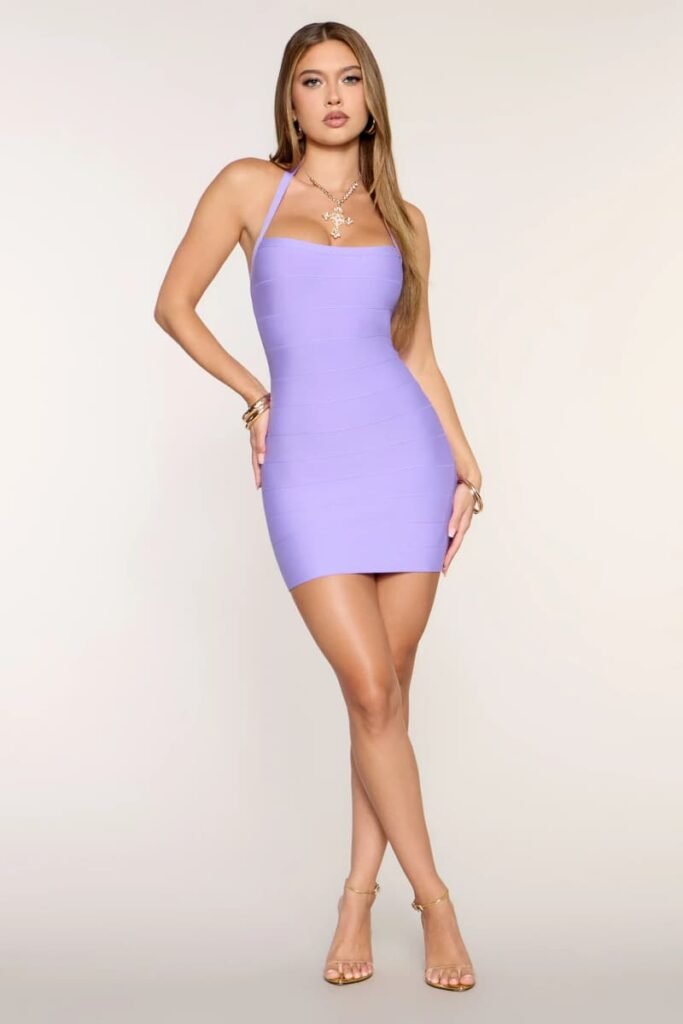
Classic Sculpting Bandage
- Development focus: recovery, waist-to-hip balance, side seams, hem stability.
- Bulk focus: fabric-lot behavior, measurement tolerance, seam extension, shape retention.

Strapless Bandage Dress
- Development focus: neckline security, bust balance, support, back width.
- Bulk focus: top-edge consistency, zipper stability, grading, fit checks.

Cut-Out Bandage Dress
- Development focus: opening placement, edge recovery, coverage, stress transfer.
- Bulk focus: symmetry, reinforcement, panel tension, measurement control.

Ruched Bandage Dress
- Development focus: gather ratio, placement, recovery, body contour.
- Bulk focus: repeatable ruching, left-right balance, anchor strength, grading.

Corset-Inspired Bandage
Corset-inspired styling combines stretch shaping with more structured upper-body lines. Cup placement, seam direction, boning or reinforcement where specified, neckline support, waist shaping, lining, and closure choice all need to work with a fabric that already carries tension. The key is avoiding a conflict between a rigid section and a highly elastic section. Pattern development establishes where support should remain stable and where stretch should remain active. Sampling then checks bust position, waist balance, side profile, back fit, and pressure around structured seams before the design is considered ready for scaling.
- Development focus: cup position, structured zones, waist shaping, support transition.
- Bulk focus: placement accuracy, reinforcement, seam stability, PP reference.

Mesh-Panel Bandage
Mesh panels can create lighter visual zones without losing the sculpted character of a bandage dress, but transparency and elasticity need close control. Power mesh, stretch mesh, or another approved mesh must be matched to the extension and recovery of neighboring bandage panels. If the two materials behave differently, seams can wave, openings can distort, and fit can shift. Development reviews opacity, skin contact, seam allowance, edge finish, panel direction, and lining or coverage requirements. Color matching also matters because mesh and dense knit may read differently under studio lighting and natural light.
- Development focus: mesh recovery, opacity, panel compatibility, edge stability.
- Bulk focus: shade relationship, seam behavior, stretch matching, coverage.

Hardware Bandage Dress
- Development focus: load points, reinforcement, hardware weight, wearing comfort.
- Bulk focus: attachment consistency, finish matching, pull checks, packing protection.

Embellished Bandage Dress
- Development focus: decoration density, stretch zones, backing, comfort.
- Bulk focus: placement, attachment security, recovery impact, surface protection.

Material Selection Starts With the Intended Sculpting Result
Fabric choice determines how a bandage dress stretches, supports, recovers, covers, and holds its shape. Duolan reviews material behavior against the target silhouette and brand fit direction rather than selecting a fabric from composition alone.
Evaluate Structure Before Choosing the Pattern Reduction
Material approval should answer how the knit behaves before the pattern team commits to the final fit direction. A dense supportive knit, a softer stretch knit, and a highly elastic lightweight construction can all show similar stretch percentages while producing very different pressure, opacity, recovery, and surface appearance on-body.
- Weight and density: GSM and knit density influence coverage, structure, handfeel, seam appearance, and how strongly the garment resists deformation. Lower weight can improve softness but may reduce opacity or shape retention. Higher density can improve support but can increase heat, sewing resistance, and pressure if the pattern is reduced too aggressively.
- Stretch direction: Widthwise, lengthwise, and four-way extension affect pattern placement and garment length. Excessive vertical stretch can contribute to drop or length change, while limited vertical movement can affect comfort in long fitted silhouettes.
- Recovery: Extension alone does not define performance. The material needs to return toward its starting dimensions after being stretched, worn, and handled. Waist, seat, hip, and hem areas deserve particular attention because local bagging becomes visually obvious on a smooth fitted silhouette.
- Opacity under extension: A fabric that looks opaque on the cutting table may become visibly thinner when stretched across the hip or bust. Light colors and lower-density knits need extra review under realistic lighting.
- Surface and skin feel: A sculpting garment remains close to the body for long periods. Surface roughness, seam bulk, backing, and embellishment contact can change wearing comfort even when measurements are correct.
Material testing therefore comes before final negative ease. Duolan can compare approved options around support, recovery, coverage, handfeel, color behavior, sourcing stability, and production suitability, then carry the selected direction into pattern and sample development.
Match Material Behavior to the Commercial Product Direction
A premium bandage collection may contain several visual directions, yet each direction does not need identical material behavior. A minimalist midi may prioritize smooth recovery and surface cleanliness; a cut-out mini may need stronger edge stability; a mesh-panel style needs compatibility between two stretch systems; an embellished style needs enough structure to carry added weight without losing shape.
- Classic smooth bandage: prioritize balanced recovery, consistent surface, sufficient opacity, and stable seam appearance.
- High-structure fitted styles: evaluate stronger support and panel stability while checking pressure comfort around waist, hip, and thigh.
- Cut-out or strappy styles: prioritize edge recovery, reinforcement compatibility, and the ability of narrow connecting sections to resist permanent elongation.
- Mesh combinations: compare stretch ratio and recovery between dense panels and mesh sections before approving seam construction.
- Embellished or hardware styles: assess whether local weight or reinforcement changes extension and whether the base can carry decoration without distortion.
- Light colors: check coverage under extension, lining requirements, seam visibility, and shade consistency before final approval.
Duolan’s material role is not to prescribe one universal bandage composition. The project team can work from a nominated fabric, an original sample, a target handfeel, or a visual reference, then review alternatives when the first material creates problems with fit, cost, lead time, color, or bulk stability. Material replacement should preserve the intended garment result as closely as possible while recognizing any pattern or construction changes required by the new fabric.
Stretch Recovery Keeps the Silhouette Working After Wear
A bandage dress can feel highly elastic and still recover poorly. Recovery control looks at what happens after extension, movement, sitting, dressing, and care so the garment does not remain loose at the waist, seat, hip, or hem.
Separate Stretch From Recovery During Bandage Dress Development
Stretch measures how far a material can extend; recovery measures how effectively it returns. Bandage construction needs both. A fabric with generous extension can be comfortable to put on yet still create bagging after sitting if recovery is weak. A highly resistant fabric can hold shape well but create excessive pressure if pattern reduction is too aggressive. Duolan links material behavior to pattern tension and intended wearing experience rather than judging stretch in isolation.
- Stretch direction: material is reviewed in the directions relevant to the pattern layout. Width extension influences bust, waist, and hip fit; lengthwise extension can influence dress length, shoulder-to-hem balance, and movement.
- Stretch ratio: extension is considered together with fabric density, composition, construction, target size range, and negative ease. A higher number is not automatically better.
- Immediate recovery: after controlled extension, the material should return toward the starting dimension without obvious residual growth. Waist and hip areas often reveal weak recovery first.
- Wear recovery: sample review considers repeated movement, sitting, standing, and dressing. Seat bagging, hip bubbling, waist loosening, or hem waves indicate a mismatch between material and pattern tension.
- Wash-related behavior: when the approved care method requires it, dimensional review can include washing, steaming, relaxation, or another agreed conditioning method. Recovery and shrinkage should be read together because both can change final fit.
The development decision is therefore not simply pass or fail. A material can remain suitable with a pattern adjustment, reduced compression target, different panel direction, altered lining choice, or revised construction. A recovery issue discovered before approval is far easier to control than a fit complaint discovered after a full production run.
Build Recovery Checks Into Sample and Bulk Control
Recovery cannot be confirmed once and forgotten. Material lots, cutting direction, seam construction, garment finishing, and size grading can all influence how a fitted dress behaves. Duolan carries recovery-related checkpoints from development into production preparation and QC.
- Sample stage: compare flat measurements, on-body fit, side-seam position, hip shape, seat behavior, hem opening, and visible distortion before and after wear review.
- Pattern stage: adjust negative ease and panel proportion according to the selected material instead of forcing every stretch knit into one block.
- Construction stage: use stitch structures and thread tension appropriate for required extension. A seam that cannot extend with the fabric can restrict fit or fail under movement.
- Pre-production stage: confirm the production fabric direction, critical measurements, seam method, and approved sample basis before release.
- Inline stage: monitor critical fitted measurements and visible shape. Local over-stretch during sewing or pressing can create waves even when the cut panel was correct.
- Final stage: inspect finished shape, measurements, seam behavior, and agreed appearance against the approved basis, with extra attention on waist, hip, seat, zipper, and hem.
The result sought is consistent shape retention across a production run, not a marketing claim about maximum elasticity. A bandage dress should recover toward the intended silhouette after normal movement and maintain the brand’s visual fit across approved sizes.


Sculpting Fit Requires Pressure Balance Across Body Zones
Bandage fit is not achieved by reducing every measurement equally. Bust, waist, abdomen, hip, seat, thigh, neckline, and hem interact differently with stretch and movement. Duolan develops fitted silhouettes around proportion, support, movement, and stable visual contour.
Control Compression Without Flattening the Intended Silhouette
A strong fitted silhouette needs targeted tension rather than uniform tightness. Too much reduction at the waist can pull side seams forward, distort the hip, raise the hem, or overload the zipper. Too little control at the seat can create bagging after wear. Bust pressure can shift neckline position or alter cup shape. Fit review therefore considers how each zone affects neighboring areas.
- Bust: evaluate coverage, apex position, neckline stability, side profile, and whether fabric tension compresses the upper body in a way that changes the intended design.
- Waist: check suppression, side-seam alignment, center-front smoothness, zipper behavior, and transition into the high hip. Waist definition should not be created by excessive strain alone.
- Abdomen: review smoothness, panel tension, seam visibility, and comfort. Local stress can expose seam ridges or produce horizontal drag lines.
- Hip and seat: confirm contour, seat depth, side balance, recovery after sitting, and whether the garment climbs upward during movement.
- Thigh and hem: retain enough movement for walking and sitting while protecting the slim line. Hem opening, slit position, and dress length need to work with hip tension.
Duolan uses sample fitting, measurements, material behavior, pattern adjustment, and visual review together. A garment can meet a flat spec yet still look wrong on-body, so critical comments should be converted into pattern or construction actions rather than treated as subjective appearance notes.
Use Fit Comments as Technical Revision Instructions
Mature product teams often provide comments such as “waist needs more shape,” “hip feels too compressed,” “side seam pulls forward,” or “hem rides up.” Useful revision work translates each comment into a measurable cause and action. Duolan can classify feedback by fit, fabric, visual preference, construction, and production risk before preparing the next version.
- Side seam movement: review front-to-back pattern balance, waist and hip distribution, grain or stretch direction, and sewing tension.
- Hip bubbling: examine recovery, seat depth, local negative ease, panel shape, and whether the fabric relaxed during sewing or finishing.
- Waist looseness: check waist reduction, recovery, zipper stabilization, seam allowance behavior, and the transition from ribcage to high hip.
- Hem ride-up: review hip tension, thigh movement, hem opening, dress length, slit design, and vertical stretch.
- Bust flattening: reconsider upper-body negative ease, neckline, cup or support structure where used, and the relationship between bust and under-bust measurements.
- Back gaping: evaluate center-back length, back width, zipper position, top edge, and material recovery.
Every accepted correction should move toward an approval basis that can be measured and reproduced. Fit quality becomes more reliable when brand comments, pattern actions, material behavior, and sample versions remain connected throughout development. The review record should also identify which observations were visual preferences and which changes alter measurable fit, construction, or production risk.
Pattern and Grading Protect Shape Across the Size Range
A successful base size does not guarantee a successful size run. Bandage grading must protect proportion, pressure, panel placement, garment length, and movement as body measurements change. Duolan follows brand size specifications and adjusts technical logic around approved fabric behavior.
Build the Base Pattern Around Fabric and Brand Fit
Pattern work starts from the intended silhouette, target market, brand measurement standards, selected fabric, and the role of negative ease. A fitted block developed for one knit cannot be transferred blindly to a materially different stretch system. Changes in recovery, density, vertical extension, or support may require a different reduction strategy, seam balance, or length allowance.
- Measurement basis: confirm bust, waist, high hip, full hip, length, hem opening, neckline, strap, slit, and other style-specific points before fitting begins.
- Negative ease: determine reduction according to the selected material and wearing target. Uniform percentage reduction across every body zone can create pressure imbalance.
- Panel placement: contour seams, cut-outs, ruching, mesh inserts, and hardware positions are checked relative to body landmarks, not only flat dimensions.
- Length control: vertical stretch, hip tension, and garment weight can change finished length on-body. Mini and midi silhouettes need different movement and coverage checks.
- Closure integration: zipper length, zipper stabilization, hooks, straps, and top edges need enough structure to resist distortion while the surrounding garment remains elastic.
The base pattern becomes useful only after sample fit confirms the relationship between measurement, material, and visual result. Accepted adjustments should be recorded before grading rather than recreated separately in every size.
Grade Proportion Across the Full Bandage Size Range
Bandage grading should maintain the visual logic of the approved sample as the garment moves through the agreed size range. Bust, waist, hip, length, panel width, cut-out placement, neckline depth, strap position, and hem opening may require different increments rather than a uniform scale-up.
- Bust-to-waist relationship: larger sizes may need more than simple circumference growth to keep neckline position and upper-body balance credible.
- Waist-to-hip relationship: the sculpting effect depends on how increments are distributed through high hip, full hip, and seat, not merely on total width.
- Panel proportion: contour panels and seam lines should remain visually intentional instead of becoming disproportionately narrow or wide.
- Cut-out placement: openings need to track body landmarks across sizes while preserving coverage and edge stability.
- Hem and movement: a larger hip measurement can increase upward pull. Hem opening, slit length, and garment length may need review to protect movement and coverage.
- Measurement tolerance: critical points should have agreed measuring methods and tolerances tied to fabric behavior and target fit, rather than one generic tolerance applied everywhere.
Size development is strongest when several sizes are reviewed against the same fit principles. Duolan can work to a brand’s established size chart and grading rules, or help identify where a stretch-sensitive style needs additional review before production.


Seam Engineering Must Move With the Stretch Fabric
A sculpting fabric can only perform if seams, closures, edges, and stress points can handle the same movement. Duolan reviews stitch extension, seam tension, reinforcement, zipper stability, edge recovery, and workmanship where high garment tension can expose construction weakness.
Match Stitch Extension to Bandage Garment Stress Points
Bandage seams operate under continuous strain. A clean-looking seam on the table can restrict the garment, pop during dressing, or ripple after wear if stitch behavior does not match the fabric. Construction therefore needs to be tested around the actual stress map of the style.
- Side seams: carry significant tension through bust, waist, hip, and thigh. Seam extension, allowance, stitch density, and feed need to stay balanced so the seam remains straight rather than twisting or puckering.
- Center back and zipper: the zipper area needs enough stability for operation without creating a rigid vertical strip that changes surrounding fit. Bottom stops and zipper ends are important stress points.
- Panel joins: contour panels, contrast sections, and mesh inserts need compatible extension. A less elastic adjoining material can pull a highly elastic panel out of shape.
- Cut-out edges: narrow edges can grow permanently if recovery and finish are weak. Binding, facing, elastic support, or another approved edge method should be selected around the design.
- Slits and hem openings: slit tops and hem joins absorb movement. Reinforcement cannot be so rigid that it creates a visible stress point in a smooth fitted garment.
- Straps and hardware: narrow straps, rings, eyelets, or buckles concentrate force. Attachment points need reinforcement appropriate for the base material and intended use.
Trial sewing on the actual production-intent fabric is more informative than choosing a stitch by habit. Needle, thread, machine setting, seam type, and operator handling all influence the final appearance of a tension-sensitive knit.
Control Workmanship Through Sewing, Finishing, and Final Presentation
Workmanship for a bandage dress extends beyond loose threads. The garment should retain clean panels, stable seams, smooth closures, balanced edges, accurate symmetry, and a controlled surface after sewing and finishing. Stretch materials can be damaged by excessive pulling, heat, pressure, or inconsistent feeding during production.
- Seam appearance: watch for tunneling, waviness, puckering, skipped stitches, broken threads, seam grin, and visible tension differences.
- Symmetry: neckline, cut-outs, panels, straps, hardware, ruching, and hem need left-right balance where the design requires it.
- Zipper behavior: check operation, surrounding rippling, top alignment, bottom reinforcement, and whether the zipper changes fit when closed.
- Finishing: pressing should shape and clean the garment without flattening texture, glazing the surface, or stretching edges. Heat response depends on the approved material.
- Measurement after finishing: fitted garments can change during sewing and pressing, so critical measurements should be checked in the agreed garment condition.
- Packing: folding pressure, hardware contact, embellishment protection, and recovery after packing can matter for smooth fitted surfaces.
Duolan’s workmanship review links visible finish with wearing performance. A seam is acceptable only when it looks clean, extends as required, holds at stress points, and remains consistent with the approved production basis. Consistency also depends on controlled operator handling, seam feeding, finishing pressure, and inspection against the same approved reference across the production run.
Extend a Stable Bandage Block Into a Collection
Once fit, fabric, grading, and seam behavior are stable, a core block can support controlled design extensions. Commercial development works best when every variation preserves the approved fit principles rather than forcing a new visual idea onto an unsuitable base.
Neckline Variations
- Keep the approved waist and hip fit basis where suitable.
- Recheck bust pressure, neckline edge, back width, and dressing access.
- Confirm grading around coverage and strap placement.
Length and Hem Changes
- Recheck garment length on-body, not only flat.
- Review hip pull, stride, slit placement, and hem recovery.
- Confirm size grading for movement and coverage.
Cut-Out Extensions
- Review edge recovery and local stress transfer.
- Confirm opening position across the intended size range.
- Check movement, sitting, and dressing behavior.
Ruched Extensions
- Define gather length and anchor points.
- Recheck local recovery and garment balance.
- Control repeatability in bulk sewing.
Mesh and Contrast Panels
- Match extension and recovery where joined.
- Review seam allowance visibility and opacity.
- Confirm shade relationship under studio lighting.
Hardware and Embellishment
- Map load points before final placement.
- Test attachment on production-intent fabric.
- Protect metal and embellishment surfaces during packing.
Bandage Sampling Starts With a Defined Approval Target
Review the Development Basis Before Pattern Work Begins
- Design basis: confirm silhouette, length, neckline, panel lines, cut-outs, ruching, hardware, embellishment, and other non-negotiable visual points.
- Fit basis: confirm base size, measurement chart, fit model information if available, grading rules, previous fit comments, and the intended level of body contour.
- Material basis: review nominated fabric or target behavior around density, stretch direction, recovery, opacity, handfeel, color, and production availability.
- Sample purpose: separate first prototype, fit sample, photo-ready sample, revised sample, salesman sample, and PP or production-ready sample. A sample built for photography may not yet contain every bulk standard.
- Commercial basis: understand number of styles, planned colorways, target quantity, launch window, packaging needs, and whether the style belongs to a wider collection.
Build the First Sample Around Fit, Fabric, and Construction Risk
- Pattern development translates visual proportions into measurable body relationships.
- Material preparation confirms enough fabric and trims for the intended sample purpose.
- Trial construction can be used around difficult seams, cut-out edges, mesh joins, hardware attachments, or structured upper-body sections.
- Sample sewing follows the intended construction logic as closely as possible so fit comments are meaningful.
- Internal review checks measurements, visual proportion, seam behavior, zipper, recovery, symmetry, workmanship, and obvious production risks before shipment.
- Front, side, back, and detail images can support remote review before the physical sample arrives.
Turn Fit Comments Into a Controlled Sample Revision Plan
Comments become valuable when they are grouped and converted into technical actions. Duolan separates fit adjustments, material changes, visual preferences, construction issues, and production-related risks before the next sample round. A revision summary can record what is confirmed, what changes, and what remains open.
- Fit comments may change pattern balance, negative ease, length, bust position, waist, hip, hem opening, or panel shape.
- Material comments may change recovery, density, opacity, surface, color, or lining decisions and can require pattern rechecking.
- Visual comments may affect neckline shape, cut-out size, ruching level, hardware position, or embellishment density.
- Construction comments may alter seam type, edge finish, reinforcement, zipper, support, or attachment method.
- Production-risk comments identify details that look acceptable in one sample but need a more repeatable method for bulk.
Each revision should narrow the approval gap. Once the direction is sufficiently stable, the project can move toward a photo-ready version, fit approval, PP sample, or production-ready basis instead of remaining in an endless sample cycle. Version numbers, confirmed items, open points, revised measurements, material changes, and next-stage targets should remain visible so later teams do not reopen decisions already approved. A clear review trail also helps the PP and production teams identify which comments changed the garment standard and which comments were already closed.

Fit Corrections Should Solve Causes, Not Hide Symptoms
Side Seam Pulling
- Review: front/back balance, waist, hip, grain or stretch direction.
- Confirm: side profile, seam recovery, fit after sitting and movement.
Hip or Seat Bagging
Bagging around the seat or upper hip often points to weak recovery, excess local ease, insufficient seat shaping, or a mismatch between fabric and the original reduction strategy. Revision begins by separating material growth from pattern volume. If the fabric does not recover, making the garment smaller can create higher pressure without eliminating later bagging. Duolan can compare material response, seat depth, hip curve, waist transition, seam position, and worn measurements before deciding whether the correction belongs in the pattern, material, or both.
- Review: recovery, seat depth, local negative ease, panel shape.
- Confirm: post-wear shape, hip contour, waist-to-seat transition.
Hem Riding Up
- Review: hip pressure, thigh movement, opening, slit, vertical stretch.
- Confirm: walking range, seated position, final length and recovery.
Zipper Rippling
- Review: zipper stability, seam tension, local fit, top and bottom points.
- Confirm: closed fit, flat appearance, operation, repeatable sewing method.

Production-Ready Samples Create a Shared Bulk Standard
An approved-looking sample is not enough for reliable manufacturing. A production-ready bandage version should connect fit, fabric, grading, construction, trims, measurements, workmanship, color, labeling, packing, and QC references before a production line receives the order.
Lock the Technical Basis Before Releasing Bandage Bulk Production
Production readiness starts by defining exactly which sample and documents control production. A fit-approved sample may still need final material, color, trim, packaging, or construction updates. Duolan can review the approval status before production and separate confirmed items from pending refinements.
- Fit and measurement standard: base-size measurements, critical POMs, agreed measuring method, measurement tolerance, length, hem opening, and any style-specific points such as cut-out position or strap length.
- Fabric and color standard: approved fabric direction, composition information where available, weight, stretch behavior, recovery expectation, shade reference, shrinkage or care-related requirements, and lot approval needs.
- Pattern and grading standard: confirmed pattern version, grading basis, size range, panel placement, cut-out or design positions, and any size-sensitive adjustments.
- Construction standard: seam type, stitch behavior, zipper, edge finish, reinforcement, lining, support elements, ruching method, hardware attachment, embellishment, and critical workmanship points.
- BOM and trim standard: zipper, lining, elastic, support components, labels, hardware, decorations, packaging, and approved alternatives where applicable.
- PP or golden-sample basis: one clear physical or documented reference should align merchandising, development, production, and QC around the same expectation.
The goal is to remove ambiguity before scale amplifies it. A production line should not be asked to decide unresolved fit or material questions after cutting has begun.
Run a Bulk Readiness Review Before Production Line Release
Duolan’s documented production process includes a readiness review before bulk starts, confirming sample status, material direction, workmanship points, measurements, packaging, and the commercial purpose of the order. The order can then be broken down by style, color, size, quantity, complexity, and timing before a suitable production path is assigned.
- Confirm whether the current sample is fit-approved, visually approved, PP basis, or still pending refinement.
- Check whether fabric, lining, trims, color, measurements, workmanship, and packaging are locked.
- Identify high-risk construction such as cut-outs, structured sections, hardware, mesh combinations, heavy embellishment, or recovery-sensitive areas.
- Determine whether a first-piece confirmation or pilot run is appropriate before full release.
- Translate the launch and delivery plan into internal milestones for material preparation, line allocation, production, inspection, packing, and shipment.
- Carry sample-stage information into bulk QC so fit and recovery decisions are not lost between departments.
Production readiness gives every function a common reference. For bandage garments, the connection matters because material behavior, pattern tension, seam elasticity, and measurements are interdependent; a change in one area can alter the fitted result elsewhere. The readiness note should therefore flag unresolved dependencies and prevent cutting or line release until the required approval is available. Material substitutions, grading changes, or construction revisions introduced after approval should trigger a documented recheck of the affected fit and quality points.
Verify High-Risk Details Before Releasing Full Production
First-Piece Confirmation
- Compare against PP or approved basis.
- Check critical fit measurements and visual shape.
- Confirm seam, zipper, edge, and reinforcement methods.
Critical Process Trial
- Trial the risk area, not only a decorative swatch.
- Record the approved method and visual standard.
- Recheck performance after finishing where relevant.
Pilot Run Review
For higher-risk programs, a limited pilot can show whether the full production path is stable across several garments rather than one perfect first piece. The review can compare measurement distribution, seam appearance, panel alignment, recovery, workmanship, operator consistency, finishing, and packing behavior. Any repeated deviation should trigger correction before wider release. Pilot review is especially useful when a style combines several risk factors, such as a fitted body with cut-outs, hardware, mesh, or embellishment. The objective is not to slow production; it is to prevent a small unresolved issue from becoming a bulk-level repair problem.
- Look for repeated variation across multiple pieces.
- Correct process causes before full release.
- Carry findings into inline inspection priorities.
Bandage Dress QC Follows Fit-Sensitive Risk Points
Quality control for bandage production must cover more than appearance defects. Material behavior, critical measurements, seam extension, panel placement, zipper stability, recovery, color, finishing, and packing all influence whether the approved sculpting fit survives bulk production.
| QC Stage | Critical Check | Bandage-Specific Risk | Control Direction | Evidence |
|---|---|---|---|---|
| Material approval | Weight, stretch direction, recovery, opacity, shade | Production fabric behaves differently from sample fabric | Compare approved reference, lot information, stretch and recovery behavior | Swatch, fabric record, shade reference |
| Pre-production | PP basis, pattern version, size spec, BOM, seam method | Unresolved sample details reach the line | Lock approved sample, documents, materials, critical workmanship | PP sample, spec, BOM, workmanship notes |
| Cutting | Direction, relaxation, panel accuracy, shade separation | Stretch direction or shade mix changes fit and appearance | Control lay direction, panel identity, lot separation | Cutting record, panel checks |
| First piece | Bust, waist, hip, length, hem, panel position | Flat measurements pass while on-body balance fails | Compare measurements plus visible shape and construction | First-piece note, measurement record |
| Inline sewing | Seam extension, side seam, zipper, panel joins, stress points | Popping, waviness, twisting, local over-stretch | Check high-tension operations during production | Inline QC record, seam close-ups |
| Recovery review | Waist, hip, seat, hem after handling or agreed wear review | Bagging, bubbling, edge growth, shape loss | Compare behavior against approved development basis | Recovery record, fit images |
| Size control | Critical POMs and agreed measuring method | Size-to-size compression or proportion drift | Use style-specific measurement priorities and tolerances | Measurement sheet, size audit |
| Workmanship | Symmetry, edges, ruching, hardware, embellishment, finishing | Visual inconsistency is amplified on smooth fitted surfaces | Inspect both construction and final presentation | Defect record, detail images |
| Final inspection | Appearance, dimensions, labels, packing, specified checks | Approved fit is lost through finishing or packing variation | Final comparison to agreed standard and shipment requirements | Final inspection summary |
| Reorder review | Fabric lot, shade, pattern, BOM, QC history | Repeat order drifts from first production | Reconfirm material and color, retain locked technical records | Reorder record, approved references |
Manufacturing Capacity for Multi-Style Bandage Programs
300 Sewing Lines
50+ Flexible Lines
6.5M Stable Monthly Capacity
15K-35K Sample Capacity
Structured Bulk Timing
Coordinated Delivery Options
Delivery can be coordinated through express, air, or sea according to project timing and destination requirements. Documented reference transit times are about 3-7 days for express, 5-8 days for air, and 20-35 days for sea, with FOB, CIF, DDP, split shipment, nominated forwarder, and overseas warehouse coordination supported depending on the project.
Production lead time and transportation time should remain separate in planning so launch calendars are built around a realistic shipment path.
Evidence Should Follow Every Development and Production Stage
Development Inputs
Material Evidence
Swatches, approved fabric references, shade cards, lab dips where used, fabric lot records, stretch direction markings, opacity review, recovery notes, and trim boards can support material decisions. For bandage work, a material image alone says little. Stronger evidence explains why the material was selected, which fit or recovery risk it addresses, and what must remain controlled when the same direction moves into bulk.
Lot identity and approved color reference also help connect later production decisions to the original material approval.
Pattern and Fit Evidence
Sample Decision Evidence
First samples, revised samples, photo-ready samples, fit samples, PP samples, sample review notes, and revision summaries show how a style moves toward approval. Each sample image should have a purpose.
A sequence of versions can demonstrate what changed and why, while the final PP or production-ready basis shows which fit, fabric, construction, and workmanship decisions were locked for production. A concise revision summary can connect comments to each visible change.
Bulk Control Evidence
Delivery and Reorder Evidence

Anonymous Bandage Program From Fit Review to Bulk
The following program profile is anonymized to protect commercial information. Quantities are presented at order level to show the scale and control logic used for a multi-style fitted partywear program rather than a single development sample.
Program Profile: 18 Styles and 43,200 Pieces Across Five Sizes
A US-focused partywear program combined classic sculpting, cut-out, ruched, mesh-panel, and hardware-accented fitted dresses. The order covered 18 styles, 43,200 total pieces, sizes XS-XL, four coordinated color families, and two principal structured-stretch material directions. Several silhouettes shared a related fit language, but they could not use identical pattern reduction because mesh, cut-outs, hardware, and different hemlines altered tension and movement.
- Development scope: 18 styles, multiple neckline and length directions, four color families, XS-XL.
- Fit priorities: bust coverage, waist definition, high-hip transition, seat recovery, side-seam position, hem stability.
- Material priorities: dense stretch support, recovery, opacity in lighter colors, mesh compatibility, shade consistency.
- Construction priorities: zipper stability, cut-out edge recovery, ruched repeatability, mesh joins, hardware load points.
- Approval structure: first-sample review, targeted fit revision where required, production-intent material confirmation, and one PP basis per approved style before bulk release.
The early development goal was not to make every style equally tight. Each silhouette received its own fit and movement assessment while keeping a coherent brand-level sculpting effect. Styles with more open cut-outs needed stronger edge control; mesh combinations needed stretch compatibility; hardware styles required localized reinforcement. The shared standards remained waist-to-hip balance, clean side lines, stable closures, recovery after normal movement, and consistent visual proportion across the size range.
Bulk Control: Carry Style-Specific Risks Into Production
Before bulk release, approved sample status, production material, measurements, grading, seam methods, trims, color, workmanship, and packing requirements were reviewed by style. Higher-risk details were not buried inside a general QC checklist. Cut-outs, mesh joins, zipper areas, hardware attachments, ruched sections, and recovery-sensitive body zones were assigned specific production and inspection attention.
- Order breakdown: style, color, size, quantity, material direction, and construction complexity were separated for production planning.
- First-piece checks: bust, waist, hip, length, hem opening, side-seam position, zipper, panel alignment, and style-specific high-risk details.
- Inline focus: seam extension, measurement drift, local over-stretch, ruched consistency, hardware attachment, mesh-panel alignment, and visible surface quality.
- Final focus: size and appearance consistency, closure operation, workmanship, labels, packing, and approved garment presentation.
- Program result: the 18-style order moved from approved development standards into bulk under one documented control structure, allowing individual style risks to be managed without losing collection-level fit consistency.
A multi-style program is successful when each garment keeps its own design character while the underlying fit discipline, material approval, workmanship standard, and delivery process remain consistent. For confidentiality, brand names, labels, unreleased designs, and commercially sensitive documents are not displayed. The development record remains valuable because scale, size range, approval checkpoints, fit risks, and production controls can be described without exposing proprietary artwork or brand identity.
Evaluate a Bandage Manufacturer Beyond Finished Product Photos
Material Knowledge
- Look for material-behavior language, not only fabric names.
- Ask how recovery and opacity are reviewed.
- Confirm how production fabric is matched to the sample basis.
Fit and Grading
Request evidence of fitted-dress pattern work, base-size review, critical measurement control, and grading logic. Bandage fit should be explained across bust, waist, hip, seat, thigh, length, and hem rather than reduced to “tight fit.” Ask how side-seam movement, hem ride-up, hip bagging, neckline instability, or zipper rippling are corrected. Confirm whether multiple sizes can be reviewed when the style is highly size-sensitive.
- Check for real fit-comment translation into pattern actions.
- Review size-chart and grading capability.
- Ask which POMs are treated as critical for the style.
Sampling Discipline
- Confirm how comments are recorded and classified.
- Ask what evidence accompanies sample review.
- Check how sample approval connects to PP and bulk.
Stretch Construction
- Ask for seam and stress-point close-ups.
- Review zipper, cut-out, panel, and hardware methods.
- Confirm first-piece or trial processes for high-risk details.
Bulk Quality Control
Quality should begin before final inspection. Ask for the path from material approval and PP sample through first-piece checks, inline QC, measurement control, final inspection, packing review, and repeat-order records. Bandage-specific QC should cover recovery, critical fitted measurements, seam behavior, panel alignment, zipper stability, and shape after finishing, not only stains and loose threads.
- Request a fit-sensitive QC checklist.
- Confirm measurement method and tolerance control.
- Check whether higher-risk operations receive extra inline attention.
Scale and Continuity
- Review production planning rather than headline capacity alone.
- Ask how repeat orders preserve pattern, BOM, and QC references.
- Confirm communication structure for development, production, and delivery.
Bandage Dress Frequently Asked Questions

Send Your Bandage Dress Project for Evaluation
Share the development information already available, whether the project is entering first sample, fit revision, PP preparation, bulk quotation, repeat production, or a wider collection program. A useful review starts with the garment itself: intended silhouette, reference images or tech pack, target fabric, size range, fit direction, colorways, quantity, trims, packaging requirements, and launch window. Duolan will review material behavior, stretch and recovery risk, pattern and grading priorities, construction difficulty, sample purpose, production readiness, likely QC focus, and the information still needed before a reliable quotation or production plan can be confirmed. Clear project information helps the team respond with a defined development path rather than a generic price answer.
- Company / Brand Name
- Brand Website
- Contact Name
- Email Address
- Tel / WhatsApp (Optional)
- Product Type and Number of Styles
- Reference Image / Tech Pack / Sample Photo
- Target Fabric or Fabric Direction
- Size Range and Fit Comments
- Target Quantity and Colorways
- Sample or Bulk Stage
- Target Launch / Delivery Window
- Label and Packaging Requirements
- Upload Your Files
- Message