Skip to content
Bodycon and Stretch Dress Pattern Development for Fashion Brands
Production-ready pattern, fit and sample development built around the approved stretch fabric, brand size chart and intended body contour.
Duolan develops fitted and stretch dresses from tech packs, reference garments, existing patterns or collection directions. Pattern decisions are linked to fabric stretch, recovery, weight, opacity, lining, seam elasticity and movement. The aim is not a single attractive prototype, but an approved pattern and sample standard that can be graded, repeated and transferred into controlled bulk production.
- 30+ years of fashion womenswear and dress development experience.
- 300-400 pattern, CAD and sample specialists across the group development structure.
- 16 owned womenswear factories supported by 20+ long-term satellite factories.
- 300 sewing lines, including 50+ flexible lines for multi-style and repeat programs.
- 15,000-35,000 sample development units per month across the group.
- Regular monthly production capacity of approximately 6.5 million garments.
Built for Brand-Level Stretch Dress Development
Product Development Teams
- Tech pack, reference image, original sample or existing pattern accepted.
- Fit priorities recorded before the first pattern is released.
- Pattern changes linked to sample comments and approved fabric behavior.
- Revision history maintained through proto, fit and PP stages.
Buying and Sourcing Teams
Sourcing teams need accurate documents, controlled approvals and a supplier structure capable of carrying the same standard into production.
Duolan connects pattern development with material locking, BOM control, PP approval, first-piece review, inline inspection and final delivery planning.
- Clear sample, revision and approval checkpoints.
- Production planning by style complexity and launch date.
- Owned-factory control for key styles and satellite capacity for planned scale.
- SMETA 2-Pillar audit foundation for brand supply-chain review.
Bodycon and Occasionwear Brands
Going-out, party, occasion and fitted dress collections often depend on visual finish at close distance. A neckline that grows, a side seam that twists or a lining that fights the shell can reduce the perceived value of an otherwise strong design.
Duolan focuses on contour, support, coverage, mobility and repeatability across jersey, ponte, rib, mesh, lined and structured stretch dresses.
- Mini, midi and maxi bodycon silhouettes.
- Ruched, cutout, asymmetric and one-shoulder constructions.
- Double-layer, lined, power-mesh and built-in support options.
- Collection programs with 10-30 styles and planned repeat production.
Pattern Risks That Affect Fit and Bulk Production
Fabric-to-Pattern Mismatch
- Record stretch direction and usable extension.
- Check recovery after repeated extension.
- Review opacity at expected wearing strain.
- Confirm shrinkage and relaxation before final measurements.
Uniform Negative Ease
Reducing every body area by one percentage creates distorted pressure. Bust projection, underbust control, waist definition, high-hip transition and seat movement require different decisions.
Duolan plans negative ease by body zone and by fabric response, rather than applying one blanket reduction.
- Protect bust volume and neckline coverage.
- Control back-waist excess separately.
- Allow seat movement without losing contour.
- Balance thigh fit with walking clearance.
Untranslated Fit Comments
Comments such as ‘too tight’ or ‘needs more shape’ are not production instructions. A usable revision must identify the area, direction, amount and likely cause. Duolan converts fit comments into pattern changes, measurement updates and construction checks, then records the approved version for the next stage.
- Mark exact body and garment locations.
- Separate pattern issues from fabric issues.
- Measure the required change before recutting.
- Update digital files and sample notes together.
Size Grading Drift
- Control vertical positions, not only girths.
- Review neckline and armhole growth.
- Check pressure across larger hip sizes.
- Confirm dress length by intended market.
Ride-Up and Sheerness
Ride-up may come from insufficient thigh or hem allowance, high surface friction, lining conflict or concentrated negative ease. Sheerness often appears only after the fabric is extended over the body.
Pattern, material, lining and movement need to be reviewed as one system.
- Inspect opacity at full-hip strain.
- Test walking, sitting and stair movement.
- Compare shell and lining extension.
- Review hem width, slit and friction points.
Sample-to-Bulk Difference
- Lock fabric source, lot criteria and color.
- Release one approved digital pattern version.
- Use PP or golden sample at line start.
- Record inline measurements and corrective action.
Bodycon and Stretch Dress Categories We Develop
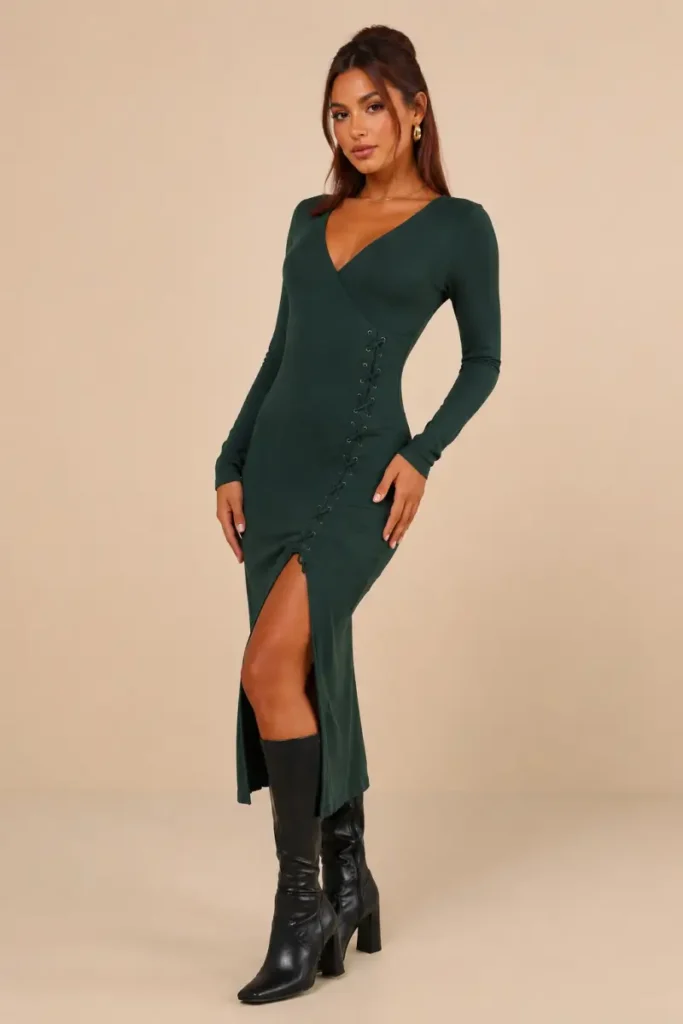
Jersey Bodycon Dresses
- Common directions: viscose jersey, nylon-spandex jersey, cotton jersey and ITY.
- Key checks: recovery, show-through, seam waving and shape retention.
- Suitable for: going-out, day-to-night and fitted core programs.

Rib Knit Dresses
- Common directions: 2×2 rib, fine rib, compact rib and brushed rib.
- Key checks: course opening, length growth, torque and recovery.
- Suitable for: fitted basics, cutout dresses and seasonal capsules.

Ponte and Double-Knit Dresses
- Common directions: rayon-nylon-spandex ponte and compact double knit.
- Key checks: stretch force, seam impression, thickness and press response.
- Suitable for: polished bodycon, office-to-evening and structured mini dresses.

Stretch Mesh Dresses
- Common directions: fine mesh, glitter mesh, flocked mesh and printed mesh.
- Key checks: layer compatibility, transparency, edge stability and snag risk.
- Suitable for: party, occasion and statement going-out dresses.

Ruched and Cut-out Dresses
Ruching changes the local length and volume of a pattern, while cutouts concentrate stress at edges and anchor points. Development controls gather ratio, elastic tension, opening shape and internal stabilization. Fit must remain stable when the wearer sits, raises her arms or turns.
- Key details: side ruching, drawcord channels, waist cutouts and asymmetric openings.
- Key checks: gather distribution, anchor strength, edge growth and symmetry.
- Suitable for: high-impact mini and midi drops.

Sculpting and Support Dresses
- Key details: built-in cups, power-mesh waist panels and double-layer bodies.
- Key checks: pressure distribution, bust position, seam bulk and dressing ease.
- Suitable for: premium party, occasion and contour-focused collections.
How Stretch Fabric Changes Pattern Development
Pattern dimensions are only meaningful when connected to the approved fabric. Duolan reviews extension, recovery, force, weight, opacity, shrinkage and surface behavior before locking the fit route.
A fabric can stretch 40 percent and still feel firm because the force required to reach that extension is high. Another fabric can extend easily but recover poorly after wear. Both may contain the same spandex percentage, yet they need different negative ease, lining, seam and grading decisions. Fabric testing therefore supports pattern judgment; it does not replace fit sampling.
| Development Variable | What Duolan Records | Pattern or Construction Decision | Failure Risk if Ignored |
|---|---|---|---|
| Crosswise extension | Usable widthwise extension at an agreed load or manual test method. | Bust, waist, high hip, full hip, thigh and sleeve circumferences. | Excess pressure, loose fit or size inconsistency. |
| Lengthwise extension | Growth along length, including fabric with four-way stretch. | Bodice length, strap length, sleeve length, skirt length and stabilizing points. | Dropping neckline, elongated body or uneven hem. |
| Recovery | Return after repeated extension and short wear simulation. | Negative ease, waist control, neckline treatment and repeat-wear allowance. | Bagging at seat, waist, elbow or knee. |
| Stretch force | Resistance felt at comparable extension, not only maximum stretch. | Target compression, dressing access, zipper need and support zoning. | Garment feels restrictive or fails to sculpt. |
| GSM and density | Weight, compactness and surface coverage. | Layer count, seam allowance, hem method and required support. | Show-through, bulky seams or weak contour. |
| Opacity under strain | Appearance over the full hip and across light colors. | Lining coverage, double-layer areas and permissible negative ease. | Visible undergarments or inconsistent color depth. |
| Shrinkage and relaxation | Dimensions before and after relaxation, steaming or agreed care test. | Pattern compensation, cutting timing and finished measurement targets. | Post-production size drift. |
| Torque, spirality and friction | Sideways twist, surface drag and shell-to-lining interaction. | Grain control, cut direction, hem width, slit and lining choice. | Twisted side seams, ride-up or lining creep. |
Approved Fabric Before Final Pattern Lock
Early prototyping can begin with a development fabric when the production material is not yet ready. Final fit approval should return to the intended bulk fabric or an agreed equivalent with matching stretch behavior. A pattern confirmed in soft jersey should not be transferred unchanged to compact ponte, rib or layered mesh.
Fabric Change Requires a Controlled Review
Color, finish and production lot can alter hand feel and extension. A change from black to light color may also expose opacity differences. Duolan reviews replacement fabrics against the approved pattern assumptions, then decides whether the change needs only a measurement check, a sample correction or a new fit round.
Production-Ready Pattern Making for Stretch Dresses

Pattern Controls Silhouette and Body Balance
Bodycon fit is created through a sequence of controlled relationships rather than one tight outline. Bust projection must sit at the intended level; the underbust and waist need enough control to define the torso without pulling the front upward; high hip and full hip shaping must transition smoothly; the back waist requires its own contour; the side seam should remain visually balanced from armhole to hem.
- Bust point, cup capacity and neckline coverage are reviewed together.
- Front and back bodice lengths are balanced against the target posture.
- Waist position is checked from front, side and back, not from one measurement.
- High hip, full hip and seat projection receive separate pattern shaping.
- Thigh and hem widths are assessed against walking and sitting movement.
- Cutouts, slits, ruching and asymmetry are anchored to stable pattern points.
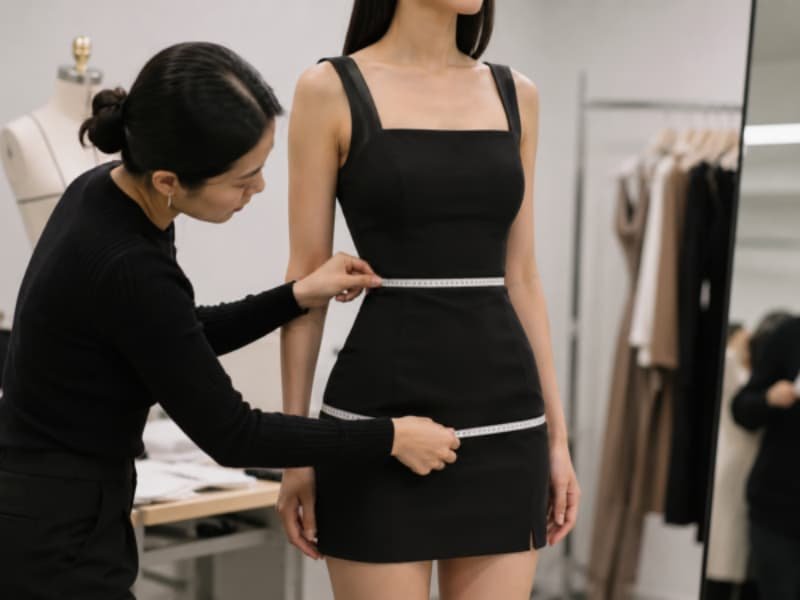
Digital Pattern, Measurement and Revision Control
Duolan uses CAD pattern systems, marker systems and plotting equipment within a group development base of approximately 650-1,200 pattern, sample and development units. Digital files allow each correction to be measured and versioned.
A fit change should update the relevant pattern pieces, finished garment measurements and revision notes at the same time.
- Base-size pattern linked to the approved size chart.
- Finished garment measurement chart with priority points identified.
- Pattern version number for proto, fit, revised and PP stages.
- Grain, stretch direction, notches, drill points and seam allowances checked.
- Construction notes aligned with sample-room and production methods.
- Approved files archived for repeat orders and future color programs.
Negative Ease Planned by Body Zone
Bust and Neckline
- Preserve front length over the bust.
- Control neckline growth at the edge.
- Review cup, shelf or lining capacity when used.
Underbust and Ribcage
- Define support zones rather than uniform compression.
- Check breathing and sitting comfort.
- Match power mesh or elastic force to the shell.
Front and Back Waist
- Separate front-waist and back-waist decisions.
- Check waist level from side view.
- Avoid pulling the skirt upward to create definition.
High Hip and Full Hip
- Check side-seam position over the hip.
- Review strain at full seat and upper thigh.
- Confirm coverage in the intended color.
Thigh, Slit and Hem
- Assess normal stride and stair movement.
- Use slit or vent only where the design allows.
- Balance hem width with the desired silhouette.
Sleeve and Armhole
- Raise arms during fit review.
- Check underarm seam pressure.
- Stabilize openings only where growth occurs.
Fit Engineering Beyond Static Measurements

Front, Side and Back Fit Control
- Vertical seams and side seams checked for rotation.
- Waistline, underbust and hip levels compared across views.
- Horizontal drag lines traced to the responsible area.
- Neckline, armhole and strap positions checked after movement.
- Lining edges reviewed for telegraphing or tension marks.
- Hem level checked after walking and sitting.

Movement and Wear Review
1. Put on and remove the dress using the intended opening method.
2. Walk at a normal pace and turn in both directions.
3. Sit on a standard chair and stand without adjusting the hem.
4. Raise both arms and reach forward to observe bodice migration.
5. Climb several steps to review thigh restriction and ride-up.
6. Wear for an agreed period, then inspect recovery at waist, seat and hem.
Size Grading That Preserves Bodycon Fit
Bodycon grading must preserve contour and mobility across the range. Circumference, vertical position, opening size, strap length, sleeve balance and hem movement are graded with different rules.

Base Size Definition
- US, UK, EU, AU or brand-owned size architecture.
- Fit model profile and posture recorded.
- Priority measurements and tolerances identified.

Circumference Grading
- Front and back distribution reviewed separately.
- Seat and thigh mobility protected.
- Neckline and armhole growth controlled.

Vertical Proportion Control
- Bodice and skirt lengths graded independently where needed.
- Strap, sleeve and opening lengths reviewed.
- Mini, midi and maxi proportions controlled by market.

Jump-Size Fit Review
- Useful for extended size ranges and strong compression.
- Confirms large-size opacity and comfort.
- Reduces late grading corrections during bulk preparation.
Lining and Support for Controlled Bodycon Fit
Self-Fabric Lining
- Useful for light jersey and selected mini dresses.
- Check combined recovery and total weight.
- Review neckline and armhole turning methods.
Stretch Tricot Lining
Tricot can provide coverage with a lighter structure than a self-fabric layer. Shell and lining must extend in compatible directions and recover at similar rates. A lining that is shorter, firmer or more slippery than the shell can change fit, create drag or climb inside the dress.
- Record lining stretch in both directions.
- Align grain and stretch orientation.
- Anchor only where movement requires control.
Power Mesh Support
Power mesh is useful for zoned support at waist, side body, underbust or selected panels. Full-body power mesh can feel restrictive and may alter the outer silhouette. Duolan shapes support panels around the intended body zones and checks seam bulk, pressure transitions and edge visibility.
- Use graduated support rather than abrupt pressure.
- Check comfort while sitting and breathing.
- Protect outer fabric from seam ridges.
Cups and Stabilization
- Confirm cup size logic within the size range.
- Check attachment points under movement.
- Avoid hard edges showing through the shell.
Stretch-Compatible Seams and Edge Stabilization

Stretch Seam Selection
- Overlock, safety stitch, coverstitch or selected lockstitch applications.
- Seam extension and break risk checked.
- Bulky intersections reduced before PP approval.

Differential Feed Control
Soft jersey, rib and mesh can wave or grow while sewing. Differential feed, presser-foot pressure and handling method are adjusted through test pieces.
Settings are recorded so the production line can reproduce the approved appearance instead of relying on operator correction.
- Test across crossgrain and lengthwise edges.
- Compare relaxed and steamed dimensions.
- Inspect seam impression on the body.

Neckline Stabilization
- Check neckline after dressing and arm movement.
- Avoid visible roping or gathered edges.
- Protect plunge and asymmetric shapes from growth.

Zipper Opening Support
Stretch fabric around a zipper can ripple, stretch or pull the opening out of balance. Duolan reviews interfacing, stay tape, seam allowance, zipper type and insertion sequence. The stabilized zone must support the opening without creating a stiff vertical ridge.
- Confirm zipper length and entry ease.
- Check waist and hip alignment when closed.
- Inspect waviness after pressing.

Slit and Cut-out Reinforcement
- Strengthen anchor points, not the whole edge.
- Review sharp corners for turning and bulk.
- Movement-test the finished opening.

Stretch Hem Construction
- Check seam extension against hem circumference.
- Prevent tunneling and waviness.
- Inspect after pressing and movement.
From Design Input to Fit-Approved Sample
How a Project Can Begin
- Design front, back and detail views.
- Target fabric composition, weight, stretch direction and hand feel.
- Brand size chart, base size and intended fit model.
- Finished length, neckline, sleeve, opening and support requirements.
- Reference sample or previous pattern when available.
- Planned size range, color count, order scale and launch date.
Feasibility and Risk Review
- Fit priority: contour, support, drape, coverage or movement.
- Fabric risk: recovery, opacity, growth, torque or shrinkage.
- Construction risk: seam access, edge stability, lining or trim force.
- Production risk: special handling, operator repeatability and tolerance.
Controlled Sample Stages
The exact sequence depends on style complexity and the brand’s internal approval process. A typical route includes first proto, fit sample, revised sample and PP sample. Photo or salesman samples can be added when the launch calendar requires them. Timing is confirmed after material availability and development scope are reviewed, rather than promised before the key variables are known.
- Development review and sample plan confirmed.
- Fabric direction and base-size measurements locked.
- First proto reviewed for silhouette, construction and major balance.
- Fit sample reviewed on the agreed model or form.
- Measured corrections entered into pattern and documents.
- PP sample prepared in approved production material and workmanship.
Progress Updates During Sampling
Brand teams receive milestone-based updates instead of waiting without visibility.
Useful updates include :
- material status
- pattern start
- first-sample completion
- fit findings
- revision actions
- next approval required
Photos and short videos can support remote review, while complex fittings can be discussed by scheduled video meeting.
Converting Approved Patterns into Bulk Standards
| Control Item | Locked Reference | Production Action | Evidence Used by QC |
|---|---|---|---|
| Production fabric | Approved supplier, article, color and performance criteria. | Verify lot, shade, weight, stretch, recovery and relaxation before cutting. | Fabric inspection record and approved swatch. |
| Digital pattern | Released version number and graded nest. | Control file issue, marker and cut direction; prevent use of earlier revisions. | Pattern release record and cut-panel check. |
| Finished measurements | Approved spec with critical points and tolerances. | Measure first piece, inline samples and final garments at agreed points. | Measurement reports by size and stage. |
| Construction method | Workmanship sheet, seam type, stitch and reinforcement notes. | Set machines and operation sequence from approved sample. | First-piece review and inline workmanship record. |
| Lining and trims | BOM with supplier, size, force, color and placement. | Check incoming materials and line-side issue against the approved BOM. | Incoming inspection and trim card. |
| Fit and appearance | PP or golden sample with approved comments closed. | Use at pre-production meeting, line start, pressing and final inspection. | Signed PP reference and comparison photos. |
| Labels and packing | Approved label, barcode, folding and carton specification. | Validate scan, placement, assortment and carton marks before shipment. | Packing audit and shipment record. |
PP Approval Protects the Production Route
PP approval should close material, pattern, measurement and workmanship decisions. Open comments are recorded with an owner and completion point before volume sewing. For mixed-style programs, each style follows the relevant approval route; a simple jersey mini and a supported mesh midi do not share the same risk level.
First-Piece Confirmation Before Volume Sewing
The first finished unit from the production route is compared with the released pattern, measurement chart, workmanship sheet and PP reference. Corrective action is taken before the issue multiplies across the line. Critical bodycon points include neckline, bust level, waist, full hip, seat, thigh, slit, sleeve and finished length.
Quality Controls for Stretch Dress Consistency

Fabric Performance Check
- Shade and lot segregation.
- Width, GSM and defect review.
- Agreed stretch and recovery check.
- Relaxation or pre-treatment confirmation.
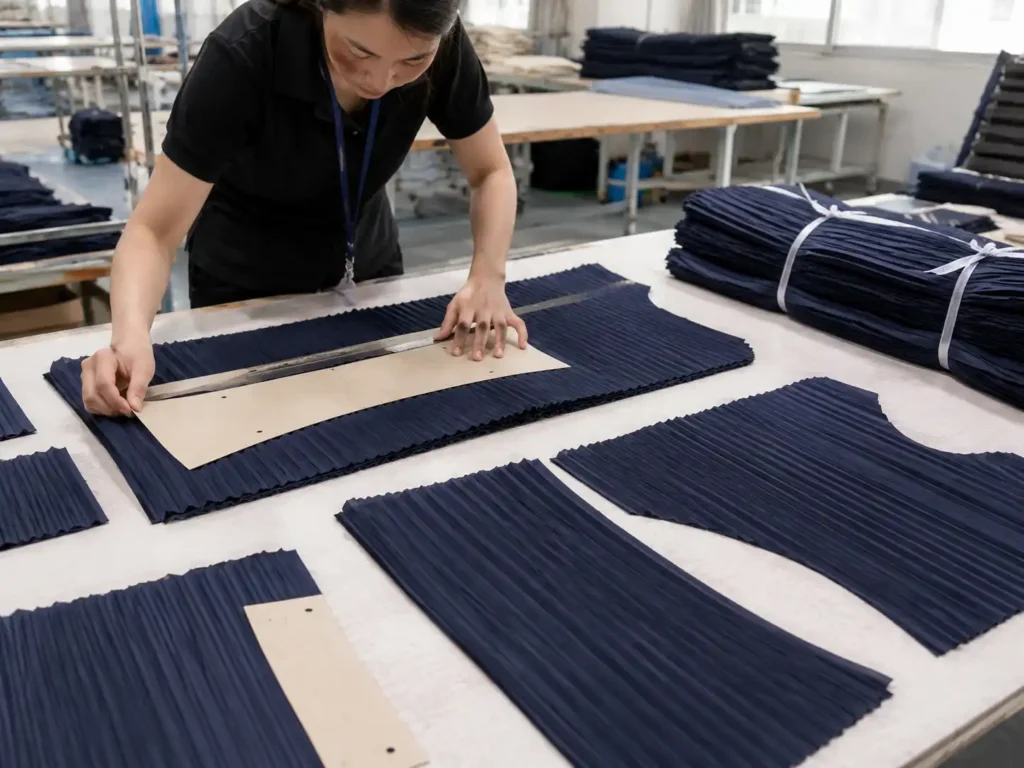
Cutting and Relaxation
- Controlled spreading tension.
- Marker and cut-direction verification.
- Panel numbering and shade grouping.
- Critical panel measurement.

First-Piece Review
- PP comparison at line start.
- Critical dimension check.
- Seam and edge appearance review.
- Corrective action recorded.

Inline Measurement Control
- Priority points measured at planned frequency.
- Size and line results recorded.
- Trend reviewed, not only individual failures.
- Rework and machine adjustment tracked.

Wear and Care Review
Selected garments can be checked for dressing access, movement, ride-up, seam stress and recovery. Care testing follows the agreed label or brand method where required.
The goal is to confirm that the approved fit remains stable after realistic handling.
- Movement and recovery observation.
- Seam extension and stress points.
- Shrinkage or dimensional change.
- Appearance after pressing or care.

Final Garment Inspection
Final inspection covers measurements, appearance, workmanship, labels, barcode, assortment and packing. Stretch dresses receive additional attention at side seams, neckline, sleeve, lining, zipper, cutout, slit and hem.
Inspection evidence supports release and future repeat-order comparison.
- Critical measurements by size.
- Visual and workmanship audit.
- Label and barcode validation.
- Packing and carton verification.
Development and Manufacturing Capacity Behind Every Pattern
30+ Years Development
- Dress-focused product understanding.
- Experience with fitted, occasion and fashion silhouettes.
- Development decisions connected to production feasibility.
16 Owned Factories
Core styles and key programs can be managed through owned womenswear factories, improving control over sample interpretation, line setup and production consistency.
Factory assignment is based on product structure and required workmanship rather than open capacity alone.
- Direct control for priority styles.
- Factory matching by construction type.
- Coordinated PP and line-start review.
20+ Satellite Factories
Long-term satellite factories provide planned elasticity for repeat orders, multi-style drops and seasonal concentration.
Production allocation remains coordinated through Duolan’s order, quality and delivery teams.
- Capacity buffer for approved scale.
- Support for rolling repeats and replenishment.
- Regional manufacturing coordination.
300 Sewing Lines
The group operates 300 garment sewing lines with more than 50 flexible and quick-response lines.
The structure supports parallel development and production paths for jersey, ponte, mesh, lined and more complex dress programs.
- Multi-style production planning.
- Flexible line allocation by complexity.
- Support for test, repeat and volume stages.
Pattern and Sample Base
- High development throughput.
- Digital pattern and sample-room coordination.
- Multiple projects advanced in parallel.
Production and Audit Base
- Capacity for ongoing collection programs.
- Audit foundation for brand onboarding.
- Production, inspection and delivery coordination.
Anonymized Bodycon Collection Development Case
Program Brief
A U.S. going-out and occasionwear brand planned an 18-style bodycon collection across mini and midi lengths. The program covered jersey, compact double knit and stretch mesh combinations, with six color directions and an XS-XXL size range.
Total planned volume reached 46,800 pieces, divided across core commercial styles, image-led styles and repeatable color programs.
- 18 styles developed in one coordinated program.
- Six color directions with light-color opacity risk included.
- XS-XXL range based on the brand’s own body and garment charts.
- 46,800 total pieces across initial and repeat-ready allocations.
- Target categories: ruched mini, clean ponte midi, mesh-panel and one-shoulder dresses.

Development Findings and Corrections
The first proto round exposed three connected issues. The jersey group recovered well at the waist but pulled upward at the full hip during walking. The mesh-lined styles showed uneven tension between shell and lining. Larger sizes also carried too much neckline and armhole growth when the preliminary grade rules were applied.
- High-hip and full-hip shaping separated instead of using one side-seam reduction.
- Thigh and hem widths revised by silhouette to reduce ride-up.
- Shell and lining stretch directions aligned and lining lengths recalculated.
- Neckline stabilization length adjusted by construction and size.
- Vertical grade points added for bust, waist, hip, strap and slit positions.
- Fit comments recorded across three sample rounds before PP release.
The first prototype group was completed in 10 working days after material direction and base-size measurements were locked. The collection moved through first proto, fit revision and PP confirmation, with complex mesh and support styles receiving a separate review path.
Bulk Outcome
PP approval established one released pattern version, measurement chart, BOM and workmanship reference for every style. Production was divided by construction complexity while remaining under one project calendar. Regular bulk production was planned within the 20-30 day range used for standard styles, with complex supported and mixed-material dresses scheduled on the longer path.
- 46,800 pieces organized in two planned shipment groups.
- Owned factories handled high-risk and image-led styles.
- Flexible lines supported repeatable jersey and ponte programs.
- First-piece and inline controls focused on neckline, waist, hip, lining and hem.
- Approved files archived for color repeats and future collection development.
The program illustrates the value of treating pattern, fabric, fit, grading and production as one connected system. A visually strong sample became a documented standard suitable for scale, rather than a one-off showroom piece.
Bodycon Pattern Development Frequently Asked Questions

Start Your Bodycon Pattern Development Project
Send the design information available today, even when every detail is not yet complete. Duolan will review the development scope, identify missing decisions and propose the next workable step. A useful inquiry explains the intended silhouette, target fabric, size range, fit priority, sample stage, planned quantity and launch date. Files remain focused on the project and can be reviewed under an agreed NDA.
- Tech pack, sketch, reference image, original sample or existing pattern.
- Target fabric composition, weight, stretch direction and hand feel.
- Brand size chart, base size and fit model information.
- Expected sizes, colors and quantity by style.
- Required lining, support, cups, cutouts, ruching, slit or zipper.
- Sample purpose: first proto, fit, photo, salesman or PP.
- Target launch, bulk delivery and shipment requirements.
- Known fit problems from previous samples or returns.
After review, the project team can confirm the development route, required materials, sample stages, timing checkpoints and the information needed before bulk planning. Complex styles are assessed for fabric, pattern, support, workmanship and production risk before a sample commitment is finalized.