Skip to content
Bridesmaid Dress Manufacturing Solutions
Collection development, color coordination, fit control and scalable production for established fashion and occasionwear brands.
Duolan develops bridesmaid dress programs as coordinated commercial collections rather than isolated garments. Fabric behavior, cross-style color balance, size grading, sample approval, bulk readiness and SKU delivery are managed through one connected development path.
- Programs commonly include 10-30 styles and 20,000-80,000 total pieces per brand order.
- 16 owned womenswear factories supported by 20+ long-term satellite factories.
- 300 sewing lines plus 50+ flexible lines for parallel styles, staged launches and repeat production.
- 15,000-35,000 sample developments per month across the wider manufacturing group.
- SMETA audit and SMETA 2-Pillar audit records support brand supplier qualification.
Built for Fashion-led Bridesmaid Dress Programs
The strongest partnerships begin with a clear product plan, launch calendar and repeat potential. Duolan works best with teams building structured occasionwear ranges, not one-off couture bridal gowns.
Established Occasionwear Brands
Fashion Buying Teams
Buying and sourcing teams require clear approvals, dependable documentation and visible checkpoints. Development can be organized around tech packs, reference samples, line sheets, size standards, lab dips, sample comments, PP approval and packing instructions, giving internal teams a traceable basis for decisions.
Bridal Brands Expanding Bridesmaids
What Strong Bridesmaid Manufacturing Must Deliver
Collection Consistency
Color Coordination
Fit Across Sizes
Decision-ready Samples
Multi-SKU Accuracy
Repeatable Standards
Patterns, BOM details, measurement standards, color references, workmanship notes and packaging files are retained as the basis for later replenishment, carryover colors and collection extensions.
Control the Risks Behind Coordinated Bridesmaid Collections
Bridesmaid production risk usually appears at the connections between color, fabric, fit and bulk execution. Each risk should lead to a defined control point before it becomes a costly production problem.
| Risk Area | Commercial Impact | Duolan Control Point | Evidence for Approval |
|---|---|---|---|
| Cross-fabric shade variation | Dresses sold under one color name look mismatched in group photography. | Lab-dip review, material-to-material comparison and bulk shade checking. | Approved swatch, color note and shade reference. |
| Fabric and silhouette mismatch | The finished dress loses drape, support, coverage or target price positioning. | Fabric behavior review before pattern and sample decisions are locked. | Swatch board, drape comparison and feasibility note. |
| Fit drift across sizes | Extended sizes lose neckline security, balance or skirt proportion. | Brand size-chart review, grading control and selected size-set verification. | POM sheet, size-set comments and tolerance standard. |
| Sample-to-bulk difference | Approved appearance is not consistently copied across production. | BOM lock, PP sample, first-piece verification and inline checks. | PP record, production note and first-piece evidence. |
| Sheerness or lining failure | Garments become uncomfortable, revealing or visually uneven under event lighting. | Opacity review, lining coverage assessment and seam placement control. | Layering sample, lighting photo and lining specification. |
| Multi-SKU packing error | Wrong colors, sizes, labels or barcodes reach retail or fulfillment centers. | Style-color-size breakdown and final packing validation. | Packing list, barcode file and carton check. |
| Compressed launch calendar | Approvals, QC and shipping buffers are lost before the selling window. | Timeline planning tied to material, sample, PP, production and shipment decisions. | Milestone plan and approval responsibility list. |
Build a Bridesmaid Collection, Not a Product List

Hero Styles
- Strong visual identity
- Higher sample-review priority
- Earlier material and construction testing

Core Sales Styles
- Balanced fashion and wearability
- Clear grading logic
- Suitable for wider color adoption

Fit-friendly Options
- Different bust and waist needs
- Coverage choices within one range
- Consistent finishing across silhouettes

Repeat Extensions
- Carryover color programs
- Midi-to-maxi extensions
- Related occasionwear capsules
Bridesmaid Silhouettes Developed for Real Body Diversity

Chiffon A-line
- Best role: core volume style
- Key risk: uneven layered hem
- Control focus: drape, lining and waist balance

Satin Slip
- Best role: premium modern style
- Key risk: twisting and seam impression
- Control focus: grain, pressing and neckline balance

Crepe Column
- Best role: refined formal option
- Key risk: contour imbalance
- Control focus: ease, slit height and pressing

Wrap and Ruched
- Best role: fit-friendly commercial style
- Key risk: inconsistent overlap and gathers
- Control focus: neckline security and gathering standard

Halter and One-Shoulder
Directional necklines create collection variety and strong photography, but they redistribute garment load. Halter styles need neck comfort, stable bust placement and back coverage; one-shoulder styles need diagonal balance, armhole control and anti-slip support. Internal elastic, tape, lining and closure selection are reviewed together.
- Best role: visual assortment variation
- Key risk: neckline movement
- Control focus: load path, coverage and anti-slip support
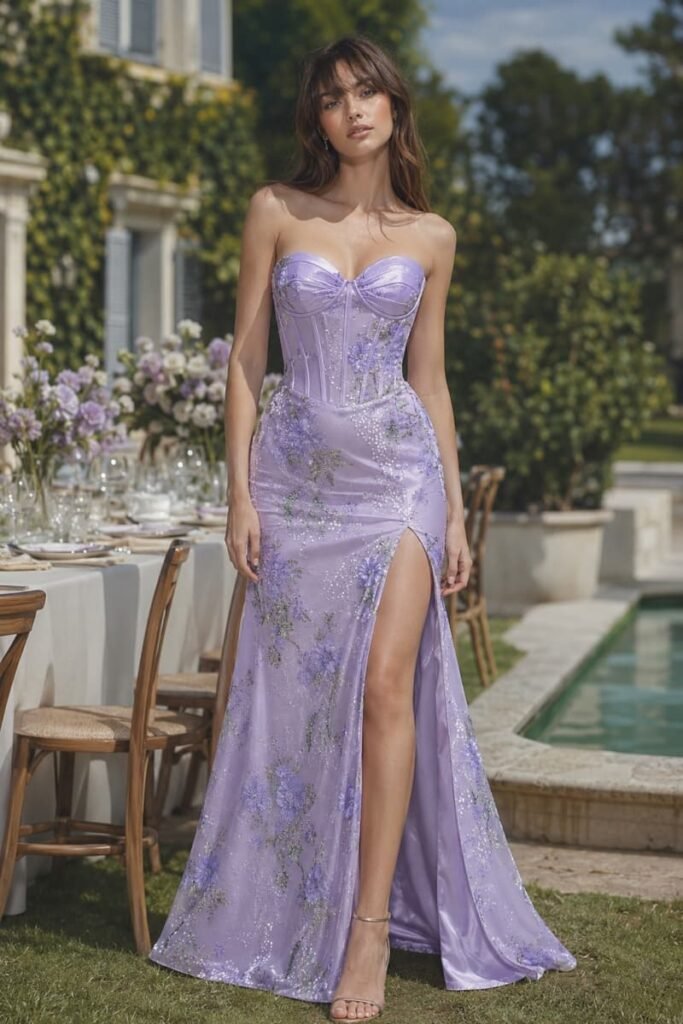
Structured Bustier
- Best role: premium hero style
- Key risk: cup and support inconsistency
- Control focus: internal structure and graded fit
Compare Bridesmaid Fabrics by Finished Garment Result
Fabric choice should be based on drape, opacity, support, photography, target price and bulk stability. The most expensive option is not automatically the strongest choice for the intended silhouette.
| Material | Best Applications | Finished Effect | Main Development Risk | Production Control |
|---|---|---|---|---|
| Chiffon | A-line, layered maxi, flutter sleeve, overlay | Light, fluid and soft in movement | Transparency, layer shift, seam stretching and uneven hems | Layer plan, compatible lining, grain control, hanging and final hem leveling |
| Satin | Slip, cowl neck, column, bias-inspired styles | Smooth surface, sheen and strong photography | Needle marks, seam puckering, pressing shine, twisting and packaging creases | Fabric-face protection, seam trials, grain direction, pressing method and packing support |
| Crepe | Column, wrap, fitted and understated formal styles | Matte, controlled and refined | Weight variation, poor recovery or excessive contour marking | Weight and stretch review, shrinkage check, ease balance and seam pressing |
| Mesh | Sleeves, neckline panels, overlays and soft draping | Light coverage with visual depth | Stretch direction, transparency, edge distortion and lining mismatch | Stretch mapping, seam stabilization, coverage test and lining coordination |
| Lace | Bodice panels, sleeves, overlays and premium accents | Textured, romantic and detailed | Motif mismatch, bulky seams, edge inconsistency and cutting loss | Motif placement plan, seam method, scallop use and consumption allowance |
| Stretch Woven | Modern fitted styles and clean structured shapes | Comfort with controlled body definition | Poor recovery, growth during wear and size variation after pressing | Stretch-and-recovery check, pattern adjustment, tolerance control and pressing trial |
Control Color Across Fabrics, Styles and Production Batches

Color Basis
- Confirm reference source
- Record material and light condition
- Avoid relying on screen color alone

Lab Dip Review
Lab dips are assessed for hue, depth, undertone and how the shade behaves under relevant light. A color may look balanced in matte crepe but brighter in satin or lighter through chiffon layers. Approval should consider the final garment system rather than a single swatch in isolation.
- Review hue and undertone
- Compare single and layered fabric
- Record approved option clearly

Cross-fabric Matching
- Main fabric versus lining
- Opaque versus transparent layers
- Matte versus reflective surfaces
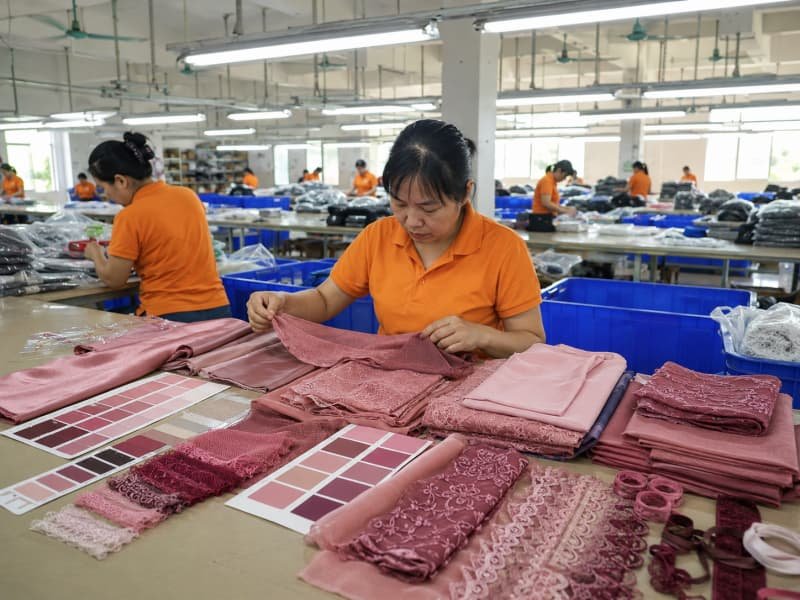
Bulk Shade Bands
- Identify dye-lot ranges
- Separate visible differences
- Allocate lots by style or delivery where needed

Production Checking
- Check panel-to-panel consistency
- Review under production lighting
- Confirm before final packing

Reorder References
Color continuity across later orders depends on retained records and fresh material review. Approved swatches, fabric identity, supplier information and prior shade notes provide a reference, but a new dye lot still needs confirmation because textile color cannot be guaranteed by a name alone.
- Retain approved swatches
- Record material source
- Reconfirm new dye lots
Build Consistent Fit Across the Approved Size Range
Size-chart Alignment
- Use brand standards where available
- Confirm base size and fit intention
- Identify critical measurements before sampling
Pattern Balance
A measurement can meet tolerance while the garment still looks unbalanced. Pattern review considers bust placement, waist line, side-seam direction, neckline shape, hip contour, skirt fall and hem relationship. Fabric stretch and drape are included because identical measurements do not behave the same across satin, crepe and chiffon.
- Check silhouette, not numbers alone
- Review grain and seam direction
- Adjust for fabric behavior
Grading Logic
Grading should preserve the design rather than enlarge every area at one fixed rate. Neckline width, cup position, strap placement, armhole depth, slit height and decorative details may require controlled rules. Structured bodices and one-shoulder shapes need closer review because balance can shift quickly across sizes.
- Protect design proportions
- Control support points
- Avoid over-opening necklines and armholes
Selected Size Set
A selected size set provides evidence that grading works beyond the base sample. Verification sizes are chosen around the brand range and risk level. The review focuses on fit balance, measurement progression, construction behavior and whether key details remain correctly placed.
- Review more than the base size
- Check high-risk sizes
- Record comments before PP approval
Movement and Coverage
- Standing and seated review
- Movement around neckline and slit
- Comfort at support points
Bulk Measurement Control
Approved POMs and tolerances become production checkpoints. Inline and final measurement checks focus on dimensions that influence appearance and wearability rather than treating every point as equally critical. Repeated deviations are investigated at pattern, cutting, sewing or pressing level.
- Use approved tolerance standard
- Prioritize fit-sensitive POMs
- Trace repeated deviation to its source
Construction Details That Protect Fit and Wearability

Lining Coverage
- Opacity under event lighting
- Compatible stretch and drape
- Clean attachment without pulling

Bust Support
- Cup and underbust position
- Top-edge security
- Smooth outer-surface finish

Strap Stability
Straps must balance visual delicacy with load and adjustment needs. Width, material, slider quality, attachment angle and reinforcement influence comfort and durability. Narrow satin straps, halter ties and one-shoulder structures require different tests because force is distributed differently.
- Attachment reinforcement
- Length and adjustability
- Pressure and slippage review

Neckline Security
- Control gaping and rolling
- Maintain intended neckline depth
- Review movement and posture changes

Slit and Mobility
Slit height affects style, walking comfort and seated coverage. Reinforcement, seam allowance, lining opening and placement should remain consistent in bulk. High slits may need hidden securing points or adjusted overlap depending on fabric and target market.
- Confirm measured slit height
- Test walking and sitting
- Reinforce stress point cleanly

Hem Balance
- Allow fabric relaxation where needed
- Level layers after hanging
- Match hem method to material
Develop Samples Through Clear Approval Stages
A sample is most valuable when its purpose is defined before work begins. Duolan can organize development around visual direction, fit approval, sales presentation or production readiness instead of treating every sample as the same deliverable.
Development Brief
The project basis can include a tech pack, reference image, original sample, line sheet, fabric direction, size chart and launch date. The brief identifies whether the work covers one style or a coordinated range, which details are fixed and where development judgment is needed.
- Define sample purpose
- Confirm design basis
- Identify missing information early
Feasibility Review
- Identify likely failure points
- Separate visual and fit priorities
- Confirm development path before sewing
First Sample
The first sample establishes direction for silhouette, proportion, fabric effect and core construction. It is not automatically a production standard. Front, side, back and detail views help the brand judge where the design is close and where correction is still required.
- Review overall direction
- Check key measurements
- Record unresolved points clearly
Fit and Revision
- Organize comments by action
- Update pattern and spec together
- Track version changes
Photo and Sales Samples
- Confirm intended use
- Prioritize visual accuracy
- Record differences from final production basis
PP Sample
The pre-production sample is used to align fabric, color, trims, measurements, workmanship, labels and packing before bulk release. For complex or high-volume programs, PP approval can be followed by first-piece or pilot verification before the full production run is opened.
- Lock production materials
- Confirm workmanship standard
- Connect approval directly to bulk files
Turn the Approved Sample into a Bulk Standard
Approval Status
- Record exact approval level
- List open points
- Avoid assuming visual approval equals PP approval
BOM and Material Lock
Main fabric, lining, mesh, interfacing, zipper, hook-and-eye, elastic, thread, labels and decorative components are identified by approved source or specification. Color, width, weight, stretch and finish are checked where they affect the garment result.
- Lock material identity
- Confirm color and finish
- Record approved alternatives if needed
Pattern and Spec Lock
The approved pattern version and size specification are linked. Critical POMs, tolerances, grade rules and fit-sensitive placements are clear before cutting. Changes after PP approval are controlled through a documented revision rather than informal messages.
- Use one approved version
- Mark critical measurements
- Control later changes
Workmanship Standard
- Define visible and hidden details
- Use close-up references
- Identify high-risk operations
First-piece Verification
- Verify before full release
- Correct process at small scale
- Retain first-piece evidence
Bulk Control Path
Approved standards flow into cutting, inline inspection, final inspection and packing checks. A production-readiness note and internal timeline help coordinate material arrival, line allocation, QC points and delivery milestones across multiple styles.
- Connect approval to execution
- Assign checkpoints by risk
- Track style-color-size progress
Workmanship Control for Occasion-level Dress Finishing

Chiffon Hems
- Prevent stretched edges
- Keep layer order controlled
- Level after fabric relaxation

Satin Seams
- Protect fabric face
- Control tension and stitch density
- Use tested pressing method

Ruching and Draping
- Define start and end points
- Control fullness distribution
- Check symmetry where required

Lace Placement
Lace motifs, scallops and seams should support the design rather than appear randomly cut. Placement planning considers visual balance, left-right relationship, edge use, seam bulk and material consumption.
Reinforcement and lining are added where open lace areas cannot carry load alone.
- Plan motif positions
- Control seam and edge finish
- Allow realistic cutting consumption

Invisible Zippers
Zippers must close smoothly without rippling, twisting or creating a visible ridge. Stabilization, seam allowance, zipper length, top finish and waist-seam matching are reviewed.
Structured and satin styles need careful pressing around the zipper to avoid imprinting the tape or teeth.
- Match seam intersections
- Prevent wave and ridge
- Reinforce high-stress points

Beading and Embellishment
- Check attachment strength
- Protect skin-contact areas
- Use packing that prevents crushing and abrasion
Scale Multi-style Programs Through an Organized Factory Network
Owned Factory Control
- 16 owned factories
- Direct control of priority styles
- Closer sample-to-bulk coordination
Satellite Capacity
- 20+ satellite factories
- Capacity buffer for scale-up
- Support for parallel deliveries
Sewing Line Depth
- 300 sewing lines
- 50+ flexible lines
- Style-based line allocation
Development Density
- Multiple collections in parallel
- Specialist pattern and sample resources
- Staged development paths
Bulk Capacity
- 6.5 million stable monthly capacity
- Up to 10 million at peak
- Additional 1-2 million capacity space
Production Timing
Reference bulk production timing is 15-20 days for simple styles, 20-30 days for regular styles and 30-45 days for complex styles after PP basis, BOM, materials, order information and payment milestones are confirmed. Shipping time is planned separately.
- Simple: 15-20 days
- Regular: 20-30 days
- Complex: 30-45 days
Quality Control from Material Intake to Final Packing
Material Inspection
PP Confirmation
Cutting Control
Inline Inspection
Color Consistency
Final Garment Review
Packing Validation
Shipment Readiness
Final quantity, inspection status, carton marking, shipping documents and delivery arrangement are reviewed before release. Third-party inspection can be coordinated when required by the brand.
Private-label Delivery for Complex Bridesmaid SKU Programs
A finished garment must enter the brand system correctly. Labels, barcodes, packaging and carton information are planned alongside production so multi-style and multi-size orders reach warehouses in usable condition.

Main and Size Labels
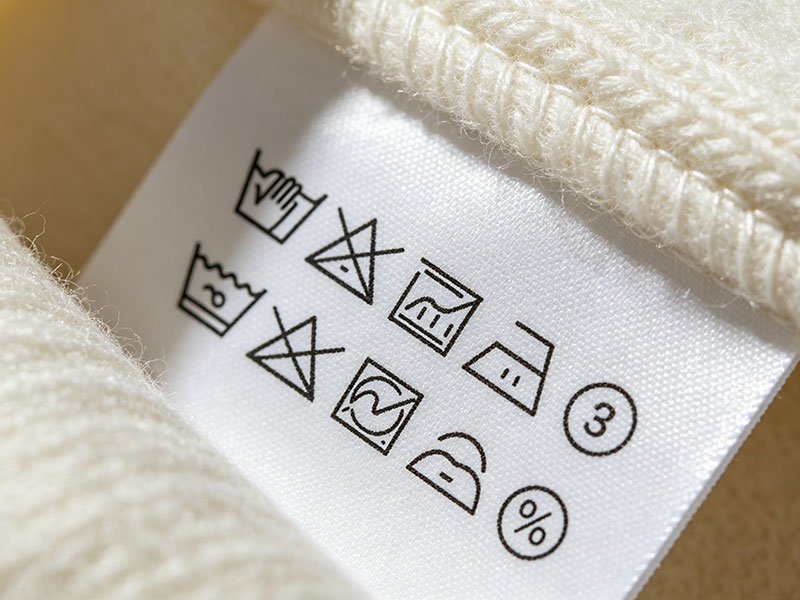
Care Information

Hangtags and Branding

Barcode Accuracy

Protective Packing

Carton and Allocation
Evidence for Brand Supplier Qualification
Social Audit Records
Project Standards
Development Evidence
Material Evidence
Production Evidence
Delivery Evidence
Packing checks, barcode validation, carton marking, inspection status and shipment documentation demonstrate that the order is controlled through the final handover, not only until sewing is complete.
Representative North American Bridesmaid Collection Program
Project Scope
An established North American occasionwear brand prepared a coordinated bridesmaid launch with 18 styles, 8 core colors, 42 approved style-color combinations and an 11-size run.The confirmed order totaled 52,000 pieces, with silhouettes spanning chiffon A-line, satin slip, crepe column, ruched wrap and structured bodice directions.
- 18 styles
- 8 core colors
- 52,000 total pieces
Main Risks
The largest risks were cross-fabric shade coordination, long chiffon hem balance, satin seam appearance, size progression across structured bodices and packing accuracy across a large SKU matrix. Several colors used more than one material family, so visual coordination was treated as a garment-system decision rather than a dye-name match.
- Cross-fabric color
- 11-size grading control
- Complex SKU allocation
Control Actions
The team organized lab-dip and swatch comparison, selected size-set review, PP approval, BOM locking and first-piece checks for high-risk styles. The production order was broken down by style complexity, material, color and delivery priority. Chiffon, satin and structured styles were assigned to suitable production paths instead of being grouped only by color.
- Lab-dip and shade review
- Size-set and PP control
- Style-based factory allocation
Delivery Outcome
Bulk production was planned within a 35-day window after PP basis, materials and packing details were locked, followed by two staged deliveries.
Final checks covered critical measurements, shade grouping, hem level, satin pressing, labels, barcodes and carton allocation.
Pattern, BOM, color and workmanship records were retained for future replenishment and related collection extensions.
- 35-day production window
- Two staged deliveries
- Repeat-ready records retained

Bridesmaid Dress Manufacturing Questions
Start Your Bridesmaid Collection Review
Share enough information for a serious development and production assessment. Duolan will review the style direction, fabric and color plan, size range, sample purpose, expected quantity, launch date, workmanship risks and private-label requirements before recommending the next step. A clear brief helps the pattern, sourcing, sample and production teams identify what must be confirmed first and where the main risks may sit.
Please include:
- Company or brand name, website, target market and sales channel.
- Tech packs, reference images, original sample photos or collection line sheet.
- Number of styles, planned colorways, size range and estimated quantities.
- Target fabrics, color standards, lining, trims and construction priorities.
- Required sample stage: first sample, fit sample, photo sample, size set or PP sample.
- Target launch date, delivery window, inspection and shipping requirements.
- Label, barcode, packaging, carton and warehouse instructions.
- Any NDA, compliance, testing or supplier-onboarding requirements.
After the review, the team can confirm the recommended development path, information still required, sample proposal and production planning basis. Your files and project information will be handled confidentially.