Skip to content

Built-In Cup & Bust Support Development
Integrated cup, fit, pattern and internal support development for fashion dresses built to hold shape, coverage and stability across sizes.
- 6 support-sensitive dress directions: strapless, corset/bustier, halter, backless, cut-out and fitted occasionwear.
- 4 connected development areas: cup placement, pattern balance, internal support construction and fit validation.
- Support is reviewed around bust shape, underbust stability, side coverage, neckline security and movement—not only padding thickness.
- Development can begin from a tech pack, reference image, original sample, measurement specification or previous fit comments.
Built-In Cups Are Only One Part of Bust Support
A Cup Shapes the Bust, but the Garment Carries the Load
Built-in cups are often treated as a simple trim decision: select a foam shape, position it inside the bodice and sew it into the lining. Fashion dresses rarely behave so simply. A cup can provide contour, modesty and localized shaping, yet it cannot independently stop a strapless neckline from slipping, prevent a low-back bodice from opening at the sides, or keep a halter dress stable without excessive neck pressure.
The cup must sit inside a pattern already designed around the intended bust position. Cup width, depth, apex position, spacing and side coverage need to relate to the neckline, underbust line and side seam. A cup sitting 10–15 mm too high can change the visual bust position. A cup sitting too far toward center front can leave the side bust unsupported. A cup with excessive depth can create visible hollowing when the outer fabric does not follow the same shape.
Duolan therefore reviews built-in cup development as part of the garment structure. For a soft fitted dress, support may come from a cup combined with stable lining and controlled negative ease. A strapless mini may require cup placement, boning, anti-slip treatment, inner elastic and back tension working together. A corset-inspired bodice may need more defined panel shaping and reinforced channels. A backless style may require support to be redistributed toward the side body, waist or halter construction.
The target is not simply “a dress with cups.” The target is a dress in which the cup disappears inside the design while helping the intended silhouette remain secure.
Support Must Follow the Dress Silhouette and Wearing Conditions
Support requirements change as soon as neckline, back opening, fabric or wearing position changes. A support solution developed for a square-neck fitted dress cannot automatically be transferred into a low-back halter or strapless corset dress.
Strapless styles lose shoulder support, so more responsibility moves to the upper edge, underbust area, side structure and back tension. Halter styles transfer load toward the neck and upper back, requiring careful strap angle, width and length. Backless styles remove material normally used for anchoring the bodice, making side coverage, underbust control and closure positioning more important. Cut-out styles can remove exactly the fabric area where a conventional support component would normally sit.
Fabric changes create another variable. A stretch jersey can use body tension as part of the support system, but weak recovery may allow the bust area to relax after repeated wear. Satin can create a clean premium surface but may reveal cup edges, boning or interlining if the internal build is too heavy. Mesh and lace can deliver transparency and visual lightness while needing hidden stable layers in selected load-bearing areas.
Development therefore starts with several questions: Where should the bust sit visually? How much coverage is required? Where can the dress carry tension without distorting the design? Which areas must remain soft? Which areas need reinforcement? How will the same logic behave after grading?
Duolan uses those answers to define a support direction before the structure is locked into a production sample.
Six Dress Structures Where Bust Support Needs Early Development
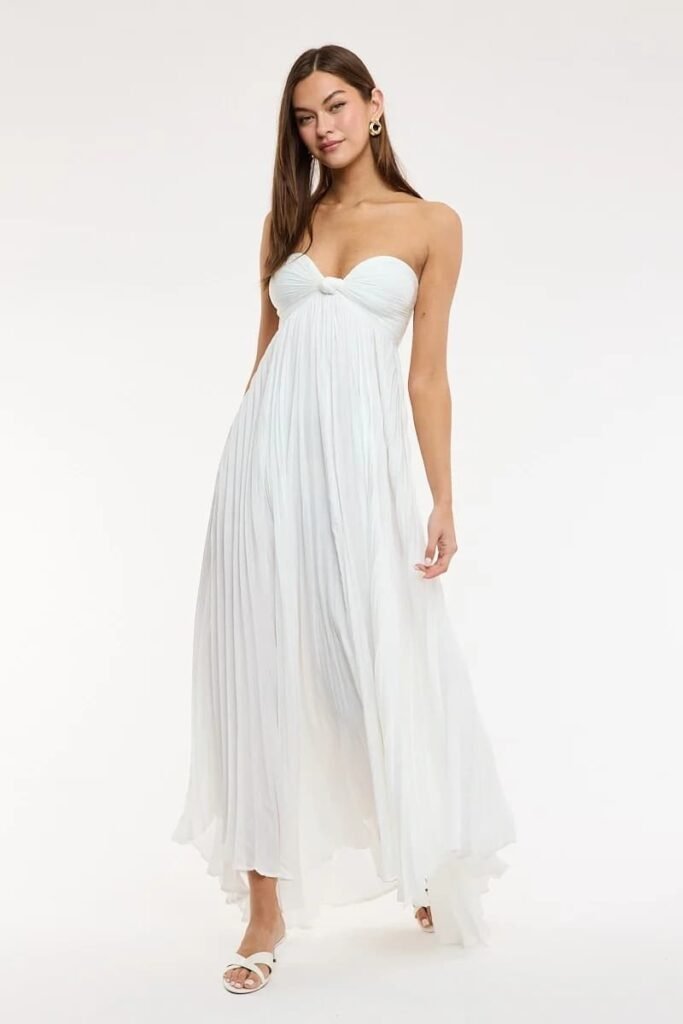
Strapless Dresses
- Cup width, depth and side coverage.
- Underbust line and bodice tension.
- Boning location and channel length.
- Inner elastic or anti-slip treatment.
- Back zipper, hook or lace-up stability.
- Raise-arm, turning, sitting and walking checks.

Corset and Bustier Dresses
- Cup-to-bust alignment and cup seam position.
- Front, side and back panel shaping.
- Boning quantity, position and flexibility.
- Lining and interlining support.
- Lace-up, zipper or combined closure systems.
- Waist definition without restricting normal movement.

Halter Dresses
Halter designs appear minimal from the front, but the strap becomes part of the load-bearing system. Too much dependence on the neck creates pressure; too little tension can cause gaping, low bust position or instability at the sides.
Key review points include:
- Halter strap width and angle.
- Front neckline depth and cup coverage.
- Bust position relative to underbust shaping.
- Side coverage and armhole opening.
- Back opening depth.
- Neck closure and strap reinforcement.
- Fabric stretch and recovery.
Duolan reviews halter samples from front, side and back because a visually correct front view can hide problems in side bust coverage or back tension.
Movement checks also matter: turning, lifting the arms and extended wear should not transfer excessive force to the neck while the bust area loses shape.

Backless Dresses
- Built-in cup placement.
- Side-body shaping and reinforcement.
- Underbust control.
- Halter, shoulder or neck anchoring.
- Waist anchoring.
- Elasticized or lace-up sections.
- Selected mesh or power-support panels.
- Hidden closure positions.

Cut-Out Dresses
- Cut-out location relative to bust and underbust.
- Edge stability and stretch control.
- Cup coverage behind exposed areas.
- Side-bust security.
- Hidden lining or mesh where needed.
- Movement safety during sitting and bending.
- Symmetry across graded sizes.

Fitted Occasion Dresses
- Bust point and dart or panel shaping.
- Cup choice where integrated support is required.
- Underbust and waist relationship.
- Stretch or ease allowance.
- Lining behavior.
- Strap length and neckline tension.
- Grading across bust, waist and torso length.
Six Common Reasons Built-In Bust Support Fails in Development
Cup Position Misses Bust
Neckline Gapes or Slips
Support Creates Excess Pressure
More support does not automatically mean better fit. Overly rigid boning, tight inner elastic, short halter straps or excessive negative ease can create pressure under the bust, at the side body, around the back or along the neck.
The correct target is controlled load distribution. Structured zones should stabilize the dress while softer zones allow normal breathing and movement. Fit review therefore checks pressure as well as appearance.
A dress designed for an event may be worn for several hours; acceptable fit during a two-minute fitting is not enough if the structure becomes uncomfortable over time.
Fabric Cannot Carry Structure
One Sample Size Works Only
Sample and Bulk Drift
Bust Support Works as a Connected Internal Architecture
Pattern, Cup and Underbust Must Be Designed as One System
- Is the bust sitting at the intended vertical position?
- Is support coming from the correct area rather than the neckline alone?
- Does the outer fabric follow the internal shape cleanly?
- Can the structure survive movement and grading?
Lining, Interlining and Boning Control Hidden Stability
Internal layers perform work the outer fabric may not be able to perform. Lining protects the body from seams and components, but it can also help stabilize cups, distribute tension and maintain a clean interior. Interlining adds controlled stiffness where a neckline, zipper edge, bust panel or waist area needs more shape. Boning resists collapse along selected vertical zones.The correct build depends on fabric and silhouette.
A satin strapless dress may need enough interlining to stabilize the bodice while avoiding visible ridges on the glossy surface. A mesh corset can expose the support system deliberately, making boning channels and cup seams part of the visual design. A lace bustier may need a separate stable base underneath decorative lace because lace alone is not intended to carry concentrated load. A stretch fitted dress may require softer structure so the garment still moves with the body.
Boning also needs proportion. Longer or harder bones are not automatically more supportive. A bone extending too far can become uncomfortable while sitting. A bone ending too early can allow the upper bodice to fold. Placement needs to follow body curves, seam lines and the areas where the dress is likely to collapse.
Duolan evaluates support level according to garment purpose rather than applying one corset construction to every fitted dress.
Elastic, Straps, Closures and Back Tension Complete the Load Path
Support often depends on small components carrying major functional responsibility. Inner elastic can stabilize the underbust or upper edge. Straps can distribute load across the shoulder or neck. A zipper can close a highly tensioned bodice only when the surrounding seam is reinforced. A lace-up back can create adjustability but must transfer force through reinforced eyelet zones.
Strapless dresses need particular attention to upper-edge stability and back tension. Halter dresses need a strap strong enough to support the front while remaining comfortable at the neck. Backless dresses may move support toward the waist, side body or halter. Adjustable straps can improve fit tolerance but cannot compensate for incorrect cup or body pattern placement.
Closure selection also affects fit. An invisible zipper gives a clean finish but the installation area must stay flat under tension. Hook-and-eye reinforcement can secure a high-load opening. Lace-up systems can offer adjustment across body variation, although eyelet spacing, reinforcement and tie material need to remain stable in bulk production.
A well-developed support path lets several components share the load. A poorly developed path forces one component—often the strap, neckline or zipper—to work harder than intended. Duolan uses sample fitting to find and correct those imbalances before PP approval.
Support Level Should Match Fashion Use, Not Maximum Rigidity
Different dresses need different support levels. A resort halter dress may need light shaping and secure coverage without corset stiffness. A party mini may require stronger control to hold a sharp neckline. A formal structured bodice can carry more internal construction because the silhouette and wearing occasion justify it.
Duolan separates support goals into functional questions rather than generic “light, medium or heavy” labels alone:
- Does the wearer need cup shaping, lift, modesty or all three?
- Does the neckline need anti-slip support?
- Is the back open, adjustable or fully closed?
- Does fabric stretch contribute to fit?
- Will the dress be worn for extended periods?
- Does the design require soft drape around a structured bust?
- Are internal components meant to stay invisible?
The chosen construction should protect the design language. Heavy boning inside a delicate draped dress can destroy fluidity. Minimal support inside a sharp strapless bodice can create slipping and collapsing.
A visible corset look may allow internal engineering to become part of the styling, while a clean satin dress needs the same support to disappear beneath the surface.
Cup Decisions Must Follow Fit, Coverage and Dress Structure

Cup Shape and Depth

Cup Width and Spacing

Cup Position and Apex

Sewn-In or Removable Direction

Coverage and Side Security
Coverage is a commercial fit decision, not simply a modesty preference. Low necklines, underbust cut-outs, open backs and narrow side panels can leave a wearer exposed even when a built-in cup is present. Development should inspect upper coverage, inner edge, outer edge and side-bust containment. Larger sizes may require more side security even when the front neckline remains visually consistent. Adding coverage only at the cup can also conflict with a narrow bodice pattern. Duolan therefore reviews cup edge and garment edge together, adjusting pattern, lining or side support where needed so coverage remains secure without visually widening the design.

Cup Edge and Outer Surface
Materials Decide How Much Support a Dress Can Carry

Outer Fabric Changes the Entire Support Strategy

Lining and Interlining Build Support Without Changing the Look
- Does the lining stretch in the same direction needed by the pattern?
- Does it change the cup or bust shape?
- Can internal structure be felt through the garment?
- Does the outer shell show ridges or stiffness?
- Does the structure remain stable after normal movement?

Boning, Elastic and Anti-Slip Components Need Controlled Specification

Closures and Reinforcement Complete Material Stability
A support system eventually transfers tension toward a closure or anchoring point. Zippers, hooks, lace-up backs and reinforced straps therefore form part of the material plan. An invisible zipper in a fitted dress needs a stable surrounding seam so the zipper does not ripple or bow outward. A corset lace-up back requires reinforced eyelet zones; thin decorative fabric alone should not carry repeated pulling. Halter closures need reinforcement at the strap end because a small seam area can carry a significant share of the front bodice load. Duolan reviews closure material together with seam thickness and fabric sensitivity. A bulky closure can disrupt a clean satin back. A weak lightweight zipper may not suit a highly tensioned corset. Metal hardware can add visual value but also adds weight and local pressure. Material decisions are therefore recorded as part of the structural system. Cup, lining, interlining, boning, elastic, anti-slip, zipper and reinforcement need to work as compatible components rather than separate purchasing items.
Pattern Engineering Determines Where Bust Support Actually Works
Bust Shape Starts With Pattern Volume and Placement
- Shoulder or neck point to bust.
- Bust point to center front.
- Bust point to side seam.
- Underbust height.
- Upper neckline height.
- Side-bust coverage.
- Waistline placement.
- Back opening height.
Support Changes When Neckline and Back Structure Change
Fashion silhouettes often remove the exact pattern sections that normally help stabilize the bust. A strapless dress removes shoulder anchoring. A halter redirects tension toward the neck. A low-back dress reduces back anchoring. A cut-out can interrupt side or underbust continuity.
Pattern development therefore needs to map where support remains available.
For strapless shapes, the bodice may rely on side seams, boning, underbust shaping, inner elastic and a stable back. The upper edge must follow the torso closely without simply being made smaller. Excessive reduction can create underarm pressure and chest compression.
For halter styles, the front pattern and strap angle need to work together. A narrow, steeply angled strap can pull the bust upward but concentrate force at the neck. A wider or differently positioned strap may distribute load more effectively while preserving the same visual neckline.
For backless designs, front bust security may need stronger side shaping, waist anchoring or halter support. The lower the back opening, the more carefully front and side pattern sections need to control movement.
Duolan treats exposed areas as structural changes, not decorative cutaways added after the core block is finished.
Pattern Corrections Must Be Recorded for Grading and Production
A corrected sample has limited value if improvement remains only on the physical garment. Pattern changes need to be recorded so the next sample, graded nest and bulk production use the same logic. Fit review may lead to actions such as:
- Lower cup position by a defined amount.
- Increase side coverage.
- Adjust underbust curve.
- Reduce neckline length.
- Change strap angle.
- Rebalance front and back torso length.
- Move a side seam.
- Alter cup-to-lining attachment position.
- Change boning endpoint.
- Revise back opening or closure location.
Each action can influence related measurements. A lower cup position may require neckline, lining and boning adjustments. A wider side panel may change armhole shape. A new strap angle can affect both neckline tension and back placement. Duolan connects revised pattern, specification and next-sample comments rather than treating revisions as isolated tailoring work. Once fit direction is approved, the corrected pattern becomes the basis for grading and PP development.

Support Strategy Changes With Every Dress Structure
No single built-in bra construction works across strapless, halter, backless, corset and fitted dresses. The matrix below links each structure to its main support challenge, development focus and common failure point.
| Dress Structure | Main Support Challenge | Development Focus | Common Failure Risk |
|---|---|---|---|
| Strapless | No shoulder anchoring | Cup position, underbust, boning, anti-slip, back tension | Slipping neckline or repeated pulling |
| Corset / Bustier | Shape and support must work together | Cup seam, panel shaping, boning, lining, closure | Cup mismatch or rigid discomfort |
| Halter | Load transfers toward neck | Strap angle, width, cup coverage, side support, back stability | Neck pressure or front gaping |
| Backless | Reduced back anchoring | Side-body control, underbust support, waist anchoring, closure | Bust movement or side exposure |
| Cut-Out | Support areas are interrupted | Cup coverage, reinforced edges, hidden mesh/lining, movement review | Exposure or distorted openings |
| Fitted Occasion | Shape must stay refined | Bust-waist balance, lining, fabric behavior, strap length, grading | Fit inconsistency across sizes |
Fit Review Must Test Movement, Not Only Mannequin Appearance
A support system can look correct while standing still and fail during normal wear. Duolan reviews fit through front, side and back assessment, movement checks, critical measurements and structured revision notes before support direction is approved.
Mannequin and Live Fitting Answer Different Questions
A mannequin is useful for reviewing symmetry, neckline line, bust position, waist placement, side seam, back opening and overall proportion. It creates a stable reference and allows technical teams to compare samples consistently.
Live fitting answers additional questions a fixed form cannot. Bodies move, breathe and change posture. Bust position can shift when arms rise. A halter strap can feel acceptable when standing and uncomfortable after shoulder movement. A strapless bodice may remain secure for one minute but gradually move downward during walking. A low-back dress can appear stable from the front while opening at the side during rotation.
Duolan uses live fitting to review:
- Standing posture.
- Arm raise.
- Shoulder rotation.
- Sitting.
- Walking.
- Turning.
- Natural photo poses.
- Extended pressure at neck or underbust.
The objective is not a theatrical “stress test.” Movement simply exposes load paths that static measurements cannot show.
Visual review and wear feedback are then compared with garment measurements. If a neckline opens during movement, the team checks pattern length, fabric stretch, cup position and internal tension rather than only making the edge tighter. If a strapless dress slides, the cause may involve back circumference, boning, upper-edge friction or underbust support.Fit becomes an engineering review instead of a yes/no visual judgment.
Coverage and Wearing Security Need Specific Checkpoints
Built-in support is closely tied to wearing confidence. A garment may technically cover the bust at rest while becoming insecure during movement, bending or sitting.
Coverage review looks at more than neckline depth. Side coverage, cup edge, underarm opening, center-front separation and the relationship between outer fabric and internal cup all matter.
Backless and cut-out dresses need additional checks because body movement can change the size and angle of exposed areas. A cut-out beside the bust may widen when the torso turns. A low neckline can move away from the body when the wearer bends forward. A lace-up back can change front tension depending on how tightly it is tied.
Duolan uses fit comments in measurable language whenever possible:
- Increase side coverage.
- Reduce upper-edge length.
- Move cup outward.
- Lower cup apex.
- Increase strap length.
- Reduce neck tension.
- Raise side seam.
- Adjust underbust circumference.
- Reinforce back anchoring.
Clear comments allow the pattern and sample teams to understand the actual problem. Terms such as “more supportive” are useful as goals but need technical translation before revision.
A secure garment should hold the intended visual line without constant wearer intervention.
Photo Review and Measurement Review Complete the Decision
Fashion dresses are often evaluated on screen before end wear. Camera angles, lighting and model poses can reveal issues not obvious during a technical fitting.Smooth satin may show cup edges under directional light. A corset panel can appear asymmetrical from a three-quarter angle. Side-bust coverage may look adequate straight-on but become insufficient in profile. A halter strap can visually pull the bust upward even when measurements are technically correct.
Photo review therefore complements live fitting. Front, side, back and three-quarter images help compare visual balance across sample rounds.
Measurement review then establishes a repeatable reference. Support-sensitive points can include:
- Full bust.
- Underbust.
- Center-front length.
- Shoulder/neck point to bust.
- Strap length.
- Side seam height.
- Upper-edge circumference.
- Back opening depth.
- Cup position from center front.
- Cup position from upper edge.
The final fit decision combines visual proportion, wearer feedback and measurements. Approved changes are returned to the pattern and specification rather than being left as verbal comments.

Bust Support Must Stay Balanced Across the Size Range

Cup and Bust Grading
Cup position should not be enlarged mechanically with total garment circumference. As sizes increase, bust depth, width and placement may change at different rates from waist or back measurements.
Key grading points include: Horizontal cup placement ,Vertical cup apex ,Cup width and depth direction ,Center-front spacing ,Underbust relationship ,Side-bust coverage.
A sample developed on one base size can lose visual balance when the same increments are applied everywhere. Larger sizes may require more side coverage or different internal support distribution while keeping the neckline visually consistent. Duolan reviews cup and body grading as one system rather than scaling a cup independently from the bodice.

Strap and Torso Grading
Strap length influences bust position, armhole comfort and neckline security. Halter, camisole and adjustable-strap dresses therefore need more than a generic length increase across sizes.
Torso length also matters. A longer front body can change where the cup, underbust and waist sit vertically. If those points shift independently, the garment may feel short through the bust or collapse below the cup.
Duolan connects strap, front length, back length and bust position when grading support-sensitive styles. Adjustment ranges are also considered when hardware is used, keeping enough usable strap movement without letting the buckle or slider sit in an awkward location.

Side and Back Support Grading
Larger circumference does not mean every structural area should expand equally. Side panels, back openings, lace-up sections and upper-edge tension need to preserve their functional role.
A low-back style may lose front security if the back opening widens too aggressively. A strapless bodice may become loose along the top edge if circumference grading does not account for support tension. Corset side panels may need controlled proportional changes to retain waist shaping.
Duolan reviews front-to-back distribution, side seam position and closure range during grading. Support remains centered on the body rather than migrating as size increases.

Graded Fit Verification
Grading software creates sizes; fit verification confirms whether those sizes still behave correctly. Support-sensitive styles benefit from checking at least the base size plus selected sizes representing different points in the range according to the brand’s fitting protocol.
Review focuses on: Bust position ,Coverage ,Neckline security ,Side-body pressure ,Strap or halter tension ,Back stability ,Boning length and endpoint ,Waist placement.
When a grading rule produces an obvious fit shift, the rule should be corrected before the same issue reaches bulk production. Duolan uses approved grading logic as part of the production specification rather than treating full-size development as a last-stage calculation.
Support Development Starts With a Clear Product Brief
Duolan can begin from detailed technical documents or a strong visual reference, but the first goal remains the same: define the intended silhouette, support level, fit standard and production constraints before sample construction begins.
Tech Packs, References and Existing Samples Need Technical Translation
A complete tech pack can provide measurements, construction callouts, materials and sketches, but support-sensitive areas still need interpretation. A note such as “built-in cup” does not define cup depth, position, coverage, attachment or the load path around the cup.
Reference images can be equally useful when the visual intention is clear. Duolan reviews neckline, bust projection, side coverage, back opening, waist position and visible seam structure to identify what probably needs to happen internally. Where the image hides important construction, the team flags the missing decision rather than assuming a generic solution.An original physical sample adds another level of information. It allows review of actual cup type, lining, internal seams, elastic, boning, closure and fit behavior. Replication still requires judgment.
Useful starting inputs include:
- Tech pack.
- Reference images.
- Original sample or detailed sample photos.
- Base-size measurements.
- Size range.
- Fabric direction.
- Target neckline and back opening.
- Existing fit comments.
- Required support level.
- Launch and production plan.
The development brief turns those inputs into a technical direction rather than moving directly from image to sewing.
Feasibility Review Identifies Support Risks Before Pattern Work
Before sampling, Duolan reviews whether the desired visual structure can support the intended wearing conditions and production method.
A low-back halter may create a neck-load issue. A very low strapless neckline may reduce available upper-bodice support. A cut-out under the bust can remove a useful structural zone. A smooth satin shell may not hide heavy cup or boning transitions. A lace bodice may need an internal base layer because the decorative material cannot carry enough tension alone.
The review does not aim to simplify every design. The purpose is to identify which features require an engineered response.
Typical review areas include:
- Cup and bust geometry.
- Neckline and back opening.
- Fabric stretch and recovery.
- Lining and interlining requirement.
- Boning or soft support requirement.
- Strap and closure load.
- Size-range implications.
- Potential bulk consistency risk.
The result can be a direct sample direction, a recommendation to adjust one or more details, or a request for a targeted mock-up before the full sample.
Early decisions save more time than late corrections because the pattern, materials and construction can move in the same direction from the first prototype.
Development Direction Becomes a Sample Plan
Once support direction is clear, the sample plan defines what the next physical sample needs to prove.A first prototype may focus on silhouette, cup position and basic structure. A fit sample can refine bust shape, underbust, side coverage and movement. A revised sample confirms technical corrections. A PP sample needs production-ready components and locked construction.
Duolan organizes sample comments so each round has a specific objective. Changes are not mixed randomly. For example, if cup position and neckline are both being revised, the pattern adjustment should be clear before a different outer fabric introduces another variable.The sample plan may include:
- Base size.
- Cup direction.
- Main and substitute material options.
- Critical fit points.
- Internal support structure.
- Closure direction.
- Review photos required.
- Measurement checkpoints.
- Next approval stage.
A structured plan gives brand teams a clearer basis for internal review. Product, design and sourcing teams can discuss the same sample using defined fit and construction points rather than subjective impressions alone.

Each Sample Round Should Solve a Defined Support Question
First Prototype
- Overall neckline and bust proportion.
- Initial cup position.
- Underbust placement.
- Side coverage.
- Back opening.
- Strap or halter angle.
- Basic internal support direction.
- Major fabric behavior.
Fit Sample
The fit sample tests how the dress behaves on the intended body standard. Cup location, coverage, neckline security, pressure and movement are reviewed in greater detail. Checks can include:
- Bust and underbust relationship.
- Cup edge visibility.
- Side-bust security.
- Neck or shoulder pressure.
- Strapless slippage.
- Back tension.
- Sitting and arm movement.
- Waist and torso balance.
Fit comments are converted into pattern, measurement and construction actions. “Needs more support” is broken into specific causes: cup position, upper-edge tension, boning, elastic, side coverage or closure. The next sample then has a measurable correction target rather than a vague request to make the dress tighter.
Revised Sample
A revised sample should prove whether agreed corrections actually solved the identified problems. Every major change is compared against the previous sample.
Typical revision checks include:
- Cup moved to the corrected position.
- Neckline curvature updated.
- Side coverage increased or reduced.
- Boning endpoint adjusted.
- Strap length or angle revised.
- Inner elastic tension changed.
- Back opening or closure balanced.
- Lining construction improved.
Revision discipline matters because new, unrelated changes can make cause and effect difficult to track. Duolan records what changed and why, allowing the brand team to decide whether fit is ready to move forward or requires a final targeted correction.
PP Sample
The PP sample is not only the best-looking version. It needs to represent the construction intended for bulk production. Support-sensitive elements should use the approved direction for:
- Cup specification and placement.
- Lining and interlining.
- Boning.
- Elastic.
- Strap and closure.
- Critical measurements.
- Construction method.
- Surface finish.
The PP sample becomes a reference for production-readiness review. If a development feature cannot be repeated consistently at scale, it should be addressed before production begins. A clean transition from PP to bulk is especially important for corset, strapless and backless styles, where small structural changes can noticeably change fit.
Construction Quality Determines Whether Hidden Support Feels Refined

Cup Attachment Must Hold Position Without Creating Surface Marks
- Cup orientation.
- Top and bottom edge position.
- Center-front distance.
- Side placement.
- Attachment points.
- Lining tension.
- Outer-surface smoothness.

Elastic and Strap Reinforcement Must Control Tension Consistently
Elastic is frequently used around underbust, upper-edge or back-support areas. Performance depends on both material recovery and applied length. Operators should not decide tension by feel. Once development confirms the right balance, elastic specification and application need a repeatable basis. Too much stretch during sewing can create puckering or compression. Too little can leave the support ineffective. Strap reinforcement follows the same principle. Halter straps may carry substantial load, especially with open-back construction. Seam junctions at the neckline and back closure need enough reinforcement for repeated wear without becoming bulky. Adjustable straps introduce hardware placement and usable adjustment range. The slider should not land directly on a high-pressure body point, and both sides need equal finished length. Duolan reviews:
- Elastic width and recovery.
- Applied length.
- Attachment position.
- Seam type.
- Strap finished width.
- Strap reinforcement.
- Hardware position.
- Left-right consistency.
Controlled tension makes the garment stable while preserving movement and comfort.

Boning Channels Need Accurate Position, Length and Finish
Boning works only when the channel follows the intended structural line and allows the bone to perform without shifting. Channel width, seam allowance, bone length and endpoint finish influence both support and comfort. A boning channel beside the bust can help stabilize the cup zone. Side boning can reduce collapse and support a strapless upper edge. Center-front or princess-line boning can maintain vertical shape in a corset-inspired bodice. Problems occur when:
- Boning is too long and presses into the body while sitting.
- Boning is too short and allows the upper bodice to fold.
- The channel is too wide and the bone moves.
- The endpoint is not protected and becomes uncomfortable.
- Left and right positions differ.
- Boning distorts a lightweight shell.
Duolan treats boning placement as a pattern and workmanship issue together. The approved sample needs defined positions, lengths and construction methods before bulk. During production, channels require consistency because a 10–20 mm shift can change where force is applied. A refined corset or strapless dress should feel supported without the wearer constantly noticing the internal bones.

Closures Must Hold Structural Pressure Without Distorting the Dress
A fitted support structure eventually closes at a zipper, hook, lace-up panel or combination. Closure quality affects both wearing security and external appearance.
Invisible zippers need flat installation. A zipper seam that bows outward can change back tension and make the garment appear too tight even when measurements are correct. Corset lace-up systems require consistent eyelet spacing and reinforced backing so pulling force does not tear the shell fabric. Hook-and-eye closures can add security at the top of a zipper but need clean placement away from skin irritation.
Closure areas also need to match the support strategy. A highly structured front with a weak back closure creates an unbalanced garment. A lace-up back may provide fit adjustment, but the range needs controlled limits so tightening does not distort side seams or cup position.
Duolan reviews closure strength, seam stability, reinforcement, finished symmetry and wearing access. The goal is a secure dress that can be put on, adjusted and worn repeatedly without turning the closure into the weakest point of the structure.
Support Standards Must Be Locked Before Bulk Production Starts
A production-ready sample needs more than visual approval. Built-in cup and support details should become measurable, repeatable standards shared by pattern, material, sewing and quality teams before production moves across larger quantities.
| Control Point | Production Standard to Lock | Why It Matters |
|---|---|---|
| Cup specification | Type, shape, depth, width, thickness and approved source/reference | Prevents shape changes between sample and production |
| Cup placement | Vertical position, center-front distance and left-right symmetry | Maintains bust position and visual balance |
| Underbust structure | Seam, elastic, lining or internal support method | Controls downward movement and bust stability |
| Boning | Type, quantity, position, channel and finished length | Maintains structure without pressure or collapse |
| Lining / interlining | Material, stretch direction, coverage and attachment | Stabilizes structure and protects outer appearance |
| Strap / halter | Width, angle, finished length, hardware and reinforcement | Controls load and neckline security |
| Upper edge | Finished length, anti-slip direction and seam method | Reduces gaping or slipping |
| Back / closure | Opening depth, zipper or lace-up specification and reinforcement | Maintains front-to-back tension |
| Critical measurements | Bust, underbust, front length, side height, strap and support-sensitive POMs | Converts fit approval into measurable QC points |
| PP reference | Approved sample, BOM, construction notes and revision status | Gives production and QC one common standard |
Bust Support Quality Control Starts Before Final Inspection
Material and Component Check
Cup, lining, interlining, elastic, boning and closure components should match the approved development direction before production begins.
QC preparation checks component specification, dimensions, color where relevant, stretch/recovery and physical condition. A substitute cup with a slightly different depth can change fit even when the nominal size is the same. An elastic with different recovery can change underbust tension. A different boning stiffness can change comfort.
Material changes affecting support need technical review rather than automatic substitution. The approved BOM and PP sample provide the reference for production components.
Pre-Production Alignment
Before bulk sewing, pattern, specifications, support construction and PP status need to be aligned.
Critical points include cup placement, boning position, elastic application, strap length, neckline measurement, back opening and closure method. Support-sensitive operations should be clearly identified so production teams know where tolerance is tighter than on ordinary seams.
A structured pre-production review reduces the risk of development information becoming disconnected from the production line. Comments approved during sampling need to appear in current patterns and instructions, not remain in old email threads.
First-Piece Verification
- Bust position
- Cup symmetry
- Upper-edge line
- Boning position
- Strap or halter length
- Side coverage
- Back opening
- Closure appearance
- Critical measurements
Inline Structure Check
Inline inspection focuses on operations capable of changing fit or support during production.
Examples include cup attachment, elastic tension, boning channel, strap reinforcement, neckline length and closure installation. Inspectors can also compare semi-finished bodices before skirts or decorative layers make internal areas harder to access.
For highly structured styles, checking only completed dresses may be too late. A hidden support issue can require extensive opening and rework. Process-stage inspection keeps correction closer to the operation where the problem began.
Measurement and Fit Check
Final garment measurements need to include support-sensitive POMs, not only full bust, waist and hip.
Depending on style, additional points can include underbust, upper-edge circumference, center-front length, strap length, cup position, side height and back opening.
Measurement results should be interpreted together with visual balance. Two dresses can share the same full-bust measurement while cup placement differs visibly. Measurement control and garment inspection therefore work together rather than replacing one another.
Final Appearance and Wearing Check
Final inspection confirms support construction remains visually clean and physically secure.
QC looks for cup edge show-through, uneven bust shape, left-right asymmetry, twisted lining, protruding boning, loose straps, unstable closures, gaping necklines and visible internal components.
Packaging also matters for structured bodices. Crushing, folding or excessive pressure can deform cups or boning before the garment reaches retail distribution. Packing method needs to preserve approved shape as well as protect the outer fabric.
Anonymous Strapless and Halter Projects Show the Development Logic
US Partywear Program: 16 Structured Styles, 36,400 Pieces
The program covered 16 fitted party and occasion styles across strapless minis, corset-inspired midis and structured tops paired with skirts. Total planned production was 36,400 pieces across several colorways, with the highest support risk concentrated in four strapless bodices using smooth outer fabrics.
The first development issue was not simply “insufficient support.” The base-size prototypes showed three separate symptoms: cup apex sitting slightly high on two styles, upper-edge movement on a low strapless neckline, and visible internal structure beneath a smooth satin-finish shell.The review separated each problem.For cup position, the pattern and cup were checked together rather than moving the foam component independently. Bust point, underbust and front torso balance were corrected so the outer bodice and cup moved as one system.
For upper-edge movement, development focused on the support path. Back circumference, side boning, inner elastic and upper-edge stability were reviewed. The solution avoided simply shrinking the top edge, which would have increased underarm pressure.For surface visibility, the internal layer combination was revised.
Before production, the team locked:
- Cup specification and placement.
- Boning locations and finished lengths.
- Inner elastic direction.
- Upper-edge measurement.
- Lining construction.
- Zipper reinforcement.
- Critical bust and underbust measurements.
- PP reference standard.
The program illustrates why a strapless development problem should be diagnosed by function. “More support” would not have solved all three issues. Cup geometry, pattern, inner tension and surface construction required different corrective actions before the styles were ready for bulk.

UK Occasionwear Program: 22 Styles, 54,600 Pieces
The second program covered 22 occasionwear styles with a total planned volume of 54,600 pieces. The range included halter midis, low-back fitted dresses, draped occasion styles and several dresses using integrated cups to reduce dependence on conventional bra straps.
The most sensitive development group involved halter and low-back silhouettes. Initial samples achieved the target front view but revealed two issues during live fitting: excessive neck load on one halter construction and unstable side-bust coverage on two lower-back styles.
The halter problem was traced beyond strap length. Strap angle, front bodice tension and back opening were working together to pull too much load toward the neck. Development adjusted the front balance and support distribution so the halter strap no longer carried nearly all of the stabilizing force.For the low-back styles, the missing back anchoring required more careful side and underbust control. Cup coverage was reviewed alongside the side-body pattern, lining and available anchoring near the waist. The solution retained the open-back appearance while improving front security.
The revised samples went through:
- Mannequin front/side/back review.
- Live fitting.
- Arm and torso movement.
- Side-coverage photo review.
- Bust and underbust measurement check.
- Strap and back-opening verification.
Grading received additional attention because halter strap length, side coverage and back opening could not be increased mechanically at the same rate.Before bulk, the approved support construction was linked to the PP sample, current pattern, component specification and QC checkpoints. Cup position, strap length, side seam height and back opening were treated as critical points.
The project shows a recurring principle in open-back fashion: removing fabric changes where support can come from. A successful low-back or halter dress needs support redistributed through the remaining structure instead of forcing the neckline or neck strap to carry the entire load.

Real Development Evidence Should Show the Structure Behind the Dress

Internal Cup Construction

Boning and Support Channels

Pattern and Fit Marking

Mannequin Fit Views
Front, side and back mannequin views help demonstrate silhouette balance. For support-sensitive dresses, the side view is particularly useful because it reveals bust projection, cup position, upper-edge line and back tension. Images should show the same sample and consistent positioning rather than unrelated product shots. Simple annotations can identify bust support, underbust, side coverage, boning or strap angle for technical review.

Revised Sample Comparison
A first-sample versus revised-sample comparison proves correction ability better than generic quality claims. Useful comparisons include corrected cup position, reduced neckline gaping, improved side coverage, changed halter angle or cleaner satin surface over internal support. Confidential designs can be cropped to the technical area while still showing a measurable improvement.

PP and QC Evidence
PP sample details, measurement checks, component boards and inline inspection photos demonstrate the transition from development to production. The strongest evidence connects a technical point across stages: approved cup position in the PP sample, reference measurement on the specification and production verification during QC. The sequence shows how a fit decision becomes a repeatable production standard.
Brand Teams Can Evaluate Duolan Beyond a Single Sample
Dress Development Depth
Material Coordination
Pattern and Sample Control
Fit comments are returned to the paper pattern and measurement standard rather than handled only by temporary sample alteration. The sample sequence can include first prototype, fit sample, revised sample and PP sample according to project need. Bust position, neckline security, coverage, strap tension, back opening and support structure are reviewed as connected points. Version control helps the development team understand what changed from one sample to the next and which version forms the basis for production.
Sample-to-Bulk Readiness
Once the sample direction is approved, production does not begin with an informal “OK.” Key components, measurements and workmanship points need to be locked.
For support-sensitive dresses, production-readiness review can include cup, lining, boning, elastic, strap, back closure, critical POMs and the current PP sample.
Reference production windows across Duolan’s manufacturing system are generally planned around approximately 15–20 days for simpler styles, 20–30 days for standard styles and 30–45 days for complex styles, subject to material readiness, approval status and order requirements.
Quality Control Discipline
Quality control starts from development risk rather than waiting for final inspection.
Support-specific checkpoints may include component confirmation, first-piece comparison, cup symmetry, boning position, elastic application, strap length, upper-edge measurement and final appearance. Finished garments are also checked for internal-component exposure, pressure points, lining distortion and closure stability.
The goal is to keep the approved support standard consistent across the production quantity, colorways and repeat programs.
Project Communication
Built-in support development often requires several teams to discuss the same issue: design, product development, pattern, sourcing, sampling, production and quality. Duolan uses structured briefs, fit comments, revision summaries, sample review and production-readiness information to keep decisions connected across stages. Communication can be handled by email, WhatsApp, documents, annotated images, video discussion and online meetings according to project needs. Clear technical communication reduces the risk of an approved sample detail being misunderstood when responsibility moves from development to production.
Built-In Cup & Bust Support Frequently Asked Questions

Send Your Bust Support Project for Technical Review
Built-in cup and bust support development is easier to control when the intended silhouette, fit standard and support problem are clear before sampling begins. Send the available project information to Duolan Apparel, and the development team can review the dress structure, material direction, cup integration, pattern risks and sample path before confirming the next stage.
Useful information includes:
- Tech pack, design sketch or reference images.
- Photos of an existing sample, when available.
- Dress structure: strapless, corset, halter, backless, cut-out or fitted.
- Target fabric or fabric direction.
- Base sample size and planned size range.
- Required bust coverage and support direction.
- Previous fitting photos or fit comments.
- Colorways and planned order quantity.
- Target launch date.
- Any cup, boning, lining, elastic or closure requirements already specified.
A complete file is helpful, but an early review can also begin from a clear style reference and development objective. The first response should establish what needs to be confirmed before pattern and sample work proceeds.