Skip to content
Bulk Dress Manufacturer
Bulk dress production for established fashion brands, from approved standards to inspected, packed and delivery-ready orders.
Duolan helps fashion brands turn approved dress samples, PP standards, BOM details, fabric references and packing requirements into controlled bulk production. Our work focuses on production routing, material lot control, first-piece review, inline QC, final inspection, brand packing and repeatable dress delivery.
- 16 owned womenswear factories support controlled bulk production for core dress programs.
- 20+ satellite factories provide coordinated capacity for seasonal and multi-style dress orders.
- 4 regional bases support production routing across Guangxi, Guizhou, Sichuan and Jiangxi.
- 12,000–20,000 equipment units support cutting, sewing, finishing, QC and packing stages.
- 750–1,200 development staff support PP standard transfer and sample-to-bulk alignment.
- 1,200–1,500 coordination staff support production follow-up, QC communication and delivery tracking.
- SMETA 2-Pillar audit record supports supplier evaluation for qualified brand programs.





Bulk Dress Manufacturing Is Not Wholesale Buying
Bulk Means Standard Repetition, Not Product Picking
The Real Bulk Question Is Consistency
Built for Brands Ready for Bulk Production
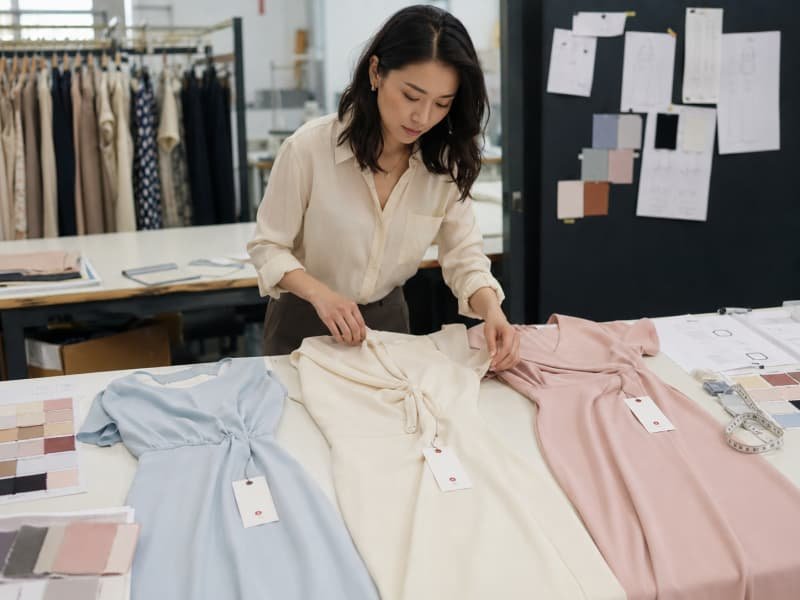
Established Dress Brands
- What they have: approved samples, product history, brand fit expectations, quality standards and launch schedules for dress programs.
- What they worry about: sample-to-bulk drift, fabric shade variation, construction inconsistency, late delivery and packing errors.
- Duolan controls: PP sample transfer, BOM review, fabric lot management, first-piece checking, inline QC and final packing inspection.
- Best suited for: brands producing fashion dresses, occasion dresses, party dresses, fitted dresses and repeated dress programs.

Buying Teams
Buying teams need manufacturers that can turn approved standards into controlled production evidence. They look for process clarity, not only factory capacity.
- What they have: supplier requirements, delivery windows, inspection standards, target quantities and approved product references.
- What they worry about: production updates arriving too late, unclear responsibility, inconsistent output and shipment-level defects.
- Duolan controls: production routing, critical-stage checks, QC communication, packing review and delivery readiness confirmation.
- Best suited for: buying teams evaluating long-term dress manufacturing partners for brand-level bulk programs.

Sourcing Offices
Sourcing offices evaluate manufacturers through documents, process discipline and execution reliability. A strong bulk partner should support inspection and receiving requirements.
- What they have: supplier evaluation criteria, compliance concerns, customer manuals, packing rules and third-party inspection needs.
- What they worry about: audit gaps, unclear production traceability, missed QC points and carton data mistakes.
- Duolan controls: supplier information support, SMETA-related records, QC checkpoints, packing data and inspection coordination.
- Best suited for: sourcing teams managing bulk dress orders for established fashion brands and multi-brand groups.
Collection Teams
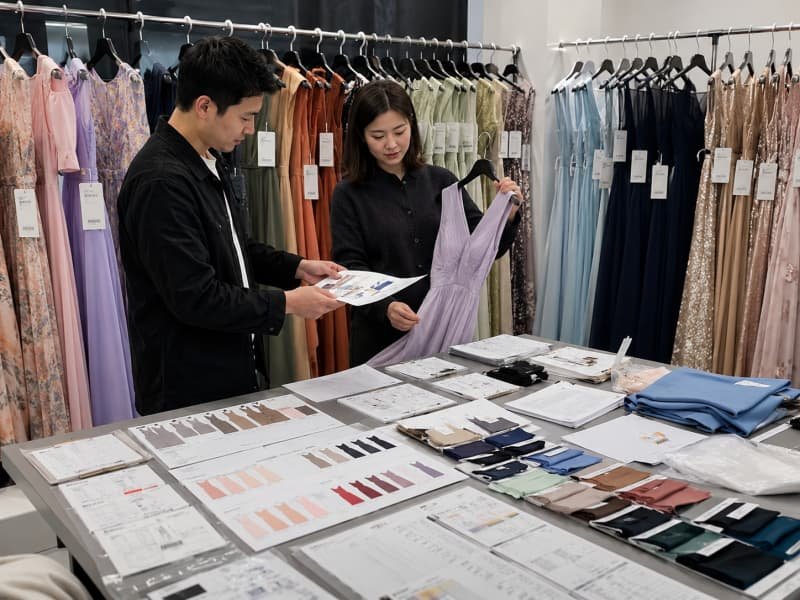
- What they have: style lists, color plans, size breakdowns, PP sample stages, quantity plans and launch calendars.
- What they worry about: fabric timing conflicts, line routing confusion, inconsistent sample status and split-delivery pressure.
- Duolan controls: style grouping, production route planning, material readiness review, QC priority setting and delivery sequence.
- Best suited for: brands producing multi-style dress drops, partywear capsules, occasionwear programs and seasonal bulk orders.
Bulk Manufacturing and Wholesale Supply Compared
Bulk manufacturing and wholesale supply may both involve quantity, but they serve different business goals. Duolan’s role is manufacturing controlled brand-owned dress standards, not supplying available catalog inventory.
| Model | Buyer Goal | Supplier Role | Duolan Position |
|---|---|---|---|
| Wholesale Dresses | Buy available styles in quantity | Offer catalog or stock goods | Not Duolan’s focus |
| Catalog Bulk Supply | Select existing designs for fast ordering | Provide limited product adjustment | Not the target service |
| Price-led Bulk Buying | Compare unit price first | Compete mainly on cost | Not Duolan’s positioning |
| Private Label Bulk | Add brand finishing to selected styles | Apply labels, tags and packing | Supported only with clear production standards |
| OEM Bulk Dress | Produce approved brand-owned design | Execute tech pack, BOM and PP sample | Supported by project readiness |
| Brand-level Bulk Manufacturing | Repeat approved dress standards at scale | Control materials, production, QC, packing and delivery | Duolan’s target position |
Bulk Dress Production Built Around Standards
Duolan’s bulk dress manufacturing begins with approved standards: PP sample, BOM, fabric reference, trim details, size spec, workmanship notes, QC requirements and packing rules. Production starts only when the standard can be transferred clearly.
Production Scale Needs Production Discipline
Bulk Control Starts Before the Line
What Must Be Confirmed Before Bulk Starts
Bulk dress production should not begin only because a style has been sampled. Duolan checks whether the approved style has enough production information to support material preparation, line execution, QC and delivery.
| Bulk Readiness Area | Must Be Confirmed | Risk Controlled |
|---|---|---|
| PP Sample | Final garment reference, approved fit, fabric and construction | Sample-to-bulk drift |
| BOM | Main fabric, lining, trims, labels and packing items | Material confusion and sourcing mistakes |
| Fabric Lot | Color, handfeel, width, stretch, surface and shade band | Color and quality inconsistency |
| Size Spec | POM list, sample size, grading direction and tolerance | Measurement deviation and size complaints |
| Workmanship | Seams, lining, zipper, structure, support and finishing method | Construction variation |
| QC Standard | Fabric check, first-piece check, inline QC, final QC and packing check | Inspection disagreement |
| Packing Rule | Folding, hanging, polybag, barcode, carton mark and protection method | Delivery and receiving errors |
| Delivery Window | Production calendar, inspection timing and shipment preparation | Launch delay |
Why Good Samples Still Fail in Bulk
The Gap Between Sample Approval and Production Reality
Many dress production issues appear after a sample has already been approved. The sample may use a good fabric, but the bulk lot may feel different. The zipper may be replaced without enough review. The length may drift because cutting and hemming were not checked early. The lining may change the garment’s opacity. The carton method may create pressure marks on satin or velvet. These problems are not caused by one single mistake; they usually come from weak sample-to-bulk transfer.
Duolan reduces this risk by turning the approved sample into a practical production package. PP sample, BOM, size spec, fabric lot, trim card, workmanship notes, QC checklist and packing rule should work together. The more complete this package is, the less the production line has to guess.
Common Sample-to-Bulk Risks
- Fabric batch difference: bulk fabric may differ in shade, handfeel, stretch, surface or weight from the approved sample.
- Trim replacement: zipper, lining, elastic, cups, boning, hardware or labels may change if BOM control is weak.
- Measurement deviation: size tolerance may drift if first-piece checking and inline measurement are not planned.
- Construction variation: seams, lining, support areas, slits, straps and closures may be handled differently by production teams.
- Surface damage: satin, sequin, velvet, lace and embellished fabrics need handling and packing rules before production starts.
- Packing mismatch: barcode, polybag, carton marks, folding method and protection requirements may create receiving problems.
Dress Programs That Need Bulk Control

Satin Dress Bulk
- Bulk challenge: satin may show seam puckering, needle marks, surface pulls, pressing marks and carton creases.
- Pre-production check: confirm fabric lot, lining, seam method, pressing response, final folding or hanging method.
- QC focus: inspect seam smoothness, surface marks, hem appearance, stain risk and garment presentation.
- Delivery concern: packing pressure must be controlled so the dress arrives without obvious surface damage.

Bodycon Dress Bulk
- Bulk challenge: stretch recovery, opacity, side seam twist, sizing drift and compression inconsistency.
- Pre-production check: confirm stretch direction, tolerance points, fabric thickness, lining need and sample size standard.
- QC focus: inspect bust, waist, hip, length, side seam, recovery and transparency under tension.
- Delivery concern: folded packing should not stretch, distort or damage fitted garment shape.

Corset Dress Bulk
- Bulk challenge: cup mismatch, boning position drift, weak support, zipper stress and grading instability.
- Pre-production check: confirm cups, boning, lining, interlining, reinforcement, zipper type and support placement.
- QC focus: inspect symmetry, bust support, closure function, pressure points and inner construction.
- Delivery concern: structured garments may require shape protection to prevent deformation during packing.

Sequin Dress Bulk
- Bulk challenge: missing sequins, loose threads, scratchy interiors, heavy seams and surface abrasion.
- Pre-production check: confirm lining, seam cleaning, sequin density, garment weight and packing protection.
- QC focus: inspect loose decoration, inner comfort, seam thickness, surface damage and final appearance.
- Delivery concern: surface protection and carton pressure must be managed to reduce abrasion during transport.

Mesh Dress Bulk
- Bulk challenge: transparency difference, lining mismatch, edge distortion, panel misplacement and visible seam allowance.
- Pre-production check: confirm mesh quality, lining color, opacity standard, stretch direction and panel map.
- QC focus: inspect coverage under light, seam visibility, edge finish, panel alignment and movement.
- Delivery concern: mesh garments need packing that prevents snagging and shape distortion.

Maxi Dress Bulk
- Bulk challenge: uneven hem, inaccurate length, slit variation, fabric drag and packing creases.
- Pre-production check: confirm total length, lining length, fabric fall, hem method, slit height and carton plan.
- QC focus: inspect hem level, movement, length tolerance, pressing response and final hanging appearance.
- Delivery concern: long garments may need carefully planned folding or hanging to protect final presentation.

Party Dress Bulk
- Bulk challenge: surface trim failure, coverage issues, stretch inconsistency, fast schedule pressure and multi-color variation.
- Pre-production check: confirm lining, cut-out placement, trim attachment, fabric lot, QC priorities and delivery schedule.
- QC focus: inspect wearing security, trim strength, color grouping, surface damage and size balance.
- Delivery concern: campaign-driven products need reliable packing and shipment timing before launch.

Multi-style Bulk
- Bulk challenge: sample status mismatch, material timing conflict, production route confusion and split-delivery pressure.
- Pre-production check: group styles by complexity, fabric readiness, PP status, QC priority and shipment window.
- QC focus: inspect each style by its risk profile rather than applying one general checklist.
- Delivery concern: packing list, carton data and delivery sequence must match the brand’s receiving plan.
Material Locking for Bulk Dress Orders
Bulk dress orders require more than approved swatches. Duolan reviews whether each material can support the full quantity, color plan, size range, packing method and possible reorder needs.
| Material Item | Bulk Control Question | Duolan Review |
|---|---|---|
| Main Fabric | Can the same quality support full quantity? | Lot, shade band, width, handfeel, stretch and surface |
| Lining | Will coverage and comfort stay consistent? | Color, thickness, stretch, attachment and opacity |
| Zipper | Can function and appearance repeat? | Type, length, tape color, puller, strength and supplier reference |
| Support Materials | Can structure repeat across sizes? | Cups, boning, interlining, reinforcement and placement |
| Labels | Are brand data and placement fixed? | Woven label, care label, size label and approved location |
| Packing Items | Are warehouse and ecommerce specs ready? | Polybag, barcode, carton mark, tissue and protection method |
| Replacement Rules | What happens if any material changes? | Approval process, sample comparison and risk review |
| Reorder Source | Can the same material be repeated later? | Availability, lead time, dye lot and color continuity |
Turning Approved Dresses Into Production Routes
A Sample Shows the Result, Not the Route
Production Route Controls
| Production Area | Control Question | Bulk Value |
|---|---|---|
| Fabric Inspection | Does bulk fabric match approved quality, shade and handfeel? | Prevents wrong material from entering cutting |
| Cutting Plan | Are grain, stretch, pile, lace, print or motif directions controlled? | Protects fit, shape and visual consistency |
| Sewing Sequence | Which seams, support areas and closures need focused control? | Reduces repeated workmanship defects |
| First-piece Review | Does the first production garment match PP standard? | Catches production drift early |
| Finishing Method | Does pressing or steaming affect surface and shape? | Protects final garment presentation |
| Packing Method | Does the dress need folding, hanging or surface protection? | Reduces delivery condition risk |
Pre-production Alignment Before Bulk Starts

Step 1: PP Review
Step 2: BOM Check
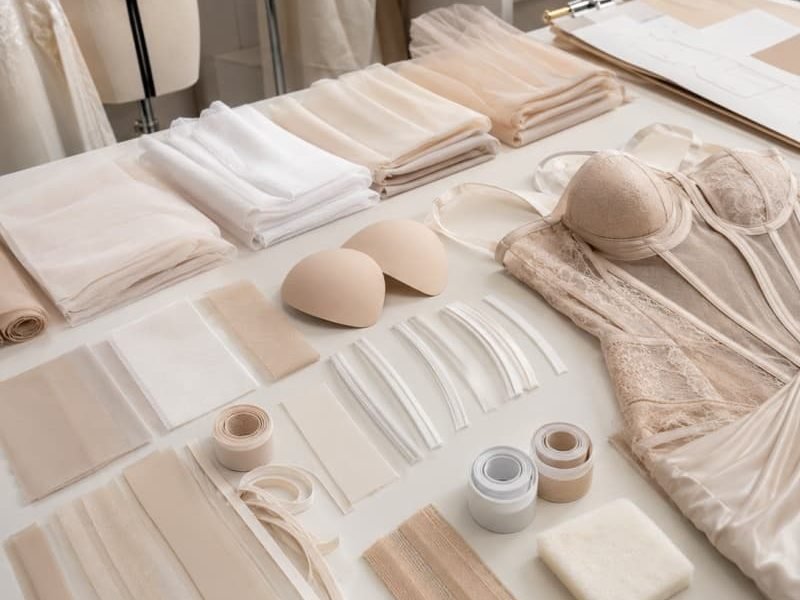
BOM review confirms that every material in the approved dress has a production reference. Main fabric, lining, zipper, elastic, cups, boning, hardware, labels, hangtags, polybags and carton marks must be aligned before bulk preparation. A clear BOM reduces material replacement, sourcing mistakes and production delays caused by missing trims or unclear approvals.
Step 3: Measurement Control

Step 4: Construction Alignment

Step 5: QC Planning
Step 6: Packing Timeline
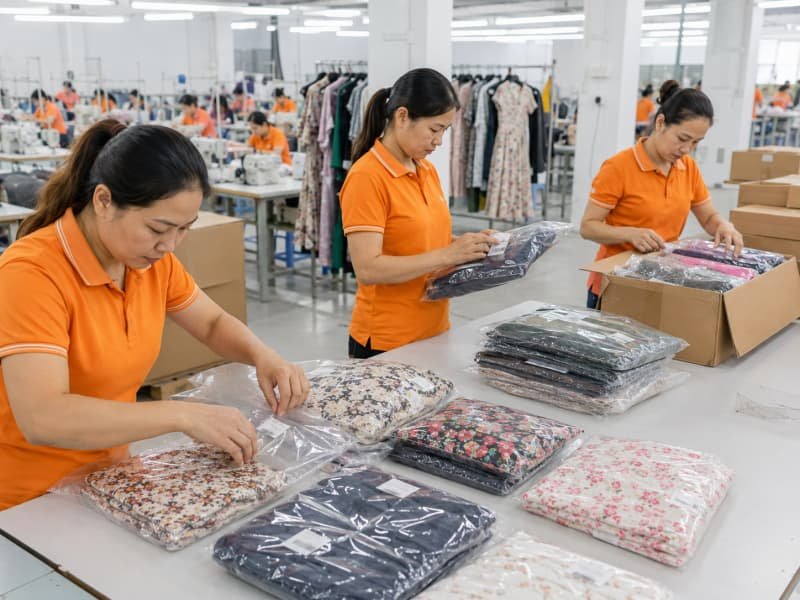
Packing and timeline confirmation protects the final receiving process. Duolan reviews folding, hanging, polybag, barcode sticker, carton mark, packing ratio, inspection timing and shipment preparation. For delicate dresses, packing protection must be planned before final production, not corrected after garments are already packed.
Bulk Production Path for Dress Orders
PP Standard
- Stage purpose: confirm that production teams can follow one approved reference.
- Dress risk: unclear PP standards create fit, fabric, trim and construction drift.
- Control output: PP reference, size spec, BOM notes, QC focus and packing direction.
Material Prep
Material and trim preparation confirms that bulk fabric, lining, zippers, support materials, labels and packing items are ready for production.
- Stage purpose: prevent line delays caused by missing or mismatched materials.
- Dress risk: shade variation, trim replacement and label mistakes can affect the full order.
- Control output: fabric lot record, trim card, label confirmation and packing item readiness.
Cutting Control
Cutting control protects size accuracy, fabric direction, motif placement and panel consistency before sewing begins.
- Stage purpose: keep bulk panels aligned with PP sample and size ratio.
- Dress risk: wrong grain, stretch direction, pile direction or lace placement changes the garment.
- Control output: cut panel check, numbering, size ratio confirmation and placement review.
First-piece Review
First-piece review checks the first production garment before defects spread across the line.
- Stage purpose: compare the first bulk garment against PP standard and production notes.
- Dress risk: repeated sewing or fit issues may become costly if discovered too late.
- Control output: correction notes, measurement check, workmanship adjustment and line guidance.
Inline Control
Inline control monitors production while garments are being sewn and assembled.
- Stage purpose: catch process drift during real production instead of waiting for final QC.
- Dress risk: seams, lining, zippers, trims, support and measurements can change during line work.
- Control output: inline QC notes, issue correction, operator guidance and risk tracking.
Finishing Stage
Finishing prepares garments for final appearance, including pressing, thread trimming, stain checking and shape review.
- Stage purpose: improve final sellable presentation before packing.
- Dress risk: satin, velvet, sequins and structured dresses can be damaged by wrong finishing.
- Control output: pressing method, surface check, final shape review and defect sorting.
Final Inspection
Final inspection reviews appearance, measurements, function, labels and packing readiness before shipment.
- Stage purpose: confirm that the bulk order meets agreed standards before delivery.
- Dress risk: missed defects at shipment stage affect receiving, returns and brand trust.
- Control output: final QC report, issue notes, approval status and packing confirmation.
Packing Prep
- Stage purpose: protect garments and support warehouse receiving.
- Dress risk: wrong barcode, polybag, carton mark or packing ratio creates operational problems.
- Control output: packing list, carton data, barcode placement, protection method and shipment preparation.
Bulk Consistency Starts Before Sewing
Cutting Decides More Than Fabric Consumption
Cutting Control Points
- Fabric lot separation: keeps shade and handfeel differences from being mixed across the same delivery batch.
- Shade band control: groups fabric rolls so visible color differences do not appear within one garment or carton.
- Stretch direction: protects recovery, body fit and side seam balance for fitted and bodycon styles.
- Motif placement: controls lace, print, embroidery or pattern alignment for visually sensitive designs.
- Pile direction: protects velvet and pile fabrics from looking like different shades after sewing.
- Panel numbering: keeps cut pieces organized so sizes, colors and fabric lots do not become mixed.
- Size ratio cutting: aligns the cutting plan with the order breakdown and delivery requirement.
Sewing Controls by Dress Type

Satin Seam Control
- Production risk: seam puckering, skipped stitches, needle marks, shiny pressing marks and uneven hem appearance.
- Control method: review needle, thread, seam tension, operator handling, pressing response and surface protection.
- QC focus: inspect side seams, neckline, zipper area, hem, stain risk and carton pressure marks.

Stretch Seam Control
Stretch garments need seams that move with the body. If the stitch is too rigid or the cutting direction is wrong, fit can change in bulk.
- Production risk: broken seams, weak recovery, side seam twist, measurement drift and uncomfortable compression.
- Control method: review seam elasticity, stretch direction, recovery, thread choice and tolerance points.
- QC focus: inspect bust, waist, hip, side seams, opacity under tension and garment recovery.

Corset Sewing
Corset styles require inner construction discipline. Bulk quality depends on cup placement, boning channels, reinforcement and closure strength.
- Production risk: cup asymmetry, boning shift, zipper stress, weak bust support and uncomfortable pressure.
- Control method: confirm cups, boning, lining, interlining, reinforcement, zipper and first-piece review.
- QC focus: inspect support, symmetry, closure function, size grading and inner comfort.

Mesh Edge Control
- Production risk: over-transparency, stretched edges, visible seam allowance, uneven panels and lining mismatch.
- Control method: review seam allowance, lining attachment, stretch direction, edge finish and panel placement.
- QC focus: inspect coverage under light, edge stability, seam visibility and final garment balance.

Sequin Seam Cleaning
Sequin sewing requires control before and after the seam. Surface decoration can affect comfort, appearance and packing safety.
- Production risk: broken sequins, thick seams, scratchy interior, loose decoration and surface abrasion.
- Control method: clean seam areas, review lining, manage surface handling and confirm packing protection.
- QC focus: inspect missing pieces, loose threads, inner comfort, seam thickness and garment surface.

Hem Reinforcement
Slits and hems affect movement, length and visual quality. They require special attention for maxi, mini and occasion dresses.
- Production risk: uneven hem, weak slit, lining exposure, wrong length and poor movement after pressing.
- Control method: confirm hem method, slit height, lining length, reinforcement and length tolerance.
- QC focus: inspect hem level, slit security, garment hang, movement and final presentation.
Capacity Routing for Multi-style Bulk Orders
Bulk dress production often requires more than one production line. Duolan uses core factories, satellite capacity, regional bases and process partners to route dress orders according to complexity, timeline, QC sensitivity and delivery planning.
Core Control
Core factory control is used for sensitive styles that require stronger production discipline and closer standard transfer from sample to bulk.
- Data basis: 16 owned womenswear factories support controlled production for core dress programs.
- Routing use: suitable for satin dresses, corset structures, fitted garments and quality-sensitive bulk orders.
- Brand value: critical styles can stay closer to approved samples, PP standards and QC communication.
Satellite Capacity
- Data basis: 20+ long-term satellite factories provide coordinated production capacity under Duolan standards.
- Routing use: suitable for repeat orders, parallel dress production and style groups with different complexity.
- Brand value: added capacity supports growth without treating production as uncontrolled outside sourcing.
Regional Routing
Regional production bases help distribute different order types based on scale, timing and product complexity.
- Data basis: 4 regional bases support production planning across Guangxi, Guizhou, Sichuan and Jiangxi.
- Routing use: suitable for larger dress orders, repeated programs and schedules requiring capacity buffer.
- Brand value: production resources can be planned with more flexibility under central project coordination.
Process Matching
- Data basis: 2–3 mature partners per key process support print, embroidery, dip-dyeing and washing needs.
- Routing use: suitable for printed resort dresses, embroidered details, washed effects and decorative party styles.
- Brand value: process work is coordinated as part of the dress production plan, not treated as an isolated add-on.
Schedule Grouping
- Data basis: production coordination teams support order follow-up, production communication and delivery tracking.
- Routing use: suitable for seasonal dress capsules, multi-color orders and parallel launch programs.
- Brand value: styles can be routed according to readiness instead of causing all orders to wait for one issue.
Delivery Windows
Delivery coordination aligns production calendar, QC schedule, packing preparation and shipment readiness.
- Data basis: 1,200–1,500 coordination staff support order follow-up, QC communication and delivery tracking.
- Routing use: suitable for launch-driven dress programs, repeated orders and split-delivery planning.
- Brand value: production progress, inspection timing and packing readiness become easier to manage.
Centralized Coordination for Bulk Dress Delivery
Duolan’s bulk dress manufacturing system connects brand requirements, development records, production routing, QC stages, packing data and delivery tracking through centralized project coordination.
A Bulk Order Needs More Than Factory Capacity
The value of this system is not simply scale. It is coordination. A PP sample must be understood by production. A fabric lot must match the approved reference. A packing rule must match warehouse receiving. A QC issue must be communicated before final shipment. Repeat production should use previous records instead of restarting from memory.
Bulk Coordination Flow
- Brand project input: PP sample, BOM, size breakdown, delivery window, packing rules and inspection requirement.
- Duolan coordination: bulk readiness review, production routing, material planning, QC focus and delivery tracking.
- Development layer: sample record, size spec, fabric reference, trim card and construction notes.
- Manufacturing layer: owned factories, satellite factories, regional bases and special-process partners.
- QC layer: fabric check, cutting review, first-piece inspection, inline QC, final inspection and packing check.
- Delivery layer: packing list, carton marks, barcode data, shipment preparation and reorder records.
Inline QC for Bulk Dress Production
Bulk dress QC should not wait until the final inspection. Duolan uses stage-based checks to identify material, cutting, sewing, finishing and packing issues before they become shipment-level problems.
| QC Stage | What We Check | Bulk Risk Controlled |
|---|---|---|
| Fabric Check | Shade, handfeel, stretch, surface, lot and approved reference | Material mismatch |
| Cutting Check | Direction, numbering, placement, size ratio and lot grouping | Shape and size inconsistency |
| First-piece Check | First garment compared with PP sample and production notes | Repeated bulk defects |
| Inline Sewing Check | Seams, lining, zipper, trims, support and measurements | Process drift |
| Finishing Check | Pressing, thread trimming, stains, shape and surface marks | Weak presentation |
| Final Inspection | Appearance, function, measurements, labels and packing readiness | Shipment risk |
| Packing QC | Barcode, polybag, carton mark, ratio and protection method | Receiving errors |
| Delivery Record | Quantity, packing list, carton data and issue notes | Repeat order reference |
QC Points by Dress Type
Different dress types need different inspection priorities. Duolan reviews bulk orders according to fabric behavior, structure, fit risk, surface sensitivity and delivery condition.
| Dress Type | Critical Bulk Risk | QC Focus |
|---|---|---|
| Satin Dress | Surface marks, puckering and creasing | Seam smoothness, pressing, stain check and packing pressure |
| Bodycon Dress | Recovery, opacity and size drift | Stretch, measurements, side seam balance and fit tolerance |
| Corset Dress | Cup, boning and zipper stress | Support, symmetry, closure strength and size grading |
| Sequin Dress | Sequin loss, scratch risk and damage | Lining, surface check, loose decoration and packing protection |
| Mesh Dress | Transparency and edge distortion | Coverage, lining color, seam visibility and panel placement |
| Maxi Dress | Uneven hem and length tolerance | Hem level, movement, pressing and carton crease risk |
| Party Dress | Trim failure and short coverage | Attachment strength, lining, movement safety and final look |
| Multi-color Order | Shade inconsistency and trim mismatch | Lab dip, fabric lot, color grouping and label accuracy |
Packing Data for Bulk Dress Delivery
Packing is part of bulk production control. Accurate care labels, size labels, barcodes, polybags, carton marks and packing ratios help finished dresses move through warehouse, ecommerce and retail systems more smoothly.
| Delivery Item | Bulk Requirement | Why It Matters |
|---|---|---|
| Care Label | Fiber content, care method, language and placement | Supports compliance and customer use |
| Size Label | Brand size scale, readability and approved location | Reduces warehouse and customer confusion |
| Barcode Sticker | Style code, color code, size code and scan format | Supports ecommerce and inventory receiving |
| Polybag | Size, warning text, fold method and sticker placement | Protects garment and supports fulfillment |
| Carton Mark | Style, color, size, quantity, carton number and destination | Supports warehouse receiving |
| Packing Ratio | Size and color breakdown per carton | Helps inventory handling and order checking |
| Surface Protection | Tissue, hanging, fold method and pressure control | Protects delicate dress surfaces |
| Packing List | Quantity, carton data, issue notes and shipment details | Supports delivery traceability |
From Bulk Start to Delivery

Step 1: Bulk Start
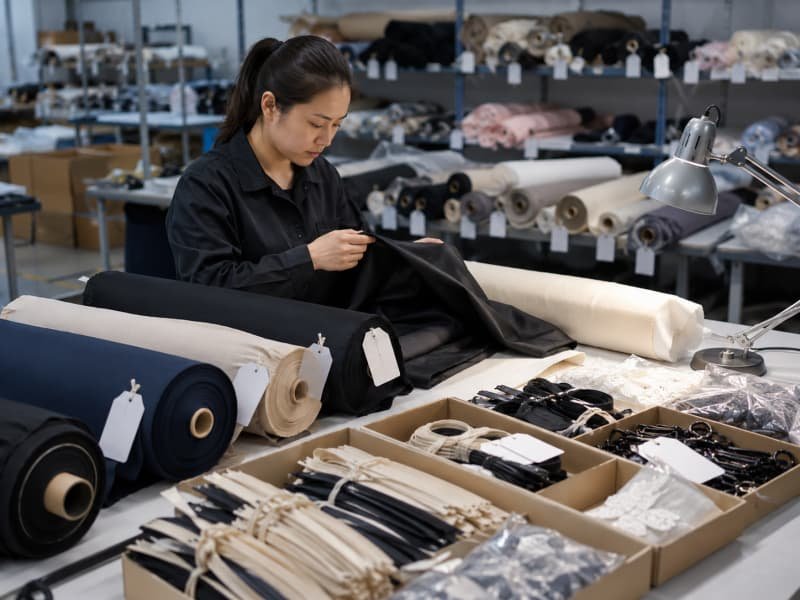
Step 2: Material Arrival

Step 3: Line Start
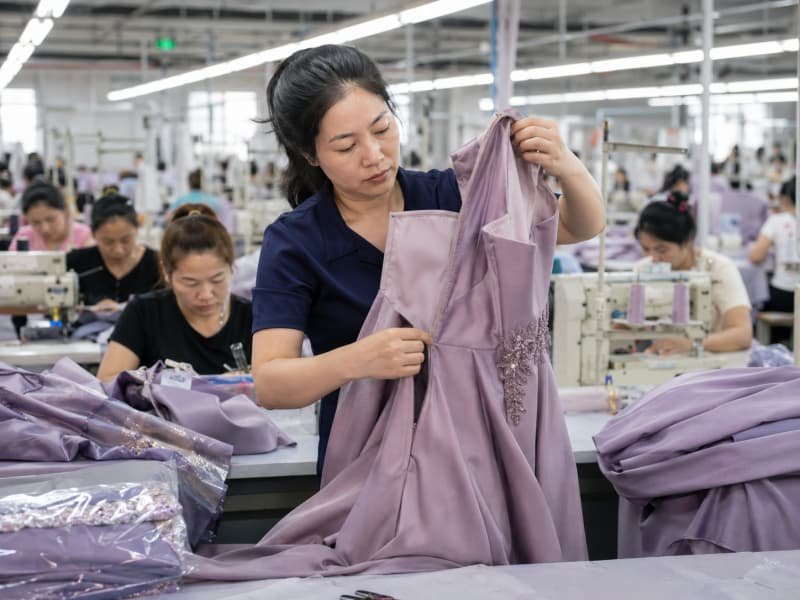
Step 4: Inline Review

Step 5: Final QC

Step 6: Shipment Prep
Repeat Dress Production Without Standard Drift
Reorders Need Records, Not Memory
Duolan supports repeat production by keeping important order references visible. Approved samples, BOM records, fabric lot history, trim cards, measurement notes, QC issue records, packing data and delivery comments can support future production discussions. These records do not remove the need for review when a style changes, but they give the brand and factory a stronger starting point.
Reorder Control Points
- Approved sample record: keeps fit, fabric, construction and visual standard visible for future production.
- BOM memory: protects fabric, lining, trims, labels, hangtags, polybags and carton requirements.
- Fabric history: helps compare shade, handfeel, stretch, surface and replacement options in repeat orders.
- Measurement record: supports size tolerance, grading consistency and fit-sensitive areas.
- QC notes: help avoid repeated issues from the previous production round.
- Packing data: keeps barcode, carton mark, fold method and protection rules consistent.
- Color extension control: helps brands expand bestsellers while reducing material and shade risk.
Supplier Evaluation for Bulk Dress Programs
Bulk Capability Must Be Proved Through Process
Evaluation Support Areas
- Audit-related basis: SMETA audit, SMETA 2-Pillar audit record and SMETA social audit record support supplier review discussions.
- Quality alignment: project needs may involve BSCI alignment, ISO 9001 quality awareness, AATCC, ASTM, EN or China GB standards.
- Material requirements: OEKO-TEX?, GOTS-related material needs or customer-specific material requirements can be coordinated by project.
- Inspection support: third-party inspection and customer-designated QC requirements can be reviewed before production planning.
- Production evidence: PP sample records, BOM review, material lot checks, inline QC and packing confirmation can support project discussions.
- Delivery documentation: packing lists, carton marks, barcode data and shipment preparation details can be aligned with brand requirements.
Bulk Dress Case Studies

PP to Delivery
- Bulk input: PP sample, BOM, fabric reference, size breakdown, label files and packing manual.
- Production challenge: sample details needed to transfer clearly into material preparation, line sewing and QC.
- Duolan action: reviewed PP standard, BOM status, first-piece priorities, inline QC and packing requirements.
- Result: the order had a clearer production route and stronger inspection basis before shipment preparation.

Partywear Routing
- Bulk input: style list, sample status, fabric directions, delivery date and packing expectations.
- Production challenge: fabric timing, QC priority, surface protection and production routing varied by style.
- Duolan action: grouped styles by complexity, reviewed material readiness and planned line priorities.
- Result: the program became easier to manage across sampling status, production, QC and delivery sequence.

Satin Surface
- Bulk input: satin sample, lining reference, color plan, target quantity and carton requirement.
- Production challenge: seam puckering, surface pulls, pressing marks and carton pressure could affect final appearance.
- Duolan action: reviewed sewing tension, pressing method, surface inspection and protective packing plan.
- Result: satin surface risk became part of the production and QC plan before bulk completion.

Reorder Standard
- Bulk input: previous approved sample, BOM record, new color request, quantity plan and packing data.
- Production challenge: new color fabric needed to match the previous handfeel, stretch, drape and fit result.
- Duolan action: compared fabric references, reviewed trim continuity, checked size tolerance and updated QC notes.
- Result: the reorder discussion started from previous production records instead of restarting from vague memory.
Bulk Dress Manufacturer FAQ

Submit Your Bulk Dress Plan
Duolan reviews bulk dress production plans for established fashion brands, buying teams and sourcing offices that already have approved styles, PP sample status, quantity targets or delivery requirements. Share your approved sample photos, BOM, fabric reference, trim card, size spec, style/color/size breakdown, packing manual, QC requirement and delivery window so our team can evaluate production readiness before bulk discussion.
Our review focuses on production execution, not generic dress sourcing. We check whether the PP standard is clear, whether fabric and trims can support the full quantity, whether size tolerance and workmanship notes are ready for line production, whether multi-style routing is needed, whether inline QC points are defined, and whether packing data matches brand receiving requirements.
After review, Duolan can provide bulk readiness comments, missing-information notes, material and trim risk feedback, production routing suggestions, QC focus, packing confirmation and quotation basis. A stronger bulk plan helps reduce sample-to-bulk drift, material mismatch, late-stage defects, packing errors and delivery uncertainty.