Skip to content

Bust Fit Solutions for Dresses
Pattern, support, sample and grading control for fashion brands developing fitted, structured and occasion dresses across multiple size ranges.
- 7 critical fit areas: bust, underbust, apex, neckline, armhole, strap position and front bodice length are reviewed as connected variables rather than isolated measurements.
- 5 review views: mannequin, live fitting, movement, photography and measurement checks expose different fit problems before approval.
- 6 fit-sensitive constructions: corset, strapless, halter, backless, bodycon and structured occasion dresses require different bust-control methods.
- Confirmed corrections are transferred into pattern, specification, grading, PP and bulk-control standards.
Diagnose Bust Fit Problems Before Revising the Pattern
Tight Across Bust
- Full-bust measurement versus intended garment ease.
- Bust projection and available front-panel volume.
- Front bodice length over the bust.
- Dart intake or princess-seam shaping.
- Fabric stretch and recovery under wear.
- Underbust and waist anchoring.
Gaping Neckline
- Excess length along the neckline edge.
- Bust projection pulling the neckline away from the chest.
- Incorrect dart or princess-seam distribution.
- Strap position failing to control the upper bodice.
- Stretch fabric relaxing after sewing.
- Lining or facing behaving differently from the shell.
Armhole Gaping
- Front armhole curve.
- Bust apex position.
- Shoulder or strap placement.
- Side-seam angle.
- Upper-chest width.
- Fabric recovery.
- Lining tension.
Bust Point Mismatch
A technically correct circumference can still look wrong when the pattern bust point sits too high, low, inward or outward for the intended fit model. Dart tips, princess seams, cup shaping and structural seams all rely on the correct relationship to the bust apex. Common signs include:
- Dart pointing away from the fullest area.
- Princess seam appearing hollow or overly rounded.
- Wrinkles radiating from the bust.
- Cup position looking high or low.
- Side seam being pulled forward.
- Waist seam rising at center front.
Correction may involve moving shaping rather than adding or removing total circumference. Bust-point position also needs controlled grading because a base-size solution cannot simply be enlarged proportionally across every size.
Insufficient Support
Bust fit is not only about available space. Strapless, corset, bustier, halter and low-back dresses can have accurate measurements yet remain unstable because the garment lacks a controlled support path. Support can depend on:
- Cup position and cup shape.
- Boning length and placement.
- Underbust anchoring.
- Waist anchoring.
- Strap width, length and angle.
- Side-panel stability.
- Back closure or lace-up tension.
- Lining, elastic and internal reinforcement.
Support should be assessed while standing, walking, sitting and raising the arms. A dress that looks secure on a mannequin may still shift during movement. Structural corrections must work with the outer silhouette rather than creating visible stiffness.
Front Balance Distortion
When the front hem rises, waist seam tilts, side seams swing forward or the center front appears shorter than the back, the source can be insufficient length over the bust rather than an incorrect skirt length. Fit review should compare:
- Center-front versus center-back balance.
- Bust projection.
- Front waist position.
- Side-seam verticality.
- Dart or princess shaping.
- Fabric drape.
- Skirt attachment point.
Adding length randomly at the hem does not correct the bodice. The pattern needs enough distance to travel over the body while keeping the waist horizontal and the skirt balanced. Front balance becomes especially important in fitted mini and midi dresses where even a small distortion is visually obvious.
Match Visible Fit Symptoms to the Right Technical Review
Fit corrections should start from diagnosis rather than guesswork. The same visible wrinkle can have different causes, while one pattern error can create several symptoms across the neckline, bust, armhole and waist.
| Visible Symptom | Likely Technical Cause | First Review Point | Possible Correction Direction |
|---|---|---|---|
| Horizontal pulling across bust | Insufficient bust width or projection | Full bust, front pattern volume, fabric stretch | Add localized bust capacity rather than widening the full bodice |
| Neckline stands away from chest | Excess edge length, projection mismatch or weak support | Neckline contour, dart distribution, strap geometry | Rebalance shaping and neckline length |
| Front armhole gaps | Upper-bodice excess or bust-point mismatch | Armhole curve, apex, shoulder/strap position | Reshape upper bodice while preserving movement |
| Dart points above or below bust | Bust apex position mismatch | Dart direction and bust-point location | Reposition shaping without unnecessary circumference change |
| Bust feels compressed | Inadequate projection, cup volume or fabric recovery | Projection, cup shape, stretch behavior | Increase three-dimensional capacity or revise structural support |
| Front waist rises | Insufficient front length over bust | Center-front length and bust projection | Add controlled front length and rebalance waist seam |
| Strapless bodice slips | Weak anchoring or support distribution | Underbust, boning, side seam, back structure | Strengthen internal support and anchoring |
| Side seam pulls forward | Front/back volume imbalance | Bust shaping and side-seam position | Redistribute pattern volume between front and back |
Bust Fit Is More Than One Circumference Measurement
Bust Circumference and Projection Must Be Evaluated Separately
- Is total circumference adequate?
- Is enough volume located over the correct area?
- Does the front panel provide enough length over the bust?
- Does the waist return to the intended position?
- Does the side seam remain vertical?
- Does the fabric support the target silhouette without excessive pressure?
Bust Apex, Front Length and Shaping Control Garment Balance
- Moving the bust point.
- Rotating or redistributing dart intake.
- Reshaping a princess seam.
- Adding front length without adding unnecessary back length.
- Rebalancing the waist seam.
- Rechecking armhole and neckline after reshaping.
Neckline, Armhole and Strap Geometry Must Work Together
A dress bodice behaves as a connected structure. Neckline depth, armhole curve, shoulder width, strap angle and bust shaping influence one another, especially on low-coverage designs. A deep neckline can lose stability when the bust requires more projection than the front pattern allows. A narrow strap placed too far outward may increase armhole gaping. A halter strap with too much tension can lift the front neckline and place unwanted pressure on the neck. An armhole correction made without checking the bust may reduce mobility. Duolan reviews these areas as a geometry problem rather than separate decorative details:
- Neckline edge: must follow the intended chest contour without standing away.
- Front armhole: needs enough shaping for the upper bust while allowing arm movement.
- Strap position: should stabilize the bodice without pulling the neckline out of shape.
- Side seam: should remain balanced instead of rotating toward the front.
- Back opening: must provide enough counter-tension for low-back or open-back styles.
- Lining: should support the shell rather than creating a second, conflicting fit layer.
Support Must Hold Through Movement, Not Only Standing Still
Static fit is only the first checkpoint for a fitted dress. A bodice can appear secure when the wearer stands straight but shift when she walks, sits, raises her arms, turns or changes posture.
Movement testing is especially important for strapless, corset, bustier, halter, backless and low-neckline styles. The garment needs a stable path for load and tension. Depending on construction, support may come from the underbust, waist, boning, cups, elastic, straps, side panels or back closure.
A fit review should therefore ask:
- Does the neckline remain in position during movement?
- Does the bust stay supported without excessive compression?
- Do cups remain aligned with the body?
- Does boning stay flat rather than bowing outward?
- Do straps maintain stability without digging into the neck or shoulders?
- Does the back opening retain tension?
- Does the bodice return to its original position after movement?
Support is not an isolated trim decision. It affects pattern shape, seam placement, lining construction and material choice. A successful solution should preserve the visual intent while giving the wearer predictable stability.
Bust Fit Changes With the Dress Construction
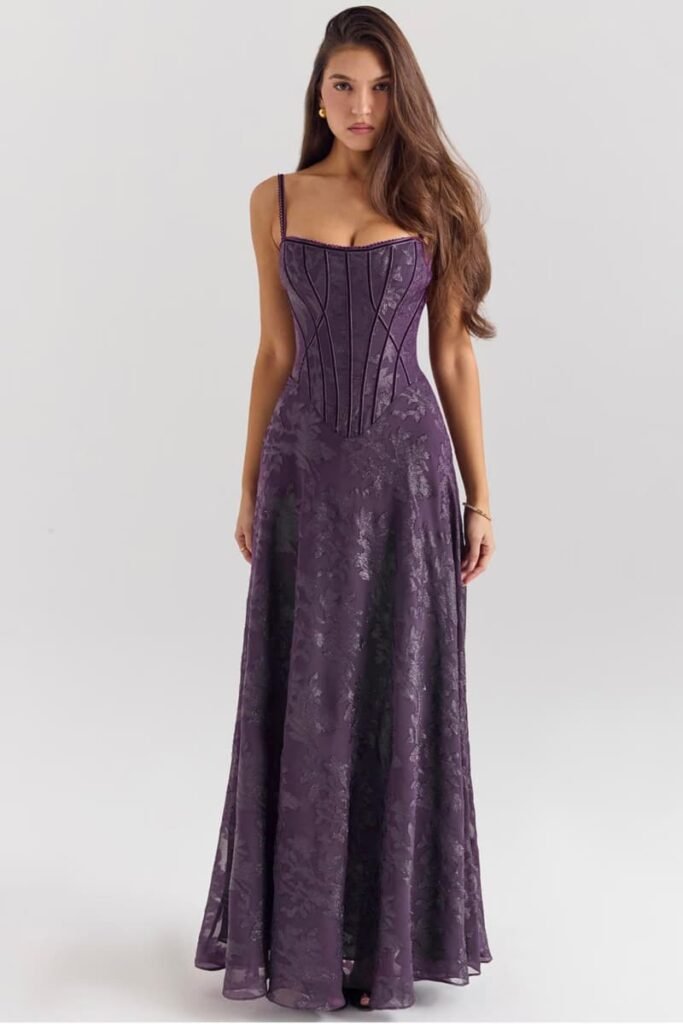
Corset and Bustier Dresses
- Cup height and projection.
- Underbust position.
- Boning placement and length.
- Center-front and side-front shaping.
- Waist seam position.
- Back panel or lace-up range.
- Lining and reinforcement.
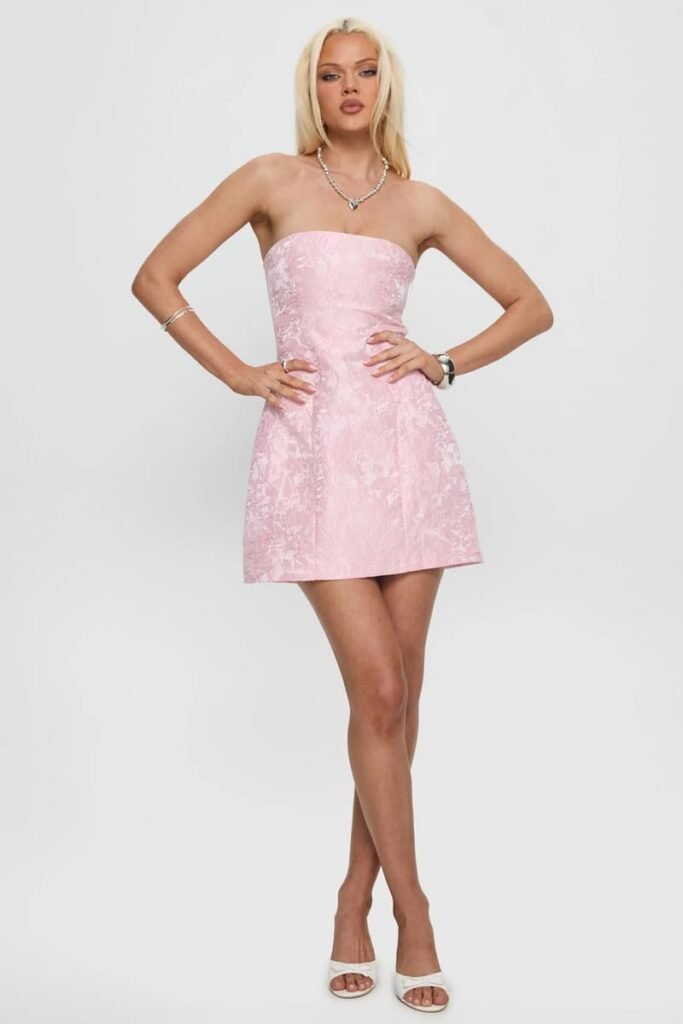
Strapless Dresses
- Cup or internal shaping.
- Underbust control.
- Boning distribution.
- Anti-slip or elastic support where appropriate.
- Side-seam strength.
- Back width and closure.
- Waist anchoring.
- Neckline contour.

Halter Dresses
- Halter strap width and length.
- Strap angle.
- Front neckline depth.
- Bust coverage.
- Underbust support.
- Side-panel shaping.
- Back opening.
- Closure position.

Backless Dresses
- Side-bust coverage.
- Front shaping.
- Underbust reinforcement.
- Cup or lining support.
- Strap routing.
- Low-back edge stability.
- Side seam.
- Closure or tie position.

Bodycon Dresses
- Fabric stretch percentage and direction.
- Recovery after extension.
- Bust-to-waist shaping.
- Side-seam position.
- Neckline stability.
- Armhole control.
- Lining or double-layer behavior.
- Grading across the size range.

Structured Occasion Dresses
Occasion dresses often combine visual shaping with satin, crepe, lace, mesh, embellishment or internal support. Fit errors become highly visible because the garment is expected to photograph cleanly and remain stable for several hours of wear. Bust-fit review can include:
- Neckline and décolletage balance.
- Cup or internal support.
- Dart or princess-seam shape.
- Underbust and waist position.
- Lining behavior.
- Strap or sleeve interaction.
- Fabric drape around the bust.
- Closure stability.
Structured occasionwear also needs sample-to-bulk discipline. Minor differences in fabric body, seam handling or pressing can change how the bodice sits, even when measurements remain within a normal tolerance range.
Fabric Behavior Can Change the Entire Bust Fit

Stretch Jersey and Ponte
- Stretch percentage.
- Stretch direction.
- Recovery.
- Fabric weight.
- Compression feel.
- Opacity under extension.
- Lining interaction.

Satin and Structured Wovens
Satin, crepe and other woven dress fabrics rely more heavily on pattern shaping because they cannot absorb fit differences through high stretch. Bust projection, dart distribution, princess seams and front length become more visible.
Satin adds further sensitivity:
- Seam puckering can distort bust shaping.
- Bias direction may alter front balance.
- Pressing can change seam appearance.
- Lightweight qualities may reveal underlying construction.
- Lining can either stabilize or restrict the shell.
- Surface tension can exaggerate drag lines.
A woven bodice should have enough wearing ease while retaining a clean silhouette. Adding unnecessary width can remove shape; insufficient shaping can create tension across the bust and lift the waist.

Mesh With Lining
Mesh introduces two material systems into one fit. The outer layer may stretch differently from the lining, and both layers need to recover together.
Review points include:
- Mesh stretch and recovery.
- Lining stretch.
- Direction of stretch.
- Transparency requirement.
- Seam construction.
- Edge stabilization.
- Bust support layer.
- Coverage position.
If the lining is significantly less elastic than the shell, the wearer experiences the lining as the true fit limit. If the lining is too loose, the outer mesh may take excessive tension. Fitted mesh dresses therefore need pattern, lining and support to be tested as one construction rather than as independent fabrics.

Lace and Embellished Fabrics
Lace, sequins and embellished materials can reduce usable stretch or create localized stiffness. Motif placement, seam allowances and reinforcement may also change how the bodice conforms to the bust. Development should consider:
- Base-fabric stretch.
- Embellishment density.
- Directional motifs.
- Lining choice.
- Seam placement.
- Edge treatment.
- Weight.
- Internal support.
A stretch lace with heavy embellishment may behave very differently from the unembellished swatch. Sequin density can add weight and reduce flexibility. Pattern decisions should therefore be validated on representative material rather than relying only on composition labels.
Define the Brand Fit Standard Before Sample Correction
A clear technical basis keeps fit decisions consistent across development, grading and production. Duolan can work from an established brand specification or organize the available information into a controlled fit-development basis.
| Development Input | What Should Be Defined | Bust-Fit Relevance |
|---|---|---|
| Target market | US, UK, EU, AU or brand-specific sizing | Establishes expected body and size assumptions |
| Base size | Example: US 4, UK 8, S or brand fit-model size | Creates a controlled sample reference |
| Bust and underbust | Body and garment measurements | Separates total circumference from support requirement |
| Bust apex | Height and horizontal position | Controls darts, cups and princess shaping |
| Neckline and armhole | Width, depth, curve and coverage | Helps prevent gaping and instability |
| Strap measurements | Length, width, angle and adjustability | Influences lift, coverage and pressure |
| Fabric direction | Composition, weight, stretch, recovery, drape | Determines ease and pattern behavior |
| Existing fit comments | Photos, annotations and revision history | Shows what has already been tested or rejected |
| Size range | Intended commercial size run | Determines grading and verification needs |
| Sample purpose | Fit, photo, presentation, PP or production preparation | Defines the approval standard required |
Correct the Pattern Instead of Hiding the Fit Problem
Use Full or Small Bust Adjustment Logic Where Appropriate
- Compression over the bust.
- Pulling from the apex.
- Front waist rising.
- Side seam swinging forward.
- Insufficient front length.
- Neckline distortion caused by projection.
Dart and Princess-Seam Shaping Must Follow the Bust Position
Darts and princess seams create three-dimensional shaping from flat fabric. Their position, intake and curvature directly affect how the garment approaches and leaves the fullest part of the bust.
A dart correction may involve:
- Moving the dart toward the target bust point.
- Increasing or reducing intake.
- Redistributing shaping between waist and side dart.
- Shortening the dart tip distance.
- Rechecking waist and side-seam balance.
Princess seams require another level of control. The seam must create enough projection without producing a sharp point, hollow area or excessive curvature. Seam allowance handling and pressing also influence the finished shape. For corset and bustier styles, panel seams may also carry boning, making the structural line more sensitive. A change to bust shaping can affect boning position, cup placement, waist contour and center-front balance. The approved pattern should record the correction rather than relying on a sample-room operator to recreate the shape by eye. Once the fit is confirmed, the paper or digital pattern becomes part of the production standard.
Pattern Corrections Must Preserve the Whole Silhouette
A bust problem can be solved locally while damaging the overall dress. Adding width may make the waist too loose. Shortening a neckline may restrict the chest. Raising a strap can lift the armhole. Increasing front length can disturb the waist seam if the adjustment is placed incorrectly.Duolan therefore reviews the revised pattern against connected checkpoints:
- Shoulder and strap position.
- Neckline line.
- Front armhole.
- Bust point.
- Underbust.
- Waist location.
- Side seam.
- Back opening.
- Zipper position.
- Skirt balance.
Fit comments are translated into pattern actions and then reviewed again in the next sample. The development record should state what changed, why the change was made and which areas require rechecking.
Such discipline becomes more important when several dress styles share a similar fit block. A correction may create useful knowledge for future colorways, lengths or related silhouettes, but reuse should only occur after confirming material and construction differences.

Review the Fit Sample Under Real Wearing Conditions
Start With Mannequin and Structural Review
- Neckline contact with the body.
- Bust projection.
- Dart or princess-seam direction.
- Cup location.
- Underbust position.
- Armhole shape.
- Strap angle.
- Side-seam verticality.
- Waist-line balance.
- Front-to-back hem relationship.
Move From Static Fit Into Live Movement
A live fitting tests whether the bodice stays in the intended position when the wearer changes posture.
The fit model should not only stand straight. Review should include normal actions such as:
- Walking.
- Sitting.
- Raising both arms.
- Reaching forward.
- Turning the torso.
- Bending slightly.
- Returning to a neutral posture.
For strapless dresses, the question is whether the bodice slips. For halter styles, neck pressure and chest coverage matter. For backless dresses, front support and back-edge stability must remain connected. For bodycon dresses, the fabric should recover rather than remain stretched after movement. Movement may expose issues absent during static fitting: neckline opening, cup displacement, underarm cutting, straps digging into the shoulder or front waist riding upward. Fit corrections should protect both visual intent and wearability. A fashion-forward neckline can remain low or open without becoming unstable when pattern geometry and support are developed correctly.
Use Photo and Measurement Review to Finalize Comments
Photography exposes surface and proportion problems differently from live observation. Satin reflections, neckline shadows, seam distortion and asymmetry can become more visible through a camera. Duolan can combine photo review with measurement confirmation before preparing revision comments. Typical outputs include:
- Marked sample images.
- Measurement adjustments.
- Pattern correction points.
- Fabric concerns.
- Construction concerns.
- Support changes.
- Areas requiring another fit.
- Areas ready for approval.
Measurement review should use the agreed POM method. Bust width, underbust, front length, strap length, armhole and other critical dimensions need consistent measurement positions. A revision summary should distinguish confirmed corrections from subjective styling preferences. Clear separation helps pattern makers, sample technicians, merchandising teams and production staff work from the same decision. For fit-sensitive dresses, approval should mean the technical standard is sufficiently clear for the next stage, not merely that one photograph looks acceptable.

Turn Every Fit Comment Into a Controlled Revision
Capture the Comment
Classify the Issue
Diagnose the Cause
Correct the Standard
Refit the Revision
Lock the Approved Version
Once approved, record the pattern version, critical measurements, material basis and construction details used for the accepted fit. The confirmed version becomes the reference for grading, PP preparation, production checks and later repeat orders rather than leaving approval in an email thread.
Grade Bust Fit Without Losing the Base-Size Balance
Grading Is Not Equal Enlargement in Every Direction
- Full-bust circumference.
- Underbust.
- Bust-point height.
- Bust-point spacing.
- Front bodice length.
- Neckline width and depth.
- Front armhole.
- Strap placement.
- Cup position.
- Waist position.
Structural Components Need Their Own Grading Logic
Corset cups, boning, straps, underbust panels and low-back openings are not ordinary decorative dimensions. Their location controls support and can affect safety and wearing comfort. A larger size may need more bust circumference, but simply shifting a cup outward by the same amount as the side seam may not preserve cup position. A neckline made proportionally deeper can expose more than the original design intended. Strap placement can move too far toward the shoulder edge. Boning can lose alignment with the body.
For structured styles, grading should evaluate:
- Cup width and projection.
- Cup spacing.
- Boning position.
- Underbust line.
- Front and side panel proportions.
- Strap and closure location.
- Back-panel width.
- Neckline exposure.
The same principle applies to non-corset fitted dresses. Dart positions and princess lines should continue pointing toward the intended bust area instead of drifting as sizes increase. A grading file becomes stronger when it records design-sensitive points rather than only circumference increments.
Verify the Size Range Before Releasing Bulk
Grading should be checked rather than trusted automatically. The verification level can depend on style sensitivity, brand size range and previous fit history.
Common methods include:
- Reviewing nested patterns.
- Checking critical POM progression.
- Measuring graded samples.
- Fitting selected sizes.
- Reviewing edge sizes.
- Comparing neckline and coverage progression.
- Confirming fabric stretch assumptions.
A five-size XS–XL program, for example, may not need identical development effort on every size, but high-risk constructions benefit from reviewing more than one point in the range.
The approved grading logic should then connect with the spec sheet and production tolerance. Otherwise, a well-developed base sample can still produce inconsistent consumer experience once the order enters multiple sizes.

Transfer the Approved Bust Fit Into Bulk Production
Lock the Production Basis Before the Line Starts
- Approved pattern version.
- Graded pattern.
- Spec sheet.
- Critical measurement points.
- Measurement method.
- Fabric and lining standard.
- Cup, boning, elastic or support specification.
- Workmanship points.
- Approved sample or PP reference.
- Relevant fit comments and resolved risk notes.
Verify the First Piece Before Full Release
- Critical measurements.
- Bust shaping.
- Cup and boning placement.
- Neckline.
- Armhole.
- Strap position.
- Waist balance.
- Fabric behavior.
- Lining.
- Construction quality.
Control Fit During Production and Future Reorders
Final inspection alone is too late to manage a repeated fit deviation. Inline checks help identify whether measurement or construction is drifting while corrective action remains possible. Production control can monitor:
- Bust and underbust measurements.
- Strap length.
- Armhole.
- Neckline.
- Cup position.
- Waist.
- Side seam.
- Selected workmanship points.
Repeated measurement issues should be traced back to their source: cutting, sewing tension, material variation, pressing, shrinkage or method inconsistency. After shipment, the approved pattern, grading, material standard, fit notes and QC history can become the starting point for a repeat order. A reorder still needs material and shade review, but the brand should not have to rebuild the fit from zero when the core product standard remains valid.

Control Critical Measurements Throughout Bulk Dress Production
Measurement control works best when the measuring method, critical POM, tolerance priority and response to deviation are defined before production. Bust-sensitive dresses require more focused control than a generic chest-width check.
Critical Bust POM
Agreed Measuring Method
Tolerance by Risk Level
First-Piece Verification
Inline Fit Control
Final and Reorder Reference
Anonymous Fit-Sensitive Dress Program With 18 Styles
Program Scope: 18 Styles and 42,600 Production Pieces
The collection included several fit conditions rather than one repeated block:
- Corset and bustier mini dresses.
- Strapless fitted dresses.
- Halter silhouettes.
- Low-back styles.
- Stretch bodycon dresses.
- Structured occasion midis.
The development team therefore did not use one universal bust correction across the range. Each style was reviewed according to construction, material and intended silhouette.
The program also required coordination across multiple colors and size ratios, making the technical objective larger than approving one attractive sample. Each accepted fit needed to remain usable through grading, production preparation and volume manufacturing.
The core development question was simple: can every style retain its intended visual shape while giving the production team a measurable, repeatable technical standard?
Fit Problems Were Separated Before Pattern Changes
Initial fit review identified different symptoms across the higher-risk group.
One structured mini showed insufficient front projection with the waist rising at center front. A strapless style held the correct overall bust measurement but lacked upper-bust stability. A halter style required further review of neck pressure and bust coverage. Another fitted design showed armhole gaping even though the bust circumference was within the initial specification.Each issue was separated into a technical category:
- Pattern capacity.
- Bust-point position.
- Front length.
- Neckline or armhole geometry.
- Strap angle.
- Internal support.
- Fabric behavior.
The team avoided solving every problem by increasing or decreasing bust width. Pattern makers reviewed how the fit symptom connected with surrounding areas.
For structured styles, cups, boning and lining were checked alongside outer pattern pieces.
The result was a correction plan by style rather than a collection-wide generic instruction such as “add 1 cm at bust.”
Revised Samples Converted Comments Into Controlled Standards
Typical actions included:
- Rebalancing front bodice length.
- Moving bust-point shaping.
- Revising princess-seam curvature.
- Controlling upper-bust edge length.
- Adjusting strap angle and length.
- Revising underbust and internal support.
- Rechecking neckline and armhole after correction.
Approved base-size corrections were then transferred into grading review. Higher-risk areas such as cup location, neckline exposure, strap placement and underbust progression received additional attention because proportional enlargement alone could change the design.
The development record separated approved points from pending points so production preparation could start only when the relevant fit standard was clear.
Bulk Control Followed the Approved Fit Rather Than Rebuilding It
The 42,600-piece production plan used approved patterns, specifications and style-specific critical measurements as the manufacturing reference.
Before full release, fit-sensitive styles received first-piece attention around bust shaping, neckline, straps, cups, boning and waist balance. Inline checks then focused on dimensions capable of changing consumer fit rather than measuring every garment point with equal priority.
Production teams also reviewed material consistency because stretch, recovery or structure changes could alter the approved fit.
The strongest value of the development work was not a single corrected sample. It was the creation of a technical base that could support:
- Five commercial sizes.
- Multiple style constructions.
- Production quantity above forty thousand pieces.
- Later color extensions.
- Reorder review using retained pattern and specification records.
A fit solution becomes commercially valuable when the standard survives grading and volume production.

Make Bust Fit Development Visible Through Real Evidence
Technical claims become stronger when the work can be seen. Pattern records, marked samples, revision files and production controls give brand teams a clearer basis for judging how fit decisions are developed and protected.

Pattern Evidence

Fit Review Evidence

Revision and Grading Evidence

Bulk and QC Evidence
Scale the Approved Fit Without Losing the Standard
16 Owned Factories
20+ Satellite Factories
300 Sewing Lines
50+ Flexible Lines
More than 50 flexible and quick-response lines support programs requiring different production stages or faster capacity adjustments.
Fit-sensitive styles can still require first-piece verification and controlled production release rather than sacrificing technical checks for speed.
15,000–35,000 Sample Capacity
The wider development system is structured to support approximately 15,000–35,000 sample developments per month across the group.
Development density supports brands running multiple styles in parallel, while pattern, material, fit and revision records keep individual projects technically separated.
6.5M Stable Monthly Capacity
The manufacturing network has a stated stable monthly capacity of approximately 6.5 million pieces, with peak capacity reaching around 10 million pieces across the broader system. For fit-sensitive programs, scale matters because an approved sample must remain reproducible when quantities move from development into commercial volume.
Bust Fit Frequently Asked Questions

Send Your Dress Fit Project for Technical Review
If your team is developing a fitted, corset, strapless, halter, backless, bodycon or structured occasion dress, send the available development files before the next sample round. Duolan can review the fit basis, identify areas requiring closer technical attention and organize a clearer path from revision to production preparation.
Useful project information includes:
- Tech pack or reference drawings.
- Current sample photographs.
- Existing fit comments.
- Brand size chart and base size.
- Bust and underbust specifications.
- Target fabric or fabric performance information.
- Intended size range.
- Sample stage: first, fit, photo, PP or production preparation.
- Target order quantity.
- Required launch or delivery window.
Files do not need to be perfect before contact. Clear information on the current problem, approved points and unresolved fit concerns gives the development team a stronger basis for pattern, sample and production review.