Skip to content
Cocktail Dress Manufacturing
Dress-focused development and manufacturing for established fashion brands building commercial cocktail, party, occasion, and going-out collections.
- 30+ years of fashion dress development experience behind the Duolan manufacturing system.
- 10-30 styles can be coordinated within one multi-style cocktail dress program.
- 20,000-80,000 pieces commonly form the total volume of a brand collection order.
- 16 owned fashion factories and 20+ long-term satellite factories support controlled allocation.
- 300 sewing lines and 50+ flexible lines support development, launch orders, repeat production, and scale-up.
- SMETA and SMETA 2-Pillar audit records support formal supplier evaluation.
Built for Established Cocktail Dress Programs
Fashion Brand Teams
Buying and Product Teams
Occasionwear Specialists
Control Development Risks Before Sampling Begins
Fabric-Silhouette Mismatch
Unstable Bust Support
Fit Comments Without Action
Sample-to-Bulk Difference
Decorative Detail Variation
Ruching, lace placement, sequin edges, appliques, pleats, drapes, cut-outs, and hand-applied trims can shift across sizes and operators. Repeatable location references, seam allowances, density rules, stitch methods, and appearance standards are confirmed before full release.
Launch Timeline Compression
Cocktail Dress Styles We Develop and Manufacture
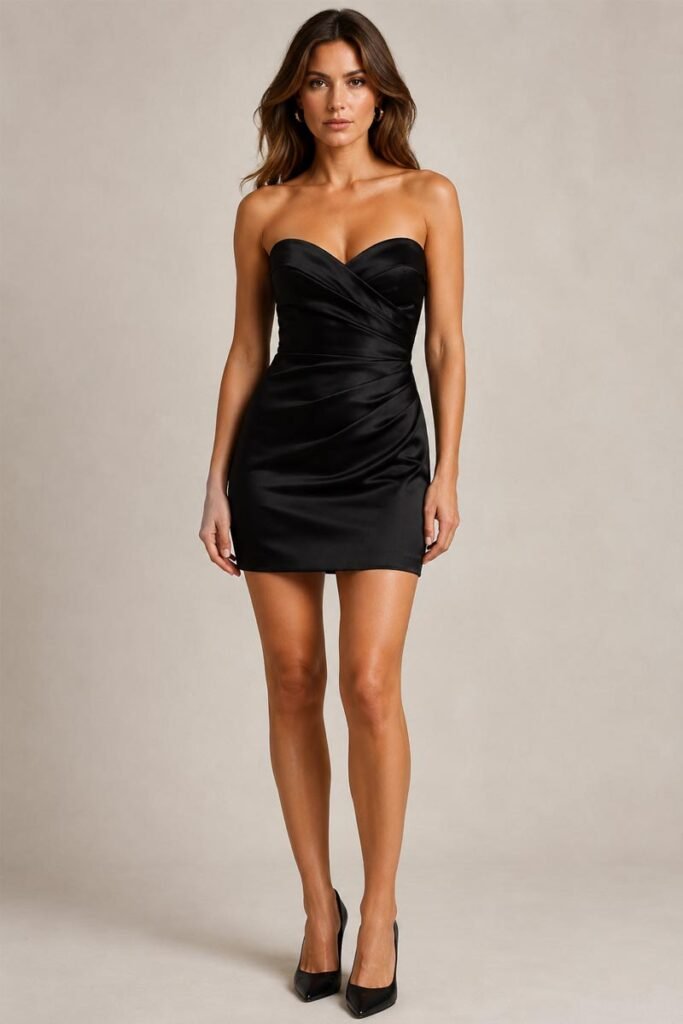
Satin Mini Dresses

Midi Bodycon Dresses

Strapless Cocktail Dresses

Corset and Bustier Dresses

Mesh and Lace Dresses
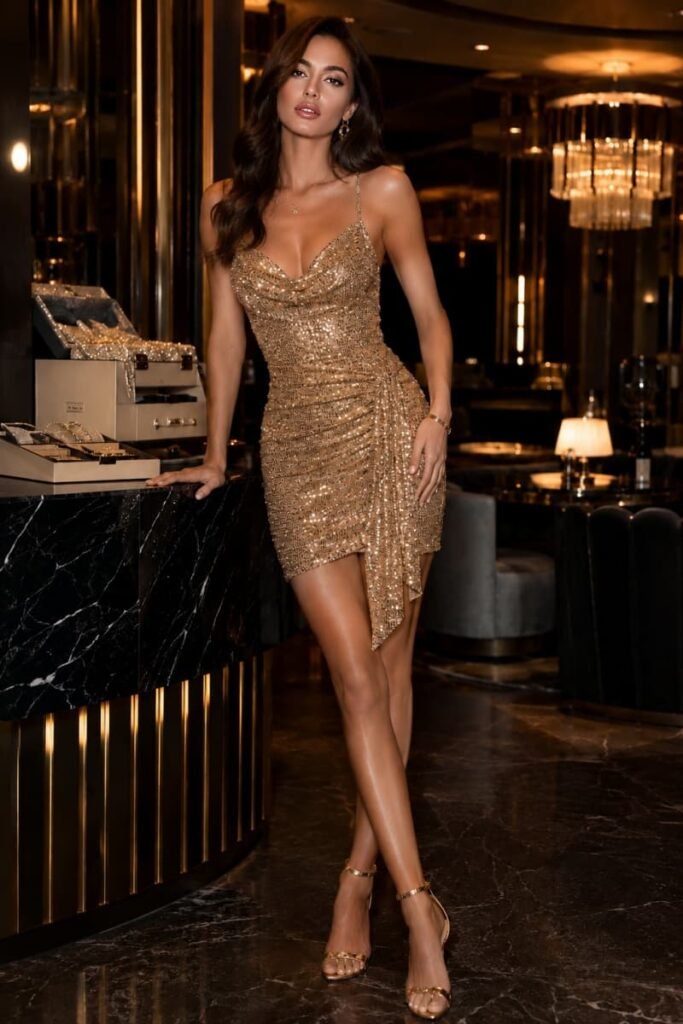
Sequin Cocktail Dresses
Sequin dresses sell through visual impact but succeed through comfort, construction, and damage control. Sequin density, base fabric, motif direction, garment weight, edge treatment, lining, zipper area, armhole comfort, and hem construction all affect the final result. During cutting and sewing, loose sequins may need clearing from seam allowances to prevent broken needles, bulky joins, or uneven closures. Final inspection includes shedding, missing areas, sharp edges, seam appearance, weight balance, surface damage, and packing protection.

Halter and One-Shoulder Dresses

Blazer and Structured Dresses
Build a Commercial Cocktail Dress Collection
Define Style Roles Before Development
A cocktail dress collection usually performs better when every style has a commercial role. Hero styles create campaign impact through strong color, structure, surface, or embellishment. Core sales styles carry broader fit, repeatable materials, and more stable production economics. Premium styles justify higher retail prices through corsetry, lace placement, sequin work, tailoring, or refined satin construction. Repeatable styles are suitable for new colors, replenishment, and seasonal updates without rebuilding the full development process.
Clear style roles influence sampling priority. A campaign piece may need early photo readiness even when its bulk quantity is lower. A core commercial style may need more size testing and fabric comparison because it carries a larger order. A premium style may require local trials for boning, cups, lace, or embellishment before full sampling. A repeatable style should be documented carefully so pattern, BOM, workmanship, measurement, and packing standards can be reused.
Duolan can help arrange development order across 10-30 styles by looking at launch importance, material lead time, construction risk, sample purpose, quantity, and production path. Early structure prevents a collection from becoming a group of unrelated designs competing for the same approval and production resources.
Balance Silhouettes, Materials, and Price Architecture
Commercial range planning is not only about offering mini, midi, fitted, and structured shapes. The collection also needs a workable balance between fabric cost, labor time, visual strength, fit difficulty, and planned retail price. A high-shine satin style may offer premium visual value with limited embellishment, while a sequin style can support a higher price but add material loss, labor, lining, comfort, and inspection costs. Mesh can create visual complexity at a controlled material weight, yet lining and transparency need precise engineering.
Material sharing across several styles can improve color consistency, sourcing efficiency, and reorder potential. One stretch satin may support a mini, midi, and asymmetric dress when pattern and support methods are adjusted. A coordinated lace or mesh can be used across sleeves, overlays, and panels rather than requiring a separate material for every design. Common zippers, linings, labels, and packing materials can reduce operational complexity without weakening the collection identity.
Duolan reviews which visual details are worth protecting and which details increase cost without adding enough brand value. The goal is not to simplify every style. The goal is to preserve the features that make the product sell while ensuring the collection can be sampled, priced, produced, inspected, and repeated with discipline.
Coordinate Multi-Style Sampling and Approvals
Multi-style development becomes difficult when comments, fabric decisions, fit priorities, and approval stages are mixed together. Each style should have a clear development basis and sample purpose: first prototype, fit sample, revised sample, photo sample, salesman sample, or pre-production sample. A program can then be tracked by style, material, sample stage, comment status, approval status, and next action.
Duolan can separate fit-critical styles from visual-first styles. A corset mini may need support and cup review before surface decoration is finalized. A satin bias dress may require fabric and hang-time assessment before final hem approval. A sequin style may need construction testing before the complete sample is made. A core bodycon style may need size grading and opacity review earlier because the planned quantity is higher.
Staged updates can include material boards, pattern progress, first-sample photographs, measurement notes, development risks, comment responses, revised samples, and PP readiness. Clear records help product, design, buying, and sourcing teams work from the same version and reduce confusion when several departments provide feedback.
Protect Launch Timing and Repeat Potential
Cocktail dress demand is closely connected to holiday, party, graduation, wedding guest, resort evening, and event calendars. Development must work backward from the planned launch date. Fabric booking, color approval, sample rounds, photo sample timing, PP confirmation, bulk production, final inspection, packing, and freight all need a defined buffer.
For standard commercial styles, bulk production may be planned within approximately 20-30 days after all production conditions are confirmed. Simple construction can sometimes fit a 15-20 day window, while complex corset, sequin, layered mesh, or heavy embellishment styles may require 30-45 days. Final timing depends on material readiness, color count, size range, order structure, special processes, approval speed, and production allocation.
Repeat potential should also be protected from the first order. Approved patterns, grading rules, BOM versions, color references, workmanship standards, QC points, labels, barcodes, and packing instructions are retained as production assets. Reorders can then begin from a verified standard instead of repeating the entire development process.
Choose Fabrics by the Finished Garment Result
Fabric selection begins with the intended silhouette, wearing experience, campaign appearance, price position, and production plan. Duolan compares material behavior rather than relying on fabric names alone, because two fabrics sold under the same category can perform very differently after cutting, sewing, fitting, pressing, packing, and wear.
| Material Direction | Best Cocktail Dress Applications | Performance to Review | Main Bulk Risks | Duolan Control Focus |
|---|---|---|---|---|
| Satin | Slip minis, draped midis, strapless and structured styles | Luster, drape, weight, opacity, surface sensitivity | Seam puckering, needle marks, twisting, pressing shine, packing creases | Fabric weight and hand-feel approval, cutting direction, seam tests, pressing standard, fold protection |
| Stretch Satin | Fitted minis, bodycon midis, asymmetric and ruched styles | Stretch ratio, recovery, shine, thickness, lining compatibility | Uneven recovery, transparency, seam waviness, size variation | Stretch test, pattern adjustment, lining review, elastic seam method, measurement control |
| Crepe | Tailored midis, wrap dresses, fitted occasion styles | Controlled drape, surface texture, body, wrinkle response | Batch hand-feel variation, shine change, seam impression | Batch approval, shrinkage review, pressing control, first-piece comparison |
| Mesh | Ruched dresses, sleeves, overlays, cut-outs, printed styles | Stretch, transparency, recovery, print clarity, softness | Excess exposure, distortion, seam weakness, print misplacement | Stretch-under-tension check, lining boundaries, seam reinforcement, print and panel placement |
| Lace | Panel dresses, sleeves, overlays, fitted occasion styles | Motif scale, edge design, softness, transparency, symmetry | Motif mismatch, color variation, uneven placement, skin irritation | Placement map, mirrored cutting, lining contrast, edge use, color and hand-feel approval |
| Sequin | Holiday, party, statement and campaign cocktail dresses | Density, base fabric, weight, reflection, skin comfort | Shedding, sharp edges, seam bulk, broken needles, surface damage | Seam allowance clearing, lining and edge protection, weight balance, final surface check, protective packing |
| Velvet | Holiday, winter, evening and structured mini dresses | Pile direction, depth of color, stretch, pressure sensitivity | Direction mismatch, crushing, shine marks, pressing damage | One-way cutting, handling standard, low-pressure finishing, hanging or protected packing |
| Stretch Jersey | Bodycon, cut-out, gathered and draped cocktail dresses | Weight, recovery, opacity, pilling, stretch consistency | Transparency, growth, seam breakage, inconsistent fit | Weight and opacity check, recovery testing, stretch seam method, grading and measurement review |
Engineer Lining, Support, and Trim Systems

Lining Coverage and Opacity Control

Cups, Boning, and Bodice Support

Closures, Elastic, and Movement Security

Trims as Measurable Production Components
Decorative trims need specifications just as fabrics do. Rhinestones, pearls, beads, bows, chains, buckles, eyelets, lace edges, and appliques are reviewed for size, weight, finish, color, attachment, placement, and wear risk. Trim placement should be referenced to seams or measurement points rather than positioned by eye. For repeated motifs, density and spacing need a defined standard. Brand trims also require control. Main labels, size labels, care labels, hangtags, barcode stickers, packaging labels, and spare trim requirements are confirmed within the BOM and packing instructions. Long-term programs benefit from reusing approved components where suitable, reducing repeated sourcing and improving consistency across drops.
Pattern, Fit, and Size Development
Bust, Neckline, and Upper-Body Balance
Waist, Hip, and Skirt Fall
Asymmetry, Cut-Outs, and Movement Testing
Size Range and Grading Logic
Duolan can follow brand-specific size charts, measurement tolerances, and grading rules. Common programs may cover XS-3XL or equivalent numeric sizes, while extended size requirements are reviewed according to silhouette, fabric, support structure, and target fit. Grading is not a simple enlargement of the base size. Cup position, neckline depth, strap length, cut-out dimensions, slit height, ruching placement, boning length, and garment proportion may require controlled grade rules. A base size is approved before grading. Key points can include bust, underbust, waist, high hip, full hip, shoulder, across back, garment length, strap length, slit, and hem sweep. Size-set review may be recommended for fitted, structured, stretch-sensitive, or high-volume styles before full production.
Production-Ready Cocktail Dress Sample Development
Start with a Defined Development Basis
Review Feasibility Before Pattern Cutting
Use Stage-Based Samples and Timelines
Turn Comments into Measurable Revisions
Sample comments are reviewed by priority: fit, structure, visual proportion, fabric behavior, workmanship, and production feasibility. “Make the waist cleaner” may involve waist position, panel shape, ease, seam allowance, or lining tension. “The neckline feels loose” may require neckline length, cup position, elastic tension, seam stabilization, or back width adjustment. A Revision Summary can record the comment, proposed action, affected measurement or construction point, and next sample purpose. Updated photographs, measurement notes, fabric confirmations, or local detail tests can be provided when helpful.
Confirm the Path into Bulk
Once fit and visual direction are approved, Duolan reviews whether the sample can serve as PP basis or still needs refinement. Fabric, lining, trims, color, measurements, workmanship, labels, packaging, and critical checkpoints are aligned before production planning. Complex or high-volume styles may require a first-piece or pilot confirmation before full release. Approved patterns, BOM versions, sample records, size specifications, color references, workmanship notes, and packing requirements become the basis for production and future reorders. Sampling is therefore not an isolated service; it is the first controlled stage of a repeatable manufacturing program.

Workmanship Built for Repeatable Bulk Quality

Satin Seam Control

Ruching and Draping

Lace and Mesh Alignment

Sequin Edge Treatment

Invisible Zipper Installation

Hem, Lining, and Final Finish
Choose the Right Development and Manufacturing Path
OEM Production
ODM Development
Premium Private Label
Premium private label cooperation can begin from established silhouettes or previously developed patterns, followed by controlled changes in fabric, color, length, neckline, sleeves, trims, labels, and packaging.
The route is designed for organized brand programs rather than generic stock selection. Every change is reviewed for fit, material compatibility, costing, lead time, and repeatability. When several styles share materials or components, the collection can be coordinated to improve sourcing, color consistency, and future replenishment.
Project Evaluation, MOQ, and Quotation Logic
Project Readiness
Payment and Production Commitment
MOQ by Project Conditions
MOQ is shaped by fabric minimums, dyeing or printing requirements, trim minimums, color allocation, size breakdown, construction complexity, special processes, production efficiency, packing materials, and the order stage. A development order, launch order, repeat order, and scale-up order do not carry the same planning logic. Multi-style collections may also be reviewed at program level when several designs share fabrics, linings, zippers, trims, labels, or packaging.
Duolan is structured for meaningful brand programs and recurring production. Project discussions therefore focus on whether the planned quantity, product direction, material route, and launch schedule can support stable development and manufacturing rather than treating MOQ as an isolated marketing number.
Explainable Cost Structure
Cocktail dress cost is influenced by shell fabric, lining, interlining, cups, boning, zippers, labels, embellishment, pattern complexity,fabric loss, size range, color count, quality checkpoints, packing, and delivery requirements. Satin may appear simple but demand careful handling, pressing, and packaging. Sequin fabric adds loss, seam clearing, lining, comfort work, inspection, and surface protection. Corset construction adds cups, boning, multiple panels, internal layers, fitting work, and more controlled sewing.
Duolan can review which details protect the brand value and which details create cost without enough commercial return. Alternatives may include adjusted material weight, shared linings or trims across styles, a more efficient panel route, controlled embellishment placement, or a different construction method.
From Approved Sample to Controlled Bulk Production
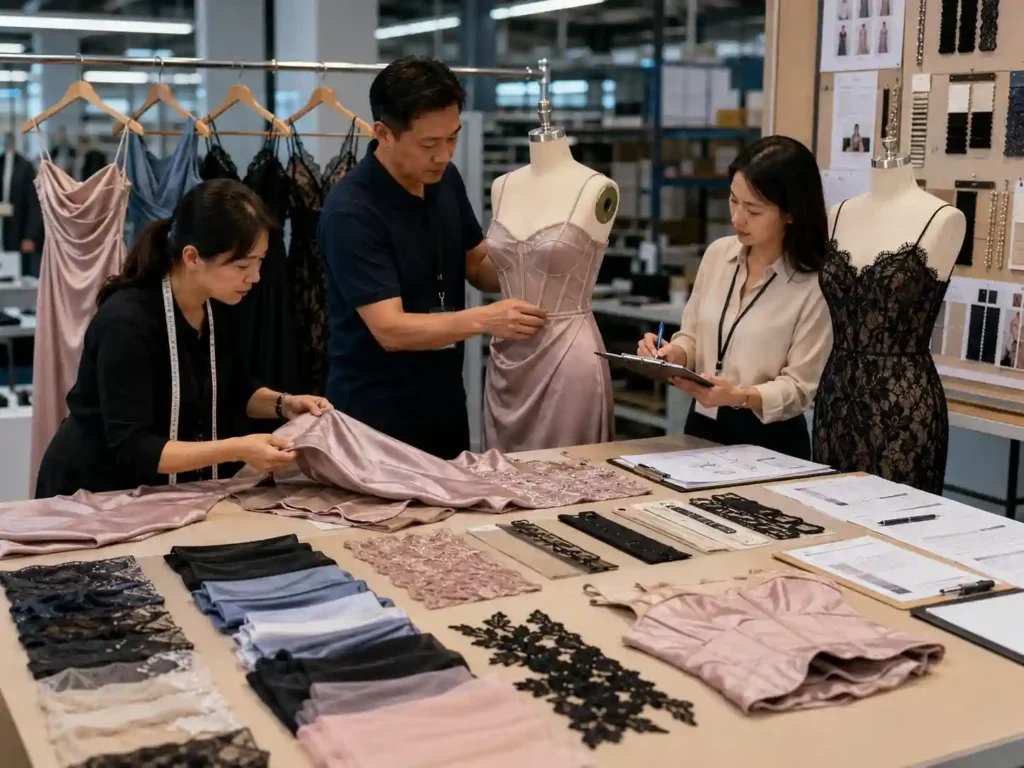
Production Readiness Review

Order Breakdown and Production Path

First-Piece or Pilot Confirmation
Higher-risk styles are verified before full release. A first piece or pilot quantity allows the team to check pattern balance, size, cup and boning position, neckline stability, zipper appearance, seam quality, ruching, lace or sequin placement, lining, pressing, and packaging. The purpose is to find issues while they remain contained, not after thousands of pieces are in production.
Pilot confirmation is especially useful for corset and bustier dresses, strapless styles, satin dresses, sequin dresses, layered mesh dresses, fitted bodycon dresses, and styles with complex asymmetry or embellishment. Approved corrections are transferred into the production instructions and QC checkpoints before the remaining quantity is released.

Controlled Production, Packing, and Handover
Production control follows the approved sample and documented standards. Inline checks focus on the operations most likely to affect fit or appearance. Materials, trims, labels, barcodes, and packing are verified against the order requirements.
Indicative bulk production windows are approximately 15-20 days for simple styles, 20-30 days for regular commercial styles, and 30-45 days for complex structured or embellished styles after all production conditions are confirmed. Actual timing depends on materials, color and size structure, quantity, special processes, approval speed, and capacity allocation.
Cocktail Dress Quality Control Checkpoints
Quality control follows the risks of the product rather than a generic final inspection. Cocktail dresses require coordinated checks for material behavior, fit, support, decorative work, appearance, measurement, pressing, labels, and packing from incoming materials through shipment preparation.
| Control Stage | Main Checks | Cocktail Dress Risks Controlled | Evidence or Output |
|---|---|---|---|
| Material Approval | Shade, hand feel, weight, width, stretch, recovery, opacity, luster, motif, shrinkage | Fabric-silhouette mismatch, batch variation, transparency, poor recovery | Approved swatch, color reference, test result, material record |
| Cutting Review | Grain direction, pile direction, panel orientation, motif placement, shade grouping, size identification | Twisting, velvet direction errors, lace mismatch, sequin motif shift | Cutting standard, placement marker, bundled piece control |
| First-Piece Check | Fit, measurements, neckline, cups, boning, zipper, lining, ruching, decorative position | Structural error entering full production | First-piece confirmation and correction record |
| Inline Sewing Check | Seam quality, stitch tension, zipper flatness, trim attachment, lining control, workmanship consistency | Puckering, seam failure, distorted fit, inconsistent detail | Inline inspection notes and corrective action |
| Measurement Check | Bust, waist, hip, length, strap, slit, neckline, key style-specific points | Size drift, grading error, inconsistent fit | Measurement report by size and stage |
| Embellishment Check | Sequin security, bead or pearl attachment, lace alignment, motif density, sharp edges | Shedding, missing decoration, discomfort, visual inconsistency | Detail comparison and defect record |
| Final Appearance | Overall shape, drape, symmetry, stains, pressing, loose threads, hem, lining, closures | Sample-to-bulk appearance gap | Final inspection report and approved appearance reference |
| Packing and Barcode | Label placement, size label, hangtag, barcode, folding, garment protection, carton mark | Warehouse errors, creasing, surface damage, wrong assortment | Packing summary, carton record, shipment-ready confirmation |
Capacity for Multi-Style Cocktail Dress Programs

Core Factory Control
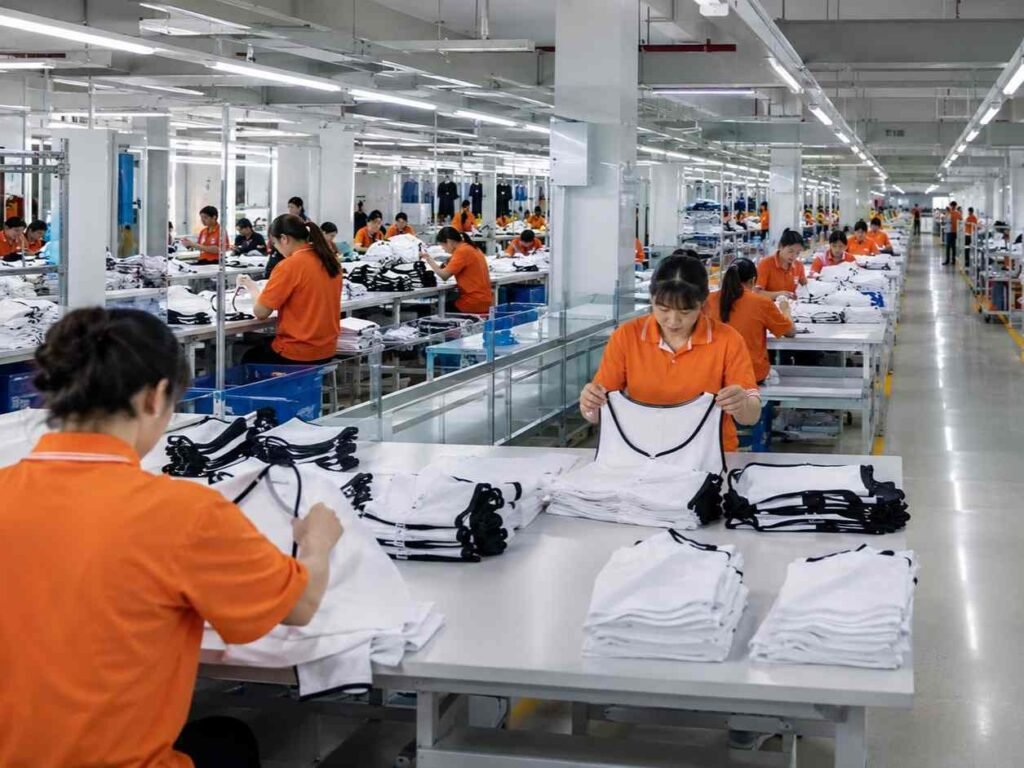
Flexible Production Lines

Satellite Capacity Support
More than 20 long-term satellite factories provide additional capacity for repeat orders, scale-up programs, seasonal peaks, and appropriately matched styles. Satellite production is not assigned only by open space.
Style complexity, materials, process requirements, quality risk, line familiarity, and delivery timing are considered before allocation. Core standards, approved samples, BOM details, measurements, workmanship notes, and QC requirements remain the control basis.

Production Scale and Development Density
Brand Packing and Global Delivery Coordination
Brand Packing Standards
Freight and Shipment Planning
Warehouse and Document Readiness
Compliance Support, Audits, and Confidentiality
SMETA Audit Foundation
Product and Material Requirements
Third-Party Inspection Support
NDA and Design Protection
Representative Multi-Style Cocktail Dress Program
Program Brief and Commercial Structure
A North American occasionwear brand planned an 18-style cocktail and party dress program for a holiday and event-season launch. Total order volume reached 48,600 pieces across six colors and a size range from XS to 3XL. The range included four satin mini dresses, three fitted midi dresses, three corset or bustier styles, two layered mesh dresses, two lace-panel styles, two sequin statement dresses, one one-shoulder dress, and one structured blazer dress.
The program carried different commercial roles. Four styles were identified as campaign pieces, eight as core sales styles, three as premium price-point styles, and three as repeatable color-extension styles. Shared materials were planned where suitable: two satin qualities, one stretch lining, one mesh base, common invisible zippers, coordinated cups and boning, and unified brand packaging. The structure reduced unnecessary material fragmentation while preserving clear visual differences between styles.
Development priorities were set by launch importance, fit risk, material lead time, and order volume. Campaign styles entered photo-sample development early. High-volume core styles received earlier size and opacity review. Corset, strapless, and sequin styles moved through local construction trials before complete samples were released.
Sample Development and Technical Control
The 18 styles were organized into three development waves. Wave one covered the campaign and fit-sensitive styles. Wave two covered core satin, jersey, and mesh styles. Wave three covered premium decorative and structured designs. Every style received a development basis including target silhouette, sample purpose, key measurements, fabric direction, support requirements, and identified risk points.
First samples were reviewed for bust balance, neckline security, waist position, hip shaping, skirt fall, slit height, lining coverage, zipper appearance, and surface finish. Satin styles were checked for seam puckering, twist, pressing, and fold sensitivity. Mesh styles were checked under stretch and strong light. Corset styles were checked for cup position, boning route, waist support, and back closure. Sequin styles were reviewed for garment weight, edge comfort, seam bulk, and packing protection.
Twelve styles moved to PP direction after one revised sample. Six styles required an additional focused correction: two corset styles needed cup and neckline adjustment, one strapless style required stronger internal anchoring, one mesh style needed wider lining coverage, one satin midi required side-seam and hem correction, and one sequin dress required a revised edge treatment. Revision summaries converted the comments into measurable pattern, material, or construction actions.
Bulk Production, QC, and Delivery
The order was divided by complexity and production route rather than placed on one line. Core satin and fitted styles moved through dedicated dress lines. Structured styles received first-piece confirmation before full release. Sequin and lace styles followed specialized workmanship and inspection checkpoints. Shared materials were booked and shade-controlled by program to support consistency across styles.
Bulk production was planned within a 36-day window after material, PP, color, size, label, and packing approvals were complete. Measurement and appearance checks were performed during production, with added control for neckline stability, cups, boning, ruching, lining length, zipper flatness, lace placement, sequin security, and pressing. Packing trials protected satin surfaces, cups, and embellished areas before the full quantity was packed.
The program used a split-delivery plan. Campaign and launch-priority styles moved first by air, while the remaining commercial quantity followed by sea. Approved patterns, BOM versions, grading rules, material records, workmanship standards, QC checkpoints, and packing instructions were retained for repeat production. The same program structure later supported color extensions and selected replenishment without rebuilding every style from the beginning.

Cocktail Dress Manufacturing Frequently Asked Questions

Start Your Cocktail Dress Manufacturing Project
Send the available project information and Duolan will review the development route, material direction, fit and construction risks, sampling plan, bulk requirements, and target delivery timing. A complete tech pack is helpful, but a clear set of reference images, original sample photographs, sketches, size standards, or collection moodboards can also begin the evaluation. The strongest project brief explains not only how the dress should look, but also how it should fit, where it will sell, which price position it should support, and when the collection must launch. Please include:
- Company name, website, market, and project contact.
- Cocktail dress categories and number of planned styles.
- Tech packs, sketches, references, original sample photos, or moodboards.
- Fabric, lining, support, trim, color, and finish direction.
- Brand size chart, base size, grading range, and fit priorities.
- Expected quantity by style, color, or total collection program.
- Label, barcode, hangtag, packing, and warehouse requirements.
- Sample purpose, approval process, launch date, and delivery destination.
- Current stage: development, sampling, bulk quotation, repeat order, or supplier evaluation.