...

Contract Manufacturing for Fashion Brands

Dress-focused development, sampling, manufacturing, and repeat-order support for established fashion brands with structured collection and production plans.

  • 30+ years of development experience: Long-term knowledge of fashion dresses, commercial fit, material behavior, decorative workmanship, and European and American market requirements.
  • 16 owned womenswear factories: Core projects, complex constructions, sample-to-bulk transitions, and quality-sensitive styles remain under direct manufacturing control.
  • 300 sewing lines: Group-wide line capacity supports multi-style programs, seasonal order waves, repeat production, and scalable volume planning.
  • 50+ quick-response lines: Reserved flexibility supports launch orders, urgent replenishment, selected trial programs, and time-sensitive collection windows.
  • Dress-focused manufacturing: Fashion dresses, partywear, occasionwear, fitted silhouettes, vacation dresses, fashion sets, and refined fashion tops form the central product direction.

Duolan manages more than sewing capacity. A project can move through design interpretation, fabric and trim coordination, pattern development, staged sampling, production-readiness review, bulk manufacturing, quality control, packing, and repeat-order preparation under one coordinated system.

What Contract Manufacturing Covers

Contract manufacturing gives a fashion brand access to external development and production resources while the brand retains control of design direction, market positioning, labeling, quality expectations, and commercial decisions. The exact service boundary should be agreed before sampling, quotation, and production scheduling begin.

Project StageBrand InputDuolan ResponsibilityDecision to Confirm
Product directionCollection brief, reference images, target market, retail positioningFeasibility review, dress category analysis, construction direction, development pathStyle priority, target result, target price architecture
Technical developmentTech pack, original sample, sketches, size specification, or reference garmentPattern interpretation, construction engineering, fit priorities, workmanship planningBase size, key measurements, support and coverage requirements
MaterialsFabric idea, swatch, color reference, handfeel, performance expectationFabric and trim sourcing, alternatives, lining coordination, color and process reviewComposition, weight, stretch, opacity, finish, bulk availability
SamplingSample purpose, review comments, fitting feedback, approval criteriaFirst prototype, fit sample, revised sample, salesman or photo sample, PP preparationApproval status, revision scope, version control
Bulk productionPurchase order, style-color-size breakdown, packing manual, delivery windowOrder breakdown, production-path planning, material locking, line allocation, QC controlBulk standard, launch date, inspection and shipment requirements
Delivery and repeat ordersDestination, freight terms, warehouse requirements, reorder planPacking verification, shipping coordination, production records, repeat-order preservationShipment split, freight mode, replenishment timing, style extensions

Fashion Teams We Support

Duolan is structured for organizations with clear product direction, defined market positioning, formal development requirements, planned order volumes, and long-term sourcing value. Each team receives support aligned with its internal role and decision process.

Established Fashion Brands

Support centers on collection development, sample precision, stable bulk production, and repeat-order control. Brand standards can be preserved across patterns, fabric specifications, workmanship points, labels, packing instructions, and quality checkpoints so future programs begin from accumulated knowledge rather than a blank file.

Buying Teams

Buying teams need accurate quotations, clear responsibility, disciplined timelines, controlled approvals, and reliable delivery records. Duolan organizes style data, comments, production checkpoints, and shipment requirements into a project path that can be reviewed internally and communicated across merchandising, technical, sourcing, and logistics functions.

Product Development Teams

Development teams often balance design intent, fit, target cost, material performance, sample timing, and bulk feasibility at the same time. Duolan translates references and comments into pattern, fabric, construction, and workmanship actions, helping the garment become reviewable, measurable, and production-ready.

Sourcing Offices

Sourcing offices require factory transparency, document discipline, cross-project visibility, compliance coordination, and a stable escalation route. Duolan can support factory information review, development tracking, production-path planning, third-party inspection coordination, and structured status communication for multiple styles or programs.

Occasionwear Specialists

Party, occasion, homecoming, graduation, wedding guest, cocktail, birthday, and going-out collections need stronger control of fit, support, drape, transparency, embellishment, and visual finish. Duolan applies dress-specific development and manufacturing knowledge to styles where small execution changes can alter the entire commercial effect.

Multi-brand Groups

Groups managing several labels need supplier capacity without losing label-specific standards. Duolan can separate measurement blocks, fit priorities, material directions, packing systems, quality points, and launch calendars by brand while sharing approved resources where commercial efficiency allows.

What Strong Fashion Brands Evaluate

Supplier selection rarely depends on a single quotation. Mature teams study how well a manufacturer protects product intent, translates comments, controls materials, manages scale, communicates risk, and preserves standards after the first successful order.

Development Judgment

Strong development begins before fabric cutting. A capable partner should identify whether the chosen material supports the silhouette, whether the structure can be produced consistently, which details create excessive risk, and which alternatives protect the intended look without damaging cost, timing, or wearability.

Sample Accuracy

A sample should support decisions on fit, proportion, fabric behavior, coverage, workmanship, and production feasibility. Speed alone is not enough. Clear sample purpose, measurable review points, revision records, and controlled version status are essential when several styles move in parallel.

Material Control

Fabric names do not define final performance. Weight, composition, stretch, recovery, opacity, drape, surface finish, shrinkage, width, dye behavior, and bulk availability all affect garment outcome. Trims must also be specified by size, finish, strength, color, placement, and approved source.

Production Discipline

Bulk manufacturing needs a production path, not a general promise. Styles should be classified by complexity, material, process, fit sensitivity, and timing. Critical operations, first-piece review, inline checks, and escalation rules should be set before volume rises.

Delivery Predictability

Seasonal selling windows can be lost when fabric, revisions, PP approval, production, inspection, and freight are planned separately. A disciplined partner works backward from the launch or warehouse date and protects time for decisions, corrections, QC, and shipment.

Repeat-order Stability

A successful first order should create reusable standards. Patterns, graded specifications, BOMs, material records, construction notes, quality points, packing details, and production feedback need to remain available for replenishment, color extensions, length changes, and future collection development.

Manufacturing Risks and Control Actions

Most costly failures start before the sewing line. Risk control works best when every concern is linked to a defined action, review point, and visible record. Duolan uses project checkpoints to reduce avoidable differences between design, sample, approved standard, bulk production, and delivery.

RiskTypical CauseDuolan ControlVisible Output
Design-to-sample mismatchReference details are copied without interpreting fit, structure, fabric behavior, or sample purposeFeasibility review, construction breakdown, development priorities, pattern directionDevelopment note and key-point confirmation
Fabric-silhouette mismatchMaterial is selected by appearance alone or replaced without performance comparisonWeight, drape, stretch, recovery, opacity, lining, shrinkage, and bulk-availability reviewSwatch board, test sample, material direction summary
Fit comments misunderstoodComments are forwarded without converting them into measurable pattern and construction actionsComment classification, measurement review, pattern correction, revision summaryMarked photos, revised specification, version record
Sample-to-bulk differenceMaterial, trims, tolerance, workmanship, or packing standards remain open after sample approvalProduction-readiness review, BOM and material locking, PP basis, first-piece verificationBulk Start Confirmation and locking summary
Multi-style delayAll styles follow one production path despite different materials, processes, and risk levelsStyle-color-size breakdown, complexity classification, line and process matching, milestone planningProduction Path and Timeline Plan
Bulk quality driftCritical operations are not defined or feedback arrives after large quantities are completePilot or first-piece verification, inline inspection, corrective action, final appearance and measurement reviewQC records and final quality status
Packing and delivery errorLabels, barcodes, carton marks, folding, freight mode, or warehouse instructions are confirmed too latePacking requirement lock, pre-shipment review, shipment document coordinationPacking status and shipment-readiness summary

A Dress-focused Manufacturing Partner

Duolan combines specialized dress development with a coordinated manufacturing network. The operating model is built around product judgment, controlled sample progression, production engineering, and long-term supply support rather than general garment capacity alone.

Dress Development as a Core Discipline

Fashion dresses react strongly to material and construction choices. A satin slip dress can lose elegance through seam tension, needle marks, pressing, or poor packaging. A bodycon style can create transparency, rolling, or fit imbalance when fabric weight and recovery are wrong. A corset or bustier dress depends on cup position, boning direction, lining, closure stability, waist balance, and graded proportions. Mesh, lace, sequin, halter, backless, and fitted occasion styles each carry different risks. Duolan evaluates these factors as part of development rather than leaving them for final inspection. The objective is a garment that looks correct on the body, supports the brand’s intended price position, and can be repeated on a production line.

Development Before Production Commitment

Quotation is more reliable after the design path is understood. Duolan reviews available files, identifies missing information, studies material and construction implications, and separates confirmed requirements from assumptions. A style may arrive as a complete tech pack, an original sample, a reference image, a sketch, or a collection concept. Each entry point requires a different development plan. Complex details are not accepted with a simple yes; their effect on fit, cost, lead time, workmanship, and production repeatability is discussed before a sample proposal is issued.

Direct Control and Flexible Capacity

Owned factories are used to protect core development, complex structures, quality-sensitive styles, and important sample-to-bulk transitions. Long-term satellite factories provide additional capacity for repeat orders, order peaks, and programs requiring multi-line support. Special-process partners support printing, embroidery, washing, dyeing, pleating, embellishment, and finishing when those processes fit the fabric, garment structure, target effect, and production plan. Allocation is based on capability and project risk rather than available space alone.

Long-term Supply Knowledge

A manufacturing relationship becomes more efficient when successful standards are preserved. Duolan organizes approved patterns, size specifications, fabric and trim records, BOM details, workmanship points, quality findings, packing instructions, and reorder feedback. Future colors, lengths, sleeves, necklines, or fabric variations can then be developed around the proven commercial logic of the original style. The process supports replenishment and product extension without losing the fit and visual balance that made the style successful.

Dress and Collection Manufacturing Scope

Product capacity is organized around dress-led fashion programs. Each category requires a different approach to materials, fit, workmanship, production planning, and commercial risk. Closely related subcategories can be developed as coordinated collections rather than isolated styles.

Fashion Dresses

Mini, midi, maxi, fitted, draped, ruched, asymmetric, halter, backless, one-shoulder, drop-waist, skater, and two-piece constructions can be developed around a defined market, size block, fabric direction, and launch calendar. Focus remains on commercial silhouette and production repeatability.

Party Dresses

Partywear often combines body-conscious fit, shine, mesh, sequins, velvet, stretch satin, cut-outs, ruching, or decorative hardware. Development needs to protect comfort, coverage, movement, seam strength, embellishment stability, and camera-ready visual impact.

Occasion Dresses

Cocktail, formal, semi-formal, graduation, homecoming, wedding guest, bridesmaid, birthday, and event dresses require stronger control of drape, support, lining, finishing, length balance, and close-up workmanship. Sample review should match the intended event and retail price level.

Fitted Dresses

Bodycon, bandage-inspired, corset, bustier, contour, and sculpted styles depend on fabric recovery, negative ease, bust balance, waist fit, hip shape, closure strength, internal support, and grading discipline. Fit must be evaluated together with material behavior.

Vacation Dresses

Resort and vacation programs commonly use chiffon, printed polyester, viscose blends, cotton blends, light knits, mesh, or fluid satin. Print placement, transparency, lining, wash performance, wrinkle behavior, and seasonal delivery timing influence the final product plan.

Going Out Dresses

Going-out, club, date-night, brunch, and social-event styles need a strong commercial balance between trend impact, fit confidence, comfort, durability, and target cost. Cut-outs, straps, hardware, ruching, and short lengths require careful construction and measurement control.

Fashion Sets

Coordinated tops and skirts, fitted sets, occasion sets, resort sets, and matching capsules require color consistency, shared materials, aligned proportions, compatible size grading, and packaging clarity. Each piece must work separately while maintaining one collection identity.

Refined Fashion Tops

Corset tops, structured tops, occasion blouses, draped tops, halter tops, fitted mesh tops, and embellished tops can extend a dress program and improve assortment depth. Construction, support, transparency, closure, and styling compatibility remain key development points.

Three Ways to Start

Project entry depends on the information already available. Duolan reviews the current stage, identifies missing decisions, and recommends the shortest responsible path toward a reviewable sample and production-ready standard.

Tech Pack Program

For teams with tech packs, size charts, BOMs, artwork, label files, and construction details, review begins with technical feasibility, material availability, cost drivers, sample purpose, and production risk. Any conflict between design specifications and expected garment result is raised before sampling.

Reference-led Development

A project can begin from reference images, an original garment, sketches, a moodboard, fabric swatches, or a partial specification. Duolan clarifies silhouette, fit, construction, material, coverage, target market, and sample purpose before preparing the development route.

Collection Program Review

For a capsule, seasonal drop, partywear line, occasion edit, resort program, or multi-style range, review covers style roles, fabric logic, color rhythm, sample priority, development sequence, target launch date, production grouping, and repeat-order potential.

Design Direction Becomes Production Data

Design development succeeds when visual language becomes measurable information. Duolan connects silhouette, material, construction, fit, workmanship, cost, and timing so creative direction can move through sampling and production without losing its commercial purpose.

From Visual Reference to Technical Priorities

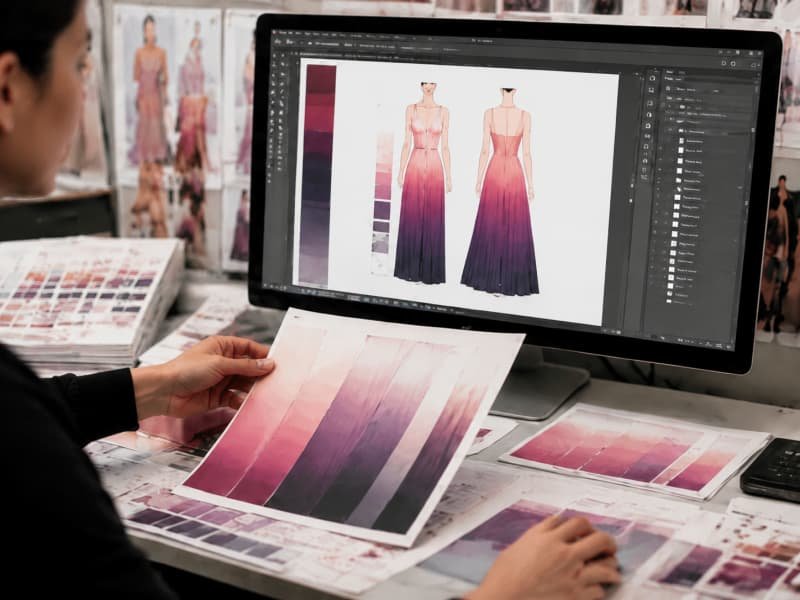
A reference image may communicate mood but rarely explains the full garment. Duolan studies length, neckline, shoulder position, bust shape, waist placement, hip ease, skirt fall, opening, closure, lining, and surface treatment. The team identifies which features define the look and which details can be adjusted without weakening the design. For fitted or structured dresses, support, contour, and movement are reviewed early. A short development note can then state the intended result, uncertain areas, required materials, and points needing confirmation before pattern work begins.

Cost Drivers Are Identified Early

Commercial feasibility depends on more than fabric price. Major cost drivers may include fabric consumption, width, pattern matching, bias cutting, double layers, lining coverage, boning, cups, special zippers, hand embellishment, placement embroidery, sequin cutting loss, print development, pleating, washing, pressing, inspection level, packaging, and color-size fragmentation. Duolan separates value-creating details from complexity that raises cost without improving the retail result. Alternatives can be evaluated by effect, risk, lead time, and scalability rather than by price alone.

Collection Logic Is Preserved

A collection needs more than several attractive styles. Fabric families, color groups, silhouette balance, fit blocks, hardware finishes, price architecture, and launch timing should work together. Duolan can help classify hero styles, commercial volume styles, image styles, and repeatable core shapes. Shared fabrics or trims may improve consistency and procurement efficiency, while high-risk styles can enter sampling earlier. The result is a development sequence that supports both creative direction and manufacturing discipline.

Fabric, Trims, and Special Processes

Material development is handled as a garment-performance decision. Fabric, lining, functional trims, decorative details, color, and special processes are reviewed together because each choice can affect fit, drape, comfort, cost, timing, and bulk consistency.

Fabric Is Evaluated by Garment Result

Duolan confirms composition, weight, width, handfeel, drape, stretch, recovery, opacity, shrinkage, color behavior, surface durability, and bulk availability before treating a fabric as suitable. Satin requires control of shine, needle marks, seam tension, pressing, scratching, and packing creases. Jersey requires enough weight and recovery to protect opacity and shape. Mesh needs careful layering, skin-tone coordination, stretch direction, and seam stability. Lace requires flower-scale selection, placement logic, lining color, edge handling, and cutting loss. Chiffon, crepe, velvet, knit, printed fabrics, and sequin materials each require different sample and production controls.

Trims Become Repeatable Specifications
Small components can change appearance, fit, durability, and brand perception. Zippers, hooks, buttons, eyelets, elastic, straps, cups, boning, underwires, silicone tape, drawcords, lace trims, labels, hangtags, and packaging pieces are specified by material, size, length, width, finish, color, strength, placement, source, lead time, and replacement rule. Metal finishes such as matte gold, gunmetal, silver, or black nickel need consistent approval. Functional trims are tested in the garment rather than judged only on a trim board.

Color Is Confirmed on the Actual Material

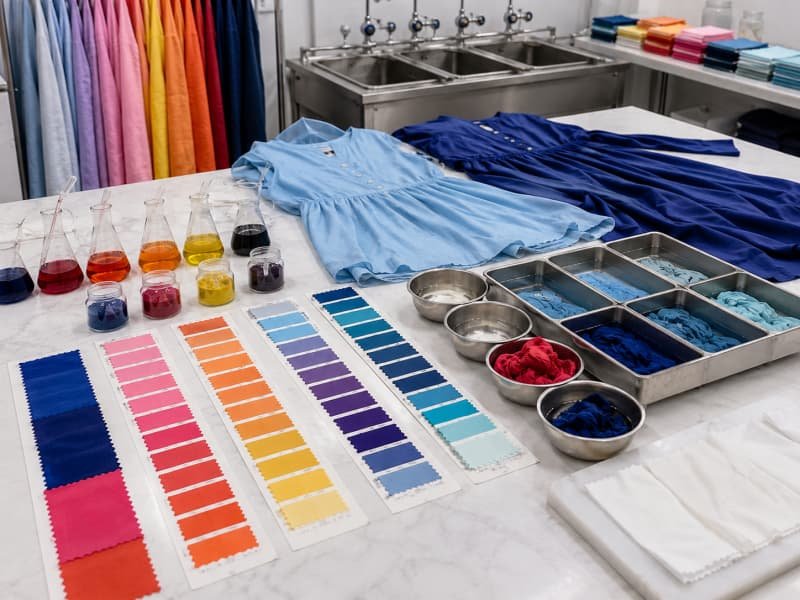
A Pantone reference is a starting point, not a complete color standard. Satin reflects light differently from mesh, lace, jersey, velvet, or chiffon. One color can look warmer, cooler, darker, or more transparent across different materials and linings. Duolan can coordinate lab dips, swatches, trim colors, print strike-offs, and sample garments so a collection color story is reviewed under the materials and lighting conditions that influence the final effect. Bulk color control should refer back to approved physical standards.
Special Process Support​

Special Processes Require Production Trials

Printing, embroidery, sequin work, beading, heat transfer, rhinestones, pleating, dyeing, washing, and special finishing are assessed for fabric compatibility, stretch impact, drape, color stability, comfort, abrasion, placement, cost, and lead time. A strike-off, process swatch, placement sample, or pilot section is often required before full garment approval. Complex decoration is valuable only when it survives handling, wearing, inspection, packing, and repeat production without losing the intended visual effect.

Pattern, Fit, and Sample Development

A successful sample is a controlled decision tool. Pattern, material, fit, construction, visual proportion, and production feasibility are reviewed in stages so comments become clear technical actions rather than repeated trial and error.
Pattern as the Production Foundation​

Pattern Development Follows Fabric Behavior

Patterns are not treated as fixed geometry. Fabric stretch, recovery, drape, thickness, shrinkage, bias movement, transparency, and support requirements influence ease, seam placement, lining, shaping, and balance. Fitted dresses require careful control of bust, waist, hip, contour, and opening. Halter and backless styles need support without visible conventional straps. Corset and bustier products require coordinated cup, boning, closure, waist, and lining geometry. Grading should protect the design across the requested size range rather than enlarge every dimension mechanically.

Sample Purpose Is Defined Before Cutting

Different samples answer different questions. A first prototype tests overall interpretation and construction. A fit sample focuses on measurements, balance, contour, movement, and comfort. A revised sample confirms corrective actions. A salesman or photo sample needs stronger close-up appearance, finish, and consistency because it may be handled, photographed, displayed, or presented to internal teams. A pre-production sample becomes the manufacturing basis only after materials, workmanship, measurements, labels, and packing requirements are aligned.
7 Multi-Stage Quality Checks

Staged Updates Keep Development Aligned

Duolan uses three communication stages during sampling: launch confirmation, critical-point update, and pre-completion update. The first confirms files, development direction, assigned work, and open material decisions. The second is used for complex styles where fabric, fit, structure, or process needs early confirmation. The final update confirms completion status, photographs or video, shipment method, and recommended review priorities. The rhythm reduces long silent periods and prevents avoidable surprises after the sample is fully finished.
Fit Comments Become Production Records​

Comments Become Measurable Revisions

Fit and visual comments are sorted by priority and translated into actions for pattern, measurement, material, construction, workmanship, or finish. Marked photographs, measurement comparisons, revised specifications, and version notes help keep the process controlled. One comment may affect several areas: raising a neckline can alter strap length, bust balance, lining, and closure; changing fabric stretch can affect ease, seam stability, and grading. Revision work is therefore reviewed as a system, not a list of isolated edits.

From Approved Sample to Bulk

Bulk production does not begin with a casual approval message. Duolan uses a production-readiness review to confirm sample status, material direction, measurements, workmanship, order purpose, packing, and manufacturing path before volume is released.

Bulk Readiness Is Confirmed First

The current sample is classified as fit confirmed, visual confirmed, PP basis, or still pending refinement. The order is also identified as a launch order, trial order, repeat order, or scale-up order. Fabric, lining, trims, color, measurements, workmanship points, labels, barcodes, packaging, inspection requirements, and delivery targets are checked for open decisions. The resulting Bulk Start Confirmation or Production Readiness Note shows what is locked, what remains open, and which open items may affect quotation, lead time, or quality.

Material and Workmanship Standards Are Locked

Before line release, production-critical details are confirmed against the approved basis. Fabric batch, color, weight, handfeel, width, stretch, and surface direction are reviewed where relevant. Linings, zippers, boning, straps, hardware, sequins, embellishments, labels, and packing materials are specified. Construction points such as seam type, stitch density, reinforcement, edge finish, placement, pressing, and tolerance priorities are recorded. Special processes use approved strike-offs, process panels, or placement references.

First-piece or Pilot Verification Protects Volume

Higher-risk styles may require a first-piece review, pilot run, key-operation trial, or limited production section before full release. The step is especially valuable for bodycon, corset, bustier, halter, backless, satin, sequin, layered mesh, and shape-sensitive occasion products. Early verification checks whether line construction reproduces the approved result, whether critical operations remain stable, and whether measurements, support, drape, trim placement, and finish meet the defined standard before thousands of pieces are exposed to the same problem.

Workmanship Is Engineered for the Line

Sample-room methods are not always suitable for efficient, repeatable bulk production. Production engineering considers operation sequence, machine type, folders or guides, reinforcement, seam allowance, handling difficulty, pressing points, operator skill, and in-line inspection access. Delicate materials may need protective handling and controlled stacking. Stretch fabrics may require balanced thread tension and differential-feed control. Embellished panels may need seam-path clearance and anti-scratch protection. The objective is consistent appearance without relying on one highly skilled sample maker for every garment.

Manufacturing Scale With Controlled Allocation
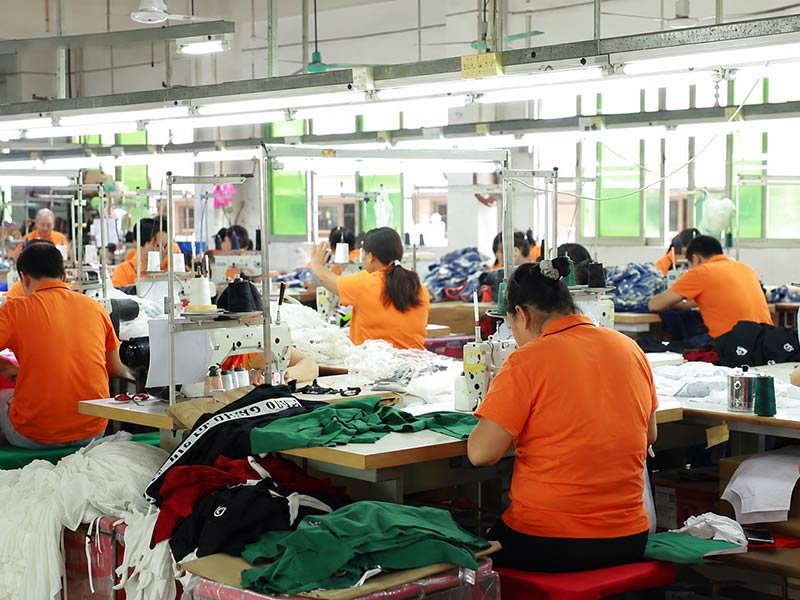
Duolan’s manufacturing system combines direct factory control, flexible capacity, specialist process resources, and group-wide equipment support. Capacity is allocated by product type, complexity, material, risk, quantity, and timing rather than by whichever line becomes free first.

Multi-factory Production Structure

The group operates through 16 owned womenswear factories and more than 20 long-term satellite factories. Owned factories protect core development, important brand programs, difficult constructions, and quality-sensitive transitions. Satellite capacity supports repeat orders, seasonal peaks, selected volume expansion, and flexible order allocation. Additional manufacturing bases across several regions provide capacity buffers and support a workforce network exceeding 12,000 people. Duolan remains responsible for project coordination, allocation logic, technical transfer, quality requirements, and delivery follow-up across the selected production path.

Sewing and Quick-response Capacity

The manufacturing network includes 300 garment sewing lines and more than 50 quick-response and flexible lines. Stable monthly output is approximately 6.5 million garments across the wider system, with peak capacity reported at up to 10 million pieces when production conditions and allocation permit. Capacity figures do not replace style-level planning. A 20-style program with satin, mesh, sequin, corset, and jersey products needs different line and process resources from a single basic knit style, even when total quantity is the same.

Group-wide Equipment Resources

Group-wide equipment is reported in operating ranges because allocation changes across factories and product lines. The network includes approximately 12,000-20,000 machines and supporting units: around 1,100-2,000 fabric inspection, spreading, cutting, shrinkage, and material-control units; 650-1,200 CAD, pattern, sample-room, and development units; 7,000-9,000 core sewing and specialist machines; 150-400 printing units; 150-300 embroidery units; 1,000-1,800 pressing and finishing units; and 3,000-6,000 inspection, packing, handling, and auxiliary units. Equipment suitability is confirmed at the assigned factory before production.

Development and Project Teams

Group-wide development resources include product planning, trend research, design, fabric and trim development, pattern and sample teams, process engineering, cost engineering, project coordination, and sample quality support. Monthly sample capacity is reported at approximately 15,000-35,000 sample pieces or development iterations, supporting roughly 3,000-8,000 style-development workflows. Those figures represent system capacity; an individual program still receives a defined sample plan based on complexity, materials, review rounds, and launch requirements.

Multi-style Planning and Delivery Discipline

Fashion programs often contain 10-30 styles, several materials, multiple colors, different risk levels, and one fixed selling window. Duolan plans the order as connected production paths rather than one undifferentiated bulk quantity.

Orders Are Broken Down Before Scheduling

Style, color, size, quantity, material, construction, process, and timing are reviewed after purchase-order confirmation. Styles are classified as regular, complex, quick-response, or high-risk process items. The team determines whether a style needs separate trial production, a specialist process route, additional material approval, a dedicated line, or multi-factory allocation. Development and bulk priorities are mapped against the launch and warehouse dates so high-risk items do not consume the remaining calendar at the end.

Timelines Are Built From Decision Points

A reliable plan includes brand inputs, Duolan actions, approval points, production milestones, inspection buffers, and freight buffers. Material sourcing, lab dips, strike-offs, first samples, fit revisions, photo or salesman samples, PP confirmation, bulk production, QC, packing, and shipping are linked. Delays are reported with cause and impact rather than hidden inside a new final date. Sampling timing is issued after feasibility review because a simple jersey dress and a structured embellished dress require different development routes.

Communication Creates Actionable Records

Email is used for formal confirmation of tech packs, BOMs, size charts, quotation requests, revisions, packing manuals, compliance requirements, and purchase-order details. WhatsApp or WeChat supports rapid clarification and visual reference sharing. Video meetings are useful for complex fit, fabric, or structure discussions. Staged updates, revision summaries, production-path notes, QC records, and final packing status reduce information loss between sales, development, production, quality, and logistics teams.

Freight Is Planned Separately From Production

Freight time should not be hidden inside production lead time. Typical reference transit windows are approximately 3-7 days by express, 5-8 days by air, and 20-35 days by sea, depending on route, capacity, customs, destination, and service level. FOB, CIF, DDP, split shipment, partial air shipment, sea freight, and nominated forwarder arrangements can be evaluated by project. Samples, photo garments, launch quantities, and replenishment orders may use different freight strategies to protect both cost and timing.

Quality, Compliance, and Brand Protection

Quality management begins with development decisions and continues through materials, sample standards, production engineering, inline control, final inspection, packing, shipment, and repeat-order feedback. Compliance and confidentiality are treated as operating responsibilities, not decorative claims.

Quality Starts Before the Line

Many bulk failures originate in open material, measurement, workmanship, or packing decisions. Duolan reviews fabric and trim standards, PP basis, BOM details, measurement tolerances, critical operations, labeling, barcode, carton, and inspection requirements before volume begins. Quality points are concentrated where the garment is most sensitive: bust support, waist balance, zipper operation, strap position, transparency, lining coverage, embellishment stability, seam appearance, hem level, pressing, and final visual consistency.

Inline Control Protects the Approved Standard

Production quality is checked while corrective action remains possible. First-piece findings, critical-operation checks, measurement review, appearance inspection, process control, and finishing observations are communicated to responsible teams. Complex styles may require tighter monitoring at boning, cups, cut-outs, stretch seams, mesh layering, satin handling, sequin seams, embroidery placement, or decorative attachment. Final inspection then confirms appearance, measurement, workmanship, function, labeling, packing, and order completeness against the agreed requirement.

Audit and Standard Coordination

The factory system has completed SMETA audit and SMETA 2-Pillar audit. Projects can also be aligned with applicable BSCI, ISO 9001, AATCC, ASTM, OEKO-TEX, EN, China GB, GOTS, or brand-specific requirements when those standards are included in the project brief and confirmed for the assigned facility, material, product, or test scope. Third-party inspection and testing can be coordinated according to the agreed protocol. Standards are stated carefully: support for a requirement does not imply every factory or product automatically holds every certification.

Confidential Development Is Protected

Tech packs, sketches, original samples, unreleased garments, artwork, labels, packing files, price information, purchase orders, and launch dates can be handled under NDA and project-level access controls. Public case evidence should remove brand names, logos, sensitive documents, and unreleased design details unless written permission is provided. Factory visits, video reviews, document sharing, and sample photography can follow agreed confidentiality boundaries so sourcing transparency does not expose commercial information.

Representative Contract Manufacturing Programs

The following anonymized profiles reflect the scale and structure of current brand programs. Figures are presented to show how multi-style development, manufacturing allocation, quality control, and delivery planning work in commercial conditions without disclosing brand identities or unreleased designs.

US Occasionwear Program

An established US occasionwear label prepared 18 styles and 42,600 garments for a seasonal event collection. The range included satin, stretch mesh, crepe, lace, and embellished fitted dresses across several color groups. Development risks centered on bust balance, lining coverage, light-color opacity, satin seam appearance, and consistent embellishment placement. Duolan separated fit-sensitive styles from fluid silhouettes, used staged sample reviews, locked material and workmanship standards before line release, and arranged first-piece verification for higher-risk products. Production was divided by technical route rather than evenly by quantity, allowing complex styles to receive additional engineering and inline attention while commercial volume styles moved on dedicated lines.

Multi-style Partywear Drop

A regional fashion group placed a 24-style partywear program totaling 68,400 garments. Nine styles used higher-risk combinations such as corset construction, stretch satin, layered mesh, sequins, rhinestones, or decorative hardware. The order was classified into regular, complex, and special-process paths. Shared colors and selected trims were consolidated where they supported the collection, while process-dependent items followed separate approval and production routes. Bulk start required PP alignment, BOM confirmation, first-piece review, and placement standards. Packing and shipment were organized in two waves to support the launch sequence and warehouse intake plan rather than waiting for every style to finish at the same time.

Europe|Repeat Core Lifestyle Dress Program

Reorder and Style Extension

A mature ecommerce fashion brand began with 12 approved dress styles and an initial production order of 28,800 garments. Sales performance led to a follow-up program of 46,800 garments covering repeat colors, selected new colors, two length extensions, and revised neckline options. Duolan reused the approved pattern logic, size specifications, material standards, construction notes, QC points, label files, packing instructions, and first-order feedback. New variations were evaluated against the successful fit and commercial role of each core style rather than developed independently. Reorder preparation focused on material continuity, color approval, trim availability, controlled pattern changes, and line allocation so the expanded program preserved the original garment identity.

Frequently Asked Questions

Service scope can include feasibility review, fabric and trim coordination, pattern development, staged sampling, costing, production-readiness review, bulk manufacturing, quality control, labeling, packing, shipment coordination, and repeat-order preparation. Responsibility is defined according to the information already available and the brand’s preferred operating model.
Duolan can work from complete specifications under an OEM-style model or support design interpretation, material direction, pattern development, and sample refinement under a more development-led model. The exact boundary depends on whether the project begins with tech packs, original samples, reference images, sketches, or a broader collection brief.
Useful starting information includes company and market background, product category, number of styles, reference images or tech packs, target materials, size range, estimated quantity, target price architecture, label and packing requirements, compliance needs, delivery destination, and target launch date. Partial files can be reviewed when the development goal is clear.
Yes. Reference-led development begins by clarifying silhouette, length, fit, fabric behavior, structure, coverage, closure, key details, target market, and sample purpose. A reference image alone cannot define every technical decision, so open points are documented before pattern and sample work begin.
Sample timing is issued in the sample proposal after style complexity, material availability, pattern requirements, special processes, and review purpose are assessed. The plan separates first prototype, fit revision, salesman or photo sample, and PP stages when needed. Complex structures and custom processes require more development time than straightforward styles.
Duolan can follow an existing size specification or support pattern and grading development around an approved base size. Fit priorities, fabric stretch, support, ease, length balance, and construction are reviewed before grading. Sensitive fitted styles need graded checks because proportions cannot be protected by mechanical enlargement alone.
Control begins with a production-readiness review, followed by fabric and trim locking, PP basis, measurement and tolerance confirmation, workmanship standards, packing requirements, first-piece or pilot verification where needed, inline inspection, final review, and production records for repeat orders.
Yes. Programs are broken down by style, color, size, quantity, material, construction, process, and timing. Regular, complex, quick-response, and high-risk styles can follow different development and production paths while remaining under one project plan and communication structure.
The factory system has completed SMETA and SMETA 2-Pillar audits. Projects can be aligned with relevant testing, quality, social-compliance, material, and brand-specific requirements when the applicable standard, assigned facility, product scope, and verification method are confirmed before production.
NDA arrangements can cover tech packs, sketches, original samples, artwork, labels, packing files, pricing, purchase orders, unreleased products, and launch timing. Public evidence is anonymized unless written authorization allows brand identification. Access and photography rules can also be agreed for visits and remote reviews.

Submit Your Fashion Manufacturing Program

Send enough information for a meaningful project review. A clear brief allows Duolan to identify the right development path, material questions, sample stages, production risks, manufacturing resources, quotation basis, and timing checkpoints before commitments are made. Tech packs are welcome, but a structured reference package can also begin the discussion when specifications are still being developed. The first review should include the commercial context as well as the garment design so recommendations fit the intended market, price position, order structure, and launch plan.

  • Company or brand name, website, target market, and main sales channel
  • Product category, number of styles, reference images, tech packs, or original sample information
  • Target materials, color direction, size range, key fit priorities, and special processes
  • Estimated quantity by style or program, intended order stage, and repeat-order potential
  • Target launch date, delivery destination, preferred freight term, and warehouse deadline
  • Label, packaging, inspection, compliance, testing, and confidentiality requirements

Start Your Apparel Development Project

OEM/ODM Manufacturing Support for Fashion Brands

Share your collection details, estimated quantities, target market, development timeline, and technical requirements. The production team will review your request and provide a tailored manufacturing solution based on your product category, fabric selection, construction needs, and delivery schedule.

Fashion Manufacturing Support with Scalable Production Capacity

From sample development to bulk production, Duolan supports fashion brands with confidential OEM/ODM manufacturing, stable quality management, flexible production planning, and coordinated multi-factory execution for seasonal and capsule collections.

Need Direct Assistance?

Seraphinite AcceleratorOptimized by Seraphinite Accelerator
Turns on site high speed to be attractive for people and search engines.