 Skip to content
Corset and Bustier Pattern Development
Dress-focused pattern engineering, sample refinement and bulk manufacturing support for fashion brands developing structured tops, dresses and occasionwear.
- 30+ years of fast-fashion dress development experience across pattern, fabric, workmanship and commercial production.
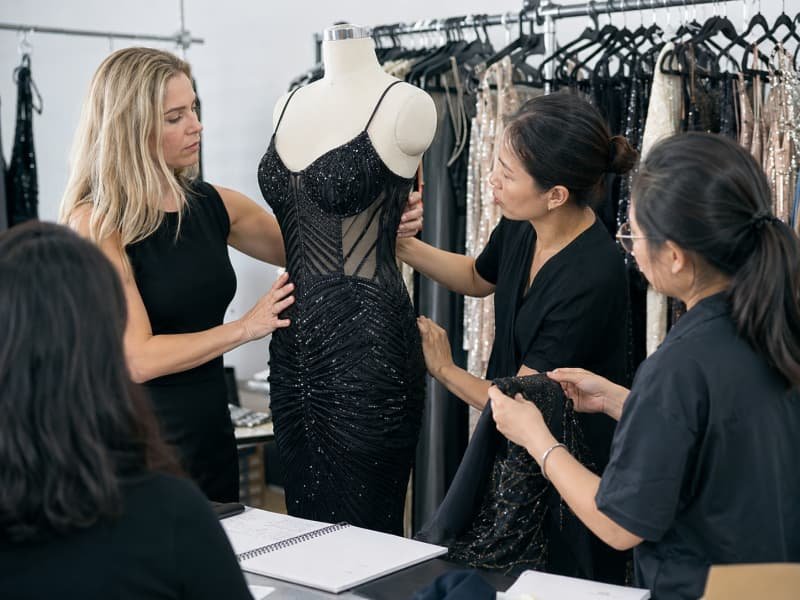
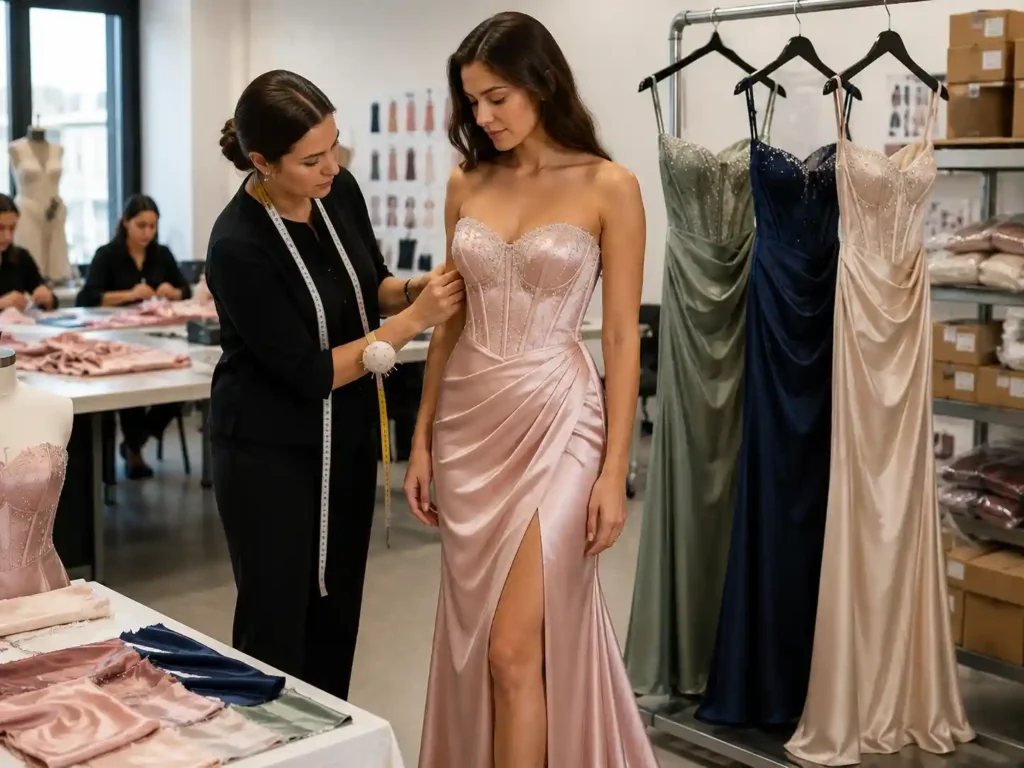
- A group-wide pattern and sample team of approximately 300-400 specialists supports CAD pattern making, sample sewing, fit correction and technical documentation.
- Approximately 650-1,200 group-wide pattern, sample and development machines include CAD systems, plotting equipment, sample sewing machines and pressing stations.
- Monthly development capacity covers about 15,000-35,000 sample pieces or development versions across 3,000-8,000 active styles.
- Development can begin from a tech pack, sketch, reference image, original garment, fabric direction or collection brief.
- Cup position, neckline security, boning, lining, closures, grading and bulk controls are reviewed as one connected system.
What Corset and Bustier Pattern Development Delivers

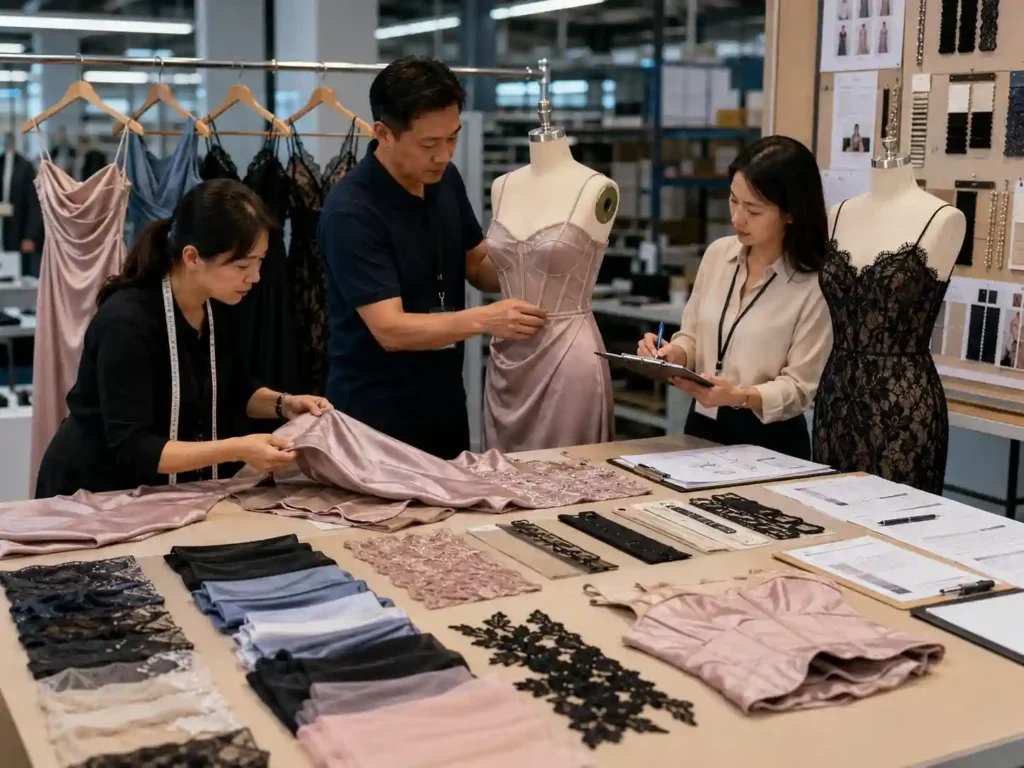
Pattern Engineering
- Input can include a tech pack, sketch, reference garment or photographed sample.
- Output should identify every pattern piece, grainline, seam allowance and construction reference.
- Fit comments must translate into measurable pattern actions rather than general visual feedback.
Production Readiness
- Sample purpose is defined before each development round.
- Approved materials and trims are locked before the pre-production sample.
- Critical points remain traceable from pattern revision to bulk inspection.
Development Support for Structured Fashion Programs
Product Development Teams
Sourcing Teams
Occasionwear Brands
Corset and Bustier Patterns Need Different Engineering
Corset and bustier silhouettes can look similar, yet their load paths and fit priorities differ. Treating both products as the same bodice often creates unstable necklines, compressed cups, weak waist shaping or internal support that cannot survive production.
| Development Point | Corset Pattern | Bustier Pattern | Engineering Decision |
|---|---|---|---|
| Primary control zone | Torso shaping, waist definition and panel balance | Cup volume, underbust anchoring and neckline stability | Define whether the project needs true structural support or a corset-inspired appearance. |
| Pattern foundation | Multi-panel torso block with controlled waist reduction | Bodice or bra-inspired foundation with cup and cradle development | Choose the base block before styling lines are added. |
| Support system | Boning, stable lining, waist stay and reinforced closure | Cup, underbust support, side wing, optional wire or foam | Map every support component to a pattern piece and sewing step. |
| Main fit risk | Riding up, twisting, waist collapse or excess pressure | Cup overflow, bust compression, gaping or slipping | Fit review must separate torso balance from cup-volume problems. |
| Common closures | Lacing, zipper, hook-and-eye, busk or combined systems | Zipper, hook-and-eye, adjustable back or concealed closure | Closure strength and extension must match the load carried by the garment. |
| Grading focus | Torso length, waist ratio, panel balance and bone length | Cup width, depth, bust-point movement and underbust growth | Avoid proportional enlargement across every pattern piece. |
| Bulk inspection | Panel symmetry, waist level, bone placement and closure strength | Cup symmetry, neckline contact, underbust stability and side-wing balance | Critical measurements and construction checkpoints need separate inspection standards. |
Start Development From the Information Available
Tech Pack Development
A tech pack provides the strongest starting point when measurements, materials, construction and design details are already defined.
Duolan checks whether the sketch, size specification, bill of materials and workmanship notes agree with each other. Areas needing clarification are flagged before pattern release, including cup sizing, center-front height, waist placement, closure type, boning material, lining stability and target stretch. A short feasibility review can prevent pattern work from being built around conflicting instructions.
- Confirm base size and target size range.
- Confirm whether the cup is fashion-sized or linked to bra cup groups.
- Confirm sample purpose and approval authority.
Reference Sample Development
An original garment can provide useful information on proportion, construction and fit, but direct copying may preserve unwanted limitations. Duolan measures the reference, studies internal layers, identifies the function of each seam and rebuilds the pattern around the brand size standard.
Material changes are assessed before the pattern is finalized because a new fabric can alter stretch, recovery, compression and support.
- Measure the garment in a relaxed state and under light tension where relevant.
- Record internal components before disassembly or replication.
- Separate design features from fit defects that should not be carried forward.
Sketch or Image Development
A sketch or reference image shows direction but rarely contains enough information for accurate pattern making. Duolan converts visual cues into development questions: Is the neckline supported by cups, boning, straps or internal grip? Does the waist need shaping or only a corset-inspired seam layout? Is the fabric stable, stretch or layered? Is the back closed by zipper, lacing or hooks? Answers are documented before the pattern begins so the first sample tests a defined structure rather than an assumption.
- Provide front, side and back references whenever possible.
- State the desired coverage, support and body fit.
- Share target fabric feeling, price position and launch date.
Critical Measurements Behind a Stable Pattern

Upper Bust

Full Bust

Underbust

Bust Point

Waist Position

Torso Length
Cup Geometry and Neckline Control
Cup Width
Cup Depth
Cup Height
Apex Position
Underbust Shape
Neckline Contact
Internal Support Must Work as One System
Boning, lining, waist support and closures should share the load created by the garment. Isolated components may improve appearance in a sample but fail when the style is worn, graded or repeated in bulk.
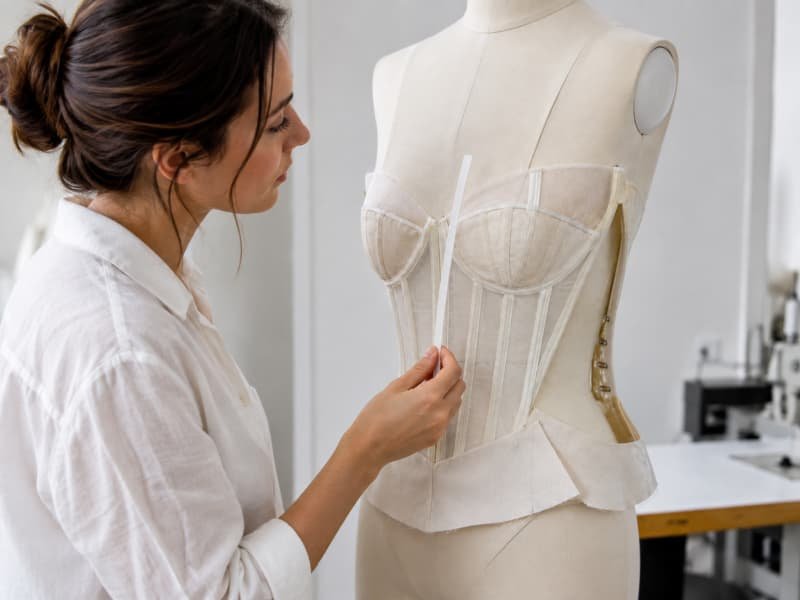
Boning Position
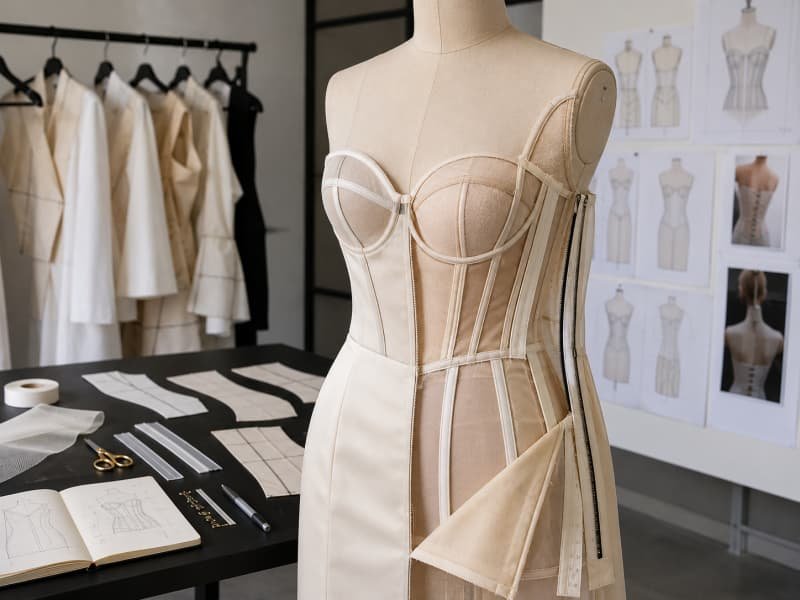
Boning Channels

Foundation Lining

Waist Stay

Underbust Support

Closure Reinforcement
Fabric Behavior Changes Pattern and Support

Stable Woven Fabrics
- Review grain direction and panel symmetry.
- Test seam slippage, pressing marks and edge bulk.
- Confirm whether fusing changes hand feel or surface appearance.

Stretch Fashion Fabrics
- Check stretch at relaxed, worn and repeated-extension conditions.
- Review opacity and surface whitening under tension.
- Lock the approved fabric lot or a controlled equivalent before PP approval.

Lace and Mesh
- Map motif direction and left-right symmetry.
- Plan coverage zones before pattern cutting.
- Test seam strength and recovery where mesh carries support.

Sequins and Embellishment
- Measure added weight in the sample, not only fabric GSM.
- Confirm decoration loss and repair standards.
- Protect embellished surfaces during pressing, packing and shipment.
Corset and Bustier Styles for Fashion Collections
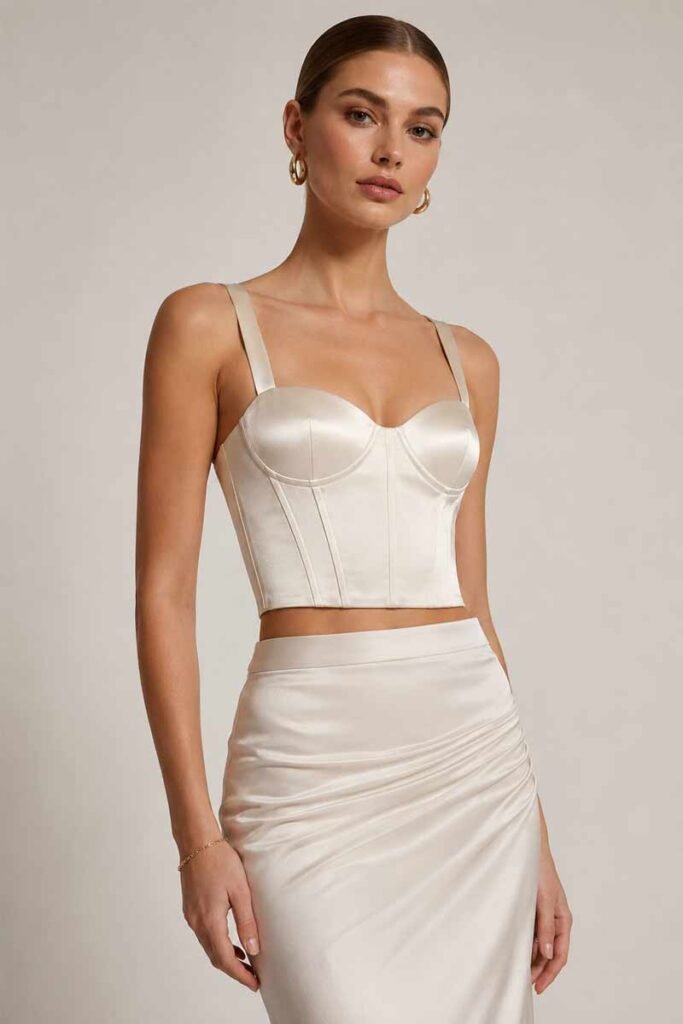
Corset Tops

Bustier Tops

Corset Mini Dresses

Bustier Occasion Dresses

Structured Matching Sets

Decorated Bodices
Common Fit Failures and Pattern Corrections
Neckline Gaping
Cup Overflow
Bust Compression
Bodice Slipping
Waist Riding Up
Side Seam Twisting
From First Pattern to Approved Production Sample
Structured styles usually require several controlled development gates. Planning ranges below assume that design direction, base size, materials and trims are available; a confirmed schedule is issued after feasibility review and material lead-time checking.
| Stage | Main Review | Typical Planning Range | Approval Output |
|---|---|---|---|
| Feasibility Review | Design goal, fabric, support system, closure, size range and risk points | 1-3 working days | Development brief and proposed sample route |
| Initial Pattern | Base block, cup geometry, panel balance, seam map and internal support plan | 3-5 working days | Pattern release for first sample |
| First Sample | Silhouette, cup and neckline direction, torso balance, construction feasibility | 10-15 working days | Fit comments and revision list |
| Revised Fit Sample | Pattern corrections, material changes, support adjustment and movement | 7-12 working days | Approved base-size fit or next focused revision |
| Size-Set Sample | Representative sizes, grading balance, cup progression and support consistency | 10-15 working days | Approved size range and grading comments |
| PP / Golden Sample | Final material lot, trims, workmanship, labels, packing and QC references | 7-10 working days | Production authorization |
| Complex Bulk Production | Cutting, sewing, support insertion, inline control, final inspection and packing | 30-45 days | Shipment-ready bulk order |
Corset and Bustier Grading Across Commercial Sizes
Cup Volume Growth
Bust Point Movement
Underbust Growth
Neckline Security
Torso Length
Support Components
What a Production-Ready Pattern Package Includes

Pattern and Technical Package

Bulk Control Transfer
A Structured Bodice Program From Brief to Bulk
Program Brief
- Base development size: brand-selected U.S. core size.
- Representative size-set review: one smaller, base and one larger size for key structures.
- Three sample gates: first fit, revised fit and PP / golden sample.
- Complex bulk production planning: 30-45 days after final approvals and material readiness.
Control Results
- 18 approved style files with controlled revision history.
- Shared components used only after fit and construction validation.
- First-piece and inline checkpoints assigned to critical structured operations.
- Reorder records preserved pattern, BOM, material and PP references.
Development Depth Backed by Manufacturing Scale
30+ Years Development
300-400 Pattern Specialists
650-1,200 Development Machines
16 Owned Factories
300 Sewing Lines
6.5M Monthly Capacity
Corset Pattern Development Frequently Asked Questions

Start Your Corset or Bustier Development Review
Send the available project information and Duolan will review the development route before pattern work begins. Useful files include a tech pack, sketch, front-and-back references, original sample photos, brand size chart, base size, target size range, fabric direction, cup and support requirements, closure choice, estimated order quantity and launch date. For unreleased designs, an NDA can be reviewed before complete files are shared. The first response can focus on feasibility, missing decisions, sample stages, material risks and the information needed for costing. Clear input helps the pattern room test the right structure in the first sample and gives production teams a stronger basis for future size-set, PP and bulk planning.
- Name, company and business email
- Tel / WhatsApp, optional
- Product type and target market
- Base size and size range
- Fabric, lining and support direction
- Estimated bulk quantity and launch date
- Message and file upload
- Submit button: Send Brief


