Skip to content
How Are A-Line Dresses Developed From Design to Bulk Production?
Your trusted Women’s Apparel Development & Manufacturing Partner from China
- Jerry
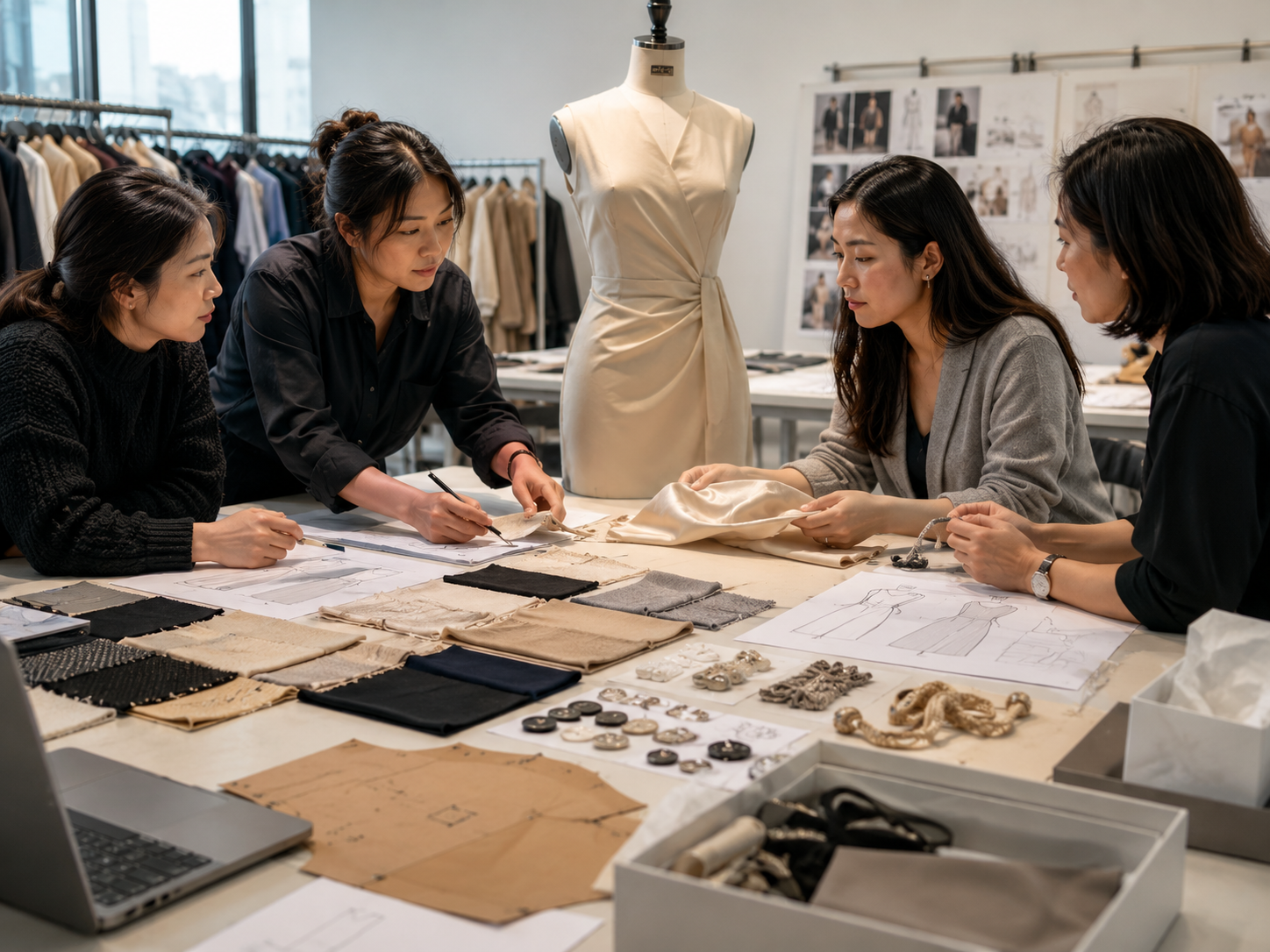
An A-line dress often appears effortless on a product page: a clean upper body, a controlled transition through the waist or hip, and a skirt that opens toward the hem. That apparent simplicity is exactly why the style is technically demanding. With fewer decorative elements to distract the eye, a drifting side seam, a heavy lining, a collapsing hem, or a poorly placed flare point becomes immediately visible.
An A-line dress is developed by defining the silhouette, matching the design with a suitable fabric, building and balancing the pattern, sewing and fitting samples, grading the approved pattern into the required size range, and locking materials, measurements, workmanship, and quality controls before bulk production begins.
The process is not simply a matter of drawing an A shape and sewing it. A commercial mini dress, a fluid vacation midi, and a structured occasion maxi may all carry the same silhouette name, yet each requires a different pattern strategy, hem sweep, internal construction, fitting standard, and production route. In practice, one of the most important questions is also one of the smallest: where should the flare begin? The answer influences almost every decision that follows.

What Defines an A-Line Dress?
An A-line dress is narrower through the upper body and gradually widens toward the hem. Its shape is controlled by the flare position, side-seam angle, panel construction, fabric behavior, and garment length. A true A-line silhouette should open smoothly rather than create the concentrated fullness seen in gathered, pleated, or circular skirts.
Shape and Proportion
The letter A is a useful visual reference, but it is not a technical specification. Two dresses can both be called A-line while looking completely different on the body. One may skim the waist and begin opening below the hip; another may fall outward from the bust with almost no waist definition.
The upper section must remain visually narrower than the lower section, but that does not mean it must be tight. A relaxed day dress can still have a clear A-line shape when its side seams gradually move away from the body. A fitted occasion dress may follow the bust, waist, and high hip closely before releasing toward the hem.
The most balanced silhouettes normally avoid sudden changes in width. If the pattern stays narrow for too long and then opens sharply, the result can look stiff or triangular. If the flare starts too early without enough structure above it, the dress may read as trapeze rather than classic A-line.
Silhouette Type | Flare Usually Begins | Upper-Body Fit | Common Visual Effect |
Subtle A-line | High hip or lower hip | Semi-fitted | Clean, refined and easy to wear |
Classic A-line | Waist or high hip | Fitted or semi-fitted | Balanced and broadly commercial |
Skater-inspired | Defined waist seam | Close-fitting | Youthful with stronger movement |
Trapeze | Shoulder or upper bust | Relaxed | Loose and architectural |
Fit-and-flare | Waist seam | Closely fitted | Strong waist contrast and fuller skirt |
Flare Position
Where the flare begins has a major effect on fit, movement, fabric consumption, and the way the wearer’s proportions are perceived.
A flare that begins at the waist creates a clearer contrast between the waist and hem. This approach works well for skater dresses, party dresses, and styles with a defined waist seam. It also increases the importance of waist placement because even a one-centimeter shift can change the visual balance of a short dress.
A high-hip flare produces a smoother transition and is common in commercial mini and midi dresses. It gives the garment enough room to move without making the skirt look overly full. A lower-hip flare creates a longer, leaner line but needs careful testing for walking and sitting.
Flare can be introduced through side seams, princess seams, multiple panels, slash-and-spread development, pleats, or godets. The method matters because volume placed only at the side seams behaves differently from volume distributed across six or eight panels.
A-Line Versus Similar Shapes
A-line, fit-and-flare, skater, shift, and trapeze are often used loosely in retail descriptions, but they require different development methods.
A fit-and-flare dress normally has a more defined bodice and a stronger change in volume at the waist. A skater dress often uses a short length and a wider skirt with visible swing. A shift dress maintains a straighter line through the waist and hip. A trapeze dress may widen directly from the shoulder, creating little or no waist definition.
These distinctions affect the pattern, fabric, lining, and construction. A circular skater skirt can create more movement than a paneled A-line skirt, but it also uses more fabric and may need additional time to hang before hemming. A straight shift pattern cannot simply be widened at the hem and expected to produce a balanced A-line result.
The product description should therefore define the intended fit, flare point, total hem sweep, waist treatment, and desired movement instead of relying on the silhouette name alone.
Length and Movement
Mini, midi, and maxi A-line dresses need different proportions. A mini has less vertical distance in which to develop flare, so small pattern changes can create a strong visual effect. Excessive sweep can make the hem stand away from the body or create coverage problems when the wearer walks or sits.
A midi allows a more gradual flare, but the hem position matters. A wide hem ending at the fullest part of the calf can make the garment look heavy. Fabric weight becomes increasingly important because a dense fabric may pull the skirt downward and reduce the intended shape.
Maxi dresses can carry a larger sweep, but they are more sensitive to grainline, bias growth, lining weight, and uneven hanging. The dress should be tested while walking, turning, climbing steps, and sitting. A silhouette that looks balanced on a static mannequin may feel restrictive or collapse when worn.

How Is the Design Brief Built?
A strong design brief explains the intended silhouette, customer, fit, materials, construction, price position, size range, sample deadline, and production requirements. It gives the pattern, sample, sourcing, and production teams one shared reference, reducing interpretation errors before fabric is cut or the first sample is sewn.
Technical Information
The technical package should make the product measurable and repeatable. A fashion sketch communicates appearance, but it rarely explains how the dress should fit, where the flare begins, or how the inside should be constructed.
A useful package normally includes front and back technical drawings, a measurement chart, points of measure, construction callouts, seam and stitch requirements, fabric composition, trim specifications, color references, label positions, and packaging instructions.
For an A-line dress, several measurements need particular attention. These include the bust, waist, high hip, full hip, shoulder-to-waist length, flare-point position, side-seam length, total dress length, and hem sweep. The document should state whether circumference measurements are full or half measurements and whether the garment is measured relaxed or under light tension.
The brief should also identify what is fixed and what can be technically adjusted. A brand may require an exact neckline depth but allow the manufacturer to recommend a more stable facing or interfacing. That flexibility helps solve production problems without changing the design language.
Customer and Occasion
The same A-line silhouette should not be developed identically for office, resort, party, occasion, or everyday wear.
An office dress may need bra coverage, seated comfort, pocket function, lining, and controlled ease. A vacation midi may prioritize breathability, packability, movement, and easy care. A party mini may require stronger waist definition, secure necklines, hidden support, and reliable coverage during movement.
The brief should identify the sales region, target age group, size profile, retail price, climate, care expectations, and primary sales channel. Online-focused brands should pay close attention to predictable fit because customers cannot try the dress before ordering. A product developed for warm climates may require lighter lining or breathable construction. A premium occasion dress may justify more internal structure and hand finishing.
These are not only marketing details. They directly affect the pattern, fabric, seam construction, closure, lining, and quality standard.
Fit Definition
Terms such as regular fit or slightly fitted are open to interpretation. The intended fit should be translated into both measurements and visual behavior.
The development team needs to know whether the waist should be clearly defined, lightly skimmed, or almost straight. It should also know whether the dress follows the high hip before flaring, whether the back waist should remain close to the body, and whether the skirt is expected to swing freely or hold a structured outline.
Ease must be considered at the bust, waist, and hip. Woven fabrics usually need positive wearing ease, although the amount depends on the design and customer. Stretch fabrics may use less ease, but only when the stretch and recovery are reliable.
Fit references can include an approved garment, fitting photographs, marked-up images, a body measurement chart, and a finished garment specification. A measurement chart alone cannot show the intended attitude of the garment. Visual references alone cannot guarantee repeatable sizing. Both are needed.
Design and Production Risk
Design details often create technical consequences that are easy to underestimate during sketching.
Pockets placed in sharply angled side seams may pull open. Deep necklines can stretch unless they are stabilized. A side zipper may preserve the back appearance but become difficult to sew where several seams meet. Princess seams provide useful shaping but add operations and make seam matching more important.
Lining can improve comfort and opacity, but it must be patterned separately so it does not restrict the outer dress. Boning, cups, elastic, and internal support can improve fit in occasion styles, yet they also affect care, sewing time, and grading.
Decorative work changes the behavior of the garment as well. Sequins, beads, embroidery, or layered trims add weight. The additional weight may pull down the skirt, stretch mesh, or alter the drape that was approved before decoration.
A commercially sound brief considers whether each detail can be repeated consistently across the planned order quantity. A feature that works on one carefully handled sample may not remain stable during high-volume production.

Which Fabrics Work for A-Line Dresses?
A-line dresses can be developed in fluid, crisp, stretch, textured, or embellished fabrics. The right choice depends on the required drape, structure, stretch, recovery, opacity, surface appearance, care method, and production stability. The fabric should support the intended silhouette instead of forcing the pattern to compensate for unsuitable material behavior.
Weight and Drape
Fabric weight influences whether the dress hangs close to the body, swings freely, or holds a strong shape. Lightweight fabrics can create elegant movement but may need lining, greater hem sweep, or careful seam finishing. Medium-weight fabrics often provide a practical balance between movement and structure. Heavy materials can hold the A-line shape, but they may pull the bodice downward or create bulky seams.
Weight should not be evaluated alone. Two materials with similar weight can behave very differently. A crisp cotton poplin may stand away from the body, while a viscose fabric of similar weight may fall vertically and reduce the visible flare.
The fabric should be reviewed as a hanging length, a sewn sample, and a moving garment. A small swatch can show color and hand feel, but it cannot reveal how a full midi or maxi skirt will behave.
Fabric Type | Approx. Commercial Weight | Typical Effect | Main Risk |
Chiffon or georgette | 50-100 gsm | Light and floating | Transparency and hem growth |
Viscose or light crepe | 90-160 gsm | Soft, fluid drape | Shrinkage and twisting |
Satin | 90-180 gsm | Smooth, elegant movement | Seam puckering and visible marks |
Poplin or light twill | 110-220 gsm | Clean, defined flare | Excess stiffness |
Jersey | 160-260 gsm | Comfortable and body-responsive | Growth and weak recovery |
Jacquard or taffeta | 140-300 gsm | Structured occasion shape | Bulk at seams |
Denim | 180-350 gsm | Strong, casual outline | Weight and thick construction |
These ranges are practical references rather than fixed standards. Fiber content, weave, finish, and yarn construction can change performance significantly.
Soft and Structured Fabrics
Chiffon, georgette, crepe, satin, and lightweight viscose blends suit A-line dresses that need movement. They are common in vacation, occasion, and evening collections, but they require good grain control and careful sewing.
Fluid fabrics reveal twisting, uneven cutting, and poor seam tension quickly. A slightly unbalanced side seam may move forward when the wearer walks. A lining that is too stiff can fight against the shell and reduce movement. A lining that is too heavy may pull down the skirt.
Poplin, twill, denim, jacquard, faille, taffeta, and bonded fabrics create a clearer outline. They work well when the silhouette needs to remain visible in photography or hold away from the body. The main challenge is avoiding excessive stiffness or bulky seams.
Structured fabrics often require graded seam allowances, controlled pressing, suitable interlining, and a carefully selected hem finish. A deep double-turned hem may become too bulky, while a very narrow hem may not provide enough control.
Stretch and Recovery
Stretch fabric can make an A-line dress more comfortable, but stretch percentage and recovery must be considered separately. A fabric may extend easily and still fail to return to its original dimensions.
Poor recovery can cause the neckline, waist, seat, or armholes to grow during wear. The effect is especially noticeable in fitted bodices attached to flared skirts because the weight of the skirt continually pulls on the upper section.
The team should check stretch direction, percentage, recovery, seam extension, and growth after hanging. Two-way stretch behaves differently from four-way stretch. The lining, elastic, zipper, thread, and stabilizers must also work with the shell fabric.
A pattern developed for woven fabric should not be reused unchanged for jersey. Waist ease, dart intake, neckline shape, armhole depth, closure requirements, and hem construction may all need adjustment.
Testing Before Sampling
Basic testing before sample development can prevent repeated corrections caused by the material rather than the pattern.
For washable woven dresses, many commercial programs aim to keep dimensional change close to 3% or below, although the acceptable limit depends on the fabric, care method, brand standard, and target market. Stretch fabrics may need recovery and growth checks in addition to shrinkage testing.
Opacity should be reviewed in daylight, strong indoor light, and photography conditions. Light-colored fabrics can appear acceptable on the cutting table but become transparent when stretched over the body.
Colorfastness, pilling, skew, spirality, seam slippage, fusing compatibility, and pressing response may also require testing. Printed fabrics need checks for scale, registration, placement, and repeat. Embellished materials should be reviewed for attachment strength, weight, and potential damage during sewing.
Material availability is equally important. A fabric that works for one sample but cannot be repeated across future orders may create commercial problems. The approved sample material and bulk material should be technically equivalent, not merely similar in color.
How Is the A-Line Pattern Developed?
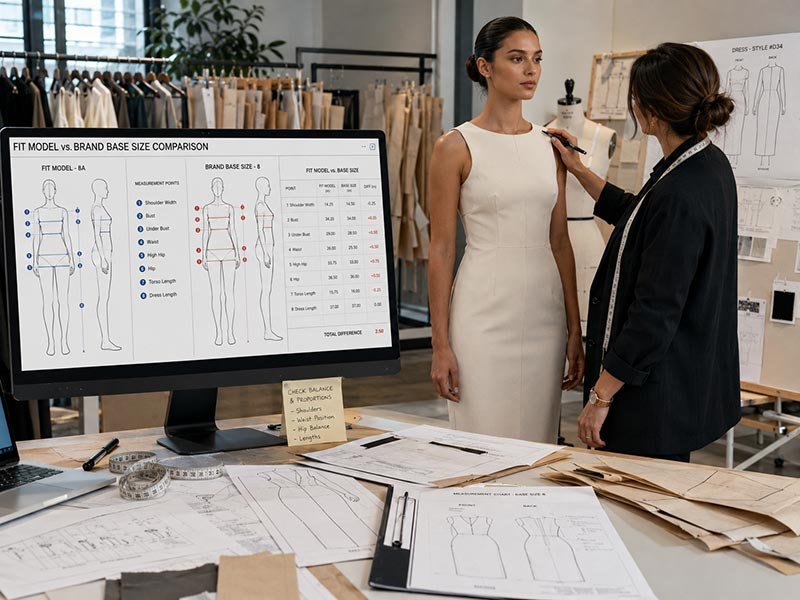
An A-line pattern is developed from a suitable base block or approved brand pattern. The pattern maker establishes upper-body fit, selects the flare point, distributes volume, balances the front and back, corrects seam relationships, and adapts the pattern to the actual fabric, length, construction, and intended wearing ease.
Selecting the Base
The starting block should already share the basic fit logic of the intended dress. A fitted woven dress block is suitable for a structured occasion style. A relaxed dress block is more appropriate for a loose day dress. Stretch styles need a block developed for the relevant stretch and recovery.
An approved brand block is valuable because its shoulder, bust, waist, armhole, and length relationships have already been tested on the brand’s customer. When no approved block exists, the pattern may be developed from a measurement chart, reference sample, fit model, or regional sizing system.
The pattern maker should confirm the bust-point position, shoulder slope, front and back waist length, armhole shape, waist-to-hip relationship, and ease distribution before adding flare.
Starting from the wrong block usually creates more revisions than starting with a simple but appropriate one. A loose block cannot be converted into a precise fitted bodice by narrowing the side seams alone.
Adding the Flare
Side-seam extension is the simplest way to create an A-line shape, but it is not always the most balanced. Adding too much width at the side seams can create strong diagonal edges and cause the seam to move away from the natural side of the body.
Slash-and-spread development distributes volume through the pattern. The pattern is cut from the hem toward a pivot point and opened by a controlled amount. This method can create a smoother fall because the added sweep is spread across the garment rather than concentrated at the sides.
Panels provide even greater control. A six-panel dress can distribute flare across several seams while maintaining close shaping through the waist and hip. Princess seams can continue from the bodice into the skirt, making them useful for fitted occasion dresses.
Godets, pleats, gathers, and partial circular sections create localized or stronger movement. These methods are visually different from a simple side-seam flare and should be chosen intentionally.
Darts and Balance
Darts create three-dimensional shaping around the bust, waist, and hip. They can remain visible, rotate into seams, move to the neckline or armhole, convert into gathers, or be partially released to create a straighter shape.
A minimal dress may hide shaping in side seams or princess seams. A structured bustier-inspired style may use visible seam lines as part of the design. A relaxed A-line dress may reduce waist suppression while retaining enough bust shaping to prevent the front from lifting.
Pattern balance determines how the garment settles on the body. The shoulder, bust, waist, side seams, grainlines, and hem must work together. A front body that is too short can pull the side seam forward. Excess back length can create folds above the waist. Uneven flare can make one area of the hem project more than another.
The pattern should be checked flat, in CAD, on a form, and on a moving fit model. Each method reveals different problems.
Adapting to Fabric
The same design may require different patterns for poplin, satin, jersey, or viscose.
A rigid fabric generally needs enough wearing ease and carefully shaped seams. A fluid fabric may require less projection at the hem because it falls close to the body. Stretch fabric may need reduced width and stronger stabilization at the neckline or waist.
Fabric adaptation can change dart intake, waist ease, hem sweep, seam allowance, zipper requirements, lining dimensions, interfacing, and grain direction. Bias sections may need additional hanging time and hem correction.
The first sample should be made in the actual fabric or a technically comparable substitute. A stable cotton toile can help assess basic proportion, but it may not reveal the final drape, seam behavior, or weight distribution of satin or viscose.
The aim is not to force one pattern to work in every material. The aim is to preserve the same design intention while allowing the pattern to respond to the fabric.
How Are Samples Fitted and Refined?
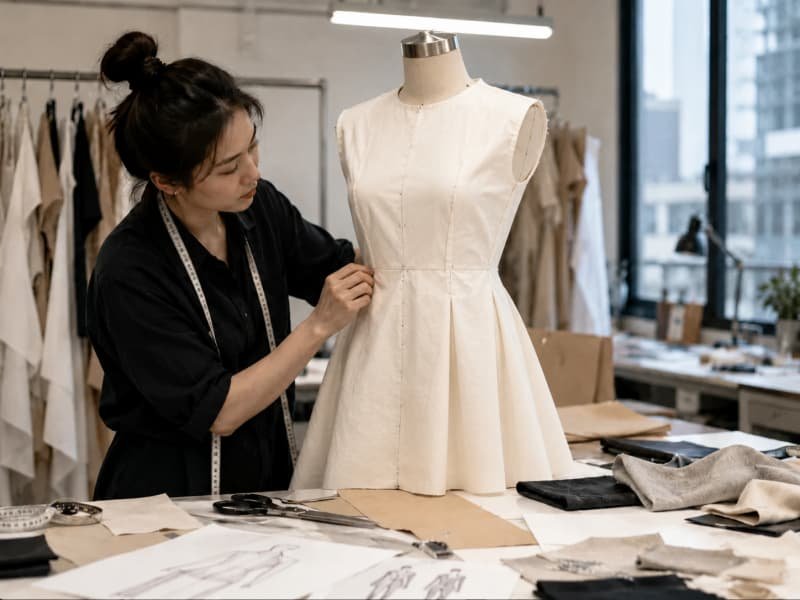
A-line dress samples are refined through measurement checks, visual fitting, movement testing, pattern correction, and controlled resampling. The team evaluates balance, bust and waist position, hip ease, flare distribution, hem level, fabric behavior, construction, and comfort. Each fitting comment should lead to a specific pattern, measurement, material, or workmanship change.
First Sample
The first sample should test the main product decisions: silhouette, fit, fabric, construction, and proportion. Before cutting, the sample team should review the technical package and identify any unresolved information.
The fabric may need relaxation, pre-treatment, or shrinkage testing. Pattern pieces should be checked for grainlines, notches, seam matching, and cutting quantity. The sample should follow a production-feasible sewing method rather than a slow, hand-adjusted method that cannot be repeated in bulk.
The sample room should record the pattern version, sample size, fabric and trim references, machine types, construction difficulties, measurement results, and any deviation from the specification.
A first sample is not expected to be perfect. Its purpose is to reveal whether the design works as a garment and whether the original direction can be produced reliably.
Fit Checks
Fitting should follow a consistent order. The review normally begins at the shoulders and neckline, then moves through the bust, waist, hip, side seams, skirt, and hem.
The model should first stand naturally. She should then walk, sit, turn, raise her arms, and use the closure. Movement often reveals problems that are invisible on a dress form.
Fit Area | Common Sample Check | Typical Development Tolerance* |
Bust | Ease, drag lines, bust-point position | +/- 0.5-1.0 cm |
Waist | Level, comfort, shaping | +/- 0.5-1.0 cm |
Hip | Ease and side-seam balance | +/- 1.0 cm |
Shoulder | Slope and seam placement | +/- 0.5 cm |
Total length | Front, back and side balance | +/- 1.0 cm |
Hem sweep | Flare and symmetry | +/- 1.0-2.0 cm |
Strap length | Coverage and support | +/- 0.5 cm |
*Actual tolerances must follow the customer’s approved specification, fabric behavior, size range, and inspection standard.
Measurements should support visual judgment. A dress can meet the chart and still look wrong if the ease is distributed poorly. It can also look balanced but fail an important measurement. Both checks are necessary.
Common Corrections
Side seams that swing forward often indicate insufficient front balance rather than a simple seam problem. A rising front hem may come from bust shaping, body length, or fabric tension. Horizontal lines across the hip usually suggest insufficient width or an incorrect flare point.
Other common issues include back-neck gaping, armhole exposure, zipper rippling, lining restriction, twisting panels, collapsing flare, uneven hems, and pockets that pull open.
The correction should address the cause. Remove the wrinkle is not enough. The wrinkle may result from insufficient width, excess length, fabric stretch, poor grain placement, or sewing tension.
Comments should state the required result and, where possible, the measurement change. Increase total hem sweep by 8 cm while keeping the current waist and high-hip measurements is more useful than make the skirt fuller.
Approval Stages
Different samples answer different questions. A prototype tests the concept and general proportion. A fit sample checks measurements, balance, and comfort. A revised sample confirms corrections. A sales sample may support photography or wholesale presentation. A size set checks grading. A pre-production sample establishes the final bulk reference.
The approval status should always be clear. A sample may be approved for fit while the fabric color remains unapproved. Another may be approved for appearance but still use substitute trims.
The final pre-production reference should represent the approved shell fabric, lining, trims, measurements, construction, workmanship, labels, and finishing wherever possible. Any remaining exception should be documented before production starts.
Version control is essential. Pattern files, measurement charts, comments, photographs, and approval dates should use matching version numbers. Without disciplined records, a previously corrected issue can return in the next sample or bulk order.

How Is the Dress Prepared for Production?
An A-line dress is ready for production only when its pattern, grading, materials, colors, trims, measurements, construction, workmanship, labels, packaging, inspection requirements, and delivery plan are approved. The factory then organizes fabric preparation, cutting, sewing operations, pilot production, in-line quality checks, final inspection, and records for repeat orders.
Grading and Size Sets
Grading creates the full size range from the approved base pattern. It is not uniform enlargement. The bust, waist, hip, shoulder, armhole, neckline, body length, flare point, and hem do not all increase at the same rate.
A fitted A-line dress needs careful waist and bust progression. A strap or neckline that works in the base size may become too narrow or too open in larger sizes. The flare must also remain proportional. Adding the same fixed amount to every size can make smaller sizes too full or larger sizes too straight.
A size-set review helps identify these problems before the full order is cut. It should check measurements, balance, coverage, movement, seam placement, and visual consistency across representative sizes.
Extended size ranges may require a separate block or an additional fit model. The further the grading moves from the base size, the greater the risk that the original proportions will stop working.
Bulk Approval
Production should not begin while important variables remain open. The approved file normally includes the final pattern, grade rules, measurement chart, tolerances, fabric, lining, trims, colors, stitching, reinforcement, labels, packaging, and pre-production sample.
Lab dips, print strike-offs, embroidery samples, wash standards, or embellishment panels may need separate approval. The order breakdown by style, color, size, and quantity should match the latest purchase order.
The production team also needs clear instructions for fabric handling. Satin may require careful tension and surface protection. Viscose may need relaxation. Directional prints, nap, stripes, or checks require specific marker rules. Embellished fabrics may need seam areas cleared before sewing.
A pre-production meeting should confirm the product risks, key measurements, machine requirements, inspection points, and corrective actions from sampling.
Cutting and Sewing
Fabric should be inspected, shade-grouped, relaxed, and tested as required before cutting. Marker planning must respect grain direction, fabric width, nap, print direction, defect areas, and pattern placement.
Accurate numbering and bundling reduce size and shade mixing. This is especially important when a dress uses several panels that must match in color and surface appearance.
The sewing team should establish the operation sequence, machine types, folders, attachments, templates, pressing method, and quality checkpoints. Curved seams, concealed zippers, satin construction, bias panels, lining, boning, cups, sequins, and narrow hems may need specialist operations.
A pilot run or first-piece review can expose problems before the full line is released. It allows the team to confirm seam shape, handling, measurements, machine settings, and production timing with actual bulk materials.
Quality and Repeatability
Quality control should focus on defects that change fit, silhouette, appearance, or wearing performance. Grain errors can twist the skirt. Poor side-seam balance can make the dress swing forward. Incorrect lining dimensions can restrict movement. Uneven hemming is particularly visible on midi and maxi styles.
Production Risk | Likely Result | Practical Control |
Incorrect grainline | Twisting or uneven flare | Marker and cutting verification |
Fabric shrinkage | Measurement failure | Pre-testing and shrinkage allowance |
Shade mixing | Visible panel difference | Shade grouping and bundle control |
Seam puckering | Distorted lightweight fabric | Needle, thread and tension trials |
Zipper distortion | Rippling and poor fit | Reinforcement and first-piece checks |
Lining mismatch | Pulling or lining exposure | Separate lining pattern review |
Measurement drift | Inconsistent fit | In-line measurement audits |
Uneven hem | Poor hanging appearance | Hanging, levelling and final check |
Weak embellishment | Detachment and returns | Attachment and pull testing |
Many apparel programs use AQL-based final inspection plans, with values such as 2.5 for major defects and 4.0 for minor defects being common references. The actual inspection level must be agreed with the customer and adjusted for product risk, market requirements, and order value.
Repeat orders should begin with a review of the previous production records. The team should confirm whether the fabric source, dye lot, size ratio, factory line, labels, packaging, or measurements have changed.
A repeat style is not automatically risk-free. A new color can behave differently during pressing. A replacement fabric may have a different stretch or shrinkage rate. A larger order may require another production line. Good records allow the factory to preserve the approved standard while adapting to these changes.
From a Clean Sketch to a Repeatable Commercial Dress
A well-developed A-line dress is the result of connected decisions rather than one perfect pattern. The design brief defines its purpose. The fabric gives the silhouette its behavior. The pattern controls fit and flare. Sampling exposes problems before they multiply. Grading extends the approved result across sizes, while production planning and quality control protect it as volume increases.
Duolan Apparel supports established fashion brands, product development teams, and sourcing teams with dress-focused material matching, pattern engineering, sample refinement, production-readiness review, bulk manufacturing, and repeat-order coordination. Projects can begin from a complete tech pack, an approved sample, a reference garment, or a clearly defined collection direction.
For a custom A-line mini, midi, maxi, occasion, party, vacation, or collection-based dress program, share the design files, measurement chart, material direction, target quantities, size range, and required delivery date for an initial development review.
Share:
Our Services
Categories
Table of Contents
Here, developing fashion collections is more than manufacturing garments — it’s a collaborative process focused on transforming ideas into well-executed, market-ready products. From fabric sourcing and sample development to scalable production and delivery coordination, every stage is built to support quality, consistency, and efficient collection launches across global markets.