Skip to content
Custom Appliqué Dress Manufacturer
Dress-focused development and manufacturing for fashion brands building appliqué-led party, occasion, evening, vacation, and statement collections.
Duolan develops complete appliqué dresses from design direction, Tech Packs, reference garments, original samples, or collection briefs. Our work connects motif design with fabric behavior, pattern engineering, fit, support structure, workmanship, bulk repeatability, and packaging protection.
- 8 core appliqué technique families supported across fashion dress development
- Motif placement reviewed across front, side, back, seams, darts, closures, and grading
- Brand programs commonly involve 10–30 styles and 20,000–80,000 total pieces
- Complex styles move through mock-up, sample review, and production-readiness control
- Bulk timing is evaluated by material readiness, construction difficulty, handwork density, and launch date
- Core production is supported by 16 owned factories and a wider coordinated manufacturing network
Built for Established Fashion and Occasionwear Brands
Fashion Dress Brands
Occasionwear Brands
Product Development Teams
Buying and Sourcing Teams
Multi-brand Fashion Groups
Designer-led Collections
Design-led teams need room for visual expression, but every visual decision must still work in sampling and production. Duolan helps translate artistic direction into controlled motif dimensions, repeatable placement, suitable attachment methods, and commercially manageable workmanship.
What Strong Appliqué Dress Manufacturing Requires
Complete Dress Development
Material Compatibility
Controlled Placement
A placement drawing must account for the body line, seam locations, darts, zipper position, neckline, armhole, slit, waist seam, and skirt movement. Visual balance on a flat sketch may change after the garment is worn.
Fit and Grading Discipline
Production-ready Samples
Bulk Repeatability
Appliqué Dress Risks Controlled Before Production
Appliqué dresses carry combined risks from decorative materials, fabric behavior, fit, handwork, and bulk replication. Each risk needs a visible control action before quantities are released.
| Project Risk | What Can Go Wrong | Duolan Control Point |
|---|---|---|
| Motif scale mismatch | Flowers or lace shapes overpower the silhouette or disappear visually | Full-scale artwork, placement mock-up, mannequin review |
| Base fabric distortion | Mesh, tulle, satin, or stretch fabric puckers under motif weight | Fabric behavior review and attachment trial |
| Uneven left-right placement | Bust, waist, hip, or shoulder motifs appear unbalanced | Centerline, balance points, mirrored references, first-piece check |
| Edge lifting | Petals, lace edges, or cut motifs curl after wear or packing | Edge construction review and anchor-point definition |
| Seam interference | Motifs block zippers, distort darts, or create heavy seam intersections | Placement engineering around seams, darts, and closures |
| Fit change after decoration | Added weight or stiffness changes bust, waist, or skirt balance | Fit review after full decoration, not before decoration only |
| Grading inconsistency | Small sizes look crowded while larger sizes appear empty | Size-level motif strategy and grading review |
| Handwork variation | Motif angle, spacing, stitch density, or height changes between operators | Approved reference sample, templates, operator samples |
| Bulk deviation | Production no longer matches the approved sample | Material locking, PP basis, first-piece confirmation, inline comparison |
| Packing damage | 3D flowers flatten, sequins scratch, or lace catches | Protective folding, tissue separation, shape support, carton review |
Custom Appliqué Dress Styles We Develop
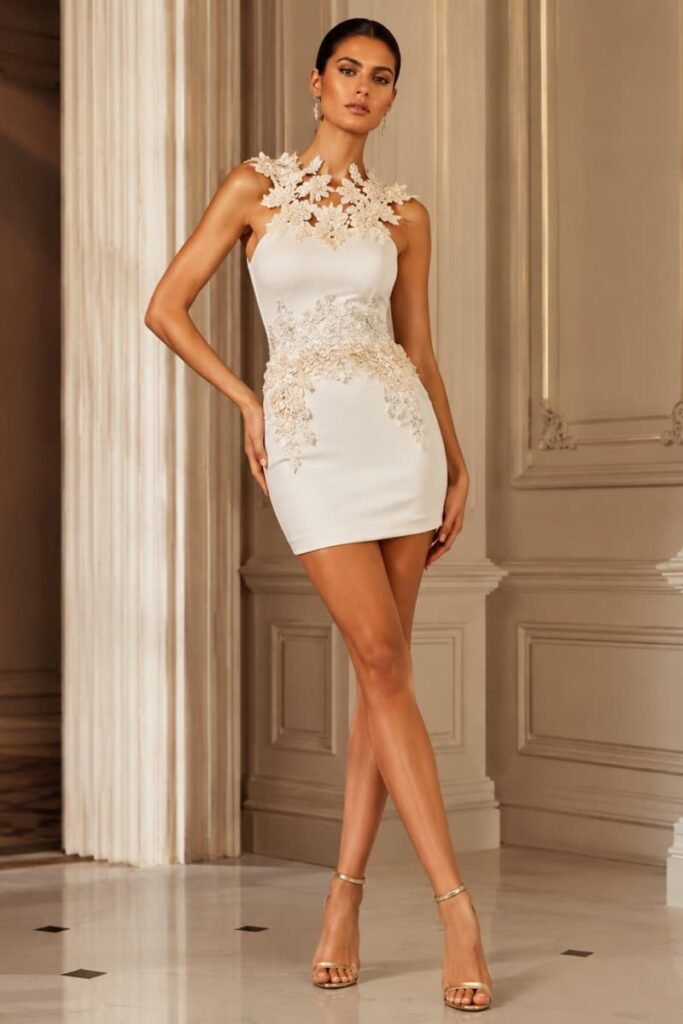
Appliqué Mini Dresses

Appliqué Midi Dresses
Midi silhouettes provide more room for progressive motif placement, border effects, scattered florals, waist-focused compositions, and vertical arrangements. Development work considers walking movement, slit position, lining length, skirt volume, and how the design reads in full-body campaign photography.

Appliqué Maxi Dresses

Bodycon Appliqué Dresses

Corset Appliqué Dresses

Strapless Appliqué Dresses

A-line Appliqué Dresses

Two-piece Dress Sets
Appliqué Dresses for Occasion-led Collections

Cocktail Collections

Partywear Programs

Birthday Edits

Graduation Collections
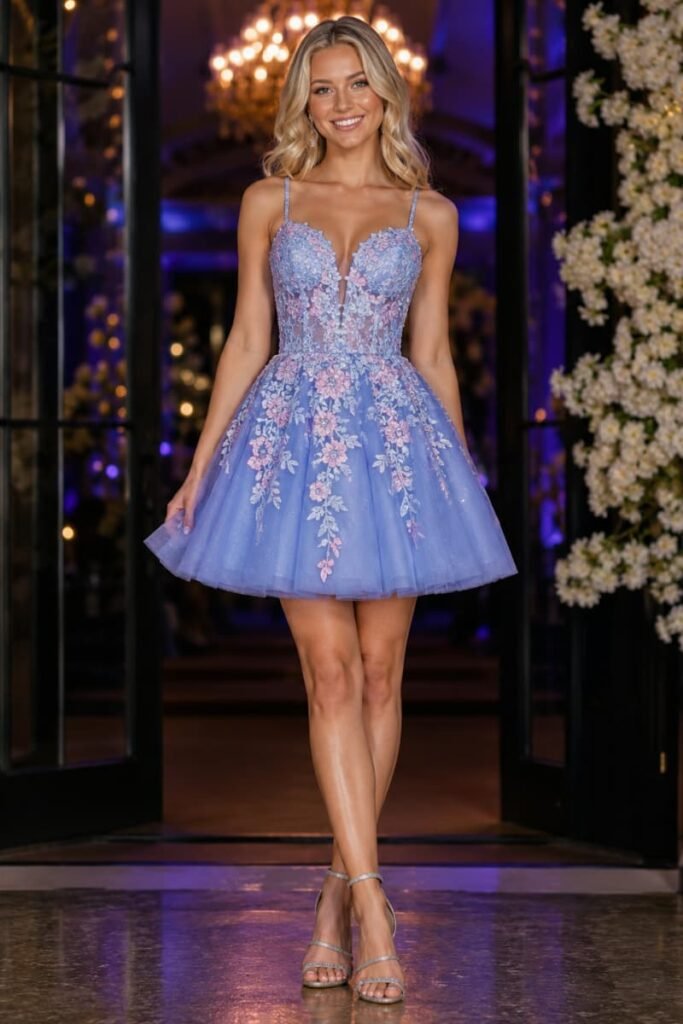
Homecoming Lines
Homecoming dresses need strong front-view impact, secure movement, fitted waists, and reliable size execution.
Short hemlines and shaped bodices leave little tolerance for poor placement or fit imbalance.

Wedding Guest Dresses

Holiday Party Drops

Resort Occasion Styles
From Statement Styles to Commercial Bestsellers
Campaign Hero Styles
Commercial Fashion Styles
Repeatable Core Dresses
Collection Support Styles
Appliqué Techniques for Custom Dress Development

Flat Fabric Appliqué

Lace Motif Appliqué

Embroidered Appliqué

Three-dimensional Florals

Layered Appliqué

Laser-cut Appliqué

Beaded Appliqué

Mixed-media Appliqué
Appliqué Materials and Decorative Components
Organza Flowers
Tulle Petals
Chiffon Florals
Lace Motifs
Embroidered Patches
Fabric-cut Motifs
Pearl Components
Sequin Components
Rhinestone Accents
Matching Base Fabrics With Appliqué Effects

Mesh

Tulle

Organza
Organza creates structure, light reflection, and sculptural volume. It can also show needle marks, seam bulk, pressing damage, and surface distortion. Attachment methods must preserve the crisp appearance.

Lace
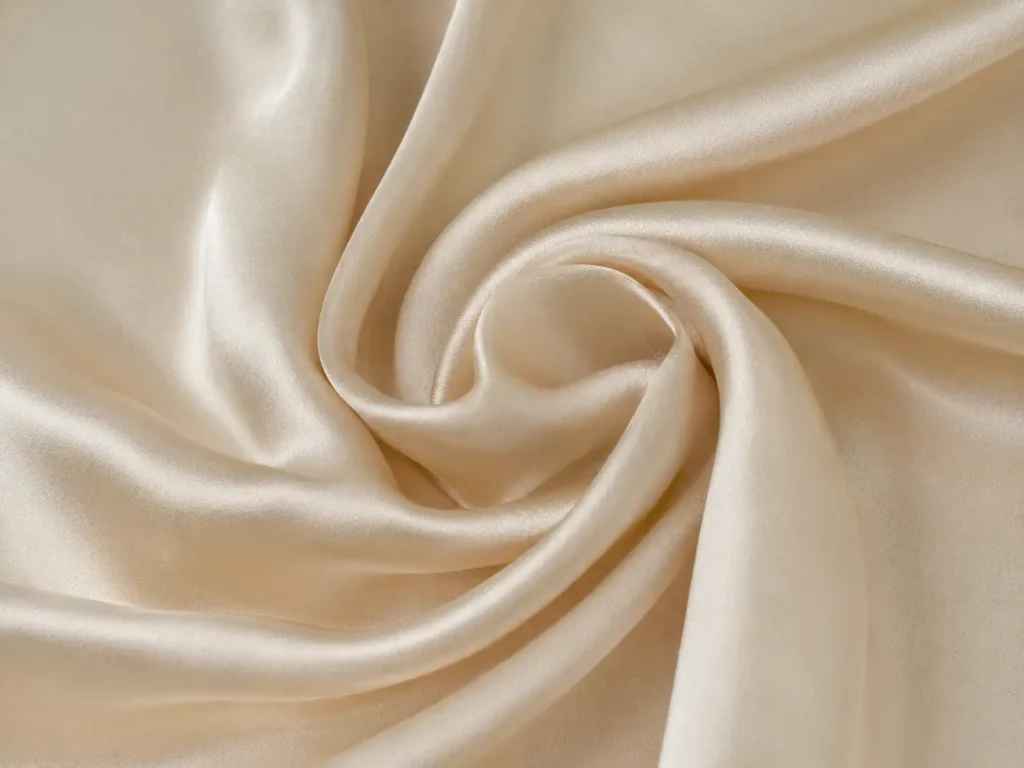
Satin

Crepe

Chiffon
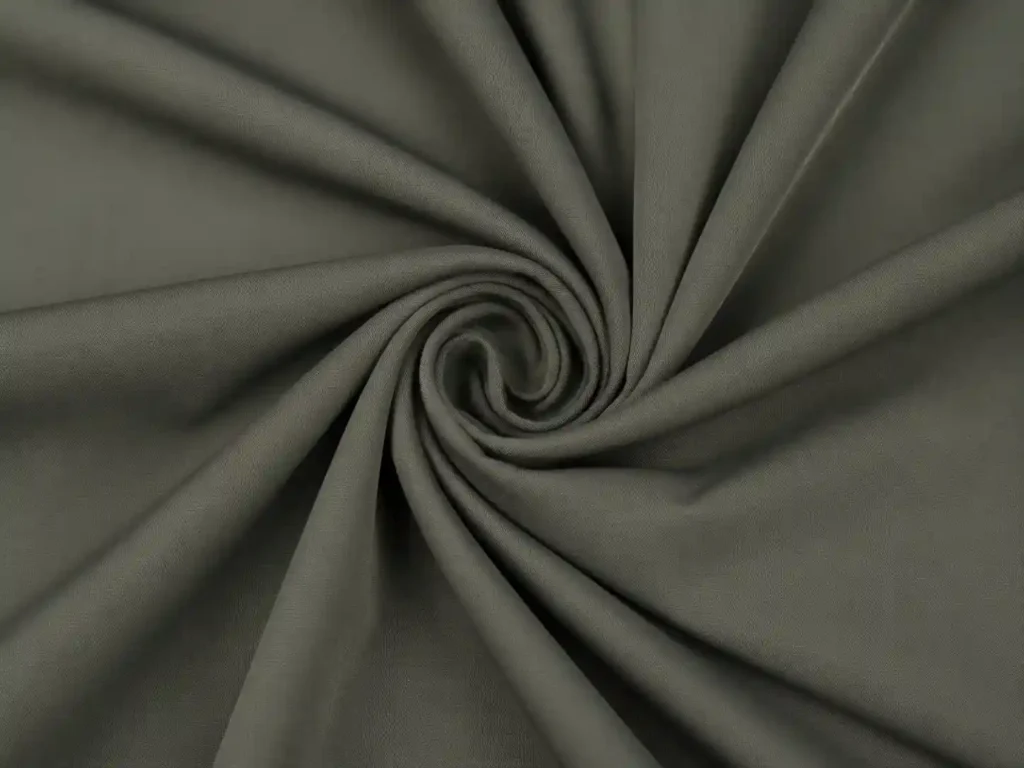
Stretch Fabrics
Lining and Support Behind Refined Appliqué Dresses
Full Lining
Partial Lining
Interlining Support
Cups and Bust Support
Boning Systems
Grip and Reinforcement
Motif Scale, Density, and Color Planning
Motif Scale
Placement Density
Negative Space
Tone-on-tone Color
Contrast Color
Multicolor Artwork
Gradient Placement
Visual Weight
Appliqué Placement Engineered Around the Dress
Neckline Placement
Bust Placement
Waist Placement
Hip Placement
Shoulder Placement
Sleeve Placement
Zipper Clearance
Slit and Hem Placement
Pattern and Fit Development for Appliqué Dresses

Bust Balance

Waist Definition

Hip Contour

Skirt Fall

Neckline Stability

Garment Balance
Keeping Motif Proportions Across Size Grading
Fixed-size Motifs
Scaled Motifs
Additional Motif Counts
Repositioned Motifs
Size-range Review
Placement Tolerances
What to Include in Your Appliqué Dress Tech Pack
Flat Sketches
Provide front and back views, plus side or interior views where structure matters. Mark motif zones, closures, seams, darts, slits, lining, support, and special construction.
Measurement Specification
Fabric Direction
Motif Artwork
Placement Map
Construction Details
Bill of Materials
Project Timing
From Design Brief to Production-ready Sample
Brief Review and Clarification
Material and Motif Preparation
Pattern and Structural Development
Appliqué Mock-up
First Sample
Revision and Approval Path
Workmanship Standards for Appliqué Dresses

Clean Motif Edges

Secure Anchor Points

Smooth Base Fabric

Controlled Stitch Visibility

Consistent Motif Angle

Balanced Left and Right

Comfortable Inner Surface

Clean Closure Areas

Pressing Without Damage
Appliqué Attachment and Edge-finishing Methods
The correct method depends on motif structure, base fabric, visual standard, expected wear, production volume, and acceptable handwork level.
| Method | Suitable Applications | Main Advantages | Main Control Points |
|---|---|---|---|
| Hand tacking | 3D flowers, delicate lace, dimensional petals | Discreet, flexible, adaptable to curved areas | Stitch count, anchor location, thread security, operator consistency |
| Machine edge stitching | Flat fabric motifs, stable embroidered shapes | Repeatable and efficient | Stitch width, tension, corner control, puckering |
| Satin-stitch edging | Graphic motifs and embroidered borders | Clean defined edge | Density, stiffness, thread coverage, base-fabric distortion |
| Concealed anchoring | Lace, organza, dimensional motifs | Minimal visible stitching | Anchor spacing, edge lifting, repair access |
| Layer-by-layer fixing | Multi-layer flowers and mixed motifs | Better shape control | Assembly order, thickness, center security |
| Embroidered attachment | Integrated motifs and patch-style artwork | Strong visual definition | Backing, stitch density, weight, skin comfort |
| Supporting adhesive | Selected stable components before sewing | Temporary positioning and cleaner sewing | Heat response, residue, aging, wash behavior; not used as the only security method unless approved |
| Combined fixation | Heavy or mixed-media appliqué | Higher security and controlled appearance | Process sequence, bulk thickness, inspection access |
Handling Three-dimensional Flowers During Production
Controlled Motif Storage
Bundling and Issue Control
Sewing-stage Protection
Finishing Protection
Hanging and Movement
Packing Recovery
Bulk Consistency Control for Appliqué Placement
Placement Templates
Garment Reference Marks
Operator Reference Samples
First-piece Confirmation
Inline Comparison
Count Verification
Tolerance Control
Final Visual Inspection
Quality Checkpoints Across Appliqué Dress Production

Incoming Fabric Check

Motif Incoming Check

Pre-production Review

Cutting Control

First-piece Check

Inline Inspection

Finishing Inspection

Final and Packing Check
Durability, Wear, and Packaging Evaluation
Attachment Security
Seam Strength
Snagging Risk
Colorfastness
Dimensional Stability
Packing Compression
Production Path for Custom Appliqué Dresses
Material Preparation
Cutting and Numbering
Base Construction
Motif Positioning
Motif Attachment
Garment Assembly
Finishing and Shaping
Protective Packing
What Determines Appliqué Dress Manufacturing Cost
Base Fabric
Motif Construction
Motif Count and Coverage
Attachment Time
Pattern and Structure
Colorways and Sizes
Quality Requirements
Packaging Protection
Packaging That Protects Appliqué Details

Tissue Separation

Shape Support

Garment Bags

Flat Packing

Hanging Packing

Carton Pressure
Appliqué Dress Development Case Studies
United States Occasionwear Program
An established American occasionwear brand developed 18 appliqué dress styles across mini, midi, strapless, corset, and fitted silhouettes. The combined order reached 36,800 pieces across four color directions and six core sizes.
The main challenge was maintaining visual balance between dense bodice decoration and cleaner skirts while using mesh, crepe, organza flowers, cups, boning, and concealed zippers. Several early layouts placed dimensional flowers too close to princess seams and zipper openings.
Duolan separated the program into structured bodices, stretch-fitted styles, and lightweight occasion dresses. Motif mock-ups confirmed flower height, center construction, thread color, and base-fabric response before complete samples. Placement maps were revised around bust points, waist seams, boning channels, and closures.
During production, first-piece confirmation and inline motif comparison were used for higher-density styles. Packaging trials added tissue shaping around selected flowers. The final program moved through phased production to protect campaign and warehouse dates.

United Kingdom Partywear Drop
A UK partywear brand developed 12 statement styles with a total order of 24,600 pieces. The range included asymmetric mini dresses, ruched mesh dresses, tonal floral midi dresses, and two-piece sets in three colorways and seven sizes.
The main challenge was combining fast visual impact with commercially manageable workmanship. Original references used excessive flower counts and hand attachment in high-stretch zones, creating cost pressure and fit restriction.
Duolan rebalanced the assortment into statement, commercial, and supporting styles. Large flowers were reserved for shoulders and focal waist areas, while selected styles used smaller embroidered motifs and controlled scattered placement. Stretch zones received revised spacing and more flexible attachment.
Size grading included motif-density checks at both ends of the size range. Production used operator samples, motif issue counts, and left-right reference points. The brand retained the intended visual identity while reducing unnecessary handwork and improving range consistency.

European Multi-brand Collection
A European fashion group developed 26 appliqué-led styles across two labels and five delivery groups. The combined order reached 72,400 pieces, with different price bands, color stories, fit standards, and decoration levels.
The main risk was project complexity. Several teams submitted overlapping comments, while shared motifs appeared across different silhouettes and fabrics. Without disciplined documentation, artwork versions, placement, and color approvals could easily become mixed.
Duolan organized the project by brand, style, color, size range, motif family, sample status, and delivery group. Shared materials were consolidated where appropriate, while fit-sensitive corset and bodycon products followed separate sample and production paths.
Approved motifs, placement maps, BOMs, pattern versions, PP references, and packing instructions were preserved by style. Core factories handled high-risk structured products, while suitable coordinated lines supported stable commercial styles. The phased structure protected delivery sequencing and future repeat-order preparation.

Quality, Social Audit, and Market Requirements
SMETA Audit Foundation
Brand-specific Standards
Testing Coordination
Third-party Inspection
Documentation Control
Factory Visits
Why Fashion Brands Choose Duolan
Complete Garment Capability
Dress-focused Experience
Development Before Production
Sample-to-bulk Discipline
Multi-style Coordination
Scalable Manufacturing
Custom Appliqué Dress Frequently Asked Questions

Start Your Custom Appliqué Dress Project
Share your product direction with Duolan for an initial development and manufacturing review. Clear information helps our team evaluate motif construction, base fabric, fit, pattern structure, attachment method, sampling path, order quantity, production timing, quality controls, and packaging protection more accurately.
You may submit:
- Company name and website
- Country and destination market
- Product category and wearing occasion
- Tech Pack, sketch, reference image, or original-sample photos
- Appliqué type, motif artwork, preferred material, and placement direction
- Base fabric, lining, support, and construction requirements
- Sample size, complete size range, and fit priorities
- Number of styles and colorways
- Estimated quantity by style or complete program
- Campaign date, launch date, or required delivery date
- Label, hangtag, retail packaging, and carton requirements
- Testing, inspection, audit, or documentation requirements
After receiving the available information, our team will identify the current project stage, key development risks, missing decisions, sample route, quotation basis, and next production step.