...

Custom Bandage Dress Manufacturer

Dress-focused development and manufacturing for fashion brands requiring controlled compression, accurate fit, stable recovery and repeatable bulk production.

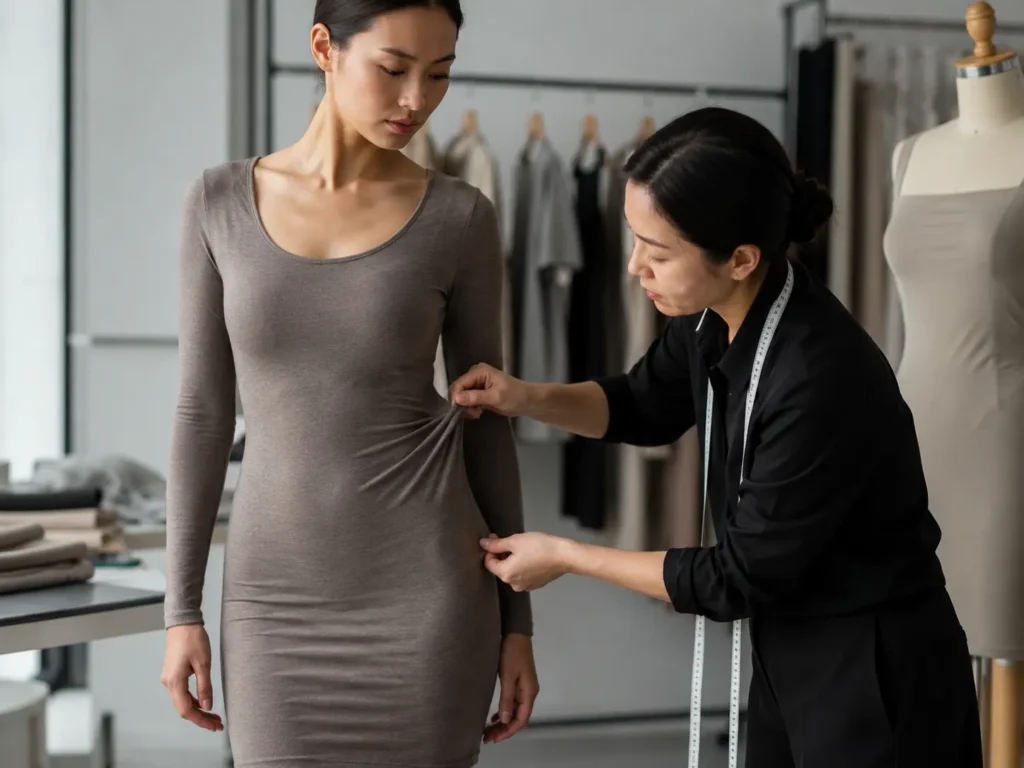
  • 6 body zones reviewed during fit development: bust, waist, abdomen, hip, thigh and hem.
  • 4 fabric behaviors assessed before approval: stretch direction, recovery, opacity and surface stability.
  • 3 production gates connect the approved sample to bulk: material locking, first-piece confirmation and inline quality control.
  • 30+ years of fashion dress development experience support product judgment from design review through repeat production.

A Dress Manufacturing System Built for Brand Programs

Duolan combines dress development knowledge, structured manufacturing resources and controlled production planning to support multi-style bandage dress collections, repeat programs and scaled orders.

30+ Years Development

Duolan’s dress development foundation comes from more than 30 years of work involving fashion design, fabric development, pattern interpretation and commercial garment production. Long-term experience with fitted, party, occasion and detail-sensitive dresses supports stronger judgment before sampling begins. The team evaluates whether a visual direction can be translated into suitable fabric behavior, balanced body fit, reliable construction and a production method capable of repeating the approved result across a full size range.

16 Owned Factories

Sixteen owned womenswear factories provide direct control over core programs, priority styles and products requiring close development-to-production coordination. Factory allocation is not based only on open capacity. Product construction, fit sensitivity, material behavior, workmanship requirements, order scale and delivery timing are considered before a production route is confirmed. Core styles can remain under tighter control, while different groups of styles can be separated according to manufacturing complexity.

20+ Partner Factories

More than 20 long-term satellite factories add flexible capacity for multi-style collections, repeat orders and production peaks. Satellite resources are used through planned allocation rather than uncontrolled outsourcing. Material standards, approved samples, measurements, construction notes, quality checkpoints and packing requirements remain connected to the project file. The network gives fashion groups more room to scale confirmed products without depending on a single production location.

12,000+ Skilled Workers

The wider manufacturing network includes more than 12,000 workers across coordinated production bases in Guangdong, Guangxi, Guizhou, Sichuan and Jiangxi. Regional capacity provides scheduling flexibility when several collections, repeat orders or seasonal programs move forward at the same time. Fit-sensitive and construction-sensitive bandage dresses are assigned according to production suitability, not simply distributed wherever labor is available.

50+ Flexible Lines

More than 50 quick-response and flexible production lines support testing programs, priority launches, repeat colors and replenishment requirements alongside larger production schedules. Flexible capacity does not remove production discipline. Every program still requires approved material direction, confirmed measurements, workmanship instructions, production readiness review and quality checkpoints before release.

SMETA Audit Foundation

Duolan’s core manufacturing system has completed SMETA and SMETA 2-Pillar audits and maintains a SMETA social audit record. Additional quality, testing, labeling, packing and social-compliance requirements can be reviewed according to a brand manual or market standard. Audit readiness supports formal supplier evaluation, but product quality still depends on project-specific controls from fabric selection through final inspection.

Developed for Established Fashion and Product Teams

Bandage dress programs require close cooperation between design, product, sourcing, technical and quality functions. Duolan supports teams with defined brand direction, structured development needs and ongoing production plans.

Fashion Dress Brands

Fashion dress brands need more than an attractive first sample. A bandage program must fit the brand’s silhouette language, price position, visual identity and launch calendar. Duolan reviews fabric support, neckline balance, body contour, length, color direction and internal construction before the style progresses. A stable fit block can then support color extensions, neckline changes, sleeve variations and repeat programs without rebuilding every style from the beginning.

Going-Out Labels

Going-out collections often combine fitted silhouettes with cut-outs, asymmetric necklines, hardware, ruching, mesh, corset structures or statement embellishment. Visual impact must remain compatible with movement, coverage and production repeatability. Duolan reviews stress points, edge control, zipper behavior, lining placement and decoration attachment so campaign-driven designs can also meet wearability and bulk manufacturing requirements.

Occasionwear Teams

Occasionwear teams require a more polished result across fit, support, surface finish and presentation. Bandage midi and long dresses may need controlled compression without flattening the bust, distorting the hip or restricting the lower body. Duolan connects pattern development, stretch direction, internal support, slit balance, pressing and final packing to preserve the intended appearance from sample review to warehouse receipt.

Product Departments

Product departments manage technical files, price targets, sample comments, size specifications, launch priorities and production decisions across many styles. Duolan organizes development around clear confirmation points: fabric direction, pattern basis, first-sample findings, revision actions, PP approval, material locking and bulk release. Such structure helps internal teams compare versions and make faster decisions.

Sourcing Offices

Sourcing offices need clear factory information, realistic development paths, accurate quotations, reliable documents and visible production control. Duolan can review technical packs, original samples, target quantities, testing requirements, packing manuals and delivery windows before production planning. Project communication can use email, WhatsApp, video meetings, annotated images, spreadsheets and stage-based progress updates.

Multi-Brand Groups

Multi-brand groups often manage different price levels, fit standards and visual directions within one supply structure. Duolan can separate programs by material, product difficulty, production route and quality requirement while preserving project-level records. A fitted party collection, premium occasion capsule and commercial repeat program do not need to follow the same development or manufacturing path.

Bandage Dress Risks Controlled Before They Reach Bulk

Most losses begin as small development decisions: unsuitable stretch direction, weak recovery, unclear negative ease, unstable seams or an unconfirmed bulk standard. Early control reduces revisions, returns and production disruption.

Unbalanced Compression

A dress may measure correctly yet feel uneven across the body. Excess pressure at the bust can flatten the silhouette, while insufficient waist tension weakens the intended contour. Hip and thigh pressure can also pull side seams forward or cause horizontal drag lines. Duolan evaluates body-zone balance rather than applying one compression level across the entire garment.

Weak Fabric Recovery

High stretch alone does not produce a stable bandage dress. Fabric must recover after repeated extension, wear and handling. Weak recovery creates loose waist areas, zipper waves, stretched necklines and a garment which changes shape after fitting. Recovery behavior is reviewed with the intended pattern, seam construction and garment weight before the fabric becomes a production standard.

Size Grade Distortion

Mechanical grading can change the visual effect between sizes. A larger size may become overly restrictive at the waist, too open at the neckline or unbalanced at the hip. A smaller size may lose the intended compression. Duolan reviews grade rules by body zone and checks size-set samples where product risk or size range requires additional verification.

Seam Failure

Bandage fabrics place continuous load on seams. Incorrect thread elasticity, stitch density, seam allowance or feed control can produce popped stitches, tunneling, waviness and broken seams during wear. Seam selection is matched to material weight, stretch direction, body location and visual finish. High-stress points receive additional review before bulk release.

Opacity Changes

A fabric can appear opaque when relaxed and become visibly transparent over the bust, hip or seat after extension. Light colors, lower-density knits, mesh combinations and heavily stretched panels require greater attention. Opacity is considered in the expected wearing condition, together with lining coverage, seam placement and the intended size range.

Sample-Bulk Drift

A strong sample can lose quality when bulk fabric, trims, measurements or construction methods differ from the approved basis. Duolan uses material confirmation, approved references, workmanship notes, first-piece review and inline inspection to transfer the sample standard into production. Bulk is not released only because a sample looks acceptable.

What Makes a Bandage Dress Production-Ready

A production-ready bandage dress must do more than create a tight silhouette. Fit, recovery, opacity, construction and manufacturing repeatability need to work together across sizes and production batches.

Controlled Fit Is More Important Than Tightness

A bandage dress should follow the body with deliberate pressure distribution. Uniform tightness often causes flattened bust shaping, restricted movement, rising hems and distorted side seams. Development begins by defining the intended silhouette and identifying how each body area should behave.
  • Bust: sufficient shape and support without uncontrolled compression.
  • Waist: a clean contour with stable recovery after movement.
  • Abdomen: smooth tension without diagonal drag lines.
  • Hip: enough extension for shape and mobility.
  • Thigh: controlled fit which does not force the skirt upward.
  • Hem: stability during walking, sitting and repeated wear.
Pattern dimensions cannot be judged separately from fabric stretch. The same measurements can produce very different results in two materials with different power, direction and recovery. Duolan reviews the garment as a combined system of fabric, pattern, seams, lining and closures.

Recovery Protects the Intended Silhouette

Recovery describes how well the material returns toward its original dimensions after extension. A supportive fabric with poor recovery may look correct during the first fitting and become loose after several hours of wear. A strong fabric with excessive resistance may feel restrictive and place too much stress on seams or zippers. Development review may include:
  • Stretch direction and relative extension.
  • Immediate recovery after controlled stretching.
  • Shape retention after fitting or repeated handling.
  • Neckline and armhole stability.
  • Zipper area behavior.
  • Recovery near seams and cut-out edges.
  • Appearance after pressing and packing.
Material findings affect pattern dimensions, seam choice and size grading. Recovery cannot be corrected later through smaller measurements alone.

Construction Must Move With the Fabric

The body stretches the garment from several directions during dressing, walking, sitting and reaching. Seams and internal structures must tolerate those movements without breaking or creating visible distortion.

Construction review covers:

  • Seam type and seam allowance.
  • Stitch elasticity and density.
  • Differential feed where applicable.
  • Reinforcement at zipper ends, strap joins and slit points.
  • Lining stretch compatibility.
  • Elastic or support tape placement.
  • Boning and cup integration for structured designs.
  • Edge stability around cut-outs and asymmetric openings.

A technically strong sample should survive fitting activity while retaining a clean exterior appearance.

Bulk Repeatability Must Be Defined Early

An attractive development sample becomes valuable only when its standards can be repeated. Before production, Duolan aligns the approved sample with fabric references, color approval, measurements, grade rules, trim specifications, workmanship details, label placement and packing instructions. A production-ready basis normally includes:

  • Approved sample status.
  • Confirmed fabric and lining.
  • Approved color or lab dip.
  • Measurement chart and tolerances.
  • Grade rules.
  • Construction notes.
  • Trim and closure specifications.
  • Label and packing requirements.
  • Quality checkpoints.
  • PP or production reference where required.

Custom Bandage Dresses Across Commercial Fashion Categories
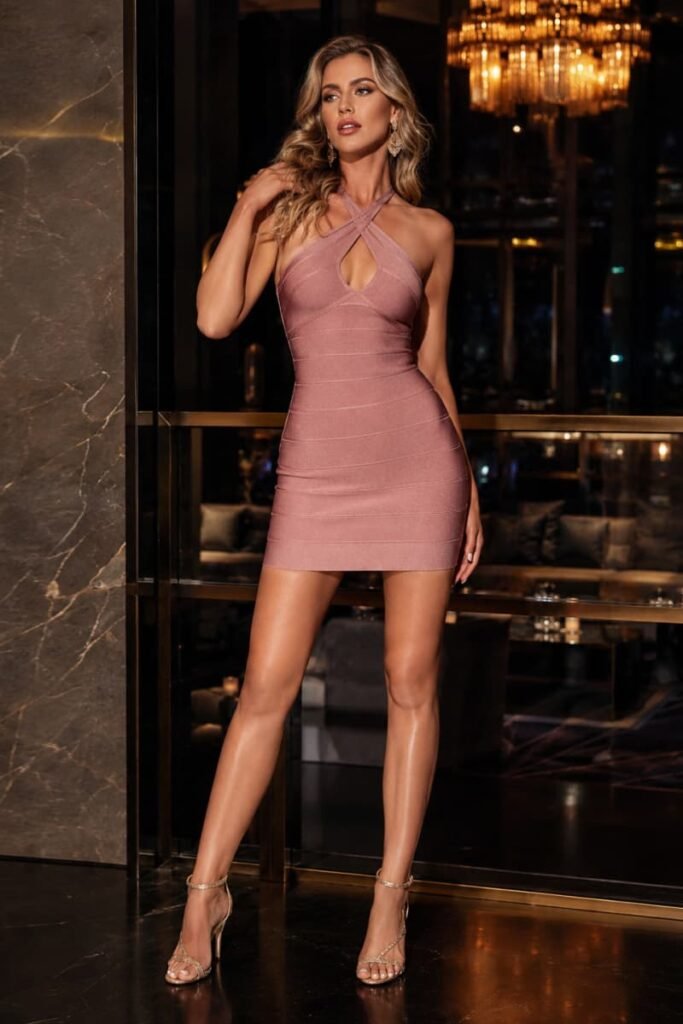
Duolan develops bandage products according to occasion, silhouette, support level and commercial role. Each category requires a different balance of material power, body fit, construction and visual detail.

Bandage Mini Dresses

Mini lengths require careful control of hem stability, thigh movement and garment rise. Strong compression at the lower body can pull the skirt upward during walking or sitting. Pattern length, hip extension, seam direction and hem finish are reviewed together. Mini styles suit party, birthday and going-out collections, with options including strapless, one-shoulder, long-sleeve, ruched and cut-out designs.

Bandage Midi Dresses

Midi styles offer a more polished body-contouring direction for cocktail, social-event and occasion collections. The longer fitted area increases tension across the hip, thigh and knee, so movement and side-seam balance become more important. Slits, back vents or adjusted lower-body tension can improve mobility while preserving a clean silhouette. Midi styles also support repeat colors and seasonal material updates.

Long Bandage Dresses

Long fitted dresses require balanced compression from the upper body through the lower skirt. Excessive tension can restrict walking, distort the zipper or create twisting near the hem. Long styles may use back slits, side slits, flared lower panels or selective stretch zones. Packing and hanging methods also require attention because garment weight can influence recovery and presentation.

Strapless Bandage Dresses

Strapless styles depend on neckline grip, bust shaping, side-seam balance and internal support. A smaller circumference alone does not secure the garment. Non-slip elastic, internal tape, cups, boning or power mesh may be introduced according to the design. The neckline must remain stable without creating excessive pressure, rolling or visible internal components.

Cut-Out Bandage Dresses

Cut-outs change how tension travels through the garment. Edges may gape, curl or stretch unevenly when the opening crosses high-movement or high-pressure areas. Cut-out placement is evaluated on the body, followed by edge stabilization, seam planning and coverage review. Asymmetric waist, side, under-bust and back openings each require a different pattern solution.

Corset Bandage Dresses

Corset-bandage combinations require coordination between elastic outer fabric and structured internal components. Cup position, boning length, waist shaping, zipper load and lining tension must work together. A rigid corset structure cannot simply be inserted into a highly elastic shell. Duolan reviews support requirements and determines where the garment should remain structured and where controlled stretch is still required.

Embellished Bandage Dresses

Rhinestones, crystals, pearls, metal pieces, sequins and decorative panels add weight and can reduce local stretch. Decoration placement must follow garment tension and body movement. Attachment strength, backing material, surface comfort and production consistency are reviewed before bulk. Dense decoration may require revised pattern measurements or internal support to prevent local sagging.

Bandage Sets and Jumpsuits

Matching tops, skirts and jumpsuits extend a stable bandage fabric and fit direction into a broader collection. Separate pieces require waistband stability, top-to-skirt proportion and shade consistency. Jumpsuits add torso length, rise, movement and closure challenges. Shared material and color standards can improve collection cohesion, but each product still needs its own fit and construction review.

Building a Commercial Bandage Dress Collection

A mature collection needs clear product roles, shared fit logic and a controlled development sequence. Duolan helps translate a brand direction into styles which can be sampled, assessed, produced and repeated.

Define Product Roles Before Sampling Begins

A 10–30-style bandage dress program should not consist of repeated versions with minor visual changes. Each style needs a clear role within the range. A balanced collection may include:
  • Hero styles: strong campaign pieces with distinctive construction, cut-outs or embellishment.
  • Core silhouettes: commercially stable mini or midi shapes with proven fit potential.
  • Color extensions: repeatable forms developed across black, neutral, seasonal and statement shades.
  • Premium styles: structured, decorated or technically demanding pieces for a higher price position.
  • Repeat foundations: stable fit blocks suitable for future colors, lengths or neckline changes.
  • Supporting products: matching tops, skirts, jumpsuits or coordinated sets.
Product roles help determine sample priority. Complex hero pieces may start earlier, while color extensions can follow once the fabric and fit basis are confirmed.

Create Shared Fit and Material Families

A stable bandage program becomes easier to control when related products share development logic. One approved base fabric may support several silhouettes, while one fit block may be adapted into multiple lengths or necklines.

Shared development can include:

  • Common bust, waist and hip proportion principles.
  • Approved fabric families with defined power and recovery.
  • Standard zipper, lining and support specifications.
  • Repeatable seam and hem methods.
  • Common color approval and shade control.
  • Reusable grade rules for related silhouettes.
  • Consistent label and packing systems.

Shared standards reduce unnecessary variation while preserving visible differences between styles.

Plan Samples Around Launch Decisions

Sample order should follow business decisions, not random style completion. Campaign pieces, fit foundations and high-risk constructions normally need earlier attention.

A controlled sequence can be:

  • Confirm brand direction, launch date and style priorities.
  • Review fabric and construction risks.
  • Develop base fit styles and complex hero pieces.
  • Correct fit and material direction.
  • Extend confirmed blocks into related styles.
  • Prepare color, photo, sales or size-set samples as required.
  • Lock PP and bulk standards.
  • Plan production by style risk and delivery priority.

The sequence helps protect campaign dates and bulk lead time.

Prepare Reorders During Initial Development

Repeat production becomes easier when development records are preserved from the first order. Paper patterns, BOM versions, material references, color approvals, measurement charts, grade rules, workmanship points and quality records create a reusable product asset. Before a repeat order, Duolan can check:

  • Continued fabric availability.
  • Color continuity and new lab dip requirements.
  • Trim availability or approved substitutions.
  • Previous fit or quality findings.
  • Revised size ratios.
  • Label, barcode or packing updates.
  • Production-line suitability.
  • First-piece requirements for the new run.

Bandage Fabric Directions Compared for Development Decisions

Fabric selection determines support, appearance, recovery, opacity and construction behavior. Specifications below represent decision factors rather than fixed formulas; final standards must follow the approved garment direction.

Material DirectionSupport and HandfeelStretch and RecoveryOpacity and SurfaceSuitable ProductsMain Development Risk
High-Density Elastic KnitFirm support with a compact, substantial handfeelControlled extension with strong recovery when yarn and structure remain stableUsually offers stronger coverage, although pale shades still require extension checksClassic mini, midi, strapless and structured bandage silhouettesExcessive resistance may restrict movement or place high load on seams
Rayon-Blend Bandage KnitSmooth touch with a softer body feel and refined surfaceCan provide balanced stretch, but recovery depends heavily on yarn quality and knit densityClean surface and rich color appearance; lighter shades may require lining reviewPremium party dresses, polished midi styles and softer contour designsWeak recovery can create looseness after wear or fitting
Nylon-Rich Support KnitSmooth, resilient and often lighter in hand than dense rayon blendsGood elasticity and recovery potential when properly engineeredStrong surface durability; sheen and transparency vary by constructionSleek going-out styles, cut-outs and modern fitted collectionsSurface may look overly technical when texture and finish do not match the brand direction
Polyester-Blend Structured KnitStable shape, accessible color development and varied surface optionsStretch range and recovery depend on yarn, knit and elastane percentageCan provide clean color and durability; lower-grade structures may feel dry or rigidCommercial core styles, repeat colors and selected embellished productsHandfeel and recovery can vary significantly across qualities
Power Mesh Support LayerLightweight internal reinforcement rather than a main outer fabricHigh extension with controlled support when correctly matchedTransparent by design and normally used as a concealed support layerBust support, waist stabilization, cut-out control and corset hybridsMismatched tension can create pulling, visible edges or discomfort
Stretch LiningSoft internal coverage selected to move with the shellMust stretch and recover in compatible directions with the outer fabricImproves opacity and comfort; color must remain compatible under extensionLight colors, cut-outs, long styles and products requiring internal coverageA lining with different stretch can restrict the shell or distort fit
Ribbed Support KnitTextured appearance with directional visual characterRib structure can provide flexible extension, although recovery varies by qualityTexture may improve coverage but can enlarge visibly over high-stretch zonesContemporary fitted capsules, long sleeves and minimal silhouettesRib opening and visual distortion can become inconsistent between body zones
Bonded or Double-Layer KnitStronger structure and coverage with increased garment weightExtension may be lower and seams may carry more stressSmooth, substantial surface suitable for sharp silhouettesPremium structured minis, corset hybrids and clean statement piecesWeight, edge thickness and seam bulk require careful pattern and construction planning

Fabric Sourcing and Bulk Material Control

Duolan connects fabric sourcing with garment performance. A material is not approved only by composition or color; support, recovery, opacity, handfeel and production continuity must suit the intended silhouette.

Translate Design Language Into Fabric Requirements

A design brief may describe a dress as sculpted, sleek, soft, strong, polished or minimal. Those words need measurable production meaning. Duolan reviews:

  • Desired compression level.
  • Intended body contour.
  • Required movement and comfort.
  • Surface texture and sheen.
  • Target garment weight.
  • Stretch direction.
  • Recovery expectation.
  • Light-color coverage.
  • Lining or internal support.
  • Decoration compatibility.
  • Target price position.

A soft, high-stretch fabric may work for a ruched mini but fail on a strapless structured style.

Compare Swatches Under Garment Conditions

A swatch should be assessed in a way which reflects the final dress. Relaxed handfeel alone gives incomplete information.

Review can include:

  • Appearance in relaxed and extended conditions.
  • Widthwise and lengthwise extension.
  • Immediate recovery.
  • Surface whitening or color change under stretch.
  • Opacity over light and dark backgrounds.
  • Edge curling.
  • Seam response.
  • Pressing response.
  • Compatibility with lining, elastic, cups and boning.
  • Decoration attachment performance.

Material comparison may also include sample panels when the dress contains cut-outs, heavy embellishment or structured internal sections.

Confirm Color Before Bulk Commitment

Color approval is especially important for body-contouring products because extension can visually lighten a shade. Surface texture and yarn structure can also change how black, red, white, nude and saturated fashion colors appear under studio lighting. The color process may include:

  • Pantone, swatch or physical sample reference.
  • Lab dip development.
  • Review under agreed lighting.
  • Extension appearance check.

Color cannot be evaluated separately from fabric extension and garment coverage.

Lock the Approved Bulk Standard

After fabric approval, Duolan records the material direction for production. The standard may include supplier reference, composition, construction, usable width, color approval, weight direction, stretch behavior, handfeel, surface appearance and special handling notes.
 
Before cutting, the team checks whether bulk material remains aligned with the sample basis. Unapproved substitutions are not treated as routine purchasing decisions. Any meaningful change in stretch, recovery, weight, color, touch or surface appearance requires review because a material change can alter measurements, fit and construction performance.

Engineering Stretch, Recovery and Compression Performance

Bandage performance comes from the relationship between yarn, knit structure, pattern dimensions, body pressure and seam elasticity. Strong development controls those variables as one system.

Map Stretch Direction Before Pattern Cutting

Stretch direction influences how the dress shapes and moves around the body. Widthwise extension often supports circumference fit, while lengthwise extension affects torso balance, neckline position, skirt length and recovery after hanging. Development review includes:
  • Primary and secondary stretch directions.
  • Fabric orientation on each pattern piece.
  • Direction changes across shaped panels.
  • Symmetry between left and right sections.
  • Bias or diagonal deformation near cut-outs.
  • Grain or knit direction around zippers.
  • Directional texture or rib appearance.
  • Potential length growth from garment weight.
Incorrect orientation can create twisting, uneven pressure and inconsistent recovery even when the pattern measurements are correct. Panel orientation is therefore recorded rather than left to cutting-room interpretation.

Evaluate Recovery Beyond Initial Stretch

Immediate extension is only one part of performance. The fabric must also recover after the forces created by dressing, sitting, walking, movement and prolonged wear. Key observations include:
  • Return after controlled extension.
  • Residual growth after repeated movement.
  • Waist and hip shape after fitting.
  • Neckline and armhole recovery.
  • Zipper area stability.
  • Seam-line waviness.
  • Surface change after extension.
  • Recovery after pressing.
  • Length growth during hanging.
  • Performance after agreed care testing.
Weak recovery cannot be solved simply by reducing pattern dimensions. Over-reducing the garment may create discomfort, seam failure and size inconsistency without restoring material performance.

Distribute Compression by Body Zone

The human body does not need equal pressure everywhere. A commercial bandage fit requires planned tension.
  • Bust: shaping and coverage must remain balanced with neckline stability.
  • Under-bust: support may increase without restricting breathing.
  • Waist: compression should create definition without excessive horizontal drag.
  • Abdomen: the front panel should remain smooth rather than collapse or curl.
  • Hip: enough extension is needed for contour and movement.
  • Seat: opacity and seam load require review under full extension.
  • Thigh: tension must allow walking and sitting.
  • Lower skirt: pressure often needs gradual release to reduce upward movement.

Fit evaluation uses front, side and back views because one angle can hide seam displacement or body-zone imbalance.

Transfer Performance Into Production Control

Bulk material can vary in stretch, weight, density or recovery. Production can also change fabric behavior through cutting direction, seam handling and pressing. Control points may include:

  • Bulk fabric comparison with the approved reference.
  • Cutting direction verification.
  • Resting and handling requirements.
  • First-piece measurement and fit review.
  • Stitch elasticity checks.
  • Zipper and neckline stability.
  • In-process measurement checks.
  • Pressing temperature and pressure control according to material.
  • Final recovery before measurement.
  • Packing method based on garment weight and structure.

Six Body Zones Requiring Separate Fit Control

A fitted garment can appear close to the body while remaining technically unbalanced. Duolan reviews six critical zones to control silhouette, comfort and visual consistency.

Bust Shape

Bust fit depends on neckline, cup position, pattern contour, fabric power and internal support. Excessive tension can flatten the shape or pull the neckline downward. Insufficient control can create gaping or side exposure. Strapless, asymmetric and corset hybrids require additional support review. Front, side and movement views are assessed before the bust area is approved.

Waist Definition

The waist creates the central visual line of a bandage dress. Poor balance produces horizontal folds, side-seam displacement or a boxy silhouette. Waist shaping is coordinated with ribcage, abdomen and hip dimensions rather than created by reducing one circumference. Recovery is also checked because a waist may look correct during fitting and loosen after repeated movement.

Abdomen Balance

The front abdomen needs smooth, controlled tension. Excessive negative ease may create diagonal drag lines, fabric whitening or hem lift. Insufficient tension can create looseness between the waist and hip. Panel seams, ruching, lining and power mesh may change the preferred solution. Fit correction focuses on pressure distribution rather than hiding the issue through decoration.

Hip Contour

Hip fit controls much of the side and back silhouette. Inadequate extension pulls side seams forward, opens cut-outs and increases opacity risk. Excess ease weakens the sculpted appearance. Grade rules must preserve hip proportion between sizes. Seam placement and panel direction are reviewed because visual contour can change even when circumference measurements remain within tolerance.

Thigh Movement

A narrow skirt can restrict walking and force the garment upward. Thigh pressure, skirt length, slit position and lower-body stretch must work together. Midi and long styles require greater movement assessment than short minis. Walking, sitting and step movement help reveal issues which remain hidden on a stationary mannequin.

Hem Stability

Hem behavior is influenced by hip pressure, thigh tension, garment length, stitch elasticity and finishing method. Rolling, flaring, waviness or repeated riding-up can reduce perceived quality. The hem must recover after extension and remain visually clean after pressing. Long styles also require hanging and packing review because fabric weight can change the lower silhouette.

Measurement and Grading for Consistent Compression Fit

Bandage sizing cannot rely on flat measurements alone. Garment dimensions, fabric extension and body-zone pressure must preserve the intended silhouette across the approved size range.

Establish a Clear Base Size

Development begins with a defined base size and agreed body or garment measurement standard. The base size may follow an existing brand block, a supplied size chart, an original sample or a newly developed fit direction.
The file should identify:

  • Bust, waist and hip points of measurement.
  • High hip where relevant.
  • Front and back body lengths.
  • Shoulder or neckline dimensions.
  • Armhole and sleeve measurements.
  • Garment length.
  • Slit or cut-out position.
  • Zipper length and opening.
  • Strap length.
  • Hem circumference.

Apply Negative Ease by Zone

Negative ease represents the difference between body dimensions and relaxed garment dimensions. One percentage should not be applied mechanically across the entire dress.
Compression may vary because:
  • Bust shaping needs room for contour.
  • Waist definition may need stronger control.
  • Hip and seat require sufficient extension.
  • Thighs need movement.
  • Necklines need stability.
  • Sleeves require mobility.
  • Long skirts may require tension release below the hip.
  • Lining can change the effective stretch.
Negative ease is therefore developed through fitting and fabric behavior, not treated as a universal formula.

Grade Proportion, Not Only Circumference

A larger size is not a uniformly enlarged version of the base sample. Bust depth, waist position, hip balance, neckline coverage, strap position and garment length may require different grade behavior.
Size grading review covers:

  • Circumference increments.
  • Vertical balance.
  • Bust and under-bust relationship.
  • Waist-to-hip distance.
  • Cut-out placement.
  • Slit length and position.
  • Strap and neckline scale.
  • Sleeve and armhole movement.
  • Zipper length.

Measure After Fabric Recovery

Elastic garments can change dimensions during sewing, pressing and handling. Measurement timing matters.

A controlled inspection method may require:

  • Allowing the garment to recover after sewing or pressing.
  • Placing it flat without stretching.
  • Aligning seams and reference points.
  • Measuring according to the approved POM method.
  • Recording deviations by size and body zone.
  • Reviewing repeated out-of-tolerance areas for root cause.
  • Checking whether a dimensional issue also changes visual fit.
  • Reconfirming first-piece standards before production continues.

Pattern Engineering for High-Stretch Bandage Dresses

Pattern development converts fabric behavior and design intent into body fit. Every panel, opening and seam changes the tension path of a fitted dress.

Build Patterns Around Fabric Power

A pattern cannot be finalized before the fabric direction is understood. Two visually similar knits may require different relaxed measurements, seam placement and grade rules. Pattern review considers:

  • Stretch direction.
  • Recovery strength.
  • Material thickness.
  • Surface texture.
  • Edge curl.
  • Garment weight.
  • Lining compatibility.
  • Intended compression.
  • Target size range.
  • Construction method.

When the final bulk fabric differs from the development fabric, fit may need reassessment before production.

Balance Front and Back Tension

Front and back body shapes require different contour and extension. Poor balance causes side seams to rotate, the back neckline to gape, the front hem to rise or the center-back zipper to wave.

Correction may involve:

  • Rebalancing front and back widths.
  • Adjusting bust and seat shaping.
  • Changing waist suppression.
  • Repositioning panel seams.
  • Correcting shoulder or strap angles.
  • Revising center-back tension.
  • Altering lower-skirt release.
  • Reviewing fabric direction on individual panels.

Side-seam position is a useful visual indicator, but the root cause may occur elsewhere in the pattern.

Stabilize Openings and Cut-Outs

Cut-outs, necklines, armholes and back openings interrupt the garment’s tension structure. An opening can stretch, gape or pull surrounding seams when edge control is insufficient. Available solutions depend on the design and may include:
  • Revised pattern shape.
  • Stabilizing elastic.
  • Clear elastic.
  • Support tape.
  • Facing or binding.
  • Stretch lining.
  • Internal mesh.
  • Strategic seam placement.
  • Reduced decoration weight.
  • Adjusted cut-out location.
The preferred method should preserve the intended clean appearance without creating visible thickness.

Engineer Movement Into Long Silhouettes

Long fitted garments need movement below the hip. Simply extending a mini pattern can create restricted steps, twisting or severe upward pull.

Pattern solutions may include:

  • Controlled release below the seat.
  • Back or side slit.
  • Flared lower panels.
  • Reduced compression below the thigh.
  • Revised seam direction.
  • Additional hem circumference.
  • Different stretch orientation in selected panels.
  • Lining length adjustment.
  • Weight-distribution review.

The final choice should maintain the visual line while allowing walking and sitting.

Custom Design Options Engineered for Stable Production

Design details must remain compatible with stretch, pressure and repeated manufacturing. Duolan reviews how each change affects fit, construction, material usage and bulk consistency.

Neckline Development

Straight, sweetheart, asymmetric, halter, high-neck, plunge and off-shoulder necklines each create different pressure paths. Development reviews coverage, edge stability, bust shape and movement. Strapless and asymmetric styles may need internal elastic, power mesh, cups or boning. Neckline depth and width are graded carefully to preserve the intended appearance across sizes.

Sleeve Construction

Long, short, cap, glove and off-shoulder sleeves need enough mobility without loose underarm areas or over-compression. Sleeve stretch direction, armhole balance and cuff recovery affect comfort. A body fabric suitable for the torso may feel too restrictive on the arm, so panel direction, sleeve measurements or a coordinated material may require adjustment.

Cut-Out Placement

Waist, side, under-bust, back and neckline cut-outs must remain positioned during movement. Openings crossing high-pressure areas need additional stability.

Duolan reviews body coverage, edge behavior, seam load, lining and grade position. A visually strong cut-out should not become larger, lower or less stable in extended sizes.

Length and Slits

Mini, midi and long proportions influence movement, compression distribution and style identity. Slits add movement but create stress at the opening point. Slit height, direction, reinforcement and lining must be planned together.

The final length also needs to remain consistent after fabric recovery, hanging, pressing and packing.

Corset Integration

Corset details may include cups, boning, under-bust seams, lace-up backs, hook-and-eye closures or internal waist support. Elastic shell fabric and structured internal components require compatible tension. Duolan develops the outer silhouette and inner support as one construction rather than attaching a rigid corset system after the exterior sample is finished.
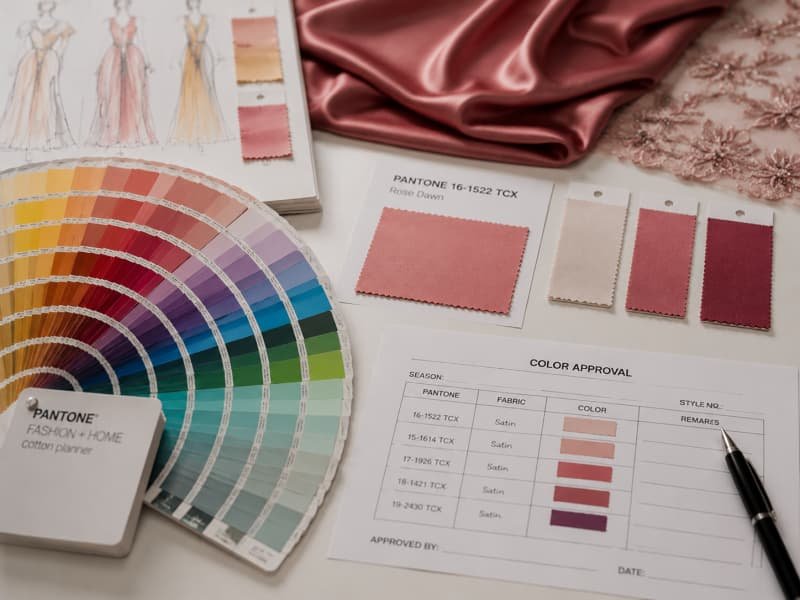
Color Development

Bandage materials can change visually under extension. Dark, pale, nude and bright shades are reviewed in both relaxed and worn conditions. Color development may include lab dips, zipper matching, lining coordination and bulk lot approval. Color continuity becomes especially important when several related styles share the same fabric family.

Surface Embellishment

Rhinestones, pearls, sequins, crystals, metal chains and decorative appliqués can reduce local stretch or add concentrated weight. Placement follows tension, movement and comfort zones. Attachment testing, backing support and surface protection are reviewed before bulk. Decorative layouts also need positioning references so production pieces maintain consistent spacing and symmetry.

Brand Presentation

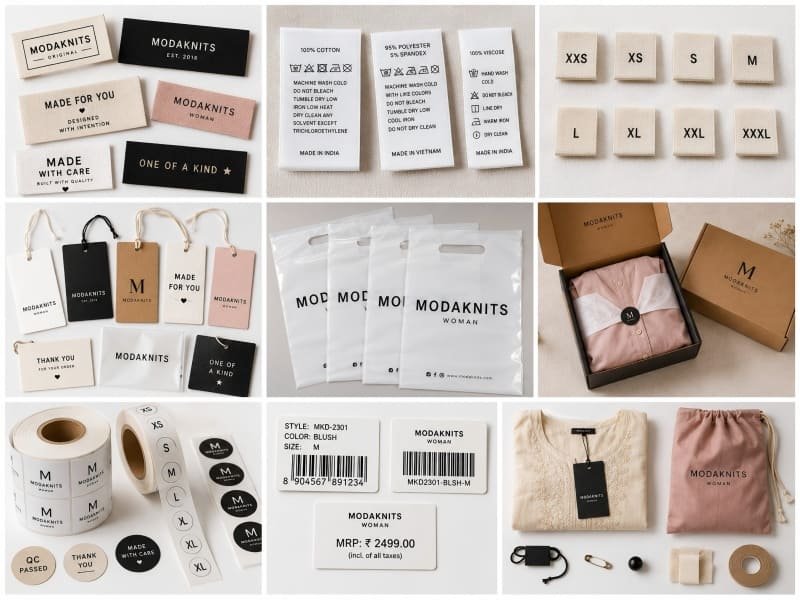
Woven labels, printed labels, care labels, size labels, hangtags, barcodes, polybags and carton marks can be developed according to supplied artwork and packing manuals. Placement is checked so labels do not irritate the wearer or distort a fitted garment. Packaging must protect surface decoration, pressing quality and the final shape during transportation.

Feasibility Review Before Sampling and Quotation

A clearer project brief produces a more accurate development path. Duolan reviews product, material, fit and production requirements before confirming how the style should proceed.

Files and References

A project can begin from a tech pack, sketch, reference image, original garment, measurement chart, fabric swatch or collection brief. Stronger files normally include front and back views, target measurements, size range, material direction, color, construction details, decoration artwork, label requirements, estimated quantity and launch timing. Missing information is identified before sample work begins.

Technical Risk Review

Duolan reviews whether the selected fabric can support the desired silhouette, compression and design details. The team also assesses neckline stability, cut-out position, zipper load, seam elasticity, lining, support structure, grading and production repeatability. Potential conflicts are discussed early, such as a soft fabric paired with heavy decoration or a narrow long skirt without enough movement.

Development Path

After review, the project can be organized into fabric sourcing, pattern development, first sample, fit assessment, revision, color or size samples, PP approval and bulk readiness. Timing depends on material availability, construction difficulty, decoration and approval speed. The proposed path identifies which decisions need to be made before the next stage can begin.

Turning Fit Comments Into Measurable Corrections

Fit comments become useful only when the technical cause is identified. Duolan translates visual and wearing issues into pattern, material or construction actions with a clear revision record.

Upper-Body Corrections

Common issues include neckline gaping, bust flattening, underarm looseness, strap movement and center-front pulling.
Possible root causes:
  • Incorrect neckline shape.
  • Excessive or insufficient bust tension.
  • Strap angle or length.
  • Incompatible lining tension.
  • Weak edge recovery.
  • Cup or support position.
  • Front-to-back pattern imbalance.
  • Fabric direction.
Correction may require reshaping the neckline, redistributing bust ease, changing strap placement, revising support, adjusting the front length or stabilizing the edge. The revised sample is checked from front, side and movement views.

Waist and Hip Corrections

Common issues include horizontal waist folds, diagonal drag lines, side seams moving forward, hip flattening and excessive seat tension.
Technical review may identify:
  • Incorrect waist suppression.
  • Insufficient front or back length.
  • Uneven front-to-back tension.
  • Inadequate hip extension.
  • Incorrect panel direction.
  • Grade-rule imbalance.
  • Lining restriction.
  • Seam placement affecting contour.
Actions can include pattern redistribution, panel reshaping, waist or hip adjustment, revised seam position and lining correction. Measurements alone do not explain every fit issue; visual balance remains part of approval.

Lower-Body Corrections

Common issues include hem rise, twisting, restricted walking, slit opening, knee pressure and lower-skirt waviness.
Potential causes:
  • Excessive thigh compression.
  • Insufficient hem circumference.
  • Unequal panel tension.
  • Incompatible stretch direction.
  • Slit position or reinforcement.
  • Garment length.
  • Fabric growth from weight.
  • Pressing distortion.
Correction may involve releasing lower-body tension, changing slit construction, revising seam direction, adjusting length or adding controlled flare. Walking and sitting tests help verify the result.

Revision Records

Each sample round should show what changed and why. A revision summary can include:

  • Comment reference.
  • Observed issue.
  • Root-cause judgment.
  • Pattern action.
  • Material or construction action.
  • Updated measurement.
  • Visual confirmation required.
  • Bulk implication.
  • Open approval point.
  • Next sample purpose.

Revision records reduce lost information when design, product, technical and production teams work across locations and time zones.

Stretch Workmanship Designed for Movement and Recovery

Bandage dress workmanship must tolerate repeated extension while preserving a smooth exterior. Stitch type, seam construction and handling method are selected according to material and body location.

Elastic Seam Control

Seams need enough elasticity to move with the fabric without breaking or becoming visibly loose. Thread, stitch formation, seam allowance and density are matched to material weight and extension. Seams are assessed in relaxed and stretched conditions. High-load areas such as the hip, zipper end and underarm require closer review.

Overlock Stabilitya

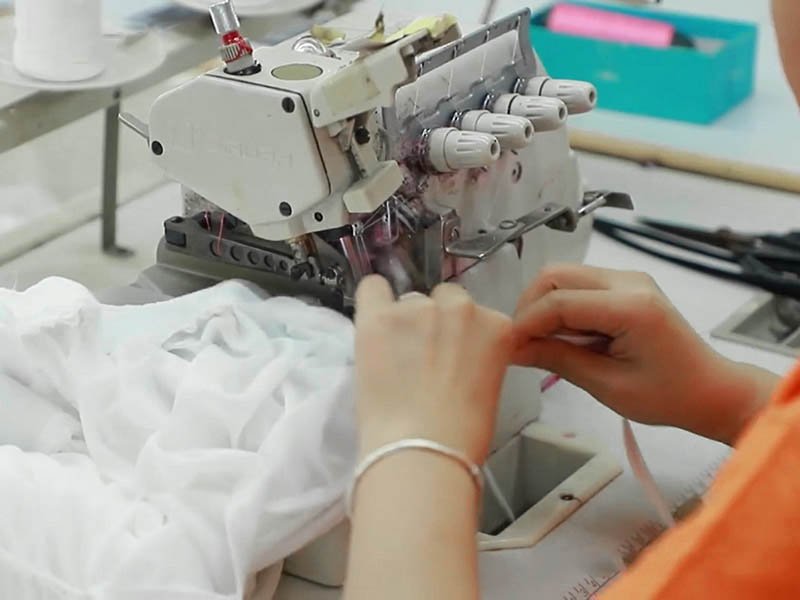
Overlock construction can secure elastic fabric edges and support stretch, but incorrect feed or tension creates waviness, tunneling or tight seams. Differential handling must suit the material. Seam appearance, width, elasticity and recovery are checked so internal workmanship remains clean without changing the outer silhouette.

Coverstitch Finishing

Coverstitch or related stretch finishing may be used where the design and material require a flexible hem or edge. Stitch elasticity must remain compatible with garment extension. Uneven feeding can create rippling, while excessive tension can reduce movement. Finished edges are reviewed after recovery and pressing.

Zipper Reinforcement

Center-back and side zippers carry significant tension in fitted garments. Zipper tape, seam allowance, opening length and reinforcement need to support dressing and wear. Waviness can come from mismatched zipper and fabric tension. Zipper ends, top closures and adjoining seams are checked before release.

Slit and Hem Finish

Slits increase movement but create concentrated stress at the opening. Reinforcement should remain secure without forming a visible lump. Hems must stretch, recover and remain flat. Long and midi styles may require different lower-body handling from minis because garment weight and stride create additional force.

Lining Attachment

A lining must move with the shell rather than restrict it. Attachment points, seam direction, length and stretch compatibility are reviewed carefully. Incorrect lining tension can pull the neckline, shorten the garment, distort cut-outs or change compression. Internal coverage should remain stable during dressing and movement.

Internal Support, Trims and Functional Dress Components

Bandage dress quality often depends on components hidden inside the garment. Duolan specifies trims and support according to fit, movement, comfort and production continuity.

Zippers and Closures

Invisible zippers, exposed zippers, hooks, snaps and other closures are selected according to garment tension and visual direction. Length, tape strength, slider quality, color and top finishing are recorded. Closure testing includes opening, dressing load and surrounding fabric behavior. An approved zipper should remain available or have a controlled replacement process.

Cups and Bust Support

Cups can improve shape, coverage and internal stability in strapless, corset and plunge designs. Cup size, position, thickness, shape and attachment must match the pattern and size range. One cup specification may not suit every size. Internal support should remain concealed and comfortable without creating visible edges.

Boning and Structure

Boning may support side seams, under-bust sections, corset panels or strapless necklines. Length, flexibility, channel construction and end protection affect comfort and stability. Excessively rigid boning can conflict with the elastic shell, while weak boning provides little support. The structure is developed with the garment rather than added as an afterthought.

Support Mesh

Power mesh can reinforce bust, waist, cut-outs and selected internal zones. Stretch direction and power must match the shell and intended pressure. Mesh edges and attachment points should not show through the outer fabric. Color, softness and recovery are also reviewed because the layer remains close to the skin.

Elastic and Tape

Non-slip elastic, clear elastic, support tape and binding can stabilize necklines, armholes and openings. Width, extension, recovery and attachment tension need control. Too much tension creates gathering or discomfort; too little allows gaping. Components are recorded in the BOM so bulk production uses the approved specification.

Labels and Branding

Woven labels, printed labels, care labels and size labels need secure placement without irritating the wearer or showing through a close-fitting shell. Label dimensions, fold, edge softness, color and sewing position are confirmed. Hangtags, barcode stickers and packaging are aligned with the brand’s retail and warehouse instructions.

Quality Control for Custom Bandage Dress Production

Quality control follows the product from incoming fabric through packing. Bandage-specific checks focus on stretch behavior, body-zone measurements, seam elasticity and sample-to-bulk consistency.

QC StageMain ChecksBandage Dress Risk ControlledRecord or Reference
Incoming Fabric ReviewColor, surface, usable width, visible faults, batch consistency, weight direction and approved material matchDifferent fabric behavior changing fit, opacity or recoveryApproved swatch, fabric report, lot record
Stretch and Recovery CheckWidthwise and lengthwise behavior, recovery, edge stability and appearance under extensionLoose waist, stretched neckline, fit inconsistency and seam stressMaterial comparison note
Shade and Opacity ReviewShade under agreed lighting, shell-to-lining match and appearance during extensionLight-color transparency, color lightening and mixed shadesLab dip or approved color reference
Cutting VerificationPattern version, size marker, panel direction, symmetry and cut-out placementTwisting, unequal compression, mismatched panels and wrong gradeCutting instruction and pattern reference
First-Piece ReviewMeasurements, silhouette, seam position, neckline, zipper, lining, support and workmanshipBulk starting with an incorrect construction or fit basisFirst-piece confirmation
Inline MeasurementBust, waist, hip, length, opening positions and recurring deviationsSize drift and inconsistent compression during productionInline measurement report
Seam and Stitch ReviewSeam elasticity, stitch security, waviness, skipped stitches and reinforcementPopped seams, tunneling and reduced movementWorkmanship standard
Zipper and Closure CheckOperation, alignment, top finish, reinforcement and fabric behaviorWavy center back, broken closure or excessive loadApproved trim and sample
Decoration InspectionPlacement, symmetry, attachment, surface comfort and missing componentsInconsistent visual effect, loose decoration and local stretch lossArtwork and placement reference
Final AppearanceShape, pressing, cleanliness, color, surface, lining position and visual balanceGarments arriving distorted, marked or visually inconsistentApproved sample and final checklist
Size Ratio and PackingCorrect size, label, barcode, polybag, assortment and carton markWarehouse errors, mislabeled sizes and mixed packingPacking manual and order breakdown
Pre-Shipment ReviewQuantity, final inspection status, packing condition and required documentsShipment release before quality and document completionInspection and shipment records

Protecting Sample-to-Bulk Consistency

A confirmed sample must be converted into production standards. Duolan aligns product, material, workmanship and quality references before the bulk order moves forward.

Confirm the Sample Status

A sample can be visually approved while still needing technical clarification. Before bulk.

Duolan identifies whether the current version is:

  • Fit confirmed.
  • Visually confirmed.
  • Approved as PP basis.
  • Approved with comments.
  • Pending material confirmation.
  • Pending grade confirmation.
  • Pending label or packing details.
  • Still requiring technical refinement.

Clear status prevents one department from treating a partially approved sample as a final production reference.

Stretch Jersey

Lock Materials and Components

Bulk standards should identify:
  • Outer fabric.
  • Lining.
  • Color.
  • Zipper.
  • Cups.
  • Boning.
  • Elastic.
  • Support mesh.
  • Decoration.
  • Labels.
  • Hangtags.
  • Packaging.
  • Approved substitutes, when applicable.

Material locking protects fit and appearance because a small change in power, recovery, thickness or trim tension can change the garment result.

Align Pattern and Workmanship

The production file connects the final pattern with measurements, grade rules and construction. Key points include:

  • Pattern version.
  • Base size.
  • Size range.
  • Grade rule.
  • Seam allowance.
  • Stitch and seam method.
  • Zipper construction.
  • Cut-out stabilization.
  • Support position.
  • Decoration placement.
  • Pressing method.
  • Quality tolerances.

Define Quality Release Points

Quality control begins before final inspection.

Release points may include:

  • Bulk fabric approval.
  • Cutting direction confirmation.
  • First-piece approval.
  • Initial production inspection.
  • Inline measurement and workmanship checks.
  • Decoration inspection.
  • Final random or full inspection according to the project.
  • Packing verification.
  • Shipment document review.

A production-readiness note can summarize open points and the conditions required before bulk release.

First-Piece and Pilot Production Before Full Release

High-risk bandage styles benefit from controlled validation before full-volume production. Early verification prevents one technical error from spreading across thousands of garments.

When Pilot Review Matters

Pilot or first-piece review is especially valuable for new bandage fabrics, new fit blocks, extended size ranges, structured bust areas, complex cut-outs, long narrow silhouettes, heavy embellishment, new zipper methods and first bulk orders. The team identifies which details carry enough risk to justify verification before full cutting or full-line release.

What Gets Verified

Review can cover measurements, compression balance, seam elasticity, neckline stability, zipper behavior, lining, support structure, cut-out position, slit function, decoration, pressing and packing. A first-piece garment is compared with the approved reference and production file. Findings are recorded as release, correction or reconfirmation actions.

Production Release Decision

After review, the style may be released to bulk, adjusted at a specific operation, returned for material or pattern correction, or submitted for further approval. A controlled release protects quality and scheduling because corrective work remains limited to a small quantity. Production continues only after the critical standard is clear. 

Production Planning for Multi-Style Bandage Programs

Duolan does not treat a 10–30-style collection as one undivided production block. Styles are classified by fit, material, construction and delivery risk before resources are assigned.

Break Down the Order by Style Risk

Order planning begins by separating products according to their manufacturing characteristics. Categories may include:
  • Stable core bandage style.
  • New fit-sensitive style.
  • Material-sensitive pale-color style.
  • Corset or support-structured style.
  • Embellished style.
  • Cut-out or asymmetric style.
  • Long fitted style.
  • Repeat style.
  • Priority launch style.
  • Replenishment style.
Each category receives appropriate sample, first-piece, quality and scheduling attention.

Match Styles With Suitable Resources

Sixteen owned womenswear factories and more than 20 long-term partner factories provide different production options. Allocation considers:
  • Product complexity.
  • Familiarity with the construction.
  • Fabric handling ability.
  • Required workmanship.
  • Quantity.
  • delivery deadline.
  • Quality requirement.
  • Special-process coordination.
  • Repeat-order history.
  • Current production status.
Core and higher-risk styles can remain under closer control, while confirmed commercial products can use planned capacity expansion.

Run Multiple Styles Without Losing Control

A multi-style program is tracked by style, color, size, quantity, material status, sample approval, production stage, quality findings and packing status. Project coordination may use:

  • Style-level timeline.
  • Material-readiness update.
  • Sample approval list.
  • Production priority note.
  • First-piece status.
  • Inline quality update.
  • Packing progress.
  • Shipment plan.

The goal is to prevent one delayed material or unresolved approval from confusing the entire collection.

Plan Production Around the Launch Date

Common bulk production references are:

  • Simple styles: approximately 15–20 days.
  • Regular styles: approximately 20–30 days.
  • Complex styles: approximately 30–45 days.


Timing begins after material readiness, approved production basis and scheduling confirmation.

Decoration, special processes, large size ranges, high style counts and staggered approvals can change the plan.

Shipping references may include 3–7 days by courier, 5–8 days by air and approximately 20–35 days by sea, subject to destination and logistics conditions.

Compliance, Confidentiality and Brand-Level Project Discipline

Product quality, document control and design protection are part of a formal manufacturing relationship. Duolan prepares project requirements early rather than treating compliance as a final shipping task.

Compliance Preparation

Duolan’s core manufacturing system has completed SMETA and SMETA 2-Pillar audits and maintains a SMETA social audit record. Project-specific requirements can involve BSCI, ISO 9001, AATCC, ASTM, OEKO-TEX®, EN, China GB, GOTS or a brand’s own manual. Required testing and documentation are reviewed according to market, material and product scope rather than described as universal certification for every garment.

Labeling and Documents

The team can coordinate composition labels, size labels, care labels, country-of-origin information, hangtags, barcode stickers, polybags, assortment instructions, carton marks and warehouse labels according to approved artwork and packing manuals. Shipment preparation may also include invoice, packing list, HS-code information, testing records and inspection documents required by the agreed delivery arrangement.

Design Confidentiality

Tech packs, original samples, patterns, BOMs, label artwork, unreleased designs and collection files are treated as project assets. NDA review can be supported where required. Brand names, labels and unreleased garments should not be published without permission. Capability evidence can use anonymous cases, cropped process images, masked records and non-sensitive samples.

Bandage Dress Projects Solved Through Controlled Development

The following anonymized programs show how fit, material, style planning and bulk controls can be organized for large fashion dress orders.
Australia|Going-out Mini Collection

US Going-Out Collection

Program: An American going-out label developed 18 bandage and fitted dress styles across mini and midi lengths. The confirmed order covered approximately 36,000 pieces in four color families and sizes XXS–XL. Initial challenge: Pale colors became visibly lighter over the hip and seat during extension. The first fit direction also created excessive waist pressure, front-hem rise and side seams moving forward on two core silhouettes.

Development actions:

  • Compared three supportive knit directions for recovery and opacity.
  • Introduced compatible stretch lining for selected pale colors.
  • Rebalanced front and back pattern tension.
  • Reduced lower-body compression while preserving waist definition.
  • Reviewed cut-out positions across three sizes.
  • Completed two structured fit rounds.
  • Locked fabric, lining, measurements, grade rules and zipper standards before PP approval.

Production control: The 18 styles were separated into stable core styles, pale-color risk styles and cut-out styles. First-piece checks focused on opacity, side-seam position, zipper behavior and hem rise. Result: The collection moved into a 36,000-piece bulk program with one shared material family, four controlled color groups and documented fit standards for future color extensions.

UK Occasionwear Program

Program: A British occasionwear label developed 12 corset-bandage and structured fitted styles, totaling approximately 24,600 pieces across sizes UK 6–18. Initial challenge: Early samples showed center-back zipper waves, bust compression and visible internal support edges. Long midi styles also restricted walking and opened excessively at the slit.

Development actions:

  • Reviewed shell, lining and power-mesh tension.
  • Repositioned bust cups and revised under-bust shaping.
  • Adjusted boning length and channel construction.
  • Rebalanced center-back pattern tension around the zipper.
  • Released lower-skirt pressure below the thigh.
  • Revised slit height, overlap and reinforcement.
  • Conducted size-set review on three representative sizes.
  • Created separate workmanship instructions for structured and non-structured styles.

Production control: Corset hybrids remained within a dedicated high-control route. First pieces were checked for bust position, zipper line, boning comfort, slit function and measurement recovery. Result: Twelve styles entered a 24,600-piece production plan with clearer separation between elastic contour zones and structured support zones. Approved construction records were retained for the next occasionwear program.

Multi-Market Party Program

Program: A multi-brand fashion group prepared 27 party and bandage styles for North American and European channels. The combined order reached approximately 72,000 pieces across mini, midi, embellished and long-sleeve fitted categories. Initial challenge: The collection used six fabric directions, multiple rhinestone layouts and different size specifications by market.  Development actions:

  • Grouped 27 styles into four fit and material families.
  • Reduced unnecessary fabric variation.
  • Created shared zipper, lining and label standards.
  • Prioritized seven campaign styles and eight commercial fit foundations.
  • Reviewed decoration layouts under garment extension.
  • Separated North American and European grading files.
  • Used style-level approval and material-readiness tracking.
  • Locked PP references before multi-line production planning.

Production control: Production was staged by material family and risk level. Decoration, measurements, first-piece findings and packing status were monitored separately for each style group. Result: The 72,000-piece program progressed through a coordinated multi-style production path without treating all styles as one bulk block. 

Frequently Asked Questions About Bandage Dress Manufacturing

A bodycon dress describes a close-fitting silhouette, while a bandage dress usually relies on a denser, more supportive stretch structure with stronger contour and recovery requirements. Development must still evaluate the actual fabric because product names do not guarantee performance. Compression, opacity, seam elasticity and grading should be confirmed through material review and fitting.
Yes. Development can begin from reference images, sketches, an original garment, a tech pack or a collection brief. More accurate files improve quotation and sample direction. Duolan reviews fabric, construction, fit, measurements, size range, decoration and bulk feasibility before confirming the sample plan.
No single composition suits every design. Selection depends on compression, handfeel, recovery, opacity, garment weight, surface, color, construction and price position. Dense elastic knits, rayon blends, nylon-rich structures and other supportive knits can be considered after the target silhouette is defined.
Fabric is reviewed in relevant directions and under extended conditions. Recovery, surface change, opacity, edge behavior and seam response are assessed with the intended pattern and construction. Bulk material is compared with the approved direction before cutting and monitored through first-piece and inline controls.
Grade rules are reviewed by body zone rather than applying one uniform percentage. Bust shape, waist definition, hip extension, cut-out position, garment length and movement must remain balanced. High-risk programs may use size-set samples before bulk production.
Yes. Such products may require cups, boning, power mesh, non-slip elastic, support tape or adjusted lining. The internal structure is developed together with the elastic shell so support, movement and external appearance remain compatible.
Duolan can coordinate lab dips or physical color references according to the project. Color is reviewed in relaxed and stretched conditions because extension can change shade depth and opacity. Shell, lining, zipper, elastic and decoration colors can also be coordinated.
A program may include development, fit, revision, color, presentation, size-set and PP samples. Not every project needs every stage. The sample path depends on material risk, structure, size range, launch needs and whether the style is new or based on an approved fit block.
Before production, Duolan aligns the approved sample with fabric, color, lining, trims, measurements, grade rules, workmanship, labels, packing and quality checkpoints. High-risk styles may require first-piece or pilot confirmation before full release.
Yes. Multi-style orders are separated by fit, material, construction, quantity and timing. Styles can be grouped into shared fit or fabric families, while complex products receive different sample, production and quality paths from stable repeat styles.

Start Your Bandage Dress Development Review

Send Duolan your tech pack, design sketches, reference images, original sample photos, measurement chart or collection brief. Include the target size range, fabric direction, planned style count, estimated quantity, launch date, color requirements, labeling standards and packing instructions whenever available.

Our team will review the product structure, material behavior, compression direction, fit priorities, sample route and bulk-production risks before confirming the next step. For multi-style programs, sharing style priorities and target delivery windows allows us to identify which products should begin first, which materials can be shared and which constructions require additional verification.

You may also provide:

  • Target market and sales channel
  • Base size and grading standard
  • Required sample purpose
  • Desired compression level
  • Lining or support requirements
  • Cut-out or corset details
  • Decoration artwork
  • Testing and compliance manual
  • Warehouse and barcode instructions
  • Preferred shipping arrangement

Start Your Apparel Development Project

OEM/ODM Manufacturing Support for Fashion Brands

Share your collection details, estimated quantities, target market, development timeline, and technical requirements. The production team will review your request and provide a tailored manufacturing solution based on your product category, fabric selection, construction needs, and delivery schedule.

Fashion Manufacturing Support with Scalable Production Capacity

From sample development to bulk production, Duolan supports fashion brands with confidential OEM/ODM manufacturing, stable quality management, flexible production planning, and coordinated multi-factory execution for seasonal and capsule collections.

Need Direct Assistance?

Seraphinite AcceleratorOptimized by Seraphinite Accelerator
Turns on site high speed to be attractive for people and search engines.