 Skip to content
Custom Beach Dress Manufacturer
Beach, vacation and resort dress development built for established fashion brands managing multi-style seasonal collections and repeat production programs.
Duolan develops beach dresses from product direction through controlled bulk delivery. The workflow covers fabric and print review, pattern development, fit and coverage control, sample progression, production readiness, multi-style bulk planning, quality inspection, private label details, packaging and delivery coordination for structured resort and vacation dress programs.
- 16 owned womenswear factories and 20+ long-term satellite factories support coordinated launch, repeat and scale-up production.
- 300 garment sewing lines allow beach dress programs to be separated by woven, printed, lightweight, lined, embellished or structure-sensitive requirements.
- 15,000-35,000 monthly sample-development capacity supports parallel resort style reviews, revisions, colorways and PP confirmations.
- An anonymized US resortwear program covered 24 styles and 58,400 pieces across printed maxis, halter midis, wrap dresses and beach-to-dinner styles.
- An anonymized European multi-brand resort program covered 28 styles and 76,800 pieces with separate label, print, sizing and delivery requirements.
A Manufacturing System Built for Dress Programs
30+ Years Development
- Long-term womenswear product development
- Strong focus on fashion and occasion dresses
- Experience translating market direction into production
- Knowledge extending beyond basic cut-and-sew execution
16 Owned Factories
Sixteen owned womenswear factories provide a controlled base for important styles, development-sensitive products and production programs requiring closer coordination. Core styles can remain within a managed manufacturing structure rather than being placed only according to temporary sewing capacity.
- Greater control over priority programs
- Better connection between sampling and bulk
- Structured production allocation
- Support for recurring and growing orders
20+ Satellite Factories
More than twenty long-term satellite factories add production flexibility for multi-style orders, repeat programs and seasonal volume increases. Factory allocation is planned around style complexity, fabric category, workmanship requirements, delivery dates and available production paths.
- Flexible capacity allocation
- Support for parallel style production
- Additional options for replenishment
- Production matching by garment type
12,000+ Workers
- Multi-location capacity support
- Production paths for varied complexity
- Better response during peak seasons
- Resources for launch and repeat programs
300 Sewing Lines
Around 300 garment sewing lines support large-scale womenswear production across different factories. Beach dress programs can be separated by woven, lightweight, lined, printed, embellished or structure-sensitive requirements rather than being treated as one undifferentiated order.
- Line matching by construction needs
- Parallel production for several styles
- Better separation of high-risk products
- Capacity for larger seasonal programs
15,000-35,000 Samples
The wider sample-development system can support approximately 15,000-35,000 sample pieces or development iterations per month, covering roughly 3,000-8,000 styles. Such density supports brands running numerous developments, colorways, revisions and pre-production confirmations within the same season.
- Multi-style development capacity
- Support for first samples and revisions
- Parallel seasonal projects
- Stronger continuity into bulk production
Built for Established Fashion and Product Teams
Fashion Dress Brands
Dress-focused labels need more than a factory capable of copying a reference image. They need support across silhouette balance, material behavior, fit, visual finish, production planning and future replenishment.
- Seasonal beach and resort collections
- Multi-style launch programs
- Brand-specific fit and size standards
- Repeat and scaled production support
Product Development Teams
- Fabric and trim review
- Pattern and sample development
- Fit-comment interpretation
- Production-readiness planning
Buying and Sourcing Teams
- Supplier capability review
- Multi-style order coordination
- QC and packing requirements
- Inspection and delivery cooperation
Multi-brand Fashion Groups
- Multiple style groups
- Different delivery windows
- Separate brand specifications
- Repeat-order data continuity
Three Routes for Custom Beach Dress Development
Full Custom OEM From Your Technical Files
- Fabric composition, weight, stretch, drape and opacity
- Lining, facing, interfacing and internal construction
- Neckline, strap, halter, backless and closure structure
- Print repeat, placement, color and panel direction
- Measurement points, fit intention and target market
- Label, packing, inspection and delivery requirements

Development-supported ODM From a Design Direction
Some established brands begin with references, moodboards, seasonal color direction or a collection concept rather than a complete technical package. Duolan can help organize those inputs into a workable dress-development path. A useful ODM brief may include:
- Reference images or hand sketches
- Intended selling season
- Target retail or sourcing price band
- Preferred length and silhouette
- Fabric hand feel or composition direction
- Color and print story
- Size range and target market
- Quantity per style and anticipated total program
- Launch, campaign and delivery dates
Duolan then reviews which visual features carry the strongest product value. A flowing skirt may require viscose-type drape, while a structured cotton blend would change the result. A low back can create strap, support and coverage risks. A large tropical print can lose impact after gathering or seam placement. Material alternatives are judged against appearance, wearability, cost, repeatability and lead time. ODM support does not mean uncontrolled design substitution. Key decisions remain visible and reviewable. Fabric options, print options, lining approaches, pattern direction and sample priorities are discussed before the selected route moves forward.

Multi-style Collection Development
Beach and resort programs often contain 10-30 styles rather than one isolated dress. A collection may combine hero printed maxis, commercial midis, lightweight cover-up dresses, easy travel styles and beach-to-dinner products. Collection planning should establish:
- Which styles carry campaign value
- Which styles support commercial volume
- Which silhouettes can share fabrics
- Which prints require separate development
- Which products need early fit testing
- Which styles involve longer material preparation
- Which products are likely to generate repeat orders
- Which samples are needed for fit, sales or campaign photography
Duolan can divide the program into development groups and production paths. A printed woven maxi does not require the same process as a crochet-detail cover-up or lined halter dress. Organizing those differences early prevents one difficult style from disrupting the entire launch calendar.
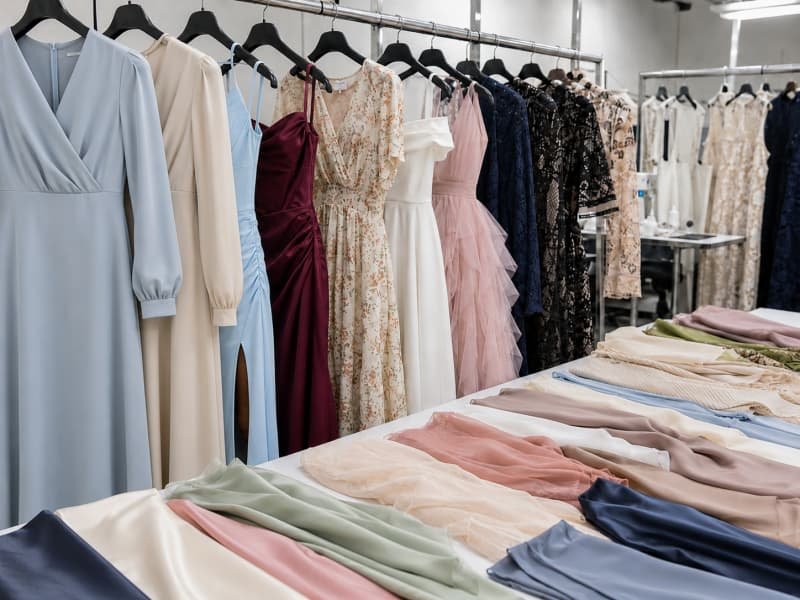
Beach Dress Styles Developed for Modern Resort Collections
Each product direction requires different fabric, fit, coverage, print and production decisions before approval for bulk manufacturing.

Printed Maxi Dresses
- Suitable fabrics: viscose blends, lightweight crepe, chiffon-type fabrics
- Key risks: mismatched panels, twisted side seams, uneven hems
- Main control: garment-scale print and drape review

Beach Midi Dresses
- Suitable structures: wrap, slip, shirred and panelled shapes
- Key risks: awkward calf length and heavy skirt balance
- Main control: fit and length review on the intended size
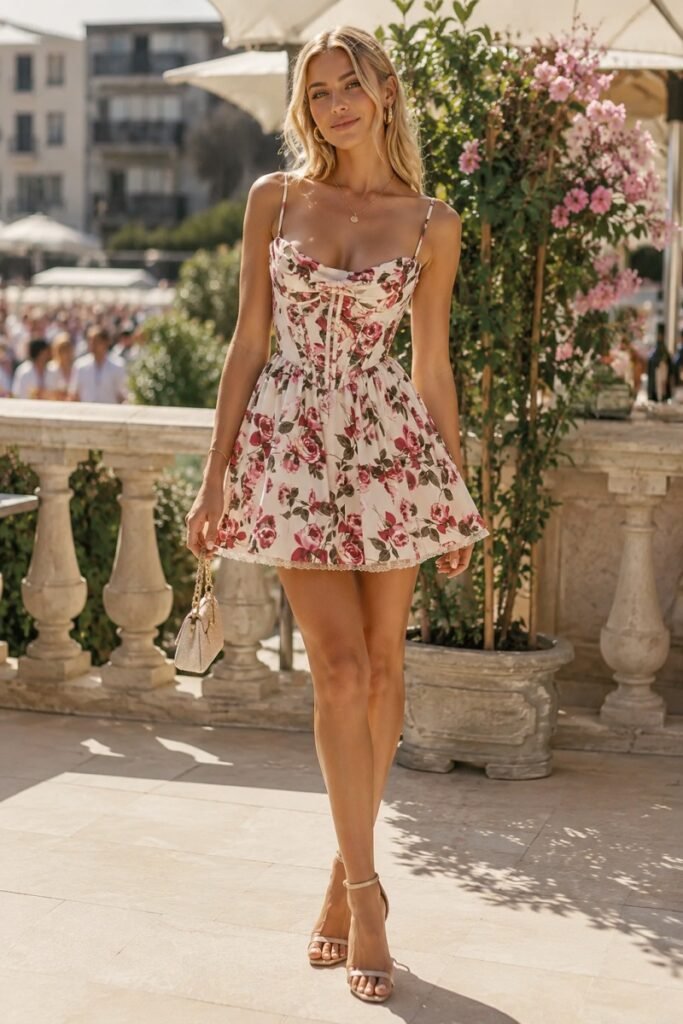
Beach Mini Dresses
- Suitable fabrics: cotton voile, poplin, viscose and light crepe
- Key risks: insufficient seat coverage and hem lift
- Main control: movement, sitting and wind-exposure review

Halter Beach Dresses
- Suitable fabrics: soft woven fabrics with controlled weight
- Key risks: neck discomfort, gaping armholes, unstable bust fit
- Main control: tension, coverage and closure evaluation

Backless Resort Dresses
- Suitable structures: tie-back, cross-back, elasticated and fitted-waist designs
- Key risks: slipping shoulders and unstable side coverage
- Main control: back support and movement testing

Vacation Slip Dresses
Slip dresses rely on fabric surface, bias behavior, seam finish and clean proportions. Minimal styling leaves little room for construction errors.
- Suitable fabrics: satin-type fabrics, crepe and fluid viscose blends
- Key risks: seam puckering, clinging, twisting and visible lining edges
- Main control: grain, seam, pressing and drape review

Wrap Beach Dresses
- Suitable fabrics: printed viscose, crepe, voile and light linen blends
- Key risks: front opening, shifting waist and inconsistent overlap
- Main control: movement, coverage and grading review

Cut-out Resort Dresses
- Suitable structures: waist cut-outs, side cut-outs and controlled under-bust openings
- Key risks: stretching, rolling edges and distorted placement
- Main control: reinforcement, fit and grading evaluation

Beach Shirt Dresses
- Suitable fabrics: cotton voile, poplin, linen blends and viscose
- Key risks: placket twisting, collar collapse and uneven button spacing
- Main control: interfacing and construction balance
Build a Resort Collection With Clear Product Roles
Hero Styles for Campaign and Brand Recognition
Hero dresses create the first visual impression of a resort drop. Common directions include large-scale printed maxis, dramatic halters, open-back silhouettes, cut-out dresses and fluid evening pieces. A hero product carries more development risk because photography, brand identity and launch messaging depend heavily on its finish. Important decisions include:
- Print scale and placement on the complete garment
- Skirt movement during walking and photography
- Neckline and open-back stability
- Color strength under sunlight and studio lighting
- Lining visibility through light fabrics
- Hem finish and garment length consistency
- Pack-and-recovery behavior for travel distribution
Hero styles should move into development early enough for print, color and fit refinement. A visually strong dress may require more than one sample purpose: an initial development sample, fit sample, photo-ready sample and PP sample. Combining every objective into one rushed sample creates avoidable risk. Wearing scenarios include beach clubs, destination events, resort campaigns, cruise evenings, hotel restaurants and seasonal editorial shoots.
Commercial Dresses for Broader Sell-through
- Wrap midi dresses
- Printed day dresses
- Lightweight shirt dresses
- Adjustable strap dresses
- Relaxed waist maxis
- Smocked or softly fitted dresses
Easy Travel and Vacation Pieces
- Folding recovery
- Wrinkle visibility
- Garment weight
- Fastening convenience
- Strap and tie security
- Sheerness under daylight
- Care-label accuracy
- Packing method
Beach-to-Dinner Dresses
Beach-to-dinner styles help brands extend wear beyond a short swimwear moment. They should feel relaxed in daylight and refined enough for evening settings. The transition depends on:
- Controlled transparency
- More polished neckline and closure details
- Stable coverage without heavy internal structure
- Fabrics with movement and a clean surface
- Colorways suited to daytime and evening merchandising
- Shoes and accessory compatibility
- Strong visual finish after packing
A full resort program benefits from balancing daytime ease with evening value. The same collection may use cotton or viscose for day styles, then introduce refined crepe, mesh layers or satin-type fabric for evening products. Wearing scenarios include sunset events, dinners, resort bars, destination celebrations and cruise-night dressing.
Six Requirements Behind a Reliable Beach Dress Program
Collection Coherence
- Hero and commercial styles must support one story
- Shared fabrics should feel intentional
- Colorways need a clear rhythm
- Product roles should be defined before sampling
Fabric-correct Development
- Drape must support the intended silhouette
- Opacity must suit the wearing scenario
- Shrinkage and recovery affect sizing
- Fabric availability influences bulk timing
Print Consistency
- Strike-offs should be reviewed before garments
- Panel direction must be controlled
- Gathered areas can distort motifs
- Bulk print standards need clear approval references
Fit and Coverage
Relaxed resort dressing still requires disciplined fit. Necklines, open backs, straps, side slits and short lengths must remain secure across movement and size grading.
- Coverage is checked from several angles
- Strap lengths and positions need control
- Lining must end in the correct place
- Fit intent should remain consistent across sizes
Sample-to-Bulk Repeatability
A successful sample has limited value when materials, construction or measurements cannot be reproduced. Approval details need to become a manufacturing standard.
- Materials and trims are locked
- Comments are consolidated
- PP or production basis is defined
- First-piece or pilot verification may be used
Launch-calendar Coordination
A resort launch contains many connected dates: campaign photography, range review, ordering, production, inspection, shipping and warehouse intake. Late decisions compress later stages.
- Complex styles should begin earlier
- Prints and custom colors need preparation time
- QC and shipping require protected buffers
- Several styles may follow different paths
Control Beach Dress Risks Before Bulk Production
Beach dresses appear relaxed, yet lightweight fabrics, open structures, prints and longer hems create specific development and production risks.
| Development or Production Risk | Commercial Impact | Duolan Control Direction |
|---|---|---|
| Fabric is more transparent than expected | Complaints, returns and limited wearing occasions | Review daylight opacity, lining color, lining length and seam visibility during sample development |
| Fabric lacks intended drape | Silhouette looks stiff, heavy or inexpensive | Compare swatches by weight, hand feel, fall and garment-scale movement before final selection |
| Large print loses impact after cutting | Approved artwork looks fragmented on the garment | Review repeat size, panel width, gathering, seam position and print placement on the actual pattern |
| Printed panels do not align | Side seams and front openings look uncontrolled | Define direction, matching priority and acceptable alignment points before cutting |
| Halter neckline creates neck pressure | Low comfort and unstable wear | Check garment weight, tie width, neck tension, bust support and fastening method |
| Backless construction slips during movement | Fit complaints and weak consumer confidence | Review shoulder, waist and back anchoring through movement and wear tests |
| Lightweight seams pucker | Garment surface appears uneven in photography and retail presentation | Match needle, thread, stitch balance, seam allowance, handling and pressing to the fabric |
| Maxi hem becomes uneven | Poor visual quality and failed inspection | Allow fabric relaxation, control grain, confirm hanging behavior and measure finished length consistently |
| Sample material differs from bulk material | Approved appearance cannot be reproduced | Lock fabric reference, color, print, lining and trim information before bulk release |
| Lining changes outer drape | Skirt falls differently from the approved sample | Match lining weight, stretch, length and attachment method to the shell fabric |
| Size grading shifts neckline or cut-out position | Larger or smaller sizes lose intended proportion | Review critical vertical and horizontal positions through grading rather than adding measurements mechanically |
| Packing creates permanent creases | Product arrives with damaged presentation | Select folding method, tissue support, hanger packing or protective inserts according to fabric behavior |
Fabrics Selected for Drape, Coverage and Wearability
Material selection starts with the intended silhouette, use, price level, print route, packing method and bulk-production requirements.

Viscose Blends
- Strengths: fluid drape, print clarity and warm-weather comfort
- Review points: shrinkage, wet strength, colorfastness and seam stability
- Suitable styles: printed maxis, wrap midis and relaxed day dresses

Cotton Voile
- Strengths: soft touch, airy wear and natural-fiber positioning
- Review points: opacity, lining, shrinkage, wrinkling and seam allowance
- Suitable styles: cover-ups, day dresses and layered beach minis

Cotton Poplin
- Strengths: shape definition, clean sewing and broad print compatibility
- Review points: stiffness, garment volume, crease behavior and comfort
- Suitable styles: shirt dresses, panelled minis and structured midis

Linen Blends
- Strengths: breathable appearance, texture and premium resort positioning
- Review points: wrinkles, slubs, shrinkage, color variation and seam stress
- Suitable styles: relaxed maxis, shirt dresses and daywear sets

Lightweight Crepe
- Strengths: versatile drape, cleaner packing recovery and refined finish
- Review points: snagging, shine, seam impressions and heat sensitivity
- Suitable styles: midis, wraps, halters and beach-to-dinner dresses

Chiffon-type Fabrics
- Strengths: light movement, layering and print possibilities
- Review points: fraying, slipping, seam puckering and lining interaction
- Suitable styles: printed maxis, cover-ups and layered occasion-resort dresses

Lightweight Satin
- Strengths: fluid shine, elevated presentation and evening value
- Review points: surface marks, color appearance, seam puckering and packing creases
- Suitable styles: slip dresses, halters and refined resort evening dresses

Printed Polyester Wovens
- Strengths: print consistency, easier care and travel performance
- Review points: static, heat sensitivity, hand feel and visual quality
- Suitable styles: commercial printed dresses and travel-focused collections

Mesh and Lace Layers
- Strengths: visual layering, controlled transparency and design flexibility
- Review points: snagging, stretch recovery, seam irritation and lining color
- Suitable styles: cover-ups, cut-out designs and resort evening dresses
Fabric Decisions Shape the Final Beach Dress
Drape, Weight and Silhouette Must Work Together
- Vertical fall: how the fabric drops from the shoulder, waist or hip
- Body: whether the material collapses, floats or holds volume
- Movement: how the skirt behaves during walking, wind and photography
- Surface: matte, textured, crisp, brushed or reflective appearance
- Garment weight: important for halters, straps and long dresses
- Bias behavior: relevant for slip dresses and fluid skirts
- Seam response: whether stitching creates puckering or impressions
Opacity, Lining and Warm-weather Comfort
- Daylight and strong backlighting
- Light and dark underwear contrast
- Fabric stretch or tension
- Single and double layers
- Printed and unprinted areas
- Wet appearance where relevant
- Seam and pocket visibility
- Lining color and length
Wrinkle Behavior and Packing Recovery
Resort dresses travel through factories, inspection, cartons, warehouses, stores, ecommerce parcels and consumer luggage. A fabric should be evaluated after folding as well as after pressing. Relevant checks include:
- Wrinkle depth after controlled folding
- Recovery after hanging
- Steam response
- Heat sensitivity
- Risk of glazing or shine
- Permanent crease formation
- Print transfer or color migration
- Surface abrasion during transport
Natural fibers often provide a desirable resort appearance but can crease more visibly. Synthetic or blended materials may recover better but need suitable hand feel and heat control. A final choice should reflect the brand’s product positioning and care expectations rather than one universal preference. Packing development may involve tissue, folding boards, protective interleaving, individual polybags, hanger packing or carton-density adjustment.
Material Availability and Bulk Repeatability
A sample fabric may look correct yet remain unsuitable for a 20,000-80,000-piece multi-style program when availability, dye lots, print capacity or repeat orders are not considered. Bulk readiness requires review of:
- Mill availability
- Fabric minimums
- Custom-color requirements
- Print preparation
- Lot consistency
- Reorder potential
- Replacement lead time
- Testing requirements
- Shrinkage and dimensional stability
- Usable width and cutting consumption
Duolan may propose an alternative when the original direction carries excessive supply or production risk. Alternatives are compared against appearance, composition, weight, stretch, drape, opacity, target cost and delivery plan. The objective is not to replace materials casually; the objective is to secure a commercially workable material path.
From Print Artwork to Bulk Garment Standards
Artwork Scale and Garment Proportion
- Repeat width and height
- Motif scale on sample size
- Effect across full size range
- Directional or non-directional layout
- Central placement requirements
- Border or engineered-print position
- Seam and panel interruption
- Gathering and pleating distortion
- Cutting efficiency
Print Placement Around Dress Construction
- Center-front neckline
- Bodice symmetry
- Waist seam
- Front opening
- Side seam near the upper body
- Pocket placement
- Border-print hem
- Ruffle joins
- Back closure
Color Development Beyond Pantone Numbers
- Pantone or physical reference
- Lab dip
- Strike-off
- Print-color separation
- Shell-and-lining comparison
- Daylight review
- Light-box review
- Sample garment review
- Bulk-lot comparison
Locking the Bulk Print Standard
The approved sample should connect to a clear print-production basis. Relevant references may include artwork version, repeat measurement, approved strike-off, color standard, fabric base, print route, placement notes and finished garment sample. Before bulk production, Duolan can review:
- Correct artwork version
- Approved color reference
- Fabric lot and preparation
- Print direction
- Cut-panel orientation
- Critical matching points
- Print defects and tolerance
- Finished garment appearance
Bulk inspection should compare garments with approved references rather than relying on memory or verbal approval.
Design Controls Behind Secure and Flattering Beach Dresses
Bust Coverage
- Review: front, side and angled views
- Check: gaping, exposure and lining edge
- Control: pattern shape, strap position and internal support
Halter Neck Tension
- Review: neck pressure and tie width
- Check: bust stability and back anchoring
- Control: material weight, tie construction and closure position
Backless Stability
- Review: standing, walking and sitting
- Check: side exposure and shoulder movement
- Control: strap geometry, back depth and waist fit
Strap Position
- Review: shoulder width and dress weight
- Check: slipping, twisting and hardware position
- Control: reinforcement, stitch density and grading rules
Waist Balance
- Review: front-to-back balance
- Check: seam level and waist anchoring
- Control: pattern correction and fit-model review
Side-slit Safety
Side slits add movement and visual length but can expose too much during walking, sitting or wind. Slit height should be reviewed across sizes.
- Review: movement and seated position
- Check: seam stress and opening width
- Control: reinforcement, overlap or internal guard
Lining Coverage
- Review: shell transparency and lining length
- Check: twisting, pulling and visible edges
- Control: lining pattern, attachment and pressing
Maxi Hem Control
- Review: garment after relaxation
- Check: front, side and back length
- Control: grain direction, levelling and final measurement
Movement and Drape
A beach dress is rarely judged only while standing still. Walking, wind, stairs and seating reveal fit and construction problems.
- Review: dynamic wear
- Check: opening, cling, lift and twisting
- Control: ease, weight distribution, lining and fastening
Details Developed for Visual Impact and Repeatability

Neckline Development
Square, cowl, plunge, sweetheart, asymmetric and gathered necklines each require different pattern and stabilization methods.
- Main review: coverage, edge control and fabric behavior
- Production concern: stretching, rippling and left-right imbalance
- Development route: pattern test, interfacing decision and fit review

Sleeve Shapes
Flutter, balloon, kimono, cap and long sheer sleeves change material consumption and garment balance.
- Main review: arm mobility and visual volume
- Production concern: gathering consistency and seam weight
- Development route: sleeve-to-bodice proportion and finishing test

Strap Structures
- Main review: load, placement and skin comfort
- Production concern: length variation and weak attachment
- Development route: strap specification and pull-strength review

Cut-out Construction
- Main review: location, size and body contour
- Production concern: stretching and asymmetry
- Development route: edge stabilization, fit test and graded-position review

Ruffles and Flounces
- Main review: fullness ratio and edge finish
- Production concern: uneven distribution and twisted joins
- Development route: trial construction and first-piece comparison

Lace and Crochet
- Main review: motif direction and skin contact
- Production concern: growth, snagging and edge distortion
- Development route: joining sample and bulk material verification

Embroidery Details
- Main review: stitch density, backing and placement
- Production concern: puckering, stiffness and thread color
- Development route: embroidery sample and garment-scale confirmation
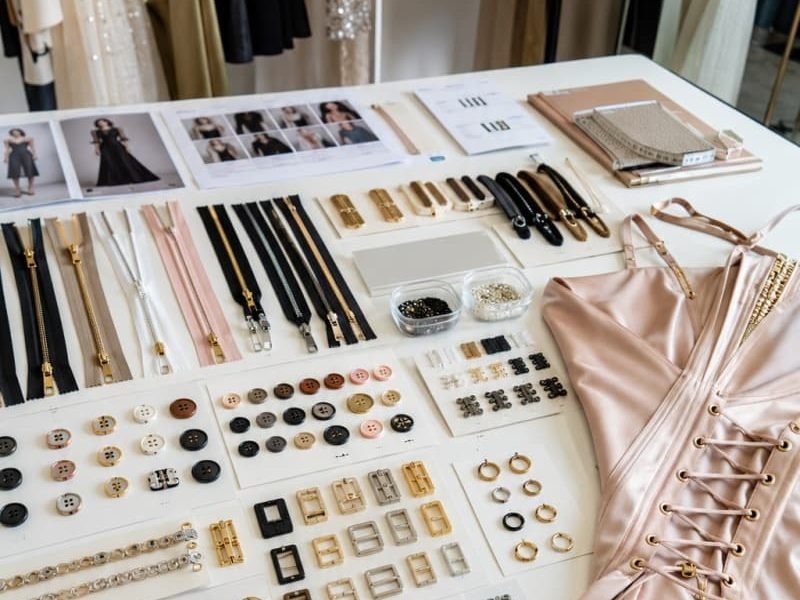
Closures and Hardware
- Main review: ease of use and visual integration
- Production concern: sharp edges, rust risk and fabric damage
- Development route: hardware sample and attachment testing

Private Brand Elements
- Main review: artwork, content and placement
- Production concern: wrong version, size or market information
- Development route: approval record and packing-line verification
A Controlled Path From Brief to Approved Sample
Project Brief Review
- Inputs: tech pack, references, sample photos or moodboard
- Review: missing details and development risks
- Output: organized project basis and next-step questions
Feasibility Review
Fabric, silhouette, print, fit and construction are reviewed before pattern development.
- Check: drape, opacity, support and closure
- Check: print and color requirements
- Check: production and timeline sensitivity
- Output: feasibility comments or proposed adjustments
Fabric and Trim Direction
Available references are translated into material and trim options suited to the intended result and bulk plan.
- Review: composition, weight and hand feel
- Review: lining, closures and decorative details
- Output: swatches, trim options and material direction
Pattern Development
- Review: proportion, ease and structure
- Review: neckline, armhole, waist and skirt balance
- Output: first-pattern basis for sample making
First Sample
- Check: silhouette and proportion
- Check: fabric and print performance
- Check: construction feasibility
- Output: sample photos and internal review notes
Fit and Visual Review
- Review: measurements and fit balance
- Review: coverage, drape and detail position
- Output: sample review points for brand comments
Revision Summary
Comments are consolidated to reduce contradiction and information loss.
- Organize: approved points and required changes
- Clarify: measurements, fabric, trim and construction revisions
- Output: one controlled revision basis
PP or Bulk Readiness
When the style approaches approval, Duolan checks whether the sample is suitable as a production basis.
- Lock: fabric, lining, trims and color
- Lock: measurements and workmanship points
- Output: PP basis or bulk-readiness action list
Production Handover
Approved development information is transferred into production preparation.
- Transfer: sample, pattern, BOM and comments
- Confirm: quantity, colors, size split and packing
- Output: production-start basis and internal timeline
Samples Designed to Support Real Production Decisions
A Sample Is a Product Decision Tool
A first sample is not judged only by whether it resembles a reference image. It should help the product team answer specific questions:
- Does the selected fabric create the intended movement?
- Is transparency appropriate for the wearing scenario?
- Does the neckline remain stable?
- Are straps, ties and closures comfortable?
- Does the print scale suit the dress?
- Is the silhouette commercially wearable?
- Can the workmanship be repeated at planned volume?
- Are further fit or visual revisions required?
Duolan can present sample evidence through front, side and back photography, measurement points, construction close-ups and review notes. Clear evidence reduces vague comments and helps the next development round move with greater precision. Defining sample purpose prevents conflicting expectations.
A Sample Creates a Technical Production Basis
Once a sample moves toward approval, its value extends into the information attached to it:
- Pattern version
- Measurement specification
- Fabric and lining reference
- Trim and closure details
- Print and color reference
- Stitch and seam construction
- Label placement
- Packing instructions
- Approved comments
- Outstanding conditions
A visually approved garment can still remain unready for production when the material source, trim version, size rules or packing standard are unclear. Duolan separates visual approval from production readiness, then confirms which points require further locking.
A Sample Must Move Smoothly Into Bulk
Sample and production teams should not operate as disconnected systems. Information gathered during development is transferred into bulk preparation. Before production release, Duolan reviews:
- Fit or visual approval status
- PP basis
- Material readiness
- Bulk color and print status
- Critical workmanship points
- Size and grading information
- Required first-piece or pilot checks
- Inspection and packing requirements
- Delivery and launch dates
For higher-risk styles, a first-piece or pilot-stage review can confirm construction before the entire quantity is released. Such control is especially valuable for halter, backless, satin, layered, printed and trim-intensive resort dresses.
Workmanship Built Around Lightweight Dress Materials
Lightweight Seam Construction
- Puckered side seams
- Wavy necklines
- Uneven seam allowance
- Fabric pulled off grain
- Needle damage
- Visible seam shadow
- Fraying inside the garment
- Twisting after pressing

Neckline, Armhole and Edge Finishing
- Self binding
- Clean facing
- Lined edge
- Narrow turn-and-stitch
- Elasticated edge
- Internal stay tape
- Fold-over binding
- Lace or crochet finishing

Hem and Skirt Finishing
- Narrow rolled hem
- Baby hem
- Clean turned hem
- Blind hem
- Faced hem
- Lace or decorative edge
- Raw-effect finish where appropriate

Lining and Opacity Construction
- Full or partial lining
- Bodice-only lining
- Separate slip construction
- Lining stretch and recovery
- Lining color
- Lining length
- Attachment points
- Seam and hem finish
- Static and cling behavior

Strap, Halter and Closure Reinforcement
Straps and halters carry garment weight and experience repeated pulling during wear. Attachment must remain secure without creating bulky or visible reinforcement.
Control points include:
- Strap width and material
- Turning and seam position
- Attachment length
- Reinforcement layer
- Bar tack or secure stitch
- Hardware compatibility
- Tie-end finish
- Closure placement
- Pull resistance
- Comfort against skin
Backless and halter dresses may also rely on waist closures, hidden elastic, internal loops or adjustable ties. Every component should work as part of one support structure.

Move Approved Samples Into Controlled Bulk Production
Bulk Readiness Before Production Release
An approved-looking sample does not automatically mean every production condition has been confirmed. Duolan first reviews the current status:
- Fit confirmed
- Visual confirmed
- PP basis established
- Material still pending
- Comments still open
- Packaging still pending
- Testing or inspection requirements outstanding
Critical elements are locked before release:
- Fabric and lining
- Print and color
- Trims and closures
- Measurements and grading
- Workmanship points
- Labels and packaging
- Inspection requirements
- Delivery schedule
The resulting production basis can be recorded in a Bulk Start Confirmation or Production Readiness Note.
Order Breakdown and Production-path Planning
- Style
- Color
- Size
- Quantity
- Material category
- Construction difficulty
- Special process
- Delivery window
- Regular production styles
- Complex construction styles
- Quick-response styles
- Print-sensitive styles
- High-risk workmanship styles
- Repeat styles using existing standards
First-piece and Pilot Verification
Verification may cover:
- Measurements
- Fit and proportion
- Fabric direction
- Print position
- Seam and hem quality
- Strap and closure strength
- Lining coverage
- Label position
- Packing method
Inline Control, Final Inspection and Delivery Review
Production quality is monitored through staged control rather than one final check.
Inline control may include:
- Cutting and bundle identification
- Print and grain direction
- Critical seam construction
- Measurement checkpoints
- Strap and closure attachment
- Workmanship consistency
- Corrective action follow-up
Delivery preparation checks the agreed shipping mode, destination, documentation, split shipment and warehouse requirements. Project information is retained to support future repeat orders and collection extensions.
Quality Control Focused on Beach Dress Risk Points
Inspection follows the material, construction, visual and delivery risks established during development and bulk planning.
| QC Stage | Main Checks | Beach Dress Risk Controlled |
|---|---|---|
| Incoming fabric review | Shade, defects, usable width, hand feel, shrinkage reference, opacity and print quality | Fabric variation, transparency and material inconsistency |
| Color and print approval | Approved strike-off, repeat scale, direction, color reference and base fabric | Wrong print version, visual inconsistency and color drift |
| Spreading and cutting | Grain, panel direction, relaxation, shade grouping and bundle identification | Twisting, mismatched panels and mixed fabric lots |
| Pre-production review | PP sample, measurements, construction, trims, labels and packing | Misunderstood approvals and incomplete production basis |
| First-piece check | Silhouette, length, coverage, workmanship, print placement and key measurements | Bulk replication errors before volume release |
| Inline sewing inspection | Seams, hems, straps, closures, lining, measurements and workmanship consistency | Repeated construction defects and line-to-line variation |
| Special-process review | Embroidery, print, crochet, lace, dyeing or decorative details | Placement errors, distortion, weak attachment and visual deviation |
| Final garment inspection | Appearance, measurement tolerance, workmanship, shade, odor and cleanliness | Shipment defects and inconsistent retail presentation |
| Label and packing check | Main label, care label, size, hangtag, barcode, polybag and carton mark | Retail-system errors, wrong assortment and warehouse rejection |
| Shipment release review | Quantity, size-color breakdown, inspection status, packing list and shipping requirements | Delivery discrepancy and incomplete documentation |
Quality standards are aligned with the approved sample, technical files, agreed tolerances and brand-specific inspection requirements. Third-party inspection can be supported where required.
Capacity Organized for Launch, Repeat and Scale
Duolan combines core-factory control, flexible production resources and coordinated planning for seasonal collections containing numerous styles.
Owned Factory Control
- Better continuity from sample to bulk
- Clear control of important styles
- Faster escalation of production issues
- Stronger support for repeat standards
Flexible Production Lines
- Suitable for varied style structures
- Supports controlled smaller launch quantities
- Useful for repeat and follow-up production
- Connects speed with organized planning
Satellite Capacity
- Capacity for order growth
- Style allocation by capability
- Support for staggered delivery
- Resources for replenishment volume
Multi-style Coordination
Programs containing 10-30 styles can be divided according to material, construction, process and delivery needs.
- Separate production paths
- Shared milestone planning
- Parallel sample and bulk activity
- Better visibility across the collection
Repeat-order Support
Repeat production benefits from retained pattern, material, workmanship, fit and packing references.
- Faster project restart
- Lower information loss
- Better batch consistency
- Stronger replenishment planning
Scale-up Planning
- Evaluate material repeatability
- Protect approved construction standards
- Reserve suitable production resources
- Prepare for color or style extensions
Compliance Support for Formal Fashion Supply Chains
Factory Audit Support
- Existing audit records can be provided for review
- Factory visit arrangements can be supported
- Video or onsite capability review is available
- Additional requirements are discussed by project
Product Testing
- Colorfastness and dimensional stability
- Fabric composition and performance
- Trim or attachment requirements
- Brand or market-specific test plans
Third-party Inspection
- Pre-production requirements
- Inline or final inspection
- AQL or brand-specific standards
- Corrective-action and reinspection cooperation
Documentation Discipline
Formal supply chains require correct labels, packing data, carton marks, testing files, inspection records and shipment information.
- Controlled artwork versions
- Approved packing instructions
- Size and color assortment records
- Production and delivery confirmation files
Commercial Planning for Beach Dress Production

Size and Grading
- Grading is not simple proportional enlargement
- Neckline, strap, waist, slit and hem positions require control
- Stretch and non-stretch materials follow different logic
- Key measurements are checked during sample and bulk inspection
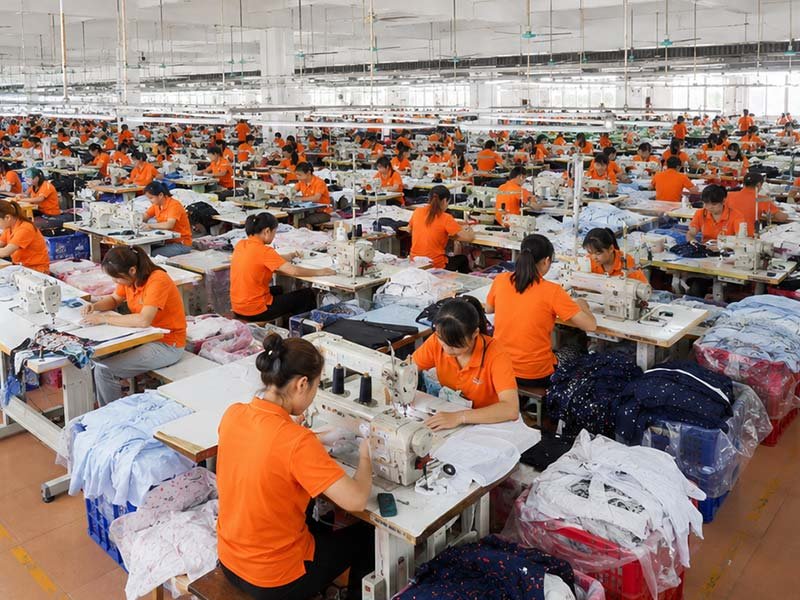
MOQ and Order Structure
A suitable project can progress through:
- Development stage
- Launch order
- Repeat order
- Scaled production
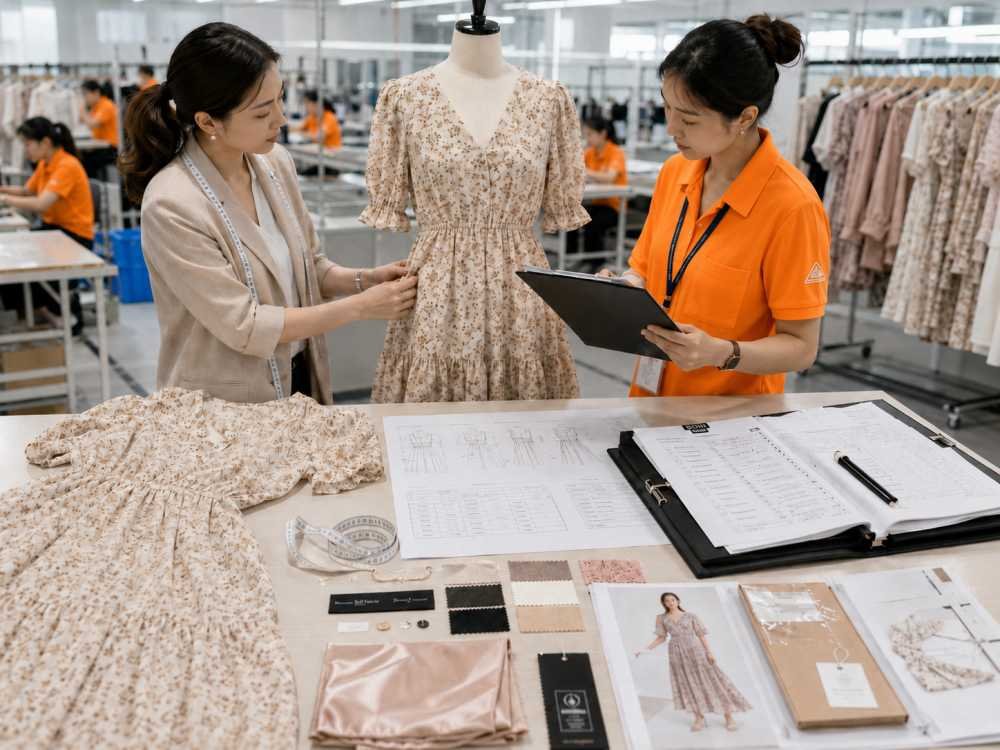
Sample Timeline
Sample timing is confirmed after the development basis, material readiness, style complexity and sample purpose are reviewed. A first prototype, fit sample, photo-ready sample and PP sample do not carry the same workload.
Timing becomes more reliable when:
- Reference files are clear
- Size specifications are available
- Fabric direction is confirmed early
- Comments are consolidated
- Complex details are identified before sewing
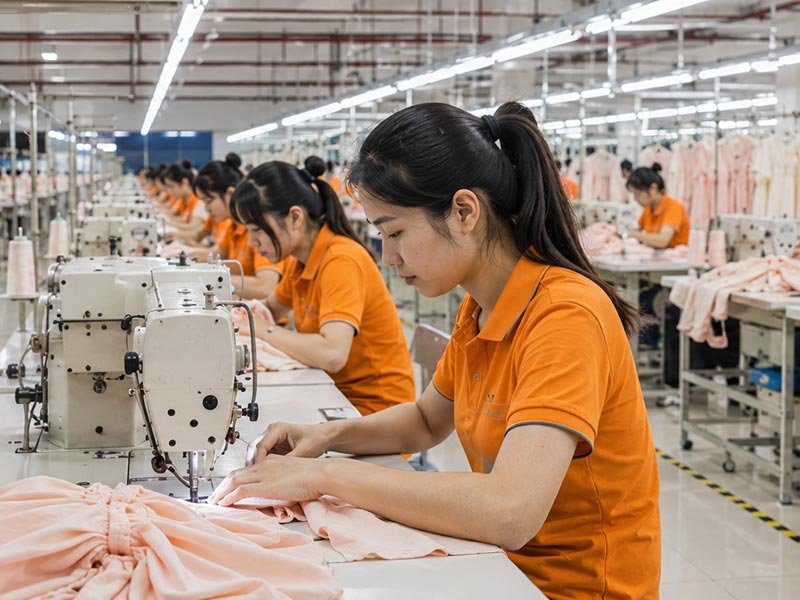
Bulk Production Time
Reference production periods begin after the PP basis, BOM, materials, order information and payment milestone are confirmed.
- Simple styles: approximately 15-20 days
- Regular styles: approximately 20-30 days
- Complex styles: approximately 30-45 days
Fabric development, custom print, embroidery, special processes, third-party inspection, packaging and peak-season capacity can affect the final schedule.
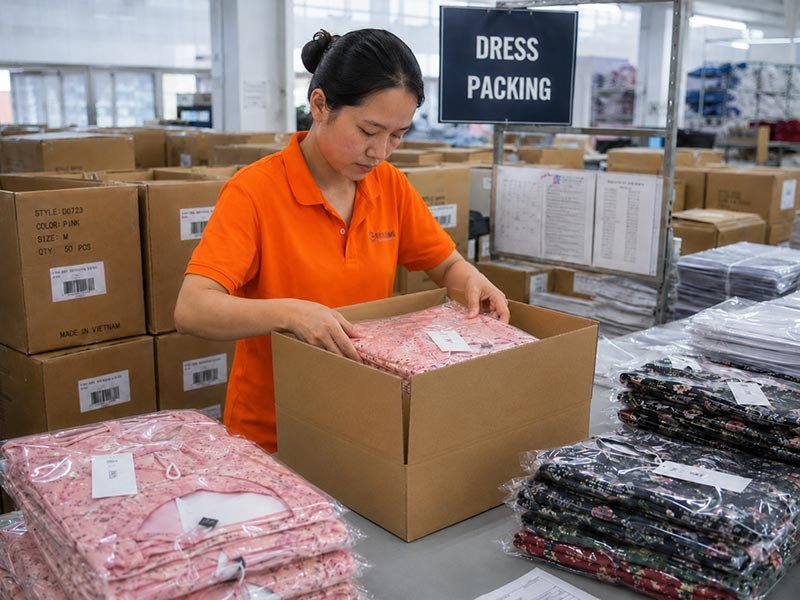
Labels and Packaging
Duolan can support main labels, size labels, care labels, hangtags, barcodes, individual packing and carton marks according to approved files.
Beach dress packing may require:
- Tissue or folding support
- Protection for lace, crochet or trims
- Controlled folding for maxi lengths
- Prevention of satin pressure marks
- Ecommerce or retail-specific packing

Shipping and Payment
Available shipping coordination can include express, air, sea, FOB, CIF, DDP and split-shipment arrangements.
Reference transportation periods:
- Express: approximately 3-7 days
- Air freight: approximately 5-8 days
- Sea freight: approximately 20-35 days
A common payment structure is 30% deposit and 70% before shipment. Long-term or rolling programs can be discussed according to cooperation history and delivery arrangement.
Representative Multi-style Beach and Resort Dress Programs
United States Resortwear Brand - 24 Styles, 58,400 Pieces
- 24 styles
- 58,400 pieces total
- 3-5 color or print options across priority styles
- US size range from XS to XL
- Several campaign and sales samples required before bulk
- Split delivery aligned with two launch windows
- Grouped styles into shared fabric families
- Rescaled several prints for garment proportion
- Reviewed print position around bodice and waist seams
- Adjusted halter tie width and garment weight distribution
- Tested two lining weights for light colorways
- Separated campaign samples from PP approval samples
- Created one revision summary per style
- Organized production routes by printed woven, structured cotton and refined evening styles

Australian Vacation Brand - 16 Styles, 31,200 Pieces
- 16 styles
- 31,200 pieces total
- Mini, midi and maxi lengths
- AU brand size chart
- Natural, sunset and ocean color story
- Combination of solid colors and small-scale prints
- Compared linen blends with alternative textured woven fabrics
- Tested crease recovery after controlled folding
- Reviewed shell and lining combinations under daylight
- Reduced lining weight on the fluid maxi
- Increased wrap overlap and adjusted tie position
- Refined garment length and waist placement for the AU fit direction
- Evaluated folded packing with tissue support
- Consolidated shared trims across the range

European Multi-brand Group - 28 Styles, 76,800 Pieces
Market and sales setting:
A European fashion group prepared a multi-label resort program containing commercial day dresses, printed hero pieces and evening resort products. Each label had separate artwork, sizing and packing requirements.
Order structure:
- 28 styles
- 76,800 pieces total
- Three brand divisions
- Several separate size and label systems
- Multiple print and color approvals
- Staggered warehouse delivery
Main difficulties:
The program involved high information density. Similar styles carried different label files, carton marks and measurement standards. Several prints required distinct repeat sizes. Satin-type evening dresses needed cleaner seam and pressing control. Delivery was split by brand and warehouse, increasing packing risk.
Duolan development actions:
- Separated the program by brand, style, color and destination
- Created controlled artwork and label version lists
- Assigned different production paths by fabric and construction
- Reviewed satin seam and pressing standards before bulk
- Established print approval references for each fabric base
- Defined individual packing and carton-mark instructions
- Built staged production and shipment milestones
- Retained a consolidated record for repeat orders
Bulk control:
First-piece approval was used for sensitive evening styles. Inline QC focused on satin seam appearance, print direction, size standards and correct brand identification. Final packing checks compared every style with the relevant label, barcode and destination file.
Program result:
The program was delivered through planned shipment groups while preserving separate brand requirements. The completed production record created a stronger foundation for future extensions and replenishment orders.

Custom Beach Dress Frequently Asked Questions

Start Your Beach Dress Development Review
Share your product direction, collection structure and production requirements with Duolan. Our team will review the available files, identify important fabric, fit, print, construction and timeline points, then recommend a suitable development or production path.
Useful information includes:
- Company or brand name and website
- Tech pack, sketch, reference image or sample photo
- Beach dress types and number of styles
- Target fabric, print and color direction
- Sample purpose and required sample date
- Target market and full size range
- Quantity per style, color and total program
- Main label, care label, hangtag and packaging requirements
- Planned launch date and required delivery window
- Inspection, testing or compliance requirements
- Destination country and preferred shipping term
Complete information helps Duolan evaluate material direction, sample requirements, MOQ logic, cost factors, bulk lead time and production feasibility with greater accuracy. Uploaded product information can be handled as confidential project material.

