Skip to content
Custom Beaded Dress Manufacturer
Beaded Dress Development Built for Fashion Collections
Duolan develops production-ready beaded dresses for established fashion brands, occasionwear teams, product teams and sourcing offices. Every project connects decorative design with fabric behavior, fit, support, comfort, workmanship and repeatable bulk execution.
- 6 control areas reviewed before sampling: bead type, density, placement, base fabric, support structure and wearing comfort.
- 3 core approval stages: beading swatch or panel, fit-reviewed sample and PP or bulk-ready sample.
- Manufacturing structures prepared for 10–30 style programs and 20,000–80,000-piece brand orders.
- More than 30 years of womenswear development knowledge behind product decisions.








Manufacturing Strength Behind Complex Beaded Dress Programs
30+ Years Development
16 Owned Factories
20+ Satellite Factories
More than twenty long-term satellite factories add capacity flexibility for repeat orders, replenishment and seasonal volume changes. Production allocation is not based on available space alone. Style complexity, base fabric, beading route, fit sensitivity, delivery window and inspection requirements are reviewed before work is assigned. Stable coordination supports multi-style programs without treating every design as an identical production task.
12,000+ Supporting Workers
50+ Flexible Lines
15,000–35,000 Sample Capacity
Built for Established Fashion and Product Teams
Fashion Brand Teams
Occasionwear Teams
Product Development Teams
Sourcing Offices
Control the Risks Behind Beaded Dress Production
Placement Distortion
Fabric Sagging
Loose Beads
Skin Irritation
Size Inconsistency
Bulk Deviation
What to Evaluate in a Beaded Dress Manufacturer
A capable manufacturing partner should explain how design, materials, fit, workmanship and production controls connect. The following evaluation points help procurement and product teams compare capabilities beyond attractive sample photographs.
| Evaluation Area | Questions Worth Asking | Duolan Control Direction |
|---|---|---|
| Product Development | Can artwork become a workable beading and construction plan? | Design review, placement planning and feasibility feedback |
| Bead Materials | Can size, color, finish and supply batches be controlled? | Approved trim references and incoming comparison |
| Base Fabric | Can the fabric carry the planned decoration weight? | Drape, stretch, stability and reinforcement review |
| Fit and Grading | Can placement remain balanced across the full size range? | Pattern-led anchor points and size-specific placement checks |
| Comfort | How are sharp edges, knots and heavy areas managed? | Lining, backing, bead-free zones and wear review |
| Workmanship | How are endpoints, seams, zippers and motif alignment controlled? | Defined sewing and beadwork notes |
| Sampling | Does the sample validate appearance and production feasibility? | Swatch, fit sample, revision and PP stages |
| Bulk Consistency | How is the approved sample translated into production? | Material locking, first-piece confirmation and in-line QC |
| Capacity | Can multiple styles and decoration levels run together? | Style-based production allocation |
| Compliance | Can audit, testing, labeling and inspection requirements be supported? | Document coordination and project-specific execution |
Beaded Dress Categories for Commercial Fashion Collections

Beaded Mini Dresses

Beaded Midi Dresses

Beaded Maxi Dresses

Beaded Party Dresses

Beaded Occasion Dresses

Beaded Bodycon Dresses

Beaded Corset Dresses

Beaded Bustier Dresses

Beaded Cocktail Dresses

Beaded Homecoming Dresses
Homecoming styles often favor youthful mini lengths, corset bodices, bodycon shapes, open backs or fit-and-flare skirts. Decoration must photograph well while supporting movement. Lightweight crystals, pearls, seed beads and selective sequin combinations can deliver impact without excessive mass. Reinforced straps, secure closures and protected underarm zones are central to development.

Beaded Wedding Guest Dresses
Wedding guest dresses require elevated detail while remaining commercially wearable across ceremonies, receptions and evening settings. Tonal beadwork, floral motifs, pearl accents and controlled shimmer work well across midi and maxi silhouettes. Duolan pays close attention to drape, lining, color consistency, sitting comfort and packing, especially for satin, mesh or fluid base fabrics.

Beaded Formal Dresses
Formal dresses may use stronger bodice structures, longer lengths and more concentrated decoration. Visual balance across front, back and side views is important, along with train handling, slit construction and total garment weight. Production planning includes panel sequencing, embellishment protection, finishing and final appearance inspection to maintain a polished result through delivery.
Beaded Dress Programs Built Around Selling Occasions
Holiday Party
Birthday and Going Out
Cocktail Events
Homecoming and Graduation
Wedding Guest
Seasonal Occasionwear
Beads, Pearls and Crystals Selected by Product Function

Seed Beads

Bugle Beads

Pearls

Rhinestones
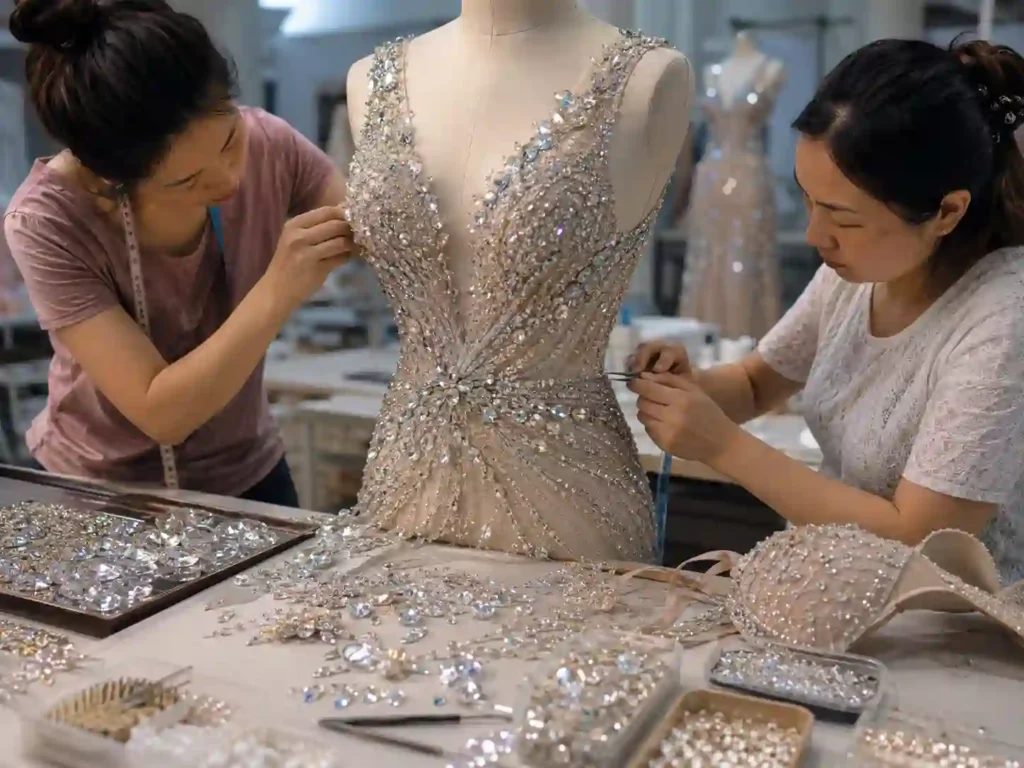
Crystals

Metallic Beads

Sequins With Beads

Mixed Embellishments
Fabrics and Linings Engineered for Beading Weight

Mesh and Tulle Foundations
Mesh and tulle are common choices for illusion panels, all-over beadwork, fitted overlays and transparent effects. Their open structure makes needle placement visible and allows intricate motifs, yet weak or highly elastic mesh may stretch under concentrated weight. Bead density should be distributed around stable pattern areas, while high-stress zones may require stronger mesh, local backing or a secondary support layer.
Stretch mesh needs special attention because bead stitching can reduce extension. A pattern developed on undecorated mesh may fit differently after beadwork is completed. Duolan reviews stretch before and after the test panel, placement around bust and hip curves, seam stability and the relationship between outer mesh and lining.

Satin With Beadwork
Satin provides a smooth, reflective base for pearls, crystals and concentrated motifs. Needle marks, pulling and surface damage are more visible than on textured fabrics. Heavy beadwork can interrupt fluid drape, while poor handling can create puckering around stitch points. Bead layout therefore needs enough spacing and support to preserve the intended surface.
For fitted satin dresses, the pattern, grain direction, lining and bead placement must be reviewed together. Decoration crossing darts or princess seams requires accurate alignment. Pressing and handling controls also matter because direct pressure may damage beads or leave impressions on the satin. Packing should prevent hard decorative surfaces from pressing against unprotected fabric areas.
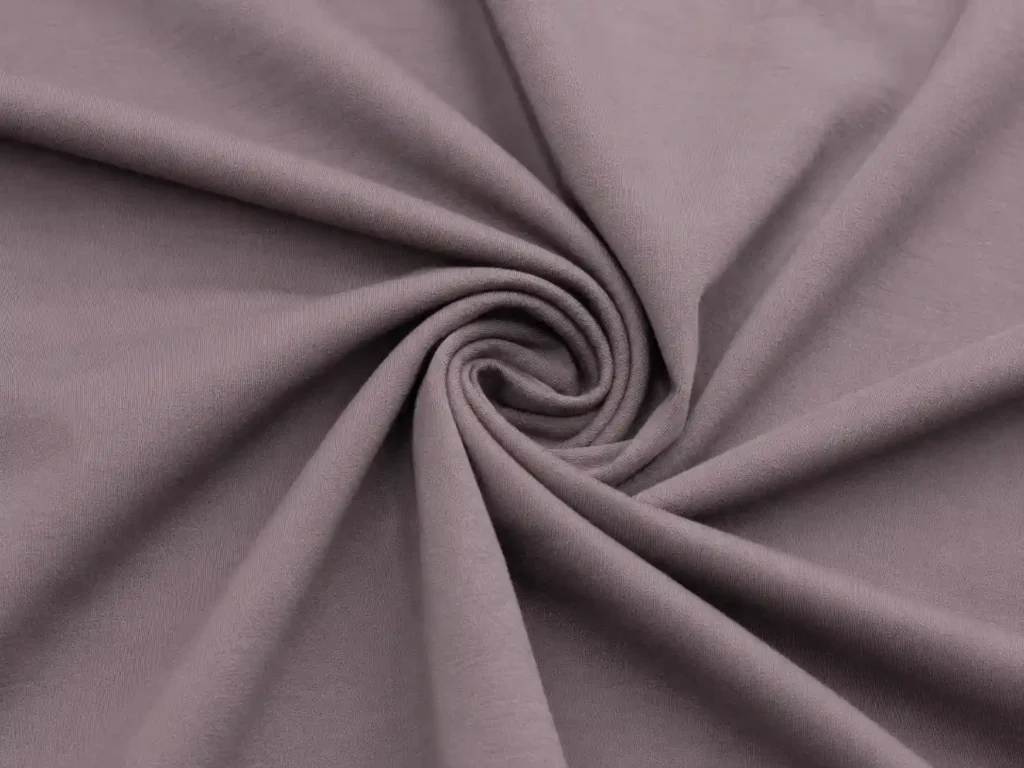
Stretch Jersey Systems
Stretch jersey works well for bodycon and going-out dresses, but beadwork changes the mechanical behavior of the garment. Dense stitching can restrict stretch, reduce recovery and create local stiffness. Motifs may need segmented construction, flexible spacing or bead-free expansion zones around high-movement areas.
Duolan compares fabric stretch direction with the intended body fit and decorative map. Bust, waist and hip areas are reviewed under movement, while seams and openings remain clear of rigid clusters. The lining or internal support should not fight against the outer fabric. Sample fitting needs to evaluate both appearance and ease after decoration, not before.

Velvet and Plush Surfaces
Velvet offers rich depth for crystals, pearls and metallic beadwork. The pile can partially hide small beads or distort attachment visibility, so material size and reflection need testing. Marking, pressing and handling must protect the pile direction. Dense decoration can also flatten localized areas and create tonal differences.
Bead positions should be marked through methods suited to the surface without leaving permanent marks. Seam alignment, nap direction and final pressing require careful control. Protective packing is important because pressure can crush both velvet pile and raised embellishments. Structured hanging may be preferable for certain high-value styles.

Lace and Decorative Bases
Lace provides built-in motifs capable of guiding bead placement. Beads may highlight floral centers, outlines, scalloped edges or selected areas rather than covering the full surface. Lace stability varies greatly; soft stretch lace behaves differently from corded or embroidered lace. Motif placement must align with pattern pieces, seams and neckline edges.
When lace is layered over mesh, satin or jersey, all layers need coordinated stretch and support. Attachment points should not distort the lace motif. Duolan can develop beadwork based on the lace repeat, allowing decorative density to follow the fabric structure while protecting comfort and production consistency.

Crepe and Structured Wovens
Crepe and stable woven fabrics provide controlled foundations for geometric beading, borders, shoulder details and structured occasion dresses. Their lower stretch can support accurate placement, but garment shaping still affects motif alignment across darts, seams and curved panels.
Structured fabrics are useful for corset, bustier and fit-and-flare silhouettes where beadwork should remain clearly positioned. Seam allowances, boning channels and internal support must stay free from bulky decoration. Duolan reviews the beading map alongside construction order so decorated panels can be assembled without damaging the surface.
Beading Placement Designed for Shape and Balance
Neckline Placement
Bust and Cup Placement
Waist Emphasis
Side Panel Detailing
Hem and Borders
Gradient Beading
All-Over Patterns
Engineered Motifs
Beading Methods Matched to Design and Volume
Hand Beading
Machine-Assisted Beading
Bead Embroidery
Hot-Fix Rhinestones
Sewn Crystals and Stones
Embellished Panels
Controlling Bead Color, Finish and Production Batches

Approved Trim Standards
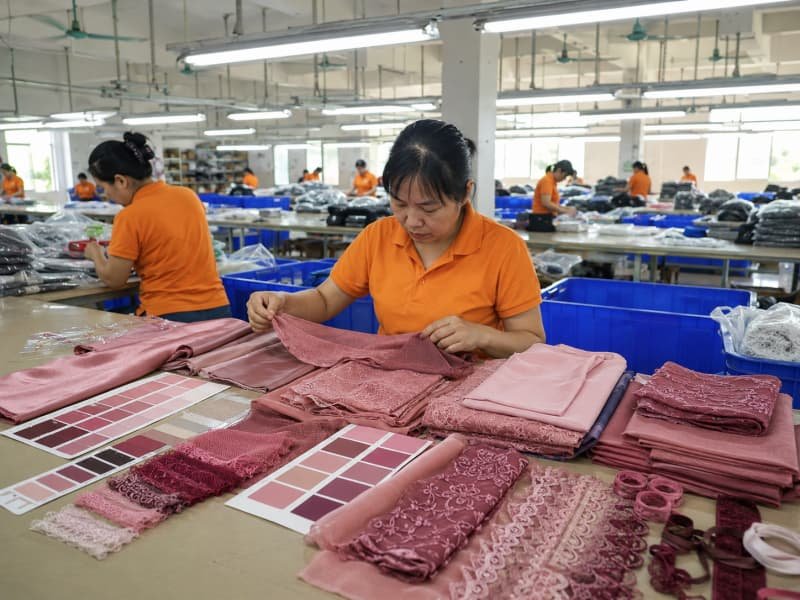
Incoming Batch Comparison

Production Allocation

Reorder Preservation
Technical Files Converted Into Production Instructions
Tech Pack Review
Reference Image Review
Beading Artwork
Size Specification
Material Direction
Project Requirements
Pattern and Fit Control Before Beading Begins
Pattern Balance Under Weight
Bust and Waist Fit
Stretch and Recovery
Placement Across Sizes
Measurement Discipline
Internal Support for Heavier Beaded Dress Designs

Built-In Cups

Boning Structure

Waist Stay

Strap Reinforcement

Mesh Support Layer

Local Backing

Seam Reinforcement

Zipper Support
Making Beaded Dresses Comfortable for Real Wear
Neckline and Underarm Protection
Internal Surface Finishing
Weight Distribution
Movement Testing
Wearing Duration
Sewing Details Protecting Beading and Garment Structure
Clearing Seam Allowances
Securing Bead Endpoints
Zipper Area Control
Motif Alignment
Edge Finishing
Hem Construction
Production-Ready Beaded Dress Sample Development
Brief Review
Feasibility Review
Beading Swatch
Pattern Development
First Sample
Fit Review
Revised Sample
PP Sample
Structured Sample Reviews for Faster Decisions

Visual Review Set

Measurement Record

Beading Review Note

Revision Summary
What Determines Beaded Dress Cost and Lead Time
Beaded dress quotations are built from material, labor, construction and production conditions. A transparent cost structure helps product teams decide where decoration creates the greatest commercial value.
| Cost or Timing Driver | Manufacturing Impact | Development Decision |
|---|---|---|
| Bead Type | Material price, weight, finish and replacement availability | Select approved quality and supplier reference |
| Bead Density | Handwork hours, garment weight and inspection time | Define density zones with swatches |
| Placement Area | Pattern alignment and surface coverage | Prioritize high-visibility areas |
| Application Method | Labor, consistency, fabric tolerance and repair route | Match method to design and order structure |
| Base Fabric | Backing, handling and support requirements | Test fabric with actual decoration |
| Color Count | Trim sourcing, separation and changeover | Confirm color architecture early |
| Size Range | Placement grading and additional checks | Define anchor measurements |
| Style Count | Development and production coordination | Group styles by complexity |
| Handwork Capacity | Scheduling and production release | Reserve skilled labor before launch |
| Custom Trim Development | Tooling, sampling and material lead time | Approve trim before final sample |
| Packing Method | Protection, carton volume and labor | Match packing to surface risk |
| Launch Date | Approval and production buffer | Plan backward from delivery window |
Working timeline references may include 5–10 working days for selected test panels, 15–25 working days for a complex first sample, 7–15 working days for a revision, and approximately 35–60 days for bulk production after final material and PP approvals. Final timing depends on style count, beadwork hours, material readiness, quantity and required inspection stages.
Locking Production-Critical Beading Details
Fabric Batch
Bead Batch
Lining Standard
Placement Rules
Construction Details
Packing Method
From Approved Sample to Controlled Bulk Production
Approval Status
Open points are listed clearly. Bulk release should not depend on informal assumptions about which version or comment set is current.
Material Locking
Sufficient allocation should cover production, repair, quality replacement and any agreed spare support. Material locking protects both the first order and future repeat consistency.
Measurement and Placement
Production teams receive measurable standards rather than only sample photographs. First pieces can then be compared against both the approved garment and recorded points.
Workmanship Standard
The approved standard should explain what matters most and how it will be checked. Clear notes reduce variation between sample-room methods and production-line execution.
Production Release
After key items are aligned, Duolan prepares the production route, timing and QC checkpoints. Complex styles may require a pilot or first-piece confirmation before full release. Bulk production planning commonly falls within a 35–60-day range after final approvals, with longer schedules for intensive handwork or complex multi-style programs.

Production Planning for Multi-Style Beaded Collections
Style Classification
Order Breakdown
Orders are separated by style, color, size and quantity. Bead material needs, decorated panel counts, handwork hours and repair allowances are then calculated.
A collection of 10–30 styles may involve several production groups rather than one schedule. Breakdown also supports accurate tracking of approvals, production progress and final packing by SKU.
Factory Allocation
Core or high-risk styles may remain within closely managed owned factories. Other styles can be allocated through suitable long-term production resources according to complexity, timing and capacity.
Allocation follows product requirements rather than random factory availability. Special-process coordination is planned alongside garment sewing so decorated panels arrive in the correct sequence.
Timeline Planning
Repeat Production
Repeat orders use retained samples, trim references, artwork, measurements, workmanship notes and inspection points.
New material batches are reviewed before release. Production allocation may change with quantity, yet the product standard should remain stable.
Pilot Verification Before Full Beaded Dress Production
First-Piece Check
Beading Sequence
Fit Recheck
Workmanship Trial
QC Checkpoint Test
Packing Simulation
Quality Control for Beading and Bulk Consistency
Incoming Bead Inspection
Panel Approval
Placement Measurement
Attachment Security
Missing Bead Check
Fit and Weight Review
Final Appearance
Label and Packing Check
Inspection Release
Packaging, Compliance and Manufacturing Evidence
Protective Beaded Dress Packaging
Raised beads, crystals and pearls can scratch fabric, catch against nearby garments or receive pressure marks during transport. Packing is selected according to decoration location, garment weight, fabric sensitivity and shipment method.
Possible controls include tissue protection over decorated areas, individual garment bags, surface separation, controlled folding, hanger packing when required, stable carton loading and suitable carton dimensions. Dense motifs should not press directly against satin, velvet or delicate mesh. Straps, fringes and decorative edges need secure positioning to avoid entanglement.
Packing review begins before final production ends. A simulation can reveal whether beadwork transfers marks, creates excess carton pressure or changes garment presentation. Brand labels, care labels, hangtags, barcodes, size stickers and carton markings are integrated into the packing standard.

Compliance and Audit Support
Duolan’s core manufacturing system has completed SMETA audit and SMETA 2-Pillar audit, supported by a social audit record. Project execution can also coordinate requirements connected with BSCI, ISO 9001, AATCC, ASTM, OEKO-TEX®, EN, China GB standards, GOTS material directions and specific brand manuals where applicable.
An important distinction remains between an audit already completed and a standard followed according to project requirements. Documentation should reflect the actual scope. Duolan can coordinate material information, test requirements, inspection arrangements, labeling, care instructions, packaging standards and supporting production records according to the market and product.
Beaded products may require additional attention to trim safety, sharp edges, attachment security, colorfastness, care labeling and end-use requirements. Test plans should be confirmed according to destination market, age group, retail channel and brand policy.
Why Duolan for Beaded Dresses
Duolan’s value comes from the connection between dress development knowledge and organized manufacturing. The team’s experience includes pearl dresses, bugle-bead applications, crystal decoration, sequins combined with printing and other composite decorative techniques.
More than thirty years of womenswear development knowledge supports silhouette, fabric, pattern, construction and commercial product decisions. Sixteen owned factories and more than twenty long-term satellite factories support controlled core production, flexible allocation, repeat orders and scaling. The wider network includes more than 12,000 workers and over fifty flexible production lines.
Duolan is positioned for fashion brands developing complete dress programs rather than isolated decorative samples. Development can move from artwork and materials through fit review, sample revision, PP approval, production planning, QC, packing and repeat-order preservation.
Beaded Dress Programs Developed for Global Markets
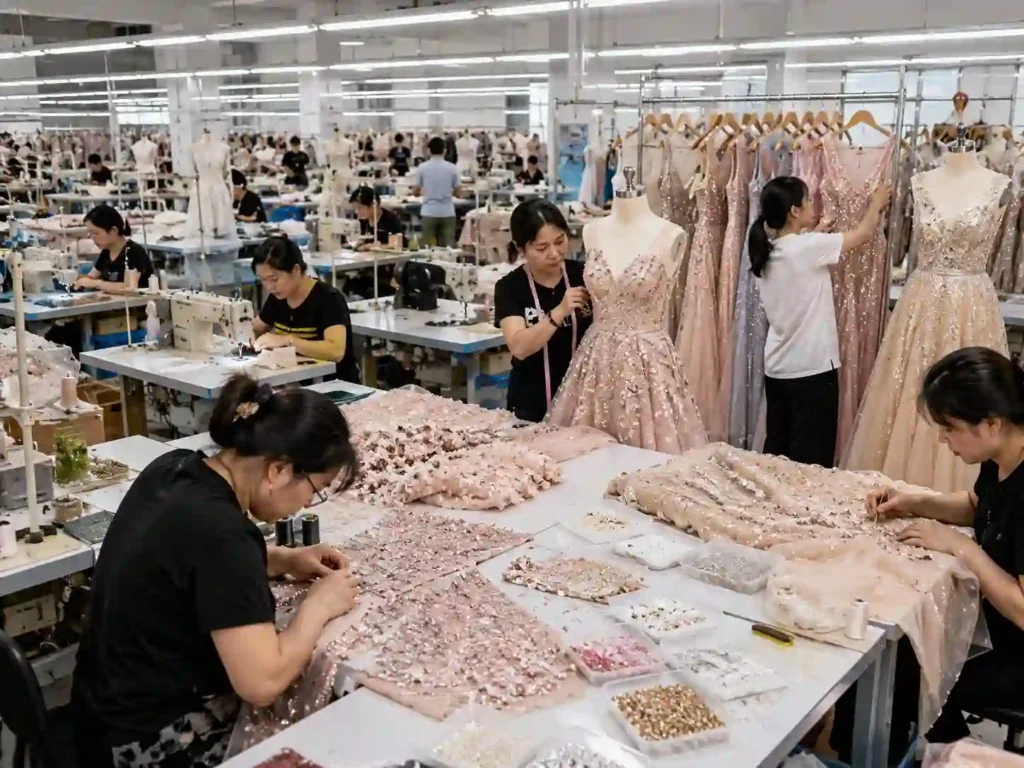
United States Partywear Program
- Region: United States
- Collection: Partywear and Birthday Dresses
- Styles: 18
- Total Order Quantity: 42,600 pieces
- Size Range: Brand-specific US sizing
- Colorways: 2–5 per style
- Product Mix: Beaded minis, corset dresses, fitted mesh dresses and crystal-trimmed bodycon styles
The program combined three decoration levels: concentrated neckline work, engineered bodice motifs and selected all-over beading. Main development risks included restricted stretch across fitted hips, pressure from heavily decorated cups, inconsistent crystal reflection and bead interference near invisible zippers.
Duolan first separated the styles by risk level. Stretch-sensitive designs received decorated panel tests before full sampling. Structured bodices were reviewed for cup shape, boning position and internal weight distribution. Placement anchors were added for front, side and waist motifs, while zipper areas received defined clearance.
The project moved through first samples, focused fit revisions and PP approval. Production was divided according to construction complexity rather than color alone. First-piece reviews checked placement, fit, lining coverage and zipper function. Final packing used protected folding and individual surface separation.
Result: The collection entered production with confirmed material, placement and workmanship references across all 18 styles. The brand retained approved standards for planned repeat orders and color extensions.

United Kingdom Holiday Collection
- Region: United Kingdom
- Collection: Holiday and Occasionwear Edit
- Styles: 12
- Total Order Quantity: 26,400 pieces
- Size Range: Brand-specific UK sizing
- Colorways: 2–4 per style
- Product Mix: Beaded midi dresses, asymmetric minis, velvet party dresses and pearl-detail occasion styles

Australian Wedding Guest Collection
- Region: Australia
- Collection: Wedding Guest and Social Occasion Dresses
- Styles: 24
- Total Order Quantity: 68,800 pieces
- Size Range: Extended brand size specification
- Colorways: 2–6 per style
- Product Mix: Beaded midis, fluid maxis, one-shoulder dresses, fitted mesh styles and pearl-accented satin dresses
Custom Beaded Dress Frequently Asked Questions

Start Your Beaded Dress Development Project
Share your beaded dress concept, Tech Pack, reference image, original sample or collection brief with Duolan. Our product and manufacturing teams will review silhouette, base fabric, bead materials, placement, fit, support structure, workmanship, sample route and bulk feasibility before recommending the next development stage.
Clear project information allows a more accurate review of sample timing, material sourcing, order structure, quotation basis and production planning. Send the files already available, even when certain details remain open. Duolan can identify missing information and explain which decisions should be confirmed before sampling.
Helpful project information includes:
- Company name and website
- Target market and selling occasion
- Product type and number of styles
- Tech Pack, artwork or reference images
- Fabric and bead material direction
- Size range and fit standard
- Colorways and target quantities
- Required sample stage
- Target launch or delivery date
- Label, packaging and inspection requirements