Skip to content
Custom Bodycon Dress Manufacturer
Custom bodycon dress development and bulk manufacturing for established fashion brands.
Duolan helps fashion brands develop fitted dresses where stretch fabric, body proportion, opacity, negative ease, side seam balance and size consistency decide final product value. From ruched bodycon mini dresses and mesh panel styles to bodycon midi dresses, cut-out designs, long sleeve fitted dresses and party-ready silhouettes, our team connects sampling, PP approval, bulk production, QC, packing and repeat delivery.
- 16 owned womenswear factories support controlled sample-to-bulk handover.
- 20+ satellite factories provide flexible capacity for repeat and multi-style dress programs.
- 300 sewing lines support standard-size bulk production across fitted dress structures.
- 50+ quick-response lines support fit samples, revised samples and launch preparation.
- 15,000–35,000 monthly sample capacity supports frequent fitted dress development cycles.
- 6,500,000 stable monthly capacity supports planned bulk and repeat production.
- Typical cooperating brand orders include 10–30 styles and 20,000–80,000 pieces per order.







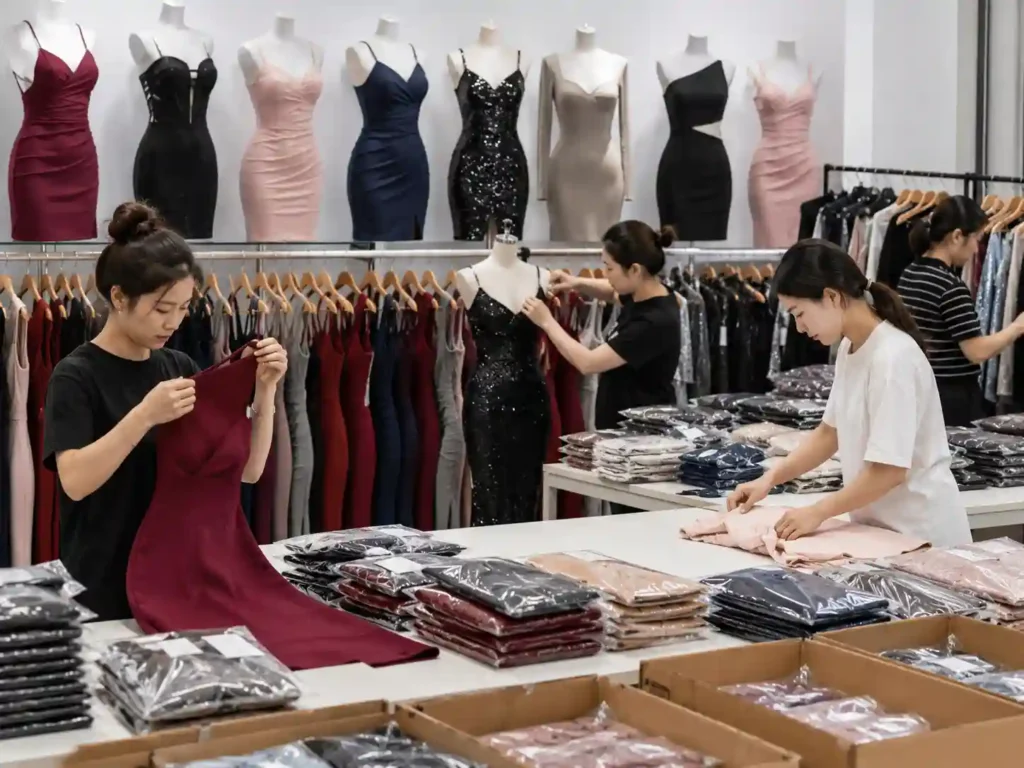
Bodycon Dresses Require More Than a Tight Fit
A bodycon dress is not only a tighter dress. A fitted silhouette must follow the body, recover after movement, keep coverage under stretch and remain stable across sizes. Fabric, pattern, lining, seam elasticity, neckline shape, side seam balance and hem position all affect wear confidence.
A strong sample can still fail in bulk if stretch direction, opacity, recovery, cutting control or grading logic are weak. A dress may look clean on one fit model but become transparent, twisted, restrictive or uneven after size expansion, color changes or fabric batch variation.
Duolan develops bodycon dresses as fit-sensitive womenswear products. The focus is not only visual shape. Each approved style needs fabric review, negative ease control, PP sample standard, production notes, QC checkpoints, packing requirements and repeat records before bulk production.

Built for Established Fitted Dress Brands
Duolan works with fashion brands, product teams and sourcing offices managing fitted dress programs with defined launch plans, quality standards and repeat value. Bodycon dress projects need stronger attention to stretch, opacity, comfort and fit stability than basic dress production.
Partywear Brands
Partywear brands often need bodycon mini dresses, ruched fitted silhouettes, mesh inserts, cut-outs, shine fabrics and strong photo effect. Duolan reviews stretch recovery, lining, edge finish, support and packing protection before bulk.
Going-out Dress Brands
Going-out dress brands need garments with strong visual impact and reliable wear confidence. Neckline stability, body proportion, surface finish, opacity and movement comfort must remain controlled across sizes.
Contemporary Fitted Dress Brands
Contemporary fitted dress brands often prefer clean body lines, refined fabric, minimal seams and consistent sizing. Duolan supports these programs through fabric judgment, fit review, PP standards and repeat records.
Social-first Fashion Brands
Social-first fashion brands need fitted dresses with high visual recognition, strong camera performance and reliable bulk execution. Duolan supports fast sample feedback while keeping PP standards clear for production.
Product Development Teams
Product teams need bodycon samples answering fit and material questions. Duolan reviews bust, waist, hip, side seams, hem ride-up, opacity, lining and grading before production decisions.
Sourcing Offices
Sourcing offices evaluate production stability, QC discipline, packing accuracy, compliance background and repeat readiness. Duolan supports fitted dress programs through structured handover from sample approval to delivery.
Bodycon Dress Types Duolan Can Support
Bodycon dress manufacturing becomes stronger when styles are grouped by structure, fabric and wearing scenario. A ribbed bodycon mini, ruched mesh dress, stretch satin midi and bandage-inspired fitted style each needs a different development path.
Core bodycon structures

- Bodycon mini dresses require hem ride-up review, opacity control and movement comfort.
- Bodycon midi dresses need hip-to-hem balance, side seam stability and walking ease.
- Long sleeve bodycon dresses require shoulder stretch, arm movement and sleeve recovery.
- Strapless bodycon dresses need bust support, inner structure and anti-slip stability.
- Halter bodycon dresses require neck load balance, back support and strap strength.
- Ribbed bodycon dresses need rib direction control, shrinkage review and stable recovery.
Design-led bodycon styles

- Ruched bodycon dresses require even gathering, side seam control and repeat placement.
- Mesh bodycon dresses need lining maps, transparency control and edge comfort.
- Cut-out bodycon dresses require coverage review, reinforcement and secure edge finishing.
- One-shoulder bodycon dresses need neckline balance and asymmetric fit control.
- Deep V bodycon dresses require front stability, support and photo-angle review.
- High slit bodycon dresses need slit reinforcement, movement comfort and hem stability.
Commercial fitted dress programs
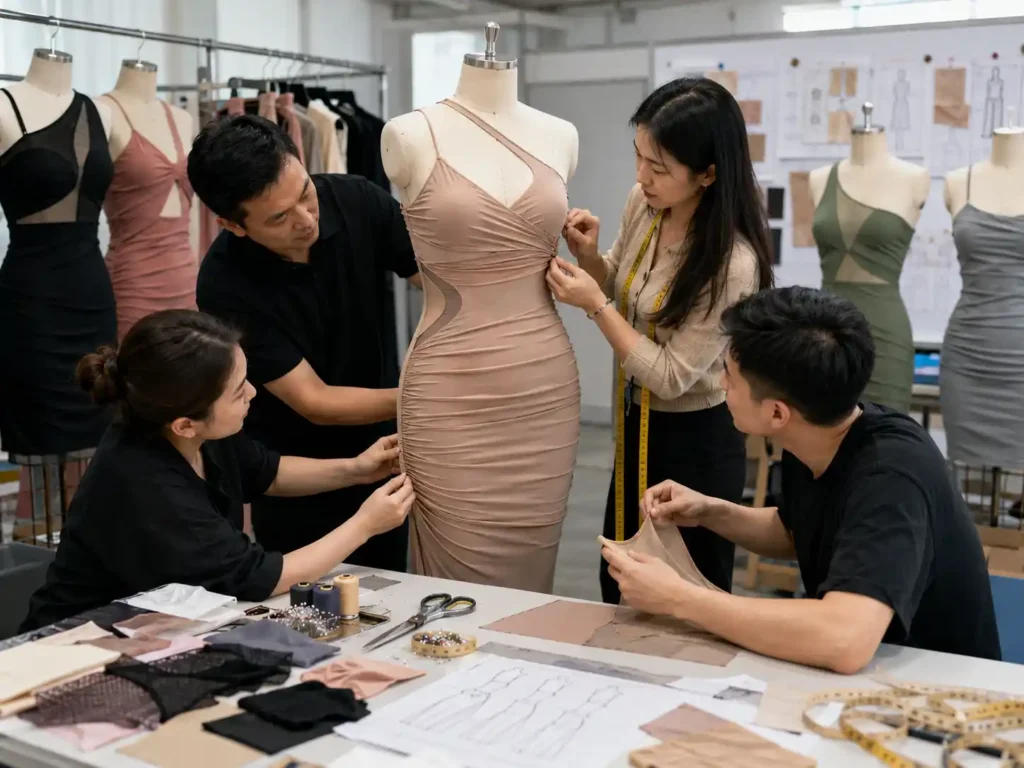
- Party bodycon dresses balance visual impact, comfort, opacity and bulk repeatability.
- Going-out fitted dresses need camera-ready body lines and stable standard-size fit.
- Occasion bodycon dresses require polished fabrics, lining, support and refined finishing.
- Clubwear-inspired fitted dresses need strong stretch, safe coverage and durable seams.
- Bandage-inspired bodycon dresses require contouring feel, firm recovery and clean panel control.
- Repeatable core fitted styles need BOM records, approved patterns and QC notes.
Stretch Fabric Behavior in Bodycon Dresses
Stretch fabric is the foundation of bodycon dress development. Fabric must hold shape, recover after wear, remain opaque under tension and support production consistency across colors and sizes. Duolan reviews stretch behavior before sample approval because material failure creates fit complaints, return risk and unstable bulk results.
A fitted dress does not depend on fabric name alone. GSM, stretch direction, recovery, handfeel, shrinkage, opacity, seam response and lining compatibility decide whether a bodycon style can become a reliable production garment.
Stretch fabric review for bodycon programs
- Double-layer jersey supports smooth body lines, but recovery, seam thickness, opacity and shrinkage require early review.
- Ribbed knit creates texture and fitted comfort, with rib direction, stretch balance and wash behavior checked before cutting.
- Compact knit or scuba-like fabric gives shaping support, yet seam bulk, needle marks and heat response need control.
- Stretch mesh supports party and layered effects, requiring transparency mapping, edge stability and skin comfort review.
- Stretch lace adds occasion value, with pattern placement, lining color, recovery and soft inner finishing checked.
- Stretch satin creates a fitted polished surface, requiring shine control, seam discipline, recovery review and careful pressing.
- Spandex or elastane blends need stretch ratio review, recovery checks and size-specific fit testing.
- Light-colored stretch fabric needs opacity review under tension, especially across bust, hip and back areas.

What Duolan confirms before bulk
- Stretch direction and garment placement.
- Recovery after pull and wear simulation.
- Shrinkage after test wash when required.
- Opacity under tension and under strong light.
- Seam response after stretching.
- Lining compatibility with outer fabric.
- Fabric batch consistency before cutting.
- PP sample standard for approved fabric behavior.

Fit, Negative Ease and Body Proportion Control
Bodycon fit is engineered through negative ease, body proportion and material recovery. Reducing measurements alone can make a dress tight, yet not wearable. A fitted dress must shape the body while allowing movement, sitting, walking, dancing and photography without twisting, riding up or exposing weak areas.
Duolan reviews bodycon patterns through bust, waist, hip, thigh, hem, neckline and strap or sleeve positions. Fit must scale across the confirmed size range, not only the sample size. For mature fitted dress programs, consistency across colorways and repeat batches matters as much as first sample appearance.
Fit control points
- Bust support must match neckline depth, fabric tension, lining and cup position.
- Waist shaping should create curve without over-compressing the wearer.
- Hip ease must balance body-hugging fit and walking comfort.
- Negative ease needs adjustment by fabric recovery, size and garment length.
- Side seam balance prevents twisting, pulling and uneven body lines.
- Hem behavior needs review to reduce ride-up during movement.
- Neckline stability protects coverage in strapless, halter, deep V and one-shoulder styles.
- Sleeve and strap comfort matters for long sleeve, halter, backless and fitted top structures.
- Size grading must preserve curve, coverage and comfort across sizes.
- PP measurements need clear tolerance before cutting bulk fabric.

Where fitted dresses often fail
- Sample size looks strong, larger sizes lose balance.
- Fabric stretches well, recovery remains weak.
- Light colors pass flat review, then become transparent under tension.
- Side seams appear straight on hanger, then twist on body.
- Hem looks correct standing still, then rides up during walking.
- Ruched areas look full in sample, then flatten in bulk.

Opacity, Lining and Wear Confidence
Bodycon dresses are judged on wear confidence. A fitted garment touches the body closely, so opacity, lining, coverage, inner comfort and movement safety matter as much as silhouette. Weak opacity or poor lining can damage a strong design faster than a visible sewing defect.
Duolan reviews bodycon styles under stretch, light and movement. A fabric may look opaque on the table yet become transparent over bust, hip or back areas. A lining may improve coverage but reduce recovery or create rolling, bunching or heat discomfort. Each decision must fit the garment purpose.
Opacity and lining checks

- Light-colored bodycon dresses require stretch opacity review across bust, hip and back areas.
- Double-layer construction can improve coverage but must avoid excess heat or seam bulk.
- Mesh panel styles need lining maps for coverage, comfort and intended visual effect.
- Cut-out bodycon dresses require safe placement and edge stability under movement.
- Bodycon mini dresses need hem ride-up review during walking and sitting.
- Long sleeve fitted dresses require shoulder and sleeve tension review for comfort.
- Deep V and strapless styles need inner support, front stability and coverage checks.
- Ruching and gathering can improve coverage but must remain even across sizes.
- Lining stretch compatibility must match outer fabric recovery.
- Final garment review should include movement, light and photo checks before PP approval.
Wear confidence standards Duolan reviews

- No unexpected transparency under normal stretch.
- No lining exposure or rolling at hem and neckline.
- No sharp or irritating seam edges near skin.
- No excessive compression across bust, waist or hip.
- No visible distortion after movement.
- No weak support in strapless or deep neckline styles.
- No garment shape loss after packing and unfolding.
Design Details That Change Bodycon Production
Bodycon details are not decoration only. Ruching, mesh, cut-outs, slits, sleeves and neckline structures change fabric tension, sewing order, support needs and QC focus.

Ruched Bodycon Dresses
Ruched bodycon dresses require controlled gathering placement, side seam balance and repeat consistency. Gathering should enhance body shape without twisting, flattening or shifting during bulk production.

Cut-out Bodycon Dresses
Cut-outs affect coverage, edge stability and garment support. Duolan reviews cut-out position, reinforcement, lining relationship and movement safety before PP approval.

Mesh Bodycon Dresses
Mesh bodycon styles require transparency mapping, stretch direction review, seam softness and edge stability. Mesh panels must support the intended visual effect without creating discomfort.

Strapless Bodycon Dresses
Strapless fitted dresses need bust support, anti-slip structure, zipper strength and inner construction. The garment must stay secure while keeping a clean body line.

Long Sleeve Bodycon Dresses
Long sleeve fitted dresses require shoulder stretch, arm movement, sleeve recovery and cuff comfort. Fabric tension around armholes can affect the whole dress fit.

High Slit Bodycon Dresses
High slit bodycon styles need slit height control, seam reinforcement, walking comfort and hem balance. Slit position must remain safe across sizes.
Bodycon Dress Sample Development Path
Bodycon dress sampling should resolve fit, fabric, opacity and production questions before bulk planning begins.
Step 1|Fit and Fabric Review
Duolan reviews reference images, tech packs, target fit level, fabric direction, size range, colorways and wearing scenario. The first decision is whether the fabric can support the intended body-hugging shape.
Step 2|Stretch and Opacity Check
Fabric is reviewed for stretch direction, recovery, shrinkage, opacity, handfeel, lining need and seam response. Light colors, mesh panels, ribbed structures and fitted midi lengths often need extra review.
Step 3|Pattern and First Sample
The first sample checks bust, waist, hip, side seams, hem, neckline, straps or sleeves, lining and overall body balance. A bodycon sample should confirm fit logic, not only garment outline.
Step 4|Fit Revision
Fit comments are translated into adjustments for negative ease, side seams, length, neckline, lining, ruching, cut-out position, mesh panels or slit height. Each correction should improve both wearer confidence and production stability.
Step 5|PP Sample and Bulk Standard
After approval, the PP sample, BOM, fabric standard, measurement tolerance, workmanship, QC points and packing method are confirmed. The PP sample becomes the production reference for bulk cutting, sewing and inspection.

Sample Types for Bodycon Dress Decisions
Bodycon dress samples should answer specific fit and production questions. Duolan uses sample stages to reduce uncertainty before bulk production.
| Sample Type | Purpose | Bodycon Dress Focus |
|---|---|---|
| First Sample | Checks whether the silhouette and fabric direction work | Fit direction, fabric behavior, body proportion |
| Fit Sample | Reviews close-to-body wear performance | Bust, waist, hip, neckline, hem ride-up |
| Revised Sample | Confirms corrections after comments | Negative ease, side seam, lining, cut-out |
| Photo Sample | Supports campaign or ecommerce review | Opacity, surface, shape, body line |
| Salesman Sample | Supports commercial and internal evaluation | Quality feel, comfort, selling fit |
| PP Sample | Becomes the production benchmark | Measurements, recovery, workmanship, packing |
Pattern, Grading and Size Consistency
Bodycon dress grading requires stronger control than loose dress grading. A fitted garment cannot rely on fabric stretch to cover pattern errors. Each size must preserve curve, coverage, recovery and movement comfort.
Duolan reviews grading through body points, fabric behavior and garment structure. The goal is a standard-size range where each size feels intentional, not stretched from one approved sample.
Key grading checks
- Bust-to-waist relationship must support shape without excessive compression.
- Waist-to-hip transition needs stable curve and side seam balance.
- Hip-to-hem relationship affects walking comfort and ride-up risk.
- Negative ease by size should reflect fabric recovery and body area.
- Neckline and strap scaling must protect coverage across sizes.
- Sleeve and armhole movement needs review for long sleeve bodycon styles.
- Lining and opacity should remain stable across colorways and sizes.
- Cut-out and mesh placement must scale without overexposing larger sizes.
- Ruching placement should remain balanced rather than shifting upward or sideways.
- PP measurement tolerance must be recorded before bulk cutting.

Bodycon Development Risk Matrix
Bodycon dress development carries fit, fabric and production risks. Duolan reviews these issues early so weak decisions do not move into bulk.
| Risk | Why It Happens | Duolan Control |
|---|---|---|
| Dress becomes transparent | Fabric stretches beyond opacity limit | Opacity and lining review |
| Side seams twist | Stretch direction or cutting control is weak | Fabric direction and cutting check |
| Hem rides up | Negative ease or length is not balanced | Fit and movement review |
| Fit feels too tight | Measurements are reduced without recovery logic | Negative ease control |
| Size range becomes unstable | Only the sample size is approved | Grading and fit review |
| Mesh panel exposes too much | Lining map and placement are not reviewed | Coverage mapping |
| Ruched detail looks uneven | Gathering ratio and placement are not controlled | Ruching placement record |
| Bulk differs from sample | PP standard is not clear enough | PP sample and QC handover |
Production Engineering for Fitted Dresses
Bodycon dress production requires engineering before bulk sewing begins. The production team must understand stretch direction, elastic seams, lining behavior, cut-out reinforcement, ruching placement and fit-critical measurement points. Duolan turns approved samples into production actions instead of leaving key details to line interpretation.
Production engineering focus
- Stretch direction control ensures fabric panels are cut and assembled according to approved recovery behavior.
- Seam elasticity helps fitted garments move with the body without breaking, pulling or puckering.
- Stitch tension needs adjustment for jersey, ribbed knit, mesh, lace and compact stretch fabrics.
- Lining attachment must support coverage without restricting outer fabric recovery.
- Zipper placement should remain straight and comfortable in fitted silhouettes.
- Cut-out reinforcement protects edge stability and movement safety.
- Mesh panel handling requires soft seams, clean edges and stable transparency.
- Ruching consistency depends on placement marks, gathering control and side seam balance.
- First-piece confirmation checks whether the line understands PP sample standards.
- Inline measurement checks prevent fit drift during bulk sewing.
Critical bodycon control areas
- Bust, waist, hip and hem measurements.
- Neckline depth and stability.
- Side seam straightness.
- Strap or sleeve tension.
- Lining length and coverage.
- Mesh or cut-out placement.
- Hem ride-up after movement.
- Final shape after packing.

Manufacturing System for Bodycon Dress Bulk
Bodycon dress programs need sample density, production routing and fit-sensitive QC. Duolan’s manufacturing structure supports fitted dress development from sample review to repeat production, with capacity matched to style complexity, fabric behavior and delivery planning.
Manufacturing capacity connected to bodycon dress programs
- 16 owned womenswear factories support core fitted dress control and PP standard transfer.
- 20+ satellite factories provide flexible capacity for repeat orders and parallel fitted styles.
- 300 sewing lines support standard-size bulk production across bodycon mini, midi and fitted dress structures.
- 50+ quick-response lines support first samples, revised fit samples and launch preparation.
- 15,000–35,000 monthly sample capacity supports frequent fit, fabric and opacity revisions.
- 6,500,000 stable monthly capacity supports planned bulk delivery and repeat programs.
- Typical cooperating brand orders run across 10–30 styles with 20,000–80,000 pieces per order.
- Fabric and process resources support stretch jersey, ribbed knit, mesh, lace, print, dyeing, washing and finishing needs.

How the system supports fitted dress production
- Fit-sensitive garments can move from sample room to production with clearer PP standards.
- Repeatable bodycon styles can be prepared with BOM, pattern and QC records.
- Multi-style programs can be grouped by fabric recovery, structure and production route.
- Packing requirements can be planned early for ruching, mesh, cut-outs, satin and compact knits.

Cutting, Sewing and Finishing Control
Bodycon dress quality is created through every production stage. Poor cutting, weak seam elasticity, unstable lining or careless packing can change how the garment fits and recovers.
Fabric Inspection Before Cutting

Duolan checks stretch direction, recovery, opacity, shrinkage, shade, surface defects and fabric batch consistency before cutting. Light colors, ribbed knits, mesh, lace and compact stretch fabrics receive closer review because bodycon garments expose material issues quickly.
Cutting Control

Cutting checks include fabric direction, panel balance, size bundling, cut-out placement, mesh panel position, side seam alignment and left-right symmetry. Bodycon dresses need accurate cutting to avoid twisting, pulling and uneven fit.
Sewing Execution

Sewing control focuses on seam elasticity, stitch tension, lining attachment, zipper setting, ruching placement, hem finish, neckline stability and strap or sleeve comfort. Stretch garments require production discipline beyond ordinary dress sewing.
First-piece Confirmation

The first completed piece is checked against the PP sample for fit, measurements, construction, side seams, lining, neckline, cut-out details and critical sewing points. Bulk continues only after line understanding is confirmed.
Finishing and Packing Preparation

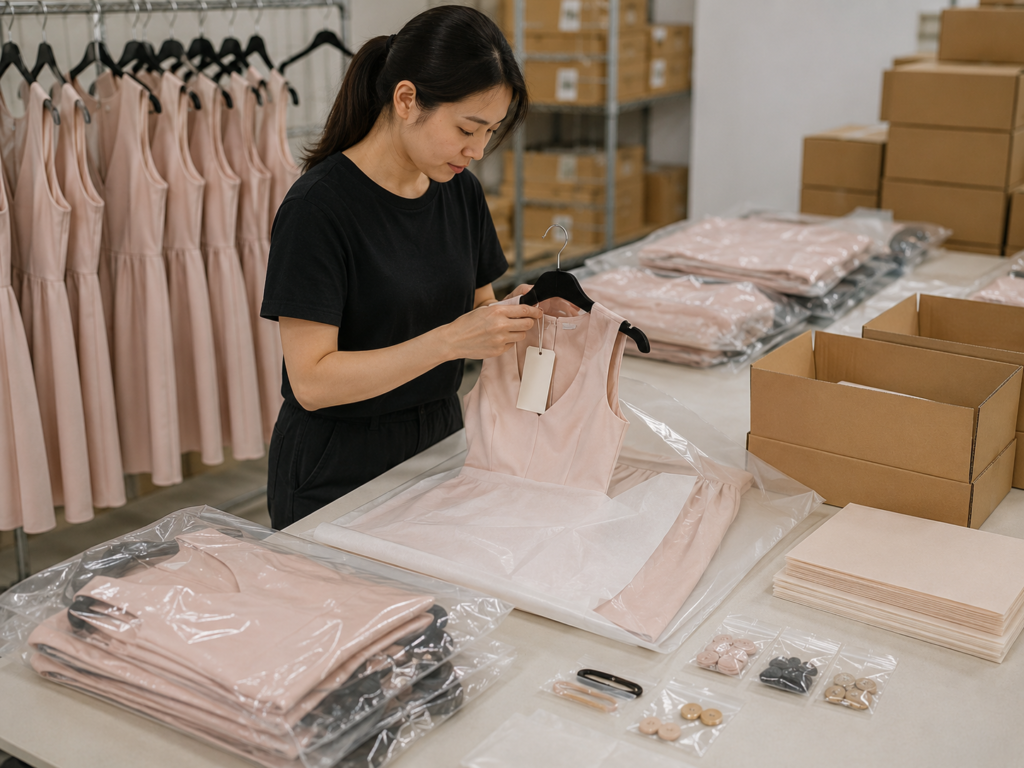
Final preparation checks surface cleaning, thread trimming, shape retention, folding, polybag, barcode and carton pressure. Ruching, mesh, cut-outs and compact stretch fabrics need packing methods that protect garment shape.
QC Standards for Bodycon Dresses
Bodycon dress QC must protect fit, stretch recovery, opacity, seam stability, surface appearance and channel-ready packing. Duolan checks quality from material arrival to packed cartons.
| QC Stage | What Duolan Checks | Bodycon Risk Controlled |
|---|---|---|
| Material QC | Stretch, recovery, opacity, shrinkage, color, lining compatibility | Fabric instability |
| Cutting QC | Stretch direction, panel balance, cut-out placement, size accuracy | Twisting and fit drift |
| First-piece QC | Measurements, neckline, side seams, zipper, lining, support points | Production misunderstanding |
| Inline QC | Seam elasticity, ruching, hem, sleeve, measurement drift | Bulk inconsistency |
| Final QC | Fit appearance, opacity, defects, surface, measurements | Unsellable garment condition |
| Packing QC | Folding, polybag, label, barcode, carton pressure | Deformation and receiving errors |
Label, Packing and Channel-Ready Delivery
Bodycon dresses are close-fitting garments, so label placement and packing method directly affect comfort, appearance and receiving accuracy. A poor fold can flatten ruching, mark stretch satin, distort mesh panels or compress structured areas.
Channel-ready delivery checks
- Main label and care label must avoid irritation and visible show-through.
- Care content should match fabric composition, stretch material and wash requirements.
- Size label and barcode need clear style, color and size matching.
- Hangtag and SKU sticker should attach securely without damaging mesh, lace or satin.
- Polybag size should protect fitted shape, garment length and surface finish.
- Folding method must consider ruching, cut-outs, mesh panels and compact knits.
- Carton pressure should avoid shine marks, creases, distortion or flattened details.
- Final packing photo record supports shipment review and repeat production.
Cost and Quantity Logic for Bodycon Dress Projects
Bodycon dress cost depends on stretch fabric, lining, trims, fit review, sewing difficulty, design details, QC and packing. Duolan reviews cost through garment risk and repeat potential rather than lowest-price logic.
| Cost Area | Bodycon Cost Driver | What Should Be Confirmed |
|---|---|---|
| Stretch Fabric | Spandex blends, ribbed knit, mesh, double-layer jersey, recovery | Composition, GSM, stretch direction, opacity |
| Lining / Double Layer | Coverage, comfort, opacity, support, stretch compatibility | Lining type, length, color, recovery match |
| Trims and Closures | Zipper, elastic, straps, hooks, hardware, labels | Trim strength, color, comfort, lead time |
| Cutting and Sewing | Negative ease, side seams, ruching, cut-outs, stretch stitching | Operation sequence, seam method, first-piece approval |
| Special Details | Mesh panels, cut-outs, ruching, slits, print, sequin | Placement reference, reinforcement, defect standard |
| QC and Fit Review | Measurements, opacity, recovery, fit sample, PP sample | Tolerance, inspection focus, sample approval |
| Packing | Folding, polybag, carton pressure, barcode, surface protection | Packing method, garment protection, carton standard |
Custom Bodycon Dress Project Case Studies
Duolan protects brand confidentiality, so project experience is presented through anonymous production scenarios. The examples below reflect common bodycon dress development and bulk control needs for established fashion brands.

US Going-out Bodycon Program
A US going-out brand developed fitted styles with mesh panels, cut-outs and ruched bodycon silhouettes.
- Order scope: 18 styles across fitted mini and midi dress structures.
- Total program quantity: about 48,000 pieces.
- Focus areas: opacity, side seam balance, mesh placement, stretch recovery and packing.
- Duolan actions: fabric review, fit sample correction, PP sample standard, inline QC and final packing reference.
- Result focus: strong visual bodycon styles prepared for channel-ready delivery.

Australian Party Bodycon Drop
An Australian partywear brand developed bodycon mini dresses, long sleeve fitted styles and slit bodycon silhouettes.
- Order scope: 14 styles across party and going-out fitted designs.
- Total program quantity: about 36,000 pieces.
- Focus areas: stretch recovery, hem ride-up, lining, slit reinforcement and surface finish.
- Duolan actions: stretch fabric review, first-piece confirmation, measurement checks and packing method review.
- Result focus: party-ready garments kept stable across sizes and bulk production.

European Fitted Midi Dress Line
A European contemporary brand developed fitted midi dresses for polished evening and occasion use.
- Order scope: 24 styles across midi bodycon and refined fitted silhouettes.
- Total program quantity: about 64,000 pieces.
- Focus areas: hip-to-hem balance, fabric recovery, side seam stability, neckline control and size grading.
- Duolan actions: pattern review, fit adjustment, PP sample locking and final QC focus.
- Result focus: fitted midi styles prepared for repeatable commercial programs.
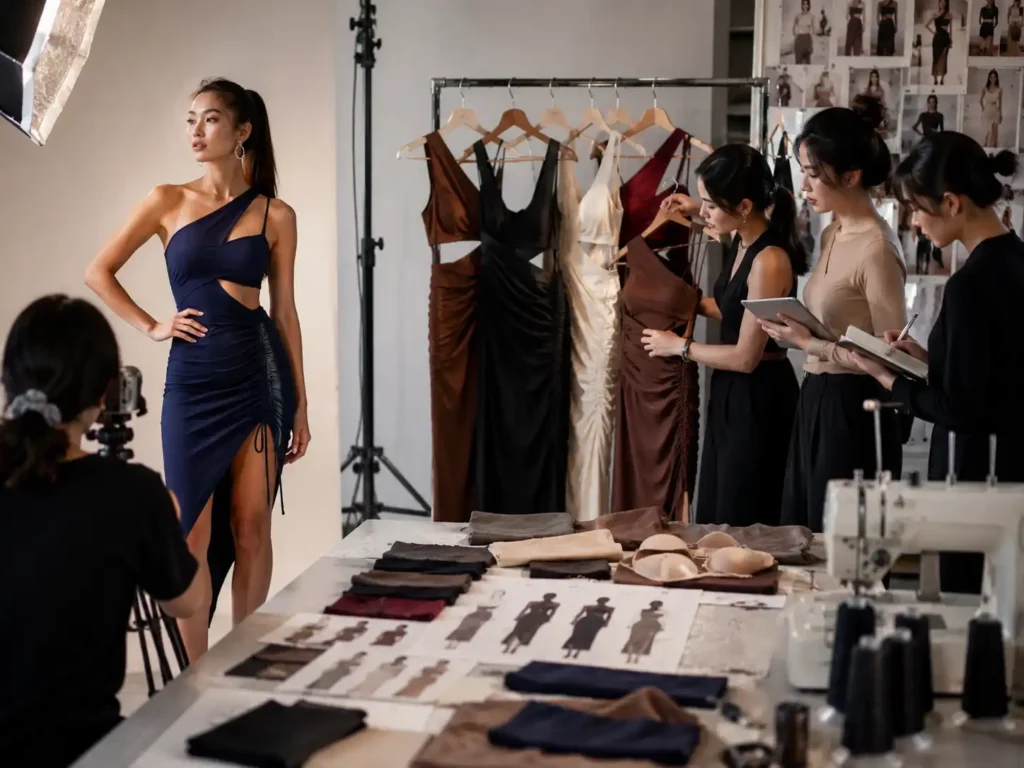
Social-first Fitted Dress Collection
A social-first fashion brand developed photo-driven fitted dresses with cut-outs, ruching and asymmetric necklines.
- Order scope: 16 styles across visual bodycon dress directions.
- Total program quantity: about 42,000 pieces.
- Focus areas: photo sample accuracy, body line, opacity, cut-out safety and quick revision.
- Duolan actions: sample correction, visual detail record, fabric approval and production handover.
- Result focus: campaign-ready fitted styles transferred into controlled bulk production.
FAQ|Custom Bodycon Dress Manufacturing
A custom bodycon dress manufacturer develops and produces fitted dresses according to brand direction, fabric standards, size range and delivery needs. Duolan supports bodycon mini dresses, bodycon midi dresses, ruched styles, mesh panels, cut-outs, long sleeve fitted dresses and party-ready silhouettes from sample development to bulk production.
Bodycon dresses often use double-layer jersey, ribbed knit, compact stretch fabric, stretch mesh, stretch lace, stretch satin or spandex blends. Duolan reviews stretch direction, recovery, opacity, shrinkage, handfeel, lining compatibility and seam response before bulk production.
Duolan reviews fabric recovery, stretch direction, shrinkage, negative ease, seam elasticity and fit sample behavior. The goal is a fitted garment that shapes the body, moves with the wearer and returns to the approved shape after wear.
Opacity is checked under stretch, especially across bust, hip, back and light-colored areas. Duolan can review double-layer construction, lining, mesh maps and fabric replacement when coverage risk appears during sampling.
Yes. Duolan supports ruched bodycon dresses, mesh panel bodycon styles, cut-out fitted dresses, high slit bodycon dresses, strapless fitted silhouettes and long sleeve bodycon designs. Each detail receives separate review for placement, support, comfort and bulk consistency.
Fit is controlled through pattern review, grading logic, fabric recovery, measurement tolerance, fit samples and PP sample standards. Bust, waist, hip, neckline, side seam, sleeve, hem and lining all receive size-specific attention.
Yes. Approved samples are connected to BOM records, fabric standards, PP samples, production notes, QC checkpoints and packing requirements. Sample approval becomes a production standard before bulk cutting begins.
A brand can send reference images, tech packs, target fit level, fabric direction, size range, colorways, style count, quantity, launch date and packing requirements. Duolan will review fabric feasibility, fit risk, sample path, production readiness and QC focus.

Send Your Bodycon Dress Project
Duolan works best with established fashion brands, product teams and sourcing offices developing bodycon, fitted, ruched, mesh, cut-out or party-ready dress programs. Share your project files, fabric direction or sample requirements, and our team will review the development path before sampling or bulk production.
Share your project details
- Bodycon style type: mini, midi, ruched, mesh, cut-out, long sleeve, strapless or halter.
- Target fit level: soft fitted, close bodycon, firm shaping or bandage-inspired.
- Fabric direction: jersey, ribbed knit, compact knit, stretch mesh, lace, satin or spandex blend.
- Project stage: first sample, fit sample, revised sample, PP approval, bulk production or repeat order.
- Program information: style count, target quantity, colorways, size range and launch date.
- Production needs: fabric sourcing, fit review, opacity control, QC, packing, label, barcode or repeat records.