Skip to content
How to Choose Mesh for Bodycon Dresses: Stretch, Fit, Lining and Production
Your trusted Women’s Apparel Development & Manufacturing Partner from China
- Jerry
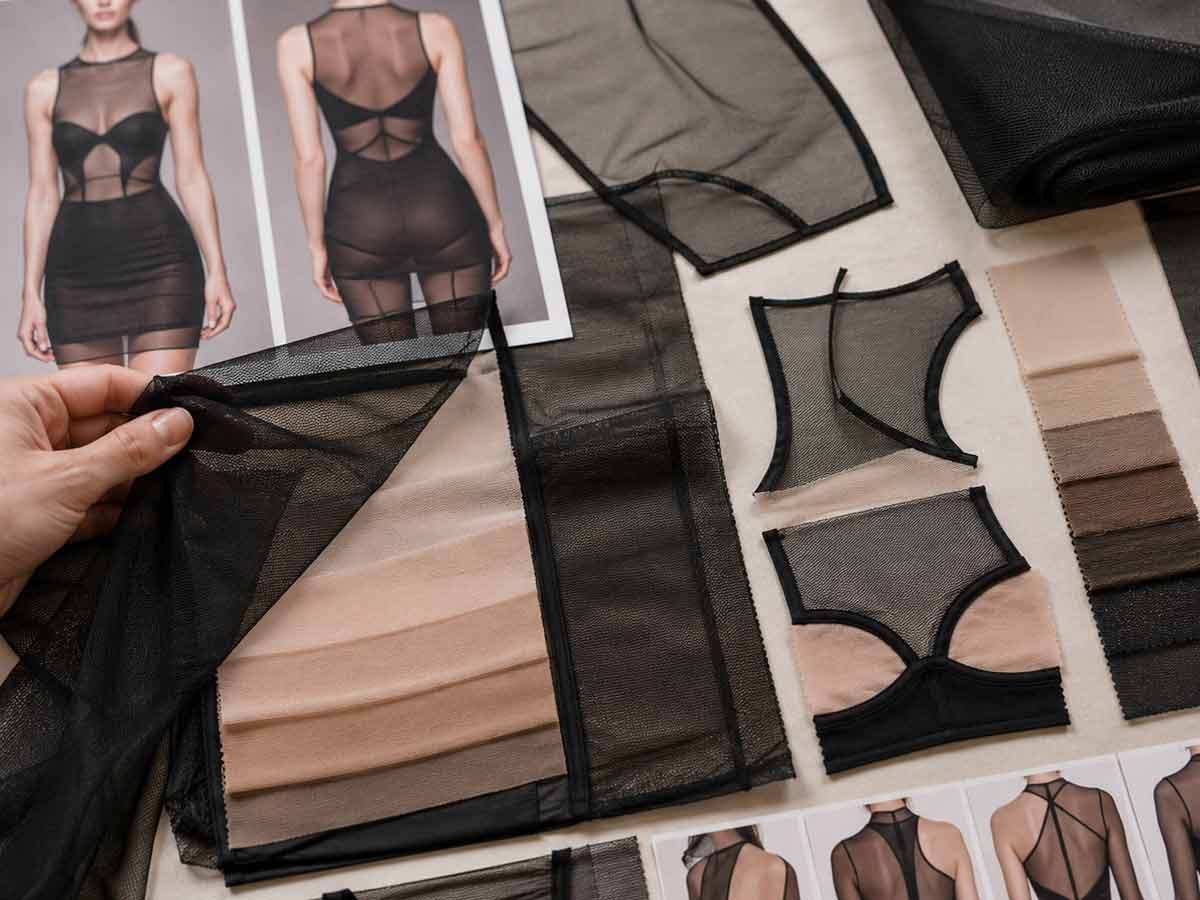
A mesh swatch can look perfect on a sourcing table and still fail once it becomes a bodycon dress. The color may be right, the hand feel may be soft, and the price may fit the target cost, yet the finished garment can turn transparent across the hips, loosen at the waist, twist at the side seams, or ride upward after the wearer sits down. These failures happen because mesh is not selected by appearance alone. It must be matched to the silhouette, the pattern reduction, the lining, the seam construction, and the pressure created by the body in motion.
The best mesh for a bodycon dress has controlled stretch, dependable recovery, acceptable opacity under tension, a comfortable surface, and enough stability for the intended construction. Lightweight stretch mesh suits soft overlays and ruching, medium stretch mesh works well for lined fitted dresses, and power mesh is useful where extra shaping or support is required. The shell, lining, pattern, and sewing method should always be tested as one system before bulk production.
A development team once approved a dark printed mesh because the relaxed swatch looked rich and opaque. On the first fit sample, the print whitened across the hip, the lining stopped stretching before the shell, and the dress climbed several centimeters after the model walked across the room. None of those problems were visible on the fabric hanger. The lesson was simple: a successful mesh bodycon dress starts with performance questions, not color approval.

What Mesh Works Best for Bodycon Dresses?
The best mesh combines controlled stretch, reliable recovery, comfortable skin contact, and a stable appearance under tension. Lightweight stretch mesh suits soft overlays and ruching, medium stretch mesh works better for lined fitted dresses, and power mesh supports sculpted areas. Rigid tulle is generally more useful for decorative volume than for the main fitted body.
What Is Stretch Mesh?
Stretch mesh is a knitted open-structure fabric that can extend with the body and return toward its original dimensions after movement. It is commonly made from polyester or nylon blended with elastane, although the same fiber label can cover a very wide range of weights, hole sizes, finishes, and recovery levels.
For bodycon dresses, the phrase “stretch mesh” is only a starting point. One quality may feel soft and lingerie-like, while another is dense, dry, and highly resistant. A useful approval sheet should therefore record composition, GSM, usable width, dominant stretch direction, working stretch, maximum stretch, recovery, opacity, surface feel, and any finishing treatment. Approving the fabric by trade name alone leaves too much room for variation.
Lightweight qualities are especially useful for sheer sleeves, ruched overlays, printed outer layers, soft cutout panels, and double-layered transparent effects. They create a fluid second-skin appearance and usually gather well. Their weakness is that they may become more transparent, less stable, or more prone to snagging when used as the complete dress shell.
A soft mesh may fit beautifully for the first few minutes and then loosen around the waist, seat, or elbows. This is why the fabric should be checked after repeated sitting and walking, not only while the fitting model is standing still. The right fabric reaches the desired fit within a comfortable working range instead of being stretched close to its physical limit.
Four-way stretch is often helpful because a bodycon dress needs horizontal expansion over the bust and hips as well as vertical movement during sitting, walking, and arm movement. Still, four-way stretch does not automatically mean better quality. A fabric that stretches in every direction but recovers poorly can look tired after one wear.
How Is Power Mesh Different?
Power mesh is generally denser and more resistant than ordinary fashion mesh. It is designed to stretch while exerting controlled pressure, so it can help smooth, support, or stabilize selected parts of a fitted dress.
Common uses include front waist panels, internal bodice support, structured back panels, corset-inspired styles, bustier dresses, reinforced cutouts, and double-layered areas where better coverage is required. The useful difference is not simply thickness. Power mesh normally resists extension more strongly and returns more firmly, which helps a dress retain its waistline and surface shape during wear.
Power mesh should not automatically cover the whole garment. A fabric that feels supportive in a hand-sized swatch may become restrictive when it wraps around the torso, hip, and thigh at the same time. Too much compression can make the wearer uncomfortable and increase stress on side seams, zipper seams, neckline edges, and internal attachment points.
Zoned support is often a more commercial solution. A softer mesh can form the visible outer layer, while firmer power mesh is placed inside the front waist, lower abdomen, back waist, or underbust area. This keeps the visual lightness of the design while adding stability only where it is useful.
Every added support layer changes the effective stretch of the complete garment. A pattern approved in single-layer mesh should not be reused unchanged after power mesh is added. The combined construction must be retested for fit, pressure, dressing ease, and movement.
Is Tulle Suitable for Bodycon Dresses?
Traditional tulle is usually not the best main fabric for a close-fitting bodycon dress. Most tulle has limited stretch, a crisp hand, and a relatively rigid net structure. When forced over the bust or hip, it can form sharp drag lines, split around seam holes, or feel rough against the skin.
Tulle performs better when the design needs shape around the body rather than continuous movement with the body. It works well for layered skirts, shoulder ruffles, gathered sleeves, sculptural draping, decorative bows, flounces, peplums, and overskirts built over a separate fitted base.
Stretch tulle and illusion tulle are different. Certain qualities have enough flexibility for fitted sleeves, yokes, necklines, and skin-tone cutout panels. They still need to be tested for extension, recovery, abrasion, and edge behavior. A fabric may feel soft at the center of the swatch but become irritating where a seam or raw edge touches the underarm or neckline.
A practical distinction is useful: stretch mesh follows the body, while conventional tulle creates volume or decoration around it. When a style combines both, the fitted base should control the silhouette and support, while the tulle provides the visual effect.
Which Mesh Suits Sheer or Sculpted Styles?
Sheer and sculpted dresses ask the fabric to do different jobs. A sheer style needs fine yarns, even transparency, softness, and enough recovery to avoid sagging. A sculpted dress needs stronger resistance, denser construction, and better shape retention.
Mesh type | Common development weight | Typical behavior | Best use | Main risk |
Lightweight fashion mesh | 50-90 GSM | Soft, flexible, visually light | Sheer overlays, sleeves, ruching | Bagging, snagging, excess transparency |
Medium stretch mesh | 90-140 GSM | Balanced drape and stability | Fully lined bodycon dresses | Layer tension if lining is mismatched |
Power mesh | 120-220 GSM | Firm resistance and recovery | Internal support, sculpted panels | Discomfort and high seam load |
Illusion mesh | 35-80 GSM | Fine, discreet, lightly supportive | Necklines, yokes, cutouts | Difficult skin-tone matching |
Printed mesh | 60-130 GSM | Visual depth, print-dependent stretch | Graphic overlays, party dresses | Whitening and motif distortion |
Embellished mesh | 100-300+ GSM | Decorative, locally stiff, heavier | Occasion and statement dresses | Sagging, abrasion, trim loss |
These ranges are practical development references rather than universal pass standards. Yarn type, hole size, finishing, and decoration can make two fabrics with the same GSM behave very differently. Sheer qualities should be reviewed in daylight, retail light, and camera flash. Sculpted qualities should be reviewed after movement and extended wear.

Which Mesh Specifications Matter Most?
The key specifications are stretch direction, comfortable extension, recovery, GSM, density, composition, surface feel, and opacity under tension. They must be evaluated together. High stretch without recovery can cause bagging, while high weight without flexibility can restrict movement. Final approval should be based on the complete dress construction rather than a single headline number.
Is 2-Way or 4-Way Stretch Better?
Four-way stretch is usually more suitable for a fully fitted bodycon dress because the garment must respond to both horizontal body expansion and vertical movement. Crosswise stretch accommodates the bust, waist, and hip, while lengthwise stretch helps the dress move when the wearer sits, walks, raises her arms, or bends.
Two-way mesh can still work in controlled applications such as side inserts, sleeves, neckline panels, decorative overlays, or styles where a more flexible lining carries most of the vertical movement. The strongest stretch direction must be aligned correctly with the body.
Four-way stretch does not mean equal extension in every direction. A fabric may extend 70% across the width but only 25% along the length. Both figures should be recorded. The pattern maker needs to know which direction carries the greater load and which direction may limit movement.
Marker efficiency should never take priority over stretch orientation. Rotating a pattern panel to save fabric can change fit, transparency, recovery, and the way the garment hangs. For mesh bodycon styles, grain direction and stretch direction should be marked on both the pattern and the production specification.
How Much Stretch and Recovery Do You Need?
Stretch percentage describes how far the fabric can extend. Recovery describes how closely it returns to its starting dimension. For fitted garments, recovery is often the more important measure because poor recovery leads directly to bagging around the waist, seat, knee, or elbow.
A simple workshop calculation starts with a 10 cm marked section. Stretching it to 13 cm equals 30% extension; to 15 cm equals 50%; to 18 cm equals 80%; and to 20 cm equals 100%. The fabric should be measured immediately after release and again after resting.
Working stretch should be separated from maximum stretch. Maximum stretch is how far the fabric can be forced before damage or severe resistance. Working stretch is how far it can extend comfortably during normal wear. A fabric that can technically stretch 100% may only feel comfortable at 50-60% extension. Building a pattern around the maximum figure can create excessive pressure and poor durability.
Residual extension is also useful. If a 10 cm strip returns to 10.3 cm, it has retained 3% additional length. Acceptable limits depend on the style and the brand’s fit standard, but fitted waist and hip areas normally require stronger recovery than a loose overlay.
Repeat the test rather than relying on one pull. A mesh may recover well after the first extension but weaken after 20 or 30 cycles. That repeated movement is much closer to what happens while the customer sits, walks, and dances.
What GSM and Mesh Density Work Best?
GSM measures fabric weight per square meter, but weight alone does not define support or quality. Hole size, yarn thickness, knit structure, density, and finishing all influence the finished garment.
Lightweight mesh gives more transparency, softer drape, easier gathering, and lower support. It can be ideal for ruched or layered fashion effects, but it may snag more easily and reveal more color change when stretched. Medium-weight mesh often gives a useful balance for lined fitted dresses. Heavier power mesh provides more support but can reduce fluidity and comfort.
Density should be reviewed alongside GSM. Two fabrics weighing 100 GSM may look completely different. One may use fine yarns in a close structure and appear smooth; another may use thicker yarns with larger holes and appear more open.
Review the fabric in at least four conditions: relaxed on a flat table, stretched to the expected wearing extension, layered over the intended lining, and photographed under strong light. A quality that looks sufficiently opaque in the fabric room may become transparent under flash photography or across the hip.
The full roll width should also be checked. Knitted mesh can show tension differences between the center and edges, which may affect stretch and cutting consistency within the same garment.
How Do Nylon and Polyester Mesh Differ?
Nylon mesh is often selected for softness, smoothness, resilience, and a refined close-to-skin feel. Polyester mesh is widely used for its color stability, printing compatibility, practical sourcing, and repeat availability.
Nylon-based mesh may suit fine illusion panels, lingerie-inspired bodycon styles, premium soft-touch dresses, and areas that remain in direct contact with the skin. Polyester-based mesh is often practical for printed programs, bright seasonal colors, transfer printing, and larger collections that need repeat sourcing.
Neither fiber is automatically superior. Finishing can change the result substantially. A well-finished polyester mesh may feel softer than a lower-grade nylon quality, and two fabrics with the same composition can have very different recovery because of yarn quality, knitting tension, and heat setting.
Elastane percentage should also be interpreted carefully. A mesh containing 10% elastane is not automatically firmer than one containing 5%. Fabric weight, yarn structure, and finishing may have a larger effect than the percentage shown on the specification sheet.
Specification | Soft sheer bodycon | Lined fitted bodycon | Sculpted bodycon |
Common GSM range | 50-90 GSM | 90-150 GSM | 120-220 GSM |
Crosswise working stretch | 50-100% | 40-80% | 25-60% |
Lengthwise working stretch | 20-60% | 20-50% | 10-40% |
Recovery priority | Medium to high | High | Very high |
Typical construction | Overlay or double layer | Mesh plus stretch lining | Zoned power mesh support |
Main approval concern | Transparency | Layer compatibility | Comfort and seam load |
These figures are useful for initial screening, not fixed pass criteria. The correct target depends on negative ease, size range, seam construction, and intended compression.

How Do You Match Mesh to the Dress Design?
Mesh must be selected according to the job it performs in each area of the dress. The same fabric may work as a loose overlay but fail as a tension-bearing waist panel. Match the material to the silhouette, pressure zones, transparency, ruching, print, decoration, and expected movement, then adjust the pattern to the approved construction.
How Does Mesh Affect Bodycon Fit?
Mesh affects fit through resistance, recovery, surface friction, and thickness. A soft quality follows curves smoothly but may provide little control. A firm quality sharpens the silhouette but can flatten the body or restrict movement.
Bodycon patterns usually use negative ease, meaning the garment measurement is smaller than the corresponding body measurement. The reduction should be based on comfortable fabric stretch, recovery, number of layers, lining resistance, seam type, intended compression, garment length, and target size range.
Negative ease should not be applied uniformly. The waist may need firmer control, while the hip requires enough extension for sitting and walking. A long fitted skirt may need extra stretch or a slit even when the upper body fits well. The bust may require separate shaping, additional length, darts, princess seams, cups, or zoned support.
A static fitting is not enough. The wearer should sit, walk, raise her arms, bend, and remain in the dress for at least 20-30 minutes. Then inspect waist bagging, skirt ride-up, twisted side seams, neckline movement, hip transparency, ruching displacement, hem restriction, and seam waviness.
When a problem appears, separate fabric causes from pattern causes. Adding width may relieve pressure, but it will not correct poor recovery. Changing the seam may reduce puckering, but it will not fix incompatible layers.
Which Mesh Works for Panels or Overlays?
The right mesh for a panel depends on how much structural load that panel carries. A neckline insert may provide transparency only, while a side-waist cutout can help hold the garment together.
Fine illusion mesh may be sufficient in low-stress areas. Side panels, underbust sections, waist cutouts, and full-back panels usually need stronger stretch mesh or power mesh. These locations should be tested because they often receive tension from the surrounding fabric.
When mesh joins a stable woven or low-stretch fabric, the seam becomes a transition between two very different materials. It may require clear elastic, narrow tape, tricot reinforcement, a shaped facing, a second mesh layer, adjusted seam tension, or a different stitch type.
Overlays create another challenge. The outer layer and lining must move without fighting each other. If the mesh is too tight, it can compress and wrinkle the lining. If it is too loose, it can sag, rotate, or form diagonal ripples.
The development team should decide whether the overlay is attached at all seams, free at the hem, secured only at selected points, ruched before assembly, cut larger than the lining, or treated as one layer with the base. This choice changes pattern dimensions and sewing sequence.
How Does Ruching Change Mesh Selection?
Ruching requires a fabric that forms clean folds and keeps them in place during wear. A stiff mesh creates thick ridges, while an extremely soft quality may collapse into irregular wrinkles or migrate downward.
Common ruching ratios may range from about 1.3:1 for a light texture to 2:1 or more for a dense gathered effect. A 2:1 ratio means 40 cm of mesh is gathered into a 20 cm finished length. The best ratio depends on GSM, softness, print scale, panel length, and placement.
Check gather direction, finished panel weight, elastic tension, drawcord strength, anchor points, seam load, visual placement, and size grading. Ruching should not automatically increase in direct proportion to garment size. Adding too much material in larger sizes can create bulk. The placement and distribution of gathers may need to change instead.
A vertical hang test is useful. Suspend the ruched panel for 12-24 hours and measure whether the gathers drop or migrate. This matters especially for maxi dresses, long side ruching, and printed or embellished mesh.
Ruching can improve visual coverage because several folds overlap, but it should not be treated as the only opacity control. The folds open during movement, particularly across the hip and seat.
Do Prints or Sequins Need Stronger Mesh?
Printed, embroidered, and sequined mesh often needs a more stable base because decoration changes both stretch and weight. Ink, foil, embroidery thread, adhesive, and sequins create local zones that resist extension differently from the plain mesh.
Printed artwork should be reviewed at the expected wearing extension. If a hip panel is likely to extend by 40%, the motif should be checked at approximately that stretch. Geometric lines, lettering, faces, and logos are especially sensitive. Dark prints may whiten as the holes open, while small motifs may become visually diluted.
Embroidery and sequins create local stiffness and added weight. The decorated area stretches less than the surrounding mesh, which can cause rippling, uneven fit, broken threads, trim loss, and seam imbalance. Shoulder seams, waist seams, and hanger points may need reinforcement.
Hang long embellished panels for at least 24 hours before approving length. A representative decorated seam should also be sewn before the full sample is made. Sewing through sequins or dense embroidery can damage needles, cut mesh yarns, and create rough internal surfaces.
Decoration should be engineered as part of the fabric system, not added after fit has already been approved.

What Lining Should You Use?
The lining should complement the mesh in stretch direction, working extension, recovery, weight, and surface behavior. Stretch jersey, tricot, and light power mesh are common choices. The lining should provide coverage and support without restricting movement or pulling the outer layer out of shape. Always test the two fabrics together.
Which Lining Matches the Mesh Stretch?
A lining does not need exactly the same stretch percentage as the outer mesh, but the two layers must move together within the normal working range of the garment.
If the lining stretches much less, it becomes the true limiting layer. The dress may feel tight even when the mesh is flexible. If the lining stretches too easily and recovers poorly, it may fail to support the outer layer and can become baggy.
Compare crosswise stretch, lengthwise stretch, recovery, weight, thickness, surface friction, heat response, and shrinkage. Direction is particularly important. A four-way mesh paired with a two-way lining can work only when vertical movement is not critical. In a long-sleeved midi dress, limited vertical stretch can cause shoulder pull and skirt ride-up.
Surface friction also matters. A very smooth lining allows the mesh to slide independently, while a rougher surface grips it. Too much movement can cause twisting; too much grip can create ripples and prevent the overlay from settling.
A sewn two-layer panel gives more useful information than two separate swatches. Join the fabrics with the proposed seam and stretch them as a complete construction.
How Do You Control Opacity?
Opacity should be evaluated under tension because mesh becomes more transparent when stretched. The holes enlarge, the yarns spread apart, and the color may appear lighter.
The bust and hip normally show the greatest change because those areas experience more extension. A fabric may look covered at the waist but become too sheer across the seat.
Opacity can be controlled by choosing a denser mesh, adding a stretch lining, double layering, reducing negative ease, using print or ruching, applying zoned power mesh, or changing seam placement. The best solution depends on whether the design intends full coverage, controlled transparency, or a skin-tone illusion.
Skin-tone linings require careful undertone matching. A beige with a yellow undertone may look unnatural beneath a pink or neutral mesh. A brand serving a broad customer base may need more than one lining shade.
Photography is part of the approval. A dress can appear acceptable in normal indoor light but too transparent under flash. Review the sample in daylight, bright retail lighting, studio lighting, and direct camera flash from the front, side, and back.
Should the Lining Add Support?
The lining may provide coverage only, or it may act as part of the shaping system. A soft stretch jersey works well when the mesh needs a comfortable base. Tricot can provide smoother recovery and a clean internal finish. Power mesh is useful where additional support is required.
Support is usually more comfortable when it is zoned. Common locations include the front waist, lower abdomen, side waist, back waist, underbust, bust cradle, and neckline edge. The lower skirt may remain softer to preserve walking comfort.
Using firm lining throughout the whole dress can create excessive compression and make the garment difficult to put on or remove. Every extra layer reduces effective stretch. A single mesh may comfortably extend 60%, while the same mesh combined with power mesh may feel comfortable at a much lower extension.
The pattern must therefore be retested after support is added. Pay attention to breathing, sitting, zipper stress, and the time required to dress and undress.
Outer mesh | Suitable lining | Main purpose | Key development check |
Lightweight sheer mesh | Soft stretch jersey | Coverage and comfort | Avoid visible lining edges |
Medium stretch mesh | Stretch tricot | Smooth fit and recovery | Match working stretch |
Ruched mesh | Smooth stretch lining | Stable base under gathers | Prevent ruching migration |
Illusion mesh | Skin-tone tricot or no lining | Controlled transparency | Confirm shade and undertone |
Printed mesh | Solid stretch jersey | Improve color depth | Check print and lining interaction |
Sculpted power mesh | Soft tricot or zoned power mesh | Support and shaping | Confirm comfort and seam load |
Embellished mesh | Smooth protective lining | Reduce abrasion | Check weight and snagging |
How Do You Prevent Layer Tension?
Layer tension occurs when the mesh and lining pull differently. It often appears as diagonal wrinkles, twisted side seams, a rolling hem, puckering, or an outer layer that creeps upward.
The cause may begin before sewing. Fabric relaxation, cutting accuracy, grain direction, and pattern dimensions all influence the result. Relax both materials before cutting, confirm stretch direction, measure each layer separately, and use frequent alignment notches.
During sewing, avoid stretching one layer more than the other. Review presser-foot pressure, differential feed, seam tension, and the method used to apply elastic. Decide whether the layers should be joined throughout or allowed to move independently in certain areas.
The outer mesh does not always need the same dimensions as the lining. A ruched overlay needs extra length. A floating overlay may need slightly more ease. A controlled double layer may need very closely matched dimensions.
Drawing a grid on both layers before assembly is a useful diagnostic method. After fitting, the grid shows where one layer has shifted more than the other. The hem also deserves attention: a shorter or tighter layer can pull the other one upward.

How Do You Test Mesh Before Sampling?
Before making a full dress, screen the mesh for stretch, recovery, opacity, snagging, seam performance, dimensional stability, and lining compatibility. Simple workshop tests can remove unsuitable options early, while formal laboratory tests may be required for brand or market standards. The final fit sample must still confirm comfort, movement, transparency, and recovery.
How Do You Test Stretch Recovery?
Mark a measured section of fabric, stretch it to a controlled length, release it, and record how closely it returns to the original dimension. Test both directions and use samples from more than one position across the roll.
A practical sequence uses a 10 cm marked area. Record the relaxed length, stretch it with moderate repeatable force, measure the working extension, release it, and measure immediately. Measure again after 30 seconds and after 30 minutes. Then repeat the cycle 20-30 times.
Residual extension should be recorded. If the 10 cm section returns to 10.3 cm, it has retained 3% additional length. The acceptable value depends on the design, but fitted waist and hip areas usually need stronger recovery than loose overlays.
Edge and center performance may differ, especially in knitted fabrics produced or finished under uneven tension. Testing only one small swatch may miss this variation.
The lining should be tested separately and then as a sewn two-layer system. Two fabrics can recover well on their own but pull against each other after assembly.
How Do You Check Opacity Under Stretch?
Place the mesh over the proposed lining and stretch it to the approximate extension expected in the garment. View it over white, black, light skin-tone, medium skin-tone, deep skin-tone, intended lining color, and common underwear colors.
Photograph the stretched sample with and without flash. Review it from the front and at an angle because mesh transparency changes with light direction. Printed mesh should also be checked for whitening, broken visual continuity, and loss of color depth.
Opacity should be assessed after the fabric is steamed, washed, or conditioned according to the intended care process. Heat and moisture can change relaxation, hole size, and surface finish.
The goal is not always maximum coverage. Some designs intentionally use transparency. The important point is control: the transparent zones should be deliberate, consistent, and accurately represented in product photography.
What Tests Reveal Snagging or Seam Failure?
Snagging can be screened by rubbing the mesh against representative components such as zippers, hooks, sequins, jewelry-like trims, embroidery backs, and mildly abrasive surfaces.
The seam test should reproduce the intended construction. Use the actual needle, thread, stitch, seam allowance, elastic, lining, reinforcement, and decoration. After sewing, stretch the seam repeatedly and inspect for broken loops, needle holes, skipped stitches, thread breakage, seam opening, puckering, and permanent waviness.
High-stress areas should be tested separately. These include side seams across the hip, center-back zipper seams, underarm seams, neckline joins, and the edges of cutout panels.
Test | Practical method | Main development concern |
Working stretch | Extend a marked 10 cm section | Comfort and pattern reduction |
Recovery | Measure after release and rest | Bagging and shape retention |
Cycle fatigue | Repeat stretch 20-30 times | Performance during wear |
Opacity | Review at expected extension | Coverage across bust and hip |
Snag screen | Rub against trims and rough surfaces | Surface damage |
Seam extension | Stretch the actual seam construction | Needle cutting and thread failure |
Hang test | Suspend panel for 12-24 hours | Length growth and decoration sagging |
Wash or steam check | Apply intended care condition | Shrinkage and relaxation |
These are useful development screens. Formal performance claims should be verified using the test method required by the brand, target market, or appointed laboratory.
What Should the Fit Sample Confirm?
The fit sample should prove that the fabric, pattern, lining, seam construction, and decoration work together. It should confirm front and back balance, bust shaping, waist control, hip contour, side-seam position, neckline security, arm movement, sitting comfort, walking stride, hem movement, opacity, layer tension, and post-wear recovery.
The model should remain in the dress for 20-30 minutes rather than completing a two-minute standing fitting. After movement, inspect whether the waist has loosened, the skirt has ridden upward, the side seams have rotated, the ruching has shifted, or the mesh has left uncomfortable pressure marks.
Fit comments should identify the cause of each problem. A tight hip may result from insufficient pattern width, poor vertical stretch, restrictive lining, or high seam tension. Adding width without identifying the cause can create a loose garment that still behaves badly.
Size grading should be considered at the first sample stage. A construction that works in one sample size may become too restrictive or too transparent in larger sizes. Critical areas may need different panel placement, support, or negative ease across the size range.
How Do You Prevent Bulk Production Problems?
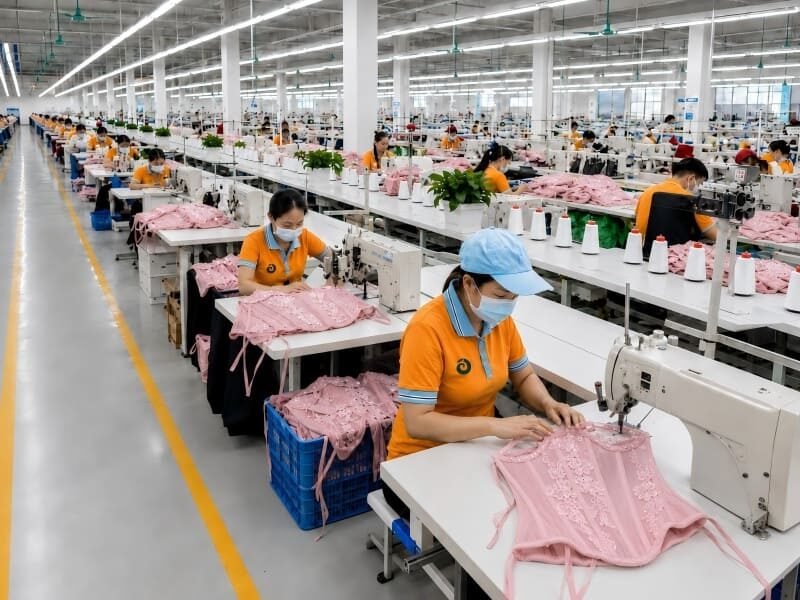
Prevent bulk problems by turning the approved sample into measurable standards for material, pattern, construction, and inspection. Control fabric lots, relaxation, cutting direction, first-piece approval, seam settings, operator handling, and inline inspection. Mesh bodycon dresses require style-specific controls because small changes in stretch, feeding, or lining tension can alter fit and appearance.
What Must Be Approved Before Production?
Production should not begin from a photograph or an unrecorded sample. The approved result must be converted into a complete technical reference package.
That package normally includes a sealed pre-production sample, approved shell mesh and lining swatches, composition, GSM, usable width, stretch direction, working stretch, color standard, print or embroidery strike-off, trims, final pattern version, graded size chart, seam and stitch requirements, placement measurements, care instructions, packaging standard, and inspection criteria.
The production fabric should be compared with the approved swatch for color, hand feel, density, recovery, and width. A visually similar substitute can change fit significantly.
For fit-sensitive styles, a pilot quantity or first-piece review is valuable before full cutting or full-line release. Critical operations should be identified in advance, including zipper insertion, shell-to-lining attachment, elastic application, ruching, cutout binding, neckline stabilization, embellished-area handling, and hem finishing.
The first approved pieces should be measured after a short resting period. Stretch garments can relax after sewing and may not reach stable dimensions immediately.
How Do You Control Batch Consistency?
Mesh can vary between production and dye lots in shade, usable width, GSM, stretch, recovery, hole size, and surface feel. Roll-level control is therefore essential.
Each roll should carry a roll number and lot number. Check shade in a controlled light source, measure usable width, verify GSM, test stretch, inspect defects, and record relaxation time. Fabric from visibly different lots should not be mixed within the same garment.
A front and back panel cut from different shades may look acceptable indoors but appear mismatched in daylight or retail lighting. The same applies to subtle sheen or yarn-direction effects. Some mesh looks non-directional until light reveals a difference.
Relaxation is particularly important. Fabric stored under tight roll tension may change dimensions after being opened. Cutting immediately can produce panels that shrink or distort after assembly.
Repeat orders should be checked against retained standards. Keep the sealed sample, fabric data, color reference, test records, and construction details so the new order is compared with objective evidence rather than memory or photographs.
Which Sewing Details Prevent Damage?
Mesh requires careful control of the needle, stitch, thread tension, feeding, and pressing. A suitable ballpoint or stretch needle is commonly used for knitted mesh because it is designed to move between loops rather than cut them.
Needle size must match the fabric. A needle that is too large can leave visible holes; one that is too fine may deflect or break when sewing through elastic, multiple layers, or decoration. Needles should be inspected and replaced promptly after contact with sequins, zippers, or hard trims.
Thread tension should allow the seam to extend without breaking. Excessive tension creates puckering and reduces seam stretch, while insufficient tension produces loose and unstable stitches. Differential feed and presser-foot pressure should be adjusted so the operator does not pull the mesh through the machine.
Operators need clear standards for aligning shell and lining notches, applying elastic consistently, stabilizing zipper areas, controlling seam allowances, protecting embellished surfaces, and identifying needle damage. A wavy seam caused by stretching during sewing cannot reliably be “steamed out” at the end.
Pressing temperature and contact time should also be tested. Excess heat can damage elastane, flatten texture, or create shine.
How Do You Choose a Mesh Dress Manufacturer?
Choose a manufacturer that can connect fabric selection, pattern engineering, fit correction, lining, sewing, and bulk quality control. A factory that can physically sew mesh is not necessarily equipped to develop a commercially successful mesh bodycon dress.
Ask how the team measures stretch and recovery, matches shell and lining, determines negative ease, checks transparency under tension, reinforces high-stress panels, approves first production pieces, controls fabric lots, and transfers sample standards into bulk production.
Strong answers should refer to the actual design. Generic statements such as “we have good quality” reveal very little. A capable development team should identify pressure zones, transparency risks, construction challenges, and likely production controls from the tech pack, reference sample, or design image.
The strongest evidence is a disciplined path from fabric screening to pattern planning, prototype sample, fit correction, material confirmation, pre-production sample, first-piece approval, inline inspection, final inspection, and repeat-order recordkeeping.
Capacity matters, but organization matters more. A large production floor cannot compensate for weak fabric control or poor fit development. For mesh bodycon dresses, the most reliable partner is the one that can preserve the approved appearance from the first swatch through repeated production runs.
A well-developed mesh bodycon dress should feel effortless to the customer even though the work behind it is highly technical. The shell should stretch without becoming weak, the lining should provide coverage without resisting movement, the seams should remain smooth, and the silhouette should recover after the wearer sits, walks, and dances.
Duolan Apparel develops custom mesh dresses, bodycon styles, occasionwear, party dresses, and fashion-led dress collections for established brands, buying teams, and product-development departments. Its wider manufacturing network includes 16 self-owned women’s fashion factories, more than 20 long-term satellite factories, 300 sewing lines, and over 50 flexible quick-response lines, supporting development, repeat orders, and scaled production.
To request a development review and quotation, send your tech pack, reference sample or images, size specification, target mesh, lining requirements, planned quantity, and delivery window to Duolan Apparel
Share:
Our Services
Categories
Table of Contents
Here, developing fashion collections is more than manufacturing garments — it’s a collaborative process focused on transforming ideas into well-executed, market-ready products. From fabric sourcing and sample development to scalable production and delivery coordination, every stage is built to support quality, consistency, and efficient collection launches across global markets.