...

Custom Border Print Dress Manufacturer

Border, placement and engineered print dress development for fashion brands requiring controlled artwork positioning, fit accuracy and scalable production.

  • Developed for border placement across mini, midi and maxi silhouettes, with size ranges commonly extending from XS to XXL.
  • Four controlled print approval stages: artwork review, strike-off approval, sample confirmation and bulk print verification.
  • Structured for seasonal programs of 10–30 styles and total order volumes commonly ranging from 20,000 to 80,000 garments.
  • Artwork, fabric, pattern, grading, cutting and sewing standards are connected before bulk production begins.

Duolan transforms original artwork, print references and collection concepts into production-ready border print dresses. Our development process coordinates fabric behavior, border proportion, garment pattern, size grading, seam placement and manufacturing requirements, helping fashion teams preserve the intended visual result from first sample through repeat production.

Border Print Dress Development for Established Fashion Teams

Border print programs require more than an available print supplier. Duolan works with established fashion teams that need original artwork translated into balanced silhouettes, approved samples and repeatable production standards.

Resortwear Brands

Resort collections often depend on strong print identity, fluid movement and recognizable color stories. Duolan coordinates print scale, fabric drape and pattern shape so the artwork remains visible during movement rather than disappearing into gathers, wraps or tier seams. Development can cover matching mini, midi and maxi versions, multiple colorways and coordinated tops or skirts within one seasonal program.

Vacation Dress Brands

Vacation dresses frequently use botanical, coastal, tropical, scarf-inspired or geometric borders. The development challenge lies in keeping the design light and expressive while maintaining coverage, fit and production stability. We review fabric transparency, skirt volume, border width, strap position, side-seam balance and packing recovery. 

Occasionwear Labels

Occasion border prints demand a more controlled relationship between artwork and body proportion. A motif placed too high can widen the waist; an oversized border can shorten the silhouette; an interrupted front panel can weaken the intended premium finish. Duolan reviews visual center, neckline framing, waist position, skirt fall, lining coverage and finishing standards before the sample direction is locked.

Buying Teams

Buying teams need clear approval points, stable documentation and measurable production controls. Our process connects artwork versions, approved strike-offs, size specifications, pattern records, PP samples, cutting references and inspection checkpoints. Each stage supports internal review and reduces the risk of a visually approved sample becoming inconsistent during production across multiple colors, sizes or factories.

Product Development Teams

Product teams often start with a moodboard, artwork file, reference garment or collection concept rather than a complete production package. Duolan can review the design basis, identify missing information and establish a development path covering fabric selection, border dimensions, placement logic, fit priorities, sample purpose and bulk feasibility.

Sourcing Offices

Sourcing offices evaluate technical capability, communication discipline, compliance readiness and delivery coordination. Duolan supports structured project review, multi-style development, production path planning, quality records, factory coordination and shipment preparation. Clear documentation helps sourcing offices compare the approved product standard against production output and repeat-order requirements.

What a Border Print Manufacturing Partner Must Control

A strong result depends on several connected disciplines. Each discipline affects how the finished dress looks, fits, scales across sizes and performs during bulk manufacturing.

Artwork Interpretation

Original files must be reviewed for resolution, color information, repeat structure, border width, motif direction and intended visual center. A beautiful flat artwork file may require proportion changes before it works on a curved bodice, gathered skirt or wrap construction.

Fabric Compatibility

Print clarity alone is not enough. Fiber content, surface texture, transparency, stretch, drape, shrinkage and heat sensitivity influence both visual quality and manufacturing behavior. Fabric selection must support the print and the intended silhouette at the same time.

Pattern Mapping

Artwork needs to be positioned against real garment pattern pieces. Front bodice, back bodice, skirt panels, sleeves, waist sections and facings may require different artwork treatment. Pattern mapping prevents important motifs from being cut by darts, seams, zippers or gathers.

Size Grading

A border positioned correctly on a medium sample may move too high, too low or too far from the body center after grading. Size-specific review is needed whenever garment length, circumference, panel width or print scale changes substantially across the size range.

Cutting Accuracy

Border prints require controlled fabric alignment, directional checking and clear reference points. Cutting mistakes can change border height, reverse motif direction or break continuity across adjoining panels even when the printed fabric itself is approved.

Bulk Reproduction

Approved sample standards must be converted into production records. Print files, fabric lots, pattern versions, placement references, workmanship notes, measurements, packaging requirements and inspection checkpoints need to remain aligned through production and repeat orders.

Common Border Print Risks and Duolan Control Points

Most failures begin before sewing. A clear control point is assigned to each major visual, material and production risk.

Project RiskCommon CauseDuolan Control PointApproval Evidence
Border sits too high or lowArtwork placed without garment proportion reviewPlacement map checked against garment length and body balanceDigital layout and sample measurement
Side seams break the motifNo matching allowance or panel planningSeam continuity review before marker approvalFront, back and side sample views
Different sizes look unrelatedOne layout applied across all sizesSize-specific placement and grading reviewXS, M and XL comparison
Print scale overwhelms the dressArtwork repeat not adjusted to silhouetteMotif scale review by mini, midi or maxi lengthScale simulation before strike-off
Sample color differs from bulkScreen reference used without physical approvalStrike-off and bulk lot comparisonApproved print standard
Gathers hide important artworkPrint position set before construction reviewGathering ratio and visible-area planningSample on dress form
Zipper or waist seam cuts the focal motifArtwork not mapped to construction linesPattern-to-print mappingAnnotated pattern layout
Reorders shift in color or placementFiles and standards not preservedVersion control and repeat-order reference recordsApproved sample, artwork and QC file

Border print development is controlled by measurable references rather than visual assumptions. Tolerances are established according to motif scale, garment construction, fabric stability and the locations where alignment is commercially important.

Why Fashion Brands Develop Border Prints with Duolan

Duolan combines long-term dress development experience with a multi-factory manufacturing structure designed for series development, complex workmanship and scalable production.

30+ Years Development Background

Our leadership team has worked in fast-fashion womenswear research and product development since the 1990s. The experience covers fashion dresses, fabric development, fit, decorative workmanship and commercial product translation for European and American markets.

16 Owned Factories

Core factories support development-sensitive projects, key styles, sample-to-bulk transition and production standards requiring closer control. Factory allocation is planned according to style complexity, material behavior, workmanship and delivery requirements.

20+ Satellite Factories

Long-term satellite factories provide additional manufacturing flexibility for multi-style collections, rolling orders, replenishment and seasonal production peaks. Production is allocated only after product and process requirements are reviewed.

12,000+ Production Workers

The wider manufacturing network includes more than 12,000 workers across several apparel-producing regions. Scale is used to support program planning, not to replace product-level control or approved standards.

300 Sewing Lines

Approximately 300 sewing lines support different garment categories, construction levels and production paths. Border print dresses can be assigned according to fabric sensitivity, skirt structure, seam requirements and order schedule.

50+ Responsive Lines

More than 50 responsive lines strengthen support for development-driven launches, approved repeat styles and time-sensitive replenishment. Capacity decisions remain linked to material readiness, workmanship difficulty and quality checkpoints.

Custom Border Print Dress Product Range

Border artwork can be developed across multiple silhouettes, but every silhouette changes how the motif is viewed, graded, cut and sewn. Product development therefore begins with garment structure rather than print alone.

Border Print Maxi Dresses

Maxi dresses provide the largest visual area for statement borders, scenic motifs and graduated artwork. Their long skirt panels create strong movement, but also magnify errors in scale, direction and border height. We review finished length, skirt sweep, panel width, side-seam location, slit position and gathering ratio before confirming the layout. For fuller skirts, the border may need additional repeat width to prevent visible crowding. For straight or bias silhouettes, artwork direction must respect grain and drape.

Border Print Midi Dresses

Midi proportions require careful balance because the border sits closer to the calf and can visually shorten the body when oversized. Duolan reviews border depth against garment length, waist position and intended footwear. A 15 cm border may appear balanced on a maxi but dominate a fitted midi, so scale is evaluated by silhouette rather than copied across styles. Wrap fronts, center slits, panel seams and asymmetric hems require individual mapping. Midi programs work well for occasion, wedding guest, resort and contemporary daywear collections.

Border Print Mini Dresses

Mini dresses offer limited vertical space, making print proportion especially sensitive. Large motifs may need reduction, cropping or relocation toward sleeves, neckline or side panels. Hem borders must remain visible without consuming most of the skirt. We assess body length, skirt depth, waist seam, dart position and size grading before strike-off approval. For fitted minis, stretch direction and print distortion are reviewed. For loose or tiered minis, gathering and flare are calculated so the motif stays readable.

Placement Print Shirt Dresses

Shirt dresses introduce front plackets, collars, cuffs, yokes and curved hems that can interrupt artwork. Placement planning may frame the center front, extend along the hem or repeat across sleeves and cuffs. We determine whether the placket should match, mirror or intentionally divide the motif. Button spacing, pocket placement and belt position are included in the artwork review. Lightweight poplin, viscose and crepe are common options, each requiring different shrinkage and print-process controls.

Border Print Wrap Dresses

Wrap construction changes the visible area as the garment overlaps. A motif positioned correctly when laid flat may disappear once worn, while a large border may become uneven at the front opening. Duolan maps the underlap, overlap, tie position, waist seam and skirt sweep before sample cutting. Coverage and fit remain important because the final visual result depends on both body movement and wrap adjustment. 

Border Print Tiered Dresses

Tiered dresses can create powerful border effects, but every tier seam changes motif continuity. Options include one primary border at the hem, repeated borders across tiers, graduated motif density or contrast borders between solid sections. We review tier depth, gathering ratio, seam allowance and final hanging length. Artwork is adjusted where gathering compresses the visible repeat. Panel numbering and cutting direction become critical during bulk production.

Border Print Slip Dresses

Slip dresses require precise visual restraint. Their clean construction leaves little room to hide print-placement errors. A border may follow the hem, climb one side seam, frame the neckline or create a scarf-inspired front panel. Bias cutting, if used, can rotate motifs and alter border direction, so grain and artwork orientation must be reviewed together. Strap length, neckline shape, lining and fabric sheen also influence the final result.

Border Print Occasion Dresses

Occasion styles may combine fitted bodices, structured waists, flowing skirts, draping, pleats or asymmetric details. The print must support the silhouette rather than compete with it. We evaluate whether the focal motif belongs at the neckline, waist, side body, skirt front or hem. For satin and glossy bases, print color changes under light must be checked. For chiffon or mesh, lining color and transparency affect saturation and contrast.

Border Print Solutions for Seasonal Collections

A border print can act as a signature element across an entire collection. Development choices should reflect market season, launch calendar, styling direction and repeat-order potential.

Resort Collections

Resort programs often combine maxi dresses, shirt dresses, matching sets and lightweight cover-ups. A shared border can connect several silhouettes without making every item identical. Artwork may be enlarged for maxi hems, reduced for sleeves and converted into a narrow trim for tops or skirts.

Vacation Collections

Vacation collections benefit from recognizable color stories and relaxed silhouettes.  Development focuses on movement, breathable fabric options, lining decisions, adjustable fit and clean finishing for lightweight materials.

Summer Drops

Summer border prints often use cotton, viscose, linen blends, chiffon or lightweight polyester. Colorfastness, shrinkage, opacity and after-wash appearance require early review. Product mixes may include mini dresses, sundresses, tiered midis and flowing maxis.

Cruise Programs

Cruise collections may require polished day-to-evening pieces with controlled print scale and versatile styling. Border placement can frame a neckline, define a waist or create a clean hem statement. Crepe, satin, viscose and fine cotton bases support different price and visual positions.

Occasion Collections

Occasion lines rely on visual balance, fit and finishing. Placement prints can draw attention to the neckline, waist or skirt movement. Color approval and placement consistency become especially important when several dresses appear together in a showroom, lookbook or campaign.

Holiday Collections

Holiday programs may combine rich colors, metallic details or deeper border motifs. Production timing must include artwork approval, strike-off, sample review, PP confirmation, bulk printing and finishing. Complex fabrics or additional embellishment require extra process planning.

Contemporary Daywear

Contemporary dresses often use cleaner geometric, abstract or architectural borders. The print may become a subtle signature rather than a dominant motif. Shirt dresses, fitted midis and clean wrap silhouettes work well when placement follows construction lines.

Statement Capsules

A focused capsule can use one exaclusive border across several shapes and colorways. Strong artwork control, clear file ownership and consistent repeat records support later extensions, replenishment and seasonal recoloring.

Border, Placement and Engineered Print Options

Print terminology can describe different production approaches. Selecting the right structure helps the artwork retain its intended relationship with the garment.

Single-Edge Borders

A single-edge border runs along one fabric edge and is commonly positioned at the skirt hem. Fabric width, panel height and cutting direction determine whether the border can be used without excessive waste.

Double-Edge Borders

Double-edge fabric carries a border along both sides. It may improve material utilization for selected patterns, but panel orientation and garment width must be checked before production planning.

Hem Placement Prints

Artwork is developed specifically for the lower part of the dress rather than repeated continuously across the fabric. Hem placement gives stronger control over border scale and position.

Neckline Placements

Motifs can frame V-necks, square necklines, halters or off-shoulder shapes. Artwork must follow the pattern curve and remain balanced after seams, facings and lining are attached.

Sleeve Border Prints

Sleeve hems, cuffs and flounces can carry a secondary border. Sleeve width, arm movement, seam position and left-right symmetry are included in placement review.

Front Panel Prints

An engineered front panel may use one central motif with supporting border elements. Darts, princess seams, waist seams, zippers and gathering must be integrated into the artwork layout.

Scarf-Inspired Prints

Scarf-inspired designs may combine frames, central motifs, corner elements and directional borders. The print can be mapped across full dress panels or divided among bodice, skirt and sleeves.

Graduated Borders

Graduated artwork changes in density, color or scale from top to bottom. Gradient transitions require careful color approval and panel alignment, especially when the dress contains multiple skirt pieces.

Exclusive Print Directions for Fashion Dress Programs

Artwork direction should support a brand’s collection identity, garment shape and commercial use. Duolan can coordinate original files, licensed artwork or approved creative references.

Botanical Borders

Botanical borders work well for resort, vacation and summer programs. Leaf scale, floral direction and empty space need to remain balanced across skirt panels and multiple sizes.

Tropical Borders

Tropical motifs often use bold color and large repeats. Fabric saturation, motif cropping and front-back continuity are reviewed before sample production.

Paisley Borders

Paisley designs may contain fine linework and dense color layering. Print resolution, repeat accuracy and border symmetry are important for premium-looking results.

Geometric Borders

Geometric prints make misalignment highly visible. Straightness, panel matching, grain direction and seam tolerance require tighter control than irregular organic motifs.

Baroque Borders

Baroque artwork can frame necklines, waists or hems with strong decorative impact. Scale must remain proportionate to the garment and avoid visual crowding around seams.

Scarf Motifs

Scarf prints combine borders, corners and central artwork. Pattern mapping is usually required because random cutting can destroy the framed composition.

Abstract Placements

Abstract designs offer greater freedom at seams, but visual weight still needs control. The focal area should support the silhouette and remain balanced from front, back and side views.

Heritage-Inspired Borders

Heritage references may involve cultural, archival or traditional pattern language. Artwork ownership, licensing and brand approval should be confirmed before development and production.

Build One Border Artwork into a Full Collection

One approved artwork can support more than one dress. A structured collection plan helps control visual consistency while giving each silhouette a clear commercial role.

Scale Artwork by Silhouette

Mini, midi and maxi dresses should not automatically use the same border dimensions. A border occupying 12% of a maxi skirt may consume more than 25% of a mini skirt. We compare garment length, skirt width and visible body proportion before setting the print scale. The artwork may remain identical in style while changing in depth, repeat length or motif spacing.

A collection can use:

  • A full-depth border for maxi dresses
  • A reduced border for midi dresses
  • A narrow border or neckline placement for mini dresses
  • A selected motif extracted for sleeves, cuffs or belts
  • A simplified repeat for matching tops and skirts

Digital simulations help evaluate the relationship before physical strike-offs are produced.

Separate Hero and Commercial Styles

A hero style may use the most dramatic artwork arrangement for campaign impact. Commercial styles can use simpler placements that improve fit flexibility, material utilization and repeat production. Duolan helps distinguish which garments need high-impact engineering and which can carry the same collection identity through reduced borders, smaller motifs or cleaner construction.A balanced 10–30-style program may include:

  • Two to four visual campaign styles
  • Core maxi and midi silhouettes
  • Easier daywear or shirt-dress options
  • Matching separates
  • Additional colorways
  • Repeat-ready commercial shapes

Development priorities can then be aligned with photo-sample dates, buying meetings and bulk approval stages.

Fabric Bases for Custom Border Print Dresses

Fabric controls color, sharpness, movement, opacity and fit. Selection begins with the intended dress result, not only the print method or fabric name.

Viscose and Rayon

Viscose offers fluid drape and strong color absorption, making it suitable for resort maxis, wrap dresses, tiered midis and vacation styles. The material can shrink or change dimension after wet processing, so print preparation, relaxation and pre-production testing require attention. Border height should be evaluated after expected shrinkage rather than only on untreated fabric.

Chiffon

Chiffon creates movement and layered transparency, but its sheer surface changes perceived color saturation. Lining color can make the print appear brighter, darker or softer. Fine motifs may lose clarity when the fabric is gathered, and border placement can become uneven if cutting is not stabilized. Development usually reviews shell, lining, gathering ratio and seam construction together.
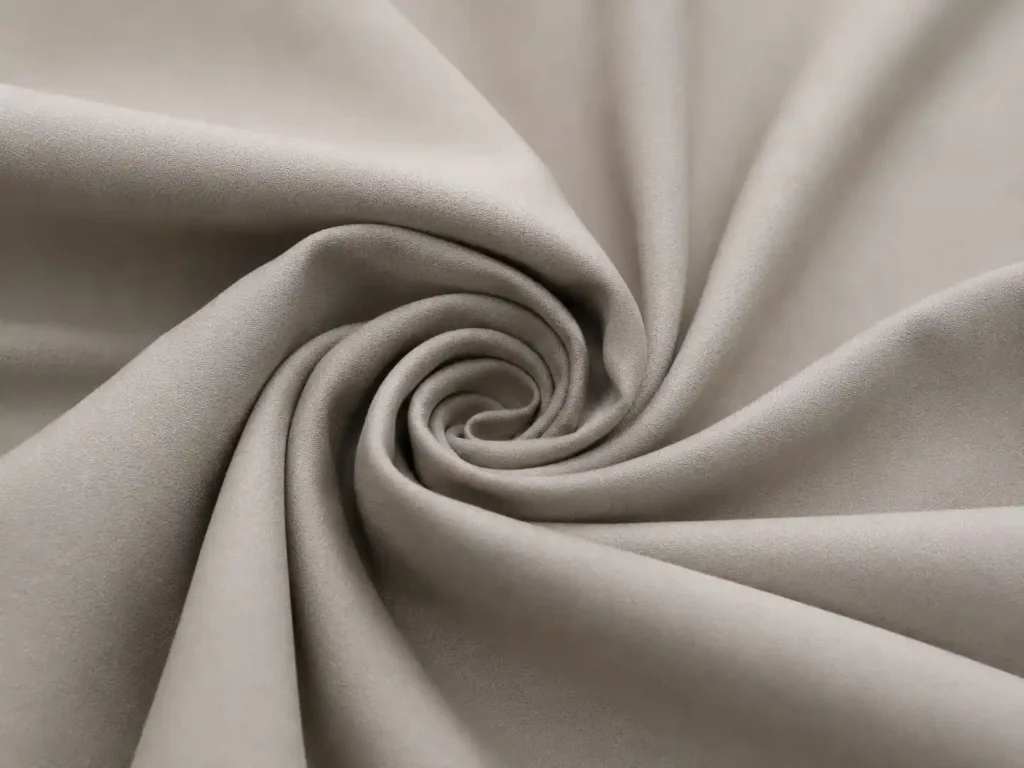
Crepe

Crepe provides controlled drape and a less reflective surface than satin. Fine surface texture may slightly soften line definition, so artwork detail and printing method should be tested on the selected quality. Crepe works well for wrap dresses, occasion midis, shirt dresses and clean maxis. Stretch crepe also requires print-distortion and recovery checks.

Satin

Satin adds sheen and depth to border artwork, but light reflection changes color perception. Dark shades, fine lines and gradients should be approved under more than one lighting condition. Needle marks, puckering, pressing shine and scratching can affect the finished garment. Placement planning must account for grain direction, panel reflection and potential bias construction.

Cotton Poplin

Cotton poplin supports crisp prints and structured silhouettes. It is suitable for shirt dresses, summer midis, fit-and-flare styles and cleaner geometric borders. Shrinkage, skew, color penetration and hand feel after printing should be checked. Dense pigment layers may stiffen the fabric, while reactive printing generally preserves a softer handle when technically suitable.

Linen Blends

Linen blends provide a natural surface and relaxed premium appearance. Slubs and texture can soften print edges, which may suit botanical or artisanal artwork but not every geometric design. Fabric stability, shrinkage and seam performance need review. Border positioning should allow for the less uniform surface and natural movement of the material.

Printed Mesh

Mesh supports layered placement effects, bodycon overlays and occasion details. Stretch percentage, recovery, transparency and motif distortion must be tested. Artwork can be aligned with lining, body panels or shaped seams. Because mesh moves under tension, approval should be completed on the garment or dress form rather than only on flat fabric.

Lightweight Polyester

Polyester can support sharp digital or sublimation results, depending on construction and finish. It offers color consistency and dimensional stability for many commercial programs. Drape, breathability, static, shine and heat response still vary widely by quality. Fabric selection should match the collection position rather than relying on fiber content alone.

Select the Right Printing Method for Each Program

Print method is determined by fiber content, artwork detail, color depth, order volume, hand feel, placement accuracy and repeat requirements.

Printing MethodSuitable Material DirectionVisual StrengthPlacement ControlProgram FitMain Review Point
Reactive digital printingCotton, viscose and selected cellulose basesRich penetration and soft handleStrong for custom files and detailed bordersPremium printed dress programsPretreatment, wash-off and shrinkage
Pigment digital printingBroad range of natural and blended fabricsFlexible color and artwork optionsStrong for development and multiple colorwaysFast-moving collections and varied basesHand feel, rub fastness and curing
Sublimation printingPolyester and suitable polyester blendsBright color and sharp detailHigh for panel and engineered layoutsResort, occasion and commercial programsHeat response, base whiteness and sheen
Screen printingSuitable fabrics with repeatable color separationsStrong solid color and repeat efficiencyGood when layout and repeat are establishedLarger repeat programsScreen setup, color registration and quantity
Panel printingIndividual garment panelsDirect control over focal placementVery highEngineered front panels and statement stylesPanel identification and size version control
Border fabric printingPrinted along one or both fabric edgesEfficient border effect for suitable patternsDependent on marker and fabric widthHem borders and repeat collectionsFabric width, cutting direction and consumption

A method is confirmed only after artwork, fabric, garment structure, quantity and quality expectations are reviewed together. Final color and hand feel should be approved on the intended bulk fabric whenever possible.

Artwork Information Needed for Accurate Print Development

Complete production files improve accuracy, but development can begin from several professional starting points. The information supplied should clarify artistic intent, scale, color and garment use.

Editable Artwork Files

Preferred formats include AI, EPS, layered PSD, print-ready PDF or high-resolution TIFF. Editable files allow scale, color separation, border depth and placement to be adjusted without rebuilding the design.

Color References

Pantone references, approved swatches or physical color standards provide a stronger basis than screen images. Each colorway should be clearly named and connected to the correct artwork version.

Border Dimensions

Provide the intended border depth, repeat length and direction whenever available. Border width may later be adjusted according to garment length, fabric width and size range.

Garment References

Tech packs, sketches, front-back drawings, original samples or clear garment photos help determine where the border should sit and which construction lines may affect it.

Size and Fit Basis

A size chart, base size, grading rule and intended fit support accurate print placement. Important motifs should be reviewed against bust, waist, hip and finished-length changes.

Collection Requirements

Style list, color plan, target quantity, launch date, fabric direction, labeling and packaging requirements help determine the most efficient development and production route.

Controlled Print Development from Artwork to Bulk Standard

Each print stage creates an approval reference for the next. The process connects design decisions with measurable manufacturing information.

Artwork Review

Files are checked for scale, resolution, repeat, border direction, color information and garment compatibility. Important motifs and protected visual areas are identified before layout work begins.

Fabric Assessment

Possible fabric bases are reviewed for print suitability, drape, opacity, shrinkage, stretch and sewing behavior. Alternative materials may be proposed when the original direction creates production or performance risks.

Placement Layout

Artwork is mapped against the base-size garment pattern. Border depth, visual center, seams, darts, gathers, plackets, slits and zippers are reviewed.

Strike-Off Development

A physical strike-off is produced on the intended or approved material direction. Color, sharpness, scale, penetration, hand feel and background tone are evaluated.

Sample Production

Approved print direction is converted into garment panels and sewn into the required sample stage. Front, back, side and movement views are reviewed.

Revision Control

Fit, pattern or design revisions are checked for their effect on print placement. Updated files and layouts are versioned before another sample is made.

PP Confirmation

The production-ready sample locks material, color, placement, measurements, workmanship, labels and packaging. Remaining risks are documented before bulk starts.

Bulk Verification

Bulk fabric and first garments are compared with the approved standard. Print lot, border height, panel direction, seam continuity and overall visual balance are checked.

Strike-Off and Color Approval Before Dress Sampling

Screen images cannot serve as the only production color standard. Physical print approval shows how artwork performs on the selected fabric, finish and background.

Approve Color on the Intended Fabric

The same artwork can appear different on viscose, chiffon, satin, cotton and polyester. Fiber absorption, surface texture, transparency and sheen alter perceived color. A blue approved on matte crepe may appear brighter on satin or weaker on sheer chiffon.Strike-off review should consider:

  • Color under standard and ambient lighting
  • Background fabric tone
  • Fine-line clarity
  • Gradient smoothness
  • Color penetration
  • Face-to-back appearance
  • Hand-feel change
  • Rubbing or transfer risk
  • Expected wash or finishing process

For sheer fabrics, evaluation should include the intended lining or underlayer. For glossy fabrics, more than one viewing angle is useful because reflected light changes the appearance.

Lock Scale and Border Depth

A strike-off is not only a color test. It also confirms motif scale, line thickness, border width and repeat relationship. A 20 cm artwork border can look balanced on fabric but become too dominant on a mini dress or too narrow on a full maxi skirt.

We review scale against:

  • Base-size garment length
  • Skirt sweep
  • Panel width
  • Gathering ratio
  • Placement location
  • Size range
  • Intended collection role

A full-width print section is preferable when the design contains large scenic motifs, corner elements or complex frame structures.

Print Placement Designed Around the Finished Dress

Placement determines whether the artwork feels integrated or randomly cut. Every focal motif is reviewed against body proportion, construction lines and garment movement.

Define the Visual Center

The visual center may sit at the neckline, front bodice, waist, hip, lower skirt or hem. Placement is selected according to silhouette and styling purpose. A central motif can strengthen a clean column dress, while a lower border can add movement to a wide maxi skirt.
Review points include:
  • Center-front balance
  • Left-right symmetry
  • Distance from neckline or waist
  • Position relative to bust and hip
  • Visible area after wrapping or gathering
  • Relationship with slit or opening
  • Front-back continuity
  • Movement when worn
Dress-form review is important because flat placement may change once the fabric follows the body.

Integrate Seams and Construction

Artwork is compared with every relevant pattern line. Darts can divide small motifs; princess seams can distort curves; waist seams can cut framed artwork; zippers can interrupt central designs; gathers can compress or hide detail.
Possible control strategies include:
  • Moving the focal motif away from a seam
  • Splitting artwork intentionally across matching panels
  • Adding seam-matching allowance
  • Reducing motif density in gathered areas
  • Creating separate artwork for bodice and skirt
  • Using a controlled break at a waist or tier seam
  • Mirroring left and right panels
Not every seam requires exact matching. Visual priority is defined so material consumption and production complexity remain commercially appropriate.

Confirm Placement on the Physical Sample

Digital layouts help identify major issues, but a physical sample confirms drape, fit and movement. The sample is reviewed from front, back and side, followed by seated, walking and turning views when relevant.

Measurements can include:

  • Border distance from finished hem
  • Motif center from center front
  • Left-right reference points
  • Placement distance from waist seam
  • Sleeve border position
  • Side-seam continuity
  • Acceptable variation by size

Approved measurements and visual references then guide cutting and inspection.

Mapping Border Artwork to Garment Pattern Pieces

Artwork becomes production-ready only after it is connected to the actual shapes used for cutting and sewing.

Map Every Visible Panel

A border print dress may contain a front bodice, back bodice, side bodice, waist panel, front skirt, back skirt, sleeve, cuff, collar, facing and lining. Mapping decisions include:

  • Which panels carry the border
  • Which panels use all-over artwork or solid fabric
  • Where the motif starts and ends
  • Whether left and right panels mirror
  • How much seam allowance is needed for matching
  • Which areas can tolerate natural variation
  • How fabric width affects panel arrangement

For scarf-inspired artwork, corner motifs and frames require especially careful panel planning.

Account for Shape and Construction

Flat artwork changes when placed on curved, tapered or flared pattern pieces. A straight border may curve along a circular skirt hem.

A large motif may narrow when the waist is gathered. Bias panels rotate the print direction. Princess seams break artwork across shaped sections.

Duolan reviews pattern geometry before final print output. When necessary, artwork is warped, segmented, extended or repositioned to preserve the intended result after sewing.

A production layout must also include sufficient bleed around panel edges so minor cutting variation does not expose an unprinted line.

Balance Design and Material Consumption

Highly engineered placement often uses more fabric than random cutting or regular repeats. Matching allowances, one-way layouts, large panel widths and size-specific print files can increase consumption.
Material planning compares:

  • Fabric width
  • Border repeat length
  • Panel dimensions
  • One-way or two-way direction
  • Matching requirement
  • Size breakdown
  • Marker utilization
  • Expected print and cutting allowance

The final route should protect the visual priority without creating avoidable waste. Commercial decisions are made before quotation and bulk booking whenever possible.

Border Placement Across the Full Size Range

Size grading affects more than measurements. It changes garment length, panel width, seam position and the relationship between artwork and body proportion.

Preserve Border Height

A fixed border can remain the same physical depth across sizes when the visual goal is a consistent hem treatment. However, the border may occupy a smaller percentage of the garment on larger or longer sizes. Proportional scaling may be used when visual balance is more important than identical physical dimensions. Duolan reviews:
  • Finished length by size
  • Border depth as a percentage of skirt length
  • Distance from border to waist
  • Hem shape
  • Skirt flare
  • Panel width
  • Target styling
The selected grading rule is documented before bulk print files are released.

Separate Length Programs

Mini, midi and maxi versions generally need independent placement assessment. Simply shortening a maxi pattern can cut away the border or push the motif into an unsuitable position.

A coordinated collection may retain:

  • The same color palette
  • The same border language
  • Related motif scale
  • Consistent visual center
  • Different border depth for each length
  • Different placement for sleeves or neckline

Protect Focal Motifs

Focal motifs around the bust, waist or hip need size-specific review because pattern expansion changes their relationship with the body.

A motif centered on the base size can drift outward after grading, while side motifs may move too close to seams.

For engineered panels, XS, M and XL layouts are commonly compared as control sizes.

Additional layouts may be required when the range includes extended sizes, petite or tall specifications.

Protect Focal Motifs (1)

Seam Matching and Pattern Continuity Controls

Not every seam requires invisible matching, but every visible interruption should be intentional, measurable and commercially justified.

Side-Seam Alignment

Side seams are checked from armhole or waist through the hem. Large motifs and geometric borders may require matching points, while organic artwork may only need balanced color and density. Extra fabric consumption is calculated before confirmation.

Center-Front Control

Button plackets, front seams and wrap openings create highly visible breaks. Artwork can be mirrored, matched, framed around the opening or deliberately separated. Button position and overlap must be included in the layout.

Center-Back Control

Center-back zippers can divide a focal motif. Placement may be shifted, split symmetrically or changed to avoid the zipper. Zip insertion and seam allowance are checked on the physical sample.

Waist-Seam Balance

A waist seam can create a clean transition between bodice and skirt or break an important border. Bodice and skirt artwork may be developed as separate but coordinated sections when exact continuity is not suitable.

Tier-Seam Planning

Tiered skirts gather one panel into another, changing motif density. Border repeats may be aligned at selected points, deliberately separated or repeated with controlled scale changes.

Sleeve and Cuff Matching

Sleeve borders should remain level around the arm and balanced between left and right. Cuffs, flounces and sleeve seams are checked for direction, symmetry and finished width.

Design Details That Change Print Position and Scale

Construction choices alter how artwork appears after the garment is sewn and worn. Early coordination prevents the print and silhouette from competing.

Gathering

Gathering compresses artwork and increases color density. Important motifs should not disappear inside folds. Gathering ratio and visible panel area are reviewed before print placement is approved.

Pleating

Pleats hide and reveal sections of the print during movement. Motifs can be positioned on the pleat face, inside fold or across the full panel depending on the desired effect.

Ruffles

Ruffles rotate and curve artwork around edges. Narrow borders, small motifs or controlled all-over sections often perform better than large directional images.

Wrap Construction

Wrap fronts change visible width according to body shape and tie adjustment. Artwork needs sufficient overlap and must remain balanced at the neckline, waist and front skirt edge.

Darts and Shaped Seams

Bust darts, waist darts and princess seams remove fabric volume and can distort motifs. Focal artwork is moved or divided before cutting whenever distortion would be visually disruptive.

Slits and Cut-Outs

Slits create moving breaks in the border, while cut-outs remove artwork from visible areas. Placement is checked in both standing and walking positions to ensure the design remains intentional.

Border Print Dress Sample Development Process

Sampling confirms print, fabric, pattern, fit, workmanship and production feasibility. Each sample stage has a defined purpose.

Brief Review

We review the style, artwork, target market, fabric direction, size range, quantity and launch requirement. Missing decisions are listed before development begins.

Material Direction

Fabric options are compared for drape, opacity, print result, shrinkage and garment suitability. The selected direction forms the basis for strike-off and pattern review.

Strike-Off Approval

Color, scale, border width, sharpness and hand feel are approved on the intended material direction before the printed sample is cut.

Pattern Development

The garment pattern is developed or reviewed against the design and fit specification. Print-sensitive seams, darts, gathering and panel proportions are identified.

Placement Layout

Artwork is mapped to the base-size pattern. Border height, visual center, seam interaction and cutting allowance are confirmed.

First Sample

The first sample evaluates the combined effect of print, fabric, silhouette, fit and construction. Front, back, side and detail images support review.

Revision Sample

Comments are translated into pattern, measurement, artwork or workmanship changes. Updated files are versioned so visual and technical revisions remain aligned.

PP Sample

The pre-production sample confirms the standard for bulk material, print placement, measurements, workmanship, labels, packaging and quality inspection.

Indicative planning reference after material and artwork direction are ready:

  • Standard border print sample: approximately 7–12 working days
  • Engineered placement or complex construction sample: approximately 12–20 working days
  • Revision timing: confirmed according to the number and type of changes

Final timing is issued in the sample plan after project review.

Fabric Behavior Must Be Confirmed Before Sample Approval

A visually attractive print cannot compensate for fabric that behaves incorrectly in fit, sewing or wear. Sample assessment therefore includes material performance.

Drape, Weight and Silhouette

The same border artwork can create different results on chiffon, viscose, crepe, satin or cotton. Fluid fabrics lengthen visually and move the border during wear. Crisp fabrics hold the print in a more fixed position. Heavy fabrics may reduce skirt movement, while very light fabrics can collapse or require additional fullness.
Sample review considers:
  • Garment fall
  • Skirt volume
  • Hem movement
  • Waist support
  • Bodice stability
  • Lining interaction
  • Finished length
  • Pressing response
A substitute sample fabric is used only when its limitations are clear. Final print and fit decisions should be checked on the intended bulk direction whenever possible.

Shrinkage, Stretch and Recovery

Shrinkage can change border height and finished length. Stretch can distort motifs around the bust, waist and hip. Recovery affects whether artwork returns to its intended shape after wear.

Development may include:

  • Fabric relaxation
  • Dimensional testing
  • Stretch percentage
  • Recovery assessment
  • Print distortion review
  • After-wash appearance
  • Heat-response evaluation
  • Finished garment measurement

Pattern allowance and print placement should reflect expected material behavior rather than untreated dimensions alone.

Opacity, Lining and Color Depth

Sheer fabrics allow lining color and skin tone to influence the print. A white lining can brighten colors, while a nude, dark or matching lining changes contrast.

Double layers may deepen saturation where panels overlap.

For transparent or semi-transparent dresses, we assess:

  • Coverage at bust and hip
  • Lining length
  • Seam visibility
  • Print appearance over lining
  • Overlap at wrap fronts
  • Color consistency under movement
  • Flash photography response

Fit Review and Pattern Correction for Printed Dresses

Print placement cannot be finalized separately from fit. Pattern corrections can move seams, hemlines and visual centers, so artwork files may require corresponding updates.

Evaluate Body Balance

Fit review covers bust balance, waist position, hip ease, shoulder and strap placement, side-seam direction, skirt fall and hem level. A border may appear uneven when the pattern hangs incorrectly even if cutting measurements are accurate.
Review points include:
  • Center-front alignment
  • Side-seam verticality
  • Waist level
  • Bust shaping
  • Back balance
  • Hem parallelism
  • Wrap coverage
  • Slit position
  • Movement and sitting ease
Photos, garment measurements and comments are combined before corrections are issued.

Convert Comments into Pattern Actions

Comments such as “the print looks too high” may have more than one cause. The border could be misplaced, the skirt could be too short, the waist could sit too high or the garment could be lifting because of insufficient hip ease.
Duolan separates:
  • Artwork correction
  • Pattern correction
  • Measurement correction
  • Construction correction
  • Fabric-behavior correction
  • Pressing or finishing correction
The action is recorded in the correct file so the same issue does not return during bulk production.

Update Print Files After Fit Changes

Any change to length, panel width, neckline, sleeve, waist seam, dart or slit may affect artwork placement.

Updated patterns are compared with the approved layout before a revised sample is cut.

Version control should connect:

  • Pattern version
  • Artwork version
  • Size chart
  • Comment date
  • Sample stage
  • Approval status

Production-Ready Sample Approval Standards

A sample becomes valuable for manufacturing only when visual, fit, material and production details are confirmed together.

Fabric and Print

Confirm fabric code, composition, weight direction, colorway, print method, approved strike-off, border dimensions, motif scale and print direction.

Fit and Measurements

Confirm base size, measurement specification, tolerance priorities, waist and bust balance, finished length, ease, strap position, slit height and grading basis.

Placement and Grading

Confirm border height, front visual center, seam relationship, left-right symmetry and placement approach across the required size range.

Construction

Confirm seam type, lining, zipper, hem, gathering, pleating, binding, facing, pressing and any special workmanship affecting the print.

Labels and Packaging

Confirm main label, care label, size label, hangtag, barcode, folding, protective material, polybag, carton and destination requirements.

Bulk Readiness

Confirm print file version, pattern version, BOM, size breakdown, production path, first-piece checkpoints, inline inspection and final approval references.

Cutting and Sewing Controls for Border Print Dresses

Even an approved print can lose its intended effect during cutting or sewing. Production controls focus on direction, placement, panel identity and clean construction.

Fabric Relaxation

Rolled fabric may carry tension or dimensional change. Relaxation requirements are evaluated according to material construction, stretch and finishing before cutting begins.

Print Direction Check

Every roll is checked for face direction, border orientation, one-way motifs and visible variation. Clear roll and lay instructions prevent reversed panels.

Controlled Marker Placement

Markers account for border depth, motif priority, seam matching, panel width and size breakdown. Engineered panels may use individual or size-group layouts.
Print-to-Pattern Records​

Cutting Reference Points

Notches, border measurements, motif centers and matching points guide cutting and panel assembly. High-priority locations receive clearer references.

Panel Numbering

Printed panels are numbered or bundled to prevent mixing between sizes, colorways, print lots or mirrored left-right components.

Seam Alignment

Operators use approved reference points for side seams, waist seams, plackets, zippers and tier joins. Alignment requirements are defined according to visual priority.

Lightweight Fabric Sewing

Needle size, thread, seam type, differential handling and pressing are selected for chiffon, viscose, satin, mesh or other sensitive bases.

Hem and Finishing

Narrow hems, baby hems, lined hems or clean facings are chosen according to fabric and border design. The finish should protect the artwork without changing intended border depth.

Quality Control for Border Print Dress Production

Inspection covers more than stains or broken stitches. Print placement, color, proportion, fit and visual balance are checked against approved references.

Artwork Version

The released print file, colorway name and border dimensions must match the approved production record.

Strike-Off Standard

Bulk print appearance is compared with the signed or recorded strike-off under controlled viewing conditions.

Fabric Lot

Rolls are reviewed for color consistency, print clarity, defects, width, direction and relevant dimensional behavior.

Border Measurement

Distance from border to finished hem, waist, neckline or other defined reference points is measured according to the approved specification.

Motif Centering

Central and symmetrical motifs are checked from center front, center back and selected garment reference points.

Side-Seam Continuity

Required matching points are reviewed after sewing. Natural variation is assessed according to the agreed visual standard.

Size Comparison

Control sizes such as XS, M and XL can be reviewed together to verify grading, border proportion and focal placement.

Garment Measurements

Bust, waist, hip, length, sleeve, strap, slit and other critical points are checked against the approved size specification.

Workmanship Inspection

Seams, hems, zippers, lining, pleats, gathers, facings and pressing are reviewed for both construction quality and effect on the print.

Colorfastness Review

Testing may be arranged according to fabric, printing method, market requirement and program specification, including wash, rubbing or other relevant performance checks.

First-Piece Approval

The first completed garments are compared with the PP sample before wider production continues. Placement and workmanship issues are corrected early.

Final Visual Review

Finished garments are examined from front, back and side. Border level, print balance, garment hang, pressing and packaging presentation are included.

Manufacturing Capacity Built for Multi-Style Dress Programs

Duolan’s manufacturing structure supports development, production allocation, quality control and repeat-order coordination across complex fashion programs.

Core Factory Control

Owned factories support priority development, core styles and production-sensitive programs. Close coordination helps preserve sample standards during the transition to bulk.

Flexible Production Network

Long-term satellite factories provide additional capacity for approved styles, seasonal peaks and replenishment. Factory matching is based on product and process suitability.

Dress-Focused Development

Our background centers on fashion dresses, including occasion, party, resort, vacation, fitted and decorative styles. Pattern, fabric and workmanship decisions are evaluated from a dress-development perspective.

Material and Process Resources

The manufacturing system is supported by established fabric, trim, printing, embroidery, washing and finishing resources across the South China apparel supply chain.

Compliance Coordination

The factory system has SMETA and SMETA 2-Pillar audit foundations and can coordinate project requirements related to BSCI, ISO 9001, AATCC, ASTM, OEKO-TEX®, EN, China GB, GOTS and specified brand standards where applicable.

Repeat-Order Preservation

Approved patterns, artwork versions, material records, PP references, workmanship notes and QC checkpoints support replenishment, recoloring and long-term program development.

Border Print Dress Programs Developed for Global Markets

The following anonymized program profiles reflect the style counts and order ranges commonly handled in established fashion collaborations. Identifying brand information remains confidential.

United States Resort Program

A U.S. resortwear label planned an 18-style collection covering border print maxis, wrap midis, shirt dresses and matching separates. The total order reached 48,600 garments across four color stories and sizes XS–XL.
Project challenge:
The original scarf-inspired artwork used a deep framed border and large corner motifs. Applying one layout across every silhouette caused the mini and midi versions to look crowded, while gathers on the maxi concealed important artwork. Side seams also divided several focal motifs.
Development response:

  • Created separate maxi, midi and mini border proportions
  • Reduced motif density in gathered panels
  • Repositioned corner artwork away from side seams
  • Developed independent front and back skirt layouts
  • Approved strike-offs on two viscose qualities before selecting the final base
  • Compared XS, M and XL placement before grading release
  • Established border-height measurements and first-piece checkpoints

Production outcome:
The approved artwork language remained consistent across all 18 styles without forcing identical layouts. Four colorways moved into bulk under one controlled artwork and placement system. Records were retained for a later recolor and repeat program.

European Resort Dress Line​

European Occasionwear Program

A European occasionwear group developed 12 placement print dresses in satin and crepe. Total production reached 26,400 garments across three delivery windows and sizes EU 34–46.
Project challenge:
The main artwork featured a vertical floral composition designed to frame the waist and continue into the skirt. Princess seams, a center-back zipper and asymmetric draping made simple panel printing unsuitable. Satin reflection also changed the perceived depth of dark colors.
Development response:

  • Mapped artwork directly to front bodice and skirt panels
  • Shifted focal motifs away from princess seam distortion
  • Split the design intentionally at the waist seam
  • Reviewed color under standard light and angled light
  • Adjusted the pattern after fit review, then updated print files
  • Approved a PP sample with defined center-front and waist references
  • Checked first pieces against the PP sample before line continuation

Production outcome:
The collection retained a consistent central visual line across three body lengths and the complete size range. The approved system allowed separate delivery windows without changing artwork interpretation or inspection standards.

3.Australian Vacation Collection smock (1)

Australian Vacation Collection

An Australian vacation dress label commissioned 24 styles with botanical borders, including tiered maxis, elastic-waist midis, mini dresses and lightweight shirt dresses. Total quantity reached 72,000 garments across five colorways and sizes AU 6–18.
Project challenge:
Repeated border artwork crossed multiple gathered tiers. Early simulations showed excessive motif compression and uneven border depth between sizes. Several pale colorways also became weak when printed on the first fabric option.
Development response:
  • Rebuilt tier artwork according to each panel depth
  • Reduced gathering around high-detail motifs
  • Used one primary hem border with supporting smaller borders
  • Compared two fabric bases for saturation, opacity and drape
  • Revised pale colorways after physical strike-off review
  • Added panel numbering for size, tier and colorway control
  • Established inline checks for tier direction and border level
  • Planned production by print method, style complexity and delivery group
Production outcome:
All 24 styles shared a recognizable collection language while retaining silhouette-specific proportions. Five colorways were controlled under separate approved references, supporting both launch delivery and later replenishment planning.

Frequently Asked Questions About Border Print Dresses

A border print dress uses artwork concentrated along an edge or defined garment area, commonly the hem, neckline, sleeve, front panel or waist. The print can come from border-printed fabric or from an engineered layout developed for individual garment panels.
All-over printing repeats artwork across the fabric surface. Border printing concentrates the design along one or more edges. Placement and engineered printing position artwork in selected garment areas according to the pattern and silhouette.
Yes. Preferred files include AI, EPS, layered PSD, print-ready PDF and high-resolution TIFF. Pantone references, repeat dimensions, border depth, garment drawings and intended placement improve development accuracy.
A reference image can support an initial feasibility review, but original or licensed artwork is required before production. Ownership and permission for all printed designs remain the responsibility of the commissioning brand.
Suitable options include viscose, rayon, chiffon, crepe, satin, cotton poplin, linen blends, mesh and lightweight polyester. Selection depends on drape, opacity, print method, silhouette, quality position and testing requirements.
A strike-off is strongly recommended for original artwork, new colorways, new fabric bases or any project where color and scale are important. It provides a physical approval standard before the garment sample or bulk print is produced.
Yes. Placement may remain physically fixed or scale proportionally, depending on the visual objective. Size-specific review is especially important for focal motifs, bodice placements, minis, extended sizes and multiple length programs.
Often yes. Their different lengths and skirt proportions change how a border is perceived. Separate layouts help retain a consistent design language without allowing the artwork to dominate one silhouette or disappear on another.
Some artwork can be matched closely when sufficient allowance and fabric consumption are planned. Organic prints may only need visual balance, while geometric or framed artwork requires tighter alignment. Matching standards are agreed before quotation and bulk cutting.
Colors are evaluated through a physical strike-off on the selected fabric direction. Pantone or approved physical references guide color development. Bulk print lots are compared with the approved strike-off.
Indicative planning is approximately 7–12 working days for a standard border print sample after artwork, strike-off and material direction are ready. Engineered placement, complex construction or extensive mapping may require approximately 12–20 working days. Final timing is confirmed in the sample plan.
Artwork approval, fabric production, print method, style complexity, number of styles, colorways, size range, PP approval, testing, packaging and shipment requirements all affect timing. Production planning is issued after the bulk-readiness review.
Yes. Multi-style programs are organized by artwork, fabric, print method, silhouette, complexity, quantity and delivery group. Typical established-brand programs may contain 10–30 styles and total quantities between 20,000 and 80,000 garments.
The approved sample is converted into a production standard covering artwork version, strike-off, fabric, pattern, grading, placement, measurements, workmanship, labels, packaging and QC checkpoints. First-piece and inline checks compare production against the same reference.
Repeat production is supported by retained artwork versions, color references, fabric records, placement maps, pattern files, PP references and inspection standards. A new strike-off may be needed when the original material or printing conditions change.

Start Your Border Print Dress Development Program

Share your artwork, garment direction and production plan with Duolan for a structured development review. Our team will assess the relationship between print scale, fabric behavior, dress pattern, placement, size grading, workmanship and bulk feasibility before confirming the most suitable sampling route.

For a more accurate review, include:

  • Editable artwork or high-resolution print files
  • Pantone references or approved color standards
  • Tech pack, sketch, reference garment or clear style images
  • Intended border width and placement
  • Preferred fabric or required material performance
  • Base size, size range and measurement specification
  • Style count, colorways and estimated quantity
  • Sample purpose and required sample date
  • Target delivery or launch date
  • Label, packaging, testing and inspection requirements

Project submissions are reviewed according to development readiness, material requirements, construction complexity and production planning. You will receive a recommended development path, required confirmation points and the information needed to move toward sample or bulk evaluation.


Start Your Apparel Development Project

OEM/ODM Manufacturing Support for Fashion Brands

Share your collection details, estimated quantities, target market, development timeline, and technical requirements. The production team will review your request and provide a tailored manufacturing solution based on your product category, fabric selection, construction needs, and delivery schedule.

Fashion Manufacturing Support with Scalable Production Capacity

From sample development to bulk production, Duolan supports fashion brands with confidential OEM/ODM manufacturing, stable quality management, flexible production planning, and coordinated multi-factory execution for seasonal and capsule collections.

Need Direct Assistance?

Seraphinite AcceleratorOptimized by Seraphinite Accelerator
Turns on site high speed to be attractive for people and search engines.