Skip to content
Custom Brocade Dress Manufacturer
Brocade dress development and manufacturing for fashion brands requiring controlled fabric placement, engineered structure, refined workmanship, and reliable bulk production.
- Collection orders commonly involve 10–30 styles and 20,000–80,000 total pieces per brand program.
- Directional motifs and matched placements may require an additional 8–20% fabric allowance, depending on pattern repeat and garment structure.
- Production planning ranges from 15–20 days for simpler styles to 30–45 days for complex structured dresses after PP approval and material readiness.
- Brocade control covers fabric behavior, motif position, cutting direction, lining, internal support, seam construction, pressing, inspection, and repeat-order records.
Brocade Dress Development for Established Fashion Teams
Fashion Dress Brands
Brands developing regular occasion, party, holiday, or event-led collections need brocade dresses that combine visual impact with commercial wearability. Duolan supports product lines where silhouette, motif scale, color direction, lining, structure, and retail price positioning must work together. Support can include:Mini, midi, and maxi dress programs,Structured cocktail and party dresses,Holiday and metallic collections,Wedding guest and occasion edits,Core shapes developed across seasonal colorways,Repeat styles requiring stable fit and workmanship.
Product Development Teams
Buying and Sourcing Teams
Occasionwear Labels
Multi-Brand Fashion Groups
Designer-Led Collections
Designer-led collections often contain unusual motif positions, asymmetric seams, shaped necklines, corset details, sculptural sleeves, or high-volume skirts.
Duolan reviews design intent alongside construction feasibility, preserving the visual direction while developing a version suitable for repeatable production.
What Strong Brocade Dress Manufacturing Must Control
Fabric Interpretation
The same brocade can appear structured, bulky, flat, stiff, or refined depending on fiber content, weave density, motif size, finishing, lining, and garment shape.Fabric review should consider:Weight and thickness,Surface friction,Metallic yarn exposure,Float length and snagging risk,Motif direction,Suitability for the target retail position.
Motif Placement
A decorative woven pattern should not fall randomly across bust darts, waist seams, princess lines, center fronts, zipper seams, or skirt panels.
Motif planning covers the front view, back view, sleeves, side seams, neckline, waist, and the visual relationship between adjacent panels.
Pattern Engineering
Brocade rarely behaves like plain lightweight fabric. Pattern dimensions may need adjustment for thickness, reduced flexibility, limited drape, internal support, seam buildup, and motif positioning.
The approved fit must work on the body, not only on a flat measurement chart.
Production-Ready Sampling
A visually attractive sample without production standards creates risk once several thousand pieces enter manufacturing.
Bulk Reproduction
Every factory and line involved must work from the same production basis.
Repeat-Order Stability
Duolan preserves approved pattern, BOM, workmanship, measurement, packaging, and QC records to create a stronger starting point for future colorways and repeat production.
Brocade Dress Risks Reviewed Before Sampling
Many expensive production problems begin before the first pattern is cut. Duolan reviews fabric behavior, motif position, structure, wearability, construction, and bulk repeatability while development decisions can still be adjusted.
| Development Risk | Likely Production Effect | Duolan Control Point |
|---|---|---|
| Fabric is too stiff for the selected silhouette | Bulky waist, poor skirt fall, rigid body movement | Fabric-to-silhouette review before pattern development |
| Motif repeat is too large for the dress length | Unbalanced front view and inconsistent style appearance | Motif scale mapping on the intended garment dimensions |
| Main motif crosses darts or shaped seams | Interrupted pattern and distorted visual focus | Placement planning around bust, waist, princess seams, and center front |
| Metallic yarn touches the skin | Irritation, scratching, or complaints during wear | Lining coverage and internal surface review |
| Long floats snag during handling | Surface damage during sewing, packing, or wear | Fabric inspection, protected handling, and packaging controls |
| Thick seams create visible ridges | Heavy side seams, uneven zipper area, bulky waist joins | Seam construction trial and controlled allowance reduction |
| Direction changes between panels | Different light reflection and inconsistent color appearance | Directional marker planning and numbered cut panels |
| Bulk fabric differs from approved sample | Changed stiffness, shade, shine, or motif definition | Fabric-lot approval and pre-cutting comparison |
| Pattern matching changes across sizes | Larger sizes lose the intended visual balance | Graded placement rules and size-specific marker review |
| Pressing damages raised texture | Flattened motifs, shine marks, or surface distortion | Temperature, pressure, and protective pressing trials |
Custom Brocade Dress Styles We Develop

Brocade Mini Dresses
Mini dresses need disciplined motif scale because the available garment area is limited. Large motifs can overwhelm the body, while uncontrolled placement may make the front appear uneven. Development often focuses on:
- Clean neckline and armhole shape
- Controlled waist thickness
- Stable zipper construction
- Short hem balance
- Lining that prevents friction
- A motif position visible within the reduced dress length

Brocade Midi Dresses
Midi lengths provide more surface area for medium and large repeats. They also expose problems in skirt fall, side-seam balance, hem level, and motif continuity.
Suitable directions include:
- Fit-and-flare midi dresses
- Square-neck occasion dresses
- Structured pencil silhouettes
- Full-skirt cocktail dresses
- Puff-sleeve and cap-sleeve styles
- Wedding guest and formal day dresses

Brocade Maxi Dresses
Maxi styles require control over total garment weight, skirt movement, vertical motif direction, seam location, and hem balance.
A heavy brocade used across a full maxi dress may create unnecessary bulk.
Alternatives include a structured bodice with a lighter skirt, brocade panels, controlled godets, or a lighter woven quality designed for greater movement.

Cocktail Dresses
- Fitted bodice with flared skirt
- Strapless or shoulder-led structures
- Pleated or paneled skirts
- Short sleeves with shaped volume
- Clean internal finishing
- Concealed support for stable wear

Corset Brocade Dresses

Wedding Guest Dresses

Holiday Party Dresses

Structured Occasion Dresses
Structured occasion dresses may include architectural necklines, sculpted sleeves, shaped waists, pleated skirts, peplums, bows, or asymmetrical panels.
Every structural detail should be tested for appearance, movement, seam thickness, and production consistency before bulk release.
Brocade and Jacquard Fabric Directions

Polyester Brocade
Polyester brocade offers broad color possibilities, stable sourcing, strong motif definition, and accessible commercial positioning. Depending on weave density and finish, it can support structured mini dresses, cocktail dresses, midi occasionwear, and full-skirt styles. Development review should cover:
- Surface shine
- Handfeel against the skin
- Heat sensitivity during pressing
- Float length
- Fraying behavior
- Batch color stability

Metallic Brocade
Metallic yarn adds strong visual impact but can increase stiffness, surface friction, yarn breakage, pressing sensitivity, and snagging risk.
Suitable uses include holiday dresses, party capsules, statement bodices, shaped panels, cuffs, or full garments where lining and internal protection are properly planned.
Metallic proportion should be judged under daylight, studio light, and warm evening light.

Organza Brocade
Organza brocade can create lighter volume, translucent depth, and a more elevated surface without the density of traditional heavy brocade. Common uses include:
- Full skirts
- Puff sleeves
- Overlay panels
- Structured transparent layers
- Occasion midi dresses
- Statement bows or shaped details
Seam visibility, transparency, edge finishing, and lining color require careful development.

Cotton-Blend Brocade

Silk-Blend Brocade

Stretch Jacquard
Brocade, Jacquard and Damask for Dress Development
Jacquard Describes the Weave
Jacquard refers broadly to fabric woven with a patterned structure rather than a surface print. The motif is created through controlled yarn interlacing.
Jacquard qualities can be:
- Lightweight or heavy
- Matte or glossy
- Stretch or non-stretch
- Tonal or multicolored
- Flat or raised
- Suitable for fitted, fluid, or structured garments
A jacquard dress project should therefore specify more than the word “jacquard.” Fiber, weight, repeat, width, stretch, surface, and garment use all matter.
Brocade Emphasizes Decoration
- Snagging risk
- Lining requirements
- Seam treatment
- Pressing method
- Surface protection
- Cutting direction
- Motif matching
- Final garment weight
Damask Uses Reversible Contrast
Damask commonly creates pattern contrast through different weave reflections, often producing a more reversible or balanced surface than decorative brocade.
Depending on the quality, damask may suit tailored day dresses, structured midi styles, refined occasion pieces, and tonal collections where surface sophistication matters more than multicolored decoration.
The deciding question is not which term sounds more premium. The deciding question is which fabric construction delivers the required dress shape, comfort, appearance, and production stability.
Matching Brocade Weight to Dress Silhouette
Fabric and silhouette must be evaluated together. The ranges below are development references rather than rigid rules because fiber, weave, finishing, motif density, lining, and pattern structure can change how the material behaves.
| Fabric Direction | Common Development Range | Suitable Dress Directions | Main Control Points |
|---|---|---|---|
| Lightweight organza brocade | 80–160 GSM | Overlays, sleeves, volume skirts, layered occasion dresses | Transparency, seam visibility, lining shade, edge finishing |
| Lightweight decorative jacquard | 110–190 GSM | Soft midi dresses, shaped sleeves, wedding guest styles | Drape, puckering, surface snagging, seam support |
| Medium-weight brocade | 170–260 GSM | Cocktail, mini, midi, fit-and-flare, structured occasion dresses | Waist thickness, motif position, zipper area, lining |
| Heavy structured brocade | 240–380 GSM | Corset dresses, sculptural mini dresses, full skirts, statement panels | Seam bulk, movement, internal support, garment weight |
| Stretch jacquard | 180–320 GSM | Fitted midi, body-conscious shapes, shaped mini dresses | Stretch recovery, shrinkage, seam extension, fit block |
| Metallic brocade | Varies by yarn and base weave | Holiday, party, evening, statement bodices | Skin contact, pressing heat, float damage, light reflection |
A heavier fabric is not automatically more luxurious. Excess weight can reduce movement, distort the waist, increase seam thickness, create zipper waves, and make a full garment uncomfortable.
A lighter quality is not automatically easier to sew. Fine decorative fabrics may pucker, shift, fray, show seam allowances, or lose shape without support.
Motif Scale, Direction and Placement Control
Plan the Main Visual Position
- Should the main motif sit at center front?
- Should the motif begin below the neckline?
- Will a bust dart cut through a key element?
- Does a waist seam divide the motif attractively?
- Will the front zipper or placket interrupt the pattern?
- Does the motif remain balanced when the dress is worn rather than laid flat?
Control Direction and Symmetry
Directional woven motifs can reflect light differently when one panel is reversed. Even a tonal fabric may appear to have two colors when the nap or weave direction changes.
Control points include:
- One-way marker planning
- Left-right mirrored components
- Sleeve direction
- Front and back consistency
- Collar, cuff, and waistband orientation
- Side-panel reflection
- Center-front and center-back alignment
- Skirt-panel rotation restrictions
Cut components should be numbered and bundled according to size, color, and garment section so directional control is not lost during sewing.
Protect Placement Across Sizes
- Bust point movement
- Waist length changes
- Additional panel width
- Sleeve dimensions
- Skirt fullness
- Motif distance from seams
- Center placement
- Visual balance on extended sizes
Color, Metallic Yarn and Surface Finish Decisions

Tonal Brocade

Multicolor Brocade
Multicolor designs create stronger motif separation and can support campaign pieces or themed collections. Color balance should be judged across the full repeat rather than from a small cutting. A small swatch may not show every color, motif area, or transition used in the finished garment.

Gold Metallic Effects

Silver Metallic Effects

Dark Jewel Colors

Pastel Occasion Colors
Fabric Inspection Before Brocade Cutting Begins
Confirm the Approved Material Basis
Incoming rolls should be compared with the approved swatch, sample material, or documented bulk standard.
Review includes:
- Fiber composition
- Base color
- Motif color
- Metallic tone
- Fabric width
- Weight
- Handfeel
- Thickness
- Weave density
- Directional behavior
Inspect Woven Surface Defects
Decorative woven surfaces may contain faults that are less common in plain fabric.
Inspection points include:
- Broken yarn
- Missing motif sections
- Pulled floats
- Snags
- Holes
- Uneven metallic yarn
- Weaving lines
- Shade variation
- Oil marks
- Creases
- Surface flattening
- Width variation
Release Fabric for Cutting
Fabric should enter cutting only after the material basis, visible defects, direction, repeat, lot, and usable width have been reviewed.
Cutting instructions should state:
- Face direction
- One-way or two-way marker
- Matching requirements
- Allowed motif tolerance
- Panel replacement procedure
- Lot-separation rules
- Fabric relaxation requirements
- Surface protection method
Pattern Engineering for Brocade Dress Fit

Build the Correct Base Shape
- Bust position and shaping
- Neckline contact
- Armhole balance
- Waist location
- Hip ease
- Center-front length
- Center-back length
- Side-seam alignment
- Skirt fall
- Hem level

Manage Fabric Thickness
Thicker fabric increases buildup at waist seams, zipper joins, facings, neckline edges, princess seams, pleats, and pockets.
Patterns may require:
- Reduced internal seam overlap
- Alternative facing shapes
- Controlled allowance widths
- Graded seam layers
- Thinner internal materials
- Understitching adjustments
- Reinforcement only where required
- Different turn-of-cloth allowances
Ignoring thickness may create tight measurements even when the paper pattern appears correct.

Grade Size Without Losing Shape
- Bust-to-waist relationship
- Cup position
- Armhole depth
- Shoulder width
- Waist and hip distribution
- Bodice length
- Skirt volume
- Motif location
- Closure length
- Support placement
Lining, Support and Internal Construction Details
Full Lining
Full lining is often suitable for metallic, rough-backed, transparent, or heavily structured brocade.
The lining must be compatible in : Weight, Stretch, Color, Static behavior, Shrinkage, Care method, Heat response, Drape. An overly heavy lining can make the dress rigid. An overly light lining may twist, tear, or fail to support the garment.
Underlining
Underlining is attached to individual outer-fabric panels before assembly. It can support delicate brocade, reduce show-through, stabilize shaped seams, protect floats, and improve body.
Underlining changes seam thickness and should be included in sample development rather than added after fit approval.
Interfacing
Interfacing may be required at necklines, waistbands, button areas, zipper openings, cuffs, collars, and shaped edges.
The selected quality should support the area without flattening the brocade, changing surface reflection, or creating a visible edge.
Boning and Support
Corset, bustier, strapless, and shaped bodices may require boning, cups, elastic support, waist stays, grip tape, or internal panels.
Support should follow the body and remain stable during sitting, walking, and normal movement. Boning ends, seam channels, cup edges, and zipper joins require comfortable finishing.
Closure Reinforcement
Invisible zippers, exposed zippers, buttons, hooks, loops, and lacing can place stress on a rigid woven fabric.
Reinforcement should prevent: Zipper waves, Fabric tearing, Seam distortion, Hook pullout, Uneven center-back alignment, Excess bulk at the top or bottom stop.
Internal Finishing
Internal quality includes clean lining attachment, secure seam ends, covered support, smooth zipper tape, controlled hem finishing, hanger loops where required, and comfortable skin contact.
The inner garment should communicate the same production discipline as the outer surface.
Pattern-Matched Cutting and Marker Planning
Measure the Full Repeat
- Full vertical repeat
- Full horizontal repeat
- Motif center
- Direction
- Usable width
- Selvage condition
- Main and secondary motif positions
- Metallic or reflective orientation
Choose the Matching Level
- Exact center-front placement
- Exact left-right symmetry
- Matched waist seam
- Matched side seam
- Coordinated sleeve pair
- Controlled back placement
- Direction-only control
- Random placement within approved limits
Build the Marker by Size Group
- Smaller size group
- Core commercial size group
- Larger size group
- Extended size group
Protect Cut Components
- Face-up cutting where required
- Single-ply cutting for exact placement
- Component numbering
- Left-right pairing
- Lot identification
- Protective interleaving
- Replacement-panel approval
- Bundle separation by size and color
Sewing and Finishing Brocade Without Surface Damage
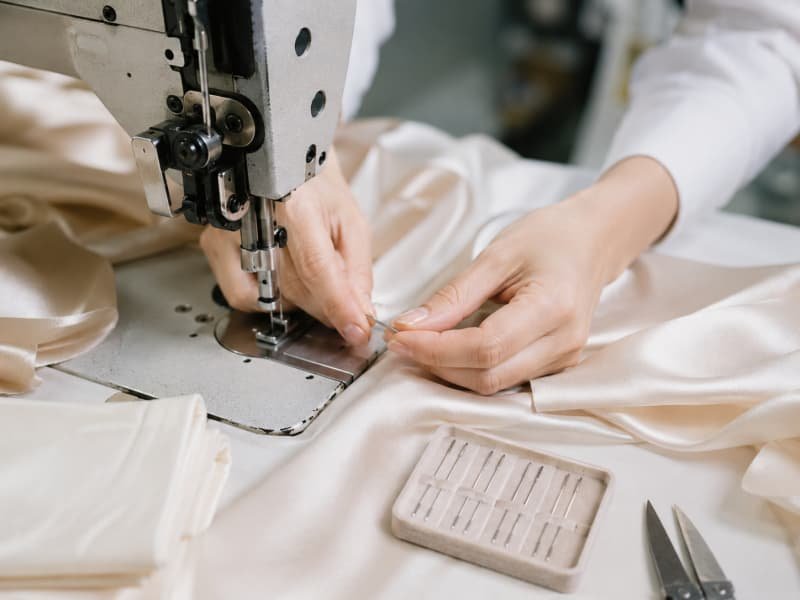
Control Needle and Thread
- Needle penetration
- Stitch appearance
- Thread tension
- Seam strength
- Fabric pulling
- Yarn displacement
- Needle heating
- Surface marking

Prevent Seam Puckering
Puckering can result from high thread tension, unsuitable stitch length, uneven feeding, fabric instability, or excessive pressing.
Control may include:
- Balanced thread tension
- Suitable stitch density
- Stable feeding
- Temporary support
- Controlled seam direction
- Pressing trials
- Reduced handling
- Construction changes in difficult areas

Manage Fraying Edges
Some brocades fray quickly after cutting. Edge control should begin before pieces lose shape.
Suitable approaches may include:
- Immediate overlocking
- Binding
- Underlining
- Stay stitching
- Controlled seam allowance
- Fusible support in limited areas
- Clean lining enclosure
- Edge sealing only where technically suitable and approved

Reduce Thick Seam Buildup
Bulky joins can appear at waist seams, zipper ends, pleats, facings, collars, and corset panels. Methods include:
- Grading internal layers
- Reducing hidden allowance width
- Staggering seam positions
- Using thinner lining or support
- Splitting construction steps
- Avoiding unnecessary overlapping
- Pressing with protective layers
- Hand finishing selected areas

Protect Motif Matching During Sewing
Matched panels can shift during feeding.
- Temporary hand basting
- controlled pinning
- positioning stitches
- specialized handling
may be required before permanent sewing.
The final seam should be assessed from normal viewing distance and close range.

Press Without Flattening Texture
Pressing should shape the garment without crushing raised motifs or creating shine. Control points include:
- Temperature
- Pressing time
- Protective cloth
- Wrong-side pressing
- Metallic yarn response
A finished brocade dress should retain surface depth and clean garment shape.
From Tech Pack to First Brocade Sample
Brief Review
Fabric Direction
Available brocade options, custom-weaving requirements, color direction, motif repeat, weight, lining, and sourcing timing are reviewed against the intended silhouette.
Feasibility Check
Pattern Development
Cutting Plan
First Sample Sewing
Sample Review
Revision Direction
Comments are separated into fit, visual, measurement, fabric, construction, and workmanship categories so the next version has a clear correction basis.
Reference first-sample timing is commonly 7–15 working days after material direction, key measurements, sample fee, and technical details are confirmed. Complex custom-woven or heavily structured developments are scheduled separately.
Fit Review, Revision and PP Sample Approval
Separate Comment Categories
Comments are organized into:
- Fit comments
- Measurement comments
- Visual proportion comments
- Motif-placement comments
- Fabric comments
- Lining and support comments
- Workmanship comments
- Trim and closure comments
- Packaging or presentation comments
Separating categories prevents one correction from being overlooked or confused with another.
Update the Pattern and Specification
- Neckline shape
- Shoulder position
- Bust shaping
- Waist reduction or release
- Bodice length
- Hip ease
- Skirt volume
- Hem length
- Sleeve width
- Closure length
- Motif reference position
Review the Revised Sample
A revision sample should be compared against the previous version, original brief, updated measurements, and brand comments. The review note identifies:
- Corrected areas
- Remaining decisions
- Material changes
- Production-sensitive details
- Required approval
- Items moving into the PP basis
A revision commonly requires 5–10 working days after comments, materials, and updated requirements are confirmed.
Manufacturing Structure for Multi-Style Brocade Programs
Core Factory Control
Satellite Capacity Support
More than 20 long-term satellite factories provide additional capacity for repeat orders, order growth, supporting styles, and coordinated production allocation. Production is not distributed randomly.
Sixteen Owned Factories
Three Hundred Sewing Lines
Approximately 300 sewing lines across the manufacturing system provide capacity for multi-style programs, seasonal concentration, repeat production, and production-path separation. Line allocation depends on actual style requirements.
Flexible Response Lines
More than 50 flexible and quick-response lines support development transitions, test programs, urgent replenishment, first orders, and selected repeat styles.
Speed remains dependent on material readiness and approved standards.
Regional Capacity Network
Quality Checkpoints for Custom Brocade Dresses

Fabric Arrival Check

Cutting Approval

First-Piece Review

Inline Workmanship Check

Measurement Inspection

Motif Placement Check

Finishing Inspection

Final Random Inspection

Packing Verification
Testing and Compliance Support for Global Markets
Factory Audit Readiness
Brand Manuals
Market Standards
Shipment Documents
What Determines Custom Brocade Dress Cost
Fabric Construction and Fiber
Fabric Width and Repeat
Matching Requirements
Garment Structure
Cost increases with: Full lining, Underlining, Boning, Cups, Waist stays, Interfacing, Sculpted sleeves, Pleated volume, Complex panels, Hand finishing, Special closures, Internal surface protection.Every added element should contribute to fit, appearance, comfort, or durability.
Size Range and Quantity
A broader size range may require additional patterns, markers, fit reviews, placement groups, and material planning.Quotation also changes with total quantity per style, color split, size distribution, delivery schedule, and whether several styles share the same material.
Testing and Packaging
Third-party testing, special care labels, retail packaging, ecommerce protection, individual hangers, barcode programs, warehouse labels, and divided shipments should be included in the initial quotation basis.
Sampling, Production and Delivery Planning
Fabric Shortlisting
First Sample
Sample Revision
PP Sample and Bulk Readiness
A PP sample commonly requires 7–12 working days depending on material readiness and the number of updated components.
Bulk should begin only after the production basis is clear.
Bulk Production
- Simpler styles: 15–20 days
- Regular styles: 20–30 days
- Complex structured styles: 30–45 days
Shipping Reference
Common transit references include:
- Express: 3–7 days
- Air freight: 5–8 days
- Sea freight: 20–35 days
Customs, destination, peak season, booking space, and delivery terms can change actual timing.
Packaging Brocade Dresses Without Surface Damage

Tissue Surface Protection

Protected Folding

Individual Polybags
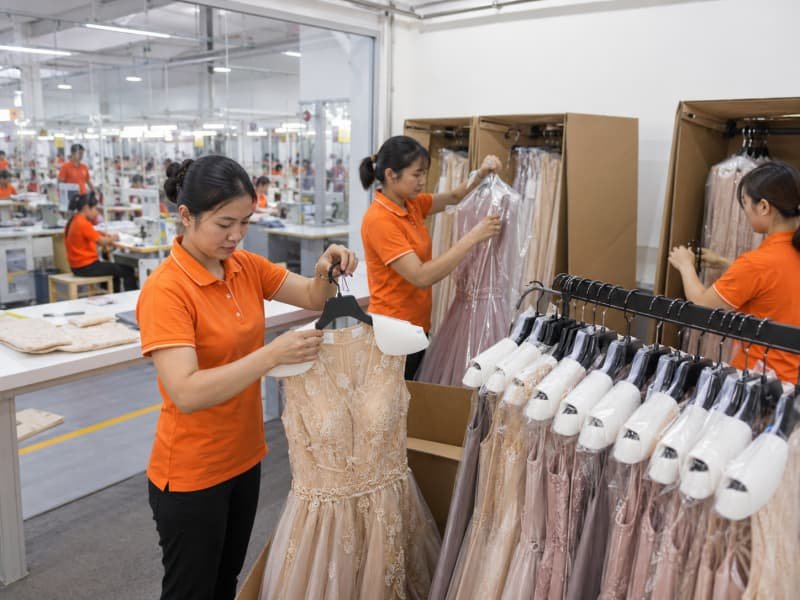
Hanger Packing

Carton Compression Control
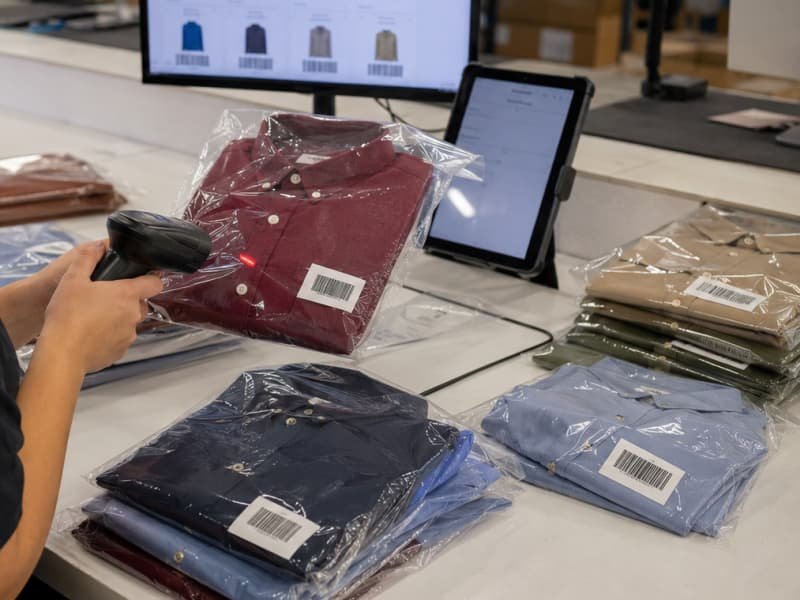
Retail and Ecommerce Labels
Brocade and Structured Dress Program Cases

US Holiday Brocade Program
Market and program:
A US fashion dress brand prepared a 12-style holiday collection covering structured minis, fit-and-flare midis, corset-led party dresses, and two metallic campaign pieces.
Order structure:
The confirmed production program covered 28,800 pieces across 12 styles, 6 core sizes, 4 fabric directions, and several color groups.
Development challenge:
The largest floral repeat crossed the bust and waist seams differently across sizes. Gold yarn also appeared much brighter under studio lighting than under warm event lighting. Two fitted styles developed excessive thickness around the waist and invisible zipper.
Duolan review:
The project team separated the collection into three material groups and developed size-group placement rules. Main campaign styles received exact center-front placement, while supporting styles used controlled directional placement. Waist construction was revised to reduce overlapping layers, and lining coverage was increased where metallic floats touched the skin.
Production control:
- Pattern and motif references locked by size group
- Bulk fabric compared with approved sample quality
- First-piece confirmation completed for four high-risk styles
- Metallic surfaces protected during sewing and packing
- Three delivery groups arranged around the launch calendar
Result:
All 12 styles entered bulk production from an approved PP basis. The collection shipped in three coordinated waves, allowing campaign styles to reach the photography and ecommerce schedule first. Pattern, BOM, placement, and workmanship files were retained for repeat color planning.

UK Brocade Midi Series
Market and program:
A UK occasionwear label developed 18 brocade and jacquard dresses for wedding guest, formal day, cocktail, and seasonal event use.
Order structure:
The bulk program covered 43,200 pieces across 18 styles, 7 commercial sizes, 5 fabric families, and 11 color options.
Development challenge:
The initial design direction included large woven motifs on fitted bodices, full skirts, puff sleeves, and shaped waist panels. Several motifs were too large for smaller bodices, while the heaviest fabric created excessive seam thickness on three fitted midi styles.
Duolan review:
Fabric families were reassigned according to silhouette. Heavy brocade remained on full-skirt and structured styles. Medium-weight jacquard replaced it on fitted midis. A lighter organza brocade was used for sleeve volume and overlay details.
The collection was reorganized into:
- Hero occasion styles
- Core commercial midis
- Wedding guest color extensions
- Lower-risk supporting styles
- Repeat blocks prepared for future seasons
Production control:
- Five fabric groups inspected and separated by lot
- Size grading reviewed across seven sizes
- Motif position confirmed by style family
- First-piece checks completed on all shaped bodices
- Pressing settings confirmed before line release
- Packing density reduced for full-skirt garments
Result:
The full 18-style program moved through PP approval and production under one collection calendar. Material reassignment reduced unnecessary garment weight and improved fit consistency without removing the intended brocade identity. Core midi blocks were preserved for future color and motif extensions.

European Multi-Style Structured Dress Program
Market and program:
A European multi-brand fashion group required a structured jacquard and brocade program across party, contemporary, and premium occasion labels.
Order structure:
The order covered 26 styles and 67,600 pieces across three brand identities, multiple size ranges, different label sets, and two planned shipment windows.
Development challenge:
Each label used a different fit block and presentation standard. Several styles shared similar fabrics but required different motif positioning, internal support, trims, labels, packaging, and tolerance requirements.
Duolan review:
The program was divided by brand, style complexity, material group, and production risk. Each label received its own:
- Measurement basis
- Pattern files
- BOM
- Motif-placement references
- Workmanship points
- PP approval record
- Label and packaging instructions
- Inspection criteria
High-risk corset and sculptural styles remained on controlled production routes, while lower-risk commercial shapes were allocated separately.
Production control:
- Order breakdown by style, color, size, and brand
- Separate first-piece approval by production path
- Brand-specific QC files
- Carton and barcode verification by label
- Repeat-order records stored by brand and style
Result:
All 26 styles remained separated through production and packing, avoiding mixed labels, incorrect size specifications, and cross-brand packaging errors. The program created a controlled foundation for repeat orders and future collection expansion.
Why Fashion Brands Evaluate Duolan
Thirty Years Experience
Dress-Focused Development
Fabric Coordination
Pattern and Sample Control
Sixteen Owned Factories
Twenty-Plus Satellite Factories
Three Hundred Sewing Lines
SMETA Audit Foundation
Long-Term Production Records
Brocade Dress Frequently Asked Questions

Start Your Brocade Dress Development Project
Send Duolan the available project information for a structured development and production review. A complete tech pack is helpful but not the only starting point. The team can also review sketches, reference images, original garments, fabric swatches, mood boards, size charts, partial specifications, or an existing sample requiring correction.
For a more accurate response, include:
- Dress styles or collection direction
- Tech pack, sketch, or reference images
- Brocade, jacquard, or color direction
- Required motif placement
- Target size range
- Estimated quantity by style and color
- Target launch or delivery date
- Required testing or compliance manual
- Label and packaging instructions
- Current project stage: development, revision, PP, bulk, or repeat order
Duolan will review the material route, pattern and fit requirements, internal construction, critical workmanship, expected sample path, bulk-production readiness, timing, and information still required for quotation.