 Skip to content
Custom Bustier Dress Manufacturer
Structured bustier dress development and manufacturing for established fashion brands, product teams, sourcing offices and multi-style collection programs.
- 30+ years of fashion dress development experience behind the Duolan manufacturing system
- 16 owned womenswear factories supported by 20+ long-term satellite factories
- 300 sewing lines and 50+ flexible production lines for multi-style and repeat programs
- Bustier projects controlled across cup position, boning, neckline, lining, closure, fit and grading
- Collection programs commonly cover 10–30 styles and 20,000–80,000 total pieces
- Sample, PP approval, bulk readiness, first-piece confirmation and production QC managed as one connected path
A Manufacturing System Built for Structured Dress Programs
30+ Years Development
16 Owned Factories
20+ Satellite Factories
300 Sewing Lines
Three hundred sewing lines allow Duolan to plan several product groups, colorways and order stages at the same time. A bustier collection can include structured mini dresses, satin midi dresses, lace styles and embellished occasion pieces without forcing every construction into one production route.
50+ Flexible Lines
High Development Capacity
The wider development system can support approximately 15,000–35,000 sample pieces or development iterations per month and around 3,000–8,000 style development workflows. Capacity alone is not the goal; structured review, version control and sample-to-bulk transfer determine whether development volume remains organized.
Designed for Established Fashion and Product Teams
Fashion Brand Teams
Fashion brands need more than a factory able to sew a reference image. They need a partner capable of reading silhouette language, intended support, target price architecture and collection direction.
Duolan supports brand teams with:
- Product feasibility review before sampling
- Fabric, lining and trim coordination
- Pattern and fit development
- Sample revision and comment management
- PP approval and bulk readiness
- Multi-style production and reorder control
The working method is suited to structured fashion dresses where visual identity and technical execution must remain aligned across several seasons.
Product Development Teams
- Design and tech pack interpretation
- Construction risk identification
- Sample purpose and version definition
- Fit priorities and measurement control
- Material and workmanship decisions
- Production-ready documentation
Sourcing and Buying Offices
Sourcing offices evaluate supplier reliability, documentation, capacity, compliance, cost logic and delivery discipline. A visually attractive sample is only one part of their decision. Duolan provides a structured path covering:
- Supplier capability assessment
- Sample and bulk quotation basis
- Production timeline planning
- Critical QC checkpoints
- Factory and order allocation
- Packaging and delivery coordination
The result is a clearer framework for programs involving several styles, colorways, delivery windows or repeat orders.
What Strong Bustier Dress Programs Need From Manufacturers
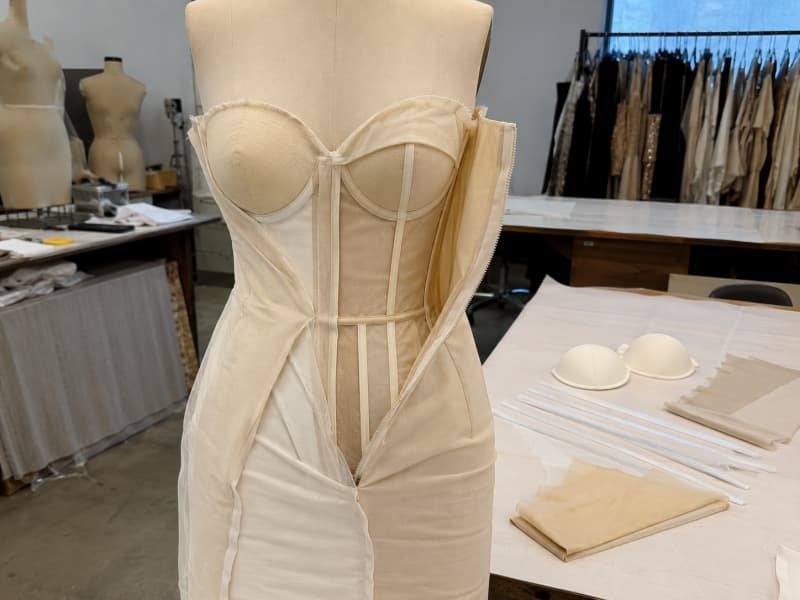
Structural Understanding
- Cup height and depth
- Underbust position
- Boning direction
- Top-edge stability
- Waist balance
- Back tension

Pattern Accuracy
Bustier fit depends on a three-dimensional relationship between the bust, underbust, waist and back. Minor pattern errors can create neckline gaping, cup compression, side spillage or twisting.
A suitable manufacturer must control:
- Bodice panel balance
- Cup seam shaping
- Side seam position
- Waistline level
- Back width
- Grading across sizes
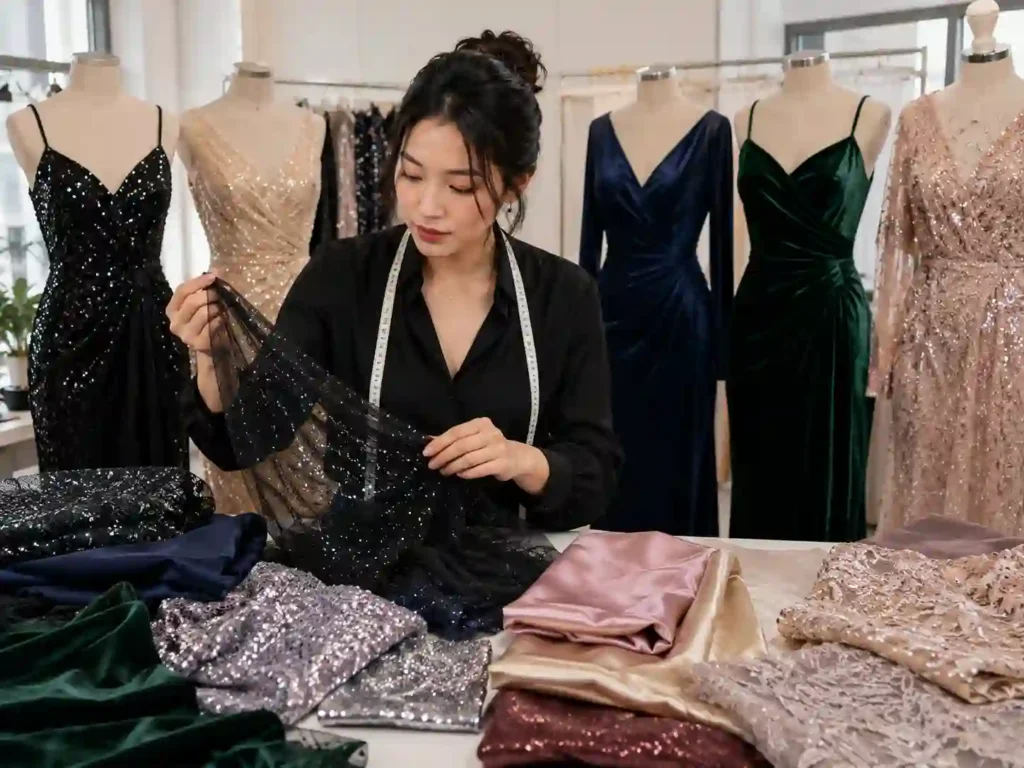
Material Compatibility
Outer fabric cannot be selected only for color or surface appearance. Satin, lace, mesh, velvet, jacquard and stretch fabrics require different internal structures.
Material review should cover:
- Drape and body
- Stretch and recovery
- Opacity
- Surface sensitivity
- Interlining adhesion
- Lining compatibility

Sample Discipline
- First prototype
- Fit sample
- Revised sample
- Photo-ready sample
- PP sample
- Bulk readiness review

Bulk Replication
Approved samples must be translated into production documents, locked materials and measurable checkpoints.
Without a clear transfer process, cup position, boning, lining, zipper handling or seam shape can change when the style moves from the sample room to a sewing line.

Project Coordination
- Style-level risk
- Material readiness
- Sample order
- Approval status
- Production allocation
- Delivery sequence
Bustier Dress Development Risks and Control Actions
The strongest risks appear where shape, support, comfort and production repetition meet. Early identification prevents a small sample issue from becoming a bulk-order problem.
| Risk Area | Likely Product Problem | Duolan Control Action | Approval Evidence |
|---|---|---|---|
| Cup position | Bust sits too high, low or uneven | Review cup height, spacing, seam shape and underbust line | Front, side and worn-fit review |
| Cup volume | Compression, empty space or inconsistent coverage | Adjust cup depth, padding and pattern volume by size | Fit sample and size-set comments |
| Boning position | Twisting, poking or visible ridges | Define bone length, channel position and endpoint finish | Internal construction reference |
| Neckline tension | Gaping or downward movement | Balance top edge, grip support, cup shape and back tension | Movement and wearing-security test |
| Side coverage | Side exposure or armhole discomfort | Review side cup, side seam and underarm height | Side-view fit approval |
| Waist balance | Riding, horizontal drag lines or uneven hem | Correct bodice length, waist contour and panel balance | Measurement and mannequin check |
| Closure strength | Zipper waves, hook opening or lace-up distortion | Match closure type with fabric weight and body tension | Pull, wear and first-piece review |
| Lining mismatch | Discomfort, transparency or poor support | Select lining by stretch, opacity, recovery and skin feel | Material board and sample review |
| Size grading | Base size works but larger sizes lose support | Grade cup, underbust, back and boning independently | Size-set fitting and measurement report |
| Bulk inconsistency | Approved sample differs from production | Lock BOM, pattern, workmanship, PP sample and QC points | Production-readiness confirmation |
Bustier, Corset and Structured Bodice Differences
Bustier Dress Construction
Bustier development usually focuses on:
- Creating a clean and secure bust shape
- Maintaining the neckline without visible pulling
- Supporting the garment through cup seams, internal layers or boning
- Balancing a fitted bodice with the selected skirt silhouette
- Allowing movement without losing upper-body stability
The correct construction comes from the intended fit, target market, fabric and wearing occasion. Using excessive structure can make a fashion dress stiff, heavy and uncomfortable. Using insufficient support may create gaping, collapse or downward movement.
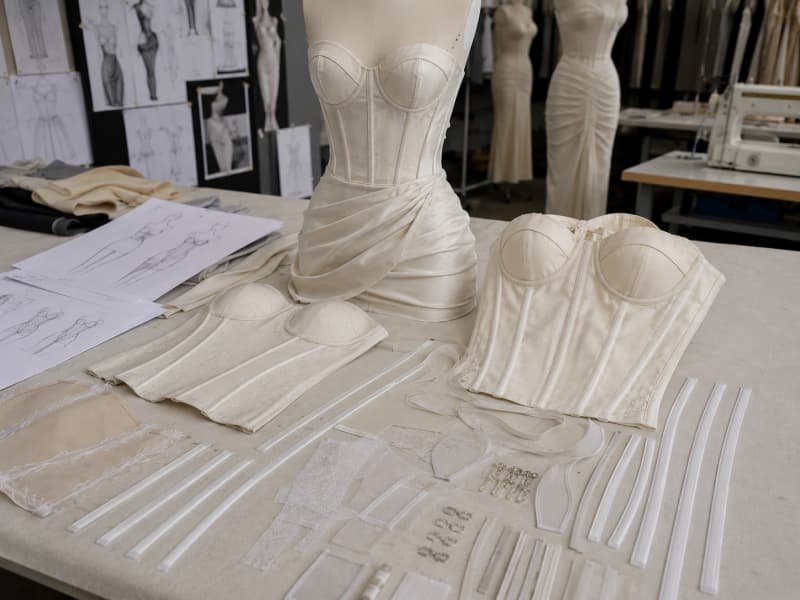
Corset Dress Construction
Development must consider:
- The intended degree of waist shaping
- Overbust or underbust construction
- Bone material and rigidity
- Eyelet, lacing and back-panel reinforcement
- Pressure distribution around the body
- Comfort at bone endpoints and closure edges

Structured Bodice Dresses
A structured bodice dress may not display obvious cups or corset lines. Shape can come from princess seams, molded panels, interlining, gathered internal support, foam, underbust seams or carefully controlled fabric direction.
Structured bodices are often suitable for:
- Clean strapless occasion dresses
- Architectural mini silhouettes
- Square-neck fitted dresses
- Draped satin styles needing hidden support
- Asymmetric party dresses
- Dresses with sculpted front panels
The design team should define the desired visual effect, support level and internal complexity before quotation. A simple exterior may require detailed internal engineering, while a visually complex style may use a relatively light internal structure.

Bustier Dress Styles Developed for Fashion Collections

Strapless Bustier Mini
- Secure neckline
- Cup and side coverage
- Grip support where suitable
- Strong zipper area
- Stable waist contour
- Movement testing

Satin Bustier Midi
Satin emphasizes every seam, stitch mark and pressure point. Cup seams must remain smooth while internal structure supports the bodice without creating visible ridges.
Development priorities:
- Satin weight and drape
- Seam tension
- Interlining compatibility
- Cup smoothness
- Lining selection
- Packing protection
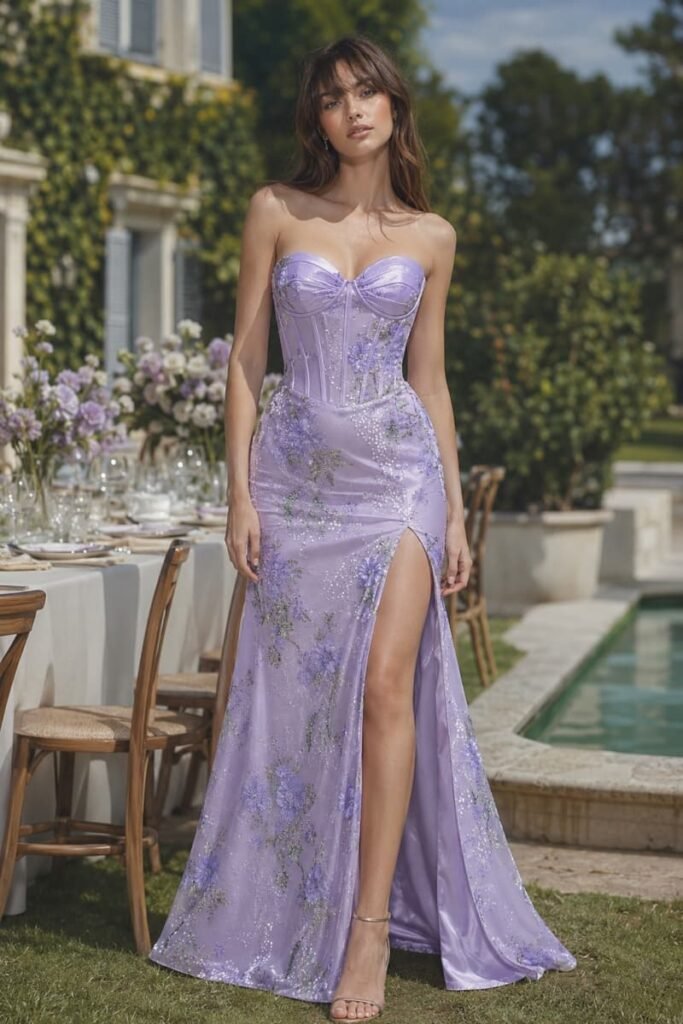
Lace Bustier Dress
Lace placement affects symmetry, value perception and coverage. The underlying structure must support the lace without making the bodice bulky.
Development priorities:
- Motif placement
- Lace direction
- Cup coverage
- Seam concealment
- Lining color
- Edge finishing

Mesh Panel Bustier
Mesh creates transparency and visual contour but requires accurate support placement. Stretch differences between mesh, lining and solid fabric can distort the bust.
Development priorities:
- Mesh stretch
- Coverage zones
- Seam reinforcement
- Lining boundaries
- Cup attachment
- Recovery after wear

Bodycon Bustier Dress
- Four-way stretch
- Compression level
- Cup stability
- Waist recovery
- Transparency
- Seam strength

Lace-Up Bustier Dress
- Eyelet reinforcement
- Modesty panel
- Lacing length
- Back width
- Waist tension
- Repeated-use durability

Embellished Party Bustier
- Decoration weight
- Attachment security
- Seam accessibility
- Anti-scratch lining
- Replacement allowance
- Packing protection

Occasion Bustier Maxi
- Skirt weight
- Waist joining
- Bodice support
- Hem balance
- Movement allowance
- Hanging and packing method
Bustier Dresses for High-Value Wearing Occasions
Going Out
Going-out bustier dresses often use fitted mini or midi silhouettes with strong visual impact. Fit must remain secure during sitting, walking and raised-arm movement.Key considerations:
- Stable top edge
- Comfortable cup volume
- Strong zipper
- Stretch recovery
- Clean body contour
- Camera-ready surface finish
Cocktail Events
- Balanced structure
- Controlled shine
- Smooth lining
- Waist comfort
- Elegant skirt movement
- Consistent dark-color finishing
Homecoming
- Secure neckline
- Short-skirt balance
- Decoration durability
- Size grading
- Color consistency
- Repeated movement
Graduation
Graduation edits may include white, pastel or lighter colors where transparency, lining shade and surface cleanliness become more visible. Key considerations:
- Opacity
- Clean seam finish
- Lining tone
- Comfortable sitting
- Photo-ready fit
- Careful packing
Holiday Party
- Fabric direction
- Decoration security
- Dark-color consistency
- Internal comfort
- Pressing method
- Carton protection
Wedding Guest
Wedding guest bustier dresses often require a more refined midi or maxi proportion, stronger comfort and premium finishing. Key considerations:
- Elegant coverage
- Long-wear support
- Draped skirt balance
- Refined lining
- Stable closures
- Occasion-level workmanship
Customization Options Across Structure, Fit and Branding
Silhouette Direction
- Define commercial silhouette
- Review movement needs
- Match skirt weight
- Confirm hem proportion
Neckline Shape
Straight, sweetheart, curved, pointed, asymmetric and draped necklines require different cup and top-edge control.
- Confirm coverage
- Balance center front
- Control edge tension
- Review symmetry
Cup Construction
Cups may be seamed, padded, molded, softly shaped or integrated into panel lines.
- Define cup depth
- Choose padding
- Set underbust line
- Grade by size
Strap Options
Fixed, adjustable, detachable, halter and decorative straps change support distribution and styling.
- Confirm strap width
- Reinforce attachment
- Test adjusters
- Review skin comfort
Boning System
- Select material
- Set channel position
- Finish endpoints
- Test flexibility
Back Construction
- Review body tension
- Reinforce closures
- Control symmetry
- Define modesty coverage
Surface Decoration
- Map decoration
- Test attachment
- Protect skin areas
- Allow replacement pieces
Brand Presentation
- Review artwork
- Confirm placement
- Approve materials
- Lock packing instructions
Inside a Production-Ready Bustier Dress
Outer Shell and Panel Architecture
The outer shell establishes the visible silhouette, but panel architecture determines how the garment follows the body. Princess seams, cup seams, center-front panels and side-front panels must direct fabric around three-dimensional curves without creating drag lines or uneven pressure. Key development work includes:
- Matching panel shape to fabric behavior
- Positioning seams to support the intended bust shape
- Maintaining left-right symmetry
- Controlling seam allowance around curved areas
- Preventing puckering on satin or dense woven fabrics
- Aligning decorative lace or print across structural seams
A heavily structured fabric may hold shape with fewer internal layers, while a fluid satin may need carefully selected interlining to prevent collapse. Stretch fabrics require controlled negative ease and recovery rather than rigid woven-dress logic.
Support Layers and Internal Engineering
Internal structure may include fusible or sew-in interlining, cup foam, padding, stay tape, boning, elastic support, underbust reinforcement and stabilized closure areas. Every layer affects thickness, flexibility, breathability and seam appearance.
Important decisions include:
- Whether support should feel soft, medium or firm
- Which zones need reinforcement
- Whether interlining changes the fabric surface
- How cup padding connects with lining
- How boning channels are secured
- How neckline and waist edges resist stretching
- How zipper or lace-up tension is distributed
Too many layers can make a fashion dress stiff and heavy. Too little support can create a weak neckline or collapsed cup. Duolan evaluates structure according to the intended retail position, end use, size range and fabric.
Lining, Closure and Wearing Comfort
- Stretch compatibility
- Color and opacity
- Skin feel
- Breathability
- Seam bulk
- Attachment method
- Concealed or exposed zipper
- Hook-and-eye reinforcement
- Lace-up eyelets
- Modesty panels
- Top hooks
- Back tension
Cup Shape and Bust Support Require Precise Development
Cup Position, Depth and Spacing
- Cup apex position
- Center-front spacing
- Cup width
- Cup height
- Underbust curve
- Side-cup coverage
- Relationship between neckline and cup seam

Side Coverage and Neckline Security
- Side cup height
- Underarm curve
- Side seam position
- Top-edge angle
- Back tension
- Strap placement where applicable

Support Across the Size Range
Cup and bust grading cannot follow a single proportional rule. As sizes increase, cup volume, side coverage, back width, underbust length and support requirements may change at different rates. A controlled size approach may include:
- Base-size approval
- Graded measurement review
- Size-set samples for selected sizes
- Larger-size cup and side-coverage checks
- Boning length review
- Closure tension review
- Fit-comment updates by size
The aim is not to make every size visually identical on a flat table. The aim is to preserve intended coverage, support, silhouette and comfort across the selected market size range.

Boning Systems Engineered for Shape and Comfort
Selecting the Right Boning
Selection depends on:
- Desired support level
- Bodice length
- Fabric weight
- Panel direction
- Closure type
- Intended wearing time
- Target retail position
Duolan reviews bone type together with interlining, seam position and lining. A bone cannot perform correctly when the surrounding construction is unstable.
Channel Position and Endpoint Control
Boning channels may be integrated into seam allowances, applied internally or created as separate casings. Position affects how the bodice distributes pressure and preserves the intended contour.
Key controls include:
- Bone centered within the channel
- Secure channel width
- Consistent length
- Adequate clearance from seam ends
- Covered and smooth endpoints
- Reinforcement near waist and closure
- No twisting during sewing
Bone endpoints require particular attention. Sharp, poorly covered or incorrectly cut ends can damage the lining and irritate the wearer.
Internal reference samples and workmanship instructions help production teams repeat the approved method rather than relying on individual operator preference.
Bulk Stability of Boned Bodices
Bulk production introduces risks not visible in one sample: bone length variation, channel inconsistency, incorrect insertion direction and changes in internal materials.
Production control should cover:
- Approved bone specification
- Pre-cut length standard
- Channel positioning guide
- First-piece internal inspection
- Inline checks before lining closure
- Final hand-feel review
- Random internal construction checks where required
For sensitive styles, Duolan prefers a first-piece or pilot-stage confirmation before full production release. Early verification limits the risk of discovering structural errors after thousands of pieces have been assembled.

Pattern and Measurements for Secure Bustier Fit
Critical Bustier Measurement Points
A standard dress size chart is often insufficient for structured bodices. Additional points of measure help clarify the intended fit and reduce interpretation during sampling.
Relevant measurements may include:
- Full bust
- High bust
- Underbust
- Waist
- Cup width
- Cup height
- Center-front bodice length
- Side bodice length
- Back bodice length
- Neckline width
- Side-cup height
- Strap length
- Back opening
- Boning length
Measurement methods must be clearly defined. Duolan reviews measurement definitions before pattern development, especially when specifications come from several internal teams or previous suppliers.
Pattern Balance Around the Body
A correct bust measurement does not guarantee balanced fit. Pattern development must distribute volume through front panels, side panels, back width and closure allowance.
Common balance problems include:
- Side seam moving forward
- Center front lifting
- Back neckline dropping
- Waistline rising at the front
- Cup seam sitting outside the bust
- Horizontal drag lines
- Uneven top edge
Pattern correction may require changes in several connected areas rather than a single measurement. Increasing the bust only at the side seam can damage cup position and armhole shape.
Fabric stretch, interlining and closure tension are included in the fitting decision. The same paper pattern may behave differently in satin, stretch woven or bonded fabric.
Neckline, Strap and Closure Systems
Strapless Top Edge
- Review neckline curve
- Add stay support where suitable
- Control grip application
- Test movement
- Prevent edge rolling
- Confirm comfort
Adjustable Straps
Adjustable straps allow fit variation but must not carry the entire weight of a weak bodice.
- Select strap width
- Reinforce join points
- Test sliders and rings
- Control strap stretch
- Review adjustability
- Match hardware color
Halter Construction
Halter straps change pressure around the neck and may pull the front bodice upward.
- Balance neck comfort
- Stabilize center front
- Control cup angle
- Reinforce attachment
- Review back tension
- Test wear time
Concealed Zippers
Concealed zippers provide a clean finish but may wave or strain in tight, layered bodices.
- Select suitable zipper
- Reinforce seam area
- Match seam allowance
- Control waist transition
- Add top hook
- Test repeated opening
Hook-and-Eye Closures
- Define closure width
- Set hook spacing
- Reinforce edges
- Protect the skin
- Match tension
- Confirm overlap
Lace-Up Backs
- Reinforce eyelet zone
- Confirm spacing
- Add modesty panel
- Select lacing
- Test pull strength
- Control back symmetry
Fabric Selection for Bustier Structure and Visual Finish
Material decisions influence support, surface quality, seam visibility, comfort, opacity and the ability to reproduce the approved shape in bulk.
| Fabric Direction | Visual and Wearing Value | Main Development Risks | Recommended Control Focus |
|---|---|---|---|
| Satin | Smooth shine, occasionwear finish, elegant drape | Seam puckering, needle marks, pressure ridges, shade variation | Weight review, seam testing, interlining trial, careful pressing |
| Lace | Texture, femininity, premium surface detail | Motif mismatch, transparency, seam bulk, irregular edges | Placement map, lining color, edge method, motif control |
| Mesh | Transparency, contour, modern panel effects | Stretch imbalance, exposed seams, low recovery, coverage errors | Stretch testing, seam reinforcement, lining boundaries |
| Stretch Woven | Clean body shape with controlled movement | Over-compression, bubbling, limited recovery | Stretch direction, negative ease, recovery and seam strength |
| Compact Knit | Smooth fitted silhouette and comfort | Growth after wear, rolling edges, transparency | Recovery testing, stabilized seams, lining and fit balance |
| Velvet | Rich depth, holiday and evening appearance | Nap direction, pressure marks, shade changes, surface damage | Cutting direction, pressing method, protective packing |
| Jacquard | Architectural surface and natural body | Excess stiffness, bulky seams, pattern mismatch | Weight review, panel placement, seam reduction |
| Sequin Fabric | High-impact party and occasion finish | Weight, skin irritation, sequin loss, difficult seam access | Sequin clearance, secure edges, lining protection |
| Crepe | Refined matte surface and balanced drape | Stretch variation, seam impressions, inconsistent weight | Fabric testing, interlining compatibility, shade control |
| Printed Fabric | Collection identity and strong visual storytelling | Print placement, color consistency, panel mismatch | Strike-off approval, placement plan, cutting control |
From Tech Pack to Production-Ready Bustier Sample
Project and Feasibility Review
Before sampling, Duolan reviews:
- Product type and intended market
- Bustier or corset structure
- Target fabric and lining
- Cup and boning requirements
- Size range
- Fit priorities
- Decoration and closure
- Target quantity
- Launch date
- Required sample purpose
The output is a clearer development path, missing-information list and sample proposal rather than an isolated sample-fee response.
Pattern, Material and First Sample
Once the design basis is aligned, the team prepares pattern direction, material options and construction methods. The first sample should answer defined questions rather than attempt to finalize every detail at once.
A first prototype may focus on:
- Silhouette
- Cup proportion
- Bodice length
- Neckline
- Structure
- Closure
- Fabric behavior
A fit sample may prioritize body balance, measurements, support and movement. A photo-ready sample may require refined surface appearance and final color. A PP sample must include approved materials, workmanship, labels and packing references suitable for bulk control.
For structured bustier projects, a typical first-sample planning window may be approximately 10–15 working days after design basis, material direction and required trims are confirmed. Complex fabric development, custom hardware, embroidery or several fitting dependencies can extend the schedule. Final timing is confirmed through project review.
Revision and Comment Management
- Pattern and fit
- Measurements
- Cup and coverage
- Fabric
- Lining and trims
- Construction
- Visual preference
- Production risk
- Label and packing
Revision records help ensure updated measurements, pattern versions, BOM details and workmanship points move together. The next sample should become clearer rather than repeating issues already discussed.
PP Sample and Bulk Readiness
A visually approved sample may still need production preparation. Before bulk starts, Duolan reviews whether the sample is fit confirmed, visually confirmed, suitable as a PP basis or still pending refinement.
Items locked before production may include:
- Approved pattern version
- Measurement chart
- Fabric, lining and trims
- Color references
- Boning and cup specifications
- Construction details
- Labels and packaging
- QC checkpoints
For high-risk bustier styles, first-piece or pilot verification may be recommended before releasing the full run. A confirmed sample then becomes a manufacturing standard rather than a one-time prototype.
Multi-Style Production Planned by Risk and Complexity
Order Breakdown
Each order is divided by style, color, size, quantity and required delivery.
- Confirm order matrix
- Identify priority styles
- Review color ratios
- Check size ratios
- Align labels
- Confirm packing
Complexity Classification
Styles are classified according to production sensitivity.
- Standard structured styles
- High-fit-risk styles
- Embellished styles
- Sensitive fabrics
- Special closures
- Repeat-order styles
Material Readiness
- Track approved materials
- Confirm color lots
- Inspect incoming fabric
- Match trims
- Avoid unapproved substitutions
- Protect schedule buffers
Line Matching
- Core owned-factory control
- Flexible-line development
- Specialist workmanship
- Repeat-order familiarity
- Volume allocation
- Delivery coordination
First-Piece Release
- Check cup shape
- Verify boning
- Measure bodice
- Review closures
- Inspect lining
- Confirm appearance
Timeline Management
Production is planned backward from the required delivery or warehouse date.
- PP approval
- Material arrival
- Cutting release
- Sewing milestones
- Final inspection
- Packing and shipment
Quality Control for Bustier Dress Bulk Production
Incoming Material and Pre-Production Control
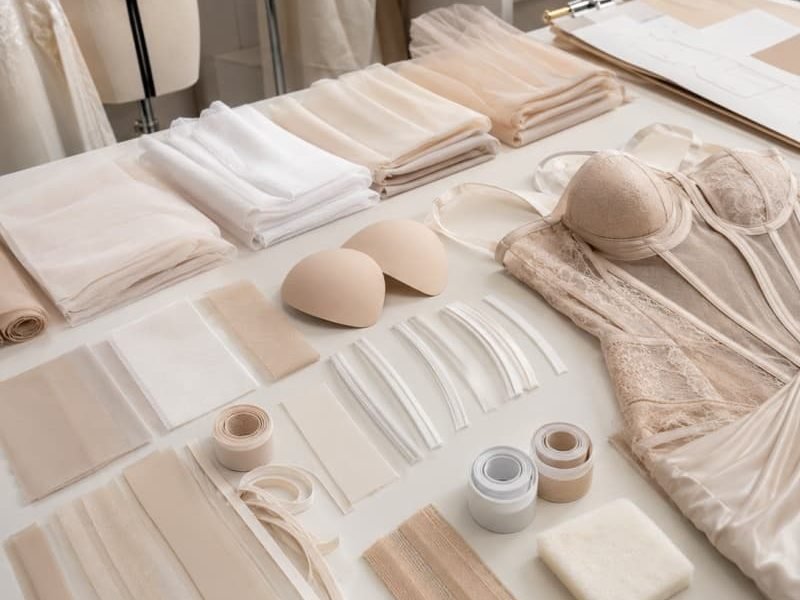
Material checks may cover:
- Fabric width and weight
- Color and lot consistency
- Stretch and recovery
- Surface defects
- Lining compatibility
- Cup shape and density
- Boning dimensions
- Closure strength
- Decoration quality
For satin, velvet, mesh or sequin styles, handling methods are confirmed early to reduce needle marks, nap inconsistency, stretch damage or decoration loss.

First-Piece and Inline Structural Inspection
Bustier-specific checkpoints include:
- Cup position and symmetry
- Underbust line
- Boning direction
- Bone endpoint finish
- Neckline security
- Side coverage
- Waist measurement
- Closure alignment
- Lining attachment
- Surface smoothness
Measurement data and defect findings are recorded by style and production stage so corrections can be made while output remains manageable.

Final Appearance and Measurement Review
Review areas include:
- Front, side and back balance
- Cup and neckline symmetry
- Zipper and waist alignment
- Correct size measurements
- Fabric cleanliness
- Decoration security
- Loose threads
- Pressing quality
- Label accuracy
- Quantity and assortment

Packing and Shipment Verification
Structured dresses can be damaged by poor folding, excessive carton pressure or unsupported cups. Packing QC therefore protects both compliance and garment shape.
Checks may include:
- Correct folding method
- Cup and bodice protection
- Tissue or support placement
- Polybag warning and ventilation
- Size and barcode match
- Carton assortment
- Carton quantity
- Shipping marks
- Carton strength
- Final document match
Photos, packing references or shipment records can be prepared according to the agreed project process.
Compliance and Documentation for Global Fashion Programs
SMETA Audit Foundation
Duolan’s manufacturing system has completed SMETA audit work, including SMETA 2-Pillar audit records. Project support may include:
- Audit-document review
- Factory information
- Social-responsibility records
- Production-site coordination
- Requirement alignment
- Updated document requests
Quality Standards
Quality requirements are defined according to product, destination and brand specifications. Duolan can coordinate work related to:
- ISO 9001 principles
- AATCC methods
- ASTM requirements
- China GB standards
- Brand-specific inspection
- Agreed AQL standards
Material Requirements
Fabric and trim requirements can include restricted-substance, fiber, colorfastness or performance documentation. Project coordination may cover:
- OEKO-TEX® related requirements
- GOTS-related material projects
- Composition records
- Supplier declarations
- Test requests
- Approved material files
Product Documentation
- Tech pack
- BOM
- Size chart
- Measurement method
- Construction notes
- Packing specification
Labeling Information
- Main label
- Size label
- Fiber content
- Care wording
- Country marking
- Placement
Project-Specific Requirements
- Supplier manuals
- Product standards
- Testing plans
- Inspection checklists
- Packaging manuals
- Delivery documentation
Packaging That Protects Cups, Boning and Surface Finish

Shape Protection Before Folding
- Whether cups can be nested
- Whether the bodice needs internal tissue
- Where boning can safely bend
- How straps are positioned
- How decorations are protected
- Whether the garment should be hung or folded

Polybag, Label and Barcode Control
Each garment must enter the correct packaging with matching size, color, barcode and brand presentation.
Packing review may include:
- Polybag dimensions
- Warning text
- Ventilation holes
- Size stickers
- Barcode labels
- Hangtag attachment
- Spare decoration pieces
- Folding instructions
Labels should not be placed where they compress the cup or scratch the surface. Hangtag strings must avoid delicate lace, mesh or sequin areas. The packing line checks style, color, size and assortment against the confirmed order matrix.

Carton Loading and Delivery Recovery
Carton density should protect garments without wasting shipping space. Excess compression can flatten cups, bend bones or create permanent marks. Carton planning considers:
- Garment volume
- Fabric sensitivity
- Pieces per carton
- Carton dimensions
- Gross weight
- Stacking pressure
- Moisture protection
- Warehouse handling
For longer transit routes, the brand team may request a packing trial or carton-loading review. Final instructions should also consider how garments recover after unpacking and whether steaming or reshaping is required at the warehouse.
Duolan’s Multi-Layer Womenswear Manufacturing System
Development Center
- Style feasibility
- Fabric direction
- Pattern development
- Sample versioning
- Fit comments
- PP readiness
Owned Factories
- Core construction
- Key accounts
- Production discipline
- First-piece control
- Inline QC
- Repeat standards
Satellite Network
- Seasonal volume
- Repeat production
- Regional capacity
- Style matching
- Delivery balance
- Controlled allocation
Flexible Lines
- Multi-style orders
- Test production
- Fast replenishment
- Complex styles
- First-piece review
- Order transitions
Special Process Partners
- Process matching
- Sample testing
- Color control
- Placement review
- Production timing
- Quality coordination
Delivery Coordination
- Order breakdown
- Timeline control
- Inspection planning
- Packing release
- Freight coordination
- Reorder records
Representative Bustier Collection Project Profiles
United States Going-Out Bustier Collection
- Market: United States
- Collection: Going-out and party edit
- Styles: 18
- Total quantity: 42,600 pieces
- Size range: XS–XL
- Main materials: stretch satin, compact knit and mesh
- Order structure: launch production followed by planned replenishment

United Kingdom Occasionwear Bustier Program
Project structure:
- Market: United Kingdom
- Collection: Occasion and wedding-guest dresses
- Styles: 12
- Total quantity: 28,800 pieces
- Size range: UK 6–18
- Main materials: satin, lace, crepe and jacquard
- Delivery structure: two planned shipment windows
The main challenge involved size progression and refined surface appearance. Larger sizes required stronger side coverage, adjusted cup volume and carefully reviewed boning lengths. Satin styles showed seam and pressure marks more easily, while lace styles required motif planning and lining-color approval. The development path used a base-size fit sample followed by selected size-set confirmation. The technical team reviewed cup depth, side seam position, underbust line, neckline security and closure tension. Lace placement was mapped around cup and panel seams to reduce visible breaks. Satin styles received separate interlining and seam trials before final material approval. Production was divided according to material and construction risk. Final inspection focused on cup symmetry, neckline balance, zipper alignment, measurements, pressing and surface cleanliness. Two shipment windows allowed higher-priority event styles to move first while later styles completed final finishing and packing.

Australian Holiday Party Collection
Project structure:
- Market: Australia
- Collection: Holiday party and occasion drop
- Styles: 24
- Total quantity: 63,200 pieces
- Size range: AU 6–16
- Main materials: sequins, velvet, mesh and metallic woven fabrics
- Product mix: mini, midi and fitted maxi dresses
The main challenge was balancing strong visual impact with comfort, construction security and packing protection. Sequin weight affected bodice support. Velvet required one-direction cutting and controlled pressing. Mesh styles needed secure coverage. Metallic woven fabrics required seam and needle testing.
Styles were classified by surface process, internal support and fit sensitivity. Decorative placement was adjusted around boning channels and closure seams. Anti-scratch lining and protected internal edges were used where surface components contacted the body.
Pilot or first-piece checks were applied to selected high-risk styles before volume release. Packing trials reviewed cup protection, sequin friction, velvet pressure marks and carton density.
The collection was managed through a shared order matrix covering styles, colors, sizes, labels, packing and delivery priorities, while each material group retained its own production and QC instructions.
Why Fashion Teams Choose Duolan for Bustier Programs
Development Before Cutting
- Structure review
- Missing-file check
- Fabric direction
- Fit priorities
- Sample purpose
- Bulk feasibility
Production-Ready Samples
- Prototype
- Fit sample
- Revision sample
- Photo sample
- PP sample
- Readiness review
Material Matching
- Outer fabric
- Lining
- Interlining
- Cups
- Boning
- Closures
Controlled Bulk Transfer
- Pattern version
- BOM
- Measurements
- Workmanship
- First-piece
- QC checkpoints
Multi-Style Coordination
- 10–30 style programs
- Parallel samples
- Production allocation
- Delivery sequencing
- Repeat planning
- Record preservation
Brand-Level Delivery
- Audit support
- Brand manuals
- Packing standards
- Inspection plans
- Shipping marks
- Delivery records
Bustier Dress Frequently Asked Questions
Yes. Reference images, original-sample photographs, sketches or moodboards can support an initial review. A complete tech pack is preferred for precise quotation and development. Missing measurements, internal structure, fabric, lining, closure and packing information must be clarified before the sample becomes a production basis.
Include front and back flats, measurements, size chart, cup details, boning positions, outer fabric, lining, interlining, closures, trims, construction notes, colorways, labels, packing requirements and target quantity. Fit comments or photographs from an existing sample are also useful.
A structured first sample commonly requires around 10–15 working days after design direction, material requirements and necessary trims are confirmed. Timing changes with custom fabric, special hardware, embroidery, beading, complex cups or several unresolved fit questions.
Sample options include first prototype, fit sample, revised sample, photo-ready sample, salesman sample, size-set sample and PP sample. The correct sample type depends on whether the team needs to confirm silhouette, fit, visual finish, sales presentation or bulk-production standards.
Cup control covers apex position, cup depth, width, height, spacing, underbust line, side coverage, neckline and padding. Fit is reviewed from several angles and during movement. Selected size-set samples may be recommended for broader size ranges.
Options depend on the required flexibility and support. Lightweight plastic boning may suit fashion bustiers, while firmer or spiral structures may be considered for stronger shaping. Bone type, length, channel, endpoints, lining and comfort are reviewed together.
Yes. Duolan coordinates dress fabrics, linings, interlinings, cups, boning, zippers, eyelets, hooks, lace, mesh, sequins and related trims. Specified materials can also be reviewed. Lab dips, swatches or alternative directions may be arranged according to project needs.
MOQ depends on fabric, custom color, trims, structure, decoration, size-color breakdown, production stage and total program plan. Submit the style list, quantity, colorways, size range, materials and launch schedule for a project-based assessment.
Approved patterns, measurements, BOM, materials, workmanship, labels, packaging and QC points are locked before production. High-risk styles may receive first-piece or pilot verification. Inline inspection then checks critical structural points before final assembly.
Yes. Duolan’s manufacturing system is structured for multi-style development and production. Programs commonly contain 10–30 styles with total quantities between 20,000 and 80,000 pieces. Styles are planned by complexity, material group, approval status and delivery priority.

Start Your Custom Bustier Dress Development Project
Send Duolan your tech pack, reference images, original-sample photographs or collection brief. Our team will review the bustier structure, cup and boning direction, fabric and lining requirements, target fit, size range, quantity, color plan, sample purpose and required delivery schedule before recommending a development or production path.
For a more accurate review, include:
- Company or brand name
- Website or sales channel
- Target market
- Product references or tech pack
- Fabric and trim direction
- Required size range
- Quantity by style or collection
- Number of colorways
- Desired sample type
- Target launch or delivery date
- Label and packaging requirements
- Existing fit comments or quality standards
Project files are used for evaluation, quotation, sampling and production planning. Structured programs receive clearer decisions when visual goals, fit expectations and commercial requirements are shared from the beginning.


