Skip to content
Custom Bustier Top Manufacturer
Structured Bustier Development for Fashion Brands, Product Teams and Multi-style Collection Programs
Duolan develops fashion-led bustier tops from design direction to production-ready standards.
- 4 core fit zones reviewed: bust, underbust, waist and upper-edge stability
- 8 production elements locked before bulk: shell, lining, support, closure, measurements, workmanship, branding and packing
- 16 owned womenswear factories supported by 20+ long-term satellite factories
- 50+ quick-response and flexible production lines across the manufacturing system
- Sampling, fit correction, PP approval, bulk production and repeat-order coordination managed through one development path
Built for Established Fashion and Product Development Teams
Fashion Brand Teams
Support can include:
- Design-direction interpretation
- Fabric and trim coordination
- Bustier structure assessment
- Sample and fit development
- Collection color alignment
- Bulk-production preparation
- Repeat-order standard preservation
Product Development Teams
Development discussions focus on decisions affecting the final garment:
- How much support is required
- Whether a cup or underwire is necessary
- How the fabric behaves under tension
- Which internal materials stabilize the shape
- How comments should be transferred into pattern corrections
- Whether the approved version is ready for bulk production
Sourcing and Merchandising Teams
Sourcing and merchandising teams need a supplier capable of working through documentation, approvals and production milestones with discipline. Duolan coordinates style, color, size, quantity, fabric, trim, workmanship, packaging and timing requirements before releasing bulk production.
Teams can evaluate Duolan through:
- Product-development capability
- Structured sampling stages
- Measurement and fit control
- PP and first-piece confirmation
- Inline quality monitoring
- Multi-style order planning
- Audit and documentation readiness
- Shipment preparation and repeat-order records
Bustier Tops Require More Than a Fitted Pattern

Fashion Bustier Tops
- Attractive body contour
- Stable neckline coverage
- Comfortable wearing pressure
- Clean front and side profiles
- Suitable movement for social occasions
- Consistent appearance across production

Corset-inspired Tops
- Visible structure and internal comfort
- Boning appearance and flexibility
- Decorative seams and pattern shaping
- Lace-up adjustment and back stability
- Fashion proportion and production efficiency

Structured Corset Tops
- Plastic, spiral steel or flat steel support
- Reinforcement at closure points
- Waist tape or internal stabilization
- Seam allowance strength
- Pressure distribution
- Edge protection
- Size-specific comfort allowances
Bustier Development Risks Need Defined Control Points
Most bustier failures originate before bulk sewing begins. Pattern balance, fabric behavior, cup placement, internal support and closure tension must be aligned before an approved standard can be repeated across colors and sizes.
| Development Risk | Garment Result | Duolan Control Action |
|---|---|---|
| Incorrect cup position | Bust appears too high, low or widely spaced | Review cup dimensions, apex position and front pattern balance |
| Weak upper-edge stability | Strapless neckline slips or opens away from the body | Evaluate grip elastic, edge tension, lining and neckline shaping |
| Fabric too soft | Front panels collapse and boning lines become visible | Add suitable support layers or revise fabric direction |
| Fabric too rigid | Limited movement, poor contour and uncomfortable pressure | Adjust ease, panel shaping and construction materials |
| Boning distortion | Channels twist, bend outward or press against the body | Match boning type, length, channel width and seam position |
| Underwire mismatch | Wire presses incorrectly or fails to support the cup | Confirm wire shape, cup seam and underbust relationship |
| Poor grading | Larger or smaller sizes lose proportion and coverage | Review cup capacity, body length, strap position and waist balance by size |
| Closure stress | Zipper waves, hooks pull or eyelets distort | Reinforce closure areas and test tension before bulk release |
| Bulk measurement drift | Approved fit changes across production | Lock POM methods, tolerances, PP standard and inline checks |
| Surface damage | Satin marks, mesh stretches or embellishment detaches | Define handling, sewing, pressing and packing controls by material |
Custom Bustier Top Styles Developed for Fashion Collections

Strapless Bustier Tops
- Shaped front and back panels
- Molded or cut-and-sew cups
- Grip elastic or silicone tape
- Light or medium boning
- Stable lining
- Center-back zipper, hooks or lace-up closure
- Optional internal elastic support

Underwire Bustier Tops
- Wire width and curve
- Cup depth and apex
- Underwire channel allowance
- Center-front spacing
- Side-cup coverage
- Lining and padding
- Wire-end protection
- Grading rules
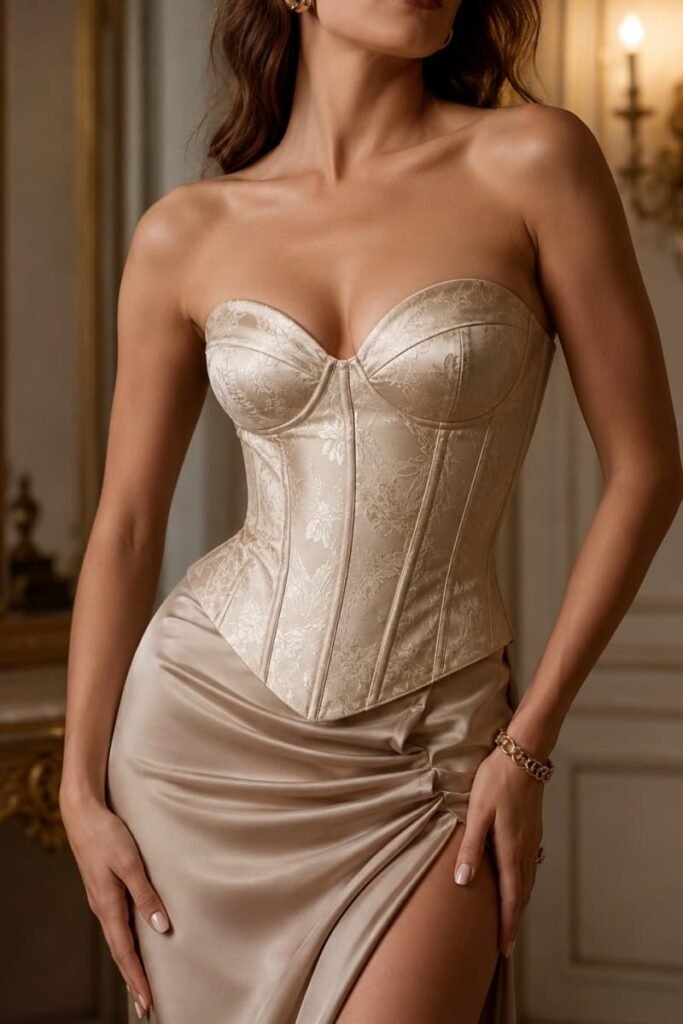
Boned Corset Tops
Boned corset tops use vertical support to maintain panel shape and define the torso. Boning placement should follow seam architecture and body movement rather than being added only for appearance.
Options may include:
- Flexible plastic boning
- Spiral steel for curved body areas
- Flat steel near straight closure zones
- Exposed decorative channels
- Internal concealed channels
- Mixed support systems
Boning length, channel width, end protection and hem clearance are reviewed during sampling. Incorrect specifications can create buckling, piercing, discomfort or inconsistent front shape.
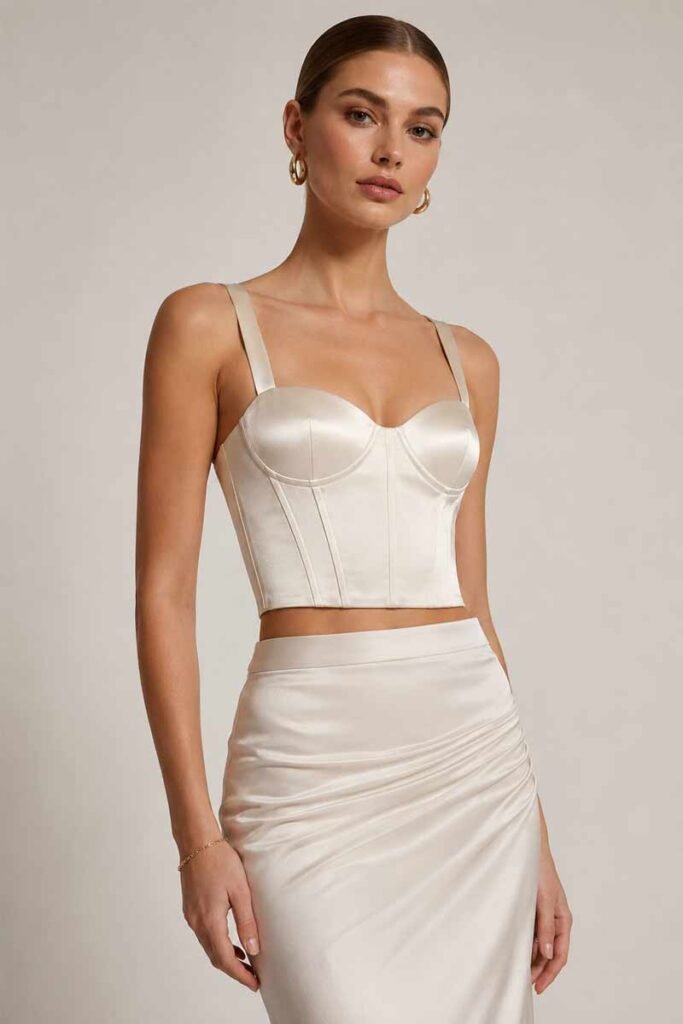
Satin Bustier Tops
Satin highlights every construction decision. Light reflection exposes puckering, pressing marks, uneven cup seams, zipper waves and inconsistent grain direction.
Control priorities include:
- Satin weight and weave stability
- Bias movement
- Needle and thread selection
- Cup-seam smoothness
- Seam tension
- Interlining compatibility
- Controlled pressing
- Protective handling and packing
A support layer must stabilize the top without removing the fluid, polished appearance expected from satin. Duolan evaluates shell and internal construction together before approving a production route.

Mesh Bustier Tops
Mesh bustier tops may combine transparency, stretch and visible internal structure. Coverage, recovery and seam tension need close attention, particularly around cups, side seams and neckline edges.
Development can combine:
- Power mesh or fashion mesh
- Opaque cup sections
- Double-layer mesh panels
- Strategic lining coverage
- Visible boning channels
- Lace or embroidery overlays
- Bound or clean-finished edges
Stretch direction and recovery are checked before pattern finalization. Excessive stretch may reduce support, while insufficient stretch may create seam strain and fit inconsistency.

Lace Bustier Tops
Lace placement strongly affects perceived quality. Motif direction, scallop use, symmetry and seam interruption must be planned before cutting.
Duolan can review:
- All-over lace
- Embroidered lace
- Stretch lace
- Corded lace
- Lace appliqué
- Scalloped neckline or hem
- Lace over satin or mesh
- Engineered motif placement
The pattern may require mirrored cutting, motif matching or selective appliqué. Bulk planning must account for usable width, repeat size and material consumption around symmetrical panels.

Denim Bustier Tops
- Rigid versus stretch denim
- Panel shaping
- Topstitching accuracy
- Seam thickness
- Zipper compatibility
- Boning visibility
- Wash shrinkage
- Color transfer
- Pressing and shaping

Embellished Bustier Tops
Embellished bustier tops are often developed as campaign, holiday, party or event-driven styles. Decoration must enhance the silhouette without distorting cups, adding uncontrolled weight or creating skin irritation. Available directions can include:
- Rhinestones
- Pearls
- Sequins
- Beading
- Embroidery
- Appliqué
- Metallic trims
- Hand-placed accents
Decoration zones are assessed against seam lines, cup shaping, boning channels and closure areas.
Bustier Programs Designed Around Fashion Selling Scenarios
Going-out Collections
- Strong front-view silhouette
- Clean side profile
- Secure bust coverage
- Photogenic surface finish
- Comfortable seated movement
- Colorways suitable for repeat sales
- Styling compatibility with skirts and trousers
Partywear Drops
- Decoration weight
- Skin contact
- Light reflection
- Fabric stretch
- Cup stability
- Holiday delivery timing
- Packing protection
Occasionwear Lines
- Elevated fabric handfeel
- Smooth cup shaping
- Concealed internal support
- Balanced neckline coverage
- Clean lining
- Controlled closures
- Pressing quality
- Coordinated color standards
Festival Capsules
Festival bustier products may include exposed structure, lace-up backs, denim, distressed surfaces, metallic trims, mesh, embroidery or statement embellishment.
Development should consider:
- Movement during long wear
- Heat and skin comfort
- Decoration durability
- Secure closures
- Adjustable fit
- Styling with skirts, shorts or cargo bottoms
- Social-media visual impact
A statement product still needs controlled seam strength, edge finishing and packaging protection.
Resort Coordinates
- Breathable handfeel
- Stable yet lighter support
- Comfortable lining
- Print placement
- Color consistency across separates
- Packability
- Day-to-evening styling
Holiday Collections
- Priority sample sequence
- Early trim confirmation
- Color and material locking
- Photo-sample requirements
- PP approval timing
- Bulk-production milestones
- Packing protection
- Shipment preparation
Fabric Selection Based on Support, Surface and Recovery

Satin and Duchesse
- Weight and body
- Surface sensitivity
- Directional sheen
- Bias movement
- Seam slippage
- Pressing temperature
- Interlining reaction
- Color consistency
- Bulk-lot availability

Stretch Satin
Stretch satin can improve body fit and movement, yet stretch percentage alone is not enough. Recovery determines whether the garment returns to shape after wear.
Duolan reviews:
- Lengthwise and crosswise stretch
- Recovery after extension
- Surface distortion
- Color variation under tension
- Seam growth
- Needle performance
- Lining compatibility
- Size grading impact
A rigid lining beneath a highly elastic shell can create conflict, while an overly soft lining may provide insufficient support. Shell, lining and pattern ease need to work as one system.

Mesh and Power Mesh
Fashion mesh provides transparency and styling value. Power mesh can add internal support. Each material serves a different function and should not be substituted without reviewing stretch and recovery.
Control points include:
- Stretch direction
- Recovery
- Opacity
- Hole size
- Abrasion sensitivity
- Edge curling
- Seam strength
- Layer alignment
- Dye-lot consistency
Sheer panels require careful placement around coverage zones. Double-layer construction may be needed where the garment carries greater tension.

Lace Materials
- Repeat dimension
- Motif direction
- Symmetry requirements
- Stretch and recovery
- Embroidery density
- Base-net strength
- Skin feel
- Scallop usability
- Overlay compatibility

Denim and Twill
Denim and twill produce clean panel definition but may create thickness at intersecting seams. The final washed condition can affect measurements, color and handfeel.
Review points include:
- Fabric weight
- Elastane content
- Shrinkage
- Wash response
- Seam bulk
- Needle penetration
- Topstitch appearance
- Color transfer
- Zipper installation
- Pressing behavior
A wash test or development sample may be required when the intended finish changes the material substantially.

Brocade and Jacquard
Brocade and jacquard offer strong visual texture and natural structure. Motif scale and fabric rigidity must match the top dimensions and seam layout.
Duolan examines:
- Motif placement
- Repeat direction
- Fraying
- Thickness
- Seam appearance
- Pressing response
- Metallic-yarn sensitivity
- Lining needs
- Pattern consumption
Large motifs can look unbalanced across small cup panels. Placement planning during pattern development helps maintain a premium visual result.
Internal Materials Define Bust Support and Wearing Comfort
Main Lining
Lining protects the skin, covers internal construction and contributes to stability. Selection depends on shell opacity, stretch, climate, wearing duration and required support.
Possible directions include woven lining, stretch lining, soft tricot and supportive mesh. Lining should not fight against the shell fabric or create visible tension differences. Seam allowance, edge finishing and attachment points are reviewed during development.
Support Interlining
- Fabric weight
- Adhesive compatibility
- Heat response
- Wash or care requirements
- Flexibility
- Skin comfort
- Visibility through the shell
Cup Construction
- Width and height
- Apex position
- Depth
- Padding thickness
- Edge transition
- Lining connection
- Grading
- Symmetry
Underwire Systems
Underwire provides definition and support when correctly aligned with the cup and underbust. Wire selection should follow size, shape and wearing pressure.
Control points include wire length, curve, channel width, center-front spacing, side height and end protection. Sample fitting checks whether the wire sits securely without pressing, lifting or moving away from the body.
Boning Options
Boning options include flexible plastic, spiral steel and flat steel. Material choice depends on curve, stiffness, cost, weight and intended wearing function. Duolan reviews:
- Boning position
- Channel direction
- Length
- End protection
- Bending behavior
- Heat sensitivity
- Corrosion protection where relevant
- Compatibility with packing
Mixed boning systems can be used when different zones require different levels of support.
Grip and Elastic
Grip elastic, clear elastic and silicone-backed tape can improve neckline security, but excessive tension may create pressure marks or edge distortion. Development testing considers:
- Elastic width
- Recovery
- Sewing tension
- Silicone comfort
- Skin contact
- Heat resistance
- Size grading
- Attachment method
The goal is secure wearing without relying on one overly tight component.
Closure Components
- Entry opening
- Back tension
- Adjustability
- Visual appearance
- Reinforcement needs
- Production time
- Repair risk
- Size tolerance
Edge Protection
Boning ends, wire channels, hook areas, eyelets and seam intersections can create pressure or abrasion when poorly finished.
Duolan plans suitable protection through channel extensions, binding, lining coverage, reinforcement, smooth seam allowances and controlled hardware placement. Comfort checks are included during sample review, particularly around the underarm, center front and upper back.
Bustier Structure Engineered Around Shape and Stability
Cup Shape and Bust Balance
Cup shape controls projection, coverage and the visual position of the bust. Duolan reviews cup width, height, depth, apex location, center-front spacing and the connection between cup and body panels.
Key decisions include:
- Desired bust silhouette: rounded, lifted, natural or sculpted
- Coverage level at center front and side cup
- Relationship between cup volume and underbust
- Seam direction and surface smoothness
- Padding or molded-component thickness
- Underwire compatibility
- Grading across the intended size range
A reference image may communicate the visual target but rarely provides enough information for production. Pattern development translates the visual direction into measurable geometry. During fitting, comments such as “the cup feels low” or “the neckline opens” are separated into cup, body, strap and edge-tension causes before correction.
Panel Shaping and Waist Contour
- Bust-to-waist difference
- Underbust shaping
- Side-seam position
- Front and back balance
- Waistline level
- Panel proportion
- Fabric stretch
- Boning placement
- Hem shape
Boning Layout and Movement
- Number of bones
- Location relative to seams
- Straight and curved zones
- Channel allowance
- Bone flexibility
- Clearance at upper and lower edges
- Interaction with underwire
- Closure-zone reinforcement
- Packing and transportation behavior
Back Tension and Closures
- Center-back or side closure
- Zipper length
- Hook spacing
- Eyelet reinforcement
- Modesty panels
- Lace width and friction
- Back neckline shape
- Tension distribution
- Seam and lining reinforcement
Fit Engineering for Bust, Underbust and Waist Balance

Bust Circumference
Full-bust measurement affects overall volume but does not define cup position or shape by itself. Pattern review also considers front bust width, back width, projection and fabric stretch.
Measurement methods must remain consistent across tech packs, samples and inspections. A bust measurement taken at a different level can create false approval or rejection.

Underbust Control
The underbust area anchors many structured tops. An incorrect underbust dimension may cause lifting, slipping, pressure or unstable cups.
Duolan checks underbust circumference, seam level, cup connection, elastic use and wire positioning. Fit comments are translated into measurable pattern corrections rather than temporary sewing adjustments.

Waist Definition
Waist suppression creates the fitted silhouette but must remain compatible with closure strength, fabric recovery and comfort.
Review includes: Waist position, Front-to-back distribution, Side-seam shape, Seam allowance, Boning assistance, Stretch percentage, Wearing ease.Size grading may require different suppression ratios rather than one repeated numerical increment.

Upper-edge Security
Upper-edge fit is essential for strapless and low-neckline styles. Security may come from pattern shaping, lining, elastic, grip tape, cups, underwire and torso tension working together.
Duolan checks gaping, rolling, cutting, slipping and visible pressure marks during sample review. Edge tension is not increased automatically without reviewing the underlying cause.

Body Length Balance
Center-front, side and back lengths affect waist position, hem alignment, underarm comfort and sitting movement.
Longline bustiers need enough torso length to maintain proportion without pressing into the hip or rib area. Cropped versions need secure lower-edge contact and correct cup-to-hem proportion.

Size Grading Logic
Bustier grading often requires more than adding equal increments around the garment.
Commonly reviewed elements include:Cup width and depth,Apex position,Underbust level,Front and back body width,Shoulder or strap position,Boning length,Side coverage,Body length,Closure length,Hem opening.
Tech Packs Become Measurable Bustier Production Standards

Development Inputs
Useful starting information includes:
- Front, back and detail drawings
- Reference photographs
- Original garment sample
- Fabric direction or swatch
- Intended size range
- Base-size measurements
- Target market
- Support level
- Branding requirements
- Launch timing
- Estimated order structure
Missing information can be identified during a development review before pattern work begins.

Critical Measurement Points
- Full bust
- Underbust
- Waist
- Top-edge circumference
- Center-front length
- Side length
- Center-back length
- Cup width
- Cup height
- Apex distance
- Strap length
- Armhole drop
- Hem opening
- Closure length

Fit Comment Translation
- Comment received
- Diagnosis
- Pattern change
- Construction change
- Measurement update
- Visual result
- Remaining approval point
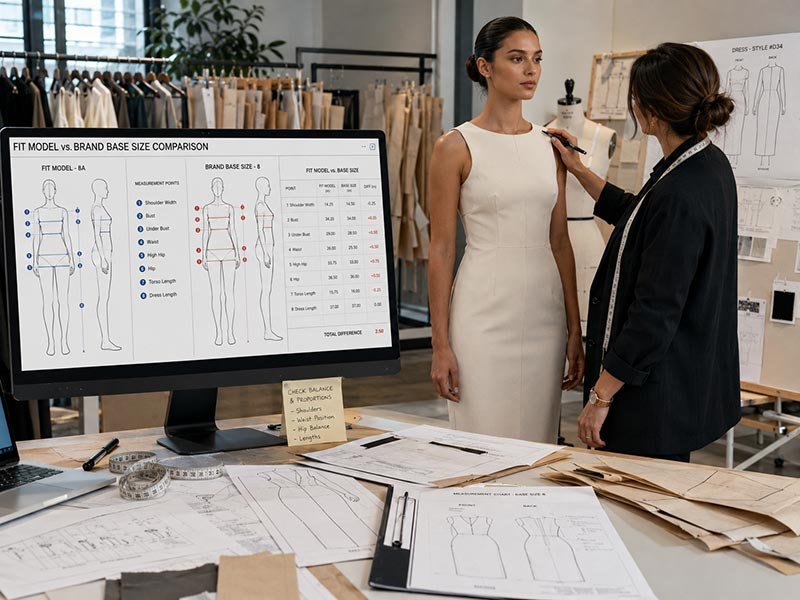
Tolerance Planning
Not every measurement carries equal fit risk. Bust, underbust, waist, cup position and upper-edge circumference may require tighter control than non-critical decorative measurements.
Tolerance planning should reflect:
- Product structure
- Fabric stretch
- Measurement repeatability
- Size range
- Sewing process
- Fit sensitivity
- Brand standard
Approved tolerances become part of inline and final quality checks.
Custom Design Options for Distinctive Bustier Collections
Neckline Shapes
Strap Configurations
Bustiers may be strapless or use spaghetti, wide, halter, removable, crossed or decorative straps.
Removable straps require secure attachment points and hardware compatible with the garment weight.
Cup Directions
Boning Appearance
Back Designs
Closure Systems
Hem and Length
Surface Treatments
Embellishment Techniques Controlled for Wear and Production
Rhinestone Application
Rhinestones can be heat-applied, machine-set or manually positioned depending on material and design. Heat-sensitive fabrics and stretch panels require testing.
Control points include:
- Adhesion
- Heat marks
- Placement accuracy
- Stretch compatibility
- Wash or care requirement
- Skin contact
- Packing abrasion
A placement map or approved strike-off establishes size, color and density.
Beaded Surfaces
Beading is suitable for party, holiday and event-led products. Hand or machine methods depend on design complexity and quantity. Before bulk release, Duolan confirms:
- Bead type
- Color
- Density
- Attachment method
- Motif placement
- Weight
- Pull resistance
- Replacement allowance
- Packing protection
Beads should not interfere with boning channels, closures or underarm comfort.
Sequin Work
Sequins may be supplied on embroidered fabric, tape or as individually attached decoration. Direction and overlap influence shine and comfort.
Development checks:
- Sequin orientation
- Cutting loss
- Seam clearing
- Edge protection
- Lining coverage
- Drop resistance
- Weight
- Pressing limitations
Seam areas may need sequins removed and secured manually for a cleaner finish.
Pearl Detailing
Pearls can create a refined occasion look but add weight and snag risk. Attachment spacing must respect cup shape, seam lines and movement. Duolan reviews thread strength, knot security, backing support, skin protection and packing separation. Heavy pearl zones may require reinforcement beneath the shell.
Embroidery and Appliqué
Pleating and Ruching
Workmanship Details Protect Shape and Surface Quality

Cup Seam Smoothness
- Left-right cup symmetry
- Seam curvature
- Apex smoothness
- Padding alignment
- Lace or satin behavior
- Topstitch consistency
- Pressing support

Boning Channel Accuracy
Boning channels must remain straight or follow the intended curve without twisting. Channel width should secure the bone while allowing insertion and controlled movement. Inspection covers:
- Channel spacing
- Stitch-line consistency
- Boning length
- End protection
- Upper and lower clearance
- Seam intersection
- Visible symmetry
- Lining coverage

Lining Attachment
Lining should remain smooth, cover internal construction and avoid pulling against the shell.
Attachment strategy depends on :
- neckline
- hem, closure
- cup
- underwire
- boning construction.
Duolan checks lining roll-out, seam visibility, excess fullness, twisting and internal comfort.

Zipper Installation
Fitted bustiers place greater tension on zippers than loose tops. Installation must control seam stretch, zipper length, top alignment and reinforcement.Key checks include:
- Zipper wave
- Top-edge alignment
- Bottom stop position
- Seam strength
- Smooth opening
- Lining clearance
- Hook-and-eye support where used
A clean zipper depends on both workmanship and correct garment ease.

Upper-edge Finishing
Upper edges may be faced, lined, bound or finished with elastic and grip materials. The finish must retain shape without visible rolling or excessive thickness.
Duolan evaluates :
- edge tension
- seam grading
- under-stitching
- elastic recovery
- cup connection
- pressing.
Strapless products receive extra attention around center front, side cup and upper back.

Final Pressing
- Temperature
- Steam
- Pressure
- Pressing surface
- Shape support
- Cooling time
- Decoration protection
- Fabric shine
- Cup deformation
From Design Brief to Production-ready Bustier Sample
Brief Review
Feasibility Review
Material Direction
Pattern Development
First Sample
Fit Revision
Approval Sample
PP Readiness
Fit Comments Become Pattern and Structure Corrections
Correcting Cup Position
- Raised and repositioned the cup apex
- Adjusted lower-cup shaping
- Rebalanced the underbust seam
- Updated cup height and apex-distance measurements
- Checked strap position against the revised cup
- Reconfirmed neckline coverage
Stabilizing Strapless Fit
A strapless sample fitted at the waist but opened away from the body at the upper back and side cup. Increasing total tightness would have created pressure without solving the balance issue.
Correction path:
- Reshaped the upper-back pattern
- Revised side-cup coverage
- Adjusted back-width distribution
- Added controlled grip support
- Reviewed lining tension
- Checked zipper behavior
- Retested arm movement
The final structure used several moderate control points rather than one highly tensioned edge.
Removing Boning Distortion
- Shortened selected bones
- Changed support flexibility by zone
- Increased lower-edge clearance
- Revised the front-panel curve
- Reduced seam bulk
- Improved end protection
- Rechecked standing and seated appearance
Approved Samples Must Be Locked Before Bulk Production
A visually approved bustier does not automatically provide a complete production standard. Materials, measurements, workmanship, branding and packing conditions need to be aligned before full production begins.
| Bulk Readiness Item | Confirmation Required | Production Risk Reduced |
|---|---|---|
| Approved sample status | Fit approved, visual approved or PP basis clearly identified | Prevents teams using different sample references |
| Shell fabric | Article, composition, weight, stretch, color and lot direction | Reduces drape, recovery and shade differences |
| Lining and support | Lining, interlining, cups, wire, boning and elastic locked | Prevents changes in support and comfort |
| Trims and closures | Zipper, hooks, eyelets, lacing and decorative trims confirmed | Reduces failure and visual inconsistency |
| Measurements | POM method, base size, grading and tolerances approved | Controls fit across sizes |
| Workmanship | Seam, channel, edge, cup and pressing standards recorded | Reduces interpretation during sewing |
| Decoration | Placement, density, color, attachment and strike-off approved | Controls weight, durability and appearance |
| Branding | Main label, size label, care label and hangtag approved | Prevents identity and compliance errors |
| Packaging | Folding, cup protection, polybag, barcode and carton marks confirmed | Reduces deformation and shipment mistakes |
| Production route | Factory, line, pilot needs and inspection milestones assigned | Reduces capacity and scheduling disruption |
Manufacturing Capacity Built for Multi-style Fashion Programs
Owned Factory Control
Satellite Capacity Support
Quick-response Lines
Multi-style Planning
Specialized Coordination
Repeat-order Continuity
Quality Control Follows the Bustier From Development to Packing

Design Risk Review

Material Inspection

Sample Measurement
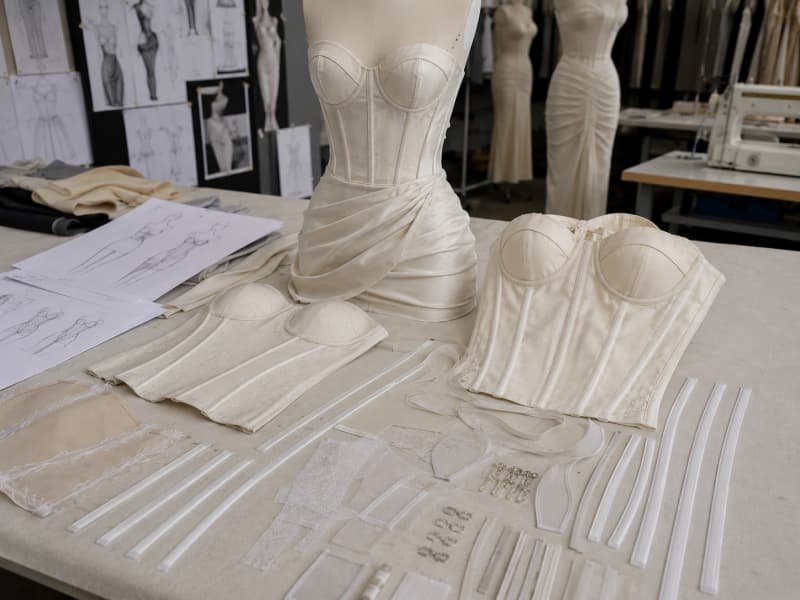
PP Standard Review

First-piece Confirmation

Inline Inspection

Final Inspection

Functional Checks

Packing Review
Production Planning Starts From the Target Launch Date
Collection Confirmation
Material Development
Sample Sequence
Approval Discipline
Bulk Milestones
Reorder Planning
Compliance Support for Brand-level Bustier Production
Social Audit Foundation
The core manufacturing system has completed SMETA audit work, including SMETA 2-Pillar audit records.
Relevant audit information can be discussed during supplier evaluation according to project and confidentiality requirements.
Product Requirement Coordination
Testing and documentation needs vary by destination, material, decoration and brand standard. Duolan can coordinate requirements associated with fabric composition, labeling, restricted substances, care information, workmanship and specified market standards. References such as AATCC, ASTM, OEKO-TEX®, EN, China GB, GOTS, BSCI or ISO-related requirements are addressed according to actual project scope and available documentation.
Document and Design Control
Private Label and Packaging Prepared for Retail Delivery

Main Brand Labels

Size Labels

Care Labels

Hangtags and Barcodes

Garment Protection

Carton Preparation
Bustier Programs Delivered Across Different Fashion Scenarios
United States Going-out Program
- Region: United States
- Brand direction: Digital-first going-out and partywear
- Styles: 18 bustier and matching-set styles
- Total quantity: 36,800 pieces
- Main materials: Stretch satin, mesh, lace and coated woven
- Size range: Brand-defined multi-size specification
- Product mix: Strapless tops, underwire bustiers, mesh corset tops and coordinating skirts
Several satin styles showed cup-seam ridges and upper-back gaping. Mesh products used one stretch assumption across shell and lining, creating inconsistent support. The original grading also moved shoulder and cup positions too evenly across sizes.
Development response:
Duolan separated the program by material and structure. Satin styles received revised support layers and seam-control methods. Mesh styles were rebalanced according to shell and lining recovery. Cup position, underbust level and upper-back shape were updated in the pattern. Selected sizes were reviewed before PP approval.
Production control:
The 18 styles were grouped by complexity and material. High-risk satin and underwire products entered first-piece confirmation before wider production. Inline checks focused on bust, underbust, waist, cup symmetry, neckline security and closure behavior.
Result:
The collection moved into coordinated bulk production with one approved measurement and workmanship basis per style. Core black and neutral products were retained as repeat-production references.

European Occasionwear Program
A European occasionwear program required stronger fit discipline across underwire, boned and longline bustier products while preserving a polished visual finish.
Program scope:
- Region: Europe
- Brand direction: Contemporary occasionwear
- Styles: 12 bustier tops and corset-inspired separates
- Total quantity: 24,600 pieces
- Main materials: Duchesse satin, embroidered lace, power mesh and jacquard
- Product mix: Underwire bustiers, longline corset tops, lace-over-satin tops and matching skirts
Cup coverage and underarm balance became inconsistent at the upper end of the size range. Longline products also created pressure near the lower front while sitting. Lace motif placement varied between left and right panels on early development samples.
Development response:
Cup capacity, side-cup coverage and apex position were reviewed by size group rather than using one simple increment. Selected boning lengths were reduced, and lower-front clearance was adjusted for seated comfort. Lace pieces were converted to mirrored placement requirements with approved motif references.
Production control:
The PP basis included cup measurements, apex distance, underbust, waist, body length, boning placement and motif position. First-piece checks were completed on the most structure-sensitive styles before production release.
Result:
The final range maintained a more consistent bust line and panel proportion across sizes. Approved lace placement and internal-construction records were retained for follow-up production.

Multi-brand Holiday Program
A multi-brand sourcing team required simultaneous development across embellished, satin, velvet and mesh bustier products for a concentrated seasonal delivery window.
Program scope:
- Regions: North America and Europe
- Project type: Multi-brand holiday and event edit
- Styles: 26 bustier-led styles
- Total quantity: 67,500 pieces
- Main materials: Velvet, satin, mesh, sequin fabric and embellished woven
- Product mix: Rhinestone bustiers, velvet corset tops, sequin longline tops, mesh underwire styles and matching bottoms
The collection contained different approval paths, decoration suppliers and production complexities. Treating all 26 styles under one timeline would have delayed simple commercial products behind high-risk embellished styles.
Development response:
Duolan separated the range into commercial core, structured, embellished and high-risk material groups. Decoration strike-offs and trim approvals began earlier. Satin and velvet products followed separate pressing and packing standards. Shared closures and labels were consolidated where brand requirements allowed.
Production control:
Styles were assigned to production routes according to construction and workmanship needs. Weekly milestones covered material approval, sample status, PP readiness, first-piece confirmation, inline checks, packing and dispatch preparation.
Result:
The collection moved through parallel development and manufacturing paths rather than one sequential block. Approved standards were preserved by style, color and brand for repeat or scale-up orders.

Frequently Asked Questions About Custom Bustier Manufacturing

Start Your Custom Bustier Top Development Project
Send Duolan a tech pack, reference image, original sample, measurement chart, fabric direction or collection brief. Include the intended size range, estimated quantity, destination market, target launch date, branding requirements and any fit or quality concerns already identified.
Our team will review the proposed silhouette, cup construction, support level, fabric behavior, closure, workmanship and production path. The review can identify missing information, high-risk areas, sampling needs and the approvals required before bulk manufacturing.
For a multi-style program, include a style list showing color, size and quantity expectations where available. Clear information helps us organize fabric sourcing, pattern development, sample priorities, PP preparation, production planning and delivery coordination.