Skip to content
Custom Chiffon Dress Manufacturer
Chiffon dress development and manufacturing for established fashion brands planning resort, occasion, vacation, wedding guest and seasonal collection programs.
Duolan develops chiffon dresses from design direction to production-ready garments, supporting fabric selection, lining and opacity review, print development, pattern correction, sample revision, PP approval, bulk production, quality control, packing and repeat-order records. The strongest fit is a defined multi-style program where delicate chiffon behavior must be controlled before launch.
Duolan supports chiffon dress projects through:
- Chiffon fabric, lining, color, print, and trim development
- Pattern making, fit review, sample revision, and PP approval
- Lightweight fabric cutting, sewing, hemming, pressing, and bulk control
- Production-readiness review before sample approval moves into bulk
- Structured production planning for multi-style brand programs
Manufacturing and case facts:
- 16 owned womenswear factories support closer control for development-led and fit-sensitive chiffon styles
- 20+ long-term coordinated factories add capacity for repeat orders, seasonal peaks and suitable scale-up programs
- 300 sewing lines and 50+ flexible or quick-response lines support launch orders, replenishment and repeat production planning
- A US chiffon resort program covered 18 styles and 42,000 garments across printed maxis, tiered midis, halter minis and wrap dresses
- A European chiffon occasionwear program covered 14 styles and 28,800 garments, while an Australian summer program covered 24 styles and 63,600 garments
Manufacturing Scale Behind Every Chiffon Dress Program
Duolan combines long-term dress development experience with a structured manufacturing network built for collection launches, repeat production, and volume growth.
30+ Years Development
16 Owned Factories
20+ Coordinated Factories
12,000+ Supporting Workers
300 Sewing Lines
The wider manufacturing structure includes approximately 300 sewing lines, including more than 50 quick-response and flexible lines. Core bulk production, launch orders, repeat orders, and replenishment programs can follow different planning routes.
SMETA Audit Foundation
Built for Established Fashion Brand Development Teams
Fashion Brand Teams
Duolan supports:
- Seasonal chiffon collections
- Occasion, resort, vacation, and going-out lines
- Multi-style launches
- Repeat and scale-up production
Product Development Teams
Support includes:
- Reference and tech pack review
- Fabric and lining assessment
- Pattern and fit development
- Revision and production-readiness planning
Procurement Teams
Procurement teams evaluate factory structure, capacity, communication discipline, audit status, material control, bulk consistency, inspection, packaging, and shipment execution. Duolan can provide capability information and coordinate formal supplier evaluation requirements.
Key review areas include:
- Manufacturing structure
- Quality checkpoints
- Compliance documentation
- Bulk and repeat-order planning
Sourcing Offices
Sourcing offices need clear records across style, color, size, quantity, sample status, material approval, production progress, and final inspection. Duolan supports structured communication through email, WhatsApp, video meetings, production summaries, and project files.
Suitable programs include:
- Multi-brand sourcing
- Regional supply programs
- Vendor consolidation
- Long-term dress development
Chiffon Production Risks Managed Before Bulk Manufacturing
Incorrect Fabric Drape
Control points:
- Compare fabric against the intended silhouette
- Review single-layer and layered behavior
- Test movement on a sample garment
- Confirm bulk material availability before approval
Excessive Transparency
Control points:
- Evaluate fabric under natural and strong lighting
- Compare outer fabric with lining combinations
- Review fitted and loose areas separately
- Confirm lining length and attachment method
Unstable Hem Length
Chiffon can relax, stretch, or drop after cutting, sewing, pressing, or hanging. Bias-cut panels, circular skirts, multiple layers, and uneven grain directions increase the risk.
Control points:
- Identify high-risk panel directions
- Allow fabric relaxation where required
- Hang the sample before final leveling
- Check every layer before hemming
Seam Slippage
Loose structures and lightweight constructions may pull apart near stress points, especially at side seams, armholes, waist seams, zippers, and fitted areas.
Control points:
- Review seam allowance and stitch density
- Match needle and thread settings to fabric
- Reinforce sensitive areas where suitable
- Inspect stress points during production
Print Color Variation
Control points:
- Approve strike-offs on the target fabric
- Review repeat size and color balance
- Confirm lining influence
- Lock approved bulk print standards
Sample-to-Bulk Difference
Control points:
- Lock production-critical materials
- Define PP or approved sample status
- Confirm workmanship and measurement priorities
- Run inline and final quality checks
Chiffon Dress Styles Developed for Fashion Collections
Duolan develops chiffon dresses across commercial, occasion, resort, party, and seasonal categories, with construction adjusted to the fabric and intended wearing experience.
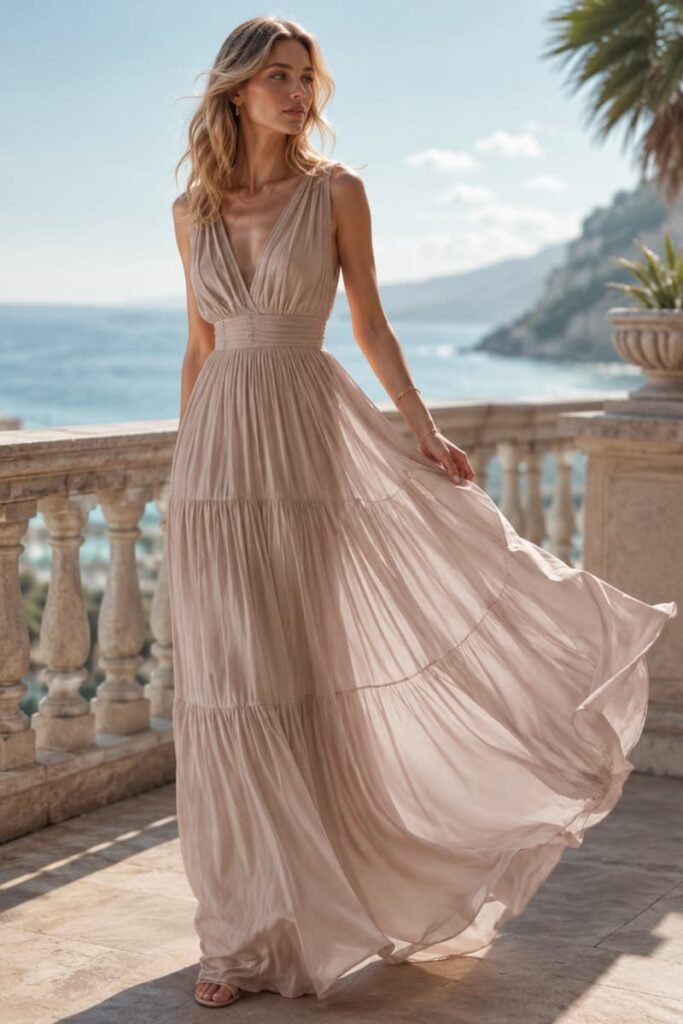
Chiffon Maxi Dresses

Chiffon Midi Dresses

Chiffon Mini Dresses

Printed Chiffon Dresses

Layered Chiffon Dresses

Pleated Chiffon Dresses

Ruffle Chiffon Dresses

Wrap Chiffon Dresses

Halter Chiffon Dresses

Occasion Chiffon Dresses

Resort Chiffon Dresses

Wedding Guest Dresses
Chiffon Collections Built Around Selling Occasions
A strong chiffon program connects silhouettes, colors, prints, lengths, price levels, sample priorities, and delivery timing around a defined selling occasion.

Resort Collection

Vacation Drop
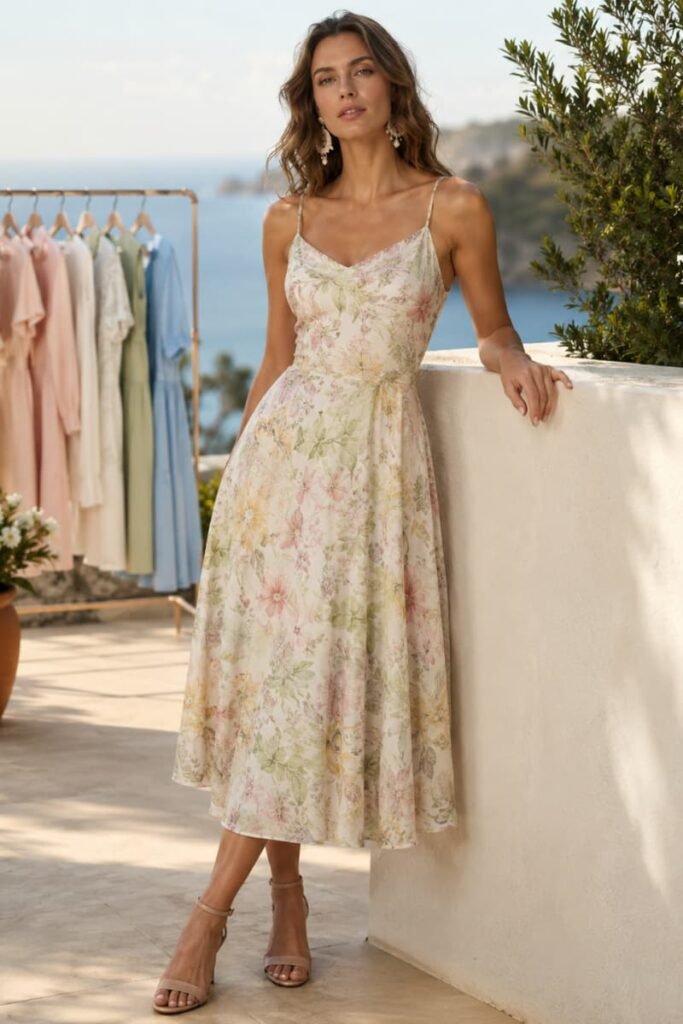
Summer Collection

Occasionwear Line

Wedding Guest Edit

Party Collection

Graduation Collection

Going-out Collection
Compare Chiffon Fabrics Before Starting Dress Development
Chiffon selection should follow the intended silhouette, coverage, surface, print direction, price architecture, and bulk production requirements.
| Chiffon Direction | Drape and Surface | Transparency | Suitable Dress Applications | Main Production Risk | Development Recommendation |
|---|---|---|---|---|---|
| Standard Polyester Chiffon | Fluid, smooth, lightweight | Medium to high | Maxi, midi, wrap, ruffle, printed dresses | Static, fraying, seam movement | Review weight, lining, edge finish, and bulk color |
| Crepe Chiffon | Soft drape with a lightly textured surface | Medium | Occasion, long-sleeve, draped, layered dresses | Texture variation and seam puckering | Confirm surface direction and pressing standard |
| Crinkle Chiffon | Relaxed texture with visual depth | Medium | Resort, vacation, tiered, casual dresses | Uneven shrinkage or texture flattening | Test pressing, washing, and packing behavior |
| Georgette-style Chiffon | Slightly firmer and more textured | Medium | Ruffles, sleeves, skirts, structured drape | Rough handfeel or excessive stiffness | Match fabric firmness to silhouette and price level |
| Satin-finish Chiffon | Soft shine with fluid movement | Medium to high | Occasion, party, evening, refined dresses | Snagging, shine inconsistency, visible needle marks | Test sewing, pressing, lining, and packing |
| Printed Chiffon | Visual result depends on print and base cloth | Medium to high | Floral, abstract, tropical, seasonal dresses | Color shift, repeat distortion, lining influence | Approve strike-off on target fabric before sampling |
| Recycled Polyester Chiffon | Performance depends on yarn and finish | Medium to high | Sustainability-led collections | Handfeel, color consistency, certification scope | Confirm material documentation and bulk availability |
| Heavier Chiffon | Fuller fall and improved coverage | Low to medium | Occasion, pleated, layered, autumn dresses | Reduced movement or heavier seams | Review finished garment weight before approval |
Fabric Behavior Determines the Finished Chiffon Silhouette
The same dress pattern can produce completely different results when chiffon weight, texture, transparency, stiffness, and finishing change.
Drape, Weight, and Silhouette Must Work Together
Chiffon should never be selected only because it feels soft or resembles a reference image. A garment designed around long fluid movement needs enough weight to fall cleanly, yet not so much weight which ruffles, sleeves, or layered skirts lose their light appearance.
A very light chiffon can create attractive movement, but it may also expose the lining edge, collapse around gathers, lift during wear, or reveal seam allowances. A heavier chiffon can improve coverage and fall, but may produce bulky waist seams, heavy tier joins, or reduced movement.
Duolan reviews fabric according to the intended garment result:
- Maxi skirts: require stable vertical fall, balanced panel weight, and controlled hem movement.
- Ruffles: need enough softness to move without collapsing into flat folds.
- Pleats: require a surface and finishing process capable of holding the intended structure.
- Fitted bodices: need suitable lining and controlled seam behavior because chiffon alone provides little support.
- Wide sleeves: require enough lightness for movement without becoming visually weak or excessively transparent.
Fabric assessment should take place on a mannequin or sample garment rather than only on a flat cutting. The final decision also considers fabric width, cutting loss, print repeat, lining compatibility, bulk availability, and the expected production quantity.
Layering, Transparency, and Movement Require One Development Plan
Layering is often used to create opacity, volume, color depth, and movement. Adding layers without a clear construction plan can produce uneven hems, bulky seams, twisted panels, excessive garment weight, and difficult production control.
Duolan reviews each layer by function:
- Outer chiffon provides color, print, movement, and surface appearance.
- Secondary chiffon can increase depth, softness, or skirt volume.
- Lining provides coverage, comfort, structure, and support.
- Partial interlining may stabilize necklines, waist seams, closures, or fitted sections.
Layer length must be confirmed on the body rather than only on a table. A lining which appears sufficient in a flat sample may become shorter during movement or under strong lighting. Different fabric layers may also relax at different rates after hanging.
The sample process therefore checks opacity, movement, layer alignment, hem drop, color interaction, seam visibility, and wearer comfort. Bulk cutting and sewing standards are then developed around the approved combination rather than treating every layer as an independent fabric.
Lining and Opacity Control for Chiffon Dresses
Lining affects coverage, color, movement, comfort, structure, and finished quality. The lining plan should be developed with the outer chiffon from the beginning.
Lining Fabric Selection
Review points:
- Handfeel and wearing comfort
- Stretch compatibility
- Static and cling behavior
- Bulk availability and color consistency
Lining Color Matching
Review points:
- Outer and lining color interaction
- Light and dark area balance
- Color appearance under indoor and daylight conditions
- Bulk color approval for both materials
Coverage Length
Review points:
- Standing and seated coverage
- Walking movement
- Slit and wrap overlap
- Strong-light visibility
Lining Attachment
Review points:
- Secure but flexible attachment
- Movement between layers
- Zipper and closure alignment
- Seam bulk at connection points
Comfort and Movement
Review points:
- Walking stride
- Sitting comfort
- Sleeve and armhole mobility
- Heat and breathability
Lighting Evaluation
Review points:
- Front, side, and back views
- Fitted areas under tension
- Light colors and nude tones
- Layer and seam visibility
Print and Color Development for Chiffon Collections
Artwork Scale, Repeat, and Garment Placement
A print that works on a flat artwork file may appear crowded, oversized, fragmented, or visually unbalanced after cutting and sewing. Maxi skirts, mini dresses, fitted bodices, wide sleeves, ruffles, and wrap fronts use the same artwork in very different ways.
Duolan reviews:
- Repeat width and repeat height
- Motif scale relative to garment length
- Directional or non-directional artwork
- Placement across centre front, side seams, and waist seams
- Print effect after gathering, pleating, or ruching
- Grading influence across the full size range
All-over prints provide more cutting flexibility, while directional prints may increase fabric use and require stricter panel control. Placement prints need clear artwork coordinates and stable cutting references. Strong motifs near the bust, waist, slit, or hem should be evaluated on the sample before approval.
For multi-style collections, one artwork may need different repeat scales or placements for mini, midi, maxi, top, and skirt products. Developing those variations at artwork stage helps protect collection consistency.
Strike-off, Sample, and Bulk Color Control
Chiffon transparency allows the lining, skin tone, inner layers, and lighting to influence the visible print. The strike-off should therefore be reviewed on the intended base cloth rather than on a substitute fabric.
The approval sequence may include:
- Digital artwork and color reference review
- Fabric suitability assessment
- Print strike-off
- Color adjustment
- Sample garment review
- Lining combination review
- Bulk print standard confirmation
Color differences can also arise between print batches, fabric lots, and finishing processes. During bulk preparation, approved references should be connected to fabric inspection, cutting lot separation, production use, and final garment review.
Dark grounds may show white stress marks at seams. Pale grounds can become more transparent than expected. Highly saturated colors may shift under different lighting. Large floral motifs can lose balance after grading. Such risks are easier to manage during artwork and sample development than after bulk fabric has already been printed.
Custom Design Details for Chiffon Dress Development
Each design detail changes fabric behavior, pattern balance, support, workmanship, material use, production time, and bulk consistency.

Neckline Development
- Neckline depth and balance
- Stretch prevention
- Lining and facing method
- Bulk edge consistency

Sleeve Shapes
Flutter, bishop, puff, cape, bell, fitted, and sheer sleeves create different volume and movement. Sleeve head construction, cuff support, gathering ratio, transparency, and armhole finishing must fit the intended silhouette. Key controls:
- Sleeve volume
- Arm movement
- Cuff and opening
- Hem finish

Dress Lengths
Mini, midi, high-low, ankle, and maxi lengths need different proportions and movement allowances. Length also affects fabric use, print balance, lining coverage, packing, and hemming labor. Key controls:
- Market-specific length
- Heel and footwear allowance
- Layer relationship
- Hem leveling

Layered Skirts
Layering can create volume, coverage, asymmetry, or visual softness. Each additional layer increases cutting, alignment, edge finishing, fabric use, and inspection requirements. Key controls:
- Layer length sequence
- Seam placement
- Color depth
- Bulk alignment

Ruffle Construction
Ruffles may be cut on straight grain, cross grain, bias, circular, or spiral directions. Cutting direction changes movement and fabric consumption. Key controls:
- Ruffle width
- Gathering ratio
- Edge finish
- Attachment stability
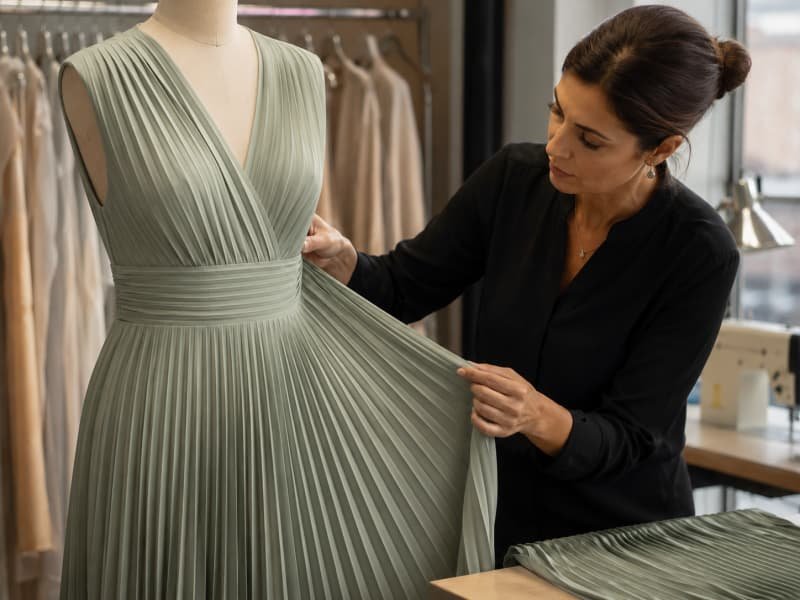
Pleat Development
- Pleat retention
- Panel width
- Waist finish
- Packing recovery

Wrap Structures
Wrap fronts and skirts need secure overlap, stable waist ties, controlled neckline opening, and sufficient movement coverage. Key controls:
- Front overlap
- Tie position
- Neckline security
- Skirt opening
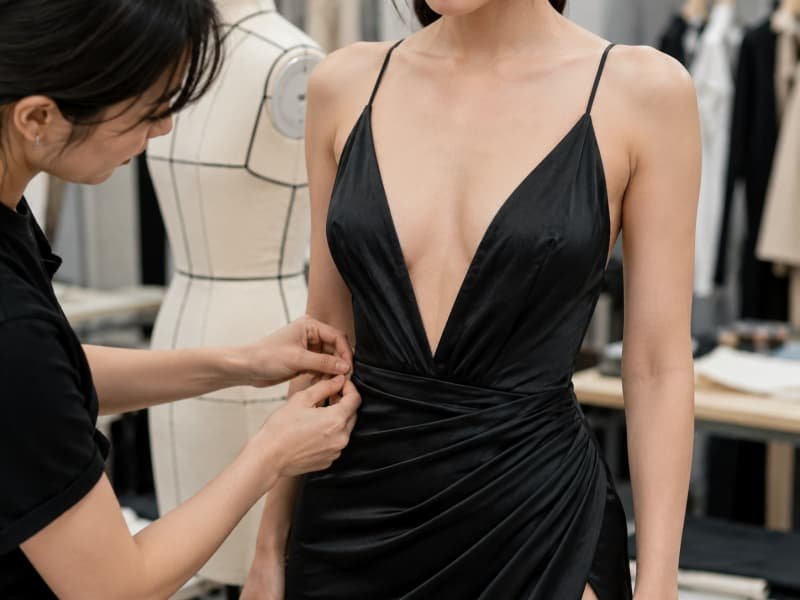
Waist Details
Elastic waists, fitted waistbands, cut-out waists, gathered seams, smocking, ties, and shaped waist panels change fit and visual proportion. Key controls:
- Waist position
- Ease and stability
- Seam thickness
- Grading method
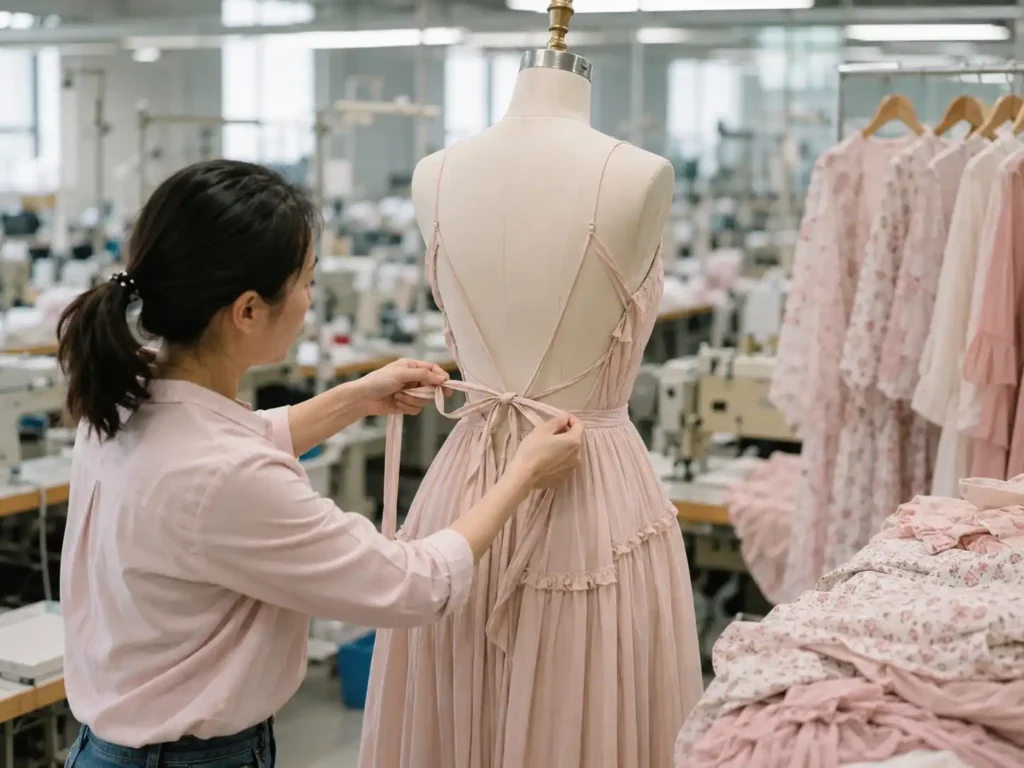
Open-back Designs
- Strap tension
- Back opening shape
- Closure strength
- Hidden support

Slits and Openings
Side, front, and asymmetric slits influence walking comfort, coverage, seam strength, and lining construction. Key controls:
- Slit height
- Reinforcement
- Lining opening
- Wear testing

Closures and Trims
- Trim specification
- Color matching
- Stress resistance
- BOM locking

Labels and Packaging
- Placement and comfort
- Legal care information
- Packaging sequence
- Bulk packing accuracy
Pattern and Fit Development for Lightweight Chiffon Dresses
Converting a Visual Reference into a Wearable Pattern
A reference image may show the desired neckline, waist position, sleeve volume, skirt movement, or back detail, but it rarely explains construction, measurements, inner support, seam placement, or lining.
Pattern development begins by defining the garment objective:
- Is the bodice fitted, relaxed, draped, or structured?
- Should the skirt skim the body or move away from it?
- Does the neckline need hidden stability?
- Is the outer chiffon carrying weight from ruffles, sleeves, or layered panels?
- Where should the lining finish?
- Which parts must remain opaque?
A non-stretch chiffon cannot follow a stretch reference pattern without added ease, closures, or structural changes. A different fabric weight may also change the required dart position, gathering amount, seam allowance, or support method.
Duolan uses fit comments and sample observations to correct bust position, waist balance, shoulder angle, neckline opening, armhole shape, skirt fall, slit height, and overall proportion. The aim is not merely matching flat measurements; the garment should preserve its design language when worn.
Grading from Sample Size into a Commercial Size Range
A strong sample size does not guarantee a stable full size range. Chiffon garments can become too transparent, too tight, too loose, too long, or visually unbalanced when grading is handled as simple proportional enlargement.
A common starting range may cover XS-XL, while broader ranges can be reviewed according to garment structure and the brand’s established blocks.
Grading reviews include:
- Bust, waist, and hip relationships
- Neckline width and depth
- Shoulder and strap length
- Bodice length and waist position
- Sleeve volume and cuff opening
- Slit height and overlap
- Skirt length and sweep
- Ruffle and pleat proportions
- Lining coverage across sizes
Fitted chiffon bodices may require greater attention to ease and lining. Wrap styles need enough overlap across sizes. Halter and open-back designs require stable strap and neckline relationships. Layered skirts need consistent visual proportions rather than identical grade increments for every layer.
A complete size chart, measurement method, tolerance priorities, and sample fit basis provide a stronger foundation for PP approval, bulk inspection, and repeat production.
Review Chiffon Fabric Before Starting the First Sample
Fabric Direction Review Before Pattern Cutting
The first sample becomes more useful when the target fabric direction is understood before pattern cutting. Using a convenient substitute can distort drape, fit, opacity, sleeve volume, gathering, or skirt movement.
Duolan reviews available project information, including:
- Design sketch or reference image
- Intended wearing occasion
- Target silhouette
- Preferred composition
- Surface and texture
- Color or print direction
- Transparency requirement
- Lining preference
- Target price architecture
- Estimated production quantity
Fabric swatches can then be compared for handfeel, weight, drape, width, transparency, color response, print suitability, seam behavior, and bulk availability.
When the exact bulk fabric is not yet ready, a development fabric may be used only after confirming which sample conclusions remain valid and which areas require later rechecking. The development team should know whether the sample is for visual review, fit approval, photography, sales presentation, or PP reference.
From Fabric Approval to Bulk Material Readiness
Sample approval should not rely on appearance alone. Before bulk commitment, the material direction should include enough information for purchasing, production, and quality teams to follow the same standard.
The material record may include:
- Fabric name and composition
- Weight or construction reference
- Width
- Color or print approval
- Handfeel direction
- Stretch or non-stretch behavior
- Transparency level
- Lining combination
- Approved swatch
- Supplier and bulk availability
- Testing requirements
- Special handling notes
Custom print, dyeing, pleating, washing, or finishing can extend the material timeline. Fabric availability should therefore be reviewed alongside the target launch date.
A planning reference for an ordinary first chiffon sample is often 10-15 working days after technical details and sample materials are confirmed. Complex prints, pleating, uncommon trims, or new fabric development may require 15-25 working days. Revision samples commonly require 7-10 working days, depending on the corrections and material status.
From Design Brief to Production-ready Chiffon Sample
Project Brief Review
Output:
- Project understanding
- Missing information list
- Initial risk points
- Recommended next step
Fabric Feasibility
The team reviews chiffon weight, transparency, drape, print suitability, lining requirement, trim compatibility, and bulk availability.
Output:
- Fabric direction
- Lining direction
- Alternative material options
- Material timing considerations
Pattern Development
Output:
- Initial pattern
- Construction plan
- Measurement basis
- Risk-sensitive areas
First Sample
Output:
- First physical sample
- Measurement record
- Development notes
- Areas requiring review
Fit Review
Fit review considers bust, waist, hip, shoulder, neckline, armhole, sleeve, bodice length, skirt movement, slit, lining, and full garment balance.
Output:
- Fit comment summary
- Measurement corrections
- Pattern adjustment direction
- Priority confirmation points
Revision Sample
Output:
- Revised sample
- Comment response
- Modification record
- Remaining approval points
PP Approval Basis
The garment approaches production status after fabric, color, measurements, construction, trims, labels, and packaging are sufficiently defined.
Output:
- PP sample or approval basis
- Workmanship reference
- BOM alignment
- Production-critical notes
Bulk Readiness Review
Before bulk starts, Duolan checks sample status, material status, quantity structure, production path, delivery timing, QC priorities, and packing requirements.
Output:
- Bulk start confirmation
- Production readiness note
- Timeline direction
- Risk control points
Lightweight Chiffon Production Requires Greater Process Discipline
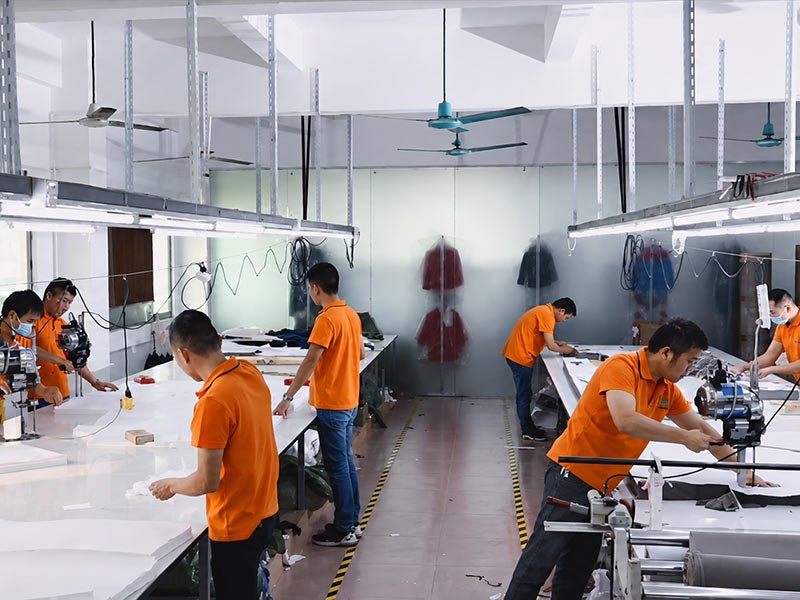
Fabric Spreading, Relaxation, and Cutting Direction
- Fabric inspection and lot separation
- Relaxation requirements
- Spreading tension
- Layer height
- Grain and print direction
- Panel pairing
- Directional artwork
- Bias-sensitive pieces
- Cut-part numbering
- Protection against contamination or snagging
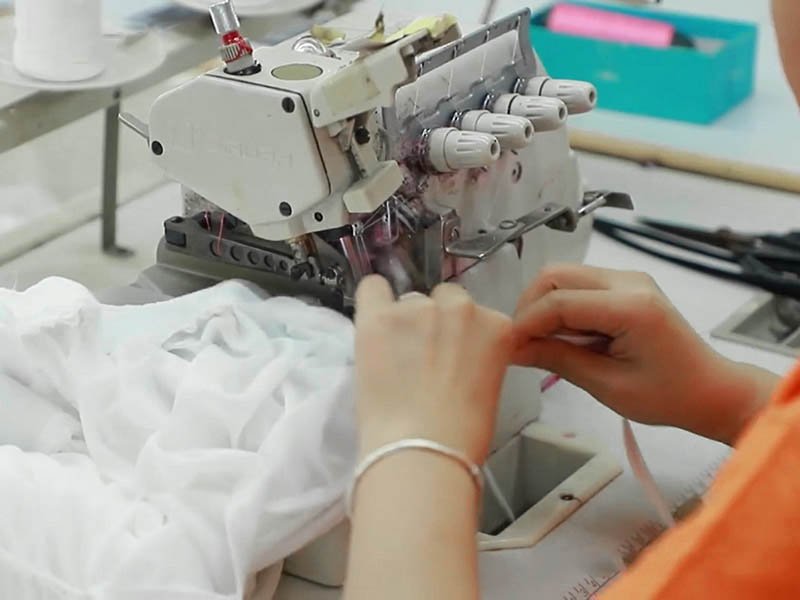
Needle, Thread, Seam, and Tension Control
The sewing method should protect the fabric while producing a clean and stable garment. An unsuitable needle, thread, stitch density, feed pressure, or tension setting can create puckering, skipped stitches, visible holes, pulled yarns, seam slippage, or wavy edges. Control areas include:
- Needle size and condition
- Thread fineness and color
- Stitch length
- Upper and lower tension
- Presser-foot pressure
- Seam allowance
- Seam type
- Reinforcement at stress points
- Handling around zippers and gathers
French seams may provide clean internal finishing for certain unlined or semi-sheer areas. Narrow overlocking may suit other structures. Lined bodices may use enclosed seams. The construction method should follow the garment design rather than applying one seam type to every chiffon product. Sensitive areas such as waist seams, side seams, zippers, underarms, wrap ties, slits, and strap attachment points require closer review during the first production pieces.
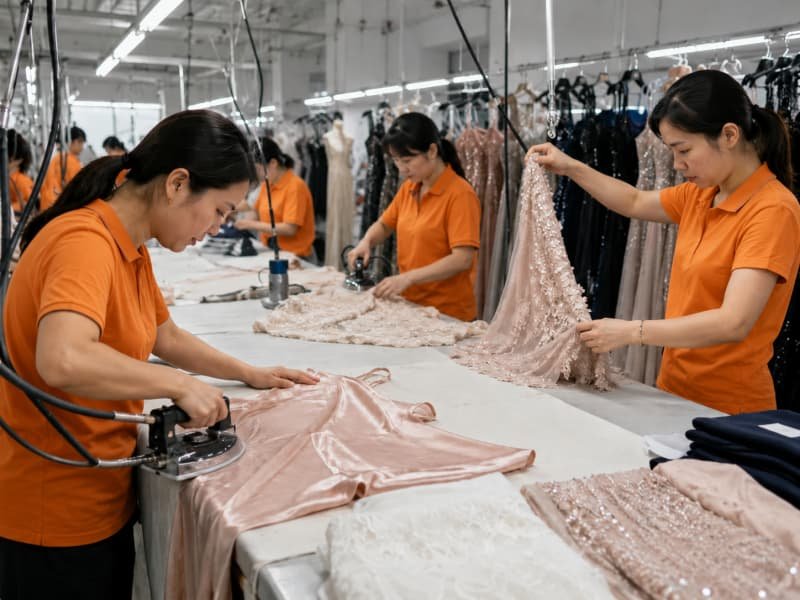
Edge Finishing, Hem Leveling, and Pressing
Rolled hems and narrow hems are highly visible on chiffon. Uneven stitch density, stretching, twisting, fabric tunneling, skipped sections, or inconsistent width can lower the finished appearance of an otherwise attractive garment.
Before final hemming, long, circular, layered, or bias-sensitive skirts may need hanging time so the fabric can settle. Each layer is then checked and leveled according to the approved silhouette.
Pressing also requires controlled temperature, pressure, steam, and contact time. Excessive heat may flatten texture, create shine, distort pleats, damage print, or leave seam impressions. Insufficient pressing can leave puckering, twisted seams, and uneven edges.
Bulk standards may define:
- Approved hem width
- Stitch appearance
- Layer sequence
- Final garment length
- Pressing temperature direction
- Hanging and leveling method
- Inspection points before packing

Packing Lightweight Dresses Without Creating New Defects
A garment can pass final inspection and still arrive with deep folds, crushed ruffles, flattened pleats, distorted cups, twisted straps, or snagged chiffon when packing is not matched to construction. Packing planning reviews:
- Folding direction
- Tissue placement
- Ruffle and sleeve arrangement
- Strap protection
- Zipper position
- Hanger or flat-pack requirement
- Polybag dimensions
- Carton quantity
- Carton pressure
- Moisture protection
- Barcode and label placement
Highly layered, pleated, embellished, or structured chiffon dresses may need different packing methods from simple flat styles. Delivery is considered complete only after garment quality, packing instructions, carton marks, labels, and shipment requirements match the agreed standard.
Workmanship Details That Define Chiffon Dress Quality

Rolled Hem
- Consistent width
- No skipped stitches
- No stretched or twisted edge
- Clean beginning and ending points

Narrow Hem
- Stable fold width
- Flat surface
- Controlled seam tension
- Balanced curve handling

French Seam
- Enclosed raw edge
- Controlled seam width
- No fraying
- No bulky intersections

Lining Connection
- Attachment position
- Ease between layers
- Clean armhole and neckline
- Correct lining length

Zipper Area
- Smooth zipper operation
- Flat seam line
- Matched waist seam
- Secure top closure

Armhole Finish
- Armhole shape
- Binding or lining finish
- No seam allowance exposure
- Comfortable movement

Ruffle Attachment
- Even distribution
- Correct direction
- Smooth attachment seam
- Consistent visual volume

Layer Alignment
Multi-layer skirts require controlled length, seam position, movement, and color interaction. Inspection points:
- Correct layer sequence
- Balanced hem relationship
- No lining exposure
- Consistent bulk appearance
Moving an Approved Chiffon Sample into Bulk Production
Bulk Readiness Review Before Production Starts
Before bulk begins, Duolan reviews the current approval status and confirms whether the sample is:
- Fit confirmed
- Visually confirmed
- Approved as a PP basis
- Still pending refinement
- Approved with comments
- Approved only for photography or presentation
The purpose of the order is also considered. A launch order, repeat order, scale-up order, replenishment order, or regional program may require different capacity and inspection planning.
Production-critical points are then reviewed:
- Outer fabric
- Lining
- Print or color
- Trims and closures
- Measurements and tolerance priorities
- Workmanship details
- Labels
- Packaging
- Testing and inspection
- Delivery timing
The output may be summarized in a Bulk Start Confirmation or Production Readiness Note. The purpose is to ensure development, production, procurement, quality, and project teams work from the same reference.
Material and Workmanship Locking
Many bulk differences begin before the line starts. Material substitution, shade changes, trim differences, altered seam methods, unclear tolerances, or missing packaging instructions can gradually move production away from the approved sample.
Before production, Duolan can organize a Material and Workmanship Confirmation Summary covering:
- Fabric lot and shade direction
- Weight and handfeel
- Print approval
- Lining specification
- Zipper, hook, button, tie, and decorative trim
- Hem and seam construction
- Ruffle or pleat standard
- Measurement priorities
- Label placement
- Folding and packing method
A BOM, approved swatches, sample comments, size chart, and workmanship references provide stronger production control than relying on memory or a garment photograph.
First-piece review or a small pilot run may be used for sensitive products. Production teams can then verify the construction method, seam appearance, measurements, layer alignment, pressing, and packing before volume increases.
Manufacturing Capacity for Multi-style Chiffon Dress Programs
Owned Factories and Coordinated Capacity Serve Different Roles
Duolan’s manufacturing structure includes 16 owned womenswear factories and more than 20 long-term coordinated factories. Regional supporting facilities employ more than 12,000 workers across the wider network. Owned factories are suitable for:
- Core collection styles
- Sensitive sample transitions
- Products requiring closer development coordination
- High-priority launches
- Styles with detailed workmanship standards
Coordinated capacity can support:
- Repeat orders
- Volume increases
- Seasonal production peaks
- Replenishment
- Styles matched to specific manufacturing strengths
Production is not distributed only according to available space. The project is broken down by style, construction complexity, fabric, print, special process, quantity, timing, and quality risk. Each group can then follow the most suitable production route.

Multi-style Orders Need Production-path Planning
A fashion brand order may contain 10-30 styles, several colors, a complete size range, different lining structures, custom prints, and varied workmanship levels. Treating the entire order as one block can create material delays, line imbalance, unclear priorities, and inconsistent delivery. Duolan can divide an order by:
- Style
- Color
- Size
- Quantity
- Complexity level
- Material status
- Special process
- Approval status
- Required delivery sequence
The wider system includes approximately 300 sewing lines and more than 50 quick-response or flexible lines. Such capacity supports different paths for launch orders, repeat orders, replenishment, and scale-up production. Standard chiffon bulk programs commonly require 30-45 days after material and PP approval. Complex multi-style programs involving custom print, pleating, layered construction, or multiple special processes may require 45-60 days. Final timing depends on fabric readiness, sample status, quantities, colorways, factory allocation, testing, and shipment requirements.

Quality Control Points for Chiffon Dress Production

Fabric Inspection
- Lot separation
- Shade consistency
- Print direction
- Fabric condition
- Usable width

Color and Print
- Color reference
- Print repeat
- Motif direction
- Lot consistency
- Lining influence

Measurement Control
- Bust, waist, and hip
- Bodice and dress length
- Shoulder and strap
- Sleeve and opening
- Slit and overlap

Seam and Stitch
- Side and waist seams
- Armholes
- Zipper area
- Tie attachment
- Stress points

Opacity and Lining
Finished garments are reviewed for coverage, lining position, inner-layer exposure, comfort, and color interaction. Key checks:
- Strong-light coverage
- Fitted areas
- Slit movement
- Lining length
- Layer attachment

Layer and Hem
Layered skirts are checked for sequence, alignment, movement, and final hem balance. Key checks:
- Layer length
- Leveling
- Edge finish
- Lining exposure
- Left-right balance
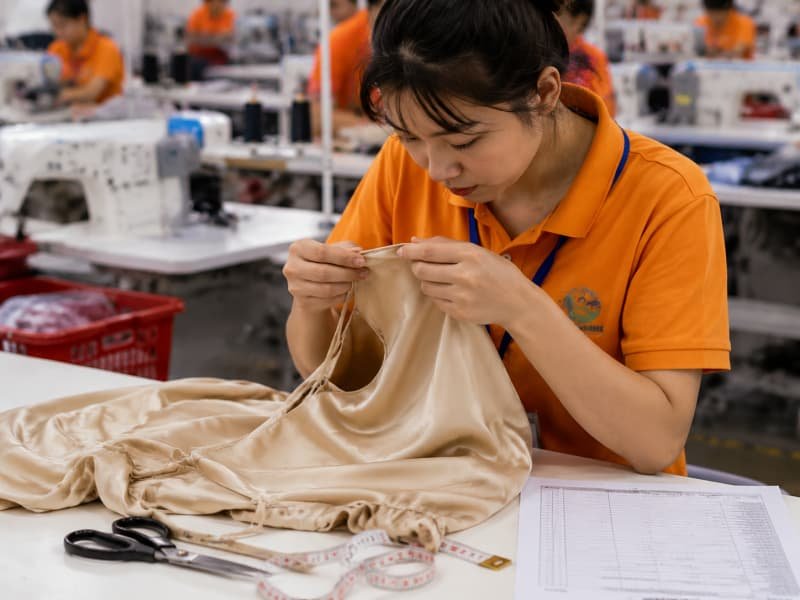
Workmanship Review
Garments are inspected for ruffle distribution, pleat consistency, neckline shape, closure function, trim placement, pressing, and overall appearance. Key checks:
- Front and back balance
- Symmetry
- Clean internal finish
- Pressing marks
- Loose threads
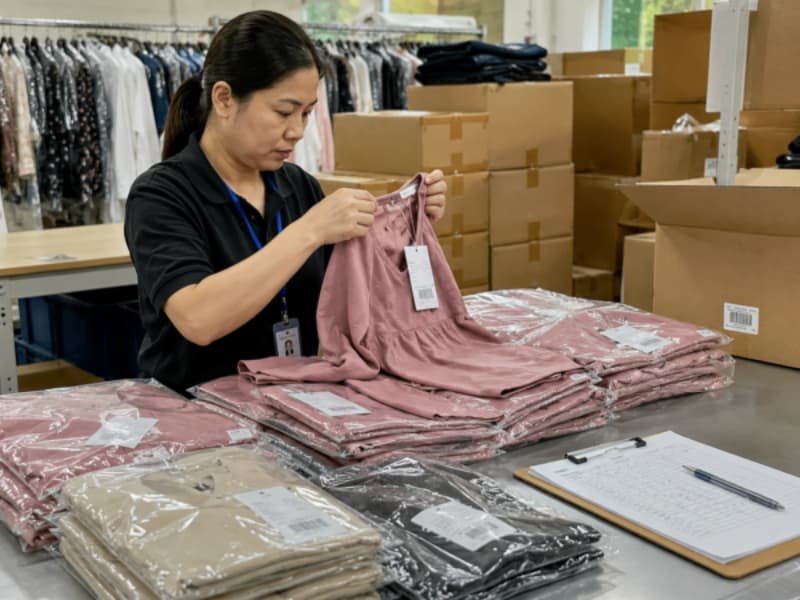
Packing Inspection
Labels, hangtags, barcodes, folding, polybags, carton marks, quantities, and shipment requirements are checked before dispatch. Key checks:
- Style-color-size ratio
- Label accuracy
- Packing method
- Carton information
- Shipment documents
Compliance Support for Brand-level Chiffon Projects
SMETA Audit Foundation
- Factory information
- Audit documentation
- Corrective-action status where applicable
- Production location confirmation
Brand-specific Standards
- Vendor manuals
- Restricted substance requirements
- Inspection standards
- Packaging instructions
- Supplier forms
Fabric Test Coordination
Testing may be arranged according to fabric, color, finish, garment use, and market requirements. Possible areas include:
- Colorfastness
- Dimensional stability
- Fabric strength
- Seam performance
- Composition verification
Product Safety Requirements
- Product design
- Target market
- Age group
- Brand standard
- Legal requirements
Inspection Documentation
Inspection records help connect approved standards with production and delivery. Documentation may include:
- PP approval references
- Inline inspection notes
- Final inspection reports
- Measurement records
- Packing status summaries
Third-party Coordination
Where independent inspection or laboratory testing is required, Duolan can cooperate with designated agencies and prepare samples, production access, files, and shipment timing. Coordination may cover:
- Pre-production testing
- During-production inspection
- Final random inspection
- Laboratory sample submission
- Report follow-up
Commercial Planning for Custom Chiffon Dress Orders
Quotation, quantity planning, sample timing, and delivery depend on product structure, materials, colorways, order depth, and launch requirements.
| Project Factor | What Duolan Reviews | Commercial or Timing Impact |
|---|---|---|
| Number of Styles | Total styles, shared fabrics, common trims, sample priorities | More styles require stronger development scheduling and order breakdown |
| Quantity per Style | Total units, color split, size ratio, repeat potential | Deeper quantities improve material and line efficiency |
| Fabric Direction | Stock fabric, custom dye, custom print, pleating, finishing | Custom material development extends approval and production timing |
| Colorways | Number of colors, dye quantity, lining shades, trim matching | More colors create additional lab dips, material minimums, and QC control |
| Print Development | Artwork, repeat size, strike-offs, placement, bulk print approval | Print approval adds development stages before cutting |
| Lining Structure | Full lining, partial lining, double layer, support panels | Lining changes material cost, sewing time, coverage, and fit |
| Construction | Ruffles, pleats, gathers, wrap fronts, layered skirts, open backs | Complex construction increases sample review and production handling |
| Size Range | Sample size, XS-XL, extended sizing, separate fit blocks | Broader ranges may need additional fit or grading review |
| Sample Revisions | Fit corrections, fabric changes, visual changes, construction changes | Revision scope affects approval time and bulk readiness |
| Testing | Fabric, garment, chemical, safety, or retailer-specific requirements | Laboratory timing and sample preparation must enter the project calendar |
| Labels and Packaging | Main label, care label, barcode, hangtag, folding, hanger, carton | Customized components require approval, production, and packing control |
| Delivery Window | Launch date, inspection, shipping method, destination | Production and shipment buffers should be planned backward from launch |
Planning Reference:
- First sample: 10-15 working days after confirmed material and technical direction
- Complex first sample: 15-25 working days
- Revision sample: 7-10 working days
- Standard bulk production: 30-45 days after approvals
- Complex multi-style bulk: 45-60 days after approvals
All timelines remain dependent on material availability, approval speed, style complexity, quantity, colorways, testing, packing, and factory allocation.
Packing and Delivery Protection for Chiffon Garments
Folding Method
Planning may include:
- Controlled fold position
- Sleeve and strap arrangement
- Zipper protection
- Reduced pressure on decorative areas
Tissue Protection
Tissue can separate layers, protect prints, reduce friction, and support delicate construction.
Suitable areas include:
- Ruffles
- Pleats
- Embellished zones
- Straps and ties
- Fold lines
Polybag Specification
Specification may include:
- Bag size
- Ventilation holes
- Warning text
- Resealable closure
- Barcode position
Hanging Options
Some occasion, layered, pleated, or structured chiffon dresses may benefit from hanger packing.
Review points:
- Hanger type
- Shoulder support
- Garment cover
- Carton height
- Transport cost
Carton Pressure
Excessive carton loading can create deep folds, crushed ruffles, distorted pleats, or damaged trims.
Review points:
- Units per carton
- Carton dimensions
- Garment weight
- Internal movement
- Stacking pressure
Labels and Shipment Marks
Final packing must match the approved style, color, size, destination, barcode, carton mark, ratio, and shipping document.
Review points:
- Main and care labels
- Hangtags
- Price or barcode stickers
- Size markings
- Carton identification
Chiffon Dress Programs Developed for Global Fashion Markets

United States Resort Collection
A US fashion label planned an 18-style chiffon resort and vacation collection containing printed maxis, tiered midis, halter minis, wrap dresses, and long-sleeved cover-up styles.
Program Structure:
- 18 styles
- 42,000 garments
- Sizes XS-XL
- Four print families
- Seven solid-color options
- Two lining constructions
- One coordinated seasonal delivery window
Main Challenges:
The print files were developed at different scales, and several large motifs became visually unbalanced on shorter styles. Pale-ground prints also appeared more transparent after the garments were placed under studio lighting. The maxi skirts required different hem-drop handling from the mini and midi products.
Duolan Development Route:
- Reviewed artwork scale by garment length
- Produced strike-offs on the target chiffon
- Matched lining shade to each print family
- Adjusted wrap overlap and halter coverage
- Separated long, circular, and tiered skirts for hem leveling
- Divided production by construction complexity
- Confirmed labels, barcodes, and folding before packing
Project Result:
All 18 styles entered bulk production through a shared collection calendar. Printed styles were grouped by artwork and fabric lot, while complex layered products followed separate quality checkpoints. Approved patterns, print references, BOM records, and packing standards were retained for repeat-order planning.

European Occasionwear Program
A European occasionwear brand developed a 14-style chiffon program containing pleated midis, layered maxis, long-sleeved dresses, ruffle necklines, asymmetric skirts, and draped waist constructions.
Program Structure:
- 14 styles
- 28,800 garments
- EU sizes 32-44
- Six core colors
- Three pleated constructions
- Five layered skirt structures
- Two delivery phases
Main Challenges:
The initial references used lightweight chiffon over dense lining, creating restricted movement and excessive seam thickness around the waist. Several layered hems relaxed at different rates, while the sleeve volume changed significantly between sample and planned bulk fabric.
Duolan Development Route:
- Compared two outer chiffon weights
- Changed lining weight and construction
- Reduced seam bulk at waist intersections
- Adjusted sleeve gathering ratios
- Hung and leveled layered skirts before hemming
- Confirmed pleat direction and panel width
- Established size-specific slit and lining lengths
- Used PP references for each construction group
Project Result:
The program moved into bulk production in two phases. Core midi styles entered production first, followed by more complex layered and pleated garments. Construction records separated the three pleating methods and five skirt structures, allowing the brand team to review future repeats without restarting development.

Australian Summer Collection
An Australian womenswear brand planned a 24-style chiffon summer collection for vacation, event, and going-out categories.
Program Structure:
- 24 styles
- 63,600 garments
- AU sizes 6-16
- Five print stories
- Eight solid colors
- Mini, midi, and maxi groups
- Three shipment waves
Main Challenges:
The collection included many color-style-size combinations, creating a high risk of sample comments, print approvals, and production priorities becoming mixed. Several light colors needed stronger coverage, while ruffled sleeves and wrap fronts required different seam and reinforcement methods.
Duolan Development Route:
- Divided the range into print, solid, and construction groups
- Created approval trackers by style and color
- Reviewed light-color lining under strong illumination
- Standardized wrap overlap and waist tie positions
- Defined ruffle width and gathering ratios
- Planned factory allocation by complexity
- Scheduled bulk in three controlled shipment waves
- Retained pattern, fabric, print, and QC records for replenishment
Project Result:
All 24 styles were organized under one production path plan, with separate priorities for launch-critical products and higher-complexity garments. The structured records allowed later replenishment discussions to start from approved materials and workmanship standards rather than reopening the entire development process.
Chiffon Dress Manufacturing Frequently Asked Questions

Start Your Chiffon Dress Development Project
Send the available project materials to Duolan for a structured development or production review. A complete file allows our team to assess fabric direction, lining, print, pattern complexity, fit priorities, sample route, quantity structure, production timing, quotation basis, and bulk feasibility more accurately.
You may submit:
- Tech packs, sketches, reference images, or original sample photos
- Total number of styles and estimated quantity by style
- Chiffon fabric, print, color, and lining direction
- Required size range and existing size chart
- Target market and intended wearing occasion
- Sample purpose and current approval stage
- Labels, hangtags, barcodes, and packing manual
- Testing, inspection, or supplier compliance requirements
- Target launch date and required delivery window
Projects involving 10-30 styles, multi-color collections, launch orders, repeat production, and total quantities from 20,000 to 80,000 garments can be reviewed through a coordinated development and production path.
Project files are handled as confidential commercial materials. Formal quotation, development planning, and production commitments are prepared after sufficient technical and order information has been reviewed.