Skip to content
What Chiffon Fabric Types Are Used in Dresses?
Your trusted Women’s Apparel Development & Manufacturing Partner from China
- Jerry
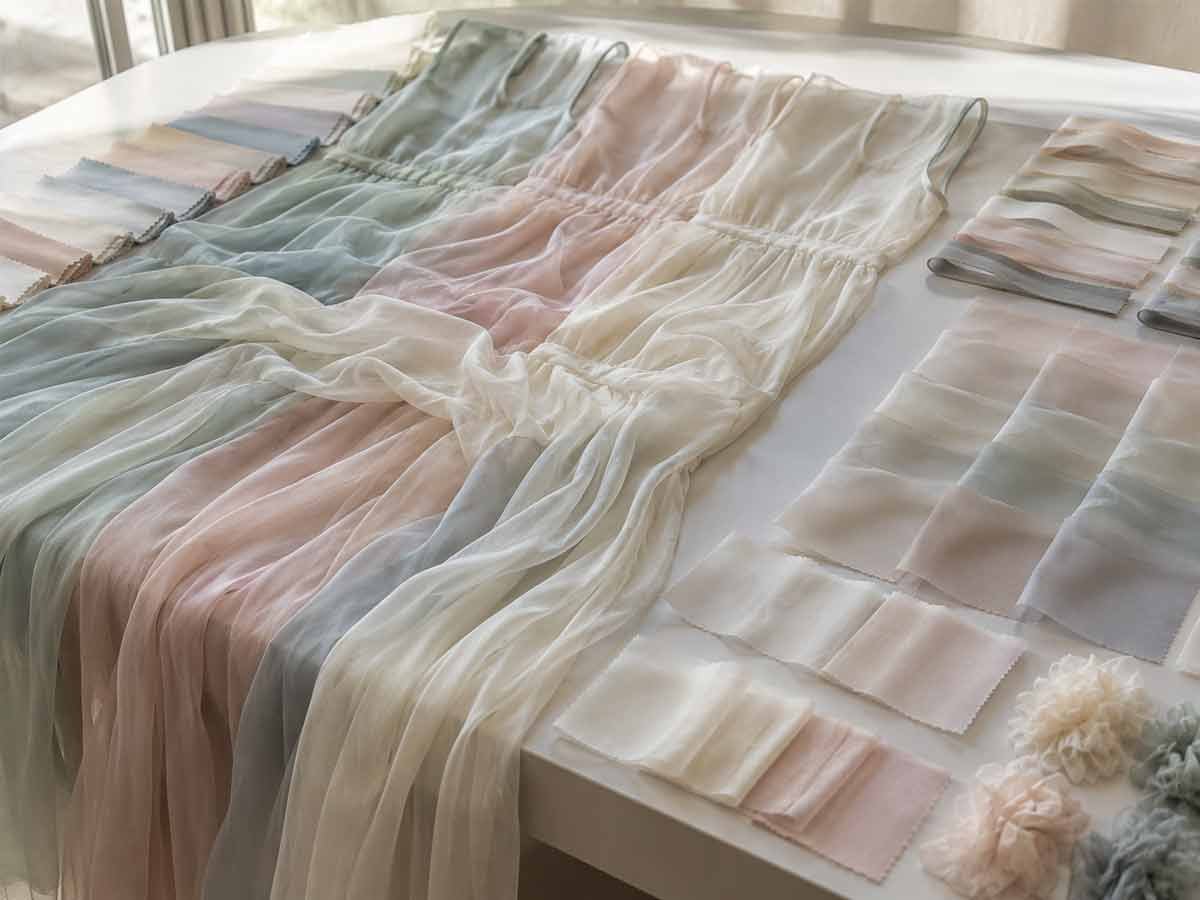
Chiffon looks deceptively simple on a fabric rack: light, sheer, soft and fluid. In actual dress development, however, two chiffons in the same color can produce completely different results. One may fall cleanly around the body, while another collapses at the bust, twists through the skirt or becomes too transparent under photography lights. A fabric that works beautifully for a tiered vacation maxi dress may be unsuitable for a fitted party dress, even when both are sold under the same general name.
The main chiffon types used in dresses are silk, polyester, viscose, nylon, stretch, crepe, satin, double, printed, pleated, jacquard, pearl and metallic chiffon. The right choice depends on the dress silhouette, required drape, opacity, stretch, surface finish, care method, target price and ability to repeat the same result in bulk production.
For fashion brands, chiffon selection should begin with the finished garment rather than a fabric name. The real questions are how the cloth behaves over the bust and hip, how it moves at full skirt length, whether the lining changes its color, and whether the approved sample can be repeated across sizes, colorways and later orders. One buyer once approved a soft chiffon from a small swatch; the sample looked attractive on the hanger, yet the hem dropped unevenly and the lining flashed through when the model walked. The material was not defective. It was simply wrong for that silhouette. That distinction is where professional chiffon dress development begins.

What Is Chiffon Fabric?
Chiffon is a lightweight plain-woven fabric made from highly twisted yarns. It can use silk, polyester, viscose, nylon or blended fibers. Its fine texture, semi-sheer appearance and fluid movement make it suitable for layered skirts, sleeves, overlays, ruffles and draped dress details.
How Chiffon Is Made
Chiffon is identified more by yarn structure and weave than by one raw material. Manufacturers generally use highly twisted yarns in a balanced plain weave. Alternating S-twist and Z-twist yarns create the fine, slightly pebbled surface associated with chiffon and help the fabric spring back instead of lying completely flat.
Several variables change the result: fiber content, yarn thickness, yarn twist, warp and weft density, fabric weight and finishing. A lightly woven chiffon can feel almost weightless and highly transparent. A denser construction may look cleaner, provide better coverage and behave more consistently during sewing. Softening, anti-static, crinkle, luster or matte finishes can further change the hand and visual character.
This is why “polyester chiffon” is not a complete specification. Two polyester qualities may differ sharply in stiffness, shine, snag resistance and drape. Commercial descriptions such as premium chiffon or luxury chiffon are subjective. A useful approval standard includes composition, weight in grams per square metre, usable width, stretch direction, color standard, finish and care expectation, together with a physical fabric cutting.
Why Dresses Use Chiffon
Chiffon creates movement without making a garment look heavy. It is especially effective in occasion, party, vacation and event-driven dresses, where visual appeal depends on how the garment responds when the wearer turns, walks or lifts an arm. A light outer layer can soften a fitted lining, while a fuller skirt can appear dramatic without requiring a thick fabric.
- Layered, tiered and circular skirts
- Flutter, bishop and cape sleeves
- Draped bodices and softly gathered necklines
- Ruffles, flounces and scarf details
- Pleated overlays and semi-sheer panels
- High-low hems, trains and asymmetric movement
The same lightness that creates beauty also exposes construction mistakes. Heavy lining, uneven rolled hems, visible seam allowances and excessive stitch tension can make good chiffon look inexpensive. Fabric, pattern, lining and sewing method should therefore be developed as one garment system rather than approved as separate components.
Is Chiffon Always Sheer?
Most chiffon is translucent, but transparency varies significantly. Fiber type, yarn density, fabric weight, color, finish and number of layers all affect how much the body and internal construction can be seen. A dark shade may appear covered indoors and become transparent when backlit. White, ivory, nude and pale pastels often expose darts, seam allowances, cups and lining edges more clearly.
Printed chiffon may seem less sheer because the motif breaks up the surface visually, but this does not always increase physical coverage. Stretch introduces another risk: a fabric that looks acceptable when relaxed can become much more transparent over the bust, hip or upper arm. Opacity should be checked flat, draped on the body and under daylight, retail lighting and strong backlighting.
Lining is not only a modesty decision. It changes the outer color, overall weight, movement, comfort and perceived value. A lining that is too heavy can suppress chiffon’s movement. A glossy lining may alter the surface tone, while an incompatible stretch lining can distort a fitted style. The outer and inner fabrics should always be evaluated together.
Weight and Handle
Dress chiffons commonly appear across a broad commercial range of roughly 30-100 GSM, although specialty, coated and double constructions may be heavier. Weight provides a useful starting point, but it does not fully predict softness or drape. Yarn type and finishing can make two fabrics with the same measured weight feel very different.
Very lightweight chiffon works well for overlays, loose sleeves and multi-layer effects. Midweight qualities often provide a practical balance of movement, coverage and production stability. Heavier or double chiffon can create a cleaner fall for occasion dresses but may lose some of the airy quality customers associate with chiffon.
A small swatch cannot show how fabric behaves at full garment scale. For a long skirt, circular hem or dramatic sleeve, a half-metre or full-width drape test is more useful. The development team should watch how folds form, whether the cloth clings, and whether bias areas lengthen after hanging.
What Types of Chiffon Are Used in Dresses?
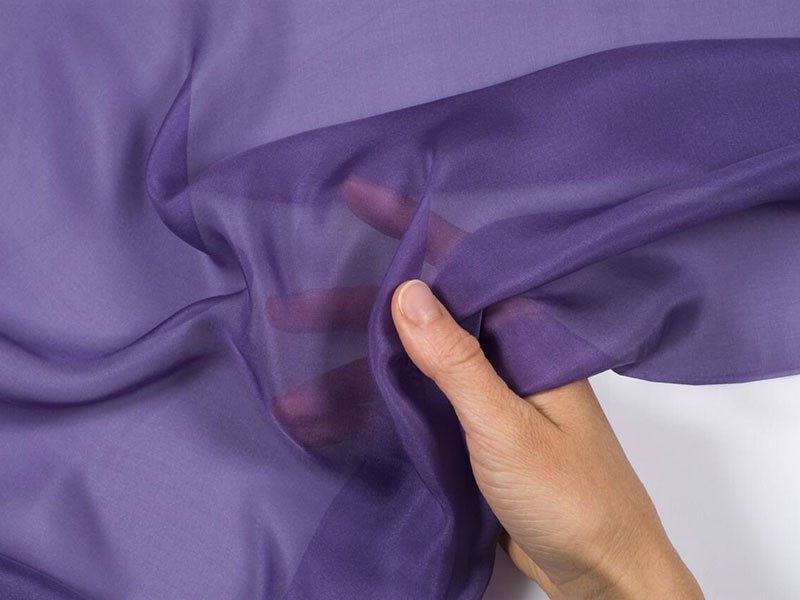
The main dress chiffons are silk, polyester, viscose, nylon and stretch chiffon, together with crepe, satin, double, printed, pleated, jacquard, crinkle, pearl and metallic variations. Each offers a different balance of drape, texture, opacity, comfort, durability, care and production consistency.
Main Fiber Types
Silk chiffon is valued for natural softness, subtle luster and refined movement. It is commonly considered for premium occasionwear, delicate overlays and elevated evening dresses. Its drawbacks include higher cost, sensitivity to abrasion and water marking, more demanding care and greater risk of visible needle damage.
Polyester chiffon is the most widely used commercial option because it can combine stable color, wrinkle resistance, broad availability and print compatibility. Quality varies widely. Lower grades may feel harsh or overly shiny, while better qualities can be soft, matte and suitable for contemporary collections. Polyester is often the practical choice for multi-color programs and repeat orders.
Viscose chiffon generally feels softer and more absorbent than standard polyester, with a heavier, more liquid fall. It works well in summer, resort and relaxed maxi silhouettes. Its risks include shrinkage, bias growth and weaker wet stability. Nylon chiffon is light and relatively strong, often with slightly more body, making it useful for gathered panels and ruffles. Heat sensitivity must be managed during pressing and finishing.
Chiffon type | Typical commercial weight* | Typical handle | Common dress use | Main control point |
Silk chiffon | 20-50 GSM | Very soft, fluid, subtle natural luster | Premium occasion dresses, sleeves, overlays | Snagging, seam slippage, care |
Polyester chiffon | 40-90 GSM | From crisp to soft; stable and easy-care | Party, bridesmaid, printed and commercial dresses | Static, shine, hand-feel variation |
Viscose chiffon | 50-90 GSM | Soft, absorbent, liquid drape | Summer, resort and relaxed maxi dresses | Shrinkage, wet strength, bias growth |
Nylon chiffon | 30-65 GSM | Light, strong, slightly crisp | Ruffles, sleeves and layered volume | Heat sensitivity |
Stretch chiffon | 50-100 GSM | Flexible and fluid | Ruched bodices, fitted sleeves and overlays | Stretch direction and recovery |
Double chiffon | 70-120 GSM | Fuller, cleaner and less transparent | Occasion dresses and cleaner silhouettes | Reduced airiness and added seam bulk |
Crepe chiffon | 45-90 GSM | Matte, lightly textured, controlled | Contemporary occasion and day-to-evening dresses | Surface consistency |
Satin chiffon | 50-100 GSM | Smooth, fluid and more lustrous | Formal and evening dresses | Snagging and shine variation |
*Weight ranges are broad industry references. Final behavior depends on yarn, weave density, finish and supplier specification.
Stretch and Double Chiffon
Stretch chiffon usually contains elastane or gains flexibility through its construction. It is useful in fitted sleeves, ruched surfaces, draped bodices and close overlays. The key measurement is not only extension but recovery. A fabric can stretch easily yet fail to return, leaving loose necklines, elongated sleeves or uneven ruching after wear.
Stretch direction must be confirmed before pattern cutting. Many qualities provide greater crosswise stretch than lengthwise stretch. The lining should have compatible extension and recovery; otherwise the outer and inner layers fight each other. Bulk lots should be checked because elastane content and finishing variation can change performance even when the fabric name remains unchanged.
Double chiffon is denser and less transparent. It offers a cleaner fall and can reduce the number of layers required in occasion dresses. It is useful when a brand wants fluidity without an extremely sheer appearance. The trade-off is greater weight, more seam bulk and less floating movement, so it should be tested at full garment length.
Surface and Finish Types
Crepe chiffon has a matte, lightly pebbled surface. It tends to look controlled and modern, and it photographs with less glare than highly lustrous qualities. Satin chiffon has a smoother face and stronger light reflection, which can enrich evening styles but also reveal pressing marks, surface pulls and uneven shine.
Pearl and metallic chiffons add reflective effects through coatings, finishes or specialty yarns. They can deliver strong partywear impact, but the finish should be checked for rub resistance, lot consistency and comfort against the skin. Metallic yarns may feel abrasive, and coatings may change after steaming, washing or repeated folding.
Jacquard chiffon incorporates woven motifs such as dots, stripes or florals. Crinkle chiffon uses an intentionally irregular surface that can suit vacation and relaxed fashion. These options create stronger identity, but pattern placement, cutting yield and finish stability become part of the technical review.
Printed and Pleated Chiffon
Printed chiffon is widely used for floral, abstract, animal and geometric dresses. Polyester often provides strong repeatability and bright color, while viscose can create a softer, richer appearance. Print approval should cover motif scale, color, reverse-side appearance, penetration, hand feel, shrinkage and usable width.
Random florals are generally more forgiving than stripes, checks or engineered motifs. Lightweight chiffon can move during printing and cutting, so precise geometry requires tighter process control. The strike-off should be viewed over the intended lining because the underlayer can change the apparent color and contrast.
Pleated chiffon adds vertical texture and movement. It may be used for skirts, sleeves, bodices and decorative inserts. Pattern calculations must consider both compressed and expanded dimensions. Heat and wash testing are important because pleats can relax, distort or develop shine if pressing temperatures are too high.

Which Chiffon Suits Each Dress Style?
Silk, crepe and double chiffon suit refined occasionwear; stable polyester works well for party, bridesmaid and repeatable commercial programs; viscose supports relaxed summer and vacation dresses; stretch chiffon helps fitted areas; and metallic, pearl or pleated chiffon adds stronger visual impact.
Occasion and Formal Dresses
Occasion dresses usually need controlled elegance rather than uncontrolled softness. Crepe, silk, double and refined polyester chiffon are common choices because they can move while maintaining a clean visual line. Floor-length skirts need enough weight to fall rather than cling, while draped bodices need soft fold formation without excessive bulk at the side seam.
The fabric should be reviewed under indoor event lighting, daylight and photography flash. Pale colors may reveal internal construction, while a glossy finish can look brighter in photographs than in normal viewing. Wrinkle recovery also matters because formal dresses are often packed, transported, seated in and worn for several hours.
Lining should support the price position and wear experience. A stiff lining can suppress movement; a thin lining may fail to cover cups or seam allowances. For embellished styles, the chiffon must tolerate concentrated weight around bead, stone or sequin attachment points.
Party and Social Dresses
Party dresses often require stronger visual communication. Metallic, pearl, printed, pleated and stretch chiffons can create movement, surface interest and photography appeal. A fitted lining with a loose chiffon overlay can balance shape and softness, while asymmetric panels or ruffles add drama without making the entire garment heavy.
These dresses also experience higher wear stress. Customers dance, sit, move quickly and carry handbags that may rub the garment. Snag resistance, seam strength and trim placement should be assessed alongside appearance. Decorative stones and sequins should not catch adjacent chiffon layers or place too much weight on an open weave.
Flash photography is a useful approval test. Some synthetic chiffons produce unexpectedly strong shine, and pale linings may become visible against bright backgrounds. A fabric that looks sophisticated in normal studio light can look cheaper under flash if the surface finish is too reflective.
Summer and Vacation Dresses
Summer and vacation dresses need lightness, movement, packability and practical care. Viscose chiffon can provide a soft, absorbent hand, while polyester generally offers better wrinkle recovery, faster drying and easier print repeatability. Crinkle chiffon can hide minor travel creasing and support a more relaxed visual direction.
Wrap dresses, tiered maxis, halter styles, sundresses and flutter-sleeve midis make good use of chiffon because they allow airflow and movement. Comfort depends on the whole garment, not only the outer fiber. A breathable outer fabric over a dense synthetic lining may still feel warm.
Vacation styles should be checked outdoors. Wind can lift skirts and expose openings that appear controlled in the fitting room. Wrap overlap, lining length and slit position should reflect realistic movement. Print placement around the bust, waist and centre front also deserves review, especially with large florals or directional motifs.
Dress style | Suitable chiffon direction | Useful weight range* | Key development concern |
Occasion maxi | Crepe, silk or double chiffon | 60-110 GSM | Drape, lining and hem balance |
Party mini | Metallic, pearl, printed or stretch chiffon | 50-100 GSM | Snagging, support and photography |
Summer midi | Viscose or lightweight polyester chiffon | 45-80 GSM | Comfort, shrinkage and opacity |
Vacation maxi | Printed, crinkle or soft polyester chiffon | 45-85 GSM | Packability, wind movement and care |
Bridesmaid dress | Stable polyester or double chiffon | 60-110 GSM | Shade consistency and repeat supply |
Fitted dress | Stretch chiffon over supportive lining | 60-100 GSM | Recovery, tension and seam strength |
*Ranges are practical starting points rather than fixed specifications. Silhouette, layering and finish can shift the appropriate weight.
Bridesmaid and Fitted Dresses
Polyester and double chiffon are often selected for bridesmaid and coordinated event programs because they support shade continuity, practical care and repeat availability. One fabric may need to work across wrap, halter, one-shoulder, sleeved and empire-waist silhouettes, so grading and gathering must be reviewed across the full size range.
Traditional non-stretch chiffon is rarely suitable as the only material in a strongly fitted dress. It works better as a ruched surface, sleeve, draped layer or overlay on a supportive base. Stretch chiffon can improve mobility, but it does not replace boning, cups, power mesh, fusible support or structured lining in corset and body-conscious designs.
Opacity under tension is critical. The fabric may look covered when relaxed and become visibly sheer over the bust or hip. The best fitted chiffon dresses assign clear roles: the inner construction provides support and shape, while the chiffon adds softness, movement and surface dimension.

How Do Chiffon Types Compare?
Silk and viscose usually provide softer, more natural movement; polyester offers strong commercial stability and easy care; nylon provides lightweight strength; stretch chiffon improves mobility; and double or crepe chiffon gives greater opacity and control. The best option depends on the garment rather than a single “best” fabric.
Drape and Movement
Drape describes how fabric hangs and forms folds under its own weight. It determines whether a chiffon dress looks fluid, crisp, flat or uncontrolled. Silk often produces very soft movement. Viscose tends to create a heavier, more liquid fall. Polyester ranges from crisp to soft depending on yarn and finish, while nylon may hold ruffles and light volume more effectively.
The best drape depends on the feature being developed. A very soft fabric may be ideal for a cape sleeve but too weak for a dramatic flounce. A slightly firmer chiffon can create a better ruffle even if it feels less luxurious in the hand. Vertical fall, fold depth, movement during walking and recovery after movement should all be assessed.
A full-width or garment-scale test is more useful than a small swatch. Maxi skirts and bias panels should also be allowed to hang because the final hem balance may change after gravity acts on the fabric for several hours.
Strength and Durability
Polyester generally offers a practical balance of strength, dimensional stability and easy care, while nylon can be strong at a low weight. Fiber content alone does not determine durability. An open weave can allow seam slippage even when the yarn itself is strong, and a dense fabric can resist tearing yet feel too stiff for the intended silhouette.
Important checks include seam slippage, tear strength, abrasion, snagging, pilling, colorfastness and dimensional stability. Stretch qualities also need recovery testing. High-stress garment areas – underarms, waist seams, zipper ends, strap attachments and gathered sections – deserve particular attention because they carry concentrated load.
Construction can weaken chiffon. A large needle leaves visible holes, excessive stitch density can perforate the cloth, and heavy embellishment can tear the base. A material that passes a flat laboratory test may still fail when the finished dress concentrates stress at one seam or attachment point.
Breathability and Comfort
Silk, viscose and cotton-blend chiffons often feel more natural and interact with moisture better than standard polyester or nylon. Perceived comfort, however, depends on the complete garment. A loose polyester maxi may feel cooler than a tightly fitted viscose dress because the silhouette allows more air movement.
Lining composition, number of layers, fit, static and surface feel all influence comfort. A breathable chiffon over a dense lining can still feel warm. Several ruffled layers can trap heat, and static can make synthetic outer and lining fabrics cling to one another or to the body.
Wear testing is valuable for summer and event dresses. The tester should sit, walk and move for a realistic period. This reveals whether the lining sticks, whether the dress becomes hot, and whether the outer layer rides up. Comfort claims should be based on the garment system rather than the fiber name alone.
Print, Color and Care
Polyester chiffon is widely used in printed collections because it can support bright color, repeatability and several commercial print processes. Viscose may create a softer and richer color effect but often needs closer shrinkage and process control. Print approval should cover color, sharpness, penetration, reverse-side appearance, hand feel and dimensional change.
Random florals and abstracts are more forgiving than narrow stripes or engineered placements. Lightweight chiffon can shift during printing and cutting, so geometric accuracy requires stronger control. Color should be checked under daylight and warm indoor light, and always over the intended lining.
Care expectations influence the material decision. Silk may require dry cleaning, viscose may need controlled washing, and polyester often supports simpler consumer care. Coatings, pleats and embellishment can override the base fiber’s usual care profile, so the final label should reflect the complete garment.

How Is Chiffon Used in Dress Construction?
Chiffon requires fine needles, controlled feeding, lightweight seams, narrow hems and patterns that account for transparency, stretch and bias movement. Lining, layer count and internal support should be planned before sampling because methods suited to stable woven fabrics often create puckering, twisting or visible bulk in chiffon.
Lining and Layering
Most chiffon dresses need lining through the body, although sleeves, yokes, overlays or back panels may remain sheer. The lining should complement the outer fabric in weight, stretch, color, surface friction and movement. A heavy lining can suppress drape, while an unstable lining can twist inside the garment.
Two chiffon layers can increase opacity and color depth without creating the same appearance as one heavy fabric. Multiple gathered layers also add volume, but they increase seam bulk. Gathering ratios may need to be reduced at waist, armhole and neckline seams, or seam allowances may need to be staggered.
Static is common when synthetic chiffon and synthetic lining rub together. Anti-static finishing can help, but fabric pairing and construction also matter. The lining should not be so smooth that it slides unpredictably or so rough that it catches the outer layer. Pale colors should be evaluated with the actual lining because even a small undertone difference can change the final shade.
Seams and Stitching
French seams are widely used because they enclose raw edges and look clean through a transparent fabric. They are suitable for straight and gently curved seams, but can become bulky in tightly curved or heavily gathered areas. Narrow overlocking is more efficient for commercial sewing, although thread color and seam width remain visible in pale styles.
Fine needles and balanced tension reduce puckering and permanent holes. Machine speed should be controlled because operators can stretch or distort chiffon when trying to sew too quickly. Stable feeding matters more than maximum throughput. A sewing trial should confirm needle, thread, stitch length and seam type before the line starts.
Construction point | Common working range | Practical purpose |
Needle size | Approximately 60/8-70/10 | Reduces visible holes and yarn damage |
Stitch length | Approximately 2.0-2.5 mm | Balances seam strength and puckering |
French seam allowance | Often 6-12 mm total, depending on method | Encloses raw edges cleanly |
Narrow overlock width | Often around 3-5 mm | Controls bulk in production sewing |
Rolled or baby hem | Often around 2-4 mm finished | Preserves light movement |
Hanging time before leveling | Commonly 12-24 hours for fluid or bias styles | Allows uneven drop to appear |
These ranges are practical starting points, not fixed rules. Fabric density, machinery, thread and garment design may require different settings.
Hems and Balance
Chiffon hems should remain narrow and light. Rolled and baby hems are common for skirts, sleeves, ruffles and flounces because they finish the edge without interrupting movement. Binding can provide deliberate contrast or more control, but it adds weight and changes the visual line.
Circular and bias hems should be allowed to relax before final leveling. Hanging for 12-24 hours is a common practical step for fluid styles, although viscose-rich, heavy or strongly bias-cut garments may need further evaluation. Cutting the hem directly from the paper pattern can produce an uneven finished line once the fabric drops.
The lining hem should remain shorter than the outer layer but not so short that it flashes during movement. High-low and asymmetric hems should be marked after hanging on a form or model. The hem should also be checked after the intended care process because wash or steam can change length and balance.
Pattern and Fit Control
Patterns for chiffon must account for drape, transparency, stretch and limited structural support. A pattern proven in calico or a stable woven cannot always be transferred directly. Bias sections may lengthen and narrow, necklines can stretch during handling, and draped fullness can create unexpected bulk at the side seam.
- Reduce or redistribute gathering at heavy seam areas
- Add overlap where transparency or movement may expose the body
- Stabilize necklines, shoulders and zipper areas
- Develop a separate lining pattern rather than copying the shell
- Adjust ease for stretch qualities and fitted overlays
- Relocate darts or internal support that may show through
The actual production fabric should enter development early. A substitute fit sample may confirm basic proportions, but it cannot predict final drape, transparency or bias behavior. Internal cups, boning and seam allowances should be assessed from the outside under strong light, not only during inside construction inspection.

What Should Brands Check Before Production?
Before bulk production, brands should confirm the chiffon specification, shade, weight, width, stretch, opacity, lining, care method, seam construction, testing and approved samples. Incoming bulk fabric must be compared with the approved standard so that the sample result can be repeated across sizes, colors and later orders.
Fabric and Sample Approval
A useful development package includes a tech pack, measurements, intended fabric, lining, trims, color, print, care expectation, target quantity and launch timing. Subjective descriptions such as soft, premium or flowy should be supported by a physical standard, reference garment, close-up photographs or video because different teams interpret these words differently.
- Initial fabric swatch and technical specification
- Lab dip or print strike-off
- First prototype
- Fit sample and revised sample
- Pre-production sample
- Bulk fabric, color and trim approval
Each stage answers a different question. A swatch confirms the material direction. A fit sample tests proportion, movement and transparency. A pre-production sample becomes the reference for workmanship and measurements. Comments should be measurable: “reduce front neck drop by 1 centimetre” is more actionable than “make the neckline better.”
Testing and Risk Control
Testing should reflect the garment, target market and care label. Not every chiffon requires every laboratory method, but the likely failure modes should be identified before bulk cutting. Results should lead to action: high shrinkage may require pre-treatment or pattern adjustment; weak seam slippage may require reinforcement, wider seam allowance or a different construction.
Check | Why it matters | Most relevant situations |
Weight and usable width | Confirms specification, drape and consumption | All chiffon dresses |
Dimensional stability | Identifies shrinkage or growth | Viscose, washable and bias styles |
Colorfastness | Reduces fading, bleeding and staining risk | Dark shades and printed dresses |
Seam slippage | Checks yarn movement beside seams | Fitted, gathered and high-stress areas |
Tear strength | Reviews resistance to damage | Lightweight and embellished chiffon |
Snagging | Assesses surface sensitivity | Party, occasion and metallic styles |
Stretch and recovery | Confirms fit stability | Stretch chiffon and fitted overlays |
Shade consistency | Controls lot variation | Bridesmaid and coordinated programs |
Pleat stability | Confirms finish retention | Pleated chiffon |
Opacity review | Prevents unintended exposure | Pale colors and fitted styles |
Laboratory results do not replace garment trials. Fit and wear testing remain important because a dress concentrates stress at seams, zippers, straps and gathers in ways that a flat fabric specimen cannot fully reproduce.
Bulk Material Control
Bulk consistency begins when fabric arrives. Rolls should be checked for shade, width, visible defects, weight and surface appearance before cutting. Different shade lots should be separated rather than mixed randomly within one garment or delivery batch. Panel numbering helps prevent color variation between front, back and sleeve pieces.
Printed chiffon should be checked for repeat, skew, usable width and color. Stretch chiffon should be compared with the approved sample for extension and recovery. Pleated fabric should be checked for pleat width and heat response. Viscose and stretch qualities may need relaxation before cutting because tension from rolling can affect dimensions.
First-piece approval should confirm seam appearance, measurements and handling before full production begins. Inspection criteria should include chiffon-specific defects such as puckering, seam grin, snagging, twisting, uneven hems, shade variation and lining exposure.
From Sample to Repeat Production
A successful sample is only the starting point. The approved result must be translated into clear production information: fabric and shade standards, lining and trims, final measurements and tolerances, seam and hem methods, stitch requirements, pressing limitations, print placement and packing instructions.
Repeat orders require the same discipline. A new fabric lot can feel slightly different even when composition and supplier remain unchanged. Incoming material should be compared with the original approved standard rather than accepted from the description alone. Color continuity, test records and construction methods should remain traceable so the dress can be recolored, reordered and expanded into a wider collection.
For brands developing chiffon collections, the most reliable manufacturing partner is not simply the one that can sew light fabric. It is the team that understands how fabric, lining, fit, pattern, seam engineering, testing and production control interact – and can explain the trade-offs before they become costly bulk problems.
Develop Chiffon Dresses with Duolan Apparel
Choosing chiffon is a product decision, not a fabric-only decision. Silk may create refined movement, polyester may provide the strongest commercial balance, viscose may improve warm-weather comfort, stretch chiffon may support fitted areas, and crepe or double chiffon may deliver greater control. None of these choices can be separated from lining, pattern, construction, testing and production scale.
Duolan Apparel supports the development of fashion, occasion, party, vacation, wedding guest, bridesmaid and fitted dress collections for established brands and professional product teams. Projects can begin from a tech pack, reference garment, original sample, fabric standard or collection brief. The development team can review suitable chiffon directions, opacity and lining needs, pattern risks, sample requirements and the route to stable bulk production.
Share:
Our Services
Categories
Table of Contents
Here, developing fashion collections is more than manufacturing garments — it’s a collaborative process focused on transforming ideas into well-executed, market-ready products. From fabric sourcing and sample development to scalable production and delivery coordination, every stage is built to support quality, consistency, and efficient collection launches across global markets.