 Skip to content
Plastic Boning vs Steel Boning: Which Is Better for Corset Dresses?
Your trusted Women’s Apparel Development & Manufacturing Partner from China
- Jerry
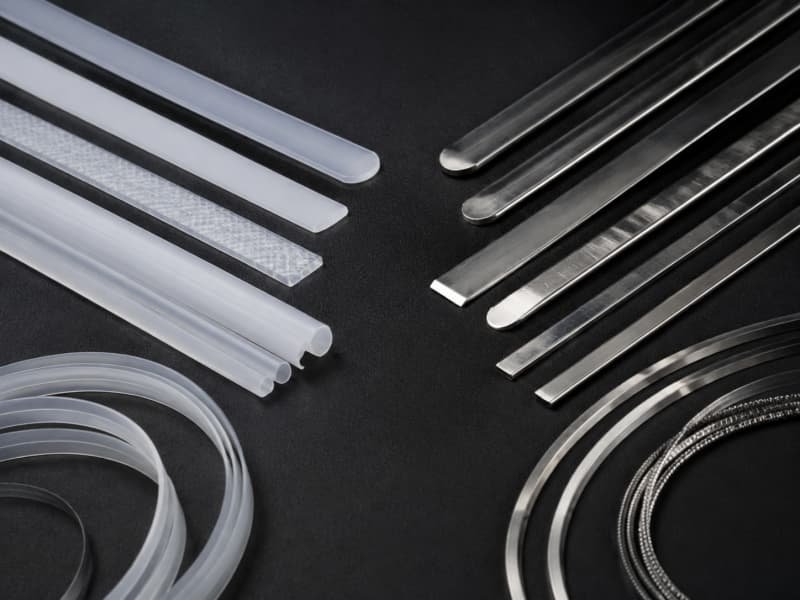
A boning decision can look like a small line on a bill of materials, yet it can completely change how a corset dress fits, moves and survives repeated wear. A rigid bone in the wrong seam may dig into the body, distort a curved panel or make sitting uncomfortable. A weak plastic bone in a heavily tensioned bodice may buckle, twist or let the neckline collapse. The material name alone does not tell you whether the finished garment will perform well, because the result also depends on pattern shape, fabric strength, lining, channel construction, closure tension and the size range being developed.
Plastic boning is generally better for lightweight fashion structure, flexible shaping and washable garments, while steel boning is better for stronger support, shape retention and high-tension corset construction. The best choice still depends on the exact boning type, fabric, panel shape, fit pressure, care method and intended retail use.
Experienced product teams therefore do not approve a corset dress simply because the tech pack says “add boning.” They ask what each bone must accomplish, where it will sit, how the wearer will move and whether the approved structure can be reproduced consistently in bulk. One attractive prototype may hide a poor decision. The real test often appears after the dress has been worn for three hours, folded for transport, tried on by different body shapes and produced across multiple sizes. That is where plastic and steel stop being abstract material choices and become commercial decisions that influence comfort, returns, photography and repeat orders.
What Is the Difference Between Plastic and Steel Boning?
Plastic boning is lighter, easier to cut and usually more suitable for flexible or washable garments, while steel boning offers greater resistance to buckling and stronger shape retention under sustained tension. The useful comparison is not simply plastic versus metal: standard plastic, synthetic whalebone, flat steel and spiral steel all behave differently inside a finished dress.
Boning is a narrow structural component inserted into a channel, seam allowance or lining assembly. Its job may be as simple as keeping a side seam upright, or as demanding as supporting the bust, stabilizing the waist and controlling a fitted bodice under continuous pressure. The most common mistake is treating every plastic bone as weak and every steel bone as automatically superior. In practice, a well-selected synthetic bone can follow a curved body line beautifully, while an unnecessarily rigid steel bone can create pressure, visible ridges and an awkward silhouette.
Boning Type | Common Width Range* | Flex Direction | Relative Support | Typical Use |
Extruded plastic | 6-12 mm | Usually multidirectional | Light to medium | Fashion corsets, costumes, lightweight bodices |
Sew-through polyester | 6-15 mm | Highly flexible | Light | Strapless tops, seam stabilization, soft shaping |
Synthetic whalebone | 5-12 mm | Body-following flexibility | Medium | Curved bodices, corset-inspired dresses |
Flat steel | 6-13 mm | Mainly forward and backward | High | Back lacing, straight panels, strong stabilization |
Spiral steel | 5-12 mm | Multidirectional | Medium to high | Curved seams, fitted corsets, structured dresses |
*These dimensions are common sourcing ranges rather than universal standards. Supplier specifications, thickness, coating and stiffness should always be confirmed through physical samples and technical data before the construction is approved.
Plastic Boning Types
Plastic boning covers several products with different behavior. Basic extruded plastic is smooth, lightweight, rust-free and easy to process, which makes it common in fashion corsets, costumes and lightly structured bodices. Sew-through polyester boning is softer and can often be stitched directly to a lining or seam allowance. Synthetic whalebone is denser and generally recovers more smoothly than low-cost plastic, so it can follow a rounded bust or waist without feeling as rigid as steel. These products should not be treated as interchangeable merely because they share the same width.
The exact specification matters because body heat, pressing temperature and repeated bending affect different plastics in different ways. A narrow low-density strip may work in a lightweight party dress but buckle when the same pattern is made in a stronger stretch woven fabric. A dense synthetic bone may offer good contour control, yet it can still create an obvious ridge under thin satin. A useful tech pack therefore records composition, width, thickness, supplier reference, permitted heat exposure, end treatment and whether the material can be stitched through.
Flat and Spiral Steel
Flat steel bends mainly forward and backward while resisting sideways movement. That directional stability makes it valuable beside a lace-up back, along a straight center-front panel or in other areas where the garment must remain vertically controlled under strong horizontal pressure. The same strength becomes a disadvantage when flat steel is forced around a pronounced curve. It may push against the channel, create a pressure point or make the seam stand away from the body rather than following the intended contour.
Spiral steel is formed from tightly coiled wire and can flex in several directions. It is therefore better suited to curved princess seams, side-body panels and shaped waist-to-hip transitions. A carefully designed corset dress may use flat steel near a lacing or closure area and spiral steel through curved panels, rather than applying one material everywhere. Spiral steel requires clean cutting and secure metal tips, while flat steel needs rounded or capped ends and intact coating. Both materials demand more controlled handling than standard plastic.
Structure, Weight and Comfort
Steel generally holds its form more reliably under strong tension, but it also transfers more force into the surrounding channel, lining and seam. If those areas are too weak, the steel does not create a stronger garment; it simply causes another component to fail first. Boning should be considered part of a complete support system that may include stable lining, cups, interfacing, elastic, waist tape and reinforced closures. A well-engineered medium-support system can outperform a collection of very stiff bones placed without regard to the pattern.
Plastic is usually lighter, which can be important in mini dresses, summer party styles and garments intended for several hours of social wear. Steel is not automatically uncomfortable, however. Correctly placed steel can distribute pressure more evenly than plastic that twists or collapses. Many discomfort problems come from bones that are too long, channels that are too narrow, rough ends or a pattern that places the waist and bust incorrectly. Comfort should be tested while sitting, bending, walking and raising the arms, not only while the model stands still.
Can They Be Substituted?
Plastic and steel cannot be substituted automatically, even when the nominal width is identical. Changing the material changes stiffness, weight, recovery, movement and pressure distribution. It may also require a different channel width, seam allowance, lining weight, reinforcement method or care instruction. Replacing 8 mm spiral steel with 8 mm extruded plastic in a curved high-tension panel may reduce support and increase twisting, while replacing flexible plastic with flat steel may make the same panel rigid and uncomfortable.
Any substitution should be treated as a construction revision. The revised garment should be fitted again, worn for a meaningful period, inspected under several lighting conditions and reviewed after pressing or cleaning. Approved trim cards should include a physical sample whenever possible, because descriptions such as “medium plastic boning” or “standard steel” leave too much room for interpretation. This discipline is particularly important on repeat orders, when a supplier may offer a visually similar material that behaves differently after assembly.

Which Boning Performs Better?
Steel usually performs better where a garment must resist high tension, retain a defined shape or support heavier construction. Plastic performs better where lower weight, flexible movement, easier processing and wash resistance matter more. Performance should be judged through support, recovery, comfort, corrosion risk and production cost rather than by assuming that the most rigid material is always the best.
A fair performance comparison begins with the job the garment needs to do. A corset-look top may only need to keep vertical seams smooth. A strapless occasion dress may need to stabilize the neckline and distribute bust and skirt weight. A functional high-tension corset may place continuous pressure on every panel. The same boning will not perform equally in these products, and even one garment may benefit from a mixed system that gives stability in straight areas and flexibility in curved areas.
Performance Factor | Basic Plastic | Synthetic Whalebone | Flat Steel | Spiral Steel |
Buckling resistance | Low to medium | Medium | High | Medium to high |
Curved-seam movement | Good | Very good | Limited | Very good |
Long-term recovery | Medium | Medium to high | High | High |
Garment weight | Low | Low | Medium | Medium |
Rust risk | None | None | Possible if coating is damaged | Possible at exposed ends |
Processing difficulty | Low | Low | Medium | High |
Typical cost level | Low | Medium | Medium | Medium to high |
Support and Recovery
Support depends on material, width, thickness, quantity, spacing and placement. Six medium-support bones positioned around the actual load paths may perform better than four very stiff bones concentrated in the wrong panels. Light support is used to stop rolling, keep seams upright or prevent a soft neckline from folding. Moderate support stabilizes a bustier, waist contour or curved princess seam. High support resists strong lacing tension, heavier skirt weight or a firmly corseted silhouette. Basic plastic commonly serves light applications, while steel becomes more useful as sustained pressure increases.
Recovery is just as important as first-touch stiffness. A material may feel firm when new yet develop a permanent bend after body heat, repeated sitting or tight packing. Development teams can compare sample lengths by bending them around a representative curve, holding them under pressure, releasing them and repeating the cycle. Whitening, cracking, kinking or slow recovery indicate risk. Three to five repeated cycles are not a full laboratory test, but they quickly reveal obvious differences between candidate trims before the garment reaches a more expensive sample stage.
Movement and Wear
Movement depends on the direction in which a bone can flex. Flat steel is stable but may resist strongly curved seams. Spiral steel follows the torso more naturally, while plastic and synthetic whalebone allow varying degrees of multidirectional movement. Bone length matters just as much. A side bone that looks correct while standing may press into the underarm when the wearer lifts an arm or into the upper hip when sitting. Several millimetres of controlled clearance at each end are commonly used, but the final amount must be confirmed against the edge construction and body movement.
A useful wear check lasts at least 20 to 30 minutes and includes sitting upright, leaning forward, rotating the torso, walking, taking a long step, raising both arms and breathing deeply. The garment should then be inspected for channel twisting, bone migration, neckline drop, visible ridges and pressure marks. This simple routine catches problems that a static fitting photograph cannot show. It also helps separate a boning problem from a pattern problem, because a correctly selected bone cannot compensate for an incorrect bust volume, waist position or side-seam angle.
Comfort and Durability
Comfort comes from balanced pressure rather than softness alone. A stiff bone may feel comfortable when it follows the body correctly and shares load across several panels. A flexible bone may feel worse if it buckles and concentrates force at one point. Common problems include ends finishing too close to the underarm, uneven left and right lengths, channels crossing prominent ribs, bulky caps beneath thin lining and excessive tension in one panel. Size range must also be reviewed, because a placement approved in the sample size may become uncomfortable in larger cups or longer torsos.
Steel usually offers better long-term shape retention, but it introduces corrosion risk if coating is damaged or moisture reaches exposed ends. Plastic does not rust, although some grades soften under high pressing temperatures or deform during hot drying. Garments should be checked after the intended care process rather than a convenient factory method. Repeating three to five care cycles can reveal channel shrinkage, rust staining, migration, seam puckering or plastic distortion. Packaging should also be reviewed, because sharply folding a long boned bodice can damage a structure that performed well during fitting.
Cost and Commercial Value
Steel usually costs more when the complete manufacturing process is considered. The difference is not limited to the price per metre. Cutting, tipping, caps, channel preparation, operator skill, handling and inspection all contribute to the final cost. Plastic is generally faster to process, but the lowest-cost grade may create a higher commercial cost if it produces buckling, visible distortion or fit complaints. The correct comparison includes material cost, conversion cost and the potential cost of returns, rework and inconsistent repeat production.
A trend-led fashion corset with moderate support may gain little from a full steel structure, while a premium corset dress can justify steel or a mixed system when better support protects the fit and expected lifespan. Product teams should compare workable constructions rather than placing a suitable steel option beside an unsuitable low-grade plastic option. The useful question is not which material is cheapest. It is which construction meets the intended support, comfort, appearance and durability target at the most sensible total cost for the product’s market position.

Which Boning Suits Each Dress?
Plastic suits lightweight corset-look garments, soft bustiers and dresses needing moderate seam support. Steel is more suitable for high-tension corset dresses, heavier strapless bodices and areas that must retain a strongly defined shape. Mesh, satin, bodycon and occasion styles need separate evaluation because transparency, stretch, surface shine and garment weight change how the internal structure performs.
Product names can be misleading. Two garments sold as corset dresses may have completely different internal requirements. One may be a lightly fitted mesh mini dress with decorative channels, while another contains moulded cups, a reinforced waist, a lace-up back and a heavy embellished skirt. Boning should therefore be selected from the inside out: intended function first, product label second. The structure must support the actual load without making the dress look or feel unnecessarily rigid.
Garment Type | Typical Support Need | Practical Starting Option | Main Risk to Check |
Fashion corset top | Light to moderate | Plastic or synthetic whalebone | Curling and visible ridges |
Corset dress | Moderate to high | Mixed spiral and flat steel | Buckling and pressure concentration |
Strapless mini dress | Moderate | Plastic or selective spiral steel | Neckline drop |
Heavy occasion dress | High | Spiral steel with stable back support | Skirt weight pulling the bodice |
Bodycon dress | Localized support | Flexible plastic or limited spiral steel | Restricted movement and rippling |
Mesh corset dress | Moderate with low visual bulk | Narrow covered boning | Channel visibility and mesh damage |
Satin bustier dress | Moderate to high | Low-profile tested system | Shine lines and surface impressions |
Fashion Corsets
Fashion corsets create the visual language of corsetry without necessarily reducing the waist or carrying heavy structural pressure. They may feature visible channels, decorative lacing, cups and shaped seams, yet rely mainly on the pattern and fabric for fit. Plastic boning is often a practical choice because it keeps seams upright, adds definition and limits weight. Synthetic whalebone can be useful where the design curves around the bust or waist and the structure needs to follow the body more naturally.
The material still has to be tested against the actual shell and lining. A bone that disappears under matte crepe may create an obvious ridge under stretch satin. A flexible strip may rotate inside a channel that is too wide, and pale boning may show through black or skin-tone mesh. A fashion corset should not be presented as a high-compression garment unless the complete construction is engineered for that purpose. Adding steel to a weak shell fabric does not create functional corsetry; it simply adds rigid pieces to an unstable product.
Corset and Strapless Dresses
A strongly structured corset dress often benefits from a mixed system. Flat steel can stabilize straight back sections beside lacing or a firm closure, while spiral steel can follow curved side and princess seams. Synthetic whalebone may be used in lower-pressure panels to reduce weight and improve movement. The complete load must be considered, including cups, underbust seams, waist tape, closure tension, lining strength and skirt weight. A long skirt or dense embellishment can pull downward and change a bodice that appeared stable before final assembly.
Strapless dresses need secure body contact because there are no shoulder straps to carry the garment. Boning may control the neckline and side seams, but it works alongside correct circumference, cups, elastic, grip tape, interfacing or an internal waist stay. Plastic can be sufficient for lightweight mini dresses, while spiral steel may be more reliable in heavier occasion styles or broader size ranges. The finished dress should be worn for 20 to 30 minutes with the full skirt attached, then checked for neckline drop, rotation and underarm pressure.
Bodycon and Stretch Styles
Bodycon dresses create continuous contact with the body, so boning can become visible or restrictive very quickly. The shell fabric may stretch horizontally while a rigid bone and non-stretch channel do not. If this difference is not managed, the garment can develop rippling, pressure lines or an unnatural stiff section around the waist and hip. Flexible plastic or synthetic boning often works when the purpose is local seam control, while selective spiral steel may support a corset-style upper bodice without extending rigid structure through the full torso.
Development should review stretch percentage in both directions, recovery after extension, negative ease, channel stability and the lower end position of each bone. A stable lining can reduce stretch and increase pressure more than expected. Bones extending too far into the hip may restrict walking or sitting, while short pieces may allow the waist area to collapse. The best result feels integrated with the dress rather than looking as though hard strips were inserted after the stretch pattern had already been completed.
Mesh and Satin Styles
Mesh exposes channels, tips, seam allowances and color differences. Decorative mesh is rarely strong enough to carry major pressure by itself, so boning may need to sit on a stable lining panel or inside opaque seam sections. Channel color and width matter because stretched mesh becomes more transparent on the body. Sampling should be reviewed on a fit model, under both front and side lighting, rather than only on a hanger where the mesh is relaxed and the internal construction looks less obvious.
Satin reflects light across every ridge, indentation and pucker. Bone edges, end caps, interfacing boundaries and uneven seam allowances can all appear as bright lines in studio photography. Narrower or lower-profile boning may help, but the whole internal assembly must remain smooth. Pressing requires control because excessive heat can mark satin or soften some plastics. Since online customers judge these products through highly lit images, checking the dress under direct, side and flash lighting is part of commercial quality, not simply a styling preference.

How Do You Choose the Right Boning?
Choose boning by defining the support required at each garment area, then review fabric strength, stretch, seam curvature, size range, care method and retail position. The final decision should be based on a fitted sample made with the intended shell, lining, cups, closure and reinforcement, rather than on the boning sample alone.
A reliable selection process follows a practical order: define what each bone must do, identify pressure and movement at every placement, review the complete material package, compare realistic options, fit the prototype, test wear and care, then lock the supplier reference for bulk. Skipping these steps creates a false choice between cheap plastic and premium steel. In reality, the product team is choosing between complete structural systems with different effects on fit, cost, appearance and manufacturing risk.
Define the Function
Start by writing a functional statement for each boned area. “Add boning to the side seam” is too vague because it does not explain whether the purpose is to stop rolling, stabilize the neckline, support the bust or resist strong waist tension. A practical scale can classify the requirement from Level 1 seam stabilization to Level 5 high-tension corset support. Basic plastic commonly covers lower levels, synthetic whalebone suits many moderate curved applications, spiral steel supports curved higher-load panels, and flat steel is valuable in straight high-load areas.
Different channels in one garment may require different solutions. The center back beside lacing may need strong lateral stability, while the side panels need multidirectional movement. The functional statement should also explain what the bone must not do, such as remain invisible under satin, avoid the underarm or allow comfortable sitting. Clear performance language gives design, technical, costing and production teams a shared basis for decision-making and prevents a material from being chosen simply because it is already in stock.
Match the Fabric
Fabric determines how pressure is transferred and how visible the internal structure becomes. Weight, stretch in both directions, recovery, drape, opacity and seam strength should be reviewed early. A stable woven shell can carry more structural pressure than decorative mesh. Stretch jersey distributes tension around the body, but a non-stretch boning channel can interrupt that movement. Lightweight satin may not carry heavy load, yet it reveals ridges and end treatments that would disappear under a textured or matte fabric.
The lining often carries more of the boning load than the outer fabric. Stable woven linings give channels a firm base, while interfacing can control seam stretch and improve shape. Excess reinforcement can also make a dress feel board-like or change the intended drape. Any fabric substitution should trigger a structural review. A softer satin, thinner lining or higher-stretch mesh may require different boning, revised seam allowances or added reinforcement. The approved boning reference should therefore remain linked to the complete shell, lining and support package.
Review Fit and Size
Boning cannot correct an inaccurate pattern. If bust volume is insufficient, the waistline is misplaced or a side seam is angled incorrectly, stronger boning may hold the mistake more firmly against the body. Fit review should cover bust point, underbust position, front and back body length, waist level, side-seam direction, hip clearance and closure tension. Bone ends must be checked while standing and sitting, because the safe clearance at the underarm and hip changes as the body moves.
Size range deserves separate attention. Larger sizes may carry more bust weight and stronger horizontal tension, but every component should not simply become longer or stiffer. Some designs need additional channels, revised cup structure, wider support, stronger lining or a different channel angle. Critical sizes should be fitted rather than relying only on mathematical grading. For strongly structured styles, reviewing the base size and at least one larger size is a sensible starting point, while broad ranges may require additional fit points and controlled construction variations.
Consider Cost and Care
The trim price is only one part of the cost. Steel may require specialist cutting, tipping, caps, additional handling and closer inspection. Plastic is usually faster to process, but a low-cost grade may create more expensive problems if it bends, becomes visible or increases returns. A practical comparison includes price per metre, waste from cut lengths, preparation labor, channel sewing time, lining and reinforcement, quality checks, packaging needs and the expected commercial cost of fit complaints or rework.
Care requirements can change the decision. Plastic is often better suited to washable fashion products because it does not rust, although pressing and drying temperatures must be checked. Steel can suit dry-clean-only or carefully hand-washed occasionwear when coating and ends are protected. Retail position also matters. A short-season party dress does not always need the same internal structure as a premium corset dress intended for repeated wear. The best choice is the most economical construction that reliably meets the intended support, comfort, appearance and durability target.

How Is Boning Controlled in Production?
Boning is controlled by locking the exact material, width, length, placement, channel construction and end treatment before bulk cutting. These points should be verified through trim approval, fitted samples, pre-production confirmation, line briefing, inline inspection and final checks. Consistency comes from turning the approved garment into measurable instructions rather than relying on photographs or verbal memory.
A successful sample does not guarantee successful bulk production. The approved structure has to be translated into information that pattern makers, sample rooms, sewing lines, inspectors and future repeat-order teams can follow. Boning is particularly sensitive because a small length or placement difference may have little effect in a long straight panel but create immediate discomfort near the underarm, neckline or hip. The fabric, lining, cups, zipper, channels and support trims should be locked together so that no single component is changed without reviewing the complete structure.
Control Item | Information to Lock | Practical Factory Check | Common Risk |
Material | Type, supplier, composition and approved reference | Physical trim card and incoming comparison | Unapproved substitution |
Width and thickness | Nominal dimensions and stiffness reference | Calliper or supplier data | Incorrect support level |
Cut length | Length by size and position | Template or ruler check | Underarm or hip pressure |
Placement | Distance from seams and garment edges | Pattern marks and measurements | Uneven support |
Channel | Finished internal width and stitch method | Inline measurement | Twisting or jamming |
End treatment | Rounded, capped, tipped or sealed | Visual and hand check | Puncture or abrasion |
Bulk reference | Approved pre-production sample | Line briefing and sample comparison | Sample-to-bulk variation |
Tech Pack Details
A complete specification identifies the exact boning material, supplier reference, width, thickness, color, quantity, placement code, cut length by size, channel width, stitch method, end finish and clearance from garment edges. Each channel should be marked on the technical drawing and linked to the bill of materials. Codes such as B1, B2 and B3 help prevent confusion when one dress uses flat steel near a back closure, spiral steel in curved princess seams and flexible plastic in lower-pressure sections.
Channel width should be controlled rather than left to operator judgment. Around 1 to 2 mm of working ease may suit many constructions, but the correct allowance depends on bone thickness, channel fabric and sewing method. Too much space allows rotation; too little creates friction, bowing and difficult insertion. Length must also be specified by size and placement. The tech pack should state whether the bone is removable, stitched through or permanently enclosed, and all revisions should carry a date or version number so older instructions do not return during repeat production.
Sample and Wear Testing
Placement must be tested on the body because a channel can be technically correct yet uncomfortable. The first prototype establishes the structural direction, a fit sample confirms body balance and pressure, a revised sample verifies corrections, and the pre-production sample locks the exact materials and workmanship. The complete dress should be tested with its final skirt, embellishment and closure. A bodice fitted without the full skirt may hide downward pull, while a sample made with temporary lining or substitute boning should not be treated as final structural approval.
Useful checks include underarm and hip clearance, left-to-right symmetry, channel twisting, neckline position before and after wear, side-light visibility, sitting comfort and performance after pressing and cooling. Comments should identify the cause and location rather than use general wording. “Upper side bone presses into underarm when seated” leads to a useful correction, while “boning uncomfortable” does not. Dated photographs, measurements and revision notes allow the approved result to be reproduced later, especially when another production line handles a repeat order.
End Finishing
Bone ends must remain smooth and secure throughout sewing, wear, cleaning and packing. Basic plastic is commonly rounded and smoothed, while selected materials may permit controlled heat finishing. Spiral steel normally needs fitted metal tips or another approved sealing method, and flat steel may use caps, rounded ends or protective coating. The bone is generally shorter than the internal channel so it does not become trapped in edge stitching or press directly against the neckline or waist seam.
Inspectors should feel each channel by hand rather than relying only on visual checks. A tip may look acceptable but still have a sharp corner beneath the fabric. High-risk areas include underarms, center front, waist edges and the lower ends of long side bones. Protective patches or extra layers can be used where repeated pressure is expected, but the finish must remain low-profile under satin or mesh. The production method should be defined before costing because careful metal finishing adds time, equipment and inspection requirements.
Bulk Consistency
Bulk control begins with incoming inspection. Each boning batch should be compared with the approved reference for width, thickness, stiffness, coating, surface condition and color. Similar-looking materials can behave differently after assembly, so a supplier description alone is not enough. Cut lengths can be controlled with labelled templates grouped by size and position. Pieces that look similar should be separated clearly so a straight back bone is not inserted into a curved side channel or a larger-size length is used in the sample size.
Inline inspection should check placement, channel width, symmetry and end clearance before the bodice is closed. Correcting a problem at this stage is far easier than reopening a completed garment with cups, lining and closures already attached. Final inspection should include hand checks for sharp ends, visual checks under useful lighting and measurement of critical placements. The approved pre-production sample remains the main workmanship reference. When the shell, lining, boning, cups, zipper or fit changes, that reference should be updated before another production run begins.
A Practical Final Decision
Plastic boning is often the sensible choice for lightweight fashion corsets, flexible shaping and products that need easier washing or lower construction cost. Steel becomes more valuable when a dress must resist stronger tension, support a heavier bust or skirt, retain a sharply defined silhouette and remain stable through repeated wear. Synthetic whalebone, flat steel and spiral steel provide useful middle and specialist options, so the final answer is rarely a simple rule applied to every channel.
The safest development route is to define the support function, match the bone to the fabric and seam shape, fit more than one relevant size, test normal movement and lock the full construction before bulk production. This approach protects the design intent while reducing visible ridges, pressure complaints, neckline drop and sample-to-bulk variation. It also gives design, technical and sourcing teams a clear reason for the chosen material instead of relying on the assumption that steel always means better quality or that plastic always means lower quality.
Duolan Apparel develops corset and bustier dresses, strapless occasion styles, bodycon silhouettes, mesh constructions, satin dresses and other fashion-led womenswear for established brands and product teams. Projects can begin from a tech pack, reference garment, original sample or collection direction, with support covering fabric and trim selection, pattern development, fitting, sample revision and production-ready specifications.
Share:
Our Services
Categories
Table of Contents
Here, developing fashion collections is more than manufacturing garments — it’s a collaborative process focused on transforming ideas into well-executed, market-ready products. From fabric sourcing and sample development to scalable production and delivery coordination, every stage is built to support quality, consistency, and efficient collection launches across global markets.

