Skip to content
Custom Cut And Sew Manufacturer
Custom cut-and-sew manufacturing for established fashion brands, with a strong focus on dress-led women’s fashion products.
Duolan helps fashion brands turn custom garment designs, tech packs, original samples, patterns and fabric ideas into cut-and-sew samples and bulk-produced women’s fashion products. Our strongest field covers dresses, fitted styles, satin pieces, mesh garments, fashion sets, refined tops, skirts and selected jumpsuits.
- 30+ years of womenswear development background support pattern, sample and production decisions.
- 16 owned womenswear factories strengthen control from sample correction to bulk production.
- 20+ long-term satellite factories support repeat programs, seasonal volume and style-based production routing.
- 750–1,200 development team members support design, fabric, pattern, sample and process work.
- 15,000–35,000 monthly sample capacity supports sample batches, revisions and PP sample preparation.
- 300 sewing lines and 50+ quick-response lines support launch orders, repeat orders and scaling.
- SMETA 2-Pillar audit record supports supplier evaluation and sourcing review.
Custom Cut And Sew, Not Blank Apparel Decoration
From Fabric to Finished Garment
Built Around Custom Patterns

Focused on Dress-led Women’s Fashion
Built for Established Fashion Brands
Global Fashion Brands
- Duolan supports projects where patterns, fabric direction, fit standards and production files must stay aligned.
- Development can begin from tech packs, original samples, pattern files, reference garments or approved design direction.
- Global teams benefit from PP sample control, measurement records and production documentation.
Regional Leading Brands
- Duolan helps convert planned women’s fashion products into sample-ready and production-ready garments.
- Projects may include dresses, partywear, occasionwear, refined tops, skirts, sets and selected jumpsuits.
- Strong inputs improve sample accuracy, quotation logic and production timing.
Dress-led Fashion Brands
- Duolan focuses on fashion dresses, satin dresses, fitted styles, mesh dresses, corset structures and occasionwear.
- Sample development covers pattern review, fabric behavior, fit correction and PP readiness.
- Bulk production follows approved construction standards, not loose visual references.
Ecommerce Fashion Brands
- Duolan reviews photo-ready appearance, surface quality, size accuracy and packing protection.
- Labels, barcode stickers, polybags and carton marks are treated as production details.
- Repeatable styles can extend into new colors, fabrics or related silhouettes with preserved records.
Product and Technical Teams
- Duolan reviews pattern files, sample comments, fit correction, critical measurements and construction feasibility.
- Teams can decide which styles need first sample, revised sample, PP sample or size set review.
- Early review reduces hidden issues between approved sample and shipment.
Sourcing Offices
- Duolan supports supplier evaluation with factory system data, sample capacity, production line information and SMETA record.
- Sourcing teams can review whether a product program fits Duolan’s dress-led womenswear strength.
- Clear supplier information helps qualified projects move into technical discussion faster.
Cut And Sew, CMT, OEM, Full Package and Private Label
Custom cut-and-sew work can overlap with CMT, OEM, full package and private label. The difference depends on who controls materials, patterns, technical files, sample approval and brand-ready delivery.
| Path | Brand Provides | Duolan Supports | Best Fit |
|---|---|---|---|
| Custom Cut And Sew | Design, tech pack, pattern, sample, fabric idea or partial files | Pattern review, cutting, sewing, sampling, revision, bulk production and QC | Brands needing custom garment construction |
| CMT | Fabric, trims, pattern, tech pack and approved sample | Cutting, sewing, trimming and finishing | Brands controlling all materials and production files |
| OEM | Complete tech pack, BOM, spec and approved sample | PP sample, production execution, QC and delivery | Brands with confirmed files |
| Full Package | Concept, references, fabric direction or tech pack | Sourcing, pattern, sample, bulk production, QC, packing and delivery | Brands needing a managed production path |
| Private Label | Product direction, labels, hangtags and packing rules | Brand detail execution, packing, QC and delivery | Brand-owned product programs |
What Brands Should Prepare for Cut-and-Sew Review
Cut-and-sew review becomes more accurate when construction inputs and production inputs arrive together. A sketch or photo can start a discussion, but serious evaluation needs pattern, fabric, measurement and delivery information.
Product and Construction Inputs
- Design sketch with front and back views.
- Tech pack, partial tech pack or construction notes.
- Pattern file, paper pattern, digital pattern or original sample.
- Prototype or previous sample with fit comments.
- Measurement spec, base size, size range and tolerance.
- Fabric swatch, composition, handfeel or similar garment reference.
- Trim requirement, zipper type, elastic, lining, lace, hardware or thread direction.
- Stitching reference, seam requirement, edge finish or inside finishing expectation.
Production and Delivery Inputs
Production review also needs order and channel details:
- Target quantity by style, color and size.
- Target market and size system.
- Sample deadline and bulk delivery window.
- Main label, care label, size label and hangtag artwork.
- Polybag, hanger, tissue, barcode and carton mark requirements.
- QC requirement or third-party inspection plan.
- Approved reference standard, previous shipment feedback or quality claim notes.
Custom Cut-and-Sew Manufacturing Workflow
Step 1|Project and File Intake
Step 2|Design, Sample and Pattern Review
Step 3|Fabric and Trim Behavior Check
Step 4|Pattern Adjustment or Development
Step 5|Cutting and First Sample
Step 6|Fit Revision and PP Sample
Step 7|Bulk Cutting, Sewing, QC and Delivery

Dress-led Cut-and-Sew Categories Duolan Develops Best

Fashion Dresses
- Pattern review checks neckline curve, waist balance, side seam position and dress length before cutting.
- Fabric direction and panel relation are reviewed to avoid twisting, shade difference or uneven drape.
- Sewing control focuses on seam tension, zipper smoothness, lining attachment and inside finishing.
- Fit review checks front, side and back views, especially around bust, waist and hem balance.
- Bulk production follows PP sample records, measurement tolerance and QC checkpoints, not only visual comments.

Occasion Dresses
- Fabric review focuses on shine, drape, opacity, lining relation and surface sensitivity.
- Pattern work checks bust coverage, waist shaping, neckline security and movement comfort.
- Sewing standards cover clean seams, stable zippers, smooth lining attachment and balanced hems.
- Pressing and finishing are reviewed carefully because poor pressing can weaken premium appearance.
- Packing protection is planned early for satin, lace, mesh, crepe and lined occasion styles.
- PP approval confirms final fabric, trims, size tolerance, construction method and delivery standard.

Party Dresses
- Mesh styles require coverage review, lining tone control and edge finish checks.
- Sequin styles need seam planning, lining comfort and packing protection to reduce abrasion.
- Fitted styles require stretch recovery, body proportion and measurement tolerance review.
- Halter or cut-out designs need strap tension, reinforcement and neckline stability checks.
- Each partywear style receives separate construction notes because fabric, structure and surface risk vary.
- Bulk QC focuses on seam durability, surface damage, critical measurements and packing condition.

Bodycon Dresses
- Fabric review checks stretch rate, recovery, opacity and seam response before cutting.
- Pattern work controls negative ease, bust-waist-hip proportion and side seam balance.
- Sewing standards focus on elastic seams, stable hems, neckline finish and lining where needed.
- Fit comments are translated into pattern, construction and measurement updates.
- Critical measurements are preserved for repeatable programs, color extensions and reorders.
- Bulk QC checks size consistency, seam twisting, recovery loss and body effect across approved sizes.

Satin Dresses
- Cutting review controls fabric direction, panel placement and shade consistency.
- Sewing review focuses on seam tension, needle selection, zipper smoothness and lining relation.
- Surface checks look for scratches, drag marks, seam puckering and pressing damage.
- Samples are reviewed under light and body movement because satin defects show clearly in photography.
- Packing method is planned with folding, tissue, hanger or protective layer decisions.
- Bulk readiness requires surface QC, pressing control and approved packing protection.

Mesh Dresses
- Fabric review checks mesh stretch, opacity, recovery, lining tone and skin-contact comfort.
- Pattern placement controls coverage zones around bust, hip, waist and sheer panels.
- Sewing standards focus on stable edge finishing, clean lining attachment and seam visibility.
- Cutting and sewing teams must avoid pulling mesh panels out of shape during production.
- Fit review checks whether coverage remains consistent in front, side, back and movement views.
- Bulk QC checks transparency, seam visibility, measurement stability and packing condition.

Corset Dresses
- Pattern review checks bust position, waist shaping, neckline security and force distribution.
- Structure review confirms boning placement, cup attachment, lining support and closure method.
- Sewing standards focus on reinforcement, top edge finish, zipper stability and inner comfort.
- Fit sample review checks support, breathing comfort, back tension and size movement.
- Grading receives extra review because support can shift across sizes.
- PP sample records must protect both internal support and external silhouette before bulk.

Resort Dresses
- Fabric review checks transparency, drape, print scale, color behavior and wrinkle risk.
- Cutting review controls shifting fabric, print placement, grain direction and long panels.
- Sewing standards focus on clean seams, lightweight hems, strap security and lining needs.
- Maxi, halter, slip and sundress styles follow different construction priorities.
- Packing review reduces wrinkles, hem distortion and pressure marks during shipment.
- Bulk QC checks print consistency, hem balance, movement and finished presentation.

Fashion Sets
- Fabric lot and color consistency are checked before cutting.
- Pattern review controls top length, waistband position, skirt or pant balance and paired proportion.
- Cutting records should keep both pieces aligned by style, color, size and batch.
- Sewing standards check waistband fit, neckline comfort, side seam balance and matching trims.
- Barcode and packing logic are confirmed if pieces are sold or shipped together.
- Bulk QC checks paired sizing, color match, label placement and packing relation.

Refined Tops
- Pattern review checks neckline curve, shoulder balance, sleeve opening and armhole movement.
- Fabric review checks handfeel, transparency, drape, stretch and edge response.
- Sewing standards focus on clean inside finishing, facing, binding, narrow hems and label comfort.
- Lightweight woven, satin, lace, mesh and stretch tops each need different seam control.
- Fit review checks movement, neckline stability and body proportion with skirts or sets.
- Bulk QC protects appearance, comfort, measurements and category consistency.

Skirts
- Pattern review checks waistband structure, hip ease, slit height, lining length and hem shape.
- Cutting review controls fabric direction, panel balance, print or lace placement and length accuracy.
- Sewing standards focus on zipper smoothness, waistband comfort, lining attachment and hem evenness.
- Satin skirts need surface protection; mesh skirts need coverage planning; fitted skirts need recovery checks.
- Fit review checks sitting, walking, side view and waist stability.
- Bulk QC protects waist consistency, hem level, zipper quality and packing method.

Selected Jumpsuits
- Pattern review checks bust coverage, waist position, rise, hip ease, inseam and armhole movement.
- Cutting control protects vertical balance and panel accuracy across long garment pieces.
- Sewing standards focus on closure method, waist seam, lining or facing, and stress points.
- Fit review must check standing, sitting, walking and arm movement.
- Grading receives careful review because vertical fit changes across sizes quickly.
- Bulk QC protects rise comfort, body balance, measurement consistency and finished presentation.
What Cut-and-Sew Manufacturing Should Not Become
Cut-and-sew manufacturing should protect pattern ownership, construction accuracy and bulk repeatability. Duolan does not position cut-and-sew work around blank decoration, one-off garments or price-only CMT sourcing.
| Not Our Position | Why It Weakens Cut-and-Sew Projects | Duolan’s Better Fit |
|---|---|---|
| Blank apparel printing | No control over pattern, fit or construction | Custom garment construction |
| T-shirt / hoodie startup line | Too focused on basics and decoration | Dress-led women’s fashion production |
| Print-on-demand apparel | No sample-to-bulk manufacturing control | Developed sample and production standard |
| One-off garment making | Not aligned with brand-level production | Planned sample-to-bulk programs |
| Ready-style relabeling | Product ownership and fit control remain weak | Brand-specific cut-and-sew manufacturing |
| Price-only CMT sourcing | Construction, fit and QC discipline become fragile | Value-based production execution |
Pattern Review and Garment Construction Logic
Pattern Before Sewing
Construction Method Review
Production Feasibility
Fabric Behavior Before Cutting
Fabric behavior should be reviewed before cutting begins. A garment can lose shape, size accuracy or surface value before the first sewing operation when shrinkage, direction, stretch or handling risk is ignored.
Shrinkage and Stability
Shrinkage, stretch, recovery, skewing and twisting can change garment measurements after cutting, sewing or pressing. For cut-and-sew production, fabric stability affects pattern accuracy, size tolerance and bulk consistency. A pattern can be correct on paper but fail when material behavior is not controlled.
- Stretch fabrics need recovery checks to avoid loose waistlines, distorted side seams or weak bodycon fit.
- Woven fabrics need shrinkage and grain direction review before sample and bulk cutting.
- Lightweight fabrics may require lining, fusing, handling adjustment or reduced cutting stack height.
- Stable fabrics help protect bust, waist, hip, length and armhole measurements.
- Fabric behavior is reviewed together with garment fit requirements, not as an isolated material issue.
- Early stability review reduces sample revisions, size deviation, twisting and seam distortion.

Drape and Surface Direction
Drape and surface direction affect how a garment looks on body and in photography. Satin, velvet, lace, mesh, sequins, prints and directional textures need stronger cutting discipline because panel direction can change shine, shade, texture or visual balance.
- Satin panels must follow approved direction to avoid mismatched shine across front and back pieces.
- Lace and mesh may need placement control around bust, waist, hem or sheer zones.
- Prints require scale and placement review before marker planning.
- Long dresses and skirts need drape review to avoid heavy hem, twisting or side seam imbalance.
- Directional fabrics may increase material usage because cutting flexibility becomes lower.
- Early direction review protects consistent appearance across colors, sizes and production batches.
Cutting Risk by Fabric Type
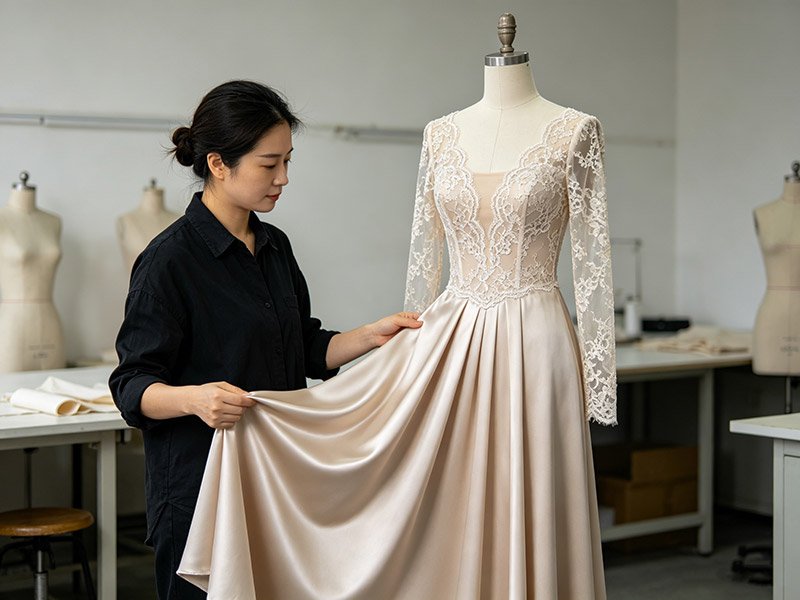
- Satin needs surface protection, clean tables, direction control and careful handling.
- Mesh needs tension control so panels do not stretch before sewing.
- Sequin fabrics need process planning around seam allowance, zipper areas and lining comfort.
- Jersey needs twisting control, recovery review and accurate bundle handling.
- Lace and prints need placement matching where visual alignment matters.
- Fabric-specific cutting review helps sewing teams work cleaner and reduces bulk defects before inline QC begins.

Cutting Control and Bundle Management
Marker and Fabric Usage
Shade and Panel Control
Bundle Numbering and Size Accuracy
Sewing Standards for Women’s Fashion Products

Seam Strength
- Duolan reviews seam type, seam allowance and reinforcement points by product category.
- Fitted dresses, bodycon skirts, jumpsuits and corset structures need stronger tension review.
- Mesh, satin, lace and stretch fabrics need seam methods suited to fabric behavior.
- Stress areas such as side seams, bust seams, waist seams and zipper ends are checked during sample review.
- Bulk QC tracks seam breakage, puckering, twisting and uneven tension.
- A strong seam standard supports both wearing comfort and fewer after-delivery claims.

Stitch Density
- Duolan checks stitch density according to satin, mesh, jersey, woven, lace or sequin base.
- Delicate fabrics need cleaner needle control to reduce holes, pulling and surface marks.
- Stretch styles need stitch selection that allows movement without seam breakage.
- Visible seams need consistent stitch length because uneven stitches lower product value.
- Sample review confirms stitch density before PP approval.
- Bulk QC checks skipped stitches, uneven stitches, thread tension and seam consistency across sizes.
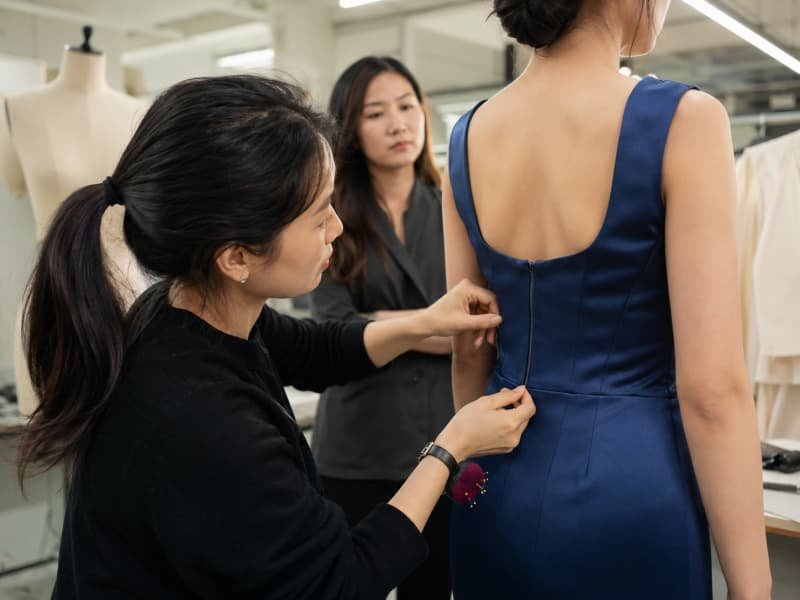
Zipper Setting
- Duolan reviews zipper type, length, placement, seam allowance and fabric compatibility.
- Satin dresses need controlled tension to reduce puckering along the zipper seam.
- Corset, fitted and structured dresses need zipper strength and smooth opening.
- Lining relation is checked so zipper edges stay clean inside and outside.
- Back views are reviewed during fitting because zipper distortion often appears in side or rear angles.
- Bulk QC checks zipper smoothness, alignment, top stop, bottom stop and seam symmetry.

Lining Attachment
- Duolan checks lining length, ease, attachment method and shell-lining compatibility.
- Mesh, satin, lace and occasion styles often need more lining review before approval.
- Fitted styles need lining that moves with the body without dragging the shell fabric.
- Light colors require opacity checks under realistic light.
- Sewing teams follow lining attachment notes from PP sample records.
- QC checks lining twist, hanging length, pulling, edge exposure and comfort around skin-contact areas.

Edge Finishing
- Duolan reviews binding, overlock, clean finish, facing, narrow hem and raw-edge risk.
- Mesh and lace need edge methods that protect appearance without adding bulk.
- Satin and chiffon need smooth hems without pulling or waviness.
- Stretch fabrics need edge finishes that move without cracking or distortion.
- Sample review checks edge comfort against skin-contact zones.
- Bulk QC checks loose threads, uneven hems, rolling edges, exposed seams and finish consistency.

Pressing and Finishing
- Duolan reviews pressing temperature, steam level, pressure and garment structure.
- Satin requires surface protection to avoid shine marks, pressure lines or seam impressions.
- Sequin and embellished fabrics need careful handling to avoid melting, scratching or flattening.
- Structured pieces need pressing that supports shape without damaging internal layers.
- Final finishing checks garment balance, hem line, seam flatness and surface quality.
- Packing method is reviewed after finishing so the garment keeps approved appearance during shipment.
Fit, Measurement and Size Control
Cut-and-sew production must protect fit and measurement consistency from sample to bulk. Duolan checks critical fit areas according to garment category, fabric behavior and target size system.
| Fit Area | Cut-and-Sew Risk | Duolan Control |
|---|---|---|
| Bust and Underbust | Coverage, support and neckline gaping | Pattern review and sample fitting |
| Waist Position | Seam shift and poor body proportion | Waistline and tolerance control |
| Hip and Seat | Tightness, twisting or weak movement | Ease, stretch and lining review |
| Length | Mini safety, midi balance and maxi movement | Length standard and grading check |
| Neckline | Gaping, distortion or weak support | Neckline curve and strap angle review |
| Armhole / Sleeve | Pulling, discomfort or poor movement | Armhole shape and sleeve review |
| Set Pairing | Top and bottom mismatch | Paired measurement and packing check |
| Size Grading | Inconsistent fit across sizes | Grade rule and critical measurement control |
Sample, Fit Revision and PP Standard
Prototype / First Sample
Fit Sample
Revised Sample
Photo / Sales Sample
PP Sample
Size Set Sample When Needed
Cost and Complexity Review for Cut-and-Sew Projects
Cut-and-sew cost is shaped by fabric, cutting complexity, sewing labor, lining, trims, surface process, QC intensity and packing. Duolan reviews cost drivers before bulk planning so brands can separate simple, moderate and high-risk styles.
| Cost Driver | Typical Influence on Unit Cost | What Changes the Price | Duolan Review |
|---|---|---|---|
| Main Fabric | 35%–55% | Composition, weight, width, shrinkage, print, dyeing and wastage | Review fabric usage, behavior and replacement options |
| Cutting Complexity | 3%–10% | Pattern pieces, direction, print matching, lace placement and long length | Review marker, panel control and cutting risk |
| Sewing Labor | 18%–35% | Seam type, lining, zipper, structure, finishing and stitch density | Classify simple, moderate and high-complexity styles |
| Lining and Support | 5%–15% | Lining coverage, cups, boning, interlining and elastic support | Match support to garment structure |
| Trims and Accessories | 5%–15% | Zippers, buttons, lace, hardware, elastic, labels and thread | Review placement, durability and supply stability |
| Surface Process | 8%–30% | Sequins, embroidery, print, wash, dip dye and rhinestones | Review process density, comfort and defect risk |
| QC Intensity | 3%–8% | Critical measurements, delicate fabrics, decoration and packing check | Define style-specific QC before bulk |
| Packing and Brand Details | 3%–10% | Polybag, hanger, tissue, barcode, carton ratio and hangtag | Match packing to channel needs |
Complex Cut-and-Sew Construction Control
Complex women’s fashion products need more than a clean stitch. Fabric response, support, stretch, surface and packing must be considered before bulk production.

Satin Surface
- Duolan reviews cutting direction, seam tension, lining relation and pressing method.
- Sample review checks surface behavior under light and body movement.
- Packing protection is planned before shipment to reduce pressure marks.

Mesh Coverage
- Duolan reviews opacity, lining tone, panel placement, binding and seam visibility.
- Coverage zones are checked before approval.
- Bulk sewing must repeat the approved coverage effect.

Corset Support
- Duolan reviews cup position, boning channel, support layer, closure and back tension.
- Support points are checked before bulk approval.
- Size grading receives extra review because structure can shift across sizes.

Sequin Sewing
- Duolan checks sequin direction, density, base fabric, seam allowance and zipper area.
- Lining is reviewed to reduce skin irritation and friction.
- Packing method is planned to reduce abrasion and surface damage.

Bodycon Recovery
- Duolan reviews stretch rate, recovery, opacity, stitch type and body proportion.
- Fit comments are translated into pattern, construction and measurement changes.
- Repeatable styles need fabric records and critical measurement control.

Halter / Backless Stability
- Duolan checks strap angle, neck tension, bust coverage, reinforcement and closure method.
- Fabric weight and force distribution are reviewed before bulk approval.
- The finished garment should look clean, stay stable and remain comfortable.
From Cut-and-Sew Sample to Bulk Production
Approved Sample Is Not Enough
Production File Transfer
Bulk Repetition Control
Production Routing and Support Data
Factory and Production Structure
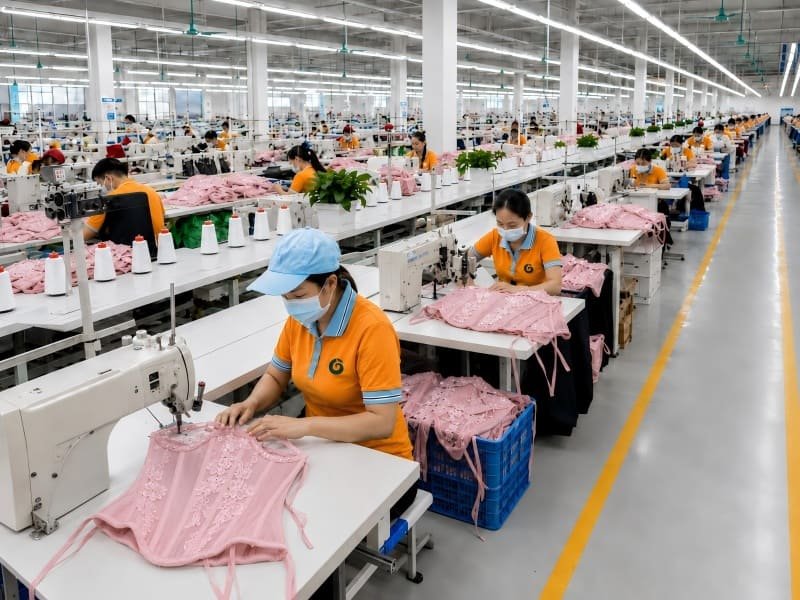
- 16 owned womenswear factories support core styles, high-risk products and sample-to-bulk transfer.
- 20+ long-term satellite factories support selected repeat orders, seasonal volume and complexity-matched production.
- 300 sewing lines support multi-style women’s fashion production.
- 50+ quick-response / flexible lines support launch-sensitive styles and controlled updates.
- Manufacturing bases across Guangxi, Guizhou, Sichuan and Jiangxi add production buffer for different schedules.

Development and Workflow Scale
- 750–1,200 development team members support product planning, fabric, trims, pattern, sample and process work.
- 15,000–35,000 monthly sample capacity supports sample batches, revisions and PP sample preparation.
- 3,000–8,000 monthly style workflows support collection-level tracking and multi-style development.
- Stable monthly production capacity is approximately 6,500,000 pieces.
- Peak monthly capacity can reach approximately 10,000,000 pieces, depending on product mix and planning.

How Capacity Supports Cut-and-Sew Programs
- Owned factories support core and high-risk women’s fashion styles.
- Satellite factories support selected repeat and volume styles under centralized standards.
- Flexible lines help manage launch orders, revised styles and reorder programs.
- Central coordination keeps PP samples, size specs, QC standards and packing files aligned.
QC for Custom Cut-and-Sew Production
Cut-and-sew QC must protect fabric handling, cutting accuracy, sewing quality, measurements, surface value, labels, packing and final shipment readiness.
| QC Stage | What We Check | Risk Controlled | Suggested Visible KPI |
|---|---|---|---|
| Fabric Inspection | Color, shrinkage, stretch, defects and handfeel | Material mismatch | Fabric issue record by batch |
| Cutting Check | Direction, shade, placement, numbering and size bundle | Panel and cutting errors | Cutting accuracy check |
| Sewing Inline QC | Seam, stitch density, zipper, lining and support points | Process deviation | Inline defect tracking by style |
| Measurement Check | Bust, waist, hip, length, armhole, sleeve and tolerance | Fit inconsistency | Critical measurement pass rate |
| Surface Check | Satin marks, mesh distortion, sequin damage and pressing marks | Visual quality loss | Surface QC pass rate |
| Label Check | Main label, care label, size label, content and placement | Brand execution errors | Label accuracy pass rate |
| Packing Check | Polybag, hanger, tissue, barcode and carton ratio | Receiving and damage risk | Packing accuracy pass rate |
| Final Inspection | Appearance, measurement, workmanship, label, packing and carton information | Shipment risk | Final inspection pass rate |
Brand-ready Details After Sewing

Main Label
- Duolan checks artwork, label size, fold type, material, sewing method and placement.
- Placement is reviewed against neckline, lining, zipper, back opening and stretch zones.
- Label accuracy is checked during QC against style, color and size.

Care Label
- Duolan reviews care content against actual fabric and trim details.
- Placement should be readable, durable and comfortable.
- Satin, mesh, sequin and lined garments often need more careful care information.
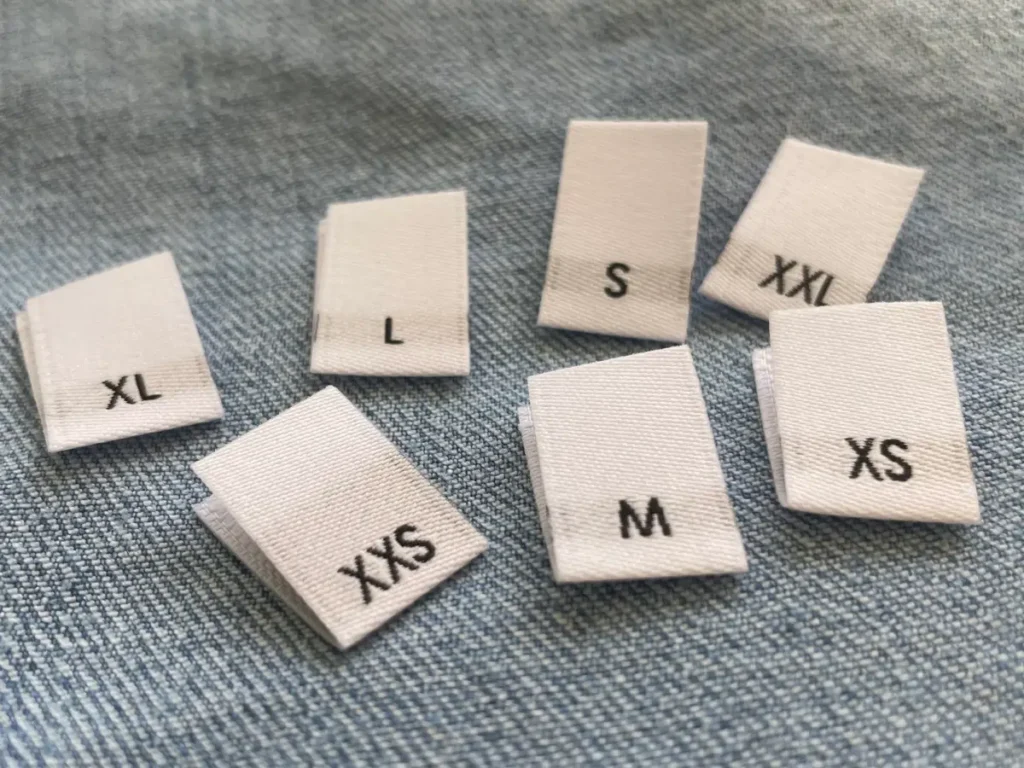
Size Label
- Duolan checks size labels against approved grading and packing data.
- Placement consistency helps retail and warehouse teams identify products efficiently.
- Size label accuracy is part of final inspection.

Hangtag / Barcode
- Duolan confirms artwork, string, pin, barcode placement, style code and attachment point.
- Attachment methods are reviewed to avoid mesh pulls, satin marks, lace damage or sequin abrasion.
- Hangtag and barcode checks connect with packing lists and carton information.

Polybag / Hanger / Tissue
- Duolan reviews flat packing, hanger packing, tissue, protective layers and size sticker placement.
- Satin, sequin, lace, mesh and structured garments may need extra protection.
- Packing method should match receiving requirements.
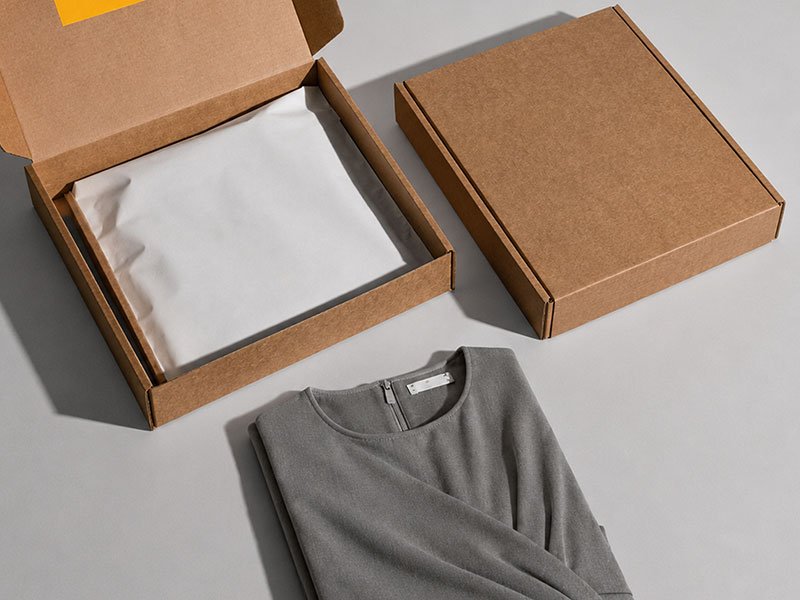
Carton Mark / Packing List
- Duolan checks carton mark, style code, color, size breakdown, carton ratio and shipping instruction.
- Carton data is matched against packing list, barcode stickers and hangtag files.
- Reorder programs benefit from stable carton records.
Compliance, Testing and Supplier Evaluation
SMETA Record
- Audit record helps teams assess supplier background before formal cooperation.
- Social responsibility awareness supports compliance and vendor approval discussions.
- Accurate supplier information gives cut-and-sew projects a stronger evaluation foundation.
Social Audit Awareness
- Duolan supports supplier evaluation with factory background, production capacity and audit information.
- Social audit awareness helps reduce early sourcing uncertainty.
- Supplier review becomes more evidence-based.
Label Requirement Support
- Duolan checks label content, placement, attachment and comfort where required.
- Care information is reviewed against fabric, lining and trim details.
- Label requirements are best discussed before bulk preparation.
Fabric and Trim Testing Coordination
- Duolan can coordinate with requirements related to BSCI, ISO 9001, AATCC, ASTM, OEKO-TEX?, EN, China GB standards, GOTS and brand-specific standards where applicable.
- Testing needs should be shared early so fabric, trim and label content can be aligned.
- Cut-and-sew production becomes more reliable when testing requirements are considered before final material approval.
Third-party Inspection
- Duolan supports inspection preparation with sample records, measurement information, label files and packing instructions.
- Inline checking helps reduce final-stage surprises.
- Inspection should verify garment quality and brand execution details.
Supplier Capability Pack
- Supplier materials help brand teams evaluate development and manufacturing capability together.
- Duolan’s strongest fit is dress-led custom cut-and-sew production.
- Clear supplier information reduces time between initial inquiry and technical discussion.
Custom Cut-and-Sew Project Evidence

US Dress-led Cut-and-Sew Program
- Scope: 24 styles, including fitted dresses, satin dresses, mesh styles and refined tops.
- Bulk volume: 58,000 pcs across selected approved styles.
- Sample cycle: 3 sample rounds before PP sample direction.
- Delivery window: 68 days after PP approval and material confirmation.

Australian Partywear Cut-and-Sew Project
- Scope: 18 styles, including party dresses, mesh styles, sequin pieces and fitted silhouettes.
- Bulk volume: 42,000 pcs across final approved styles.
- Sample cycle: 4 sample rounds for high-risk structures and embellished styles.
- Delivery window: 76 days after PP approval, including packing protection review.

UK Satin and Mesh Cut-and-Sew Capsule
- Scope: 12 styles, including satin dresses, mesh tops, skirts and related capsule pieces.
- Bulk volume: 26,000 pcs after final style selection.
- Sample cycle: 2 main sample rounds before PP planning.
- Delivery window: 52 days after final material approval.

Regional Women’s Fashion Cut-and-Sew Extension
- Scope: 28 styles, including dresses, skirts, refined tops and fashion sets.
- Bulk volume: 74,000 pcs across approved categories.
- Sample cycle: 3 sample rounds across different product groups.
- Delivery window: 82 days after PP and material confirmation.
Custom Cut-and-Sew Project Checklist
Before Sampling
- Design sketch or reference images.
- Original sample, prototype or previous bestseller.
- Pattern file or existing paper pattern.
- Tech pack or partial technical notes.
- Measurement spec and target size range.
- Fabric swatch, composition or handfeel reference.
- Trim requirement, zipper, lining, elastic, lace, hardware or thread direction.
- Expected sample deadline and review timeline.
Before Bulk
- Approved sample and PP sample direction.
- Final pattern, final fabric and trim records.
- BOM, size spec, tolerance and construction notes.
- Main label, care label, size label and hangtag files.
- Barcode, polybag, hanger, tissue and carton mark requirements.
- QC checklist, inspection plan and delivery window.
Custom Cut-and-Sew Manufacturer FAQ

Send Your Custom Cut-and-Sew Project
Send your cut-and-sew project to Duolan if your brand has a design sketch, tech pack, pattern, original sample, fabric idea or approved development sample ready for review. Strong inquiries help our team understand product category, construction requirement, fabric behavior, target size range, expected quantity, sample deadline and bulk delivery needs.
A complete tech pack is helpful, but not required for the first conversation. You can share reference images, original samples, pattern files, fabric swatches, measurement specs, BOM files, label artwork, packing rules, projected quantities and delivery window. For satin dresses, mesh garments, corset structures, fitted pieces, fashion sets and refined women’s tops, clear construction information helps Duolan identify sample priorities, cost drivers and production risks earlier.
Duolan will review whether the project needs pattern review, sample development, fit correction, PP sample planning, bulk cut-and-sew production, QC preparation or brand-ready delivery support.