 Skip to content
Denim Fabric Types for Fashion Dresses: Which One Works Best?
Your trusted Women’s Apparel Development & Manufacturing Partner from China
- Jerry
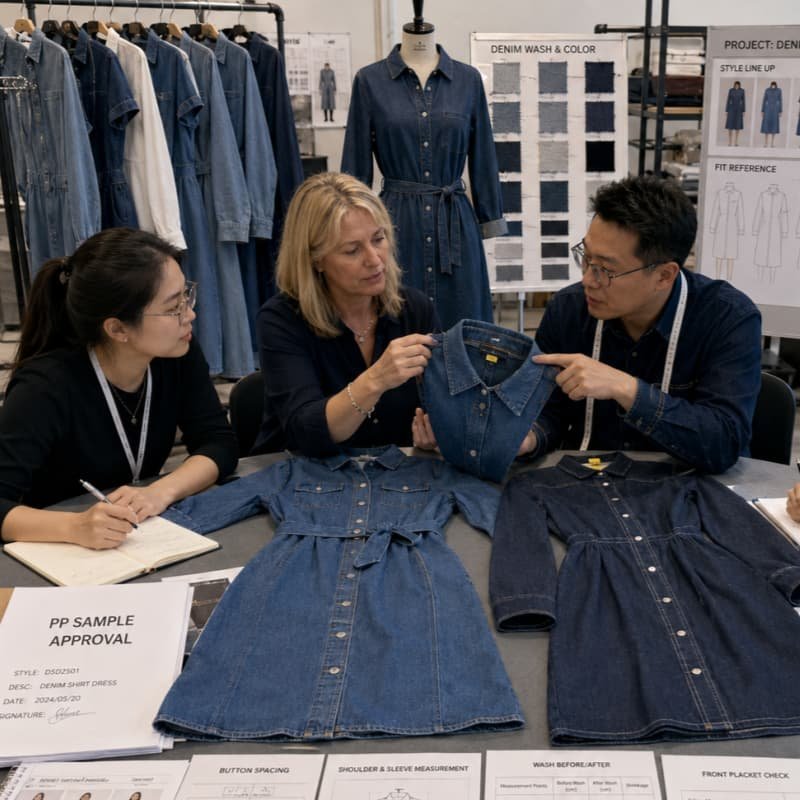
Denim can make a dress look sharp, relaxed, sculpted, vintage, youthful or unexpectedly refined. Yet many denim dress projects begin with an oversimplified instruction: “Use a soft denim” or “Find a medium-weight stretch denim.” Those descriptions sound practical, but they leave too many variables open. Two fabrics with the same fiber label and nominal weight can behave very differently after washing, sewing and wearing. One may create a clean corset shape; the other may collapse around the waist, twist at the skirt or grow at the hips.
The best denim for a fashion dress is the fabric whose weight, fiber composition, stretch recovery, drape, opacity and wash response support the intended silhouette. Lightweight lyocell or cotton-blend denim suits fluid dresses, medium-weight cotton denim works for versatile structured styles, and controlled-stretch denim is usually better for fitted designs. Final selection should follow testing and a washed garment sample.
Professional denim selection therefore begins with the dress, not the fabric name. The neckline, waist construction, skirt volume, closure, lining and intended wash all change what “the right denim” means. A fabric can look perfect on a hanger and still fail after the first wash trial. More than one promising collection has been saved – or quietly ruined – by what happened between the first swatch and the approved pre-production dress. The sections below show how experienced product teams connect denim type, weight, blend, silhouette, wash and testing before they commit to bulk production.

What Are the Main Denim Fabric Types for Dresses?
Denim for dresses is usually divided into rigid cotton, stretch denim, lyocell-rich denim, blended denim, recycled denim and decorative fashion denim. The right type depends on the dress silhouette, required movement, wash effect, opacity and production method. Fabric composition alone is not enough; weight, weave density, recovery and finishing must also be evaluated.
A common sourcing mistake is treating denim type as a single label. “Stretch denim,” for example, tells a developer very little unless the specification also identifies fabric weight, measured elongation, recovery, weave density, finishing condition and wash route. Likewise, “100% cotton denim” may describe anything from a soft shirt-weight cloth to a dense fabric that behaves more like workwear.
Traditional denim is usually a warp-faced twill, but fashion denim may use right-hand, left-hand or broken twill, slub yarns, colored constructions, coatings, prints and different stretch-yarn systems. For dress development, the useful question is not simply what the fabric is called. It is how the material will fall, stand, stretch, recover and change after the planned wash.
Before approving a category, product teams should ask whether the fabric supports the intended silhouette, whether it remains comfortable in motion, whether the surface can be repeated in bulk and whether the chosen construction can handle the fabric thickness. These decisions are interconnected. A beautifully soft fabric may not support a corseted bodice, while a firm fabric may hold an A-line shape but create excessive bulk at a gathered waist.
Rigid Cotton Denim
Rigid denim normally contains little or no elastane and is often made from 100% cotton. It gives dresses a clean, authentic denim character and holds shape better than softer or highly elastic alternatives. It works particularly well for A-line dresses, button-front minis, utility styles, panelled dresses and designs with visible topstitching.
Its main strength is structural control. A firm denim can support a shaped waist, maintain a straight placket and keep an A-line skirt from collapsing around the legs. The same firmness can expose an inaccurate pattern, however. A rigid fitted dress needs enough ease at the bust, waist and hips because the fabric will not stretch to compensate for measurement errors.
Shrinkage must be checked before the final pattern is approved. Even when a supplier describes the material as pre-shrunk, the finished dress may still change after garment washing or repeated home laundering. For a close-fitting silhouette, a modest change at the waist or bust can alter the entire fit. Rigid denim should therefore be approved in the same washed condition that the customer will receive.
Stretch Denim
Stretch denim usually combines cotton with elastane or another elastic yarn system. It is widely used for bodycon dresses, fitted minis, zip-front dresses and narrow silhouettes that must follow the body without restricting movement.
The important point is that stretch percentage and elastane percentage are not the same thing. Two fabrics containing 2% elastane can perform very differently because yarn structure, weave density and finishing also affect extension. The product team should record measured stretch in the working direction rather than assume performance from the composition label.
Recovery matters just as much as initial stretch. A fabric may extend comfortably during fitting but fail to return to its original dimensions after several hours of wear. This creates bagging at the waist, hips or seat. More stretch is not automatically better; excessive elasticity can weaken a sculpted silhouette, make zipper areas ripple and allow panel seams to lose definition.
- Measure stretch in the direction that carries the fit.
- Check recovery after extension and after a short wear trial.
- Repeat stretch and recovery checks after the approved wash.
- Inspect seam stability and zipper behavior under body tension.
Lyocell and Soft Denim
Lyocell-rich denim is softer and more fluid than traditional cotton denim. It is often selected for shirt dresses, relaxed midi dresses, soft maxi dresses, gathered styles and warm-weather collections. It can deliver a clear denim appearance without the stiffness associated with classic jeans fabric.
The commercial benefit is movement. Skirt panels fall closer to the body, gathers distribute more naturally and unlined summer garments can feel cooler and smoother against the skin. The trade-off is reduced support. A soft denim may not hold a sharp collar, strapless neckline or corset-inspired bodice without interfacing, lining, stay tape or another localized reinforcement.
Long dresses should be checked after hanging because fluid denim can relax under its own weight. Metal buttons, large patch pockets and dense topstitching can also pull on a soft fabric. The hem should not be finalized until the sample has settled and the development team has confirmed that the skirt length, pocket shape and placket remain stable.
Blended and Fashion Denim
Blended denim may combine cotton with polyester, lyocell, viscose, elastane or recycled fibers. These blends are used to adjust durability, stability, softness, stretch, price or care performance. A polyester component may improve dimensional control, while a lyocell component can increase drape and a small amount of elastane can improve mobility.
Fashion denim includes coated, printed, metallic, colored, jacquard, slub, flocked and heavily textured surfaces. These materials can move denim beyond basic casualwear and into party, occasion or statement collections. They also add production variables: coatings can crack, prints may shift across panel seams, metallic finishes can lose gloss and textured surfaces can show stronger shade variation.
Approval should be based on a constructed and washed trial, not a flat swatch alone. The test garment should include the actual seam, zipper, hem, pressing conditions and intended care route. For repeat orders, brands should retain an approved physical reference for color, gloss, texture and handfeel because digital photographs rarely show these details accurately.
Denim type | Common composition | Typical behavior | Suitable dress styles | Main risk |
Rigid denim | Usually 100% cotton | Firm and shape-holding | A-line, utility, panelled mini | Shrinkage and limited movement |
Stretch denim | Cotton with about 1-4% elastane | Flexible and body-following | Bodycon, fitted mini, pencil dress | Bagging and poor recovery |
Lyocell denim | Cotton-lyocell or lyocell-rich blend | Soft and fluid | Shirt, maxi, relaxed midi | Shape loss and seam instability |
Polyester blend | Cotton-polyester, sometimes with elastane | Stable and durable | Commercial casual dresses | Less natural handfeel |
Recycled denim | Recycled cotton blended with other fibers | Variable and textured | Casual and heritage-inspired styles | Lot consistency and strength |
Fashion-finish denim | Coated, printed, metallic or textured | Decorative and directional | Party and statement dresses | Finish durability |

Which Denim Weight Works for Each Dress Style?
Lightweight denim is usually best for soft summer dresses, medium-weight denim suits most casual and A-line styles, and firmer denim works for structured or corset-inspired dresses. Fabric weight should never be assessed alone, because finishing, density, fiber blend and wash treatment can make two fabrics with the same GSM behave very differently.
Denim weight is commonly expressed in grams per square meter, abbreviated as GSM, or ounces per square yard. A practical conversion is 1 oz/yd² = approximately 33.9 GSM. That means a 6 oz denim is around 203 GSM, while a 10 oz denim is around 339 GSM. The conversion helps international teams compare supplier data, but it does not reveal softness, thickness, density or drape.
A dense 230 GSM denim may feel firmer than a loosely woven 260 GSM fabric. A washed 300 GSM denim may feel softer than an untreated 250 GSM fabric. The full dress also uses far more material than the hand swatch, so total garment weight must be considered. A weight that works in a fitted mini can become tiring in a long-sleeve maxi with a wide skirt.
The safest process is to shortlist a weight range, compare physical swatches and build the critical construction in the intended fabric. Check the thickest seam intersection, the final wash, the wearer’s movement and the total weight of the finished sample. Weight is a useful specification, but silhouette and comfort decide whether that number is commercially suitable.
Understanding GSM and Ounces
GSM measures grams per square meter, while oz/yd² measures ounces per square yard. Both describe mass per unit area. Teams should state the unit clearly in tech packs, fabric approval sheets and quotations because “8-ounce denim” and “8 GSM” are obviously not comparable, yet incomplete specifications still create avoidable confusion.
- GSM ÷ 33.9 = approximate oz/yd².
- oz/yd² × 33.9 = approximate GSM.
- 5 oz ≈ 170 GSM; 7 oz ≈ 237 GSM; 9 oz ≈ 305 GSM; 11 oz ≈ 373 GSM.
- Record whether the weight applies before or after washing and finishing.
The weight should be measured on the actual submitted fabric rather than copied from a sales description. Finishing, washing and moisture condition can influence the recorded result. An approved sample developed on a 230 GSM fabric can feel noticeably different if the bulk lot arrives denser, stiffer or heavier, even when the shade is close.
Lightweight Denim
Lightweight denim generally falls within a working range of about 135-220 GSM, although mills and brands may define the category differently. It is commonly used for summer shirt dresses, sundresses, loose minis, tiered dresses, relaxed midis and lightweight vacation styles.
Its advantage is movement. It can be gathered, pleated or shaped with less seam bulk than classic jeans denim, and it is easier to use in sleeves, collars and softer skirt panels. The main risks are opacity, seam strength and distortion. Pale washes may become semi-transparent under strong light, while heavy buttons or metal zippers can pull on a delicate construction.
A lightweight denim dress should be assessed in daylight and during movement. Check whether the cloth clings, whether undergarments remain visible, whether pocket openings distort and whether the hem has enough weight to hang correctly. The goal is not to choose the lightest possible fabric. It is to achieve softness and airflow without making the dress look weak or unstable.
Medium-Weight Denim
Medium-weight denim, often around 220-320 GSM, is the most versatile choice for fashion dresses. It can support visible topstitching, patch pockets, waist seams, collars and structured skirts without feeling as heavy as traditional workwear denim.
This range suits A-line dresses, utility dresses, button-front dresses, casual fitted dresses, belted midis, fit-and-flare styles and pinafores. The exact fabric still matters. A softer 230 GSM denim may work well for a relaxed shirt dress, while a denser 300 GSM cloth may be better for a shaped mini with panel seams.
Medium-weight denim requires careful seam planning. Waist seams can become bulky when lining, pockets, belt loops and a zipper meet in the same area. The sample should be evaluated at the thickest junction, not only on flat fabric. A balanced medium denim should feel substantial in the hand without reminding the wearer of its weight throughout the day.
Firm and Heavy Denim
Firm denim above roughly 320 GSM can support sculpted, architectural or workwear-inspired dresses. It is useful for corset-style bodices, geometric panelled minis and designs that rely on strong shape retention. However, the heavier the denim becomes, the more the design must manage movement, seam thickness and total garment weight.
- Restricted sitting and walking in close silhouettes.
- Thick waist, zipper, pocket and hem intersections.
- Higher needle, thread and pressing demands.
- Greater risk of stiffness in sleeves, gathers and ruffles.
- Higher total weight in midi and maxi lengths.
Heavy denim should be selected because the design needs its structure, not because a higher GSM is assumed to mean better quality. A short utility mini may accommodate a firm cloth better than a full maxi because it uses less material. In many fashion dresses, excessive weight reduces comfort without improving the final appearance.
Approximate weight | Approximate oz/yd² | Typical dress use | Key checks |
135-180 GSM | 4-5.3 oz | Soft summer and shirt dresses | Opacity, seam strength, wrinkling |
180-230 GSM | 5.3-6.8 oz | Relaxed mini and midi styles | Drape, pocket support, shrinkage |
230-280 GSM | 6.8-8.3 oz | A-line, utility and everyday dresses | Seam bulk, wash softness, comfort |
280-340 GSM | 8.3-10 oz | Structured mini and fitted styles | Mobility, zipper behavior, pressing |
340-410 GSM | 10-12 oz | Corset-inspired and sculpted dresses | Weight, layer thickness, restricted movement |
Above 410 GSM | Above 12 oz | Specialty statement designs | Wearability and production difficulty |
How Do Fiber Blends Affect Fit and Drape?
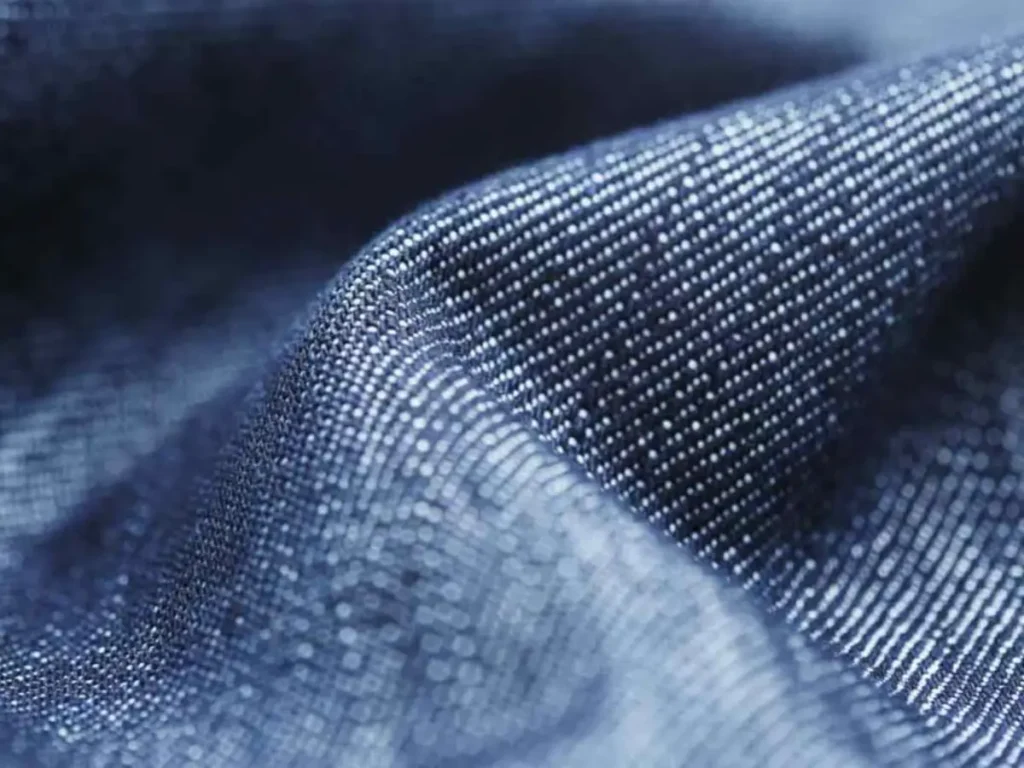
Fiber blends influence how a denim dress stretches, recovers, wrinkles, shrinks, fades and moves around the body. Cotton provides structure and traditional denim character, elastane adds mobility, polyester improves stability, and lyocell creates a softer fall. The best blend is the one that supports the intended silhouette after washing and repeated wear.
Fiber content is often the first technical line a buyer reads, but it should not be the last. A label stating 98% cotton and 2% elastane does not tell the developer the actual stretch percentage, recovery, growth after wear or performance after laundering. Yarn construction, weave density, finishing and wash treatment all influence the result.
A practical comparison should cover initial handfeel, drape, measured elongation, recovery, post-wash dimensions, seam appearance, opacity, surface character and repeat-order availability. This prevents a team from solving one issue while creating another. More elastane may improve movement but weaken a crisp waist; polyester may improve stability but limit vintage fading; lyocell may improve drape but require reinforcement at pockets and closures.
Commercial consistency matters as much as the first sample. The mill should be able to maintain the same yarn system, finish and shade through launch and repeat orders. If a blend changes after the pattern has been approved, a new fit and wash review may be necessary because seemingly small changes in stretch, weight or density can alter waist tension, skirt fall and zipper behavior.
Cotton and Structure
Cotton gives denim its familiar dry hand, twill character and ability to develop fading through washing and wear. In dresses, cotton can produce anything from a light shirt fabric to a firm structural cloth. It is often suitable for A-line dresses, utility dresses and designs where the denim surface should remain visually authentic.
Cotton can also shrink and twist when the construction has not been properly stabilized. The final pattern should be based on measured dimensional change, not a standard assumption. A fabric may become softer after washing while also becoming shorter, narrower or more skewed. Those changes affect waist placement, hem balance and side-seam alignment.
A 100% cotton label does not automatically mean the fabric is more premium or more suitable. A controlled cotton-elastane blend may perform better for a fitted dress, while cotton-lyocell may create a better maxi silhouette. Cotton is most valuable when the collection genuinely needs authentic fading, natural handfeel or shape-holding structure.
Elastane and Recovery
Elastane allows denim to extend with the body, which improves comfort in fitted dresses and reduces the movement ease required in a rigid pattern. It is particularly useful around the bust, waist, hip and seat, where the dress must accommodate sitting and walking without losing a close silhouette.
The critical issue is recovery. A fabric can stretch impressively during the first fitting and still perform poorly if it does not return close to its original dimension. Weak recovery produces bagging, a loose waist, rippled hip areas and a dress that looks different after several hours of wear.
Pattern reduction must be controlled. Excessive negative ease can overstress seams, zippers and elastic yarns. The outer fabric, lining and thread should also have compatible movement. A rigid lining inside a stretch shell can restrict the wearer and create uneven pulling. The best stretch denim supports the intended contour without forcing the wearer into the garment.
- Record actual elongation rather than only elastane percentage.
- Measure recovery after a defined extension and rest period.
- Run a garment wear trial that includes sitting and walking.
- Repeat the evaluation after the approved wash.
Polyester and Stability
Polyester is often added to improve dimensional stability, strength, wrinkle resistance and drying performance. These properties can support consistent sizing and easier care in commercial dress programs, especially when the product is expected to be washed frequently or worn during travel and long workdays.
The trade-off is aesthetic and tactile. Polyester can change the handfeel, reduce the natural irregularity associated with cotton and influence how the garment responds to washing. A brand seeking a heavily faded, vintage surface may prefer a different blend from one seeking clean, stable dark denim.
Production teams should establish suitable pressing and fusing temperatures because excessive heat can create shine or distortion, particularly on dark cloth or blends that also contain elastane. The decision should return to the target customer: improved stability is useful only when it does not undermine the visual and tactile promise of the dress.
Lyocell and Fluidity
Lyocell can make denim softer, smoother and more fluid. In dresses, it helps skirt panels fall closer to the body, allows gathers to distribute more naturally and reduces the board-like feel sometimes associated with cotton denim. It is especially useful for relaxed shirt dresses, soft maxis, draped midis, tie-front styles and lightweight vacation silhouettes.
The developer must still control structure. A soft lyocell-rich denim may not hold a defined waistband, puff sleeve or unsupported neckline without interfacing, lining or stay tape. Heavy metal buttons and large pockets can distort a soft body fabric, so trims should be selected with the cloth rather than added after approval.
Fluid materials can shift during spreading and long panels can relax while hanging. Pattern pieces should follow a consistent grain direction, and the full sample should hang before hemming. Lyocell improves drape when softness is part of the design objective; it becomes a problem only when the team expects the fabric to behave like rigid denim after choosing it for its fluidity.

Which Denim Suits Each Dress Silhouette?
The right denim should match the silhouette’s structural and movement needs. Bodycon dresses need stretch and recovery, shirt dresses need softness with enough stability for collars, A-line dresses need controlled body, corset dresses require support, and maxi or ruffled dresses need lighter fabrics that do not create excessive weight or bulk.
A silhouette is the visible result of several technical decisions. Fabric is one of the most influential, but it cannot compensate for an unsuitable pattern or construction. The same cloth that creates a clean A-line mini may produce a stiff and uncomfortable maxi. A fabric that makes a soft shirt dress may fail to support a strapless neckline.
Experienced teams divide the design into functional zones. Which areas must stretch? Which must remain stable? Where is opacity essential? Which seams contain several layers? Does the skirt need volume or fluidity? Will the dress carry metal trims, boning or large pockets? The answer may lead to localized support rather than a heavier main fabric.
The pattern should be developed in the nominated fabric or a technically equivalent cloth. Replacing the material after fit approval can shift bust balance, waist placement, zipper behavior and hem fall. A commercially suitable fabric must satisfy three tests: the dress looks right, the wearer can move comfortably and the factory can repeat the result reliably.
Fitted and Bodycon Dresses
Fitted denim dresses need controlled extension, strong recovery and sufficient opacity. The fabric must stretch through the bust, waist and hips while returning close to its original shape after sitting and walking. A soft or highly elastic fabric may feel comfortable yet create rippling around zippers, waist seams or side panels.
The material should be tested in the finished garment rather than only as a strip. A realistic wear trial includes sitting for 20-30 minutes, walking, climbing stairs and checking the waist, hip and seat afterward. Opacity should be reviewed under strong light, particularly when the denim has a pale wash or is stretched over the body.
Seam choice and lining compatibility are critical. Overly rigid topstitching can restrict extension and cause thread breakage, while a non-stretch lining can fight the shell fabric. The goal is controlled contour, not maximum compression. The dress should retain a smooth line without depending on extreme tension to stay on the body.
Shirt and Utility Dresses
Shirt dresses require a fabric that forms collars, cuffs and plackets but still moves comfortably through the torso and skirt. Lightweight to medium-light denim usually gives the best balance. If the cloth is too soft, the collar and front opening collapse; if it is too firm, sleeves become restrictive and the dress starts to feel like a jacket.
Selective interfacing is often more effective than choosing a heavier fabric for the entire garment. Utility dresses can use slightly firmer denim because patch pockets, belts and topstitching benefit from extra body. Even then, the design should avoid concentrating too many layers at the waist or under the belt.
Metal buttons, snaps and large pockets should be included in the development sample. Lightweight denim may need reinforcement behind closures, while heavy denim may require reduced seam allowances and careful grading. A long shirt dress also needs a total-weight check; a fabric that works in a cropped sample can become tiring when used across a full-length, long-sleeve style.
A-Line and Corset Dresses
A-line dresses usually work well in medium-weight rigid or low-stretch denim. The fabric should hold a clear outward line from the waist or upper hip without becoming stiff enough to restrict movement. Grain control is important because skew or inconsistent panel cutting can create a rotating side seam and uneven hem after washing.
Corset-inspired dresses need more support. A stable denim outer layer may be combined with lining, boning, cups, stay tape or an internal waist structure. The outer cloth alone should not be expected to perform every support function. Too little stretch can make the garment difficult to wear, while too much can cause the bodice to relax and lose its sculpted appearance.
Panel seams should be tested for thickness and pressing. Dense denim combined with lining and boning channels can create visible ridges. The neckline should be assessed while the wearer bends, sits and moves, not only in a static front photograph. Strong structure comes from the complete internal system, not simply from selecting the heaviest fabric.
Maxi and Ruffled Dresses
Maxi dresses use a large fabric area, so weight becomes a major consideration. Soft cotton, cotton-lyocell and lightweight blends are usually more suitable than classic jeans-weight cloth. A fabric that looks attractive in a mini can create an awkward cone shape or an uncomfortable total weight when extended to ankle length.
Long panels should be allowed to hang before hemming because some fluid denims relax after construction. If the design combines a fitted bodice with a soft skirt, the brand may need localized support above the waist rather than a heavier outer fabric across the whole dress.
Ruffles and tiers need low bulk. A gathering ratio suitable for chiffon can be too full for denim. Reducing the ratio or using circular flounces can create movement without thick seam ridges. The intended wash must also be tested because abrasion can create strong fading along folds. That effect may support a vintage story and look inconsistent in a clean commercial collection.
Dress silhouette | Practical denim direction | Common working range | Main development focus |
Bodycon dress | Stretch denim with strong recovery | 220-320 GSM | Growth, opacity, zipper waves |
Shirt dress | Soft cotton or lyocell blend | 160-250 GSM | Collar stability, drape, placket shape |
Utility dress | Medium rigid or low-stretch denim | 240-330 GSM | Pocket support, seam bulk, comfort |
A-line dress | Medium rigid denim | 250-340 GSM | Skirt shape, hem balance, shrinkage |
Corset dress | Stable medium-to-firm denim | 280-380 GSM | Internal support, neckline fit, seam thickness |
Maxi dress | Lightweight soft denim | 150-240 GSM | Garment weight, hanging growth, movement |
Ruffled dress | Lightweight fluid denim | 140-220 GSM | Gathered seam bulk and edge finish |

How Do Washes and Finishes Change Denim Dresses?
Washing changes the color, softness, dimensions, surface texture and sometimes the fit of a denim dress. Rinse, enzyme, stone, bleach, acid and vintage washes can make the same base fabric behave like different materials. The wash process should be developed before final pattern approval because it can affect shrinkage, stretch recovery and seam appearance.
Denim washing is not a final cosmetic step. Mechanical action, chemistry, temperature, time, load size and drying conditions all influence the garment the customer receives. A wash can remove sizing, soften the hand, change shade, increase seam contrast, reduce dimensions, create skew, weaken fibers or alter elastic recovery.
This is why approving a dark unwashed sample and requesting a “medium vintage wash” later is risky. The appearance may require enough processing to change fit, strength or handfeel. Wash development should begin with a clear visual and technical target that includes shade, contrast, softness, measurement condition and acceptable variation.
The design itself affects the result. Thick seam areas fade differently from flat panels. Pockets, labels, thread, zippers, elastic, cups and boning must tolerate the process. Laboratory samples and production loads may also differ because machine size and mechanical action change. Bulk repeatability must be considered from the first wash trial.
Shade and Surface Effects
A rinse wash usually keeps the denim relatively dark and clean while removing some loose color and sizing. Enzyme washing softens the surface and creates controlled fading. Stone, bleach and acid treatments produce stronger contrast and a more worn appearance. Vintage washes often combine several steps, including base washing, localized fading, tinting or overdyeing.
The wash name alone is not a reliable specification. One supplier’s “medium vintage wash” may be much lighter or more contrasted than another’s. A physical garment standard should define the overall shade, seam contrast, high and low areas, handfeel, surface abrasion, trim appearance and acceptable range.
The chosen direction should fit the consumer and retail context. A clean dark wash can support a refined office or premium casual dress. A pale vintage wash suits relaxed summer and festival products. High-contrast acid effects may work better in a limited trend capsule. The wash should enhance the design rather than weaken narrow straps, cutouts or other high-stress areas.
Shrinkage and Fit
Garment washing can change both length and width. The amount depends on fiber content, fabric construction, previous stabilization, wash chemistry, drying temperature and mechanical action. A fitted dress should be measured before and after the approved wash, including bust, waist, hip, shoulder, strap length, total length, skirt opening and zipper shape.
Different areas may not shrink equally. A waistband can remain relatively stable because of interfacing, while a skirt changes more freely. A zipper can restrict one side and create asymmetry if the surrounding fabric shrinks significantly. Generic shrinkage allowances are therefore risky; pattern corrections should come from actual test results for the approved material and wash route.
Fit must be checked in the final washed condition. A pre-wash garment may feel tight because of sizing and become comfortable after treatment, or the wash may reduce the waist and length enough to create a new problem. For close-fitting and structured dresses, a washed size set provides stronger evidence than one base-size sample.
Handfeel and Structure
Washing can remove sizing, relax yarns and soften the fabric. This often improves comfort, but it can also reduce the structure required for collars, waist panels or corset shapes. A dress that looks sharp before washing may become too soft afterward; a fabric that feels rigid during sewing may settle into the correct hand after an enzyme treatment.
Handfeel should be assessed after the garment has dried, cooled and rested. Fabric taken directly from a dryer can feel temporarily different, and some softening agents create a touch that changes after the first home wash. The inside face matters as much as the outer surface because rough seams, labels or trims can remain uncomfortable even when the fabric becomes softer.
Approval language should describe the balance rather than demand “maximum softness.” Phrases such as soft but stable, fluid without clinging, or broken-in without collapsing give the wash facility a more useful target. The final hand must support the silhouette as well as the initial customer reaction at retail.
Wash Approval
Wash approval should be based on a complete garment whenever possible. A flat fabric panel cannot fully show how seam ridges, pockets, labels, topstitching, zippers and metal trims will respond. The chosen standard should be sealed, dated and identified by style, fabric lot and wash-recipe version.
- Record the target shade and acceptable shade range.
- Record handfeel, seam contrast and visible abrasion limits.
- Measure the garment after the approved drying and resting condition.
- Check labels, zippers, elastic, cups, boning and decorative finishes.
- Retain duplicate standards for the brand, garment factory and wash facility.
Before full production, a pilot wash or pre-production run should confirm that the effect can be repeated at a larger load size. A wash is not fully approved because one sample looks attractive. It is approved when the result can be described, measured and reproduced within an agreed commercial range.
How Should Brands Test Denim Before Bulk Production?
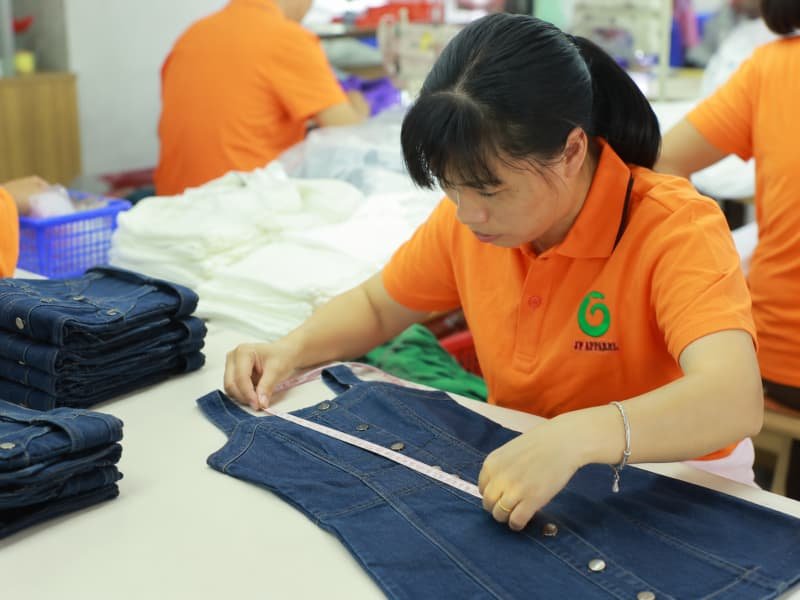
Denim should be tested at both fabric and garment stages. The core checks usually include weight, composition, shrinkage, skew, colorfastness, crocking, stretch recovery, seam strength and wash performance. A washed fit sample and pre-production garment should confirm that the material, construction, shade and measurements remain suitable before bulk cutting begins.
Testing should be risk-based. A lightweight summer dress, a dark raw-denim mini and a stretch corset dress do not have the same failure path. The technical team should identify what would create a return, complaint or production disruption and then select tests that answer those risks.
- Dye transfer to light bags, shoes, upholstery or skin.
- Waist and hip growth after wear.
- Unexpected shrinkage or distorted proportions.
- Twisted skirt panels and rotating side seams.
- Uneven wash shade or panel mismatch.
- Seam puckering, zipper waves or broken topstitching.
- Finish peeling, cracking or losing gloss.
- Bulk handfeel that differs from the approved sample.
Tests should be linked to acceptance limits and actions. A report has limited value when nobody has defined an acceptable result or decided what will happen after a failure. The destination market, care label, intended use and customer specification should be agreed before the program is released.
The final gate is a production-readiness review. The team should confirm the approved material lot, color, measurements, workmanship, wash condition, trims, packaging and critical tolerances before bulk cutting. This connects laboratory data with the actual dress rather than allowing technical approval and garment approval to operate as separate processes.
Fabric Specifications
A useful denim specification should contain more than a fabric name and color. It should identify the approved material clearly enough for the same or a technically equivalent fabric to be sourced again. Key fields include fiber composition, weight and tolerance, usable width, weave, stretch direction, measured stretch, recovery, shrinkage, skew, shade reference, surface finish, wash route, handfeel and care method.
The sheet should distinguish nominal values from tolerances. “230 GSM” is less useful than an approved value with an agreed acceptable range. The same applies to width, shrinkage and stretch. A physical swatch from the approved lot should be retained because digital photographs do not accurately show thickness, gloss, softness or surface irregularity.
When a substitute is proposed, compare technical values rather than accept “same quality.” A small difference in weight, stretch or density may require a new fit sample. If the replacement also changes mill, dye lot or finish, the wash result and shade range may need to be redeveloped before production.
Performance Tests
The relevant tests depend on the design and destination market, but denim programs commonly evaluate dimensional change, skew, laundering fastness, dry and wet rubbing transfer, strength, seam behavior and stretch recovery. Dark indigo needs particular attention to color transfer, while lightweight cloth may require opacity, seam-slippage and tear-strength review.
A fabric can pass a general strength test and still fail at a pocket corner because the design concentrates load in one area. A coating can pass a flat abrasion test and crack along a tightly folded seam. Laboratory results should therefore be followed by a constructed garment trial that reproduces the actual stitching, pressing, washing and wearing conditions.
Avoid copying a generic test package without understanding it. Select tests that answer the product’s real risks, establish limits before production and review failures with design, material and process teams together. The best corrective action may be a different fabric, a revised seam, a lighter trim or a modified wash – not simply a request for the factory to “improve quality.”
Washed Fit Samples
Fit should be checked after the approved production wash because washing can change dimensions, handfeel, recovery and the way the dress settles on the body. The sample should be washed, dried, pressed and rested using the same defined process before fitting.
- Neckline contact and bust balance.
- Waist position and waist tension.
- Hip fit, seat growth and side-seam position.
- Zipper shape and seam puckering.
- Skirt fall, hem level and garment twist.
- Sitting, walking and short wear-trial comfort.
For highly fitted or structured dresses, a size set is valuable because larger sizes distribute tension differently from the base size. The condition of every sample should be recorded. Comparing a pre-wash development sample with a washed bulk garment can lead to incorrect conclusions even when both measurements were taken carefully.
Bulk Consistency
Bulk control begins when the fabric arrives, not at final inspection. Rolls should be checked for shade, width, weight and visible defects. Shade grouping and panel numbering help prevent mismatched pieces within one dress, which is especially important for indigo fabrics and wash-sensitive surfaces.
- Inspect incoming fabric and verify the approved article, weight, width and shade family.
- Group lots and shades before spreading and cutting.
- Approve the pre-production sample in the final washed condition.
- Review the pilot output before the main production quantity advances.
- Run inline measurement and workmanship checks at high-risk operations.
- Monitor wash recipes, load conditions and post-wash shade grouping.
- Condition finished garments before final measurement and comparison.
Final inspection should compare bulk garments with the approved sample for shade, handfeel, measurements, seam appearance and overall silhouette. The purpose is not to pretend that denim has zero natural variation. It is to keep that variation inside an agreed commercial range and prevent avoidable panel mismatch, fit drift and wash inconsistency.
Risk area | Practical check | Why it matters |
Weight | Verify GSM or oz/yd² on received fabric | Confirms drape, consumption and bulk |
Shrinkage | Check fabric and garment dimensional change | Protects fit and size accuracy |
Skew | Review fabric skew and washed-garment twist | Prevents rotating seams and uneven hems |
Crocking | Run dry and wet rubbing checks | Reduces dye transfer to skin and other products |
Wash fastness | Assess repeated laundering response | Controls fading and staining |
Stretch | Measure elongation, recovery and wear growth | Prevents bagging and poor fit |
Seam performance | Check strength, slippage and puckering | Protects durability and appearance |
Finish durability | Assess coating, print or metallic adhesion | Prevents peeling and cracking |
Trim compatibility | Wash-test zippers, buttons, labels and elastic | Avoids component failures |
Turn Fabric Selection into a Production-Ready Denim Dress
Choosing denim for a fashion dress is ultimately an exercise in alignment. The fabric must align with the silhouette, the pattern must align with the fabric’s behavior, the wash must align with the intended fit, and bulk production must align with the approved sample. When one link is treated separately, a dress may still look convincing during development and fail commercially after washing, wearing or scaling.
For a new denim dress program, begin with the target silhouette and wearing occasion. Define the required structure, drape, movement, opacity and wash character. Then shortlist fabrics by measured weight, blend, stretch and recovery. Build the highest-risk construction, complete the intended wash, conduct a fit and wear review, and lock the fabric, pattern and finish before bulk release.
Duolan Apparel is a Guangdong-based custom fashion-dress manufacturer focused on product development, fabric and trim sourcing, pattern engineering, sample development, wash and finishing coordination, and sample-to-bulk production control. The team can review a tech pack, reference images or an original sample and help identify where denim weight, recovery, wash response or construction may affect the final result.
To request a development review or quotation, send the target design, size range, color and wash direction, expected quantities, delivery window and any required test standards. Clear project information allows the team to recommend a more accurate fabric and sampling route before time and budget are committed to bulk production.
Share:
Our Services
Categories
Table of Contents
Here, developing fashion collections is more than manufacturing garments — it’s a collaborative process focused on transforming ideas into well-executed, market-ready products. From fabric sourcing and sample development to scalable production and delivery coordination, every stage is built to support quality, consistency, and efficient collection launches across global markets.

