Skip to content
Custom Draped Dress Manufacturer
Draped dress development built around fabric behavior, controlled pattern engineering, fit accuracy and repeatable bulk production.
- Development support for tech packs, reference images, original samples and collection briefs.
- 8 core drape variables reviewed: fabric weight, fluidity, stretch, recovery, opacity, grain, surface and pressing response.
- 10 critical fit areas checked across bust, neckline, waist, hip, side seam, slit, lining, strap, hem and movement.
- Structured programs for 10–30 styles and total seasonal orders of 20,000–80,000 pieces.
- Sample standards transferred into fabric, measurement, workmanship, QC, labeling and packing controls before bulk release.
Draped Dress Manufacturing for Established Fashion Teams
Global Fashion Brands
Regional Dress Brands
Product Development Teams
Buying Teams
Buying teams usually compare suppliers by sample accuracy, commercial feasibility, documentation, production discipline and delivery reliability. Duolan prepares projects around fabric confirmation, measurement specifications, workmanship points, PP approval and QC checkpoints, giving procurement teams a clearer basis for supplier assessment and order release.
Sourcing Offices
Multi-brand Groups







What Strong Draped Dress Programs Require
Accurate Design Translation
Fabric-Drape Matching
Industrial Pattern Control
Fit and Body Balance
Grading Logic
Mechanical grading can distort a draped design. Larger sizes may require adjusted cowl depth, fold allowance, anchor location or gathering distribution. Critical measurements and visual proportions must be reviewed together so the drape remains intentional across the approved size range.
Workmanship Consistency
Drape anchoring, gathering distribution, lining attachment, seam tension, zipper insertion and pressing determine whether the approved appearance can be repeated. Small variations in tack position or seam handling can create visible differences across a production batch.
Production-ready Approval
Repeat Production Records
Common Draped Dress Development Risks
Fabric Too Rigid
Fabric Too Soft
Uneven Fold Distribution
Distorted Side Seams
Lining Restriction
Size-to-size Distortion
Sample-Bulk Difference
Pressing Damage
Steam, pressure and temperature can flatten folds, mark satin or change the surface of velvet and synthetic blends. Pressing direction, temperature control, protective layers and final shaping must be confirmed before bulk finishing.
How to Evaluate a Draped Dress Manufacturer
Relevant Dress Experience
Material Understanding
Pattern Engineering
Measurement Discipline
Sample Revision System
Bulk Replication Method
Ask how the approved sample becomes a production standard. Strong answers include material locking, PP approval, first-piece verification, construction notes, inline QC and packing checks.
Manufacturing Scalability
Compliance Readiness
Custom Draped Dress Styles We Develop

Draped Mini Dresses
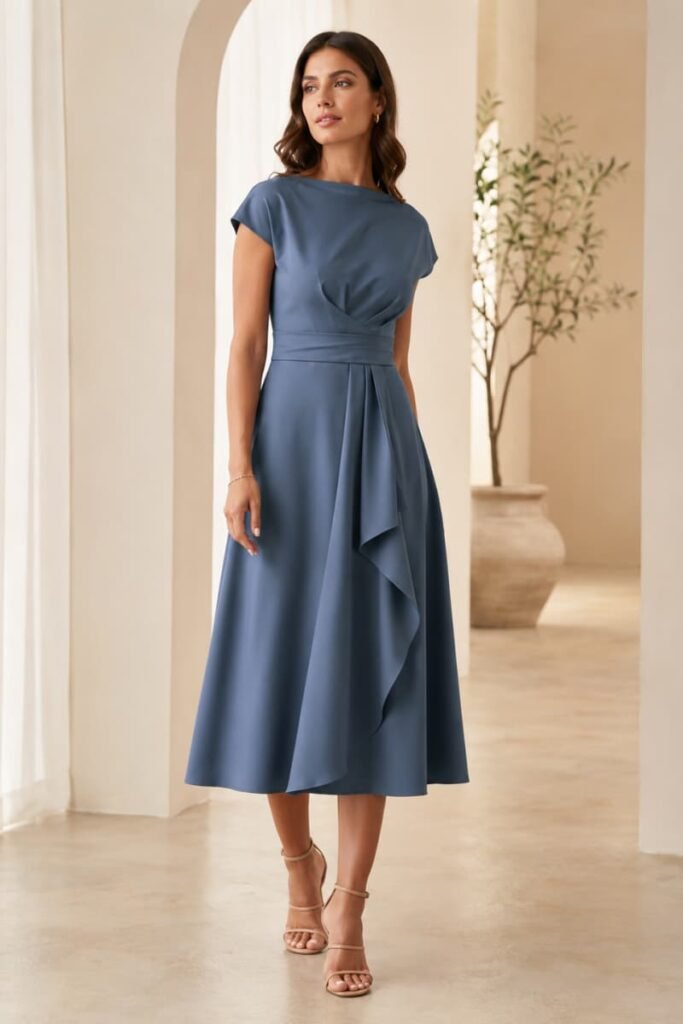
Draped Midi Dresses

Draped Maxi Dresses

Draped Party Dresses
Party styles often combine close fit, shine, cut-outs, mesh, draping and short lengths. Visual impact must remain wearable.
Development evaluates neckline security, body coverage, zipper stress, skin contact, movement and photographic appearance under strong lighting.

Draped Occasion Dresses

Draped Going-out Dresses

Draped Vacation Dresses

Draped Bodycon Dresses

One-shoulder Draped Dresses

Cowl-neck Dresses

Asymmetric Draped Dresses

Long-sleeve Draped Dresses
Draping Structures and Custom Design Options
Cowl Draping
- Best for satin, silky woven, crepe and selected jersey.
- Key control: bias direction and neckline stability.
- Main risk: excessive depth or uneven collapse.
Side Draping
- Best for bodycon, midi and asymmetric dresses.
- Key control: side-seam alignment.
- Main risk: twisting and uneven fold concentration.
Waist Ruching
- Best for jersey, mesh and stretch satin.
- Key control: even distribution.
- Main risk: inconsistent waist appearance.
Twist-front Draping
Twist-front construction rotates or interlocks fabric sections to form a focal point. Pattern pieces often require controlled stretch and a clear assembly sequence. The twist must sit flat, remain centered and avoid exposing seam allowances or creating excessive thickness.
- Best for soft knit and lightweight woven fabrics.
- Key control: twist direction and tension.
- Main risk: bulkiness or off-center placement.
Knot Draping
Knotted details may be functional or constructed as fixed decorative elements. A functional knot changes fit during wear, while a fixed knot improves production consistency. Material thickness, reinforcement, seam concealment and wash behavior should be evaluated before choosing the construction.
- Best for vacation, resort and going-out dresses.
- Key control: knot volume and attachment.
- Main risk: stretching or unstable shape.
Wrap Draping
Wrap structures use overlapping panels to create diagonal movement and adjustable or fixed closure. Coverage at the neckline, waist and skirt opening must be tested through movement. Hidden snaps, ties, internal buttons or fixed stitching may be used according to the intended fit.
- Best for midi, maxi and occasion dresses.
- Key control: coverage and closure.
- Main risk: opening during movement.
Cascade Draping
Cascade draping forms a vertical or diagonal waterfall effect using flounces, circular sections or shaped panels. Grain direction and edge finishing determine how the cascade falls.
Added weight can distort the base garment, so support and seam placement require early review.
- Best for occasion, cocktail and asymmetric dresses.
- Key control: edge finish and panel balance.
- Main risk: uneven length and excessive weight.
Asymmetric Draping
- Best for statement and campaign styles.
- Key control: approved visual reference.
- Main risk: inconsistent interpretation across units.
Build a Complete Draped Dress Collection
Plan the Silhouette Architecture
- Hero styles for campaigns and showroom presentation.
- Core commercial styles for broader size and color volume.
- Supporting styles that share fabric or construction.
- Reorder candidates with stable material and repeatable workmanship.
- Visual tests carrying higher complexity or seasonal risk.
Coordinate Fabrics and Colorways
Using a controlled material family can improve collection unity, sourcing efficiency and production planning. Satin may cover evening and occasion silhouettes; jersey may support going-out and bodycon dresses; chiffon and crepe can extend resort or formal directions.
Material planning also considers:
- Which styles can share main fabric or lining.
- Whether color standards remain consistent across several bases.
- Which colorways justify separate material commitments.
- Whether shine, texture and transparency align with the collection mood.
- How fabric allocation supports launch orders and repeat production.
Organize Multi-style Sampling
Programs containing 10–30 styles require priorities. Duolan can separate first-priority samples, fitting references, campaign samples, buying-meeting samples and PP samples.
Shared questions—such as target fit, lining color, zipper standard or label position—can be solved across the collection instead of repeated style by style.
A clear development calendar records:
- Material readiness.
- Pattern and first-sample order.
- Fit review sequence.
- Revision deadlines.
- Photo-sample requirements.
- PP and bulk decision points.
Fabric Performance for Draped Dress Development
Material choice determines fold definition, body movement, fit, sewing behavior, pressing and bulk consistency. Comparison should focus on garment result rather than fabric name alone.
| Fabric | Drape Character | Suitable Applications | Main Development Risk | Production Control |
|---|---|---|---|---|
| Satin | Fluid, reflective, smooth | Occasion, asymmetric midi, cowl neck, evening styles | Needle marks, seam puckering, pressing shine, surface pulls | Fine needle selection, controlled tension, protective pressing, careful packing |
| Stretch Satin | Fluid with body stretch | Fitted draped minis, bodycon occasion styles | Uneven recovery, zipper waviness, stress whitening | Stretch-direction review, recovery test, stabilized seams |
| Jersey | Soft, elastic, body-following | Side-ruched, twist-front, going-out and bodycon dresses | Transparency, growth, uneven gathering, seam twisting | GSM review, stretch and recovery check, controlled gathering ratio |
| Crepe | Controlled fluidity with lower shine | Midi, work occasion, asymmetric and wrap dresses | Surface variation, shrinkage, inconsistent handfeel | Batch approval, grain control, pressing trial |
| Chiffon | Lightweight, floating, layered | Cascade, maxi, resort and formal draping | Fraying, transparency, unstable cutting, uneven hem | Layer planning, edge testing, cutting control, hanging allowance |
| Mesh | Soft or stretch-transparent | Layered bodycon, ruched panels, cut-out coverage | Distortion, transparency, snagging, lining mismatch | Recovery check, lining test, reinforced anchor points |
| Cupro or Viscose Blend | Liquid movement, soft handfeel | Cowl, slip-inspired, resort and fluid midi dresses | Growth, shrinkage, seam slippage, color variation | Stability testing, seam-strength review, batch control |
| Velvet | Rich, directional, weighted | Holiday, party and premium draped dresses | Nap mismatch, shade variation, pressure marks | One-direction cutting, protected pressing, careful packing |
| Sequin Base | Weighted, visual, structured movement | Statement party and occasion dresses | Excess weight, skin irritation, edge damage, zipper stress | Support review, lining coverage, sequin clearing, reinforced closure |
Fabric and Trim Coordination Before Sampling

Main Fabric Direction

Lining Compatibility
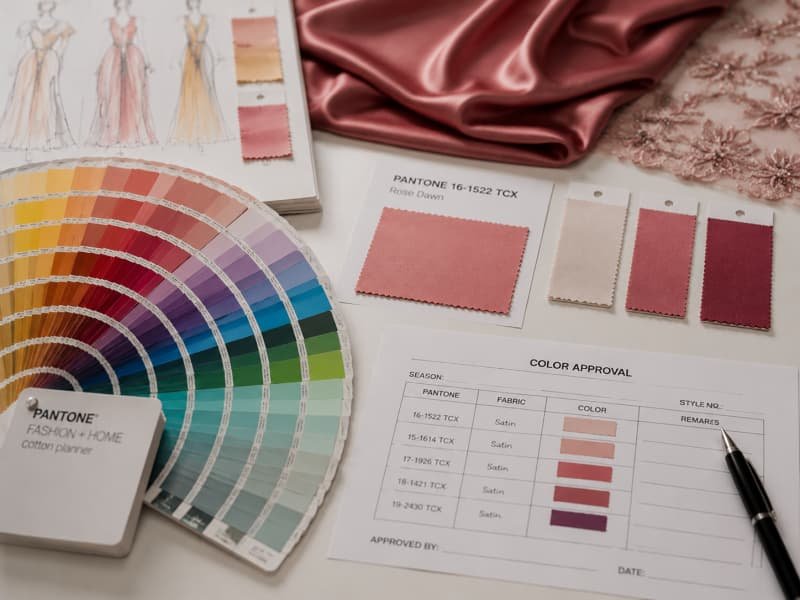
Color Development
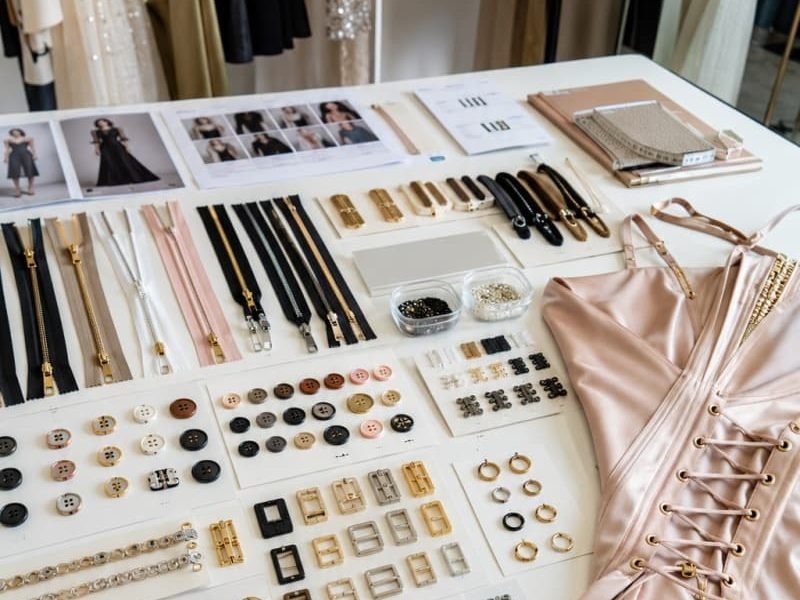
Closure Selection

Support Components

Label and Packing Materials
Design Feasibility Review Before Sampling
Fabric Feasibility
Fit Feasibility
Pattern Feasibility
Workmanship Feasibility
Commercial Feasibility
Timeline Feasibility
From Draping Concept to Industrial Pattern
Analyze the Visual Structure
- Drape origin and end point.
- Fold direction and depth.
- Gathering or pleat ratio.
- Anchor and reinforcement points.
- Main seams and closure.
- Relationship between shell and lining.
- Intended symmetry or asymmetry.
- Areas affected by movement.
Build the First Pattern
Pattern development considers:
- Straight grain, cross grain or bias behavior.
- Seam allowance suitable for material and construction.
- Notches and match points for fold distribution.
- Balance between front, back and side seams.
- Closure integration.
- Lining and facing patterns.
- Reinforcement at stress points.
Correct Through Fitting
Corrections are returned to the pattern rather than left as manual sewing adjustments. A controlled pattern record reduces dependence on individual operators and provides a stronger base for grading.
Prepare Production Markings
Production patterns require more information than sample patterns. Anchor points, gathering limits, tack locations, left-right identification, placement lines and assembly references should be visible and understandable. Difficult sections can be supported by workmanship notes or approved detail photographs.
Fit Review Across Front, Side and Back
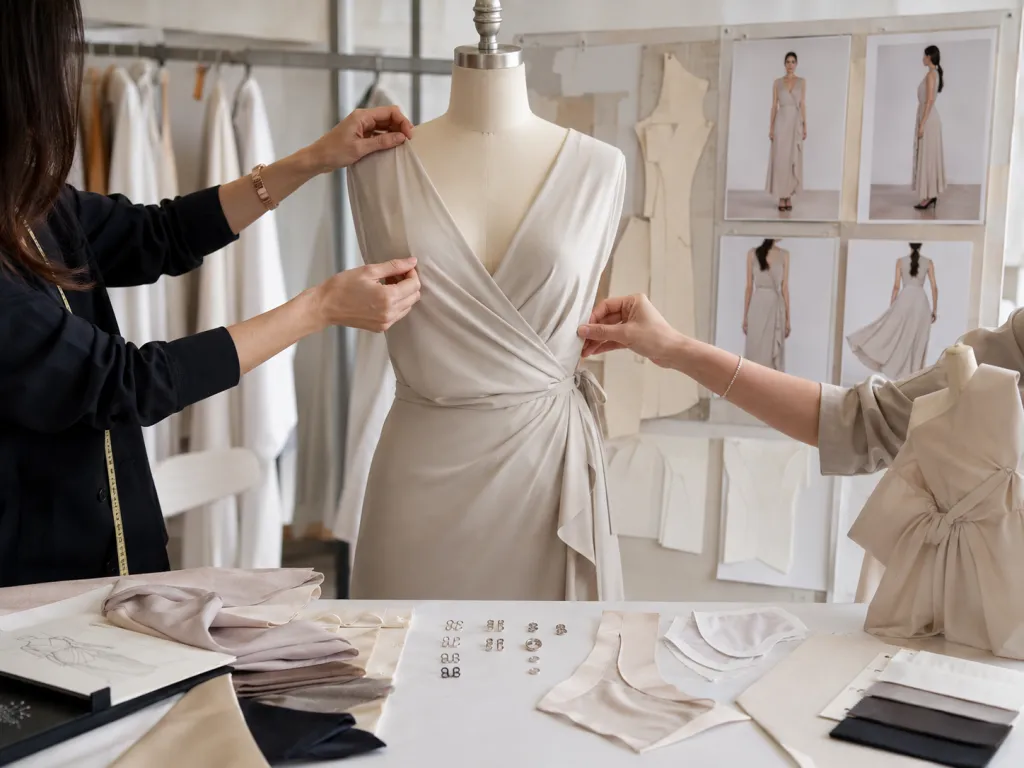
Front Balance Review
Front fitting checks neckline position, bust coverage, waist level, fold direction, visual center and hem relationship. Draping should flatter the body without hiding construction problems. For fitted styles, tension lines around the bust, waist and hip reveal whether the pattern or material needs adjustment.Key checkpoints:
- Neckline depth and stability.
- Bust coverage and support.
- Waist placement.
- Left-right visual balance.
- Fold volume and anchor location.
- Front hem and slit opening.

Side Profile Review
The side view shows whether draping is pulling the garment forward or backward. Side seams should remain close to the intended position unless deliberate asymmetry is built into the design. Hip projection, waist shaping, zipper behavior and lining tension are easier to diagnose from the side.Key checkpoints:
- Side-seam alignment.
- Bust-to-waist contour.
- Hip balance.
- Drape projection.
- Zipper flatness.
- Front-back hem balance.

Back and Movement Review
- Back neckline and strap position.
- Closure and seam tension.
- Waist and hip balance.
- Lining exposure.
- Movement comfort.
- Fold recovery after movement.
Measurement and Grading Control for Draped Dresses
Bust Measurement
Waist Position
Hip Balance
Body Length
Shoulder-to-waist, waist-to-hem and total body length influence the location of every draped feature. Shortening or lengthening only the hem can move the visual balance away from the intended body area.
Neckline Depth
Slit Position
Slit height is measured from a defined point and reviewed during movement. Draping can pull a slit higher than expected, especially in fitted or wrap constructions.
Drape Anchor Points
Size Grading Logic
Draped Dress Sample Development Process
Sampling follows a controlled sequence from project review to production readiness. Each stage has a defined purpose and approval basis.
Project Brief Review
Technical Risk Review
Material Preparation
Pattern Development
First Sample Sewing
Internal Review
Brand Review
Revision Development
PP Readiness
Sampling time is confirmed after fabric readiness, complexity and sample purpose are reviewed. The sample proposal identifies development scope, approval points and revision timing instead of using one fixed promise for every style.
Sample Revision and Approval Discipline
Categorized Sample Comments
- Fit and body balance.
- Measurements and tolerance.
- Fabric, lining and color.
- Drape shape and anchor points.
- Construction and finishing.
- Labels, packing and presentation.
Version-controlled Revisions
Sample rounds can be recorded as V1, V2 and V3 or by sample purpose. Each revision summary identifies:
- Changes completed.
- Points retained.
- Decisions still pending.
- Materials used.
- Next approval requirement.
Version control gives design, sourcing and manufacturing teams a shared understanding of the current standard.
Visual and Technical Approval
A sample may receive visual approval while technical details remain open. Duolan distinguishes fit confirmation, visual confirmation, material confirmation and PP basis. Such separation prevents premature bulk release. Approval should cover: Silhouette and fit,Drape position and fold depth,Main fabric and lining,Measurements,Workmanship,Labels and packing.
Production Reference Package
The approved garment is supported by the current pattern, measurement specification, material details, construction notes and visual references.
Production teams and QC inspectors then work from a common basis instead of interpreting informal messages.
Draped Dress Workmanship Control Points

Drape Anchoring

Gathering Distribution

Hidden Reinforcement
Internal tape, elastic, stay stitching or reinforcement may be required at necklines, shoulders, side seams and fold anchors. Support should stabilize the garment without creating visible rigidity, bulk or surface impressions.

Seam Tension
Lightweight satin, chiffon and mesh can pucker when thread, needle or feed tension is unsuitable. Stretch jersey may wave or grow.
Seam trials help confirm stitch formation, seam allowance and handling before full production.

Lining Connection
Lining attachment should allow the shell to move naturally. Connection points, ease, hem relationship and closure integration are reviewed. A restricted lining can pull the outer drape flat; excess lining may twist or show.

Edge Finishing

Zipper Integration
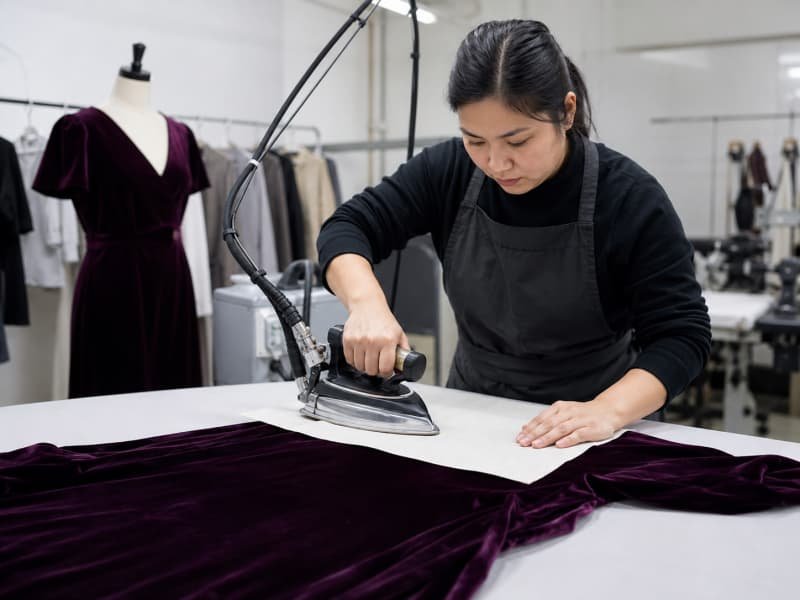
Pressing and Shaping
Sample-to-Bulk Readiness Control
Confirm Approval Status
Lock Production Materials
Lock Measurements
Lock Workmanship
Seam method, gathering distribution, tack position, reinforcement, lining connection, zipper insertion, hem finish and pressing requirements are aligned with the approved sample.
Confirm Production Path
Issue Bulk Confirmation
Bulk Production Path for Draped Dress Programs
Order Breakdown
Production Allocation
Material and Detail Lock
First-piece Verification
Inline Production Control
Production teams monitor critical points while garments are being sewn.
Early findings can be corrected before the same variation spreads through a large quantity.
Final Delivery Readiness
Finished garments, measurements, appearance, labels, barcodes, packing and shipment requirements are checked against the agreed standard. Final delivery may be arranged by express, air, sea, FOB, CIF, DDP or split shipment according to the program.
Quality Control for Draped Dress Production

Incoming Material Control
- Fabric-batch consistency.
- Surface marks on satin or velvet.
- Mesh and chiffon defects.
- Stretch and recovery variation.
- Lining color and compatibility.

First-piece Control
- Approved points.
- Required corrections.
- Sensitive operations.
- QC checkpoints for the line.
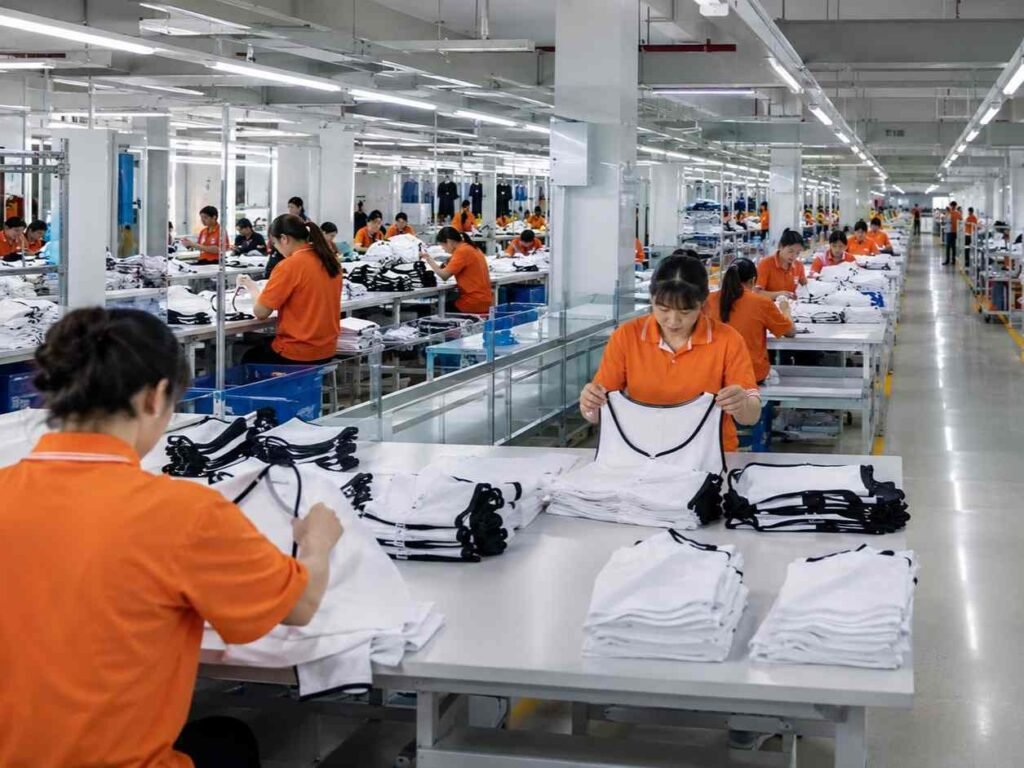
Inline Quality Control

Final and Packing Control
Duolan’s Dress-focused Manufacturing System
Nearly 30 Years
16 Owned Factories
Owned womenswear factories provide core control for key styles, sample-to-bulk transition and high-attention programs.
Production allocation considers style complexity, fabric, workmanship and launch requirements.
20+ Satellite Factories
12,000+ Workers
The extended manufacturing structure includes more than 12,000 workers across supporting regions.
Scale supports multi-style programs, production balancing and larger seasonal order requirements.
300 Sewing Lines
50+ Flexible Lines
More than 50 quick-response and flexible production lines support launch programs, selected replenishment and time-sensitive style groups when materials and approvals are ready.
High Development Density
Monthly sample-development capacity ranges from approximately 15,000 to 35,000 samples or development units, supporting around 3,000–8,000 style-development and sampling processes each month across the wider system.
Material Supply Network
Duolan works within the mature South China textile and garment supply environment, supported by fabric, trim, accessory, printing, embroidery, washing and special-process resources.
Compliance, Documentation and Brand Coordination
SMETA Audit Foundation
Standards Coordination
Structured Development Files
Bulk Control Records
Inspection and Packing Support
International Communication
Draped Dress Development Case Studies

US Going-out Collection
Region: United States
Program: 16 styles / 31,680 pieces
Product Mix: Side-draped minis, twist-front midis, one-shoulder jersey dresses and asymmetric mesh-overlaid styles
Colorways: 2–4 colors per style
Size Range: Brand US size range
The main challenge was maintaining flattering waist and hip draping across multiple stretch fabrics and sizes. Early references showed strong visual direction but lacked measurable drape anchors and gathering limits.
Duolan separated the program into three material groups: compact jersey, stretch satin and mesh-lined construction. Pattern records added gathering start and end points, anchor distances and side-seam controls. Priority sizes were fitted before grading was finalized. First-piece review focused on side-seam rotation, transparency, zipper waviness and gathering distribution.
Result: All 16 approved styles moved into one coordinated production program. The 31,680-piece order was divided into two production paths according to material and construction. Shipment was arranged in two planned releases to support the brand’s launch sequence.

UK Occasionwear Program
Region: United Kingdom
Program: 12 styles / 24,600 pieces
Product Mix: Satin asymmetric midis, cowl-neck dresses, draped maxi dresses and crepe wrap styles
Colorways: 3 colors per style
Development Focus: Surface quality, fit, formal finish and packing recovery
The original satin direction created seam puckering and pressure marks after pressing. Several asymmetric silhouettes also showed unequal hem drop after hanging.
Duolan compared two satin weights and one crepe-satin alternative, then adjusted needle, seam tension, grain direction and pressing method. Hem review was completed after hanging trials. Lining ease and zipper stabilization were updated before PP approval. Packing trials tested whether the folds recovered after carton compression.
Result: Twelve styles and 36 style-color combinations were approved for bulk. Production was organized by satin and crepe groups. The 24,600-piece program was completed through a controlled 30-day regular production window after material and PP approval, followed by final packing and label checks.

Australian Resort Collection
Region: Australia
Program: 22 styles / 58,400 pieces
Product Mix: Chiffon cascade maxis, viscose-blend cowl dresses, draped resort midis and wrap silhouettes
Colorways: 2–5 colors or prints per style
Launch: Seasonal resort delivery
The project combined lightweight solids and prints across 22 styles. Key risks included chiffon cutting instability, uneven maxi hems, print placement, transparent areas and inconsistent fold depth between colors.
Duolan grouped styles by material, print process and construction. Chiffon styles received cutting and edge-finishing trials; selected maxis were reviewed after hanging. Print placement references, lining coverage and drape anchor points were recorded by style. Production priority followed the brand’s campaign, core-sales and supporting-style categories.
Result: The 58,400-piece program covered more than 70 style-color combinations and was released through three coordinated production groups. Campaign-priority styles were packed first, followed by core and supporting deliveries within the agreed seasonal shipment plan.
Custom Draped Dress Frequently Asked Questions

Start Your Draped Dress Development Program
Send the available project information to Duolan for an initial development and manufacturing review. A complete file is helpful, but a project can also begin with reference images, an original sample, a fabric idea or a collection brief. Our team will assess style complexity, drape structure, material direction, fit priorities, sample purpose, target quantity and production timing before recommending the next step.
For a more accurate review, please include:
- Tech pack, sketch, reference image or original-sample photos.
- Target draped style, length, neckline and silhouette.
- Preferred fabric, composition, weight, stretch or handfeel.
- Size range, measurement specification and fit market.
- Colorways and approximate quantity by style.
- Required sample type and approval purpose.
- Target launch date or required delivery window.
- Label, barcode, packaging and testing requirements.
- Current quality or production concerns.