Skip to content
Custom Drawstring Dress Manufacturer
Drawstring dress development built around adjustable structure, balanced ruching, accurate fit and repeatable bulk production.
Duolan develops and manufactures drawstring dresses for fashion brands, product teams and sourcing offices managing structured collection programs.
- 6 core drawstring placement systems covering waist, side seam, double-side, front, slit and hem adjustment
- 8 critical measurement points defined for relaxed, standard-adjusted and fully tightened garment conditions
- Development support for mini, midi and maxi silhouettes across jersey, mesh, satin, viscose, crepe and woven fabrics
- 30+ years of womenswear development experience supporting complex fashion-dress construction
- Capacity for multi-style programs commonly involving 10–30 styles and 20,000–80,000 garments per order
Dress Manufacturing Capacity Behind Every Development Program
30+ Years Development Experience
16 Owned Factories
20+ Satellite Factories
300 Sewing Lines
50+ Quick-Response Lines
Quick-response lines support launch orders, controlled replenishment and repeat production after materials and specifications are locked. Their role is not to bypass development. They shorten production movement for proven styles while preserving approved measurements, cord lengths, stitching standards, trim references and packaging instructions.
15,000–35,000 Sample Cycles






Built for Fashion Teams Developing Adjustable Dress Collections
Fast Fashion Brands
- Seasonal launch timing
- Multi-color development
- Fit consistency across sizes
- Repeat-order readiness
- Scalable production routing
Product Development Teams
- Tech pack review
- Fabric and trim direction
- Pattern correction
- Fit comment translation
- Sample-stage tracking
Buying and Sourcing Teams
- Production feasibility
- Material lead times
- Order allocation
- Inspection checkpoints
- Shipment coordination
Multi-Brand Fashion Groups
- 10–30 styles per order
- Shared fabric families
- Separate brand specifications
- Parallel sample calendars
- Planned repeat production
Drawstring Dress Risks Controlled Before Bulk Production
Uneven Ruching
- Gathering start and end points
- Panel length before gathering
- Relaxed and adjusted dimensions
- Left-right visual balance
- Standard cord exposure after adjustment
Twisted Side Seams
- Balanced front and back pattern shapes
- Correct channel placement
- Fabric stretch-direction review
- Fit assessment in multiple adjustment positions
- Side-seam inspection during production
Unstable Cord Movement
- Cord diameter and channel width
- Surface friction
- End-finish weight
- Wash behavior
- Draw resistance
- Trim compatibility with the garment fabric
Inconsistent Adjusted Length
- Fully relaxed length
- Standard display length
- Maximum adjusted length
- Cord exposure
- Slit position
- Measurement method before inspection
Weak Opening Reinforcement
- Stabilizing layers
- Dense edge stitching
- Bar tacks
- Clean internal finishing
- Controlled opening size
- Pilot testing before bulk release
Sample-to-Bulk Drift
A sample may look correct because one operator manually balances the ruching. Bulk stability requires measurable standards that can be repeated across production lines. Duolan converts approved details into:
- Construction references
- Channel measurements
- Cord-length standards
- Gathering-position marks
- First-piece approvals
- Inline inspection criteria
Drawstring Dress Styles Developed for Fashion Collections
Drawstring Waist Dresses
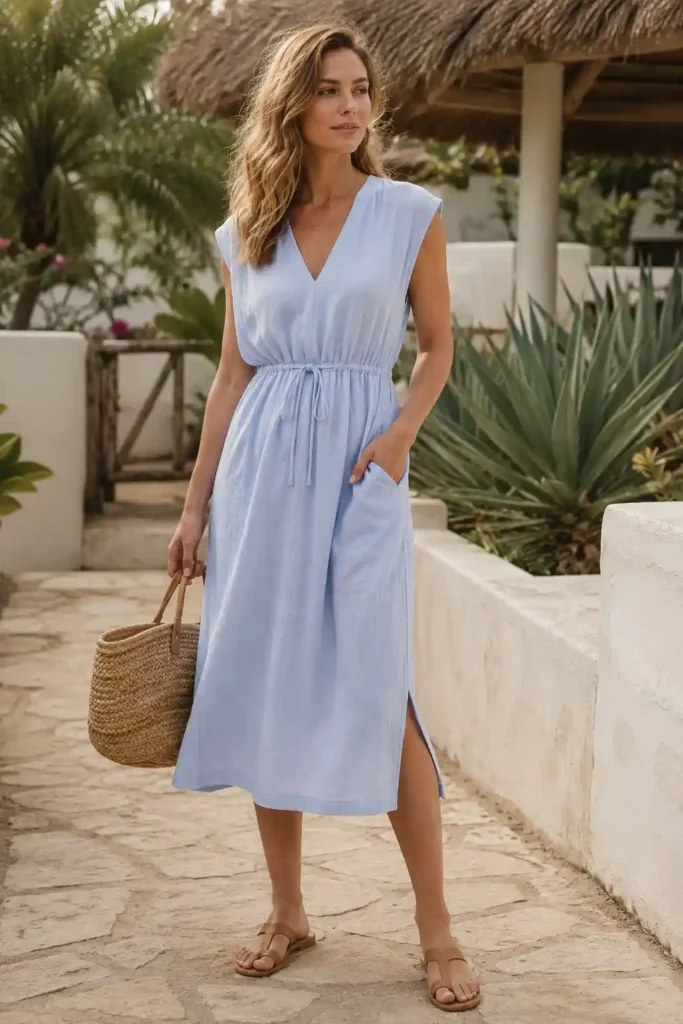
- Woven midi dresses
- Utility shirt dresses
- Relaxed day dresses
- Resort maxi dresses

Side Drawstring Mini Dresses
- Stretch jersey
- Power mesh
- Rib knit
- Stretch satin

Double-Side Ruched Dresses
- Partywear
- Clubwear
- Birthday dresses
- Fashion e-commerce collections

Drawstring Bodycon Dresses
- Fitted mini dresses
- Ruched midi dresses
- One-shoulder styles
- Cut-out bodycon designs

Drawstring Mesh Dresses
- Layered party dresses
- Printed mesh midis
- Sheer-sleeve styles
- Adjustable-slit maxis

Adjustable Slit Dresses
An adjustable slit uses drawstring movement to raise or lower the visible opening. The design provides styling flexibility but introduces fit and coverage risks. The slit cannot be evaluated only in a fully relaxed position. Product teams need to approve a standard merchandising position and a safe maximum adjustment. Reinforcement at the slit end, lining transition and channel opening must withstand repeated pulling. The cord should not distort the hip line or cause the front and back panels to separate unevenly.
Suitable markets:
- Occasionwear
- Going-out dresses
- Evening separates
- Vacation collections

Drawstring Midi Dresses
Midi silhouettes allow waist adjustment, side ruching or localized hem movement without the exposure sensitivity of a mini dress. Their longer vertical line makes drape and side-seam balance more visible. Viscose, crepe, jersey and soft woven fabrics work well when their weight supports clean gathers. A longer channel may increase friction and require a different cord finish. Duolan defines the relaxed hem position, adjustment zone and drape direction before grading. Production inspection checks whether all garments return to the approved silhouette after pressing and packing. Suitable directions:
- Day-to-evening dresses
- Resort midis
- Casual fashion dresses
- Printed summer dresses

Drawstring Maxi Dresses
- Viscose
- Chiffon
- Soft crepe
- Mesh
- Satin
Drawstring Placement Systems and Their Construction Logic
Waist Casing for Adjustable Shape and Wearing Comfort
- Casing position relative to body proportions
- Finished channel width
- Cord diameter
- Exit location
- Internal seam finish
- Maximum waist adjustment
- Cord length after tightening
Side Seam Channels for Length and Ruching Control
Side channels are common in fitted mini and midi dresses because they allow wearers to change skirt length and gathering intensity. The structure places repeated vertical tension along the garment side. Pattern engineering must account for the extra panel length required to form ruching. Simply sewing a channel onto a standard side seam produces limited movement and often rotates the garment. Duolan plans gathering allowance, seam shape and channel position together.
Key controls include:
- Beginning and ending points of the channel
- Distance from armhole, waist or hip reference
- Additional panel length
- Side-seam balance
- Cord exit direction
- Maximum adjustment
- Hem angle after tightening
For lined garments, the lining may remain independent, follow part of the adjustment or end above the gathering zone. The selected approach depends on coverage, comfort and intended appearance.
Center-Front Channels for Controlled Visual Focus
- Center alignment
- Neckline or bust stability
- Gathering distribution
- Internal reinforcement
- Skin contact and cord comfort
- Front-hem balance
- Compatibility with closures and lining
Double-Side Channels for Symmetrical Adjustment
Double-side systems create balanced ruching and allow broader length variation. The two channels must perform as a matched pair. Pattern markings identify the same vertical reference on both sides. Cord length, opening height and stitch construction are standardized. During fitting, the dress is assessed under three conditions: relaxed, approved standard adjustment and maximum safe adjustment. Symmetry checks cover:
- Left and right channel length
- Ruching density
- Hem level
- Side-seam position
- Cord exposure
- Slit or lining visibility
- Body balance from front and back views
During bulk production, operators should not decide the final gathering position visually. An approved reference and measurable cord setting reduce style variation between garments.
Hem Channels for Adjustable Volume and Shape
A hem drawstring can create a bubble effect, controlled narrowing or asymmetrical shape. It may also allow a long dress to be styled at different lengths. The channel must move without catching seam joins or damaging lightweight fabric. A cord stopper may be used, but its weight and position should not create an uneven hang. When the hem closes significantly, walking ease and internal clearance need to be tested. Construction decisions include:
- Full or partial hem channel
- Cord direction
- Stopper position
- Maximum circumference reduction
- Internal seam protection
- Movement allowance
- Pressing and packing method
Long-term stability depends on how well the fabric returns after release. Materials with poor crease recovery may retain compressed folds and require a different structural solution.
Slit-Control Channels for Adjustable Coverage
A slit-control system lets the wearer modify opening height while preserving the main silhouette. It is common on fitted midi, maxi and occasion dresses. The upper slit point experiences concentrated stress and usually requires reinforcement. The channel must also guide fabric movement without pulling the skirt off grain. A standard maximum opening should be documented during fitting. Approval points include:
- Relaxed slit height
- Standard styled height
- Maximum safe height
- Opening reinforcement
- Lining transition
- Cord security
- Hem alignment
- Walking and sitting movement
Bulk measurement cannot rely on an undefined cord position. Inspection instructions state how the garment should be adjusted before slit height and length are checked.
Engineering Adjustable Ruching Without Distorting the Dress
Define the Adjustment Range Before Pattern Development
Duolan records three useful conditions:
- Relaxed condition: cord released and gathers distributed naturally
- Standard condition: approved appearance for photography, packing or inspection
- Maximum condition: highest safe adjustment without unacceptable distortion
Adjustment limits also protect wearing performance. A side drawstring should not raise a mini dress beyond the intended coverage level. A waist cord should not close the garment beyond the available wearing ease. A hem cord should not restrict walking.
Once approved, adjustment data moves into the sample review note, measurement chart and production reference.
Balance Silhouette Across Front, Side and Back Views
A drawstring may look attractive from the front while distorting the side or back. Fit review therefore covers the entire silhouette.
Common imbalance includes:
- Side seams rotating toward the front
- One hip carrying more gathering
- Back hem lifting after front adjustment
- Waist line becoming uneven
- Lining showing below the shell
- Slit opening shifting away from its intended position
Pattern correction can involve redistributing panel length, changing seam curvature, repositioning the channel or modifying fabric ease. On bodycon styles, even small changes in hip tension can redirect the ruching. On loose woven dresses, too much fabric may collapse into bulky folds.
Duolan assesses the garment on a dress form and, where required, during fit review. Photographs from front, side and back provide a repeatable comparison for revised samples. Final approval is based on overall balance rather than a single close-up view.
Protect Performance Through Repeated Adjustment
A drawstring structure is handled repeatedly during wearing, photography, packing and retail presentation. Movement must remain smooth without damaging the garment.
Repeated-adjustment review examines:
- Cord friction inside the channel
- Opening distortion
- Stitch stability
- Seam movement
- Fabric recovery
- Cord-end security
- Stopper function
- Return to relaxed shape
Light mesh and satin may require reinforcement that remains visually discreet. Rib and jersey need stitches that tolerate extension. Woven viscose may need stable openings and careful pressing to avoid permanent marks.
Production teams also need clear instructions for the packed condition. If every garment is tightened differently before folding, the received order may show inconsistent creasing and cord exposure. A defined packing position helps preserve appearance and reduces preparation work at the distribution center.

Fabric Selection for Adjustable Drawstring Dress Structures
Fabric weight, stretch, recovery, drape, friction and transparency determine how a drawstring dress adjusts and returns. Material approval should be based on garment behavior, not swatch appearance alone.
| Fabric Direction | Best Applications | Drawstring Behavior | Main Development Risk | Control Focus |
|---|---|---|---|---|
| Stretch Jersey | Bodycon mini and midi dresses | Smooth gathering with high movement | Transparency, seam growth, poor recovery | Stretch ratio, opacity, recovery and stitch compatibility |
| Rib Knit | Fitted casual and going-out dresses | Defined texture hides moderate gathering variation | Channel bulk and uneven rib distortion | Rib alignment, channel thickness and wash recovery |
| Power Mesh | Layered bodycon and party dresses | Soft ruching with strong visual depth | Sheerness, exposed seam allowances and snagging | Lining coverage, seam finish and reinforcement |
| Soft Mesh | Printed or layered occasion dresses | Fluid gathers and light surface movement | Weak openings and visible internal construction | Stabilization, lining attachment and opening finish |
| Viscose or Rayon | Resort midi and maxi dresses | Fluid drape with natural waist gathering | Shrinkage, seam slippage and creasing | Pre-production testing, seam construction and pressing |
| Satin | Party and occasion dresses | Elegant gathered highlights | Needle marks, puckering, pressure marks and uneven shine | Needle selection, stitch tension, handling and packing |
| Crepe | Midi, maxi and draped styles | Balanced movement with controlled texture | Distortion along bias sections | Grain control, cutting accuracy and drape review |
| Cotton-Linen Blend | Utility, day and vacation dresses | Structured gathering with moderate movement | Bulk around casing and limited recovery | Casing construction, ease and wash shrinkage |
| Chiffon | Layered maxi and occasion dresses | Light floating ruching | Transparency, fraying and channel instability | Layer planning, fine finishing and reinforcement |
| Stretch Velvet | Party and winter bodycon dresses | Rich directional gathering | Pile crushing and shade variation | Nap direction, pressure control and packing method |
Fabric Approval Must Include Garment Behavior
A selected fabric should be tested in the intended channel structure. Swatch drape alone cannot show whether a cord moves smoothly, whether gathers recover after release or whether seam allowances become visible. For higher-risk materials, a partial construction test can be completed before the full sample.
Shell and Lining Must Move Together
Lining selection affects adjustment range, coverage and comfort. A rigid lining under a stretch shell can restrict movement, while an overly elastic lining may roll or expose seams. Duolan reviews lining length, attachment points, stretch compatibility and opacity according to the approved adjustment positions.
Drawcord, Tape, Stopper and End-Finish Options

Self-Fabric Ties

Flat Woven Tapes

Braided Drawcords

Elastic Drawcords

Cord Stoppers

Branded Cord Ends
Pattern Engineering for Fit, Gathering and Adjustable Length
Build Gathering Allowance Into the Pattern
- Total ungathered panel length
- Finished relaxed length
- Standard adjusted length
- Gathering start and end points
- Channel placement
- Cord exit direction
- Seam and hem relationships
Grade the Complete Adjustment System
Grading is not a simple percentage increase from the sample size. Channel length, gathering allowance, slit position and cord exposure must remain proportionate across sizes.
For an XS–XL range, review may include:
- Bust, waist and hip relationships
- Vertical body length
- Relaxed dress length
- Adjusted dress length
- Channel start and end positions
- Slit range
- Cord length
- Lining coverage
Cord length may increase by size, remain fixed for a visual reason or follow a separate rule from garment measurements. The decision should be documented. Extended size ranges may require additional fit review rather than automatic continuation of the original grade.
Protect Side-Seam and Hip Balance
Match Pattern Logic to the Silhouette
Different silhouettes need different technical priorities. Bodycon dresses require stretch recovery, opacity, bust-waist-hip balance and close-fit tolerance. Relaxed woven dresses need sufficient wearing ease after the waist is tightened. Slip dresses require bias or drape control. Shirt dresses must coordinate plackets, waist casings and pocket positions. Resort maxis need stable long seams, walking ease and balanced hem movement. Duolan reviews the construction path according to category instead of applying a single drawstring method across every style. A strong visual idea is preserved while the pattern remains suitable for repeat production.
Measurements to Lock Before Drawstring Dress Sampling
Drawstring Position
Channel Width
Gathering Start Point
Relaxed Garment Length
Standard Adjusted Length
Maximum Adjusted Length
Exposed Cord Length
Slit Height Range
Feasibility Review Before Pattern and Sample Development
Review the Design Input
Select the Development Path
Check Fabric and Trim Compatibility
The chosen fabric must tolerate gathering, channel stitching and repeated cord movement. Cord, tape, stopper and end finish also need to work with the shell and lining.
Review covers:
- Fabric weight and stretch
- Recovery
- Transparency
- Surface sensitivity
- Cord friction
- Opening reinforcement
- Trim weight
- Wash and care direction
Where risk remains high, Duolan may recommend a construction test or alternative trim. Changes are discussed before the full sample absorbs unnecessary cost and time.
Identify Fit and Measurement Risks
Product review examines how adjustment affects body fit and garment dimensions. Common questions include whether the dress remains wearable when fully relaxed, whether maximum tightening raises the hem too far and whether side ruching rotates the hip seam. Critical points are translated into measurable sample objectives:
- Approved sample size
- Target bust-waist-hip fit
- Relaxed length
- Standard adjusted length
- Slit range
- Channel position
- Lining coverage
- Cord exposure
Clear objectives help sample comments focus on decisions rather than general visual impressions.
From Design Brief to Production-Ready Drawstring Sample

Brief Review
The team organizes product purpose, target market, silhouette, fabric direction, adjustment function, size range, expected quantity and launch timing. Missing construction information is identified before pattern development.
Outputs may include:
- Development questions
- Risk-point notes
- Material direction
- Sample-size basis
- Proposed sample route

Fabric and Trim Direction
Available or custom-developed fabrics are reviewed alongside cords, tapes, stoppers, labels and lining. The combination must deliver the intended drape, fit and adjustment performance.
Approval may cover:
- Fabric composition and weight
- Stretch and recovery
- Color direction
- Cord dimensions
- Stopper type
- Lining and interlining
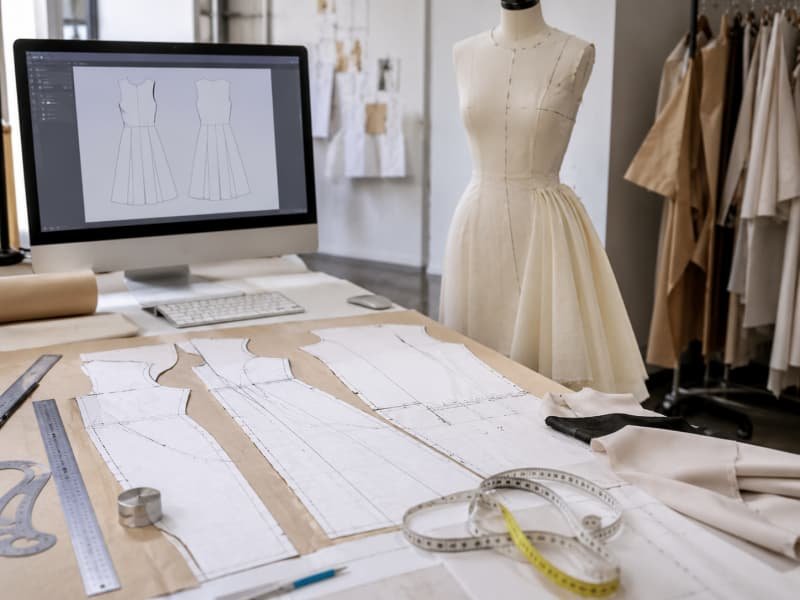
Pattern Development
Focus areas include:
- Body proportion
- Ease
- Gathering zone
- Side-seam balance
- Hem shape
- Slit range
- Grading direction

First Sample Construction
Initial review considers:
- Overall silhouette
- Fit
- Ruching distribution
- Cord movement
- Lining coverage
- Workmanship feasibility
- Visual finish

Fit and Adjustment Review
Review records can include:
- Fit photographs
- Measurement comparison
- Construction notes
- Comment status
- Required revisions

Revised or PP Sample
The revised sample confirms agreed changes. Before bulk, a PP basis may lock materials, measurements, workmanship, trim placement, labels and packing.
Production normally begins only after the required sample status is clear:
- Fit confirmed
- Visual confirmed
- Material confirmed
- PP basis approved
- Remaining points documented
Controlled Production from Fabric Inspection to Packing
Fabric Inspection
Shrinkage and Color Review
Marker and Cutting
Panel Identification
Channel and Cord Sewing
Inline Inspection
Final Pressing and Measurement
Packing Preparation
Quality Checks for Movement, Fit and Bulk Consistency
Quality control for drawstring dresses must cover both static appearance and repeated adjustment. Inspection standards are linked to the approved sample, measurements, materials and intended use.
Repeated Adjustment Test
Cord Retention Check
Opening Strength Review
Seam Slippage Check
Fabric Recovery Review
Adjusted Measurement Check
Quality requirements may also include shrinkage, colorfastness, pilling, seam strength, trim safety, needle detection and market-specific testing. Methods and acceptance values are confirmed according to material, product category and brand requirements rather than applied as unsupported universal figures.
Workmanship Details That Protect Shape and Durability

Channel Stitching

Opening Reinforcement

Cord-End Securing

Seam Allowance Control

Ruching Distribution

Lining Attachment

Slit Reinforcement
Adjustable slits concentrate force where the opening ends. Bar tacks, reinforced seams, stable backing or shaped facing may be required. Reinforcement must support movement without creating a hard lump. Fit review includes walking, sitting and maximum approved adjustment. Final inspection confirms slit height, reinforcement security and shell-lining alignment.

Pressing and Finishing
Keeping Approved Samples Consistent in Bulk Production
Approved Sample Status
Material and Trim Locking
Measurement Tolerance Locking
First-Piece Confirmation
Inline Quality Control
Production is reviewed while corrections remain possible. Inspection focuses on repeated defects rather than waiting for completed goods to reveal a systemic problem.
Reorder Reference File
Approved patterns, measurement charts, BOM information, workmanship notes, trim references and inspection feedback create a stronger basis for repeat production. Reorders still require material and production review because fabric batches and operating conditions can change.
Built for Multi-Style Drawstring Dress Programs
Multi-Style Sampling
A collection may include 10–30 styles across mini, midi and maxi lengths. Sample schedules are divided by fabric readiness, pattern complexity and approval priority to prevent one delayed style from blocking the entire program.
Fabric Family Planning
Colorway Coordination
Launch Order Production
Repeat Order Scaling
Multi-Line Scheduling
MOQ, Cost and Lead Time by Project Conditions
Commercial planning depends on fabric, trims, colorways, size breakdown, construction and launch timing. Quantity and timing are reviewed as connected production factors rather than isolated numbers.
| Project Factor | Effect on Quantity Planning | Cost Influence | Timing Influence |
|---|---|---|---|
| Available Stock Fabric | Supports faster material confirmation | Avoids custom dyeing or weaving setup | Can shorten pre-production preparation |
| Custom Color Fabric | Quantity follows mill and dyeing conditions | Adds lab dips, dyeing and testing costs | Requires color approval before bulk |
| Custom Cord or Stopper | Quantity follows trim supplier conditions | Adds tooling, plating or color development | Requires trim sampling and approval |
| Complex Side Ruching | May need dedicated construction allocation | Adds sewing operations and inspection time | May require pilot or first-piece confirmation |
| Multiple Colorways | Splits total volume into smaller production groups | Increases setup, shade and handling costs | Extends material and line coordination |
| Broad Size Range | Adds grading, fit and production complexity | Increases pattern and inventory management | May require extra fit validation |
| Lined Mesh Construction | Requires coordinated shell and lining supply | Adds material and workmanship cost | Extends sample and production preparation |
| Special Packaging | Quantity follows printed packaging conditions | Adds labels, inserts and protective materials | Requires artwork and packaging approval |
| Urgent Launch Date | Requires confirmed materials and capacity | May increase expedited supply or routing costs | Feasibility depends on approval readiness |
Sample and Bulk Planning Reference
A first sample for a sufficiently defined drawstring dress commonly requires around 7–12 working days, depending on fabric, trims and construction complexity. Revised samples are planned after comments and materials are confirmed.
Bulk production commonly falls within approximately 25–45 days after the PP basis, materials, quantities and packaging are locked. Custom-dyed fabrics, special hardware, extensive testing or large multi-style programs may require a longer calendar. A confirmed production plan is issued after project review.
Branding and Packaging for Retail-Ready Dress Programs

Main Woven Labels

Size and Care Labels

Hangtags and Barcodes

Branded Polybags

Folding and Shape Protection
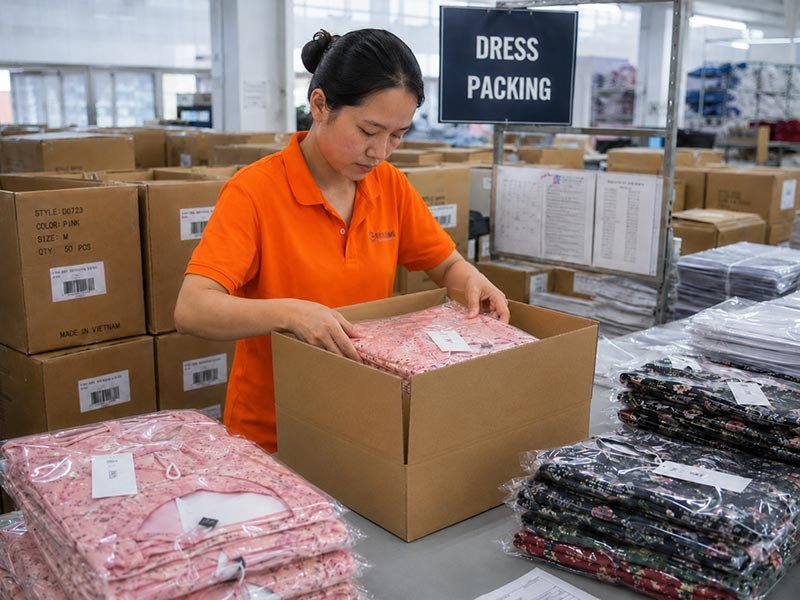
Export Carton Planning
A Dress-Focused Manufacturing System for Brand-Level Production
Development Built Around Fashion Dresses
- Fabric drape and stretch
- Bust-waist-hip balance
- Ruching and gathering
- Lining and transparency
- Adjustable structures
- Decorative trims
- Commercial production feasibility
Flexible Capacity for Repeat and Scale
Duolan’s network includes 16 owned womenswear factories, more than 20 long-term satellite factories, approximately 300 sewing lines and more than 50 quick-response lines.
Capacity is used through planned allocation:
- Core lines for complex or priority products
- Flexible lines for proven launch and replenishment styles
- Coordinated factories for larger repeat orders
- Specialized partners for printing, embroidery, washing or finishing
Order routing is documented by style, color, size, quantity, material, construction and required delivery date.
Core Factory Control for Sensitive Styles
Owned factories provide a stronger control route for critical styles, first orders and higher-risk constructions. Production allocation is based on complexity, fabric, workmanship and timing.
A fitted mesh style with double-side ruching may require a different line from a woven waist-casing maxi. Pilot review, first-piece confirmation and inline inspection can be added where risk justifies them.
The objective is not to place every order in one factory. The objective is to match each product with a controlled production path and preserve the approved standard.
Compliance and Market Requirements
The supporting factory system has SMETA audit records and has completed a SMETA 2-Pillar audit. Project teams can coordinate requirements associated with BSCI, ISO 9001, AATCC, ASTM, OEKO-TEX®, EN standards, China GB standards, GOTS and specific brand protocols where applicable.
Requirements are reviewed according to the actual project. Audit records, product tests, label information and inspection methods should be confirmed rather than presented as interchangeable claims. Duolan supports the documentation and execution path needed for the intended market and brand program.
Drawstring Dress Development and Production Case Studies
United States Going-Out Collection — 18 Styles, 42,600 Pieces
A United States going-out fashion label developed 18 fitted mini and midi dresses using side drawstrings, double-side ruching, stretch jersey and lined power mesh. The total order covered 42,600 pieces across four color families and an XS–XL size range.
The initial risk involved side-seam rotation. Several reference designs used long gathering zones, yet the proposed lightweight jersey did not recover evenly after maximum adjustment. Cord exposure also varied significantly between sizes in the first technical review.
Duolan’s development team revised the pattern allowance and separated the channel rule from the original side seam. Three construction tests compared channel widths and cord surfaces before the full first samples were completed. The size chart added relaxed length, standard adjusted length, maximum adjustment and visible cord length.
Results:
- 18 styles completed through a coordinated development calendar
- 15 styles moved forward after one principal fit-comment round
- 3 higher-risk mesh styles required an additional lining and channel revision
- Bulk production was divided between fitted jersey and mesh-capable lines
- Final inspection used a defined standard-adjusted condition
- The complete 42,600-piece order shipped in two planned release groups
The final collection maintained consistent cord exposure and side-seam balance across the approved size range.

European Resort Collection — 24 Styles, 68,400 Pieces
A European resort and vacation brand planned 24 drawstring-waist midi and maxi dresses totaling 68,400 pieces. The collection combined printed viscose, soft crepe and cotton-linen blends across six coordinated color stories.
The principal challenge was material behavior. Viscose shrinkage affected finished length, while the cotton-linen fabric created excessive bulk when gathered through the original narrow waist casing. Several printed styles also required motif control around the waist and side seams.
Duolan divided development into three fabric families. Shrinkage results informed pattern correction before final sample approval. The cotton-linen casing was widened and the self-fabric tie construction was refined to reduce internal thickness. Printed styles received separate cutting and motif-position notes.
Results:
- 24 styles developed through grouped fabric and color approvals
- Sample sizes covered mini fit references and full-length maxi balance checks
- Waist-channel dimensions were standardized by fabric family rather than forced into one rule
- Bulk production followed three fabric-specific production paths
- The 68,400-piece order was released in three shipping groups aligned with the launch calendar
- Reorder files retained patterns, color references, cord specifications and QC notes
The brand gained a repeatable construction base for later seasonal drawstring-waist programs.

Multi-Market Partywear Program — 12 Styles, 27,600 Pieces
A fashion group selling across North America, Europe and Australia placed a 12-style partywear program totaling 27,600 pieces. Products included ruched mesh midis, adjustable-slit maxis and satin side-drawstring dresses.
Market-specific fit expectations and lining coverage created the main difficulty. The mesh needed enough stretch for close fit, yet the original lining restricted adjustment. Satin samples showed stitch pressure near the channel, and maximum slit positions required a clearer safety limit.
Duolan separated shell and lining behavior during fit review. Stretch-compatible lining was introduced for the mesh styles, while satin channel operations were adjusted to reduce visible pressure. The tech packs added three slit positions and a fixed measurement condition for final inspection.
Results:
- 12 styles completed across mesh and satin production paths
- 8 styles were confirmed after the revised sample stage
- 4 styles proceeded through an additional PP review due to slit, lining or surface sensitivity
- First-piece checks were completed before full production release
- Inspection included slit range, cord movement, opening stability and relaxed recovery
- All 27,600 garments were packed under a standardized cord position
The program established one shared technical standard while preserving separate market labeling and packaging requirements.

How to Evaluate a Drawstring Dress Manufacturing Partner
A reliable manufacturing partner should be assessed across development, materials, sampling, production, quality and documentation—not only price or response speed.
Dress Category Experience
Adjustable Structure Knowledge
Fabric Behavior Review
Pattern and Grading Ability
Sample Revision Discipline
Drawstring-Specific QC
Bulk Scaling Capacity
Compliance and Documentation
A supplier who can make one visually acceptable sample may still lack the systems needed for 20,000–80,000-piece multi-style programs. The stronger partner explains risks before sampling and converts approvals into repeatable bulk standards.
Custom Drawstring Dress Frequently Asked Questions

Send Your Drawstring Dress Project for Development Review
Share your tech pack, reference images, original sample photographs or collection brief with Duolan. Our team will review drawstring placement, gathering allowance, fabric behavior, lining, fit, measurements, trims, sample stages and production feasibility before recommending a development route.
For a more accurate review, include:
- Company or brand name
- Target market and sales channel
- Drawstring dress type
- Tech pack or reference images
- Preferred fabric and lining
- Cord, stopper or branded trim direction
- Colorways and size range
- Quantity by style or total program
- Required sample stage
- Target launch or delivery date
- Label, packaging and testing requirements
Projects with complete technical information can move directly into fabric, pattern and sample evaluation. Projects beginning from visual references can first receive clarification on structure, measurements and material direction.