Skip to content
Custom Dress and Set Manufacturer
Dress-focused product development and manufacturing for established fashion brands, product teams, buying teams and global sourcing organizations.
- Collection programs commonly cover 10–30 styles across dresses, tops, skirts and coordinated sets.
- Brand production programs can reach 20,000–80,000 garments per order, depending on style mix and launch structure.
- Manufacturing support includes 16 owned womenswear factories, 20+ satellite factories and 50+ quick-response lines.
- Development covers fabric selection, pattern engineering, sampling, fit correction, PP approval, bulk production and repeat-order records.
Manufacturing Facts Behind Every Dress Collection
30+ Years Development
16 Owned Factories
20+ Satellite Factories
12,000+ Supporting Workers
300 Sewing Lines
50+ Response Lines
Built for Established Fashion Product Teams
Fashion Brand Teams
Established fashion brands need more than garment assembly. Product direction, target retail positioning, fit language, fabric standards, collection balance and launch timing must remain connected. Duolan supports dress-led programs where multiple silhouettes, colors and coordinated sets need to share a consistent design identity while meeting production and delivery requirements.
Product Development Teams
Buying and Sourcing Teams
Buying and sourcing teams require traceable quotations, realistic schedules, compliance documentation, sample status visibility and controlled bulk execution. Duolan organizes project information around style, color, size, quantity, material, workmanship and delivery milestones, allowing procurement decisions to be made with clearer operational information.
Multi-brand Fashion Groups
Multi-brand groups may run several collections, price levels and launch calendars at the same time.
Duolan can separate product routes by brand direction, dress complexity, material requirements and order scale. Approved standards, BOM information and production records are maintained independently so one brand program does not interfere with another.
Risks Identified Before Sampling and Production
Design Translation Gaps
- Clarify front, back and internal construction
- Confirm intended fit and wearing condition
- Identify missing measurements or structural details
- Separate visual features from production requirements
Fabric Silhouette Mismatch
A fabric can look suitable in a swatch but fail after cutting or wearing.
Excess weight may distort a draped skirt, insufficient recovery may weaken a fitted set, and unstable satin may create seam or pressing problems.
- Review drape, stretch and recovery
- Check transparency and lining needs
- Consider shrinkage and color consistency
- Match fabric behavior to silhouette
Unclear Fit Comments
Comments such as “make it tighter” or “improve the bust” are not production instructions.
Each comment must be converted into a measurable change affecting the pattern, specification or internal structure.
- Define affected measurement points
- Identify balance or support causes
- Update pattern and specification together
- Record the revised sample version
Set Coordination Failure
Matching separates require more control than two unrelated garments.
Color, fabric lot, shrinkage, waistband position, top length, exposed waist proportion and print direction must work together.
- Use coordinated material standards
- Review top-to-bottom proportions
- Align size and grading logic
- Confirm packing and SKU pairing
Sample Bulk Variation
A good sample does not automatically create stable production.
Material substitutions, unrecorded workmanship, unclear tolerance or missing PP standards can change the final result.
- Lock approved materials and trims
- Confirm PP or bulk basis
- Establish first-piece checkpoints
- Connect sample notes with inline QC
Delayed Launch Calendar
- Identify critical approval dates
- Prioritize long-lead materials
- Separate complex and regular styles
- Reserve QC and shipping buffers
One System for Dresses and Matching Sets
Build One Recognizable Product Language
- Hero dresses establish the strongest visual identity.
- Commercial dresses translate the concept into more accessible silhouettes.
- Coordinated sets extend styling options without losing the core direction.
- Tops and skirts can reuse proven blocks, materials or details.
- Colorways should support merchandising rather than create disconnected products.
- Price architecture should remain balanced across dresses and separates.
Coordinate Development Decisions Across Styles
- Fabric and lining standards across related styles
- Shared trims, zippers, buttons and decorative details
- Repeated color references and lab-dip decisions
- Common size-chart logic and body measurements
- Fit-block reuse where commercially appropriate
- Sample priorities based on launch and photography dates
- Cost comparison across a connected range
- Production feasibility for multiple styles
Protect Bulk Consistency and Reorder Value
Collection coordination continues after samples are approved. Dresses and matching sets may be cut, sewn or finished through different production paths, yet brand standards must remain unified. Before bulk starts, Duolan locks:
- Approved fabric and trim specifications
- Shade and batch requirements
- Pattern and grading versions
- Critical measurement points
- Workmanship reference details
- Set-pairing and SKU rules
- Label and packaging instructions
- Inspection standards
The same records also improve repeat orders. A bestselling dress can return in a new color, while its related set can be replenished without rebuilding every decision from the beginning. Pattern files, BOM records, approved samples, color references and QC notes become reusable production assets.

Custom Dress Categories We Develop

Fashion Dresses
Key controls:
- Silhouette and body proportion
- Target fabric weight and movement
- Construction feasibility
- Price-position alignment
- Production repeatability

Occasion Dresses
Key controls:
- Bust and waist balance
- Lining and transparency
- Drape and hem movement
- Secure wearing structure
- Formal finishing quality

Party Dresses
Party dresses commonly use fitted shapes, mini lengths, shine, cut-outs, sequins, mesh or decorative details. Visual impact must be balanced with wearability and bulk stability.
Key controls:
- Mini-length safety
- Stretch and recovery
- Sequin or embellishment security
- Skin-contact comfort
- Closure and support

Bodycon Dresses
Bodycon development depends on stretch direction, fabric recovery, negative ease and seam stability. A strong result should contour the body without uncontrolled transparency, twisting or loss of shape.
Key controls:
- Bust, waist and hip relationship
- Stretch percentage by direction
- Recovery after wear
- Lining or power-mesh support
- Grading across the size range

Satin Dresses
Key controls:
- Fabric grain and cutting direction
- Needle and seam selection
- Pressing temperature and pressure
- Bias behavior
- Packing against creasing
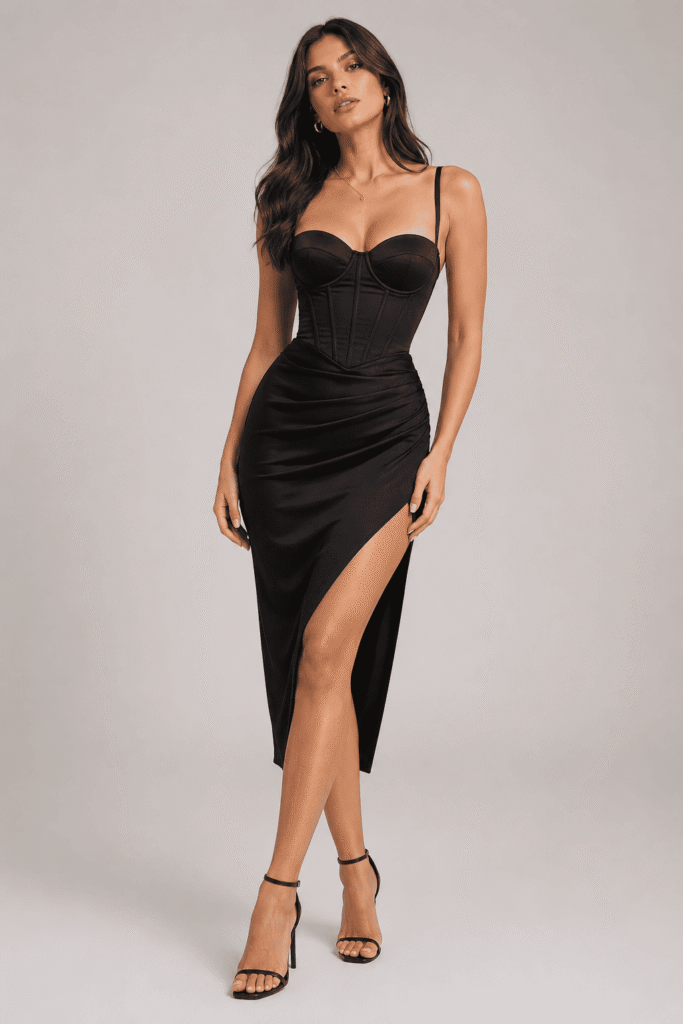
Corset Dresses
Corset dresses combine fashion appearance with internal structure. Cup position, boning, waist shaping, lining, closures and back adjustment must support the intended fit.
Key controls:
- Bust support and cup placement
- Boning length and position
- Waist compression and comfort
- Eyelet or zipper stability
- Pattern grading around structure

Mesh Lace Dresses
Mesh and lace products depend on coverage, stretch, motif placement, seam finishing and lining color. Poor material combinations may create unexpected transparency or visible construction lines.
Key controls:
- Mesh stretch and recovery
- Lace motif symmetry
- Lining coverage
- Edge and seam finish
- Skin-contact comfort

Resort Dresses
Resort dresses often require lightweight movement, print scale, comfortable fit and strong photography performance. Maxi shapes, halter necklines, open backs and flowing layers must remain stable in bulk.
Key controls:
- Print proportion and placement
- Fabric movement
- Strap and neckline security
- Travel-friendly finishing
- Coordinated-set extension
Coordinated Fashion Sets for Brand Collections

Top Skirt Sets
Development controls:
- Shared fabric or compatible fabrics
- Coordinated color and trim
- Top-to-skirt proportion
- Separate and full-set fit
- Size pairing and SKU structure

Corset Skirt Sets
Development controls:
- Cup and boning structure
- Waistband alignment
- Back closure compatibility
- Matching lining and trims
- Consistent visual tension

Top Trouser Sets
Development controls:
- Top length and trouser rise
- Waist and hip proportion
- Fabric drape or stretch
- Pressing and crease standards
- Consistent shade and handfeel

Resort Matching Sets
Development controls:
- Print direction and matching
- Lightweight opacity
- Comfortable movement
- Travel packing performance
- Dress-led collection connection

Partywear Sets
Development controls:
- Stretch recovery
- Secure closures
- Decorative placement
- Skin-contact protection
- Consistent shine or texture

Occasion Sets
Development controls:
- Structured or fluid silhouette
- Formal fabric behavior
- Waist and neckline balance
- Coordinated lining
- Premium finishing details
Extend One Dress into a Broader Collection
Translate the Strongest Commercial Design Elements
Collection extension begins by identifying why the original product works. The strongest element may be the neckline, waist definition, fabric, drape, print, corset structure or occasion positioning. Examples include:
- Satin slip dress → cami top and bias-cut skirt
- Corset mini dress → corset top and fitted skirt
- Printed maxi dress → cropped top and flowing skirt
- Lace midi dress → lace bodice top and lined skirt
- Bodycon dress → fitted top and contour skirt
- Halter dress → halter top and wide-leg trouser
Duolan reviews which pattern areas can be reused and which require independent development. A dress bodice cannot always become a standalone top by simply shortening the hem.
Reuse Development Assets Without Copying Blindly
Approved production assets can reduce unnecessary redevelopment:
- Base patterns and fit blocks
- Fabric and lining specifications
- Tested color standards
- Approved trims
- Construction methods
- Measurement logic
- QC checkpoints
- Packaging components
Reuse must remain selective. A skirt derived from a dress may need a stronger waistband, different zipper position or additional ease.
A corset top may need an inner grip system absent from the full dress.
Technical review prevents asset reuse from becoming uncontrolled copying.
Build a Balanced Commercial Assortment
A collection needs different product roles:
- Hero styles create visual attention.
- Commercial styles support broader sales.
- Matching sets increase styling and basket value.
- Repeat shapes provide fit continuity.
- New colors refresh proven products.
- Occasion crossover styles widen use scenarios.
Duolan can help organize the development sequence so high-risk styles start first, photography samples meet campaign dates and production-ready commercial styles are not delayed by decorative hero pieces.
Product priority should follow the selling calendar, not only the order in which design files arrive.
Four Ways to Start Development
Complete Tech Pack
- Missing or conflicting specifications
- Fabric and workmanship feasibility
- Critical fit measurements
- Production risks
- Sample purpose and approval path
Reference Images
- Intended silhouette and fit
- Fabric appearance and behavior
- Internal construction
- Closure and support
- Target size range
- Sample and order purpose
Original Sample
- Pattern and measurement basis
- Material availability
- Construction method
- Required improvements
- Cost and production feasibility
- Brand-specific modifications
Collection Brief
- Product development priorities
- Fabric and trim directions
- Sample sequence
- Risk classification
- Multi-style timeline
- Bulk production path
Fabric Selection by Product Result
Material selection should begin with the intended garment result: drape, support, stretch, coverage, movement, surface quality and repeatability. The comparison below helps connect fabric choices with dress and set performance.
| Material | Best Product Direction | Expected Garment Result | Set Application | Main Development Risk | Production Consideration |
|---|---|---|---|---|---|
| Satin | Slip, occasion, party and bias dresses | Fluid drape, shine and elevated visual finish | Camis, skirts and occasion sets | Seam puckering, shade direction, pressing marks and creasing | Cutting direction, needle choice, pressing and packing require control |
| Mesh | Bodycon, layered, ruched and cut-out styles | Transparency, stretch and visual layering | Mesh tops with fitted skirts | Coverage, edge distortion, recovery and lining visibility | Stretch direction and seam stabilization must be confirmed |
| Lace | Occasion, cocktail and feminine fashion dresses | Texture, motif detail and premium appearance | Lace tops with lined skirts | Motif mismatch, fraying, color variation and transparency | Placement planning and lining color need approval |
| Jersey | Bodycon, day-to-night and fitted products | Stretch, comfort and close body contour | Fitted tops, skirts and trousers | Poor recovery, twisting, shine-through and size inconsistency | Weight, stretch and recovery must suit the target fit |
| Crepe | Occasion, workwear and structured fluid dresses | Controlled drape with a clean surface | Tops, skirts and tailored separates | Shrinkage, surface marks and inconsistent weight | Fabric test and pressing method should be confirmed |
| Chiffon | Layered, maxi, resort and occasion dresses | Lightweight movement and soft transparency | Flowing tops and skirts | Slippage, transparency, seam distortion and hem control | Cutting, lining and narrow finishing require skill |
| Sequin Fabric | Party, statement and event dresses | High visual impact and strong surface texture | Statement tops and coordinated skirts | Sequin loss, skin irritation, seam bulk and packing damage | Seam allowance preparation, lining and protection are essential |
| Printed Woven | Resort, vacation, day and maxi dresses | Strong color story and recognizable collection identity | Printed tops, skirts and wide-leg trousers | Print scale, placement, color variation and cutting waste | Marker planning and repeat positioning affect cost and consistency |
Design Translation Before Pattern Development
Define the Intended Silhouette and Wearing Effect
- Body contour versus wearing ease
- Bust shaping and support
- Waist definition
- Hip fit
- Skirt fall and movement
- Neckline coverage
- Back exposure
- Strap or sleeve balance
- Intended undergarment compatibility
- Target wearer and market fit
Separate Visual Details from Structural Requirements
- Internal support
- Lining method
- Seam location
- Opening and closure
- Stress points
- Edge finishing
- Fabric grain
- Cut-out stability
- Slit construction
- Decorative attachment
Connect Design Decisions with Commercial Requirements
Product development also needs a clear business context:
- Target quantity
- Intended selling period
- Expected retail position
- Required size range
- Planned colorways
- Photography deadline
- Order or showroom deadline
- Testing requirements
- Label and packaging standards
- Reorder possibility
A hand-applied detail may suit a statement style but create an unrealistic production route across 20,000 pieces. An alternative method may preserve the visual direction while improving consistency and lead time. Design development therefore includes commercial feasibility, not only appearance.
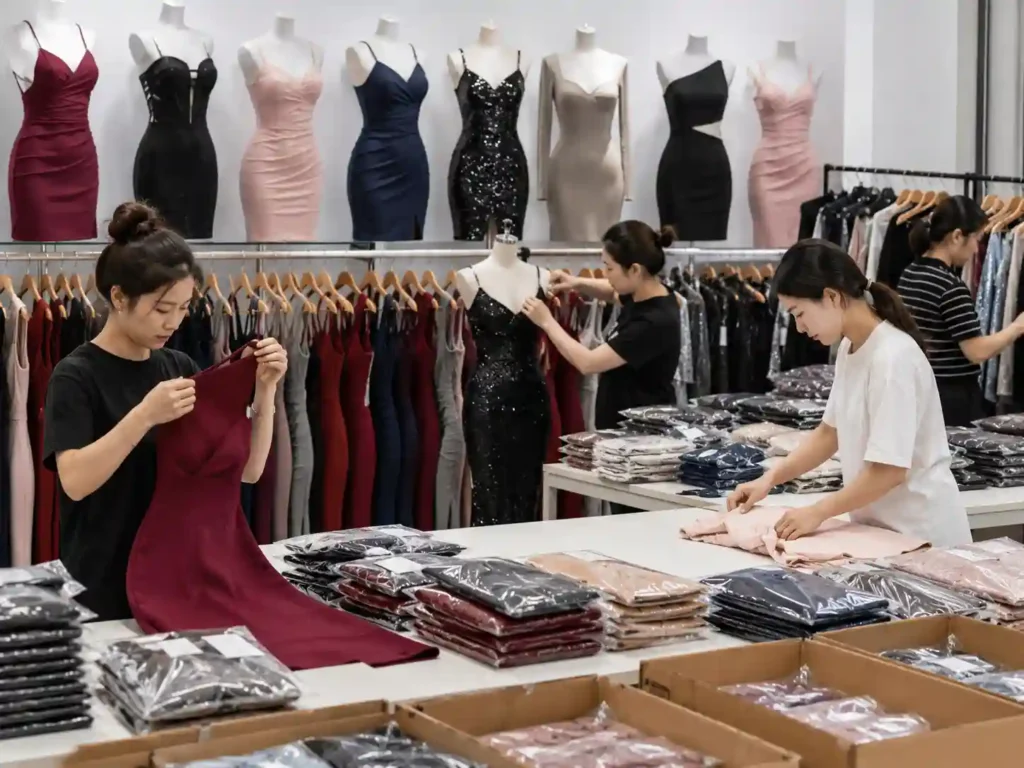
Coordinated Control for Every Matching Set
Keep Color and Fabric Batches Aligned
- One approved color reference
- Lab-dip or strike-off confirmation where required
- Fabric-lot identification
- Main fabric and lining color review
- Light-source comparison
- Cutting separation by dye lot
- Finished-garment shade checking
Engineer Top and Bottom Proportions Together
The top length, skirt rise, trouser rise and intended waist exposure determine whether a set looks balanced on the body. Flat measurements alone may not reveal proportion problems. Development review considers:
- Bust, underbust, waist and hip relationships
- Finished top length from the correct reference point
- Waistband height and wearing position
- Exposed midriff at base size
- Changes in exposed area across larger sizes
- Strap or neckline adjustment
- Sitting and movement comfort
- Separate-wear suitability
A set designed for a fitted party look needs a different proportion from a relaxed resort combination. The final standard should reflect the brand’s styling intention and target market rather than applying one generic crop-top measurement.
Align Prints, Trims and Decorative Details
- Print direction
- Motif position at center front
- Border placement
- Stripe or check alignment
- Lace motif continuity
- Sequin density
- Hardware finish
- Zipper and button color
- Drawcord, elastic or binding
- Label placement
Control Set Pairing Through Packing
Matching sets require accurate pairing after final inspection. Size, color, style code and quantity must remain connected through packing and carton preparation.
Packing control may include:
- Two pieces packed together
- Separate polybags grouped by set
- Shared or separate barcodes
- Size-pairing verification
- Component quantity reconciliation
- Label and hangtag confirmation
- Carton ratio checks
- Replacement-component planning
Packing decisions should be agreed before bulk completion because retail and warehouse systems may treat the set as one SKU or two linked SKUs.
Pattern Measurement and Grading Discipline
Build Measurements Around Real Wearing Conditions
A specification sheet should define how every critical point is measured. Common dress measurements include:
- Bust
- Underbust
- Waist
- Hip
- Body length
- Center-front length
- Center-back length
- Strap length
- Armhole
- Neck drop
- Slit height
- Hem opening
- Zipper length
Measurement instructions must state whether dimensions are flat half measurements or full circumference, where length starts, how adjustable straps are measured and whether elastic is measured relaxed or extended.
Define Measurement Tolerances by Risk
Not every measurement carries equal risk. Critical points need tighter attention than decorative or low-impact dimensions.
High-priority points may include:
- Bust and underbust
- Waist
- Hip on fitted garments
- Corset panel position
- Strap length
- Top length
- Waistband circumference
- Slit height
- Zipper opening
- Set-pairing measurements
Tolerance standards should consider fabric stretch, construction and measurement method. QC teams need the same POM definitions used during development, reducing disagreement between sample approval and bulk inspection.
Grade the Intended Fit Across the Size Range
Grading is not a uniform increase around every edge. Body proportions change differently across bust, waist, hip, shoulder, armhole and length.
Product-specific grading needs include:
- Bodycon styles: preserve contour without excessive compression
- Corset styles: protect cup position and support
- Halter styles: maintain neck comfort and bust coverage
- Mini dresses: review length safety in larger sizes
- Satin styles: provide sufficient ease in non-stretch fabric
- Matching sets: maintain visual waist proportion across sizes
Brand size charts and fit models should guide the grade. Where a style requires extended sizing or market-specific fit, development should be reviewed before bulk rather than applying a standard grade rule blindly.
Correct Patterns at the Source of the Problem
Effective fit correction returns to the paper pattern. Surface alteration on a sample may hide the cause without creating a stable production standard. Common correction examples include:
- Moving bust shaping rather than only reducing width
- Rebalancing side seams when the garment twists
- Adjusting neckline shape with support structure
- Correcting waist position rather than shortening the whole body
- Changing hip ease while preserving hem movement
- Revising strap angle to improve coverage
- Adjusting corset panels and boning together
- Correcting skirt grain for a cleaner fall
Every approved correction should update the pattern version, specification and sample record. Pattern, garment and technical files must describe the same result.
Production-ready Sample Development Stages
First Prototype
Review focus:
- Silhouette
- Proportion
- Construction route
- Main material behavior
- Major risk points
Fit Sample
The fit sample focuses on body balance and measurements. Brand comments should identify priority points and be translated into pattern and specification changes.
Review focus:
- Bust, waist and hip
- Length and coverage
- Support and comfort
- Top-to-bottom proportion
- Movement and sitting
Revised Sample
A revised sample confirms whether comments were interpreted correctly. Changes should be traceable through updated files and revision notes.
Review focus:
- Corrected pattern areas
- Updated dimensions
- Changed construction
- Material adjustments
- Remaining open points
Photo-ready Sample
Review focus:
- Visual completion
- Correct color
- Surface finish
- Pressing and drape
- Brand presentation
Salesman Sample
Salesman samples may support wholesale review, buying meetings or range presentation. Multiple styles often need to move together under a coordinated schedule.
Review focus:
- Collection consistency
- Approved fabric direction
- Correct style details
- Presentation quality
- Delivery timing
PP Sample
The pre-production sample becomes a primary reference for bulk manufacturing when materials, measurements, workmanship, trims, labels and packing directions are confirmed.
Review focus:
- Production-ready materials
- Final measurements
- Workmanship standard
- Label and packaging
- QC checkpoints
Workmanship Designed for Fashion Dress Performance

Corset Support Structure
Control points:
- Cup placement and shape
- Boning position and length
- Waist balance
- Edge stability
- Closure strength
- Inner comfort
- Grading across sizes

Satin Seam Control
Satin surfaces reveal needle marks, puckering, pressing and handling damage quickly.
Control points:
- Needle and thread selection
- Seam tension
- Cutting direction
- Handling during sewing
- Pressing method
- Hanger and packing protection

Mesh Lining Integration
Control points:
- Stretch-direction alignment
- Mesh-to-lining compatibility
- Seam stabilization
- Coverage zones
- Clean edge finishing
- Recovery after wear
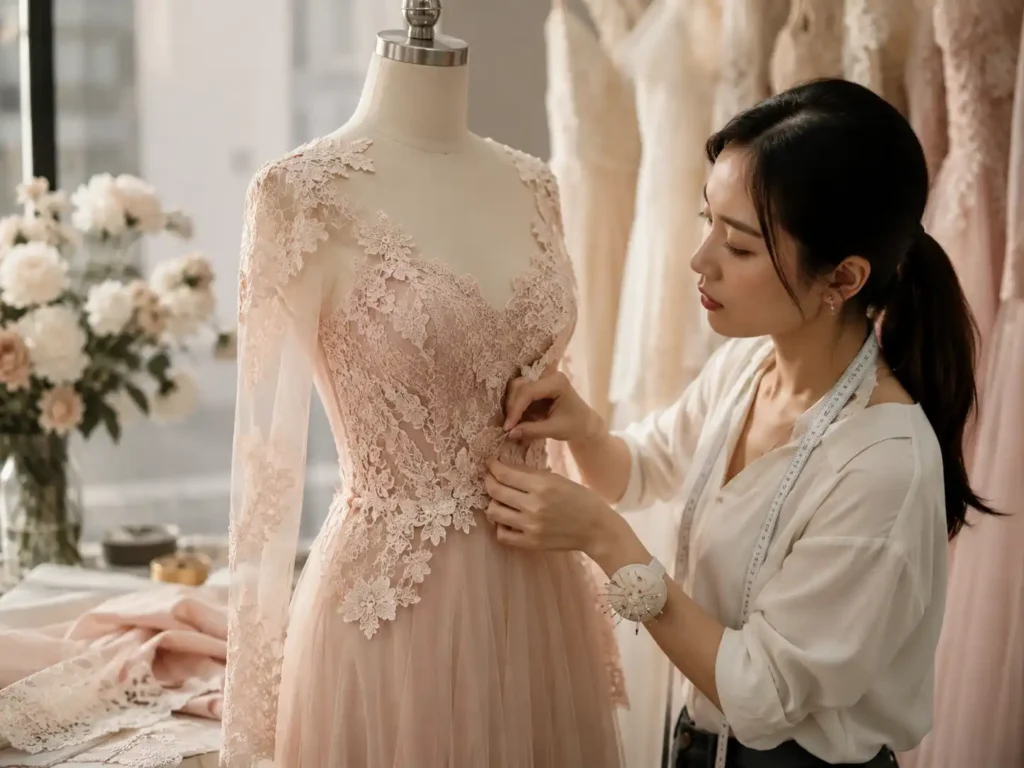
Lace Placement Work
Control points:
- Center-front motif
- Left-right balance
- Seam positioning
- Edge use
- Lining color
- Fraying control
- Bulk placement standard

Sequin Beading Protection
Control points:
- Seam allowance clearing
- Attachment security
- Inner protection
- Weight distribution
- Repair standards
- Packing separation

Closures and Fastening
Control points:
- Zipper smoothness
- Top-hook alignment
- Eyelet reinforcement
- Button security
- Strap adjustability
- Closure color matching
- Stress-point testing
Controlled Transition from Sample to Bulk
Confirm the Approval Status Before Cutting
- Fit confirmed
- Visually confirmed
- Approved as PP basis
- Pending material confirmation
- Pending minor refinement
- Approved only for photography
The readiness review checks:
- Approved pattern version
- Final size specifications
- Fabric and lining
- Trims and closures
- Color standard
- Workmanship details
- Labels and packaging
- Testing requirements
- Delivery schedule
Break the Order Down by Production Risk
Bulk orders are divided by:
- Style
- Color
- Size
- Quantity
- Material
- Construction complexity
- Special process
- Delivery priority
Styles may then be classified as regular, complex, quick-response or high-risk workmanship products. A basic woven dress, corset style, sequin party dress and printed resort set should not follow the same production route.
Production planning determines whether the order requires:
- One factory
- Multiple lines
- Pilot production
- Special-process coordination
- Print or embroidery support
- Separate first-piece approval
- Staged shipment
Lock Standards Through PP and First-piece Review
First-piece checkpoints may include:
- Measurements
- Silhouette
- Seam appearance
- Support structure
- Lining
- Trim placement
- Shade
- Pressing
- Labels
- Packing method
Transfer Development Knowledge into QC
Development records must become production and inspection tools. Approved samples alone cannot communicate every decision.
The bulk handover should connect:
- Pattern version
- Specification sheet
- BOM
- Material approvals
- Workmanship notes
- Critical measurements
- Reference photos
- PP sample
- Inspection points
- Packing requirements
The same information supports inline inspection, final inspection and future repeat orders.
Quality Control Across Seven Working Stages
Development Risk Review
Material Confirmation
Sample Standard
Approved samples, measurement files, BOM records and workmanship comments establish the production reference. Open comments should be closed before bulk cutting.
Pre-production Review
Inline Inspection
Final Inspection
A Manufacturing System Built Around Dress Programs
Product Development
Sample Rooms
Owned Factories
Satellite Capacity
Process Resources
Quality Delivery
Project Stages Quantities and Timing Factors
Project requirements change from development through launch, repeat production and scale-up. Quantity, material, construction, color and approval status influence quotation and timing.
| Project Stage | Information Required | Quantity Logic | Timing Reference | Main Output |
|---|---|---|---|---|
| Development Review | Tech pack, references, product type, size range, quantity and launch date | Evaluated by style program and material needs | Confirmed after file and feasibility review | Development route and information-gap list |
| First Sample | Approved development basis, fabric direction and sample purpose | Sample quantity follows review or presentation needs | Depends on complexity, material readiness and special processes | Prototype or first sample |
| Revision Sample | Consolidated comments, updated measurements and confirmed priorities | One controlled revision route per approved comment set | Depends on pattern and material changes | Revised sample and change record |
| PP Approval | Final fabric, trims, measurements, workmanship, labels and packaging | Linked to intended bulk order | Scheduled before cutting and line start | PP or production basis |
| Launch Order | Confirmed styles, colors, sizes, quantities and delivery plan | Evaluated by material MOQ, style complexity and line efficiency | Simple 15–20 days; regular 20–30 days; complex 30–45 days | Finished bulk order |
| Repeat Order | Previous order records, new quantity, color and delivery requirements | Uses approved production assets where materials remain available | Reviewed according to material and capacity status | Repeat production plan |
| Scale-up Order | Sales forecast, increased quantity, delivery phases and replenishment needs | May use multiple lines or factories under one standard | Planned around capacity, material supply and staged delivery | Scale-up and shipment schedule |
OEM ODM and Private Label Development

Tech Pack OEM
Support includes:
- File review
- Material sourcing
- Pattern and sample execution
- Revision
- PP approval
- Bulk production

Reference Image ODM
Support includes:
- Style analysis
- Fabric direction
- Pattern development
- Construction proposal
- Sample review
- Production preparation

Original Sample Development
Support includes:
- Measurement analysis
- Pattern reconstruction
- Material replacement
- Detail adjustment
- Branding
- Bulk execution

Fabric Trim Sourcing
Support includes:
- Main fabric
- Lining
- Zippers
- Buttons
- Boning and cups
- Decorative trims

Label Development
Support includes:
- Main labels
- Size labels
- Care labels
- Hangtags
- Barcode labels
- Packaging stickers
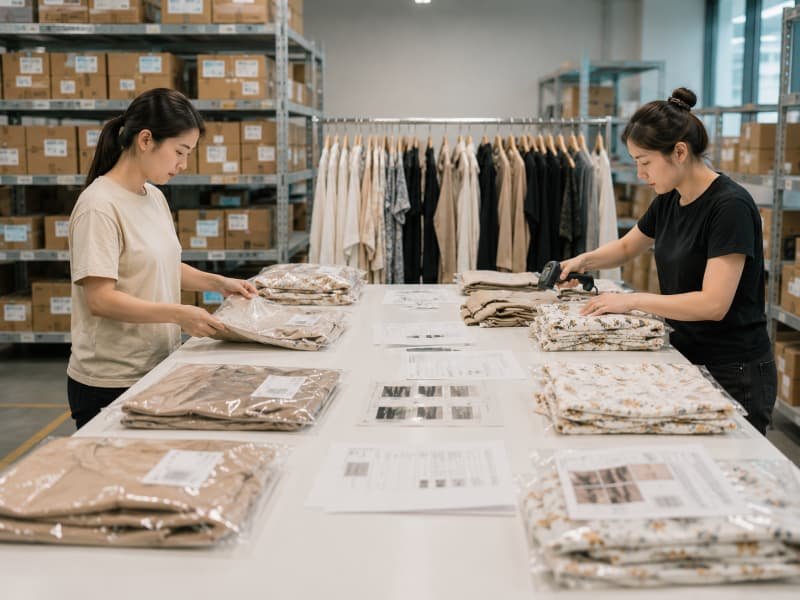
Packaging Coordination
Packaging protects the garment and supports retail, ecommerce or warehouse requirements.
Support includes:
- Polybags
- Tissue and protection
- Hangers
- Branded packaging
- Carton ratios
- Shipping marks
Compliance Documentation and Brand Requirements
Social Compliance
The manufacturing system has completed SMETA audit and SMETA 2-Pillar audit, with a social audit record available for relevant supplier review.
Brand evaluation may include:
- Audit-document review
- Factory information
- Social responsibility requirements
- Corrective-action coordination
- Facility visit arrangements
Quality Standards
Projects can be organized around relevant quality and testing requirements, including brand manuals and applicable market standards.
Support may involve requirements related to:
- ISO 9001 quality principles
- AATCC methods
- ASTM methods
- EN requirements
- China GB standards
- Client-specific inspection rules
Material Requirements
Material and product requirements vary by market, product category and brand policy. Coordination may cover:
- OEKO-TEX®-related material requirements
- GOTS-related requirements where applicable
- Restricted substance information
- Fabric test requests
- Shrinkage and performance tests
Project Documentation
Large programs require organized records from development through shipment. Available project records may include:
- Sample status
- Material approvals
- Measurement files
- BOM information
- PP references
- QC records
- Packing instructions
- Shipment documents
Repeat Production Built on Preserved Standards
Preserve the Approved Product Version
- Pattern version
- Size specification
- BOM
- Main fabric
- Lining
- Trims
- Color reference
- Workmanship standard
- Labels
- Packaging
- QC findings
Recheck Materials for New Production Batches
Reorder checks include:
- Fabric batch and shade
- Weight and handfeel
- Stretch and recovery
- Shrinkage
- Print scale and color
- Trim finish
- Lining compatibility
- Packaging availability
Extend Bestsellers with Controlled Changes
- New colors
- New lengths
- Revised necklines
- Sleeve variations
- Coordinated sets
- New prints
- Seasonal fabrics
- Updated trims
Review Every Completed Order
Post-delivery review records:
- Production issues
- Inspection findings
- Packing observations
- Communication priorities
- Delivery performance
- Recommended improvements
- Reorder risks
- Future capacity needs
Each completed program creates a clearer base for the next collection, repeat styles and larger production volume.
Dress and Set Production Case Studies

United States Partywear Program
- Corset and structured products
- Stretch and mesh products
- Satin products
- Matching separates
- All 18 styles entered bulk after controlled sample and PP review.
- Three production groups were arranged around garment complexity.
- Set components were paired by style, color and size before carton packing.
- Six strong styles were prepared with preserved records for repeat-order evaluation.
- Delivery was arranged through staged shipment to match the brand’s launch calendar.

European Occasionwear Collection
A European occasionwear brand developed 14 styles covering satin midi dresses, lace occasion dresses, layered mesh products and refined two-piece sets. Total production quantity reached 28,800 garments. The central risk was sample-to-bulk consistency. Satin surfaces showed seam and pressing sensitivity, while lace products required motif placement and lining-color decisions. The brand also needed a consistent fit language across midi dresses and coordinated separates.
Duolan applied the following controls:
- Fabric and lining review by product category
- POM confirmation for bust, waist, hip and length
- Pattern corrections recorded before PP review
- Lace placement references prepared for bulk
- Satin sewing and pressing checkpoints
- Set-color and size-pairing instructions
- First-piece inspection for complex styles
Results:
- Fourteen styles moved through one coordinated approval schedule.
- Lace placement and lining decisions were locked before cutting.
- Satin products followed a separate pressing and packing route.
- Two-piece styles were checked as full looks rather than isolated garments.
- Production records were retained for seasonal color extensions.

Australian Resort Dress Collection
An Australian resort brand planned 24 styles, including printed maxi dresses, halter dresses, lightweight midi dresses, matching top-and-skirt sets and top-and-trouser combinations. Total order quantity reached 67,200 garments. The project involved several print scales, lightweight fabrics and a fixed seasonal launch window. Key risks included print placement, transparency, color consistency, maxi-dress movement and coordinated set proportions.
Duolan organized:
- Print strike-off and color review
- Fabric-opacity and lining assessment
- Priority sampling for campaign styles
- Top, skirt and trouser proportion checks
- Marker planning around print direction
- Multi-line production planning
- Staged QC and shipment preparation
Results:
- Twenty-four styles were grouped into printed dresses, solid dresses and coordinated sets.
- Campaign-priority samples were completed before the bulk route began.
- Print placement standards were defined by product category.
- Matching sets received combined fit and shade review.
- The order was arranged in planned delivery phases aligned with the brand’s seasonal warehouse schedule.
Frequently Asked Questions for Dress Manufacturing

Send Your Dress and Set Project
- Company or brand name
- Website or sales channel
- Product category
- Tech pack, reference images or original-sample photos
- Target fabrics and colors
- Size range and size chart
- Number of styles
- Quantity by style and color
- Target launch or warehouse date
- Label and packaging requirements
- Testing or compliance requirements
- Existing quality concerns
- Sample, launch, repeat or scale-up order status
- Development basis
- Missing technical information
- Fabric and workmanship risks
- Sample route
- Production feasibility
- Quantity and cost logic
- Expected production period
- Recommended next action