 Skip to content
Custom Dress for Retail Chain Fashion Brands
Custom dress development and manufacturing for retail chain fashion brands managing multi-store assortments, department-store programs, regional store networks, seasonal floor sets and replenishment dress orders.
Duolan supports retail-chain dress programs across sample approval, PO structure, size ratio control, ticket and barcode files, carton packing rules, DC-ready handover, bulk QC and repeat retail production records.
- 12,000+ workers across the coordinated apparel manufacturing system support seasonal retail dress programs, multi-style bulk orders and replenishment production.
- 300 sewing lines plus 50+ flexible lines support retail-chain line planning, repeat color orders, floor-set timing and multi-style production allocation.
- 5 retail delivery checkpoints guide execution: PP approval, size ratio review, ticket file, carton packing rule and DC-ready handover.
- 6 retail-chain control files should align before shipment: PO, style code, color code, size ratio, ticket/barcode file and packing list.
- 4 retail packing formats can be reviewed: solid-size carton, mixed-size carton, pre-pack ratio and DC-specific carton grouping.
- 5 dress categories fit retail chain programs: occasion, party, resort, holiday and work-to-evening dresses.
- 4 replenishment records protect repeat orders: approved sample, fabric card, label/ticket file and carton rule.








Retail Chain Fashion Brands Duolan Works With
Duolan works with mature retail-chain womenswear brands needing stronger execution across PO structure, PP standards, size ratio, ticketing, barcode accuracy, carton rules, DC delivery windows and replenishment records. Strong alignment comes from teams prepared with retail files, technical packs, vendor manuals, packing instructions and delivery schedules.
Regional Retail Chain Womenswear Brands
Regional retail-chain brands need dresses produced across store networks, warehouse routes and seasonal selling windows. Duolan supports style-code control, PP approval, size-ratio packing, carton grouping and delivery-window handover.
Department-store Private Label Dress Programs
Department-store private label programs need clean product development, retail-standard labeling, predictable bulk execution and store-floor presentation. Duolan supports PP-to-bulk control, ticket files, care labels, carton records and vendor manual execution.
Chain Boutique Groups
Chain boutique groups with multiple stores need repeatable quality beyond single-store sourcing. Duolan supports multi-store dress ranges, color consistency, solid-size or mixed-size cartons, replenishment records and repeat color planning.
Occasionwear and Partywear Retail Chains
Occasionwear and partywear retail chains need dresses ready for physical store display. Duolan reviews satin finish, lace placement, sleeve comfort, bodycon recovery, sequin protection, ticket placement and hanger-ready presentation.
Resort and Seasonal Retail Dress Brands
Resort and seasonal retail brands work around floor-set dates, store allocation and promotional windows. Duolan supports printed maxis, halter dresses, soft woven styles, holiday capsules, packing recovery and timing control.
Merchandising, Sourcing, Technical, QC and Logistics Teams
Retail-chain programs usually involve merchandising, sourcing, technical, QC, logistics and vendor compliance teams. Duolan supports structured communication across style files, PP comments, label files, packing rules, carton records and replenishment needs.
Why Retail Chain Dress Brands Need a Different Manufacturer
Retail chain dress brands do not only need garment production. They need a supplier able to connect retail product development with PO execution, size allocation, ticketing, barcode accuracy, carton labels, DC receiving rules and replenishment control.
A dress order can pass factory inspection and still fail at retail handover when size ratios are wrong, tickets mismatch SKUs, carton labels do not match carton contents, or delivery misses a floor-set window. Retail-chain supply requires production accuracy and channel accuracy at the same time.
Duolan supports retail-chain dress programs through PP locking, first-piece review, inline QC, size-ratio packing, ticket-barcode checking, carton list review, delivery-window planning and repeat order records.
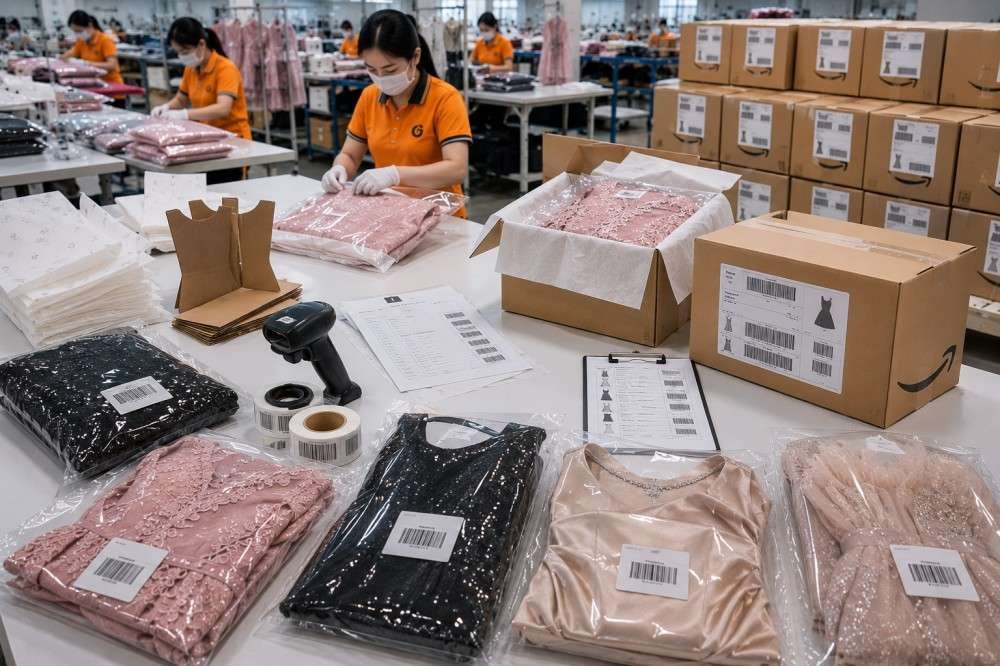
Retail-chain execution priorities
- PO-driven production: Style, color, size, delivery batch and destination warehouse need control by PO, not only total quantity.
- Store allocation accuracy: Size ratios, pre-pack groups, solid-size cartons and mixed-size cartons affect store-floor availability.
- Ticket and barcode discipline: Hangtags, price tickets, UPC/EAN, barcode stickers and polybag labels must match style-color-size records.
- DC-ready carton control: Carton label, carton count, quantity, weight, volume, destination and packing list need alignment before release.
- Store-floor presentation: Pressing, surface, hanging, labels, fold marks and garment protection affect retail display quality.
- Replenishment memory: Repeat colors and regional replenishment need approved samples, fabric cards, ticket files, carton rules and QC notes.
How Retail Chain Fashion Brands Choose a Dress Supplier
Retail chain fashion brands choose dress suppliers through retail execution discipline. Capacity and price matter, yet mature retail teams also judge PP stability, PO accuracy, size-ratio packing, ticket-barcode control, DC-ready carton records, vendor manual execution and replenishment consistency.
Duolan is positioned for retail-chain dress programs where product development, bulk production and distribution-center handover need one connected workflow.
Can the Supplier Follow Retail PO Structure?
Retail-chain orders are rarely managed as one total quantity. A single dress program may include several POs, delivery batches, colorways, size ratios, warehouse destinations and retail launch dates.
Duolan reviews PO structure before production release so factory planning, QC and packing follow retail order logic.
- Map each PO to style code, color code, size range, delivery batch and destination.
- Separate replenishment POs from initial floor-set POs before production planning.
- Keep retail style files linked with fabric route, PP sample and packing rule.
- Review destination-specific packing instructions before carton preparation.
Can PP Standards Stay Stable Across Bulk?
Retail chain programs need approved samples carried into bulk without line-to-line interpretation drift. PP approval should lock fit, material, trim, workmanship, pressing, labels and packing.
Duolan connects PP sample records with first-piece review, inline QC, final inspection and packing review.
- Use PP sample as the benchmark for every production unit handling the retail program.
- Convert fit, hem, sleeve, zipper, lining and surface comments into QC points.
- Check first pieces before retail quantity expands across lines.
- Keep PP comments visible during cutting, sewing, finishing and packing.
Can Size Ratio and Pack Rules Be Executed Correctly?
Retail-chain orders may require solid-size cartons, mixed-size cartons, pre-pack ratios or DC-specific carton groups. Total quantity accuracy is not enough.
Duolan reviews retail packing rules before carton setup, then checks carton contents against packing instructions.
- Separate solid-size cartons from mixed-size cartons before packing begins.
- Match each pre-pack ratio with correct style, color and size sequence.
- Review store-allocation cartons against PO and destination group.
- Confirm size-ratio accuracy before carton sealing.
Can Ticket, Barcode and Label Files Stay Accurate?
Retail programs can fail when garments are correctly made but tickets or barcodes are wrong. Main labels, care labels, price tickets, UPC/EAN, SKU stickers and polybag labels need exact matching.
Duolan treats label and ticket files as production documents, not last-minute packaging accessories.
- Link ticket files with style code, color code and size code.
- Match UPC/EAN or barcode records before hangtag or sticker application.
- Review care label content against approved fabric and market files.
- Check label-to-garment pairing before final packing.
Can Cartons Be Ready for DC Receiving?
Retail DCs need clear carton information. Carton labels, carton numbers, quantities, weights, dimensions, PO references and packing list data need alignment before handover.
Duolan reviews carton records before release so warehouse receiving can match goods with retail files.
- Confirm carton label format before bulk packing.
- Match carton contents with packing list and PO data.
- Review carton grouping by destination, DC or delivery batch.
- Keep carton count, weight and volume records ready for shipment handover.
Can QC Protect Store-floor Presentation?
Retail-chain dresses enter stores where consumers can compare color, finish, handfeel and hanging presentation directly. QC needs to protect display quality, not only pass basic garment checks.
Duolan reviews retail dress bulk through fit, fabric, surface, pressing, labels, folding, hangtag placement and carton protection.
- Inspect satin, lace, mesh, sequin and velvet surfaces before packing.
- Check pressing, loose threads, stains, zipper smoothness and hem balance.
- Review hangtag position and label visibility for retail display.
- Confirm packing protects garments before store or DC handling.
Can Replenishment Repeat Retail Standards?
Retail replenishment must repeat the approved standard while adjusting size ratio, store demand or regional allocation. Reorder success depends on preserved records.
Duolan archives approved sample, fabric card, color reference, ticket file, barcode file, carton rule, packing list format and QC notes.
- Preserve ticket and carton rules for repeat color orders.
- Review replenishment pack ratios against latest store demand.
- Compare repeat color and fabric with original approved garment.
- Keep retail file history ready for future floor-set or regional replenishment.

Where Retail Chain Dress Programs Usually Break Down
Retail chain dress programs break down when production, ticketing, carton rules, PO records and delivery windows are managed separately. A strong retail program keeps garment quality and retail handover accuracy connected from PP approval to DC release.
Duolan structures retail-chain programs around PP standards, PO mapping, size-ratio control, ticket-barcode checking, carton list accuracy, vendor manual requirements and replenishment files.
Bulk Is Finished, DC Files Are Not
Finished garments cannot enter a retail receiving system smoothly when carton labels, packing lists, ticket files, barcode records or shipment handover files are incomplete.
Duolan response: PO, ticket, barcode, carton mark, packing list and shipment handover enter the workflow before packing begins.
- Confirm carton label fields before bulk cartons are prepared.
- Link packing list data with actual carton contents.
- Review barcode and ticket records before hangtag application.
- Keep shipment files separated by PO, destination and delivery batch.
Size Ratio Does Not Match Store Allocation
Retail orders depend on size allocation. A carton packed with the wrong size ratio can disrupt store-level inventory even when total order quantity is correct.
Duolan response: PO, style-color-size records, pack ratio and carton groups are checked before carton sealing.
- Check solid-size and mixed-size carton rules separately.
- Match pre-pack combinations with retail allocation files.
- Review size ratio before ticketed garments enter cartons.
- Keep destination grouping clear for store or DC allocation.
Ticket and Barcode Errors Create Chargeback Risk
Wrong hangtags, price tickets, UPC/EAN records, SKU stickers or polybag labels can delay DC receiving, store replenishment and inventory accuracy.
Duolan response: Label-ticket-barcode-style-color-size matching is verified during finishing and packing review.
- Pair barcode files with exact color and size codes.
- Check ticket placement before final folding.
- Review polybag stickers against carton content.
- Keep error checks before cartons leave the packing area.
PP Sample Quality Does Not Survive Bulk
Retail dress bulk can lose the approved sample standard through size drift, weaker fabric finish, uneven pressing, rough seams, zipper waves or surface damage.
Duolan response: PP locking, first-piece review, inline QC, final inspection and packing review protect retail presentation.
- Compare first-piece garments with PP sample and retail comments.
- Check surface-sensitive fabrics during production, not only at final inspection.
- Review seam, hem, lining and zipper issues before volume expands.
- Confirm final garment appearance before ticketing and packing.
Carton Packing Does Not Follow Retail Rules
Retail DCs may require specific carton types, destination grouping, store packs or size-ratio packs. Factory-convenient packing can create retail receiving problems.
Duolan response: Retail pack instructions guide carton grouping, size ratio, carton label and packing list.
- Separate carton rules before packing starts.
- Review carton density for surface-sensitive dresses.
- Match carton grouping with store, DC or regional allocation.
- Check carton label against carton content before release.
Delivery Window Is Missed
Retail-chain dress programs often depend on floor-set dates, promotional calendars, seasonal launches or DC appointments. Late delivery can damage the entire sales plan.
Duolan response: PP approval, bulk schedule, inspection date, packing date and delivery window are planned together.
- Work backward from floor-set or DC appointment timing.
- Move ticket, label and carton components into earlier review.
- Track high-risk styles before delays affect full program delivery.
- Confirm shipment readiness before retail window becomes compressed.
Replenishment Loses Original Standard
Retail replenishment can drift when color, fabric, label, ticket, barcode or carton rules are not preserved from the first order.
Duolan response: Approved sample, fabric card, color reference, ticket file, carton rule and reorder notes remain archived by style.
- Preserve retail ticket and label versions by program.
- Record carton rule and pack ratio by PO type.
- Compare repeat colors with approved garments before production.
- Use previous QC notes for first-piece review during reorder.
Retail-chain Dress Development and PO Execution System
Retail-chain dress development needs product accuracy and order-structure accuracy. Duolan connects range planning, PP approval, PO setup, size-ratio control, label-ticket files, carton rules and DC handover before bulk delivery.
Retail Program Review
Retail program review starts with store network, DC structure, PO plan, floor-set date, delivery window and replenishment path. These decisions affect production and packing from the first sample stage.
- Confirm whether the program serves stores, department-store doors, regional DCs or chain boutique groups.
- Review PO count, delivery batches, warehouse destinations and floor-set timing.
- Identify initial launch styles and replenishment candidates before bulk planning.
- Keep vendor manual requirements visible during sample and PP review.
Dress Range and Store-floor Role
Retail dresses need clear store-floor roles.
A hero occasion dress, holiday party dress, resort maxi or repeat core midi carries different fit, display and replenishment expectations.
- Define hero dresses for floor-set impact and stronger visual presentation.
- Separate repeat core styles from seasonal novelty styles.
- Review store-floor hanger appeal, hem balance, surface finish and garment recovery.
- Match fabric and construction risk with expected retail selling role.
PO and Style File Setup
Each dress style needs clean file setup before bulk release.
PO, style code, colorway, size range, fabric route, ticket file, packing rule and delivery batch must stay connected.
- Link each PO with style-color-size and delivery group.
- Keep ticket and barcode files attached to the correct style record.
- Review packing rule before line allocation and carton planning.
- Track changes before retail files move into production.
PP-to-bulk Handover
PP approval needs a disciplined handover across sample room, pattern, fabric, cutting, sewing, QC and packing. Retail standards weaken when every team works from partial information.
- Share PP sample, fit notes, fabric records and workmanship points with production.
- Confirm label, ticket and packing notes before sewing starts.
- Review first pieces before retail quantities expand.
- Keep inline QC focused on store-floor garment appearance.
DC-ready Delivery Preparation
DC-ready delivery starts before cartons are sealed. Carton marks, packing list, barcode checks, ticket files, shipment split and handover records need accurate preparation.
- Prepare carton label format before packing launch.
- Check ticket, barcode and polybag sticker before carton loading.
- Confirm carton contents against packing list and PO.
- Keep shipment handover files ready for logistics and DC receiving.

Retail-chain Dress Programs Duolan Can Support
Duolan supports retail-chain dress programs across occasionwear, partywear, resort, holiday, work-to-evening, wedding guest and repeat core dress categories. Each program needs PP control, ticket accuracy, size-ratio packing, carton discipline and replenishment records.

Retail Chain Occasion Dress Programs
Occasion dress programs need polished store presentation and reliable fit. Duolan reviews satin, lace, sleeves, lining, hem balance, care labels, ticket files and carton packing.

Department-store Party Dress Programs
Department-store party dresses need visual impact and controlled bulk quality. Duolan reviews bodycon recovery, mini length, sequin protection, price tickets and DC-ready cartons.

Chain Boutique Resort Dress Programs
Chain boutique resort ranges need strong print identity and travel-friendly presentation. Duolan reviews print scale, shrinkage, color consistency, folding recovery and store allocation.

Holiday Floor-set Dress Programs
Holiday floor-set programs need delivery timing, surface impact and ticket accuracy. Duolan reviews sequin, velvet, metallics, satin, hangtags, carton grouping and launch-window readiness.

Work-to-evening Retail Dress Programs
Work-to-evening dresses need comfort, structure and clean finish for daytime-to-event selling. Duolan reviews crepe, sleeves, zipper, pressing, care labels and size-ratio packing.

Wedding Guest Retail Dress Programs
Wedding guest retail dresses need refined fit and event-ready polish. Duolan reviews lace placement, satin finish, sleeve comfort, lining tone, ticket placement and DC packing.

Satin Retail Dress Programs
Satin retail dresses need smooth finish after packing and transit. Duolan reviews shade, zipper waves, fold marks, pressing, polybag size and carton pressure.

Lace Occasion Retail Dresses
Lace occasion dresses need close-up quality and careful carton handling. Duolan reviews motif placement, lining tone, edge finish, sleeve comfort, snag risk and hangtag position.

Mesh and Sheer Retail Dresses
Mesh and sheer retail dresses need coverage clarity and secure construction. Duolan reviews lining zones, transparency, stretch, seam visibility, barcode pairing and packing protection.

Sequin Holiday Retail Dresses
Sequin holiday dresses need festive surface quality and protected packing. Duolan reviews sequin direction, attachment, lining comfort, scratch points, carton density and store-floor presentation.

Bodycon Store-fit Dress Programs
Bodycon store-fit programs need consistent measurements across colors and sizes. Duolan reviews recovery, opacity, side seam balance, grading, POMs and retail size feedback records.
PP-to-Bulk Control for Retail Chain Dresses
PP-to-bulk control protects retail-chain dress programs from sample drift, line variation and store-floor presentation problems. Duolan uses PP standards, first-piece review, inline QC, final inspection and packing review before DC handover.
PP Sample Approval
PP approval needs more than garment appearance. Retail PP standards should include fabric, color, measurements, workmanship, pressing, labels, tickets, folding and packing notes.
- Lock retail sample comments before bulk cutting.
- Confirm fabric, lining, trims and ticket placement with the PP sample.
- Add store-floor appearance points into PP notes, including hem balance and pressing.
- Keep PP approval linked with PO, style code and packing rule.
First-piece Review
First-piece review checks whether production lines understand the approved retail standard before quantity expands.
- Compare first pieces with PP sample by front, side, back and detail zones.
- Review seam, zipper, sleeve, lining, hem and pressing before line speed increases.
- Check ticket position and label placement before bulk finishing.
- Correct production interpretation before full retail volume builds up.
Inline QC for Store-floor Quality
Inline QC protects retail presentation while garments are still in production. Problems caught late may affect entire PO batches.
- Inspect surface-sensitive fabrics during sewing and finishing.
- Review measurements on fit-sensitive styles across colorways.
- Check loose threads, stains, puckering, zipper waves and uneven hems.
- Track repeated issues by line, style and batch before final inspection.
Final Inspection by Retail Criteria
Final inspection should check garment appearance and retail file accuracy. Retail-chain dresses need product quality and channel-readiness at the same time.
- Review measurements, workmanship, surface, pressing and garment cleanliness.
- Check main label, care label, size label, ticket and barcode pairing.
- Verify quantities against PO and packing instruction.
- Review folded or hanging presentation before carton release.
Packing Review Before Carton Release
Packing review protects DC receiving and store presentation. Hangtag, barcode, polybag sticker, folding method, size ratio and carton content must match retail instructions.
- Check ticket, barcode and polybag sticker before carton loading.
- Review folding method for satin, lace, mesh, sequin and velvet styles.
- Match carton contents with size-ratio or pre-pack instruction.
- Confirm carton label and packing list before shipment handover.

Size Ratio, Pack Rule and Store Allocation Control
Retail-chain dress orders depend on accurate size ratio, pack rules and store allocation. Duolan reviews PO size plans, solid-size cartons, mixed-size cartons, pre-pack ratios and destination grouping before packing starts.
Size Ratio by PO
Retail orders often carry specific size ratios by PO, color or destination. Wrong size mix can affect store sell-through even when total units are correct.
- Review S/M/L/XL or extended size ratio by PO and colorway.
- Match size distribution with retail allocation file before packing.
- Flag styles where bodycon, maxi or occasion fit may require size-ratio attention.
- Keep size-ratio checks linked with packing list and carton count.
Solid-size Carton
Solid-size cartons may be required for certain DC sorting or replenishment systems. Accuracy depends on strict style-color-size grouping.
- Pack one style, one color and one size per carton where required.
- Check solid-size carton label before sealing.
- Keep carton quantity tied to PO and destination.
- Separate solid-size cartons from mixed cartons in shipment records.
Mixed-size Carton
Mixed-size cartons require accurate size combinations inside one style and color. Packing mistakes can disrupt DC receiving and store allocation.
- Match mixed-size contents with approved packing ratio.
- Verify garment labels and tickets before mixed carton loading.
- Check carton content against packing list during packing.
- Keep mixed carton rules visible for reorder programs.
Pre-pack Ratio
Pre-pack ratios support store allocation when cartons are packed as fixed size runs. Precision matters because a pre-pack carton may go directly into allocation workflows.
- Confirm fixed ratio combinations before packing, such as XS/S/M/L groupings.
- Review colorway and style code before each pre-pack group is sealed.
- Pair pre-pack labels with the correct carton group.
- Record pre-pack rules for replenishment and future floor sets.
Store / DC Allocation
A retail order can be divided by store group, regional DC, promotional window or replenishment plan.
Carton grouping must reflect allocation logic.
- Separate cartons by DC, region, floor-set date or shipment batch.
- Match store allocation needs with size-ratio packing.
- Review destination and carton group before shipment handover.
- Preserve allocation records for repeat orders.
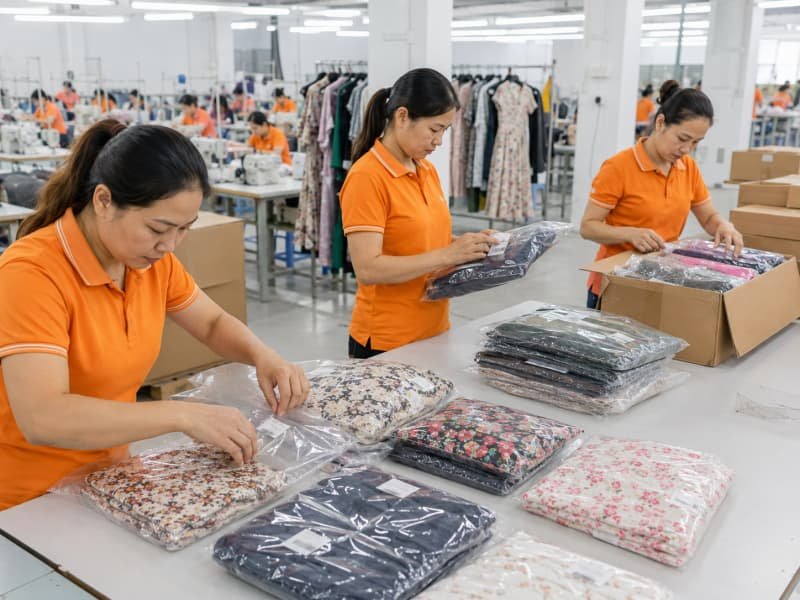
Retail Label, Hangtag, Ticket and Barcode Control
Retail-chain dress programs need accurate label and ticket execution. Duolan links main labels, care labels, size labels, hangtags, price tickets, UPC/EAN, barcode files and polybag stickers with style-color-size records before packing.
Main Label and Size Label
Main labels and size labels connect brand identity with retail inventory and shopper fit expectations. Mislabeling creates store-floor and stockroom problems.
- Match main label placement with garment construction and brand standard.
- Pair size labels with approved size codes and grade rules.
- Check label version by style, color and market where required.
- Review label placement before finishing and ticketing.
Care Label and Fiber Content
Care labels must match fabric composition, wash-care instructions and brand-provided market files. Incorrect care labels can create compliance and return concerns.
- Link fiber/fibre content with approved bulk fabric.
- Match care instructions with fabric behavior and trims.
- Confirm origin and responsibility details according to brand files.
- Keep care label version connected with PO and style record.
Hangtag and Price Ticket
Retail-chain dresses often require hangtags, price tickets, promotional tags, department information or season coding. Late ticket errors can delay DC handover.
- Confirm ticket artwork and price file before application.
- Match hangtag and ticket to style, color and size.
- Review ticket placement for store display and scanning.
- Separate promotional or seasonal tickets where needed.
UPC / EAN / Barcode
Barcode accuracy protects inventory intake and store scanning. Barcode files should be handled before packing pressure begins.
- Pair barcode with exact style-color-size combination.
- Review scannable placement on hangtag or polybag.
- Check barcode file against ticket and carton data.
- Keep barcode records available for DC handover.
Label-to-Carton Matching
Garment labels, tickets, polybag stickers, carton labels and packing list must match. Retail errors often happen when these records are checked separately.
- Compare garment ticket with polybag sticker before carton loading.
- Match carton label with actual contents.
- Check size ratio and barcode group before carton sealing.
- Keep discrepancy records visible before shipment.

Carton Label, SSCC and DC-ready Packing
DC-ready packing connects garment production with retail receiving. Duolan reviews carton label format, SSCC or GS1 requirements when provided, carton content accuracy, garment protection and handover files before shipment release.
Carton Label Format
Carton labels should reflect retail receiving needs. Required fields may include PO, style, color, size, quantity, carton number, destination, weight, volume or retailer-specific references.
- Confirm carton label format before printing.
- Match carton label with packing list and carton contents.
- Separate labels by PO, destination and delivery batch.
- Review label placement for warehouse scanning.
SSCC / GS1 Logistic Label Readiness
Some retail programs require SSCC or GS1 logistics labels for carton or pallet tracking. Duolan follows brand-provided files and placement rules where required.
- Confirm SSCC or GS1 label requirement before packing setup.
- Pair logistic labels with correct carton or pallet group.
- Keep label records tied to shipment and packing list.
- Review scan-facing placement before goods release.
Carton Content Accuracy
Carton content accuracy prevents receiving delays and allocation errors. Every carton should match its label, packing list and PO requirement.
- Check style, color, size and quantity before sealing.
- Review mixed-size or solid-size carton rules during packing.
- Separate replenishment cartons from initial floor-set cartons.
- Keep carton count aligned with shipment records.
Carton Density and Garment Protection
Retail packing must balance space efficiency with garment protection. Overpacked cartons can damage store-floor presentation.
- Reduce carton pressure for satin, velvet and sequin styles.
- Protect lace and mesh from snagging inside cartons.
- Adjust folding for maxi, structured bodice or embellished dresses.
- Review packed garment recovery before final release.
DC Receiving Handover
DC receiving handover requires accurate carton count, packing list, shipment split, weights, volumes and destination information.
- Prepare handover files before forwarder pickup.
- Match carton numbers with shipment split.
- Confirm packing list and carton labels after final count.
- Keep destination records ready for DC or logistics team review.

Vendor Compliance and Delivery Window Management
Retail-chain dress programs depend on vendor manual execution and delivery discipline. Duolan supports vendor file review, PO timing, ASN/EDI data support where required, chargeback-risk reduction and final shipment handover.
Vendor Manual Review
Vendor manuals often define label placement, ticketing, carton size, carton marks, packing ratio, delivery windows and documentation rules. These requirements must enter production planning early.
- Extract label, ticket, barcode, carton and packing rules before bulk starts.
- Keep vendor manual requirements connected with each PO.
- Review file changes before packaging materials are produced.
- Separate retailer-specific rules from ordinary export packing.
PO and Delivery Window Control
Retail POs may connect to floor-set dates, seasonal launches, promotions, DC appointments or split delivery windows.
- Work backward from delivery window and floor-set date.
- Track PP approval, material readiness and packing milestones by PO.
- Identify late-risk styles before full program timing is affected.
- Keep replenishment POs separate from initial launch timing.
ASN / EDI Data Coordination
Some retail programs require shipment data support. Production-side accuracy must protect PO, carton, quantity, barcode and packing list records used for digital handover.
- Keep carton and quantity records clean for ASN/EDI preparation.
- Match barcode and carton contents before shipment data is finalized.
- Review shipment split by destination and PO.
- Provide accurate packing records for brand logistics teams.
Chargeback Risk Prevention
Retail chargeback risks can come from late shipment, wrong labels, barcode mismatch, carton errors, quantity differences or non-compliant packing.
- Check ticket and barcode before cartons leave packing.
- Review delivery timing against approved shipment window.
- Verify carton quantity and packing list before handover.
- Flag vendor manual conflicts before production release.
Shipment Handover Discipline
Shipment handover closes the retail production loop. Carton count, packing list, shipment split, forwarder needs and DC requirements must be confirmed.
- Finalize carton count and packing list after sealing.
- Separate shipment documents by PO and destination.
- Confirm pickup timing with forwarder or logistics team.
- Preserve shipment records for claims, replenishment and future orders.
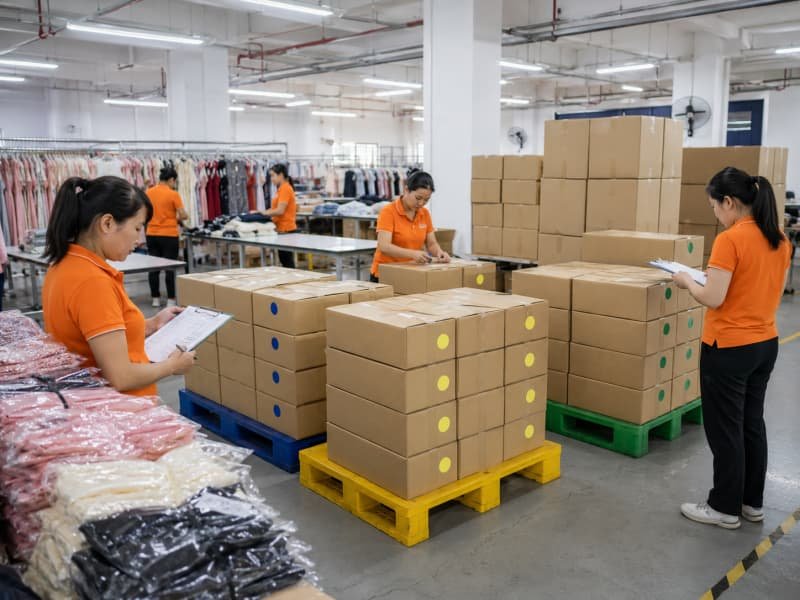
Retail Replenishment and Repeat Color Control
Retail-chain replenishment needs more than a repeat purchase order. Store sales, regional allocation, color demand, label versions, ticket rules, carton ratios and QC records all affect repeat production accuracy.
Store Sell-through Feedback
Store sell-through feedback may change size ratio, color demand, replenishment quantity or regional allocation. Repeat planning should reflect retail reality.
- Review strong sizes by store group or region.
- Identify repeat colors based on sell-through, not only original plan.
- Adjust replenishment pack ratio when size demand shifts.
- Keep store feedback tied to style and color records.
Approved Sample Archive
Approved samples protect fit, fabric, construction and store-floor presentation. Replenishment should begin from the approved standard.
- Preserve PP sample and approved bulk reference.
- Keep fabric card, color standard and trim record by style.
- Archive ticket, label and carton rules with the garment record.
- Use original QC notes during reorder first-piece review.
Repeat Color and Seasonal Refresh
Retail chains often refresh proven silhouettes with new seasonal colors, fabric updates or minor construction changes.
- Test repeat color on approved fabric base before bulk.
- Review new fabric impact on fit, pressing and packing.
- Keep proven pattern and fit logic stable during seasonal refresh.
- Preserve ticket and carton rules unless retail files change.
Replenishment Pack Rule
Replenishment may not use the same carton ratio as first launch. Size demand, store needs and warehouse instructions may change.
- Confirm replenishment size ratio before packing.
- Separate regional replenishment cartons from initial launch cartons.
- Review pre-pack needs based on latest store allocation.
- Update packing list format when replenishment structure changes.
Reorder QC and DC Consistency
Repeat orders still need PP review, first-piece check, QC, ticket review and carton accuracy. Past success does not replace current inspection.
- Compare reorder first piece with approved sample archive.
- Check repeat color and fabric finish before production expands.
- Review labels, tickets and barcodes against latest retail files.
- Confirm carton and packing data before shipment release.

Retail Chain Dress Program Risk Control Matrix
Retail-chain dress programs combine product development, PO control, PP standards, ticket accuracy, size ratio, carton labels, DC handover, delivery windows and replenishment records. Duolan reviews these risks before retail delivery pressure builds.
| Retail Chain Dress Risk | Common Breakdown | Duolan Control Focus |
|---|---|---|
| PO Confusion | Style, color, size or delivery batch mismatches PO | PO-style-color-size control |
| PP Drift | Bulk differs from approved retail sample | PP locking and first-piece review |
| Size Ratio Error | Carton content does not match store allocation | Size ratio and pack rule review |
| Ticket Error | Hangtag, price ticket or barcode mismatch | Ticket-barcode file control |
| Care Label Issue | Fiber, origin or care information mismatches file | Care label file review |
| Carton Label Error | Carton mark, SSCC or quantity incorrect | Carton label and packing list review |
| DC Receiving Delay | Warehouse cannot match goods and records | DC-ready handover files |
| Delivery Window Miss | Floor set or promotion window affected | PP, packing and shipment timing control |
| Replenishment Drift | Repeat order loses original retail standard | Approved sample and retail file archive |
Custom Dress for Retail Chain Fashion Brands case studies
Duolan supports retail-chain dress programs through PO mapping, PP locking, size-ratio packing, ticket-barcode checking, care label review, carton label control, DC-ready handover and retail replenishment archives. Project details can be discussed by region, retail focus, delivery challenge and Duolan response without exposing private brand information.
United States|Retail Chain Party Dress Program
A US retail-chain womenswear brand developed bodycon minis, satin party dresses and cut-out going-out styles. The program included 26 styles and approximately 84,000 pieces.
- Retail Program Focus: Support a multi-store partywear range with strong fit, satin presentation and accurate retail packing.
- Chain Delivery Challenge: PO split, size ratio, price ticket, barcode sticker, satin packing and carton accuracy needed close control.
- Duolan Response: Duolan used PP locking, size-ratio review, ticket-barcode checks, satin packing method and carton list review.
- Program Value: Retail-chain delivery moved forward with stronger store-allocation and DC handover control.

United Kingdom|Occasionwear Retail Store Program
A UK occasionwear retail chain developed lace cocktail dresses, satin midis and long sleeve event dresses. The program included 18 styles and approximately 52,000 pieces.
- Retail Program Focus: Deliver polished occasionwear for store presentation and seasonal event selling.
- Chain Delivery Challenge: Care label accuracy, sleeve comfort, lace placement, mixed-size carton and split delivery required detailed control.
- Duolan Response: Duolan reviewed label files, mapped lace placement, corrected fit, checked mixed cartons and confirmed packing lists.
- Program Value: Occasionwear retail delivery gained clearer style-color-size execution before DC release.

Australia|Seasonal Resort Retail Program
An Australian retail-chain brand developed printed maxis, halter dresses and soft woven resort styles. The program included 22 styles and approximately 72,000 pieces.
- Retail Program Focus: Prepare a resort floor-set range with print identity, soft movement and delivery-ready packing.
- Chain Delivery Challenge: Seasonal floor-set timing, print scale, shrinkage, fold recovery and carton grouping affected program readiness.
- Duolan Response: Duolan reviewed artwork placement, confirmed fabric batches, adjusted lining decisions, checked packing recovery and reviewed delivery timing.
- Program Value: Seasonal retail delivery gained stronger fabric control and floor-set readiness.

Europe|Retail Replenishment and Repeat Color Program
A European retail group managed repeat core dresses, holiday colors, party updates and regional replenishment. Program scale ranged from 20–30 styles and approximately 56,000–88,000 pieces.
- Retail Program Focus: Support repeat retail orders with stable color, accurate ticketing and DC-ready carton records.
- Chain Delivery Challenge: Repeat color consistency, retail ticket accuracy, carton split and receiving files created execution risk.
- Duolan Response: Duolan archived fabric cards, preserved color references, reviewed ticket files, checked carton rules and recorded reorder notes.
- Program Value: Replenishment gained stronger retail production memory and packing consistency.

FAQs About Custom Dress Manufacturing for Cross-Border Fashion Brands
Duolan supports custom dress programs for brands selling across the US, UK, EU, Australia, Middle East and multi-market ecommerce channels. Programs may include party dresses, occasionwear, resort capsules, seasonal dresses, eventwear, wedding guest dresses, holiday capsules and repeat color replenishment.
Cross-border dress programs require more than garment production. Fit, label files, SKU data, barcode accuracy, carton records, packing method, shipment handover and replenishment memory all affect whether products can move smoothly from factory to overseas warehouse or ecommerce fulfillment.
Yes. Duolan can review neckline, sleeve, length, coverage, lining, fabric weight and size logic based on the target market. This helps brands avoid using one dress standard across markets with different wearing habits and size expectations.
Duolan reviews fit samples, size sets, critical POMs, fabric behavior, shrinkage, opacity, stretch recovery and bulk measurement records before shipment. This is especially important for bodycon, mini, maxi, cut-out, halter, lace and sequin dress styles.
Yes. Duolan can coordinate brand-provided label files with style code, fabric composition, size system, market version, origin information and wash-care requirements. Care label, size label and market-specific label versions can be checked before sewing and packing begin.
Duolan links style code, colorway, size range, SKU, barcode file, polybag sticker, carton mark and packing list before shipment release. This helps reduce warehouse intake issues caused by mismatched product data, unreadable stickers or incorrect carton contents.
Yes. Duolan can prepare warehouse-friendly packing through SKU mapping, barcode stickers, polybag rules, carton marks, packing ratios and shipment records. Carton grouping can also be separated by destination, warehouse, market or shipment method.
Duolan reviews packing method based on fabric and dress structure. Satin, lace, mesh, sequin, velvet, crepe, printed woven and structured dresses may require different folding, polybag sizing, surface protection and carton density to reduce creasing, snagging or pressure damage.

Send Your Retail Chain Dress Program Brief
A strong retail-chain dress program starts with PO structure, PP status, size ratio, ticket files, barcode rules, carton instructions, DC delivery window and replenishment plan. Duolan can review retail files, sample status, dress categories, packing rules and delivery requirements once project information is ready.
Share Your Retail Program Structure
- Retail market, store count or DC structure, PO structure, delivery window, floor-set date, dress category, style count and replenishment plan.
- Program type, such as retail-chain occasionwear, department-store party dresses, resort floor-set, holiday capsule, work-to-evening range or repeat core dress program.
- Retail priorities, such as PP consistency, size-ratio accuracy, ticket control, barcode matching, carton label accuracy or DC handover.
Share Your Style, Size and Retail Files
- Style list, tech packs, PP sample status, size spec, size ratio, colorways, fabric direction, care label file, hangtag file, ticket file and barcode file.
- Sample stage, such as first sample, fit sample, PP sample, size set, approved sample or repeat bulk reference.
- Product concerns around fit, store-floor presentation, fabric surface, pressing, ticket placement, size ratio, carton grouping or replenishment accuracy.
Share Your Packing and DC Delivery Needs
- Order quantity, pack rule, solid-size carton, mixed-size carton, pre-pack ratio, carton label format, SSCC / GS1 requirement, packing list format, DC or forwarder requirement and repeat color plan.
- Delivery details, including PO split, carton group, warehouse destination, packing date, delivery window, floor-set date and shipment handover needs.
- Replenishment needs, including store sell-through feedback, repeat color, regional size demand, ticket version, carton rule and future seasonal refresh.


