 Skip to content
Custom Dress Manufacturer for Australian Boutique Fashion Brands
Dress-focused development, sampling and scalable production for established Australian labels with active collection calendars and repeat-order plans.
Duolan turns collection briefs, tech packs, reference images and approved samples into production-ready fashion dresses. Brand teams gain structured fabric review, fit development, construction planning, controlled bulk production and delivery coordination aligned with Australian selling seasons.
- 30+ years: fashion dress development experience led by a team rooted in European and international womenswear projects.
- 16 owned factories + 20+ satellite factories: a manufacturing network built for multi-style collections, repeat orders and scaled production.
- 300 sewing lines + 50+ flexible lines: capacity options for complex dresses, launch orders, replenishment and seasonal volume.
- 10-30 styles per program: a structure suited to coordinated drops rather than isolated single-style production.
- 20,000-80,000 pieces per order program: an order profile matching established labels with defined retail, ecommerce or wholesale channels.
- SMETA 2-Pillar audit foundation: documented social compliance support for formal supplier evaluation.
Built for Established Australian Fashion Labels
Established Fashion Labels
- Best fit: active ecommerce, retail, wholesale or multi-channel operations.
- Project profile: seasonal drops, occasion lines, resort collections and ongoing replenishment.
- Working basis: tech packs, reference garments, original samples, moodboards or structured collection briefs.
Product Development Teams
- Core focus: fabric behaviour, silhouette balance, fit priorities and revision control.
- Decision support: sample stage definition, measurement review and bulk-readiness notes.
- Outcome: fewer unresolved details carried into PP approval or production.
Buying and Sourcing Teams
Procurement teams evaluate supplier fit, capacity, commercial clarity, quality control, social compliance and delivery discipline. Reliable cooperation depends on records, approval gates and transparent responsibility at each stage. Duolan presents quotation assumptions, development inputs, sample stages, material status, production path and quality checkpoints in a structured format. Formal email confirmation supports commercial decisions, while faster channels can be used for daily coordination and urgent technical clarification.
- Evaluation support: factory information, audit documents, project timelines and inspection coordination.
- Commercial control: clear cost drivers instead of unexplained unit-price changes.
- Supply continuity: pattern, BOM, material and packing records retained for repeat programs.
What Australian Brands Need From a Manufacturer
Supplier selection becomes easier when every brand requirement links to a visible control method. The matrix below converts common concerns into measurable actions and review evidence before sampling, production or shipment.
| Evaluation Point | Commercial Risk | Duolan Control |
|---|---|---|
| Brand aesthetic translation | Samples lose the intended visual language | Collection review, silhouette priorities and reference analysis before pattern work |
| Fabric and silhouette match | Drape, support, opacity or stretch conflict with the design | Fabric-behaviour assessment, swatch comparison and construction testing |
| Fit accuracy | Repeated revisions or inconsistent size balance | POM review, base-size fitting, pattern correction and grading confirmation |
| Launch calendar protection | Late approvals compress production and freight windows | Reverse timeline from warehouse date, with approval gates and risk alerts |
| Sample-to-bulk consistency | Approved sample quality is not reproduced in production | BOM lock, PP reference, first-piece control and inline inspection |
| Multi-style coordination | Fabric, comments and deadlines become mixed across styles | Style-level tracking by colour, size, quantity, material and complexity |
| Repeat-order stability | Reorders change in fit, colour, trim or finishing | Pattern version, material record, workmanship standard and QC history preservation |
Control the Risks Behind Custom Dress Production
Design Translation Risk
- Control: development review and construction feasibility.
- Evidence: marked reference, material direction and sample plan.
Fabric Mismatch Risk
- Control: swatch comparison and behaviour assessment.
- Evidence: fabric cards, trial sections or sample notes.
Fit Comment Risk
- Control: revision summary and measurement update.
- Evidence: annotated sample photos and adjusted specification.
Bulk Difference Risk
- Control: production-readiness review and PP basis.
- Evidence: BOM, approved details and first-piece confirmation.
Launch Timing Risk
Delays often begin with late material approval, incomplete comments or unresolved packaging, not with sewing. A reverse calendar identifies decisions capable of affecting photography, warehouse receipt and launch dates.
- Control: stage-based timeline and approval ownership.
- Evidence: milestone plan and status updates.
Reorder Variation Risk
Repeat production can drift when pattern versions, colour standards, trim records or finishing notes are not preserved. Duolan treats confirmed product information as a reusable production asset.
- Control: version locking and repeat-order review.
- Evidence: pattern, BOM, swatch, QC and packing records.
Dress Categories Built for Australian Fashion Markets
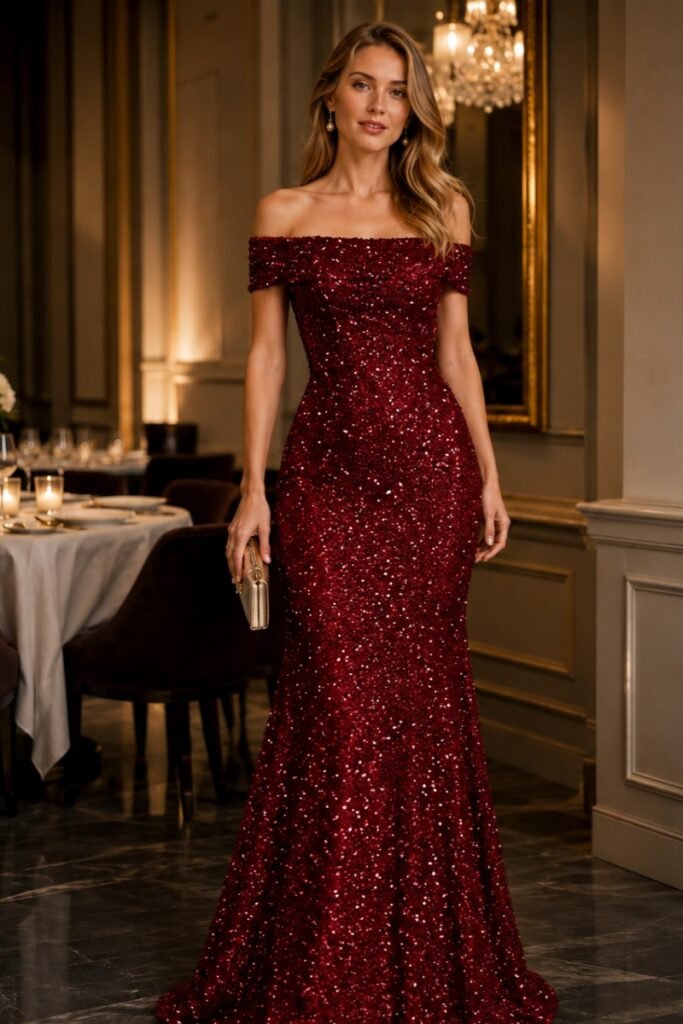
Occasion Dresses
- Key fabrics: satin, crepe, chiffon, lace and structured blends.
- Critical checks: bust balance, slit position, lining length and pressing finish.

Party Dresses
- Key features: sequins, mesh, embellishment, cut-outs and fitted shapes.
- Critical checks: abrasion, seam strength, support and edge finishing.

Resort Dresses
- Key fabrics: cotton blends, viscose, linen blends, chiffon and lightweight crepe.
- Critical checks: shrinkage, transparency, print alignment and garment balance.

Going-out Dresses
- Key features: halter necks, backless shapes, ruching and body contour.
- Critical checks: tension, opening stability, strap length and hem control.

Bodycon Dresses
- Key fabrics: stretch jersey, ponte, power mesh and bonded combinations.
- Critical checks: recovery, seam elasticity, grain direction and grading.

Satin Dresses
- Key styles: slip, cowl, bias, draped and occasion dresses.
- Critical checks: seam tension, panel balance, pressing and protective packing.

Statement Dresses
- Key techniques: sequins, pearls, crystals, embroidery and composite surfaces.
- Critical checks: shedding, weight distribution, skin comfort and repair method.

Fashion Sets
- Key value: coordinated merchandising and cross-selling.
- Critical checks: colour matching, shared trims, size logic and delivery alignment.
Collections Planned Around Australian Selling Seasons

Spring Summer Drops
- Plan around: campaign photography, online launch and retailer delivery.
- Control: material shortlist, fit priorities and shared colour standards.

Resort Collections
- Plan around: December-January travel demand and destination edits.
- Control: print placement, packability, breathable lining and replenishment options.

Wedding Guest Edits
- Plan around: spring ceremonies, summer weddings and event peaks.
- Control: bust support, slit height, lining and finishing quality.

Party Holiday Lines
- Plan around: November-December events and New Year demand.
- Control: decoration tests, fit review, PP standard and packing protection.

Formal Graduation
- Plan around: school and university event calendars.
- Control: shared measurement logic, colour planning and style-level timelines.
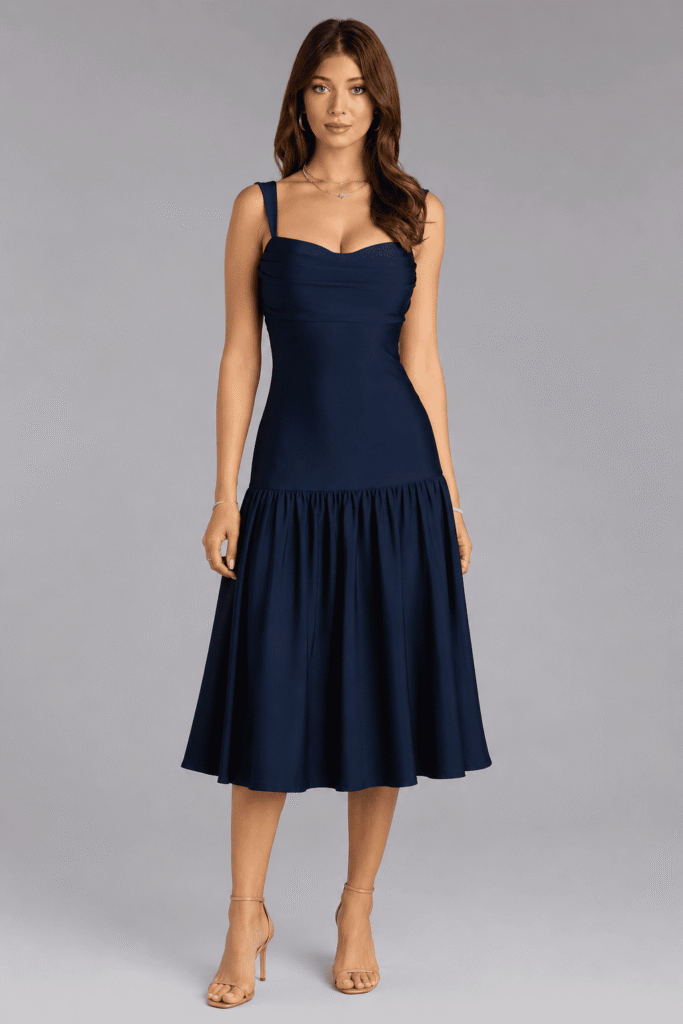
Year-round Drops
- Plan around: monthly or campaign-led launches.
- Control: rolling sample queue, reusable standards and reorder visibility.
Plan Backward From the Australian Launch Date
A commercially useful timeline starts with warehouse arrival, not with the sewing start date. The schedule below shows an illustrative planning model for a 12-style dress drop. Final timing is confirmed after material, construction, quantity and approval requirements are reviewed.
| Stage | Brand Input | Duolan Action | Planning Range |
|---|---|---|---|
| Project review | Brand brief, quantity, size range, launch date | Style feasibility, risk map and information gap list | 1-3 business days |
| Material direction | Fabric target, colour and price range | Swatch sourcing, trim options and behaviour review | 5-15 business days |
| First samples | Approved sample plan and priority styles | Pattern, sample making and stage updates | 7-20 business days |
| Fit revision | Consolidated comments and measurements | Pattern correction, construction update and revision summary | 5-12 business days |
| Photo / sales samples | Final visual direction and sample quantities | Photography-ready finishing and size coordination | Project-specific |
| PP approval | Bulk colour, fabric, trims, labels and packing | PP basis, BOM alignment and bulk-readiness review | 5-12 business days |
| Bulk production | PO, deposit, approvals and delivery window | Order breakdown, line allocation, inline QC and progress control | 25-45 business days |
| Final inspection | Inspection standard and shipment instructions | Final QC, packing review and release decision | 3-7 business days |
| Freight to Australia | Port, warehouse and nominated forwarder | Shipping documents and handover coordination | Mode and route dependent |
From Collection Brief to Production-ready Development
Project Entry and Brand Review
- Suitable inputs: tech pack, reference garment, design sketch, original sample, collection brief or moodboard.
- Initial output: development route, missing-information list, material direction and sample priorities.
- Commercial benefit: faster alignment before pattern work and fewer avoidable revisions.
Feasibility Before Pattern Work
- Review factors: drape, stretch, opacity, support, seam behaviour, pressing and finishing.
- Risk output: confirmed path, test requirement or alternative proposal.
- Production link: decisions prepared for BOM, PP sample and QC criteria.
Development Outputs With Decision Value
Development outputs are organised around the intended purpose of each sample stage. A first prototype explores silhouette and construction; a fit sample tests body balance; a photo sample protects visual finish; a PP sample defines production standards.
During sampling, staged updates can cover material status, construction risks, unresolved details and completion progress. Complex styles benefit from early confirmation of high-impact points such as cup position, boning, neckline tension, slit height, mesh coverage or embellishment density. Problems can then be addressed before the sample is fully finished.
After review, comments are consolidated into pattern, measurement, material and workmanship actions. Once the approved version is ready for production, the relevant information flows into BOM, specifications, workmanship notes, material references, PP approval and quality checkpoint.

Fabric and Trim Decisions Protecting Design
Drape, Weight and Structure
- Assessment: hand feel, drape, weight, width, stability, pressing and cutting behaviour.
- Construction link: seam type, lining, interfacing, support and hem method.
- Bulk link: lot consistency, cutting loss, availability and replacement risk.
Stretch, Recovery and Opacity
Stretch dresses should be assessed in both extension and recovery. A fabric can stretch enough for fitting yet fail to return after wear, creating bagging at the seat, waist or neckline. Directional stretch also affects grain placement and pattern engineering. Opacity must be checked at rest and under tension. White, pastel, mesh and lightweight fabrics often become more transparent across bust, hip or seat areas.
Lining cannot be selected only by colour; stretch compatibility, weight, breathability and seam interaction matter equally. For bodycon, mesh and cut-out designs, Duolan reviews negative ease, lining coverage, stress points and seam elasticity together.
The goal is a controlled silhouette with secure coverage and consistent fit across the size range, not merely a close-fitting sample in one base size.
- Assessment: two-way or four-way stretch, recovery, opacity and colour show-through.
- Fit link: negative ease, support, seam extension and grading.
- Wear link: movement, comfort, shape retention and coverage.
Decorative and Surface Materials
- Assessment: density, weight, repeat, edge comfort, adhesion or stitch security.
- Production link: cutting method, seam clearance, repair standard and inspection.
- Packing link: surface protection, folding plan and pressure control.
Bulk Material Locking
Material approval should move beyond a verbal description. Bulk production needs confirmed fibre content, colour, weight or relevant specification, width, stretch direction, lining, trims and approved appearance. Any replacement must be assessed against the garment result rather than accepted solely because it looks similar on a hanger. Before bulk cutting, Duolan checks material status against the approved sample and production requirements. Colour and surface should be reviewed under controlled lighting where needed. Shrinkage, colourfastness or other tests can be coordinated according to product and market requirements. Fabric defects, shade variation and roll allocation may influence cutting plans. For repeat orders, the team checks whether the original material remains available, whether a new lot has changed, and whether a substitute affects fit, cost or visual quality. Brand approval is required before a material change becomes part of the production standard.
- Approval assets: swatch, colour reference, trim card and BOM status.
- Production assets: lot review, shade control and cutting instructions.
- Reorder assets: material record, replacement history and approval trail.
Fit and Sizing Built From Your Standards
Base Size and Measurement Architecture
- Core inputs: brand size chart, base block, fit model information and target ease.
- Critical outputs: defined POMs, sample measurement record and tolerance proposal.
- Review priority: bust-waist-hip balance, length, opening security and movement.
Silhouette Balance and Support
- Visual checks: front and back balance, seam direction, contour and hem fall.
- Support checks: cup position, boning, neckline security and closure stability.
- Movement checks: sitting, walking, arm movement and slit performance.
Grading and Production Tolerance
Grading should preserve the intended silhouette across the size range rather than enlarge every area by a fixed amount. Bust support, neckline depth, strap placement, waist shaping and slit height often need controlled grade rules so larger and smaller sizes retain comparable visual balance.
Duolan reviews grade direction against the brand size architecture. High-risk styles may need a second-size sample or size-set review before production. Stretch garments require particular attention because fabric recovery and negative ease can hide grading problems in the base size while creating inconsistency at the ends of the range.
Production tolerances are linked to garment construction and criticality. A long hem or loose skirt can accept a different tolerance from cup placement, bust width or zipper position. Inline and final inspection should focus on measurements capable of changing fit, support or appearance, not only a generic list.

Samples Supporting Real Brand Decisions
First Prototype
- Decide: silhouette, construction logic and major proportion.
- Avoid: treating a rough prototype as a bulk standard.
Fit Sample
- Decide: pattern corrections and measurement priorities.
- Evidence: photos, measurements and consolidated comments.
Revision Sample
- Decide: approval, further refinement or new risk review.
- Evidence: revision summary and updated specification.
Photo Sample
- Decide: campaign readiness and visual consistency.
- Evidence: final appearance, colour and finishing review.
Salesman Sample
- Decide: range presentation and commercial feedback.
- Evidence: coordinated style, colour and size plan.
PP Sample
The pre-production sample establishes the reference for bulk manufacturing after material, trims, measurements, workmanship, labels and packing requirements are aligned. Approval should identify any remaining limits or exceptions before line start.
- Decide: production release and QC basis.
- Evidence: approved sample status, BOM and workmanship points.
Workmanship for Fashion-driven and Complex Dresses

Corset Structure
- Develop: cup volume, boning channels, interfacing and waist contour.
- Inspect: symmetry, support, channel position and closure security.
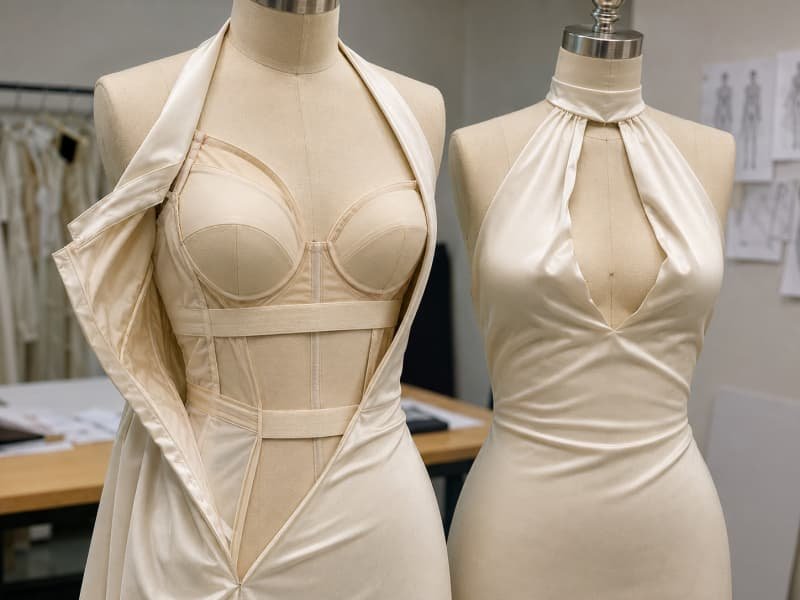
Bust Support
Built-in cups, underbust seams, elastic and hidden support must work with fabric stretch and neckline shape. A visually attractive front can fail when cup volume, spacing or anchoring is wrong.
- Develop: cup type, position, attachment and neckline tension.
- Inspect: symmetry, coverage, movement and comfort.

Halter Backless
Halter and backless dresses place more load on straps, neckline edges and limited support points. Pattern balance and closure choice determine whether the garment stays secure during movement.
- Develop: strap angle, length, elastic, stay tape and fastening.
- Inspect: gaping, pull lines, edge stability and back balance.

Satin Handling
- Develop: needle, thread, seam method, pressing test and panel direction.
- Inspect: puckering, shine, scratches, bias growth and fold marks.

Mesh Coverage
Mesh can add lightness and visual depth but creates challenges in stretch, transparency, seam visibility and lining transition.
Coverage must be evaluated under tension and movement.
- Develop: mesh stretch, lining zones, seam type and edge finish.
- Inspect: opacity, recovery, comfort and alignment.
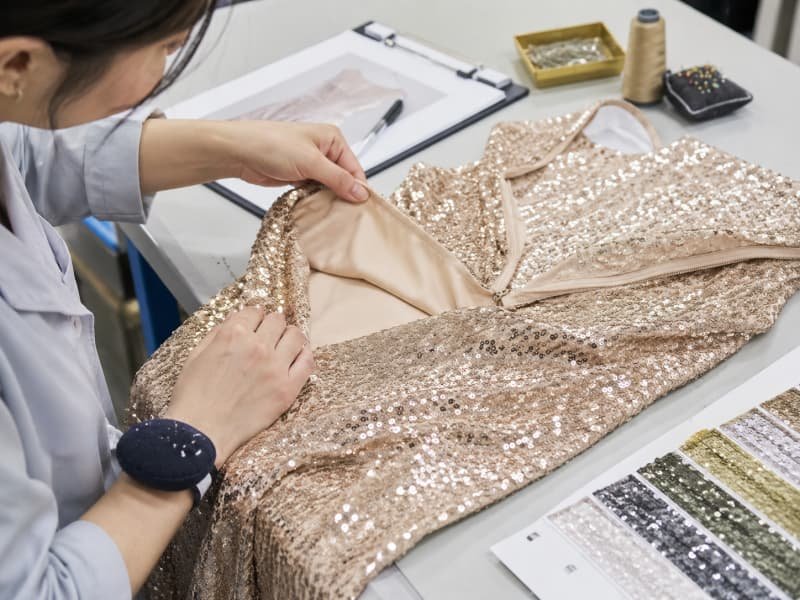
Sequin Comfort
- Develop: clearance, backing, repair method and reinforcement.
- Inspect: shedding, sharp edges, motif placement and attachment strength.

Draping Pleating
Gathering, ruching, draping and pleating depend on controlled ratios and stable anchor points.
Small changes can alter waist bulk, side-seam balance and garment length.
- Develop: ratio, direction, anchoring and under-structure.
- Inspect: symmetry, distribution, seam bulk and repeatability.

Clean Closures
Invisible zippers, hooks, eyes, loops and concealed fastenings should support the design without disrupting fit or surface finish. Closure length and placement influence dressing ease and body contour.
- Develop: opening length, reinforcement and seam integration.
- Inspect: smooth operation, alignment, strength and flatness.
Lock Every Detail Before Bulk Production
Approved Sample Status
The intended order stage is also identified: launch order, repeat order, scaled production or another commercial purpose. A repeat order may rely on an existing approved pattern and material history, while a new launch needs stronger confirmation of fit, finishing and packaging. Complex styles may require a first-piece or controlled pilot before full line release.
A concise bulk start confirmation or production-readiness note records the agreed basis. Such documentation protects both sides from hidden assumptions and prevents unresolved sample comments from being rediscovered after cutting.
- Confirm: sample status, pending comments, order purpose and approval owner.
- Release only after: critical fit, material and workmanship decisions are closed.
- Output: bulk start confirmation or production-readiness note.
Material and BOM Lock
Bulk material must match the approved direction in colour, surface, weight or relevant specification, stretch, lining compatibility and trim appearance. A BOM connects every component to the style and prevents informal substitution during purchasing or production.
Duolan checks fabric, lining, zipper, elastic, cups, boning, hooks, labels and packing materials against the approved sample and purchase requirements. Shade, lot or supplier changes are flagged when they can affect fit, appearance or cost. Printed or embellished materials receive placement and repeat instructions where needed.
For multi-style programs, shared materials are mapped across styles so one change does not create inconsistent results elsewhere in the collection.
Material release dates are incorporated into the production plan because late approvals can affect cutting and delivery.
- Lock: fabric, lining, trims, colour, labels and packing materials.
- Control: approved reference, BOM version and replacement approval.
- Evidence: swatch cards, trim cards and material status records.
Workmanship and Measurement Standard
Measurements are confirmed with defined POM methods and tolerances. High-risk points such as bust, underbust, waist, strap length, neckline, slit height and garment length receive greater control than non-critical dimensions. When a style has several colours or sizes, the standard must remain consistent across the full matrix.
A first-piece or pilot review can verify whether line execution reproduces the approved sample before larger quantities progress. Findings are translated into line instructions and inline QC priorities.
- Lock: critical construction points, POM methods and tolerances.
- Verify: first piece, pilot output or early-line inspection.
- Use for: production instruction, inline QC and final inspection.
Production Path by Style
A 10-30 style order should not be treated as one undifferentiated production block. Duolan breaks the program down by style, colour, size, quantity, material status and complexity. Each style is classified as regular, complex, fast-response or high-risk workmanship.
Line allocation then reflects the actual construction and timing requirements. Embellished styles may need special-process coordination; printed styles depend on material release; fitted corset styles may need pilot control; repeat styles can use established production records. Multi-factory allocation is considered where scale and timing require controlled capacity expansion.
The result is a production path and timeline plan explaining how the program will move rather than leaving internal allocation invisible until problems appear.
- Break down: style, colour, size, quantity, material and complexity.
- Match: production line, special process, pilot requirement and QC focus.
- Output: style-level path, milestones and delivery coordination.
A Scalable Dress Manufacturing System
Duolan combines core factory control with flexible capacity across a coordinated womenswear manufacturing network. Scale is organised around product complexity, delivery priorities, repeatability and quality risk rather than raw volume alone.
Core Factory Control
Core control is especially valuable for satin, mesh, bodycon, halter, backless, corset, sequin and occasion dresses. These products may look simple in a line sheet while carrying high dependence on material handling, support, body balance and visual finishing. Early-line review and specialised workmanship guidance reduce the gap between sample-room execution and bulk output.
Factory assignment is based on capability, not only available space. A style with delicate satin, complex support or dense embellishment should not be placed on a line selected solely by speed.
- Best use: lead styles, complex products and critical launch programs.
- Control focus: sample continuity, first-piece validation and workmanship discipline.
- Value: stronger connection between development decisions and bulk execution.
Flexible Capacity and Replenishment
A bestseller reorder may need faster material confirmation and line access, while a new complex style may need slower pilot control. Duolan distinguishes those needs instead of forcing every order into one production rhythm. Capacity planning also considers colour and size breakdown, special-process dependencies and packing sequence.
When several styles sell strongly at the same time, preserved patterns, BOMs and quality records help shorten the re-entry process. Material availability and approval remain critical, especially for custom colour, print or decoration.
- Supports: launch orders, repeat orders, seasonal volume and coordinated replenishment.
- Requires: confirmed records, material availability and delivery priority.
- Value: a growth path from first production to scaled programs.
Multi-factory Coordination
Duolan works with 20+ long-term satellite factories alongside 16 owned factories. Regional manufacturing support across several provinces adds capacity buffers and process matching for large or multi-style orders. The network is coordinated through order planning, purchasing, production follow-up, QC and delivery management rather than handed over without control.
A 20,000-80,000 piece program may include regular commercial styles, fitted products, decorated pieces and quick-response repeats. Each group can require a different line or process route. Shared standards – approved sample, BOM, measurement specification, workmanship points, QC focus and packing requirements – help maintain consistency when more than one production unit participates.
Multi-factory use is not automatic. Allocation is chosen when volume, complexity or delivery timing justifies it, and core risk points remain under central coordination.
- Best use: multi-style programs, scale-up orders and seasonal peaks.
- Control basis: shared standards, central tracking and inspection checkpoints.

Quality Control From Material to Shipment

Pre-production Quality Setup
- Inputs: approved sample, BOM, specification and packing requirements.
- Risk map: fit, material, construction, surface and labelling priorities.
- Release basis: confirmed standard before full production progression.

Inline Process Control
- Check: measurements, construction, stitch, symmetry and appearance.
- Act: contain, correct, verify and record.
- Value: defect control before final packing and shipment pressure.
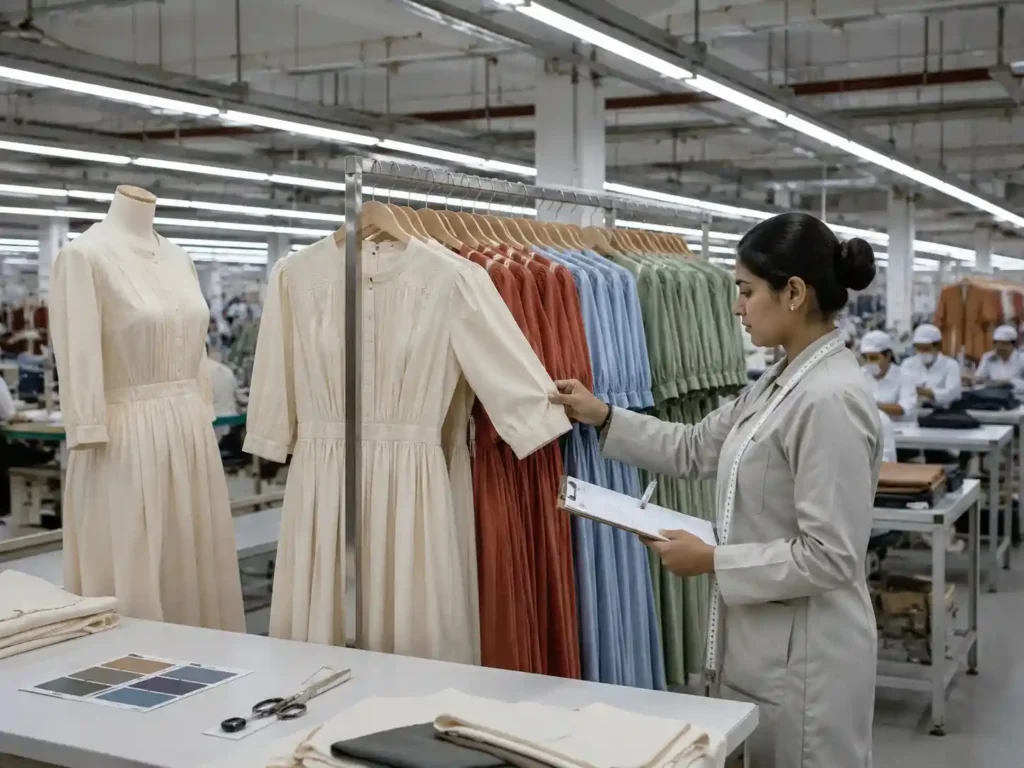
Final Inspection and AQL Alignment
- Scope: quantity, workmanship, measurements, appearance, labels and packing.
- Method: brand protocol, AQL plan or third-party inspection requirement.
- Output: inspection result, corrective action and release status.
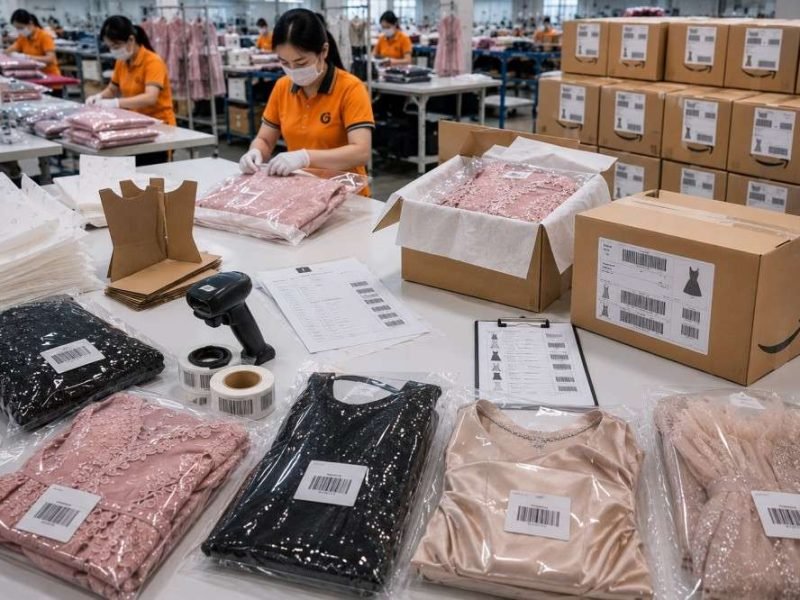
Packing and Shipment Release
Packing is part of product quality, particularly for satin, sequins, structured bodices and dresses with delicate decoration. Folding pressure, hanger use, tissue, protective layers, polybag size and carton loading can affect the garment before it reaches the warehouse. Duolan checks SKU, size, colour, barcode, label, polybag and carton mark requirements before shipment release. Pack ratios and assortment instructions are verified against the order. Sensitive styles receive a packing method designed to reduce crushing, snagging, transfer, permanent creasing or surface abrasion. Shipment documents and handover details are coordinated with the nominated forwarder or agreed logistics arrangement. The goal is a traceable release from approved product through packed quantity to freight handover.
- Check: packing method, SKU accuracy, barcodes, carton marks and quantity.
- Protect: surface, shape, support structure and presentation.
- Release: only after final quality and packing status are confirmed.
Compliance Support for Brand-level Production
SMETA Audit
- Available for: audit-document evaluation and onboarding discussion.
- Status language: completed audit, subject to current report verification.
SMETA 2-Pillar
- Review: audit date, site scope and corrective-action status.
- Use: formal procurement and social responsibility evaluation.
Brand Standards
- Input: supplier manual, testing protocol and approval process.
- Output: project-specific checkpoints and document alignment.
Textile Testing
- Common areas: colourfastness, shrinkage, performance and safety.
- Important: test scope is confirmed for each product and market.
Material Programs
- Review: certificate validity, scope and material traceability.
- Approval: confirm before quotation and bulk material purchase.
Third-party Inspection
- Plan: inspection standard, timing, sample level and report route.
- Control: leave corrective time before freight cut-off.
Private-label Details and Retail-ready Packaging

Main Brand Labels
- Confirm: artwork, material, dimensions and placement.
- Check: orientation, stitch security and skin comfort.

Care Size Labels
- Confirm: legal wording and translation ownership.
- Check: SKU mapping, size accuracy and wash durability.

Hangtags Barcodes
- Confirm: barcode file, style-colour-size logic and placement.
- Check: scan accuracy, attachment and pack sequence.

Protective Packing
- Confirm: fold method, protective layers and bag size.
- Check: presentation after carton compression.

Retail Ecommerce Packs
- Confirm: single-unit or ratio packs and fulfilment labels.
- Check: pick accuracy and carton organisation.

Carton Shipping Marks
Carton size, quantity, weight, mark, PO reference and destination information require final verification before freight handover. Mixed cartons should follow an approved assortment plan.
- Confirm: carton specification and forwarder instructions.
- Check: count, mark, dimensions and shipping document match.
Production and Delivery Planning for Australia
Choose Freight by Launch Priority
The selected route should be evaluated against warehouse arrival, not only departure date. Production completion, inspection booking, export documentation, carrier cut-off, transit and local receiving all affect the usable launch window. Peak-season congestion and holiday schedules need extra buffer.
Duolan can coordinate with the brand-nominated forwarder or discuss an agreed shipment basis such as FOB or CIF where suitable. DDP should be evaluated only after destination, customs, product and service scope are confirmed.
- Express: samples, urgent approvals and limited priority units.
- Air: time-sensitive commercial quantities with manageable volume.
- Sea: larger programs where cost and schedule allow longer transit.
Shipment Readiness Before Handover
Before handover, Duolan verifies shipment quantities, pack ratios, carton information and document requirements against the order. Commercial invoice, packing list and other required export documents are prepared according to the agreed route and forwarder instructions. Third-party inspection reports can be incorporated where required.
Sensitive products are reviewed for carton pressure and surface protection. Satin needs crease control; sequins need snag protection; structured bodices need shape protection. Correct freight preparation reduces warehouse rework and presentation loss.
- Verify: quantity, SKU, pack ratio, carton mark and paperwork.
- Protect: surface, shape and retail presentation.
- Coordinate: inspection release, carrier booking and warehouse window.
Australian Receiving Coordination
Australian operations may receive goods into brand warehouses, third-party logistics centres, retailer distribution points or nominated forwarders. Each route can have different carton, barcode, appointment and documentation requirements. Those details should be known before packing starts.
For multi-style programs, shipment priorities can be arranged by launch importance, colour completeness or retail allocation. Partial shipment decisions should consider whether incomplete size or colour sets create more commercial harm than a short delay. A coordinated release plan prevents urgent freight from becoming a series of unplanned exceptions.
Duolan tracks production and shipment milestones through the handover stage and communicates status against the agreed plan. Local customs clearance and final delivery remain dependent on the selected logistics arrangement and destination requirements.
- Receiving points: brand warehouse, 3PL, retailer DC or nominated forwarder.
- Plan by: launch priority, complete SKU sets and freight economics.
- Outcome: clear handover with fewer last-minute packaging or document changes.

Repeat Orders Without Rebuilding From Zero
Preserve the Product Standard
- Retain: pattern, spec, BOM, swatch, workmanship, QC and packing records.
- Control: version history and approval trail.
- Value: faster alignment and stronger consistency across seasons.
Review Material and Colour Changes
- Check: availability, lot change, shade, stretch, weight and width.
- Approve: replacement only after garment impact is understood.
- Update: BOM, cost, timeline and QC focus when changes occur.
Scale Bestsellers With Control
A successful style may move from launch quantity to repeat production and then to larger volume. Scale changes line allocation, material purchasing, cutting strategy, inspection sample size and delivery planning. The original product standard must remain visible as capacity expands. Duolan can break a repeat program down by colour, size, quantity and delivery priority, then select a production path suited to the new volume. Early-line validation confirms whether the scaled route reproduces the approved result. Inline QC focuses on known risks from the earlier order plus any new material or process changes. Commercial feedback can also improve the next run. Return reasons, fit comments, sell-through by size or recurring defects can be translated into controlled revisions rather than informal adjustments.
- Scale path: launch order, repeat order, replenishment and larger production.
- Protect: approved fit, material direction and workmanship standard.
- Improve: use sales and quality feedback for approved future revisions.

Dress Programs Solved Through Controlled Development
Contemporary Dress Drop
Region: Australia. Channel: ecommerce plus selected wholesale accounts. Program: 18 styles across midi, mini, satin and fitted dress categories. Total order: 38,400 pieces across 4 colour families and an Australian 6-16 size range. Challenge: The range used visually related silhouettes but involved three fabric behaviours – non-stretch satin, stretch mesh and medium-weight crepe. Early references showed inconsistent waist positions and different interpretations of the same fitted shape. The launch calendar also required photography samples before every bulk colour was available. Duolan response: Styles were grouped by fit family and material risk. One fitted base block was reviewed across related styles, while satin and mesh received separate ease and seam rules. Photo samples were prioritised in campaign colours; bulk colour approvals followed through controlled swatches. PP standards recorded waist position, lining, zipper, slit height and pressing requirements. Result: The program entered bulk through three production paths with shared fit references. Inline review focused on waist balance, satin seam quality and mesh coverage. Delivery was staged by campaign priority without splitting incomplete size ranges. Repeat planning retained the approved blocks and material records for the following drop.
- Program data: 18 styles, 38,400 pieces, 4 colour families.
- Control focus: fit-family alignment, material-specific construction and staged launch priorities.
- Commercial outcome: reusable blocks and approved records for future collection development.

Occasionwear Expansion
Region: Australia and New Zealand. Channel: online retail and occasionwear partners. Program: 24 styles covering wedding guest, cocktail, party and graduation dresses. Total order: 62,000 pieces, including satin, lace, sequins, corset structures and draped jersey. Challenge: The line combined high visual impact with a compressed event calendar. Risk concentrated in cup placement, boning symmetry, sequin edge comfort, lace alignment and satin pressing. Several styles shared colours but used different base materials, making shade coordination important for merchandising. Duolan response: Complex styles entered development first. Cup, boning and closure standards were checked before lining closure. Sequin seam allowances and skin-contact zones received dedicated workmanship rules. Colour families were reviewed across fabric types under consistent lighting. A bulk-readiness review separated visual approval from fit and workmanship approval, preventing photography acceptance from being mistaken for PP release. Result: Production was divided between core complex-dress lines and regular occasionwear lines. First-piece checks were completed on corset and embellished styles. Final inspection used style-specific defect priorities. Packing for satin and decoration included protective layers and fold instructions. The brand later used the same construction standards for colour extensions.
- Program data: 24 styles, 62,000 pieces, multiple complex surface and support techniques.
- Control focus: support structure, decoration comfort, shade coordination and PP discipline.
- Commercial outcome: approved construction standards reused for colour extensions.

Resort Collection Program
Region: Australia. Channel: ecommerce, resort boutiques and travel-focused retail. Program: 12 styles across printed maxi dresses, linen-blend midis, lightweight day dresses and coordinated fashion sets. Total order: 24,600 pieces across 6 prints and 8 solid colours.
Challenge: The collection needed a light, breathable appearance while maintaining coverage and dimensional stability. Print placement, shrinkage, lining transparency and fabric availability created the main risks. A shared colour story required solids and prints to work together even though they came from different material routes.
Duolan response: Print placement rules were defined for centre-front, panel joins and border areas. Lightweight linings were reviewed for opacity, breathability and seam interaction. Shrinkage allowances were considered before pattern finalisation. The 12 styles were sequenced by shared fabric and print readiness, allowing early samples to guide later construction decisions. Packing trials checked crease recovery and presentation after carton pressure.
Result: Bulk production followed two material groups with a unified size and colour-control plan. The brand received complete SKU sets by launch priority. Pattern, print and packing records were retained for the next resort season, reducing the need to rebuild material and fit decisions from the beginning.
- Program data: 12 styles, 24,600 pieces, 6 prints and 8 solid colours.
- Control focus: print placement, opacity, shrinkage, colour story and pack recovery.
- Commercial outcome: reusable resort standards and a faster starting point for the next season.

Frequently Asked Questions for Australian Fashion Brands

Start Your Australian Dress Development Project
Share a collection brief, tech pack, reference image, original sample or existing production file. Duolan will review the product direction, material needs, fit priorities, construction risks, quantity structure and launch window before recommending a development or production route. A useful first submission does not need every detail to be final, but it should explain what the collection must achieve commercially and technically. Confidential files can be submitted for project evaluation. The response will focus on information gaps, sample stages, material direction, production feasibility and the next approval point rather than a generic price alone.
- Company and brand: name, website, sales channels and target market.
- Product scope: dress categories, number of styles, colourways and size range.
- Development input: tech pack, reference images, original sample or moodboard.
- Commercial plan: target quantity, price direction, launch date and repeat potential.
- Branding delivery: labels, packaging, inspection, freight and warehouse requirements.


