...

Custom Dress Manufacturer For Australian Ecommerce Fashion Brands

Dress-focused development and manufacturing for established Australian online fashion brands managing seasonal launches, multi-style collections, and repeat production.

  • Collection programs commonly cover 10-30 styles, with total order volumes of 20,000-80,000 pieces across styles, colours, and sizes.
  • Duolan supports fashion dresses from design review and fabric coordination through pattern development, sampling, production readiness, bulk manufacturing, quality control, and delivery planning.
  • Production planning can combine 300 sewing lines, 50+ quick-response and flexible lines, and a wider multi-factory manufacturing network according to style complexity and launch priorities.

Built for Established Australian Ecommerce Fashion Brands

Duolan works best with fashion businesses that already have a defined market position, a clear product calendar, and a need for structured dress development rather than one-off garment sourcing.

Online Fashion Brands

Australian online fashion brands often manage several commercial pressures at once: fast-moving trends, seasonal photography deadlines, paid media schedules, launch dates, size consistency, and replenishment decisions based on live sales data. Duolan connects product development with manufacturing readiness so each dress moves through fabric review, pattern work, sample correction, approval, production, and quality control in an organised sequence. The goal is not merely to complete a garment. The goal is to create a version that can be approved internally, presented online, manufactured at scale, and repeated with controlled standards.

Dress-led DTC Labels

Dress-led labels rely heavily on silhouette, fabric behaviour, fit, styling impact, and product photography. A minor issue in neckline stability, waist position, lining coverage, zip installation, or hem balance can weaken the product before it reaches the market. Duolan supports product teams that need stronger dress-specific judgement across partywear, occasionwear, going-out, vacation, body-conscious, and contemporary fashion ranges. Development decisions are reviewed against both the intended visual effect and the requirements of future bulk production.

Product Development Teams

Product teams need more than a factory quotation. They need clear feedback on whether a design can be sampled, fitted, revised, and reproduced without losing the original direction. Duolan reviews references, tech packs, original samples, fabric ideas, fit priorities, size charts, and launch timing before defining the next step. The working path may include material sourcing, pattern development, prototype sampling, fit revision, photo-ready sampling, PP approval, or direct bulk readiness review for an established style.

Buying and Sourcing Teams

Procurement and sourcing teams judge suppliers through accuracy, documentation, risk control, production discipline, and delivery coordination. Duolan supports structured project communication around BOMs, measurement specifications, approved samples, colour standards, workmanship notes, packing instructions, inspection requirements, and shipment arrangements. A multi-style order can be separated by style, colour, size, complexity, and production priority so the brand team can see how the program will move from approval into manufacturing.

What Ecommerce Dress Brands Need From Manufacturing

Strong ecommerce performance begins before photography and advertising. Reliable product development, fit control, launch planning, and repeatable production protect the final product experience.

Launch Calendar Control

A launch date needs to be converted into earlier approval dates for fabrics, trims, first samples, fit comments, photo samples, PP samples, bulk production, inspection, packing, and freight. Duolan reviews the complete path rather than treating production as an isolated block. More complex dresses are prioritised earlier so structure-sensitive or special-process styles do not compress the final production window.

Product Distinction

Online fashion depends on visual differentiation. Fabric sheen, neckline shape, waist placement, cut-outs, pleating, drape, trims, embellishment, and finishing all affect how a dress appears in photography and on the body. Duolan evaluates which details create visible product value and which details add cost or risk without strengthening the collection.

Fit Consistency

Fit affects product reviews, return behaviour, repeat purchase confidence, and brand perception. Duolan works from the approved size chart and key points of measure, with special attention to bust, waist, hip, neckline, strap, armhole, slit, and garment length. Stretch, recovery, lining, and structure are considered because the same measurements can perform differently across fabrics.

Multi-style Coordination

A collection may include fitted mini dresses, flowing maxis, satin midis, mesh layering, corset structures, and embellished party styles. Each category requires a different development and production path. Duolan organises priorities by style complexity, material readiness, sample status, and launch importance so a delayed high-risk style does not create confusion across the entire program.

Repeat-order Stability

A strong first delivery becomes more valuable when the approved pattern, BOM, materials, colour standard, workmanship notes, measurement tolerances, packing details, and QC references are preserved. Reorders are reviewed against previous standards instead of beginning from memory. Material availability and colour continuity are checked again before the repeat production plan is confirmed.

Production Visibility

Brand teams need meaningful updates rather than constant chasing. Development updates can include fabric arrival, cutting preparation, pattern progress, partial construction, mannequin checks, key workmanship details, and short progress videos. Bulk updates can focus on readiness, first-piece status, inline findings, inspection progress, packing, and shipment preparation.

Where Dress Programs Lose Time and Margin

Most expensive problems begin before final inspection. Clear control points at development, approval, material, fit, production, and packing stages reduce avoidable rework and late decisions.

Project RiskCommercial ImpactDuolan Control Point
Design-to-sample mismatchExtra revisions, delayed photography, missed launch datesDevelopment review covering silhouette, fabric, structure, fit priority, and sample purpose
Fabric and silhouette mismatchWeak drape, poor support, transparency, unstable recovery, or the wrong visual finishFabric behaviour review, swatch comparison, lining judgement, and material alternative evaluation
Fit comments translated incorrectlyRepeated samples, inconsistent sizing, unstable neckline or waist balancePattern correction record, measurement review, and revision summary
Sample-to-bulk inconsistencyProduct photography differs from delivered stock; complaints and inspection disputes increasePP or golden sample basis, BOM alignment, material locking, first-piece verification, and inline QC
Multi-style approval delaysEntire launch window becomes compressed; freight cost risesStyle priority matrix, approval calendar, and production-path planning
Uncontrolled trim substitutionZip, lining, cup, boning, elastic, label, or embellishment changes the fit or appearanceApproved trim reference and material confirmation before production release
Packing information confirmed lateWrong labels, delayed packing, repacking, carton errors, and shipment riskEarly review of artwork, barcode, care label, folding, bag, carton, and warehouse instructions
Reorder records incompleteRepeat production changes in fit, colour, fabric, construction, or presentationPattern version, BOM, approved sample, QC points, packing record, and repeat-order review

Custom Dress Categories for Australian Online Collections
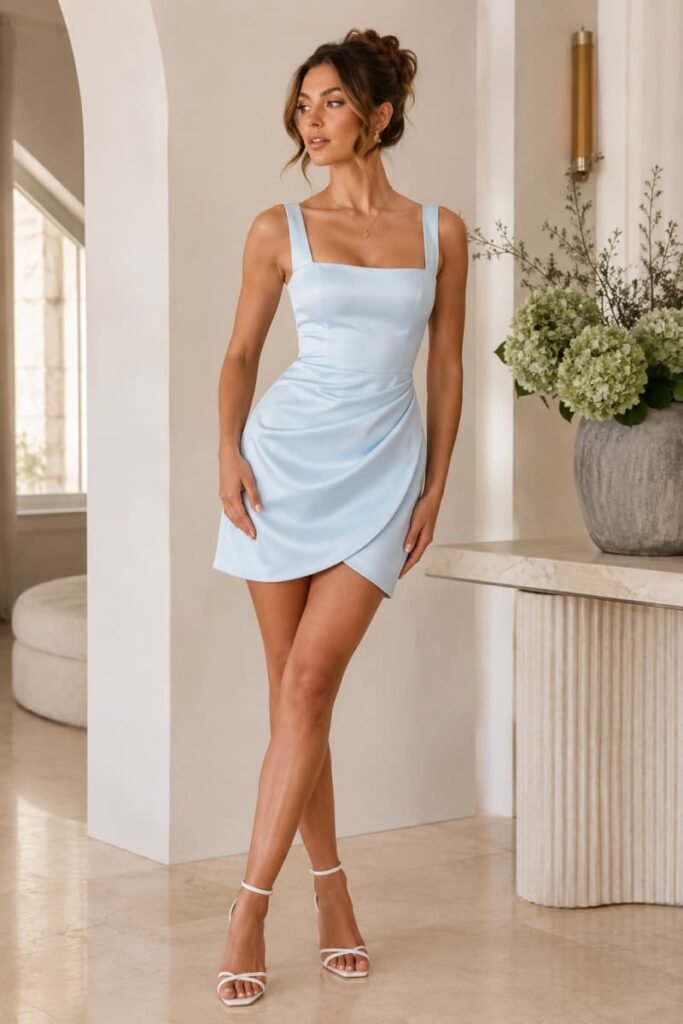
Duolan develops fashion dresses around selling occasions, silhouette requirements, fabric behaviour, and production complexity. Each category follows its own fit, material, construction, and quality priorities.

Mini Dresses

Mini dresses depend on proportion. A small change in bodice length, waist placement, hem length, neckline depth, or slit position can alter the entire appearance. Development reviews cover movement, lining coverage, sitting comfort, zip placement, strap stability, and whether the fabric can hold the intended shape. Mini programs may include fitted, ruched, A-line, asymmetric, halter, corset, cut-out, or embellished directions.

Midi Dresses

Midi dresses need controlled balance from shoulder to hem. Fabric weight and drape affect waist definition, hip flow, skirt volume, slit opening, and walking movement. Satin, crepe, jersey, mesh, lace, chiffon, and woven stretch fabrics can produce very different results from the same sketch. Pattern development therefore considers the intended occasion, heel height, body fit, lining, and the visual break at the calf.

Maxi Dresses

Maxi dresses combine length, movement, weight, and production efficiency. Key checks include total length, hem sweep, side seam balance, train or floor clearance, lining length, print placement, panel matching, gathering distribution, and packed-garment creasing. Resort and vacation maxis may require lighter construction, while occasion maxis often need stronger lining, support, and controlled finishing.

Party Dresses

Party dresses often combine close fit, shine, embellishment, stretch, cut-outs, mesh, corset elements, or decorative trims. Product impact must be balanced with wearability and bulk repeatability. Duolan reviews abrasion, scratch risk, transparency, lining, skin contact, sequin or bead attachment, zipper movement, support, and finishing so a visually strong sample can still become a manageable production style.

Occasion Dresses

Occasion dresses need a higher level of visual finish. Satin surfaces, lace placement, structured bodices, layered skirts, formal lengths, draped panels, and delicate trims can expose weak sewing or pressing. Development focuses on proportion, support, lining, seam appearance, clean internal construction, balanced hems, and packaging protection. 

Going Out Dresses

Going-out dresses are often fitted, fashion-led, and detail-sensitive. Neckline stability, body contouring, stretch recovery, cut-out placement, ruching direction, strap support, and movement security are central. Duolan evaluates whether a design looks strong only in a static image or remains secure and comfortable during real wear, walking, sitting, and dancing.

Vacation Dresses

Vacation dresses need visual ease without weak construction. Common directions include printed maxis, lightweight midis, open backs, halter necks, gathered panels, tie details, cut-outs, and breathable woven fabrics. Production review covers print scale, colour continuity, transparency, lining, shrinkage, seam slippage, tie strength, adjustable features, and packing recovery after international freight.

Bodycon Dresses

Bodycon dresses depend on fabric weight, stretch percentage, recovery, opacity, seam control, and pattern reduction. A light or unstable jersey can reveal underwear, lose shape, twist, or produce inconsistent sizing. Duolan checks stretch in both directions, recovery after extension, panel balance, lining need, zip type, hem method, and size grading before the bulk standard is locked.

Build a Commercial Collection, Not Isolated Styles

A coordinated dress program needs a clear relationship between image pieces, sales drivers, supporting styles, colour stories, material families, price architecture, and repeat-order potential.

Structure the Style Mix

A collection should not consist of twenty unrelated ideas. A stronger plan assigns a commercial role to each style. Hero pieces create campaign impact. Core commercial pieces carry broader fit and easier styling. Supporting pieces complete the colour and occasion story. Reorder-ready pieces use materials and constructions that can be repeated with lower uncertainty. Duolan can review a 10-30 style program by silhouette, material, complexity, price direction, and launch priority before sampling begins.
  • Separate hero, core, support, and repeatable styles.
  • Balance mini, midi, and maxi lengths according to the collection purpose.
  • Compare fitted, semi-fitted, and fluid silhouettes.
  • Identify which styles require early material or workmanship trials.
  • Group styles that can share fabrics, linings, trims, colours, or construction methods.

Plan Fabric Families

Material planning affects both the visual identity and the manufacturing path. A collection may use one satin family across slip, draped, and corset silhouettes; one stretch jersey family across fitted mini and midi shapes; or one printed woven family across resort dresses. Shared material families can improve colour coordination and simplify development, but only when the fabric performs correctly across each silhouette. Duolan compares drape, stretch, weight, opacity, support, finishing, and bulk availability before recommending cross-style use.

  • Use shared fabrics only where the performance is suitable.
  • Confirm lining requirements by colour and silhouette.
  • Reserve unique materials for styles where the difference is visible and commercially justified.
  • Review colour minimums and production availability before expanding the colour story.

Sequence Sample Priorities

Not every style should enter sampling at the same moment. Complex corset, satin, mesh, print, sequin, lace, or asymmetric styles may need earlier testing. Commercially important hero pieces may need early photo-ready samples. Simpler support styles can follow after fabric families and fit blocks are confirmed.

Duolan helps sequence the sample path according to risk, campaign importance, material readiness, and production dependency.

  • First priority: high-risk or campaign-critical styles.
  • Second priority: shared-fit or shared-fabric styles.
  • Third priority: commercial support styles with lower development risk.
  • Final priority: colour and detail extensions after the base fit is approved.

Protect Price Architecture

A visually coherent collection also needs commercial balance. If every piece uses heavy embellishment, complex structure, high fabric consumption, or labour-intensive finishing, the range may become difficult to price and produce. Duolan reviews visible value against material, construction, labour, waste, and production risk. Cost optimisation focuses on preserving the product feature that creates selling value while simplifying details that are less visible or less important to wear.

  • Keep premium materials where they define the product.
  • Simplify hidden or low-impact complexity when it does not improve the garment.
  • Share stable trims and linings across related styles.
  • Concentrate early orders on commercially important colourways.

Start Development From the Information You Have

A complete tech pack is useful, but development can also begin from reference images, original samples, fabric ideas, or a structured collection brief. The first review defines what is confirmed and what still needs decisions.

Tech Pack Development

Provide the tech pack, measurement specification, BOM, construction notes, colour standard, size range, quantity, label requirements, packing instructions, and target launch date. Duolan checks whether the information is complete enough for quotation and sampling, identifies unclear points, and separates design requirements from production assumptions. Complex areas such as cups, boning, cut-outs, lining, mesh coverage, slit construction, print placement, and embellishment receive additional feasibility review.

Reference Image Development

Reference images can communicate silhouette and visual direction, but they rarely show fabric composition, internal structure, measurements, closure details, seam treatment, lining, or production methods. Duolan converts the visible idea into a development brief by confirming the target market, fit expectation, price direction, fabric feeling, sample purpose, size range, quantity, and required modifications. No claim is made to reproduce protected third-party designs without authorisation.

Original Sample Review

An original sample provides useful fit, measurement, material, and workmanship references. The review separates features to preserve from features to change. Useful inputs include front, back, side, inside, and close-up photographs; garment measurements; target size; fabric details; fit comments; construction changes; and branding requirements. The sample can then support pattern analysis, material matching, revised development, or production-readiness evaluation.

Collection Brief Development

A collection brief can include mood, product category, occasion, target price band, style count, colour direction, fabric preference, launch season, priority styles, size range, and order plan. Duolan organises the brief into a development route covering product balance, material families, sample sequencing, risk priorities, production requirements, and expected approval stages. A structured collection brief is especially useful for 10-30 style programs with overlapping materials and launch dates.

Fabric and Trim Decisions Protect the Final Look

Material selection is not a catalogue exercise. The correct fabric must support the intended silhouette, fit, photography, comfort, price position, production method, and repeat-order plan.

Evaluate Fabric Behaviour Before Sampling

A fabric can look attractive on a hanger and still fail in a finished dress. Duolan reviews weight, composition, handfeel, drape, stretch, recovery, opacity, surface, width, shrinkage direction, colour behaviour, seam response, pressing response, lining need, and bulk availability. Each factor changes the pattern and construction path. A soft satin may collapse around a structured bust. A heavy jersey may improve coverage but reduce drape. A light mesh may create the correct visual layer but require stronger internal support. Material review should answer several questions before the first sample:

  • Can the fabric hold the neckline, waist, cup, slit, or gathered structure?
  • Will the fabric stretch and return without bagging?
  • Does the colour become transparent under strong light?
  • Will seams pucker, wave, slip, or show needle marks?
  • Can the same material be sourced across all intended colours and quantities?
  • Is the fabric suitable for the planned retail position and production volume?

Match Materials to Dress Categories

  • Satin is valued for shine and fluid movement but needs disciplined cutting, sewing, pressing, handling, and packing.
  • Chiffon offers lightness but requires seam and transparency control.
  • Mesh creates layered visual depth but needs careful stretch, coverage, and lining judgement.
  • Lace depends on motif placement, joining, edge finishing, and colour matching.
  • Jersey needs appropriate weight, recovery, opacity, and seam methods.
  • Crepe can provide cleaner structure and easier handling, although drape and surface vary widely by construction.

For online collections, the material also needs to perform under photography and real wear. High shine can expose seam waviness. Pale colours can reveal inadequate lining. Large prints can become inconsistent when panels are cut without placement planning. Heavy embellishment can distort stretch fabrics or create uncomfortable skin contact.

Control Functional Trims

Functional trims affect security and comfort, especially in strapless, halter, backless, corset, cut-out, and fitted dresses. Duolan reviews zipper length and strength, hook-and-eye position, cup type, boning width, power mesh, grip tape, elastic recovery, strap adjusters, rings, sliders, internal support bands, lining, and closure reinforcement. Functional elements should support the body without becoming visually intrusive. Trim approval covers more than colour. Size, surface finish, strength, attachment method, wash behaviour, skin contact, and bulk availability all matter. A zip that works on one sample may not be suitable for thousands of fitted dresses if the tape, slider, or installation method is unstable.

Develop Material Alternatives

An original material may be too expensive, unavailable in the required colour, unstable across production, unsuitable for the target quantity, or unable to support the intended construction. Duolan can compare alternative materials against the required result rather than selecting the cheapest substitute. The comparison covers appearance, drape, stretch, recovery, opacity, structure, handfeel, sewing behaviour, colour availability, lead time, and production risk. Alternative evaluation may use swatches, lab dips, print strike-offs, trim boards, partial construction trials, or comparison samples. The final decision should preserve the feature that makes the product commercially attractive while improving production feasibility. 

Pattern, Fit and Grading for Online Dress Sales

Fit control starts with the intended silhouette, target body, approved size chart, and fabric behaviour. Measurements alone cannot guarantee the right result without balanced pattern and construction decisions.

Establish the Fit Priority

Each style needs a defined fit objective. A bodycon dress may require controlled negative ease and strong recovery. A satin slip dress may need soft skim without pulling across the bust or hip. A corset dress may need close waist shaping with stable cup and neckline support. A resort maxi may need comfortable movement and a relaxed upper body. Duolan confirms the fit priority before pattern development so later comments are judged against one clear target.
Important fit zones include: Bust point position and cup coverage, Neckline depth and stability, Shoulder and strap angle, Armhole shape and gaping control, Waist level and waist suppression, Hip ease and seam balance, Back neckline and zip behaviour, Slit height and movement, Hem balance and garment length.

Translate Comments Into Pattern Changes

Comments such as “too loose,” “too tight,” “waist feels wrong,” or “neckline opens” need to be converted into measurable pattern actions. Duolan reviews the relationship between measurements, balance, fabric, lining, seam construction, and body movement. One visible problem can have several causes. A gaping neckline may result from the neckline shape, strap angle, bust length, fabric stretch, cup position, or lining tension. Recording the reason for each correction reduces random changes between sample rounds.

A revision record may include the original measurement, new measurement, pattern area changed, visual target, construction effect, and follow-up point for the next fitting.

Control Size Grading

Size grading should protect proportion, not simply add the same amount everywhere. Bust, waist, hip, neckline, armhole, strap, cup, dart, slit, and length increments may need different rules. Stretch fabrics require different grading logic from non-stretch woven fabrics. Corset and bustier styles need careful cup, boning, neckline, and support grading. Print placement, lace motifs, embellishment, or cut-outs may also move across sizes unless the placement rule is defined.

Protect Repeat-order Fit

A repeat order should refer to the approved pattern version, size chart, fit comments, production sample, and measurement record. If the fabric changes, Duolan reviews whether stretch, recovery, weight, or shrinkage requires another fit check. A pattern that worked in one stretch jersey may not perform the same way in another. Reorder review protects the original silhouette while recognising real material changes.

Engineering Complex Dress Structures for Bulk Production

Complex fashion dresses require internal structure, fabric compatibility, accurate pattern work, controlled construction, and first-piece verification before full production release.

Corset and Bustier

Corset and bustier dresses depend on cup shape, bust point, neckline security, waist shaping, boning position, lining, power mesh, closure strength, and seam balance. Boning should support the silhouette without twisting, poking, or showing through the outer fabric. Development checks whether the chosen fabric can hold the structure and whether the internal support remains clean across all intended sizes.

Halter and Backless

Halter and backless dresses transfer support to the neck, underbust, side seam, waist, or internal support system. Weak strap angles can create neck pressure or bust instability. Open backs may expose closures, lining edges, or internal support if the structure is not planned early. Duolan checks strap position, adjustability, bust coverage, side shaping, elastic recovery, internal bands, and closure reinforcement.

Cut-out Construction

Cut-outs need precise placement across sizes and body movement. An attractive sketch can become unstable if the opening stretches, rolls, exposes lining, or changes position after grading. Control methods may include clean facing, binding, elastic reinforcement, power mesh support, internal taping, or adjusted seam direction. Each solution is selected according to fabric, opening shape, fit, and required visual finish.

High Slit Dresses

High slits affect movement, coverage, seam strength, lining, and hem balance. The opening should remain at the approved position during walking and sitting. Slit reinforcement, seam allowance, lining connection, bar tack, facing, and pressing all influence durability and appearance. The approved position must be measured from a clear reference point so the same standard can be checked in bulk.

Mesh Layering

Mesh dresses require control of stretch, transparency, seam visibility, lining coverage, edge finishing, gathering, and layer alignment. Different mesh weights and stretch directions create different fit results. Skin-tone lining, power mesh, soft mesh, embroidered mesh, and glitter mesh can require separate handling. Duolan reviews whether each layer provides decoration, support, coverage, or shape before construction is confirmed.

Satin Slip Construction

Satin slip dresses appear simple but expose cutting, seam, pressing, and balance errors. Bias movement, needle marks, seam puckering, shine variation, drag lines, and packed creasing can weaken the final result. Development checks grain direction, panel balance, neckline treatment, strap stability, lining, seam type, stitch density, pressing temperature, handling, and packing method. 

Workmanship Details That Must Hold in Bulk

Premium presentation depends on repeatable construction. Every detail below should be approved in sampling, translated into production instructions, and checked again during manufacturing.

Seam Finishing

Seam selection must suit the fabric, stretch, transparency, skin contact, and intended interior finish. Overlock, clean binding, French seam, flat seam, enclosed seam, or lining construction produce different bulk, strength, comfort, and appearance. Sheer chiffon and lace need cleaner internal control than opaque woven fabrics. Stretch jersey needs seam elasticity without waviness or thread breakage.

Lining Control

Lining affects coverage, comfort, drape, support, colour, and movement. A lining that is too heavy can restrict a flowing skirt. A lining that is too light can cling, twist, or become transparent. The lining length, attachment points, seam construction, stretch, shrinkage, and colour should be confirmed with the outer fabric rather than approved separately.

Zipper Installation

A zipper must close smoothly without distorting the seam or creating waves. Fitted dresses need the correct zipper strength and reinforcement around high-tension areas. Invisible zips require controlled seam allowance, alignment, top closure, and pressing. Bulk checks should cover length, colour, slider movement, top and bottom stops, attachment, and symmetry.

Hem Balance

Hem quality depends on grain, fabric, panel shape, skirt volume, lining, pressing, and hanging behaviour. Bias or curved skirts may need time to settle before final levelling. Narrow hems, baby hems, blind hems, rolled hems, binding, or facing should be selected according to material and visual direction. Long dresses require consistent floor clearance and balanced side seams.

Boning and Cups

Cups and boning must remain in the approved position after sewing, fitting, and movement. Bulk construction should define cup size, shape, colour, covering, attachment, boning type, channel method, top and bottom finishing, and distance from key seams. Internal support must not create visible ridges or uncomfortable edges.

Lace Placement

Lace placement affects symmetry, motif direction, seam visibility, neckline finish, and perceived quality. Placement rules may be defined from the centre front, neckline, waist, hem, or a major motif. Mirrored panels, scalloped edges, appliqué joins, and colour matching need clear production references so bulk pieces do not appear randomly assembled.

Sequin Attachment

Sequin fabrics need controlled cutting, seam clearing, reattachment, lining, edge protection, and skin-contact management. Loose sequins, sharp backing, missing coverage, seam bulk, or exposed thread can create quality and comfort problems. Special attention is needed around zips, armholes, side seams, hems, and high-friction areas.

Print Alignment

Print scale and placement should match the design direction and cutting plan. Engineered or border prints need defined positions at centre front, centre back, neckline, waist, side seam, and hem. Random all-over prints still need attention to obvious repeats, colour shading, panel direction, and marker efficiency. Print approval should include strike-off colour and bulk fabric inspection.

Gathering and Pleating

Gathering and pleating control volume, texture, and silhouette.
The production standard should define finished width, ratio, direction, spacing, fixing method, pressing, and placement.
Inconsistent ratios can change fit and garment length.
Pleats may open, shift, or lose definition if the fabric and finishing method are not suitable.

Final Pressing

Pressing shapes the garment and reveals workmanship. Incorrect temperature, pressure, steam, or equipment surface can create shine, imprints, flattening, water marks, or distortion. Satin, velvet, sequin, coated fabrics, mesh, and embellished dresses require specific handling. Final inspection should review appearance after pressing and after packing preparation.

Symmetry and Placement

Dress quality is often judged through visual balance before any seam is examined closely. Necklines, straps, cups, cut-outs, pleats, pockets, lace motifs, print panels, embellishment, slits, and hems should follow clear centre and reference points. Bulk inspection checks left-right symmetry, placement distance, angle, and relation to body landmarks so one style does not appear different from piece to piece.

Stress-point Reinforcement

High-tension areas need reinforcement suited to the design and fabric. Strap joins,  hooks, underarm points, cut-out corners, pocket openings, boning ends, and internal support bands can fail when the reinforcement method is missing or too bulky. Bartacks, stay tape, backing pieces,  or hidden reinforcement are selected according to movement, fabric strength, and visual finish.

Production-ready Sampling for Better Brand Decisions

A sample should answer a defined commercial or technical question. Clear sample stages prevent teams from judging fit, photography, production, and final standards from one unsuitable garment.

Prototype Sample

The prototype tests whether the design direction, pattern, proportion, material concept, and construction path can work. Substitute materials may be used only when the purpose is clear. The review should identify what is already close to target, what remains provisional, and what requires another decision before fit or visual approval.

Fit Sample

The fit sample focuses on body balance, measurements, movement, neckline, bust, waist, hip, strap, armhole, slit, and length. Fabric behaviour should be close enough to the intended bulk material for the fitting to remain meaningful. Comments are translated into pattern changes and a revision record.

Revised Sample

A revised sample verifies whether approved comments have been applied correctly and whether one correction created another issue. The review compares measurements, visual balance, construction, material, and unresolved points. V1, V2, and later versions should remain clearly identified to prevent teams from referencing the wrong sample.

Photo Sample

The photo sample supports campaign, ecommerce, showroom, or internal selling activity. It needs the approved visual direction, colour, proportions, finishing, and presentation quality. A photo-ready sample may still require final production confirmation if materials, grading, construction, labels, or packing standards are not fully locked.

PP Sample

The pre-production sample should represent the intended materials, measurements, construction, trims, labels, workmanship, and presentation closely enough to become the production basis. Any approved deviation must be recorded. Bulk should not be released against an unclear sample status.

Golden Sample

A golden sample acts as a stable visual and technical reference for production, QC, repeat orders, or dispute prevention. The reference should be identified, protected, and linked to the correct tech pack, BOM, measurement chart, workmanship notes, and approval date.

How Sample Comments Become Controlled Revisions

Clear revision management helps product teams understand what changed, why it changed, and what still requires approval before the next sample or bulk decision.

Separate Comment Types

Fit comments, fabric comments, measurement comments, construction comments, and production comments should not be mixed into one unstructured message. A fit issue may require pattern work. A surface issue may require fabric replacement. A construction issue may require a sewing trial. A bulk concern may require a PP condition or first-piece checkpoint.

Record the Revision Basis

A useful revision summary states the sample version, comment source, measurement changes, pattern changes, material changes, construction changes, open questions, and next sample purpose. Photographs or annotated images can identify exact areas such as neckline, bust, waist, strap, side seam, slit, hem, or lining. The record reduces reliance on memory when several styles move at once.

Check Linked Effects

One correction can affect other areas. Shortening the bodice may change waist level, strap length, neckline depth, and zip length. Increasing bust ease may affect cup position, armhole, side seam, and lining.
Changing from satin to stretch fabric may alter fit, seam method, support, and grading. Duolan reviews linked effects before the next sample is cut.

Confirm the Next Purpose

Every new sample should have a clear purpose:
verify fit, confirm fabric, test construction, prepare photography, approve PP, or validate bulk readiness.
Without a defined purpose, teams may request another sample without knowing which decision it should support. The revision note closes one stage and opens the next.

Sample-to-Bulk Control for Consistent Ecommerce Products

A strong sample becomes valuable only when its approved fit, materials, construction, appearance, labelling, and packing standards can be reproduced across the order.

Bulk Readiness Review

Before production starts, Duolan reviews the current approval status. A sample may be visually approved, fit approved, PP approved, or still pending refinement. The order purpose is also confirmed: launch order, test order, repeat order, or scale-up order. Fabric, lining, trims, colour, measurements, workmanship, quality checkpoints, packing, and delivery requirements are then checked against the intended production path.

Production Path Planning

A 10-30 style program cannot be treated as one undivided order. Duolan separates styles by colour, size, quantity, complexity, materials, special processes, and timing. Regular styles, complex styles, quick-response styles, and high-risk workmanship styles may enter different production routes. Print, embroidery, wash, pleating, embellishment, or special finishing stages are integrated into the internal timing plan.

Material and Workmanship Locking

Many bulk differences begin before sewing. Fabric lot, colour, weight, handfeel, stretch, lining, zipper, cups, boning, straps, decoration, artwork, print, embroidery, measurements, tolerances, labels, packing, and critical workmanship points are checked before line release.
For sensitive styles, partial trials can confirm seam appearance, support, placement, or finishing.

First-piece or Pilot Verification

Fitted, corset, halter, backless, satin, mesh, sequin, and shape-sensitive occasion dresses may require first-piece confirmation or a pilot run before full volume is released. The purpose is to verify the production method under line conditions, not to repeat the entire sampling process. Fit, measurements, key construction, material response, and appearance are checked while corrections remain manageable.

Inline and Final Control

Inline inspection focuses on early detection. Critical measurements, seam quality, support structure, lining, zipper, placement, colour, decoration, and construction are checked while production is active. Final inspection reviews finished appearance, measurements, workmanship, labels, packing, assortment, and shipment readiness. Third-party inspection can be coordinated according to the brand’s requirement.

Multi-style Production for Ecommerce Launch Calendars

Large dress programs need style-level planning. Complexity, material readiness, approval status, quantity, colour, and launch priority determine how each part of the order should move.

Style Breakdown

Orders are separated by style code, colourway, size range, quantity, fabric, lining, trims, artwork, construction, and packing requirement. The breakdown prevents unrelated styles from being managed under one generic schedule. It also helps the production team identify shared materials, shared fit blocks, and dependencies between styles.

Complexity Classification

Regular woven or jersey styles may follow a stable production route. Corset, satin, mesh, sequin, lace, print, asymmetric, cut-out, or heavily ruched styles may need earlier trials or specialist handling. Complexity classification supports more realistic timing and avoids placing all styles on the same line or approval path.

Priority Planning

Campaign hero styles, early photography styles, commercial core styles, and replenishment styles may have different priorities. Duolan aligns sample and production priorities with the launch calendar rather than treating every style as equally urgent. The brand team can identify which delay would affect the entire drop and which styles have more timing flexibility.

Colour and Size Allocation

Colourways and size breakdowns influence fabric booking, marker planning, cutting, line balance, inspection, packing, and carton assortment. Early confirmation is especially important when one colour has a smaller volume, when extended sizing changes consumption, or when colour-specific lining and trims are required.

Production Timing

Bulk production references vary by construction and project conditions: 15-20 days for simple styles, 20-30 days for regular styles, and 30-45 days for complex styles after approvals and materials are ready. Multi-style programs are planned by production path rather than adding one fixed lead time to every style.

Freight Buffer

Factory completion is not the launch date. Inspection, packing, document preparation, collection by the forwarder, export handling, and international transport need buffer. Common references include 3-7 days by express, 5-8 days by air, and 20-35 days by sea, subject to route, season, customs, and final destination.

Quality Control for Fit, Appearance and Repeatability

Dress quality is controlled from approved standards through materials, first-piece checks, inline inspection, finished measurements, packing, and shipment preparation.
Fabric Inspection (1)

Fabric Inspection

Fabric inspection reviews visible defects, colour variation, width, direction, surface, print, stretch, handfeel, and lot consistency according to project requirements. Sensitive materials such as satin, velvet, lace, mesh, sequin, coated fabric, or engineered prints need additional handling and cutting awareness.

Pre-production Review

The pre-production review aligns the approved sample, current tech pack, BOM, measurement chart, material references, construction details, labels, packing, and critical QC points. Open questions should be closed before the line starts. The review also confirms whether a first-piece or pilot check is required.

First-piece Check

The first-piece check verifies that production sewing, measurements, structure, lining, placement, and finishing match the approved basis. Early verification is valuable for fitted and complex dresses where an issue can repeat quickly across the line.

Inline Inspection

Inline inspection checks work while correction remains possible. Focus areas may include neckline, bust, waist, hip, zipper, boning, cups, straps, slit, lining, lace or print placement, sequin attachment, seam appearance, measurements, and construction consistency.

Measurement Verification

Measurement checks follow the approved points of measure and tolerance. The method must be consistent: garment position, closure status, stretch condition, and measurement path all affect results. Critical measurements receive stronger attention according to style and fit sensitivity.

Final Packing Check

Finished goods are reviewed for appearance, workmanship, measurements, labels, barcode, colour-size assortment, folding, polybag, hanger, carton quantity, carton marks, and shipping readiness. Packing should protect the garment without creating unnecessary pressing marks, crushing, or decoration damage. 

Labels and Packaging for Australian Ecommerce Orders

Labels and packing should follow the approved brand artwork, market requirements, warehouse instructions, presentation standards, and garment protection needs.

Main and Size Labels

Main label position, folding method, stitch method, edge comfort, colour, and orientation should be defined. Size labels must match the size chart, order assortment, packing list, barcode, and carton information. Incorrect size identification can create warehouse and consumer-service problems even when the garment is made correctly.

Care and Fibre Information

Care label artwork is supplied or approved by the brand team according to the destination market and product composition. Duolan can review label placement, physical size, readability, attachment, and production use. Material composition should match the confirmed BOM and test documentation where required.

Hangtags and Barcodes

Hangtags, strings, safety pins, stickers, swing tickets, price tickets, and barcode labels need clear artwork, positioning, SKU mapping, and packing instructions. Barcode verification should be included when warehouse scanning or marketplace fulfilment depends on accurate item identification.

Folding and Polybags

Folding affects presentation, carton efficiency, creasing, decoration, and warehouse handling. Satin, velvet, sequins, structured cups, boning, pleats, and delicate trims may need tissue, protective layers, or adjusted folding. Polybag size, warning text, closure, ventilation, barcode, and recycled-material requirements are confirmed by project.

Hanger Packing

Hanger packing may be used for dresses that benefit from shape protection or rapid merchandising. Hanger type, size, clips, straps, covers, carton method, and container use affect cost and freight volume. The method should be selected from the brand’s receiving and fulfilment needs, not from appearance alone.

Carton and Warehouse Marks

Carton quantity, assortment, carton dimensions, gross and net weight, shipping marks, PO, style, colour, size range, carton number, destination, and warehouse labels should match the final packing list. Split shipments or multiple warehouse destinations require early allocation planning.

Plan Production Around Australian Launch Dates

Strong products still lose commercial value when samples, approvals, production, inspection, or freight miss the selling window. Planning works backwards from the required market date.

Define the Selling Window

The first date to confirm is not the factory start date. It is the online launch, campaign, event, season, or replenishment date. Australian programs may be planned around spring-summer launches, resort periods, party season, graduation, wedding guest edits, holiday events, or major promotional campaigns. The product team should identify the latest acceptable warehouse arrival date and required buffer.

Reserve Approval Time

Fit comments, material approvals, colour approvals, photo samples, PP samples, labels, packing artwork, and inspection arrangements need separate decision time. A schedule without approval time assumes every decision is immediate, which rarely reflects a multi-team brand environment. Duolan can map approval dependencies before development begins.

Prioritise Long-lead Items

Custom colours, prints, lace, embroidery, sequins, beads, cups, boning, hardware, branded packaging, or nominated materials may need earlier confirmation. High-risk items should be identified before the sample calendar becomes compressed. Material alternatives can be reviewed when availability threatens the launch.

Protect Production and QC

Reducing production or inspection time to compensate for late approvals increases risk. A better plan prioritises complex styles, releases approved styles in stages where appropriate, and preserves time for first-piece verification, inline control, final inspection, packing, and shipment preparation.

Select Freight Deliberately

Express, air, sea, FOB, CIF, DDP, split shipment, and overseas-warehouse delivery can be discussed according to timing and cost. Freight should not be decided only after production ends. An early delivery plan can identify whether hero styles, photo samples, or urgent units need a different route from the main order.
Select Freight Deliberately (1)

Reorders and Bestseller Extensions Without Losing Standards

Repeat production should build on approved product assets. Pattern, BOM, materials, workmanship, fit, quality, packing, and previous order findings create a stronger base for the next order.

Preserve Pattern Records

The approved pattern version, grading rules, size chart, points of measure, tolerance, and fit comments should remain linked to the correct style code. A revised pattern must not replace the approved version without clear identification. Reorder review confirms whether the previous fit remains valid for the planned material and size range.

Preserve Material Records

Fabric composition, weight, colour, stretch, handfeel, surface, lining, trims, and approved suppliers are recorded where possible. Before reorder confirmation, Duolan checks current availability, lot conditions, colour continuity, and any supplier change. A material replacement may require swatch, colour, fit, or workmanship reapproval.

Preserve Quality Standards

The approved sample, PP or golden sample, QC notes, critical measurements, defect priorities, workmanship points, label, and packing record provide a reference for repeat production. Findings from the previous delivery can be converted into preventative checks for the next order.

Extend Bestseller Styles

A confirmed bestseller can support new colourways, lengths, sleeves, necklines, fabrics, surface treatments, or related silhouettes. Extensions should keep the recognisable fit and product value while reviewing any new construction or material risk. A colour extension may be straightforward; a fabric extension may require another fit and drape review.

A Manufacturing System Built for Brand-level Scale

Duolan combines dress development, multi-factory coordination, flexible production routes, quality control, special-process resources, and repeat-order planning for larger fashion programs.

16 Owned Factories

Core factories provide stronger control over important styles, development standards, production methods, and quality priorities. Factory allocation depends on garment type, construction, materials, quantity, complexity, timing, and required process.

20+ Satellite Factories

Long-term satellite factories expand production flexibility for volume peaks, repeat orders, specialist construction, and regional capacity balancing. Allocation is coordinated rather than used as uncontrolled subcontracting. The production path should remain linked to approved standards and QC requirements.

12,000+ Supporting Workers

A wider manufacturing workforce supports multiple collections, repeat production, and seasonal order peaks. Scale is valuable only when style-level planning, documentation, material coordination, line allocation, and quality control move together.

300 Sewing Lines

A large line base allows different styles to be assigned according to construction and production needs. Satin, jersey, woven, mesh, lace, partywear, occasionwear, and structured dresses do not all belong on the same production route.

50+ Flexible Lines

Quick-response and flexible lines support test orders, priority styles, replenishment, and shorter production paths where the project conditions are suitable. Flexibility is evaluated together with material readiness, construction, quantity, approval status, and line capacity.

30+ Years Development Background

Long-term involvement in fast-fashion womenswear development supports stronger judgement around silhouette, fabric, fit, decoration, commercial value, and manufacturing feasibility. The value lies in reducing unclear decisions before they become repeated sample or bulk problems.

Audit and Compliance Support for Brand Onboarding

Compliance readiness means understanding the brand’s documents, testing, social-responsibility expectations, inspection standards, and approval process – not displaying unrelated logos.

SMETA Audit Foundation

The manufacturing system has completed SMETA and SMETA 2-Pillar audit work.

Audit records, scope, factory identity, validity, and project relevance should be reviewed during onboarding according to the nominated production site.

Brand Vendor Files

Supplier onboarding may require company registration, bank details, factory information, audit records, quality manuals, process descriptions, contact lists, capacity information, sample workflow, compliance declarations, and signed brand documents. Duolan coordinates requested materials according to the project and factory scope.

Product Testing Coordination

Testing can be arranged according to material, product, destination, and brand requirements. Relevant standards may include AATCC, ASTM, OEKO-TEX requirements, EN requirements, China GB standards, GOTS-related material documentation, or brand-specific protocols. The exact test plan remains project-dependent.

Inspection Standards

Duolan can follow approved inspection manuals, measurement tolerances, workmanship standards, AQL requirements, third-party inspection arrangements, and brand-specific defect classifications where supplied and agreed. Dress-specific risks should be included rather than relying only on generic sewing defects.

Material Documentation

Material certificates, composition information, colour or performance test results, nominated-supplier records, and transaction documents may be required according to the fabric, trim, claim, and market. Documentation is reviewed against the actual material and supply chain rather than assumed from a generic certificate.

Confidential Project Handling

Tech packs, reference samples, unreleased designs, artwork, labels, pricing, and production information should be handled within the project team. Confidentiality requirements can be formalised through the brand’s NDA or agreed project documents before sensitive files are shared.

Dress Manufacturing Cases for Ecommerce Fashion Programs

The following anonymised project cases show the working logic used for multi-style ecommerce collections. Brand identities and commercially sensitive design details remain confidential.

Australian Contemporary Dress Drop

Market and scope: An established Australian online womenswear label planned a warm-season dress drop covering 18 styles and 42,600 pieces across mini, midi, and maxi lengths. The range combined printed woven dresses, fitted jersey styles, open-back vacation dresses, and satin occasion pieces.

Challenge: The collection used six fabric families, twelve colourways, and an extended size range. Campaign samples were needed before all production materials could be booked. Two satin styles had neckline and seam-waviness risks, while three printed maxis depended on correct panel and border placement. The requested warehouse date left limited room for late PP approval.

Duolan approach: Styles were classified by campaign priority, material dependency, fit risk, and production complexity. Satin and print styles entered development first. Shared jersey and woven fit blocks were used only after fit suitability was confirmed. Print strike-offs and panel placement were approved before bulk cutting. Satin construction was verified through seam, needle, pressing, and lining trials. A staged PP and production release allowed approved lower-risk styles to move without waiting for every complex style.

Result: All 18 styles entered production through three controlled paths rather than one compressed schedule. The main shipment followed the planned sea-freight window, while campaign pieces and selected hero units were shipped earlier by air. Reorder files preserved the approved patterns, colour references, BOMs, and QC priorities for the strongest-selling styles.

Evidence to display: Range plan, priority matrix, print strike-off, satin seam trial, PP approval record, multi-style production timeline, inline measurement check, and packed colour-size assortment.

Occasionwear Sample-to-Bulk Program

Market and scope: A regional occasionwear brand developed 12 styles and 28,800 pieces for cocktail, graduation, wedding guest, and party categories. The collection included corset minis, mesh midis, satin draped dresses, and sequin statement styles.

Challenge: The first development round showed inconsistent cup position across corset styles, excessive stretch in one mesh, visible seam marks on a pale satin, and uncomfortable sequin contact at the armhole and side seam. The brand also required a unified fit direction across several silhouettes without making every style feel identical.

Duolan approach: Corset styles were reviewed through cup, boning, lining, waist, zipper, and top-edge support checkpoints. Mesh was replaced with a more stable option after stretch and recovery comparison. Satin construction was adjusted through needle, stitch, pressing, seam allowance, and lining trials. Sequin seam areas were cleared and re-covered, with softer internal finishing at skin-contact zones. Revised samples were issued with a structured comment summary. PP samples defined fit, materials, workmanship, labels, and packing before line release.

Result: The range moved into bulk through style-specific first-piece checks. Critical points were added to inline QC: cup position, neckline stability, boning, mesh coverage, satin seam appearance, sequin attachment, and internal comfort. The program was delivered as one coordinated occasionwear collection rather than four unrelated product groups.

Evidence to display: Corset internal structure, mesh stretch comparison, satin seam test, sequin edge finishing, fit-comment summary, PP sample, first-piece note, and final QC checklist.

Cocktail Dress Programs

Bestseller Reorder Expansion

Market and scope: An ecommerce fashion group expanded a proven fitted-dress family into 24 styles and 67,200 pieces, including original repeats, new colourways, midi-length extensions, sleeve variations, and related ruched silhouettes.

Challenge: The original bestselling fabric was available, but two new colours behaved differently under stretch and strong photography lighting. The brand wanted to retain the familiar fit while adding a longer length, new neckline, and three sleeve options. Production also needed to preserve consistency across repeat styles and new developments moving at the same time.

Duolan approach: Original patterns, BOMs, size charts, approved samples, and QC findings were reviewed before new development. Fabric lots were compared for weight, stretch, recovery, opacity, and colour appearance. The midi extension was rebalanced rather than created by adding length only. Sleeve and neckline changes were sampled against the original torso block while preserving the bestseller waist and hip fit. Repeat styles followed the previous production standard; extensions followed a separate sample and PP approval path.

Result: Repeat and new styles were managed under one collection plan without treating every item as a new project. The original fit identity remained consistent, while new colours received adjusted lining and opacity controls. Production files now support future colour, length, and detail extensions with a clearer approval route.

Evidence to display: Original and extension fit comparison, fabric opacity test, pattern version record, colour approval, size chart, repeat-order QC points, bulk assortment, and reorder planning sheet.

Europe|Creator-driven Bestseller Reorder

How Brands Should Evaluate a Dress Manufacturer

A meaningful supplier review should compare development judgement, dress specialisation, sample control, manufacturing discipline, quality systems, delivery planning, and repeat-order stability – not quotation alone.

Development Understanding

Can the team identify unclear design, material, fit, and production decisions before sampling? Strong development begins by asking the right questions and defining the purpose of each sample.

Dress Specialisation

Does the supplier understand satin, mesh, jersey, lace, chiffon, sequins, corset structures, body-conscious fit, open backs, slits, drape, lining, and dress-specific finishing? Generic sewing capacity is not enough for complex dress programs.

Sampling Control

Are prototype, fit, revised, photo, PP, and golden samples separated by purpose? Are comments recorded, versions controlled, and open points identified before another sample is made?

Material Coordination

Can fabric and trims be judged against silhouette, fit, support, opacity, appearance, cost, lead time, and bulk stability? Can alternatives be tested without losing the intended product value?

Production Discipline

Does the supplier perform bulk-readiness review, order breakdown, material locking, first-piece verification, inline control, final inspection, and packing confirmation? A good sample does not prove bulk readiness on its own.

Quality Control

Are critical dress risks included in the QC plan: fit, measurements, drape, transparency, lining, support, zipper, decoration, placement, colour, and packed appearance? Can brand inspection standards or third-party inspections be followed?

Delivery Reliability

Can the supplier plan backwards from a launch date and identify material, approval, production, inspection, packing, and freight dependencies? Is the communication structured enough for a multi-team brand environment?

Repeat-order Readiness

Are approved patterns, BOMs, materials, colours, samples, workmanship, QC, packing, and previous findings preserved for repeat production? Reorders should become more controlled, not begin from zero.

Frequently Asked Questions for Australian Ecommerce Brands

Duolan is based in Shenzhen, China, with a wider manufacturing system across China. The service is designed for international fashion brands, including Australian ecommerce and DTC teams. Production location, nominated factory, delivery terms, inspection arrangements, and shipping route are confirmed for each project.
Yes. A useful tech pack may include technical drawings, measurement specification, BOM, fabric and trim requirements, construction details, colour standards, labels, packing, size range, quantity, and delivery date. Duolan reviews missing or conflicting details before quotation or sampling begins.
Yes, provided the brand has the right to use the design direction. Reference images need supporting information such as target fit, fabric feeling, size range, colour, quantity, price direction, sample purpose, and required changes. Duolan converts visible ideas into a clearer development brief before pattern and sample work.
Core categories include fashion dresses, party dresses, occasion dresses, body-conscious dresses, mini, midi, maxi, going-out, vacation, cocktail, graduation, wedding guest, formal, semi-formal, club, birthday, brunch, homecoming, and related fashion sets. Bridal gown production is not a core direction.
Sample timing is reviewed after style complexity, fabric and trim availability, sample purpose, pattern status, colour requirements, special processes, and approval path are clear. Corset, satin, print, lace, mesh, sequin, beaded, or heavily structured styles often need more preparation than a regular woven or jersey dress.
Duolan aligns the approved sample with the current tech pack, BOM, measurements, construction, materials, trims, PP or golden sample, workmanship notes, QC checkpoints, labels, and packing. Sensitive styles may use first-piece or pilot verification before the full run is released.
Yes. The size chart should define points of measure, measurement method, grading increments, tolerance, fit target, and any critical visual positions. Fabric stretch, recovery, shrinkage, lining, support, and construction are reviewed because they affect how measurements perform on the body.
Yes. Projects can include main labels, size labels, care labels, hangtags, barcodes, stickers, polybags, tissue, hangers, folding, carton assortment, carton marks, and warehouse labels. Artwork and destination requirements should be confirmed early enough to avoid packing delays.
The schedule works backwards from warehouse arrival or online launch. Development, fabric, colour, fit, photo samples, PP approval, bulk production, inspection, packing, and freight receive separate timing. Common transport references are 3-7 days by express, 5-8 days by air, and 20-35 days by sea, subject to route and customs.
Project files are reviewed within the relevant development and manufacturing team. NDAs, confidentiality clauses, restricted access, sample identification, and controlled file handling can be arranged according to the brand’s process. Unreleased designs, artwork, pricing, and production information are not used as public case material without permission.

Start Your Australian Ecommerce Dress Program

Share the information already available for your collection. A tech pack is ideal, but a reference image, original sample, fabric direction, style list, or collection brief can also begin the review. Clear information helps Duolan assess development requirements, sample stages, fit and fabric risks, production feasibility, order structure, lead-time conditions, and the most suitable next step.

Please include:

  • Brand name, website, and target market
  • Dress category and style count
  • Tech pack, reference images, or original-sample photographs
  • Fabric, colour, lining, and trim direction
  • Size range and measurement standard
  • Target quantity by style, colour, and size where available
  • Required sample stage or current approval status
  • Target launch, warehouse, or delivery date
  • Label, barcode, packing, and inspection requirements
  • Shipping destination and preferred delivery term

Form fields: Name; Company or Brand; Website; Country; Email; Tel/WhatsApp; Project Type; Dress Category; Style Count; Target Quantity; Size Range; Target Launch Date; Message; Upload Files.

Your tech packs, unreleased designs, samples, artwork, and commercial information will be reviewed only for the submitted project.


US Premium Ecommerce Program

Start Your Apparel Development Project

OEM/ODM Manufacturing Support for Fashion Brands

Share your collection details, estimated quantities, target market, development timeline, and technical requirements. The production team will review your request and provide a tailored manufacturing solution based on your product category, fabric selection, construction needs, and delivery schedule.

Fashion Manufacturing Support with Scalable Production Capacity

From sample development to bulk production, Duolan supports fashion brands with confidential OEM/ODM manufacturing, stable quality management, flexible production planning, and coordinated multi-factory execution for seasonal and capsule collections.

Need Direct Assistance?

Seraphinite AcceleratorOptimized by Seraphinite Accelerator
Turns on site high speed to be attractive for people and search engines.