Skip to content

Custom Dress Manufacturer for Australian Vacation Dress Brands
Dress-focused development, sampling and scalable manufacturing for Australian labels building commercially balanced vacation and resort collections.
Duolan supports established fashion teams from collection direction and material review through pattern development, fit refinement, PP approval, multi-style production and controlled delivery. Development decisions are tied to the intended silhouette, wearing environment, retail position and launch calendar – not treated as isolated factory steps.
- 30+ years of womenswear and fashion-dress development experience behind the manufacturing group.
- 16 owned womenswear factories supported by 20+ long-term satellite factories across a structured production network.
- 300 sewing lines, including 50+ quick-response and flexible lines for tests, replenishment and seasonal volume changes.
- 15,000-35,000 sample developments per month across the group, supporting 3,000-8,000 active style-development processes.
- SMETA audited manufacturing foundation, including a completed SMETA 2-Pillar audit and social-audit record.
Built for Australian Vacation Dress Brand Teams
Vacation Dress Brands
- Collection work can combine mini, midi and maxi lengths without losing a coherent brand direction.
- Development decisions consider beach, resort, travel, lunch, sunset and evening-use scenarios.
Product Development Teams
For design and product teams managing reference images, tech packs, fabric direction, fit comments, sample reviews and price architecture. Duolan translates visual ideas into measurable and manufacturable standards.
- Fit priorities are separated from visual priorities before pattern work begins.
- Revision notes are linked to pattern, construction, material and production-readiness decisions.
Sourcing and Buying Teams
- Material, PP, workmanship, measurement, packing and inspection checkpoints can follow brand manuals.
- Multi-style orders are planned by complexity, material path and launch priority.
What Vacation Dress Brands Need from a Manufacturer
Brand Direction
- Silhouette priorities
- Colour and print direction
- Target retail position
Material Judgement
- Fabric-to-silhouette match
- Opacity and lining review
- Bulk availability check
Print Control
- Strike-off review
- Print scale evaluation
- Batch colour control
Fit Discipline
Halter, backless, cut-out, slip and high-slit dresses need measured control around bust coverage, strap position, waist balance and movement.
- Brand size chart
- Sample-size priorities
- Grade-rule review
Collection Coordination
A 10-30 style drop needs style-level tracking, clear sample purposes and production priorities. Hero styles and commercial styles rarely follow the same risk path.
- Style matrix
- Approval tracking
- Production sequencing
Bulk Consistency
Approved samples must be converted into locked material, measurement, workmanship and packing standards before line start.
- PP basis
- BOM and tolerance control
- Inline and final QC
Vacation Dress Risks and Duolan Control Points
Common failures begin before sewing: unsuitable fabric, unclear sample purpose, unconfirmed print scale, incomplete fit priorities or a late PP decision. Each risk needs a defined control action and visible approval record.
| Project Risk | Commercial or Product Impact | Duolan Control Point |
|---|---|---|
| Fabric and silhouette mismatch | The dress hangs too stiff, collapses around the body or loses the intended movement. | Fabric behaviour review using drape, weight, handfeel, stretch, transparency and lining needs. |
| Insufficient opacity | Light colours or lightweight constructions become unsuitable for real wear and photography. | Opacity check on fabric, lining combination, seam areas and movement zones under relevant light. |
| Incorrect print scale | A floral or geometric repeat looks balanced on a swatch but oversized, crowded or misplaced on the garment. | Strike-off, garment proportion review and cutting-position planning before bulk print approval. |
| Fit comments translated poorly | Multiple revisions change measurements without correcting the real balance or support issue. | Fit-priority summary linking comments to pattern, construction and measurable checkpoints. |
| Sample and bulk differ | The confirmed look is lost through material substitution, workmanship drift or missing tolerance control. | PP basis, BOM locking, workmanship confirmation, first-piece review and inline inspection. |
| Multi-style development becomes disordered | Approvals, fabrics and deadlines overlap, delaying campaign samples or bulk booking. | Style-level development tracker with sample purpose, risk level, approval status and launch priority. |
| Material confirmation arrives late | Bulk time is compressed, leaving no buffer for inspection, packing or shipping. | Backward planning from warehouse date, with early decisions for print, colour, lining and special trims. |
| Reorder batch changes | A strong-selling style returns with different colour, fit, handfeel or construction. | Preserved pattern, BOM, colour, sample and QC records reviewed before repeat production. |
Vacation Dress Styles We Develop and Manufacture
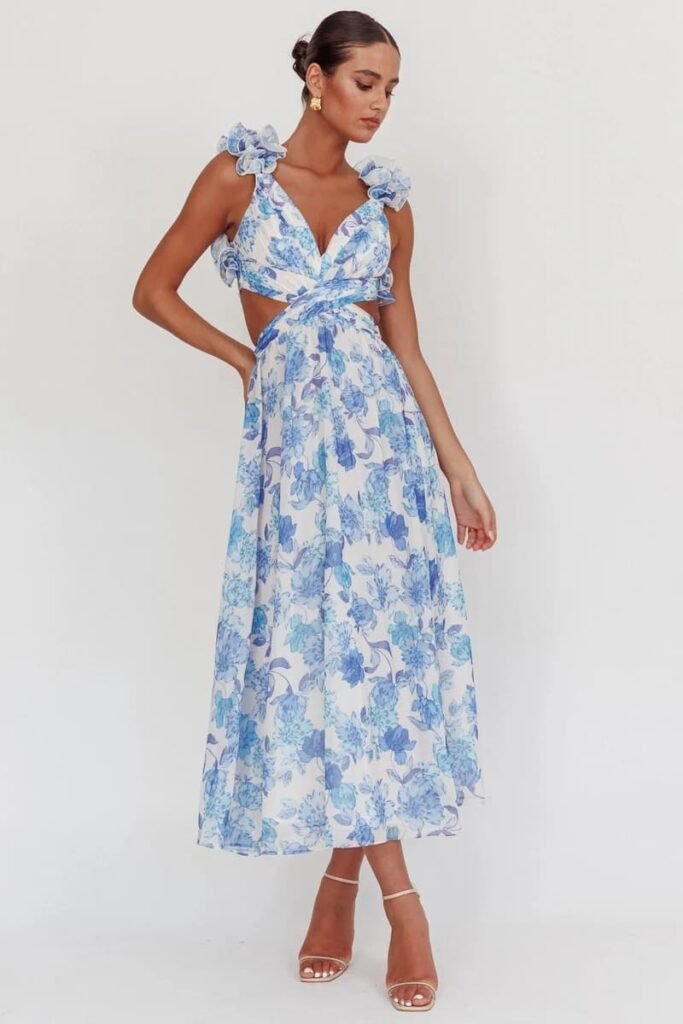
Printed Maxi Dresses
- Best suited to viscose, chiffon, crepe, cotton voile and selected satin qualities.
- Critical controls: print position, hem balance, side-seam fall and lining length.

Resort Midi Dresses
- Useful for lunch, city resort, wedding-guest and evening-resort edits.
- Critical controls: waist placement, centre-front balance and movement around the calf.

Summer Mini Dresses
- Suitable for sundress, brunch, beach-club and holiday-party capsules.
- Critical controls: body length, hem weight, lining containment and strap security.

Halter Dresses
- Works across fitted, flowing, gathered and backless forms.
- Critical controls: neck comfort, bust coverage, armhole shape and closure strength.

Backless Dresses
- Suitable for resort evenings, destination events and statement campaign styles.
- Critical controls: back depth, side coverage, bra strategy and closure position.

Slip Dresses
- Suitable for satin, matte satin, crepe and selected lightweight woven qualities.
- Critical controls: grain alignment, seam tension, neckline finish and packing protection.

Sundresses
- Suitable for cotton, linen blends, viscose, poplin and lightweight printed qualities.
- Critical controls: elastic recovery, gathering ratio, strap length and wash behaviour.

Vacation Evening Dresses
- Suitable for dinner, rooftop, cruise and destination-event moments.
- Critical controls: support, lining, closure, surface protection and workmanship consistency.
Building a Commercial Vacation Dress Collection
Hero Styles
- Prioritise early fabric tests
- Reserve photo-sample timing
- Define non-negotiable visual details
Commercial Styles
- Protect core brand codes
- Reduce avoidable operations
- Plan repeatable colour extensions
Repeat Styles
- Record approved standards
- Review supplier continuity
- Keep reorder tolerance points
Photo Styles
- Separate photo and PP purposes
- Avoid approving bulk from appearance alone
- Retain construction feasibility
Easy-wear Styles
- Set elastic and recovery standards
- Check body coverage in motion
- Grade functional details proportionally
Evening Extensions
- Coordinate colour stories
- Control surface sensitivity
- Plan higher-risk workmanship separately
Fabric Systems for Vacation and Resort Dresses

Viscose and Rayon for Flowing Movement
Viscose and rayon qualities are widely used for vacation dresses because they can deliver fluid movement, soft handfeel and strong print colour. Performance varies significantly by construction, yarn, weight and finishing. Duolan reviews intended silhouette, print method, skirt volume, lining, seam type and care requirements before confirming the route.
- Drape and weight: The fabric must carry gathers, tiers or bias sections without becoming heavy or collapsing around the body.
- Shrinkage and dimensional change: Testing direction and garment allowance are agreed before pattern finalisation.
- Print performance: Colour depth, strike-off accuracy and repeat scale are reviewed alongside fabric absorbency.
- Bulk stability: Width, shade, handfeel and availability are checked before committing a large multi-style range.

Cotton Voile, Poplin and Natural-look Textures
- Opacity: White and pale colours may need partial or full lining, especially through bust, hip and seat areas.
- Wrinkle behaviour: Fabric recovery, pressing and packing method influence presentation on arrival.
- Structure: Crisp qualities suit defined panels and sleeves; softer qualities support volume and gathering.
- Care positioning: Composition, washing route and care label must reflect tested material behaviour.

Chiffon, Georgette and Sheer Layers
Sheer materials create movement and layered depth but require careful control of transparency, seam visibility, lining shape and edge finishing. Chiffon can expose needle damage, puckering and uneven hems. Georgette offers more body but may still shift during cutting.
Duolan develops the outer layer and lining as one construction system, including their relative length, colour and stretch behaviour.
- Lining relationship: The lining should support coverage without restricting the outer layer.
- Cutting stability: Grain, layer control and panel numbering help reduce twisting and uneven falls.
- Edge finish: Narrow hems, baby hems or rolled finishes are selected according to fabric behaviour.
- Inspection: Hem balance and transparency are reviewed on a form or body, not only on a table.

Lightweight Satin and Slip-dress Materials
Satin supports elevated resort and evening looks, yet the smooth surface reveals needle marks, seam waviness, pressing damage, scratches and colour variation. Weight and finish affect whether the dress looks fluid, clingy, inexpensive or overly formal.
Development covers surface lustre, drape, thickness, stretch, lining, seam construction, pressing and packing protection.
- Surface risk: Needle, feed and pressing conditions are tested before bulk sewing.
- Body coverage: Pale or high-shine satin may require lining or revised fit ease.
- Bias behaviour: Grain and hanging recovery are monitored before hem completion.
- Packing: Fold points and pressure areas are managed to reduce permanent marks.

Stretch Fabrics for Fitted Vacation Styles
Fitted mini, midi and cut-out dresses may use stretch woven, jersey, mesh combinations or elasticated panels. Stretch percentage alone is not enough; recovery, weight, opacity, growth and seam performance determine whether the garment holds its shape. Duolan links fabric test results to negative ease, support structure, seam type and grade rules.
- Recovery: Fabric should return after stretch without bagging at waist, hip or seat.
- Opacity under extension: Coverage is checked at the expected wearing stretch.
- Pattern adjustment: Ease and seam positions are tuned for the selected material, not copied from a non-stretch base.
- Production control: Directional stretch and panel orientation are marked before cutting.

Fabric Approval Before Bulk Booking
Before bulk booking, material decisions are documented around composition, width, weight, colour, handfeel, stretch, transparency, finish and acceptable variation. A replacement fabric may be proposed when the original direction cannot support cost, availability, quality or timeline, but substitution is not treated as a visual-only decision.
- Review inputs: reference swatch, target composition, handfeel, colour, quantity and warehouse date.
- Approval evidence: swatch card, lab dip, strike-off, bulk cutting or garment sample as appropriate.
- Production link: approved material is connected to the BOM, pattern and workmanship standard.
- Reorder link: material source and approved references are preserved for future review.
Print and Colour Development for Vacation Dresses
Artwork and Repeat Engineering
- Confirm print repeat dimensions and direction.
- Check artwork scale against mini, midi and maxi proportions.
- Identify panels needing centred, mirrored or controlled placement.
- Assess expected fabric consumption and cutting loss.
Strike-off and Colour Approval
- Compare against approved artwork or colour references.
- Review colour under relevant light rather than relying on a single screen.
- Check whether print changes fabric handle or drape.
- Record accepted variation before bulk printing.
Placement and Garment Proportion
Large florals, border prints, engineered placements and asymmetric motifs need garment-level planning. Bust darts, waist seams, side seams, tier joins, zippers and cut-outs can interrupt key artwork.
Placement decisions are confirmed before cutting markers are finalised, especially for hero styles and campaign samples.
- Map motif position on critical panels.
- Plan left-right balance and front-back continuity.
- Allow for size grading where placement cannot remain identical.
- Agree acceptable variation for commercial bulk production.
Bulk Print Batch Control
- Inspect bulk print before full cutting.
- Separate shade groups where variation exceeds the agreed range.
- Keep roll and cutting records for affected styles.
- Review replenishment feasibility when print continuity matters.
Solid Colour Coordination
- Prioritise visual harmony at normal viewing distance.
- Check lining show-through and colour influence.
- Match visible elastics, straps, zippers and hardware.
- Preserve approved references for repeat production.
Design Details That Make Vacation Dresses Wearable
Halter Neckline Balance
- Review neckline pull on the sample body.
- Confirm neck closure strength and comfort.
- Grade strap and neckline proportions by size.
Backless Security
- Define maximum back depth for intended wear.
- Check side coverage during movement.
- Use hidden support only where it improves stability.
Adjustable Straps and Hardware
- Match hardware scale to strap width.
- Test adjustment range on sample size.
- Secure joins against pull and repeated adjustment.
Bust Coverage and Support
- Clarify bra-friendly or braless intent.
- Check lining edge and cup visibility.
- Balance support with the intended light appearance.
High Slit Stability
- Measure slit from a fixed garment point.
- Reinforce the upper slit without creating bulk.
- Review movement on the intended heel or footwear context.
Lining Coverage
- Check lining in daylight and flash photography.
- Match lining stretch to shell behaviour.
- Control lining length across the size range.
Gathering and Smocking
- Record elastic length or gathering ratio.
- Check recovery after handling or wash testing.
- Maintain symmetry and row consistency.
Closures and Internal Finishing
- Protect delicate fabric around zipper seams.
- Secure top hooks and stress points.
- Keep internal components hidden from the exterior.
Fit Development Around Australian Brand Standards
Brand Size Chart First
- Confirm sample size and fit model basis.
- Separate body measurements from finished-garment measurements.
- Identify critical POMs for each silhouette.
Fit Is More Than Measurements
- Review balance on body or form.
- Check contour and support, not only circumference.
- Translate comments into pattern actions.
Vacation-specific Fit Points
- Mark visual and functional priorities separately.
- Test movement, sitting and arm lift where relevant.
- Record approved positions for grading.
Grade Rules by Silhouette
- Review smaller and larger sizes around risk points.
- Keep coverage and support proportional.
- Align grade rules with material stretch and recovery.
Tolerance and Inspection
- Define critical and non-critical POMs.
- Use the approved measurement method.
- Escalate trends before variation spreads through bulk.

From Collection Brief to Feasibility Review
Tech Pack
- Measurements and tolerances
- Construction and BOM
- Artwork and labels
Reference Images
- Front, back and detail views
- Priority elements
- Acceptable adaptation range
Original Sample
- Fit corrections
- Material replacement
- Brand-specific updates
Mood Board
- Collection codes
- Hero and commercial roles
- Target consumer environment
Fabric Direction
- Target drape
- Transparency and stretch
- Price and timing constraints
Fit Comments
- Priority versus preference
- Pattern correction basis
- Approval status
Production-ready Vacation Dress Sample Development
Each sample needs a defined purpose. A photo sample, fit sample and PP sample may look similar, yet each one answers a different development or production decision.
First Prototype
The first prototype tests whether the design direction can be translated into the intended silhouette, proportion, fabric effect and construction path. Early review focuses on major balance, feasibility and visual priorities before minor details consume time.
- Confirm the chosen fabric basis or approved substitute.
- Review overall silhouette and high-risk structure.
- Separate must-correct issues from later refinements.
Fit Sample
A fit sample validates body balance and garment measurements on the designated sample size. Review covers bust, waist, hip, side seam, armhole, straps, back opening, slit and length according to the style. Comments are converted into pattern corrections and measurable follow-up points.
- Use a consistent fit body or fit model.
- Record visual comments with measurement evidence.
- Confirm which adjustments affect grading.
Photo-ready Sample
Photo samples serve campaign, ecommerce or wholesale presentation. Colour, print, surface finish, drape and styling details need close visual control.
A photo-ready sample should still use a feasible construction route so marketing approval does not create an unrealistic bulk standard.
- Prioritise campaign colour and visual finish.
- Confirm any temporary substitutions clearly.
- Keep bulk feasibility visible during approval.
Salesman Sample
Salesman samples may be required across several colours or styles for line review and ordering. Consistency between samples matters because internal decisions often compare the range side by side.
Material, fit and finish status should be labelled clearly.
- Coordinate multi-style sample timing.
- Mark confirmed and provisional components.
- Keep sample identification and version control.
Revision Sample
- Link every revision to the prior comment.
- Highlight changes requiring re-measurement.
- Confirm whether visual, fit or PP status has been reached.
PP and Golden Sample
- Run a bulk-readiness review before approval.
- Lock critical components and tolerance priorities.
- Preserve approved sample and production records.
Sample timing is confirmed after style complexity, fabric availability, custom print or colour needs, sample purpose and approval route are reviewed. Duolan avoids fixed universal promises because a clean cotton sundress, a custom-print maxi and a structured backless satin dress do not follow the same development path.
Controlling the Transition from Sample to Bulk
Approval Status Review
- Confirm approved sample version.
- List open points and responsible owner.
- Separate optional refinements from production blockers.
Material and BOM Locking
- Record approved material references.
- Check bulk availability and lot planning.
- Confirm alternatives only through formal approval.
Pattern and Measurement Locking
The production pattern, grading basis and measurement chart are aligned to the approved sample. Critical POMs and tolerance priorities are highlighted for cutting, sewing and QC teams.
- Freeze the correct pattern version.
- Confirm grade rules and sample size.
- Mark fit-sensitive positions.
Workmanship Confirmation
Seam type, stitch density, edge finish, gathering ratio, elastic tension, zipper method, reinforcement and pressing standards are translated into production instructions.
High-risk details receive visual or physical references.
- Create clear construction notes.
- Use sample details as comparison standards.
- Brief line and QC teams before bulk output.
First-piece and Pilot Review
- Check appearance, measurements and function.
- Confirm operation sequence and key equipment path.
- Release full production after critical points are stable.
Inline and Final Connection
Inline inspection uses the same approved basis established before production.
Final inspection then checks completed garments, measurements, appearance, function, labels and packing against the agreed standard.
- Track repeated defects by operation.
- Correct trends before they spread.
- Retain records for repeat production.
Workmanship Standards for Lightweight Vacation Dresses
A strong sample has limited value unless the approved result can be translated into a repeatable production standard. Duolan conducts a production-readiness review before bulk start.

Seam Selection and Tension
Seam type is selected around fabric weight, transparency, fraying, stretch and garment position. Overly heavy seams can distort a fluid dress. Needle size, thread, stitch length, feed and operator handling are tested on the intended material.
- Use enclosed or clean finishes where transparency exposes internals.
- Avoid excessive tension that creates puckering or seam grin.
- Reinforce stress points without making the seam visibly bulky.

Narrow Hems and Curved Edges
- Stabilise and level before final hemming where needed.
- Set an acceptable hem-width standard.
- Inspect the full circumference, not only the front view.

Straps and Stress Points
Fine straps, ties and loops carry concentrated load. Turn quality, seam position, reinforcement, bartacks and attachment angle affect both strength and appearance.
Hardware joins and adjustable points receive additional checks.
- Confirm strap width and finished thickness.
- Test pull at attachment and hardware joins.
- Keep left-right length and angle consistent.

Zippers and Closures
- Stabilise sensitive zipper seams where appropriate.
- Check top alignment and waist-seam matching.
- Protect surfaces from pressing marks.

Lining and Internal Finish
Lining should remain invisible, comfortable and free-moving. Twisting, shortage, exposed seam allowance or inconsistent attachment can spoil the outer appearance. Shell and lining are checked together after pressing and movement.
- Control lining length and side-seam balance.
- Secure at suitable points without restricting drape.
- Finish internal edges according to transparency and wear.

Pressing and Surface Protection
- Use fabric-appropriate pressing methods.
- Inspect under normal and angled light.
- Apply packing protection for sensitive surfaces.
Our Vacation Dress Development and Production Process
Collection Brief Review
- Output: project questions and development priorities.
Feasibility Assessment
- Output: feasibility comments and risk notes.
Fabric and Print Development
- Output: approved or shortlisted material direction.
Pattern and Sample
- Output: prototype or fit sample with review basis.
Fit and Revision
- Output: controlled revision and status summary.
PP and Bulk Readiness
- Output: PP basis and bulk-start confirmation.
Production and Inline QC
- Output: controlled bulk progress and corrective actions.
Packing and Delivery
Verify labels, barcodes, folding, ratio, cartons, inspection status and shipping documents before release.
- Output: shipment-ready order and retained records.
Multi-style Production for Seasonal Vacation Collections
Order Breakdown by Style
- Classify routine, complex, quick-response and special-process styles.
- Identify shared fabrics and trims across the collection.
- Set campaign and warehouse priorities by style.
Core Factory Control
- Keep high-risk styles close to technical teams.
- Use retained standards for first-piece and inline review.
- Escalate fit or construction issues quickly.
Satellite and Regional Capacity
Long-term satellite factories and regional bases provide elastic capacity for stable commercial styles, replenishment and seasonal peaks. Allocation follows capability, audit needs, material path and quality requirements rather than quantity alone.
- Match factory skill to product type.
- Use central standards and QC coordination.
- Maintain visibility over split production.
Quick-response and Replenishment
More than 50 quick-response and flexible lines support test orders, repeat orders, replenishment and changing style depth.
Fast response still depends on preserved patterns, material continuity and timely approval.
- Prepare repeat files before demand arrives.
- Review material availability early.
- Reserve capacity around launch results where possible.
Manufacturing Scale
The group operates 300 sewing lines, maintains stable monthly capacity of approximately 6.5 million garments, can reach approximately 10 million garments during peaks, and retains additional capacity space of about 1-2 million pieces per month.
- Use scale for capacity resilience.
- Protect style-level quality through planned allocation.
- Build buffers for material, inspection and shipping.
Development Density
- Track each style and sample purpose.
- Coordinate shared materials and colour stories.
- Prevent approvals from becoming disconnected.
Quality Control Across Vacation Dress Production
Quality control starts with product decisions and continues through materials, patterns, PP standards, line output, packing and shipment. Lightweight and open-structure dresses need checks tailored to their real failure points.
| Control Stage | Main Checks | Vacation Dress Risk Addressed |
|---|---|---|
| Fabric inspection | Shade, width, weight, defects, handfeel, shrinkage, stretch, transparency and print condition. | Batch variation, unexpected opacity, unstable drape and cutting loss. |
| Pre-production | Approved sample, BOM, pattern, measurement chart, workmanship, labels, packing and open issues. | Production starting from incomplete or conflicting standards. |
| Cutting | Grain, print direction, placement, shade grouping, panel numbering and layer control. | Twisting, motif imbalance, visible shade difference and mismatched panels. |
| Sewing | Seam tension, straps, closures, lining, gathers, smocking, slits, reinforcement and pressing. | Puckering, gaping, weak stress points, uneven fullness and surface damage. |
| Inline QC | Measurements, appearance, repeated defects, operation consistency and corrective-action follow-up. | A small problem spreading through a large quantity. |
| Final inspection | Appearance, measurements, function, cleanliness, labels, assortment and agreed inspection standard. | Non-conforming garments reaching packing or shipment. |
| Packing QC | Folding, surface protection, barcode, ratio, polybag, carton marks and carton quantity. | Wrinkles, scratches, SKU errors and receiving problems. |
| Shipment review | Inspection status, quantity, cartons, documents, delivery instruction and retained records. | Release error, document mismatch and weak reorder traceability. |
Labeling, Packaging and Delivery for Australian Programs

Brand Labels and Care Information
- Confirm artwork, material and placement.
- Check care data against approved composition and test basis.
- Protect visibility on open-back and sheer styles.

Hangtags, Barcodes and SKU Control
- Approve barcode data before mass printing.
- Run style-colour-size verification.
- Keep sample tag sets for comparison.

Folding and Surface Protection
- Prevent strap tangling and hardware marking.
- Reduce permanent satin fold lines.
- Keep printed surfaces and embellishment protected.

Carton Ratio and Marks
- Confirm packing ratio and assortment list.
- Check carton marks against shipment documents.
- Record packed quantity by style and SKU.

Delivery Planning
Delivery planning works backward from warehouse arrival and launch. Production completion, final inspection, packing, document preparation, booking and transit buffers are considered together. Express, air, sea, FOB, CIF, DDP or nominated-forwarder coordination can be discussed according to the project.
- Confirm destination and required arrival date.
- Allow inspection and document buffer.
- Plan split shipment only where commercially justified.

Lead-time Discipline
- Start from the warehouse or launch date.
- Lock critical materials before bulk.
- Protect QC, packing and logistics time rather than compressing every stage.
Compliance Support for Australian Brand Requirements
SMETA Audit
- Audit documents can be reviewed during supplier qualification.
Material Records
- Availability depends on the exact supplier and fabric lot.
Testing Coordination
- Test scope should be confirmed before sampling or bulk booking.
Care Label Data
- Composition, wash route and warning language need approval.
Inspection Support
- Inspection timing is built into the delivery plan.
Requirement Manual
Brand quality, social, packaging, labelling and documentation manuals are reviewed early so relevant controls enter the project before PP and bulk.
- Early review reduces late-stage rework.
Manufacturing Capacity Behind Vacation Dress Programs
30+ Years Development
- Value: fewer blind development decisions.
16 Owned Factories
- Value: stronger sample-to-bulk continuity.
20+ Satellite Factories
- Value: scalable capacity without relying on one site.
12,000+ Workers
- Value: resilience during concentrated delivery windows.
300 Sewing Lines
- Value: parallel production and better specialisation.
50+ Flexible Lines
- Value: faster response when standards and materials are ready.
Vacation Dress Development and Production Case Studies

Printed Resort Drop
- Challenge: print scale looked balanced on swatches but crowded on tiered maxi panels; pale grounds also required opacity control.
- Development: artwork repeat was reviewed by silhouette, strike-offs were compared on the selected base fabrics, and lining coverage was set by colour and body zone.
- Production: printed rolls were grouped by shade, placement-sensitive styles were cut under controlled markers, and shared fabrics were allocated across styles before sewing.
- Result: the 28-style range moved through coordinated PP approval and bulk production without treating every SKU as an isolated order.

Halter Backless Capsule
Project profile: 18 styles and 36,000 garments covering halter minis, backless midis, cut-out dresses and lightweight evening-resort styles.
- Challenge: early samples showed neckline tension, side exposure and unstable back openings across several silhouettes.
- Development: bust coverage, armhole shape, neck strap angle, internal elastic and waist anchoring were reviewed on fit samples; grade rules were adjusted around support points.
- Production: stress points, strap attachment, hooks, lining coverage and zipper areas received first-piece and inline checks.
- Result: the capsule reached a production-ready standard with the visual openness preserved while fit and wearing security were clarified.

Seasonal Multi-style Program
Project profile: 24 styles and 58,000 garments for a regional fashion group serving Australia and additional markets. The programme combined commercial sundresses, hero print maxis, satin slips and resort evening dresses.
- Challenge: different materials, sample purposes and campaign deadlines created a risk of late approvals and mixed production priorities.
- Production: routine woven styles, satin styles and special-print styles were assigned to different production paths, while shared colours, labels and packing data were centrally controlled.
- Result: 24 styles were managed as one seasonal programme with coordinated development, production, QC and packing records.
Frequently Asked Questions for Vacation Dress Brands

Start Your Australian Vacation Dress Collection Project
Send your collection brief for a structured development and production review. Duolan can assess product direction, fabric and print needs, fit priorities, high-risk construction points, sample purpose, bulk pathway and launch timing before confirming the next step. Clear information supports a more accurate sample plan, quotation basis and production route.
Useful project information includes:
- Brand name, market position and target sales channels.
- Collection type, number of styles and priority silhouettes.
- Tech packs, reference images, original sample photos or mood board.
- Fabric, print, colour, lining and trim direction.
- Target sample size, size range and fit comments.
- Estimated quantity by style, colour and size.
- Campaign date, launch date, warehouse arrival date and delivery destination.
- Quality, compliance, inspection, labelling and packing requirements.
Recommended form fields: Company / Brand, Country, Product Direction, Number of Styles, Estimated Quantity, Sample Purpose, Target Launch Date, Email, Tel / WhatsApp, Message and File Upload.