 Skip to content
Custom Dress Manufacturer for BOM-Based Dress Quotation
Turn your dress BOM, technical files and order requirements into an explainable quotation and a production-ready manufacturing plan.
Duolan reviews BOM-based dress quotation requests through a structured path that connects material specifications, fabric consumption, construction methods, sample status, order quantity, packaging, commercial terms and production readiness. The goal is not a detached unit price. The goal is a quotation basis that can support sourcing review, sample development, PP approval and controlled bulk production.
BOM quotation and manufacturing facts:
- 30+ years of womenswear development experience support dress-focused costing, fabric judgment and construction review.
- 16 owned womenswear factories and 20+ long-term satellite factories support multi-style quotation, sampling, production allocation and repeat programs.
- Around 300 sewing lines and 50+ quick-response lines allow fitted, structured, satin, mesh, sequin and occasion dresses to follow suitable production paths.
- Multi-style brand programs commonly involve 10-30 styles and 20,000-80,000 garments, requiring quotation review by style, material, color, size and delivery route.
- An anonymized European partywear BOM quotation program covered 26 styles and 78,400 pieces across sequin, velvet, stretch mesh, satin and crystal embellishment.
Quotation support includes:
- BOM, tech pack, reference sample and construction review
- Fabric, lining, trim, workmanship and consumption assessment
- Quantity, color, size ratio, packaging and delivery evaluation
- Support from preliminary costing through sampling, PP approval and bulk production
- Multi-factory production support for multi-style brand programs
Built for Structured Fashion Dress Procurement
Fashion Brand Teams
- Collection-level coordination
- Brand positioning and price architecture
- Sample-to-bulk planning
- Repeat-order preparation
Product Development Teams
- Tech pack and reference review
- Fabric and silhouette alignment
- Fit and construction risk identification
- Production-readiness planning
Buying and Merchandising Teams
Procurement and merchandising teams require comparable quotations built on the same material, quantity and delivery conditions. Duolan links each quotation to a defined BOM version, order breakdown, packaging basis and commercial term, making revisions easier to review internally.
- Structured quotation basis
- Quantity and color breakdown
- Revision tracking
- Delivery and packing conditions
Sourcing Offices
Sourcing offices need suppliers capable of working within brand manuals, inspection systems, document controls and launch calendars. Duolan supports English communication, technical clarification, PP sample coordination, bulk quality checkpoints and shipment preparation across multi-style programs.
- Organized document exchange
- Brand-standard coordination
- Multi-style production planning
- Third-party inspection support
Can Duolan Quote From Your Current Files?
Complete BOM Available
A complete BOM gives the costing team a stronger starting point, especially when it includes fabric composition, weight, width, lining, trims, labels, packaging and consumption. Duolan still checks whether the listed materials match the intended silhouette, construction method and order quantity.
The review normally covers:
- BOM version and issue date
- Tech pack and measurement chart
- Fabric and trim specifications
- Colorways and size range
- Quantity by style and color
- Packaging and delivery requirements
A formal quotation can be prepared after unclear items, sourcing conditions and commercial assumptions have been confirmed.
BOM Needs Completion
An incomplete BOM does not prevent an initial evaluation. A brand may submit design sketches, reference images, an original sample, fabric direction, size chart or early technical file. Duolan can identify the missing data and prepare a clarification list before formal costing.
The first response may include:
- Missing material specifications
- Undeclared lining or support components
- Construction points requiring confirmation
- Initial fabric and trim direction
- Cost-sensitive design details
- Information needed for formal pricing
An early estimate remains a cost direction until the required assumptions are confirmed.







What BOM-Based Dress Quotation Really Means
Controlled BOM Version
- BOM number and revision
- Issue date
- Change description
- Approved quotation basis
Defined Materials
- Main fabric specification
- Lining and interlining
- Functional components
- Decorative materials
Confirmed Construction
- Seam and closure method
- Support structure
- Layer and lining coverage
- Finish standard
Order Structure
- Quantity per style
- Quantity per color
- Size assortment
- Delivery split
Packing Requirements
- Brand labels
- Retail identification
- Individual packing
- Carton preparation
Commercial Conditions
Currency, Incoterm, destination, inspection arrangement, testing responsibility and quotation validity affect the commercial result. A usable quotation clearly states what is included and what remains outside the price.
- Incoterm basis
- Delivery destination
- Testing requirement
- Price validity
Information Required for Accurate Dress Quotations
Providing the following information allows Duolan to reduce assumptions and prepare a quotation suitable for product evaluation, sampling and bulk planning.
| Information | Preferred Files or Details | Why It Affects Cost | Alternative When Unavailable |
|---|---|---|---|
| Design Basis | Tech pack, flat sketch, reference sample or detailed images | Defines silhouette, panels, closures and construction | Clear front, side, back and detail images |
| BOM | Fabric, lining, trims, labels and packaging | Defines the material scope and sourcing basis | Initial material direction with missing-item review |
| Measurement Chart | Base size, grading rules and tolerances | Affects pattern, consumption and size complexity | Original sample measurements or target fit notes |
| Fabric Specification | Composition, weight, width, stretch, finish and color | Affects consumption, cutting, sewing and finishing | Fabric swatch, handfeel description or reference garment |
| Order Quantity | Quantity by style, color and size | Affects purchasing, cutting, line planning and cost allocation | Estimated launch quantity and expected repeat plan |
| Workmanship | Stitching, lining, support, embellishment and finish requirements | Determines production operations and risk level | Detail photos or approved reference quality |
| Branding | Main label, care label, size label, hangtag and barcode | Affects trim purchasing and packing operations | Brand manual or preliminary label list |
| Packaging | Folding, individual bag, tissue, hanger, sticker and carton | Affects packing materials, labor and freight volume | Target sales channel and warehouse requirements |
| Quality Requirements | Inspection level, testing and market standards | Affects material selection, testing and QC planning | Destination market and internal quality manual |
| Delivery | Launch date, warehouse date, Incoterm and destination | Determines planning, shipping basis and feasibility | Expected delivery window |
How Duolan Reviews a Dress BOM
Material Completeness Before Costing
Duolan reviews every material group against the garment structure:
- Main fabric: Composition, weight, usable width, stretch, recovery, shrinkage, color method and finishing.
- Secondary materials: Lining, interlining, mesh, organza, binding, facing and pocketing.
- Functional trims: Zippers, buttons, hooks, boning, cups, elastic, gripper tape and adjustment hardware.
- Decorative items: Sequins, beads, pearls, crystals, lace, embroidery threads, appliqué and print.
- Brand components: Main label, size label, care label, hangtag, barcode and packaging sticker.
- Packing materials: Tissue, polybag, hanger, protection layer, carton and carton mark.

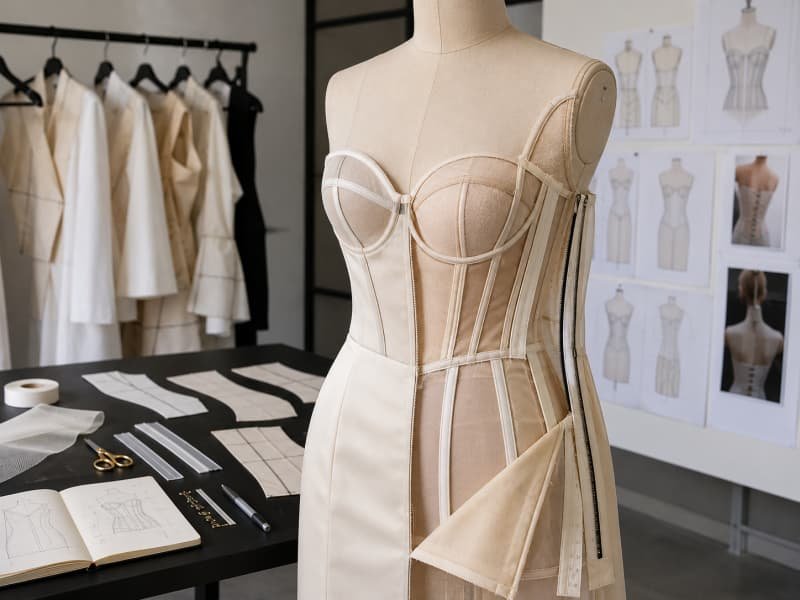
Construction Review Before Labor Costing
Duolan examines:
- Pattern complexity and panel count
- Bust, waist and hip fit sensitivity
- Internal support and lining structure
- Closure method and access for dressing
- Ruching, pleating, draping or gathering density
- Print, lace or embellishment placement
- Edge finishing and hem treatment
- Pressing and shape retention
- Operations requiring hand attachment
- Bulk repeatability of sample workmanship
Commercial Readiness Before Formal Quotation
A technically complete BOM still needs commercial context. Fabric MOQ, color quantity, trim purchase unit, size ratio, packaging and delivery terms affect whether the listed materials can be sourced under the planned order.
Duolan checks:
- Total quantity and quantity per style
- Number of colors and quantity per color
- Size range and assortment ratio
- Shared materials across a 10-30-style collection
- Custom dyeing, printing or embellishment requirements
- Brand label and packaging purchase quantities
- Sample status and expected approval route
- Inspection, testing and compliance requirements
- Planned launch window and destination
- Repeat-order potential and material continuity
The output can include a Material Clarification List, Quotation Assumption Sheet and recommended next step. A formal price is released against the reviewed basis rather than a vague promise.

Dress Categories Requiring Different Costing Logic

Satin Dresses

Corset Dresses

Bodycon Dresses
Bodycon dresses depend on stretch, recovery, opacity and body balance. Fabric consumption may look simple, but unstable recovery or incorrect negative ease can lead to fit variation. Seam type, lining and size grading require careful review.

Mesh Dresses

Sequin Dresses

Lace Dresses

Draped Dresses

Printed Dresses
Printed dresses require artwork review, repeat size, fabric suitability, strike-off approval, color control and placement planning. Panel positioning, size grading and print matching may increase consumption and cutting complexity.
Fabric Decisions Behind a Reliable Quotation
Fabric Behavior Must Match the Silhouette
- Target silhouette and fit
- Drape or structural support
- Stretch and recovery
- Opacity and required lining
- Weight and wearing comfort
- Surface sensitivity
- Shrinkage and dimensional stability
- Printing, dyeing or embellishment compatibility
- Pressing and finishing response
- Bulk supply continuity
Consumption Requires More Than Garment Length
- Usable width rather than nominal width
- Base size and grading range
- Pattern shape and panel count
- Nap, pile or one-way surface
- Stripe, check or print matching
- Lace motif and scallop use
- Bias direction
- Ruching, pleating and gathering ratio
- Shrinkage and process allowance
- Defect and cutting allowance
- Color separation and order ratio
Lining and Interlining Change Product Value
Lining is not a secondary afterthought. It controls opacity, comfort, support, recovery and internal appearance. A wrong lining can flatten satin drape, show through mesh, restrict stretch or make a structured bodice feel heavy. Interlining and support layers can also determine whether a dress holds its intended shape. Selection depends on:
- Shell fabric behavior
- Stretch compatibility
- Required coverage
- Bust and waist support
- Seam strength
- Wearing temperature
- Color matching
- Care requirements
- Bulk stability
Duolan places lining, interlining and support materials inside the BOM from the quotation stage. Their specifications are reviewed again during sampling and locked before bulk production.
Trims That Change Function, Cost and Consistency
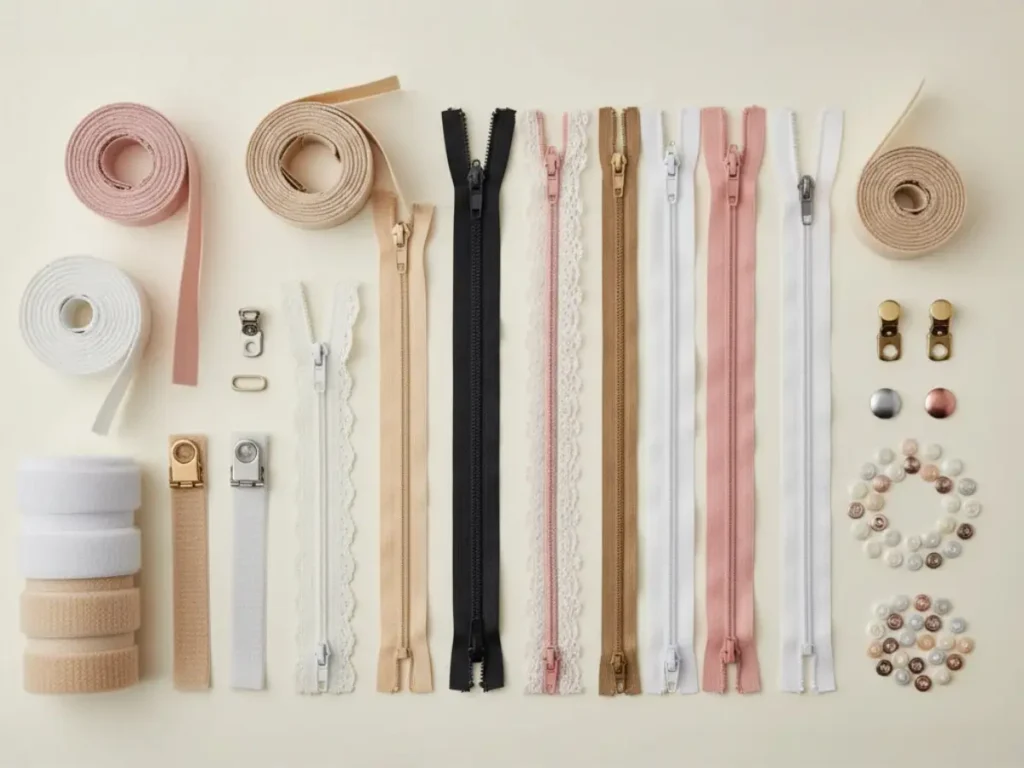
Closures and Zippers
- Confirm length and color
- Review seam support
- Check opening function
- Lock approved supplier reference

Boning and Support
- Define support zones
- Confirm wearer comfort
- Test closure tension
- Record internal construction

Decorative Trims
- Confirm finish and scale
- Test attachment strength
- Review skin contact
- Approve placement standard

Elastic and Adjustment
Elastic, sliders, D-rings, straps, drawcords and internal securing tapes influence fit and function. Width, stretch power, recovery and color should match the intended garment performance.
- Check adjustment range
- Confirm elastic recovery
- Align hardware color
- Verify bulk availability

Brand Labels
- Approve label artwork
- Confirm legal wording
- Match size and SKU
- Inspect placement and orientation

Packaging Components
Polybags, tissue, stickers, barcode labels, hangers, protection inserts and cartons affect the final quotation and warehouse receiving process. Sensitive satin, sequin, lace and structured dresses require tailored protection.
- Define folding method
- Protect delicate surfaces
- Verify barcode data
- Confirm carton assortment
Workmanship Cost Comes From Construction Decisions
Structure and Fit Operations
- Number and shape of panels
- Curved seam control
- Bust and waist shaping
- Internal support assembly
- Lining attachment method
- Closure insertion
- Strap and neckline reinforcement
- Seam allowance and clean finish
- Fit-sensitive pressing
- Measurement checkpoints
Surface and Decorative Processes
- Artwork and placement scale
- Process coverage
- Stitch or embellishment density
- Base fabric compatibility
- Cutting and sewing sequence
- Damage risk during assembly
- Replacement allowance
- Handwork requirement
- Pressing limitations
- Final inspection method
Edge Finishing and Final Appearance
Hem, binding, facing, neckline, armhole, slit and seam finishing influence the perceived quality of a dress. Satin may require narrow rolled hems or careful blind finishing. Mesh may require fine binding or clean layered edges. Lace may use scalloped borders or appliqué finishing. Bodycon fabric requires stretch-compatible seams. Final appearance also depends on:
- Seam smoothness
- Thread tension
- Topstitch consistency
- Pressing temperature
- Drape retention
- Hem balance
- Lining control
- Trim alignment
- Loose-thread cleaning
- Packing preparation
Quotations should reflect the approved finish level rather than a generic garment category.

Four Quotation Stages for Dress Development
Price confidence increases as materials, construction, samples and order conditions move from assumptions toward confirmed production standards.
| Quotation Stage | Information Basis | Main Purpose | Price Status | Next Decision |
|---|---|---|---|---|
| Cost Direction | Reference image, basic fabric direction, target quantity and expected quality | Screen commercial feasibility before development | Preliminary and assumption-based | Decide whether to prepare technical files or begin development |
| Development Quotation | Tech pack, initial BOM, measurements, construction and sample plan | Approve sample development scope and early bulk direction | More structured but subject to sample findings | Start pattern, sourcing and sample work |
| Sample-Updated Quotation | Reviewed sample, revised BOM, corrected construction and confirmed material direction | Align cost with the developed garment | Higher confidence with listed open points | Continue revision or prepare PP approval |
| Bulk Production Quotation | Approved sample, locked BOM, quantity, color-size breakdown, packing and commercial terms | Support PO approval and production planning | Formal quotation against defined conditions | Release bulk order and production-readiness review |
Our BOM Quotation Workflow
Step 1|Receive Project Files
Step 2|Classify Project Stage
Step 3|Check File Completeness
Step 4|Review Dress Feasibility
Step 5|Check Supply Conditions
Step 6|Calculate Cost Drivers
Step 7|Confirm Assumptions
Step 8|Issue Quote Version
The final document is linked to a BOM version, quantity basis, currency, commercial term, validity period and next development step.
What a Duolan Quotation Should Clarify
An explainable quotation gives procurement teams enough information to evaluate scope, compare suppliers and understand future revision points.
Style Reference
- Style name and number
- File reference
- Product category
- Quotation revision
BOM Reference
- BOM version
- Issue date
- Open materials
- Pending approvals
Quantity Basis
- Total quantity
- Color quantity
- Size ratio
- Shipment split
Workmanship Basis
- Lining method
- Support structure
- Closure type
- Surface process

Material Basis
- Composition and weight
- Width and finish
- Trim specification
- Color process
Packing Basis
- Label set
- Individual packing
- Carton arrangement
- Special protection
Commercial Basis
- Currency
- Trade term
- Price validity
- Excluded charges
Timing Basis
- Sample stage
- Material readiness
- PP approval
- Delivery window
How BOM Revisions Change the Quotation
Every revision should show what changed, why it changed and how the change affects material, workmanship, timing or order conditions.
Material Revision
- Composition or weight change
- Width or consumption change
- Trim supplier change
- Color process change
Construction Revision
- Added internal structure
- Revised seam method
- New finish standard
- Changed fit requirement
Quantity Revision
- Style quantity
- Color quantity
- Size assortment
- Shipment allocation
Packaging Revision
- Label or barcode change
- Folding method
- Individual protection
- Carton requirement
Target Cost Review Without Losing Brand Value
Protect the Features That Sell
- Signature silhouette
- Fabric drape or shine
- Bust and waist support
- Key cut-out or neckline
- Hero embellishment
- Fit-defining structure
- Required opacity and lining
- Brand color or print
- Premium closure or hardware
- Recognizable finishing detail
Review Complexity With Limited Sales Value
Some details increase operations, material waste or sourcing difficulty without creating equivalent visual value. Duolan examines whether those details can be simplified while preserving the approved look. Common review areas include:
- Excessive hidden layers
- Unnecessary seam divisions
- Low-visibility decorative work
- Too many unique trim specifications
- Small color quantities requiring separate dyeing
- Packaging components not required by the sales channel
- Hand operations replaceable by stable machine methods
- Embellishment extending into high-friction seam areas
- Fabric width poorly suited to the pattern
- Multiple linings with similar function
Every proposed change should explain the visual impact, cost impact, sample action and bulk-production implication. No substitution enters the BOM without approval.
Build Cost Efficiency Across a Collection
A 10-30-style dress program provides more optimization opportunities than isolated single-style costing. Shared fabrics, linings, zippers, labels and packaging can reduce fragmentation and make repeat production easier. Collection-level options include:
- Shared base fabrics across related silhouettes
- Concentrated color stories
- Common lining qualities
- Standard zipper and hook specifications
- Reusable label and packaging formats
- Shared embellishment components
- Coordinated fabric booking
- Hero styles balanced with commercial support styles
- Material continuity for repeat orders
- Standardized approved finishes
Cost optimization becomes a collection planning exercise rather than a request to make every garment cheaper.
Material Alternatives Evaluated by Garment Result
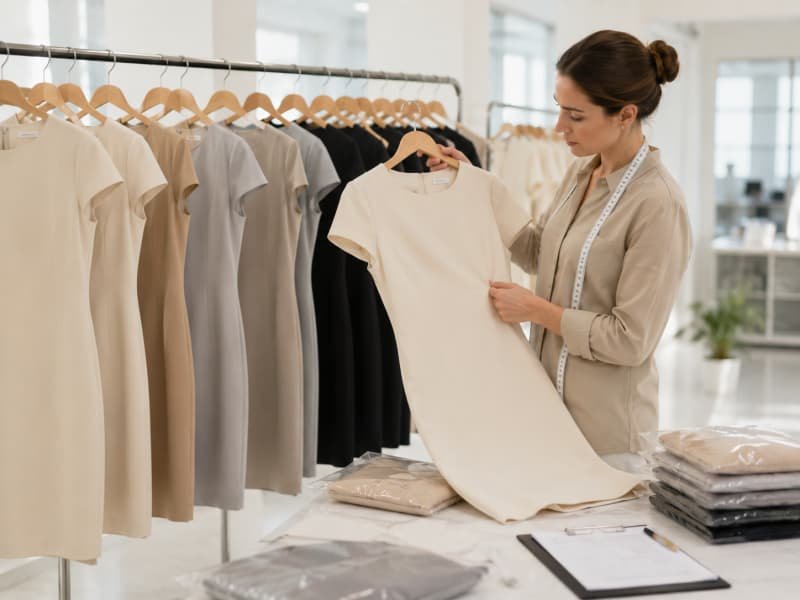
Alternative sourcing compares visual effect, performance, availability and bulk stability rather than replacing a material with the lowest-priced option.
Appearance and Drape
- Compare sample swatches
- Review garment drape
- Check pressing response
- Confirm visual approval

Stretch and Recovery
- Test stretch direction
- Review recovery
- Confirm negative ease
- Check seam compatibility

Opacity and Coverage
- Check under lighting
- Review lining color
- Confirm coverage zones
- Assess wearing comfort

Trim Availability
A trim alternative must match size, finish, function, durability and appearance. Zippers, hooks, hardware, boning, cups and elastic should remain repeatable in bulk.
- Match finish and dimensions
- Test function
- Review supplier continuity
- Approve bulk reference

Production Stability
- Verify bulk capacity
- Review batch risk
- Confirm color control
- Plan repeat supply

Delivery Compatibility
Custom-developed materials may add dyeing, printing, embellishment or testing time. Alternatives are compared against the launch calendar as well as target cost.
- Review material lead time
- Confirm sample availability
- Check process timing
- Align delivery plan
Quantity Structure Matters More Than One MOQ Number
Style, Color and Size Quantities
- Quantity per style
- Quantity per color
- Size ratio
- Number of unique fabrics
- Number of unique trims
- Custom color or print development
- Packaging variation
- Shipment split
- Repeat-order plan
- Shared materials across styles
Material and Process Minimums
Many quantity limitations originate outside the sewing line. Fabric mills, dye houses, printers, embroidery partners, trim suppliers and packaging producers may apply their own minimums.
Relevant conditions include:
- Greige fabric or finished fabric minimum
- Custom dye quantity
- Print setup and color minimum
- Lace or engineered motif production quantity
- Custom zipper or hardware minimum
- Brand label and packaging quantity
- Embroidery or embellishment setup
- Special washing or finishing batch
- Color-specific purchasing
- Material continuity for repeat orders
Duolan can assess whether materials should be shared across several styles, whether a standard available quality is more suitable or whether development should wait for a larger confirmed program.
From Development to Scaled Production
Brand programs often move through several commercial stages:
- Design and costing review
- First sample
- Fit or revised sample
- PP sample
- Launch order
- Repeat order
- Scaled production
Duolan is not positioned as a micro-order source. The manufacturing structure is designed for organized dress programs with clear development requirements and a defined path toward production. Quantity evaluation therefore considers both the first order and the expected continuation of successful styles.

Sampling and Delivery Timing by Project Readiness
Timing is issued after material status, construction risk, sample purpose and approval responsibilities have been reviewed.
File Review Stage
- Define quotation stage
- Identify open points
- Confirm review responsibility
- Set next submission date
Material Preparation
- Check stock or development
- Confirm color process
- Review trim availability
- Identify testing needs
Sample Development
- Confirm sample objective
- Define approval points
- Plan progress updates
- Record revision comments
Bulk Readiness
Production timing is not released only because a sample exists. Fabric, trims, measurements, workmanship, packing and PP basis must be aligned before line allocation.
- Lock production standards
- Confirm first-piece plan
- Arrange inspection points
- Issue bulk start note
Delivery Planning
The final delivery plan considers production route, inspection, packing, shipment method, destination and warehouse date. Multi-style programs may use staged approvals or shipment planning.
- Plan by style group
- Match production path
- Confirm packing completion
- Coordinate forwarder details
Duolan’s manufacturing system has 300 sewing lines, 50+ quick-response and flexible lines, monthly sample-development capacity of approximately 15,000-35,000 sample pieces, and support for approximately 3,000-8,000 style-development workflows per month. Actual timing is confirmed according to the submitted program rather than published as one fixed promise.
From Quoted BOM to Bulk-Ready BOM
Quotation BOM Establishes the Cost Basis
The first structured BOM supports costing by listing the intended shell fabric, lining, trims, labels and packaging. Some specifications may remain provisional before samples and supplier availability are confirmed.
The quotation BOM should identify:
- Confirmed materials
- Provisional materials
- Estimated consumption
- Construction assumptions
- Quantity basis
- Packing basis
- Open approval points
- Cost-sensitive risks
- Quotation revision
- Required next action
A quotation BOM is not automatically a production instruction. It explains what the price is based on and where further confirmation remains necessary.
Sample BOM Records Development Decisions
The sample BOM is updated alongside:
- Pattern revisions
- Fit comments
- Material approvals
- Trim board
- Workmanship notes
- Sample measurements
- Color approvals
- Construction trials
- Packaging review
- Revised quotation
Bulk-Ready BOM Locks the Production Standard
Before bulk release, the BOM must align with the approved sample, measurement chart, workmanship file and packing requirement.
The bulk-ready package normally covers:
- Approved shell and lining
- Approved trims and suppliers
- Confirmed colors and finishes
- Final consumption or purchasing quantity
- Size and color order breakdown
- Label and packaging set
- PP or approved reference sample
- Key measurement tolerances
- Critical workmanship points
- QC and inspection requirements
Duolan performs a Bulk Readiness Review before production starts. The team determines whether the sample is fit-confirmed, visually confirmed, approved as a PP basis or still pending refinement. High-risk points are resolved before full production release.
A Manufacturing System Built for Dress Programs
Owned Factories for Core Control
The commercial value of owned factories includes:
- Direct control over key production standards
- Stronger connection between samples and bulk
- Priority planning for important programs
- Faster internal escalation of production issues
- Better preservation of approved workmanship
- Clear accountability for quality and delivery
- Support for structured repeat production
- Coordination between development and manufacturing

Satellite and Regional Capacity
More than 20 long-term satellite factories support flexible allocation, repeat orders, seasonal peaks and process matching under coordinated project management. Stable production resources are also distributed across Guangxi, Guizhou, Sichuan and Jiangxi, with more than 12,000 workers across the supporting network.
Satellite capacity may support:
- Repeat-order expansion
- Seasonal volume peaks
- Multi-style programs
- Different construction levels
- Process-specific allocation
- Parallel production schedules
- Regional capacity buffering
- Delivery-plan flexibility
Styles are not distributed only according to available space. Fabric, construction, workmanship risk, quantity, delivery and quality requirements influence production-path selection.
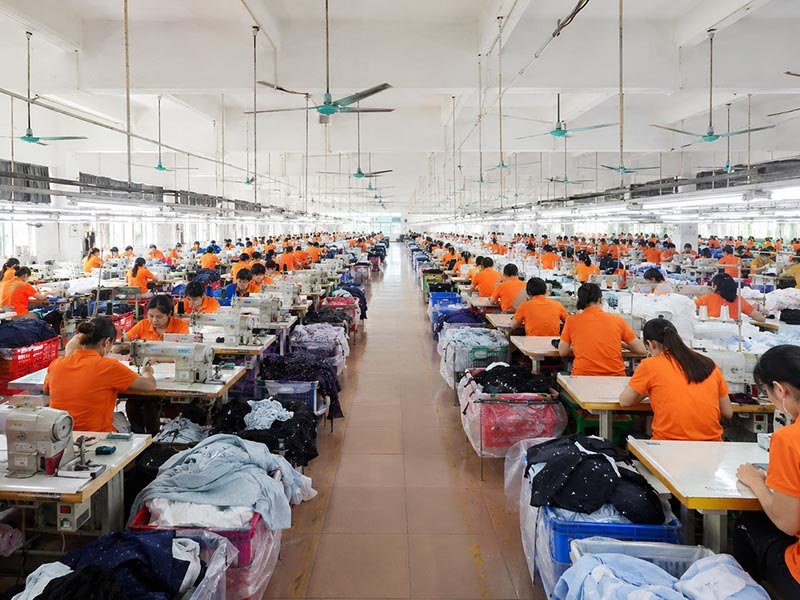
Scale, Flexibility and Development Capacity
The broader manufacturing structure includes:
- 300 garment sewing lines
- 50+ quick-response and flexible lines
- Multiple sample-development lines
- Supporting printing, embroidery, washing and finishing resources
- Stable monthly capacity of approximately 6.5 million garments
- Peak monthly capacity of up to approximately 10 million garments
- Additional monthly capacity space of approximately 1-2 million garments
- Monthly sample-development capacity of approximately 15,000-35,000 pieces
- Support for approximately 3,000-8,000 style-development workflows monthly
The scale is relevant because established brands may place 10-30 styles and 20,000-80,000 total pieces in one program. Product development, material preparation, production, QC, packing and delivery must move together across all styles.
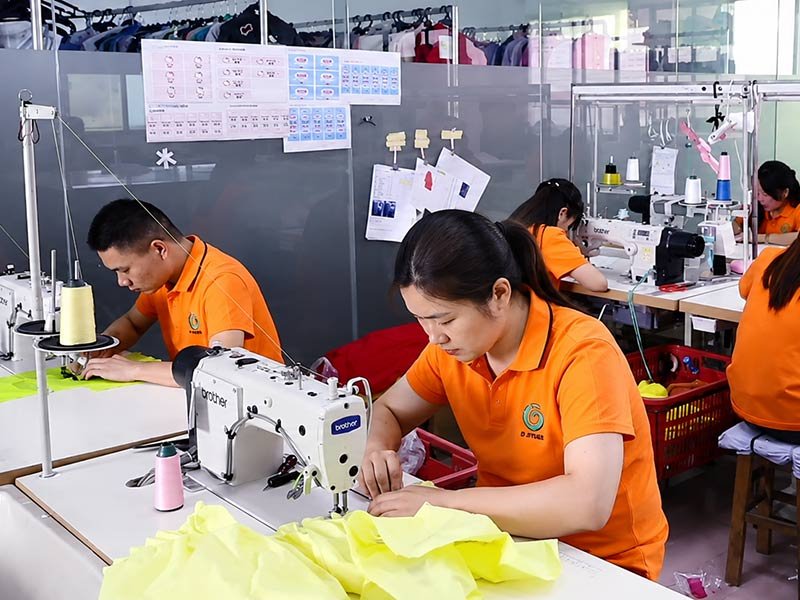
Quality Control Against Approved BOM Standards

Incoming Fabric Check

Trim Verification

Cutting Control
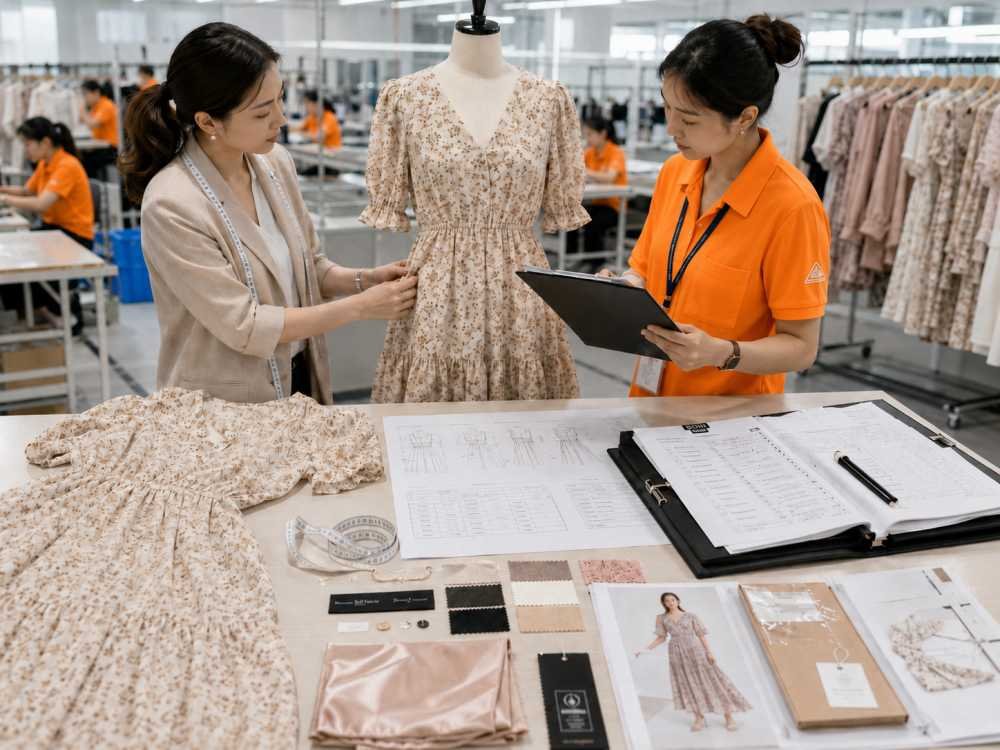
First-Piece Confirmation
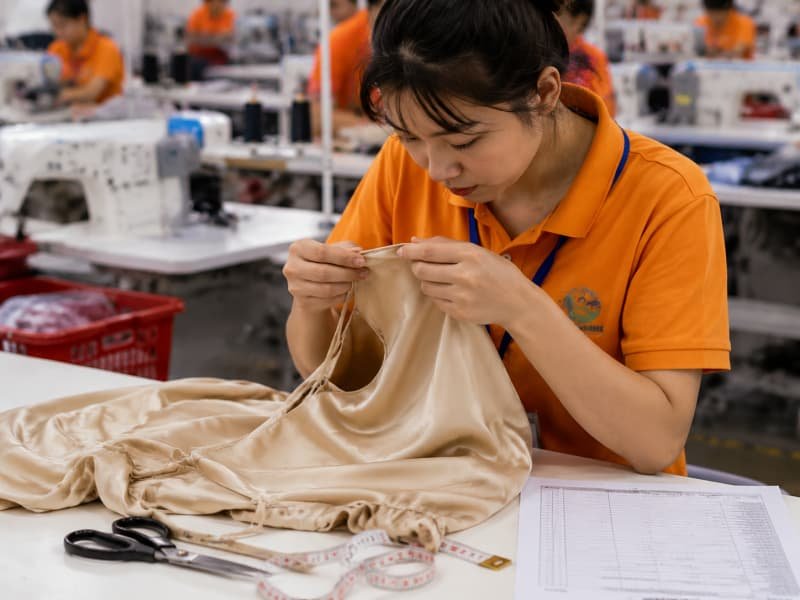
Inline Inspection

Measurement Review

Final Appearance Check
Packing Verification
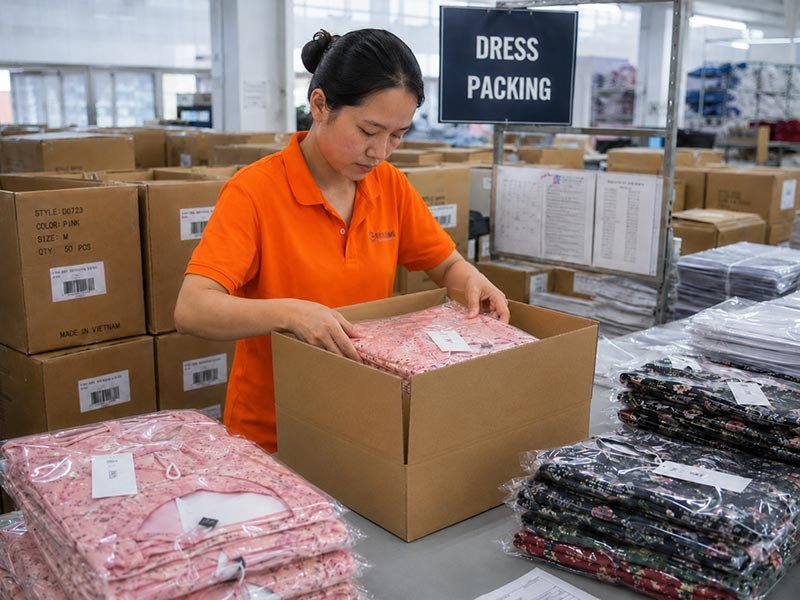
Labels, size stickers, barcodes, folding, individual packing, quantity ratio, carton marks and packing lists are checked before shipment preparation.
Compliance, Confidentiality and Project Communication
Formal brand programs require disciplined information handling, documented communication and the ability to work within established quality and social-responsibility systems.
Design Confidentiality
Tech packs, BOMs, unreleased designs, sample images, label files, pricing information and launch plans are treated as commercial project information. NDA arrangements can be reviewed when required.
- Controlled file access
- No unauthorized display
- Protected sample images
- Brand identity discretion
Compliance Support
- Audit-document coordination
- Market requirement review
- Material testing support
- Third-party inspection cooperation
English Communication
- Clear contact window
- Written confirmation
- Visual progress updates
- Structured revision records
Project Documentation
- BOM Review Note
- Sample Review Note
- Revision Summary
- Production Readiness Note
BOM Quotation Cases for Multi-Style Programs
U.S. Occasionwear Program - 18 Styles, 42,600 Pieces
- Boning and cup specifications missing from six corset styles
- Lining coverage unclear on five light-color dresses
- Zipper lengths not aligned with final pattern structure
- Ruching ratios absent from three draped styles
- Packaging requirements issued separately from the BOM
- Color quantities not balanced against fabric dye conditions

European Partywear Program - 26 Styles, 78,400 Pieces
- Common lining specifications were identified across related styles
- Standard zipper and hook references were aligned where construction allowed
- Shared packaging components were organized by product category
- Sequin and embellishment styles were separated from standard sewing routes
- High-risk fitted styles were marked for pilot or first-piece review
- Quantity was evaluated by style, color and production path

U.S. Digital Fashion Brand - 12 Styles, 24,800 Pieces
- Lining stretch inconsistent with the shell fabric
- Missing internal elastic on halter and backless styles
- Closure descriptions differing from the sample
- Care labels lacking final material composition
- Size ratio not reflected in consumption assumptions
- Repeat-order material continuity not addressed

Evaluate a BOM Quotation Manufacturing Partner
A strong quotation supplier should combine dress knowledge, cost clarity, production control and communication discipline across the complete program.
Dress Specialization
BOM Review Ability
Material Judgment
Cost Explanation
Sampling Connection
Production Capacity
Quality Discipline
Communication Control
Prepare Your Dress Quotation Package
Bulk Quote Requirement Sheet
Use the Bulk Quote Requirement Sheet to collect the commercial and production information required for a formal quotation.
The sheet includes:
- Company and brand information
- Style list and product categories
- BOM and tech pack status
- Quantity by style and color
- Size range and ratio
- Sample or PP status
- Packaging requirements
- Inspection and testing requirements
- Incoterm and destination
- Launch and warehouse dates
A completed sheet reduces repeated clarification and allows the team to identify project risks earlier.
Custom Dress BOM Checklist
Use the BOM Checklist to verify whether each dress contains the material and component information required for costing and future production.
The checklist includes:
- Main fabric
- Lining and interlining
- Zippers and closures
- Cups, boning and support
- Elastic and adjustment parts
- Lace and embellishment
- Labels and hangtags
- Packaging materials
- Consumption and allowance
- Approval and revision status
The checklist can be uploaded with the tech pack or used internally before supplier comparison.
BOM Quotation Frequently Asked Questions
Yes. Send the BOM with the tech pack, measurement chart, quantity, color-size breakdown, packaging and delivery information. Duolan first checks whether the BOM matches the garment construction and whether important materials or commercial conditions are missing. A formal quotation is issued after the costing basis and remaining assumptions have been confirmed.
A dress BOM should cover the main fabric, lining, interlining, closures, functional trims, decorative components, labels and packaging. Each item should include a useful specification such as composition, weight, width, color, size, finish, placement, supplier reference or consumption. The BOM should also carry a revision number and issue date.
An initial cost direction can be prepared from a tech pack, reference images, an original sample or material direction. Duolan will identify missing information and issue a clarification list. Formal bulk pricing requires confirmed materials, construction, quantity, size-color allocation, packaging and commercial conditions.
Sampling may reveal different consumption, support materials, lining requirements, construction operations or trim specifications. Fit corrections can also change the pattern and manufacturing route. Any revised price should be connected to a documented BOM, construction or quantity change rather than presented without explanation.
Usable fabric width affects marker efficiency and consumption. Narrow fabric, border lace, directional surfaces, engineered prints, bias cutting and large pattern panels can increase cutting loss. Consumption becomes more accurate after a working pattern and size ratio are available.
Yes. Many colors create smaller purchasing and production lots. A wider size range can alter consumption, grading work and marker efficiency. The same total order quantity may produce a different cost when divided across more styles, colors, sizes or shipments.
Yes. Alternatives are evaluated by appearance, drape, stretch, opacity, support, wearing comfort, availability, MOQ, lead time and bulk stability. No replacement enters the final BOM without approval. A fabric or trim trial may be recommended before sample or bulk confirmation.
No. Sample fees cover development work such as pattern preparation, small-quantity sourcing, sample sewing, technical review and special-process trials. Bulk unit pricing is calculated from confirmed materials, production operations, order quantity, packing and commercial terms.
The strongest bulk quotation basis is available after the approved sample or PP sample, locked BOM, confirmed measurements, quantity, colors, size ratio, packaging and commercial terms are aligned. Remaining risks or exclusions should be listed in the quotation.
Project files, unreleased designs, BOMs, samples, quotation information and launch plans are treated as confidential commercial materials. NDA arrangements can be reviewed when required. Brand files and product images are not used publicly without authorization.

Send Your BOM for Quotation Review
A reliable dress quotation starts with a clear product and production basis. Send Duolan your BOM, tech pack, measurement chart, reference sample images, target quantity, color and size breakdown, packaging requirements and expected delivery window.
Our team will review the files from four perspectives:
- Whether materials and trims are specified clearly enough for costing
- Whether the fabric, structure and workmanship support the intended dress result
- Whether quantity, colors, sizes and packaging create additional sourcing or production conditions
- Whether the quotation can move into sampling, PP confirmation and controlled bulk production
For a 10-30-style collection, include the complete style list and identify hero styles, complex styles, shared materials and priority launch groups. Quotation timing is confirmed after file completeness and material conditions have been reviewed.
Project files are handled as confidential commercial information. NDA requirements can be stated in the form or sent by email before detailed files are shared.


