 Skip to content
Custom Dress Manufacturer for Commercially Viable Dress Collections
Dress development and manufacturing built around brand positioning, product value, production readiness and long-term collection growth.
Duolan helps established fashion brands turn defined product directions into coordinated dress collections prepared for sampling, launch orders, repeat production and controlled scale-up.
- Dress-focused product development and manufacturing
- Fabric, fit, structure and workmanship evaluation
- Multi-style sampling and production coordination
- Commercial cost and production feasibility review
- Sample-to-bulk quality standard transfer
- Manufacturing support for recurring collections
Manufacturing and case facts:
- 30+ years of womenswear development experience supports collection judgment, fabric interpretation, pattern review and commercial manufacturing.
- 16 owned factories, 20+ satellite factories, about 300 sewing lines and 50+ flexible lines support multi-style dress programs.
- 15,000-35,000 monthly sample-development capacity supports prototypes, fit samples, sales samples, photo samples and PP samples across active programs.
- A US partywear commercial collection covered 18 styles and 42,600 pieces across stretch mesh, jersey, satin and sequin fabric.
- A multi-market seasonal program covered 26 styles and 68,400 pieces across North America and Australia with separate sample, print and delivery paths.
Dress Manufacturing Capacity for Brand-level Programs
30+ Years Experience
16 Owned Factories
20+ Satellite Factories
12,000+ Workers
300 Sewing Lines
50+ Flexible Lines
More than 50 quick-response and flexible production lines support development orders, launch programs, rolling replenishment and styles requiring faster manufacturing coordination before wider production expansion.
What Makes a Dress Collection Commercially Viable
Market Relevance
A strong dress collection serves defined wearing occasions and consumer expectations rather than following every visible trend. Key review points include:
- Intended wearing occasion
- Seasonal selling window
- Preferred silhouette direction
- Climate and market suitability
- Ecommerce and retail presentation
- Expected consumer use
Brand Alignment
Every style should feel connected to the brand’s existing visual language, fit direction and price positioning. Duolan reviews:
- Silhouette consistency
- Fabric character
- Color direction
- Surface finish
- Construction level
- Recognizable brand details
Assortment Balance
- Hero styles
- Core commercial styles
- Supporting styles
- Entry price styles
- Occasion-led styles
- Reorder-ready styles
Price Feasibility
Fabric, lining, trims, workmanship, packaging and order structure must support the intended product value and selling price. Cost review focuses on:
- High-impact product value
- Low-impact complexity
- Material utilization
- Labor intensity
- Color and size complexity
- Repeat-production stability
Production Readiness
- Approved sample status
- Confirmed material direction
- Graded measurement basis
- Workmanship specification
- PP approval
- Quality checkpoints
Scale Potential
A commercially sound style should remain manageable when quantities increase or a successful color requires replenishment. Scale planning considers:
- Material availability
- Repeat color consistency
- Production-line suitability
- Workmanship repeatability
- Preserved technical files
- Reorder lead time
Built for Established Fashion and Product Teams
Fashion Brands
- Brand-aligned product execution
- Multi-style development
- Seasonal program support
- Repeat-order preparation

Product Teams
Product development teams often require accurate translation of creative direction into fabric, pattern, fit, construction and production standards.
- Reference and tech-pack review
- Fabric behavior assessment
- Fit-comment interpretation
- Revision tracking
- Production-ready samples

Sourcing Teams
- Supplier evaluation documents
- Cost-driver explanation
- Factory and capacity information
- Quality-control stages
- Shipment preparation

Fashion Groups
- Program-level planning
- Style prioritization
- Production allocation
- Reorder coordination
- Long-term supply support
Commercial Risks Identified Before Bulk Production
Weak Margin Structure
Fabric Mismatch
Unbalanced Assortment
Fit-related Returns
Excessive Workmanship
Sample-to-Bulk Variation
Missed Launch Window
Weak Reorder Path
Build a Balanced Commercial Dress Collection
Hero Styles Create Recognition and Campaign Value
Hero garments carry the strongest visual story within a collection. They may use bolder silhouettes, noticeable draping, decorative surfaces, corset structures, cut-outs, statement sleeves or distinctive fabric treatments.
A hero style still needs commercial discipline.
Product role:
The garment should create a clear campaign image, attract attention in digital merchandising and communicate the seasonal direction quickly.
Development control:
Higher visual impact often brings increased fabric usage, sewing complexity, fitting sensitivity or decoration risk. Duolan reviews the elements responsible for recognition and separates them from details adding cost without enough visible return.
Production planning:
Statement construction may require dedicated sample testing, selected sewing lines, special-process coordination or more detailed PP approval. Production quantity, color count and selling window should match the complexity.
Collection relationship:
Hero garments work best when supporting styles carry related colors, fabrics, necklines or details. A dramatic corset midi, for example, can be supported by a simpler mini and an easier fitted dress using a related material direction.
A hero style should strengthen the collection without consuming the entire development budget.
Commercial Core Styles Carry the Main Sales Volume
Commercial core garments usually cover recognizable wearing occasions with clearer fit, understandable value and fewer barriers to purchase.
Suitable categories include:
- Fitted mini dresses
- Clean midi dresses
- Slip silhouettes
- Draped jersey dresses
- Occasion-ready A-line shapes
- Simple halter and cowl styles
Product role:
Core styles provide reliable assortment depth and can support several colors, broader size allocation and recurring sales periods.
Fabric logic:
Materials should offer stable supply, manageable cutting loss, consistent color and predictable sewing performance. The chosen quality must still support the intended price positioning.
Fit logic:
The garment needs identifiable fit priorities, measurable critical points and controlled movement. Commercial silhouettes should not rely on hidden fit compromises simply to reduce sample work.
Repeat potential:
Core products are often the best candidates for color extension, sleeve variations, adjusted lengths or later-season updates. Pattern, BOM, trim and workmanship files therefore need disciplined preservation.
Supporting Styles Complete the Assortment
- A simpler neckline from a hero garment
- A shorter or longer version of an approved shape
- A related fabric with less construction
- A secondary color
- A lighter workmanship level
- A familiar fit presented in a new finish
Reorder-ready Styles Support Long-term Growth
A reorder-ready garment combines consumer relevance with materials and construction capable of being reproduced consistently. Required conditions:
- Material specification can be repeated
- Approved color standard is preserved
- Pattern and grading remain controlled
- Trims have stable sourcing routes
- Workmanship can be taught and inspected
- Packing instructions are recorded
- Production lead time remains manageable
Successful styles may later extend into new colors, lengths, sleeves, neckline treatments or related separates. Repeat development should build from preserved standards rather than restarting from reference images. Duolan treats repeat production as part of the original development decision.
A garment with no stable material or production path may create strong campaign imagery but limited long-term commercial value.
Dress Collections We Develop and Manufacture

Occasion Dress Collections
- Satin, crepe, chiffon and lace
- Draped and structured silhouettes
- Wedding guest and event dressing
- Coordinated color groups
Partywear Collections
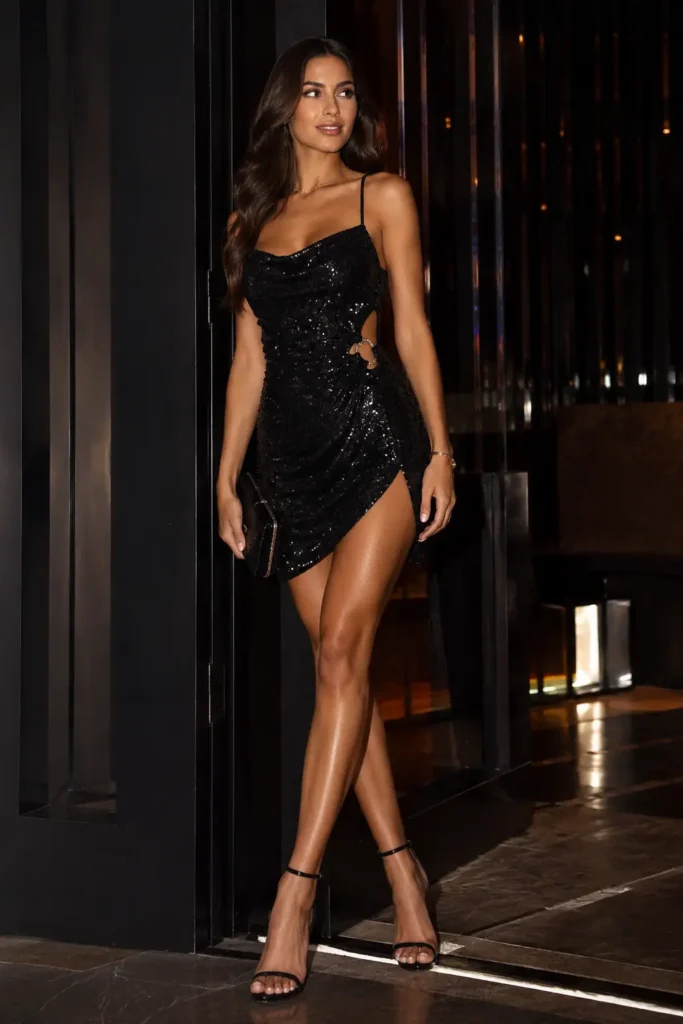
- Sequin and embellished surfaces
- Cut-outs and asymmetric shapes
- Corset and fitted structures
- Holiday and event drops
Going-out Dress Lines
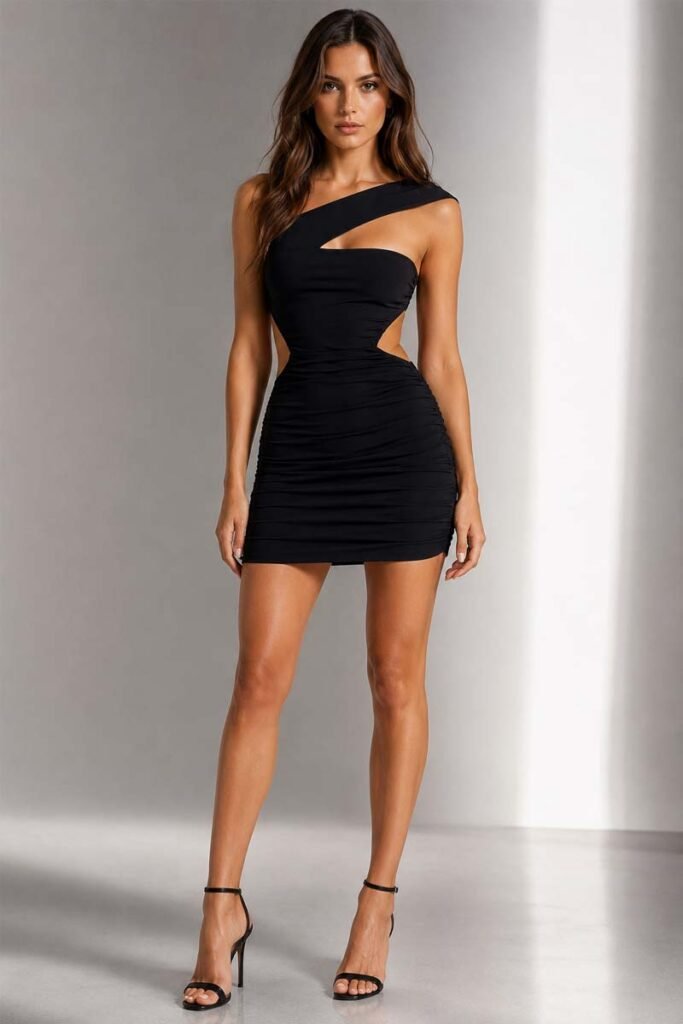
Social-first styles with clear visual identity, compact proportions and campaign-ready details.
Product decisions balance image value with fit security, wearability and efficient bulk construction.
- Halter and backless styles
- Ruched jersey dresses
- Body-conscious silhouettes
- Mini and midi options

Vacation Dress Drops
- Chiffon and lightweight woven fabrics
- Printed and solid color groups
- Maxi, cut-out and open-back silhouettes
- Coordinated travel-ready ranges

Wedding Guest Edits
- Midi and maxi lengths
- Refined satin and crepe
- Lace and draped options
- Coordinated occasion color stories

Seasonal Dress Programs
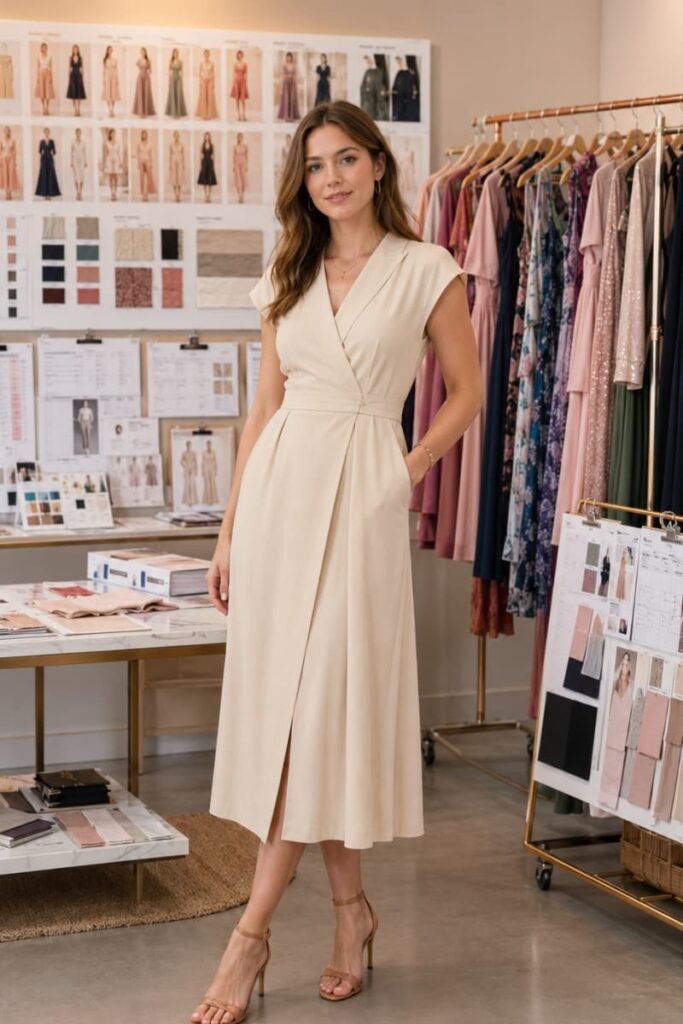
- Spring and summer programs
- Holiday party collections
- Graduation and homecoming ranges
- Transitional seasonal drops
Capsule Collections
Focused collections using a controlled number of fabrics, colors and silhouettes. Capsules can preserve a strong visual theme while reducing sourcing fragmentation and supporting clearer production planning.
- Shared fabric families
- Coordinated silhouettes
- Defined hero and support styles
- Clear price architecture

Commercial Core Dresses
Repeatable shapes developed for dependable seasonal use, wider color options and future reorders. Materials, measurements and workmanship are selected with long-term reproducibility in mind.
- Slip, fitted and A-line silhouettes
- Clean mini and midi dresses
- Stable material direction
- Repeat-order documentation
Turn Fashion Direction into Brand-relevant Products
Begin with Brand and Market Context
A reference image cannot explain the full product requirement. Before sampling, development teams need to understand where the garment will sit inside the brand and collection.
Useful information includes:
- Target consumer
- Primary market
- Selling channel
- Retail price positioning
- Wearing occasion
- Seasonal launch date
- Existing fit direction
- Previous successful products
- Intended order volume
- Brand-specific quality priorities
Duolan reviews whether the proposed silhouette, material direction and workmanship level support the brand position. Early clarification reduces later changes involving fabric replacement, fit restructuring or quotation revisions.
Separate Trend Value from Short-lived Noise
Fashion direction should support the collection rather than weaken brand consistency.
Development review considers:
- Whether the trend fits the brand’s visual language
- Whether the shape suits the intended consumer
- Whether the feature creates meaningful product value
- Whether the fabric can deliver the intended effect
- Whether the workmanship can remain stable in production
- Whether the style can be photographed and worn successfully
- Whether the launch window allows enough development time
A trend-driven detail may be used as a hero feature, carried into supporting products in a lighter form, or removed when it introduces cost and risk without enough visual return.
Translate Images into Technical Decisions
Reference images are converted into measurable and producible elements.
Duolan reviews:
- Neckline depth and stability
- Bust coverage and support
- Waist and hip relationship
- Dress length and slit height
- Strap placement and adjustability
- Drape volume and seam position
- Lining coverage
- Closure method
- Decorative placement
- Fabric stretch and recovery
The development goal is not a superficial visual copy. The goal is a garment suitable for the intended fit, price level, material performance and future production.
Build a Collection, Not Disconnected Styles
Several attractive garments do not automatically form a coherent range.
Duolan can help organize a defined product direction across:
- Length balance
- Silhouette variation
- Fabric families
- Color hierarchy
- Occasion coverage
- Product roles
- Price levels
- Sample priority
- Launch sequence
- Repeat potential
The brand retains creative ownership and commercial decision authority. Duolan contributes dress development judgment, manufacturing feasibility and production planning.
Information Reviewed Before Development Begins
Brand Profile
Product Brief
Material Direction
Fit and Size
Quantity Plan
Launch Calendar
Confirm required sample approval, campaign shooting, buying meeting, warehouse arrival and selling dates. Timing should also account for material preparation, PP approval, inspection, packing and transport.
Align Product Value with the Intended Price Position
Identify the Real Cost Drivers
Dress cost is shaped by more than the main fabric.
Key variables include:
- Fabric price, width and cutting loss
- Lining coverage and quality
- Stretch or recovery requirements
- Internal support
- Cups, boning and power mesh
- Zippers and hardware
- Decorative workmanship
- Pattern complexity
- Color quantity
- Size range
- Order volume
- Brand labels and packing
A style may appear simple while carrying high cost through bias cutting, fragile surfaces, extensive lining, hand finishing or low material utilization.
Duolan explains the cost-driving elements so brand teams can decide where value must remain and where a different technical route may be considered.
Protect Features Responsible for Selling Value
Cost review should never remove the qualities responsible for product appeal, fit or safe wear.
Features often requiring protection include:
- Satin drape and controlled shine
- Corset support
- Bust coverage
- Sheer-fabric lining
- Bodycon recovery
- Sequin comfort
- Lace placement
- Clean neckline shape
- Stable slit construction
- Recognizable brand detail
Removing structural support from a corset garment or reducing the lining of a sheer dress may lower cost while damaging the product’s commercial reason to exist.
Remove Low-impact Complexity
Some details increase labor, material loss or risk while creating limited visible improvement.
Possible review areas include:
- Hidden decorative layers
- Excessive seam segmentation
- Repeated trim families
- Unnecessary hand finishing
- Too many low-volume colors
- Expensive customized components with limited visibility
- Construction methods unsuitable for repeat production
- Decoration density beyond the intended price level
Any proposed adjustment should be validated through swatches, partial samples or revised garments.
Improve the Production Path
A strong alternative preserves the visual direction while improving manufacturing stability.
Examples include:
- Selected lace placement instead of full-garment lace
- Partial embellishment instead of full heavy sequin coverage
- Premium polyester satin instead of an unstable high-cost silk option
- Shared lining quality across related styles
- Approved standard trim families across a collection
- Base-pattern reuse where fit and silhouette permit
- Controlled color concentration
- Production-friendly seam engineering
Cost optimization is not a race toward a cheaper garment. It is the process of making a product workable within the intended value, margin and production model.
Fabric Decisions for Commercial Dress Collections
Material selection should balance silhouette, appearance, comfort, cost, sample behavior and bulk-production consistency.
| Material | Suitable Products | Product Strength | Main Development Risk | Production Consideration | Duolan Review Direction |
|---|---|---|---|---|---|
| Satin | Slip, occasion, party and draped dresses | Fluid movement, refined shine and strong visual value | Needle marks, seam distortion, surface scratching, packing creases and uneven shine | Requires clean cutting, controlled handling, suitable lining and careful pressing | Review weight, shine, drape, opacity, seam construction, lining and packing protection |
| Chiffon | Vacation, maxi, wedding guest and layered dresses | Lightweight movement and soft layered appearance | Transparency, edge quality, layer imbalance and seam puckering | Cutting and sewing require fabric control; lining and hem finish affect quality | Confirm layer count, lining tone, transparency, edge finish, print and movement |
| Mesh | Bodycon, party, corset and cut-out dresses | Stretch, contouring, layering and selective coverage | Weak recovery, transparency, exposed seams and lining mismatch | Stretch direction and power-mesh support must remain controlled | Review stretch, recovery, coverage, lining, seam placement and support zones |
| Lace | Occasion, party and wedding guest dresses | Texture, femininity and premium decorative value | Pattern mismatch, edge inconsistency, snagging and cutting waste | Motif placement and seam planning affect both appearance and cost | Confirm motif scale, placement, stretch, backing, lining and cutting yield |
| Jersey | Fitted, ruched, casual and going-out dresses | Comfort, stretch, movement and efficient fitted shapes | Poor recovery, excessive transparency, twisting and inconsistent weight | Shrinkage, spirality, stretch ratio and seam method require control | Review GSM, stretch, recovery, opacity, shrinkage and fit allowance |
| Crepe | Occasion, work-to-evening and clean midi dresses | Controlled drape, refined matte surface and strong shape | Weight mismatch, surface variation and limited stretch | Suitable construction depends on weave, thickness and silhouette | Review handfeel, fall, opacity, seam behavior and pressing response |
| Velvet | Holiday, party and evening dresses | Rich surface, depth of color and seasonal value | Nap direction, pressure marks, color shading and packing damage | Cutting direction, sewing handling and packing need close control | Confirm nap, stretch, shade, seam method, pressing and transport protection |
| Sequin Fabric | Party, holiday and statement dresses | High visual impact and campaign value | Abrasion, discomfort, falling sequins, weight and sewing damage | Seam clearance, lining, edge treatment and decoration replacement must be planned | Review base fabric, sequin density, weight, comfort, loss and production repair method |
Material Control from Sample Selection to Bulk Locking
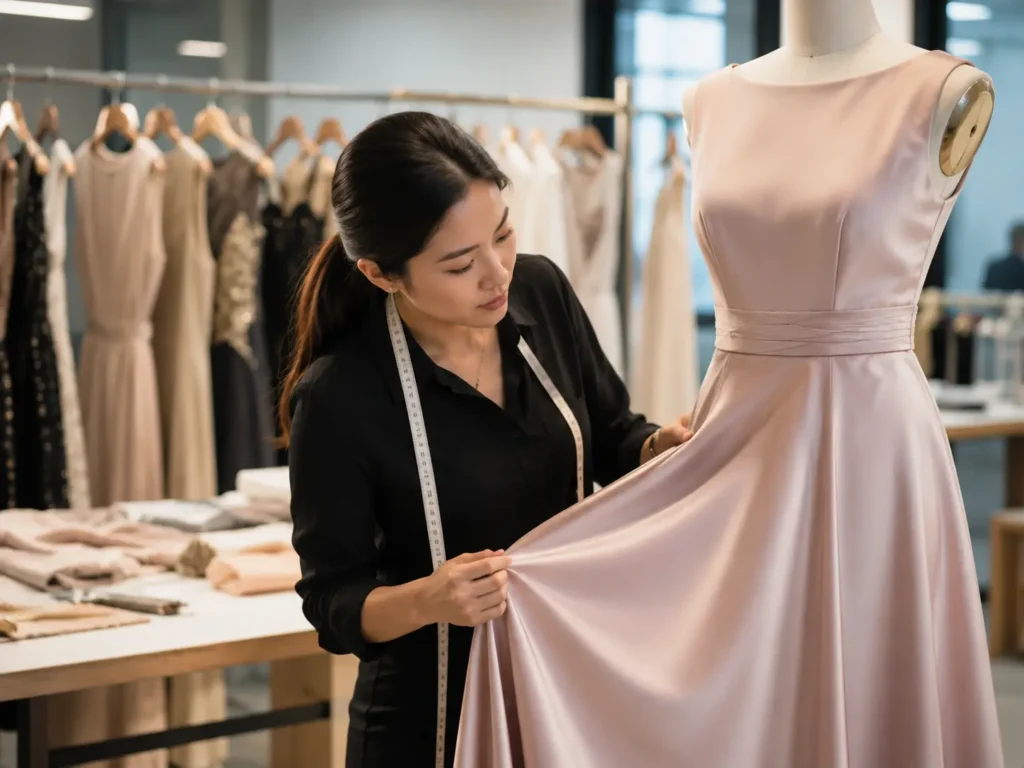
Drape, Weight and Silhouette Must Work Together
- Skirt movement
- Bust shaping
- Waist definition
- Hip contour
- Drape depth
- Hem behavior
- Gather density
- Pleat stability
- Sleeve volume
- Overall product value

Stretch, Recovery and Fit Need Measured Decisions
- Two-way or four-way stretch
- Horizontal and vertical stretch ratio
- Recovery after extension
- Fabric weight
- Surface stability
- Opacity under tension
- Shrinkage after treatment
- Color consistency
- Seam response
- Compatibility with lining

Transparency and Lining Require Product-specific Planning
Coverage requirements vary by market, wearing occasion, silhouette and color. Lining review considers:
- Full or partial lining
- Matching or tonal lining
- Stretch compatibility
- Static and movement
- Heat and comfort
- Seam visibility
- Bust and hip coverage
- Slit and cut-out areas
- Layer interaction
- Bulk sewing method
A lining can improve coverage while damaging drape when it is too heavy or too rigid. A stretch outer fabric paired with an unsuitable woven lining may restrict movement and distort fit.
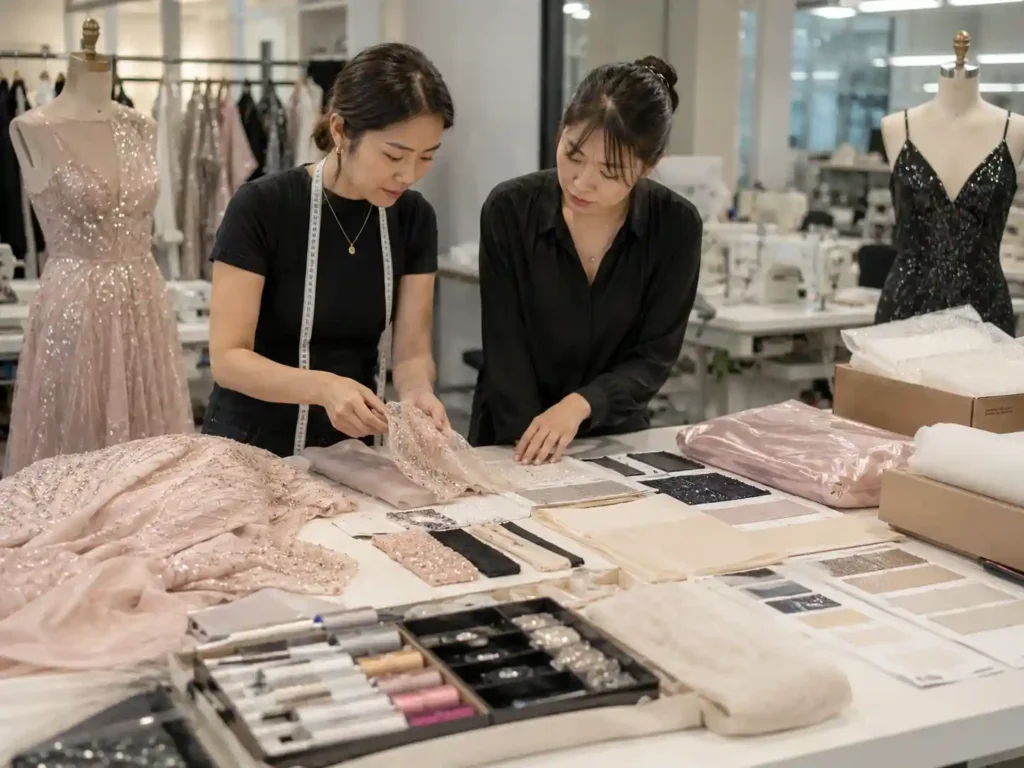
Material Locking Protects Bulk and Reorders
Before bulk production, material information should be preserved through confirmed references and documentation. Locking points include:
- Composition
- Weight
- Width
- Color standard
- Surface finish
- Stretch direction
- Recovery
- Shrinkage
- Supplier reference
- Approved swatch
- Lining quality
- Required tests
For repeat orders, Duolan reviews whether the original fabric remains available, whether the dye lot can be matched and whether any replacement requires sample validation.
Pattern and Fit Control for Commercial Silhouettes
Bust and Support
- Confirm bust and underbust measurements
- Review cup position
- Check neckline security
- Test movement and sitting
- Record support construction
Waist Balance
Waist position affects proportion, comfort, drape and visual fit. Pattern corrections may involve waist shaping, dart intake, panel balance, seam position, elastic tension or bodice length.
- Check natural and design waist
- Review front-to-back balance
- Confirm ease
- Prevent horizontal pulling
- Preserve silhouette intent
Hip and Seat Fit
Fitted dresses need adequate contour without excessive strain or transparency. Hip shape, seat angle, stretch direction, seam placement and lining can all affect appearance.
- Measure hip and high hip
- Review seat length
- Check side-seam balance
- Test walking and sitting
- Confirm opacity under tension
Skirt Fall
- Review grain and bias
- Check hem level
- Assess drape symmetry
- Confirm slit opening
- Test movement
Neckline Stability
- Check neckline shape
- Review gaping
- Confirm strap tension
- Test closures
- Protect intended coverage
Size and Grading
Duolan can work from US numeric sizes, alpha sizes or a proprietary brand chart. Base size and grading rules are confirmed before bulk production. Critical measurements may include:
- Bust and underbust
- Waist and hip
- Body length
- Strap length
- Armhole
- Hem opening
Design Details Developed for Wear and Production

Ruching
Ruching affects fit, visual proportion and fabric consumption. Gather ratio, direction, fixing points and seam distribution are tested to prevent uneven bulk appearance or excessive thickness.
- Controlled gather density
- Stable attachment
- Balanced left and right sides
- Fit under stretch
- Consistent production method

Draping
- Grain direction
- Drape volume
- Anchor point
- Waist and hip balance
- Bulk reproduction
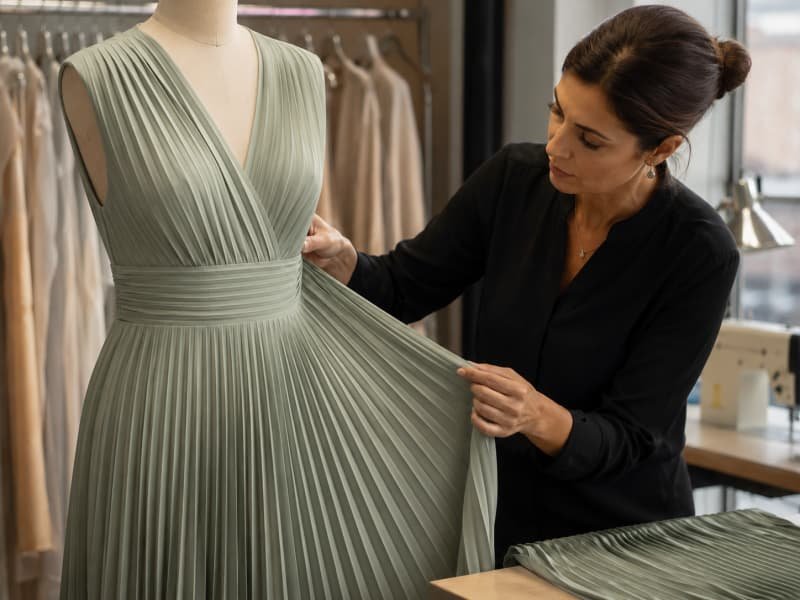
Pleating
Pleats require decisions on depth, direction, heat stability, seam attachment and pressing. Pleat behavior can change after packing or wear.
- Pleat width
- Pressing method
- Fabric compatibility
- Placement consistency
- Packing recovery

Cut-outs
Cut-outs must remain secure during movement and across graded sizes. Placement, binding, lining and internal support influence both appearance and wearability.
- Coverage review
- Edge stability
- Grading logic
- Stretch control
- Secure internal finish

Lace-up Details
Lace-up construction requires stable eyelets or loops, suitable reinforcement, controlled cord length and a clear adjustment range.
- Eyelet strength
- Reinforcement
- Cord specification
- Comfort
- Repeat positioning

High Slits
Slit height must support the design while protecting movement, sitting comfort and production consistency.
- Measured starting point
- Reinforced top
- Lining relationship
- Movement test
- Graded positioning

Bows and Ties
- Length and width
- Fabric support
- Attachment strength
- Position
- Bulk shape consistency

Embellishment
Sequins, pearls, rhinestones, beads and embroidery are planned around density, weight, comfort, placement, seam allowance and repair method.
- Motif position
- Surface durability
- Skin comfort
- Sewing clearance
- Bulk replacement plan
Workmanship Standards Behind Commercial Dress Quality
Seam Selection Protects Appearance and Durability
- Fabric thickness
- Stretch direction
- Transparency
- Fraying tendency
- Surface sensitivity
- Required strength
- Seam visibility
- Lining structure
- Product price level
- Washing or care method
Internal Construction Supports Real Wear
- Cups
- Boning
- Power mesh
- Elastic support
- Grip tape
- Waist stay
- Hook-and-eye closure
- Clean binding
- Facing
- Lining
- Reinforcement tape
- Concealed securing loops
Pressing and Finishing Affect Perceived Value
- Heat suitability
- Pressing direction
- Seam opening
- Adhesive compatibility
- Surface protection
- Shape setting
- Loose-thread removal
- Stain control
- Final presentation
- Packing recovery
Bulk Workmanship Needs Visible Standards
Approved samples should become measurable workmanship references. Production standards may cover:
- Stitch specification
- Seam width
- Gather ratio
- Pleat depth
- Boning position
- Cup placement
- Zipper installation
- Slit reinforcement
- Lining attachment
- Embellishment position
- Label placement
- Final pressing condition
First-piece review and inline inspection compare production against confirmed standards before larger quantities are completed.
Special Processes for Distinctive Dress Collections
Decorative techniques are selected according to visual value, material compatibility, comfort, cost and bulk-production stability.

Print Development
- Artwork scale
- Repeat direction
- Color approval
- Placement control
- Bulk shade consistency

Embroidery
- Stitch density
- Backing
- Motif position
- Thread color
- Fabric distortion control

Sequin Work
- Sequin size and density
- Base fabric
- Edge treatment
- Skin contact
- Falling-sequin control

Beading and Pearls
- Motif map
- Attachment method
- Pull resistance
- Garment balance
- Packing protection

Pleating and Texture
Pressed pleats, heat-set textures and controlled surface effects need material testing before full production.
- Pleat stability
- Heat response
- Shrinkage
- Panel matching
- Packing recovery

Dye and Wash Effects
- Color standard
- Shrinkage
- Test approval
- Trim compatibility
- Batch control
Sampling Stages Supporting Better Product Decisions
Every sample should answer a defined development question and move the garment closer to an approved production standard.
Development Prototype
- Silhouette
- Proportion
- Fabric direction
- Construction feasibility
- Main visual details
Fit Sample
A fit sample focuses on body relationship, balance, support, coverage and movement. Review points include:
- Critical measurements
- Front, side and back balance
- Strap and neckline security
- Waist and hip fit
- Sitting and walking
Revised Sample
A revised garment applies confirmed comments through pattern, material, construction or detail changes. Duolan records:
- Comment received
- Technical action
- Pattern change
- Material change
- Remaining decision
Sales Sample
- Presentable finish
- Confirmed product direction
- Accurate color
- Relevant labels
- Controlled sizing
Photo Sample
- Surface condition
- Drape
- Fit on model
- Color appearance
- Detail accuracy
PP Sample
- Fabric and lining
- Trims
- Measurements
- Workmanship
- Labels
- Packing
- Final visual standard
Sample lead time is confirmed in a style-level Sample Plan after material availability, construction difficulty, decoration testing and sample purpose are reviewed. Duolan’s wider manufacturing system supports monthly sample development capacity of approximately 15,000-35,000 pieces or development rounds across 3,000-8,000 styles.
Coordinate Multi-style Development Around the Launch Date
Prioritize Styles Before Sampling Starts
- Hero campaign value
- Buying meeting date
- Fabric availability
- Construction risk
- Photography requirement
- Expected order volume
- Special-process lead time
- Commercial importance
Plan Material and Approval Dependencies
- Fabric quality approval
- Lab dip or color approval
- Print artwork
- Trim sourcing
- Size-chart confirmation
- Fit-model availability
- Pattern correction
- Special-process test
- PP review
- Packing instructions
Match Production Time to Style Complexity
Bulk production timing varies by construction, material, decoration and quantity.
Reference manufacturing periods after all required approvals and materials are ready:
- Simple styles: approximately 15-20 days
- Regular styles: approximately 20-30 days
- Complex styles: approximately 30-45 days
A collection containing several complexity levels may use different production paths rather than one blanket completion promise.
For multi-style programs, Duolan breaks orders down by style, color, size and quantity before assigning production lines.
Include Inspection, Packing and Transport
Manufacturing completion is not the warehouse arrival date. Additional stages may include:
- Final inspection
- Third-party inspection
- Folding and packing
- Forwarder booking
- Customs handling
- Domestic delivery
- International transport
Reference transport periods:
- Express: approximately 3-7 days
- Air freight: approximately 5-8 days
- Sea freight: approximately 20-35 days
Available project arrangements may include FOB, CIF, DDP, split shipments and coordination with appointed forwarders or overseas warehouses.
Manufacturing Organization for Multi-style Dress Programs
Core Factory Control
- Development continuity
- Workmanship control
- Faster issue escalation
- Stable production basis
Flexible Capacity
- Repeat orders
- Additional color runs
- Production expansion
- Delivery support
Style Allocation
- Simple and complex separation
- Fabric sensitivity
- Decoration requirements
- Line suitability
Process Coordination
- Tested process direction
- Schedule coordination
- Quality checkpoints
- Bulk repeatability
Parallel Production
- Style-level tracking
- Color and size breakdown
- Milestone planning
- Progress updates
Scale-up Support
Successful styles can move from launch quantities into larger repeat production through preserved standards and planned capacity allocation.
- Reorder file review
- Material availability check
- Production-line planning
- Updated delivery schedule
Quality Control Across Styles, Colors and Production Runs
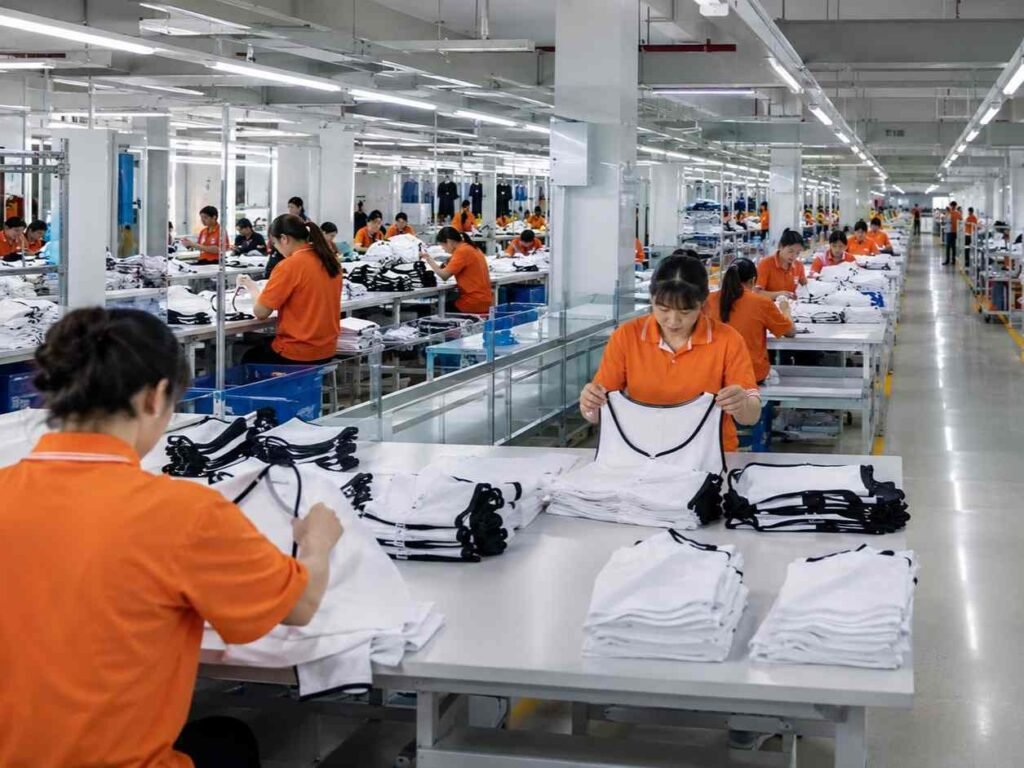
Inline Inspection
- Seam quality
- Shape consistency
- Gathering
- Pleats
- Zippers
- Lining
- Decoration

Final Garment Inspection
- Style and color
- Size
- Surface condition
- Construction
- Labels
- Final pressing
- Quantity

Packing Verification
- Care labels
- Hangtags
- Barcodes
- Size stickers
- Polybags
- Carton marks
- Assortment
Compliance and Delivery Preparation for Fashion Programs
Audit Readiness
Duolan’s factory system has completed SMETA audit and SMETA 2-Pillar audit and maintains a SMETA social audit record.
Qualified brand teams may request relevant supplier and audit information during formal evaluation.
Standard Alignment
Project teams can discuss requirements related to BSCI, ISO 9001, AATCC, ASTM, OEKO-TEX®, EN, China GB standards, GOTS material requirements and specific brand standards.
Support and applicability are confirmed for each program.
Testing Coordination
Product or material tests can be coordinated according to the destination market, product type and brand manual.
Requirements may involve:
- Colorfastness
- Shrinkage
- Fiber composition
- pH
- Restricted substances
- Physical performance
Label Control
Labels are developed and checked according to approved brand and market information.
Items may include:
- Main label
- Size label
- Care label
- Composition
- Country of origin
- Hangtag
- Barcode
Packing Control
Packing instructions are translated into style-level production requirements.
Possible elements include:
- Folding method
- Tissue
- Polybag
- Hanger
- Size sticker
- Barcode position
- Carton assortment
- Carton mark
Inspection Documents
Duolan can coordinate internal final inspection, qualified third-party inspection and shipment documentation according to agreed requirements.
Documents may include:
- Packing list
- Invoice
- Inspection status
- Testing records
- Shipment details
- Forwarder information
Commercial Dress Collection Development Cases

US Partywear Program
Region: United States
Collection: Party and going-out dresses
Styles: 18
Total quantity: 42,600 pieces
Size structure: Brand numeric size chart
Main materials: Stretch mesh, jersey, satin and sequin fabric
The original range contained several visually strong products, but too many styles depended on high-density surface work and complex internal construction. Initial cost directions placed several garments outside the intended price architecture.
Duolan separated the range into hero, core and supporting groups. Six statement garments retained their principal visual elements. Five commercial fitted styles were adjusted through material and construction review. Four supporting dresses shared selected lining and trim standards. Three reorder-oriented styles used stable jersey and mesh qualities.
Development work included:
- Fabric stretch and recovery testing
- Bust and waist fit correction
- Sequin comfort review
- Cut-out reinforcement
- Shared trim specification
- Style-level sample tracking
- PP standard preparation
The approved order entered production through different line allocations based on complexity. Statement styles received added first-piece and surface-process checks, while commercial core styles used a more streamlined production path.
The final program shipped as one coordinated collection with controlled differences in product value, workmanship level and price positioning.

European Occasion Program
Region: Western Europe
Collection: Occasion and wedding guest dresses
Styles: 12
Total quantity: 27,840 pieces
Size structure: EU numeric size chart
Main materials: Satin, chiffon, crepe and lace
The development brief required a refined color story across midi and maxi garments. Early samples revealed three major concerns: satin pressure marks, chiffon transparency and inconsistent bust coverage between structured and fluid silhouettes.
Duolan revised the development path by separating fabric and construction standards according to product type.
Actions included:
- Satin weight and shine comparison
- Revised lining direction
- Chiffon layer and transparency testing
- Bust and underbust pattern correction
- Lace motif placement review
- Hem and slit movement checks
- Color coordination across different surfaces
- Packing protection for pressure-sensitive materials
Four campaign-led styles received additional visual and fitting review. Five commercial styles were developed around cleaner silhouettes and more repeatable construction. Three supporting styles used related colors and lower-complexity workmanship.
The production basis included confirmed material references, graded measurements, workmanship specifications and packing instructions. Final inspection focused on drape, surface condition, lining coverage and color coordination across the range.

Multi-market Seasonal Program
Region: North America and Australia
Collection: Vacation, social-event and seasonal dresses
Styles: 26
Total quantity: 68,400 pieces
Size structure: Alpha sizing with brand-specific grading
Main materials: Printed woven fabric, crepe, mesh, jersey and lightweight satin
The project combined several delivery windows and different commercial roles. Some styles were needed early for campaign photography, while higher-volume core styles required later bulk delivery. Print approvals and multi-style comments created scheduling pressure.
Duolan prepared a style matrix covering product role, fabric status, sample stage, approval date, order volume and production route.
Key controls included:
- Priority sampling for eight photo styles
- Print artwork and strike-off tracking
- Shared base-pattern review for related shapes
- Color and size order breakdown
- Production allocation by construction level
- First-piece checks for new print placements
- Separate timelines for simple, regular and complex garments
- Packing and shipment planning by market
The order was divided into coordinated production paths rather than handled as one undifferentiated block. Styles requiring special print or detailed construction received additional approval points, while established silhouettes progressed through standard production controls.
Preserved pattern, material, color and workmanship information also created a clearer basis for repeat styles and later color extensions.
Evaluate a Commercial Dress Collection Manufacturer
Supplier qualification should verify product judgment, development control, manufacturing discipline and repeat-order capacity.
| Evaluation Area | What Brand Teams Should Verify | Risk When Missing | Duolan Approach |
|---|---|---|---|
| Dress Category Focus | Relevant experience in fitted, occasion, party, vacation and technically demanding dresses | Generic garment knowledge may not address drape, support, transparency or complex fit | Dress-focused development supported by long-term fast-fashion womenswear experience |
| Brand Understanding | Ability to interpret visual positioning, consumer, price level and collection role | Technically correct garments may still feel wrong for the brand | Project review covers brand direction, intended occasion, fit, material and product role |
| Collection Development | Ability to manage 10-30 styles without losing priorities or approvals | Styles become disconnected and comments are easily mixed | Style matrix, development stages, priority planning and coordinated material decisions |
| Fabric Coordination | Understanding of fabric behavior in the intended silhouette | Samples may look acceptable but fail in fit, cost or bulk sewing | Fabric review covers drape, weight, stretch, recovery, opacity, lining and production behavior |
| Pattern and Fit | Clear measurement, grading and correction methods | Fit problems can increase returns and delay approval | POM measurements, base-size review, fit comments, pattern correction and graded standards |
| Sampling Control | Defined purpose for prototypes, fit, sales, photo and PP samples | Sampling becomes repetitive without moving toward production | Stage-based sample plan, revision record, approval status and production-readiness review |
| Cost Logic | Ability to explain major cost drivers and offer controlled alternatives | Incomplete early quotations create later price conflict | Cost review covers materials, construction, decoration, colors, sizes, packing and timing |
| Bulk Transition | Ability to convert approvals into production documents and checkpoints | Approved samples may not be reproduced consistently | PP sample, BOM, measurements, workmanship standards, first-piece review and inline QC |
| Capacity and Delivery | Verification of multi-style production and repeat-order organization | Delays increase when the supplier cannot allocate varied styles correctly | Owned factories, satellite capacity, 300 sewing lines and 50+ flexible lines |
| Compliance Preparation | Audit basis, testing coordination, labeling, packing and shipment documents | Late compliance issues can delay approval, shipment or warehouse intake | SMETA audit foundation, project-specific standards coordination and document preparation |
| Reorder Control | Preservation of pattern, material, color, trim and workmanship standards | Successful styles may change between production runs | Reorder file review, material availability check and repeat-production planning |
| Communication | Structured updates and accurate interpretation of technical comments | Progress becomes dependent on repeated follow-up | Email, WhatsApp, voice, video and online project meetings supported by English-speaking teams |
Frequently Asked Questions About Commercial Dress Collections
A commercially viable collection aligns brand identity, consumer occasion, product value, target price, fit, production feasibility and repeat-order potential. No manufacturer can guarantee sales, but disciplined development can reduce avoidable product, cost and production risks before launch.
Yes. Brand teams can submit a collection brief, style list, reference images, tech packs, original samples, fabric direction, size chart, target quantity, target price range and launch calendar for an initial development review.
Yes. Duolan’s manufacturing system supports multi-style development. Projects commonly involve 10-30 styles. A style matrix can separate hero, commercial, supporting and repeat-ready garments while tracking materials, samples, approvals and production priorities.
Sample timing is assessed style by style after material availability, pattern complexity, fit requirements, decoration, sample purpose and approval dependencies are reviewed. A clear Sample Plan identifies required inputs, development stages and expected review points.
Yes. Duolan can work from US numeric sizing, alpha sizing or proprietary brand measurements. The base size, points of measurement, grading rules, tolerances and critical fit areas should be confirmed before PP approval and bulk production.
Yes. Material alternatives can be reviewed according to the intended appearance, drape, stretch, opacity, handfeel, cost, lead time and production stability. Any meaningful change should be approved through a swatch, partial test or revised sample.
Reference periods after approvals and material readiness are approximately 15-20 days for simple styles, 20-30 days for regular styles and 30-45 days for complex styles. Final timing depends on quantity, color, workmanship and order structure.
Duolan uses approved samples, confirmed materials, measurement specifications, grading rules, BOM information, workmanship standards, first-piece review, inline inspection and final inspection to transfer the approved product direction into bulk production.
Yes. Repeat production begins with a review of the preserved pattern, grading, material, color, trim, workmanship, labels and packing records. Material availability and required changes are confirmed before a new production schedule is issued.
Send your company profile, website, collection direction, style count, target quantity, launch date, size standard and available development files. Duolan can then prepare a relevant capability response and recommend the next development or production step.

Submit Your Dress Collection for Development Review
Our team will review the product category, style count, material requirements, fit priorities, workmanship complexity, sample purpose and expected production path. The initial response can identify missing information, important development risks and the most suitable next step – fabric review, sample planning, quotation preparation, supplier evaluation or bulk-production assessment.
For multi-style programs, include a style matrix or order plan whenever available. It helps separate campaign styles, commercial core garments, supporting products and repeat-ready options. Files and product information are handled confidentially and used only for development, quotation and manufacturing evaluation.
Please include:
- Company or brand name
- Website and principal market
- Collection scenario
- Number of styles
- Target quantity
- Size range or chart
- Target launch date
- Fabric direction
- Current sample stage
- Testing and packing requirements
- Tech packs or reference files


