 Skip to content
Custom Dress Manufacturer for Dress Category Managers
Custom dress development and manufacturing for Dress Category Managers building stronger assortments, sharper style layers, stable launch calendars, repeatable core silhouettes and scalable dress category growth.
Duolan helps fashion teams turn dress category goals into structured development programs across hero styles, commercial core dresses, seasonal drops, fabric families, sample priorities, bulk production and repeat order archives.
- 3,000–8,000 monthly style development flows support parallel dress category development and seasonal assortment updates.
- 15,000–35,000 monthly sample cycles support hero samples, fit samples, photo samples, PP samples and repeat samples.
- 16 owned womenswear factories plus 20+ satellite factories support core control, scaled production and repeat orders.
- 300 sewing lines plus 50+ flexible production lines support launch orders, replenishment runs and category expansion.
- 200–280 procurement coordination staff support fabric, trim, color, lining and material reuse planning.
- 500–630 bulk merchandising and follow-up staff support multi-style production tracking, packing and delivery coordination.
- 6.5M stable monthly capacity and 10M peak monthly capacity support mature dress category supply programs.








Dress Category Managers Duolan Works With
Dress Category Managers Managing Seasonal
Dress Category Managers need mini, midi, maxi, party, occasion, resort and going-out styles arranged around launch timing, sales role, price tier and repeat potential. Duolan supports seasonal dress programs through style grouping, sample priority, fabric planning and production coordination.
- Style count is reviewed by category role, fabric risk and launch window.
- Photo samples, fit samples and PP samples are prioritized by commercial need.
- Bulk planning connects category launch timing with QC, packing and shipment.
Category Leads Managing Hero and Core Styles
Category leads need balance between high-visual hero styles and commercial core dresses. Duolan supports styles carrying campaign value, social attention, showroom focus, stable sales and replenishment potential.
- Hero styles receive stronger fabric, detail and photo sample review.
- Core styles receive fit, cost, fabric availability and reorder review.
- Repeatable silhouettes gain pattern, BOM, QC and packing records from early production.
Womenswear Category Owners Expanding Dress Share
Womenswear category owners expanding dress share need more than a one-time dress supplier. Duolan helps brands move from tops, sets, resortwear or occasionwear into structured dress capsules with clearer silhouettes, fabrics, price tiers and development routes.
- Existing brand direction is translated into dress category structure.
- Test silhouettes are reviewed for fit, fabric and commercial scale.
- Stronger styles can move into repeat colors, updated fabrics and future capsules.
Merchandising and Category Teams
- Assortment depth is reviewed beside quantity, color and size split.
- Sample stages are matched with showroom, ecommerce or internal review needs.
- Production records support category performance review after launch.
Multi-Brand or Regional Category Teams
- Product lines can be grouped by market, fabric family or delivery window.
- Price tiers can carry different construction and packing standards.
- Multi-style programs gain clearer route planning before bulk release.
Repeat and Replenishment Category Teams
- Core styles remain connected with approved fit and material records.
- New color runs can use earlier fabric and trim references.
- Previous QC comments guide repeat production and replenishment planning.
Why Dress Category Managers Need a Different Manufacturer
Dress Category Managers carry responsibility for category performance, not only individual style completion. A strong dress category needs visual leaders, commercial anchors, seasonal stories and repeatable styles. Too many high-detail styles can create cost pressure, QC complexity and slow replenishment. Too many basic styles can weaken brand memory and reduce category excitement.
A category-aware manufacturer should understand how mini, midi, maxi, bodycon, satin, lace, mesh, sequin, corset, resort and going-out dresses play different roles inside an assortment. Some styles need campaign-level polish. Some need repeatable fit and fabric continuity. Some need fast seasonal launch. Some need strong margin control and low development friction.
Duolan supports category teams by connecting dress mix planning with fabric family structure, sample priority, cost tiers, PP standards, bulk launch grouping and repeat order records. The result is a dress category able to launch with stronger rhythm, clearer product layers and better manufacturing continuity.
- Assortment clarity: Hero, core, seasonal, repeat and test styles need different development paths.
- Fabric family planning: Satin, crepe, mesh, lace, jersey, chiffon and printed woven options should serve category structure.
- Sample priority: Photo, fit, salesman and PP samples should follow launch and product role priorities.
- Cost tier alignment: Fabric, construction, detail level and packing should match price tier.
- Bulk launch control: Multi-style production needs grouping by complexity, material, quantity and delivery window.
- Reorder memory: Pattern, BOM, fabric, trim, PP notes and QC records help turn winning styles into category assets.

How Dress Category Managers Evaluate a Manufacturer
1|Can the Supplier Understand Dress Category Structure?
- Mini styles may carry higher visual and fit sensitivity.
- Midi styles often balance commercial wearability and category breadth.
- Maxi styles require fabric, length, print and packing planning.
- Occasion and party styles need detail, fit and surface QC focus.
2|Can the Supplier Support Hero / Core / Repeat Planning?
- Hero styles gain stronger sample and photo attention.
- Commercial core styles gain fit, cost and fabric stability review.
- Repeat styles gain early archive planning.
- Test styles are reviewed for future scale potential.
3|Can Multi-Style Sampling Be Prioritized?
- Campaign styles may require earlier photo samples.
- Fit-sensitive styles may need earlier pattern correction.
- Repeat styles can rely on archived files.
- PP samples are planned around bulk readiness.
4|Can Fabric Families and Trims Be Planned Across Styles?
- Shared fabric families can support assortment coherence.
- Trim reuse can reduce version confusion.
- Color stories can support seasonal mood and reorder planning.
- Material archives support future launches.
5|Can Price Tiers and Construction Levels Be Matched?
- Higher-tier styles can carry stronger fabric and details.
- Core commercial styles can use cleaner construction and stable materials.
- Retail-ready styles may need stricter packing and label coordination.
- Price tiers stay connected with QC and production expectations.
6|Can Bulk Stability Support Category Launch?
- Styles are grouped by fabric, process, complexity and timeline.
- Production milestones are tracked by launch needs.
- Packing and labels are confirmed before final stage.
- Delivery planning supports seasonal or campaign windows.
7|Can Repeat Styles Become Long-Term Category Assets?
Where Dress Category Programs Break Down
Too Many Hero Styles, Not Enough Core Volume
- Hero styles receive deeper visual and detail development.
- Core styles receive stronger fit, cost and bulk stability review.
- Repeat candidates are identified early.
- Seasonal statement pieces remain tied to launch windows.
Core Styles Are Too Basic to Build Category Identity
- Fabric choices are reviewed for handfeel and availability.
- Fit and grading remain central to repeat value.
- Details are simplified without losing product character.
- Core silhouettes are prepared for future colors.
Fabric Direction Is Too Fragmented
- Related styles can share fabric bases or trim standards.
- Color families are reviewed beside MOQ and reorder needs.
- Lining and support materials are grouped where suitable.
- Fabric records support future replenishment and updates.
Sample Priority Is Not Managed
- Photo styles receive earlier visual finish review.
- Fit-sensitive styles receive earlier pattern correction.
- Repeat styles can move faster through archived standards.
- PP approvals are timed around bulk release.
Price Tiers Are Not Clear
- Good / better / best levels receive separate construction expectations.
- High-detail styles are checked for selling value.
- Commercial styles are checked for cost and repeat logic.
- Packing level matches channel and product tier.
Bulk Production Does Not Match Launch Calendar
A category launch can fail when several styles finish at different speeds or packing files are late. Duolan response: Bulk production is grouped by material, process, complexity, QC and delivery window.
- Styles are released to production by PP readiness.
- QC plans are built around category risk.
- Packing requirements are confirmed before final stage.
- Shipment windows are coordinated by launch priority.
Repeat Orders Lose Category Memory
Duolan Dress Category Development System

Category Brief Review
Assortment Role Mapping
Fabric and Trim Family Planning
Sample Priority and Development Route
Sample priority follows category role and risk. Duolan separates first sample, fit sample, photo sample, salesman sample, PP sample and repeat sample needs. Photo styles may need earlier visual polish. Fit-sensitive bodycon, corset or halter styles may need earlier corrections. Seasonal styles must match launch calendar. Repeat styles can move faster when previous files are available.
Cost Tier and Construction Review
Bulk Launch and Multi-Style Coordination
Repeat Category Archive

Dress Category Segments Duolan Supports

Occasionwear Dress Capsules

Partywear and Going-Out Lines

Resort and Vacation Dress Drops

Commercial Core Dress Programs

Hero Campaign Dress Styles

Repeatable Core Silhouettes

Retail-Ready Dress Programs

Category Expansion Dress Capsules
Dress Category Planning Matrix
Dress category planning needs product layers, not isolated styles. The matrix below shows how Duolan supports different category roles.
| Category Layer | Category Manager Concern | Duolan Support Focus |
|---|---|---|
| Hero Styles | Visual impact and campaign value | Strong fabric, detail and photo sample support |
| Commercial Core | Sales stability and repeat potential | Fit, cost, fabric availability and bulk consistency |
| Seasonal Drops | Launch timing and trend relevance | Sample priority, fabric timing and delivery planning |
| Occasionwear | Quality perception and event use | Satin, lace, corset, slit and polished finish control |
| Partywear | High visual detail and fit risk | Mesh, sequin, cut-out, bodycon and QC focus |
| Resort Dresses | Print, drape, color and packing recovery | Fabric width, print placement and seasonal shipment |
| Retail-Ready Styles | Channel and warehouse accuracy | Labels, barcode, packing and carton standards |
| Repeat Styles | Reorder speed and consistency | Pattern, BOM, fabric, trim and QC archive |
Hero / Core / Repeat Style Structure
Hero Styles
- Fabric and detail level are reviewed for visual impact.
- Photo-ready sample quality receives stronger attention.
- Surface, fit and styling details are checked before approval.
- Bulk QC protects approved visual standard.
Commercial Core Styles
- Fit and size stability receive priority.
- Fabric availability is checked for future repeats.
- Construction is kept clean and scalable.
- QC records support future replenishment.
Repeatable Styles
- Reorder files are prepared during first production.
- Approved fit and material standards remain archived.
- New colors can be reviewed against original style files.
- Repeat production avoids unnecessary redevelopment.
Seasonal Statement Styles
- Sample timing is planned backward from launch date.
- Fabric lead time and special process risk are reviewed early.
- Packing and shipment windows are included in planning.
- Seasonal value remains linked with realistic delivery.
Category Test Styles
Category test styles explore new silhouettes, materials, price points or wearing occasions. Duolan supports test styles with structured sample review and production records, helping category teams decide whether a style deserves repeat, scale or adjustment.
Fabric Family and Trim Planning for Dress Categories
Fabric Family Planning
- Satin supports occasion and polished core styles.
- Mesh and lace support partywear, illusion and detail-led styles.
- Jersey, crepe and ponte support commercial core programs.
- Printed woven supports resort and vacation launches.

Color Story and Reorder Logic
Color choices affect assortment mood, fabric MOQ, production planning and reorder potential. Duolan reviews color families, seasonal palettes, repeat colors and new shade extensions. Good color planning can support stronger category storytelling and cleaner production coordination.

Lining and Support Material Planning
- Mesh and lace may need lining tone review.
- Corset dresses need support material consistency.
- Satin styles need lining and zipper behavior review.
- Fitted styles need stretch and opacity checks.
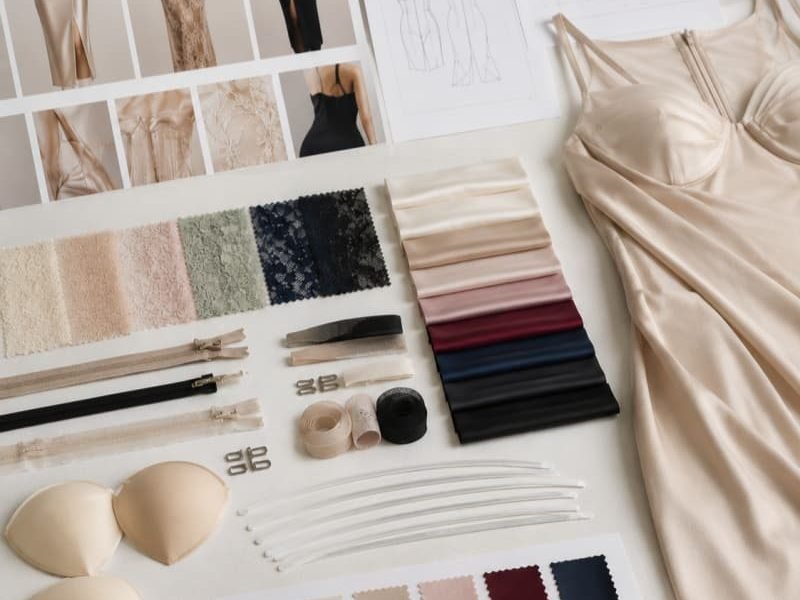
Trim Reuse Across Styles
Trim reuse can reduce confusion across multi-style programs. Duolan reviews zippers, labels, hangtags, drawcords, adjusters, hardware and packing materials across related styles where suitable.

Material Archive for Repeat Orders

Multi-Style Sampling and Launch Calendar Control
Sample Priority by Category Role
- Hero styles receive visual and detail priority.
- Fit-sensitive styles receive earlier correction.
- Repeat styles can use archived standards.
- Test styles receive focused feasibility review.

First / Fit / Photo / PP Sample Separation
Multi-Style Revision Tracking
Launch Calendar Backward Planning
Bulk Readiness by Style Group
Price Tier, Margin and SKU Efficiency Support
Good / Better / Best Product Tiers
- Good tier styles need clean construction and stable cost.
- Better tier styles can carry stronger fabric or fit refinement.
- Best tier styles may justify premium fabric, detail and packaging.
- Tiering keeps category value easier to explain internally.
SKU Depth and Colorway Control
- Colorways are checked against fabric MOQ and launch need.
- Size split is reviewed by category and fit risk.
- SKU depth is balanced with production efficiency.
- Repeat colors are archived for future runs.
High-Visual vs Commercial Cost Balance
MOQ by Category Structure
MOQ is shaped by fabric, color, trims, special process, size split and production setup. Duolan reviews MOQ through the category mix rather than isolated style numbers.
Reorder Value Review
After launch, some styles deserve repeat, some need revision, and some remain seasonal. Duolan preserves production records so category teams can evaluate future runs with clearer manufacturing memory.
Bulk Production Stability for Category Launches
Category launch success depends on several styles reaching production, inspection, packing and shipment with the right timing. Duolan supports bulk stability through multi-style grouping, PP standard transfer and category-specific QC.
Multi-Style Production Grouping
- Similar fabrics can be planned together.
- Complex styles receive earlier production review.
- Repeat styles can use existing production records.
- Delivery priorities are tied to launch calendar.
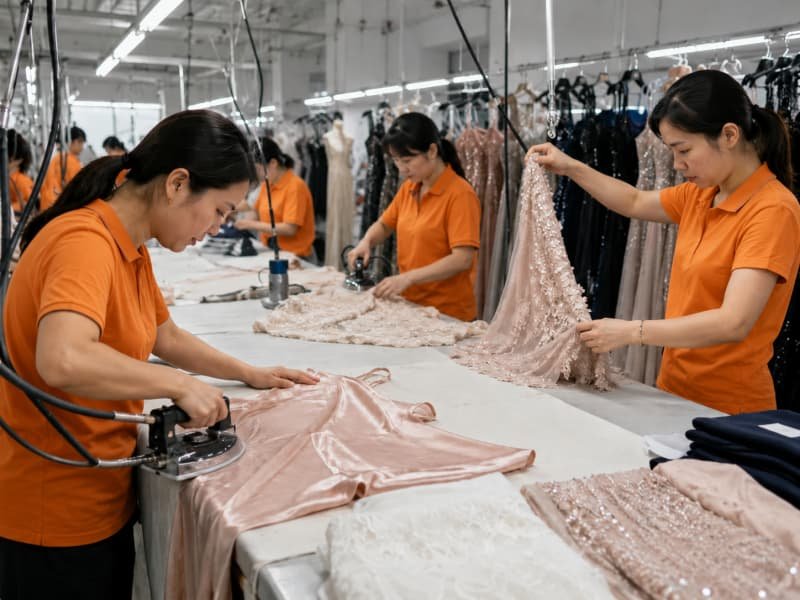
PP Standard Transfer
Inline QC by Category Risk
Packing and Channel Readiness
Delivery and Replenishment Planning
Category Growth and Repeat Order System
Pattern Lock for Core Styles
BOM and Fabric Archive
Fit and QC Memory
Color Extension and Fabric Update
Repeat Order Production Route
Category Supplier Performance Review
Dress Category Program Case Studies

United States|Occasion Dress Category Program
A US occasionwear brand developed satin midis, lace cocktail dresses, corset silhouettes and slit-detail dresses across 22 styles and approximately 64,000 pieces. The category team needed a stronger hero / core / repeat structure.
- Category Task: Build a balanced occasion assortment with visual leaders and repeatable commercial styles.
- Development Challenge: Satin, lace and corset styles required different sample, cost and QC routes.
- Duolan Response: Duolan grouped styles by category role, fabric tier, sample priority, PP standard and bulk complexity.
- Program Result: The category launch gained clearer structure across hero styles, commercial styles and repeat candidates.

United Kingdom|Partywear Category Launch Program
- Category Task: Launch a partywear assortment with strong visual impact and stable bulk execution.
- Development Challenge: Detail-heavy styles carried fit, surface, lining and QC risk.
- Duolan Response: Duolan separated hero party styles from commercial support styles and created different QC focus points.
- Program Result: High-risk partywear styles moved toward bulk production with clearer standards and fewer repeated sample issues.

Australia|Resort Dress Seasonal Drop Program
- Category Task: Build a resort dress drop around print identity, color story and vacation silhouettes.
- Development Challenge: Print scale, fabric width, photo samples and shipping window needed alignment.
- Duolan Response: Duolan reviewed print direction, fabric usage, color groupings, sample priority, packing recovery and delivery timing.
- Program Result: The seasonal drop moved with stronger launch rhythm and better fabric planning.

Europe|Repeat Core Dress Category Program
- Category Task: Extend proven core dresses into new colors and repeat production.
- Development Challenge: Earlier fit, fabric, trim and packing standards needed to remain stable across new runs.
- Duolan Response: Duolan preserved pattern, BOM, fabric cards, trim versions, PP notes, QC findings and packing methods.
- Program Result: Repeat production became easier to prepare, and core styles gained stronger long-term category value.
Send Your Dress Category Brief
A clear category brief helps Duolan review the dress mix, style roles, fabric families, sample priority, bulk launch needs and repeat order plan before recommending a development and production route.
Share Your Category Goal
- Dress category goal, target market, sales channel, price tiers, target launch window, category growth plan and repeat strategy.
- Style role expectations: hero styles, commercial core dresses, repeatable silhouettes, seasonal statement pieces or category test styles.
- Main category challenge around assortment balance, fabric planning, sampling speed, SKU depth, margin, launch timing or replenishment.
Share Your Dress Assortment
- Style count, dress types, fabric direction, colorways, size range, sample stage, photo sample needs, salesman sample needs and PP approval window.
- Product categories such as occasionwear, partywear, resort dresses, commercial core styles, retail-ready orders or repeat core silhouettes.
- Available files including line sheet, tech packs, reference images, fabric cards, sample comments, BOM or approved sample photos.
Share Your Production and Reorder Plan
- Target quantity, color split, size ratio, packing requirement, QC standard, delivery window, shipping method, repeat order plan and core style archive needs.
- Future plans for new colors, fabric updates, replenishment, seasonal extensions or category expansion.
- Internal review needs around merchandising, product, sourcing, finance, QC, operations or leadership approval.


