Skip to content
Custom Dress Manufacturer for Editorial Fashion Brands
Statement dress development for fashion brands needing campaign-ready samples, complex construction, and scalable bulk production.
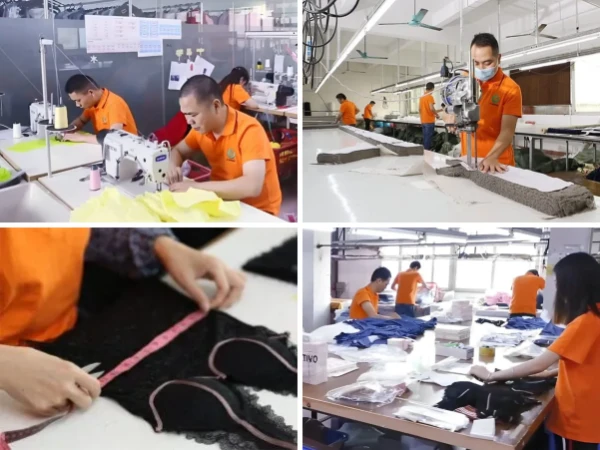
Duolan develops editorial dress programs across sculptural minis, dramatic sleeves, corset structures, sheer layers, asymmetric cuts, draped silhouettes, cut-out statements, organza volume, satin structure, mesh panels, and embellished surfaces. Each project is reviewed through visual impact, fabric behavior, sample refinement, PP approval, QC standards, and production feasibility.
- 115–220 design-related roles support concept review, style interpretation, and editorial direction translation.
- 300–400 pattern and sample roles refine sculptural shapes, statement sleeves, corset bodies, and campaign samples.
- 130–200 process development roles test complex seams, structure, finishing, pressing, and production feasibility.
- 650–1,200 pattern and sampling tools support CAD, sample sewing, pattern plotting, and sample refinement.
- 150–300 embroidery tools support decorative surface work, appliqué, bead placement, and statement details.
- 15,000–35,000 monthly sample capacity supports campaign, fit, photo-ready, PP, and golden samples.







Built for Editorial Fashion Brands
Editorial fashion brands need a manufacturer able to understand visual language, not only garment construction. Duolan supports brands working with campaign dresses, lookbook samples, showroom styles, statement silhouettes, complex fabric behavior, and production-ready development.
Editorial-Led Dress Brands
Editorial-led dress brands often develop garments built for visual impact, campaign storytelling, and distinctive brand identity. These projects need a balance between strong shape and real production discipline.
- Statement silhouettes are reviewed through proportion, fabric support, fit, movement, and production path.
- Campaign samples are refined for front, side, back, surface, structure, and photographic performance.
- PP standards help protect visual direction after bulk production begins.
Designer-Led Commercial Labels
Designer-led commercial labels may bring strong moodboards, sketches, vintage references, runway direction, or styling concepts. Duolan helps turn these materials into real dresses suitable for sample review, campaign presentation, and production planning.
- Concept files are translated into neckline, sleeve, corset, drape, cut-out, layer, and trim decisions.
- Sample comments become pattern, structure, fabric, lining, or finishing updates.
- Production feasibility is reviewed before editorial detail becomes too costly or unstable.
Premium Ecommerce Brands
Premium ecommerce brands need photo-ready samples with strong imagery and bulk goods able to match launch visuals. Editorial dresses can drive campaign impact, but weak production control can create a visible gap after launch.
- Photo-ready samples are checked for surface, drape, light response, fit, and garment balance.
- Bulk preparation confirms fabric, trims, construction, measurements, labels, and packing.
- Repeat styles can keep pattern, BOM, PP sample, and QC records for future drops.
Showroom and Lookbook Brands
Showroom and lookbook brands need samples with both visual power and near-view quality. A dress must look strong in photography, on a hanger, during fitting, and under close inspection.
- Salesman samples require clean inside construction, reliable closures, smooth seams, and polished finishing.
- Lookbook samples need fabric mood, color rhythm, silhouette balance, and series flow.
- PP samples help convert presentation styles into controlled production references.
High-Visual Occasion Brands
Occasion and partywear brands with editorial styling often develop corset dresses, sheer panels, high slits, asymmetric cuts, organza sleeves, embellished surfaces, and sculptural shapes.
- Construction review covers bust support, opening placement, lining coverage, movement, and comfort.
- Fabric review checks organza, tulle, satin, mesh, crepe, lace, sequin, and appliqué behavior.
- QC checkpoints protect statement details after sewing, pressing, packing, and shipment.
Product and Sourcing Teams
Product and sourcing teams need clarity across concept review, sample development, PP approval, production planning, QC, and delivery. Editorial projects involve higher risk because visual details carry brand meaning.
- Duolan can review tech packs, concept boards, campaign references, fabric ideas, and sample goals.
- Each style can be assessed for sample purpose, construction risk, material path, and bulk feasibility.
- Production records help future related styles move with fewer repeated decisions.
Why Editorial Dresses Are Hard to Manufacture
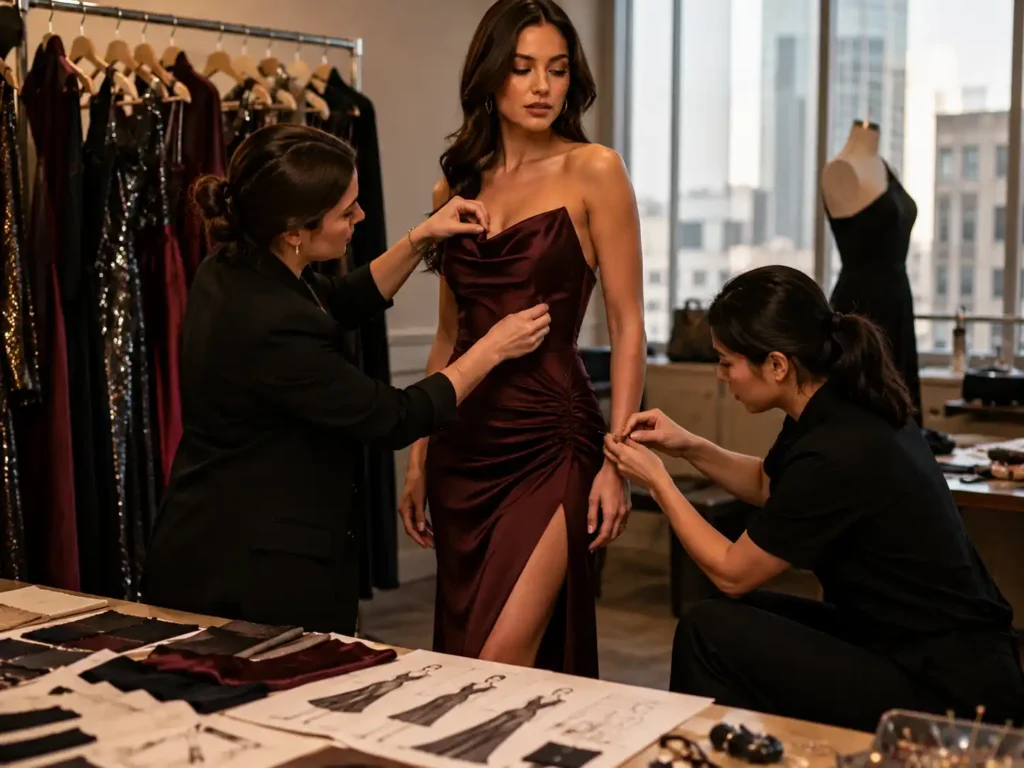
Editorial dresses need more than dramatic design. Strong visual concepts can fail when fabric cannot hold shape, sleeves collapse, sheer layers expose too much, corset support feels unstable, cut-outs move during wear, or sculptural forms become costume-like. A garment created for campaign imagery still needs fit, balance, construction, comfort, and repeatability.
Duolan reviews editorial dress projects through visual impact and production logic at the same time. The goal is not to reduce the concept. The goal is to protect the strongest visual idea while making the garment workable for sample review, photo shooting, PP approval, bulk production, inspection, packing, and repeat development. Editorial impact becomes valuable only when beauty, structure, and production discipline can coexist.
Editorial Dress Styles for Campaign Collections
Fashion magazine brands often require dresses with a strong visual impact. When designing dresses with a distinctive style, Duran takes into full consideration the fabric’s support, body proportions, structure, surface details, photogenic appeal, and production feasibility.

Statement Sleeve Dresses
Statement sleeve dresses rely on sleeve volume, shoulder proportion, cuff structure, and fabric support. A dramatic sleeve can look powerful in a sketch yet collapse after sewing, pressing, or packing.
- Review sleeve cap height, armhole depth, sleeve width, cuff, lining, and support.
- Match organza, tulle, bonded fabric, satin, or cotton blend with intended shape.
- Confirm sleeve balance through sample fitting and final presentation review.

Sculptural Mini Dresses
Sculptural minis need clean proportion, body shaping, and fabric body. Too much stiffness can feel costume-like; too little support can weaken the editorial silhouette.
- Review waistline, hip shape, panel direction, hem structure, and internal support.
- Match crepe, bonded fabric, structured satin, or heavier woven fabric with shape requirements.
- Control pressing, seam smoothness, and packing to preserve form.

Corset Editorial Dresses
Corset editorial dresses combine visual structure with wearing security. Cup position, boning, lining, zipper, waist shaping, and outer fabric must work together.
- Review cup height, underbust, boning position, side support, and back stability.
- Balance inner structure with outer surface details such as lace, mesh, satin, or embellishment.
- Confirm support through fit sample and PP approval before bulk cutting.

Sheer Layer Dresses
Sheer layers create depth, illusion, and editorial drama. They require careful mapping because transparency can shift from artistic to unwearable without lining and coverage control.
- Review tulle, mesh, organza, lining tone, coverage, and layering order.
- Control neckline, bust, waist, hip, slit, and side panel exposure.
- Confirm final coverage under lighting and movement before PP approval.

Asymmetric Dresses
Asymmetric dresses need balance despite uneven design lines. One-shoulder, diagonal hem, side drape, off-center slit, and angular cut-outs all create tension across the body.
- Review shoulder load, side seam balance, grainline, hem direction, and opening stability.
- Control front, side, and back view because asymmetry changes from every angle.
- Confirm movement comfort and measurement points before production.

Draped Dresses
Draped dresses depend on fabric weight, grainline, gravity, and hand placement. Poor drape can lose direction or create unwanted bulk across bust, waist, or hip.
- Review fabric fall, stretch, seam anchor points, pleat direction, and body relation.
- Confirm drape under hanger, mannequin, model fitting, and movement.
- Convert approved hand placement into repeatable sewing and pressing instructions.

Cut-Out Statement Dresses
Cut-out dresses need visual impact without compromising coverage or comfort. Opening placement, edge finish, lining, elastic, and fabric recovery are critical.
- Review cut-out size, body location, seam tension, and edge stability.
- Match lining, facing, binding, or elastic with garment structure.
- Control grading so openings remain balanced across sizes.

Embellished Editorial Dresses
Embellished dresses use sequin, bead, embroidery, appliqué, crystal, or mixed surface details. Weight, skin contact, edge finish, and repair standards affect comfort and bulk quality.
- Review embellishment density, reverse-side comfort, seam allowance, and placement.
- Control trimming, lining, zipper area, armhole, neckline, and hem finishing.
- Inspect drop risk, abrasion, packing, and production loss before shipment.
From Editorial Concept to Production-Ready Dress
Step 1|Editorial Concept Review
Duolan starts by reading the role of the garment: campaign look, lookbook style, showroom sample, statement dress, occasion editorial line, or commercialized editorial piece. The concept is reviewed by mood, styling context, photographic angle, target occasion, and production expectation. Strong editorial design often begins with emotion, silhouette, or image reference, but development must identify which visual elements carry the brand message and which elements may create fit, cost, or production risk.
Step 2|Visual Language Translation
Editorial mood becomes garment language through silhouette, shoulder line, sleeve volume, waist, opening placement, layer structure, fabric surface, drape, embellishment, and finishing. Duolan reviews how a visual reference should translate into front, side, and back views. A dramatic look may need a stronger sleeve, cleaner neckline, reduced layer weight, different fabric body, or hidden inner support to remain powerful after sample construction.
Step 3|Fabric and Structure Matching
Fabric decides whether an editorial concept can stand, fall, float, shine, stretch, or layer. Organza can create volume; tulle and mesh create transparency; satin reflects light; crepe supports shape; sequin creates impact; lace and appliqué add surface dimension. Duolan reviews fabric body, handfeel, weight, opacity, recovery, pressing behavior, lining compatibility, and packing risk before final sample direction moves forward.
Step 4|Pattern and Construction Testing
Editorial garments often need testing before full sample confirmation. Sleeve volume, corset structure, sheer layers, slit height, cut-out openings, drape anchor points, pleat direction, and embellishment weight can create tension points. Duolan reviews sample construction through pattern trials, internal support, movement, fitting, and sewing method. The aim is controlled drama rather than one-off hand shaping unable to repeat in bulk.
Step 5|Photo-Ready Sample Refinement
Photo-ready samples are refined for camera impact. Duolan checks front, side, back, close-up, surface, line, proportion, texture, structure, and light response. A sample may need adjustments to sleeve angle, waist shaping, drape direction, mesh coverage, shine level, hem balance, or pressing. Editorial samples must look strong under styling while still providing clear direction for PP and production preparation.
Step 6|Bulk Feasibility Locking
Once visual direction is approved, Duolan turns the sample into a production standard. Pattern version, BOM, fabric, lining, trims, construction method, key measurements, pressing, packing, and QC points are aligned before bulk starts. Editorial details need especially clear records because small deviations in sleeve volume, layer placement, corset support, cut-out position, or embellishment density can change the final garment dramatically.
Fabrics for Editorial Dress Development
Editorial dresses need fabrics capable of shaping visual impact. Duolan reviews each material according to structure, movement, light response, transparency, surface quality, comfort, sewing behavior, and bulk stability.

Organza
Organza creates dimensional sleeves, sculptural layers, structured bows, and architectural skirt volume. It offers strong editorial presence, yet crease marks and packing pressure can damage the shape.
- Review stiffness, transparency, sheen, edge behavior, and recovery after compression.
- Match organza with statement sleeves, layered skirts, bows, or dimensional overlays.
- Control pressing, seam finish, and packing to protect volume.
Tulle / Soft Mesh
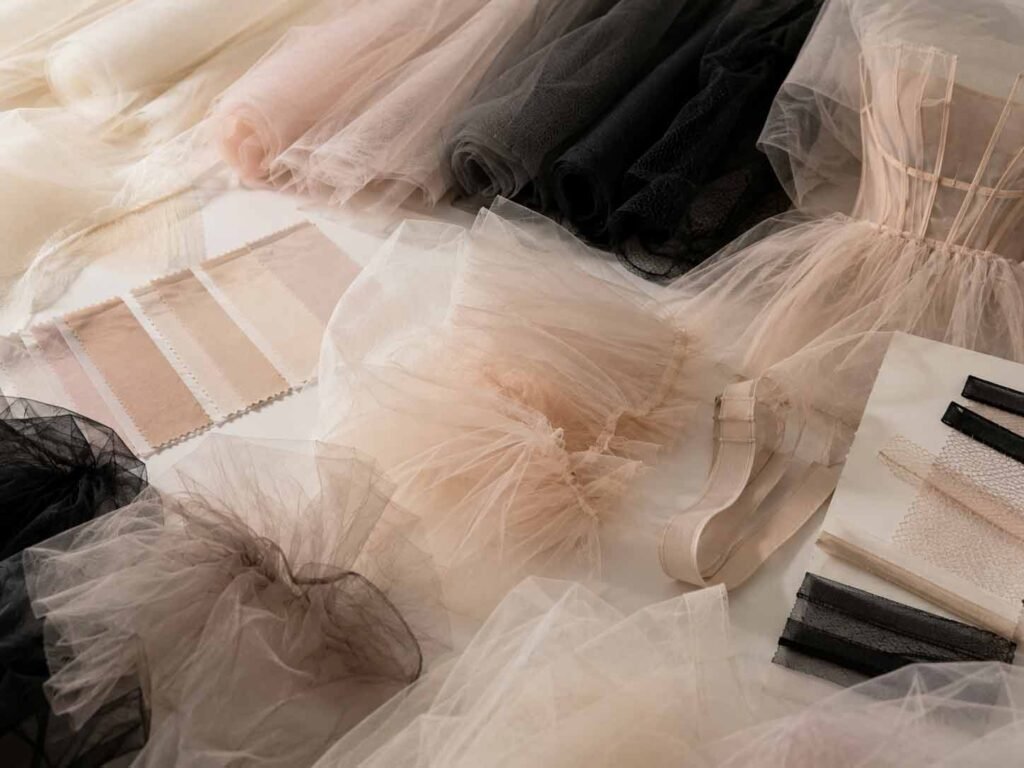
Tulle and soft mesh create sheer depth, illusion panels, lightweight volume, and layered movement. Risk appears in transparency, edge distortion, stretch direction, and lining control.
- Review density, softness, stretch, opacity, recovery, and color match.
- Match sheer areas with lining tone, body coverage, and camera lighting.
- Control neckline, armhole, panel edges, seams, and layered hems.

Structured Satin
Structured satin can support corset dresses, draped dresses, sculptural minis, and high-impact campaign styles. Surface shine, seam puckering, and pressing marks require careful handling.
- Review weight, shine level, slippage, opacity, and drape.
- Control seam tension, bias movement, pressing temperature, and packing creases.
- Match lining and inner support with garment structure.

Crepe / Bonded Fabric
Crepe and bonded fabrics can create clean statement shapes, architectural minis, and strong lines. Their risk lies in heaviness, limited movement, or overly rigid silhouette.
- Review structure, thickness, recovery, surface, and wearer comfort.
- Use for clean silhouettes, panel shapes, sculptural hems, and strong bodices.
- Control seams, pressing, and edge finish to preserve modern polish.

Sequin / Embellished Fabric
Sequin and embellished fabrics create editorial impact quickly, especially for partywear and campaign dresses. Production challenges include weight, skin comfort, seam bulk, loss rate, and repair work.
- Review sequin density, backing, abrasion, handfeel, and stretch limitation.
- Control lining, zipper, armhole, neckline, and hem finishing.
- Inspect drop risk, loose threads, packing pressure, and final surface.

Lace / Appliqué
Lace and appliqué bring surface dimension, romance, and focal details. Placement accuracy matters because motif position can change body proportion and visual balance.
- Review motif scale, border use, thickness, edge, and joining.
- Match lining color and texture with target transparency.
- Control placement before cutting and confirm repeatability before bulk.
Editorial Concept Risk and Duolan Control
Strong editorial concepts need risk review before full development. Duolan connects visual ambition with fabric, pattern, structure, sample purpose, and production standards so strong ideas remain wearable and repeatable.
| Editorial Risk | Development Failure | Duolan Control Focus |
|---|---|---|
| Dramatic sleeve collapses | Sleeve loses shape after fitting or packing | Fabric body, sleeve pattern, support, pressing, packing |
| Sculptural shape feels costume-like | Strong shape lacks modern commercial balance | Proportion review, body ease, style refinement |
| Sheer layer exposes too much | Editorial look becomes unwearable | Lining tone, coverage, mesh density, body mapping |
| Corset structure feels unstable | Bust and waist support fail during movement | Cup position, boning, lining, zipper, fit sample |
| Draping loses direction | Fabric falls differently from reference | Grainline, weight, drape test, sample correction |
| Sample cannot scale | Hand-made detail fails in bulk | Process testing, BOM, PP sample, QC standard |
Photo-Ready Samples for Editorial Campaigns
Editorial sample development must separate visual purpose from production purpose. A campaign sample, lookbook sample, showroom sample, fit sample, and PP sample can look similar on the rack, yet each one carries a different role.
Campaign Sample
Campaign samples are created for brand imagery. Duolan reviews front view, side view, back view, surface texture, shape strength, sleeve volume, layer visibility, light response, and styling effect. These samples need camera power, but the garment should still provide enough construction clarity for later development.
Lookbook Sample
Lookbook samples must work as part of a series. Duolan checks fabric mood, color rhythm, silhouette variety, texture balance, and styling flow across multiple garments. Editorial collections often need hero pieces and commercial support pieces, so lookbook samples should show both visual story and product range.
Showroom Sample
Showroom samples need close-view quality. Buyers, stylists, or retail teams may touch fabric, inspect seams, check lining, and evaluate garment hang. Duolan reviews handfeel, inside construction, zipper, seam finish, label placement, embellishment attachment, and rack presentation.
Fit Sample
Fit samples review wearing performance. Editorial dresses often contain strong sleeves, corset structures, high slits, sheer panels, or cut-outs. Duolan checks bust, waist, hip, shoulder, armhole, neckline, slit, opening, lining, movement, and support before production preparation.
PP Sample
PP samples lock bulk standards. Final fabric, trims, construction, measurements, labels, packing, finishing, and QC points must be confirmed. An editorial sample may win campaign approval, but a PP sample protects production consistency.

Statement Construction Without Costume Effect
Editorial dresses need drama without losing fashion credibility. Duolan reviews strong construction through proportion, material, comfort, movement, production method, and brand context.
Sleeve Volume Control
Dramatic sleeves can create signature impact, but volume must stay balanced with body size and garment length. Duolan reviews sleeve cap, armhole, cuff, fabric body, inner support, and pressing. The goal is volume with intention, not excess width.
Corset and Inner Support
Corset-inspired editorial dresses need invisible engineering. Cup, boning, lining, zipper, waist shaping, and back structure must work under outer fabric. Duolan reviews support without making the garment stiff, heavy, or uncomfortable.
Layered Sheer Balance
Transparent layers create depth, but coverage must be mapped carefully. Duolan reviews mesh density, lining tone, panel placement, seam direction, and light response. Sheer details should frame the body with control rather than create exposure risk.
Cut-Out and Slit Safety
Cut-outs and slits add visual tension. They also create movement and coverage risk. Duolan reviews opening position, edge finish, reinforcement, fabric recovery, slit height, and grading so the garment keeps impact without sacrificing wearability.
Draped and Sculptural Form
Drape and sculptural shaping need repeatable structure. Duolan reviews grainline, anchor points, pleat direction, fabric weight, seam support, and pressing. Strong shape should be repeatable on the production line, not dependent on one sample maker’s hand.
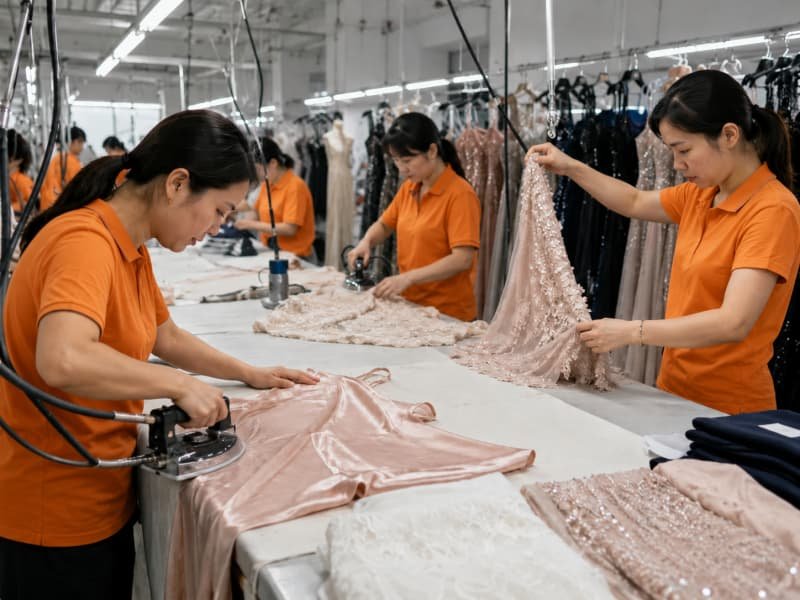
Sample-to-Bulk Path for Editorial Styles
Step 1|Approved Editorial Sample Review
Duolan reviews the approved sample by silhouette, sleeve volume, fabric, internal support, sheer layers, embellishment, cut-outs, drape, slit, surface, and photographic impact. Approval also identifies production risks. A strong editorial sample must become a reference for technical teams, not only a visual achievement for campaign use.
Step 2|Pattern Version Confirmation
Pattern version control protects editorial shape. Duolan confirms main pattern,
lining pattern, sleeve shape, corset panels, drape placement, cut-out openings, asymmetric lines, skirt layers, and key measurements. These details need version clarity before grading, cutting, and production
Step 3|Fabric and Trim Locking
Fabric and trims influence structure, image, comfort, and production outcome.
Duolan locks main fabric, lining, mesh, organza, tulle, sequin, lace, boning, zipper, trims, thread, labels, and packing requirements before PP approval. Any material change can alter the final visual effect.
Step 4|PP Sample Approval
PP sample approval turns editorial direction into line-ready standards. Duolan checks final fabric, trims, measurements, construction, seam finish, support, openings, labels, packing, and QC focus. PP approval gives production and inspection teams a shared reference.
Step 5|Inline Construction Check
Editorial details need inspection during production. Duolan checks structure support, sleeve shape, seam tension, sheer layers, lining,
cut-out edges, embellishment placement, key measurements, and pressing. Early inspection reduces correction difficulty at final stage.
Step 6|Final Visual Presentation Review
Final review checks whether production still holds the approved editorial look. Duolan reviews surface quality, color, drape, sleeve shape, layer volume, pressing, hanger or fold method, packing, carton protection, and garment arrival risk. Presentation matters for campaign-driven and showroom-driven brands.
Details Creating Editorial Impact
Editorial impact often comes from specific details rather than garment category alone. Duolan reviews statement details through fabric, placement, scale, support, comfort, and production repeatability.
Dramatic Sleeves
Balloon sleeves, puff sleeves, cape sleeves, split sleeves, organza sleeves, and structured sleeves need material support and pattern control. Sleeve volume should strengthen the garment, not distort proportion.
- Review sleeve cap, armhole, cuff, support, lining, and pressing.
- Match sleeve type with fabric body and garment length.
- Confirm shape recovery after packing and handling.
Sheer Panels
Mesh, tulle, illusion panels, and transparent layers can create strong editorial depth. Placement must balance exposure, coverage, and visual intention.
- Review transparency, lining, edge finish, seam position, and body mapping.
- Check front, side, and back views under lighting.
- Control stretch and panel tension during production.
Corset Lines
Corset lines create structure, waist definition, and strong visual identity. Cup, boning, panel seam, lace-up back, zipper, and lining all influence comfort and shape.
- Review bust support, underbust position, waist shaping, and back stability.
- Match outer fabric with internal structure.
- Confirm comfort, size grading, and production method.
Asymmetric Cuts
One-shoulder necklines, diagonal hems, uneven slits, off-center drapes, and angular openings need balance from every view.
- Review body load, shoulder stability, hem balance, and grainline.
- Check movement and fitting from multiple angles.
- Keep key measurements clear for production inspection.
Surface Embellishment
Sequins, beads, embroidery, appliqué, crystals, and mixed surfaces create editorial attention. Weight and comfort need strict review.
- Review motif placement, density, seam bulk, lining, and skin contact.
- Control decoration around zipper, armhole, neckline, and hem.
- Inspect loose elements, repair points, and packing pressure.
Architectural Pleats
Sharp pleats, soft drapes, origami-inspired folds, and sculptural shaping require pattern precision and pressing control.
- Review fold direction, fabric memory, seam anchor, and pressing response.
- Match pleat structure with garment movement and body line.
- Confirm repeatability before bulk approval.
QC Standards for Editorial Dress Production
Editorial dress QC must protect visual impact as well as garment function. Duolan checks fabric, cutting, construction, fit, details, pressing, and packing so approved sample quality can survive bulk production.
| QC Stage | Duolan Checks | Risk Controlled |
|---|---|---|
| Fabric Check | Weight, drape, sheerness, surface, color | Weak structure, poor camera effect |
| Cutting Check | Grainline, panel balance, print, lace, sequin position | Distorted silhouette |
| Structure Check | Boning, cup, sleeve support, lining, zipper | Unstable construction |
| Detail Check | Embellishment, appliqué, pleat, cut-out, slit | Messy editorial detail |
| Fit Measurement | Bust, waist, hip, shoulder, length, opening | Poor wearing effect |
| Pressing Review | Crease, shine mark, sleeve shape, layer volume | Damaged presentation |
| Packing Check | Fold, hanger, shape protection, carton method | Crushed structure or surface damage |
Duolan System for Editorial Dress Programs
Duolan’s system supports editorial dress programs through connected design review, pattern work, fabric sourcing, sample development, process testing, production planning, QC, and delivery coordination. Design-related roles help interpret concept direction. Pattern and sample teams develop statement silhouettes, complex structures, and campaign-ready samples. Fabric and trim teams review tulle, organza, mesh, satin, sequin, lace, lining, boning, zipper, and surface materials.
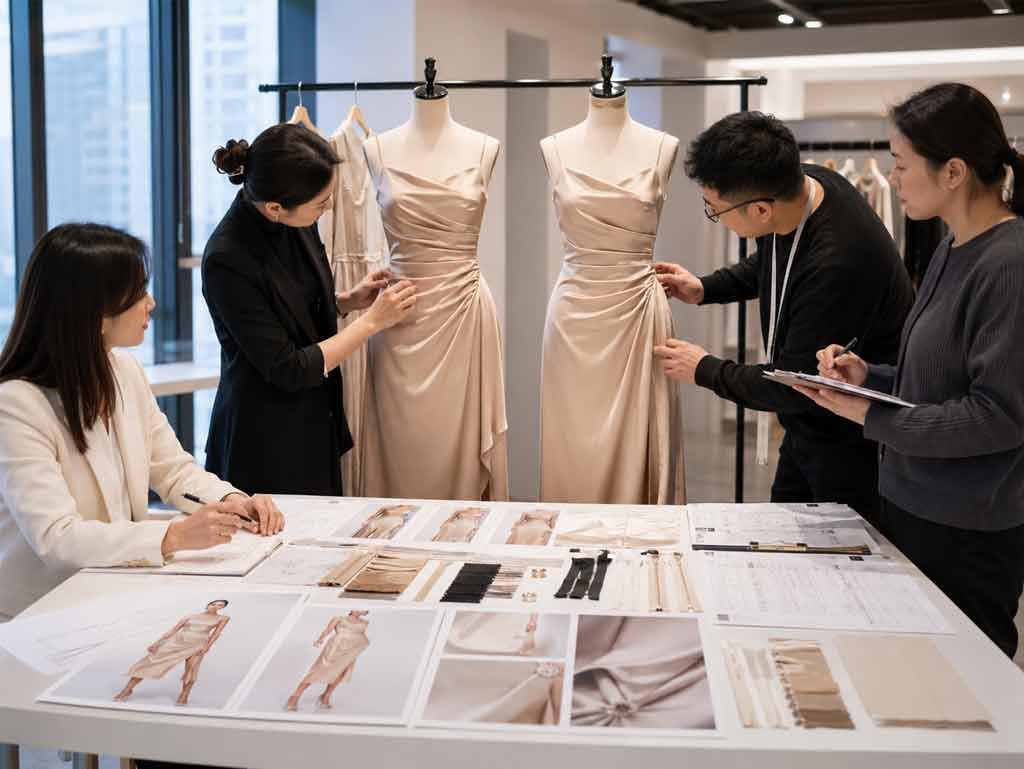
Process development teams support embroidery, sequin, appliqué, pleat, drape, cut-out, special stitching, pressing, and finishing trials. Core factories can handle high-control styles where structure and sample accuracy matter most. Satellite factories support mature styles, repeat orders, and scale planning after production standards are confirmed.
For editorial fashion brands, Duolan’s value sits in the transition from concept to sample, sample to PP, PP to bulk, and bulk to repeat order. Visual ambition gains commercial strength when supported by organized development and disciplined manufacturing.
Anonymous Editorial Dress Programs
Duolan protects private brand work. Program notes below describe region, product direction, development challenge, and control focus without exposing confidential names, unreleased garments, or brand marks.
US Campaign-Driven Dress Program
A US campaign-driven dress brand developed statement minis, organza sleeve dresses, and cut-out party styles. Main challenges included sleeve support, sheer layer control, photo-ready sample impact, and production version consistency.
- Program range: 12–18 styles across statement mini, cut-out, and organza dress directions.
- Order planning: approximately 30,000–50,000 pieces across launch and repeat needs.
- Control focus: fabric support, photo-ready sample, pattern correction, PP sample, final visual inspection.

Australian Editorial Partywear Program
An Australian editorial partywear label developed corset dresses, mesh panels, asymmetric slits, and embellished styles. Main challenges included bust support, mesh transparency, slit safety, embellishment weight, and bulk feasibility.
- Program range: 15–25 styles across corset, mesh, slit, and embellished dress groups.
- Order planning: approximately 40,000–70,000 pieces for seasonal launch and reorder planning.
- Control focus: corset structure, lining coverage, embellishment QC, size review, production path.

UK Showroom Fashion Program
A UK showroom fashion brand developed draped midi dresses, statement sleeves, and sculptural occasion styles. Main challenges included drape direction, pleat volume, sleeve shape, and near-view sample quality for line review.
- Program range: 10–16 styles across draped, sculptural, and statement occasion silhouettes.
- Order planning: approximately 20,000–40,000 pieces for controlled launch production.
- Control focus: sample refinement, salesman sample quality, PP approval, golden sample reference.

FAQ for Editorial Dress Manufacturing
Yes. Duolan develops editorial dress programs involving statement silhouettes, dramatic sleeves, sheer layers, corset structures, asymmetric cuts, draped forms, cut-outs, embellishment, and campaign-ready samples. Development work reviews visual concept, fabric behavior, structure, sample purpose, PP approval, and bulk feasibility.
Yes. Campaign-ready samples can be developed for photoshoots, lookbooks, showroom presentations, and internal line reviews. Duolan reviews front, side, back, surface, shape, texture, drape, light response, and styling impact. For production, a PP sample should also be approved to lock material, construction, measurements, labels, packing, and QC standards.
Statement sleeves are reviewed through sleeve cap, armhole, sleeve width, cuff, lining, fabric body, inner support, pressing, and packing. Organza, tulle, bonded fabric, cotton blend, and satin all create different effects. Duolan checks sleeve shape during sample fitting and final presentation review.
Yes. Sheer layered dresses can be developed using tulle, mesh, organza, lace, soft lining, or layered panels. Duolan reviews transparency, body coverage, lining tone, seam placement, edge finish, and light response. Coverage and wearability are checked before PP approval.
Corset structures are reviewed through cup position, boning, underbust, waist shaping, lining, zipper, back stability, and outer fabric behavior. Editorial corset dresses need both visual impact and wearing security. Duolan checks support during fit sample and confirms final construction through PP sample approval.
Yes, when concept details are translated into pattern version, BOM, fabric records, construction sheet, PP sample, measurement points, and QC standards. Some handmade sample methods may need adjustment before bulk production. Duolan reviews feasibility early to protect the strongest visual idea while reducing production risk.
Duolan reviews proportion, fabric choice, detail scale, body ease, movement, finishing, and intended selling context. Editorial design can be dramatic without becoming costume-like when volume, transparency, embellishment, structure, and styling stay connected with modern garment fit and commercial wearability.
Yes. Duolan can support sequin, bead, embroidery, appliqué, and crystal placement projects. Key controls include surface weight, backing comfort, seam allowance, zipper area, armhole, neckline, lining, repair points, abrasion, loose elements, and packing pressure. Embellished styles need early review because material choice affects cost, comfort, and production speed.
Consistency is protected by locking pattern version, fabric, trims, BOM, construction method, PP sample, measurements, pressing requirements, packing method, and QC checkpoints before production starts. Editorial dresses need extra control around sleeve volume, sheer layers, corset support, cut-outs, drape, and embellishment placement.
Please prepare tech pack, campaign moodboard, reference images, editorial concept notes, fabric direction, statement detail focus, sample purpose, size range, target quantity, and launch or campaign date. Close-up images of sleeves, drape, corset, mesh, embellishment, or construction details are especially helpful.

Send Your Editorial Dress Concept
Share your tech pack, campaign moodboard, reference images, editorial concept, fabric direction, statement sleeve ideas, corset references, sheer layer details, drape or embellishment notes, sample purpose, size range, target quantity, and campaign or launch timing. Duolan can review your concept around visual translation, fabric suitability, construction risk, sample route, PP sample standard, and bulk feasibility.
A strong brief may include:
- Campaign mood, target styling, visual references, garment category, and desired statement detail.
- Fabric ideas, structure needs, lining preference, trims, embellishment, and finishing expectations.
- Size range, sample purpose, launch quantity, delivery window, and repeat production direction.