Skip to content
Custom Dress Manufacturer for Fabric and Trim Control
Dress-focused development and manufacturing with controlled fabric, lining, trim, color and bulk standards for established fashion brands.
A strong dress starts before cutting. Duolan reviews how every material affects silhouette, fit, support, comfort, workmanship, production stability and repeat-order consistency. Our project teams coordinate fabric direction, trim specifications, sample approvals, production records and incoming checks so approved design decisions can move into bulk with fewer uncontrolled variables.
- 6 fabric-behavior dimensions reviewed: drape, structure, stretch, recovery, opacity and handfeel.
- 8 control stages from project brief and swatch review to incoming inspection and repeat-order checks.
- Material coordination structured for dress programs of 10-30 styles and 20,000-80,000 garments per brand order.
- 16 owned womenswear factories supported by 20+ long-term satellite factories and South China material resources.
Built for Established Fashion and Product Teams
Fashion Brand Teams
- Best for seasonal drops, capsule collections and repeat programs.
- Supports design direction, commercial targets and production readiness.
Buying Teams
Buying teams need more than swatches and prices. They need clear visibility into material availability, lead time, minimum purchase conditions, approval status, quality risk and replacement rules. Duolan helps convert commercial decisions into production records that can be reviewed before bulk commitment.
- Useful for multi-style orders and launch-calendar control.
- Supports supplier evaluation and material-risk review.
Product Development Teams
- Fit, structure and visual intent remain connected.
- Revision points are separated by fit, material and production impact.
Sourcing Offices
- Suitable for regional and global sourcing structures.
- Supports traceability across approvals and production stages.
Occasionwear Brands
- Strong relevance for party, cocktail and event collections.
- Material decisions are reviewed against wear, photography and bulk repeatability.
Multi-brand Groups
- Supports parallel development and different quality levels.
- Useful when several teams share one manufacturing network.
Material Risks That Damage Dress Programs
Sample-Bulk Fabric Shift
Shade Variation
The same color can appear different across satin, mesh, lace, lining and elastic. Dye lots and fabric rolls may also vary. Color control therefore requires approved references, lot comparison and garment-level review rather than a Pantone number alone.
Unapproved Trim Changes
Lining Mismatch
Material Lead-Time Delay
Poor Repeatability
Workmanship Conflict
Commercial Misfit
How to Evaluate Fabric and Trim Control
A manufacturing partner should be assessed by the quality of its control records and decisions, not by the number of swatches shown. Eight areas below reveal whether material sourcing can support development, production and repeat orders.
| Evaluation Area | What a Strong Supplier Should Show | Evidence to Request | Risk When Missing |
|---|---|---|---|
| Dress-category knowledge | Explains how fabric and trims affect silhouette, fit, support, coverage and finishing for relevant dress types. | Comparable samples, material notes, construction close-ups. | Generic material choices and repeated fit or workmanship correction. |
| Fabric-behavior review | Assesses drape, weight, stretch, recovery, opacity, handfeel and surface sensitivity before sampling. | Swatches, stretch comparison, lining combinations, sample notes. | Material looks acceptable flat but fails after construction or wear. |
| Trim engineering | Links zippers, cups, boning, elastic, hooks, linings and decorations to function and appearance. | Trim board, specifications, wear tests, construction sample. | Closures fail, support shifts, decorations irritate or bulk trims change. |
| Approval discipline | Uses approved swatches, lab dips, strike-offs, trim boards, BOM status and PP references. | Dated approval files and clear status records. | Decisions remain informal and cannot be traced during bulk. |
| Incoming control | Checks actual bulk materials against approved standards before cutting or line use. | Roll and lot records, shade review, defect inspection, quarantine process. | Wrong lots or defective materials enter production and multiply losses. |
| Substitution governance | Compares replacement options and obtains approval before use. | Side-by-side comparison and written approval status. | Uncontrolled changes in handfeel, appearance, fit, cost or delivery. |
| Sample-to-bulk transfer | Converts sample decisions into production documents and line checkpoints. | BOM lock, PP sample, first-piece review, inline checklist. | A strong sample cannot be reproduced consistently at volume. |
| Reorder traceability | Preserves approved references and rechecks material availability for later orders. | Reorder file, lot history, replacement path, archived sample reference. | Repeat orders drift in color, texture, support or trim appearance. |

Eight Stages of Material Control
Duolan treats material sourcing as a controlled route with defined decisions, records and release points. Each stage protects the next one, from initial interpretation to bulk and repeat production.
Project Brief Review
We begin with the intended dress, market, sample purpose, target quantity, color direction, size standard, quality concerns and launch timing. Missing or conflicting information is identified before sourcing starts.
Material Direction
Fabric and trim requirements are translated into measurable or reviewable points: composition, weight, stretch, finish, opacity, color, support, closure, decoration and care considerations.
Supplier and Availability Check
Potential sources are reviewed for suitability, order scale, color route, lead time and repeat potential. Development availability is separated from bulk availability.
Swatch and Trim Approval
Swatches, lab dips, strike-offs, lining combinations and trim boards are compared against the design goal. Approvals are recorded by stage rather than assumed from a sample image.
Sample Application
Materials are evaluated on a real garment for drape, fit, structure, comfort, construction and finishing. Issues are categorized for revision and production risk.
BOM and PP Lock
Approved material information is transferred into the BOM, workmanship notes, PP sample and production-readiness review. Critical substitutions remain controlled.
Incoming Inspection
Bulk lots are checked against approved references before cutting or line release. Shade, defects, handfeel, weight, stretch direction, print and trim function receive project-specific checks.
Bulk and Reorder Control
First-piece, inline and final checks confirm material use and garment effect. Reorder files preserve references while availability is revalidated for each new order.
Dress Categories Where Materials Decide the Result

Satin Dresses
- Focus: shine, drape, seam marks, shade and packing.

Mesh Dresses
- Focus: stretch, recovery, coverage, color and edge finish.

Lace Dresses
- Focus: motif, placement, lining, seam route and consumption.

Sequin Dresses
- Focus: weight, shedding, skin comfort, seams and protection.

Bodycon Dresses
- Focus: stretch, recovery, opacity, negative ease and size grading.

Corset Dresses
- Focus: support package, cup position, boning and closure strength.
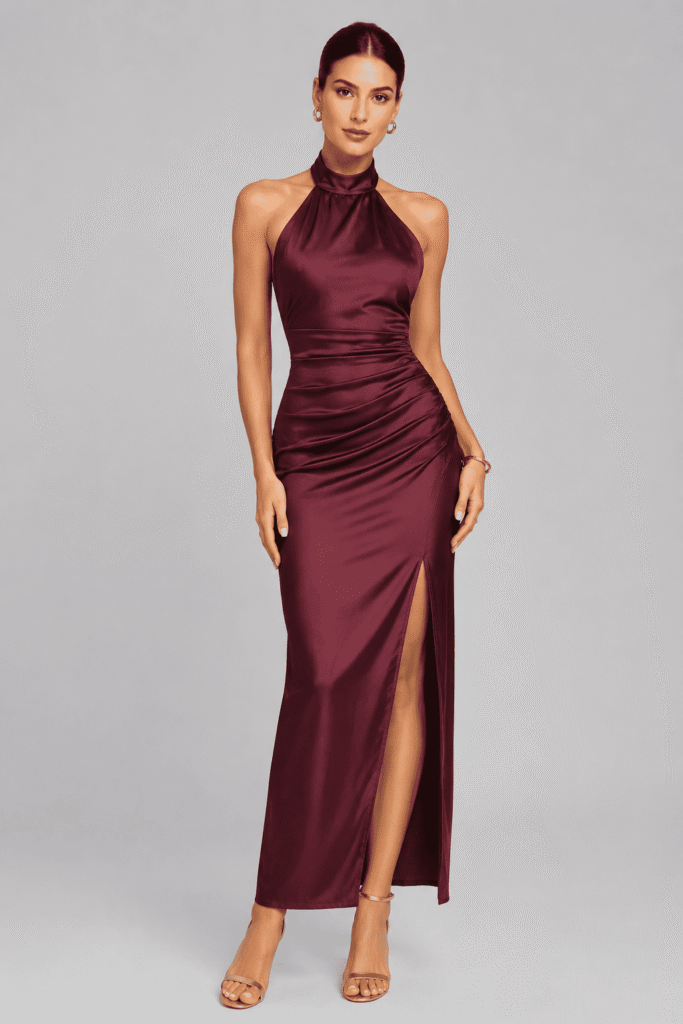
Halter Dresses
- Focus: strap strength, neck pressure, hardware and reinforcement.

Backless Dresses
Backless shapes often rely on hidden elastic, silicone tape, cups, side support, hooks or internal straps. The outer design stays clean only when functional trims are selected and positioned carefully. Stretch and recovery affect security during wear.
- Focus: hidden support, anti-slip function, closure and recovery.

Party Dresses
- Focus: visual impact, movement, comfort, decoration and durability.

Occasion Dresses
- Focus: polish, drape, photography, comfort and event use.

Resort Dresses
Resort and vacation collections often use prints, lightweight fabrics, open structures and flowing silhouettes. Print scale, transparency, humidity behavior, colorfastness and packability affect real travel use and commercial presentation.
- Focus: print, lightness, transparency, travel and finishing.

Fashion Sets
- Focus: cross-piece consistency, color, stretch and coordinated trims.
Six Fabric Behaviors We Review Before Production
Drape
- Review on hanger, mannequin and worn sample.
- Check interaction with lining and seam construction.
Structure
Structure is the fabric’s ability to hold shape, support panels and maintain a clean outline. Corset, bustier and tailored mini dresses may require stable shell material, interlining or internal support.
- Assess body, bending resistance and pressing response.
- Match support materials to outer-fabric thickness.
Stretch
Stretch must be measured in the relevant direction and interpreted with pattern ease. A fabric with high stretch may still feel unstable if recovery is weak.
Mesh, jersey, rib and woven stretch fabrics need separate pattern and seam decisions.
- Check crosswise and lengthwise behavior.
- Confirm effect on fit, seam type and grading.
Recovery
- Review after repeated extension.
- Check stability across sample sizes.
Opacity
- Assess under daylight and strong light.
- Review pale shades and fitted areas on body.
Handfeel
- Check exterior and interior contact points.
- Balance appearance with real-wear comfort.
Core Dress Fabrics and Their Production Risks
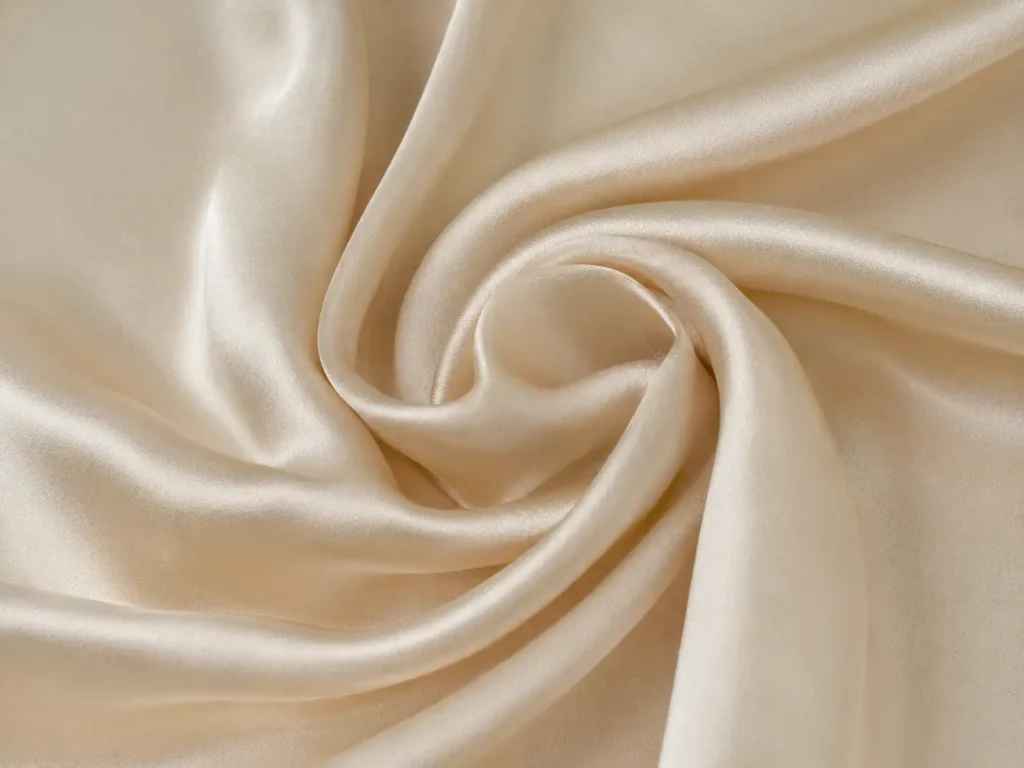
Satin
- Main risk: puckering, shine variation and pressure marks.

Chiffon
- Main risk: distortion, fraying and uneven layers.
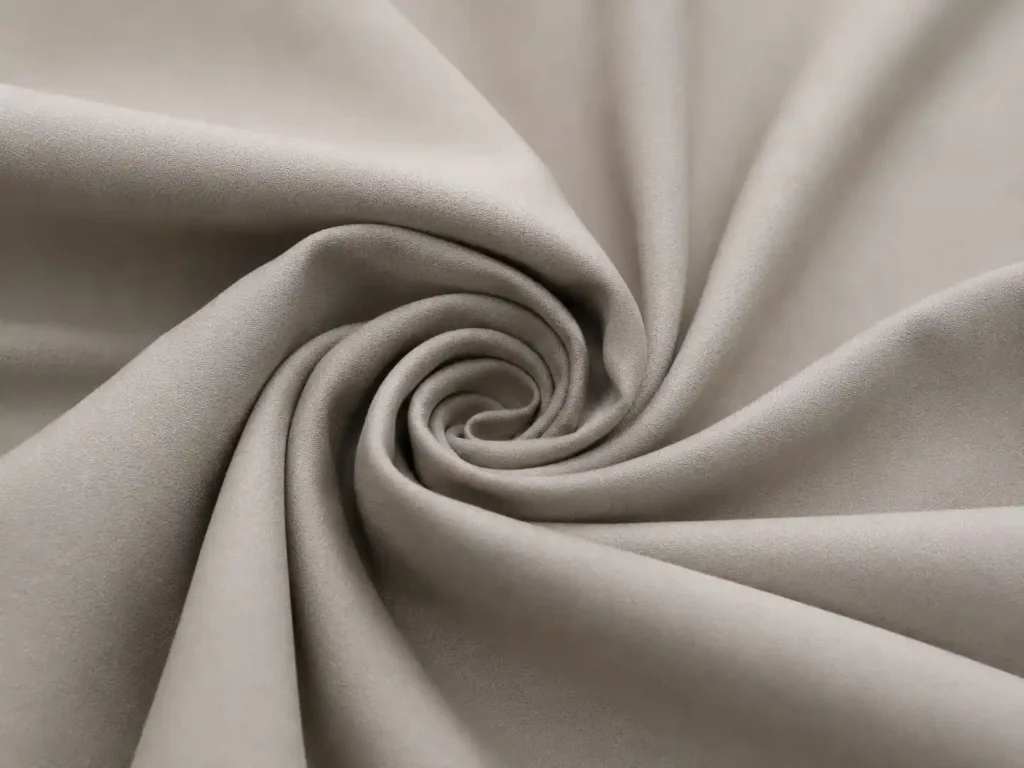
Crepe
- Main risk: assuming all crepe behaves alike.

Mesh
- Main risk: poor recovery and inconsistent nude tones.

Lace
- Main risk: motif waste and rough skin contact.

Velvet
- Main risk: visible nap mismatch and pressure damage.
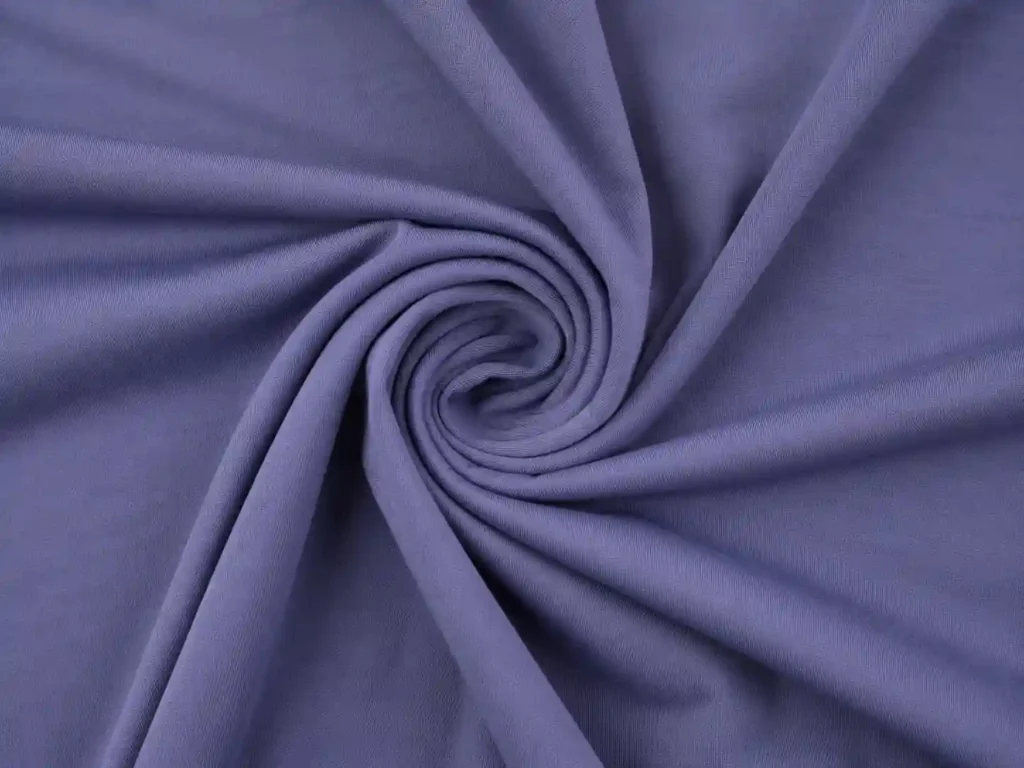
Jersey
- Main risk: bagging, show-through and seam waviness.
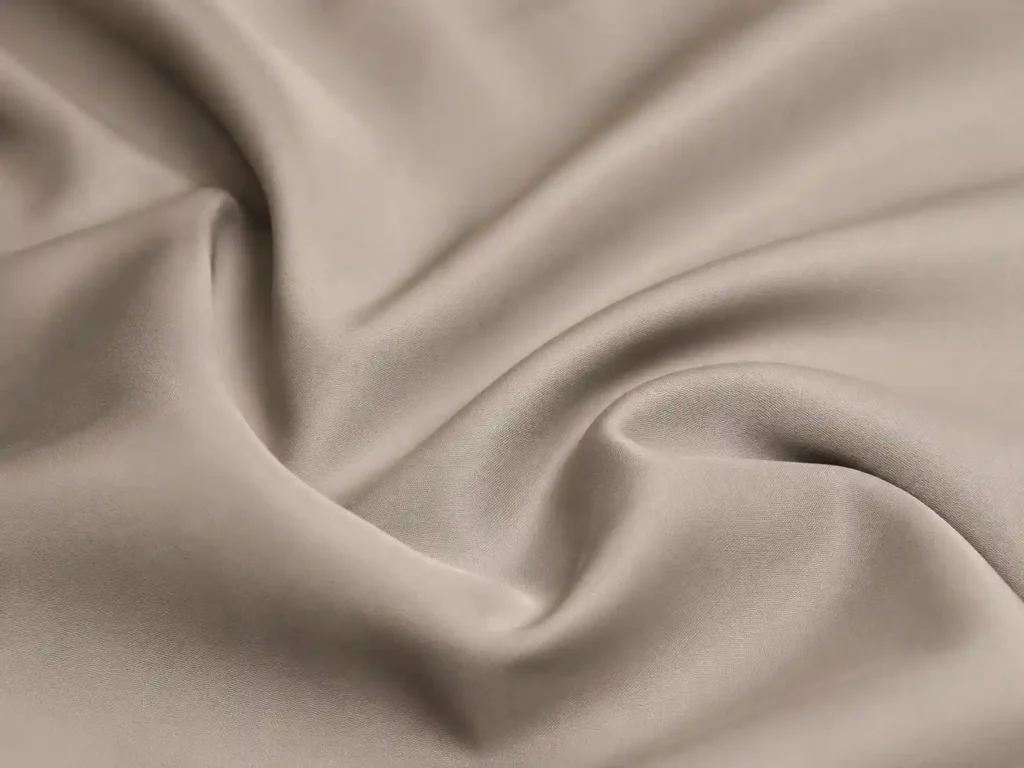
Ponte
- Main risk: excessive bulk or limited movement.

Sequin Fabric
- Main risk: seam damage, irritation and inconsistent density.
Trims That Control Fit, Function and Finish

Invisible Zippers
- Control: specification, color match, length and operation.

Hook-and-Eye
- Control: type, position, strength and concealment.

Cups and Padding
- Control: shape, size, symmetry and placement.
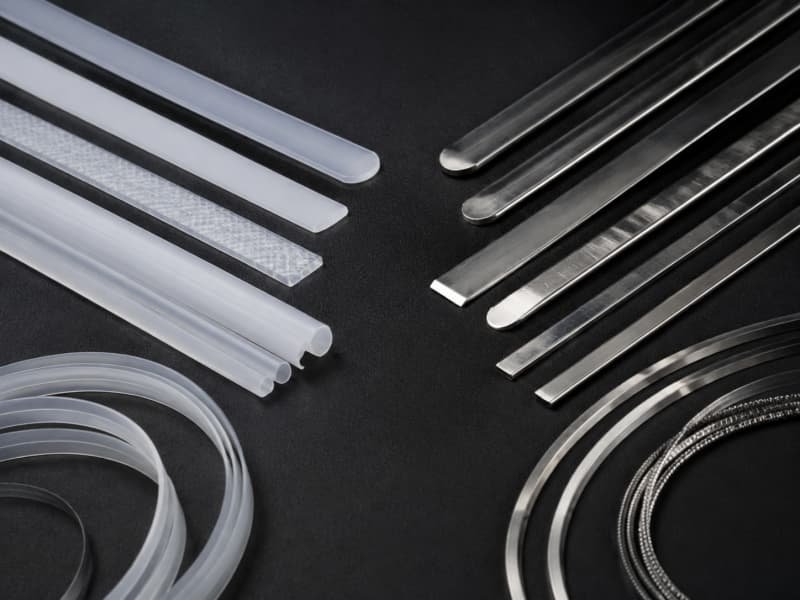
Boning
- Control: stiffness, length, position and end finish.

Elastic
- Control: extension, recovery, width and attachment.

Interlining
- Control: compatibility, bonding, stiffness and shrinkage.

Linings
- Control: compatibility, coverage, color and comfort.

Eyelets and Rings
- Control: finish, setting strength, placement and reinforcement.

Lace Trims
Lace trim should be reviewed for width, motif, edge, softness, stretch and color.
Placement on necklines, hems or cut-outs may require motif alignment and controlled joining.
- Control: motif, width, softness and joining method.

Sequins and Beads
Decorative components require density, attachment, color, size and skin-contact review.
Handwork and machine application have different cost, lead time and repeatability profiles.
- Control: density, attachment, comfort and loss risk.

Labels
Main labels, size labels, care labels and country or market information must match approved content, material, size and placement. Label stiffness and edge finish also affect comfort.
- Control: artwork, wording, material, placement and durability.

Packaging Components
- Control: specification, identification and garment protection.
Special Processes Matched to Fabric and Bulk Needs
Printing
Fabric type, artwork, repeat, color route and garment structure determine the print method. Bulk printing begins only after strike-off and sample review confirm the visual and production standard.
- Check: repeat, scale, color, stretch and placement.
Embroidery
Stitch density, backing, thread, motif size and placement affect drape and comfort.
Heavy embroidery can pull lightweight fabrics or distort fitted panels.
- Check: density, backing, placement and edge finish.
Dip Dyeing
- Check: color transition, consistency and garment effect.
Washing
Washing can change handfeel, dimension, color and surface.
The route must be developed with shrinkage, seam construction, trims and care requirements in mind.
- Check: shrinkage, color, trim reaction and finish.
Pleating
Pleat type, depth, direction, heat stability and fabric composition determine durability.
Pattern allowance and bulk packing also influence the final shape.
- Check: retention, spacing, direction and packing.
Rhinestone Application
- Check: adhesion, heat sensitivity, placement and flexibility.
Beading and Pearls
Attachment method, weight, spacing and backing determine comfort and repeatability.
High-density areas may require reinforcement or changed seam routes.
- Check: weight, security, spacing and skin contact.
Composite Decoration
- Check: process order, interaction, cost and repeatability.
South China Fabric and Trim Coordination
Material Access
Duolan operates within the mature South China apparel supply environment, with access to extensive fabric markets, the Humen trim ecosystem and long-term resources for fabrics, linings, accessories, printing, embroidery, washing and finishing.
- Fabric and trim options are reviewed by product use, not by catalogue quantity.
- Development sources and bulk-capable sources are distinguished early.
Supplier Matching
A fluid satin for a bias dress, a stable mesh for a corset panel and a soft lace for skin contact require different supplier strengths.
Project teams compare material behavior, color route, order scale, lead time and repeat potential before recommending an option.
- Material choice follows silhouette, fit and price architecture.
- Alternative sources are considered when supply continuity is uncertain.
Special-Process Coordination
Print, dip dye, embroidery, wash and embellishment steps may involve specialist partners. Duolan coordinates samples, approval references, process sequence and production timing so a special effect remains connected to the garment standard.
- Process samples are reviewed before production release.
- Critical parameters are transferred into workmanship records.
Supply Continuity
Stock swatches do not guarantee future availability. For bulk and repeat programs, material readiness is checked against required color, quantity, timing and supplier conditions. Replacement routes are evaluated when an original option cannot support the program.
- Availability is revalidated for every bulk or repeat order.
- No substitute should move forward without comparison and approval.

Tech Pack and BOM Review Before Sourcing
Material control starts by reading the whole garment, not isolated BOM lines. Duolan checks whether design, fit, fabric, lining, trims, construction and commercial requirements point in the same direction.
Information We Review
A clear development basis may include a tech pack, BOM, sketches, reference images, original sample photographs, fabric swatches, color references, size chart, construction notes, target quantity, intended market and launch timing. Complete files improve accuracy, while incomplete files can still be reviewed for missing decisions.
- Product type and silhouette.
- Shell, lining, support and closure direction.
- Color, print, trim and decoration references.
- Size standard, fit intent and sample purpose.
Conflicts We Identify
Common conflicts include a stretch shell paired with a rigid lining, a light fabric assigned to heavy decoration, a zipper length incompatible with the opening, a nude mesh without a lining color, or a fabric specification that cannot achieve the reference drape. These points are raised before they become sample rework.
- Design appearance versus material behavior.
- BOM description versus sketch or reference.
- Target timing versus material development path.
- Target price versus high-loss or labor-heavy construction.
Outputs for Development
The review can lead to a confirmed material direction, questions requiring brand approval, swatch or trim requests, a sample-purpose definition, a preliminary sourcing route and a list of high-risk points to monitor during sample development.
- Clearer sample brief.
- Fewer hidden assumptions.
- Better basis for quotation and timeline planning.
Matching Fabric to Silhouette and Structure

Bias-Cut Silhouettes
- Review: grain, drape, seam stretch and hanging recovery.
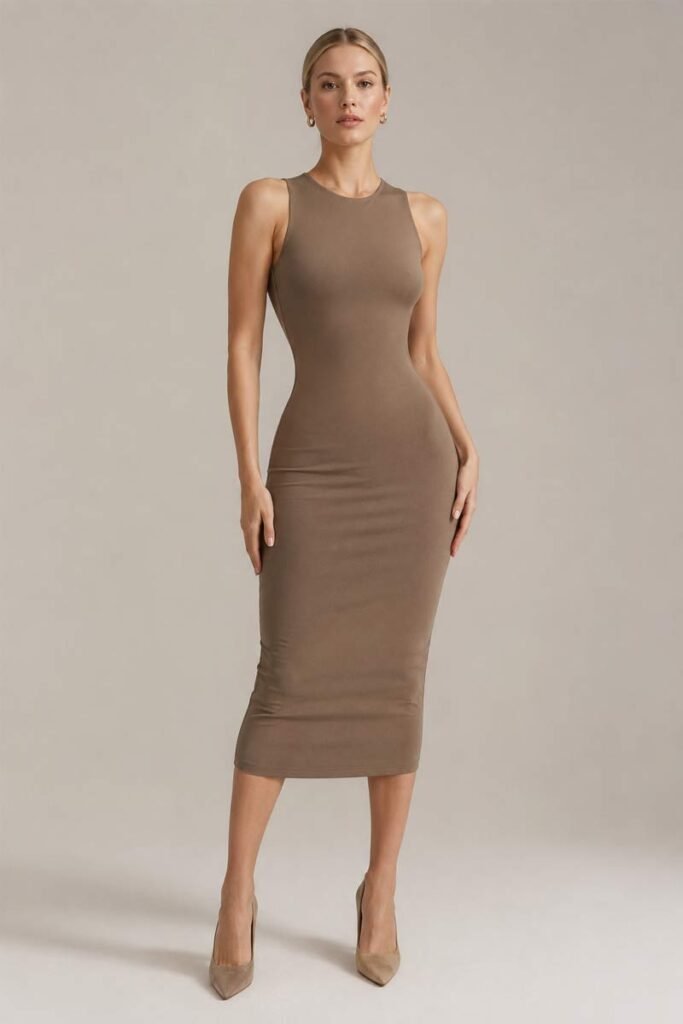
Bodycon Silhouettes
- Review: stretch ratio, recovery, show-through and seam stability.

Corset Silhouettes
Support comes from a system of shell, lining, interlining, cups, boning, elastic and closure. The outer fabric must tolerate internal structure without bubbling, collapsing or showing hard edges.
- Review: support package, panel shape, seam bulk and comfort.

Draped Silhouettes
Draping requires predictable fall, surface friction and recoverable shaping. Fabric that is too crisp resists folds; fabric that is too soft may lose the designed line. Weight and lining affect balance.
- Review: fold formation, weight, anchoring and lining interaction.

Layered Mesh
Layer count, stretch, edge finish and color create the visual result. Different meshes may need separate patterns or tensions. Nude and fashion shades must be judged on body and under lighting.
- Review: layer transparency, color, recovery and seam visibility.

Structured Minis
- Review: body, edge support, movement and closure strength.

Flowing Maxis
Long dresses amplify fabric weight, grain issues and seam distortion. Lightweight layers need balanced lining and controlled hem finishing. Prints must be planned across long panels and gathers.
- Review: weight distribution, grain, hem behavior and print scale.
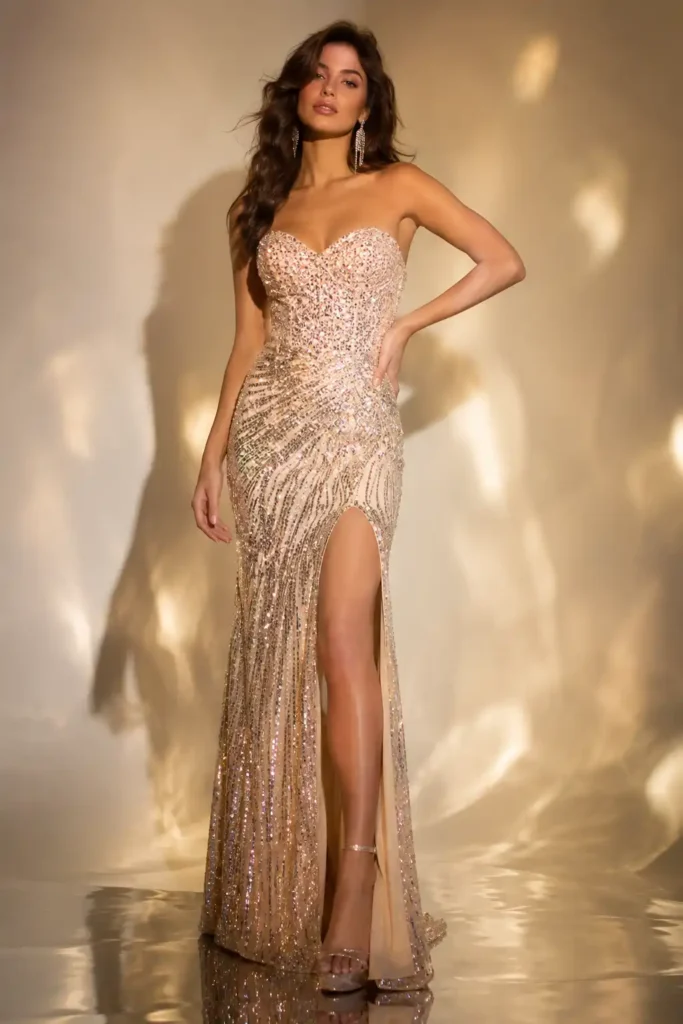
Embellished Dresses
- Review: weight, backing, attachment, balance and protection.
Controlled Material Replacement and Approval
Material replacement is sometimes necessary because of availability, color, lead time, cost or production risk. Duolan compares the replacement against the approved result and records its status before any bulk use.
| Comparison Point | What We Compare | Why It Matters | Approval Evidence |
|---|---|---|---|
| Composition and construction | Fiber blend, weave or knit structure, finish and usable width. | Changes handfeel, drape, care, shrinkage and production method. | Supplier specification and side-by-side swatch. |
| Weight and body | GSM or agreed weight reference, thickness, stiffness and fall. | Changes silhouette, support, seam bulk and perceived quality. | Measured reference plus garment or drape comparison. |
| Stretch and recovery | Direction, extension level, return performance and stability. | Changes fit, pattern ease, grading and long-wear shape. | Stretch comparison and sample application. |
| Color and surface | Shade, shine, texture, print, pile or decorative appearance. | Changes collection consistency and visual approval. | Lab dip, strike-off, shade band or approved swatch. |
| Opacity and comfort | Transparency, skin feel, static, scratch and internal contact. | Changes coverage, lining need and wearer experience. | Layered review and worn-sample assessment. |
| Production response | Cutting, needle marks, puckering, fraying, pressing, bonding or decoration compatibility. | Changes workmanship risk, defect rate and line method. | Process test or sample detail. |
| Commercial impact | Price, minimum purchase conditions, waste, lead time and repeat potential. | Changes margin, launch timing and reorder viability. | Revised costing and supply note. |
| Formal status | Approved, conditionally approved, rejected or pending. | Prevents an option from entering production by assumption. | Written approval and updated BOM status. |

Lab Dip, Shade and Cross-Material Color Control
Color approval should protect the finished dress and the collection, not merely match a code. Duolan connects color references to material surface, lining, trim and bulk-lot control.
Color Begins with the Material
A Pantone reference is only one input. Fiber composition, surface, shine, transparency, pile, mesh openness and lining color all change how a shade is perceived. Satin may reflect light; mesh blends with skin and lining; lace creates light and shadow; velvet changes with pile direction.
- Review color on the intended fabric and under relevant lighting.
- Coordinate shell, lining, elastic, zipper and decorative trims.
Approval Route
Depending on the material and project, the route may include a supplier shade reference, lab dip, strike-off, trim color sample, shade band, sample garment and bulk-lot comparison. Each item has a purpose and should not be treated as interchangeable.
- Lab dip: dyed color direction.
- Strike-off: print color and artwork result.
- Shade band: acceptable bulk shade range.
- Garment review: combined visual effect.
Bulk Shade Control
Bulk rolls can vary within or between dye lots. Before cutting, materials are compared with approved references and grouped where needed. Sensitive styles may require panel consistency, lot separation or garment-level shade review.
- Prioritize pale satin, vivid colors, metallics and nude meshes.
- Prevent visible panel mismatch within one garment.
Collection Color Coordination
A collection may use one color across satin, mesh, lace, jersey and trims. Exact visual equality is not always technically possible, so the aim is a controlled and approved relationship across materials.
- Review color families together, not one component at a time.
- Document approved differences where surfaces alter perception.
Print Development from Artwork to Bulk Fabric
Print is a combined design, fabric and production decision. Duolan coordinates artwork review, strike-off approval, garment application and incoming print checks for resort, vacation and statement dress programs.
Artwork Basis
Print development begins with the best available artwork, repeat dimensions, color references, intended fabric, placement direction and garment silhouette. Vector or high-resolution files reduce interpretation errors, while repeat and scale must be considered before sampling.
- All-over, placement, digital and screen-print routes require different preparation.
- Artwork should be checked against panel size and garment movement.
Fabric Interaction
A print changes with the base fabric. Stretch mesh can distort motifs; satin shine alters perceived color; chiffon transparency softens density; textured crepe changes edge definition. The print route is selected only after the substrate is understood.
- Review stretch distortion, transparency and surface finish.
- Confirm print handfeel and effect on drape.
Strike-Off and Garment Review
A strike-off confirms artwork, color and substrate interaction before full garment application. The sample garment then confirms scale, placement, seam interruption, gathering, darts, corset panels, slits and grading effects.
- Approve the print as fabric and as a garment.
- Record orientation, repeat and placement rules for bulk.
Bulk Standard
Before bulk printing, the approved strike-off, color range, repeat, direction and quality points are locked. Incoming printed fabric is checked for shade, print defects, direction and usable consistency before cutting.
- Check missing color, smudging, registration, streaks and repeat variation.
- Separate or reject material outside the approved range.

Material Records That Keep Decisions Traceable
Approved Swatch
- Use for shell, lining and critical support materials.
Lab Dip Record
- Use for custom-dyed materials and sensitive colors.
Strike-Off Record
A print reference confirming artwork, repeat, color and base-fabric result before bulk printing.
- Use for all-over and placement print development.
Trim Board
- Use to see trim relationships and approval status together.
Material Specification
- Use to reduce ambiguity between sourcing and production.
BOM Status
- Use as a production-control document, not only a costing list.
Sample Review Note
- Use to guide revisions and PP readiness.
PP Reference
- Use for first-piece, inline and final comparison.
Reorder File
- Use to protect repeat consistency without assuming permanent availability.
Fabric Performance Checks Selected by Dress Risk
Shrinkage
- Check length and width change where relevant.
- Review shell-to-lining compatibility.
Color Fastness
- Check relevant exposure such as rubbing, wash or perspiration.
- Coordinate with approved color and care route.
Weight and Width
- Check GSM or equivalent reference where applicable.
- Confirm usable width before consumption and marker planning.
Stretch and Recovery
Stretch fabrics should be reviewed for extension, direction and return.
Repeated movement can expose weak recovery that a single pull test misses.
- Connect results to pattern ease and size grading.
- Review shell, lining and elastic as a system.
Pilling and Abrasion
Surface wear can reduce visual quality on jersey, brushed surfaces and high-contact areas.
Test scope depends on material, finish, intended wear and brand standard.
- Identify risk before material commitment.
- Use agreed acceptance criteria where required.
Opacity and Surface Risk
- Use strong light, stretch and construction review.
- Focus on satin, mesh, lace, velvet and embellished surfaces.

Incoming Fabric Inspection Before Cutting
Performance testing asks whether a material is suitable. Incoming inspection asks whether the actual bulk lot matches the approved standard and is usable for the order. Both decisions occur before production value is added.
Reference Check
Bulk materials are identified against the approved swatch, lab dip, strike-off, trim board, BOM and PP basis. The goal is to confirm the material received is the material intended for production.
- Verify project, supplier reference, color and lot information.
- Separate development material from approved bulk material.
Lot and Shade Review
Rolls or lots are compared for visible shade and surface consistency. Where variation exists, material can be grouped, reviewed or escalated before cutting.
- Protect panel consistency within one dress.
- Prevent mixed lots from creating visible garment differences.
Defect and Usability Review
Checks may include holes, stains, snags, oil marks, weaving or knitting faults, print defects, edge damage, usable width, weight, stretch direction, handfeel and surface condition. The inspection method follows the material and agreed requirement.
- Record and isolate nonconforming material.
- Adjust usable quantity and cutting plan only after review.
Release or Hold
Material is released only when required checks are complete. Material outside the approved range is held for clarification, replacement, rework or formal acceptance.
- No automatic use because a production line is waiting.
- Protect cutting from multiplying a material error.
Functional and Visual Inspection for Critical Trims

Zipper Function
- Hold mismatched or unstable zippers before line use.

Hook Security
- Use samples to confirm concealment and strength.

Cup Symmetry
- Compare against approved sample and pattern marks.

Boning Control
Check type, width, stiffness, length, end protection and placement reference. Incorrect boning can distort panels or reduce comfort.
- Confirm support effect before volume production.

Elastic Recovery
- Reject weak recovery or inconsistent tension.

Lining Compatibility
- Protect movement, coverage and outer-fabric appearance.

Decoration Security
- Focus on loss risk, sharp areas and weight.

Label Accuracy
- Prevent compliance and packing errors before attachment.
Material Approval Through Every Sample Stage
Material Direction
Prototype Sample
Fit and Revision
Photo or Sales Sample
PP Sample
Bulk Reference

Sampling and Delivery Timing Built Around Approvals
Reliable timing comes from locked decisions. Duolan links material preparation, sample purpose, revision, PP approval, production and inspection to the brand’s launch calendar instead of offering one fixed timeline for every dress.
Timeline Starts with a Clear Basis
Sampling timing becomes reliable after the sample purpose, reference files, size, target fabric, color, trims and development route are understood. A reference image alone does not provide enough information for an accurate commitment on complex dresses.
- Material availability and custom color routes are checked first.
- Complex support, print or embellishment work may add approval stages.
Stage-Based Updates
Duolan structures communication around launch confirmation, key material or construction decisions, sample progress and pre-shipment review. Sensitive styles benefit from earlier questions rather than waiting until the finished sample is complete.
- Start confirmation: what has begun and what remains pending.
- Key-point update: fabric behavior, structure or trim decision.
- Pre-shipment update: photos, review focus and dispatch information.
Bulk Planning Reference
Bulk timing is confirmed after PP basis, BOM, materials, order information and production conditions are locked. As a planning reference, simple styles may require about 15-20 days, standard styles about 20-30 days and complex styles about 30-45 days for manufacturing, excluding transport. Final timing depends on material readiness, order scale, special processes, inspection and packing.
- Production and shipping time are planned separately.
- Launch dates should be shared before sample and material approval.
Sample-to-Bulk Material Consistency Controls
Approved Material Basis
- Control point: material identity and approval status.
Lot and Shade Control
- Control point: dye lot, roll and garment consistency.
First-Piece Review
- Control point: real production execution.
Inline Verification
Material use, trim specification, color, placement and high-risk workmanship points are checked during production. Early detection limits repeated defects.
- Control point: process stability while work continues.
Measurement and Fit
- Control point: size and silhouette consistency.
Decoration and Surface
Sequins, stones, beads, prints, lace and special finishes are monitored for density, placement, damage, shade and security.
- Control point: visual and durability standard.
Final and Packing Review
- Control point: shipment condition and identification.
Change Escalation
Any material or trim issue requiring replacement, concession or rework is documented and escalated before shipment rather than hidden inside production.
- Control point: transparent decision and corrective action.

Bulk Readiness Before the Sewing Line Starts
A good sample should not be followed by a blind production release. Duolan confirms material and workmanship readiness, designs the production route and uses first-piece review to protect the approved result.
Bulk Readiness Review
Before line start, the project team checks whether fit, visual appearance, fabric, lining, trims, color, measurements, workmanship and packing are sufficiently confirmed. Pending points are separated from approved points so production does not begin on assumptions.
- Identify whether the sample is fit-confirmed, visual-confirmed, PP basis or still pending refinement.
- Confirm the order purpose: launch, repeat, scale-up or replacement production.
Production Path Planning
Orders are broken down by style, color, size, quantity, material, special process and complexity. The route is matched to the most suitable factory, line and specialist process resources.
- Separate regular, complex and high-risk styles.
- Plan print, embroidery, wash, pleating or embellishment dependencies.
- Align material arrival with line and inspection timing.
First-Piece and Line Release
The first garment made with production materials is reviewed against the PP basis. Critical deviations in shade, trim, measurements, support, construction or finishing are corrected before volume continues.
- Use for satin, corset, mesh, sequin and other sensitive styles.
- Keep evidence for inline and final comparison.
Material Stability for Repeat and Scale-Up Orders
Preserve the Original Standard
- Archive by brand, style, color and order version.
- Keep approved changes separate from temporary development options.
Recheck Availability
Material availability, dye route, trim model and supplier conditions may change over time.
Duolan revalidates quantity, color, lead time and specification before confirming a repeat order.
- Do not assume the original fabric is permanently available.
- Identify discontinued or changed components early.
Compare New Lots
New dye lots or supplier batches are compared with the original approved direction.
Where an exact match is not possible, the difference is presented for review before cutting.
- Protect continuity across repeat drops.
- Coordinate shell, lining and trim color together.
Control Approved Evolution
- Maintain version control for ongoing styles.
- Use updated BOM and sample references for every approved evolution.
Manufacturing Scale Behind Material Control
Nearly 30 Years
- Value: material choices are judged through garment experience.
16 Owned Factories
Core womenswear factories support direct control of key developments, sensitive styles and production standards.
- Value: stronger ownership of approved execution.
20+ Satellite Factories
Long-term satellite resources add production flexibility for multi-style programs, repeat demand and scale-up orders.
- Value: capacity can be matched to style and timing.
12,000+ Workers
The wider manufacturing network includes more than 12,000 workers across regional production resources.
- Value: supports sustained brand programs and production peaks.
300 Sewing Lines
The manufacturing system includes about 300 apparel sewing lines and 50+ flexible quick-response lines.
- Value: style complexity and order path can be separated.
15,000-35,000 Samples
- Value: high development density across multiple projects.
South China Resources
Access to mature fabric, trim and special-process clusters supports sourcing, development trials and production coordination.
- Value: faster option review and specialist matching.
SMETA 2-Pillar
- Value: stronger fit for established brand supply systems.
Material-Control Case Programs

US Occasionwear Program
An established US occasionwear label developed 18 styles across satin, mesh and lace with four coordinated color families. Planned order volume was 36,400 garments. Main risks included pale-satin shade variation, lining show-through, mesh-to-lining color interaction and different zipper colors across the collection.
- Control route: grouped lab dips, coordinated shell/lining review, zipper and trim board, PP material lock, lot separation before cutting.
- Production result: 18 styles moved through a shared approval file with style-specific material notes and first-piece checks.

European Partywear Collection
A European partywear program covered 24 styles and 58,200 garments using sequins, rhinestones, stretch mesh, jersey and structured bustier components. The main challenge was maintaining visual impact without excessive weight, skin irritation or inconsistent support across sizes.
- Control route: decoration density trials, backing and lining review, cup/boning specification, stretch-recovery checks, seam and edge method approval.
- Production result: high-risk styles were routed through PP and first-piece confirmation before multi-line release.

Multi-Market Resort Drop
A multi-market fashion group developed 12 printed resort styles totaling 27,600 garments. The project combined printed chiffon, satin and mesh with coordinated solids and branded trims. Print scale, transparency, cross-fabric color and launch timing were the critical factors.
- Control route: artwork and repeat review, strike-offs by substrate, sample-garment print assessment, cross-material color board and bulk print incoming checks.
- Production result: print, lining and trim references were organized by style and color for production and packing control.
Fabric and Trim Control FAQ

Start a Controlled Dress Development Program
Send the product basis your team already has. A complete tech pack and BOM are helpful, but a reference image, original sample photographs, material swatch, color direction or previous fit comments can also support an initial review. Duolan will assess the dress category, fabric behavior, lining and trim requirements, color route, sample purpose, material availability, high-risk workmanship points and bulk-readiness path before confirming the next step. For a more accurate evaluation, include the intended order quantity, style count, size standard, destination market, launch date, testing requirements and any material issues experienced with earlier suppliers. The goal is not a quick price based on incomplete information. The goal is a clear development and production basis that protects the intended dress result from sourcing through bulk and repeat orders.
- Tech pack, BOM, sketch, reference image or original sample photographs.
- Fabric swatch, composition, weight, stretch, finish or color direction.
- Trim, lining, support, closure, decoration and label requirements.
- Style count, target quantity, size range and intended market.
- Sample deadline, launch date, testing and packing requirements.
Form Fields
- Name
- Tel / WhatsApp (optional)
- Email address
- Message
- Upload your files
- Submit button: Send Project