Skip to content
Custom Dress Manufacturer for Fabric Cost Optimization
Dress-focused development and manufacturing built to protect product value while controlling fabric cost from swatch selection through bulk cutting.
- Fabric cost review covers usable width, GSM, composition, shrinkage, defect allowance, net consumption, marker planning, lining coverage, color quantity, and bulk availability.
- Brand programs commonly involve 10-30 styles and 20,000-80,000 total pieces, creating real opportunities to consolidate fabrics, colors, linings, and trims across a collection.
- Duolan combines 30+ years of dress development experience with 16 owned womenswear factories, 20+ satellite factories, CAD pattern systems, fabric inspection, and controlled sample-to-bulk transfer.
- Cost decisions are reviewed against drape, fit, support, stretch recovery, opacity, handfeel, visual finish, and repeat-order stability – not fabric price alone.
What Fabric Cost Optimization Means in Dress Manufacturing
Total Cost, Not Meter Price
Product Value Stays Protected
Development and Production Align
A useful cost decision must survive sampling and bulk production. Material availability, dyeing minimums, roll width, shade control, marker planning, cutting method, stitching behavior, pressing response, and packing recovery are considered before a recommendation is accepted. Duolan links fabric review with pattern, sample, BOM, PP basis, cutting, inline inspection, and reorder records so an approved saving can be repeated rather than rediscovered.
Built for Fashion Teams Managing Cost and Product Value
Fashion Brand Teams
- Collection and price-band alignment
- Material options with stated trade-offs
- Repeat-order material records
Buying Teams
Buying teams need clear reasons behind price movement. Duolan organizes cost drivers around fabric, lining, trims, construction, color quantity, size ratio, testing, packaging, and timeline. When specifications change, the effect can be traced to a defined input.
Clear quotation logic helps internal approval and reduces late disputes caused by an incomplete initial price.
- Explainable quotation basis
- Quantity and color analysis
- Bulk readiness checkpoints
Product Development Teams
- Fabric-to-silhouette matching
- Sample validation before bulk
- Comment and revision continuity
Sourcing Offices
Sourcing offices require disciplined files, factory allocation, quality checkpoints, and delivery coordination. Duolan can review multi-style programs by fabric group, construction risk, processing requirement, and launch timing.
Core styles may remain under direct control while repeat or scale-up orders are allocated through a structured production network.
- Multi-style project breakdown
- Factory and process matching
- Inspection and shipment coordination
Occasionwear Teams
Occasion and party dresses carry material risks that basic apparel costing often misses. Satin seam impression, mesh coverage, corset support, lace matching, sequin loss, lining comfort, and pressing response directly affect market acceptance.
Duolan reviews these details before a lower-cost option is treated as commercially acceptable.
- Structured and decorated dress review
- Visual value protection
- Bulk replication planning
Multi-Brand Groups
- Shared material architecture
- Brand-specific finish control
- Consolidated purchasing opportunities
Where Dress Fabric Costs Commonly Become Uncontrolled
Price Without Yield
A low meter price can distract from poor usable width, high shrinkage, unstable defects, or difficult sewing behavior. Duolan compares gross cost per garment rather than choosing on price per meter alone.
- Review usable width and net consumption
- Add shrinkage and defect allowance
- Check lining and recut impact
Width Mismatch
- Compare available mill widths
- Test panel placement
- Recalculate gross consumption
Excessive Sweep
Maxi skirts, circular hems, godets, flounces, and asymmetric panels can consume far more fabric than expected. Duolan identifies where volume creates visible value and where pattern engineering can remove low-impact excess.
- Preserve intended movement
- Review hem circumference
- Test alternate panel construction
Color Fragmentation
- Group core and support colors
- Consolidate shared shades
- Plan color quantity by fabric
Matching Loss
Stripes, checks, border prints, engineered motifs, lace patterns, velvet pile, and one-way satin shine restrict marker direction.
Matching loss must be included before quotation, especially when visible panels require exact placement.
- Define matching standard
- Identify one-way restrictions
- Include added marker length
Hidden Lining Cost
A lower-cost shell may require full lining, double layers, power mesh, or additional support to achieve opacity and fit.
Material substitution is reviewed as a system so shell savings are not erased by added internal construction.
- Confirm coverage requirement
- Compare partial and full lining
- Protect comfort and support
Sample-Bulk Gaps
Development fabric may be sourced from a small local quantity while bulk fabric comes from another lot, mill, width, or finish.
Without material locking, the approved sample may not represent production cost or performance.
- Confirm bulk source early
- Lock specification and shade
- Approve replacement rules
Cutting and Recut Loss
- Inspect before spreading
- Record roll and shade data
- Control recut authorization
The Cost Drivers Behind Every Dress Fabric Decision
Fiber and Fabric Construction Shape Performance
Review points:
- Fiber composition and blend ratio
- Woven or knitted construction
- Yarn size, density, and surface finish
- Required stretch direction and recovery
- Handfeel after finishing and pressing

Width and Weight Change Unit Economics
Review points:
- Contracted width versus usable width
- Edge damage and selvedge allowance
- GSM tolerance and roll variation
- Weight-based versus length-based pricing
- Impact on lining, seam stability, and opacity

Color, Finish, and Processing Add Cost Layers
Review points:
- Color minimum and surcharge
- Lab dip and strike-off path
- Print repeat and placement requirement
- Finishing tolerance and shade risk
- Process lead time and replacement difficulty

Order Structure Determines Purchasing Efficiency
Ten styles using ten unrelated fabrics create a very different cost structure from ten styles developed around three coordinated fabric platforms. Quantity per color, size ratio, number of delivery drops, and reorder probability affect mill negotiation and leftover risk. A 40,000-piece program can still be fragmented when every style uses a unique color and material.
Review points:
- Total quantity by fabric family
- Quantity by color and finish
- Shared lining and trim opportunities
- First order versus repeat order
- Remaining fabric use plan
Collection planning can improve cost before any fabric is downgraded. Duolan reviews styles together when the project structure allows consolidation.

How Fabric Cost per Dress Should Be Calculated
A dependable quotation uses gross material consumption and all allocated fabric-related charges. The table below provides a working structure for quotation review and internal approval.
| Cost Component | Calculation or Review Basis | Main Risk if Missed |
|---|---|---|
| Base fabric price | Confirmed price per meter or kilogram at planned quantity | Quote changes after fabric booking |
| Net pattern consumption | CAD marker requirement for approved pattern and size ratio | Underestimated garment cost |
| Cutting allowance | Spreading ends, edge loss, handling, and cutting conditions | Unplanned fabric shortage |
| Shrinkage allowance | Wash, steam, heat, or relaxation test result | Measurement failure after production |
| Defect allowance | Roll quality, inspection result, and replacement requirement | Recut and delivery delay |
| Matching allowance | Stripe, check, print, lace motif, pile, or one-way shine | Marker length increase |
| Color and dyeing cost | Lab dips, custom color minimum, surcharge, and shade control | High cost on fragmented colors |
| Printing or finishing | Print, foil, pleat, wash, coating, embroidery, or surface treatment | Hidden processing charge |
| Lining and support fabric | Full or partial lining, power mesh, interlining, or reinforcement | Shell saving offset by internal materials |
| Testing allocation | Market, product, and brand-required tests | Late compliance cost |
| Bulk variance reserve | Approved tolerance for width, GSM, shade, and usable yield | Sample cost cannot be repeated |
Dress Categories Requiring Different Fabric Cost Strategies

Mini Dresses
- Review fitted versus flared shapes
- Control lining and support zones
- Confirm secure movement and coverage
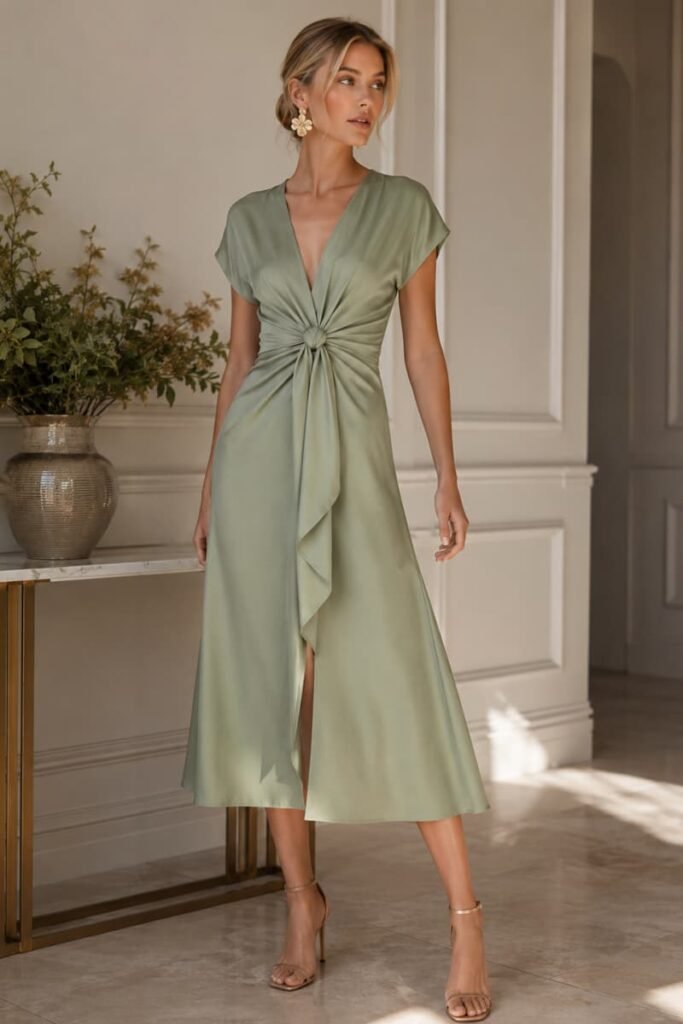
Midi Dresses
Midi dresses combine longer panels with a wide range of silhouettes, from straight bodycon shapes to bias slips, gathered skirts, and occasion styles.
Fabric width becomes important when skirt panels or sleeves approach the usable width. Duolan compares drape, hem volume, seam placement, and lining length to protect the intended proportion while managing consumption.
- Check panel width and hem sweep
- Evaluate bias or straight grain
- Plan lining length accurately

Maxi Dresses
Maxi dresses carry high exposure to fabric consumption because length, fullness, tiers, godets, trains, and long sleeves multiply material use. A small pattern change can affect thousands of meters across a large order.
Duolan identifies visible movement that should remain and low-impact fullness that can be engineered more efficiently.
- Calculate full size-range consumption
- Review tier depth and gathering ratio
- Compare fabric widths before booking

Party Dresses
Party dresses may combine sequins, mesh, lining, boning, cups, decorative trims, and fitted structures. Material cost must include the complete garment architecture. Lower sequin density, lighter base cloth, partial embellishment, or revised lining can improve cost, but only after coverage, comfort, and visual intensity are checked.
- Balance decoration and garment weight
- Protect skin comfort and coverage
- Lock embellishment standard for bulk

Occasion Dresses
- Preserve premium visual finish
- Review structure and internal support
- Include pressing and packing behavior

Vacation Dresses
- Review print repeat and placement
- Balance lightness with opacity
- Plan shared fabrics across styles

Going Out Dresses
Going out dresses rely on body-conscious fit, cut-outs, shine, mesh, stretch, and visual impact.
Small material changes can alter fit recovery or reveal construction lines. Duolan tests stretch direction, return, opacity, seam stability, and lining interaction before accepting a lower-cost fabric.
- Protect fit across sizes
- Check cut-out edge stability
- Validate stretch and recovery

Structured Dresses
- Review support by body zone
- Coordinate shell and internal layers
- Confirm production-ready construction
How Dress Fabrics Affect Cost, Fit, and Production Risk
Material selection changes far more than the quotation line. The comparison below links common dress fabrics with their strongest applications, cost drivers, production risks, and review priorities.
| Fabric Type | Best For | Main Cost Drivers | Consumption or Production Risk | Duolan Review Priority |
|---|---|---|---|---|
| Satin | Slip, occasion, draped, bias, and evening dresses | Filament quality, GSM, width, luster, finish, color | One-way shine, seam impression, snagging, press marks, bias growth | Drape, shine, usable width, sewing test, pressing and packing recovery |
| Chiffon | Layered, gathered, sleeve, and flowing dresses | Layer count, width, print, finish, lining | Slippage, fraying, transparency, static, high gathering ratio | Layer plan, lining coverage, seam method, hem finish, shrinkage |
| Mesh | Bodycon, panel, sleeve, ruched, and corset dresses | Density, stretch, recovery, width, color | Transparency, seam distortion, curling, shade variation | Opacity, recovery, lining interaction, edge control, size grading |
| Lace | Occasion, party, fitted, and overlay dresses | Motif, border, width, embroidery density, base cloth | Motif matching, border placement, damage, high cutting loss | Placement map, matching standard, backing, seam design, handfeel |
| Sequin Fabric | Party, holiday, occasion, and statement dresses | Sequin density, base fabric, pattern, weight, embroidery | Missing sequins, cutting damage, skin irritation, heavy seams | Coverage, edge treatment, lining, weight, repair standard, bulk consistency |
| Velvet | Holiday, evening, fitted, and draped dresses | Fiber, pile, weight, finish, width | One-way pile, shade change, pressure marks, difficult pressing | Nap direction, marker rule, seam testing, pressing, packing method |
| Jersey | Bodycon, ruched, casual, and fitted dresses | Fiber blend, GSM, gauge, stretch, finish | Poor recovery, transparency, spirality, seam waviness | Stretch ratio, recovery, opacity, shrinkage, needle and seam test |
| Crepe | Occasion, workwear, draped, and commercial dresses | Fiber blend, texture, weight, finish, width | Shrinkage, snagging, shade variation, inconsistent drape | Handfeel, fall, width, shrinkage, seam and pressing behavior |
What We Protect Before Reducing Fabric Cost
Must Protect
The following elements usually define whether a dress still belongs in its intended price and style position:
- Silhouette and body balance
- Drape, movement, and visual weight
- Bust, waist, and hip support
- Stretch, recovery, and shape retention
- Opacity and lining coverage
- Skin feel and internal comfort
- Color, luster, texture, and surface quality
- Construction durability and bulk consistency
A satin with weaker fall, a jersey with poor recovery, or a mesh with inadequate coverage may reduce material price while damaging fit, photography, review scores, and repeat sales. Such changes are rejected or clearly marked for approval.
Can Engineer
Several variables may be adjusted after sample and construction review:
- Fabric width or supplier source
- GSM within an approved performance range
- Fiber blend with comparable behavior
- Full versus targeted lining
- Panel count and seam placement
- Gathering ratio, ruffle depth, or hidden fullness
- Shared fabric use across related styles
- Color consolidation and purchase timing
Engineering work requires sample validation.
A specification change is not accepted solely because a swatch looks similar on a table.
Should Remove
Some costs create limited wearer value or weak visual return:
- Hidden double layers with no support purpose
- Excessive skirt volume outside the intended silhouette
- Separate custom colors used in very small quantities
- Decorative materials extending into unseen zones
- Redundant internal components
- Complex paneling that does not improve fit or appearance
- Packaging or labeling specifications beyond the brand need
Removal decisions are documented so the revised garment remains intentional rather than simplified by accident.
Fabric Sourcing Supported by South China Supply Networks
Fabric Mill Access
- Woven and knitted dress fabrics
- Existing bases and custom developments
- Bulk availability and reorder continuity
Lining Resources
Lining changes opacity, comfort, movement, static control, support, and total material cost. Duolan matches lining weight and stretch to the shell rather than using one standard quality for every dress. Partial lining, full lining, power mesh, and structural backing are reviewed by body zone.
- Color and handfeel matching
- Stretch compatibility
- Targeted coverage planning
Trim Suppliers
- Functional and decorative trims
- Color and finish control
- Shared component planning
Printing Partners
Print cost depends on fabric base, method, color count, repeat, placement, order quantity, and approval path.
Duolan coordinates strike-offs or print samples as needed, then reviews repeat placement and cutting loss before bulk production.
- All-over and placement print paths
- Repeat and color review
- Cutting and matching assessment
Embroidery Partners
- Motif and density review
- Panel-level testing
- Bulk repair standard
Special Processing
- Process feasibility assessment
- Sample-to-bulk consistency
- Timing and capacity coordination
Alternative Fabrics Evaluated Beyond Unit Price

Appearance and Drape
- Side-by-side swatch and garment comparison
- Hanging and movement review
- Light, opacity, and color assessment
- Surface recovery after pressing or packing

Weight, Stretch, and Recovery
- GSM and thickness check
- Stretch direction and extension
- Recovery and shape retention
- Pattern compatibility by size

Sewing and Finishing Behavior
Material savings can disappear through slow sewing, seam damage, puckering, skipped stitches, special needles, extra stabilization, rework, or difficult pressing. Trial construction reveals whether a fabric is economical in production, not only in purchasing.Validation work:
- Needle, thread, and seam test
- Edge fraying or curling review
- Pressing temperature and mark risk
- Required reinforcement or backing

Bulk Supply and Repeatability
- Bulk source confirmation
- Color minimum and lead time
- Width and GSM tolerance
- Repeat-order availability
Fabric Review During Sample Development
Review the Development Input
Output: a clear list of confirmed inputs, assumptions, and open decisions.
Prepare Comparable Swatches
Output: an option set with visible and technical differences stated before sampling.
Build the First Sample
The first sample tests fabric-to-pattern behavior. Duolan reviews drape, body balance, seam stability, gathering, support, lining interaction, and surface response. Material-related corrections are separated from pattern-related corrections so the next round addresses the real cause.
Output: sample review notes with material, fit, and construction actions.
Confirm Bulk Readiness
Before bulk booking, the selected fabric is checked against quantity, color, width, production lot, processing, testing, and reorder needs. Approved swatch, lab dip or strike-off, lining, trims, and construction basis are documented for PP or bulk start.
Output: a material path that can move into production rather than a sample-only solution.
Fabric-to-Pattern Engineering for Better Cost Control
Length and Sweep
- Finished length by size
- Hem sweep and panel width
- Gathering or pleat ratio
- Train and high-low extension
- Layer length and overlap

Grain and Bias Direction
- Straight, cross, or bias grain
- One-way surface direction
- Panel symmetry and pair cutting
- Hanging growth and stabilization
- Seam support on bias edges

Panel and Seam Architecture
- Panel width against fabric width
- Seam visibility and body contour
- Print or lace placement
- Construction sequence
- Pressing and finishing effect

Size Range and Grading
- Approved grading rules
- Largest panel width
- Size-ratio marker planning
- Stretch and recovery across sizes
- Coverage and support consistency

CAD Marker Planning and Fabric Consumption Control
Confirm the Pattern Basis
Marker work must use the approved production pattern, not an early sample pattern. Every revision affecting length, panel shape, seam allowance, lining, ruffle, sleeve, or size grading can change consumption. Duolan records the pattern version used for quotation and updates consumption when approved design changes alter the marker.Key controls:
- Pattern version and approval date
- Seam allowance and shrinkage treatment
- Shell, lining, and support pattern sets
- Full size-range grading
Compare Usable Fabric Widths
Mill width is not always equal to usable cutting width. Selvedge, edge damage, print margin, coating variation, or inspection results may reduce available space. CAD comparison shows whether a nominally wider or cheaper fabric truly improves the marker.
Key controls:
- Contracted and inspected width
- One-way or two-way placement
- Folded or open-width cutting
- Panel fit at the largest size
Build the Size-Ratio Marker
Bulk consumption depends on the ordered size mix. Combining sizes can improve nesting, but the best arrangement changes with style geometry and quantity. Duolan develops markers around the actual order ratio rather than applying one sample-size average to every unit.
Key controls:
- Quantity by size and color
- Mixed-size marker groups
- Marker length and cut plan
- Small balance quantities
Link Marker Data to Cutting
Marker results must be transferred into spreading and cutting instructions. Fabric direction, shade grouping, defect zones, layer count, bundle control, and recut records protect the planned yield. CAD efficiency without cutting discipline does not protect total cost.
Key controls:
- Marker identification
- Fabric lot and shade separation
- Cut quantity and bundle record
- Recut approval and consumption update
Lining and Trims That Change Total Dress Cost
Full and Partial Lining
- Define coverage by body zone
- Match stretch and weight
- Check color influence under shell
Power Mesh and Support
Power mesh can shape the body, stabilize cut-outs, support bust zones, and improve recovery. Using it everywhere adds cost and heat.
Duolan maps where support is functional and where a lighter lining or clean finish is sufficient.
- Target bust, waist, or side zones
- Control visibility through shell
- Balance compression and comfort
Interlining and Reinforcement
- Test adhesion or sew-in behavior
- Keep support hidden
- Protect drape outside structure zones
Closures and Adjusters
- Confirm functional load
- Match finish and color
- Standardize across related styles
Cups and Boning
- Map cup and boning position
- Protect skin comfort
- Lock construction before production
Decorative Materials
- Prioritize visible zones
- Review edge and repair method
- Confirm density and placement standard
How Cutting Loss Changes the Real Fabric Cost

Roll Ends and Spreading
- Relaxation requirement
- Face-up, face-to-face, or one-way lay
- End allowance by material
- Layer count and tension control

Defects and Shade Variation
- Roll identification and inspection record
- Defect marking
- Shade band or light-box comparison
- Panel and bundle shade continuity

Matching and Direction
- Defined matching zones
- Repeat size and direction
- Mirrored or paired pieces
- Approved visual tolerance

Recut and Damage Control
Recuts may result from fabric defects, cutting errors, sewing damage, or quality rejection. Each recut consumes material outside the original marker. Duolan records the reason and quantity so repeated defects can be corrected instead of hidden inside an unexplained loss percentage. Controls:
- Recut request and approval
- Reason classification
- Replacement fabric tracking
- Corrective action for repeated damage
Collection-Level Fabric Planning for Better Commercial Efficiency
Shared Fabric Platforms
- Group styles by performance need
- Use common colors where suitable
- Preserve silhouette-specific construction
Core and Accent Colors
Equal quantity across many colors is rarely the most efficient plan. Core colors can carry larger volume while accent colors support fashion direction. Duolan maps color quantity by fabric minimum, dye method, style count, and launch plan to reduce fragmented bookings and leftover material.
- Separate core and fashion shades
- Combine shared shades across styles
- Plan color additions for repeat orders
Common Linings and Trims
A coordinated lining, zipper, hook, elastic, label, and packaging system can reduce component fragmentation. Standardization is applied only where appearance and function allow.
Visible hardware, special support, or brand-specific details remain style controlled.
- Consolidate hidden components
- Maintain visible design rules
- Improve replacement and reorder access
Reorder-Ready Planning
Materials used for core styles should have a clearer repeat path than one-season statement fabrics. Duolan records approved specifications, color references, width, GSM, trims, BOM, and construction points. Better records shorten the review required for repeat production and protect consistency when volume increases.
- Preserve material and pattern basis
- Track approved alternatives
- Prepare for scale-up orders
Our Fabric Cost Optimization Process
Brief Review
Duolan reviews product type, target market, design files, quantity, size range, colorways, target price band, launch timing, and current material direction. Missing facts with a direct cost effect are listed before a meaningful comparison begins.
Value Boundary
The team defines which features must remain: drape, support, stretch, opacity, luster, handfeel, finish, or decorative density. Cost work proceeds within the agreed product boundary.
Fabric Specification
Composition, construction, GSM, usable width, finish, color method, minimum quantity, and bulk availability are checked. Existing and alternative sources can be compared on the same specification basis.
Consumption Review
The approved or proposed pattern is assessed for length, sweep, grain, panel width, layers, matching, lining, and size range. CAD marker work is used when pattern information is ready.
Alternative Evaluation
Alternative fabrics are compared for appearance, drape, stretch, recovery, opacity, sewing behavior, shrinkage, width, color path, and repeat availability. Differences are stated rather than hidden.
Sample Validation
Swatches and samples confirm whether the chosen material delivers the garment result. Fit, pattern, lining, seams, pressing, and decorative work are reviewed together.
Material Locking
Approved shell, lining, trims, color references, width, GSM, BOM, and workmanship points are recorded before bulk booking and PP confirmation.
Production Control
Bulk fabric is inspected before cutting. Marker, spreading, shade, bundle, recut, inline, and final inspection records protect material and garment standards.
Reorder Records
Completed orders preserve approved material and construction information for repeat styles and future collections. Project learning can be applied to the next order instead of restarting from zero.
Three Cost Paths for Better Product Decisions
Original Specification
- Best for locked designs or approved brand standards
- Provides the baseline for comparison
- Highlights major cost drivers and supply risks
Equivalent Material Path
- Differences in composition, GSM, width, and finish are stated
- Swatch and sample approval are required
- Pattern or lining changes are identified when needed
Engineered Product Path
- Suitable for products above target cost
- Requires agreement on value boundaries
- Validated through sample and production-readiness review
Transparent Quotation Based on Confirmed Cost Drivers
Main Fabric Basis
- Confirmed or provisional fabric status
- Quantity and color price basis
- Consumption and allowance basis
Lining and Support
Full lining, partial lining, power mesh, interlining, cups, boning, and reinforcement are costed according to the approved structure. Hidden materials are not left for a late price revision.
- Coverage and support zones
- Material specification
- Construction impact
Construction Complexity
- Pattern and workmanship basis
- Special handling requirements
- Size-range complexity
Decorative Processes
Printing, embroidery, sequins, beads, rhinestones, pleating, washing, dip dyeing, and surface finishes are quoted with their approval path, minimums, and defect risk.
- Process and placement
- Density or coverage standard
- Sample and bulk requirements
Order Structure
Quantity per style, color, and size changes purchasing and production economics.
Delivery drops, repeat likelihood, and shared material opportunities can also affect the final plan.
- Style and color split
- Size ratio
- Delivery schedule
Quality and Delivery
- Testing and inspection basis
- Packaging and label requirements
- Confirmed production window
Fabric Testing Based on Dress Structure and Market Requirements

Shrinkage Control
- Test under relevant care or process conditions
- Adjust pattern or pre-treatment basis
- Confirm shell and lining compatibility

Color Fastness
Dark, saturated, printed, or high-contrast combinations may transfer or fade under rubbing, washing, perspiration, or light. Risk is reviewed against garment use and market requirements.
- Dry and wet rubbing where needed
- Color interaction with lining or trims
- Approved shade and lot control

GSM and Weight
Weight influences opacity, drape, support, warmth, sewing behavior, and shipping. GSM is checked against the approved reference and tolerance, especially when a lower-weight alternative is proposed.
- Compare approved and bulk fabric
- Link weight to garment function
- Monitor roll variation

Stretch and Recovery
- Measure direction and extension
- Check recovery after repeated stretch
- Review negative ease and grading

Pilling and Abrasion
- Identify high-friction zones
- Review surface change
- Compare alternative finishes

Opacity and Coverage
- Evaluate on body or form
- Check under multiple light conditions
- Confirm lining color and coverage
How Fabric MOQ, Colors, and Order Structure Affect Cost
Garment Quantity
- Quantity by style
- Quantity by color
- Quantity by delivery drop
Fabric Minimum
Mills may set minimums by fabric construction, finish, or production run. Existing stocked bases can differ from custom developments. Duolan checks whether the planned order can use the minimum efficiently across several related styles.
- Existing base or custom development
- Total requirement by fabric
- Remaining material plan
Color Minimum
Each custom color can trigger lab dips, dyeing minimums, surcharges, and shade-management work. Consolidating one color across multiple styles may improve purchasing efficiency while preserving collection coherence.
- Quantity by shade
- Core versus accent colors
- Repeat-order color strategy
Print and Finish Minimum
- Process setup and approval
- Minimum by color or design
- Defect and replacement allowance
Trim Minimum
- Custom versus available specification
- Shared trim opportunities
- Reorder access
Size and Color Complexity
- Full size range
- Ratio by color
- Balance quantity treatment
Material Locking from Approved Sample to Bulk Production
Lock the Material Specification
- Approved swatch or color reference
- Fabric and lining specification
- Trim, cup, boning, zipper, and elastic details
- Alternative approval rules
Lock Workmanship and Visual Points
Seam method, lining attachment, gathering, pleats, topstitching, embellishment density, motif placement, pressing, and finish standards are linked to the approved sample or PP basis. Locked records:
- Workmanship notes
- Detail photos and approval comments
- Surface craft standard
- Pressing and packing requirements
Lock the Pattern and Measurements
The production pattern, grading, measurement chart, seam allowance, shrinkage treatment, and critical fit points form part of the material basis. Pattern changes after material booking can alter consumption and should be assessed before release.
Locked records:
- Approved pattern version
- Size range and grading
- Critical measurements and tolerances
- Fabric-specific pattern treatment
Control the Bulk Transition
A production-readiness review confirms fabric arrival, PP status, BOM, pattern, color, workmanship, packaging, inspection points, and production path. Simple styles commonly require 15-20 days, regular styles 20-30 days, and complex styles 30-45 days after approvals and material readiness. Shipping references are 3-7 days by express, 5-8 days by air, and 20-35 days by sea, subject to route and destination. Bulk controls:
- First-piece confirmation when required
- Inline measurement and workmanship checks
- Final inspection and packing review
- Reorder record preservation
Manufacturing Infrastructure Supporting Fabric Cost Control
Owned Factory Control
Satellite Capacity
Regional Network
CAD Pattern Systems
Fabric Inspection
Spreading and Cutting
Special Processes
Compliance Foundation
The manufacturing system has completed a SMETA 2-Pillar audit and can coordinate product and testing requirements according to the target market, brand manual, and material specification.
Fabric Cost Optimization Cases Without Sacrificing Product Value
Satin Occasion Program
A US occasionwear label planned 18 styles and 36,000 total pieces across satin, mesh, and crepe groups. The original satin carried strong luster but created high cost through narrow usable width, one-way placement, and full lining on every style.
Cost pressure: marker length and lining consumption exceeded the target FOB structure.
Review: Duolan compared two satin bases, mapped lining by body zone, and reviewed skirt sweep on six high-volume styles. The selected alternative retained the planned luster and fall while offering a wider usable width. Full lining remained on fitted and pale colors; darker fluid styles moved to targeted lining.
Execution: revised samples were checked for drape, seam impression, opacity, pressing response, and packing recovery. CAD markers were rebuilt using the actual size ratio.
Result: gross material cost across the program decreased by 7.4%. The visual standard remained approved, and 14 styles moved into the original launch order while four higher-risk styles were held for further refinement.

Stretch Mesh Collection
A European online fashion label developed 24 styles and 58,400 total pieces across ruched bodycon, cut-out, and layered mesh dresses. The first material direction used one mesh and one lining quality across the entire range, creating poor recovery on fitted styles and unnecessary lining cost on looser styles.
Cost pressure: high full-lining consumption and inconsistent fit recovery across sizes.
Review: Duolan separated the range into compression, regular stretch, and decorative mesh groups. Power mesh was limited to support zones. Lining coverage was adjusted by silhouette, color, and transparency. Pattern negative ease and seam positions were reviewed for the new stretch behavior.
Execution: stretch recovery, opacity, seam waviness, fit, and grading were checked through sample revisions. Size-ratio markers were developed for XS-XXL production.
Result: combined shell and lining cost decreased by 8.9%. Fit stability improved on the compression group, and the approved material architecture was retained for a later reorder.

Sequin Party Drop
A multi-brand fashion group placed a 12-style, 27,600-piece holiday program using sequin mesh, velvet, and satin. The initial concepts applied dense sequins across large garment areas, creating high material price, heavy finished weight, edge damage, and slow repair.
Cost pressure: decorative coverage and lining structure pushed several styles above the planned price band.
Review: Duolan protected the strongest visual zones – front bodice, upper skirt, sleeve head, and selected panels – while moving hidden or low-impact zones to coordinated mesh or satin. Sequin density and base fabric weight were tested. Lining and edge-binding methods were revised to improve comfort.
Execution: panel tests checked missing sequins, cutting damage, seam bulk, skin contact, and repair time. Placement maps and approval photos were locked before bulk.
Result: program material cost decreased by 6.6%, average garment weight fell on nine styles, and the visual density remained aligned with the approved holiday direction.

Real Fabric Evidence Behind Every Cost Decision
Fabric Swatch Sets
Width Comparison
GSM and Thickness
Stretch Recovery
Opacity and Light
Photograph shell and lining combinations under relevant light conditions. White, ivory, pastel, mesh, and fitted styles should show how coverage decisions were made without overlining the garment.
CAD Marker Screens
Bulk Fabric Inspection
Spreading and Cutting
Frequently Asked Questions About Fabric Cost Optimization
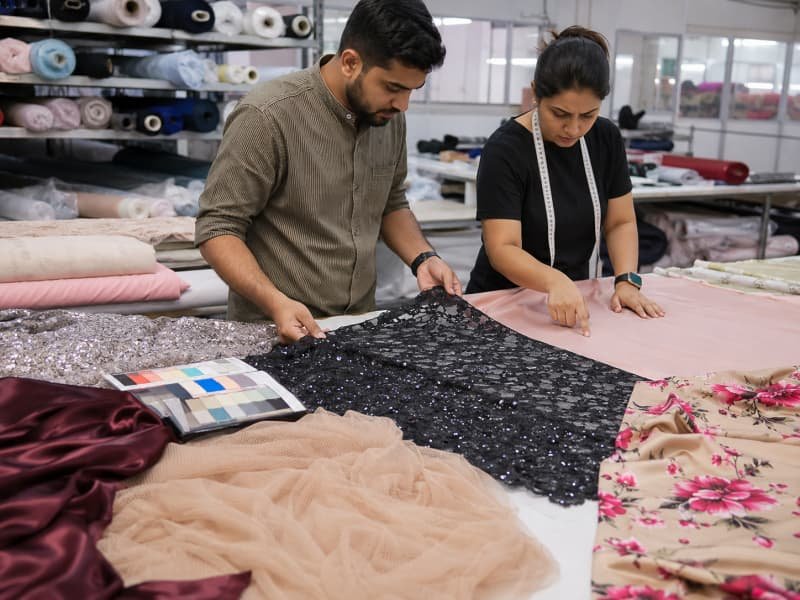
Send Your Dress Program for a Fabric Cost Review
A useful review begins with the product facts behind the target price. Send the materials already available, including a tech pack, reference images, original sample photos, fabric swatches, planned quantity, size range, colorways, target price band, and launch timing. Duolan will organize the information around material suitability, gross consumption, pattern and marker opportunity, lining and trim structure, color minimums, testing, bulk availability, and production risk.
Projects do not need to arrive in perfect format. Clear files allow a more accurate response, while partial files can still be assessed to identify the next decisions required.
Please include:
- Company or brand name and market
- Dress category and number of styles
- Tech pack, reference image, or original sample
- Target fabric, composition, GSM, or swatch photos
- Quantity by style and color
- Planned size range and size ratio
- Target FOB or price band
- Required testing, labels, and packaging
- Sample, campaign, warehouse, or launch timing