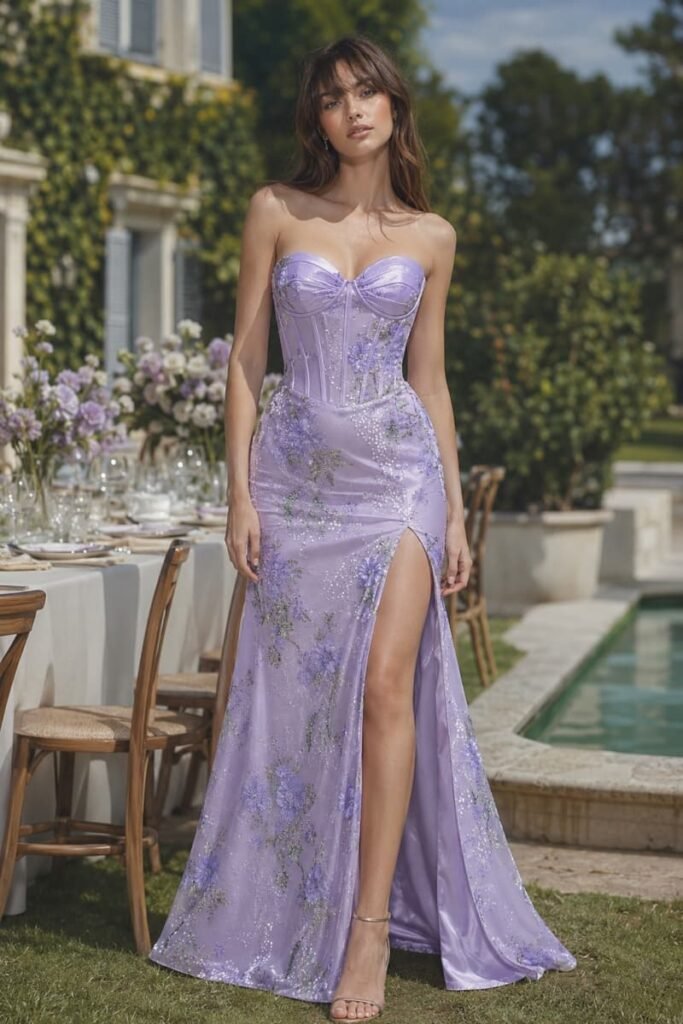
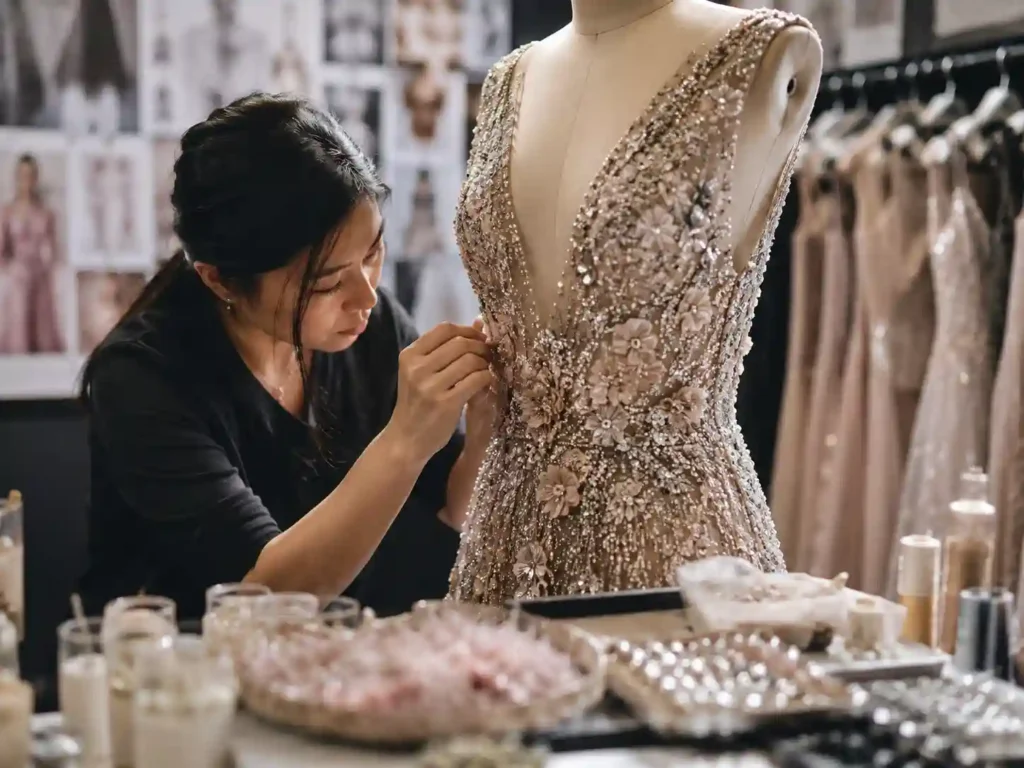
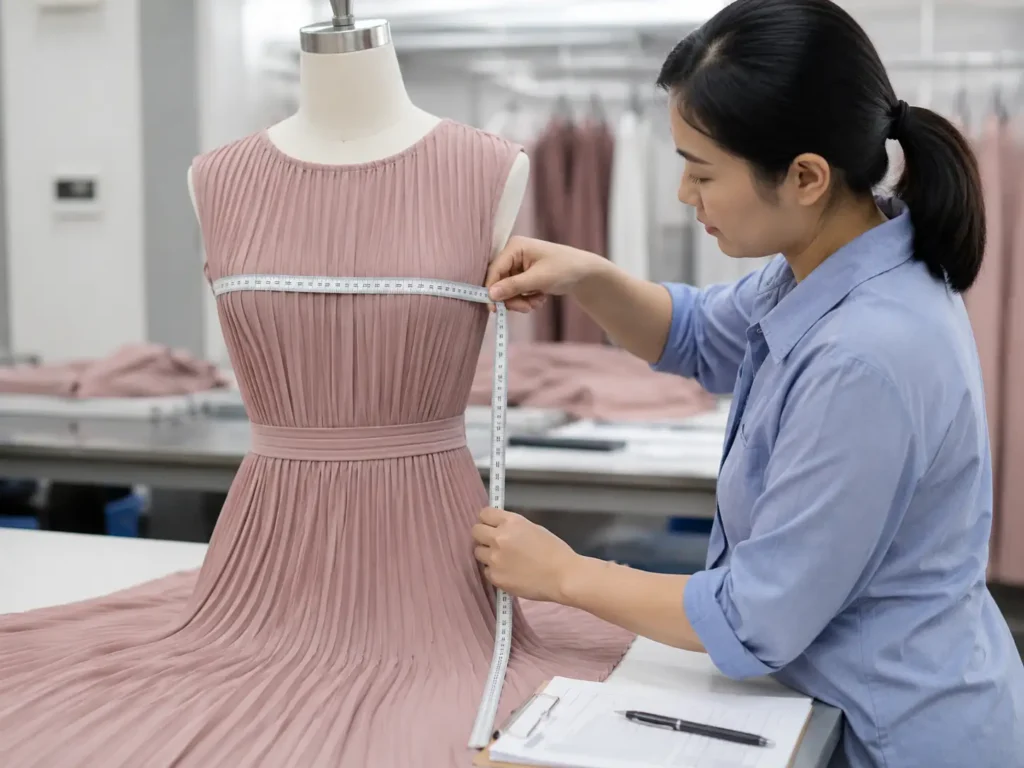
...

Custom Dress Manufacturer for Fashion Group Sourcing Teams

Dress-focused development and manufacturing for multi-brand groups managing complex collections, production calendars, quality standards, and repeat-order growth.

  • 10-30 styles per program: Structured development for multi-style seasonal, occasion, partywear, going-out, and vacation dress collections.
  • 20,000-80,000 pieces per brand order: Production paths planned around style complexity, fabric readiness, delivery windows, and repeat potential.
  • 16 owned factories plus 20+ satellite factories: Core styles remain under direct control while coordinated capacity supports peak seasons and scale-up orders.
  • 300 sewing lines plus 50+ flexible lines: Production resources for core programs, test quantities, replenishment, and volume expansion.
  • 30+ years of dress development experience: Long-term knowledge of silhouette, fit, fabric behavior, decorative workmanship, and commercial execution.
  • SMETA 2-Pillar audit record: A stronger foundation for formal sourcing reviews, social compliance files, and brand-specific vendor requirements.

Built for Fashion Group Sourcing Operations

Fashion groups need more than a factory able to sew a dress. Sourcing work requires clear files, accurate samples, capacity planning, quality checkpoints, compliance support, and reliable handover between development and production.

Multi-Brand Sourcing

One sourcing office may manage several brands, price positions, launch calendars, and product teams. Duolan organizes each program by brand direction, style list, fabric family, sample purpose, quantity, and target delivery window. Separate project records protect design differences between labels while shared sourcing resources improve material coordination and production planning. The aim is disciplined execution across multiple dress lines without flattening every brand into the same product language.

Product Development Teams

Product teams need design intent translated into fabric, pattern, fit, construction, and production instructions. Duolan reviews tech packs, reference images, original samples, measurement charts, fabric ideas, and collection moods before development begins. Comments are converted into pattern corrections, material decisions, workmanship actions, and sample objectives. Development work therefore moves beyond email confirmation and becomes a controlled technical path toward a production-ready garment.

Procurement and Vendor Teams

Vendor teams evaluate product capability, capacity, audit readiness, communication discipline, production visibility, and long-term reliability. Duolan supports supplier reviews with factory structure, development capacity, manufacturing scope, quality checkpoints, audit records, and project documentation. Commercial discussions are linked to material, construction, quantity, and timing rather than isolated unit-price comparisons. Each quotation is intended to reflect a feasible production route.

Production and Quality Teams

Production and quality teams need approved standards carried into bulk. Duolan links PP sample references, BOM details, measurement specifications, workmanship points, material approvals, packaging instructions, and inspection priorities before line release. First-piece checks, inline controls, finishing reviews, packing verification, and final inspection preparation create continuity from sample approval to shipment. Problems are recorded as actions, not left as general observations.

What Sourcing Teams Need from a Dress Supplier

A strong dress supply partner must protect collection identity while controlling development risk, production readiness, documentation, quality, delivery, and future repeat orders.

Category Expertise

Dress manufacturing requires more than general apparel experience. Satin, mesh, bodycon jersey, corset structures, sequins, lace, velvet, and lightweight resort fabrics behave differently during cutting, sewing, fitting, pressing, packing, and bulk production. Duolan evaluates each style according to silhouette, support, stretch, opacity, drape, surface sensitivity, and workmanship risk.

Development Accuracy

A sample must help the brand judge proportion, fit, material behavior, construction, visual effect, and production feasibility. Duolan defines the sample purpose before work begins, then aligns fabric direction, base size, key measurements, workmanship details, and review priorities. A visually close prototype without a clear bulk path is not treated as a finished development result.

Multi-Style Control

Fashion groups often move 10-30 styles through development and production together. Separate style files, revision records, priority lists, material status, sample stages, and production paths reduce cross-style confusion. Main image styles, commercial volume styles, complex statement styles, and repeatable core styles can follow different timelines while remaining part of one coordinated collection.

Capacity Discipline

Capacity is useful only when the correct factory, line, process partner, and quality resources are assigned. Duolan combines 16 owned factories, 20+ satellite factories, 300 sewing lines, and 50+ flexible lines. Core and complex styles receive tighter control, while repeat and scale-up programs gain coordinated production support according to approved standards.

Compliance Support

Formal sourcing programs may require social audit records, material test coordination, restricted substance requirements, care labels, fiber content, country-of-origin information, packaging rules, barcode standards, and third-party inspection. Duolan prepares project requirements against the relevant brand manual and target market rather than relying on broad compliance claims.

Repeat Stability

Repeat production depends on traceable standards. Pattern files, measurement specifications, BOM versions, approved color references, workmanship notes, QC findings, packaging instructions, and previous production issues remain part of the reorder review. Any material, process, factory, or batch change is checked before repeat release to reduce drift across seasons.

Dress Sourcing Risks and Duolan Control Points

The largest losses rarely begin at final inspection. Most start earlier through unclear design intent, unsuitable materials, weak fit review, uncontrolled revisions, or an incomplete sample-to-bulk handover.

Sourcing RiskCommercial ImpactDuolan Control Point
Design-to-sample mismatchMore revisions, delayed approval, weaker collection identityFeasibility review covering silhouette, fabric, support, closure, trim, and workmanship
Fabric and silhouette mismatchPoor drape, transparency, recovery, seam distortion, or weak supportFabric behavior review, swatch comparison, lining decision, stretch-direction check, and alternative recommendation
Fit comments translated incorrectlyRepeated sample rounds and inconsistent size interpretationPattern correction record, measurement update, fit-priority note, and revised sample objective
Unclear PP standardBulk decisions made from incomplete referencesPP sample, BOM, measurement table, workmanship points, material approvals, and packing instructions locked before release
Multi-style version confusionWrong materials, outdated comments, and production errorsStyle-level revision summaries, file naming, approval status, and production handover records
Sample-to-bulk inconsistencyReturns, complaints, delayed shipment, or costly reworkMaterial locking, first-piece approval, inline QC, appearance review, measurement control, and final inspection preparation
Late production decisionsCompressed QC and shipping buffersLaunch-date back planning, material status review, style priority, capacity allocation, and milestone confirmation
Repeat-order driftColor, fit, workmanship, or packing differences between batchesReorder standard file, retained references, change review, previous issue recap, and new-batch first-piece comparison

How Fashion Groups Should Evaluate Dress Manufacturers

Supplier selection becomes clearer when every candidate is reviewed against the same operating criteria. Product photos alone cannot prove development depth, bulk control, or long-term delivery reliability.

Dress Specialization

Check whether the supplier understands fitted, occasion, party, vacation, satin, mesh, corset, halter, backless, and embellished dresses. A focused dress portfolio should be supported by pattern, fit, material, construction, and bulk-risk knowledge rather than a broad catalog covering unrelated categories.

Development Resources

Review the available fabric, trim, pattern, sample, workmanship, project, and quality roles. A single merchandiser cannot replace coordinated technical review, especially when multiple styles move through first sample, fit correction, photo sample, and PP approval.

Material Capability

Ask how the supplier reviews drape, stretch, recovery, opacity, handfeel, shrinkage, shade, surface sensitivity, lining, boning, cup, zipper, elastic, and decorative trims.

Material sourcing should serve the garment result, not simply provide a similar-looking fabric.

Sample Governance

Request a clear definition for prototype, fit sample, revised sample, photo-ready sample, salesman sample, and PP sample. Each stage should have an objective, review basis, required files, responsible actions, and approval output. Speed without stage clarity creates avoidable revision cycles.

Bulk Readiness

Confirm how approved samples become production standards. Strong handover includes PP reference, BOM, measurement specification, workmanship details, material approvals, color standard, packing requirements, QC priorities, and first-piece criteria. Missing handover items often become bulk inconsistencies.

Capacity Allocation

Large factory totals can be misleading. Ask which factory and line will handle the program, how complex and standard styles are separated, how peak-season capacity is reserved, and how repeat orders are added without disrupting approved quality or committed delivery dates.

Quality and Inspection

Review fabric inspection, cutting controls, first-piece approval, inline checks, measurement review, workmanship control, finishing, packing verification, final inspection, and third-party inspection support. Quality needs stage ownership and closing actions, not a final statement saying goods passed.

Reorder Management

Long-term value appears after the first shipment. Ask how pattern files, materials, trims, approved samples, QC issues, packing instructions, and delivery findings are retained. A supplier prepared for repeat orders should detect changes before production rather than after finished goods are packed.

A Dress-Focused Development and Manufacturing Partner

Duolan combines dress development knowledge with a structured manufacturing network. The role is not limited to receiving a file and returning a garment; each program is reviewed as a product, production, quality, and delivery project.

Development Before Production

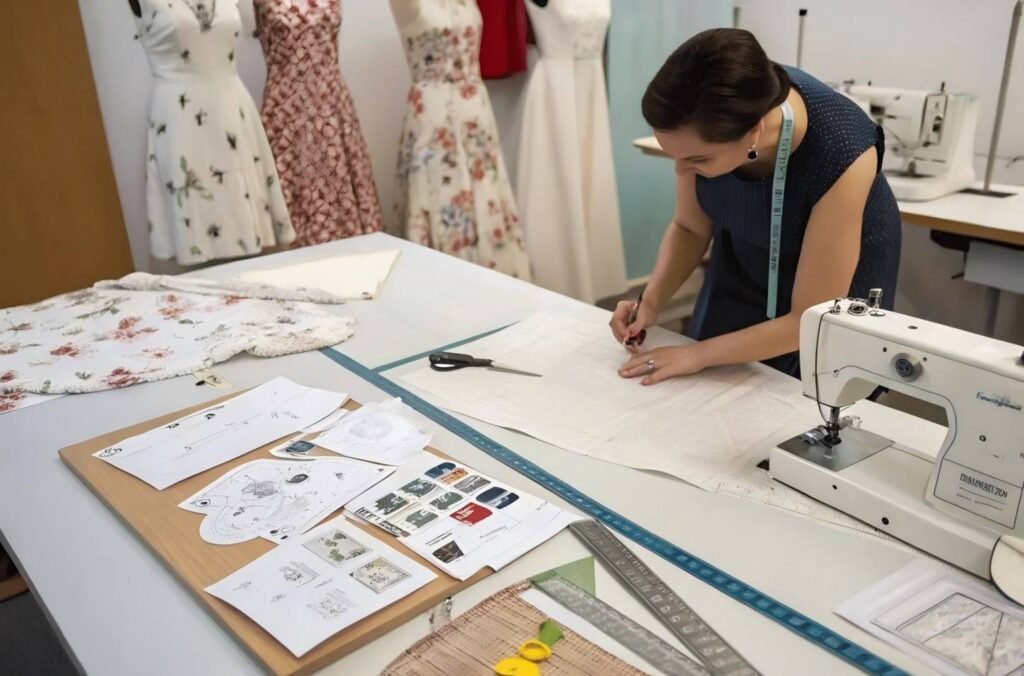
A design direction is reviewed against the intended market, price position, silhouette, fabric behavior, fit priorities, support needs, decorative elements, and future production route. Tech packs, sketches, references, original samples, measurement charts, or collection moods can provide the starting point. Gaps are identified before sampling, including unclear lining coverage, unstable closures, unsuitable stretch, high-risk seams, unsupported necklines, or decorative details with poor bulk repeatability.
Product decisions remain aligned with the brand direction. Duolan does not replace the creative team; the development role is to turn creative intent into a garment capable of fitting, selling, and moving into production. Recommendations may include fabric alternatives, pattern adjustments, hidden support, trim changes, seam construction, finishing options, or a revised production sequence.
Brand-Level Production Support

The manufacturing system includes 16 owned womenswear factories, 20+ coordinated satellite factories, 300 sewing lines, and 50+ flexible lines. Regular monthly capacity is approximately 6.5 million garments, with peak capacity up to 10 million garments and an additional 1-2 million pieces of monthly capacity space across the wider system.
Scale is paired with development density. Group resources support approximately 15,000-35,000 sample pieces or development iterations per month and 3,000-8,000 style development and sampling workflows. Capacity figures are evaluated by category, complexity, materials, process, order size, and timing before any program commitment.

Coordination Across Functions

Fabric, trim, pattern, sample, workmanship, production, QC, packaging, and shipping must work from the same approved basis. Duolan centralizes project coordination while drawing on owned factories, satellite factories, regional manufacturing bases, material suppliers, and special-process partners. The sourcing team does not need to manage every resource separately.
Project information is translated into actions: a fit comment becomes a pattern correction; a transparency concern becomes lining and opacity checks; a sequin concern becomes attachment, comfort, and packing controls; a delivery target becomes material deadlines, sample priorities, production allocation, QC buffers, and shipment milestones.

Dress Categories Across Fashion Group Portfolios

Duolan focuses on fashion-driven dresses and coordinated womenswear extensions. Every category requires its own material, fit, workmanship, and production logic rather than one universal construction method.

Fashion Dresses

Fashion dress programs cover trend-led mini, midi, and maxi silhouettes designed for regular newness. Development attention goes to proportion, neckline, waist placement, skirt volume, hem balance, and material behavior. Commercial execution also requires price architecture, repeatable workmanship, color planning, and a production route able to support several styles in one delivery program.

Occasion Dresses

Occasion dresses depend on polished proportion, clean internal structure, refined surface appearance, and reliable fit. Satin, crepe, lace, mesh, velvet, and embellished materials may require different sewing, pressing, lining, support, and packing controls. Wedding guest, cocktail, graduation, formal, and semi-formal collections are developed around event use rather than bridal gown construction.

Party Dresses

Partywear often combines body-conscious shapes, cut-outs, ruching, mesh, sequins, crystals, velvet, satin, or high-shine details. Visual impact must remain wearable. Duolan reviews skin contact, lining coverage, movement, stretch recovery, trim attachment, closure strength, and packing pressure so the final garment retains its intended effect through bulk production and delivery.

Going-Out Dresses

Going-out dresses require strong visual identity in a commercially wearable form. Necklines, open backs, side cut-outs, draping, fitted waists, mini proportions, and statement trims need controlled balance.
Development focuses on security, body contour, opacity, closure placement, movement, and fit across the intended size range.
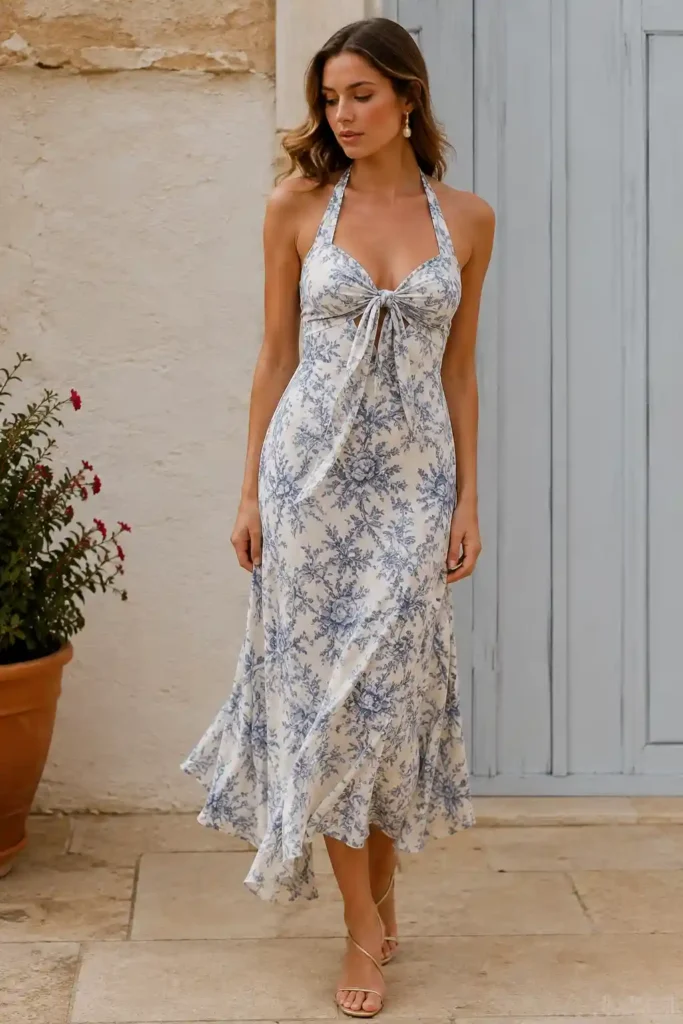
Vacation Dresses

Vacation and resort dresses often use lightweight woven fabrics, soft jersey, prints, halter necks, back ties, relaxed midis, and fluid maxis. Material comfort, transparency, shrinkage, print placement, strap stability, and packing recovery matter. Series planning can connect dresses with coordinated tops, skirts, and sets for a broader seasonal story.
Long Sleeve Bodycon Dresses

Bodycon Dresses

Bodycon products depend on stretch direction, recovery, opacity, seam behavior, body contour, and measurement control. Pattern dimensions must work with fabric performance rather than follow a rigid chart in isolation. Bulk control covers fabric batch consistency, seam extension, lining or power-mesh support, hem recovery, and measurement tolerance by the approved brand specification.

Corset Dresses

Corset and bustier dresses require accurate cup position, bust balance, boning placement, waist shaping, lining stability, closure strength, and clean internal finishing. A sample may look close on a mannequin while remaining unstable during wear. Duolan reviews support and comfort together, then verifies whether the approved structure can be repeated across production sizes.

Satin Dresses

Satin reveals every weak seam, handling mark, pressing issue, and packing crease. Fabric weight, weave, luster, drape, grain direction, needle choice, seam type, tension, lining, and pressing method affect the finished appearance. Production planning includes surface protection and packing decisions, especially for bias cuts, fitted shapes, draped panels, and pale colors.

Mesh Dresses

Mesh construction requires decisions on stretch, recovery, transparency, layer count, seam bulk, edge finishing, lining coverage, and decorative placement. Power mesh, soft mesh, flocked mesh, embroidered mesh, and glitter mesh behave differently. Fit and comfort are reviewed together, especially around armholes, necklines, bust panels, side seams, and fitted skirts.

Sequin Dresses

Sequin and embellished dresses require attention to attachment, motif direction, seam allowance clearance, skin contact, lining, weight distribution, repair procedures, and packing pressure. Decorative density influences fit, drape, labor, and cost. Process trials and PP references help protect placement and appearance before full production.

Halter Dresses

Halter designs transfer support toward the neck and upper body. Strap width, tie length, neckline stability, bust coverage, back opening, closure, and internal support need careful balance. Material stretch and garment weight influence comfort. Pattern and construction decisions are reviewed around real movement rather than front-view appearance alone.

Backless Dresses

Backless dresses need hidden solutions for stability and coverage. Side support, bust shaping, adhesive-compatible areas, inner elastic, transparent straps, waist anchoring, closure position, and edge finishing may all influence wearability. Development protects the clean open-back visual while keeping the garment secure across the intended fit range.

From Individual Styles to Multi-Style Dress Programs

Fashion groups rarely develop one isolated style. A sourcing program may include hero products, commercial volume styles, image-led pieces, seasonal colors, and repeatable core shapes moving through different stages at the same time.

Collection Structure and Style Roles

A collection brief is organized by product role, not only by style number. Hero styles may carry more complex fabric or workmanship and need earlier development. Commercial volume styles need clear cost, fit, and production repeatability. Image styles may require photo-ready samples before bulk decisions. Core shapes may use proven patterns with new fabrics, colors, or surface details.

Duolan can coordinate mini, midi, maxi, fitted, occasion, party, vacation, and coordinated set directions within one program. Silhouette balance, color families, material groups, price levels, and delivery waves are reviewed together so a collection remains commercially coherent.

Parallel Development Without Confusion

Each style receives its own development basis, material status, sample stage, revision history, approval status, and production route. Shared materials or trims are recorded across related styles. Changes affecting several products are identified early, reducing duplicate sourcing and preventing one outdated comment from spreading through a range.

Priority is visible. A style waiting for a lab dip should not block a style ready for fit review. A complex sequin dress may enter process testing while a proven bodycon style moves into PP preparation. Parallel work remains coordinated through clear ownership and milestone records.

Commercial and Technical Balance

A collection must work visually and financially. Duolan reviews which details create value, which details create only cost or production instability, and where an alternative material or construction can protect the intended look. Price architecture can be supported through a mix of statement pieces, commercial dresses, repeatable shapes, and coordinated extensions.

The aim is not to simplify every style. Development decisions protect design identity while removing avoidable risk. A complex hero style may keep its signature workmanship, while secondary styles use shared materials, trims, or construction principles to improve consistency and purchasing efficiency.

Launch and Reorder Planning

Launch timing is worked backward from the selling window. Material sourcing, lab dips, strike-offs, sample rounds, photo needs, PP approval, bulk production, QC, packing, and shipping buffers are mapped against style priority. Repeat potential is considered before first bulk release, especially for core colors, proven fits, and high-volume commercial shapes.

After launch, retained files support replenishment, new colors, size additions, or related developments. A successful style becomes a controlled product base rather than a process rebuilt from the beginning.

Feasibility Review Before Dress Development Starts

Early review protects sample accuracy, cost control, production timing, and future bulk consistency. Duolan examines the relationship between design intent, material behavior, fit, construction, process, quantity, and launch timing before confirming the development route.

Design Basis Review

The starting information may include a tech pack, sketch, reference image, original garment, measurement chart, fabric idea, moodboard, or previous fit comments. Duolan identifies which details are confirmed and which need a decision before pattern or sourcing work begins. Neckline, waist position, garment length, closure, lining, support, trim, and visual priority are clarified. Reference images are not treated as complete production instructions. Camera angle, styling, pinning, image editing, and unavailable materials can distort the apparent construction. The development team separates visual intent from assumptions and creates a workable basis for sampling.

Material and Silhouette Review

Fabric must support the intended shape. A fluid bias dress needs drape and grain control; a corset dress needs structure and support; a bodycon dress needs recovery and opacity; a mesh dress needs layer and lining decisions; a sequin dress needs weight and seam planning. Material availability, color development, minimums, price, and production stability are considered together. Where the requested fabric is unavailable, unstable, too slow, or commercially unsuitable, alternatives are assessed against handfeel, weight, stretch, recovery, luster, opacity, drape, and final appearance. Substitution is never approved only because the color looks similar.

Construction and Process Review

Complex details are checked for wearability and production repeatability. Questions include whether a neckline remains stable, whether boning creates pressure, whether a slit opens correctly, whether a zipper can carry the garment tension, whether embellishment interferes with seams, and whether pressing can achieve the required surface. Special processes may require strike-offs, small trials, embroidery samples, print tests, dye tests, wash tests, or embellishment boards. Development timing is confirmed after material availability, pattern complexity, sample purpose, and process testing are reviewed.

Commercial Readiness Review

Quantity, target price position, delivery window, quality expectations, packaging, and likely repeat volume shape the production route. A sample proposal should show what will be developed, which decisions are needed, what the first sample will prove, how revisions will be managed, and what must be locked before PP approval. A visually ambitious style can remain commercially viable when high-value details are protected and low-value complexity is reduced. Duolan provides options rather than forcing one route, allowing the sourcing team to choose the best balance of appearance, cost, timing, and bulk stability. 

Fabric and Trim Sourcing for Dress Programs
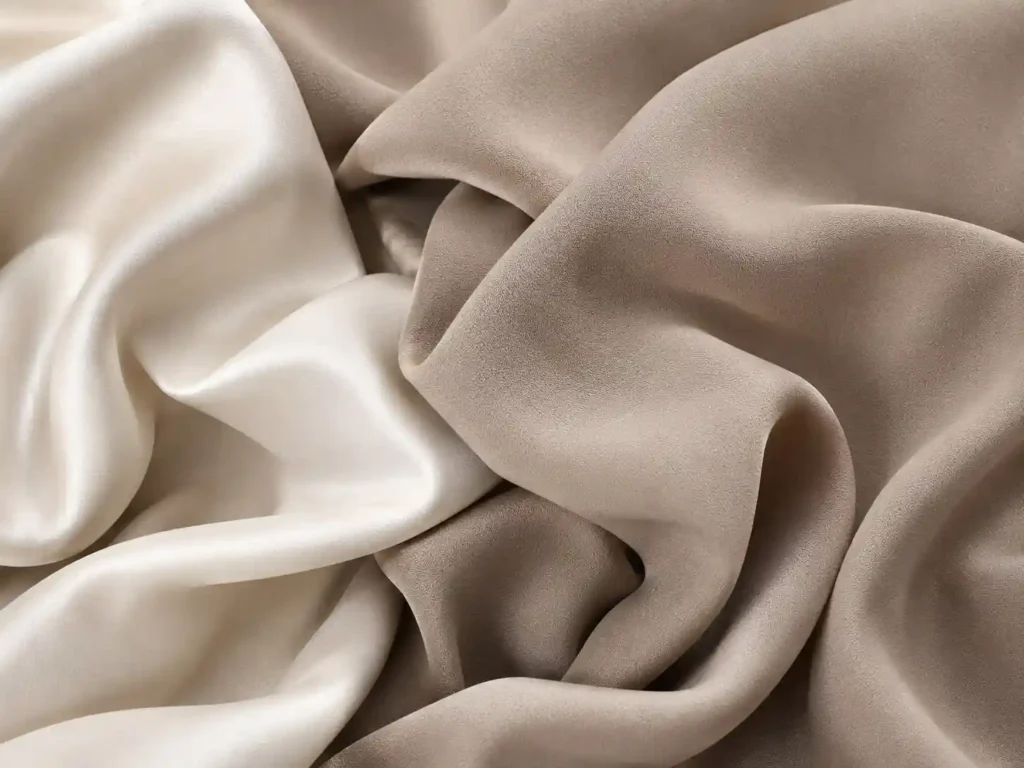
Materials determine drape, structure, comfort, coverage, recovery, visual quality, and production stability. Duolan evaluates fabrics and trims as part of the garment system rather than isolated purchasing items.

Satin and Crepe

Satin selection considers weight, weave, surface luster, snag risk, drape, grain behavior, seam marking, pressing response, opacity, and color sensitivity. Crepe options are reviewed for texture, recovery, stretch, and fall. The final choice must support the silhouette and price position while remaining stable during cutting, sewing, finishing, and packing.

Mesh and Tulle

Mesh and tulle differ in stretch, recovery, softness, transparency, hole size, surface finish, and edge behavior. Layering, lining, seam placement, embroidery, glitter, flocking, and skin contact influence the choice. Power mesh may provide support, while softer mesh may serve visual layering. Both require controlled orientation and bulk consistency.

Jersey and Stretch Wovens

Bodycon and fitted products need reliable stretch percentage, recovery, opacity, weight, and dimensional stability. Fabric direction and pattern reduction must align. Duolan checks whether the material becomes transparent under extension, whether seams recover, and whether bulk lots maintain comparable performance to the approved sample.

Chiffon and Lightweight Wovens

Chiffon and lightweight woven fabrics demand attention to transparency, grain, fraying, seam appearance, puckering, hem finish, print alignment, and handling distortion. Lining weight and color affect the final garment. Cutting, sewing, pressing, and hanging behavior are considered before production planning, especially for long skirts and bias elements.

Lace and Embroidery

Lace and embroidered fabrics are reviewed for motif scale, placement, edge use, transparency, thread stability, backing, seam interruption, and matching requirements. Pattern planning may follow motif position rather than standard efficiency. Cost and yield therefore depend on design placement, garment size, scallop use, and the degree of manual matching required.

Velvet and Surface Fabrics

Velvet, flocked fabrics, and brushed surfaces require nap direction, shade control, cutting orientation, handling protection, pressing restraint, and packing care. Surface damage can occur before sewing is complete. Marker planning, bundling, workstation cleanliness, finishing, and carton pressure are assessed as part of the material decision.

Structural Trims

Boning, cups, power mesh, elastic, underbust tape, gripper elastic, hooks, rings, sliders, and internal support tapes affect fit and wearability. Strength, flexibility, width, color, placement, and skin comfort need alignment with the outer design. Hidden components must support the garment without becoming visible or creating pressure points.

Decorative Trims

Sequins, crystals, pearls, beads, lace trims, fringe, feathers, chains, and decorative hardware influence weight, comfort, sewing sequence, repair, pressing, and packing. Attachment method and placement are tested against fabric strength and stretch. Decorative value is protected while loose parts, sharp contact, seam interference, and transport damage are controlled.

Pattern, Fit, and Measurement Control

A dress can match the sketch and still fail on the body. Duolan connects pattern shape, fabric performance, support, measurement specifications, fit comments, grading, and bulk tolerance around the intended silhouette.

Pattern Development by Silhouette

Pattern work begins with the design basis, base size, body contour, garment ease, fabric behavior, support requirements, and fit priority. Fitted and structured dresses need different logic from relaxed resort shapes. A corset waist, bias skirt, ruched body, halter neckline, open back, drop waist, or asymmetric hem changes balance and construction.
The pattern team reviews bust shape, neckline position, waist placement, hip contour, side seam balance, skirt fall, back shape, armhole, strap position, closure allowance, lining, and internal structure. Pattern decisions are recorded so future revisions have a clear technical basis.

Fit Review and Comment Translation

Fit comments are separated into measurement, balance, shape, comfort, support, and visual issues. “Too loose at bust” may involve cup shape, neckline tension, side seam, back width, fabric stretch, or support construction; reducing one measurement without diagnosis can create a new problem.
Duolan converts comments into pattern and construction actions. Updated measurements, correction notes, marked photos, and revised sample objectives reduce vague interpretation. Priority points are highlighted so the next sample proves the intended correction rather than introducing unrelated changes.

Size Specifications and Grading

Brand-provided size charts, points of measure, grade rules, target market, and fit block guide size development. Where a specification contains conflicts, the team raises questions before bulk. Grade changes are reviewed around style-sensitive areas such as cup position, neckline depth, strap length, waist shaping, slit height, back opening, and garment length.
Measurement tolerance follows the approved brand standard and product risk. A highly fitted corset dress cannot be managed like a relaxed maxi dress. Critical points receive tighter attention during pattern, sample, first-piece, inline, and final measurement checks.

Fit Continuity into Bulk

Approved fit is transferred through the PP sample, final pattern, measurement table, grade rules, fabric direction, construction details, and first-piece review. Bulk fabric performance is compared with the approved basis where stretch, recovery, shrinkage, or drape can affect measurements.
Inline measurement checks focus on critical points and emerging trends rather than waiting for final inspection. Where variation appears, affected bundles or operations can be isolated earlier. The aim is consistent body fit, not only measurements within a table.

Workmanship Details for Complex Fashion Dresses

Clean workmanship protects visual quality, fit, comfort, and bulk repeatability. Each construction decision is assessed against the fabric, silhouette, internal structure, production sequence, and end use.
Neckline Variation

Neckline Stability

Halter, one-shoulder, strapless, plunge, cowl, and asymmetric necklines need controlled shape and support. Stay tape, elastic, interfacing, lining, edge finishing, under-stitching, and internal anchors may be required. The neckline must remain clean during movement without stretching, rolling, gaping, or exposing internal components.

Bust and Corset Structure

Cup shape, boning, power mesh, underbust support, waist tape, seam position, lining, and closure strength determine stability. Internal structure is kept smooth and concealed. Boning ends, cup edges, and seam allowances require comfort controls. The approved sample must prove both shape and wearability before production release.

Ruching and Draping

Ruching and draping influence body contour, visual balance, stretch, seam load, and repeatability. Gathering ratios, anchor points, layer control, stitch security, and pattern shape are defined. Uneven fullness or changed fabric elasticity can alter appearance across sizes, so bulk workmanship references need clear visual standards.

Invisible Zippers

Invisible zippers require correct length, tape quality, seam stabilization, top closure, waist alignment, and smooth insertion. Satin, mesh, velvet, and stretch fabrics each need different handling. Zipper waves, seam puckering, uneven waist joins, trapped lining, and weak top stops are checked during first-piece and inline control.

Linings and Coverage

Lining affects opacity, comfort, support, drape, and garment recovery. Color, weight, stretch, length, seam construction, attachment points, and hem relationship are selected according to the outer fabric. Mesh, lace, pale satin, and fitted jersey often need localized rather than uniform coverage to protect both design and wearability.

Hem and Edge Finishing

Narrow hems, baby hems, rolled hems, blind hems, binding, clean-finished edges, lace edges, and faced openings each suit different materials. Hem weight affects skirt fall. Edge finishes must remain smooth without twisting, roping, stretching, or visible bulk. Long and bias garments may require hanging review before final leveling.

Cut-Out Reinforcement

Cut-outs can distort, gape, or stretch when edge support is weak. Shape, grain direction, facing, binding, elastic, tape, lining, and seam placement are reviewed together. Stress points receive reinforcement while the outer appearance remains clean. Wear trials help confirm movement, coverage, and stability.

Embellishment Integration

Decorative elements must be integrated into the construction sequence. Seam areas may need clearing, reinforcement, hand finishing, repair access, lining protection, and special pressing or packing. Placement references and approved process samples protect visual consistency. Attachment strength is balanced against fabric damage and skin comfort.

Special Process Support for Fashion-Driven Dresses

Special processes add identity only when material compatibility, placement, color, comfort, production repeatability, cost, and delivery timing are controlled together.

Sequin and Beading

Sequins, beads, pearls, crystals, and mixed embellishment require attachment tests, motif direction, seam clearing, weight review, skin-contact protection, repair planning, and packing controls. Process density is assessed against fabric strength and silhouette. Approved samples define placement, finish, and acceptable appearance before bulk work begins.

Printing and Strike-Offs

Print development covers artwork scale, repeat, placement, color, base fabric, strike-off approval, and bulk shade control. Engineered placement prints need pattern alignment and marker planning. Stretch fabrics require print methods capable of moving with the garment. Surface handfeel and colorfastness requirements are considered according to the program.

Embroidery

Embroidery affects fabric stability, weight, transparency, stretch, and seam behavior. Thread type, density, backing, motif position, edge finish, and trimming are reviewed. A process test should reveal puckering, stiffness, distortion, or skin-contact issues before the final garment sample is approved.

Pleating and Texture

Pleating, crinkling, heat setting, smocking, and texture processes can change width, stretch, recovery, shade, and garment measurements. Process direction and finished dimensions need control. Pattern allowance may be adjusted after trials. Bulk lots are compared with approved process references to protect surface consistency.

Dyeing and Washing

Garment dye, dip dye, tie dye, ombré, washing, and special finishing affect color variation, shrinkage, handfeel, trim compatibility, and measurement. Trials establish the achievable appearance and acceptable variation. Labels, threads, linings, elastics, and hardware are checked for compatibility before bulk processing.

Heat-Applied Details

Rhinestones, foil, transfer prints, bonding, and heat-applied decorations depend on temperature, pressure, dwell time, fabric response, stretch, and wash requirements. Application tests define adhesion and surface effect. Sensitive satin, mesh, velvet, and stretch fabrics may require alternative methods or localized reinforcement.

Sample Development for Different Decision Stages

A sample gains value when its purpose is clear. Duolan separates visual, fit, sales, approval, and production objectives so each round produces a useful decision rather than another garment without direction.

First Prototype

The first prototype tests overall design interpretation, silhouette, fabric direction, major construction, and initial proportions. It may not represent final trims, color, or finishing unless those elements are critical to evaluation. Review comments focus on whether the development direction is correct and which issues require priority correction.

Fit Sample

A fit sample tests balance, measurements, body contour, support, comfort, movement, and size-spec alignment. The selected fabric or a technically comparable material should reflect relevant stretch, drape, or structure. Fit comments are translated into pattern and construction actions, supported by measurements and marked images.

Revised Sample

A revised sample proves agreed corrections. The revision record identifies every requested change, action taken, unresolved point, and reference used. The goal is not to change unrelated details. Clear version control lets the sourcing team compare progress and close comments efficiently.

Photo-Ready Sample

A photo-ready sample prioritizes approved appearance, color, finishing, fit, and styling suitability for campaign or e-commerce use. Visual surfaces, pressing, trims, and presentation need higher completion. Where bulk materials are not yet available, substitutions are disclosed so visual approval is not confused with production approval.

Salesman Sample

Salesman samples support internal range review, wholesale presentation, or commercial decision-making. Multiple styles may be required within one calendar. Material status, size, color, and approval level are tracked so teams understand which elements are final and which remain under development.

Pre-Production Sample

The PP sample becomes the main bulk reference after fabric, trims, pattern, fit, workmanship, measurements, labels, and relevant packaging points are approved. It must reflect the intended production basis. Any remaining deviation is recorded before bulk release rather than left to interpretation on the sewing line.

Sample Comments, Revisions, and Version Control

Multi-style development becomes unstable when comments, files, samples, and approvals are not connected. Duolan turns feedback into traceable technical actions and keeps each style moving from review to closure.

Structured Comment Review

Comments are grouped by design, fabric, fit, measurement, construction, trim, color, finishing, and production feasibility. Contradictory or incomplete comments are raised before work begins. Priority items are highlighted, especially where one correction may affect several measurements or construction points. Photo annotations, measurement records, sample notes, and pattern actions help remove ambiguity. A comment such as “improve neckline” is converted into a defined action covering shape, depth, tension, facing, support, or edge finish. Clear diagnosis reduces repeat rounds.

Revision Record and Approval Status

Every revised sample can be accompanied by a concise record showing the previous issue, requested change, action taken, evidence, and remaining decision. Style status is separated into pending, revised, approved, conditionally approved, or waiting for material confirmation. Production files use the latest confirmed version only. Related documents follow consistent naming and version logic. Tech packs, measurement tables, BOMs, artwork, color references, pattern files, and sample comments remain linked. Multi-brand groups can retain separate brand rules while still using a common project-control structure.

Bulk Handover Without Information Loss

Approved comments are transferred into the PP basis, final pattern, measurement specification, workmanship standard, material approvals, production notes, and QC checkpoints. Important visual details are supported by approved photos or physical references. The production team receives actionable standards rather than a long email history. Where a comment affects cost, material, timing, or production risk, the sourcing team receives the impact before release. Bulk should not begin with unresolved sample questions hidden inside old correspondence. 

Turning Approved Samples into Bulk Standards

Bulk consistency depends on a complete production basis. Duolan connects approved fit, materials, workmanship, measurements, packaging, and quality priorities before fabric cutting and line release.
BOM Reuse​

PP Sample and BOM Locking

The PP sample represents the agreed garment standard. Fabric, lining, trims, zipper, boning, cups, elastic, labels, decorative parts, and packaging components are recorded in the BOM or approved material list. Color and surface references are retained where relevant. Unapproved substitutions are not treated as routine purchasing decisions. Any difference between the PP sample and planned bulk materials is disclosed before release. The sourcing team can assess visual, fit, cost, timing, or testing impact. Material locking protects the sample-to-bulk relationship and simplifies future repeat review.

Pattern and Measurement Locking

The final pattern, base-size measurements, grade rules, critical points, and allowed tolerances follow the approved standard. Style-sensitive areas receive clear review notes, including cup position, neckline depth, strap length, waist shape, slit height, back opening, hem balance, and garment length. Bulk fabric characteristics are considered where shrinkage, stretch, recovery, or drape can shift measurements. First pieces help confirm whether the approved pattern performs correctly under actual production conditions.

Workmanship and Appearance Standards

Key seams, lining, closures, internal support, ruching, draping, embellishment, hems, pressing, and finishing are defined through samples, photos, process references, or written points. Visual standards distinguish acceptable variation from defects. Complex operations can receive dedicated process checks before full line loading.

Appearance control is especially important for satin surfaces, velvet nap, mesh layering, print placement, sequin density, lace motifs, draped panels, and asymmetric designs. The production team and QC team work from the same reference.

Packaging and Inspection Basis

Care labels, size labels, hangtags, barcodes, polybags, folding, tissue, hangers, carton marks, assortment, carton quantity, and client-specific warehouse requirements are confirmed before packing. Inspection references include approved samples, purchase order data, size-color breakdown, measurement specifications, and packaging instructions.

Bulk release follows a readiness review covering materials, files, production route, QC priorities, packaging, and timing. A missing critical item is resolved before volume work begins.

Production Path Planning for Multi-Style Orders

One production route cannot serve every dress. Duolan assigns styles according to material, construction, workmanship, quantity, timing, quality risk, and repeat potential.

Style Classification and Factory Matching

Programs are separated into structured, fitted, embellished, lightweight, printed, stretch, standard commercial, and repeat styles. Core styles and high-risk products can remain within owned factories or designated lines with closer development continuity. Coordinated factories support approved repeat work, volume expansion, and peak-season load where capability and controls match the product. Factory selection considers pattern complexity, operator skill, special machinery or process access, material handling, finishing, QC resources, and delivery capacity. Allocation is confirmed after product review rather than chosen only by available space.

Line Preparation and Production Sequence

Before loading, the production basis is reviewed with relevant teams. Fabric status, trims, pattern, PP sample, operation flow, critical workmanship, measurements, quality risks, and packing requirements are aligned. Complex steps may be tested before full output. Production sequence is adjusted around process dependencies. Embellishment may occur before or after panel assembly; pleating may change pattern dimensions; washing may alter measurements; delicate surfaces may need later finishing and protected packing. Correct sequence reduces handling damage and rework.

Multi-Style Milestone Control

Style priorities reflect launch date, sample approval, material readiness, process testing, quantity, and production complexity. A program can use separate milestone paths while maintaining one central delivery plan. Ready styles move forward without waiting for styles still under development, provided shared materials or packing requirements remain controlled. Progress communication focuses on milestones: material arrival, cutting release, first piece, line start, inline status, finishing, packing, inspection readiness, and shipment preparation. Sourcing teams gain a clearer view than a single percentage update.

Delivery and Capacity Buffers

Launch dates are back-planned through sample approval, material purchasing, process trials, production, QC, packing, inspection, and shipping. Capacity reservations consider seasonal peaks and repeat demand. Complex styles receive earlier decisions because late changes consume more production and quality buffer. Lead time is confirmed by style after fabric availability, process route, approval status, order quantity, packaging, and delivery requirements are reviewed. Fixed promises made before those inputs are known create avoidable risk.

Capacity Planning Across the Duolan Manufacturing System

Duolan combines direct control with coordinated manufacturing capacity. Every figure is linked to a sourcing outcome: multi-style development, peak-season resilience, fast replenishment, volume growth, and repeat-order support.

16 Owned Factories

Owned factories provide stronger control for core programs, complex styles, development-sensitive orders, and products requiring close sample-to-bulk continuity. Factory assignment depends on category, construction, workmanship, material handling, and timing rather than a single standard allocation.

20+ Satellite Factories

Long-term satellite factories add flexible production support for approved styles, rolling repeats, peak loads, and scale-up orders. Capability matching, production standards, project files, QC requirements, and coordination remain part of the allocation process.

300 Sewing Lines

The wider manufacturing structure includes 300 garment sewing lines. Line capacity supports simultaneous programs across multiple product types and delivery stages. Actual commitments remain subject to style complexity, material readiness, quality requirements, quantity, and confirmed production windows.

50+ Flexible Lines

More than 50 quick-response and flexible lines support test quantities, launch programs, replenishment, and urgent production needs where material and approvals are ready. Flexibility does not remove technical controls; PP references, first-piece checks, measurement standards, and QC priorities still apply.

6.5-10 Million Monthly

Regular stable monthly capacity is approximately 6.5 million garments, with peak capacity up to 10 million garments. The wider system also provides an additional 1-2 million pieces of monthly capacity space. Category-level capacity is reviewed before commitment because dress complexity changes output significantly.

3,000-8,000 Styles Monthly

Group development resources can support approximately 3,000-8,000 style development and sampling workflows per month, with 15,000-35,000 sample pieces or iterations. Large development capacity supports parallel programs, but each project still requires a clear brief, material direction, sample purpose, and approval path.

Quality Control Across Development and Bulk Production

Dress quality requires more than a final visual check. Duolan places controls around materials, cutting, construction, measurements, appearance, finishing, packing, and shipment preparation.
fabric checking duolan

Material Inspection

Fabric and trim review may cover shade, defects, width, weight, stretch direction, recovery, handfeel, opacity, shrinkage risk, surface sensitivity, motif, color reference, and batch identity. Findings influence cutting release, marker planning, garment matching, or additional review before production.
fabric cutting duolan

Cutting Control

Grain direction, nap, print placement, motif alignment, ply stability, shade grouping, numbering, and panel accuracy are controlled according to the material and style. Satin, velvet, lace, prints, mesh, stripes, and bias elements require different cutting disciplines.
Sewing and First-piece QC​

First-Piece Approval

First pieces connect the approved sample with production reality. Measurements, balance, construction, lining, trims, support, seam appearance, finishing, and critical visual details are reviewed. Corrections are made before full line output where possible.

Inline Workmanship Checks

Inline QC looks for emerging patterns rather than isolated defects only. Seam puckering, skipped stitches, uneven ruching, distorted necklines, zipper waves, exposed lining, unstable trims, damaged surfaces, and inconsistent embellishment are identified while correction remains manageable.

Measurement Control

Critical points follow the approved measurement specification and product-specific tolerance. Measurements are checked at relevant stages, especially for fitted waists, cups, straps, necklines, bodycon widths, slits, skirt lengths, and asymmetric designs. Trend shifts are addressed before finishing.

Appearance and Finishing

Pressing, drape, symmetry, surface cleanliness, thread trimming, shape, hem balance, embellishment, nap direction, and final presentation are reviewed. Satin and velvet need surface protection; mesh and lace need layer checks; structured dresses need shape retention.
Channel-ready Packing​

Packing Verification

Labels, hangtags, barcodes, size-color assortment, folding, tissue, polybag, hanger, carton quantity, carton marks, and warehouse requirements are checked against approved instructions. Delicate dresses may require individual protection, hanging packs, or reduced carton pressure.

Final Inspection Support

Final inspection preparation includes approved references, purchase order data, size-color breakdown, packaging requirements, and accessible goods. Duolan can cooperate with brand teams or third-party inspection companies, including issue isolation, rework, recheck, and shipment-plan updates where required.

Compliance and Audit Readiness for Group Requirements

Formal sourcing programs require factory records, product documents, testing coordination, labeling accuracy, and cooperation with brand-specific manuals. Duolan prepares requirements according to the relevant program and market.

SMETA Audit Record

Duolan factories have completed SMETA audit work, including a SMETA 2-Pillar audit record. Audit information can support initial vendor review and social compliance discussions.

The applicable factory and current documentation should be confirmed for the planned production route.

Brand Manual Review

Vendor manuals may define social compliance, quality, testing, restricted substances, product safety, labeling, packaging, inspection, and shipment rules.

Duolan reviews relevant requirements early so development and production decisions do not conflict with later approval or warehouse needs.

Testing Coordination

Programs may involve standards or methods related to AATCC, ASTM, OEKO-TEX requirements, EN requirements, China GB standards, GOTS-related material programs, or client-specific protocols. Duolan supports coordination according to the selected material, product, market, and nominated laboratory requirements without presenting every standard as a blanket certification.

Label and Fiber Data

Care instructions, fiber content, size labels, country of origin, warning information, language, placement, and label durability must match the approved product and market rules. Data is checked against material and brand instructions before bulk label ordering.

Inspection Cooperation

Sourcing teams or third-party inspectors may require approved samples, PO records, BOMs, measurements, packing data, carton access, quantity status, and inspection space. Duolan supports preparation, independent checking, corrective actions, reinspection, and shipment coordination according to the agreed process.

Document Traceability

Audit files, test records, material approvals, label artwork, packaging instructions, inspection findings, and shipment documents are organized around the program. Traceability reduces repeated questions and supports vendor review, future orders, and issue investigation. 

Project Communication for Sourcing and Product Teams

Clear communication converts brand information into development and production actions. Duolan uses milestone-based project records rather than relying on repeated follow-up messages.

Project Brief Review

The initial review covers brand, market, category, style count, quantity, launch date, design basis, material direction, sample purpose, quality expectations, compliance needs, packaging, and current project stage. Missing decisions are identified before work begins.

Feasibility Note

The feasibility note highlights development route, fabric questions, fit priorities, construction risks, process trials, cost drivers, missing files, and timing dependencies. Sourcing teams receive a clearer basis for deciding whether to proceed, adjust, or compare options.

Sample Update

Sample updates focus on material status, pattern progress, process testing, expected review points, and decisions required. Delays are linked to causes and actions. Progress is reported by milestone rather than vague percentages.

Revision Record

Revision records show requested changes, actions, updated files, sample status, and unresolved points. The latest approved information becomes visible across merchandiser, pattern, sample, production, and QC functions.

Bulk Status Update

Bulk updates cover material arrival, cutting, first piece, line start, inline findings, finishing, packing, inspection readiness, and shipment preparation. Critical risks and recovery actions are raised early rather than hidden until the delivery date.

Reorder Review

After delivery, retained files and previous production findings support repeat planning. Material changes, color additions, size changes, quantity growth, packaging updates, and previous quality issues are reviewed before a new production release.

Packaging, Labeling, and Shipment Coordination

Packaging protects garment appearance, supports retail and warehouse operations, and completes compliance requirements. Dress-specific packing decisions are aligned with material sensitivity, decoration, folding risk, and delivery method.
2.-Label-Solutions

Labeling Accuracy

Main labels, care labels, size labels, country-of-origin labels, warning labels, and special brand labels are checked against approved artwork and product data. Placement, sewing method, legibility, and durability follow brand instructions.

Hangtags and Barcodes

Hangtags, price tickets, RFID, barcode labels, stickers, and promotional cards must match style, color, size, market, and purchase order data. Verification prevents warehouse and retail errors even when garment quality is correct.

Garment Protection

Satin, velvet, sequins, crystals, feathers, mesh, structured cups, and delicate straps may require tissue, protective sheets, individual covers, hanger packing, or reduced compression. Packing methods are reviewed against crease, snag, surface, and shape risks.

Folding and Assortment

Folding, hanger position, strap arrangement, garment direction, size-color ratio, inner pack, and carton assortment follow approved instructions. Complex or asymmetric dresses receive folding references to avoid distortion or decorative damage.

Carton and Warehouse Data

Carton marks, carton quantity, dimensions, weight, destination, PO data, style-color-size information, pallet requirements, and warehouse labels are prepared according to shipping instructions. Final checks connect physical cartons with packing lists and booking data.

Shipment Preparation

Inspection status, final quantity, packing completion, documents, nominated forwarder requirements, booking milestones, and shipment release are coordinated. Delivery timing is managed with visible production and inspection status rather than a last-minute handover.

Repeat-Order Consistency and Product File Retention

Repeat orders should begin from an approved standard, not from memory. Duolan retains product and production references so new batches can be checked for changes before work starts. 

Reorder Standard File

The reorder file can include final pattern, measurement table, grade rules, BOM, approved material references, color standards, PP sample information, workmanship notes, quality findings, packaging instructions, and shipment records. The file creates a single reference for product, sourcing, production, and quality teams. Where physical standards are needed, retained swatches, trims, process samples, or approved garments can support comparison. Record quality depends on the agreed retention method and the availability of the original material.

Change Review Before Release

Repeat fabric lots, trims, colors, factories, lines, processes, quantities, or delivery windows may differ from the original order. Each change is reviewed for fit, appearance, cost, testing, and production impact. New material batches may need shade, handfeel, stretch, recovery, opacity, or process comparison. A repeat order is not automatically identical because the style number is unchanged. Early change review protects the approved product standard and gives the sourcing team visibility before production.

Replenishment and Scale-Up

Successful styles may require replenishment, new colors, additional sizes, larger quantities, or regional versions. Duolan reviews whether the original pattern and construction remain suitable, whether capacity should move, and which quality points become more important at higher volume. Owned factories, satellite factories, and flexible lines can support different growth stages when capability and standards match. First-piece comparison and retained QC priorities help preserve continuity during scale-up.

Dress Manufacturing Cases for Fashion Group Programs

The following anonymous examples reflect the scale and operating pattern of established fashion programs. Brand names and unreleased design information remain confidential.

US Multi-Brand Occasion Program

Program scope: 18 dress styles, approximately 36,000 pieces, six colors, three material families, and two planned delivery windows. Products included satin midis, fitted mesh dresses, wedding guest styles, and structured mini dresses.

Main challenge: Several design teams submitted comments through different channels. Satin choices also varied in weight and luster, while fitted styles required different lining and support decisions. The program risk was not production quantity alone; the main risk was losing version control across 18 styles while preserving a coherent occasionwear direction.

Duolan actions: Style files were separated by sample purpose, material status, fit priority, and production route. Shared colors and trims were consolidated where appropriate. Structured dresses entered early support and closure review. Satin styles received seam, drape, pressing, and packing controls. Revision summaries connected pattern changes with updated measurements and PP requirements.

Result: All bulk styles were released against defined PP references and locked material lists. The two delivery windows were supported through style-level priorities rather than holding the complete range for the slowest product. Reorder files were prepared for core colors and proven fits.

UK Partywear Collection

Program scope: 12 styles, approximately 24,000 pieces, covering sequins, mesh, velvet, bodycon jersey, corset details, and cut-out silhouettes. The range included hero image styles and higher-volume commercial shapes.

Main challenge: Decorative density, skin contact, stretch behavior, lining coverage, and zipper stress varied widely. Some styles looked strong in reference images but needed technical changes to become wearable and repeatable. A single workmanship method could not support the full range.

Duolan actions: Styles were grouped into embellishment, stretch, structured, and surface-sensitive production paths. Process samples were used for sequin attachment, heat-applied decoration, and mesh layering. Corset styles received cup, boning, waist, and closure review. Bodycon styles received stretch, recovery, opacity, and measurement checks. Packing methods were adjusted for velvet and decorated garments.

Result: Hero styles retained their visual identity while commercial styles used more repeatable construction and shared materials where suitable. PP references clarified decoration, lining, fit, and packing standards. Production teams received separate critical-point instructions for each workmanship group.

Australian Partywear Capsule​

European Seasonal Dress Program

Program scope: 27 styles, approximately 72,000 pieces, combining vacation maxis, printed midis, going-out minis, halter dresses, backless dresses, and coordinated tops and skirts. Four planned shipment lots served different seasonal launch dates.

Main challenge: Print, lab dip, trim, and sample approvals moved at different speeds. Lightweight styles were ready earlier, while engineered prints and special finishing required more development time. Holding the complete range for one approval path would have compressed production and shipping buffers.

Duolan actions: The range was divided by material family, process route, and launch priority. Ready solids moved into fit and PP work while print strike-offs and special processes continued. Shared trims were tracked across related styles. Shipment planning followed approval and production readiness rather than style-number order. QC priorities covered print placement, transparency, strap stability, backless support, long-skirt balance, and packing recovery.

Result: Four shipment lots were planned around selling windows and style readiness. Approved core shapes created a basis for new color development and repeat orders. Product files retained print, fit, trim, QC, and packing information for the next seasonal review.

Frequently Asked Questions

Yes. Programs can be separated by brand direction, files, materials, fit standards, quality requirements, delivery windows, and production routes. Central project coordination helps protect brand differences while shared sourcing or manufacturing resources are used only where approved and relevant.
Useful starting information includes company and brand background, style list, tech packs or references, sample purpose, target quantities, launch date, fabric direction, size specifications, quality requirements, compliance needs, packaging, and current approval status. Incomplete briefs can still be reviewed, but missing decisions will be identified before development begins.
Yes. Reference images, original samples, sketches, moodboards, fabric ideas, measurement charts, and previous comments can support initial review. A reference image is not treated as a complete production instruction; construction, material, fit, support, and visual assumptions must be clarified.
Each style receives its own development basis, material status, sample stage, revision record, approval status, production route, and delivery milestone. Shared materials and trims are tracked across related products. Priority is set according to launch timing, approval readiness, complexity, and commercial role.
Timing is confirmed after fabric availability, pattern complexity, sample purpose, special processes, trim development, and required approvals are reviewed. The sample proposal can show first-sample timing, revision timing, approval points, and dependencies. Complex corset, sequin, print, wash, or special-finish styles may require process trials before final timing is committed.
The control basis includes PP sample, final pattern, measurement specification, grade rules, BOM, material approvals, workmanship standards, color references, packaging instructions, first-piece review, inline QC, finishing checks, and final inspection preparation. Important changes are raised before bulk release.
Yes. Duolan can prepare approved references, PO and packing data, size-color breakdown, measurement specifications, packaging requirements, accessible goods, and inspection space. After inspection, issues can be isolated, corrected, rechecked, or prepared for reinspection according to the agreed process.
Allocation considers product category, structure, fabric handling, workmanship, process access, operator skill, quantity, quality risk, delivery window, and repeat potential. Core and complex styles may remain under closer owned-factory control, while approved repeat or scale-up work can use coordinated capacity where capability matches.
Yes. Repeat reviews use retained pattern, measurement, BOM, material, workmanship, QC, packaging, and production records. Any change in fabric batch, trim, factory, process, quantity, or market requirement is assessed before release. Flexible and coordinated capacity can support replenishment and scale-up after capability review.
Send a supplier questionnaire, capability requirement, collection brief, style list, tech pack, or current production need. Duolan can respond with relevant capability information and identify the development, material, capacity, quality, compliance, and timing points requiring further review.

Start a Dress Supplier Evaluation with Duolan

Send your fashion group profile, target market, dress categories, style count, reference images or tech packs, estimated quantity, launch date, required audits, testing expectations, packaging rules, and current project stage. Duolan will review product fit, material direction, pattern and sample requirements, construction risks, production route, capacity needs, quality checkpoints, compliance coordination, and the next information required for a reliable proposal.

A strong first review does not require every file to be complete. A clear category plan, style list, original sample, measurement chart, fabric direction, or existing supplier issue can provide a useful starting point. The response will focus on project feasibility and the correct development path rather than a rushed price based on incomplete information.

  • Company or fashion group name
  • Website and target market
  • Contact role and department
  • Dress categories and number of styles
  • Tech packs, references, or original sample photos
  • Estimated quantity and delivery window
  • Size specification and fit requirements
  • Audit, testing, inspection, and packaging requirements
  • Current need: supplier review, sampling, bulk production, or repeat order
Supplier Capability Pack​1

Start Your Apparel Development Project

OEM/ODM Manufacturing Support for Fashion Brands

Share your collection details, estimated quantities, target market, development timeline, and technical requirements. The production team will review your request and provide a tailored manufacturing solution based on your product category, fabric selection, construction needs, and delivery schedule.

Fashion Manufacturing Support with Scalable Production Capacity

From sample development to bulk production, Duolan supports fashion brands with confidential OEM/ODM manufacturing, stable quality management, flexible production planning, and coordinated multi-factory execution for seasonal and capsule collections.

Need Direct Assistance?

Seraphinite AcceleratorOptimized by Seraphinite Accelerator
Turns on site high speed to be attractive for people and search engines.