Skip to content
Custom Dress Manufacturer for Fashion Supply Chain Teams
Custom dress development and manufacturing for fashion supply chain teams managing product development, material readiness, PP sample alignment, bulk production, QC records, packing control, shipment handover and repeat order continuity.
Duolan supports mature fashion brands by connecting dress development, fabric routes, sample approval, bulk execution, inspection records, SKU packing, freight coordination, warehouse handover and reorder files into one organized manufacturing workflow.
- 9 supply chain touchpoints connect development review, fabric route, sample approval, PP lock, material readiness, line start, QC, packing and shipment handover.
- 5 workflow files align tech pack, BOM, PP sample, QC notes and packing instruction before bulk release.
- 4 cross-team links support product, sourcing, production and QA / logistics coordination.
- 3,000–8,000 monthly style workflows support parallel dress development and supply chain planning.
- 15,000–35,000 monthly samples support fit, photo, PP, size set and correction sample cycles.
- 300 sewing lines plus 50+ flexible lines support launch orders, repeat programs and replenishment.
- 16 owned factories plus 20+ coordinated satellite factories support allocation, peak-season output and long-term supply stability.
Fashion Supply Chain Teams Need More Than a Dress Factory
Fashion supply chain teams manage more than sewing capacity. A dress program moves through design files, fabric direction, sample rounds, PP approval, material booking, production planning, inspection, packing, freight handover, warehouse receiving and repeat planning. One weak handoff can affect launch timing, internal workload, quality review and replenishment decisions.
Duolan supports dress programs by keeping development, materials, production, QC, packing and shipment details connected. Approved samples, BOM records, fabric cards, measurement points, label files, carton marks and reorder notes should move together across the workflow. A manufacturing partner becomes easier to work with when supply chain teams can follow each project from first sample to final handover and later repeat production.
- Development-to-delivery alignment: Product files, samples, materials, production and shipment details need one connected route.
- Material readiness: Fabric, lining, trims, labels and packing items should be confirmed before line start.
- Production visibility: Sample status, material status, cutting, line start, QC, packing and shipment updates support internal planning.
- Packing control: Style, color, size, barcode, polybag, carton mark and packing list need clean alignment.
- Reorder continuity: PP memory, fabric cards, BOMs, QC notes and packing records should guide later batches.








Fashion Supply Chain Roles Duolan Supports
Fashion Supply Chain Teams
Supply Chain Operations Teams
Sourcing and Production Teams
Product Operations Teams
Product operations teams need tech packs, sample comments, BOMs, PP records, style matrices and revision history organized before bulk begins. Duolan supports product file clarity across multi-style dress programs.
Logistics and Delivery Teams
Logistics teams need packing list accuracy, carton marks, shipment terms, forwarder coordination, warehouse receiving rules and freight readiness. Duolan supports express, air, sea, FOB, CIF, DDP and appointed forwarder coordination.
Multi-brand Supply Chain Teams
Supply Chain Breakpoints Duolan Helps Reduce
Development Approval Does Not Reach Production Clearly
- PP sample, BOM and spec sheet should become one production reference.
- Sample comments should move into production notes before line start.
- Fabric and trim details should match approved sample standards.
- QC and packing teams should receive the same approved files as production.
Material Readiness Delays the Calendar
Supply chain calendars often slip when fabric, lining, trims, labels or packing items are not ready before line start. A missing zipper, delayed care label, late polybag or unconfirmed carton mark can block production flow even when sewing capacity exists.
- Fabric, lining and trims need status review before production release.
- Labels, hangtags, barcodes and packing materials should be confirmed early.
- Shade, handfeel, stretch and surface risks should be reviewed before cutting.
- Material delays should be visible enough for internal planning.
Production Milestones Are Not Visible Enough
Supply chain teams cannot plan launch timing when production status stays vague. “In production” is not enough for internal planning. Teams need to know sample status, fabric status, cutting status, line start, inline QC, final inspection, packing and shipment readiness.
- Sample and material updates help forecast bulk readiness.
- Cutting and line-start updates help track production movement.
- Inline QC updates reveal risk before final inspection.
- Packing and shipment updates protect delivery planning.
QC Records Stay Separate From Supply Chain Planning
- Defect notes should link to style codes and production stages.
- Corrective action should update future QC focus points.
- Packing defects should be recorded as supply chain risks.
- Repeat orders should use previous quality learning.
Packing and Carton Information Creates Receiving Friction
- Style, color and size codes should match physical goods.
- Barcode stickers should align with polybag and packing list records.
- Carton marks should support receiving, sorting and allocation.
- Packing QC should happen before shipment handover.
Reorder Programs Lose Previous Production Memory
- PP memory should stay linked to style codes.
- Fabric cards and shade notes should support repeat material checks.
- Measurement records should guide repeat production.
- Packing rules should carry into replenishment and color extensions.
Development-to-Delivery Workflow for Dress Programs
Product and Range Review
Tech Pack and Fabric Route

Sample and PP Approval
Material Readiness
Material readiness covers main fabric, lining, zippers, cups, boning, elastics, hangtags, care labels, barcode stickers, polybags, carton marks and packing materials. Duolan reviews material status before line start so production timing does not depend on last-minute substitutions or missing components.
Bulk Production and QC

Packing and Shipment Handover
Reorder and Supply Chain Review
Supply Chain Control Matrix for Custom Dress Programs
Supply chain control depends on clear handoff across development, materials, PP approval, production, QC, packing, shipment and reorder records. Duolan connects each area with reviewable actions for brand teams.
| Supply Chain Area | Team Concern | Duolan Control Direction |
|---|---|---|
| Development Review | Style direction not production-ready | Tech pack, reference sample and feasibility review |
| Material Readiness | Fabric, trims or labels delay line start | Fabric card, trim list and packing material check |
| PP Alignment | Approved sample not transferred clearly | PP sample, BOM, spec sheet and QC notes |
| Production Milestones | Progress unclear across bulk stages | Cutting, line start, inline QC and final inspection updates |
| Quality Records | Defects not linked to future orders | QC notes, defect review and corrective action records |
| Packing Control | SKU, barcode or carton confusion | Packing QC, carton mark and packing list support |
| Shipment Handover | Freight and receiving details not aligned | FOB, CIF, DDP, appointed forwarder coordination |
| Reorder Continuity | Repeat order loses approved standard | PP memory, fabric cards, BOM and reorder QC |
Dress Categories That Need Stronger Supply Chain Coordination

Satin Dresses

Mesh and Sheer Dresses

Sequin and Embellished Dresses

Corset and Bustier Dresses

Bodycon and Fitted Dresses

Chiffon and Lightweight Dresses

Printed Resort Dresses

Occasion and Cocktail Dresses
Material Readiness Before Bulk Production

Main Fabric Readiness
Main fabric readiness covers composition, color, handfeel, weight, stretch, shrinkage, shade, lot references and surface condition. Duolan reviews these details against approved samples, fabric cards and production needs before cutting. Satin, mesh, lace, sequin, chiffon and printed lightweight fabrics each require different risk checks. Satin needs surface and pressure review. Mesh needs snag and stretch review. Lace needs motif and trimming review. Sequin fabrics need attachment and friction review. Chiffon needs wrinkle and transparency review. Printed resort fabrics need placement and shade review. Early material review protects production and reduces late corrections.
- Fabric card, PP sample and bulk fabric should match.
- Shade variation should be identified before cutting.
- Stretch and recovery should support garment fit.
- Surface-sensitive fabrics need handling notes before production.

Lining and Support Material Readiness
- Lining should match coverage, color and comfort needs.
- Cups and boning should follow approved structure.
- Elastic and support materials should match fit requirements.
- Internal materials should be ready before line start.

Trim and Closure Readiness
Trims and closures are small components with large calendar impact. Duolan reviews zippers, buttons, hooks, eyelets, lace-up cords, strap adjusters, sliders, rings, decorative trims and hardware by color, size, quality and function. Delayed or wrong trims can stop production or cause rework. Invisible zippers can affect satin smoothness. Eyelets and lace-up cords can affect corset tension. Strap adjusters can affect fit and comfort. Decorative hardware can affect surface damage during packing. Supply chain teams need trim readiness before line start, not after sewing begins.
- Zippers should match color, length and smoothness requirements.
- Hardware should avoid rough edges or finish mismatch.
- Decorative trims should be checked for security and comfort.
- Trim lists should match BOM and PP sample references.

Label and Branding Material Readiness
- Label files should be approved before production release.
- Barcode data should match SKU and packing records.
- Hangtag attachment should follow channel rules.
- Label placement should suit fabric and garment structure.

Packing Material Readiness
Packing materials influence final garment presentation and shipment readiness. Duolan reviews polybag size, sticker placement, folding method, tissue paper, protective layers, carton size, carton mark and packing list format. Sensitive fabrics and structured garments need packing decisions before final production piles up. Satin needs pressure control. Mesh and lace need separation from rough trims. Sequin needs friction reduction. Chiffon needs wrinkle recovery. Corset structures need shape protection. Packing materials should match garment risk and freight route.
- Polybag dimensions should match garment volume.
- Folding method should protect visible panels.
- Carton size should reduce pressure-related defects.
- Carton marks should align with receiving requirements.

Material Status Communication
- Material status should be reviewed before line start.
- Pending items should be separated by risk level.
- Delayed items should connect with calendar impact.
- Approved materials should stay linked to style files.
Production Milestone Visibility for Internal Planning
Sample Status
- Sample purpose should be clear for each garment.
- Revision comments should connect with next sample action.
- PP sample status should guide production readiness.
- Photo and salesman samples should support launch planning.
Material Status
Material status covers fabric, lining, trims, labels and packing components. Duolan can share whether items are received, under review, pending approval, delayed or requiring replacement. Material status helps internal teams see whether production can start on time. A late main fabric affects cutting. A late zipper affects sewing. A late care label affects finishing. A late carton mark affects packing. Material status should connect each item with project impact, not remain a simple checklist.
- Fabric and trim status should match style records.
- Label and packing materials should be tracked before finishing.
- Delayed items should be linked to line start or shipment impact.
- Replacement materials should require approval before use.
PP Approval and Bulk Readiness
PP approval is the bridge between development and production. Duolan reviews PP sample, BOM, spec sheet, measurement tolerance, QC notes, label files and packing rules before bulk begins. Bulk readiness becomes stronger when all teams work from aligned documents. Supply chain teams need to know whether PP approval is only visual, or whether production files are fully prepared. A confirmed PP garment without BOM, packing rules or QC focus points still creates production risk.
- PP sample should match final production materials.
- BOM and spec sheet should be aligned before release.
- QC notes should identify style-specific risks.
- Packing rules should be confirmed before bulk output reaches finishing.
Production Start and Inline Status
- Cutting and line start should be reported by style.
- First-piece results help confirm production interpretation.
- Inline QC findings should be shared with correction direction.
- Production status should include risk, not only quantity progress.
Final Inspection and Packing Status
- Final inspection should review garments and packing.
- Barcode and SKU matching should be checked before carton sealing.
- Carton marks and packing lists should align with physical goods.
- Packing completion should be confirmed before forwarder handover.
Shipment Handover Status
Shipment handover status includes ready date, carton count, gross weight, net weight, CBM, invoice details, packing list, forwarder information and delivery terms. Duolan can coordinate express, air freight, sea freight, FOB, CIF, DDP and appointed forwarder needs according to confirmed project terms. Supply chain teams need shipment status in a format they can use internally. Freight planning depends on accurate goods-ready timing, carton details and document preparation.
- Shipment ready date should match packed goods status.
- Carton and weight details should be confirmed before handover.
- Packing list and invoice information should match order files.
- Forwarder coordination should follow confirmed terms.
QC, Packing and Warehouse Handover Alignment
QC Records Linked to Shipment Readiness
- QC results should guide packing and release decisions.
- Defects should be linked to style, quantity and correction status.
- Recheck results should be completed before shipment handover.
- QC notes should inform future repeat orders.
Packing Rules Linked to SKU Accuracy
Packing rules must connect with style, color, size, barcode, polybag, carton mark and packing list. Duolan reviews SKU separation, label placement, barcode matching, polybag stickers and carton grouping before final sealing. SKU errors can create warehouse receiving delays and fulfillment mistakes. Multi-style dress programs need clean style matrices. A single wrong barcode can affect ecommerce fulfillment. A carton mark mismatch can delay receiving. Packing QC should protect supply chain accuracy, not only garment presentation.
- Style-color-size records should match packed goods.
- Barcode stickers should match polybag and packing list data.
- Carton grouping should follow receiving rules.
- Packing QC should verify garment and data accuracy together.
Fabric-specific Packing Linked to Arrival Condition
- Satin needs reduced front-panel pressure.
- Mesh and lace need friction control.
- Sequin garments may need protective separation.
- Corset structures need shape support inside cartons.
Carton Records Linked to Receiving Teams
- Carton marks should match goods inside.
- Carton count should match packing list.
- Gross weight, net weight and CBM should be recorded.
- Split shipments need separated carton files.
Shipment Documents Linked to Internal Operations
- Invoice and packing list should match order and carton records.
- Shipping marks should follow destination requirements.
- Forwarder handover should match ready goods status.
- Delivery terms should be confirmed before shipment planning.
Cross-team Coordination Across the Dress Supply Chain
Product Development Teams
Sourcing Teams
Production Teams
QA Teams
Logistics Teams
Logistics teams need packing lists, carton marks, shipment terms, forwarder coordination and readiness information. Duolan supports carton and document preparation before freight handover.
Merchandising and Planning Teams
Shipment Planning, Freight and Delivery Terms
Shipment planning should be built into the dress supply chain before the goods are packed. Freight choice affects launch timing, cost, carton planning, packing method, documentation and receiving. Duolan supports express, air freight, sea freight, split shipment planning, FOB, CIF, DDP and appointed forwarder coordination according to confirmed project needs.

Express for Samples and Urgent Review
Express delivery works for samples, PP garments, fabric cards, lab dips, trim references and urgent review items. These shipments need clear labels, style codes and sample purpose, so product and supply chain teams can identify what arrived and what decision it supports.
Express is not only a shipping method; it protects decision speed. A delayed PP sample can push material booking and production release. Clear sample shipment records help internal teams follow review status.
- Sample shipments should state style code and sample purpose.
- PP samples should connect with approval files.
- Fabric cards and lab dips should be labeled clearly.
- Urgent samples should match launch calendar needs.

Air Freight for Launch Pressure
Air freight can support urgent launches, replenishment, partial shipments or event-driven windows. Duolan reviews whether goods, packing, inspection and documents are ready before air freight is planned. Air freight can protect launch timing, but weak packing or incomplete documents can still create delays.
For party, occasion, holiday or trend-driven dress programs, partial air shipment may help first stock reach market while remaining volume moves by sea. SKU separation and carton records must support the split.
- Air freight needs accurate carton count and weight.
- Goods should pass inspection and packing review before booking.
- Partial shipment needs separated SKU and carton records.
- Launch-critical styles should be prioritized early.

Sea Freight for Regular Bulk Programs
Sea freight works for regular bulk orders, cost control and planned seasonal delivery. It requires earlier calendar discipline because transit time, booking, packing, inspection and document preparation need more coordination.
Duolan reviews sea freight planning around production completion, final inspection, carton marks, packing list, invoice and forwarder handover. For large dress programs, sea freight should align with warehouse arrival date rather than factory finish date alone.
- Production timeline should account for sea transit.
- Packing and document preparation need enough time.
- Carton marks should follow destination requirements.
- Warehouse arrival date should guide production planning.

Split Shipment for Speed and Cost Balance
Split shipment can balance launch urgency and freight cost. A brand may send hero styles, early colors or key sizes by air while remaining units move by sea. Split shipments require stronger SKU separation, carton marking and packing lists.
Duolan can coordinate split planning when instructions are clear. Each shipment route should have its own carton list, quantity summary, invoice details and forwarder handover information. Without separated records, split shipments create inventory and receiving confusion.
- Air and sea portions should be separated by SKU and carton.
- Packing lists should match each shipment route.
- Priority styles should be selected before packing begins.
- Split handover should be confirmed with forwarder timing.

Appointed Forwarder Coordination
Many mature brands use appointed freight forwarders. Duolan can coordinate goods-ready date, carton count, gross weight, net weight, CBM, packing list, invoice support and handover details with confirmed forwarder information.
Forwarder coordination should begin before final packing. If the forwarder needs specific carton marks, booking data, document format or handover timing, these details should enter the supply chain plan early.
- Forwarder contact and shipment terms should be confirmed early.
- Carton data should be ready before handover.
- Booking timing should match packing completion.
- Document format should follow brand or forwarder requirements.

Delivery Term Alignment
FOB, CIF and DDP arrangements influence quotation, responsibility, documents, timing and internal planning. Duolan can discuss delivery terms according to confirmed project scope and destination needs. Delivery terms should be aligned before production reaches shipment stage.
A clear delivery term helps supply chain teams understand cost responsibility, handover point, document needs and timeline expectations. It also helps avoid late disputes around freight, duties, destination handling or warehouse receiving.
- FOB, CIF and DDP terms should be clarified before final planning.
- Shipment route should match budget and launch timing.
- Document needs should match delivery term.
- Destination requirements should be shared before packing.
Supply Chain Risk to Duolan Control Matrix
A dress supply chain can lose time through material delays, unclear PP handover, weak visibility, late defect discovery, packing data mismatch or missing reorder records. Duolan connects key risks with control actions across the workflow.
| Supply Chain Risk | What It Disrupts | Duolan Control Direction |
|---|---|---|
| Late material readiness | Line start and production calendar | Fabric, trim and packing material status review |
| Unclear PP handover | Bulk quality and production consistency | PP sample, BOM, spec sheet and QC notes |
| Weak milestone visibility | Internal planning and launch timing | Sample, material, production, QC and packing updates |
| Inline defects found late | Final inspection and shipment window | First-piece review and inline QC feedback |
| Packing data mismatch | Warehouse receiving and fulfillment | Barcode, carton mark and packing list review |
| Freight handover delay | Delivery window and launch plan | Shipment readiness and forwarder coordination |
| Reorder file missing | Repeat order consistency | PP memory, fabric card and reorder QC records |
| Multi-team file confusion | More internal follow-up work | Central project records and document-based updates |
Manufacturing System for Supply Chain Continuity
Supply chain continuity needs a manufacturing system able to support development, production, correction, packing, delivery and repeat programs over time. Duolan connects owned factories, coordinated satellite factories, flexible lines, material resources, special process partners and central project coordination for custom dress programs.
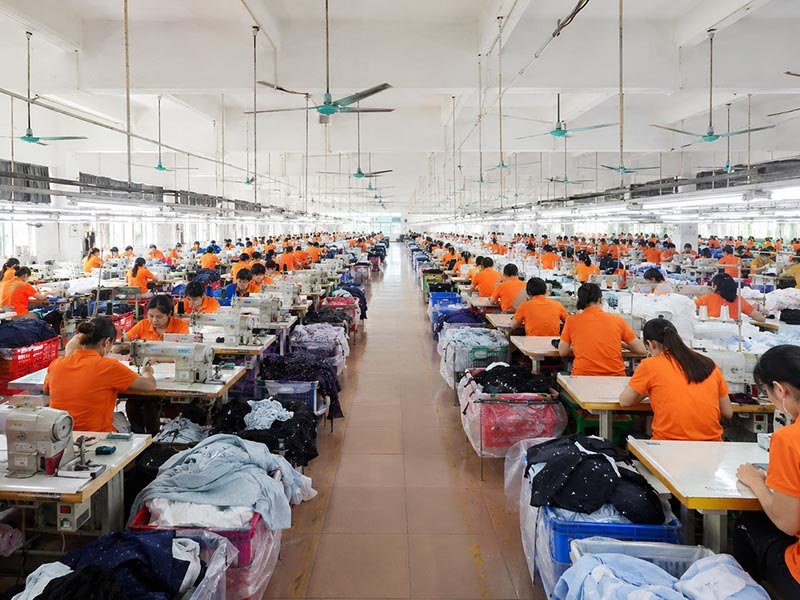
Owned Factory Control for Core Programs
Owned factories support core styles, complex garments, key launches and programs requiring stronger standards. Satin, corset, mesh, sequin, bodycon, occasion and cocktail dresses often need closer PP handover, material review, line-start guidance, inline QC and packing control.For supply chain teams, owned factory control means key programs can stay closer to Duolan’s coordination layer. Production files, QC notes and packing rules are easier to align when core styles need stronger follow-up.
- Core styles can follow closer PP and QC control.
- Complex garments can receive stronger production handover.
- Launch-sensitive orders can receive earlier milestone planning.
- Repeat styles can retain clearer production memory.

Coordinated Satellite Capacity for Seasonal Peaks
Coordinated satellite capacity supports replenishment, seasonal peaks, volume programs and multi-style launches. These resources operate under Duolan’s project coordination, with PP samples, BOM records, QC notes and packing rules guiding production.Supply chain flexibility should not create scattered standards. Duolan uses aligned files and centralized communication so allocation across factories does not weaken sample-to-bulk consistency or packing discipline.
- Satellite capacity supports volume without loose handoff.
- PP, BOM and QC files remain connected.
- Packing and label rules follow unified project records.
- Seasonal peaks can be planned with allocation visibility.
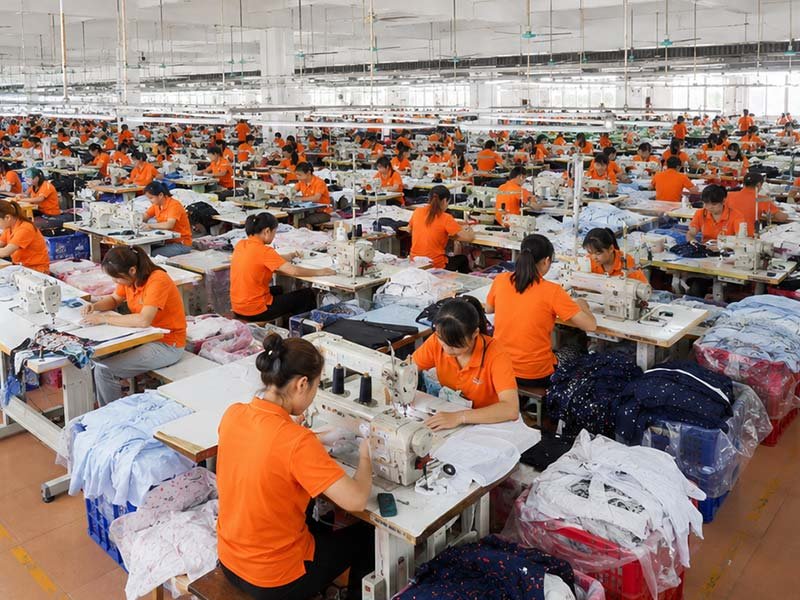
Flexible Lines for Replenishment and Adjustments
Flexible lines support selected replenishment, urgent correction, sample updates, color extensions and smaller adjustment programs when materials and capacity allow. These lines help supply chain teams respond to market movement without rebuilding the entire workflow.A bestseller may need quick replenishment. A campaign style may need an urgent correction sample. A proven dress may need new colors. Flexible production routes help supply chain teams manage response speed while keeping quality and packing records connected.
- Replenishment plans can be reviewed against material status.
- Color extensions can use PP memory and shade records.
- Correction samples can move faster when files are clear.
- Selected urgent programs can be evaluated before commitment.

Material and Process Resource Network
Custom dress programs rely on fabrics, trims, accessories, printing, dyeing, embroidery, washing and decorative processes. Duolan connects material and process resources with style requirements, cost targets, production timing, QC focus and packing needs.Supply chain teams benefit when material choices and special processes are reviewed with production and delivery in mind. A sequin trim affects QC and packing. A print affects cutting and shade review. A wash or dye process affects timing and consistency.
- Fabric and trim routes should match launch timing.
- Special processes should include approval and QC records.
- Material risks should connect with production and packing plans.
- Reorder programs need fabric and process memory.

Central Project Coordination
Central project coordination connects sampling, material readiness, bulk production, QC, packing, shipment and reorder records. Duolan helps brand teams avoid managing separate workshops, mills, process partners, packing teams and forwarder details without a shared project route.A connected workflow reduces follow-up pressure. Product files, sample comments, production updates, inspection records, packing details and shipment documents stay aligned across the dress program. Supply chain teams gain stronger continuity from first review to future repeat order.
- Samples, materials and production files stay connected.
- QC notes inform packing, shipment and reorder planning.
- Shipment records support internal receiving and review.
- Reorder files preserve approved standards for later batches.
Anonymous Fashion Supply Chain Project Case Studies

United States|Development-to-Delivery Party Dress Program
- Supply Chain Goal: Align sample priority, material readiness, bulk execution, packing and shipment timing for a holiday launch.
- Duolan Action: Sample priorities, material readiness, PP handover, inline QC, SKU packing and shipment review were organized by style.
- Control Focus: Satin surface, sequin handling, bodycon measurements, mesh lining, barcode matching and carton organization.
- Continuity Direction: PP records and packing rules supported replenishment and new color planning.

United Kingdom|Occasion Dress Supply Chain Coordination
- Supply Chain Goal: Keep fabric, lining, zipper, label, packing and delivery milestones aligned across an occasion range.
- Duolan Action: Fabric routes, BOM locks, QC focus points, packing lists and forwarder coordination were prepared before shipment.
- Control Focus: Lining comfort, zipper smoothness, close-up workmanship, label accuracy and carton records.
- Continuity Direction: Delivery and QC notes supported later occasion range updates.

Australia|Resort Dress Seasonal Delivery Program
- Supply Chain Goal: Protect seasonal delivery while managing lightweight fabrics, print placement and multi-color planning.
- Duolan Action: Print placement, fabric readiness, hem balance, packing recovery and sea / air shipment planning were coordinated.
- Control Focus: Opacity, shade, final length, wrinkle recovery, carton pressure and staged shipment.
- Continuity Direction: Printed maxi files supported future resort updates and color extensions.

Europe|Repeat and Color Extension Supply Chain Record
- Supply Chain Goal: Keep approved standards stable across repeat production and new colors.
- Duolan Action: PP memory, fabric cards, shade records, measurement QC and reorder packing files were prepared before production.
- Control Focus: Fit continuity, color matching, fabric handfeel, barcode accuracy and final inspection.
- Continuity Direction: Repeat records supported next-season planning and replenishment review.
Fashion Supply Chain Team FAQ
Yes. Duolan supports fashion supply chain teams managing custom dress programs from development review to material readiness, PP approval, bulk production, QC records, packing control, shipment handover and repeat production.
Yes. Duolan connects tech packs, samples, BOMs, fabric cards, PP standards, QC notes, packing rules, carton details, shipment documents and reorder files for dress programs requiring full workflow coordination.
Duolan reviews main fabric, lining, trims, support materials, labels, hangtags, barcodes, polybags and carton marks before production release. Material status can be organized by received items, pending items, approval needs and calendar impact.
Yes. Duolan can organize updates around sample status, material status, PP approval, cutting, line start, first-piece review, inline QC, final inspection, packing and shipment readiness according to project needs.
Duolan reviews QC findings, correction status, final inspection, packing QC, carton status and document readiness before shipment handover. QC records can also support repeat production and future color extensions.
Yes. Duolan can review style codes, color codes, size codes, barcodes, polybags, hangtags, carton marks, packing lists, carton quantities, gross weight, net weight and CBM before shipment handover.
Yes. Duolan can coordinate goods-ready dates, carton details, packing lists, invoice support and handover timing with appointed forwarders when contact details and shipment terms are confirmed early.
Yes. Split shipments can be reviewed based on style priority, SKU separation, carton marking, packing list structure, freight method and launch timing. Air and sea portions should be planned before packing starts.
Duolan supports repeat orders and color extensions through PP memory, fabric cards, shade references, BOM records, measurement notes, QC focus points, barcode updates and packing records.
Duolan focuses on custom development and bulk production for established fashion brands, product teams, sourcing offices, production teams, QA teams and supply chain teams with clear project plans. One-piece personal custom dresses, POD apparel, ready-stock resale and price-only trial requests are not the core direction.

Send Your Fashion Supply Chain Brief
A stronger dress supply chain starts with clear files, launch timing and delivery requirements. Duolan can review your style plan, material status, sample needs, production calendar, QC standards, packing rules, shipment terms and repeat goals before proposing a manufacturing workflow.

Share Your Project Scope
- Dress category, style count, target quantity, launch date, warehouse arrival date and target channel.
- Tech packs, reference samples, sample status, PP sample needs and approval timing.
- Fabric direction, trim requirements, special processes and material readiness status.
Share Your Workflow Requirements
- BOMs, spec sheets, measurement tolerance, QC standards, inspection needs and production milestone expectations.
- Label files, barcode rules, polybag artwork, carton mark requirements, packing lists and SKU separation rules.
- Internal supply chain concerns such as material delay, unclear PP handover, weak visibility or prior packing issues.
Share Your Delivery and Reorder Plan
- Shipment terms, appointed forwarder details, destination, split shipment needs and delivery window.
- Express, air freight, sea freight, FOB, CIF, DDP or warehouse receiving requirements.
- Reorder expectations, color extension plans, replenishment needs and next-season continuity goals.