Skip to content
Custom Dress Manufacturer for Fit Consistency Control
Controlled pattern, fabric, grading, sample, and bulk standards for fashion dress programs that must fit consistently across sizes, colors, production runs, and repeat orders.
- Four connected control layers: design-to-sample, size-to-size, sample-to-bulk, and order-to-reorder consistency.
- Fit reviews can cover 12-20 critical points of measure according to silhouette, support structure, fabric stretch, and size range.
- Multi-style programs are planned around 10-30 styles and 20,000-80,000 total pieces, with separate fit records for every style.
- Core development is supported by 30+ years of womenswear experience, 16 owned factories, 20+ satellite factories, and a 12,000+ worker manufacturing network.
- Fit control extends from tech pack review and base pattern development to size sets, PP approval, first-piece checks, inline measurement, and repeat-order records.
Fit Control Facts Behind Every Dress Program
30+ Years Development
16 Owned Factories
20+ Satellite Factories
12,000+ Manufacturing Staff
SMETA 2-Pillar
Dress-Focused Expertise
Built for Established Fashion Product Teams
Fashion Brand Teams
Product Development Teams
Technical Design Teams
Buying Teams
Sourcing Offices
Multi-Brand Groups

What Fit Consistency Really Means
A dress can match the measurement chart and still fit incorrectly. Reliable consistency combines numerical control, body balance, fabric response, structural support, movement, and visual proportion.
Design-to-Sample Consistency
The first question is whether a sketch, reference image, original garment, or tech pack has been translated into the intended silhouette. Bust position, waist level, hip shaping, neckline, strap balance, skirt volume, slit height, and overall proportion must agree with the design direction. Fabric and construction also need to support the intended result. A fitted image cannot be reproduced with uncontrolled stretch; a fluid drape cannot be achieved with a fabric that is too firm; a low neckline cannot remain secure without the correct pattern and support.
Size-to-Size Consistency
A correct base size does not automatically create a balanced size range. Grade rules must preserve coverage, support, movement, and design-line placement while body dimensions grow. Bust, underbust, waist, hip, shoulder, armhole, neckline, strap, slit, and length may need different increments. Small and large sizes should look like the same design, not different garments produced from equal numerical enlargement.
Sample-to-Bulk Consistency
Approved fit must be converted into a production basis: pattern version, measurement chart, POM method, tolerance, fabric reference, lining, support, workmanship, PP sample, first-piece standard, and QC checkpoints. Bulk drift usually begins when one of those inputs changes silently or when operators receive incomplete instructions. Final inspection alone cannot recover a fit standard that was never fully locked.
Order-to-Reorder Consistency
Repeat orders must begin from preserved records rather than memory. Approved patterns, grade rules, BOM, material references, measurement files, PP photos, workmanship notes, QC results, packaging instructions, and previous issue records form the basis for replenishment, new colors, and seasonal extensions. New material lots or changed trims are treated as variables requiring review, not assumed to behave like the previous order.
Why Inconsistent Fit Becomes a Commercial Loss
Return and Exchange Pressure
Campaign-to-Bulk Mismatch
Lost Selling Windows
Rework and Remake Cost
Size-System Confusion
Repeat-Order Uncertainty
Where Dress Fit Consistency Commonly Breaks
Pattern Version Confusion
Unclear Measuring Method
Fabric Behavior Change
Unbalanced Grade Rules
Comments Not Transferred
Production Drift
Duolan Eight-Stage Fit Control System
Fit Brief Review
Technical Input Check
Fabric Behavior Review
Base Pattern Development
Fit Sample Review
Grading and Size Set
PP and Bulk Locking
Production and Reorder Control
Fit Risks Across Custom Dress Categories
Bodycon Dresses

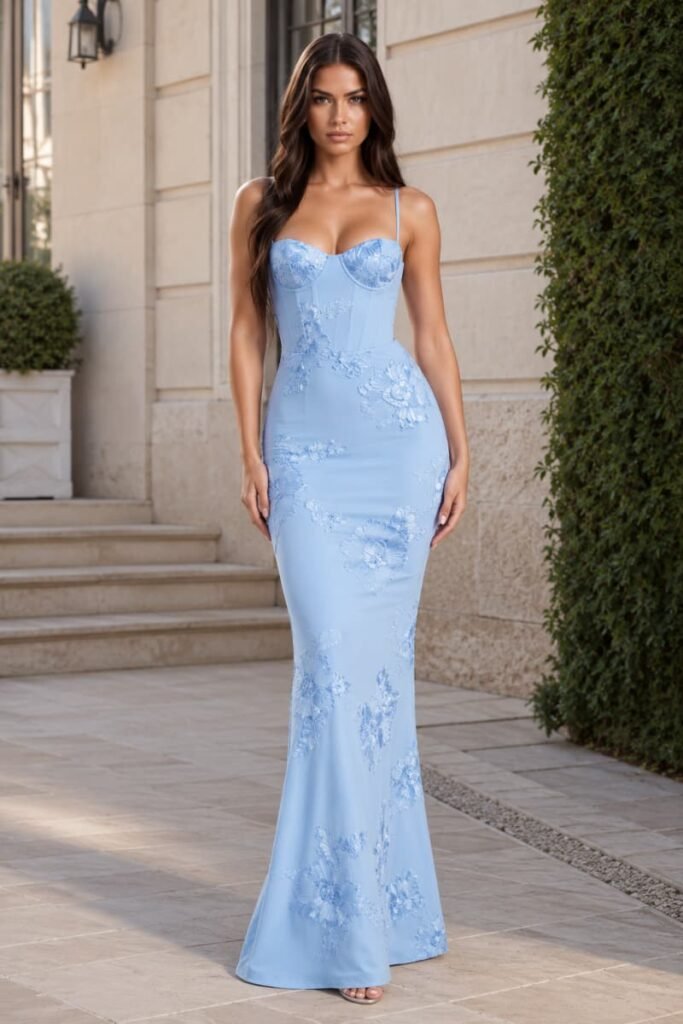
Corset Dresses

Halter Dresses

Backless Dresses

Strapless Dresses

Satin Slip Dresses

Mesh Dresses

Occasion Dresses
Tech Pack Review Before Pattern Development
Confirm the Intended Fit
A tech pack should state more than finished measurements. Duolan reviews whether the dress is intended to be close fitting, relaxed, structured, supported, bias draped, or designed with controlled negative ease. Comparing the reference image with the size chart is necessary because the visual effect of a fitted look may conflict with the comfort of a loose fit (ease).
Confirm the Size Basis
Confirm Material Assumptions
Identify Missing Construction
Reference images rarely reveal cup type, boning, facing, seam allowance, zipper length, grip tape, internal elastic, lining attachment, edge finish, or reinforcement. Duolan lists missing decisions and proposes a development route before those details are hidden inside the first sample.
Points of Measure and Spec Sheet Control
A measurement chart becomes useful only when every point has a clear location, method, target value, tolerance, and reason. Critical points vary by silhouette and structure.
| Control Area | Typical Points of Measure | Measurement Method | Fit Risk Controlled |
|---|---|---|---|
| Upper body | Shoulder, across chest, bust, upper bust, underbust | Garment laid flat and aligned; curved points defined from stable seams | Pulling, flattening, gaping, cup displacement, shoulder imbalance |
| Waist and torso | Waist, waist position, front length, back length, side length | Measured from high shoulder point, neckline, or waist seam as specified | Raised or dropped waist, uneven hem, torso imbalance |
| Hip and skirt | High hip, full hip, skirt sweep, hem opening, slit height | Flat measurement with stretch state and slit reference clearly defined | Restricted movement, twisting, unstable slit, incorrect flare |
| Neckline | Neck width, front drop, back drop, opening length | Measured along seam line or vertically from named reference point | Excess exposure, gaping, asymmetry, neckline pressure |
| Straps and shoulders | Strap length, strap position, shoulder width, tie length | Finished length from attachment point to attachment point | Uneven bust level, neck pressure, unstable coverage |
| Armhole and sleeve | Armhole depth, armhole straight, bicep, sleeve opening | Method states whether circumference, straight, or seam-line measure is used | Underarm exposure, movement restriction, sleeve twisting |
| Support structure | Cup position, boning length, grip tape, elastic length | Physical placement and finished length linked to pattern and sample | Slipping, pressure, poor support, distorted neckline |
| Length and hem | Garment length, skirt length, lining length, hem level | Measured after rest, pressing, or hanging period when required | Uneven hem, lining exposure, batch length variation |

Brand Block and Base Pattern Development
A stable fit system begins with a usable pattern foundation. Duolan can follow an approved brand block, redevelop from a reference garment, or build a silhouette-specific base when no reliable block exists.
Working With Existing Brand Blocks
Existing blocks are checked against the intended fabric category, silhouette, base size, and target market. A woven fitted block should not be transferred directly to high-stretch jersey, bias satin, or corset construction without review. Approved balance can be preserved while neckline, sleeve, skirt, support, or styling details are developed around it.
Building a New Base Size
When no approved block exists, development begins from body and garment measurements, target ease, reference fit, and silhouette. Bust shaping, shoulder slope, armhole, waist suppression, hip curve, front-back balance, and length relationships are established before decorative details are added. A weak base cannot be repaired by extra drape, elastic, or heavy pressing.
Silhouette-Specific Pattern Logic
Bodycon dresses use measured negative ease and stretch recovery. Corset dresses need separate bust, underbust, cup, boning, and waist control. Slip dresses rely on drape, strap, neckline, bias direction, and hem balance. Backless and halter styles need secure anchor points. Each category requires a distinct pattern route rather than one universal women’s block.
Pattern Balance Before Styling
Side seams should hang in the intended position; waist and hip lines should remain level; neckline and armholes should sit cleanly; front and back lengths should support the body shape; skirt panels should fall without torque. Balance is reviewed from front, side, and back before design details are treated as approved.
Approved Pattern Ownership and Records
Pattern files are identified by style, size, version, date, sample stage, and approval status. Graded patterns, lining patterns, support pieces, artwork references, and bulk markers remain connected to the approved base. Confidential development can be handled under an NDA according to project needs.
Pattern Corrections Based on Fit Evidence
Effective correction addresses the pattern cause, not only the visible symptom. Measurements, wearing observations, photos, and material behavior are reviewed together.
Neckline Gaping
A gaping neckline may result from incorrect contour, excess length, insufficient bust shaping, weak support, strap position, fabric stretch, or a closure that pulls the edge open. Correction may involve neckline suppression, dart or princess-seam change, strap relocation, stay tape, elastic, cup position, or back balance. Simply shortening the neckline edge can create pressure or distortion.
Drag Lines and Side-Seam Shift
Diagonal drag lines often point toward a balance problem. The source may be bust length, hip ease, shoulder angle, panel length, incorrect grain, twist construction, or uneven tension. Side-seam position is reviewed because a seam moving forward or backward shows where the garment is pulling.
Waist and Hip Imbalance
A waist seam that rises, drops, or curves unexpectedly can come from torso length, bust volume, hip shape, elastic tension, support structure, or skirt weight. Corrections are checked against both measurement and visual proportion so improving one size does not damage the size range.
Uneven Hem and Fabric Growth
Bias satin, viscose, mesh, and heavy decoration can grow after cutting, sewing, hanging, or pressing. Hem correction may require rest time, panel rebalancing, grain control, support changes, or a later hemming stage. Trimming alone can hide the cause while leaving side-seam torque or length drift.
Correction Closure
Every approved correction is transferred into the relevant pattern, measurement file, construction note, BOM, or grade rule. Revision summaries identify completed points, open points, and the next sample purpose. The revised sample verifies the new production basis rather than restarting development from memory.

Grading and Size Set Verification
Grade Rules by Body Zone
Selected Size Set Review
Visual Grading
Size Set Release
Approved corrections are updated in graded patterns, size charts, POM methods, and production files before bulk cutting. Size labels, SKU files, packing ratios, and carton assortments are aligned with the released range.
Unapproved sizes are not assumed to be safe because the base size passed.
Fabric Behavior Changes the Final Fit
The same pattern can fit differently when fabric changes. Duolan links material behavior to ease, support, grading, construction, pressing, and bulk inspection.
Stretch Percentage
Extension is checked by direction and intended use. Bodycon, mesh, rib, and stretch satin may need controlled negative ease. Usable stretch must be considered with recovery, not viewed as an isolated number.
Recovery and Bagging
A fabric can stretch easily but fail to return. Poor recovery creates loose necklines, bagged hips, dropped hems, and unstable fit after movement. Repeated stretch review helps identify long-wear risk.
Shrinkage and Relaxation
Washing, steaming, fusing, pressing, and fabric relaxation can change dimensions. Shrinkage direction and treatment are considered before final pattern and bulk measurement standards are locked.
Drape and Bias Growth
Satin, viscose, crepe, and bias-cut panels can lengthen or twist during handling and hanging. Grain, panel shape, seam sequence, rest time, and hemming stage influence final balance.
Opacity and Lining
White, light, mesh, thin, and fitted dresses need coverage review under body tension and lighting. Lining weight, stretch, color, and attachment can improve coverage or restrict movement.
Weight and Support
Heavy beading, dense sequins, structured layers, cups, boning, and long skirts change load distribution. Shoulder, neckline, waist, closure, and hem need enough support without destroying drape or comfort.
Material comparison should cover composition, construction, weight or GSM where relevant, usable width, stretch, recovery, drape, opacity, shrinkage, handfeel, finish, color route, bulk availability, and reorder continuity. A sample-only fabric is not treated as a reliable production solution.

Structural Workmanship That Protects Fit

Seam Allowance Control

Stay Tape and Stabilizing

Elastic Application

Cups, Boning, and Support

Closures and Straps
Zipper length, tape, hook placement, adjustable hardware, strap length, reinforcement, and left-right symmetry affect wearing security. Closure installation should not distort the waist, neckline, or back opening.

Pressing and Cooling

Fit Review in Static and Moving Positions
Front-view photographs are not enough for fit approval. Duolan combines measurement, three-view assessment, movement, structure, fabric behavior, and target-market judgment.
Front, Side, and Back Balance
The front shows neckline, bust, waist, hip, opening, and symmetry. The side reveals shoulder position, bust projection, side-seam movement, front-back length, and hem balance. The back shows neckline security, strap alignment, back width, zipper behavior, waist level, and low-back stability. All three views are reviewed together because correcting one view can move tension into another area.
Natural Movement
Standing, walking, sitting, raising arms, turning, bending slightly, and returning to a neutral position reveal issues hidden in static fitting. Review focuses on neckline security, underarm exposure, strap pressure, waist movement, hip ease, slit opening, hem recovery, lining restriction, and whether the garment returns to its intended shape.
Measurement and Appearance Together
Measurements establish objective control, while visual review confirms silhouette and proportion. A dress can remain inside tolerance but still look unbalanced when the waistline shifts, cup placement moves, or fabric torque changes seam direction. Critical POMs and visual landmarks are therefore reviewed as one fit system.
Target Market and Wearing Context
Fit standards should reflect market, brand positioning, selling channel, size expectation, and occasion. A secure going-out dress, a fitted party dress, a fluid vacation dress, and an office midi need different movement and coverage decisions. The approval basis is linked to intended use, not a generic mannequin alone.
Fit Review Output
- Measured results against target and tolerance
- Front, side, and back observations
- Movement and coverage findings
- Pattern correction points
- Fabric or construction concerns
- Confirmed points and remaining open points
- Recommended next sample stage
Sample Revision and Version Control
One Sample, One Purpose
Structured Comment Records
Linked File Updates
A confirmed change can affect the pattern, grading, measurement chart, BOM, lining, support, sewing note, artwork, label, or packing. Revision closure checks every affected record.
An updated sample with an old size chart is not considered controlled development.
Staged Sampling Updates
Sample Approval Before Production Release
Fit and Measurements
Fabric and Lining
Trims and Structure
Construction and Finish
Branding and Packing
Approval Status
PP and Golden Sample Standards
Approved Pattern
Approved Measurements
Approved Fabric
Approved Trims
Approved Workmanship
Approved Visual Finish
Approved Packing
Controlled Release

Bulk Readiness Review Before Cutting
Sample approval does not automatically mean the order is ready for bulk. Duolan checks whether development decisions can be repeated at the planned scale, timeline, and size-color mix.
Product Readiness
Pattern, grading, measurements, fit, fabric, lining, trims, construction, artwork, labels, packing, and approval status are checked together. Open points are separated into those that block production, those that can be confirmed before a later stage, and those that do not affect cutting or line release.
Material Readiness
Bulk lots are reviewed against approved references. Roll identity, color, shade, width, weight or GSM where relevant, stretch, recovery, surface, defects, and shrinkage can affect fit and consumption. Lining, elastic, cups, boning, zippers, and other support materials are confirmed before related operations begin.
Production-Path Readiness
Style complexity, quantity, size range, colorways, special processes, launch priority, and inspection requirements guide allocation. Core fit-sensitive styles can remain in owned factories, while coordinated capacity supports replenishment and scale under the same released standards. A collection is split by risk rather than placed into one undifferentiated schedule.
Timeline Readiness
Sampling, revision, size set, PP approval, material preparation, pilot or first-piece confirmation, production, inspection, packing, and logistics are planned backward from the required warehouse or launch date. Critical quality checkpoints are not removed merely to create an attractive delivery promise.
Pilot Run and First-Piece Confirmation
Choose the Right Verification Level
Check the Production Piece
Correct Before Volume Expands
Confirm Release Evidence
Measurement Tolerance and In-Line Fit QC
Tolerance is a controlled acceptance range, not permission for random variation. Measurement method, sample frequency, criticality, and corrective action work together during production.
| Control Stage | Main Fit Checks | Common Source of Variation | Required Action |
|---|---|---|---|
| Incoming material | Stretch, recovery, shrinkage, width, weight, handfeel, lining compatibility | Bulk lot differs from sample yardage | Hold, compare, test, or obtain approval before cutting |
| Cutting | Pattern version, grain, marker, notches, size identity, shade grouping | Wrong file, fabric growth, mixed lots, inaccurate cut parts | Replace affected panels and correct cutting basis |
| First piece | Critical POMs, silhouette, support, closures, lining, pressing | Seam allowance, operation method, tension, support placement | Correct operation and recheck before line release |
| In-line sewing | Bust, waist, hip, length, neckline, straps, symmetry, high-risk details | Gradual operator or machine drift | Contain affected bundle, correct process, increase targeted checks |
| Finishing | Pressing dimensions, hem level, zipper behavior, elastic recovery, appearance | Heat, steam, handling, hanging growth, finishing pressure | Rest, repress, repair, remeasure, or segregate |
| Final and packing | Approved sample comparison, measurement sampling, size labels, ratios, carton data | Mixed sizes, unresolved deviations, packing compression | Release, rework, sort, or hold according to inspection result |
Repeat Order Fit Consistency
Approved Fit Assets
Material Reconfirmation
Production Continuity
Improvement Without Drift

Fit Consistency Across Multi-Style Programs
Collections containing 10-30 styles require more than individual sample skill. Fit standards, fabric families, approvals, and production routes must be controlled at collection level without losing style-level detail.
Group Styles by Fit and Fabric Risk
Styles can be organized by bodycon stretch, corset support, satin drape, mesh coverage, woven fit, embellishment, or common material families. Shared decisions are coordinated, while each style keeps its own pattern, measurement chart, grade rule, fit comments, PP status, and QC points.
Prioritize Commercial Milestones
Campaign hero styles, photo samples, buyer meeting samples, core sales styles, and repeat-ready styles may follow different priorities. Development order is planned around launch need, material readiness, fit risk, and approval dependency rather than starting every style at the same time.
Control the Quantity Structure
A common Duolan program can include 10-30 styles and 20,000-80,000 total pieces across colorways and size ratios. Production planning separates style quantity, color quantity, size distribution, fabric lot, process route, packing group, and destination so fit records do not become mixed inside a large order.
Release in Controlled Waves
Approved styles may move into production in waves while later styles remain in fit revision or material confirmation. Wave release protects launch priorities and avoids holding a complete collection because one complex style remains open. Each released style carries its own production basis.
Preserve a Collection Fit Language
Different silhouettes do not need identical ease, but the brand should maintain consistent body assumptions, base sizes, proportions, length logic, and size progression. Shared fit principles can be preserved while bodycon, corset, slip, mini, midi, and maxi products use silhouette-specific rules.
Fit Control Case Studies

United States Bodycon Collection

European Corset Occasion Program

Australian Satin Reorder Program
Program scope: 12 styles, 22,800 pieces, three colorways, sizes AU 6-18. A repeat order required a new satin lot with slightly different drape and bias growth. Duolan compared the new lot with the prior approved reference, repeated hanging and pressing review on representative panels, and checked front-back length, side-seam torque, neckline, strap balance, zipper waviness, and lining interaction. Three maxi styles received revised hem timing and a bulk-equivalent PP check. Result: the reorder retained the approved silhouette across seven sizes while the new fabric lot was documented as a controlled material revision rather than treated as identical to the previous order.
Why Duolan for Fit-Sensitive Dress Programs
Dress Category Depth
Development Before Production
Evidence-Based Fit Decisions
Controlled Scale
Process Visibility
Long-Term Continuity
Fit Consistency Frequently Asked Questions
Yes. Duolan can work from an approved block, graded pattern, reference garment, fit sample, or measurement standard. The team first checks whether the block suits the intended silhouette and fabric. A woven block may need controlled adaptation for stretch, bias, corset, backless, halter, or heavily structured construction.
A commercial size range can be developed from a confirmed base size, body standard, garment measurements, target market, and grade direction. Size-set review is recommended for fitted, structured, revealing, wide-range, or fabric-sensitive styles before bulk release.
Fabric groups are reviewed for stretch, recovery, drape, shrinkage, opacity, weight, bias behavior, and lining interaction. When behavior changes materially, pattern ease, grading, support, seam method, or approval stage may also need adjustment. One pattern is not assumed to fit identically in every material.
Full or selected size sets can be planned according to size range, silhouette, risk, and approval need. A selected set often includes smaller, middle, and larger sizes. Corset, bodycon, strapless, backless, low-neck, and wide-size programs may require more extensive verification.
Accepted comments are linked to pattern versions, measurement files, grade rules, BOM, construction notes, and sample status. Revision summaries show what changed, what remains open, and which version becomes the next approval or production basis.
The production basis normally covers approved pattern, measurements, tolerance, grading, fabric, lining, trims, support, construction, workmanship, PP reference, labels, packing, quantity, size-color mix, inspection requirement, and delivery plan. Open items are identified before cutting or line release.
Tolerance depends on product function, fabric, construction, measurement method, brand standard, and criticality. Fit-sensitive points such as bust, waist, strap, neckline, cup position, or length may require closer control than low-risk decorative dimensions. Final values follow the approved project specification.
Timing is quoted after files, materials, sample purpose, and construction are reviewed. A straightforward first sample may use a planning window of about 7-12 working days after materials are ready. Structured, layered, corset, embellished, or multi-material styles may require about 12-18 working days. Revision and PP timing depend on comment closure and bulk-equivalent materials.
Repeat orders use preserved patterns, grade rules, size charts, PP references, BOM, material records, workmanship standards, QC notes, and packing instructions. New material lots, colors, trims, factories, or fit changes are reviewed as controlled variables before production.
Send available tech packs, reference images, original sample photos, current size chart, POM method, fit comments, fabric direction, size range, style count, quantity, launch date, and known problems. Incomplete information can still be reviewed; Duolan will identify the next details needed for a useful fit and production assessment.

Start a Fit Consistency Review
Share the current stage of your dress program and the fit standard you need to protect. Duolan will review the available files, identify pattern, grading, fabric, sample, or bulk-control risks, and outline a suitable next-step path. A useful review can begin from a complete tech pack, an approved garment, a current size chart, sample photos, or a problem found in existing production. Clear project information allows a more accurate assessment of sample route, size-set need, material validation, PP requirements, production checkpoints, and timeline. Send what is already available; missing points can be listed during the initial review.
- Company or brand name, website, market, and contact details
- Dress categories, style count, colorways, size range, and target quantity
- Tech pack, reference images, approved garment, current pattern, or size chart
- Known fit concerns: bust, waist, hip, neckline, strap, cup, length, movement, grading, or bulk variation
- Fabric direction, stretch or recovery requirement, lining, support, and special workmanship
- Current stage: development, fit sample, size set, PP, supplier transfer, bulk, or reorder
- Photo date, launch date, warehouse date, delivery destination, and inspection requirement
- Label, barcode, packaging, carton, compliance, and confidentiality requirements
Recommended Form Fields: Name; Company / Brand; Website; Country; Email Address; Tel / WhatsApp; Product Type; Current Stage; Style Count; Target Quantity; Size Range; Main Fit Concern; Fabric Direction; Target Launch Date; Message; Upload Tech Pack; Upload Size Chart; Upload Sample Photos.