Skip to content
Custom Dress Manufacturer for Fit-Focused Fashion Brands
Fit-led dress development for fashion brands needing controlled shape, size consistency, and sample-to-bulk stability.
Duolan develops custom dresses around body proportion, fabric behavior, pattern correction, sample review, and bulk consistency. For fitted, structured, bias-cut, mesh, satin, corset, halter, strapless, backless, and bodycon styles, fit control starts before sampling and continues through PP approval, inline inspection, and final production.
- 300–400 pattern and sample roles support fit correction, sample review, and controlled dress development.
- 650–1,200 CAD and sample tools help convert style direction into production-ready patterns and samples.
- 110–200 fabric and trim specialists review drape, stretch, opacity, lining, and support needs.
- 130–200 process development roles evaluate sewing methods, structure, finishing, and bulk feasibility.
- 3,000–8,000 monthly style workflows support multi-style dress programs with organized sample tracking.
- 15,000–35,000 monthly sample capacity supports fit samples, revised samples, PP samples, and repeat development.
Built for Fit-Led Dress Brands
Premium Dress Brands
- Fit-led styles require careful control around bust, waist, hip, neckline, back opening, slit height, and hem balance.
- Duolan supports fitted dress development with pattern review, sample correction, fabric matching, and PP approval discipline.
- For repeat programs, confirmed fit details can become reusable production standards for future styles and reorders.
Ecommerce Fashion Teams
- Photo-ready samples and production-ready samples can serve different goals, so each one needs a clear development path.
- Fit comments are reviewed as technical inputs, not casual opinions, helping reduce repeated sample confusion.
- Measurement control and size consistency help protect online selling performance and brand trust.
Occasionwear Programs
- Duolan reviews dress styles by occasion, wearing movement, coverage needs, support points, and production risk.
- Series development can include fitted minis, satin midis, mesh overlays, corset dresses, slit dresses, and body-skimming silhouettes.
- Approved patterns, BOM records, PP samples, and QC checkpoints help keep large programs organized.
Product Development Teams
Product teams need a manufacturer able to turn reference styles, tech packs, samples, and fit comments into controlled development actions. Duolan supports project flow from initial review through sample correction and production standard confirmation.
- Each style can be reviewed by design direction, fabric behavior, fit priority, construction method, and bulk feasibility.
- Sample feedback can be converted into pattern updates, measurement changes, lining decisions, or construction refinements.
- Production preparation becomes clearer when sample goals, PP standards, and QC checkpoints are aligned early.
Sourcing Offices
Sourcing offices need supplier information, development visibility, quality records, and clear production discipline. Fit-focused dress projects require especially strong communication because minor measurement or fabric changes can alter wearing performance.
- Duolan can provide structured project review around garment type, size range, fabric direction, order plan, and delivery window.
- Fit-sensitive details can be documented through sample notes, PP sample comments, BOM confirmation, and QC records.
- Strong project organization helps sourcing offices evaluate Duolan beyond price comparison.
Multi-Brand Groups
Fashion groups managing several lines need manufacturing support able to separate brand identity, fit standards, material direction, and production rhythm. Duolan’s development and manufacturing structure can support multi-style, multi-fit, multi-season programs.
- Different brands may need different base sizes, silhouette rules, fabric behavior, and finishing expectations.
- Duolan can support style groups with dedicated sample paths, material matching, fit control, and production planning.
- Reusable production records help future drops move with less confusion across related dress lines.
Fit Control Decides Dress Performance
A dress can look strong in a sketch and still fail after fitting. The bust may flatten, the waistline may sit too high, the hip may twist, the neckline may gape, the slit may open too much, or the hem may fall unevenly. Fit-focused fashion brands need development decisions made around real body proportion, fabric behavior, and production repeatability.
Duolan treats fit as a commercial production standard, not only a sample room topic. During dress development, fit comments are connected with pattern balance, fabric stretch, lining choice, measurement points, grading logic, sewing method, and bulk QC. A confirmed sample should not remain a beautiful one-off piece. It should become a controlled reference for size set review, PP approval, production instruction, inspection, packing, and future reorder.
Fit-Sensitive Dress Styles Developed by Duolan
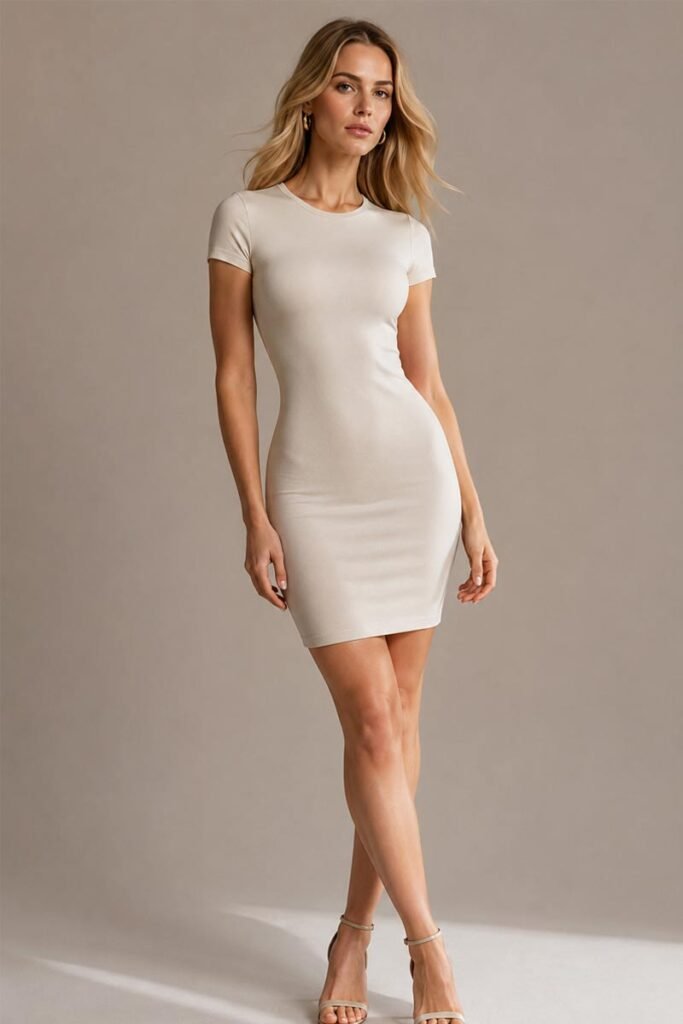
Bodycon Dresses
- Review stretch percentage, recovery, fabric weight, and opacity before sample cutting.
- Control bust, waist, hip, side seam, hem sweep, and garment length measurement points.
- Align lining or double-layer decisions with target price, coverage, support, and comfort.

Corset Dresses
- Check cup height, bust curve, underbust position, and waist reduction carefully.
- Review boning, fusing, lining, seam allowance, zipper, and back opening before PP approval.
- Balance visual structure with production sewing efficiency and size grading requirements.
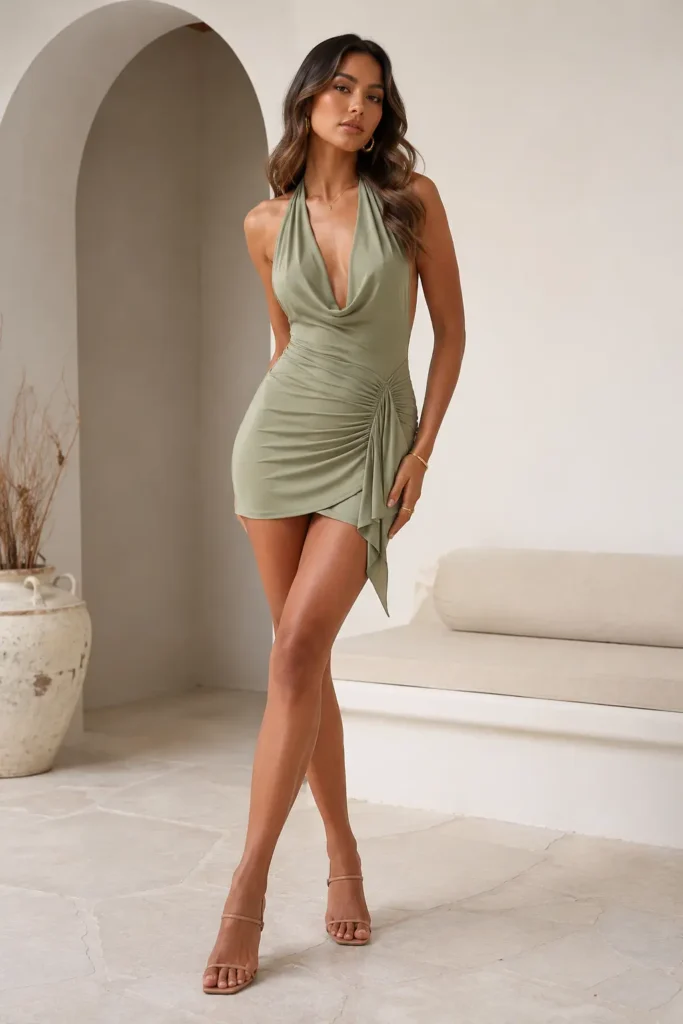
Halter Dresses
- Review neck tension, front coverage, bust support, armhole movement, and tie placement.
- Match fabric stretch and lining choice with neckline stability and body comfort.
- Avoid unstable front openings through pattern correction and sample fitting review.

Strapless Dresses
- Confirm upper edge height, bust support, inner elastic, boning, and lining structure.
- Check body movement during sample review rather than relying only on flat measurements.
- Connect pattern correction with sewing method and production line feasibility.

Backless Dresses
- Review back opening depth, tie placement, side support, zipper location, and inner structure.
- Match fabric weight and lining decisions with body security and campaign visual goals.
- Control edge finishing, stretching, seam strength, and tension points before bulk production.

Satin Slip Dresses
- Review satin weight, surface shine, lining requirement, bias direction, and shrinkage risk.
- Control neckline, strap length, bust ease, waist skim, hip balance, and hem sweep.
- Protect smooth appearance through seam control, pressing method, and packing standards.

Mesh Dresses
- Review mesh stretch, recovery, sheerness, lining color, and body coverage.
- Control print placement, seam direction, armhole, neckline, and side panel balance.
- Avoid excessive exposure risk through fit sample review and lining adjustment.

Cut-out Dresses
Cut-out styles require careful placement because opening size, edge tension, body curve, and movement all affect wearing safety. A cut-out can look strong on reference images yet fail if pattern control is weak.
- Review cut-out location against bust, waist, hip, and side seam tension.
- Confirm edge finishing, elastic, binding, facing, or lining support during sample review.
- Control size grading so openings remain balanced across the size range.
Fit Risk Points Reviewed Before Sampling
A fit-focused dress project starts with risk review before fabric cutting. Duolan checks body zones, garment structure, and material behavior early, helping prevent repeated samples caused by unclear fit priorities or wrong production assumptions.
| Fit Area | Common Risk | Duolan Review Focus |
|---|---|---|
| Bust Area | Gaping, flattening, weak support, unstable cup shape | Cup height, dart direction, underbust position, lining, boning, and neckline coverage |
| Waist Placement | Waistline too high, too low, or visually unbalanced | Natural waist, empire line, dropped waist, side seam curve, and shaping intensity |
| Hip & Seat | Pulling, twisting, excess tightness, weak recovery | Hip ease, fabric stretch, side seam balance, seat curve, and lining control |
| Shoulder & Armhole | Tight armhole, falling shoulder, weak movement comfort | Shoulder slope, armhole depth, strap position, halter tension, and movement range |
| Neckline & Back | Gaping, exposure risk, unstable openings | Neckline depth, back width, tie placement, zipper location, and edge finishing |
| Hem & Slit | Uneven fall, unsafe slit, poor walking movement | Hem balance, slit height, skirt sweep, grain direction, and pressing method |
| Size Grading | Base size approved, larger sizes fail | Grading rule, proportion retention, measurement tolerance, and size set review |
Fabric-to-Fit Matching for Dress Development

Stretch Jersey
- Review stretch direction, recovery strength, opacity, and handfeel before sampling.
- Match bodycon, ruched, fitted midi, and going-out styles with suitable fabric weight.
- Control side seam tension, hem stability, and size tolerance during production.

Satin
- Review bias fall, seam tension, hem sweep, and pressing response.
- Choose lining only after checking cling, opacity, body comfort, and price position.
- Control packing method to reduce crease marks before delivery.

Crepe
- Review weight, texture, stretch option, and drape against the target silhouette.
- Use crepe for fitted, tailored, one-shoulder, midi, and refined occasion styles.
- Control seam pressing, hem balance, and size measurements during production.

Power Mesh
- Review mesh direction, recovery, opacity, softness, and color matching.
- Match lining color and coverage with brand visual standards and wearing expectations.
- Control print placement, seam stability, and edge finishing across sizes.

Lace
- Review lace scale, stretch, border use, motif placement, and seam allowance.
- Match lining tone and structure with target look, comfort, and price position.
- Control placement consistency during cutting and production.

Sequin Fabric
- Review sequin density, reverse-side comfort, fabric weight, and stretch limitation.
- Control seam allowance, lining, zipper area, and edge finishing to reduce discomfort.
- Check drop risk, abrasion, pressing limitation, and packing protection before bulk.
Pattern Development Built Around Fit Comments
Fit Brief Review
Base Pattern Direction
Fabric Behavior Check
First Fit Sample
Pattern Correction
Production-Ready Pattern
Sample Types for Fit-Focused Dress Brands
Fit-focused brands need different sample types for different decisions. A first sample cannot carry the same responsibility as a PP sample. Duolan separates sample purpose so fit, visual approval, production feasibility, and bulk standards are not confused during development.
| Sample Type | Main Purpose | Fit-Focused Control |
|---|---|---|
| First Sample | Check first physical direction | Silhouette, major structure, fabric direction, and construction possibility |
| Fit Sample | Review body fit | Bust, waist, hip, neckline, armhole, back, slit, and movement comfort |
| Revised Sample | Confirm corrections | Pattern changes, fit comments, proportion adjustment, and material refinements |
| Photo-Ready Sample | Support campaign or ecommerce shoot | Visual finish, drape, surface, color, pressing, and camera-ready details |
| Size Set Sample | Review grading | Size consistency, proportion retention, fit balance, and key measurement points |
| PP Sample | Lock bulk standard | Final fabric, trims, construction, measurements, labels, and workmanship |
| Golden Sample | Long-term reference | Reorder control, QC comparison, repeat production, and internal standard storage |
Size Spec, Grading and Measurement Tolerance
Base Size Confirmation
- Confirm target body profile, primary selling size, and fit expectation before pattern correction.
- Review key points beyond bust, waist, and hip, including neckline, back width, armhole, slit, and length.
- Align sample comments with measurable pattern updates, not only general visual preference.
Grading Logic
- Protect style identity while adapting measurements across the size range.
- Review high-risk points such as cup, waistline, hip, armhole, cut-out, slit, and hem sweep.
- Support size set review when style complexity requires physical confirmation beyond base size.
Measurement Tolerance
Measurement tolerance changes according to fabric and construction. Stretch jersey, satin, mesh, crepe, and corset structures cannot be inspected with identical priorities. Duolan connects tolerance with fabric behavior, sewing method, pressing effect, and final wearing result.
- Define important measurement points before PP approval and production start.
- Apply inspection focus according to style risk, material behavior, and garment structure.
- Use inline and final measurement checks to reduce avoidable fit complaints.
Support Structures for Fitted Dresses
Structured and fitted dresses need hidden engineering. Bust support, waist shaping, boning, lining, zipper strength, strap angle, and back stability can decide whether a dress feels premium or unstable. Duolan reviews these support points early because they affect sample approval, wearing safety, production method, and final quality.

Bust Support
- Suitable for corset, bustier, strapless, halter, plunge, and bodycon dress development.
- Needs review before sample cutting because support structure changes pattern and sewing method.
- PP approval should confirm support, comfort, and final visual line.

Waist Shaping
- Useful for bodycon, corset, cut-out, ruched, and occasionwear styles.
- Requires alignment between pattern, fabric stretch, lining, and seam tension.
- Size grading must preserve waist position rather than only expand measurements.
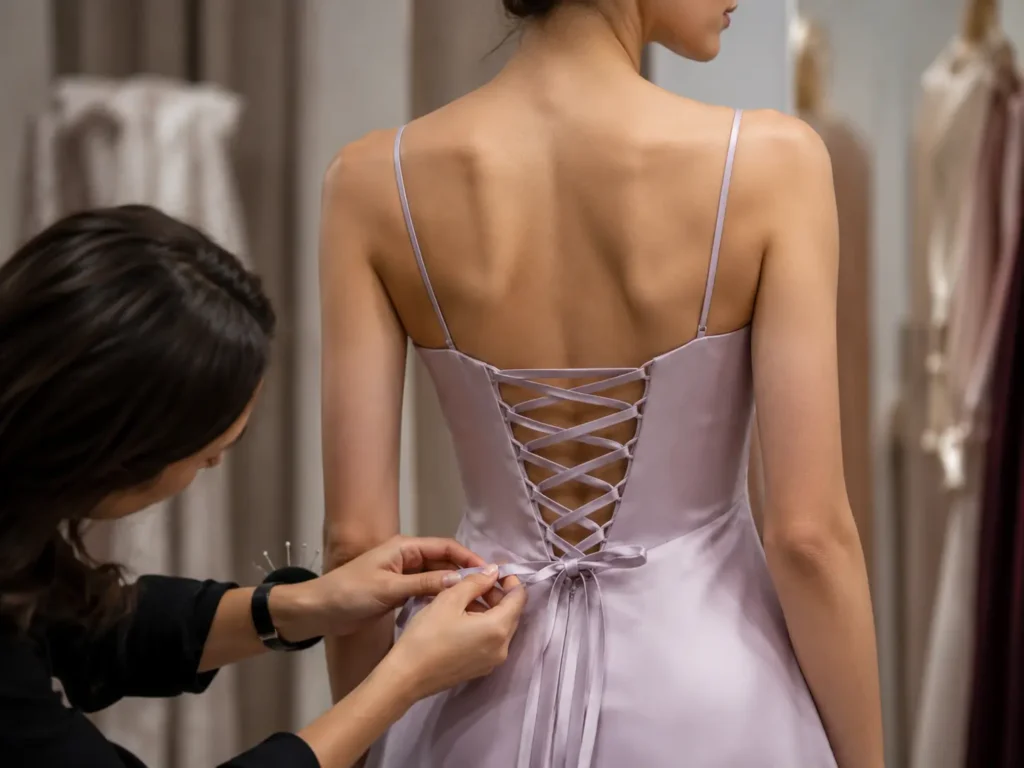
Back Stability
- Helps reduce gaping, slipping, twisting, and wearing insecurity.
- Important for partywear, evening-inspired, halter, and backless dress styles.
- Production sewing must follow approved construction method closely.

Halter Tension
- Strongly relevant for fitted halter minis, satin halter dresses, and mesh party styles.
- Requires testing around movement, neckline gap, bust lift, and back balance.
- Pattern correction often includes strap angle, armhole, and upper body adjustments.

Lining Coverage
- Prevents transparency problems and helps stabilize delicate outer materials.
- Can improve wearing comfort for sequin, lace, mesh, and structured dresses.
- Needs confirmation before PP sample because lining changes fit and cost.

Slit Safety
- Relevant for occasion, cocktail, formal-inspired, and satin midi or maxi styles.
- Wrong slit height or weak reinforcement can create exposure and quality risks.
- Final production must follow approved slit placement across sizes.
From Fit Sample to Bulk Consistency
Approved Fit Sample
Pattern Version Locking
Fabric and Trim Confirmation
PP Sample Approval
Inline and Final Checks
Reorder Reference
A strong production record protects future development. Once a fitted dress performs well, pattern version, BOM, PP sample, QC notes, fabric record, and packing standard can support repeat orders, multi-color extensions, or related silhouettes. Reorder value depends on making approved standards reusable.
QC Checkpoints for Fit-Sensitive Dress Production
Fit-focused QC must go beyond general workmanship review. Duolan checks fabric, cutting, sewing, structure, measurements, finishing, and packing through the lens of wearing result. For fitted dresses, a small deviation can change comfort, silhouette, or size perception.
| QC Stage | Duolan Checks | Fit Risk Controlled |
|---|---|---|
| Fabric Inspection | Weight, stretch, recovery, color, opacity, shrinkage, handfeel | Poor drape, weak recovery, transparency, or wrong support |
| Cutting Check | Grainline, stretch direction, marker, size ratio, panel accuracy | Twisted seams, size deviation, uneven balance, distorted panels |
| Sewing Inline QC | Seam tension, lining, zipper, boning, cup, elastic, edge finish | Unstable structure, discomfort, gaping, weak support |
| Measurement Check | Bust, waist, hip, length, neckline, armhole, slit, hem | Inconsistent fit across size range and production batches |
| Detail Review | Strap, tie, eyelet, lining, cup, trim, label, pressing | Wearing discomfort, weak durability, poor visual finish |
| PP / Golden Review | Approved sample comparison, BOM, construction, measurements | Sample-to-bulk deviation and reorder confusion |
| Final Inspection | Measurements, workmanship, surface, packing, barcode, carton | Shipment complaints, retail rejection, avoidable returns |
Manufacturing System for Fit-Focused Programs
Duolan’s manufacturing structure supports dress programs needing development depth and production stability. Fit-focused styles often involve multiple samples, different fabric behaviors, complex structures, size grading, PP approval, and repeat production. A single sewing workshop may struggle when style quantity, revision cycles, and delivery pressure increase at the same time.


Duolan connects product development, fabric and trim review, pattern and sample work, process development, production coordination, QC, packing, and delivery. Core factories support high-control styles and key programs. Satellite factories and regional production bases help with scaling, repeat production, and volume flexibility after standards are confirmed. Mature supply resources around fabric, trims, printing, embroidery, washing, and finishing help fit-sensitive dress projects move from material idea to production-ready garment more smoothly.
For fashion brands managing fitted dress collections, Duolan’s value lies in organized transition: fit brief to pattern, pattern to sample, sample to PP standard, PP standard to production, production to QC, QC to delivery, and delivery to repeat planning.
Fit-Focused Dress Programs Case Studies

US Ecommerce Dress Program
- Program scale: 12–18 styles across fitted mini and midi silhouettes.
- Order planning range: approximately 30,000–50,000 pieces across launch and repeat needs.
- Control focus: fit sample comments, mesh coverage, stretch recovery, size set review, and PP sample locking.

Australian Partywear Program
- Program scale: 15–25 styles across party, going-out, and event-driven dresses.
- Order planning range: approximately 40,000–70,000 pieces across seasonal launch planning.
- Control focus: bust support, waist shaping, halter tension, zipper stability, and golden sample reference.

UK Occasionwear Program
- Program scale: 10–16 styles across satin, crepe, and fitted occasion silhouettes.
- Order planning range: approximately 20,000–40,000 pieces for controlled launch production.
- Control focus: drape review, fit sample correction, PP approval, final pressing, and measurement inspection.
FAQ for Fit-Focused Dress Manufacturing
Yes. Duolan can review your size spec, base size, target model body, previous sample comments, reference sample, and internal fit direction before development starts. For fitted dresses, brand fit standards are reviewed through bust, waist, hip, neckline, back, armhole, length, slit, and garment ease. Clear fit references help Duolan translate brand expectations into pattern actions and sample review points.
Yes. Fit samples can be developed before PP sample and bulk production, especially for bodycon, corset, satin, mesh, halter, strapless, backless, and cut-out dresses. A fit sample helps review body proportion, fabric behavior, construction method, measurement points, and wearing movement. After revisions, the approved direction can support PP sample and production preparation.
Yes. Duolan can work from brand size specs, tech packs, original samples, or reference garments. For fit-focused dresses, size spec review should include more than bust, waist, and hip. Neckline drop, armhole depth, back width, strap length, slit height, garment length, hem sweep, and stretch behavior may also need confirmation before sample and grading work.
Duolan reviews grading around proportion retention. Fitted dress grading must preserve bust balance, waist placement, hip fit, neckline shape, back security, slit position, and length balance across the size range. A mechanical grade may distort shape, especially for corset, bodycon, halter, mesh, and cut-out styles. Size set samples may be recommended for complex fits.
Yes. Fit comments can be translated into pattern corrections, construction updates, or material changes. Feedback such as “neckline gaps,” “bust feels flat,” “waist sits high,” or “hip feels tight” should lead to clear technical action. Duolan reviews comments with pattern, sample, and production teams so revisions move toward a production-ready standard.
Stretch recovery is reviewed through fabric selection, garment direction, seam tension, lining decisions, and measurement tolerance. For bodycon and mesh dresses, weak recovery can create looseness after wear, while overly firm stretch can feel restrictive. Duolan checks stretch direction, weight, opacity, comfort, and recovery before confirming fabric for sample and production.
Yes. Duolan can support corset and bustier dress development involving cups, boning, lining, zipper, back lacing, waist shaping, and structured panels. These styles require early construction review because support details affect fit, comfort, sewing method, and grading. PP sample approval should confirm inner structure as well as outer appearance.
Sample-to-bulk difference can be reduced by locking pattern version, BOM, fabric, trims, construction method, measurement standard, PP sample, and QC checkpoints before production starts. Duolan connects approved sample details with production instruction and inspection points, helping reduce deviation across cutting, sewing, pressing, packing, and repeat production.
Yes. Size set samples may be recommended when the style is highly fitted, structured, stretch-sensitive, or exposed around neckline, back, slit, or cut-out areas. Size set review helps confirm grading balance, key measurements, and wearing safety beyond the base size. It is especially useful for bodycon, corset, halter, strapless, and mesh dresses.
Helpful materials include tech pack, size spec, reference image, original sample photos, target fabric direction, base size, size range, previous fit comments, model body information, target quantity, and launch timeline. Clear project files help Duolan evaluate fit risk, sample path, fabric suitability, pattern needs, and production readiness before development begins.

Send Your Fit-Focused Dress Project
Share your tech pack, reference style, original sample, fit comments, size spec, fabric direction, target quantity, and launch timing. Duolan can review your project around body proportion, fabric behavior, sample purpose, pattern correction, PP approval, and bulk production feasibility. For fitted dresses, strong development starts with clear fit priorities and controlled production standards.
A useful project brief may include:
- Dress category, fit goal, target body profile, base size, and full size range.
- Fabric direction, lining preference, support structure, trims, labels, and packing needs.
- Current stage, sample target, revision comments, order plan, delivery window, and launch date.