Skip to content

Fitted Dress vs Bodycon Dress: What Is the Difference?
Your trusted Women’s Apparel Development & Manufacturing Partner from China
- Jerry
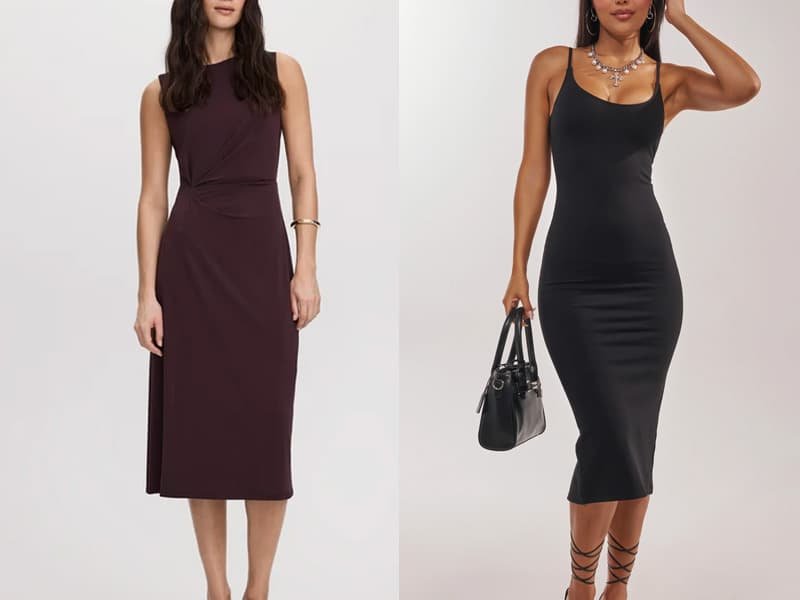
A dress can look close to the body in a product photograph and still behave very differently once someone walks, sits, raises an arm, or wears it for several hours. That is where the confusion between fitted dresses and bodycon dresses usually begins. Retailers often use both terms loosely, while product descriptions may call almost any curve-following silhouette bodycon, even when the garment has tailored shaping, positive ease, a flared hem, or a structured woven construction.
A fitted dress follows selected areas of the body through tailoring, shaping, or controlled stretch, while a bodycon dress is designed to remain close across the bust, waist, hips, and often the thighs. Every bodycon dress is fitted, but not every fitted dress is bodycon. The clearest differences involve ease, fabric stretch, compression, silhouette, movement, coverage, and intended visual effect.
That distinction matters to shoppers, designers, merchandisers, technical teams, and manufacturers because the words influence fabric selection, size charts, pattern reduction, fit comments, product photography, and customer expectations. One misunderstood label can turn a polished fitted midi into a restrictive garment that rides up, or turn a dramatic bodycon concept into a loose dress with no visual impact. The difference becomes much clearer when the dresses are judged on a moving body rather than on a hanger.
What Is a Fitted Dress?
A fitted dress follows the body through controlled shaping without necessarily clinging from neckline to hem. It may sit close at the bust, waist, or hips while retaining movement elsewhere. Darts, seams, panels, tailoring, bias cutting, or moderate stretch can create the silhouette, so fitted is a broad description rather than one fixed dress category.
How the Shape Is Created
A fitted dress begins with proportion rather than tightness. The pattern is shaped around key body areas so the garment looks intentional when worn. Bust darts may remove excess fabric from the upper body, princess seams can create a smoother line from shoulder to hem, and curved side seams can define the waist without forcing the fabric tightly against the skin. The visual result depends on where volume is removed and where practical room is deliberately retained.
The amount of shaping changes with the silhouette. A fitted sheath may follow the bust, waist, and hips while keeping a clean vertical line. A fit-and-flare dress can sit close through the bodice before opening into a fuller skirt. A corset-waist midi may create strong waist definition while allowing more ease below the hip. Each can be called fitted, yet none must behave like a continuously clinging bodycon dress.
Fabric decides how much of the shape comes from the pattern and how much comes from the material. Woven crepe relies heavily on accurate darts and seam balance because it offers limited stretch. Stretch suiting can provide more movement while maintaining a tailored appearance. Bias-cut satin may skim the body through controlled drape, while knit fabric can follow curves more closely but still needs disciplined measurements to avoid becoming unintentionally tight.
Fitted Area | Common Fit Approach | Practical Check |
Bust | Darts, princess seams, shaped cups, or controlled stretch | No flattening, gaping, or diagonal pulling |
Waist | Curved seams, waistband, or measured waist suppression | Waistline remains level while sitting and standing |
Hip | Positive ease, zero ease, or slight stretch | Side seams stay vertical and the fabric does not grip unevenly |
Hem | Straight, tapered, flared, or softly released | Stride remains comfortable and the hem does not climb |
Lining | Compatible stretch or slightly more functional ease | The inner layer does not restrict the shell |
Closure | Zipper, buttons, hooks, or pull-on construction | Closure operates smoothly without concentrated strain |
Fitted Does Not Mean Too Tight
A dress is fitted when it follows the body cleanly and stays balanced during normal movement. It becomes too tight when the wearer must compensate for insufficient room, unsuitable material, or poor pattern distribution. Horizontal drag lines across the bust, waist, or hips often show that the garment is being stretched beyond its intended shape, while rotating side seams suggest that width or length has been placed in the wrong area.
Movement is a more reliable test than a mirror. The wearer should be able to sit without severe pressure at the waist or thigh, walk without the hem climbing excessively, and raise the arms without the entire dress lifting. A close neckline should remain flat instead of opening because the bodice is being pulled downward. Zippers, seams, straps, and armholes should remain stable rather than becoming the points that absorb all of the tension.
The lining must be reviewed separately because it can restrict a dress that appears comfortable from the outside. This is common in satin, velvet, crepe, and occasionwear. A lining that is shorter, narrower, or less flexible than the shell can cause twisting, pulling, or a raised hem. Fit should also be checked after several minutes of wear, since some knits relax with warmth while stable woven fabrics may remain firm but consistent.
Fitted Silhouettes
A fitted dress can take many forms because the term describes the relationship between garment and body, not one fixed skirt shape. A sheath dress is usually close through the torso and hips but maintains a controlled vertical line. A blazer dress may use shoulder structure, lapels, darts, and waist suppression. A corset or bustier dress can be firmly fitted above the waist while the lower section remains straight, draped, pleated, or flared.
Other examples include fitted satin midis with bias or panelled construction, tailored mini dresses with princess seams, ribbed knit dresses that skim rather than compress, column dresses with waist shaping, and shirt dresses controlled by darts, belts, or curved panels. A mesh occasion dress can also be fitted through a close underlayer while the outer mesh retains softness, proving that visual closeness and physical compression are not the same thing.
When evaluating a product online, the word fitted should therefore be treated as an initial clue rather than a complete technical definition. Front, side, and back photographs, fabric composition, stretch notes, garment measurements, lining information, and customer reviews reveal more than the product name alone. The practical questions are where the dress follows the body, how much ease remains, and whether its shape comes mainly from tailoring, stretch, or both.
What Is a Bodycon Dress?
A bodycon dress stays close to the body across most of the bust, waist, hips, and often the thighs. It usually relies on negative ease, stretch material, contour shaping, or supportive inner layers to emphasize the figure. Compared with the broader fitted category, bodycon creates more continuous body contact and a deliberately curve-focused visual effect.

How Bodycon Fit Works
The defining feature of a bodycon dress is not that it looks unusually small on a hanger. Its pattern and material are designed to expand over the body while maintaining a smooth, close silhouette. Many styles use negative ease, which means selected garment measurements are smaller than the corresponding body measurements. The fabric stretches during wear, while the pattern distributes that stretch around the bust, waist, high hip, full hip, seat, and thigh.
A commercial bodycon pattern may use roughly 3% to 12% negative ease at selected circumferences, but that range is only a development reference. The correct reduction changes with stretch percentage, recovery, weight, compression, lining, dress length, size range, and intended comfort. A lightweight jersey with weak recovery may need less reduction than a dense ponte with firm recovery, even when the fibre labels appear similar.
Negative ease also has to be distributed intelligently. Simply narrowing every pattern piece can flatten the bust, distort the neckline, rotate the side seams, pull the back waist upward, or cause the hem to climb. A balanced bodycon dress stays close without demanding constant adjustment. It should not slide downward from the neckline, compress one isolated area excessively, or rely on extreme tightness to create a recognizable silhouette.
Stretch and Recovery
Stretch is the most practical foundation for bodycon clothing because it allows the garment to fit closely while the wearer moves. Yet stretch percentage alone does not predict performance. A fabric can extend easily and still recover poorly, leaving growth at the seat, waist, or knees. Another fabric may have a lower maximum stretch but stronger recovery, producing a more stable silhouette over several hours of wear.
A simple test starts with a relaxed 10 cm section of fabric. If it extends comfortably to 12 cm, the material has about 20% stretch: the 2 cm increase is divided by the original 10 cm length. The test should be repeated across the width and along the length when four-way movement matters. After release, the section should be measured immediately and after resting to see whether it returns close to 10 cm.
Opacity must be checked at the intended stretch level rather than only in a relaxed swatch. White, nude, pastel, and lightly printed fabrics can become visibly sheer across the bust or hip, while dark colours may reveal the lighter fabric base when extended. Weight, knit density, surface texture, lining, and colour all influence coverage. For bodycon development, the real question is not simply whether the fabric stretches, but whether it stretches, recovers, covers, and sews consistently.
Fabric Type | Common Weight Range | Typical Behavior | Frequent Use |
Lightweight jersey | 140-190 gsm | Soft and fluid; may reveal underwear or seam lines | Casual minis and ruched styles |
Rib knit | 180-280 gsm | Flexible texture with recovery that varies by construction | Day dresses and fitted midis |
Ponte or double knit | 220-330 gsm | Stable, smooth, and more supportive | Structured bodycon dresses |
Stretch mesh | 70-160 gsm | Light and often sheer; normally requires layering | Party and occasion styles |
Stretch velvet | 220-320 gsm | Rich surface with directional pile and moderate support | Evening and seasonal dresses |
Compression knit | 280-420 gsm | Firm recovery and stronger shaping effect | Sculpted or bandage-inspired styles |
Bodycon and Bandage Dresses
A bandage dress can be bodycon, but the terms are not interchangeable. Bodycon is the wider category and includes soft jersey dresses, ribbed knits, lined mesh designs, stretch-velvet styles, ruched minis, and structured ponte dresses. These garments may range from lightweight and flexible to firm and supportive, while still sharing the defining feature of continuous curve emphasis.
Bandage dresses usually create a more sculpted effect through dense stretch construction, panelled sections, or band-like strips that provide stronger compression. Their hand feel is often firmer, their seam structure more substantial, and their movement more controlled than a typical jersey bodycon dress. That difference affects sizing, sewing difficulty, seam strength, wearing time, price, and the level of shaping a customer expects.
Product naming should reflect construction rather than marketing exaggeration. A lightweight jersey dress should not be labelled bandage merely because it is tight, since customers may expect visible smoothing and compression. In the opposite direction, a dense panelled compression dress may be undersold if it is described only as fitted. Clear terminology helps align product descriptions, size recommendations, photography, returns expectations, and manufacturing specifications.
Common Bodycon Problems
Bodycon dresses expose small development errors more clearly than looser garments because the fabric remains in direct contact with the body. Hem ride-up is one of the most frequent complaints and can result from excessive negative ease at the hip or thigh, insufficient hem circumference, weak recovery, inadequate back length over the seat, or a lining that behaves differently from the outer material. Adding length alone does not always correct the underlying imbalance.
Transparency is another major risk. A material that looks opaque on a cutting table may become sheer when stretched across the bust, hip, or seat. Other recurring issues include rolling necklines, cutting armholes, rotating side seams, waving zippers, moving ruching, stretched straps, broken seams, and internal layers that climb independently. These problems usually indicate that pattern reduction, material performance, lining, stitch choice, and fit testing were treated separately instead of as one system.
A robust fit review should include walking, sitting, turning, raising the arms, climbing a step, and wearing the garment long enough to expose growth or migration. The dress should then be rechecked for hem position, neckline security, side-seam balance, fabric recovery, and surface smoothness. A successful bodycon style looks intentional in motion, not only during the first few seconds of a standing fitting.
What Are the Key Differences?
The key difference is the intensity and continuity of fit. A fitted dress may define selected areas while preserving controlled space elsewhere, whereas a bodycon dress stays close across most of the silhouette and commonly uses negative ease. Fabric demands, compression, movement, lining, hem behavior, coverage, and the visual message also separate the two categories.

Fit and Ease
Ease is the clearest technical difference between many fitted and bodycon dresses. Positive ease means the garment is larger than the body at a given measurement point, zero ease means the measurements are similar, and negative ease means the garment is smaller and relies on stretch or flexibility to fit. A fitted woven dress often uses positive ease at the bust, hip, and thigh, while still defining the waist through darts or curved seams.
A fitted stretch dress may use zero ease or a small amount of negative ease and still look polished rather than compressive. Bodycon designs more commonly use negative ease across several points, but the reduction should not be identical everywhere. The waist may need stronger contouring, while the bust and full hip need enough capacity to prevent flattening, distortion, or seam rotation.
For a wearer with a 96 cm hip, a tailored fitted dress might measure about 98-102 cm at the hip, a fitted stretch style might sit around 94-98 cm, and a soft bodycon knit might measure roughly 88-94 cm. These are illustrative development ranges rather than universal rules. Fabric recovery, lining, length, slit placement, intended compression, and target market can move the correct measurement in either direction.
Comparison Point | Fitted Dress | Bodycon Dress |
Term type | Broad fit description | Specific curve-focused style |
Body contact | Selected areas or controlled overall fit | Continuous contact across most major body areas |
Typical ease | Positive, zero, or slight negative ease | Frequently negative ease |
Common structure | Darts, seams, tailoring, shaped panels, or bias | Stretch, contour seams, compression, and supportive layers |
Lower-body shape | Straight, tapered, flared, or relaxed | Usually close through hip and thigh |
Movement | Often supported by pattern ease and skirt shape | More dependent on stretch, recovery, and slit placement |
Main fit risk | Pulling, gaping, or misplaced waist shaping | Ride-up, sheerness, seam strain, or excessive compression |
Visual effect | Defined, polished, tailored, or softly shaped | Sleek, curve-emphasizing, and more body-conscious |
Fabric and Structure
Fitted dresses can be developed in both woven and knitted materials. Crepe, satin, jacquard, stretch suiting, velvet, denim, and woven blends can hold shaping created through darts, princess seams, waist seams, and pressing. Knit materials are also used when a softer or more flexible fit is wanted. In these designs, closeness can come from structure, stretch, or a controlled combination of both.
Bodycon styles depend more heavily on stretch and recovery. Jersey, rib knit, ponte, stretch mesh, double knit, stretch velvet, and compression fabrics allow the garment to expand over the body while remaining close. Internal construction may include power mesh, elasticated edges, contour panels, stretch binding, supportive cups, boning, or stabilized ruching, especially when the neckline or upper body requires additional security.
A single design can combine the two approaches. A corset bodycon dress may use structured cups and boning through the bodice while relying on stretch jersey or mesh through the skirt. A fitted satin dress may have a reinforced upper body and a fluid lower section. The category name is useful, but the product’s real behavior comes from the interaction between shell fabric, lining, support, seams, openings, and pattern geometry.
Comfort and Movement
A fitted dress is not automatically more comfortable, and a bodycon dress is not automatically restrictive. A rigid fitted style can become uncomfortable when the armhole is too high, the waist is positioned incorrectly, or the lining lacks enough room. A well-developed bodycon knit may feel highly flexible because the fabric stretches evenly with the wearer rather than concentrating pressure around one seam or closure.
The movement risks are different. Fitted dresses commonly show pulling at the bust, waist, armhole, or hip when functional ease is missing. Bodycon dresses are more likely to show hem ride-up, neckline movement, seam strain, excessive compression, or fabric growth. Length matters as well: a fitted maxi can move freely with adequate sweep, while a narrow bodycon midi or maxi may need a slit and tested four-way stretch to support a normal stride.
Static photographs cannot reveal the full wearing experience. A realistic fitting includes sitting on a standard chair, walking at normal pace, raising both arms, turning the torso, bending slightly, and climbing one or two steps. After movement, the garment should be checked for side-seam rotation, neckline change, hem migration, lining restriction, and recovery. Comfort is a measurable result of balanced design, not a vague promise attached to a product label.
Visual Effect and Occasion
Fitted dresses can communicate a broad range of moods because definition may be concentrated in selected areas. They can appear tailored, professional, romantic, minimal, formal, or softly sensual. That flexibility makes them common in workwear, dinner dresses, wedding guest styles, formal daytime clothing, and contemporary occasionwear. The same fitted silhouette can feel restrained in matte crepe and more dramatic in satin, velvet, or embellished mesh.
Bodycon dresses create stronger and more continuous figure emphasis, making them natural choices for parties, birthdays, clubwear, cocktails, vacations, dinners, and social events. Yet bodycon does not automatically mean revealing. A long-sleeve ribbed midi can work during the day, and a fully lined high-neck maxi can appear refined. Neckline, length, opacity, colour, sleeve coverage, fabric quality, and support influence appropriateness more than the category name alone.
A fitted satin midi with a low back may expose more skin than a dense long-sleeve bodycon dress. A bodycon maxi with complete lining and a controlled slit may look more formal than a short fitted blazer dress. The most useful comparison therefore asks how the whole design behaves and communicates, rather than treating fitted as modest and bodycon as provocative.
Which Dress Works Best?
A fitted dress often works best when controlled definition, wider occasion flexibility, or additional room in selected areas is preferred. A bodycon dress suits continuous curve emphasis and a close, stretch-dependent silhouette. The better choice depends on body proportions, comfort, support, fabric, coverage, length, planned activity, and the amount of movement required.

Body Shape and Proportion
No body type is automatically excluded from fitted or bodycon dresses. Successful fit depends more on proportion, construction, and personal preference than on simplified labels such as hourglass, pear, rectangle, or apple. Two people with the same bust, waist, and hip measurements can have different shoulder widths, bust positions, torso lengths, seat shapes, postures, and hip distributions, all of which influence where the garment creates tension or balance.
A wearer who prefers waist definition without strong hip contact may feel more comfortable in a fitted bodice with an A-line or softly flared skirt. Someone seeking a long, controlled vertical line may prefer a fitted sheath or column. A person who enjoys continuous curve emphasis may choose bodycon, particularly when the dress has suitable fabric weight, secure support, and seam placement that follows the body’s actual proportions.
Design details can make a greater difference than the category itself. Princess seams create vertical direction and controlled contour, side panels can reshape the visual line, and ruching can soften surface tension. Wider straps improve support, strategic slits help movement, prints can reduce the visibility of minor fit lines, and heavier fabrics often provide smoother coverage than thin jersey. The useful question is not which body type is allowed to wear the dress, but whether the dress is balanced for the individual wearer.
Occasion and Styling
Fitted dresses generally have wider occasion flexibility because the silhouette can be tailored, fluid, or softly structured. A fitted crepe sheath may suit a professional setting, a satin midi can work for dinners or wedding guest dressing, and a structured mini may fit a party wardrobe without clinging continuously through the thigh. Accessories, outerwear, footwear, and fabric finish can move the same basic fit from daytime to evening.
Bodycon dresses are closely associated with parties and nightlife, yet the category extends well beyond clubwear. A rib-knit bodycon midi can be styled for daytime, a stretch-velvet dress can work for a winter event, and a fully lined mesh maxi may suit a formal evening when the neckline and transparency are controlled. The garment’s length, support, colour, texture, and coverage determine how it reads in context.
Practical occasion planning should consider how long the wearer will sit, whether the event includes dancing or walking, how warm the venue will be, whether a standard bra is required, and how pale or stretch fabric behaves under strong photography lighting. A dress that looks impressive for a short photograph may not perform during a six-hour event, so mobility, temperature, care, and security belong in the styling decision.
Choosing the Right Size
Sizing should begin with accurate body measurements and an understanding of which measurement controls the garment. In a fitted woven dress, the bust or hip frequently determines the size because the material cannot expand much. Choosing only by the waist can result in a dress that will not close or that pulls sharply elsewhere. In many cases, reducing a waist during alteration is easier than creating missing bust or hip capacity.
For bodycon styles, the fabric’s stretch and recovery must be considered before deciding to size down. Excessive reduction can create transparency, rolling edges, distorted seams, neckline movement, and hem ride-up. A properly engineered bodycon dress already includes the intended negative ease. The size chart should also be checked carefully because some brands publish body measurements while others list finished garment measurements, and those numbers cannot be interpreted in the same way.
When someone falls between sizes, the decision should include the controlling body measurement, stretch in both directions, recovery, lining, bust support, dress length, slit position, intended compression, and customer comments about sheerness or ride-up. Measurements should be taken over the undergarments expected to be worn. A size that appears correct over one bra or shapewear garment can behave differently over another foundation.
Lining and Shapewear
Lining affects fit more than many shoppers and product teams expect. It can improve opacity, support, comfort, seam coverage, and the way the shell moves, but it can also become the main source of restriction when it is shorter, narrower, or less elastic than the outer fabric. In a fitted woven dress, the lining normally needs enough functional ease to avoid pulling the shell during sitting or walking.
In a bodycon dress, the lining should stretch and recover in a way that supports the intended silhouette. A non-stretch lining beneath a stretch shell prevents the garment from expanding evenly, while weak lining recovery can create internal bunching. Power mesh may add smoothing or support, but it also increases compression, so the outer pattern, inner layer, cups, boning, elastic, and grip tape need to be fitted together rather than approved separately.
Shapewear is a personal styling choice, not a correction for poor garment engineering. It changes body measurements, waist position, bust balance, and surface smoothness, which means a dress may fit differently over firm shapewear than over standard underwear. For both personal shopping and product development, the intended foundation garment should be known before final fit decisions are made.
How Are These Dresses Developed?
Fitted and bodycon dresses are developed by defining the intended silhouette, testing fabric performance, engineering the pattern around that material, reviewing fit in motion, and converting the approved sample into measurable production standards. Strong development links design, fabric, pattern, grading, construction, quality control, and bulk manufacturing instead of treating each stage as a separate task.

Defining the Fit
The phrase make it fitted is not a complete technical instruction. A development team needs to know which areas should follow the body, how much compression is intended, where movement is required, and how the dress should look from the front, side, and back. A useful brief identifies whether the style is tailored fitted, softly fitted, figure-skimming, bodycon, compression bodycon, bandage-inspired, or fitted only through a selected area.
The technical pack should record the target sample size, bust, waist, high hip, full hip, thigh, hem, garment length, neckline depth, armhole position, strap length, slit height, and critical vertical placements. It should also describe the desired relationship between garment and body. Comments such as close at the waist without pulling, smooth over the high hip, or neckline must remain flush are more useful than subjective phrases such as make it flattering.
A fit reference should be identified before sampling. This may be an approved previous style, a physical garment, a block, a reference image, or a combination. When photographs are used, the team should clarify whether they represent silhouette, neckline, length, fabric mood, or construction. A photograph cannot reveal stretch, internal support, seam allowances, or exact measurements, so it should guide the visual target rather than replace technical information.
Fabric Testing
Fabric approval should happen before the pattern is treated as final. Two black jerseys with the same fibre composition can perform differently because of knit density, yarn tension, finishing, weight, and recovery. For fitted and bodycon dresses, testing commonly covers stretch in both directions, recovery, shrinkage or growth, opacity under tension, fabric weight, colour consistency, pilling where relevant, seam slippage for woven materials, and spirality for knits.
Stretch testing has to be consistent. Pulling one fabric gently and another to its absolute limit produces misleading percentages. The agreed extension should reflect realistic wear. Recovery should be checked immediately and after resting, while opacity should be reviewed on a body or controlled stretch frame. Pale colours often look acceptable on a cutting table but become transparent over the bust or hip, and prints can expose a lighter base colour when extended.
Lining and trim compatibility are part of the same evaluation. The lining should not restrict the shell, zippers must tolerate the expected tension, elastic should recover without cutting into the body, and cups or boning should support the intended neckline. Heat-sensitive materials also need pressing tests because shine, pile damage, bonding changes, or permanent stretch can appear during production even when the initial sample looks correct.
Pattern and Grading
The pattern translates a visual idea into a three-dimensional garment. Fitted dresses may use darts, princess seams, curved side seams, waist shaping, bias placement, or panel construction. Bodycon patterns must also account for negative ease and fabric recovery. Bust balance is especially important because excessive reduction can flatten the bust and lift the front hem, while insufficient shaping can create neckline gaping, armhole exposure, or loose fabric around the under-bust.
Hip and seat shaping influence side-seam position and hem stability. A pattern that lacks enough back length may pull upward over the seat, while insufficient thigh allowance can make the skirt climb during walking. These problems are not always corrected by selecting a larger size or adding total width. Length and circumference have to be placed in the exact area where the body needs them, while preserving the intended silhouette.
Grading must carry the design logic across the size range. Adding the same amount at every seam can distort neckline width, strap placement, waist contour, panel proportions, cup position, and slit location. Complex styles with strong negative ease, corsetry, shaped cups, halter necklines, or backless support should be reviewed in at least one smaller and one larger size in addition to the base sample, because stretch does not compensate evenly across every body dimension.
Sampling and Bulk Control
A sample should be evaluated dynamically rather than approved from standing photographs alone. The wearer should walk, sit, turn, raise the arms, bend slightly, climb a step, and remain in the garment long enough to expose fabric growth or migration. The team should review neckline security, bust support, armhole coverage, strap tension, waist level, side-seam position, hip lines, back-waist balance, hem ride-up, slit opening, zipper strain, lining behavior, opacity, and recovery.
Fit comments should be specific and prioritized. A statement such as improve the fit gives the pattern team little usable direction, while add 1 cm across the front high hip without changing the back measurement identifies both the location and the intended correction. Marked photographs, revised measurements, pattern version numbers, and clear approval status reduce the risk that every sample round begins with a different interpretation of the same issue.
After approval, the sample standard has to be translated into production controls. The bulk fabric lot should be checked against the approved material for weight, stretch, recovery, colour, hand feel, shrinkage, and surface appearance. The pattern version, graded nest, measurement chart, construction sheet, trim standards, seam methods, pressing approach, labels, and packaging requirements should be locked before the line begins. A small material change can alter the fit of a bodycon style even when the pattern is unchanged.
Reliable manufacturing evidence includes an approved fit sample, approved pre-production sample, first-piece review, inline measurements, end-line checks, and final inspection. Critical points such as straps, necklines, cups, waist placement, and body lengths may require tighter tolerances than broad hem dimensions. The tolerance should be agreed before production, not argued after completion. Archived patterns, samples, material records, and comments also make repeat orders more consistent because the product can be reproduced from evidence rather than memory.
For brands developing fitted or bodycon collections, the most useful starting package includes a tech pack or reference garment, target measurements, intended fabric, colourways, quantity by style and colour, size range, target launch date, and expected price position. Duolan Apparel can review these inputs through a dress-focused development process covering fabric, pattern, fit, sampling, production preparation, and quality checkpoints. A detailed brief makes it possible to identify risks early and prepare a quotation based on the actual product rather than a generic estimate.
Production Stage | Main Control | Practical Evidence |
Fabric approval | Stretch, recovery, weight, colour, opacity, and shrinkage | Approved test results and sealed fabric swatch |
Fit approval | Silhouette, comfort, movement, and measurements | Signed fit sample, images, and revision comments |
Pre-production | Bulk materials, construction, trims, and workmanship | Approved pre-production sample and locked specification |
First piece | Machine settings, seam quality, and key measurements | First-piece inspection record before line release |
Inline inspection | Measurements, tension, appearance, and defect trends | Check reports completed during sewing |
End-line review | Finished garment consistency and pressing result | End-line measurements and visual review |
Final inspection | Quantity, sizing, workmanship, labels, and packing | Final inspection and packing verification report |
Repeat production | Consistency with the approved original standard | Archived sample, pattern, fabric record, and specification |
Custom development inquiry: Send your tech pack, reference sample or images, target fabric, size range, style and colour quantities, target price position, and launch date to duolan apparel. The project can then be reviewed for fit direction, material suitability, sampling requirements, production risks, timeline, and a product-specific quotation.
Share:
Our Services
Categories
Table of Contents
Here, developing fashion collections is more than manufacturing garments — it’s a collaborative process focused on transforming ideas into well-executed, market-ready products. From fabric sourcing and sample development to scalable production and delivery coordination, every stage is built to support quality, consistency, and efficient collection launches across global markets.