 Skip to content
Custom Dress Manufacturer for Golden Sample Standards
Approved dress samples become dependable production standards only when fit, materials, workmanship, documents, and inspection points are locked before bulk release.
- 6 control groups aligned before production: fit, fabric, trims, construction, documents, and QC.
- 12 linked stages from signed sample approval to reorder record preservation.
- Collection programs commonly involve 10-30 styles and 20,000-80,000 total pieces.
- 50+ quick-response lines support controlled trials, priority styles, and repeat production.
Golden Sample Control for Brand-Level Dress Programs
Product Development Teams
Development teams need more than an attractive prototype. Each approved dress must carry clear decisions on silhouette, fit priorities, fabric behavior, support structure, construction method, and revision status. Duolan organizes comments into pattern, measurement, material, trim, workmanship, visual, and production actions, then records the approved direction before bulk planning begins. A corset dress, satin slip dress, and mesh occasion dress may sit in one collection, yet each requires a different approval route. Golden sample control gives every style a defined production basis instead of relying on memory or verbal instructions.
Buying and Sourcing Teams
Sourcing teams need a manufacturer able to connect signed samples with BOM versions, measurement specifications, approved materials, production allocation, inspection points, and delivery planning. Duolan reviews whether a style is ready for one factory, several lines, a pilot run, or specialist-process coordination. The goal is not to add paperwork. The goal is to prevent hidden substitutions, inconsistent workmanship, unclear tolerances, and late production disputes. Every release decision can be traced to an approved sample, a current file set, and a defined control owner.
Quality and Production Teams
Quality teams need inspection standards understood by sample rooms, pattern teams, cutting departments, sewing lines, finishing teams, and packing teams. A sealed dress alone cannot explain every measurement method, tolerance, trim specification, stitch detail, or packing rule. Duolan links the physical reference with written specifications and stage-based checks. Production teams then know what must be verified before cutting, at first-piece review, during inline inspection, before finishing, and before final packing. Clear references reduce interpretation gaps between development and manufacturing.

What a Golden Sample Means in Dress Manufacturing
A golden sample is the final approved physical reference used with controlled technical documents to guide bulk production, inspection, shipment, and repeat orders.
More Than the Best-Looking Sample
A golden sample is not simply the most attractive sample from development. It should represent the version approved for production after fit, materials, measurements, construction, visible details, labels, and relevant packing requirements have been reviewed. The garment may also be called an approved PP sample, sealed sample, gold seal sample, production standard sample, or approved production sample. Terminology varies across brands, so the approval status must be written clearly.
A valid reference normally carries style number, color, size, revision number, approval date, approval status, and authorized signatures or written confirmation. Open comments must remain visible. Any later change to fabric, trim, measurement, workmanship, labeling, or packing must be recorded rather than quietly applied on the production floor.
A Physical Reference Supported by Files
The physical garment works together with an approved tech pack, measurement specification, BOM, fabric and trim records, construction notes, grading rules, label files, packing instructions, and revision history. When an approved sample and a written file appear to conflict, production should pause for written clarification. No production team should decide privately which version seems more logical.
Duolan treats the signed sample as one part of a controlled production package. The garment shows appearance, handfeel, drape, balance, support, and workmanship. The files explain measurable and repeatable details. Both are needed to protect bulk consistency across lines, factories, colors, sizes, and later reorders.
Why Approved Samples Still Fail in Bulk
Most sample-to-bulk failures come from uncontrolled differences in materials, measurements, workmanship, placement, inspection criteria, or packing execution.
| Risk Area | Common Bulk Failure | Standard Required Before Release | Duolan Control Action |
|---|---|---|---|
| Fabric Batch Difference | Shade, shine, stretch, weight, handfeel, or drape changes | Approved swatch, lab dip, composition, weight, stretch, direction, and lot plan | Fabric review, incoming comparison, shade control, and issue escalation |
| Trim Replacement | Zipper, lining, cup, boning, elastic, bead, or hook changes | Approved BOM, trim card, size, finish, color, supplier, and substitution rule | Trim matching, approval record, incoming verification, and no silent replacement |
| Measurement Deviation | Bust, waist, hip, length, neckline, strap, slit, or lining moves outside spec | Approved points of measure, tolerance, measuring method, pattern version, and size grading | Pattern check, first-piece measurement, inline audit, and correction before continuation |
| Construction Difference | Sample-room method is not repeated on the line | Seam type, allowance, stitch density, reinforcement, lining attachment, and pressing standard | Workmanship sheet, operation briefing, process trial, and first-piece sign-off |
| Color and Placement Difference | Print, lace, sequin, embroidery, bead, or panel alignment shifts | Placement dimensions, directional rules, artwork, approved strike-off, and sealed reference | Marker control, operation template, inline placement check, and defect isolation |
| Undefined QC Standard | Factory and brand use different acceptance criteria | Defect definitions, inspection stages, sample size, measurement rules, and escalation process | Pre-production alignment, checkpoint list, inline records, and final inspection basis |
| Packing and Labeling Difference | Care label, barcode, folding, polybag, ratio, or carton mark is wrong | Approved label files, packing guide, size sticker, assortment, and carton requirement | Pre-production packing review, first packed piece, carton audit, and shipment file check |
Golden Sample Compared with Other Dress Samples
Every sample stage answers a different question. Production risk rises when a prototype, fit sample, photo sample, or showroom sample is treated as a final manufacturing standard.
| Sample Type | Main Decision | Final Bulk Materials Required? | Suitable as Production Standard? | Key Limitation |
|---|---|---|---|---|
| Prototype Sample | Shape, design direction, and first construction approach | Not always | No | May use substitute fabric, trims, or simplified workmanship |
| Fit Sample | Body balance, measurements, comfort, and pattern correction | Preferred but not always final | No | Fit may be approved while color, trims, labels, or packing remain open |
| Revised Sample | Confirmation of selected corrections | Depends on stage | Not automatically | Revision status must be linked to current comments and files |
| Photo Sample | Visual finish for campaign or ecommerce photography | Often close to final | Not automatically | May prioritize appearance over complete production readiness |
| Salesman Sample | Range presentation and sales review | Often representative | Not automatically | May be made before final bulk material allocation |
| Size Set Sample | Grading and size consistency | Usually expected | Supporting reference | Confirms size range, not every production and packing detail |
| PP Sample | Final pre-production approval using confirmed specifications | Yes | Yes, after approval | Approval must state whether every point is final or conditionally accepted |
| Golden Sample | Sealed physical benchmark linked to approved production files | Yes | Yes | Must remain under version control and available for production and QC |
| TOP Sample | Check of actual production output | Comes from bulk | Verification sample | Confirms execution after production has already started |
| Shipment Sample | Final packed product reference | Comes from completed goods | Shipment evidence | Too late to replace proper pre-production control |
Six Standards Every Golden Sample Must Lock

Fit and Measurement
Fit approval covers body balance as well as numerical dimensions. Bust position, waist placement, hip contour, shoulder balance, strap length, neckline security, armhole shape, skirt fall, hem level, slit height, and lining length should match the intended silhouette.Stretch dresses also need recovery and relaxation rules. Structured dresses require cup, boning, seam, and support positions to be checked on body or mannequin. Duolan links fit comments with pattern revision, measurement updates, and the approved sample version before production release.

Fabric and Color

Trims and Accessories
Zippers, hooks, cups, boning, elastic, adjusters, eyelets, lining, lace, beads, sequins, labels, and packing items need item-level approval. Small replacements can change fit, comfort, durability, appearance, and production time. The approved BOM should identify size, material, color, finish, supplier reference, position, and permitted equivalent where applicable. Duolan uses trim cards and incoming checks to keep sample-room components aligned with bulk purchasing and line use.
Construction Method
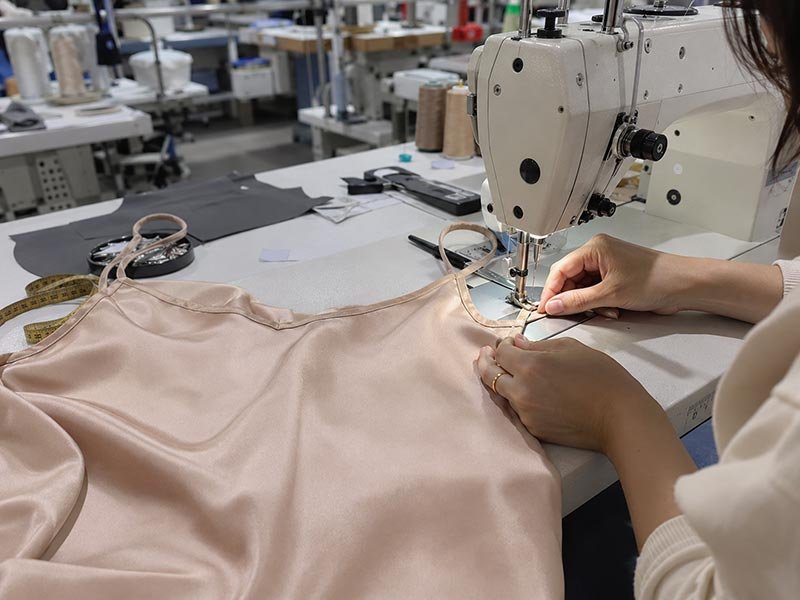
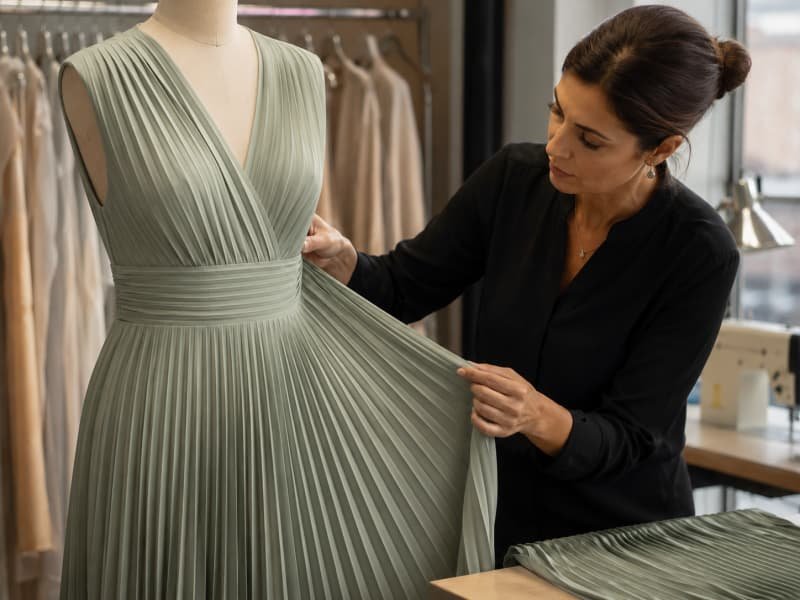
A sample can look correct while hiding a production method that is difficult to repeat. Seam type, seam allowance, stitch density, reinforcement, binding, facing, lining attachment, zipper insertion, boning channel, cup fixing, gathering ratio, pleat direction, hem finish, pressing, and decoration attachment must be understood by the production team. Duolan converts critical workmanship into operation notes, reference photos, process trials, and first-piece checkpoints before full output begins.

Controlled Documents

Inspection Basis
The Document Pack Behind Every Approved Dress
Approved Tech Pack
Measurement Specification
BOM and Trim Card
The BOM records fabric, lining, interlining, zipper, elastic, cup, boning, hook, adjuster, lace, sequin, bead, label, hangtag, polybag, sticker, and carton materials.
A trim card adds visual confirmation. Duolan reviews color, finish, size, supplier reference, consumption, and substitution status before purchasing and bulk use.
Fabric and Color Record
Construction Sheet
Approval History
Approval history records what changed, who confirmed it, which version became valid, and which comments remain open. A late adjustment to strap length, lining coverage, slit height, zipper, label, or packing cannot remain outside the master record. Duolan issues a revision summary or production-readiness note before bulk release so no department follows an outdated decision.
Dress Categories Requiring Stronger Golden Sample Control
High-risk dress categories need product-specific approval points because fabric behavior, body fit, support, transparency, and decoration can change quickly in bulk production.

Satin Dresses

Bodycon Dresses

Corset and Bustier Dresses

Mesh and Layered Dresses

Sequin and Embellished Dresses

Halter and Backless Dresses

Fit and Measurement Standards for Approved Dresses
Golden sample approval needs a measurable fit language. Visual balance, wearing security, pattern shape, and size specifications must support the same silhouette.
Fit Is a Three-Dimensional Standard
Dress fit cannot be reduced to bust, waist, hip, and length alone. A fitted mini dress may meet flat measurements yet fail at bust balance, neckline security, back opening, strap angle, side-seam position, or hem stability. A satin midi may match dimensions but hang incorrectly because grain direction, bias behavior, or waist placement changed. A corset style may measure correctly but place cups or boning outside the intended body positions.
Duolan reviews contour, support, shape, bust balance, waist fit, hip line, skirt fall, movement, and visual proportion. Fit comments are translated into pattern corrections and updated specifications. Photos, marked measurements, and revision notes support the approved sample. Production teams then receive measurable points and visual references rather than subjective instructions such as “make it fit better.”
Measurement Methods Must Stay Consistent
Measurement values are dependable only when the method is defined. Garments may be measured flat, relaxed, extended, fastened, unfastened, before steaming, or after finishing. Stretch styles need a relaxation time and an agreed tension rule. Ruched dresses need clear points beneath or across gathers. Asymmetric hems, draped fronts, adjustable straps, cups, boning, and slits need specific diagrams or notes.
Duolan aligns the measurement specification with the pattern version and sealed sample. First-piece and inline teams use the same measuring method. Out-of-tolerance findings are reviewed before continued output. Tolerance follows the brand’s approved manual and product risk; high-visibility points such as neckline, strap, bust, waist, slit, and hem may require tighter control than less sensitive internal measurements.
Size Grading Must Protect the Approved Silhouette
A base-size golden sample does not automatically confirm every size. Size grading should preserve bust balance, waist position, cup placement, strap relationship, neckline security, slit proportion, and skirt fall across the approved range. Structured and fitted dresses often need more than mechanical grade increments.
Duolan can support size-set review for styles where grading risk is high. Pattern teams compare the base-size logic with larger and smaller sizes, then adjust sensitive points where needed. The final measurement specification, grading rule, and approved size references become part of the production package. A stable size system lowers return risk and prevents a strong base sample from turning into uneven bulk sizing.
Fabric and Color Locking Before Bulk Release
Material approval must protect the finished silhouette, not only the fabric name. Bulk fabric needs defined performance, appearance, and lot-control standards.
Fabric Behavior Must Match the Approved Shape
Different silhouettes demand different material behavior.
- Satin needs controlled drape, shine, and seam response
- Mesh needs stable stretch, recovery, and transparency
- Jersey needs body recovery and opacity
- Chiffon needs layer balance and hem stability
- Crepe needs controlled texture and fall
- Velvet needs nap direction and shade consistency
- Lace needs motif placement and edge planning
- Sequin fabric needs a stable base, manageable weight, and safe skin contact
Duolan reviews fabric direction against fit, support, lining, price position, production method, and intended visual finish. Approved records can include composition, weight, width, stretch, recovery, shrinkage, surface direction, handfeel, color standard, and approved swatch. When a nominated fabric cannot support the target effect or bulk stability, the issue is raised before the golden sample is sealed.
Color Approval Needs a Bulk-Lot Plan
A lab dip, strike-off, or small swatch can approve color direction, but bulk shade still needs lot management. Satin and velvet can appear different under changing light. Mesh and lining combinations can shift the perceived color. Printed, embroidered, or embellished materials may introduce several color standards in one garment. Large collection programs may use the same color across multiple fabrics, making cross-material coordination essential.
Duolan compares incoming bulk material with the approved standard under suitable lighting and reviews shade grouping where required. Directional materials are marked for cutting. Mixed lots are controlled rather than blended without review. If shell, lining, trim, or decoration shades do not work together, production release is held for confirmation.
Material Substitution Requires Written Approval
A replacement fabric can affect fit, cost, lead time, care instructions, opacity, seam behavior, and appearance. Similar color or composition does not guarantee equal performance. Replacement decisions should include a side-by-side swatch, test information where relevant, expected garment effect, price impact, and production timing.
Duolan does not treat a substitute as approved because it appears close in a photograph. A revised material record and written confirmation are required before use. For high-risk dresses, a material change may require a new fit or PP sample. Controlled substitution protects the brand from receiving bulk garments built on an unapproved material assumption.


Trim, Accessory, and BOM Alignment
Small components carry major production risk. Every visible and structural item must match the approved dress, BOM, and production-use specification.
Structural Trims Affect Fit and Wear
- Bra cups, boning, elastic, anti-slip tape, underwires, shoulder pads, interlining, hooks, adjusters, eyelets, and zippers influence support, comfort, and shape. A cup with a slightly different curve can alter neckline balance. A softer boning grade can reduce waist structure. An elastic with weaker recovery can change body fit. A zipper with different tape stiffness can distort a satin seam.
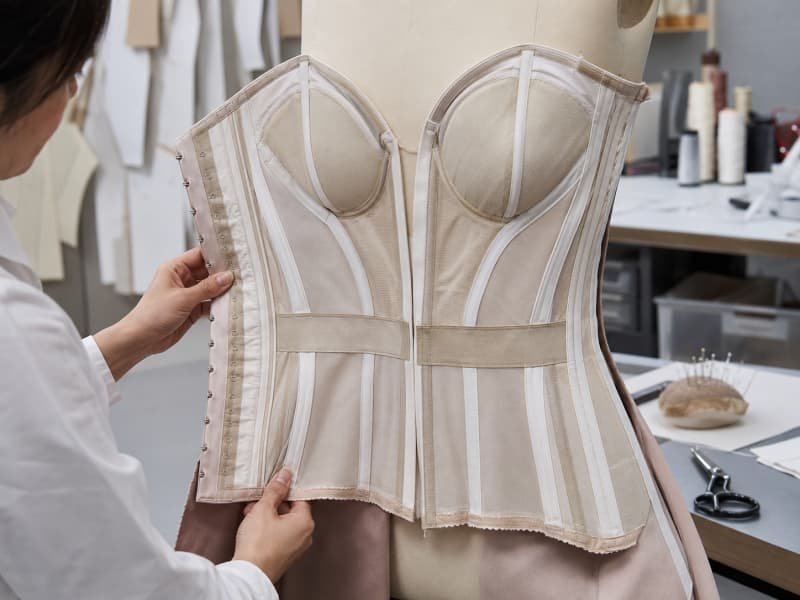
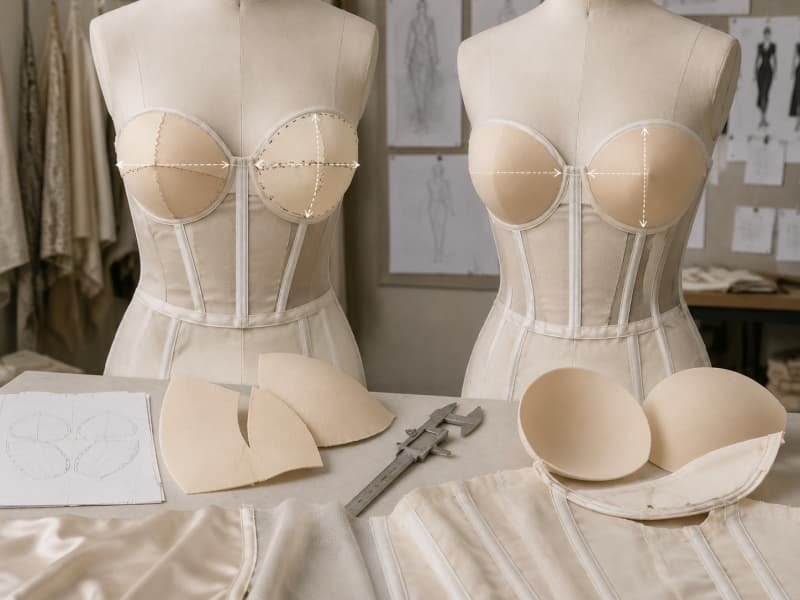
Duolan records item size, material, color, finish, strength, placement, and approved reference. Structural trims are reviewed with the garment rather than as isolated purchasing items. For corset, bustier, halter, strapless, and bodycon dresses, critical components can be checked through process trials and first-piece fit before bulk output.
Decorative Trims Need Placement and Security Standards
- Lace, sequin, bead, pearl, rhinestone, fringe, flower, appliqué, embroidery, and printed elements need more than a product code. Motif direction, density, spacing, symmetry, seam clearing, edge treatment, attachment method, skin contact, replacement allowance, and packing protection can all affect quality.
Duolan links approved decorative components with placement maps, artwork, panel references, or sealed samples. Incoming materials are checked for color, finish, and usable quality. Production teams receive a clear method for placing and securing decorative elements. Inline inspection focuses on repeated positions, missing components, loose attachment, sharp contact points, and visual balance.
BOM Control Prevents Silent Replacement
- A production BOM should identify every shell fabric, lining, interlining, trim, label, hangtag, sticker, polybag, insert, and carton requirement. Each line can include color, size, finish, supplier reference, consumption, placement, and approved-equivalent rule. Version control matters because late sample comments often change several BOM items at once.
Duolan compares the BOM with the sealed sample and trim board before purchasing and production release. Any unavailable item is escalated with a proposed alternative, expected effect, timing, and cost impact. No silent replacement should enter the line. A controlled BOM gives purchasing, production, QC, and packing teams one shared material standard.
Construction and Workmanship Standards for Bulk Consistency

Seam and Stitch Control

Lining and Facing Control
Corset Support Control
Gathering and Pleating Control

Lace and Mesh Joining

Embellishment Attachment
Approval, Sealing, and Version Control
Approval Must Be Unambiguous
Both Sides Need Accessible References
Later Changes Create a New Valid Version
Any adjustment after sealing – fabric, shade, trim, measurement, construction, label, packing, or placement – needs written authorization and an updated revision record. The old version should be marked obsolete. Production teams must know which version replaced it and when the change became effective. Duolan issues a revision summary or updated production-readiness note so purchasing, pattern, production, QC, and packing teams do not follow mixed instructions.
From Golden Sample Approval to Bulk Production
Approval and File Alignment
The process begins when the approved sample status is confirmed and every open comment is identified. Duolan compares the physical garment with the current tech pack, measurement specification, BOM, fabric record, trim card, construction notes, labels, and packing requirements.
Conflicts are raised before purchasing or cutting. A production-readiness note records the valid basis for release.
Material and Production Preparation
First-Piece and Inline Control
The first completed piece is compared with the golden sample, measurements, BOM, and workmanship requirements. High-risk issues are corrected before full output expands.
Inline QC then checks materials, cutting, measurements, sewing, placement, decoration, finishing, and issue correction. Production does not wait until final inspection to discover a repeated deviation.
Final Release and Reorder Preservation
Finished goods are reviewed for measurements, appearance, workmanship, shade, function, labels, packing, and brand-specific inspection requirements. Approved patterns, BOM records, material references, workmanship notes, inspection findings, and packing standards are preserved for repeat orders. Reorder planning begins from the previous controlled standard rather than restarting from memory.
Production Paths for Multi-Style Dress Orders
Standard Dress Styles
Complex Structured Styles
Quick-Response Styles
Special-Process Styles
Multi-Factory Programs
Reorder and Replenishment Styles

First-Piece and Pilot Run Verification
Early production verification prevents one hidden problem from being repeated across thousands of dresses. High-risk operations are tested before full output expands.
Critical Operation Trial
A process trial isolates difficult operations before complete garments move through the line. Trials may cover satin seam tension, mesh joining, corset boning, cup attachment, zipper insertion, ruching ratio, pleat shaping, sequin clearing, bead security, lace placement, or pressing behavior. Duolan compares the trial with approved workmanship and adjusts machines, tools, templates, or methods before production volume increases.
First-Piece Confirmation
The first completed piece is reviewed against the golden sample, measurement specification, BOM, material references, construction notes, labels, and visible finish. Fit-sensitive styles may also require mannequin or body review. Findings are recorded and corrected before the line continues. First-piece approval confirms that the production method – not only the sample-room method – can achieve the agreed standard.
Pilot Run Review
A pilot run uses a limited production quantity to test repeatability across operators and operations. It is valuable for corset, bodycon, satin, mesh, sequin, halter, backless, asymmetric, and heavily decorated dresses. Duolan checks variation, bottlenecks, decoration loss, measurement drift, pressing response, and packing effects. Full release follows only after recurring issues are controlled.
Inline QC Against the Golden Sample

Incoming Material Check
Bulk fabric, lining, trims, labels, and packing items are compared with approved references. Shade, handfeel, weight, stretch, direction, finish, size, and visible defects are reviewed according to the product risk. Unapproved substitutions or mixed lots are isolated before cutting or line use.

Cutting and Bundle Check

Sewing Line Check

Measurement Check

Workmanship and Placement Check

Pressing and Finishing Check

Final Inspection, Labeling, and Packing Control
Final release combines golden sample comparison with measurements, defect standards, label files, packing instructions, and shipment requirements.
Final Garment Inspection
Finished dresses are checked for measurements, appearance, shade, workmanship, function, cleanliness, pressing, decoration security, and consistency with the approved reference. Golden sample comparison supports visual and tactile judgment, while the measurement specification and quality manual provide objective acceptance rules. AQL level or brand-specific inspection method can be applied according to the agreed program.
Duolan separates critical, major, and minor concerns according to the brand’s requirements where provided. High-risk points remain product-specific: neckline security on halter styles, cup and boning position on corset styles, opacity on mesh and bodycon styles, seam smoothness on satin, and decoration security on embellished dresses.
Label and Barcode Verification
Care labels, size labels, main labels, country-of-origin information, hangtags, barcodes, price stickers, warehouse labels, and promotional inserts must match approved files. Content, language, fiber composition, care symbols, position, orientation, color, and scanning performance may all matter. Duolan verifies the first labeled piece and compares production use with the latest approved artwork.
Label requirements should be reviewed early because composition, care instructions, market rules, and brand manuals can affect production decisions. Late label changes can delay packing even when garments are complete.
Packing and Carton Confirmation
Packing control covers folding, tissue, inserts, garment protection, polybag size, ventilation holes, warnings, size stickers, ratio, assortment, carton dimensions, carton strength, carton marks, and warehouse requirements. Satin, embellishment, boning, cups, and delicate trims may need additional protection to preserve shape and surface quality.
Duolan checks the first packed piece and carton setup before full packing. Final carton audits verify quantity, color, size, assortment, labels, and marks. Shipment documents, inspection records, packing list, and forwarder coordination follow the approved delivery plan.
Preserving Golden Sample Standards for Reorders
Preserve the Approved Production Asset
Recheck New Material Lots
Turn Previous Issues into Prevention
Findings from earlier cutting, sewing, finishing, inspection, packing, or wear feedback should become new prevention points. A previous satin crease issue can create a packing control. A cup-position issue can create a first-piece measurement. A sequin-loss issue can create an attachment and handling check.
Golden Sample Control for High-Risk Dress Details

Satin Seams and Pressing
Corset Support and Cups

Bodycon Stretch and Opacity

Mesh Coverage and Layering

Sequin Placement and Security

Halter and Backless Stability

Keeping Standards Consistent Across Multiple Factories
Duolan combines owned-factory control with coordinated satellite capacity. Every production location must receive the same approved standards, files, materials, and inspection logic.
Core Styles Stay Under Direct Control
High-risk styles, key launch products, and technically demanding dresses are matched to factories with suitable pattern, sewing, finishing, and quality experience. Owned factories support direct control of core development and production decisions. Allocation considers product capability as well as available capacity, so a corset, satin, mesh, or embellished dress is not placed on a line chosen only for speed.
The approved sample package travels with the style: golden sample reference, current tech pack, measurement specification, BOM, material records, construction points, labels, packing requirements, and QC checkpoints. A production location cannot replace a material or method without controlled review.
Satellite Capacity Follows Unified Standards
Duolan works with 20+ long-term satellite factories alongside 16 owned womenswear factories. Satellite production supports replenishment, scale-up, peak-season capacity, and style-specific allocation. Coordination does not mean uncontrolled outsourcing. Each participating location receives valid files, approved references, production instructions, and inspection requirements.
First-piece approval, inline reporting, material control, and centralized project coordination help maintain consistency. High-risk operations may stay at specialist facilities while assembly, finishing, or packing follows the approved production plan. Problems are escalated through the project team rather than solved privately on the line.
Cross-Factory Version Control Protects Bulk Quality
Multi-location production increases the risk of mixed file versions, different measuring methods, alternative trims, and inconsistent workmanship. Duolan controls revision issue dates, approved files, material references, first-piece status, open comments, and corrective actions. Obsolete documents are removed from active use.
For the same style produced across several lines, controlled samples or authorized first pieces can be retained at each location. Central review confirms color, fit, workmanship, and packing alignment. Reorder records preserve which factory, pattern, material lot, and quality findings were connected to each production run.
Manufacturing Capacity Behind the Golden Sample System
16 Owned Factories
20+ Satellite Factories
300 Sewing Lines
50+ Flexible Lines
Quick-response and flexible lines support approved trial quantities, priority styles, replenishment, and launch-sensitive programs. Essential PP approval, material confirmation, first-piece, and inline controls remain in place even when timing is compressed.
15,000-35,000 Samples Monthly
The wider manufacturing system can support 15,000-35,000 sample pieces or development instances per month and approximately 3,000-8,000 style-development flows. Development density supports multi-style programs, revisions, photo samples, size sets, and PP samples in parallel.
6.5 Million Stable Monthly Capacity
Audit, Testing, and Quality Documentation
SMETA 2-Pillar Audit
Duolan’s manufacturing system has completed a SMETA audit and SMETA 2-Pillar audit, with a social audit record available for relevant supplier evaluation.
Additional audit requirements can be reviewed according to the selected factory, brand manual, market, and production program.
Fabric and Material Testing
Labeling and Care Information
Fiber content, size, care symbols, brand labels, hangtags, barcodes, and market-language requirements should match approved files. Duolan can review label placement and production execution against the provided manual. Final legal responsibility and wording remain subject to the brand’s market and compliance requirements.
Packing and Warehouse Standards
Brand-Specific Manuals
Shipment Documentation
Golden Sample Control Across Real Dress Programs
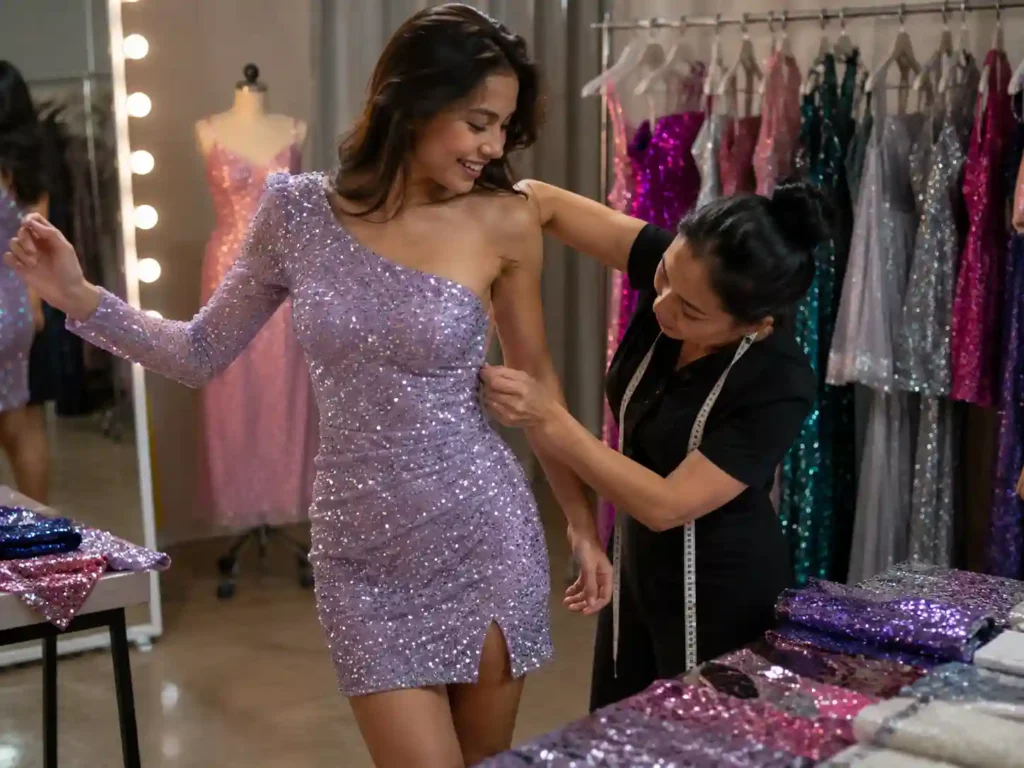
U.S. Partywear Collection

European Occasionwear Program

Multi-Style Resort and Going-Out Drop
Frequently Asked Questions About Golden Samples

Start a Golden Sample Production Review
Send the current development files and approval status for a structured review before bulk production begins. Useful materials include the tech pack, measurement specification, fit comments, sample photos, current PP or golden sample status, fabric direction, BOM, trim requirements, target quantity, color and size breakdown, target delivery date, quality manual, label files, packing guide, and any unresolved production concerns.
Duolan can review the sample-to-bulk basis, identify missing approvals, organize key control points, and recommend a production route for standard, structured, decorated, quick-response, or multi-style dress programs. Collection programs of 10-30 styles and 20,000-80,000 total pieces can be evaluated by style complexity, material readiness, production risk, factory allocation, inspection needs, and launch timing.
- Name
- Company
- Work Email
- Tel / WhatsApp
- Brand Market
- Dress Category
- Current Sample Stage
- Target Quantity
- Target Delivery Date
- Existing Golden Sample: Yes / No
- Main Production Concern
- Upload Tech Pack and Files


