...

Custom Dress Manufacturer for Inline Production Inspection

Dress production stays under control when approved standards are checked while garments are still moving through the line – not only after every piece is finished.

  • 300 sewing lines supported by structured production planning and quality coordination
  • 50+ quick-response and flexible lines for launch orders, repeat orders, and priority programs
  • 140-180 quality coordination, data, system, and after-sales support personnel across the manufacturing group
  • First-piece or pilot verification for fit-, structure-, fabric-, and workmanship-sensitive dresses
  • Inline measurement, seam, construction, trim, and appearance checks linked to approved samples and production files

Built for Teams Managing Bulk Dress Quality

Duolan supports established fashion organizations that need reliable sample-to-bulk translation, disciplined production checkpoints, and clear corrective follow-up across multi-style dress programs.

Global Fashion Brands

Large fashion organizations require more than visually appealing samples. Production standards must remain stable across styles, colors, sizes, factories, and repeat orders. Duolan connects approved samples, BOM details, measurements, workmanship notes, production routing, inline checks, and final confirmation into one controlled path. The goal is consistent execution across seasonal launches and long-term programs, with issues identified before they spread through a full order.

Buying Teams

Merchandising and buying teams often coordinate product direction, pricing, launch timing, internal approvals, and supplier performance at the same time. Duolan helps organize the manufacturing side through bulk-readiness review, style-risk separation, production-path planning, inline inspection records, and clear issue status. Each update focuses on what has been checked, what requires action, whether reinspection is complete, and whether timing remains aligned with the planned launch window.

Product Development Teams

Product teams need production partners who understand how fit, fabric behavior, pattern balance, lining, trims, and workmanship interact. Duolan reviews development information before production release, then carries approved decisions into first-piece checks and inline control. Fit comments are not treated as isolated alterations; they are translated into measurable production points, pattern references, process notes, and visual standards that can be repeated across the order.

Brand QA Teams

QA teams need visible standards and traceable actions. Duolan can align inspection work with approved samples, measurement methods, tolerances, defect definitions, and project-specific quality requirements. Inline findings can be recorded by style, color, size, operation, and production stage. When a recurring issue appears, affected pieces can be isolated, the process adjusted, rework arranged where appropriate, and the corrected output checked again before normal production continues.

Sourcing Offices

Sourcing offices manage supplier capability, production progress, quality risk, documentation, and communication across multiple programs. Duolan provides a structured manufacturing path supported by owned factories, long-term satellite factories, specialist process resources, and coordinated production teams. Projects can be divided by complexity, material, timing, and workmanship risk, allowing each style to enter a more suitable line while one quality standard remains connected to the approved production basis.

Multi-brand Groups

Multi-brand groups may run several labels, launch calendars, price positions, and dress categories at once. Duolan can separate programs by brand standard, product risk, size architecture, material direction, and delivery priority. Production control is organized around the correct approved sample, BOM, label set, packing manual, and inspection requirement for each program, reducing the risk of standards being mixed across brands, seasons, or internal divisions.

Why Inline Inspection Matters in Dress Production

Inline production inspection checks garments while bulk manufacturing is still underway. In-process pieces are compared with the approved sample, measurement specification, materials, construction requirements, and workmanship standard, allowing recurring issues to be corrected before they affect a large share of the order.

Fashion dresses carry more interacting risks than basic garments. A small deviation in neckline tension, cup placement, side-seam balance, lining coverage, zipper application, gathering ratio, or fabric direction can change fit and visual presentation. Once the same operation is repeated across hundreds or thousands of pieces, a minor process drift can become a large rework problem.

Production-stage checks create a shorter correction loop. Inspectors can review cut components, first pieces, in-process garments, critical operations, measurements, and pre-finishing output. Findings can then be connected to machine settings, operator method, pattern reference, material handling, pressing conditions, or work instructions. Final inspection remains essential, but early control preserves more options for correction and helps protect the planned shipment date.

Inline Inspection Versus Final Inspection

Both stages are required for disciplined dress manufacturing. Inline inspection controls how garments are being produced; final inspection confirms whether completed goods meet the agreed shipment standard.

Control AreaInline Production InspectionFinal Inspection
TimingDuring cutting, sewing, assembly, and finishingAfter garments are completed and prepared for shipment
Main PurposeDetect process drift and recurring defects earlyConfirm finished appearance, measurements, quantity, labeling, and packing
Product StatusCut components, semi-finished pieces, first pieces, and in-process garmentsFinished garments and packed goods
Correction FlexibilityHigher, because the operation can still be adjustedLower, because defects may already exist across completed output
Main ReferencesApproved sample, PP basis, BOM, size spec, workmanship notes, operation standardsApproved sample, final inspection criteria, packing manual, PO, carton requirements
Typical OutputInline record, issue classification, corrective action, and reinspection statusFinal inspection result, defect list, measurement summary, and shipment status

Quality Control Starts Before Sewing Begins
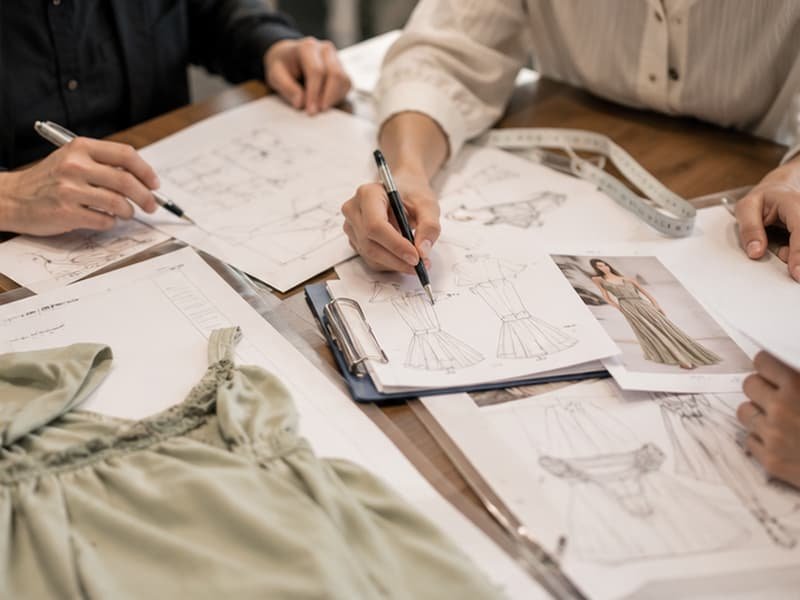
A stable inline inspection program depends on clear standards created before the production line starts. Duolan links development decisions, materials, production preparation, line control, final review, and repeat-order records into one manufacturing sequence.

Development Risk Review

Tech packs, reference samples, design images, size charts, fabric ideas, and launch requirements are reviewed before production planning. The review identifies fit-sensitive areas, fabric-performance risks, complex construction, decorative processes, and details that may be difficult to reproduce consistently. Early findings guide sampling, material selection, pattern work, process trials, and the later inspection plan, preventing unclear design information from becoming a production problem.

Fabric and Trim Control

Fabric, lining, zippers, elastic, cups, boning, closures, labels, embellishments, and packing components must match the intended dress structure and approved direction. Material control covers lot identity, shade, width, weight, stretch behavior, recovery, shrinkage, surface condition, handfeel, and component compatibility where relevant. Confirmed materials create a stable basis for cutting, sewing, measurements, appearance, and repeat-order consistency.

Sample Standard Creation

First prototypes, fit samples, revised samples, salesman samples, photo-ready samples, and PP samples serve different decisions. Before bulk release, Duolan clarifies which sample is the manufacturing basis and which details remain pending. Pattern references, measurements, BOM items, workmanship notes, visual points, labels, and packing requirements are aligned so the line does not rely on memory or informal interpretation.

Bulk Readiness Review

Before manufacturing begins, the current sample status, order purpose, materials, colorways, size breakdown, construction points, special processes, inspection requirements, packing, and launch timing are reviewed. The production path is selected according to style complexity and risk. A dress requiring a pilot run, specialist line, embroidery, printing, washing, or multi-factory coordination is separated from straightforward production before capacity is released.

First-piece Verification

Fit-, structure-, fabric-, and workmanship-sensitive styles can be checked at first-piece or pilot stage before full production release. The review confirms silhouette, measurement balance, lining, support, closure placement, critical seams, decorative application, pressing behavior, and repeatability. Early verification reduces the chance of approving one attractive sample while allowing an unstable production method to enter thousands of garments.

Inline Production Inspection

Inspection points are placed according to style risk, production progress, operation sensitivity, and agreed brand standards. Checks may cover cut panels, bundling, initial assembly, key measurements, seam quality, symmetry, lining, trims, decoration, pressing, and pre-packing condition. Findings are recorded against the correct style, color, size, line, and production reference so corrective work remains focused and traceable.

Final Quality Confirmation

Completed garments are reviewed for appearance, critical measurements, workmanship, cleanliness, pressing, labels, tags, packing, and carton requirements according to the agreed inspection method. Final checks do not replace process control; they confirm that inline corrections held through completion and that shipment presentation matches the brand manual, approved standard, and purchase order.

Reorder Standard Retention

Repeat production benefits from preserved pattern versions, approved samples, BOM details, material references, workmanship notes, issue history, inspection points, and packing requirements. Duolan uses earlier production knowledge to reduce repeated clarification and prevent old issues from returning. Reorder preparation also considers material-lot changes, revised size specs, color additions, and updated brand requirements before production is released again.

What We Lock Before Bulk Production

Bulk manufacturing should not start from a vague sample approval. Duolan performs a production-readiness review so the approved visual direction can be translated into measurable, repeatable, and inspectable standards.

  • Production basis: approved sample, PP sample, golden sample, or written approval status
  • Pattern and fit: correct pattern version, grading basis, balance points, fit-sensitive locations, and measurement method
  • Materials: fabric, lining, trims, decoration, labels, packing components, lot or shade requirements, and approved substitutions
  • Specifications: size chart, tolerances, points of measurement, construction notes, stitch or seam requirements, and special finishing
  • Order structure: style, color, size, quantity, priority, launch order, repeat order, or scale-up purpose
  • Risk controls: first-piece requirement, pilot quantity, critical operations, inline checkpoints, third-party inspection, and escalation rules
  • Delivery alignment: production sequence, inspection buffer, packing readiness, freight handover, and planned launch window

A concise Bulk Start Confirmation or Production Readiness Note can summarize the final production basis. Any remaining decision is separated from confirmed information so the line does not treat an unresolved detail as an approved standard.

First-piece Verification Before Full Production Release

Higher-risk dresses benefit from a controlled first-piece or pilot review. A small verified output allows fit, construction, material behavior, and operation stability to be checked before a full line repeats the same method.

First-piece Confirmation

The first completed production piece is compared with the approved sample, pattern, measurements, materials, and workmanship notes. Review points may include neckline shape, bust position, waist balance, side-seam direction, hem level, zipper placement, lining coverage, closures, decoration, pressing, and overall silhouette. Any difference is addressed before the line proceeds at normal speed, creating a stronger bridge between development approval and production execution.

Pilot Production

A short pilot run is useful when multiple operations interact or when material behavior may change during bulk handling. Several pieces can reveal whether measurements remain stable, sewing methods are repeatable, gathering or pleating stays consistent, decorative placement holds, and pressing produces the intended finish. Pilot output also helps production and QC teams identify which operations need closer monitoring during the main run.

Critical Process Trial

Special operations such as boning insertion, cup positioning, mesh joining, sequin-area sewing, embroidery placement, print registration, washing, or delicate satin pressing may be trialed separately. The purpose is to confirm method, tools, sequence, handling, and inspection points before the operation becomes a production bottleneck. Trial findings are converted into clearer work instructions and inline checkpoints for the responsible line.

Where Inline Inspection Happens During Production
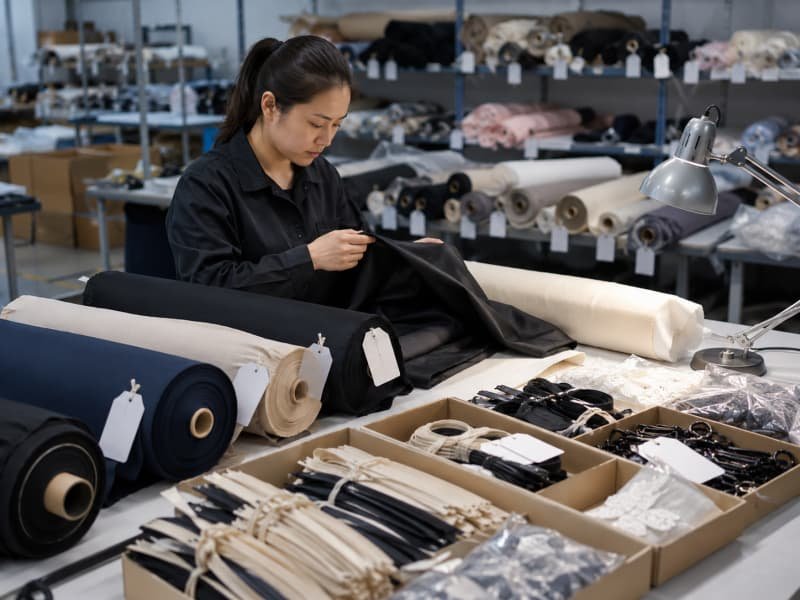
Inspection timing is set by style risk, order structure, production progress, and agreed standards. Fixed percentages are not applied blindly; control points are placed where an issue can be detected and corrected most effectively.

Fabric Receiving Review

Fabric rolls and key components are checked against the approved material direction before cutting. Control may include identity, color or shade, visible surface condition, width, weight, stretch behavior, shrinkage information, and lot separation where required. A mismatch discovered before cutting protects far more garments than the same issue discovered after assembly, so material status must remain connected to style and color allocation.
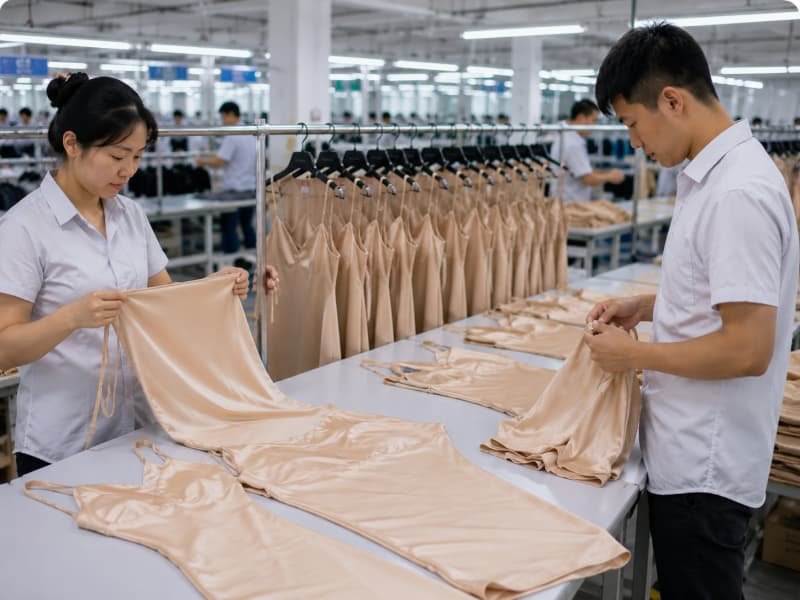
fabric cutting duolan

Cutting Control

Cut panels are checked for fabric direction, print or motif placement, shade grouping, size identification, notches, drill marks, quantity, and visible defects. Delicate satin, one-way velvet, directional sequins, placement prints, stripes, checks, and asymmetric panels require close attention. Cutting accuracy supports later fit, symmetry, assembly, and measurement control; a cutting error cannot always be repaired during sewing.
Bundle Control​

Bundle Identification

Bundles must preserve the correct style, color, size, shade group, and component set. Labels or bundle tickets help prevent panels from different lots or sizes being mixed. For lined dresses, bodices, skirts, cups, straps, facings, and lining pieces need clear matching. Bundle control becomes especially important across multi-style orders, similar colors, and several production lines working in parallel.

Initial Sewing Check

Early assembled pieces reveal whether operators understand seam allowance, construction order, reinforcement, stitch choice, elastic tension, gathering ratio, and component position. QC review at the start of sewing can stop a repeated method error before output increases. Initial checks also confirm whether the approved appearance can be reached under real line conditions rather than only in the sample room.

In-process Measurement

Measurements are checked at stages where correction remains possible. Bodice length, bust, waist, hip, neckline, strap length, armhole, center back, skirt length, slit position, and other critical points are selected according to style. Fabric relaxation, stretch, gathering, seam construction, and pressing can change dimensions during production, so measurements must be read together with the process stage.

Critical Operation Review

High-risk operations receive focused checks: zipper installation, cup and boning placement, mesh joining, lining attachment, ruching, pleating, slit reinforcement, strap insertion, decorative application, and seam joining across difficult fabrics. Inspection confirms not only appearance but also function, strength, comfort, symmetry, and repeatability. A critical operation can determine whether the whole dress feels stable on the body.

Pre-finishing Review

Before pressing, cleaning, and final finishing, garments are checked for open seams, missed operations, puckering, twisting, uneven hems, decoration issues, lining problems, measurement drift, and visible fabric damage. Catching faults before finishing avoids wasting pressing, cleaning, tagging, and packing time on garments that still need repair. Reworked pieces are returned for another review before entering finishing again.

Pre-packing Check

Finished garments are checked before individual packing for appearance, cleanliness, pressing, size identification, labels, tags, closures, protective materials, and required accessories. Packing teams also confirm folding or hanging method, polybag information, barcodes, stickers, assortment, and carton instructions. Pre-packing control protects final presentation and prevents an acceptable garment from becoming a shipment error through incorrect labeling or packing.

What We Inspect During Custom Dress Production

Dress quality depends on connected controls. Measurements, fabric behavior, construction, support, lining, trims, decoration, and presentation are reviewed against the correct approved standard rather than treated as separate cosmetic details.

Critical Measurements

QC checks approved points of measurement using the agreed method and tolerance. Focus points vary by silhouette: bust, waist, hip, neckline, strap length, bodice length, center back, sleeve or armhole, skirt length, slit position, and hem sweep. Measurements are interpreted with fabric stretch, recovery, relaxation, seam allowance, and construction stage. Repeated drift can indicate pattern, cutting, operator, machine, or pressing causes.

Seam Quality

Seams are reviewed for stitch type, density, tension, allowance, security, smoothness, skipped stitches, broken threads, puckering, seam grin, raw edges, and reinforcement. Fabric and location determine the correct standard. A satin side seam, stretch bodycon seam, mesh join, boned bodice seam, and sequin-covered seam require different handling. Inline control verifies whether the chosen method remains stable at production speed.

Garment Symmetry

Necklines, cups, straps, shoulders, side seams, darts, princess seams, pleats, pockets, slits, hems, and decoration are compared for balanced placement where the design calls for symmetry. Asymmetric designs are checked against their approved intentional difference, not forced into symmetry. Balance affects visual quality and fit; a small position error can make the whole dress appear twisted or poorly cut.

Fabric Surface

Inspectors watch for holes, snags, stains, oil marks, needle damage, shine, abrasion, color streaks, print defects, crushed pile, sequin loss, and pressing marks. Surface sensitivity changes by material. Satin can mark easily, velvet can crush, mesh can snag, sequins can scratch, and light colors reveal handling contamination. Early control identifies whether protection, machine condition, handling, or cleaning practice needs adjustment.

Color and Shade

Color is checked within the approved direction and controlled by lot or shade grouping where required. Panels from different shades must not be mixed in one garment. Lining, thread, zipper, elastic, cups, labels, and decoration are reviewed for coordinated appearance. Lighting conditions and fabric sheen can influence perception, especially on satin, velvet, metallic surfaces, and layered transparent materials.

Lining Coverage

Lining is checked for pattern balance, length, attachment, opacity, comfort, movement, seam visibility, and coverage at bust, waist, hip, slit, mesh, and cut-out areas. A lining can meet measurement requirements yet still pull, roll, show below the hem, expose internal seams, or restrict movement. Inline checks confirm the lining supports the intended silhouette without changing drape or fit.

Zipper Installation

Zippers are reviewed for approved type, length, color, position, smooth operation, top and bottom security, seam alignment, waviness, stress, and interaction with hooks, lining, boning, or waistband structure. A center-back zipper affects symmetry; a side zipper affects fit and entry; an invisible zipper can distort delicate fabric. Installation must remain functional and visually controlled across the production run.

Strap and Neckline

Strap length, position, angle, symmetry, reinforcement, adjuster placement, neckline tension, and edge stability are inspected. Halter, one-shoulder, backless, cowl, sweetheart, and thin-strap styles require different balance. A few millimeters of displacement can change bust coverage or create gaping. Production checks compare both flat measurements and the intended three-dimensional shape established during fitting.

Bust and Waist Structure

Cup position, boning, under-bust seams, waist seams, darts, princess lines, interfacing, elastic, and internal support are checked for symmetry, placement, stability, and comfort. Structured dresses must hold shape without twisting, collapsing, or creating pressure points. Inline review confirms each hidden component stays aligned with the approved fit and does not interfere with zippers, lining, seam allowance, or movement.

Ruching and Gathering

Ruching and gathering are checked for approved ratio, position, direction, density, symmetry, security, and smooth transition into adjoining seams. Uneven distribution can change measurements and visual balance. Operators need clear reference marks and process methods so the effect remains consistent across sizes and colors. Inline inspection prevents one section of the order from appearing fuller, flatter, or more twisted than another.

Embellishment Security

Sequins, beads, pearls, rhinestones, embroidery, appliques, flowers, and other decorative elements are reviewed for placement, density, orientation, attachment strength, missing components, sharp edges, skin contact, and seam interaction. Decoration must survive handling and packing while preserving comfort and visual rhythm. Areas entering seams or zippers need planned clearance so components do not damage needles or distort construction.

Labels and Components

Main labels, size labels, care labels, composition labels, origin labels, hangtags, security tags, spare components, barcodes, and brand-specific trims are checked for correct version, position, orientation, information, and attachment. Similar programs can carry different labels or markets, so component control must remain linked to the correct PO, style, color, and destination. An acceptable garment with incorrect labeling is not shipment-ready.

Inline Risks Across Different Dress Constructions

Duolan applies dress-specific control rather than one generic checklist. Each silhouette and material combination creates different failure modes, inspection priorities, and correction windows.
1.Satin Reflection Changes Perceived Depth (1)

Satin Dresses

Satin reveals production discipline through surface quality and seam finish. Inline checks focus on shade grouping, fabric direction, needle condition, seam puckering, stitch tension, zipper waviness, pressing shine, water marks, snagging, and hem balance. Panels are handled to limit abrasion and creasing. Pressing conditions are verified before full finishing, because excessive heat, pressure, or steam can change gloss and leave permanent marks. Lining and seam allowance must support drape without showing through the face fabric.

Bodycon Dresses

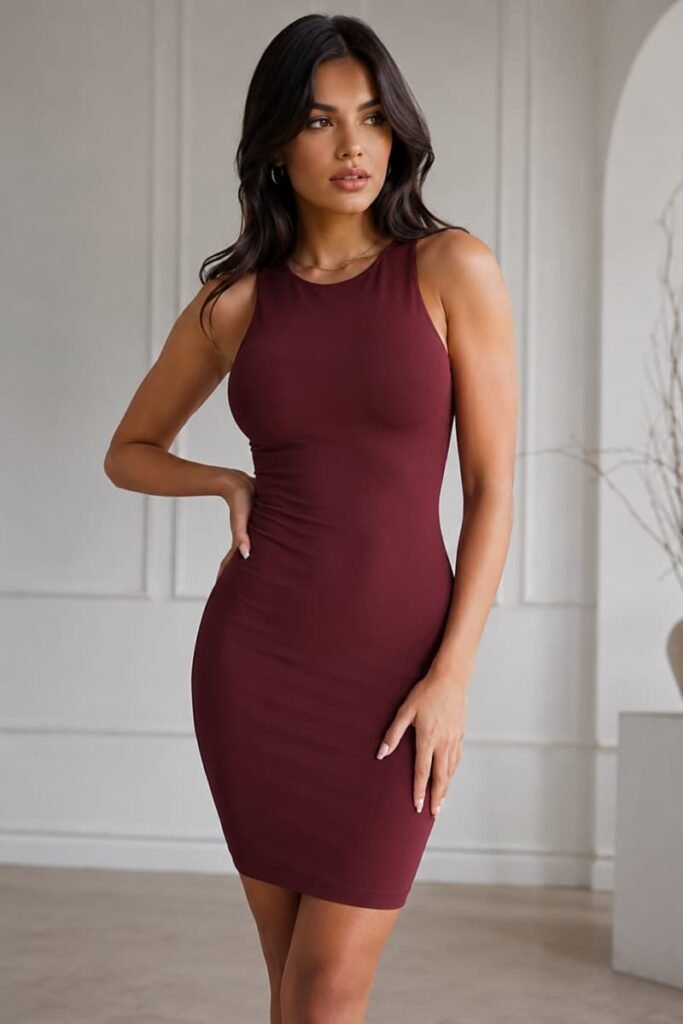
Bodycon fit depends on stretch direction, recovery, pattern reduction, seam elasticity, and stable measurements. Inspection focuses on bust-waist-hip balance, side-seam direction, neckline and armhole recovery, transparency, lining tension, elastic application, skipped stitches, and seam strength. Fabric lots may behave differently even when composition appears similar, so production measurements are read together with stretch and recovery performance. Garments must contour the body without twisting, overstretching, or losing shape after handling.

Corset Dresses

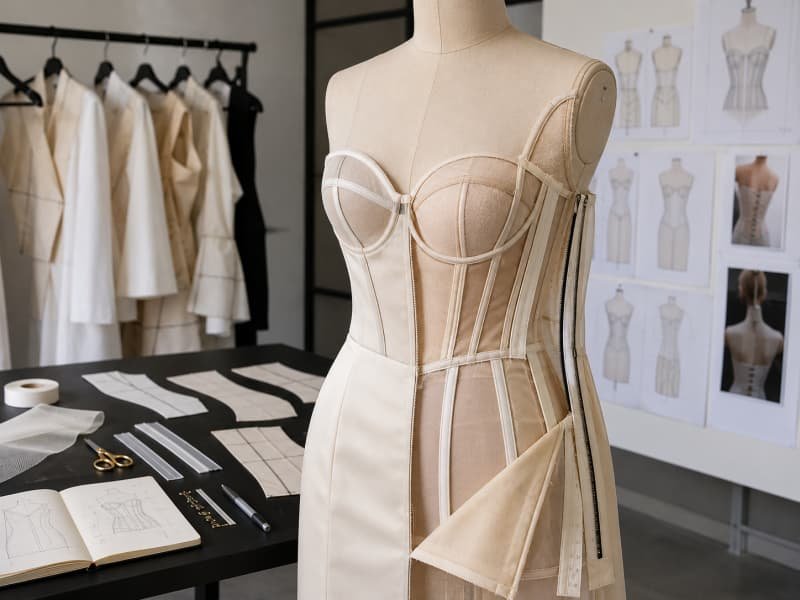
Corset and bustier dresses require precise internal construction. Cup placement, under-bust position, boning length and direction, channel security, waist balance, interfacing, lining, zipper stress, hook placement, and top-edge stability are reviewed during assembly. Hidden components must stay symmetrical and clear of seam or closure interference. First-piece verification is especially important because a small pattern or positioning error can affect support, comfort, bust coverage, and the entire front silhouette across the order.

Mesh Dresses

Mesh inspection addresses transparency, stretch, recovery, snagging, seam visibility, panel matching, lining coverage, edge finish, and comfort against the skin. Layers must remain aligned without excessive tension or distortion. Transparent sections are compared with the approved coverage and styling intention. Fine mesh can stretch during sewing, so measurement and symmetry checks are placed after key assembly stages. Reinforcement is added where closures, straps, or decoration create concentrated stress.

Sequin Dresses

Sequin and embellished dresses need control of motif direction, density, color consistency, missing decoration, sharp edges, seam clearance, thread security, zipper areas, lining protection, and packing. Panels may require placement planning before cutting. Decoration entering seam allowances can create bulk, needle damage, or skin discomfort, so removal and restoration methods must be standardized. Inline checks confirm visual continuity and attachment before defects become difficult to repair on completed garments.

Halter and Backless

Halter and backless dresses depend on neckline stability, strap length, anchor position, bust coverage, hidden support, closure security, elastic tension, and back balance. Inspection checks whether the garment stays in position under movement, not only when laid flat. Reinforcement and lining must remain discreet. A displaced strap or unstable top edge can create gaping and fit complaints even when basic measurements remain within tolerance, so structural points receive focused review.

Measurement and Fit Control During Bulk Production

A garment can meet several flat measurements and still fit poorly. Duolan combines approved points of measurement with fabric behavior, pattern balance, construction, symmetry, and silhouette-specific fit priorities.

  • Measurement method: each point follows the agreed measuring position, garment state, and handling method
  • Approved tolerance: tolerance is confirmed by the brand or project standard rather than assumed from one universal rule
  • Pattern version: production uses the correct approved pattern and grading basis
  • Fabric condition: stretch, recovery, shrinkage, relaxation, steam, and pressing influence final dimensions
  • Size progression: grading is reviewed for proportion, not only numerical increase
  • Fit balance: bust, waist, hip, shoulder, neckline, back, side seam, and skirt fall are checked as a connected shape
  • Stage control: critical dimensions can be checked before closure, after assembly, after pressing, and at final inspection where relevant
  • Correction logic: repeated deviation triggers root-cause review rather than endless piece-by-piece remeasurement

Bodycon styles prioritize bust-waist-hip balance and recovery. Corset styles prioritize cup, under-bust, waist, and support alignment. Halter and backless styles prioritize strap, neckline, bust coverage, and back stability. Maxi and asymmetric dresses require hem balance, length consistency, and controlled drape.

Fabric and Trim Control Before Line Release

Many production failures begin with an unclear or unstable material standard. Duolan reviews fabric and components before cutting and keeps approved references connected to the correct style, color, size range, and production allocation.

Lot and Shade

Fabric lots and shade groups are identified before panel mixing can occur. Color-sensitive materials, including satin, velvet, metallic fabric, washed fabrics, and layered transparencies, are allocated carefully. Thread, lining, zippers, elastic, cups, and decoration are checked for coordinated appearance. Shade control is carried from roll identification through cutting bundles, sewing, finishing, and packing so mixed panels do not enter one garment.

Weight and Width

Fabric weight and usable width influence consumption, drape, opacity, cutting yield, seam handling, and costing. Material arriving outside the approved direction can change the finished silhouette or expose lining and construction. Width changes can also affect marker planning and panel placement. Review before cutting protects both product appearance and production efficiency, while allowing the team to resolve a variation before large quantities are committed.

Stretch and Recovery

Stretch percentage, direction, and recovery affect fitted dresses, ruching, elasticated areas, necklines, straps, and size stability. Material with weak recovery can grow during sewing or wear; excessive recovery tension can distort seams. Duolan connects fabric behavior to pattern reduction, seam choice, stitch elasticity, lining, and measurement checkpoints. Production pieces are observed after handling and pressing rather than assessed only immediately after sewing.

Shrinkage and Relaxation

Fabric may change after relaxation, steam, washing, bonding, or pressing. Shrinkage information guides pattern allowance, cutting preparation, finishing, and final measurement expectations. Knit, stretch, washed, and delicate woven materials require different handling. Production control considers when the fabric was relaxed, how pieces were stored, and whether pressing introduced additional change, reducing unexpected size movement late in the process.

Surface Direction

One-way nap, sheen, print direction, sequin orientation, pile, brushed surface, grain, and face/reverse identification must be controlled during marker planning and cutting. A directional mistake can create visible shade differences even within the same roll. Clear panel marking and bundle control help sewing teams preserve orientation. Inspection checks whether front, back, sleeves, straps, and panels maintain the approved visual direction.
Structural Materials

Structural Trims

Zippers, cups, boning, interfacing, elastic, hooks, rings, sliders, and closures influence fit and function. Approved dimensions, strength, color, flexibility, and compatibility are confirmed before line release. A substitution may change zipper wave, cup profile, support, opening size, or comfort. Structural trims are therefore reviewed as part of garment engineering, not treated as interchangeable accessories.
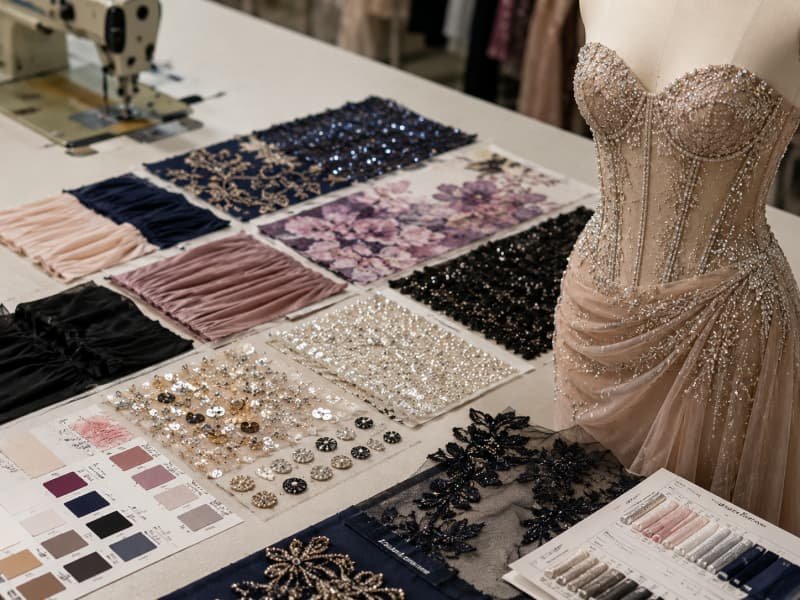
Decorative Components

Sequins, beads, pearls, rhinestones, lace, embroidery, appliques, bows, and flowers are checked for design, color, size, density, placement, attachment method, skin contact, seam clearance, and packing protection. Decorative components must remain stable through sewing, pressing, handling, and shipment. Trial application helps define the correct tools, sequence, and rework method before volume production begins.

Label and Packing Sets

Main labels, size labels, care labels, composition labels, hangtags, stickers, barcodes, polybags, tissue, hangers, and cartons are allocated by market and order. Artwork version, wording, position, size, and attachment are checked. A label or packing change is documented before release so old and new versions do not mix. Final packing follows the approved brand manual and purchase order requirements.

Workmanship Control for Production-ready Dresses

Workmanship quality is built through method, sequence, handling, and repeatability. Duolan reviews critical operations before volume release and checks whether approved construction remains stable at production speed.

Seam Engineering

Seam type, allowance, stitch density, thread, needle, tension, reinforcement, and finishing are selected according to fabric, stretch, location, load, and visual requirement. Delicate satin, mesh, jersey, corset structure, and decorated panels cannot share one generic method. Line checks confirm seams remain smooth, secure, and consistent without puckering, grin, breakage, or excessive bulk.

Edge Finishing

Necklines, armholes, cut-outs, hems, facings, binding, and mesh edges need controlled shape and recovery. Under-stitching, stay tape, elastic, bonding, narrow hems, rolled hems, and clean finishes are checked against the approved method. Edge distortion can change fit and visual quality, so pressing, feeding, tension, and handling are reviewed together rather than judged only by final appearance.

Zipper Construction

Invisible, exposed, side, and center-back zippers require different seam preparation and stabilization. Installation is checked for length, top alignment, smooth movement, seam match, wave control, lining clearance, hook placement, and stress at the waist or bodice. Where satin, stretch fabric, boning, or gathered seams meet a zipper, the operation may be trialed before full-line production.

Support Structure

Cups, boning, elastic, interfacing, stay tape, under-bust seams, waist stays, and internal panels are checked for position, symmetry, security, comfort, and interaction with fit. Support must remain hidden and stable while allowing movement. Incorrect internal construction can distort the outer fabric or closure even when the exterior appears acceptable on a hanger, so in-process review is essential.

Ruching and Pleating

Ruching, gathering, tucks, and pleats require reference points, controlled ratios, directional consistency, and secure attachment. The effect must remain balanced across sizes and colorways. Inline inspection checks whether volume is distributed evenly, seams stay aligned, and measurements remain within the approved range. Pressing is controlled so intended texture is not flattened or distorted.

Lining Assembly

Lining construction is checked for correct pattern, seam allowance, attachment, mobility, length, coverage, and clean internal finish. It should support the dress without pulling the shell, exposing internal structure, or appearing below hems and slits. Transparent, bodycon, corset, and occasion dresses often need different lining solutions, so inspection follows the approved structure rather than one standard template.

Embellishment Process

Decorative sewing, beading, sequin application, embroidery, applique, and rhinestone work are checked for layout, density, orientation, attachment, seam clearance, comfort, and repair method. Production teams need approved placement references and handling instructions. Inline review identifies missing or loose elements before pressing and packing, when access becomes more difficult and rework can damage the garment surface.

Pressing and Finish

Pressing sets silhouette, seams, hems, pleats, and final appearance, but incorrect heat, pressure, steam, or contact can damage fabric. Satin shine, velvet crushing, bonding marks, seam impressions, and decoration distortion are controlled through tested methods and protective tools. Finishing also covers thread trimming, cleaning, shape setting, and hanger presentation before final inspection and packing.

How Inline Defects Are Recorded and Corrected

Finding a defect has value only when the cause is controlled and corrected output is verified. Duolan uses a structured issue path to prevent recurring faults from moving unchecked through the line.

Identify the Issue

The inspector records the affected style, color, size, operation, line, production stage, and visible condition. Photos, measurements, marked samples, or operation references can support the record. Clear identification prevents a general instruction such as “improve quality” from replacing a precise description of what is wrong and where it occurs.

Compare the Standard

The finding is compared with the approved sample, PP basis, measurement spec, tolerance, BOM, workmanship note, defect definition, or brand manual. A difference is evaluated against the correct reference rather than personal preference. If the standard is unclear, production is not allowed to invent an answer; the point is escalated for confirmation.

Isolate Affected Output

Potentially affected pieces are separated by time, bundle, operation, line, color, size, or production batch. Isolation limits the inspection area and prevents suspect garments from moving into finishing or packing. The team determines how far the issue may have spread based on when the process changed and which output passed through the same operation.

Classify the Risk

Issues can be classified as critical, major, or minor according to agreed definitions and product impact. Classification considers safety, legal or labeling concerns, function, fit, seam strength, appearance, transparency, trim performance, packing accuracy, and brand presentation. Acceptance rules follow the project standard rather than an assumed universal threshold.

Find Root Cause

The team checks whether the source relates to pattern, cutting, shade mixing, material behavior, machine settings, needle or thread, operator method, work instruction, pressing, handling, or sequence. Root-cause review prevents repeated rework without fixing the process. More than one factor may be involved, particularly on complex dresses where material and construction interact.

Correct the Process

Corrective action can include machine adjustment, method retraining, template revision, pattern or marker correction, component replacement, handling protection, pressing change, operation sequence change, or clearer visual instructions. Affected pieces are reworked only when the repair can meet the approved standard without hidden damage.

Reinspect Corrected Output

Corrected first pieces and repaired garments are checked again against the same standard. Reinspection confirms whether the action solved the original problem and whether a new problem was introduced. Production release depends on acceptable corrected output, not only on a promise that the operation has been adjusted.

Record and Follow Up

The final record can include issue description, affected quantity range, action, responsibility, reinspection result, timing impact, and any point requiring client confirmation. Relevant findings are carried into later inline checks, final inspection, and reorder preparation. The record turns one production issue into a preventive reference for the remaining order and future programs.

Keeping Approved Samples Consistent Through Bulk

A good-looking sample is not automatically ready for volume manufacturing. Duolan converts the approved development result into a production basis that can be understood, repeated, inspected, and preserved.

Approved Sample

The approved garment establishes visual direction, proportion, fit, construction, material, and finishing. Approval status is clarified: visual approval, fit approval, photo approval, salesman-sample approval, or PP basis. Any unresolved item is listed separately so the line does not assume full approval where only one part has been accepted.

Pattern and Grading

The correct pattern version, alteration history, grading rule, seam allowance, and critical balance points are linked to production. Pattern information must match the approved sample and size specification. Fit changes are translated into measurable pattern actions, not left as general comments. Grading is checked for proportion across the intended size range.

BOM and Materials

Fabric, lining, trims, labels, decoration, packaging, and approved alternatives are documented by style and color. Material references are connected to lot, shade, test, or sample where relevant. Unapproved substitution is not treated as a routine production decision because even a similar component can change fit, appearance, function, or compliance.

Workmanship Standard

Critical operations are translated into process notes, visual references, seam or stitch requirements, placement points, reinforcement, pressing methods, and inspection points. Complex construction may include a pilot piece or operation sample. Production teams receive a clearer standard for what must be repeated, while QC teams receive a clearer basis for what must be checked.

First Piece and Inline

The first production output confirms whether the documented basis works under line conditions. Inline inspection then checks whether measurements, construction, materials, and appearance remain stable as quantity increases. Findings are connected back to the same approved references, keeping sample, production, and quality teams aligned.

Final and Reorder

Final inspection confirms the completed order against the agreed standard. Approved pattern versions, BOM details, workmanship notes, QC findings, packing requirements, and correction history can then support repeat production. Reorders still receive material and requirement review, especially when lots, colors, size curves, quantities, factories, or brand manuals have changed.

Inline Control for Multi-style Dress Programs

Orders containing 10-30 styles require more than one production schedule. Duolan separates the program by complexity, material, size structure, process risk, line suitability, inspection priority, and launch timing.

Order Breakdown

Each program is divided by style, color, size, quantity, material, construction, special process, and delivery priority. Styles are classified as straightforward, complex, quick-response, fit-sensitive, decoration-sensitive, or dependent on external processes. The breakdown helps prevent a 20-style program from being managed as one undifferentiated production block and allows critical paths to be identified before line allocation.

Production Path Allocation

Core styles, specialist styles, repeat styles, and rush priorities can enter different production paths while remaining under one project plan. The manufacturing group includes 16 owned womenswear factories, 20+ long-term satellite factories, 300 sewing lines, and 50+ flexible or quick-response lines. Allocation considers fit, fabric, workmanship, quantity, timing, and process resources rather than capacity alone.

Inspection Coordination

The correct approved sample, BOM, size spec, workmanship notes, labels, and packing standard follow each style and color into production. QC records are linked to the correct line and program reference. Cross-line findings are shared where the same material, construction, or process risk appears in several styles, while brand standards remain separated across different labels or divisions. > Plan Multi-style QC > > Share Collection Brief

What Brand Teams Can See During Production

Remote production control works better when updates explain progress, quality findings, corrective action, and remaining risk. Duolan can organize visible evidence around the stages most relevant to each program.

Production Status

Updates can show style allocation, cutting status, sewing progress, special-process progress, finishing, packing readiness, and milestone changes. Information is organized around the order plan rather than a stream of disconnected factory photos. When one style affects the critical path, the update explains the stage, cause, action, and expected timing impact.

Inline QC Photos

Photos can document approved samples, first pieces, measurement checks, seam inspection, zipper installation, lining, decoration, defect marking, rework, and reinspection. Captions explain what is being checked and which standard applies. Sensitive brand details, unreleased designs, and labels can be masked or shared privately according to confidentiality requirements.

Measurement Summary

A measurement summary identifies the style, size, points checked, approved specification, tolerance, actual findings, and follow-up status. Focus remains on critical and representative measurements rather than producing large amounts of unstructured data. Repeated deviation is highlighted so production causes can be addressed before final inspection.

Corrective Action Status

Issue updates can show the defect, affected operation, isolated output, root-cause direction, corrective action, reinspection result, and any decision required from the brand team. Clear status prevents the same issue from being discussed repeatedly without resolution and gives production, merchandising, and QA teams one shared understanding.

Final Readiness

Before shipment, the update can cover final quality status, labels, tags, individual packing, carton assortment, carton marks, inspection arrangements, and freight handover readiness. The summary confirms whether open issues remain and whether completed corrective work has been verified. Brand teams receive a more useful release picture than a simple statement saying goods are finished.
Third-party Inspection Preparation

Support for Third-party and Appointed Inspection

Duolan can coordinate with brand QA teams and appointed inspection companies according to the agreed inspection scope, timing, sampling method, defect definitions, measurement tolerances, and reporting requirements.

Before Inspection

The team confirms inspection date, location, order status, quantity readiness, style-color-size breakdown, approved sample or PP basis, PO, BOM, size spec, packing manual, and inspection criteria. Finished goods are organized so selected cartons and sizes can be accessed. Any incomplete quantity or open issue is disclosed before the inspection rather than hidden inside the shipment.

During Inspection

Factory teams support carton selection, garment access, measurement space, document reference, and product identification while preserving the inspector’s independent judgment. Requested samples, sizes, colors, labels, and packing are made available. Questions about approved standards are answered with documented references. Findings are recorded and discussed without pressuring the inspector to change the assessment.

After Inspection

Reported issues are reviewed by severity, cause, affected scope, and correction method. Goods can be isolated, reworked, reinspected, or prepared for a formal reinspection according to the decision. Shipment timing is updated when corrective work changes readiness. Duolan can follow the brand’s AQL plan or appointed-inspector method when the acceptance standard is agreed before inspection.

Manufacturing Scale Behind Controlled Inspection

Scale creates value only when production routes, standards, records, and inspection responsibilities remain coordinated. Duolan combines dress development experience with a multi-factory manufacturing structure built for parallel programs and repeat production.

16 Owned Factories

Owned womenswear factories provide direct control for core styles, higher-risk products, development-sensitive programs, and priority production. Factory selection considers construction, fabric, workmanship, quantity, and timing. Directly controlled capacity supports clearer production release, first-piece review, inline follow-up, and issue escalation when a style requires closer technical attention.

20+ Satellite Factories

Long-term satellite factories add controlled flexibility for repeat orders, scale-up programs, seasonal peaks, and suitable product categories. Allocation is managed through defined production references and project coordination rather than informal outsourcing. The purpose is to extend capacity while preserving the approved sample, materials, workmanship notes, inspection checkpoints, labels, packing, and delivery discipline.

300 Sewing Lines

The manufacturing group includes 300 apparel sewing lines, allowing multi-style and multi-stage production to run in parallel. Line allocation is matched to product complexity and process requirements. Capacity alone is not treated as a quality guarantee; each line needs the correct production basis, first-piece control where required, inline inspection, and clear responsibility for corrective follow-up.

50+ Flexible Lines

More than 50 quick-response and flexible lines support launch orders, priority programs, repeat production, and styles requiring responsive allocation. Flexible capacity helps separate high-risk or time-sensitive styles from standard volume production. Production planning still considers material readiness, first-piece requirements, quality checkpoints, and delivery buffers so speed does not replace control.

6.5M Monthly Capacity

The group reports a stable monthly production capacity of approximately 6.5 million garments, with peak capacity reaching approximately 10 million garments and an additional monthly capacity space of 1-2 million garments. Capacity planning supports large programs, but dress orders are divided by style risk and process need so scale does not force every product through the same path.

Quality Coordination Team

Approximately 140-180 personnel across quality coordination, data, systems, after-sales support, rework coordination, and order information functions support the wider manufacturing group. Their role complements factory-level inspection by helping track issues, records, client requirements, corrective follow-up, repeat orders, and system data across multi-line and multi-factory programs.

Inline Inspection Cases from Dress Programs

The following anonymized cases reflect common order structures handled by established fashion brands. Client names, labels, and unreleased designs are omitted to protect confidentiality.

US Occasionwear Program

Order structure: 18 styles, 42,600 pieces across satin, mesh, corset, and fitted occasion dresses.

Risk identified: Early production on two satin styles showed seam puckering near the side zipper and inconsistent pressing gloss. One corset style also showed slight variation in cup position between operators.

Action: Affected output was isolated. Needle and tension settings were adjusted, zipper-area stabilization was revised, pressing temperature and protective methods were reset, and cup-position reference marks were clarified. Corrected first pieces were reinspected before normal output resumed.

Result: Production continued under additional inline focus on zipper seams, satin surface, cup alignment, and pressing. The order moved into final inspection with corrected standards preserved for repeat planning.

1.US Homecoming Collection- corset satin (1)

UK Partywear Collection

Order structure: 24 styles, 68,400 pieces covering sequin, embellished mesh, bodycon, halter, and one-shoulder dresses.

Risk identified: Inline review found decoration entering seam allowances on several sequin panels, creating excessive bulk and potential skin contact. A bodycon style also showed measurement drift after pressing because the fabric relaxed differently from the approved sample lot.

Action: Sequin clearance zones were redefined, removed decoration was restored after seaming, lining protection was extended, and inspection points were added before closing affected seams. Bodycon pieces were allowed controlled relaxation before remeasurement, and pressing conditions were standardized.

Result: Corrected methods were applied across relevant lines. QC records separated decoration, fit, stretch, and pressing risks by style, allowing the 24-style program to progress without treating every product as one generic inspection category.

United States Partywear Collection mini embellished (1)

Australian Resort Launch

Order structure: 12 styles, 27,800 pieces across printed maxi, halter, backless, ruched, and lined mesh dresses.

Risk identified: Print placement and panel direction varied on one maxi style, while two halter styles showed inconsistent strap length and neckline tension during initial sewing. A layered mesh dress required improved lining control at the slit.

Action: Cutting markers and panel identification were corrected, printed bundles were regrouped, strap templates were introduced, neckline elastic tension was reset, and lining attachment references were updated. First corrected pieces were reviewed before wider release, followed by targeted inline checks at cutting, strap assembly, and pre-finishing.

Result: Production standards became clearer across all 12 styles, and the program advanced with focused evidence for print direction, strap measurement, neckline stability, and lining coverage.

Evidence from Our Inline Inspection Process

A credible quality system should be visible. Each image used in the final Elementor layout should prove a specific standard, inspection action, production condition, or correction result.

Approved Sample Basis

Show the approved or PP sample with style number, approval status, and protected brand details. The caption should explain which sample serves as the production reference and which points have been locked: fit, fabric, construction, trims, labels, or packing. Avoid a generic sample-room photo without a clear manufacturing purpose.

Bulk Readiness Review

Show a production-readiness meeting, marked sample, checklist, or project review board. The evidence should connect materials, measurements, workmanship, production route, inspection points, and timing before release. Sensitive documents can be obfuscated while retaining sufficient structure.

Fabric Lot Control

Show roll identity, shade grouping, swatches, face direction, or material allocation by style and color. Captions should explain the risk being controlled, such as shade mixing, directional sheen, print direction, stretch variation, or lining coordination. A fabric image becomes useful only when connected to the production decision it supports.

Cutting Inspection

Show cut panels, pattern placement, notches, size identification, print matching, or defect marking. The caption should explain how cutting accuracy supports fit, symmetry, seam alignment, and panel consistency. For satin, velvet, print, sequin, or asymmetric designs, highlight orientation and shade control rather than only showing a large cutting table.

First-piece Review

Show a first production garment being compared with the approved sample, measurement sheet, or marked detail reference. The caption should identify the high-risk points under review, such as cup position, zipper wave, neckline shape, lining, gathering, or hem balance. First-piece evidence demonstrates control before full output is released.

Inline Measurement

Show a garment measured at an approved point using the correct method. The caption should name the point, production stage, and reference standard without exposing confidential values where necessary. Measurement evidence should demonstrate repeatable method and interpretation, not simply a tape measure placed on a garment for appearance.

Seam Inspection

Show close-up review of stitch quality, seam allowance, puckering, reinforcement, stretch seam, mesh joining, or satin handling. Captions should explain the construction risk and why the chosen method matters. Before-and-after images are especially strong when a line adjustment or corrective action changed the result.

Structure Inspection

Show cups, boning, interfacing, waist support, lining, strap anchors, or hidden reinforcement during assembly. The evidence should reveal internal engineering before the dress is closed. Captions can explain placement, symmetry, comfort, support, and interaction with closures, helping brand teams see more than the finished exterior.

Decoration Control

Show sequin, bead, rhinestone, embroidery, applique, or bow inspection with placement references. Captions should explain density, orientation, seam clearance, attachment, missing components, sharp edges, and lining protection. A decoration photo should prove control of repeatability and comfort, not only visual sparkle.

Issue and Correction

Show a marked defect, isolated pieces, corrected operation, and reinspected result. Keep the presentation factual and non-blaming. The caption should state the issue category, corrective action, and verification step. A controlled correction record creates more trust than claiming production never encounters a problem.

Final Quality Review

Show final garment appearance, measurement sampling, cleanliness, pressing, labels, tags, and approved presentation. The caption should explain how final inspection confirms that inline standards remained stable through completion. Avoid mixing final QC with packing photos unless both stages are clearly identified.

Packing Confirmation

Show polybag information, barcode, hangtag, size sticker, folding or hanging method, carton assortment, carton marks, and shipment-ready goods. Captions should connect packing evidence to the brand manual and PO. Accurate packing protects sellable inventory and prevents a quality-approved garment from becoming a delivery error.

Frequently Asked Questions About Inline Dress Inspection
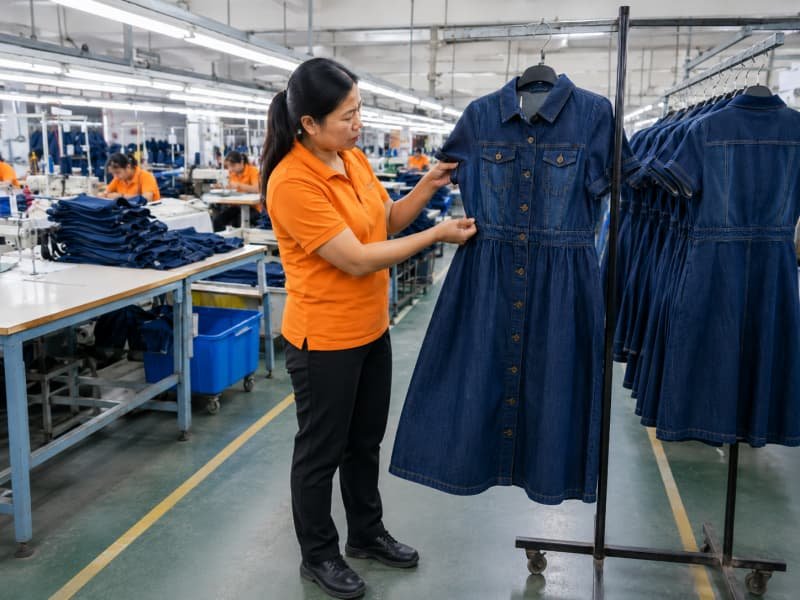
Inline inspection reviews cut components, semi-finished garments, first pieces, and in-process output while production is still underway. Checks are compared with the approved sample, size specification, materials, workmanship requirements, and agreed defect criteria. The purpose is to identify recurring problems early, correct the process, and verify corrected output before the same issue spreads across a larger quantity.
Timing depends on style risk, construction, material, order structure, production progress, and brand requirements. Inspection may occur at fabric receiving, cutting, bundle preparation, initial sewing, critical operations, in-process measurement, pre-finishing, and pre-packing. Higher-risk dresses can receive first-piece or pilot verification before full release. Fixed production percentages are used only when required by an agreed inspection plan.
Checks may cover measurements, fit balance, seam quality, symmetry, fabric surface, shade, lining, zippers, straps, necklines, bust and waist structure, ruching, pleats, decoration, labels, pressing, and packing. The exact list changes by product. Satin, bodycon, corset, mesh, sequin, halter, backless, maxi, and asymmetric dresses each require different priorities.
The production basis may include an approved sample or PP sample, pattern, BOM, size spec, tolerance, workmanship notes, labels, and packing standard. First pieces and inline garments are compared against the same references. Approval status is clarified before bulk release so visual approval, fit approval, photo approval, and full PP approval are not confused.
The issue is identified, compared with the approved standard, and traced to the affected operation or production range. Suspect output is isolated. The team reviews root cause, corrects the process, arranges rework where acceptable, and reinspects corrected output. Relevant findings are recorded for later inline checks, final inspection, and repeat-order preparation.
Yes. Measurement control can follow an approved size specification, defined points of measurement, tolerances, and measuring method supplied or agreed for the program. Tolerances are not assumed from one universal standard. Fabric stretch, recovery, relaxation, shrinkage, construction stage, and pressing are considered when interpreting results and planning correction.
Duolan can support brand-defined or third-party AQL inspection when the sampling plan, inspection level, defect definitions, acceptance limits, measurement rules, and reporting requirements are confirmed before inspection. AQL is normally part of final or appointed inspection and does not replace first-piece verification, inline control, corrective action, or production records.
Brand QA representatives can be supported according to agreed factory access, schedule, confidentiality, safety, and project arrangements. Relevant samples, specifications, production status, inspection area, and available records can be prepared in advance. For remote programs, structured photos, measurement summaries, issue records, and corrective updates can provide additional visibility between visits.
Yes, appointed inspection can be coordinated when the factory, order, readiness level, date, scope, and standards are confirmed. The factory can support carton selection, product access, measurement space, document reference, and issue follow-up without interfering with the inspector’s independent decision. Corrective work and reinspection can be arranged according to the final report.
Useful files include the approved sample status, tech pack, BOM, size chart, measurement tolerances, artwork, label files, packing manual, color-size quantity breakdown, quality manual, defect classification, testing requirements, inspection plan, target delivery date, and appointed-inspection details. Partial information can be reviewed first, with missing decisions identified before bulk release.

Submit Your Dress Program for Quality Review

Share the information already available for your dress program. Duolan can review product complexity, approved sample status, fabric and trim direction, fit-sensitive areas, production readiness, first-piece requirements, inline inspection points, third-party inspection needs, and the most suitable manufacturing path. Complete information allows a more accurate review, but an early-stage brief is also useful when key decisions still need clarification.

Please include where available:

  • Tech pack, reference images, original sample photos, or approved sample status
  • Product category, number of styles, target quantity, colorways, and size breakdown
  • Fabric, lining, trims, decoration, labels, and packing direction
  • Size specification, measurement method, tolerances, and fit comments
  • Workmanship notes, critical construction points, and known quality concerns
  • Launch date, delivery window, inspection standard, AQL plan, or appointed inspector
  • Company name, website, market, contact name, email, and WhatsApp

Suggested form fields:

  • Contact: name, company, website, country / market, email, and Tel / WhatsApp
  • Program: product type, number of styles, estimated quantity, and current development stage
  • Review: main quality concern, target delivery date, message, and file upload
QC Checklist​

Start Your Apparel Development Project

OEM/ODM Manufacturing Support for Fashion Brands

Share your collection details, estimated quantities, target market, development timeline, and technical requirements. The production team will review your request and provide a tailored manufacturing solution based on your product category, fabric selection, construction needs, and delivery schedule.

Fashion Manufacturing Support with Scalable Production Capacity

From sample development to bulk production, Duolan supports fashion brands with confidential OEM/ODM manufacturing, stable quality management, flexible production planning, and coordinated multi-factory execution for seasonal and capsule collections.

Need Direct Assistance?

Seraphinite AcceleratorOptimized by Seraphinite Accelerator
Turns on site high speed to be attractive for people and search engines.